Amazigh music
Amazigh (Berber) music is the song, poetry and dance of North Africa's Amazigh peoples, from Atlas circle dances to Kabyle protest song and pop.
Algeria, Morocco, around 1800
Middle Eastern and North African family
Born
around 1800
Algeria, Morocco
Subgenres
8
Documented branches
Links
1
Genres it drew on or shaped
Tempo
95-140 BPMLineage
Family tree
Grew out of
Algeria, Morocco
Amazigh music
Led to (8)
Timeline
Era by era
From the first sparks to today. Select a dot to read the story behind it.
- Village poetry and collective dance
1800 to 1929
- Paris cafes and exile song
1930 to 1961
- Independence and protest song
1962 to 1989
- Pop ballads and world music
1990 to 2001
- Official recognition
2002 to today
Eras
Moments
- 1 Village poetry and collective dance, 1800 to 1929
- 2 Paris cafes and exile song, 1930 to 1961
- 3 Independence and protest song, 1962 to 1989
- 4 Pop ballads and world music, 1990 to 2001
- 5 Official recognition, 2002 to today
around 1800
Village poetry and collective dance
Song stayed oral and local: poets such as the 19th-century Kabyle Si Mohand Ou Mohand, and communal dances like ahidus and ahwash, carried verse at weddings and village gatherings.
around 1930
Paris cafes and exile song
Kabyle migrants in Paris opened cafes where singers such as Cheikh Nourredine and Slimane Azem set homesickness and poverty to folk melodies with banjo, guitar and violin.
- 1930Kabyle cafes in ParisMigrants open cafes where singers add banjo, guitar and violin to Kabyle folk melodies.
1962
Independence and protest song
After Algerian independence, singers such as Idir, Ait Menguellet and Matoub Lounes wrote covert criticism of the state, while Izenzaren formed in Agadir. The 1980 Berber Spring made the music a banner of identity.
- 1962Algerian independenceKabyle singers keep to covert lyrics critical of the new government.
- 1972Izenzaren forms in AgadirYoung musicians from newly urbanised families blend Tashelhit song with modern instruments.
- 1973Idir sings A Vava Inouva on radioA late substitute on Radio Algeria, Idir performs a Kabyle lullaby that spreads across Algeria.
- 1976Idir debut album A Vava InouvaThe title song is later translated into seven languages and brings Kabyle music to a world audience.
- 1977Izenzaren release AggassThe album carries Awdass Atassanou, one of the group best-known Tashelhit songs.
- 1980Berber SpringOn 10 March a lecture on Kabyle poetry is cancelled in Tizi Ouzou, setting off weeks of strikes and a lasting movement for Amazigh rights.
1990
Pop ballads and world music
Idir returned in 1993, Takfarinas went all-electric and Abdelli recorded with Real World. The 1998 murder of Matoub Lounes rallied Kabyles around their singers.
- 1993Idir returns with Les chasseurs de lumieresAfter a break through the 1980s, he re-enters the music scene.
- 1995Idir and Khaled peace concertMore than 6,000 people attend a concert for peace, freedom and tolerance on 22 June.
- 1998Murder of Matoub LounesThe singer is shot on 25 June on a road in Kabylia, and a week of riots follows.
- 1999Idir album IdentitesAlbum of duets with Manu Chao, Dan Ar Braz, Zebda and others becomes a widespread success.
2002
Official recognition
Tamazight gained national status in Algeria in 2002 and official status in Morocco in 2011 and in Algeria in 2016, while festivals and diaspora acts carried the music abroad.
- 2011Amazigh becomes official in MoroccoThe constitution recognises the Amazigh language alongside Arabic.
- 2016Tamazight becomes official in AlgeriaConstitutional revision raises the language to official status.
- 2018Idir plays Algeria after 38 yearsHe returns for a concert in support of the protests against President Bouteflika.
- 2020Death of IdirThe singer known as the King of Amazigh music dies on 2 May.
Listening path
Start listening
A short path from an easy way in to the deep end. Thumbnails come from YouTube; the player loads only when you press play.
- 01
Idir, 1976
The lullaby that took Kabyle music worldwide; listen for the guitar, bendir and the soft vocal line.
- 02
Izenzaren, 1977
Moroccan Tashelhit group song with banjo-driven rhythm and sung poetry.
- 03
Lounes Matoub, 1994
A late Matoub album-length statement on Algerian history, sung to mandole.
Facts
| Family | Middle Eastern and North African |
| Origin | Algeria, Morocco |
| Status | Active |
| Tempo | 95 to 140 BPM |
| Subgenres | 8 |
Amazigh music, also called Berber music, is the group of musical traditions of the Amazigh peoples of North Africa, who lived in the Maghreb before the Arab migrations.
It is built on oral poetry, hand drums and regional song-dance forms in Tamazight languages such as Kabyle and Tashelhit, and it ranges from village circle dances in the Atlas to amplified protest song and pop from Kabylia and Agadir. It sits within the Middle Eastern and North African family but keeps its own languages and repertoire.
Origins
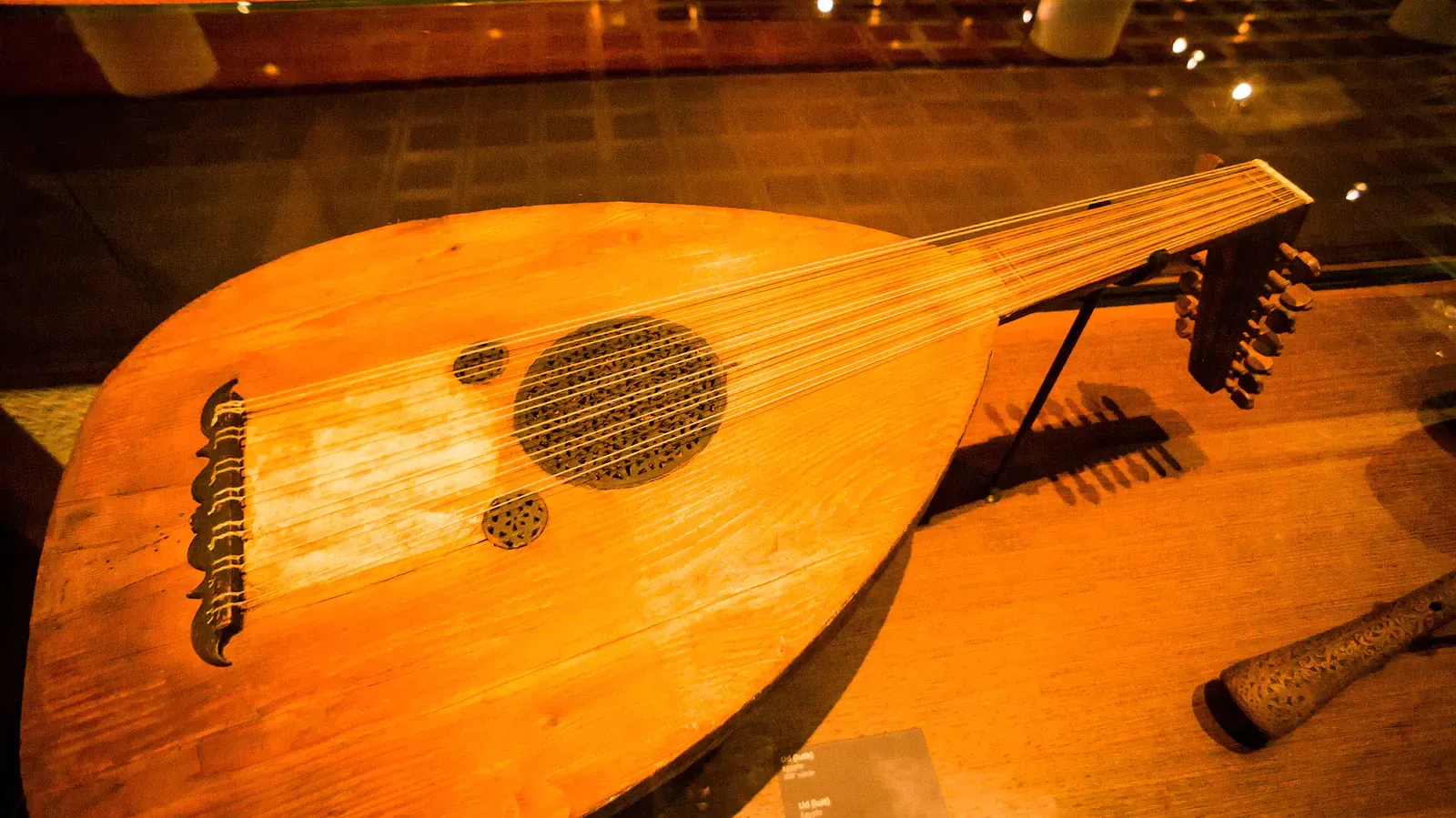
Amazigh song is older than any recording, and most of it was never written. Troupes travelled from village to village playing at weddings and social events, passing on verse, tales and songs. Early styles are described as pentatonic and rhythmically African, with reed pipes, drums and a bowed or plucked string instrument.
Two organising ideas recur across regions. One is the collective performance, where an entire family or village takes part: ahidus in the Middle and Eastern High Atlas and ahwash in the Tashelhit-speaking south of Morocco. The other is the professional poet-singer, the amdyaz, who recites improvised verse on current events and is backed by a drum, a one-string rebab and a double-reed pipe. Poetry carried the meaning, so later singers could set old poems, called isefra in Kabyle, to new music.
Village song and collective dance, to the 1920s
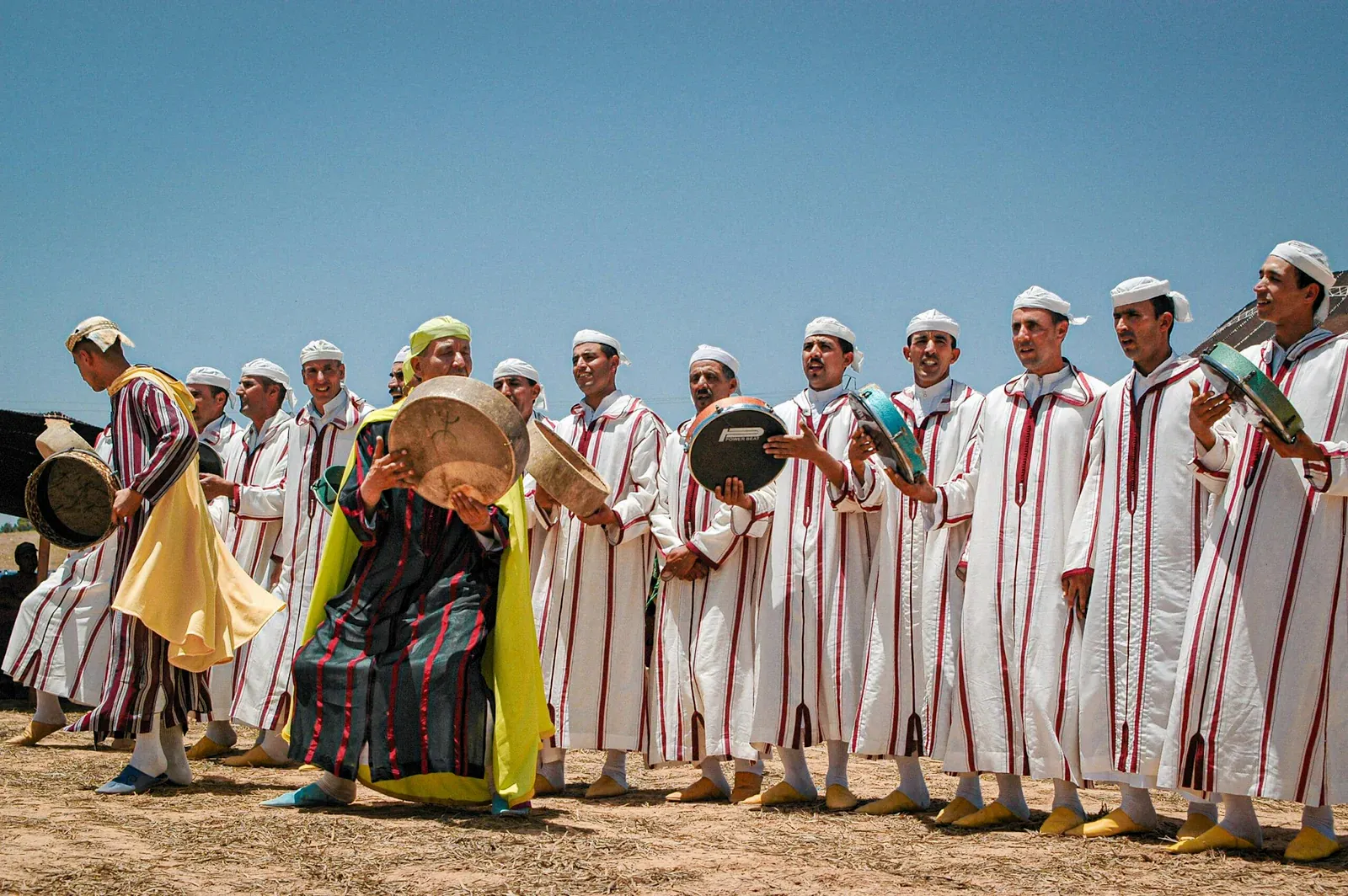
In the Atlas, ahidus is danced in a closed circle that expresses the unity of the tribe, with the leader in the middle. A prayer is chanted at the start, and a chorus answers; drums and other percussion keep the rhythm while performers dance in two parallel rows or around the musicians. Men wear white djellabas and turbans, and women kaftans with silver jewellery. Its origins are poorly documented, though it is often traced to the Zenata tribes.
The Shluh tradition of the rrways, led by a raiss, runs as a suite. It opens with the astara, an instrumental passage on the rebab or lutar that sets the notes of the melody, followed by sung poetry, a choreographed overture, a lively song, a dance, and a close called tabbayt in which the rhythm speeds up and then stops abruptly. In Kabylia the nineteenth-century poet Si Mohand Ou Mohand left verse that later singers still draw on.
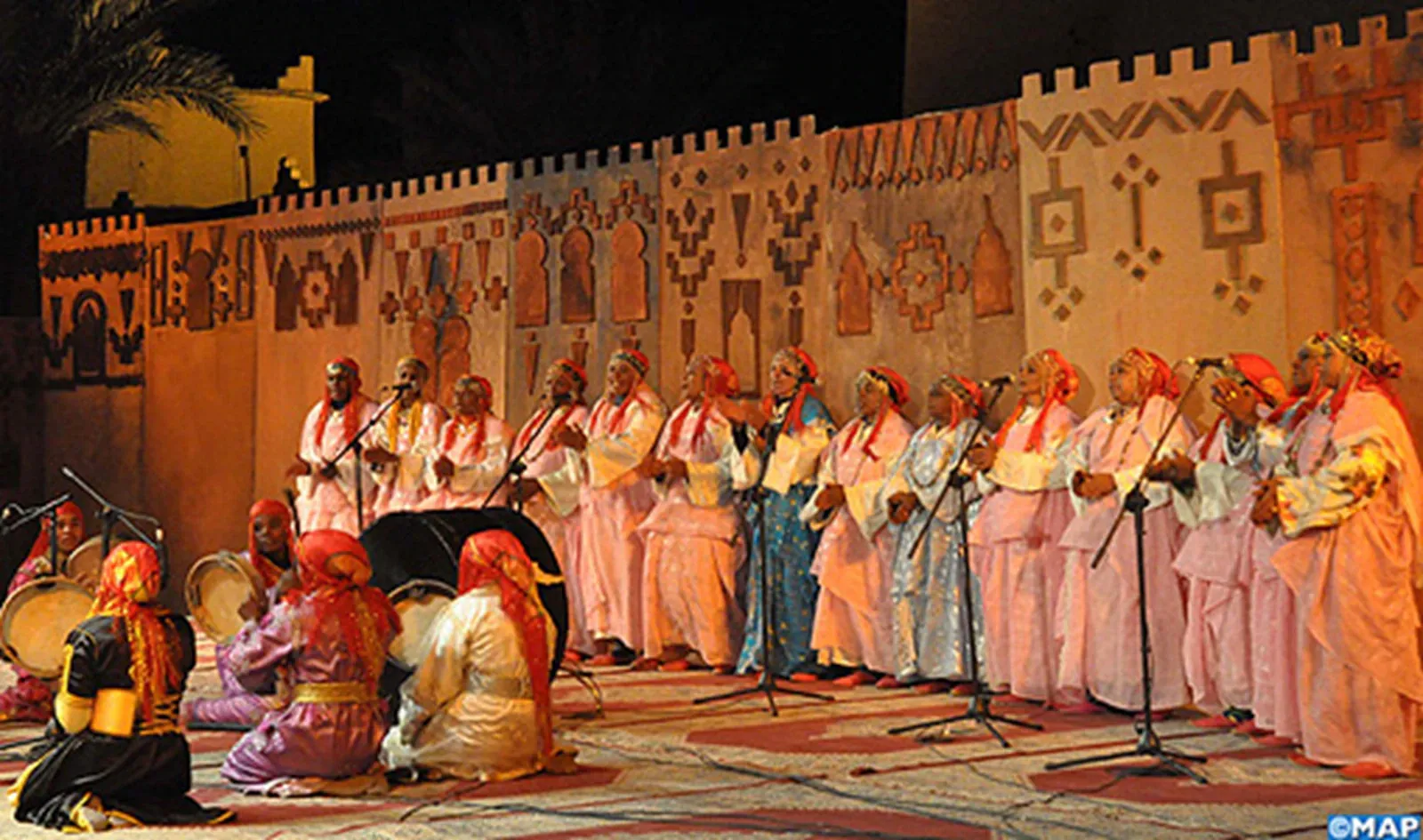
Paris cafes and exile song, 1930-1961
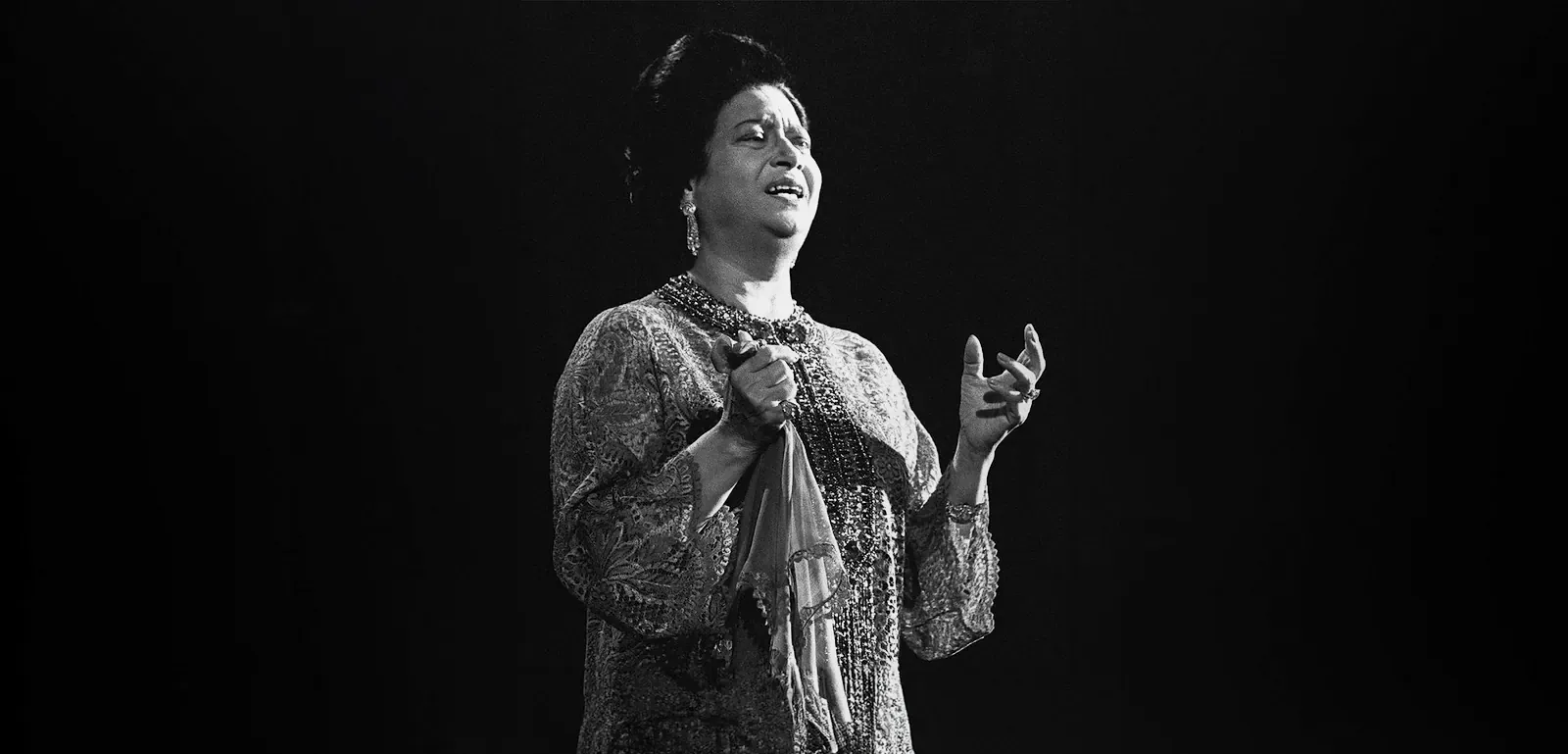
In the 1930s Kabyles moved to Paris in large numbers and opened cafes where musicians such as Cheikh Nourredine added banjo, guitar and violin to Kabyle folk melodies. Slimane Azem, an immigrant inspired by Nourredine and by Si Mohand, sang about homesickness, poverty and passion and became linked to the Algerian independence movement. By the 1950s the lush orchestration of Arab classical music, above all the Egyptian stars such as Umm Kulthum, had left a lasting mark on Kabyle arrangements.
Independence and protest song, 1962-1989
Independence in 1962 did not bring freer conditions for Kabyle musicians, who began to put covert criticism of the new government into their lyrics. Many took cues from singer-songwriters such as Joan Baez, Bob Dylan and Victor Jara. Idir became the face of the period: in 1973 he stood in at short notice on Radio Algeria and sang “A Vava Inouva”, a lullaby drawing on the oral tradition of his culture. After military service he moved to France in 1975 to make the album of the same name, and the title song was translated into seven languages. Lounis Ait Menguellet became known for poetic, allusive lyrics, and Ferhat Mehenni for uncompromising political ones.

The turning point was the Berber Spring. On 10 March 1980 the cancellation of a lecture on ancient Kabyle poetry by Mouloud Mammeri at the university in Tizi Ouzou set off weeks of demonstrations and strikes, the first great popular movement to challenge the single-party state since independence. From then on singing in Kabyle was inseparable from the demand for the recognition of Amazigh language and identity.
In Morocco a parallel generation came from newly urbanised families in the Sous. Izenzaren formed in Agadir in 1972, mixing ancestral song with modern instruments in the wake of Moroccan groups such as Nass El Ghiwane and Jil Jilala, and recorded its first album in the mid-1970s. After a split in 1975 two groups claimed the name, and the better known is led by the singer and banjo player Abdelhadi Iggout. Ammouri Mbarek, active from the 1960s in the High Atlas, is often called the John Lennon of the Berbers.
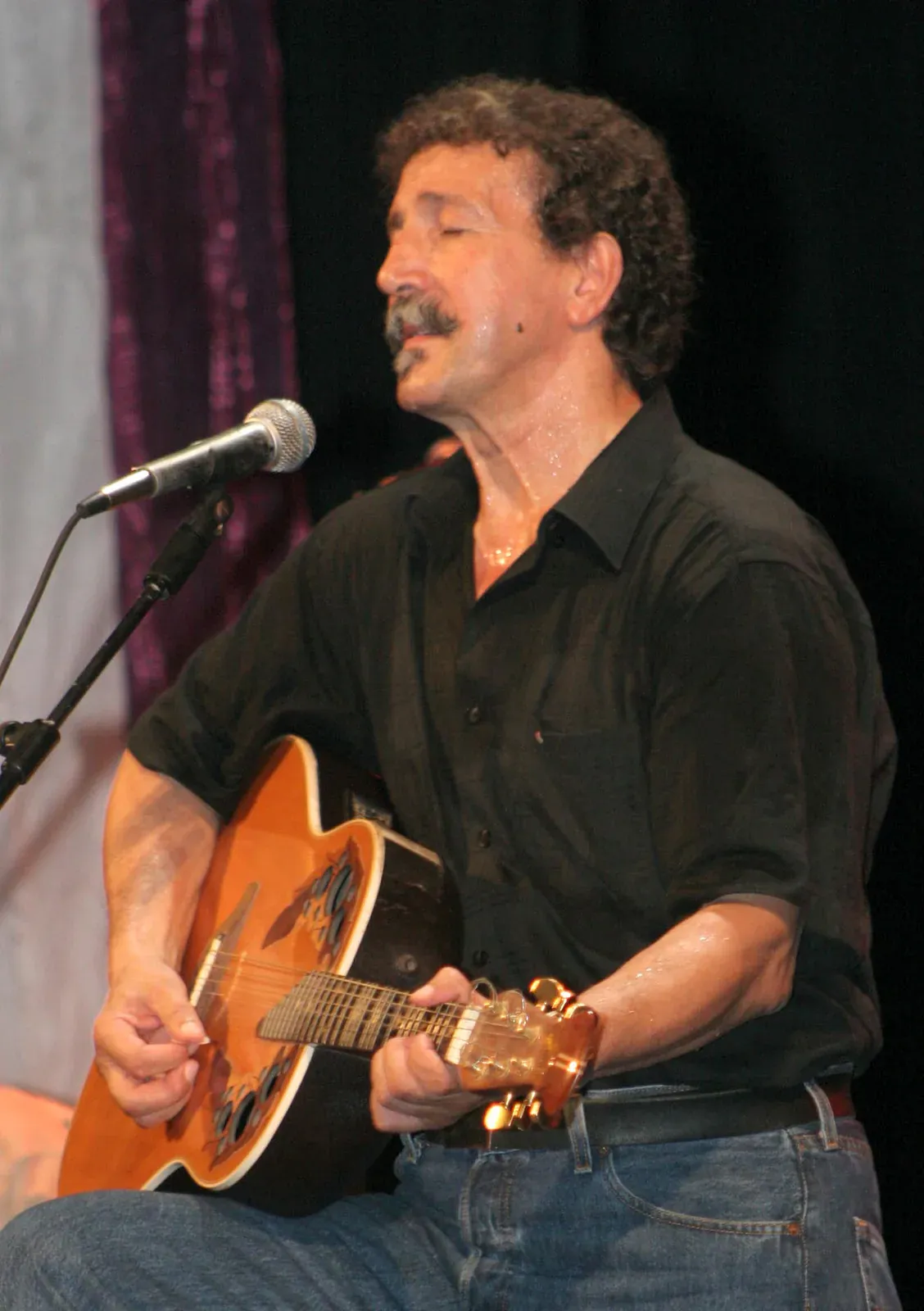
Pop, ballads and world music, 1990-2001
By the time raï was reaching Europe in the 1980s, Kabyle artists were moving toward sentimental pop ballads. Idir came back in 1993 with “Les chasseurs de lumieres”, after a break through the 1980s. Takfarinas, born Hacene Zermani, built an all-electric sound that he called Yal, and Abdelli’s work with Peter Gabriel’s Real World label reached new audiences. In 1999 Idir’s “Identites” paired him with Manu Chao, Zebda, Dan Ar Braz, Gnawa Diffusion and the Berber National Orchestra, and it was a widespread success.
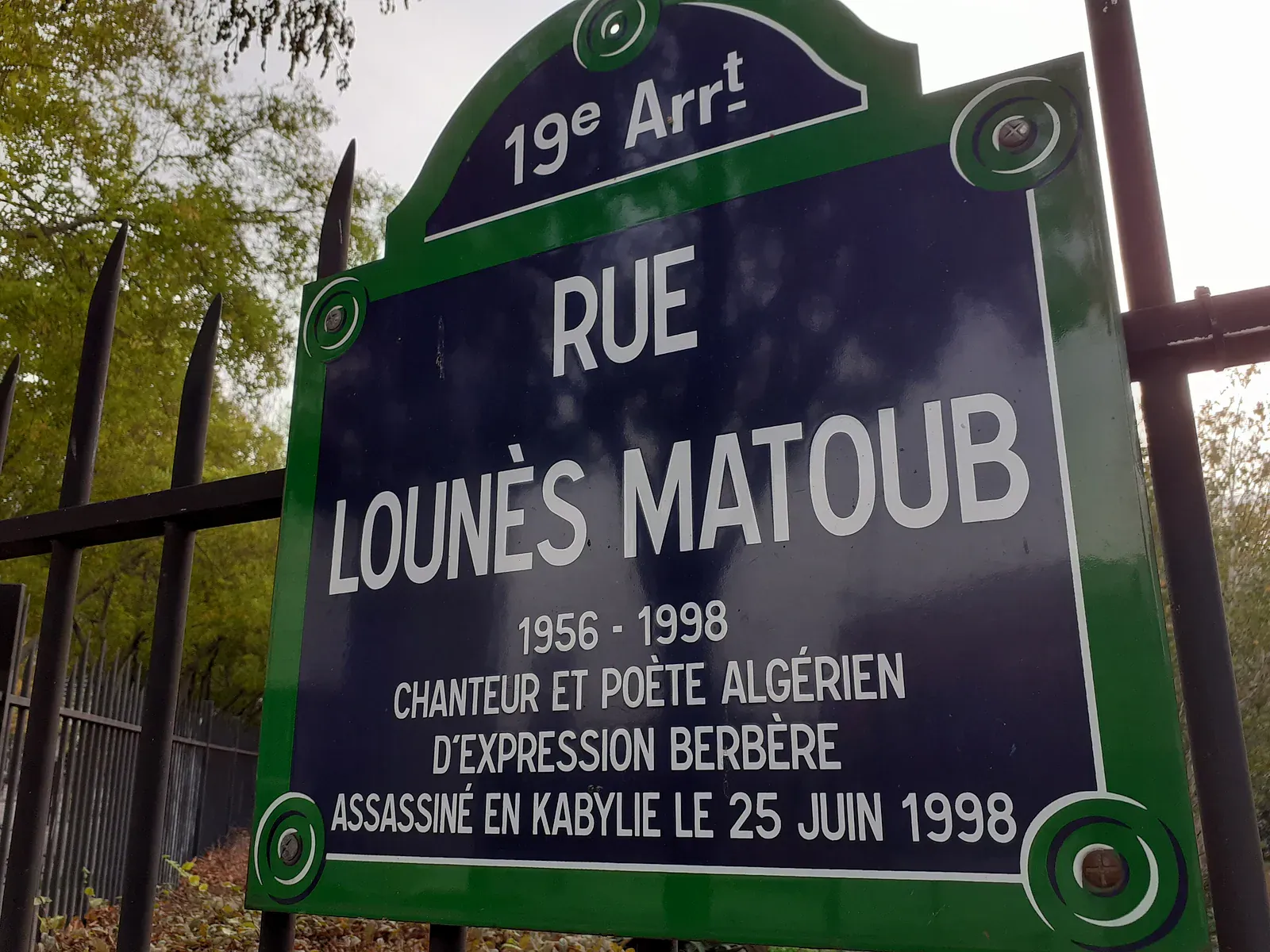
On 25 June 1998 Lounes Matoub, a Kabyle singer, poet and mandole player who had campaigned openly for Amazigh rights and secularism, was shot at a roadblock in Kabylia. The Armed Islamic Group claimed the killing; many Berber activists blamed the government instead. Riots followed for a week, and a strike and marches marked the anniversaries. His last album, “Lettre ouverte aux…”, appeared after his death and includes a parody of the Algerian national anthem.
Recognition and festivals, 2002 to the present
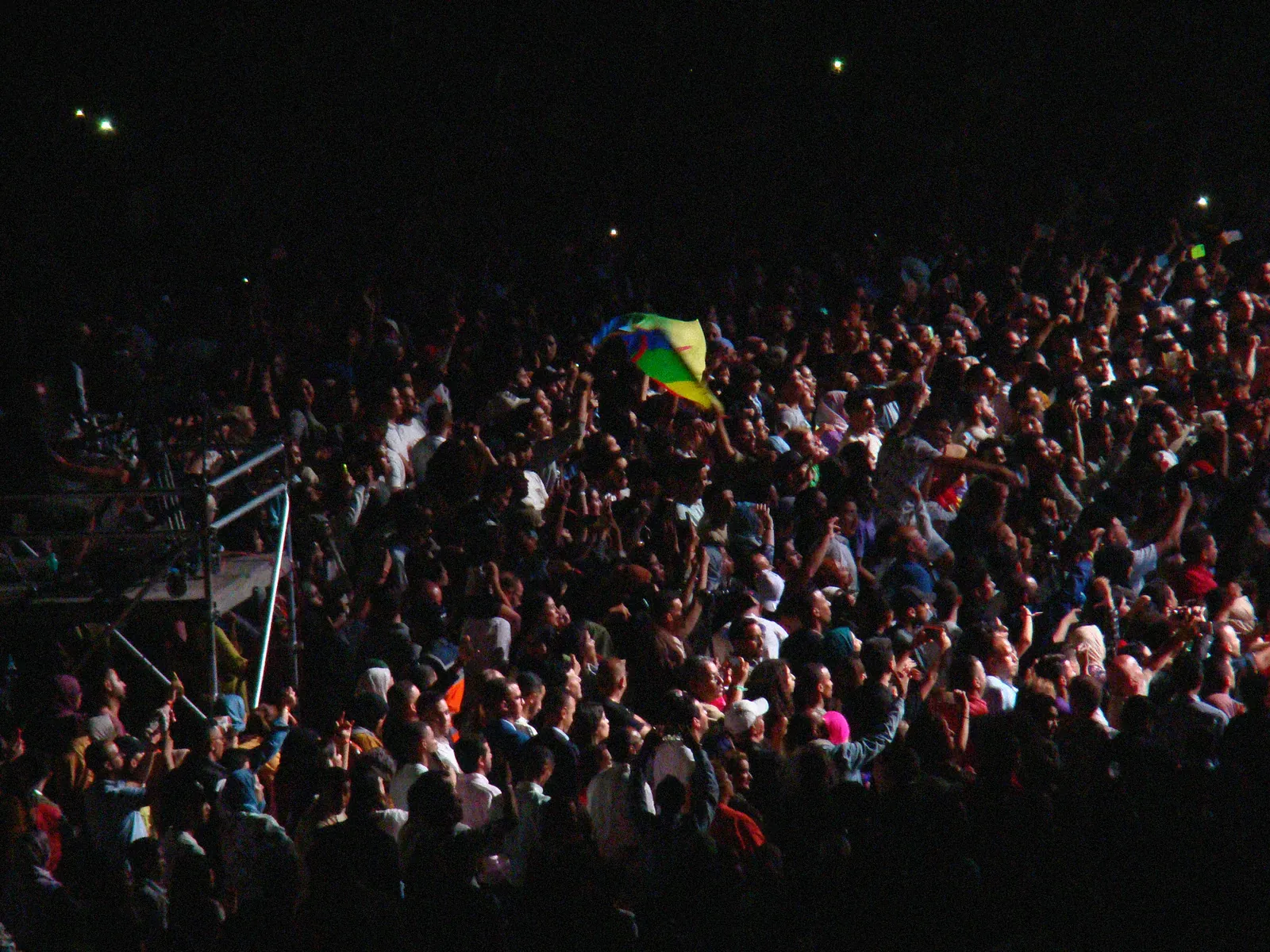
Tamazight became a national language in Algeria in 2002. Morocco made Amazigh an official language in its 2011 constitution, and Algeria followed with official status in 2016. Festivals gave the music a stage in its home region, among them the Timitar festival in Agadir, where an Amazigh flag is a common sight in the crowd. In 2018 Idir returned to Algeria after 38 years away to play a concert in support of the protests that led to the resignation of President Abdelaziz Bouteflika; he died on 2 May 2020.
Characteristics
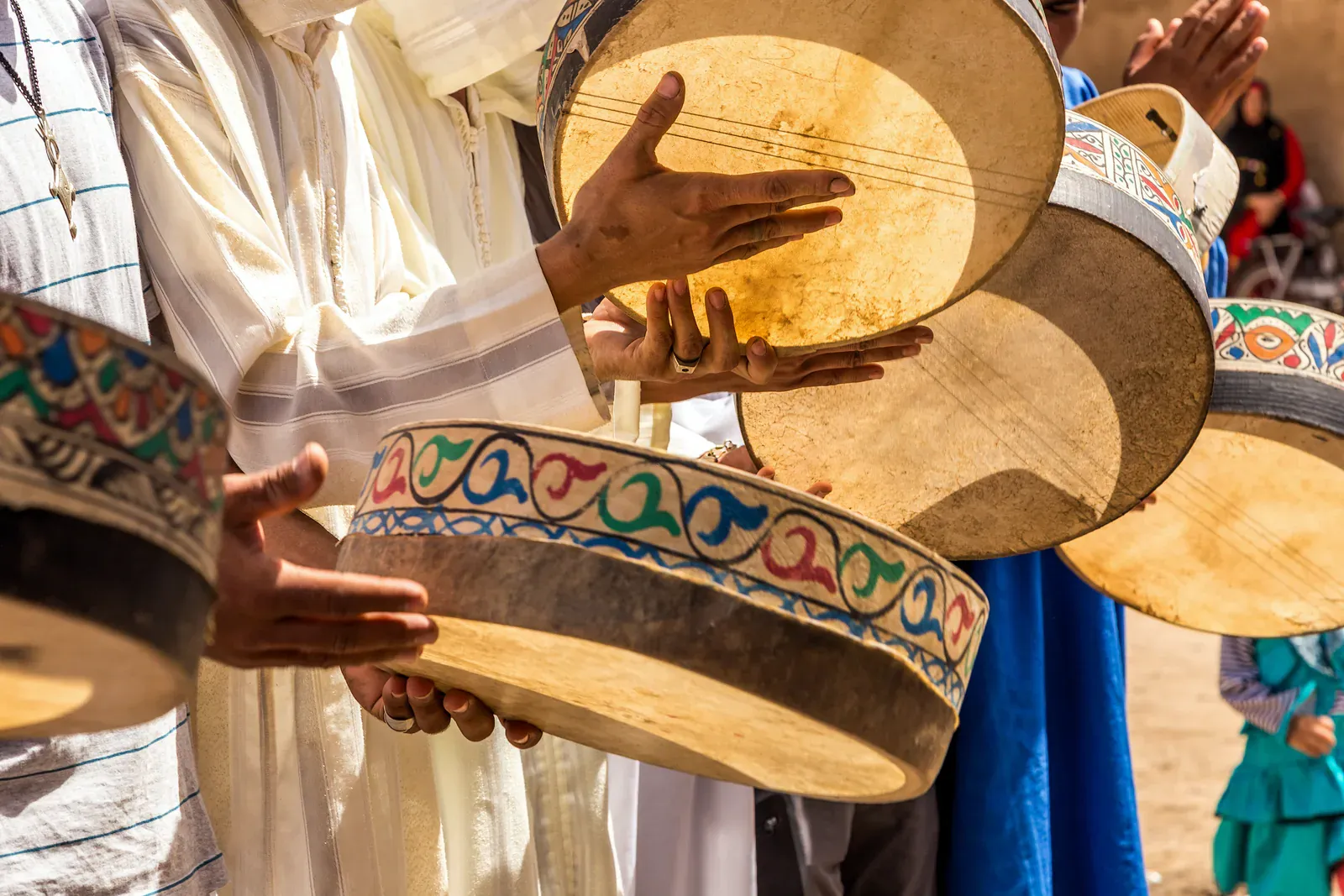
Rhythm comes from frame drums, above all several bendirs at once. Melody is carried by the voice, with a reed flute, a double-reed pipe, a rebab or a plucked lute added in many styles. Call and response between a leader and a chorus is a basic form in the collective dances. Lyrics treat love, exile, land and politics, and they are sung in the local Tamazight variety: Kabyle in Kabylia, Chaoui in the Aures, Tashelhit in the south of Morocco and Tamazight in the Middle Atlas.
Instruments and production
Traditional ensembles are acoustic. Recorded pop adds guitars, banjo, keyboards and string arrangements taken from Arab orchestral song; Matoub accompanied himself on the mandole, while Takfarinas moved to an all-electric band.
Notable recordings
“A Vava Inouva” began as a lullaby heard on a radio show and, through Idir’s 1976 album, became the song that most people outside Algeria associate with Kabyle music. Izenzaren’s “Aggass” of 1977, with songs such as “Awdass Atassanou”, shows the Moroccan side: banjo-led, sung in Tashelhit and rooted in urban migration.
Culture
Music marks weddings and village gatherings, and since the Berber Spring a concert in Kabyle can be a political act. In 2021 an anthology of ten discs of Rrways wandering poet-singers won a French world-music award, and the Master Musicians of Jajouka, from the Rif Mountains, have toured the world and worked with Brian Jones and William S. Burroughs.
Legacy
Amazigh singers opened a door for later artists who blend the languages with other idioms. Najat Aatabou’s song “Goul El Hak El Mout Kaina” was sampled by the Chemical Brothers in “Galvanize”, and Hindi Zahra sings mostly in English with some songs in Tashelhit. The Tuareg tradition of the Sahara, treated separately in desert blues, is part of the same wider Amazigh world. The Maghreb’s urban Andalusi classical music is its contrast.
Misconceptions
Amazigh music is sometimes treated as a single style. In fact it varies from region to region: circle dances in the Atlas, the rrways suite of the Sous, Kabyle singer-songwriters in Algeria and the Chaoui music of the Aures each have their own forms and instruments.
It is also sometimes lumped in with Arab music. The Amazigh peoples predate the Arab migrations to the Maghreb and sing in their own languages, even though Egyptian orchestral song shaped Kabyle arrangements from the 1950s and the exchange has gone both ways.
A third idea is that it is only ancient folklore. Pop ballads, electric bands and protest song have been part of it since the 1970s.
Frequently asked questions
What is Amazigh music?
Amazigh music is the song, poetry and dance of the Amazigh (Berber) peoples of North Africa, from village forms such as ahidus and ahwash to modern Kabyle and Tashelhit pop and protest song.
What is the difference between Amazigh and Berber music?
None in content: Berber is the older, outside name and Amazigh the people’s own name for themselves.
Who are the best-known Amazigh singers?
Idir, Lounis Ait Menguellet, Lounes Matoub and Takfarinas from Kabylia, and Izenzaren and Ammouri Mbarek from Morocco.
What instruments are used in Amazigh music?
Bendir and tbel drums, the ghaita pipe, the rebab and the mandole, with guitar and keyboards in modern recordings.
What was the Berber Spring?
The 1980 protest movement in Algeria that demanded recognition of the Amazigh language and identity, and shaped the political meaning of Kabyle song.
Sound
Sound sheet
Anatomy of a track
| # | Part |
|---|---|
| 1 | Astara (instrumental opening) |
| 2 | Amarg (sung poetry) |
| 3 | Tamssust (lively song) |
| 4 | Aberdag (dance) |
| 5 | Tabbayt (accelerating close) |
Signature sounds
- Bendir pulse under sung poetry
- Call and response between soloist and chorus
- Verse in Kabyle, Tashelhit or Tamazight
- Acoustic guitar or mandole in the modern song
Drums and percussion
- Bendir
- Tbel
Techniques
- Call and response
- Improvised poetry
- Rrways suite
- Row and circle dance
Keys and modes
Pentatonic scales. Old village styles are described as pentatonic.
Vocals
Solo poet-singers and mixed choruses in Kabyle, Tashelhit or Central Atlas Tamazight.
Scenes
Where it happened
Where and when the sound lived: one bar per city on a shared timeline.
Europe
Africa
Active scenes
Peak 3, 1973-2025
Heart of Kabylia, home of the Berber Spring and of singers such as Ait Menguellet and Matoub.
Kabyle migrants made it a base for recording, cafes and exile song.
Sous capital where Izenzaren began and where an annual Amazigh music festival now draws crowds.
Culture
Culture markers
- Ahidus circle
Men and women dance in a closed circle or two rows around the drummers.
Dance - White djellaba and turban
Ahidus dancers wear white, with silver jewellery for women.
Fashion - Weddings and village gatherings
Travelling musicians perform songs, tales and poetry at weddings and social events.
Ritual
Media
Key media
- 2021Rrways - a journey into the realm of Amazigh wandering poet-singers
Ten-disc anthology of Shluh poet-singers that won a French world-music prize.
Compilation
Glossary
Terms on this page
Collective circle song and dance of the Middle and High Atlas, with call and response.
Southern Moroccan counterpart of ahidus, sung in Tashelhit.
Poet-singer who improvises verse on current affairs; plural imdyazan.
Traditional Kabyle poems that singers set to music.
Spring in Tamazight, the name of the 1980 Berber Spring movement.
Middle Eastern and North African family