Khaleeji music
Khaleeji music is the song of the Arab Gulf states, from Bedouin poetry and pearl-diving songs to urban sawt and the satellite-era pop of Rotana.
Saudi Arabia, Kuwait, Bahrain, United Arab Emirates, Qatar, Oman, around 1783
Middle Eastern and North African family
Born
around 1783
Saudi Arabia, Kuwait, Bahrain, United Arab Emirates, Qatar, Oman
Subgenres
18
Documented branches
Links
4
Genres it drew on or shaped
Tempo
75-130 BPMLineage
Family tree
Grew out of
Saudi Arabia, Kuwait, Bahrain, United Arab Emirates, Qatar, Oman
Khaleeji music
Led to (18)
Timeline
Era by era
From the first sparks to today. Select a dot to read the story behind it.
- Sea songs and early sawt
1783 to 1926
- Shellac discs and state radio
1927 to 1957
- Oil-era stars
1958 to 1986
- Label and satellite era
1987 to 2007
- Streaming and megastages
2008 to today
Eras
Moments
- 1 Sea songs and early sawt, 1783 to 1926
- 2 Shellac discs and state radio, 1927 to 1957
- 3 Oil-era stars, 1958 to 1986
- 4 Label and satellite era, 1987 to 2007
- 5 Streaming and megastages, 2008 to today
around 1783
Sea songs and early sawt
Bedouin poetry, pearl-diving nahma work songs and the urban sawt of Kuwait and Bahrain grow along Gulf trade routes. Oud, violin and mirwas gatherings (samra) carry the style.
- 1783Sawt traced in BahrainHistorian Mubarak al-Ammari dates sawt in Bahrain to 1783 and in Kuwait possibly before 1766.
- 1836Abdallah al-Faraj, poet and oud playerCredited by some accounts with establishing the sawt genre; he lived 1836 to about 1902.
1927
Shellac discs and state radio
Baidaphon scouts Kuwait in 1927, Bahrain's Mohammed bin Fares is recorded from the early 1930s and Kuwait Radio opens in 1951, turning local sawt into recorded repertoire.
- 1927Baidaphon scouts KuwaitIts Basra representative Hasan Darsa begins Gulf recording sessions.
- 1928Saleh and Daoud Al-Kuwaity move to BasraThe brothers become pioneers of Kuwaiti sawt and Iraqi maqam.
- 1933First Mohammed bin Fares discs releasedThe Muharraq singer recorded in Baghdad and Aleppo; his first songs came out in 1933.
- 1951Kuwait Radio begins broadcastingThe station launched on 12 May 1951 and spreads sawt through the home.
- 1956Abu Bakr Salem debuts with Ya Ward Mahla JamalakThe Hadhrami singer starts a career that runs to 2017.
1958
Oil-era stars
Abu Bakr Salem, Talal Maddah and Mohammed Abdu build a modern Gulf song in Beirut, Jeddah and Riyadh; Maqadir (1976) becomes the first Hejazi song to travel pan-Arab.
- 1958Abu Bakr Salem moves to BeirutBeirut becomes his base; his single 24 Saa'ah later reportedly sells over a million copies.
- 1974Talal Maddah sings at Voice of the Arabs, CairoHe performs Maqadir before a crowd reported at over 50,000.
- 1975Abu Bakr Salem settles in RiyadhThe Lebanese Civil War pushes him to Saudi Arabia.
- 1976Talal Maddah's MaqadirFirst Hejazi song to find a pan-Arab audience.
- 1984Abdul Majeed Abdullah and Rashed Al-Majed start recordingBoth launch careers in 1984.
1987
Label and satellite era
Rotana opens in 1987 and later passes to Al Waleed bin Talal; Rashed Al-Majed, Abdul Majeed Abdullah and Ahlam define cassette, CD and satellite-TV Khaleeji pop.
- 1987Rotana foundedThe Nagro brothers start the label that becomes the largest in the Arab world.
- 1995Ahlam debuts with Ahbak MootThe Emirati singer becomes a leading female voice.
- 1996Rashed Al-Majed's Al-MusafirHis best-selling album, estimated near a million copies.
- 1998Mohammed Abdu returns at the Abha festivalHis official comeback after a pause that began in 1989.
- 2000Talal Maddah dies on stage in AbhaHe collapsed at Al Meftaha theatre on 11 August during a live Saudi broadcast.
- 2001Ensemble Muhammad bin Fares plays ParisThe group records a sawt concert at Institut du monde arabe on 15 June.
- 2003Al Waleed bin Talal takes full control of RotanaHe raised his stake to 100 percent after buying 48 percent in 2002.
- 2005Mohammed Abdu's Al AmakenThe long title track from the Rotana album becomes a signature number.
2008
Streaming and megastages
Singers from the Emirates and Saudi Arabia fill Expo stages, and YouTube hits such as Boshret Kheir (2014) cross dialect lines.
- 2012Ahlam joins Arab IdolShe judged seasons 1 to 4 across 2012 to 2017.
- 2014Boshret Kheir releasedHussain Al Jassmi's Egyptian-dialect single passes 700 million YouTube views.
- 2021Mohammed Abdu at the Expo 2020 Dubai openingThe veteran performs at the opening ceremony.
- 2023Abdulkarim Abdulqader diesThe Kuwaiti Wounded Voice dies in May aged 82.
Listening path
Anthems
The records that built the sound, grouped by the part they played. Thumbnails come from YouTube; the player loads only when you press play.
- 01
Abu Bakr Salem, 1960
Beirut single that launched the modern Gulf song and made its singer the Father of Khaliji Music.
Origin - 02
Talal Maddah, 1976
First Hejazi song to find a pan-Arab audience, performed to a huge Cairo crowd.
Start hereBreakthrough - 03
Rashed Al-Majed, 1996
Title track of the album that sold an estimated million copies.
Start hereAnthem - 04
Abdul Majeed Abdullah, 2000
Romantic Rotana-era ballad tied to the April 2000 album Yataib el Galb.
Anthem - 05
Rashed Al-Majed, 2002
Video from the album that moved his sound toward Emirati-flavoured pop.
Anthem - 06
Mohammed Abdu, 2005 · Rotana
Nostalgic long-form signature of the Artist of the Arabs.
Start hereAnthem - 07
Hussain Al Jassmi, 2014
Egyptian-dialect shaabi single by an Emirati that spread Khaleeji stardom across the Arab world.
Crossover - 08
Mohammed bin Fares, 2001
Ensemble Muhammad bin Fares revives Bahraini sawt in a concert at Institut du monde arabe.
Revival
Facts
| Family | Middle Eastern and North African |
| Origin | Saudi Arabia, Kuwait, Bahrain, United Arab Emirates, Qatar, Oman |
| Emerged | Islamic era onward, urban form 19th century |
| Status | Active |
| Tempo | 75 to 130 BPM |
| Meter | Varies by rhythm cycle |
| Subgenres | 18 |
Khaleeji music (also spelled Khaliji) is the vocal music of the Arab states of the Persian Gulf: Kuwait, Bahrain, Saudi Arabia, the Emirates, Qatar and Oman.
It grew from Bedouin poetry, pearl-diving work songs and the urban sawt of Kuwait and Bahrain, and is built on the oud, violin and mirwas drum, set to classical Arabic or Nabati verse. Recorded from 1927, it became a pan-Arab pop industry by the 1980s. It belongs to the Middle Eastern and North African family and is related to Arabic classical music.
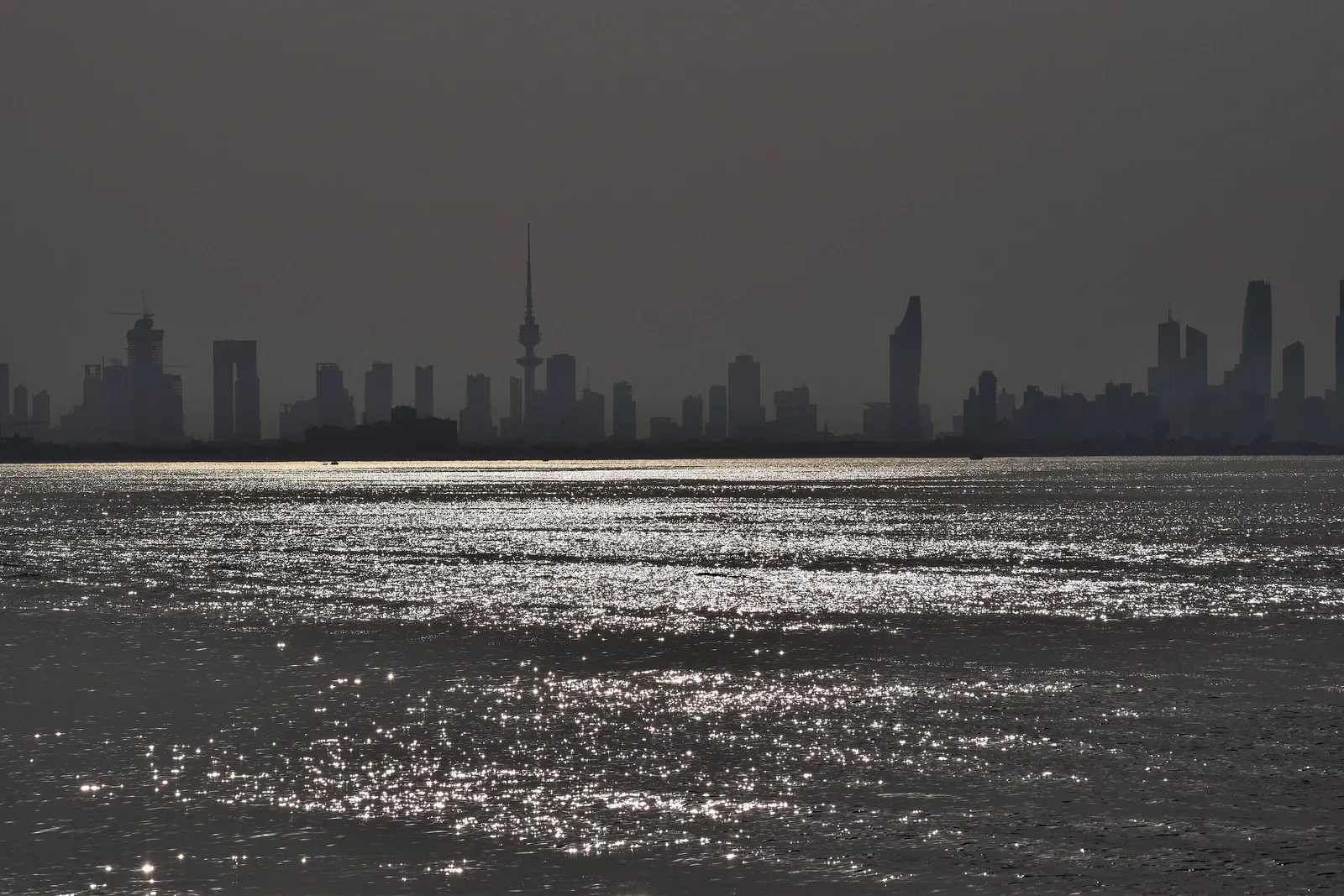
Origins
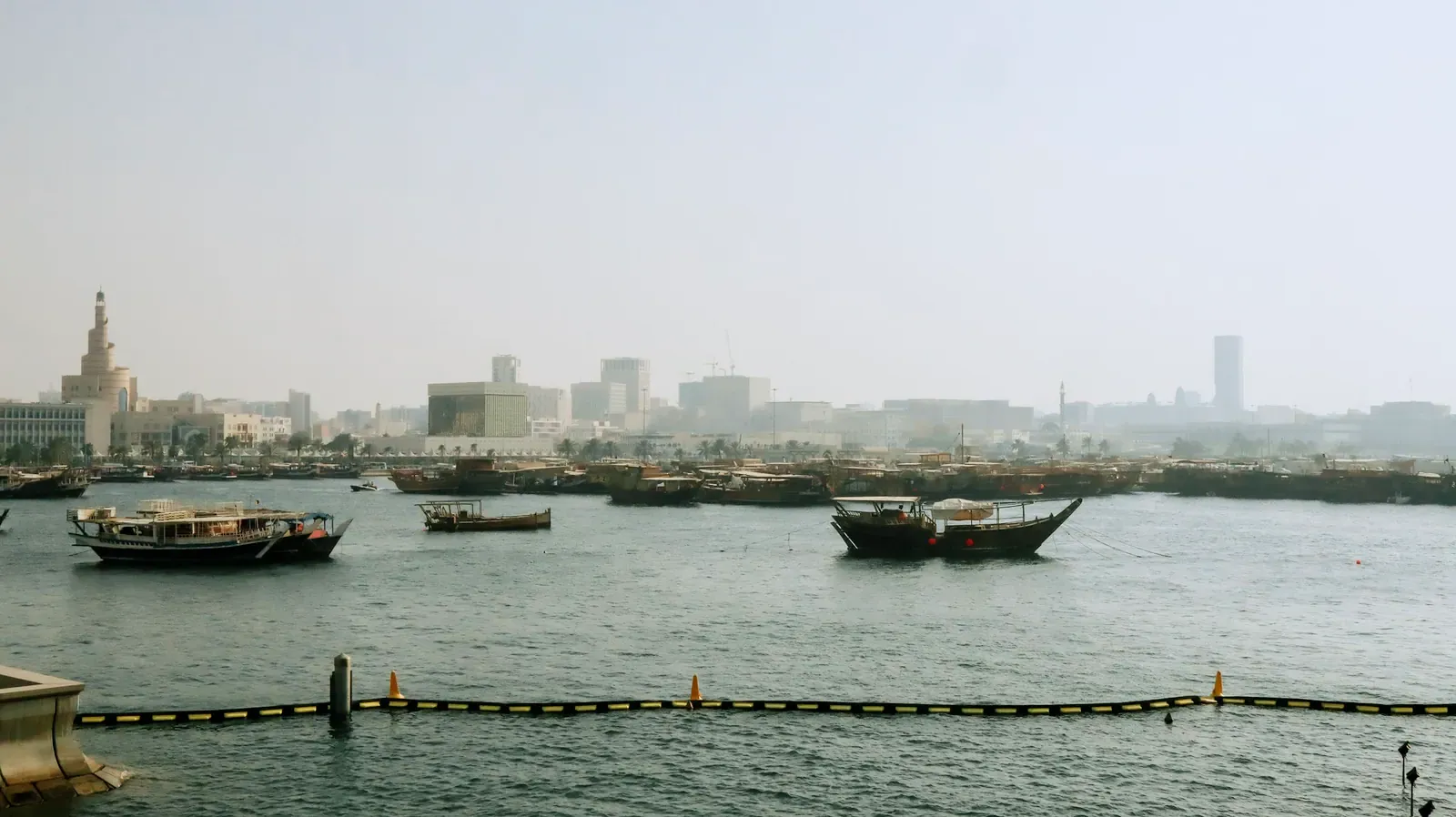
Before records, the Gulf had three kinds of song. Bedouin poets chanted verse, often to a rebab. Pearl-diving crews on the sea sang work songs called nahma to keep time on the boats. And in the port towns of Bahrain and Kuwait, merchants and sailors gathered at night in samra evenings to hear sawt.
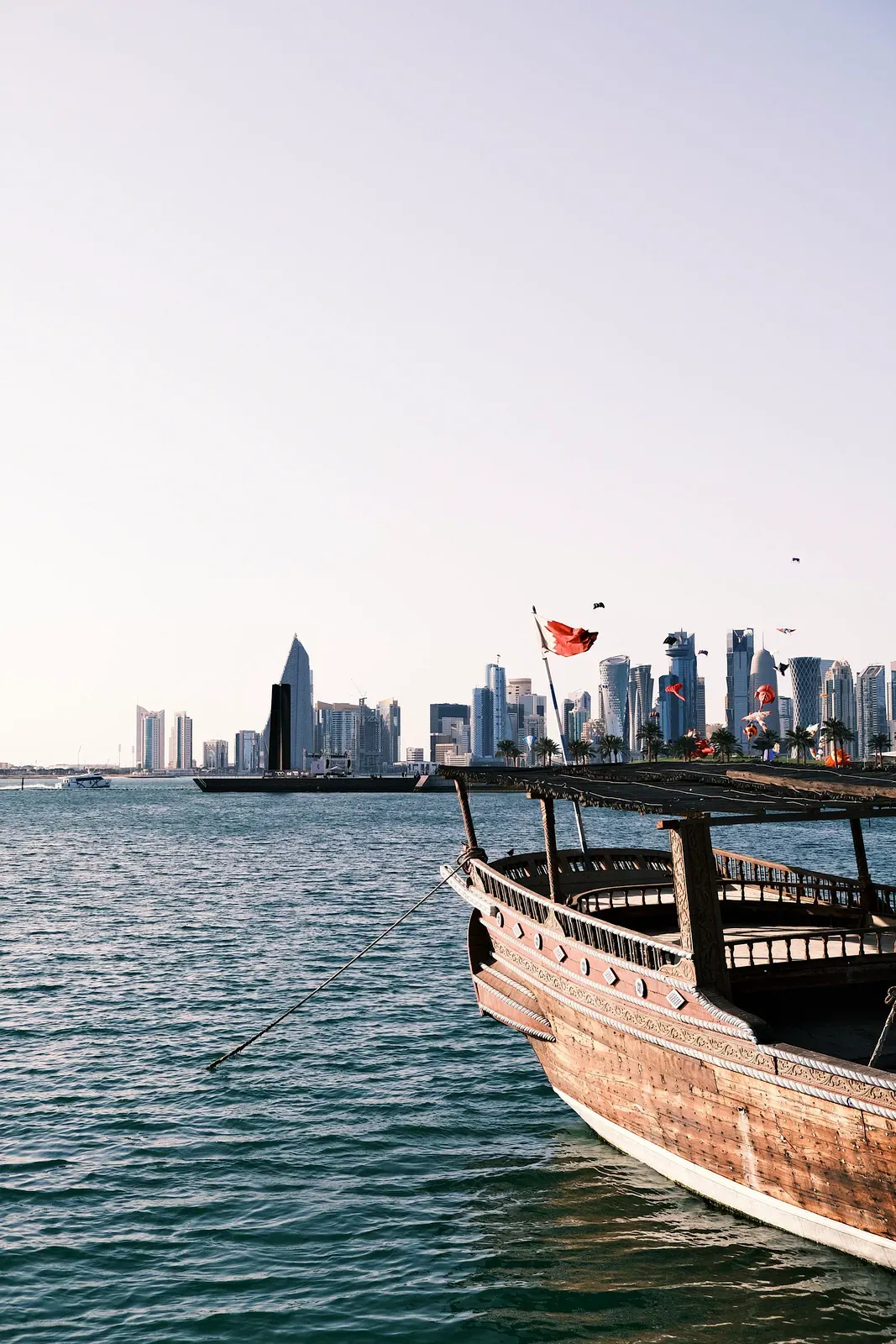
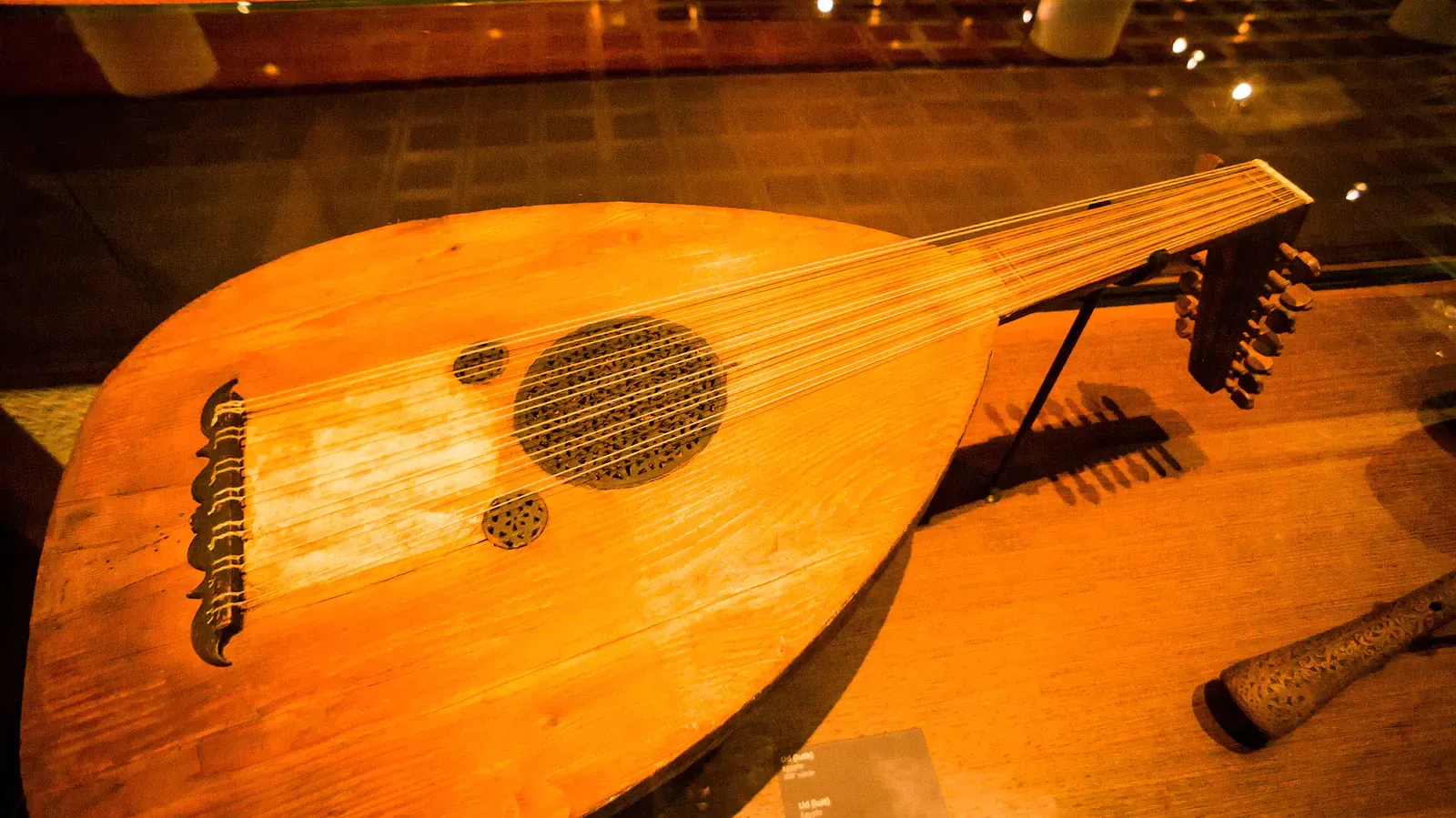
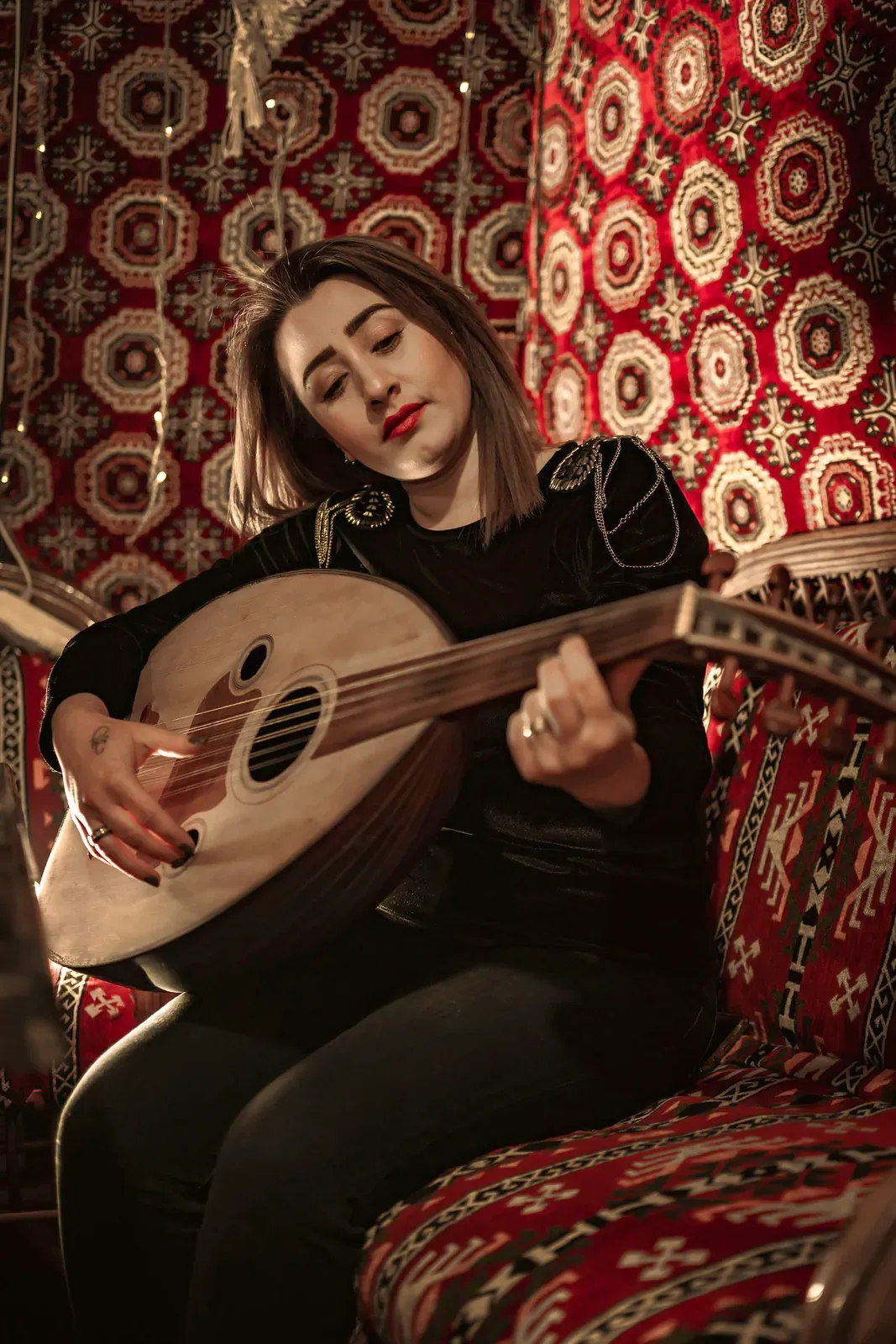
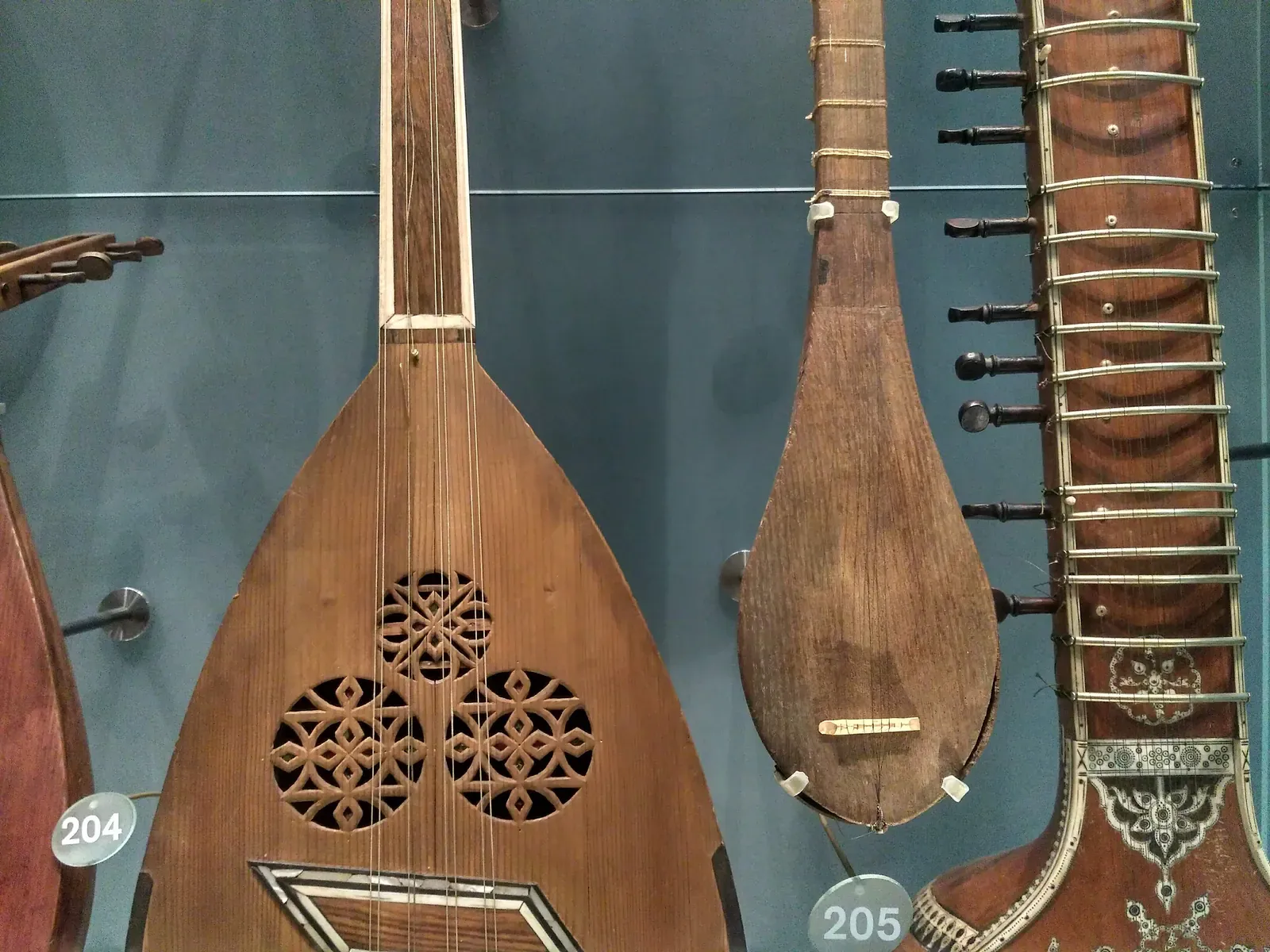
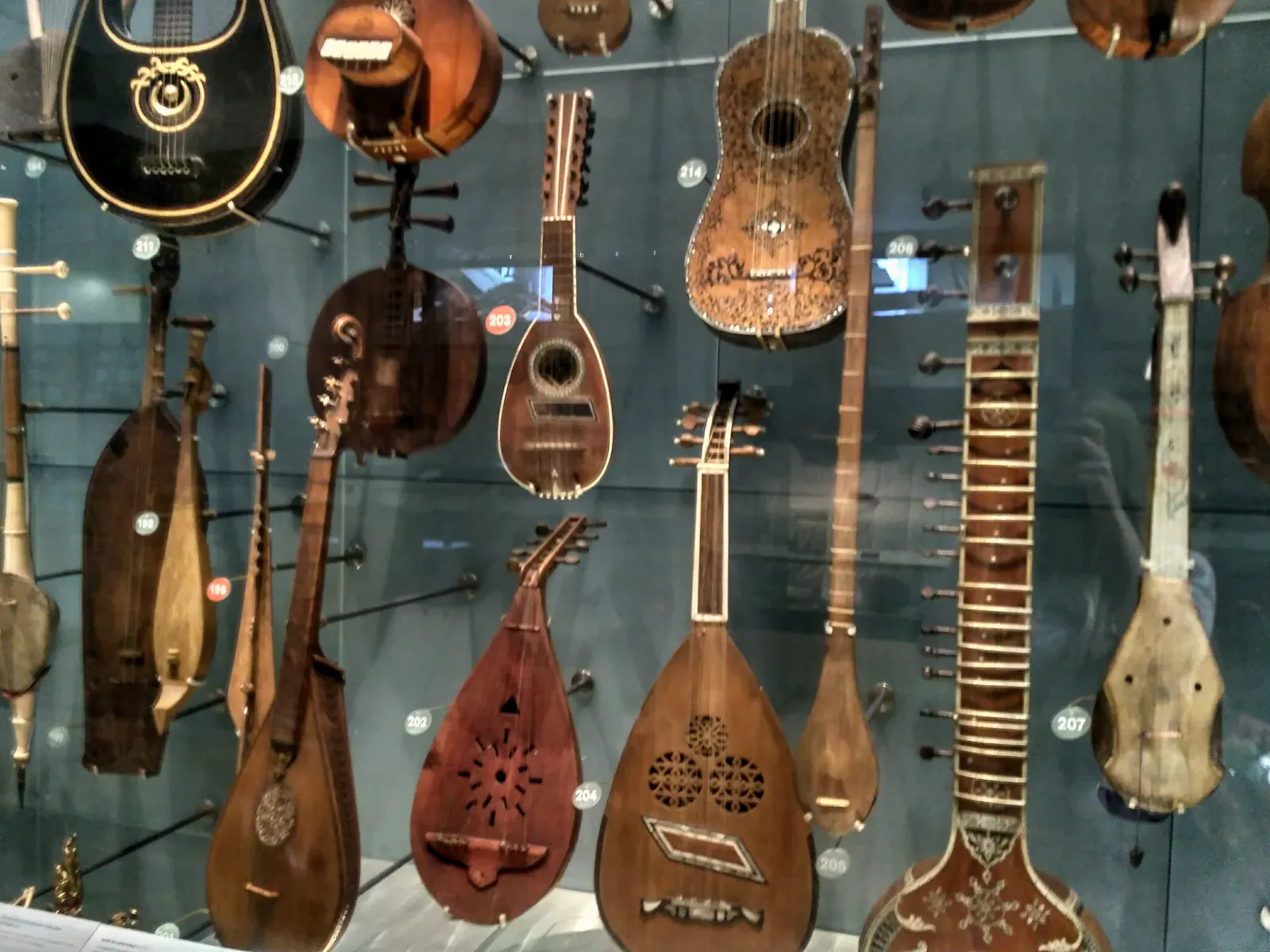
Sawt is the urban core. Its ensemble is simple: an oud carries the melody, a violin doubles and decorates the voice, and a small hand drum, the mirwas, sets the rhythm, with interlocking clapping called sherbaka. The text is classical Arabic or Nabati poetry, and a closing section called the tawshih winds the song down. Bahraini sawt is traced to about 1783, and Abdallah al-Faraj, a poet and oud player who lived to about 1902, is credited in some accounts with shaping the form.
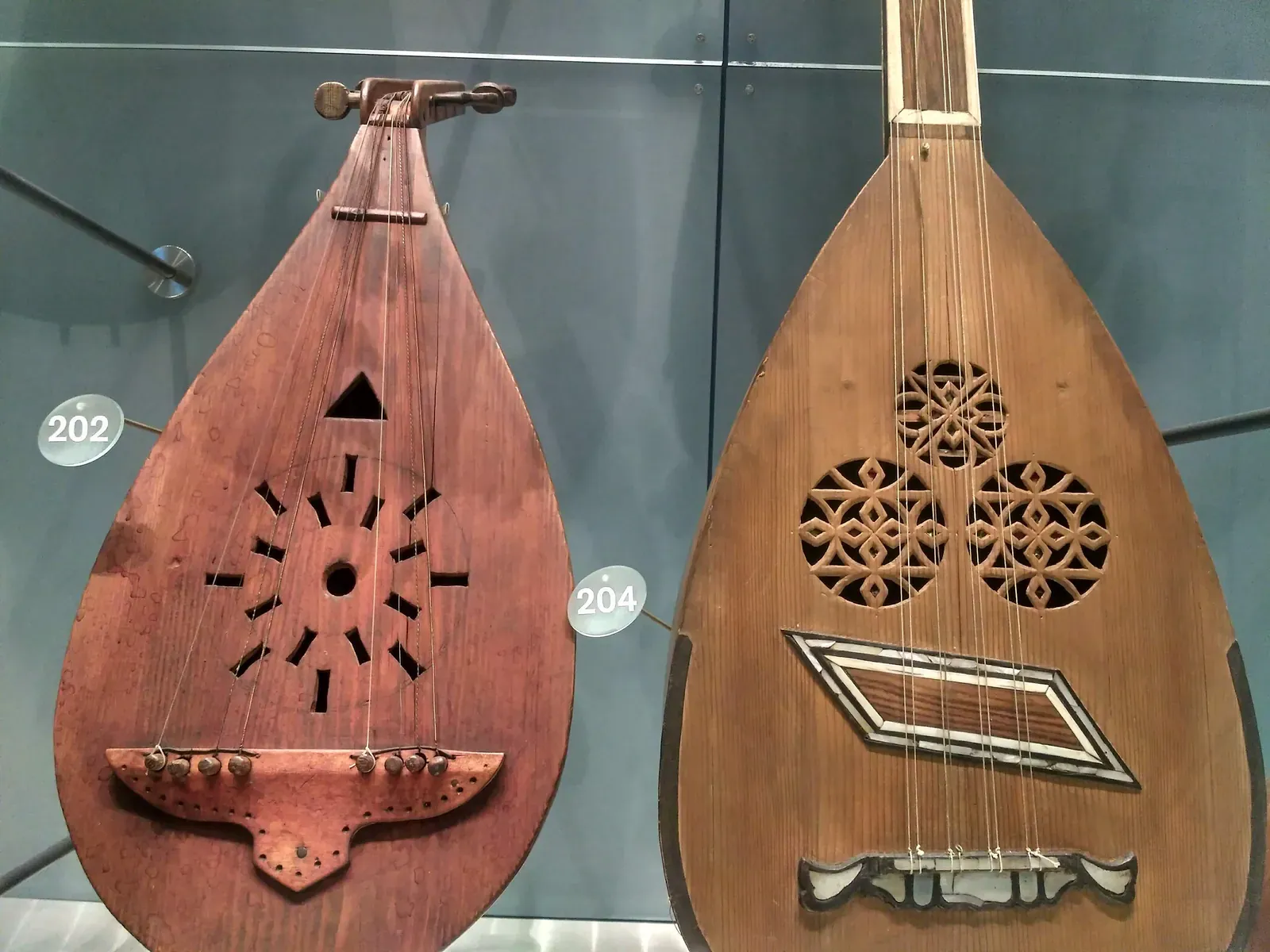
Trade routes and early sawt, 1780s-1926
Trade shaped the sound of the music. Ships linked the Gulf with India and East Africa, and the coastal towns absorbed what came off the boats. Men’s gatherings played sawt, and dances such as the two-man zaffan sat beside the ensemble.
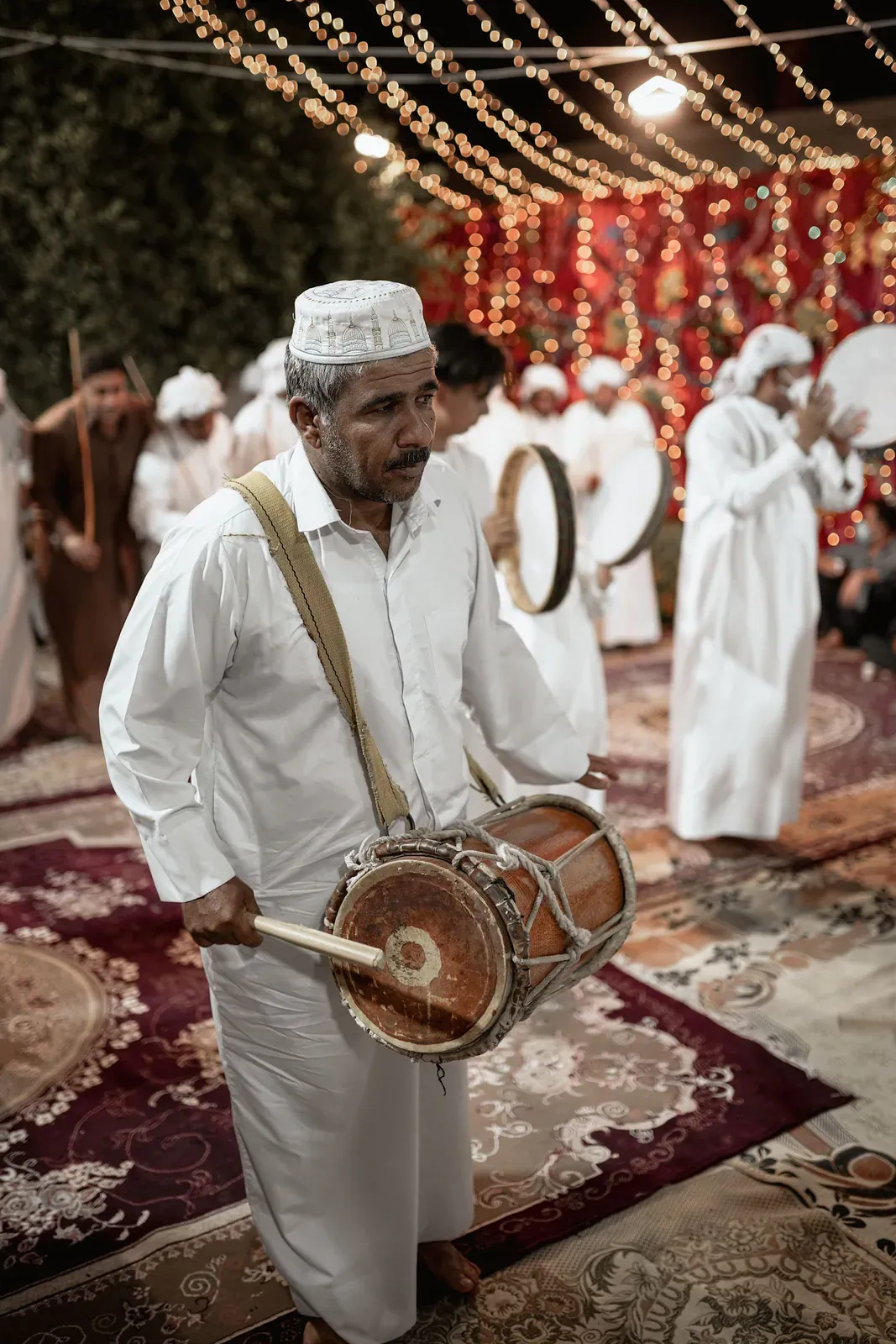
The city that turned this into a career was Muharraq in Bahrain. Mohammed bin Fares, born there, became its best-known singer, and his first discs appeared in 1933. Across the water, the brothers Saleh and Daoud Al-Kuwaity moved to Basra in 1928 and became pioneers of Kuwaiti sawt and Iraqi maqam.
Shellac discs and state radio, 1927-1951
Recording started in 1927, when the Baidaphon company sent agents through Kuwait. The Baidaphon sessions fixed local songs as repertoire for the first time, so a tune could be learned from a disc rather than only from a teacher. Kuwait Radio began broadcasting on 12 May 1951 and carried sawt into the home.
Oil-era stars, 1958-1980s
Oil money paid for studios, theatres and tours. In 1958 the Hadhrami singer Abu Bakr Salem moved to Beirut, then the Arab music capital, and recorded hits there. His single 24 Saa’ah is said to have sold over a million copies, and he is often called the father of Khaliji music. When the Lebanese Civil War broke out he left for Riyadh in 1975 and settled there.
The Saudi voice that followed was Talal Maddah, from the Hejaz. In 1974 he sang Maqadir at the Voice of the Arabs event in Cairo, and the 1976 recording became the first Hejazi song to reach a pan-Arab audience. Mohammed Abdu, the “Artist of the Arabs”, took a different road: seated oud sessions called jalsat, in which he kept inherited songs, known as mawrouth, alive.
Rotana and the satellite era, 1987-2000s
The business model changed in 1987, when the Nagro brothers founded Rotana. Al Waleed bin Talal bought a stake in 2002 and took full control in 2003. Rotana’s cassettes, CDs and music channels carried Gulf voices across the Arab world. Rashed Al-Majed and Abdul Majeed Abdullah both began recording in 1984 and grew into the leading romantic singers of the period. Al-Majed’s 1996 album Al-Musafir is estimated at around a million copies. Ahlam, an Emirati, debuted in 1995 with Ahbak Moot and became the leading female voice.
Streaming and festival stages, 2008-2025
From 2008 the audience moved to YouTube and festival stages. In 2012 Ahlam joined the judging panel of Arab Idol, which she kept through 2017. In 2014 the Emirati singer Hussain Al Jassmi released Boshret Kheir in Egyptian dialect, and the video passed 700 million views, which showed that a Gulf star could reach the whole Arab world while singing in another dialect. In 2021 Mohammed Abdu performed at the opening of Expo 2020 Dubai.
Mainstream success
Khaleeji music never had one breakthrough moment. It travelled in steps: Beirut recordings in the 1950s, a Cairo concert in 1974, Rotana’s satellite channels in the 1990s and YouTube after 2010. A parallel revival kept sawt itself alive. In 2001 the Ensemble Muhammad bin Fares played the Institut du monde arabe in Paris, and the concert was recorded.
Notable recordings
Maqadir. Talal Maddah sang it to a huge crowd in Cairo in 1974, a Saudi artist before an audience that had always set the Arab pop agenda. The studio version followed in 1976.
Al Amaken. Mohammed Abdu’s 2005 Rotana live album is built around a title track of about thirteen minutes. It is slow, nostalgic and long, the opposite of a radio single, and it became his signature.
Boshret Kheir. Al Jassmi’s 2014 hit mixed Egyptian shaabi rhythm with an Emirati voice and a polished video. Its reach showed that the Gulf was now exporting taste, not importing it.
Culture
Much of the tradition lives in social settings. Samra nights are gatherings of men; sherbaka clapping gives the music its pulse; the zaffan is danced beside the ensemble. Stage deaths and comebacks have become part of the story: Talal Maddah collapsed on stage at Abha’s Al Meftaha theatre on 11 August 2000 during a live Saudi broadcast, and Mohammed Abdu returned at the Abha festival in 1998 after a pause.
Misconceptions
It is not the same as Arabic pop. Arabic pop is a broader industry centred first in Cairo and Beirut. Khaleeji music has its own dialects, poetry and rhythm, and Gulf singers moved to Beirut precisely because they wanted that wider market.
It is not only a men’s art. Samra nights were men’s gatherings, but female singers such as Ahlam shaped the modern sound.
It is not a single style. The word covers Bahraini and Kuwaiti sawt, Hejazi song, Bedouin verse, Emirati pop and Egyptian-dialect crossovers.
Frequently asked questions
What is Khaleeji music?
Khaleeji music is the traditional and popular song of the Arab Gulf states. It includes sawt, sea songs, Bedouin verse and the pop singers of the satellite era.
What is sawt?
Sawt is an urban Gulf song form from Bahrain and Kuwait. It is performed on oud, violin and mirwas, with clapping and a closing tawshih section.
Who are the most important Khaleeji singers?
Abu Bakr Salem, Talal Maddah and Mohammed Abdu shaped the modern song. Rashed Al-Majed, Abdul Majeed Abdullah, Ahlam and Hussain Al Jassmi led the later pop era.
What instruments are used in Khaleeji music?
Sawt uses the oud, violin and mirwas drum. Wider Khaleeji music also uses the rebab, the habban bagpipe, the tabl bass drum and the daff frame drum.
Is Khaleeji music the same as Arabic pop?
No. Arabic pop is a broader industry centred first in Cairo and Beirut, while Khaleeji music has its own dialects, poetry and rhythms.
Sound
Sound sheet
Signature sounds
- Oud melody over mirwas rhythm, violin doubling the voice
- Classical Arabic or Nabati poetry as lyrics
- Interlocking sherbaka clapping
- Closing tawshih section
- Long nostalgic ballads with slow build, as in Al Amaken
Drums and percussion
- Mirwas
- Tabl
- Daff
Techniques
- Sherbaka clapping
- Call-and-response
- Nabati and classical poetry settings
Tuning
Maqam intonation with quarter tones, not 12-tone equal temperament
Vocals
Ornamented solo voice with microtonal Gulf-Arabic inflection, backed by a chorus in folk forms
Scenes
Where it happened
Where and when the sound lived: one bar per city on a shared timeline.
Asia
Active scenes
Peak 6, 1998-2025
Home of Mohammed bin Fares and the Bahraini sawt tradition.
First Gulf recording sessions in 1927 and Kuwait Radio from 1951.
Where Abu Bakr Salem recorded 24 Saa'ah before the civil war.
Hejazi base of Talal Maddah and where Abdul Majeed Abdullah's radio career began.
Abu Bakr Salem settled here in 1975; Rotana is headquartered here.
Festival home of Mohammed Abdu's 1998 comeback and site of Talal Maddah's death.
Birthplace of Ahlam; the UAE became a growing hub for Khaleeji pop.
Venues and places
Kuwait City, 1951 to today. State station that opened on 12 May 1951 and spread sawt widely.
Paris, 1987 to today. Host of the 2001 Ensemble Muhammad bin Fares sawt concert.
Abha, 1998 to today. Stage of Mohammed Abdu's 1998 comeback.
Abha, 2000 to today. Where Talal Maddah collapsed on stage on 11 August 2000.
Culture
Culture markers
- Samra
Night gathering of men where sawt is sung.
Ritual - Zaffan
Two men dance beside the sawt ensemble.
Dance - Sherbaka clapping
Interwoven clapping that gives sawt its pulse.
Ritual - Jalsat
Seated oud sessions through which Mohammed Abdu preserved inherited songs.
Ritual
Media
Key media
- 1951Kuwait Radio
by Kuwait. First mass broadcaster for Kuwaiti sawt.
Radio - 2001The Sawt of Bahrain
by Ensemble Muhammad bin Fares. Live Paris recording of traditional Bahraini sawt released by the Institut du monde arabe.
Compilation - 2005Al Amaken
by Mohammed Abdu. Rotana live album from a Jeddah concert, built around the title track.
Compilation
Glossary
Terms on this page
Seated oud-led session style of performance.
Inherited traditional songs that Mohammed Abdu preserved and performed.
Small hand drum that sets sawt rhythms.
Night gathering, usually of men, where sawt is performed.
Urban Gulf song of Kuwait and Bahrain built on oud, violin and mirwas.
Interlocking clapping technique used in sawt, meaning intertwined.
Closing section of a sawt performance, the beginning of the end.
Two-man dance that accompanies sawt.
Middle Eastern and North African family