Levantine folk music
Levantine folk music is the village song, sung-poetry duels and dabke dance of Lebanon, Syria, Jordan and Palestine, from zajal debates to shamstep.
Lebanon, Syria, Jordan, Palestinian Territories, around 1100
Middle Eastern and North African family
Born
around 1100
Lebanon, Syria, Jordan, Palestinian Territories
Subgenres
6
Documented branches
Links
1
Genres it drew on or shaped
Tempo
105-140 BPMLineage
Family tree
Grew out of
Lebanon, Syria, Jordan, Palestinian Territories
Levantine folk music
Led to (6)
Timeline
Era by era
From the first sparks to today. Select a dot to read the story behind it.
- Village poetry and wedding lines
1100 to 1956
- Folklore on the Baalbeck stage
1957 to 1978
- Troupes and wedding tapes
1979 to 2005
- Wedding tapes reach the West
2006 to 2012
- Talent shows and shamstep
2013 to today
Eras
Moments
- 1 Village poetry and wedding lines, 1100 to 1956
- 2 Folklore on the Baalbeck stage, 1957 to 1978
- 3 Troupes and wedding tapes, 1979 to 2005
- 4 Wedding tapes reach the West, 2006 to 2012
- 5 Talent shows and shamstep, 2013 to today
around 1100
Village poetry and wedding lines
Colloquial poetic jousts, solo ataaba and the dabke line dance live at weddings and gatherings, while zajal takes its modern shape in 1930s Mount Lebanon.
- 1100Ibn Quzman writes zajal in al-AndalusThe best-known early zajal poet (1078-1160) composes strophic verse in colloquial Arabic, the model for later Levantine zajal.
- 1500Bishop Gabriel ibn al-Qilai Al-HafadiConsidered one of the earliest Lebanese zajal practitioners (died 1516), though some trace the form to Souleiman Al-Ashlouhi.
- 1930Modern zajal format takes shapeMaster poet Assad Al-Khuri Al-Fghali (1894-1937) is credited with setting the debate format used by Lebanese zajjalin.
- 1938Wadih El Safi wins Radio Lebanon contestAt sixteen he beats about 40 rivals and starts a career in modernised Lebanese folk song.
1957
Folklore on the Baalbeck stage
The Rahbani brothers, Fairuz, Wadih El Safi, Sabah and Nasri Shamseddine carry village song and dabke onto the Baalbeck festival stage and onto radio.
- 1957Ayyam al-Hassad at BaalbeckThe Rahbani brothers' folkloric musical is the first appearance of local Lebanese artists at the Baalbeck International Festival.
- 1960Nasri Shamseddine joins FairuzHe performs beside her until 1978, bringing zajal, village songs and dabke to Rahbani productions.
- 1960Ala Dalouna at the Baalbeck festivalWadih El Safi's reading of the dal'ouna song is preserved on a Baalbeck 1960 festival recording.
- 1974Wetdallou Bkheir at BaalbeckSabah, Wadih El Safi and Zaki Nassif perform a dabke medley including Ya Ba Lala at the 1974 festival.
1979
Troupes and wedding tapes
El-Funoun stages Palestinian dabke from 1979, while Syrian wedding singers such as Omar Souleyman circulate keyboard dabke on cassette from the 1990s.
- 1979El-Funoun founded in RamallahAfter a March dabke festival at Birzeit University, the group takes the name El-Funoun Palestinian Popular Dance Troupe.
- 1994Omar Souleyman starts as a wedding singerIn northeast Syria he begins singing at weddings; hundreds of tapes later circulate locally.
- 1998Leh Jani released on cassette in SyriaA 30-minute wedding performance later reissued by Sham Palace in 2011.
2006
Wedding tapes reach the West
Sublime Frequencies releases Souleyman records, a Dhour El Choueir crowd sets a record for the largest dabke dance, and zajal and dabke gain wider notice abroad.
- 2007Highway to HassakeSublime Frequencies issues Souleyman's keyboard dabke to Western listeners.
- 20115,050-dancer dabke record in Dhour El ChoueirOn 7 August 5,050 dancers set a Guinness record for the largest dabke dance.
- 2011Haflat Gharbia: The Western ConcertsA Sublime Frequencies double LP of Souleyman's live shows in Europe and the US.
2013
Talent shows and shamstep
Mohammed Assaf wins Arab Idol with Palestinian folk songs, 47Soul coins shamstep, and UNESCO lists Lebanese zajal in 2014.
- 201347Soul forms in JordanThe Palestinian-Jordanian group fuses mijwiz and dabke with electronic dance music.
- 2013Mohammed Assaf wins Arab IdolOn 22 June the Gaza singer wins season two, with Palestinian folk songs such as Ali al-Kuffiyeh.
- 2013Wenu WenuSouleyman's album produced with Four Tet, released in October, includes Warni Warni.
- 2013Wadih El Safi diesThe voice of Lebanese ataaba and mijana dies on 11 October at 91.
- 2014UNESCO lists Al-ZajalLebanese recited or sung poetry joins the Representative List of the Intangible Cultural Heritage of Humanity.
- 201547Soul releases the Shamstep EPIts opener, Intro to Shamstep, names and defines the electro-dabke style.
- 201947Soul plays NPR Tiny DeskThe August concert brings shamstep to a wide US audience.
Listening path
Anthems
The records that built the sound, grouped by the part they played. Thumbnails come from YouTube; the player loads only when you press play.
- 01
Wadih El Safi, 1960
The dal'ouna folk song in the voice that defined modern Lebanese folk singing, the first stop for the village repertoire.
Start hereOrigin - 02
Mohammed Assaf, 2014
Single from the Arab Idol winner's debut album, taking Palestinian folk song to a pan-Arab TV audience.
Breakthrough - 03
Sabah, 1974
Baalbeck 1974 dabke number that shows the stage version of the wedding line dance.
Anthem - 04
Mohammed Assaf, 2015
A Palestinian anthem rework that became his best-known recording.
Anthem - 05
Omar Souleyman, 2013
Fast keyboard dabke from a Syrian wedding singer, the track that sold the sound to Western festivals.
Start hereCrossover - 06
47Soul, 2015
Opener of the EP that named shamstep, mixing mijwiz and dabke grooves with electronics.
Start hereRevival
Facts
| Family | Middle Eastern and North African |
| Origin | Lebanon, Syria, Jordan, Palestinian Territories |
| Status | Active |
| Tempo | 105 to 140 BPM |
| Meter | 4/4 |
| Subgenres | 6 |
Levantine folk music is the vernacular song, poetry and dance of Lebanon, Syria, Jordan and Palestine. Its core is the communal line dance dabke and the sung-poetry forms zajal, ataaba and mijana, performed in colloquial Arabic at weddings and gatherings.
It is rooted in village life and was carried to concert stages from the 1950s and, in the 21st century, into electronic dance music.
Origins
The poetic side has a long pedigree. Ibn Quzman, who wrote strophic verse in colloquial Arabic in al-Andalus around 1100, is the best-known early zajal poet and the model for later Levantine practice. Bishop Gabriel ibn al-Qilai Al-Hafadi (died 1516) is named as one of the earliest Lebanese zajal practitioners, though some trace the form to Souleiman Al-Ashlouhi.
Zajal later became a debate between poets, the zajjalin, who trade improvised challenge verses before an audience while a chorus repeats a refrain. Ataaba and mijana are solo forms: ataaba is a four-line stanza with pun rhymes, and mijana is its sister form, opened by a refrain on the words “ya mijana”.
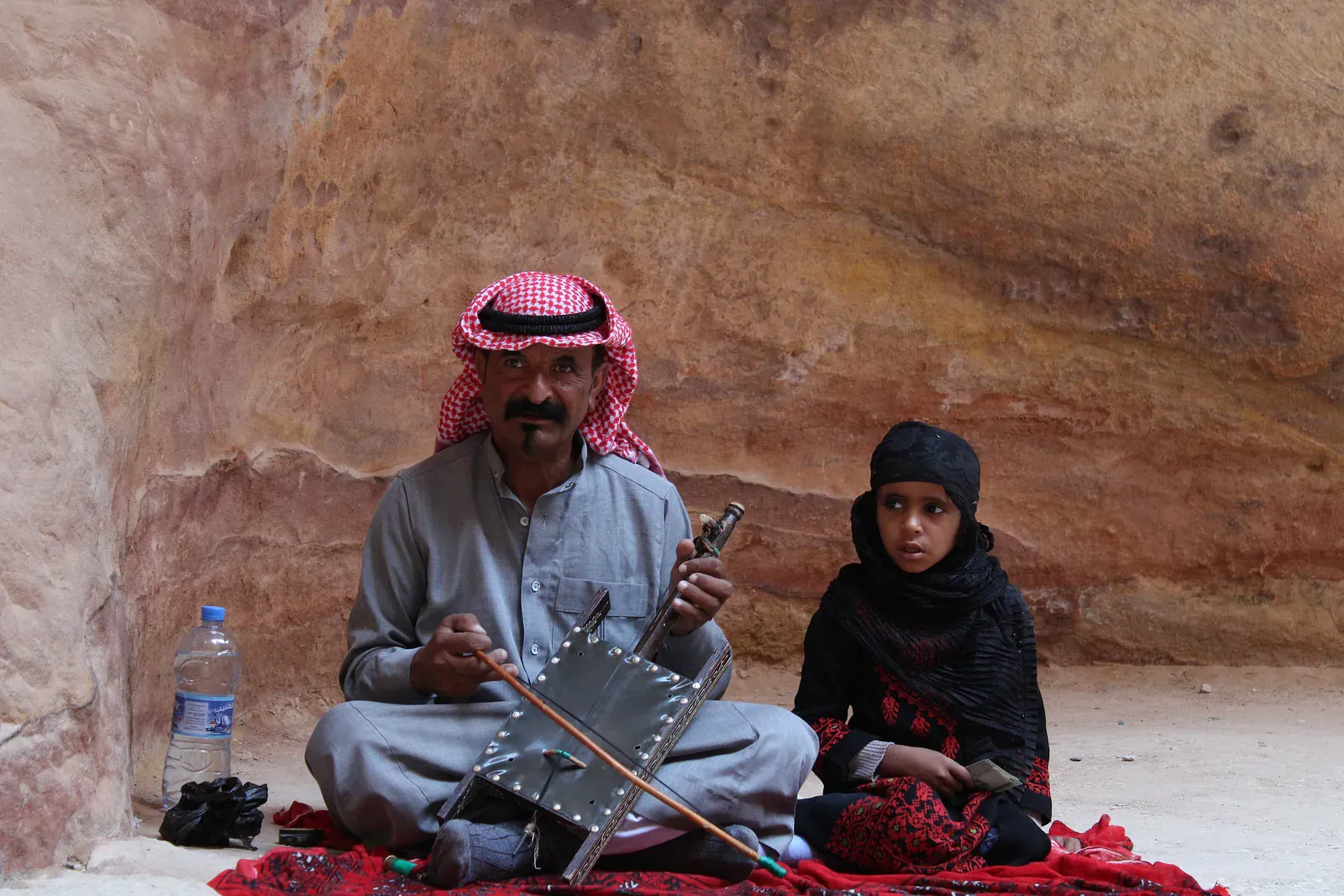
Village poetry and wedding lines, to 1956
Before recording, the music lived at weddings, harvests and family gatherings. Dabke was danced in a line or circle led by the lawweeh, who signals steps and changes; the melody came from a mijwiz, with the tablah and daff holding the pulse. Women’s zaghareet, the high ululation, marked births and weddings inside the larger performance.
Zajal took its modern debate format in 1930s Mount Lebanon, when the master poet Assad Al-Khuri Al-Fghali (1894-1937) is credited with fixing its shape. In 1938 the sixteen-year-old Wadih El Safi won a Radio Lebanon contest against about forty rivals and began a career that carried village song to the radio.
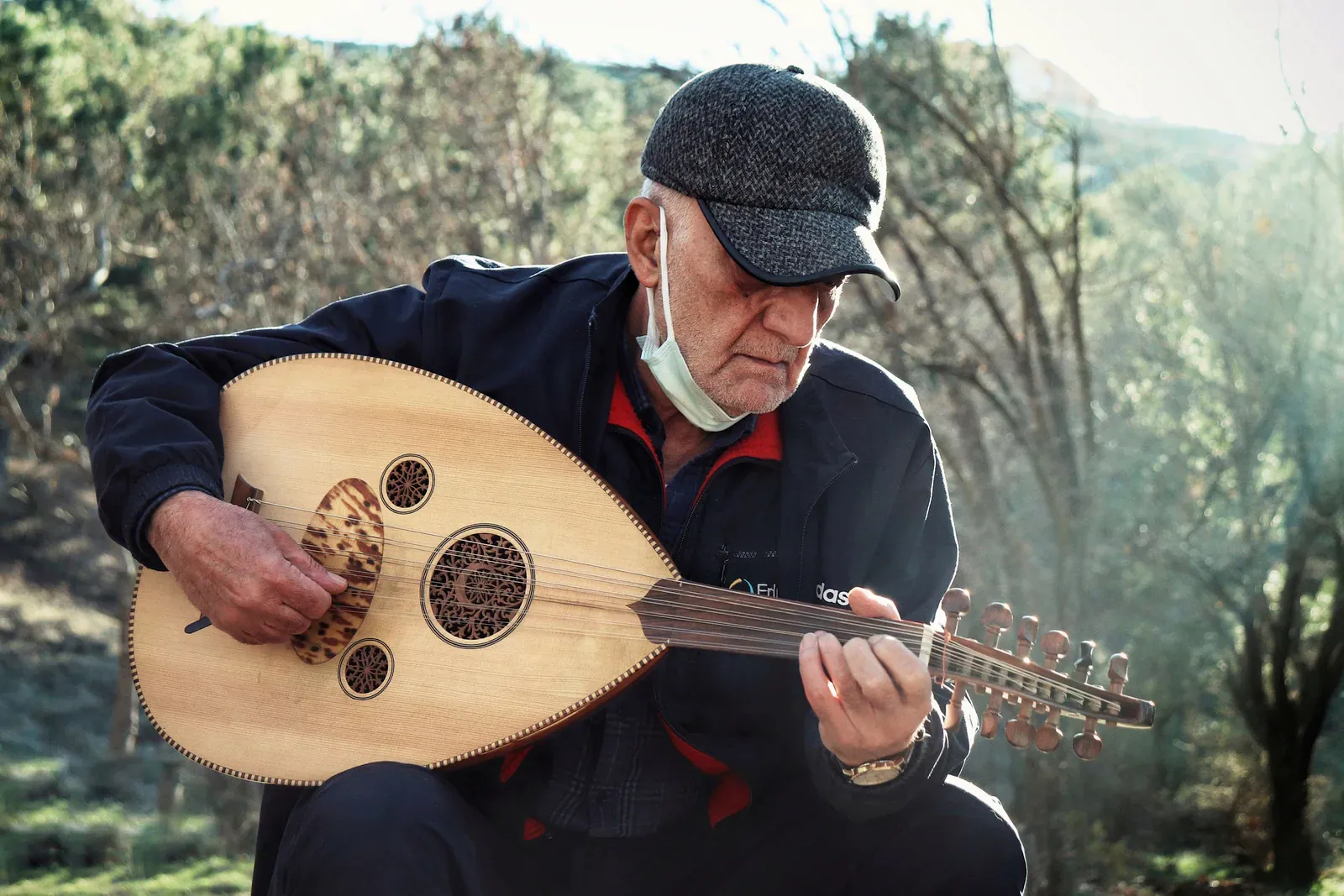
Folklore on the Baalbeck stage, 1957-1978
In 1957 the Rahbani brothers’ folkloric musical Ayyam al-Hassad brought local Lebanese artists to the Baalbeck International Festival for the first time. Fairuz, Wadih El Safi, Sabah and Nasri Shamseddine took village song, zajal and dabke from the courtyard to a national stage and to radio. Nasri Shamseddine performed beside Fairuz from 1960 to 1978.
Two recordings from the festival mark the period. Wadih El Safi’s reading of the dal’ouna song “Ala Dalouna” is preserved on a 1960 Baalbeck recording. In 1974 Sabah, Wadih El Safi and Zaki Nassif performed a dabke medley that included “Ya Ba Lala”.
Troupes and wedding tapes, 1979-2005
In March 1979 a dabke festival at Birzeit University led to the founding of the El-Funoun Palestinian Popular Dance Troupe in Ramallah, which stages Palestinian dabke and folk song. In northeast Syria, Omar Souleyman began singing at weddings in 1994, and hundreds of his live performances circulated on cassette. One of them, “Leh Jani”, came out in 1998 as a 30-minute wedding set.
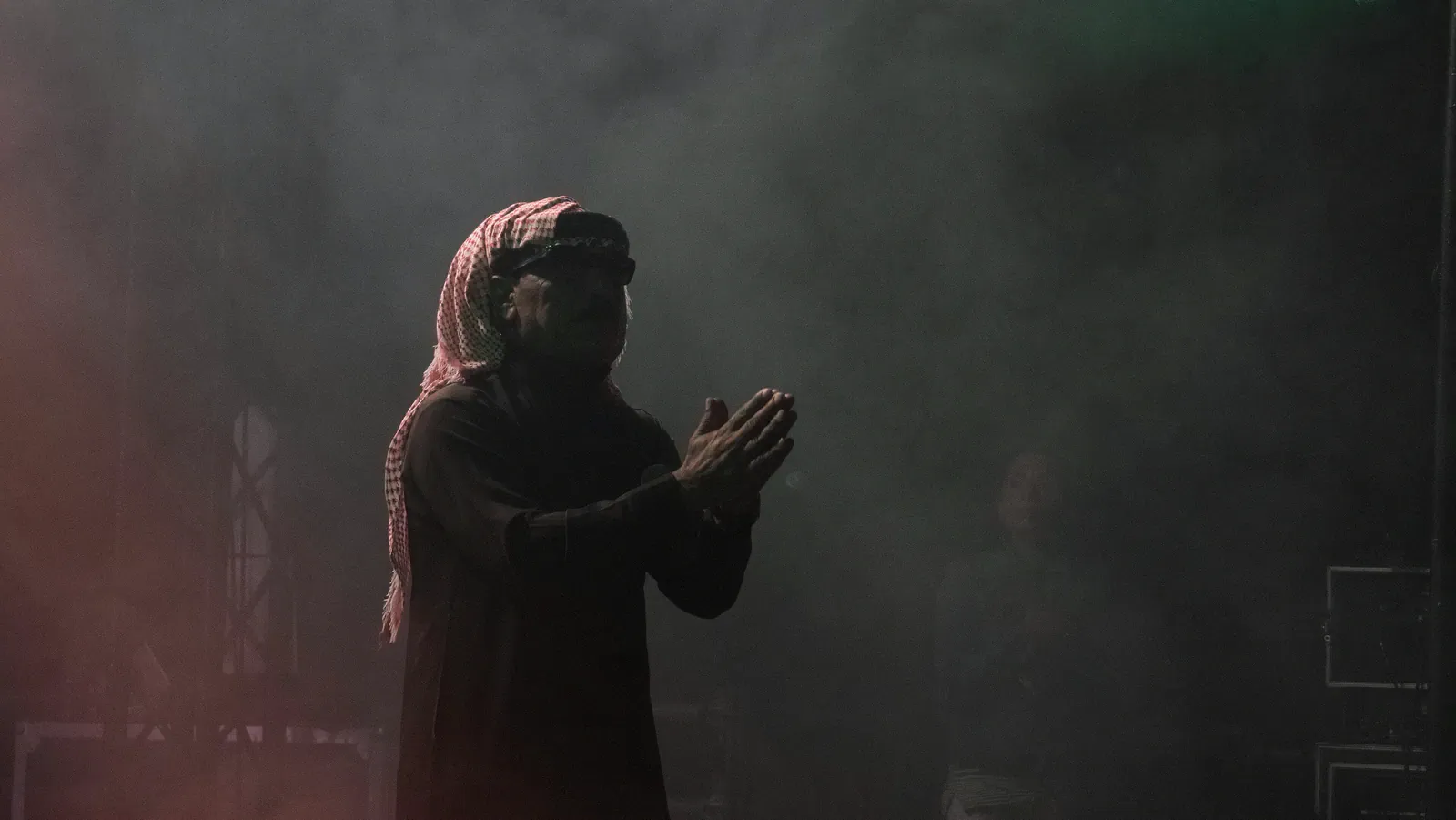
Wedding tapes reach the West, 2006-2012
Sublime Frequencies issued “Highway to Hassake” in 2007 as Souleyman’s Western debut, and the live double LP “Haflat Gharbia: The Western Concerts” in 2011, giving his keyboard dabke a Western audience. On 7 August 2011 a crowd of 5,050 dancers in Dhour El Choueir, Lebanon, set a record for the largest dabke dance.
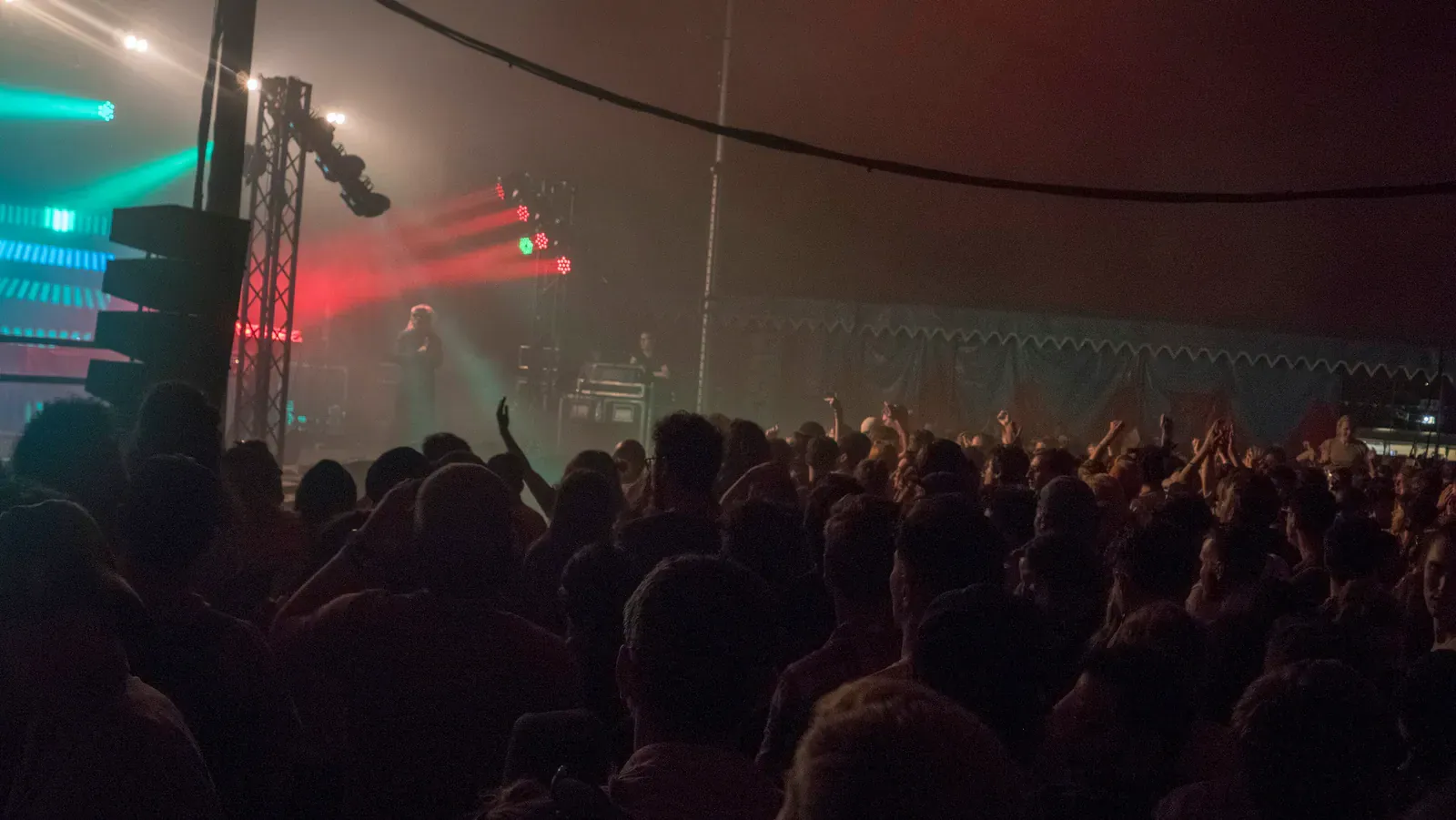
Talent shows and shamstep, 2013 onward
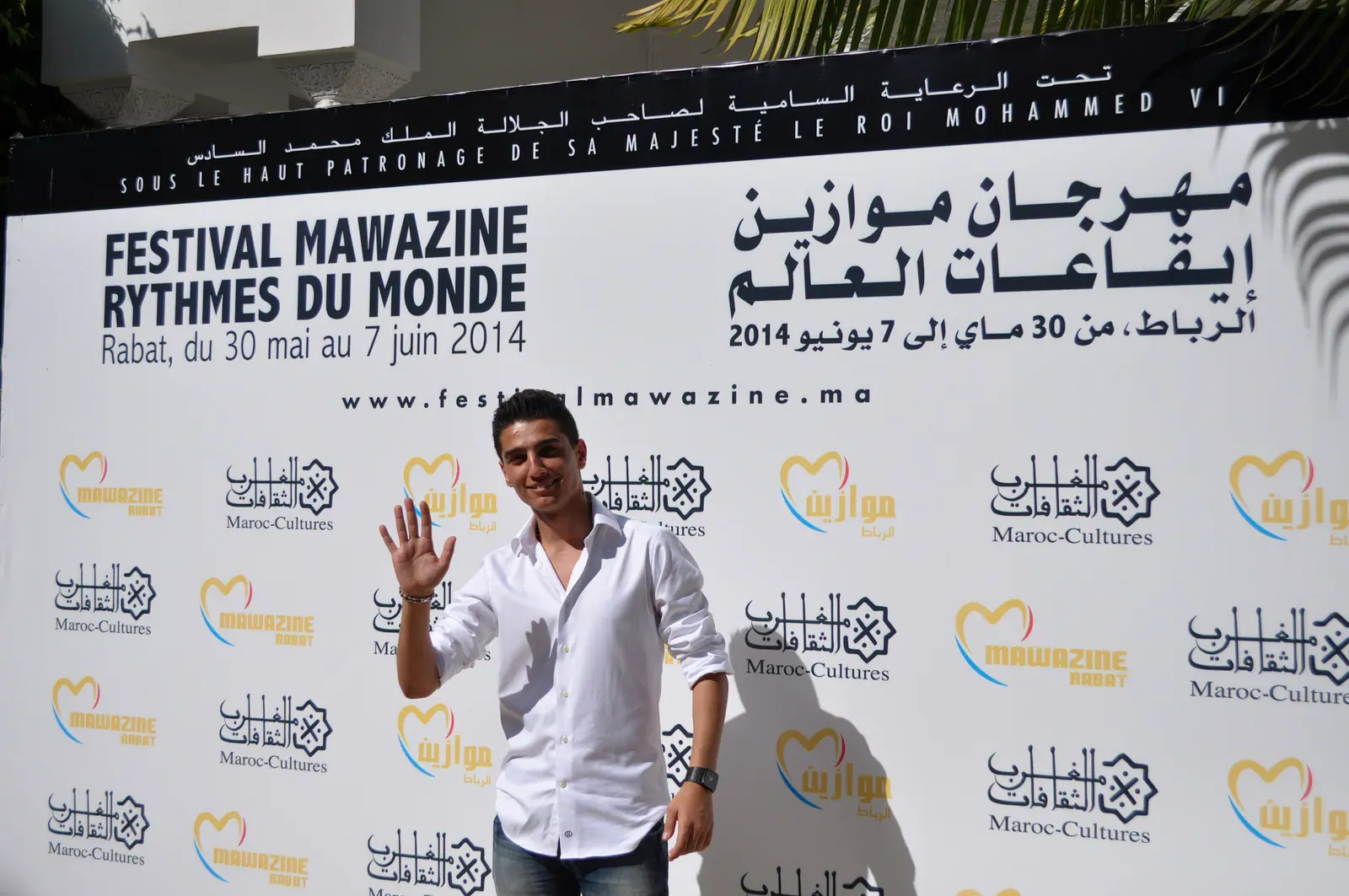
On 22 June 2013 the Gaza singer Mohammed Assaf won the second season of Arab Idol with Palestinian folk songs such as “Ali al-Kuffiyeh”. The same year Souleyman released “Wenu Wenu”, produced with Four Tet, and the Palestinian-Jordanian group 47Soul formed in Jordan, fusing mijwiz and dabke with electronic dance music. Wadih El Safi died on 11 October 2013, aged 91.
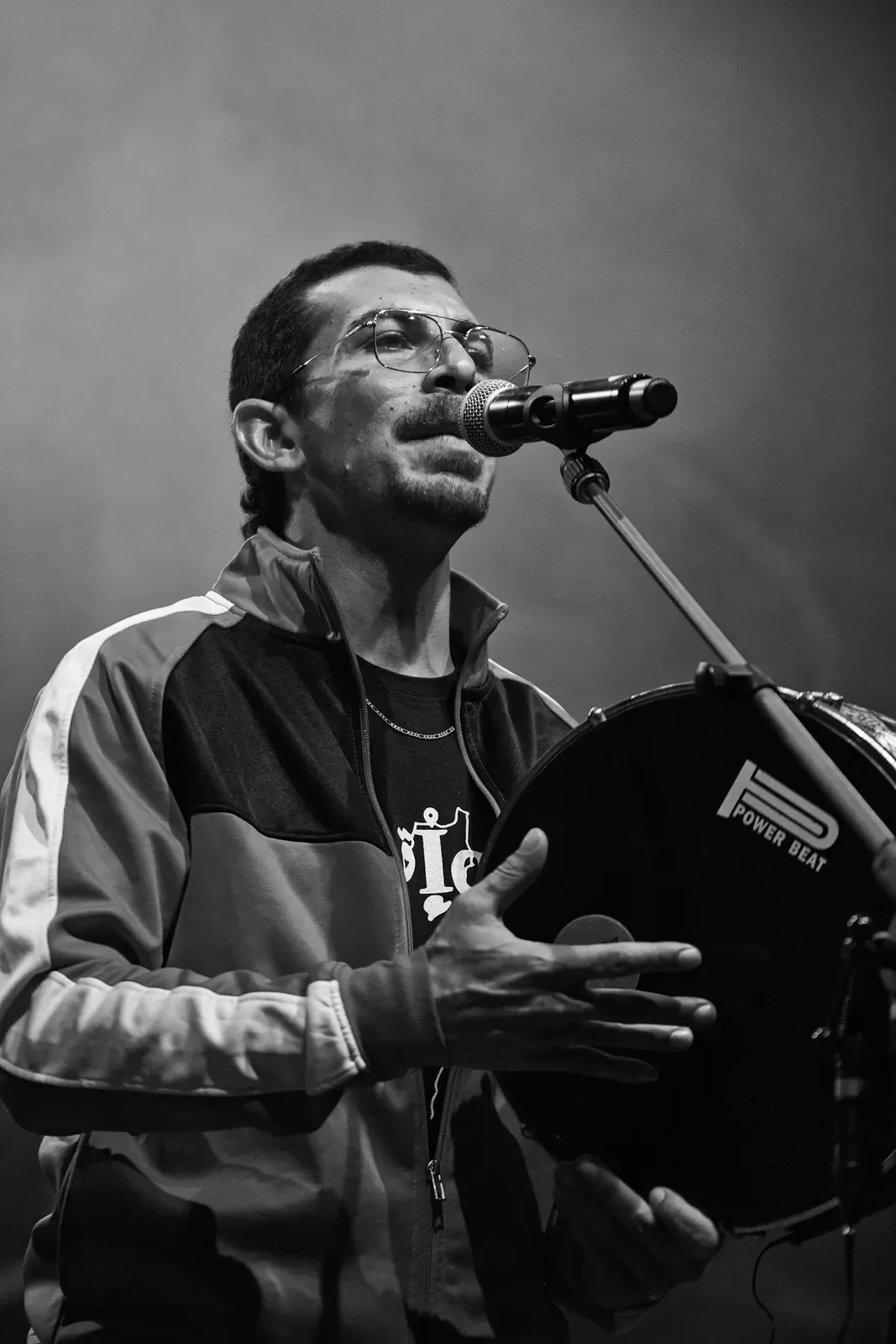
UNESCO added Lebanese zajal to its list of intangible cultural heritage in 2014. In 2015 47Soul released the Shamstep EP, whose opener “Intro to Shamstep” named the electro-dabke style, and their August 2019 NPR Tiny Desk concert reached a wide American audience.
Characteristics
The music is modal, built on maqam, with Bayati the most common mode of dabke tunes, and its intonation uses quarter tones rather than equal temperament. Dabke sits in a steady duple pulse, with tempos from roughly 105 to 140 BPM. Ataaba is unmetered: a soloist improvises the melody over four lines and ends on the tonic or supertonic. Zajal alternates improvised couplets with a repeated chorus. Singing is in colloquial Arabic, solo or chorused, and verse is often made up on the spot.
Instruments and production
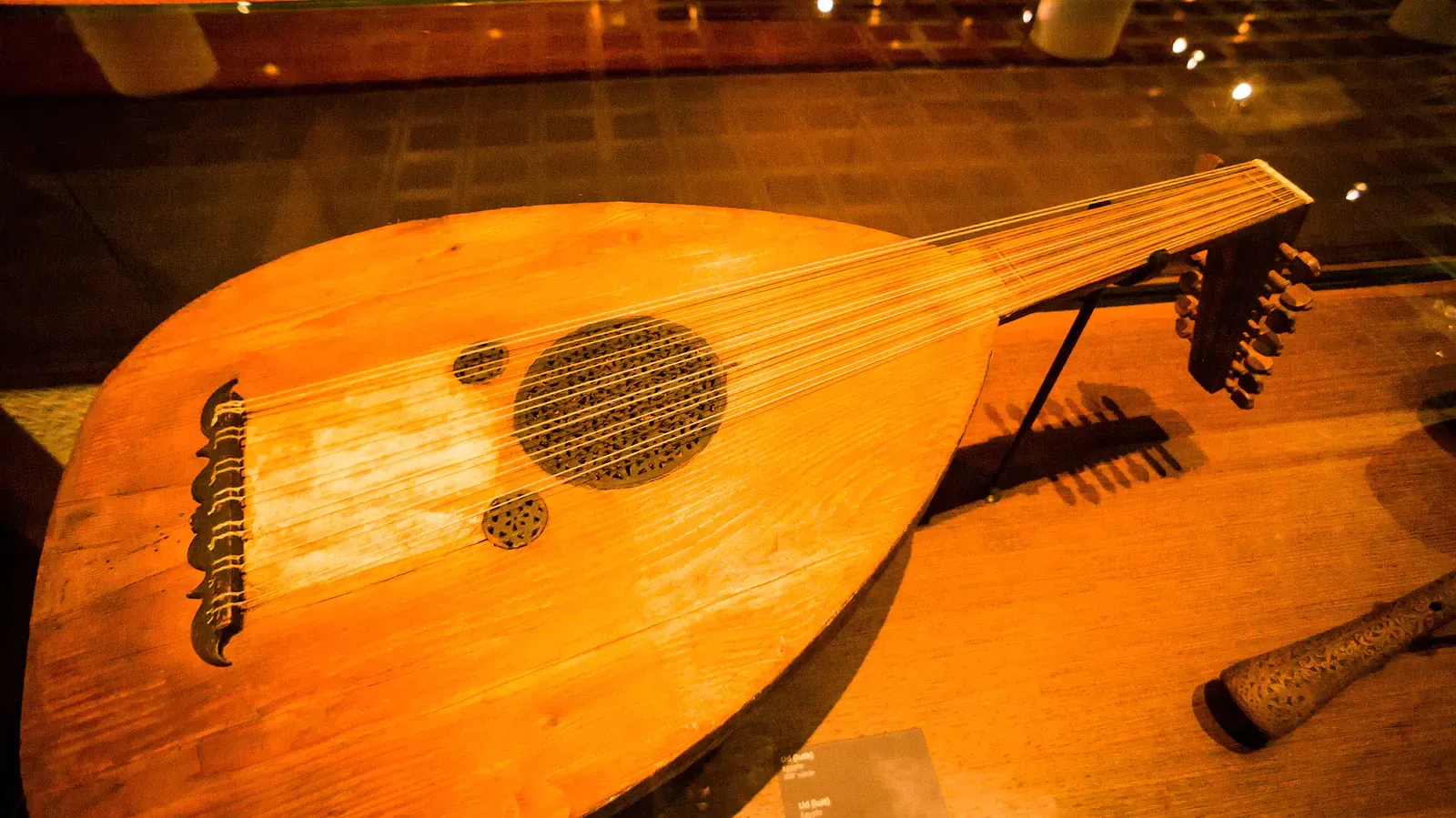
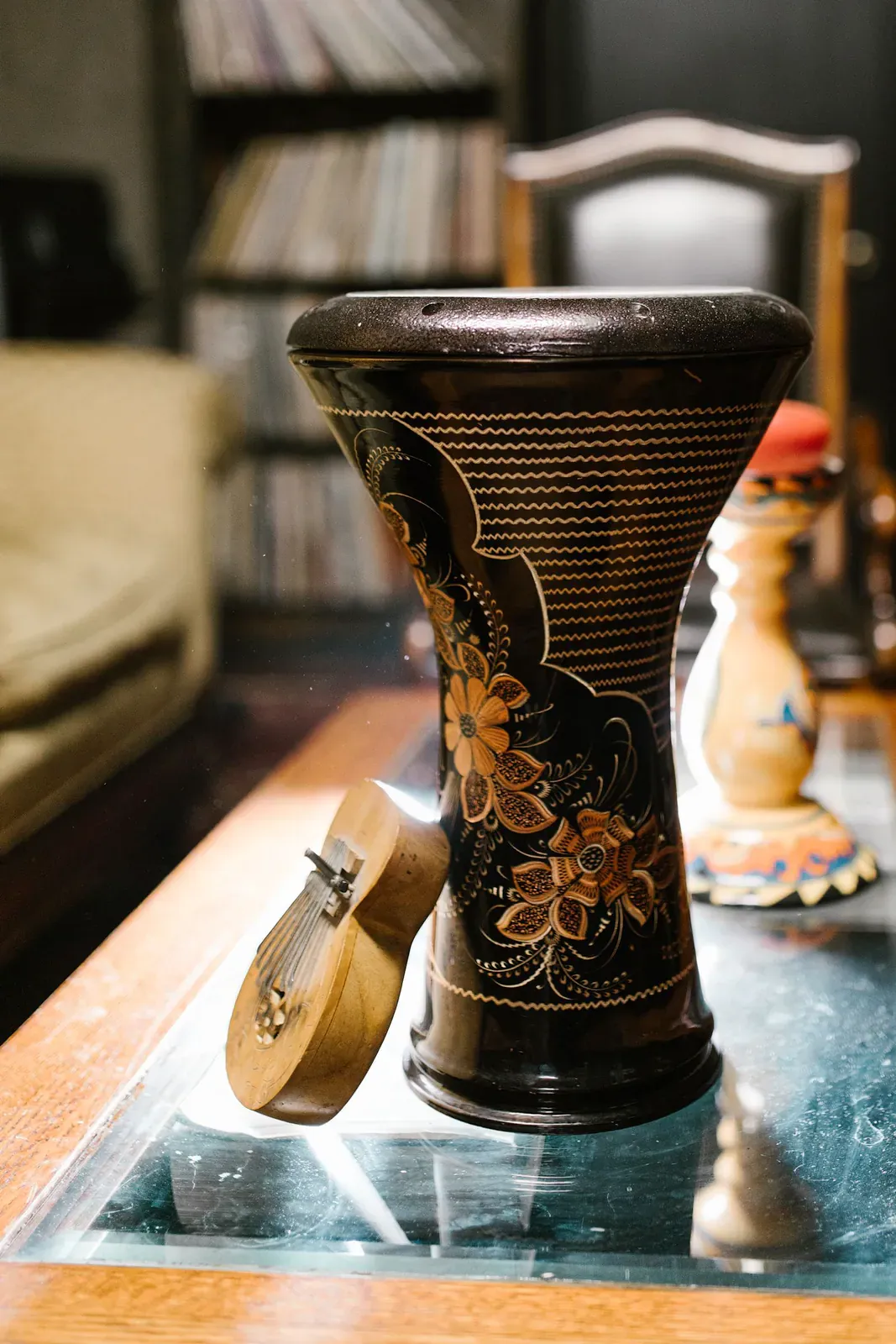
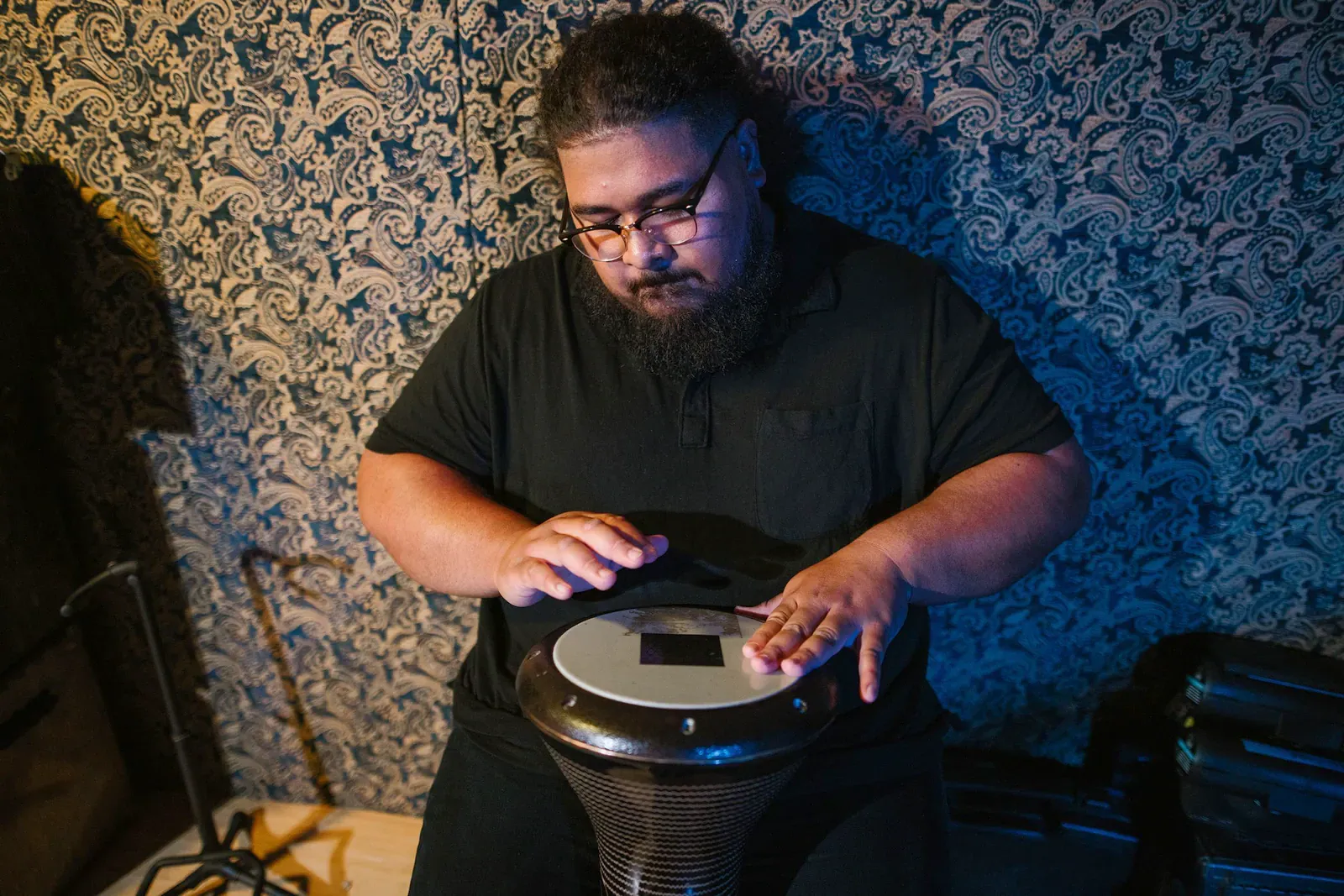
The traditional dabke band uses the mijwiz, a double-reed clarinet, with the arghul reed pipe, the shubabeh and the oud, over tablah and daff. The rababa accompanies solo poet-singers. From the 1990s the electronic keyboard replaced the village band at weddings, and shamstep layers the same melodic material and rhythms over bass-heavy dance production.
Culture
Dabke is danced at weddings, holidays and celebrations, hands linked and feet stamping in time. Zajal contests are social events: poets and singers sit at a table of meze and arrack and trade verses to tambourine and derbouka. Performers such as Souleyman wear the red-and-white keffiyeh on stage.
Misconceptions
Dabke is not the property of one country. It is danced across Lebanon, Syria, Jordan and Palestine, with regional forms such as the Palestinian Al-Shamaliyya and Al-Sahja and the Jordanian Al-Ghawarneh.
Zajal is not only written poetry. It is semi-improvised and semi-sung, performed as a live debate between poets, and the Lebanese practice is on UNESCO’s intangible heritage list.
Electronic dabke did not begin with Western producers. Souleyman was already singing keyboard dabke at Syrian weddings from 1994, and his tapes circulated locally before Sublime Frequencies reissued them.
Frequently asked questions
What is dabke?
Dabke is a Levantine circle or line dance, and the music that goes with it, performed at weddings and celebrations. A leader called the lawweeh heads the line and directs the steps.
What is zajal?
Zajal is colloquial Levantine folk poetry performed as a debate between improvising poets called zajjalin. Lebanese zajal was inscribed on UNESCO’s intangible heritage list in 2014.
What is shamstep?
Shamstep is an electronic dance style that layers dabke rhythms and Levantine melodies over bass-heavy production. The name was coined by 47Soul, whose 2015 Shamstep EP opens with “Intro to Shamstep”.
Which genres belong to the Middle Eastern and North African family?
Levantine folk music is one branch of the Middle Eastern and North African family, alongside courtly traditions such as Arabic classical music.
Sound
Sound sheet
Signature sounds
- Lawweeh-led line over a steady tabl pulse
- Mijwiz melody in maqam Bayati
- Four-line ataaba stanza with pun rhymes
- Women's zaghareet ululation
- Poetic joust with a repeated chorus
Drums and percussion
- Tablah
- Daff
Techniques
- Lawweeh-led call
- Improvised poetic duel
- Unmetered solo ataaba
- Zaghareet ululation
Keys and modes
Maqam Bayati. The most common mode of dabke tunes.
Tuning
Maqam intonation with quarter tones, not 12-TET
Vocals
Solo or chorused colloquial Arabic, often improvised verse
Scenes
Where it happened
Where and when the sound lived: one bar per city on a shared timeline.
Asia
Active scenes
Peak 5, 2013-2025
Baalbeck International Festival stages Rahbani folklore, dabke and village song.
Radio and recording hub for Lebanese folk singers and composers.
Home of El-Funoun, lead Palestinian popular dance troupe.
Town where Omar Souleyman grew up and sang at weddings.
Base of 47Soul and the shamstep sound.
Refugee camp where Mohammed Assaf grew up before Arab Idol.
Venues and places
Baalbek, 1957 to today. Rahbani folklore, Fairuz, Sabah and Wadih El Safi reach a national stage here.
Birzeit, 1979 to today. El-Funoun's first performance, in March 1979, led to the troupe's name.
Beirut, 1938 to today. A Radio Lebanon contest launches Wadih El Safi; Zaki Nassif also composed for the station.
Tell Tamer, 1994 to today. Where Souleyman's keyboard dabke began as wedding entertainment.
Culture
Culture markers
- Dabke line
Dancers link hands in a line or circle, led by the lawweeh, and stamp in time at weddings and holidays.
Dance - Zaghareet at weddings
Women's ululation marks joy at weddings and births within the song and dance.
Ritual - Zajal poetic joust
Poets and singers gather at a table of meze and arrack and trade challenge verses to tambourine and derbouka.
Ritual - Keffiyeh on stage
Performers such as Omar Souleyman wear the red-and-white keffiyeh.
Fashion
Media
Key media
- 2003Lullabies from the Axis of Evil
by Various. Female singers incl. Rim Banna bring Palestinian song to European ears.
Compilation - 2011Haflat Gharbia: The Western Concerts
by Omar Souleyman. Sublime Frequencies double LP of live wedding-style dabke.
Compilation - 2015The Idol
by Hany Abu-Assad. Dramatises Mohammed Assaf's route from Gaza weddings to Arab Idol.
Film - 2019NPR Music Tiny Desk Concert: 47Soul
by NPR Music. Short live set that showed shamstep to a US audience.
Mix
Glossary
Terms on this page
Four-line unmetered stanza sung solo, with pun rhymes on the first three line endings.
Levantine line or circle dance of stamping feet, and the music that goes with it.
The leader at the head of a dabke line who directs the steps.
Sung-poetry sister of ataaba, opened by a refrain on the words ya mijana.
Double-reed wind instrument that plays the dabke melody.
Electro-dabke term coined by 47Soul, from Sham (the Levant) and step.
High-pitched ululation by women at weddings and celebrations.
Colloquial strophic poetry sung or declaimed in debates between poets.
A zajal poet, often improvising in a joust before an audience.
Middle Eastern and North African family