Balkan brass music
Balkan brass is trumpet-led dance music of Serbia, North Macedonia, Bulgaria, Moldova and Romania, formed after 1804 from military bands and folk tunes.
Serbia, North Macedonia, Bulgaria, Moldova, Romania, 1804
European folk family
Born
1804
Serbia, North Macedonia, Bulgaria, Moldova, Romania
Subgenres
1
Documented branches
Links
11
Genres it drew on or shaped
Tempo
100-180 BPMLineage
Family tree
Grew out of
Influenced by
Romani music
Serbia, North Macedonia, Bulgaria, Moldova, Romania, 1804
Balkan brass
Led to (1)
Timeline
Era by era
From the first sparks to today. Select a dot to read the story behind it.
- Military trumpets to village bands
1804 to 1944
- Regional schools and Guča
1945 to 1989
- Romani bands and the world-music boom
1990 to 2009
- Festival circuit and Balkan beats
2010 to today
Eras
Moments
- 1 Military trumpets to village bands, 1804 to 1944
- 2 Regional schools and Guča, 1945 to 1989
- 3 Romani bands and the world-music boom, 1990 to 2009
- 4 Festival circuit and Balkan beats, 2010 to today
1804
Military trumpets to village bands
Trumpeters of the First Serbian Uprising and the court and army bands of the 1810s-1830s fed a rural tradition. After the First World War the trumpet became the most popular folk instrument in Serbia.
- 1042Trumpeters in a Serbian armyRecords place trumpeters in the army of Prince Stefan Vojislav at the Battle of Bar.
- 1804First Serbian UprisingTrumpets woke and gathered soldiers and announced battles; off duty, they played folk songs.
- 1831First Serbian military bandPrince Miloš set up the first official military band in Belgrade, led by Josif Šlezinger.
1945
Regional schools and Guča
Village orchestras were rebuilt after 1945 and split into eastern, southern and western schools. The Guča trumpet competition began in 1961 and became the main stage of the style.
- 1961First Guča festivalFour village orchestras competed on 16 October; Desimir Perišić won.
- 1988Boban Marković wins First TrumpetBetween 1988 and 2001 he won the First Trumpet title at Guča five times.
1990
Romani bands and the world-music boom
Fanfare Ciocărlia, Kočani Orkestar and Boban Marković took the sound abroad, Goran Bregović scored films, and DJs such as Shantel mixed it with electronic beats.
- 1996Fanfare Ciocărlia found in Zece PrăjiniA German sound engineer heard the village band and arranged its first European tour.
- 1998Radio PașcaniThe debut album of Fanfare Ciocărlia sold over 150,000 copies on CD.
- 1999Baro Biao: World Wide WeddingAlbum of Fanfare Ciocărlia that includes the track Asfalt Tango.
- 2000Boban Marković Orkestar at SzigetThe band played the World Music stage to about 15,000 people and won Best Orchestra at Guča.
- 2001Iag BariFanfare Ciocărlia album issued 15 October 2001.
- 2006Borat soundtrack lawsuitNaat Veliov and Esma Redžepova sued over the use of Kočani Orkestar and Redžepova songs in the film.
- 2007Disko PartizaniBalkan-rooted dance album by Shantel that went platinum in Turkey.
2010
Festival circuit and Balkan beats
Guča kept drawing crowds of hundreds of thousands, while Balkan brass festivals ran in Brussels, New York, Trieste and other cities.
- 2012Nobel Peace Prize ceremonyFanfare Ciocărlia played at the ceremony in Oslo.
Listening path
Start listening
A short path from an easy way in to the deep end. Thumbnails come from YouTube; the player loads only when you press play.
- 01
Fanfare Ciocărlia, 1999
A fast dance track from the Romanian Romani village band; listen for the clarinet and trumpet runs over the tuba.
- 02
Fanfare Ciocărlia, 2001
Title track of the 2001 album; listen for the unison brass and the drum pulse.
- 03
Boban Marković Orkestar, 2003
Serbian Guča-prize band at full speed; listen for the lead trumpet over the rhythm section.
Facts
| Family | European folk |
| Origin | Serbia, North Macedonia, Bulgaria, Moldova, Romania |
| Emerged | 19th century, after 1804 First Serbian Uprising |
| Status | Active |
| Tempo | 100 to 180 BPM |
| Meter | 2/4, 9/8 |
| Subgenres | 1 |
Balkan brass, popularly called Truba (Serbian for trumpet), is a style of dance music played by brass bands in Serbia, North Macedonia, Bulgaria, Moldova and Romania. It grew out of a fusion of military band music and village folk melody after the First Serbian Uprising of 1804.
Fast trumpet-led tunes over tuba and a carried bass drum drive circle dances such as the kolo and the čoček, and Romani musicians make up a large share of the bands.
Origins
Trumpeters served in Serbian armies long before the style existed: records place them with Prince Stefan Vojislav’s army at the Battle of Bar in 1042, and later with the forces of Prince Lazar and his successors. In those centuries the trumpet was only a military instrument. The tradition of the music itself is traced to the First Serbian Uprising of 1804, when trumpets woke and gathered soldiers and announced battles, and played folk songs during downtime.
After the uprising soldiers went home to farms, and the music followed them into births, baptisms, weddings, the slava (family patron saint day), send-offs for conscripts, harvests and funerals. In 1815 Prince Miloš Obrenović formed a court band in Kragujevac that played oriental music under a violin and zurna player called Mustafa. Miloš dismissed him in 1831 to westernize the state and brought in Josif Šlezinger of Sombor to build a military orchestra with European instruments, so the trumpet returned. The first official military band was formed in Belgrade that year.
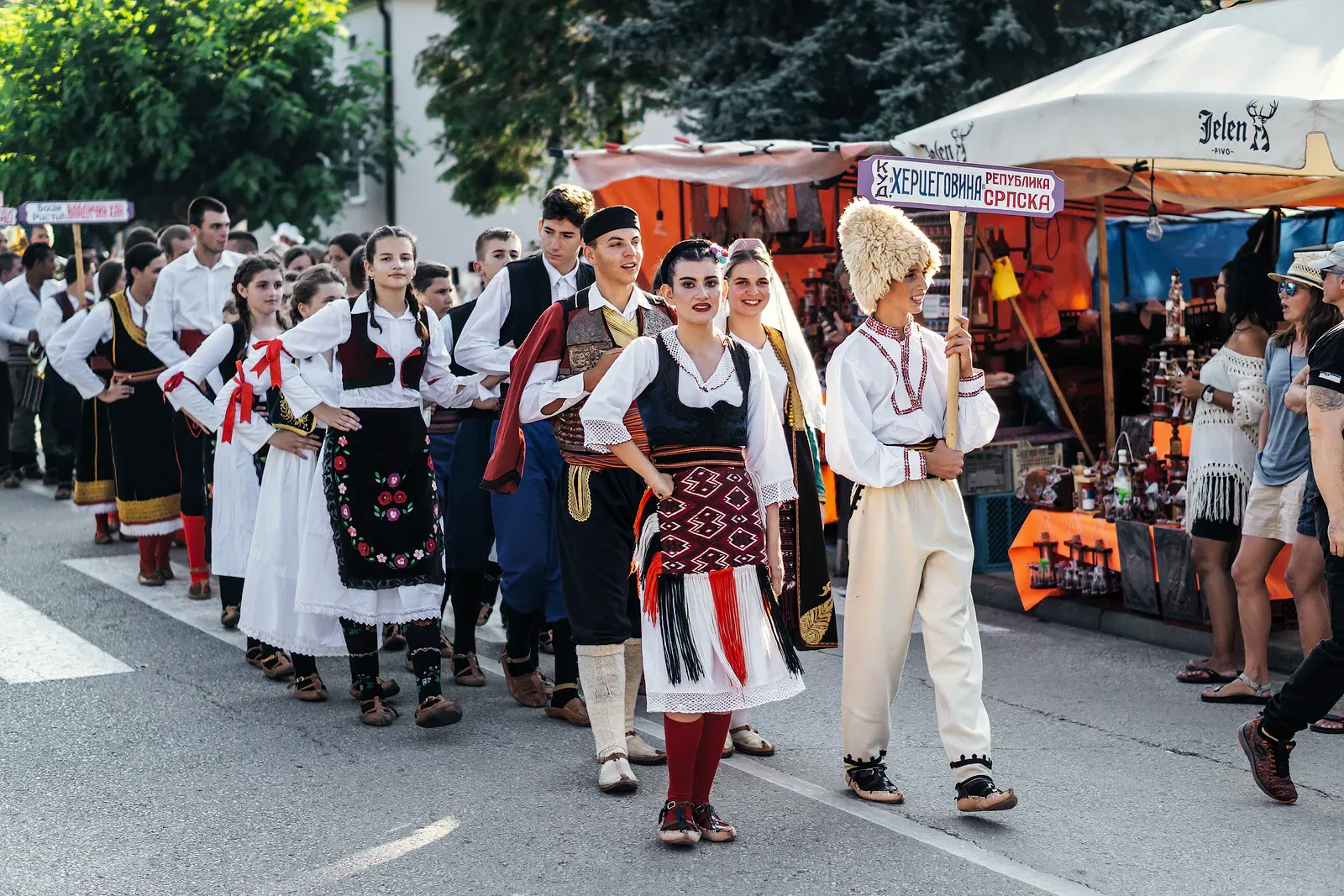
The village trumpet spread after the Serbo-Turkish wars of the late nineteenth century, when company and regimental trumpeters came home with battered instruments. After the First World War it became the most popular folk instrument in Serbia and pushed aside the older gaida bagpipe and the violin.
Regional schools and Guča, 1945-1989
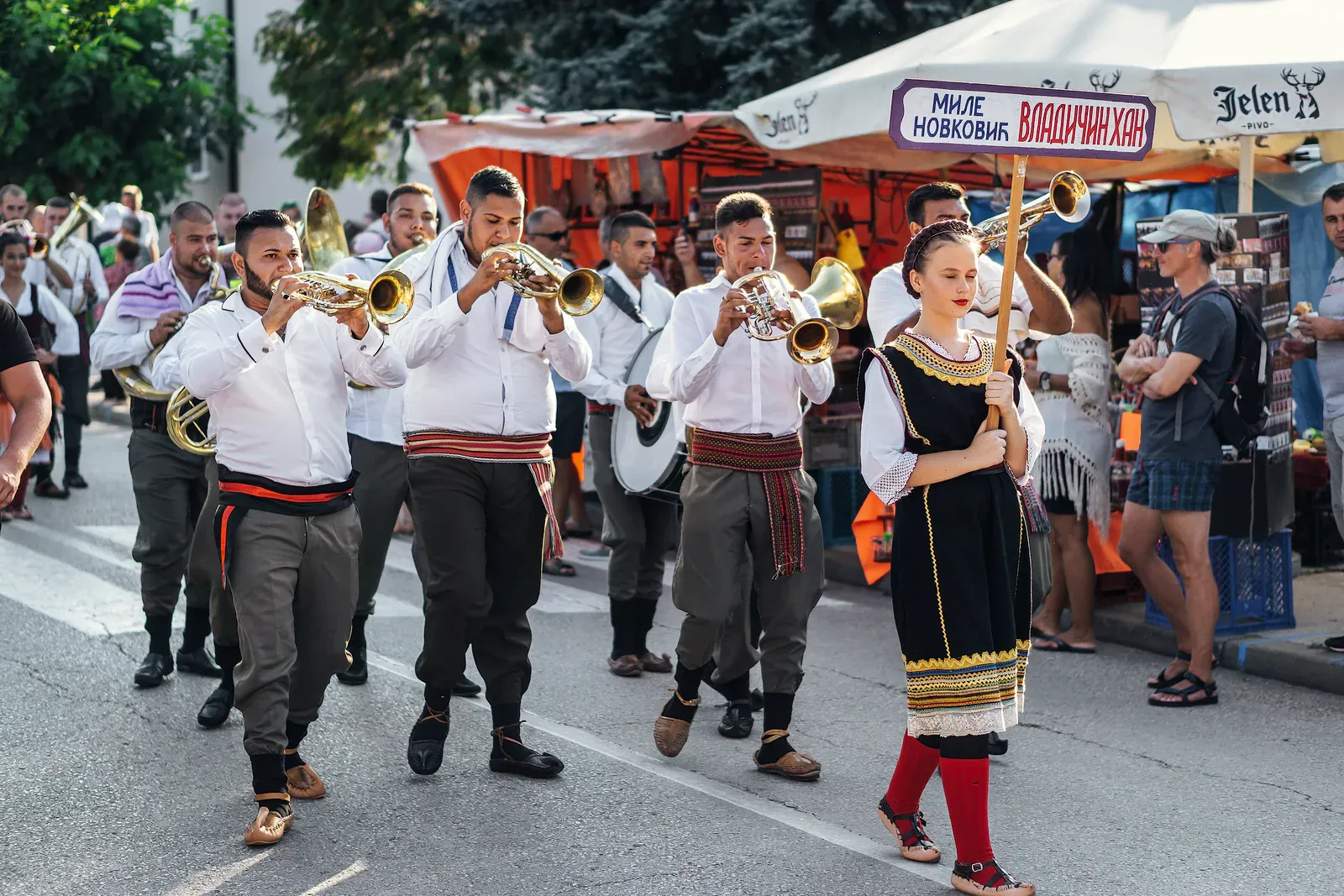
Most village orchestras were disbanded during the Second World War and were rebuilt after 1945. Former military trumpeters taught the amateur players, and three regional schools developed: eastern (Zaječar, Boljevac), southern (Vranje, Surdulica, Vladičin Han) and western (Užice, Čačak, Požega).
In 1961 the Politika reporter Blagoje Radivojević noticed a band of trumpeters playing a farewell to a youth work brigade at the railway station in Čačak. He proposed adding trumpeters to the existing local festival Dragačevo through Song and Dance, and the idea became a separate competition. The first one was held on 16 October 1961 in the churchyard in Guča with four village orchestras. Desimir Perišić, nicknamed “Dragačevo’s Harry James”, won. Each band played five pieces, two of them obligatory: Sa Ovčara i Kablara and Bledi mesec zagrlio zvezdu danicu. Sa Ovčara i Kablara still opens the festival every year.
Romani bands and the world-music boom, 1990-2009
Romani musicians adopted the tradition and now make up a large percentage of the bands. Kočani Orkestar, from the Macedonian town of Kočani, descends directly from the music of Ottoman army bands and draws on Romani music from across the Balkans and on Turkish rhythms. It was led until 2000 by Naat Veliov.
Boban Marković of Vladičin Han led the Serbian band that won the main Guča prizes: he took the First Trumpet title five times between 1988 and 2001, and his orchestra won Best Orchestra in 2000. That year it also played the World Music stage at Sziget in Hungary to about 15,000 people.
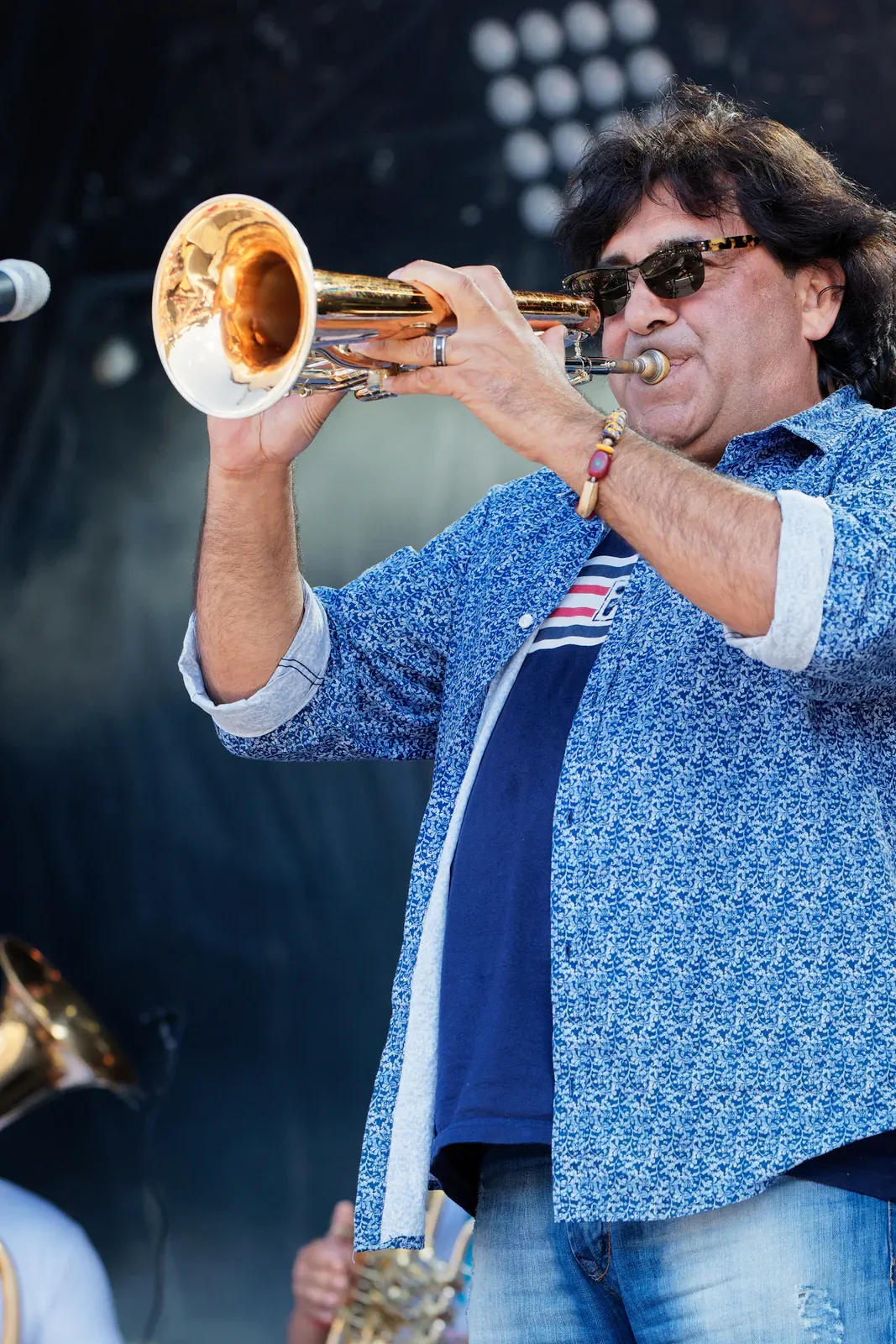
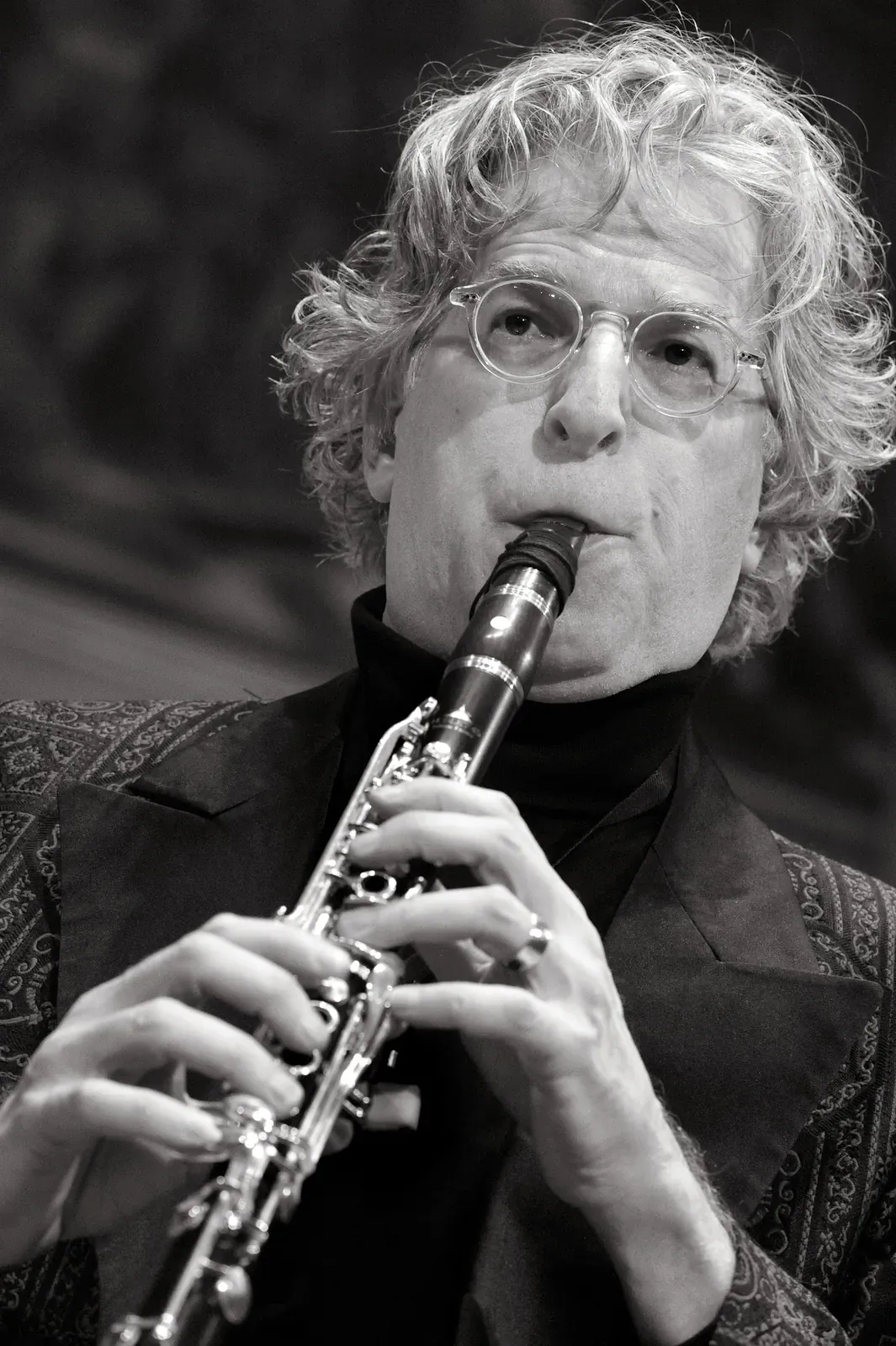
The best-known export came from Romania. In October 1996 a German sound engineer, Henry Ernst, went to northeastern Romania looking for village musicians and was sent to Zece Prăjini, a village populated entirely by Romani families. He heard a local brass band led by the clarinettist Ioan Ivancea and arranged a tour as Fanfare Ciocărlia. Their debut Radio Pașcani was recorded in Bucharest in 1997 and released in 1998 by the Berlin label Piranha; it sold over 150,000 copies on CD.
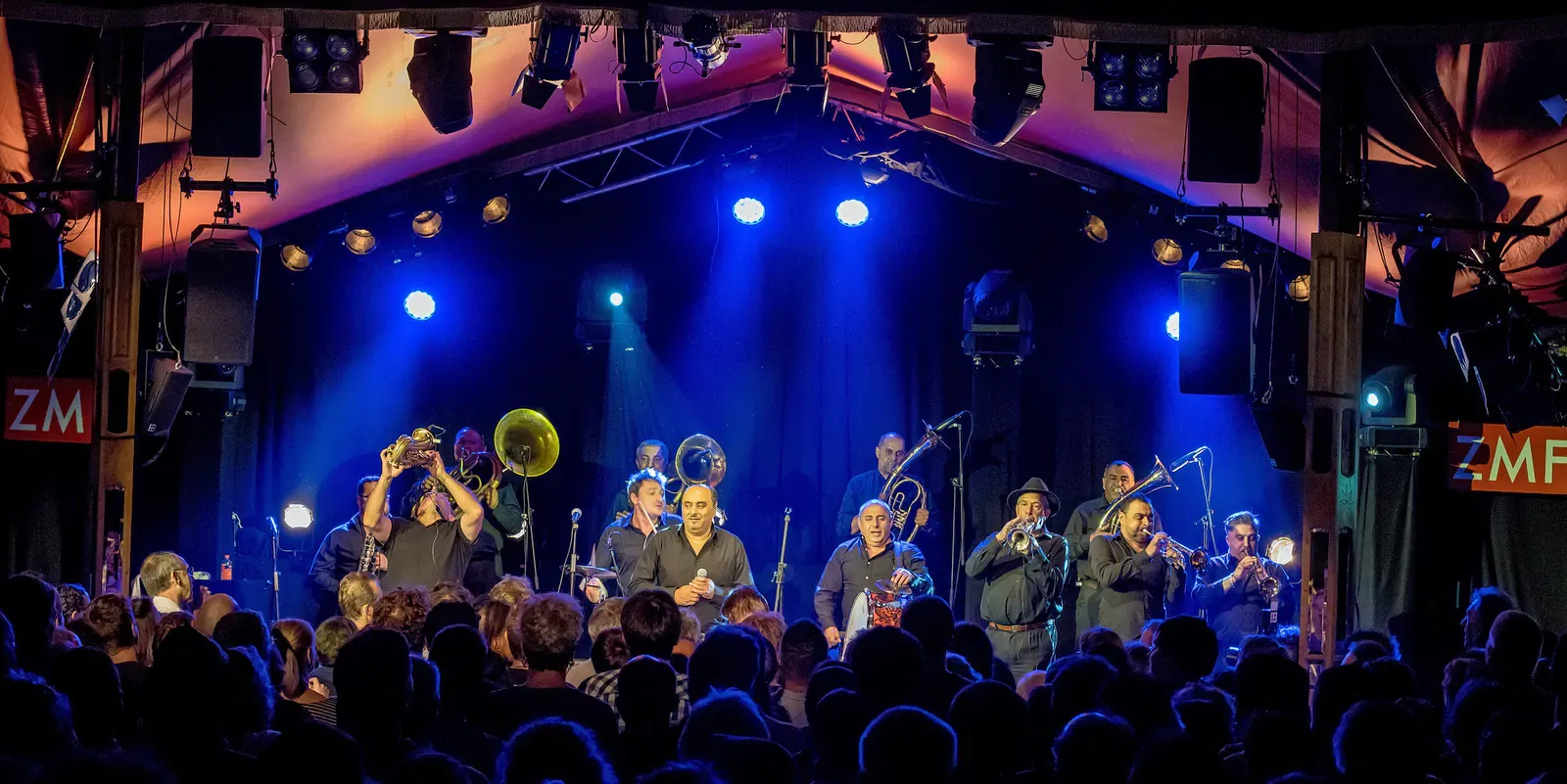
Other routes ran through film and clubs. Goran Bregović, a former rock guitarist from Sarajevo, scored three Emir Kusturica films, Time of the Gypsies, Arizona Dream and Underground, and from 1998 toured with his Wedding and Funeral Orchestra, which includes a brass section. Kusturica’s films, among them Black Cat, White Cat, made the style known outside the Balkans. In Germany the Frankfurt DJ Shantel, inspired by audience reactions to Fanfare Ciocărlia and Boban Marković, put Romani brass into club sets. His Bucovina Club compilations on his own Essay label won the Club Global award at the 2006 BBC Radio 3 Awards for World Music, and he remixed Kočani Orkestar for the Electric Gypsyland compilations on Crammed Discs in Brussels. DJ Robert Soko has run Balkan Beats parties in Berlin since 1993.
Characteristics
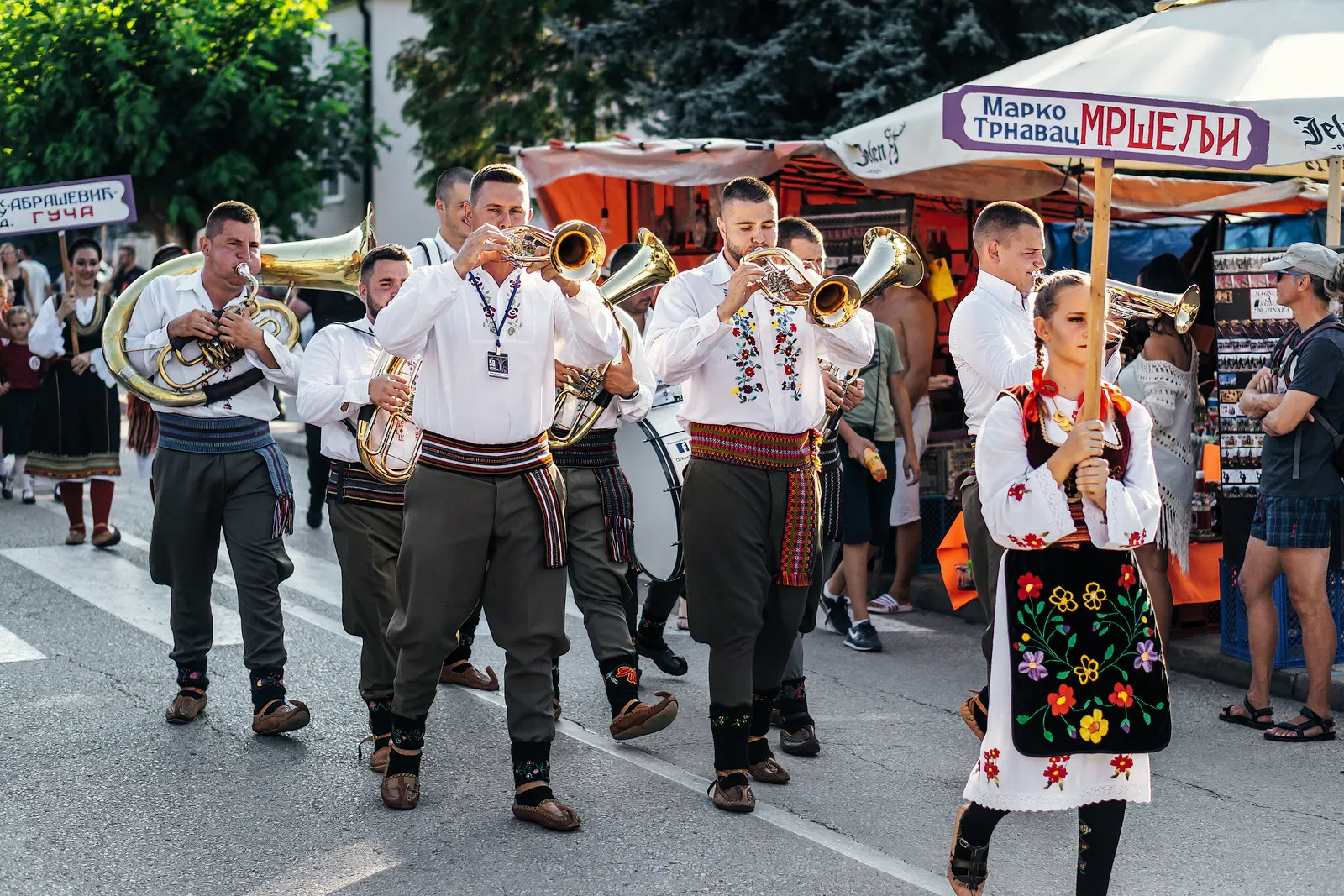
A band is mainly made up of trumpets, flugelhorns, alto and tenor horns, helicons, euphoniums and tubas, with a snare drum and a bass drum. Fanfare Ciocărlia adds clarinets and saxophones, which take high-speed staccato solos. The music is usually instrumental, though bands sometimes sing, and the common forms are the čoček and the kolo.
The kolo is a South Slavic circle dance, and Serbia’s kolo tradition is inscribed on the UNESCO list of intangible heritage. The čoček emerged in the early nineteenth century from Ottoman military bands and survived mostly in Romani hands, at village weddings and banquets. It is typically in a 9/8 meter divided 2-2-2-3 or 2-2-3-2, sometimes called “gypsy 9”; Romani musicians in the former Yugoslavia have also played it in 4/4 and 7/8. Melodies lean on the hijaz mode, with its augmented second, and are ornamented with trills and slides.
Instruments and production
Brass instruments are traditionally unamplified, and the percussion is the carried davul, also known as tapan or goč. A few bands use clash cymbals, while most attach the cymbals to the bass drum. Electronic versions come from producers such as Shantel, who place the brass over club beats.
Notable recordings
Radio Pașcani is the record that introduced the speed of Romani village brass to Western listeners. Iag Bari (2001), the title track of the third album, shows the unison brass and the tight drum pulse. Asfalt Tango, first released on Baro Biao: World Wide Wedding in 1999, was a regular piece in the band’s live sets. Bregović’s Underground score of 1995 carried the idiom into cinemas.
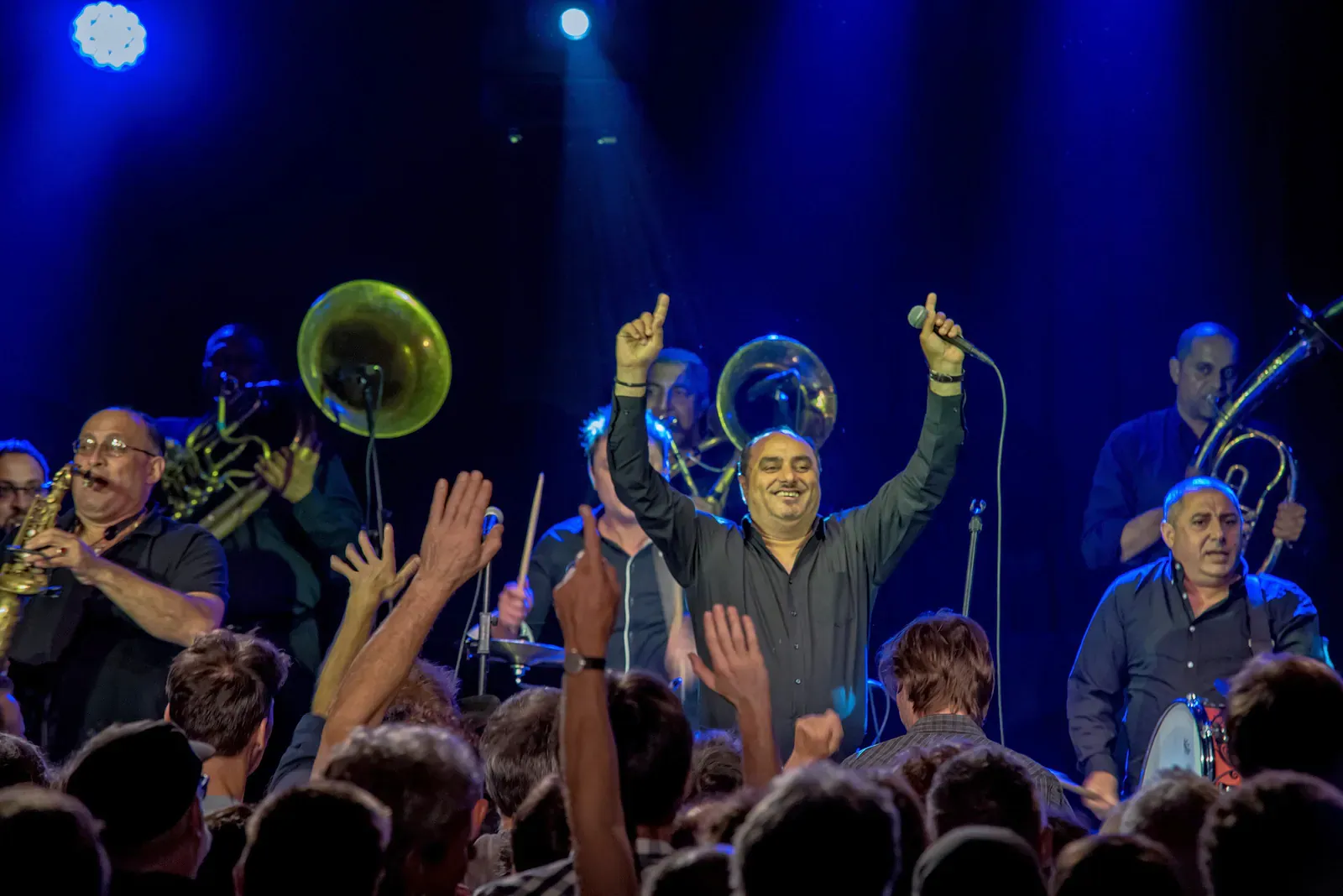
Mainstream success
The style reached large non-Balkan audiences through film and pop. Kočani Orkestar’s Siki Siki Baba and Fanfare Ciocărlia recordings appeared on the soundtrack of Borat in 2006, and Kočani Orkestar’s Naat Veliov and the singer Esma Redžepova sued the producers over unauthorised use of songs; Redžepova received 26,000 euros of the 800,000 she had demanded. Balkan brass influenced international pop songs such as Worth It by Fifth Harmony and Talk Dirty by Jason Derulo. Fanfare Ciocărlia played at the 2012 Nobel Peace Prize ceremony in Oslo.
Culture
Guča is the center of the culture. The festival runs from Friday to Sunday in early August, with an opening concert of previous winners, celebrations on Saturday night and the competition on Sunday. It is free, so there is no official attendance count; estimates run to hundreds of thousands per day, and about 16 million visitors from 1961 to 2017. Bands play for tips on the street, and food stalls and free camping surround the town.
Abroad, Balkan brass festivals run in Brussels, New York, Trieste, Kumanovo and Pehčevo.
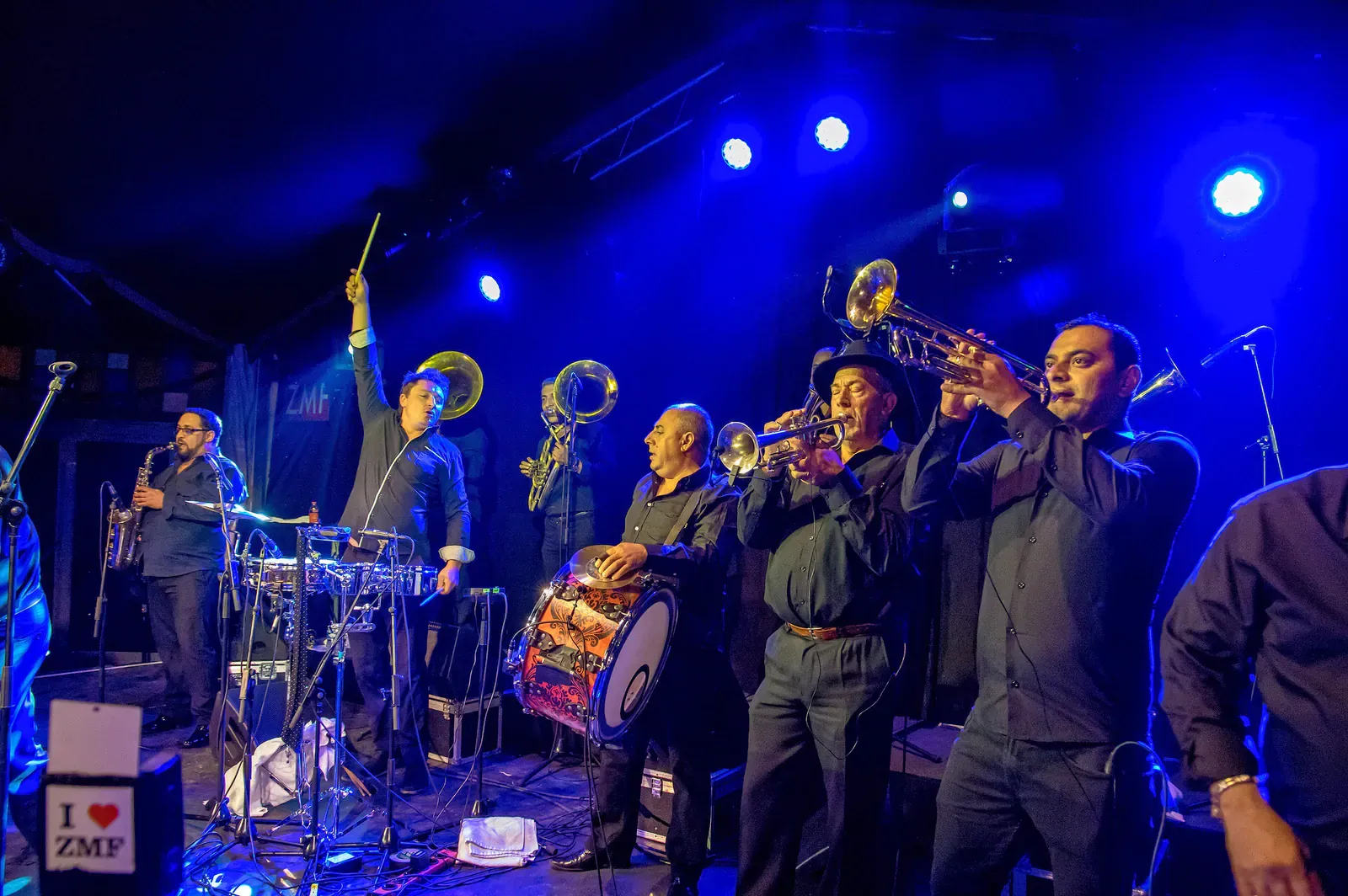
Legacy
Balkan brass moved from battlefield signals to village weddings to world-music stages and club nights within roughly two centuries. It remains a living form of brass band dance music outside the military. It belongs to the European folk family, alongside klezmer, which shares some Balkan dance rhythms.
Misconceptions
The style is not only Romani music. Its roots lie in Serbian military trumpeters and village orchestras, and the Guča competition began as a local Serbian festival; Romani bands later became a large part of it. It is also not a purely Ottoman inheritance: Prince Miloš dismissed the oriental court band in 1831 and returned to European brass instruments, and the čoček alone carries the Ottoman military lineage. The festival is not a staged tourist show either. It is free, its competitors are mostly self-taught, and bands qualify through elimination heats.
Frequently asked questions
What is Balkan brass music?
Balkan brass is brass-band dance music from Serbia, North Macedonia, Bulgaria, Moldova and Romania, fusing military band music with folk melody. It is also called Truba, and the players are called trubači.
What is the Guča Trumpet Festival?
It is an annual Balkan brass competition held in Guča, Serbia, from Friday to Sunday in early August. It began in 1961 and is free to attend.
What time signature is the čoček?
The čoček is typically in 9/8, divided 2-2-2-3 or 2-2-3-2. Romani brass bands also play it in 4/4 and 7/8.
Which bands should a new listener try?
Fanfare Ciocărlia of Romania, Kočani Orkestar of North Macedonia and Boban Marković Orkestar of Serbia are the usual starting points.
Sound
Sound sheet
Signature sounds
- Trumpet-led brass with tuba and davul
- Kolo and čoček dance forms
- High-speed clarinet, saxophone and trumpet solos
- Hijaz-type scales with augmented seconds
Drums and percussion
- Davul (tapan)
Techniques
- 9/8 čoček grouping
- Ornamented melody
- Playing by ear
- Kolo dance pieces
Keys and modes
Hijaz (Phrygian dominant). Augmented second gives the Ottoman-tinged colour; harmonic minor and Mixolydian modes also appear.
Vocals
Mostly instrumental, sometimes sung; Fanfare Ciocărlia sings in Romani or Romanian.
Scenes
Where it happened
Where and when the sound lived: one bar per city on a shared timeline.
Europe
Active scenes
Peak 4, 1994-2025
Dragačevo town where the annual trumpet competition has run since 1961.
Home town of Boban Marković and part of the southern school of Serbian brass.
Macedonian town of the Romani Kočani Orkestar.
Home of Piranha and of the Balkan Beats club parties started by DJ Robert Soko.
Venues and places
Guča, 1961 to today. Friday opening concert, Saturday celebrations and Sunday competition every August; the opening tune is Sa Ovčara i Kablara.
Culture
Culture markers
- Kolo
South Slavic circle dance, inscribed on the UNESCO intangible heritage list for Serbia, danced to the band.
Dance - Čoček
Dance form in 9/8 divided 2-2-2-3 or 2-2-3-2, central to Romani wedding repertoire.
Dance - Weddings, slava and farewells
Bands play at births, baptisms, weddings, family saint days, military send-offs and funerals.
Ritual - Trubači
Serbo-Croatian name for the trumpet players, from the style's popular name Truba.
Slang
Media
Key media
- 2000Golden Brass Summit
by Various. Network Records double CD anthology of 40 years at Guča, opened by four tracks from Boban Marković Orkestar.
Compilation - 2006Borat: Cultural Learnings of America for Make Benefit Glorious Nation of Kazakhstan
by Larry Charles. Its soundtrack used Kočani Orkestar and Fanfare Ciocărlia recordings.
Film
Glossary
Terms on this page
Ottoman-derived dance form, usually in 9/8, kept alive by Romani brass bands.
Large bass drum, also called tapan or goč, carried by the drummer.
South Slavic communal circle dance that the band plays for.
Fair or gathering; the Guča festival is formally the Dragačevo Sabor.
Serbian word for trumpet, and the popular name of the Balkan brass style.
Serbo-Croatian term for the brass players, less often trubari.
European folk family