Klezmer
Klezmer is the instrumental dance music of Ashkenazi Jews, from Polish wedding bands to New York 78s, near silence and the revival from the 1970s.
Poland, Ukraine, Romania, United States, 1700
European folk family
Born
1700
Poland, Ukraine, Romania, United States
Subgenres
8
Documented branches
Links
19
Genres it drew on or shaped
Tempo
80-145 BPMLineage
Family tree
Grew out of
Influenced by
Romani music
Poland, Ukraine, Romania, United States, 1700
Klezmer
Led to (8)
Timeline
Era by era
From the first sparks to today. Select a dot to read the story behind it.
- Guild bands and Hasidic dance
1550 to 1800
- Virtuosos and Pale orchestras
1800 to 1880
- New York and the 78 rpm age
1880 to 1930
- Swing, parody and near silence
1930 to 1975
- The revival
1975 to 1995
- Fusion and the festival circuit
1993 to today
Eras
Moments
- 1 Guild bands and Hasidic dance, 1550 to 1800
- 2 Virtuosos and Pale orchestras, 1800 to 1880
- 3 New York and the 78 rpm age, 1880 to 1930
- 4 Swing, parody and near silence, 1930 to 1975
- 5 The revival, 1975 to 1995
- 6 Fusion and the festival circuit, 1993 to today
around 1550
Guild bands and Hasidic dance
Jewish musicians in Poland held guild rights by the 1600s and played weddings and festivals. Hasidic stress on dance and wordless melody fed the repertoire from the late 1700s.
- 1595First written mention of klezmer musiciansA Krakow Jewish council meeting records the word, with earlier hints in Prague around 1511 and 1533.
- 1650Jewish musicians gain guild rights in PolandGuild status in the 1600s set professional standards for wedding bands.
around 1800
Virtuosos and Pale orchestras
Violin virtuosos such as Pedotser and Stempenyu became local stars, and large bands of 7-12 players with brass spread across Ukraine and Bessarabia.
1880
New York and the 78 rpm age
Immigrants carried klezmer to New York, Philadelphia and Boston. From 1913 the discs of Brandwein, Tarras and Abe Schwartz fixed the sound in the grooves.
- 1880Mass Jewish emigration to the US beginsKlezmers settle in New York, Philadelphia and Boston and play weddings, halls and union rallies.
- 1913Abe Elenkrig records Fon der ChoopeOften cited as the first recognized klezmer recording.
- 1924Brandwein cuts Der Terk in America for VictorRecorded 31 March 1924 and issued that September on Victor 77599.
- 1924US immigration law shrinks the klezmer audienceThe 1924 act and the Depression ended the recording boom.
around 1930
Swing, parody and near silence
Klezmer lines slipped into swing and novelty records while the live tradition shrank. Soviet repression after 1948 ended public klezmer in the USSR.
- 1937The Andrews Sisters record Bei Mir Bist Du SchoenRecorded 24 November 1937 for Decca, it made a Yiddish theatre song a US hit.
- 1939Benny Goodman records And the Angels SingZiggy Elman, a klezmer fan, wrote the tune from his klezmer-style freylekh.
- 1947Mickey Katz records Haim Afen RangeA Yiddish parody of Home on the Range, recorded 15 October 1947.
- 1948Soviet authorities clamp down on Yiddish cultureAfter 1948 Jewish concerts, klezmer included, were no longer allowed in the USSR.
- 1950Moisei Beregovsky arrestedThe Soviet scholar of klezmer was seized in 1950 and held in a Siberian camp until 1955.
- 1956Dave Tarras releases Tanz!Made with son-in-law Sam Musiker, it blends klezmer with swing.
1975
The revival
The Klezmorim, Giora Feidman, Andy Statman and Zev Feldman, the Klezmer Conservatory Band, KlezKamp and later the Klezmatics and Brave Old World brought the music back to stages and festivals.
- 1975The Klezmorim form in BerkeleyOften called the first klezmer revival band.
- 1977The Klezmorim release East Side Wedding
- 1979Feldman and Statman release Jewish Klezmer MusicThe LP helped popularize the word klezmer for a genre.
- 1980Klezmer Conservatory Band founded in BostonHankus Netsky formed it at New England Conservatory for one concert.
- 1985KlezKamp foundedHenry Sapoznik and Adrienne Cooper started the Catskills study retreat.
- 1986The Klezmatics form in the East Village
- 1988Jewish Culture Festival starts in KrakowIts closing Szeroka Street concert is klezmer-led.
- 1989Brave Old World formed
1993
Fusion and the festival circuit
Masada, Don Byron, Itzhak Perlman and the Klezmatics pushed klezmer into jazz, classical and world music, while Krakow and Safed festivals made it a summer staple.
- 1993Don Byron Plays the Music of Mickey Katz
- 1995Itzhak Perlman records In the Fiddler's HouseA live album and PBS special with Klezmatics, Brave Old World and Andy Statman.
- 1995John Zorn founds TzadikIts Radical Jewish Culture line hosts Masada and other klezmer-adjacent work.
- 2007The Klezmatics win a Grammy for Wonder WheelBest Contemporary World Music Album, with Woody Guthrie lyrics.
Listening path
Anthems
The records that built the sound, grouped by the part they played. Thumbnails come from YouTube; the player loads only when you press play.
- 01
Naftule Brandwein, 1924 · RCA Records
Recorded for Victor, it shows the New York klezmer clarinet style that later revivalists studied as the source.
Origin - 02
Itzhak Perlman, 1995 · EMI Classics
Perlman's Fiddler's House album and PBS special gave klezmer its widest mainstream audience.
Start hereBreakthrough - 03
Brave Old World, 1990 · Flying Fish
Virtuoso fusion of Romanian sirba and original writing that defined the post-revival chamber sound.
Anthem - 04
The Klezmatics, 1990 · Piranha
The Klezmatics' punk-tinged update of a Yiddish song, central to the fusion wave.
Start hereAnthem - 05
The Andrews Sisters, 1937 · Decca Records
A Yiddish theatre song by Secunda and Jacobs became a US hit, bringing Yiddish melodic style to the mainstream.
Start hereCrossover - 06
Benny Goodman, 1939 · RCA Records
Ziggy Elman's trumpet theme grew out of a klezmer freylekh and made it a swing standard.
Crossover - 07
Mickey Katz, 1947 · RCA Records
Katz's Yiddish parody carried klezmer phrasing into American novelty pop.
Crossover - 08
The Klezmorim, 1978 · Arhoolie
Revival band plays a Yiddish wedding classic on Streets of Gold.
Revival - 09
Andy Statman, 1979
Clarinet and tsimbl duo reintroduce an old dance form on the LP that helped popularize the word klezmer.
Revival - 10
Klezmer Conservatory Band, 1984 · Vanguard Records
Boston revival band shows klezmer as a concert and dance music with a jazz-trained front line.
Revival - 11
Don Byron, 1993
Jazz clarinetist revives Katz's parody and brings it to new jazz audiences.
Revival
Facts
| Family | European folk |
| Origin | Poland, Ukraine, Romania, United States |
| Emerged | Developed 1700-1930s, American strand from 1880s |
| Status | Revival |
| Tempo | 80 to 145 BPM |
| Meter | 2/4 and 4/4 dances, bulgar in syncopated 8/8; doyna in free time, tempo varies by dance |
| Subgenres | 8 |
Klezmer is the instrumental dance music of Ashkenazi Jews from Central and Eastern Europe, played at weddings and festivals on clarinet, violin and other instruments.
It took shape in the Polish and Ukrainian lands from about 1700, crossed the Atlantic with immigrants after 1880 and came back from the mid-1970s after near disappearance. Its defining traits are modal melody with sobbing ornaments, free-time preludes and fast 2/4 circle dances.
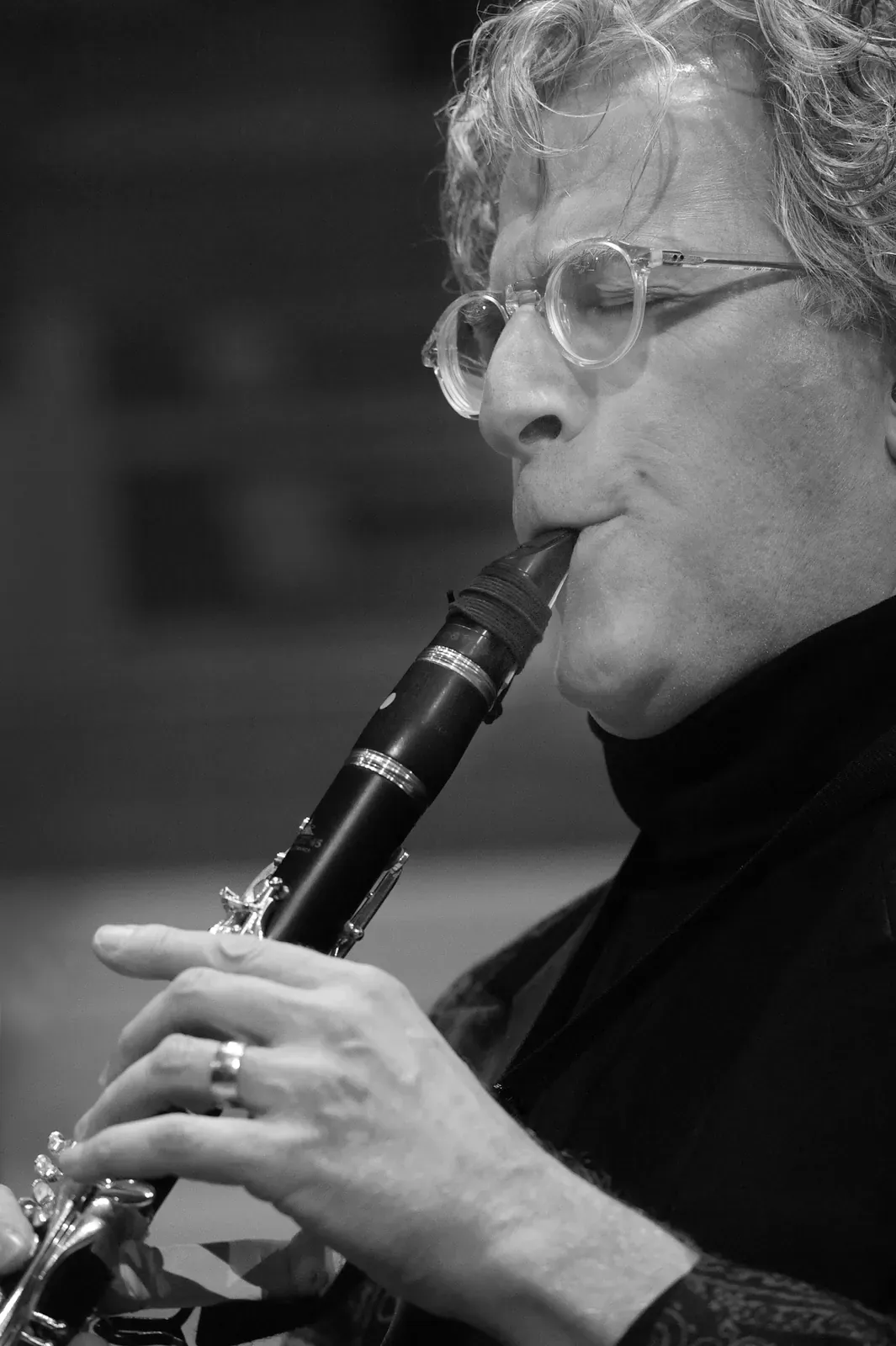
Origins
It began as a trade. A Krakow Jewish council meeting in 1595 records the word, and during the 1600s Jewish musicians in Poland gained guild rights that set fees and standards for wedding bands. The work was weddings: the procession, the seating of the bride, the dances for guests and relatives, and the rhymes of the wedding jester, the badkhn.
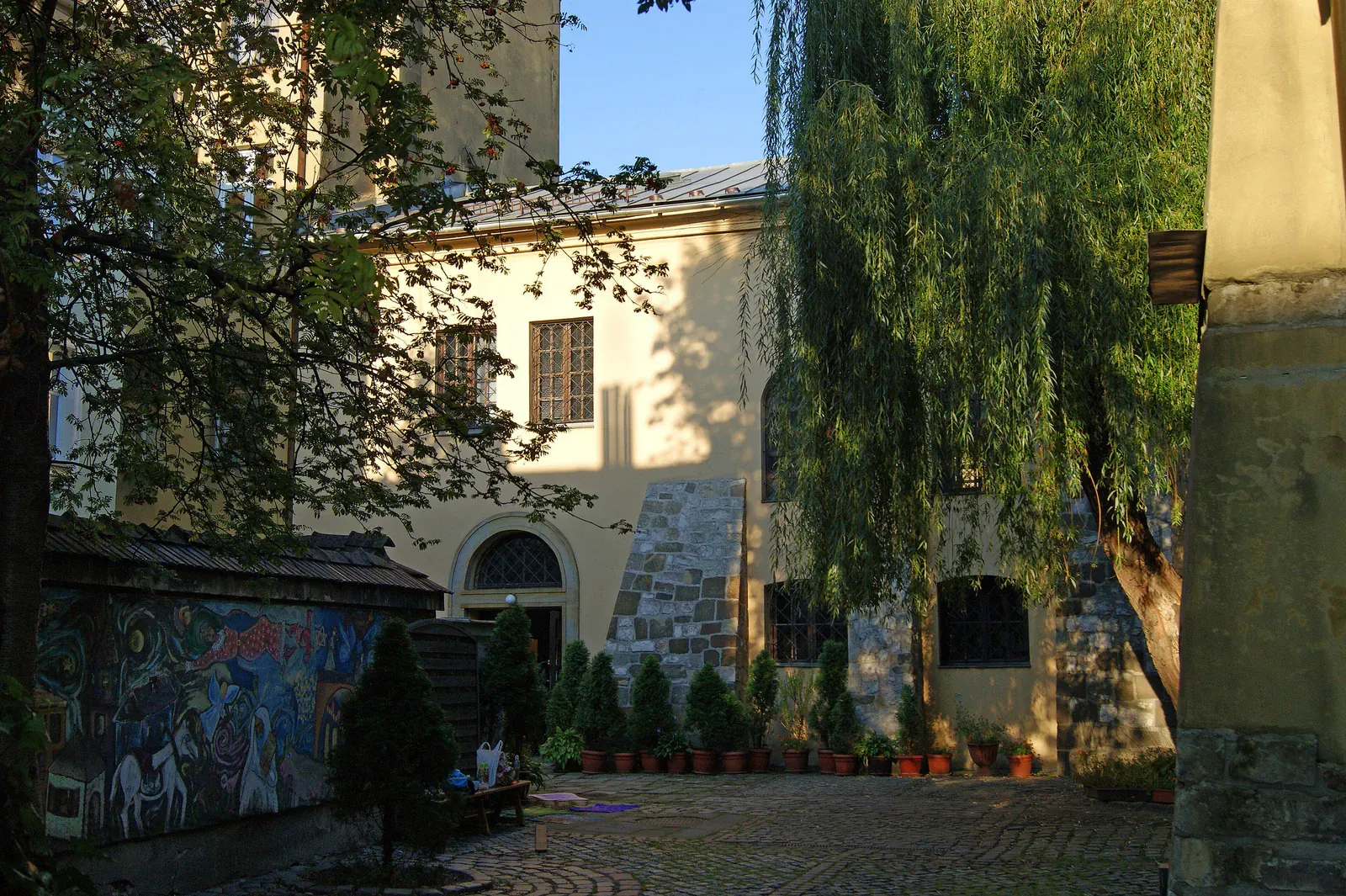
The sound came from many places: Romanian doinas, Ottoman and Greek dance tunes, Polish and Ukrainian folk melodies, the cantor’s cry from the synagogue, and Hasidic communities’ stress on dance and wordless melody. The result is free, sighing preludes (the doyna) followed by fast circle dances in the minor-sounding freygish mode.
Guild bands and Hasidic dance, 1550-1800
Before the 19th century a klezmer band was small: a violin or two, a bass and a hammer dulcimer, the tsimbl. Musicians worked in family lines and passed tunes by ear.
Virtuosos and Pale orchestras, 1800-1880
In the 19th century the music grew bigger and showier. Violin virtuosos such as Pedotser and Stempenyu became local stars, and larger bands with brass spread across Ukraine. Around Chisinau in Bessarabia, Jewish, Romanian and Roma musicians shared tunes, and the fast, syncopated bulgar dance took its form. These orchestras left almost nothing on disc, but field workers saved some melodies on wax cylinders from 1907.
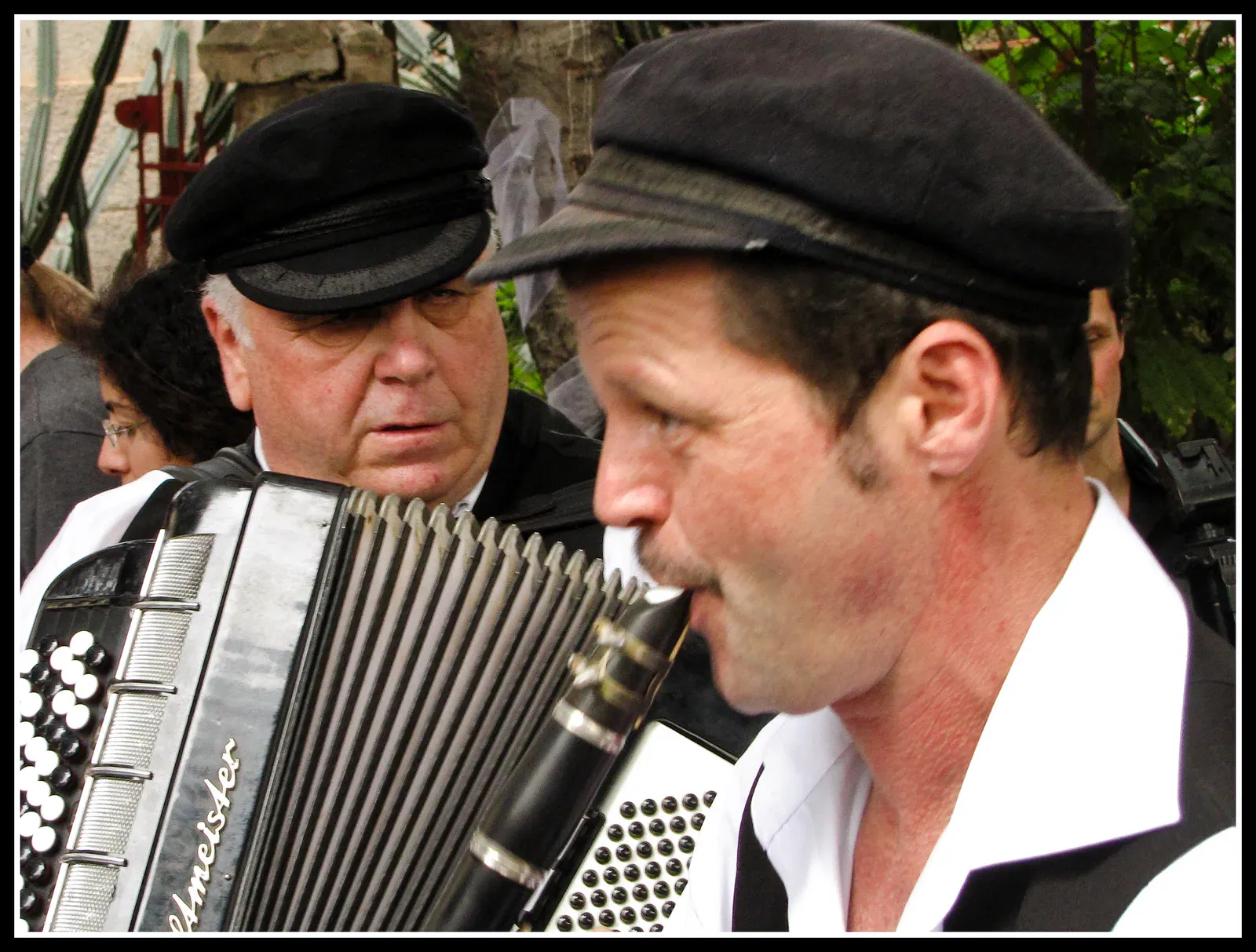
New York and the 78 rpm age, 1880-1930
Mass emigration to the United States began around 1880, and klezmers settled in New York, Philadelphia and Boston, playing weddings, halls and union rallies. Yiddish theatres and an immigrant audience were a ready market. Records fixed an oral art: Abe Elenkrig’s “Fon der Choope” in 1913 is often cited as the first recognized klezmer recording.
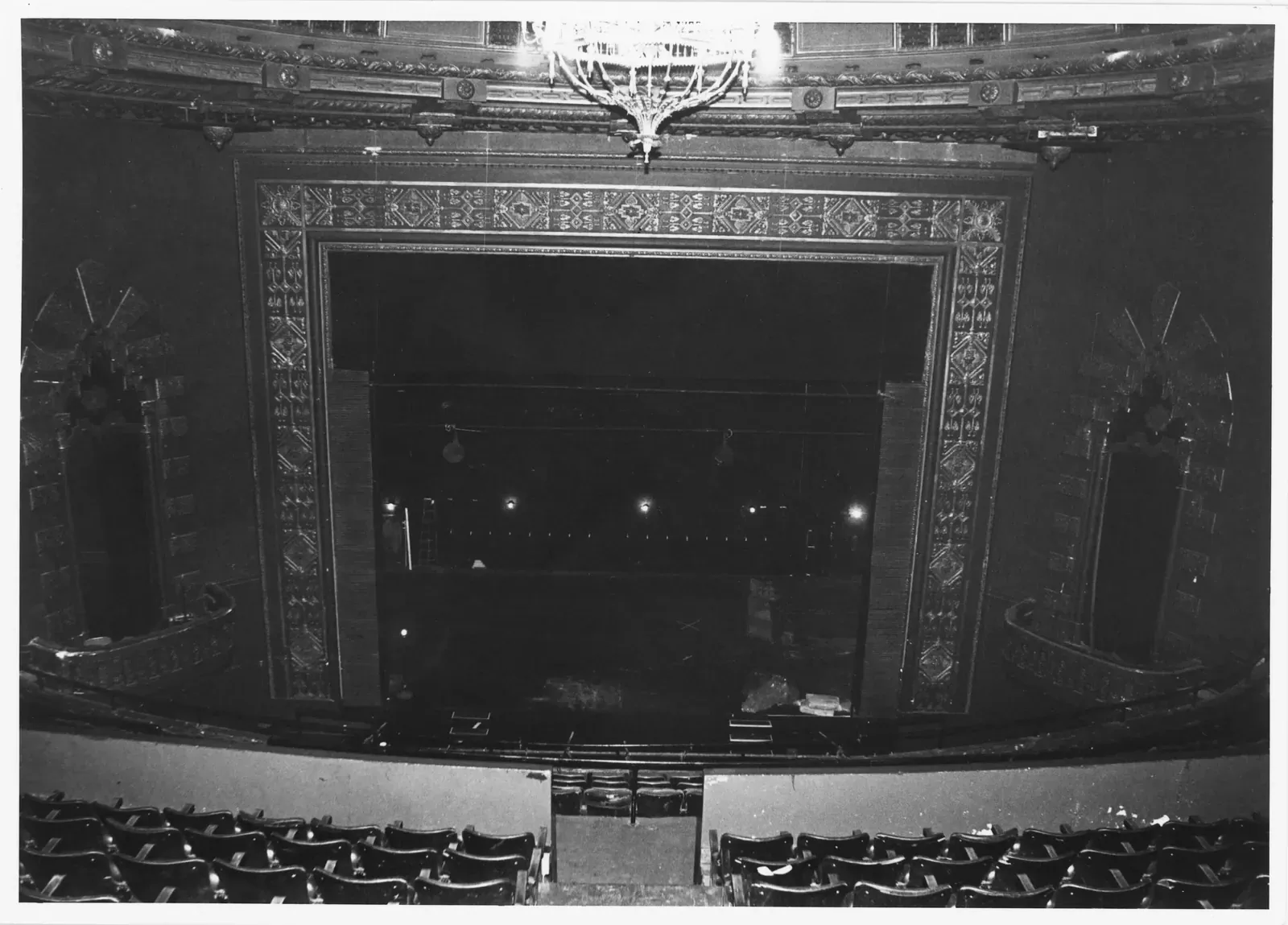
The clarinet took the lead in America, mimicking the cantor’s sobs and laughter. Naftule Brandwein, a flamboyant player, cut “Der Terk in America” for Victor, now part of RCA Records, in March 1924, and the disc still shows the Ottoman-tinged style revivalists studied. Dave Tarras, smoother and more urbane, became the dominant clarinetist of the next decades. A 1924 US immigration law shrank the audience, and the Depression ended the recording boom.
Swing, parody and near silence, 1930-1975
By the 1930s the tradition was giving way to American pop, but its tunes slipped into it. In November 1937 the Andrews Sisters recorded “Bei Mir Bist Du Schoen” for Decca, turning a Yiddish theatre song into a US hit. In 1939 trumpeter Ziggy Elman, a klezmer fan, wrote “And the Angels Sing” for Benny Goodman out of a freylekh, and it became a swing standard.
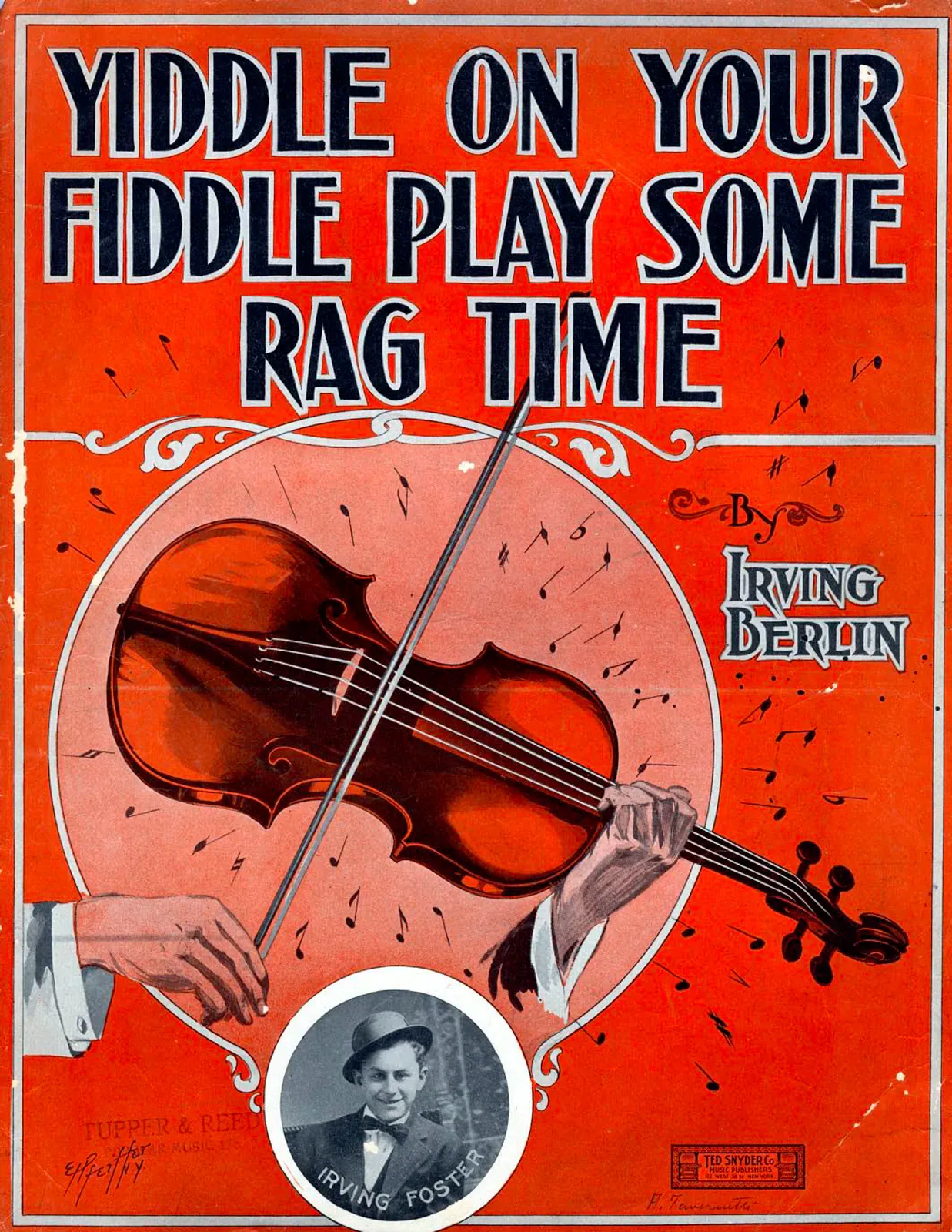
Mickey Katz carried the idiom into comedy: his Yiddish parody “Haim Afen Range” was recorded in October 1947, and he spent decades turning klezmer phrasing into American novelty pop. Tarras, with his son-in-law Sam Musiker, released “Tanz!” in 1956, blending klezmer and swing. In the Soviet Union after 1948 Jewish concerts, klezmer included, were no longer allowed, and the scholar Moisei Beregovsky, who had collected klezmer tunes, was arrested in 1950 and sent to a Siberian camp.
The revival, 1975-1995
The turn came in the mid-1970s. The Klezmorim formed in Berkeley in 1975, and their 1977 album “East Side Wedding” on Arhoolie found a young audience. In 1979 Zev Feldman and Andy Statman released “Jewish Klezmer Music”, which helped fix the word klezmer as the name of a genre. Statman, a bluegrass mandolinist turned clarinetist, studied with Tarras, tying the new generation to the old.
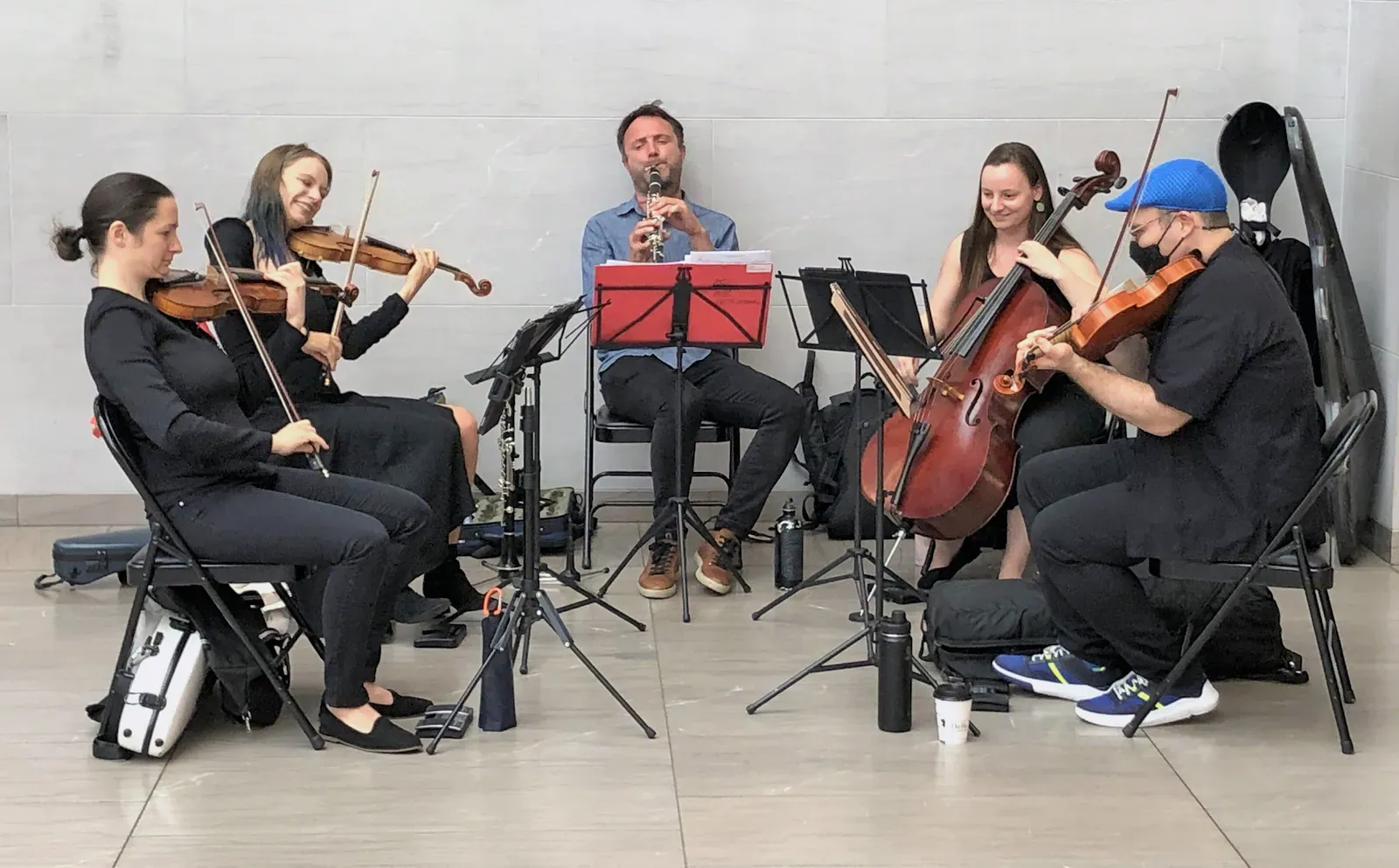
Boston followed. Hankus Netsky formed the Klezmer Conservatory Band at the New England Conservatory in 1980; its 1984 album “Klez!” came out on Vanguard. In 1985 Henry Sapoznik and Adrienne Cooper started KlezKamp, a Catskills retreat where players learned from surviving masters. The Klezmatics formed in New York’s East Village in 1986, and Piranha released their “Rhythm + Jews” in 1990, a raw record that set the template for fusion klezmer. Brave Old World, formed in 1989, moved toward original chamber-style writing on “Beyond the Pale” (1994, Rounder).
Fusion and the festival circuit, 1993 onward
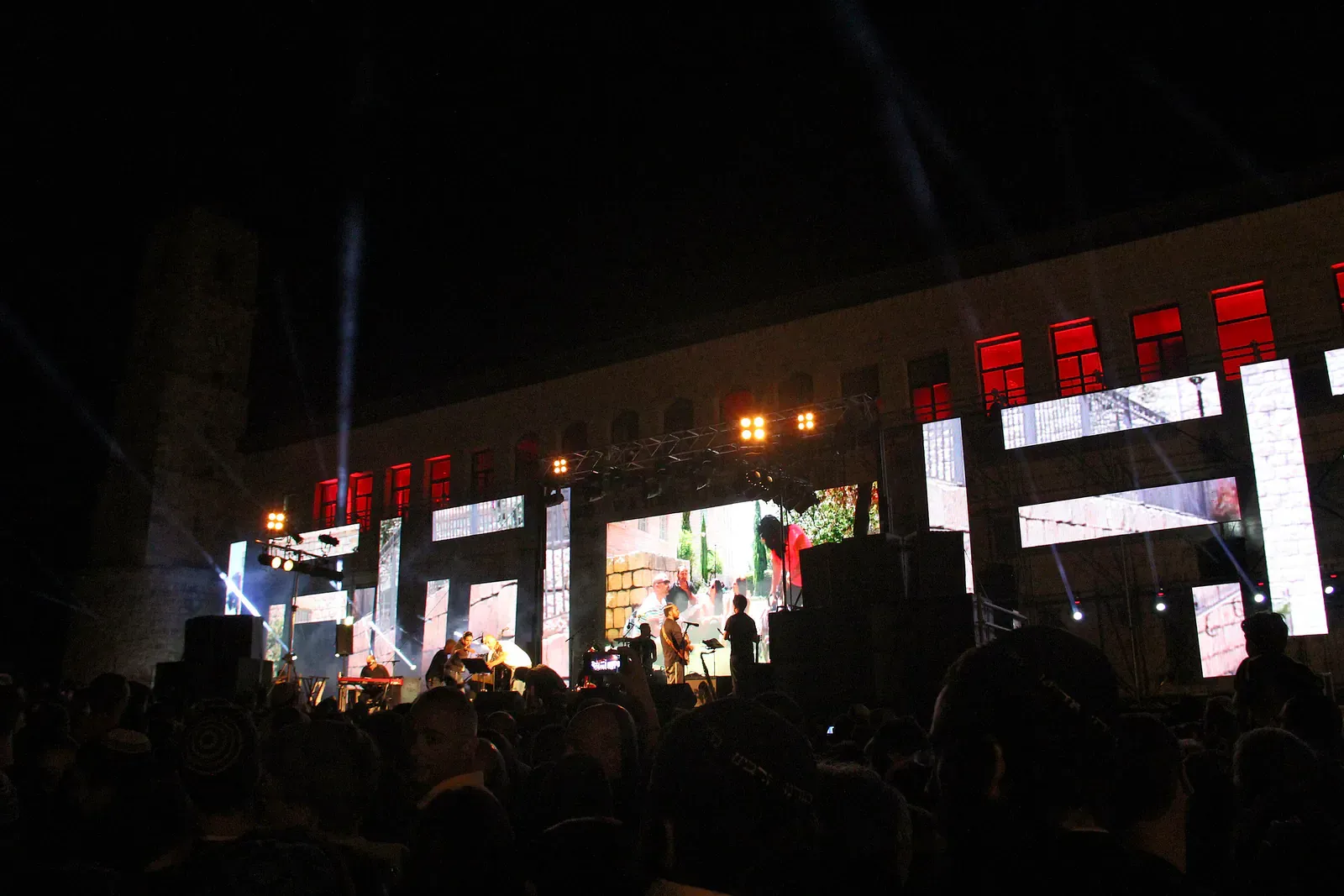
From the 1990s the music spread outward. Don Byron’s 1993 album of Mickey Katz tunes introduced the repertoire to jazz audiences. In 1995 John Zorn founded Tzadik, whose Radical Jewish Culture line hosts Masada and other klezmer-adjacent work. Festivals made it a summer staple: Krakow’s Jewish Culture Festival began in 1988, and Safed in northern Israel has its own klezmer festival.
Characteristics
A klezmer set typically opens with a free-time doyna and moves into metrical dances in 2/4 or 4/4: the freylekhs, the bulgar, the sher and the slower khosidl. Melodies move between a few synagogue-derived modes, and the lead player adds sobbing bends and catches that imitate the cantor.
Instruments and production
Violin was the first lead voice, with bass and tsimbl behind it. In America the clarinet took the lead, with accordion and brass, and the poyk, a bass drum with a cymbal, kept the pulse. Production was acoustic and live until the 78 rpm era fixed performances on disc; revival bands later worked from those records and from field recordings.
Mainstream success
The widest door opened in 1995, when violinist Itzhak Perlman recorded “In the Fiddler’s House” for EMI Classics with The Klezmatics, Brave Old World and Andy Statman. Klezmer never topped charts as its own genre. It spread through crossover hits like the Andrews Sisters, comedy records, concert halls, and film: Giora Feidman played the clarinet solos on the soundtrack of “Schindler’s List” in 1993.
Notable recordings
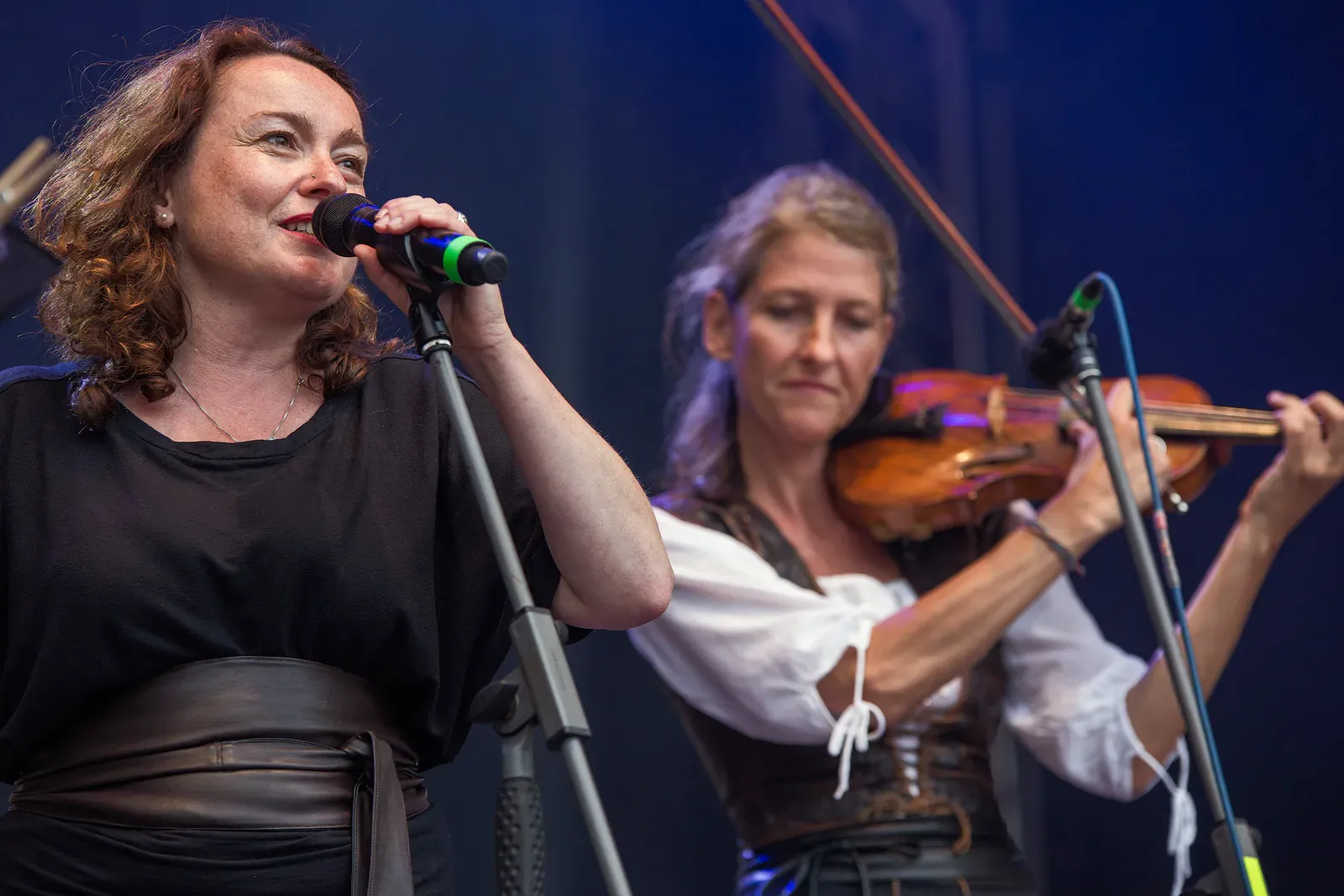
“Der Terk in America” is a key source recording of the New York clarinet style, and its title says it all: an Ottoman-flavored terkisher, played by an immigrant Jew in New York. “Bei Mir Bist Du Schoen”, a Yiddish theatre number by Sholom Secunda and Jacob Jacobs, put Yiddish melodic style in front of a general American audience when the Andrews Sisters recorded it in 1937. “Di Sapozhkelekh” by The Klezmatics shows the revival at its most daring, pushing a Yiddish song into punk-tinged territory.
Culture
Weddings were the heart of it. The circle dance (freylekhs and bulgar) was the centre of the celebration, and rituals like the bride-seating ceremony (kale-bazetsn) and the dances for guests (mitsve-tants) gave the musicians set parts to play.
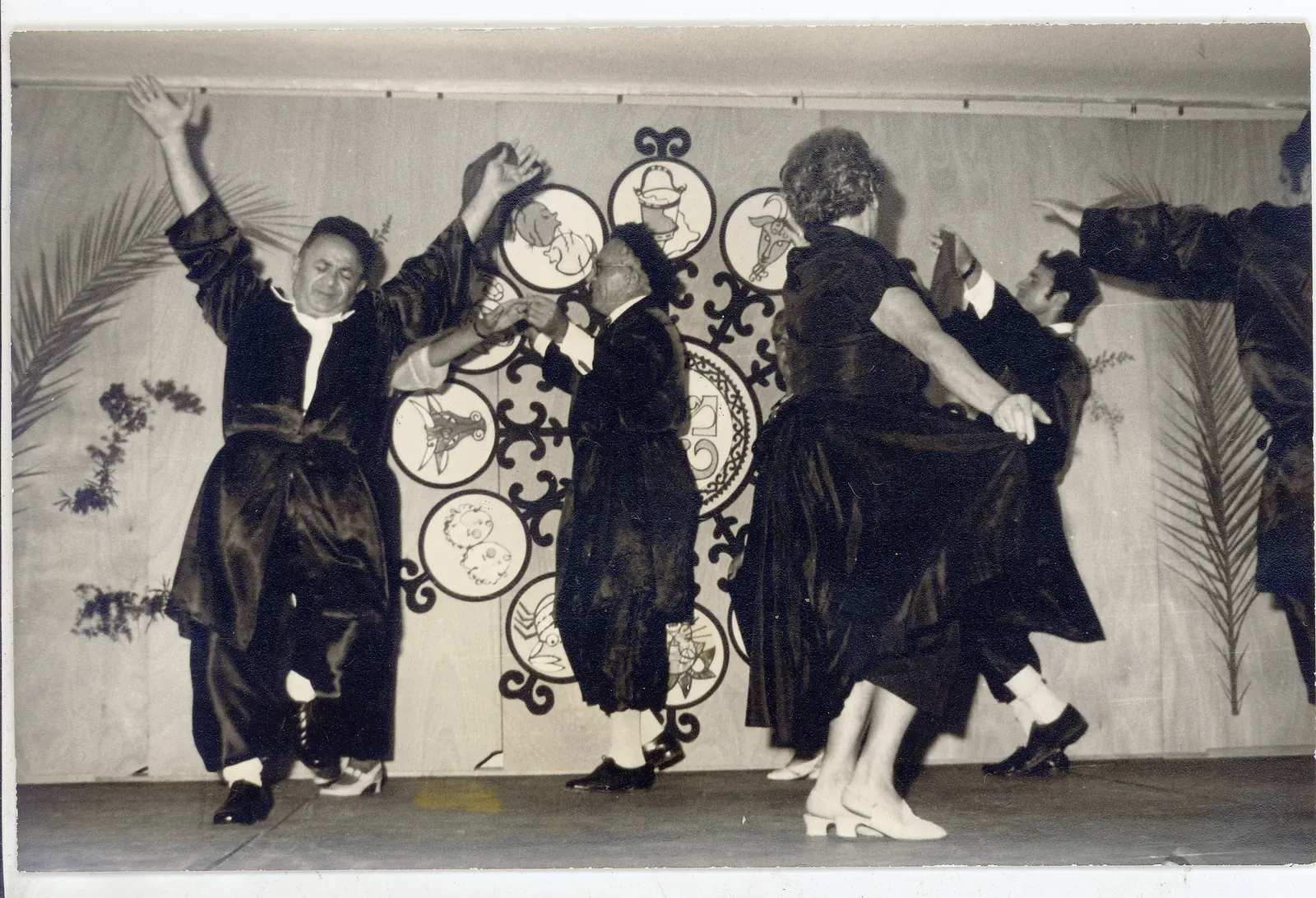
The revival was also a political act, a way for grandchildren of immigrants to reclaim a repertoire their families had lost, often rebuilt from old 78s and a few surviving masters.
Legacy
Klezmer now lives as a festival, club and concert-hall music across Europe, Israel and North America, and its recordings and tune collections are the base of a large teaching scene.
Klezmer sits in the European folk world described in the European music family, and its clarinet lineage links to the jazz family as well.
Misconceptions
Klezmer is not all Jewish music: it is the mostly dance music of Ashkenazi Jews, and Sephardic, Mizrahi and liturgical music are separate traditions.
It is also not a clarinet-only music. The violin was the older lead instrument, and the tsimbl, accordion and brass all have their places; the clarinet became the star mainly in the United States.
Nor was klezmer invented from nothing in the revival. It narrowed to a few older players such as Dave Tarras, who taught revivalists, and the revival rebuilt the music from them, old records and field recordings.
Frequently asked questions
What does klezmer mean?
Klezmer comes from the Hebrew kley zemer, literally vessels of song, meaning musical instruments, and in Yiddish it came to name the musicians. Over the 20th century it came to mean the music itself, and the 1979 album “Jewish Klezmer Music” helped the word stick as a genre name.
What instruments are used in klezmer?
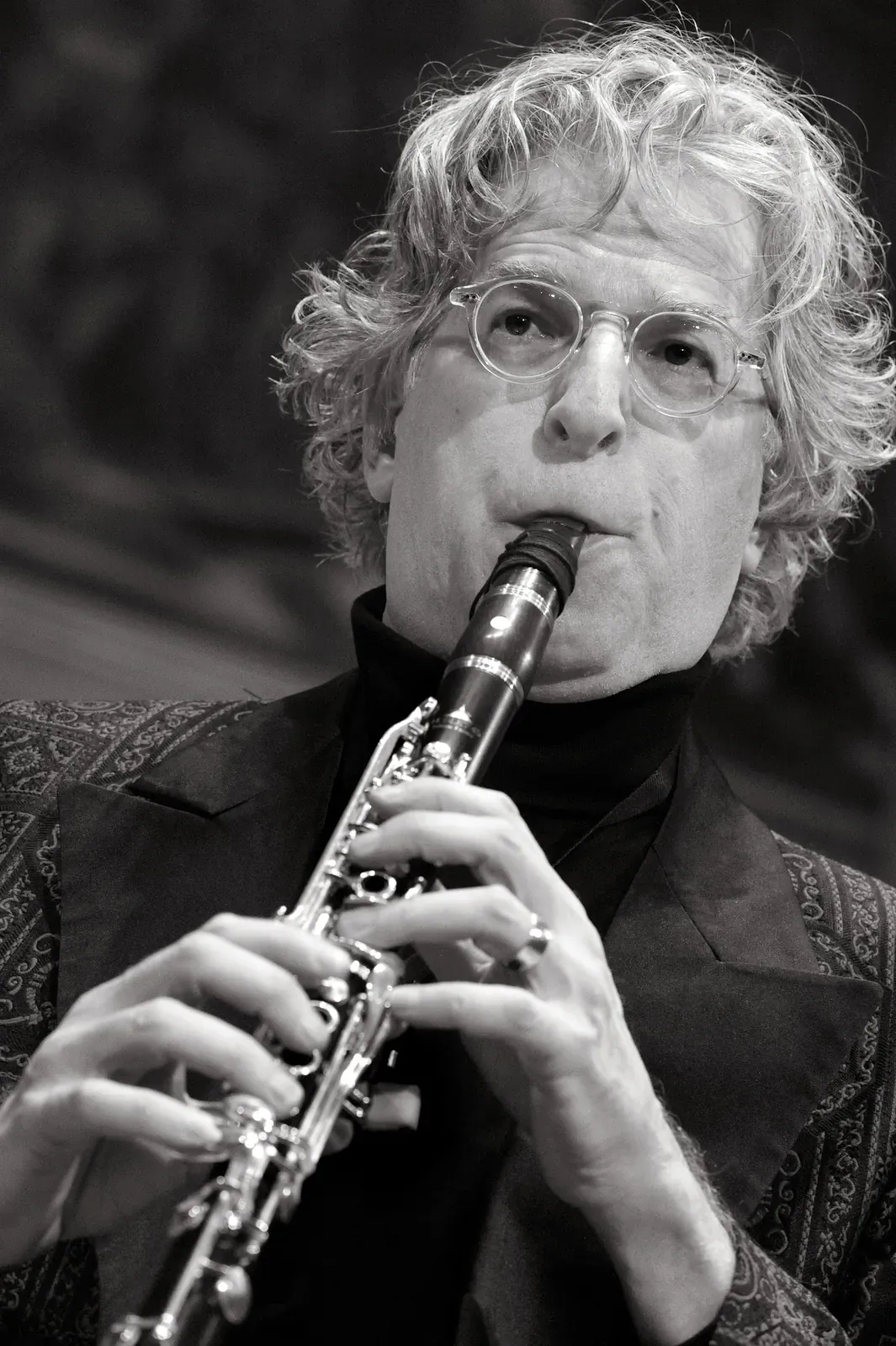
The core instruments are clarinet and violin, backed by accordion, bass, brass and a bass drum. The tsimbl, a hammer dulcimer, was once common and has been revived. Players also use sobbing ornaments called krekhts to imitate the cantor’s cry.
Which recordings introduce klezmer?
“Di Sapozhkelekh” by The Klezmatics and Itzhak Perlman’s “As der Rebbe Elimelech is gevoyrn asoi freylach” are common entry points. Naftule Brandwein’s “Der Terk in America” gives the source sound of the 1920s, and Brave Old World shows original composition in the style.
Is klezmer still played today?
Yes. The Klezmatics, Brave Old World and the Klezmer Conservatory Band are all still active, and festivals in Krakow, Safed, Europe and the United States keep it alive. Players such as Don Byron and John Zorn have taken it into jazz and avant-garde work.
Sound
Sound sheet
Anatomy of a track
| # | Part | Bars |
|---|---|---|
| 1 | Doyna (free prelude) | 16 |
| 2 | Slow hora or terkisher | 16 |
| 3 | Freylekhs, first strain | 16 |
| 4 | Freylekhs, second strain | 16 |
| 5 | Bulgar or sher finale | 32 |
Signature sounds
- Clarinet or violin sobbing ornaments (krekhts)
- Freygish mode with flat second
- Free doyna before a fast dance
- Syncopated bulgar rhythm
- Brass bass lines in American bands
Drums and percussion
- Poyk
Techniques
- Krekhts
- Doyna
- Ornamentation
- Bulgar syncopation
Keys and modes
Freygish (Ahava Rabbah). Phrygian dominant mode with a flat second and an augmented second, the most recognizable klezmer colour.
Mi sheberakh. Minor-sounding mode with a raised fourth, named after a synagogue prayer and common in doynas and slow pieces.
Adonai malakh. Mixolydian-type mode taken from the synagogue, used for brighter dance tunes.
Vocals
Mostly instrumental; Yiddish songs enter through theatre and revival repertoire.
Scenes
Where it happened
Where and when the sound lived: one bar per city on a shared timeline.
Europe
North America
Active scenes
Peak 6, 1989-1993
Site of the first written mention and, since 1988, the biggest klezmer festival.
Heart of Bessarabia, where Jewish, Romanian and Roma players shaped fast bulgars and doinas.
Recording capital of klezmer in the 1910s-20s and home of the Klezmatics.
Home of The Klezmorim, the first revival band.
Klezmer Conservatory Band and New England Conservatory scene.
Base of Piranha label and German klezmer festivals, with Brave Old World ties.
Venues and places
Brooklyn, 1932 to today. Brooklyn Yiddish theatre where Bay mir bistu sheyn premiered in an operetta.
Berkeley, 1976 to today. Coffeehouse where The Klezmorim landed a monthly gig after their 1976 library debut.
Boston, 1980 to today. Hankus Netsky assembled the Klezmer Conservatory Band here.
New York, 1983 to today. The Klezmorim played it twice in 1983.
Kerhonkson, 1985 to today. Catskills Yiddish and klezmer retreat started in 1985 and run into the 2010s.
Krakow, 1988 to today. Annual festival ends with a klezmer concert on Szeroka Street.
Culture
Culture markers
- Circle dancing
Freylekhs and bulgar circle dances were the heart of wedding celebrations.
Dance - Kale-bazetsn
Bride-seating ceremony where the badkhn and musicians performed.
Ritual - Mitsve-tants
Ceremonial dances for guests and relatives at weddings.
Ritual - Chagall's fiddlers
Marc Chagall depicted klezmers in his paintings.
Artwork - Krekhts
Players call the groan ornament by this Yiddish word.
Slang
Media
Key media
- 1936Yidl Mitn Fidl
by Joseph Green. Yiddish film about traveling musicians, a screen record of klezmer culture.
Film - 1993Schindler's List
by Steven Spielberg. Feidman played clarinet solos for the score.
Film - 1994The Last Klezmer: Leopold Kozlowski
by Yale Strom. Documentary on one of the last Polish klezmers.
Film - 1995Itzhak Perlman: In the Fiddler's House
by Itzhak Perlman. PBS special that brought revival bands to a wide TV audience.
Film - 1996Beyond Silence
by Caroline Link. German drama about a klezmer clarinetist, with Giora Feidman in the cast.
Film
Glossary
Terms on this page
Wedding jester who improvised rhymes and led ceremony ritual.
Syncopated Bessarabian circle dance that became the most popular klezmer dance in early 20th-century America.
Free, semi-improvised piece borrowed from Romanian doina, often a prelude.
The characteristic mode with a flat second and raised third, linked to Jewish identity.
The basic klezmer circle dance in 2/4.
A sobbing ornament imitating the cantor's cry.
Contra dance for four couples in 2/4.
Virtuosic 4/4 solo with Ottoman flavor.
European folk family