Flamenco
Flamenco is an Andalusian art of song, guitar and dance that took shape in Jerez, Cadiz and Seville from about 1780, built on dozens of palos.
Jerez de la Frontera, 1780
European folk family
Born
1780
Jerez de la Frontera
Subgenres
7
Documented branches
Links
15
Genres it drew on or shaped
Tempo
65-130 BPMLineage
Family tree
Grew out of
Influenced by
Romani musicJota
Jerez de la Frontera, 1780
Flamenco
Led to (7)
Timeline
Era by era
From the first sparks to today. Select a dot to read the story behind it.
- Gitano roots in Lower Andalusia
1780 to 1880
- Cafes cantantes and flamenco opera
1881 to 1953
- Anthologies, tablaos and purism
1954 to 1968
- Paco de Lucia and Camaron
1969 to 1978
- Nuevo flamenco
1979 to 1995
- Heritage and crossover
1996 to 2026
Eras
Moments
- 1 Gitano roots in Lower Andalusia, 1780 to 1880
- 2 Cafes cantantes and flamenco opera, 1881 to 1953
- 3 Anthologies, tablaos and purism, 1954 to 1968
- 4 Paco de Lucia and Camaron, 1969 to 1978
- 5 Nuevo flamenco, 1979 to 1995
- 6 Heritage and crossover, 1996 to 2026
around 1780
Gitano roots in Lower Andalusia
Song, guitar and dance take shape in Jerez, Cadiz and Seville among Gitano and poor Andalusian communities, from Andalusian folk song, Romani music and Arab-Andalusian heritage.
- 1780Flamenco appears around JerezThe first documented references to the art come from Lower Andalusia, with Jerez de la Frontera as an early centre.
1881
Cafes cantantes and flamenco opera
Paid singers perform in cafes from 1881, the guitar steps forward with Ramon Montoya, the 1922 Granada contest defends deep song, and flamenco shows fill theatres and bullrings.
- 1881Silverio Franconetti opens a cafe cantante in SevilleThe paid-performer cafe model turns cante into a professional competitive trade.
- 1910La Nina de los Peines first recordsHer recordings from 1910 onward, many with Ramon Montoya, preserve the cante of the cafe era.
- 1920Flamenco opera era beginsFlamenco shows spread to theatres and bullrings in Spain and abroad until the mid-1950s.
- 1922Concurso de Cante Jondo in GranadaManuel de Falla and Federico Garcia Lorca stage a contest to protect deep Andalusian song; La Nina de los Peines and Ramon Montoya take part.
1954
Anthologies, tablaos and purism
The first anthology of cante, tablaos, festivals and books such as Mundo y formas del cante flamenco turn flamenco into a documented art with Antonio Mairena as its strict guardian.
- 1954Antologia del cante flamencoThe first anthology of flamenco singing, directed by Perico el del Lunar, is published in France.
- 1956Hispavox issues the Antologia in SpainThe newly founded Madrid label brings the anthology to Spanish listeners two years after France.
- 1956Corral de la Moreria opens in MadridOne of the oldest tablaos still running makes Madrid a base for professional flamenco shows.
- 1961Cante de las Minas festival beginsThe festival in La Union, Murcia starts after Juanito Valderrama urges locals to protect their mining songs.
- 1963Mundo y formas del cante flamenco publishedRicardo Molina and Antonio Mairena write the reference book that shapes later flamenco scholarship.
1969
Paco de Lucia and Camaron
A guitarist and a singer from Cadiz province record nine albums together, Entre dos aguas makes flamenco a hit, and Lole y Manuel point to a flamenco for a wider audience.
- 1969Camaron and Paco de Lucia start recording togetherBetween 1969 and 1977 they record nine albums that redefine the singer-guitarist duo.
- 1973Fuente y caudalPaco de Lucia records the album that holds Entre dos aguas, a flamenco rumba improvised in the studio.
- 1975Lole y Manuel release Nuevo diaThe duo are named as precursors of nuevo flamenco, adding mellotron and outside influences.
- 1977Paco de Lucia finds the cajon in LimaHe buys one in Peru; his sextet drummer Rubem Dantas then plays it in bulerias, and the box drum enters flamenco.
1979
Nuevo flamenco
La leyenda del tiempo, the Paco de Lucia Sextet with the cajon, Pata Negra and Ketama bring jazz, blues, rock and rumba into flamenco and split traditionalists from innovators.
- 1979La leyenda del tiempoCamaron records Lorca poems with electric textures; it splits purists and becomes a landmark.
- 1980Bienal de Flamenco begins in SevilleThe biennial, first held on 27 March 1980, becomes the leading flamenco festival.
- 1981Friday Night in San FranciscoPaco de Lucia, John McLaughlin and Al Di Meola take acoustic guitar fusion to a live audience.
- 1987Blues de la fronteraPata Negra fuse flamenco and blues on Nuevos Medios in the so-called blueslería.
- 1992Death of CamaronHe dies in Badalona on 2 July; about 100,000 people attend the funeral.
- 1995De aki a KetamaThe Madrid group sell over a million copies and win an Ondas Award, proving nuevo flamenco can top pop charts.
1996
Heritage and crossover
Morente works with rock bands, Cigala with Cuban piano, UNESCO lists flamenco in 2010, and Rosalia takes the form into global pop with El mal querer.
- 1996OmegaEnrique Morente and rock band Lagartija Nick set Lorca and Leonard Cohen to flamenco voice.
- 2003Lagrimas negrasDiego el Cigala and Cuban pianist Bebo Valdes sell about a million copies with boleros sung in flamenco style.
- 2010UNESCO lists flamencoFlamenco is inscribed on the Representative List of the Intangible Cultural Heritage of Humanity.
- 2018El mal quererRosalia and El Guincho release a flamenco-pop concept album that wins the Latin Grammy for Album of the Year in 2019.
Listening path
Anthems
The records that built the sound, grouped by the part they played. Thumbnails come from YouTube; the player loads only when you press play.
- 01
La Nina de los Peines, 1911
Petenera from the first generation of recorded cante, sung by the era voice that fixed the cafe-period style.
Origin - 02
Paco de Lucia, 1974 · Philips
Flamenco rumba improvised in the studio that made flamenco guitar a mass hit in Spain.
Start hereBreakthrough - 03
Ketama, 1995
Rumba-pop hit from the million-selling De aki a Ketama that put nuevo flamenco in the pop charts.
Breakthrough - 04
Lole y Manuel, 1975
Gentle gitano duo song that signalled nuevo flamenco to a wider audience.
Anthem - 05
Paco de Lucia, 1976
Bulerias showpiece that became a guitar standard for how far the form could be pushed.
Anthem - 06
Camaron de la Isla, 1981
Tangos by Camaron with Paco de Lucia and Tomatito, a core of the singer-guitarist era.
Anthem - 07
Camaron de la Isla, 1979 · Philips
Lorca verses over jazz-tinted flamenco that scandalised purists and defined nuevo flamenco.
Start hereAnthem - 08
Pata Negra, 1987 · Nuevos Medios
Flamenco meets electric blues in the title track of the Amador brothers best-known album.
Crossover - 09
Enrique Morente, 1996
Lorca verses with a rock band: Morente opens flamenco singing to noise and alt-rock.
Crossover - 10
Diego el Cigala, 2003
Flamenco voice over Cuban piano on a bolero standard, a multi-platinum crossover.
Crossover - 11
Rosalia, 2018 · Columbia Records
First single of El mal querer, with palmas and flamenco melisma over trap-style production.
Start hereCrossover
Facts
| Family | European folk |
| Origin | Jerez de la Frontera, Spain |
| Emerged | Late 18th - 19th century, formalized by 1881 |
| Status | Active |
| Tempo | 65 to 130 BPM |
| Meter | 12-beat compas (soleá, bulerías); 2/4 or 4/4 in tangos and tientos; 3/4 in fandangos and sevillanas; tempo varies by palo |
| Subgenres | 7 |
Flamenco is an art of song (cante), guitar (toque) and dance (baile) from Andalusia in southern Spain, held together by hand clapping (palmas) and rhythmic cycles called compas.
It took shape around 1780 in Jerez de la Frontera, Cadiz and Seville among Gitano and other poor Andalusian communities, and it is organised into dozens of forms called palos. UNESCO placed it on its list of intangible cultural heritage in 2010. It sits in the European music family.
Origins: Lower Andalusia, 1780 onward
The earliest references come from Lower Andalusia around 1780, with Jerez as an early centre and Cadiz and Seville close behind. The sound mixed Andalusian folk song, Romani music and Arab-Andalusian heritage, and the Gitano families of these towns gave it its weight.
Early flamenco was not a stage show. It lived in informal parties called juergas, where musicians and friends took turns in the circle.
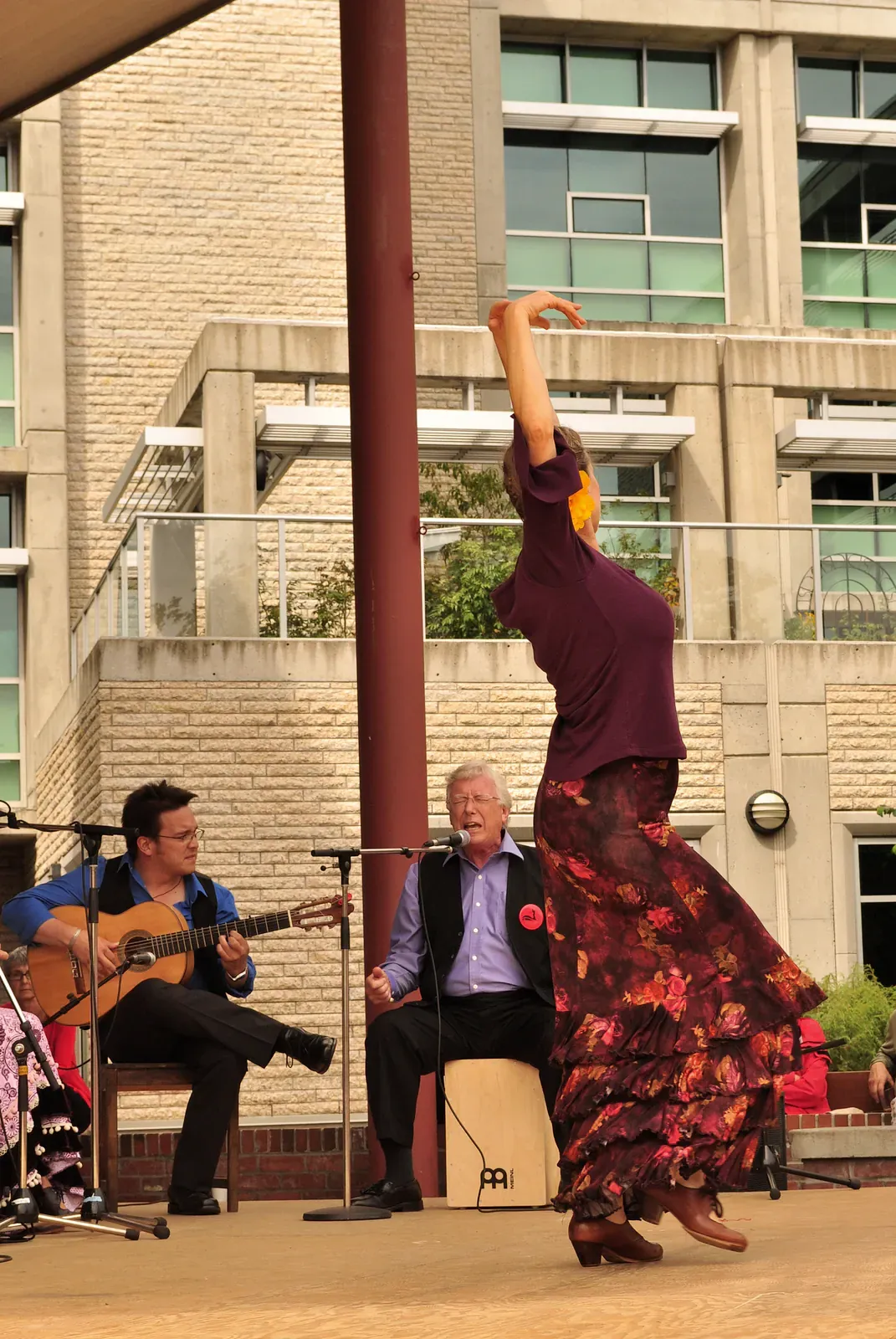
One of the earliest recorded voices is La Nina de los Peines, heard in a petenera, “Quisiera yo renegar”, from 1911. She first recorded in 1910, often with the guitarist Ramon Montoya.
Cafes cantantes and flamenco opera, 1881-1953
In 1881 Silverio Franconetti opened a cafe cantante in Seville. Singers were paid, audiences compared them, and cante became a competitive trade with stars. Dancers and guitarists moved from the back room to a raised stage.
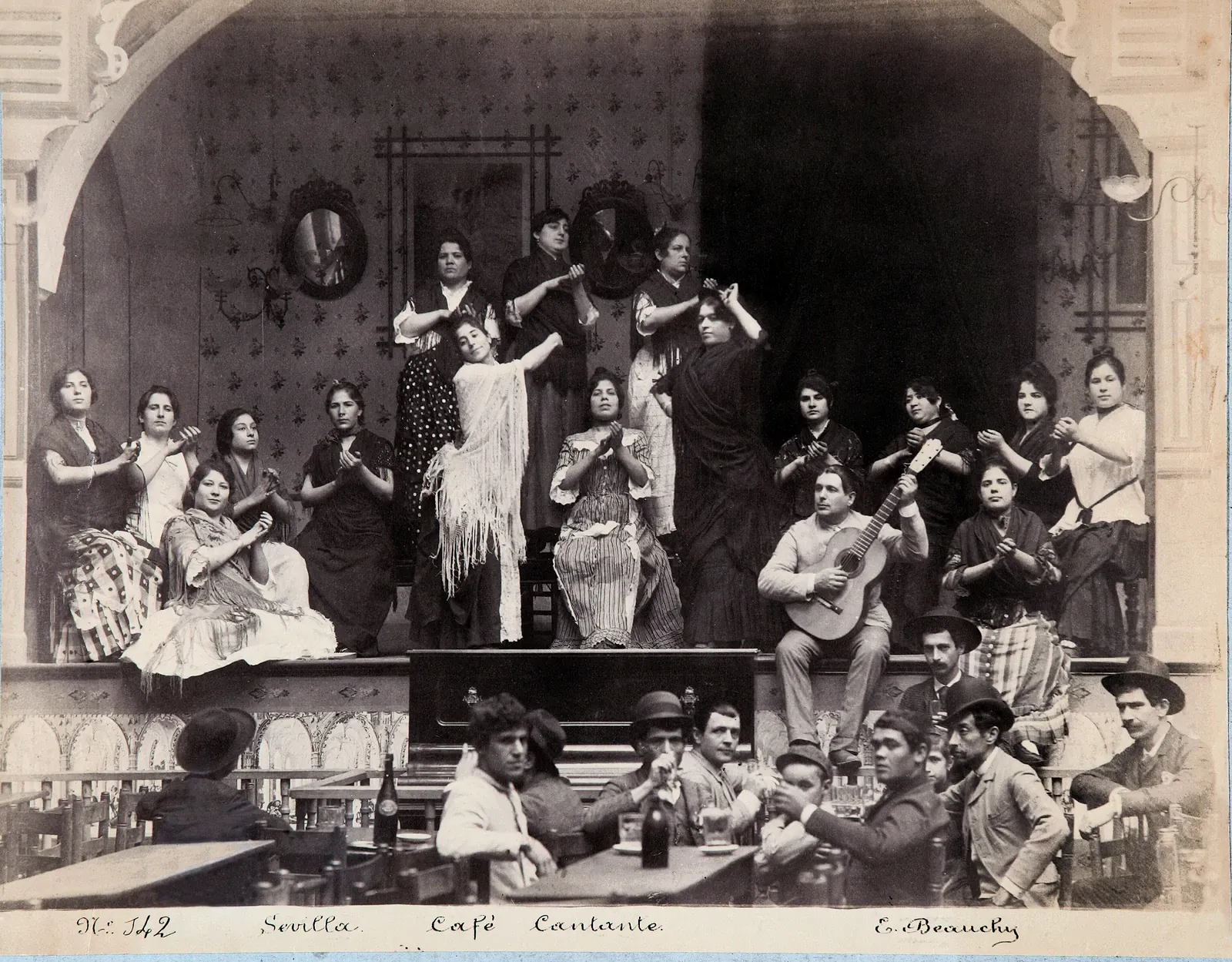
From about 1920 the shows moved to theatres and bullrings in Spain and abroad, a period usually called the flamenco opera era. In 1922 the composer Manuel de Falla and the poet Federico Garcia Lorca staged the Concurso de Cante Jondo in Granada to protect the deep, grave style. La Nina de los Peines and Ramon Montoya took part, and Montoya’s playing helped push the guitar out of the singer’s shadow.
Anthologies, tablaos and purism, 1954-1968
After the Second World War, flamenco became something to catalogue. The Antologia del cante flamenco, directed by Perico el del Lunar, came out in France in 1954. The newly founded Madrid label Hispavox issued it in Spain in 1956. Ricardo Molina and Antonio Mairena followed in 1963 with the book Mundo y formas del cante flamenco, which set the terms later scholars still use.
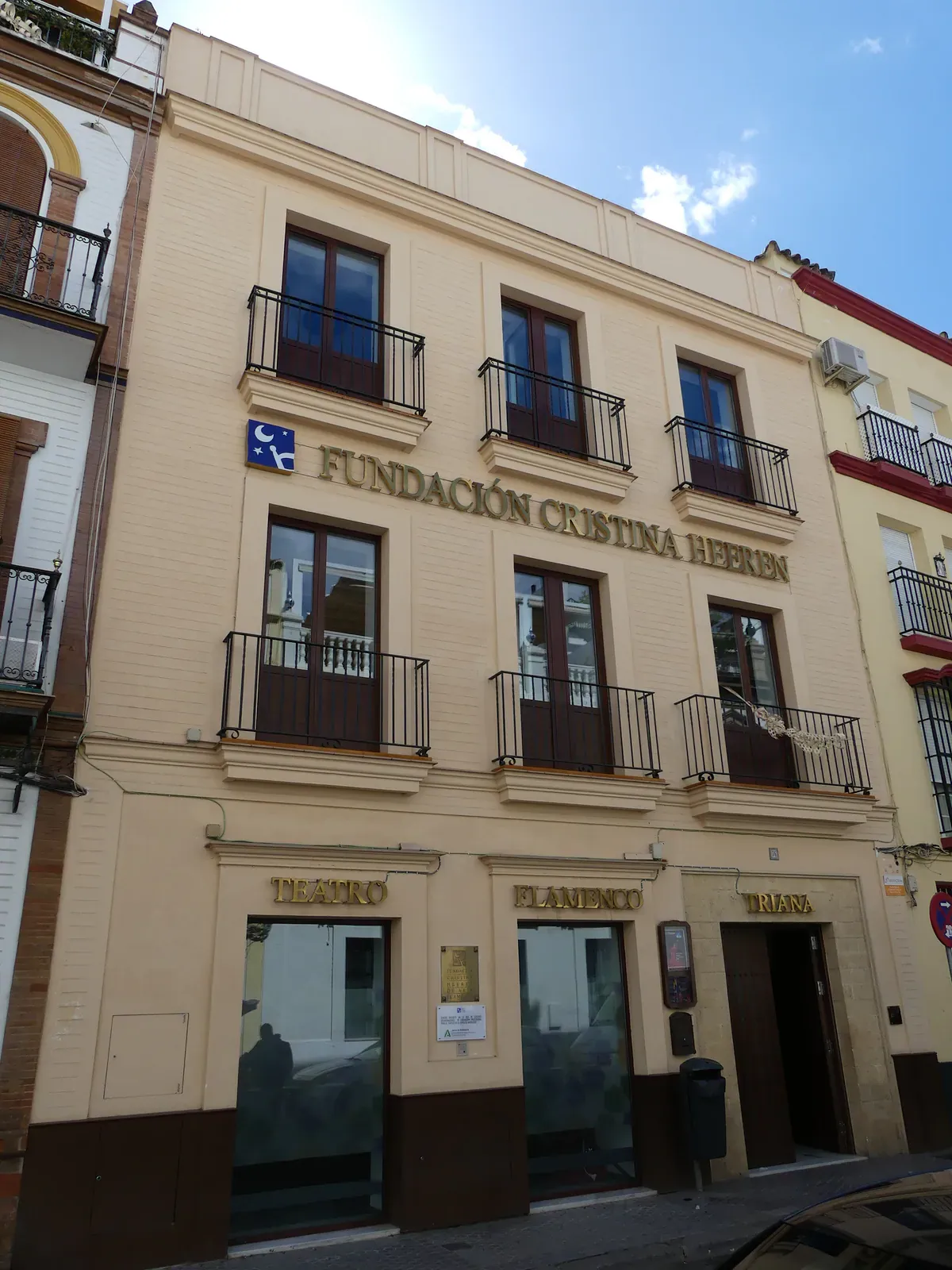
Mairena stood for strict tradition, and he guarded the old palos against dilution. The Corral de la Moreria in Madrid opened in 1956 and is one of the oldest tablaos still running. The Cante de las Minas festival began in La Union in 1961, after Juanito Valderrama urged locals to protect their mining songs.
Paco de Lucia and Camaron, 1969-1978
Two men from Cadiz province changed the sound. The singer Camaron de la Isla grew up in nearby San Fernando, and the guitarist Paco de Lucia was born in Algeciras on 21 December 1947. Between 1969 and 1977 they recorded nine albums together, and they set the standard for the singer and guitar duo.
Paco’s own breakthrough came with Fuente y caudal (1973), which holds “Entre dos aguas”. It was a flamenco rumba improvised in the studio, and when it was issued as a single in 1974 it turned a guitarist who accompanied singers into a national star. In 1977 he bought a box drum in Lima, and his sextet’s drummer Rubem Dantas played it in bulerias. The cajon has been the standard flamenco percussion ever since.
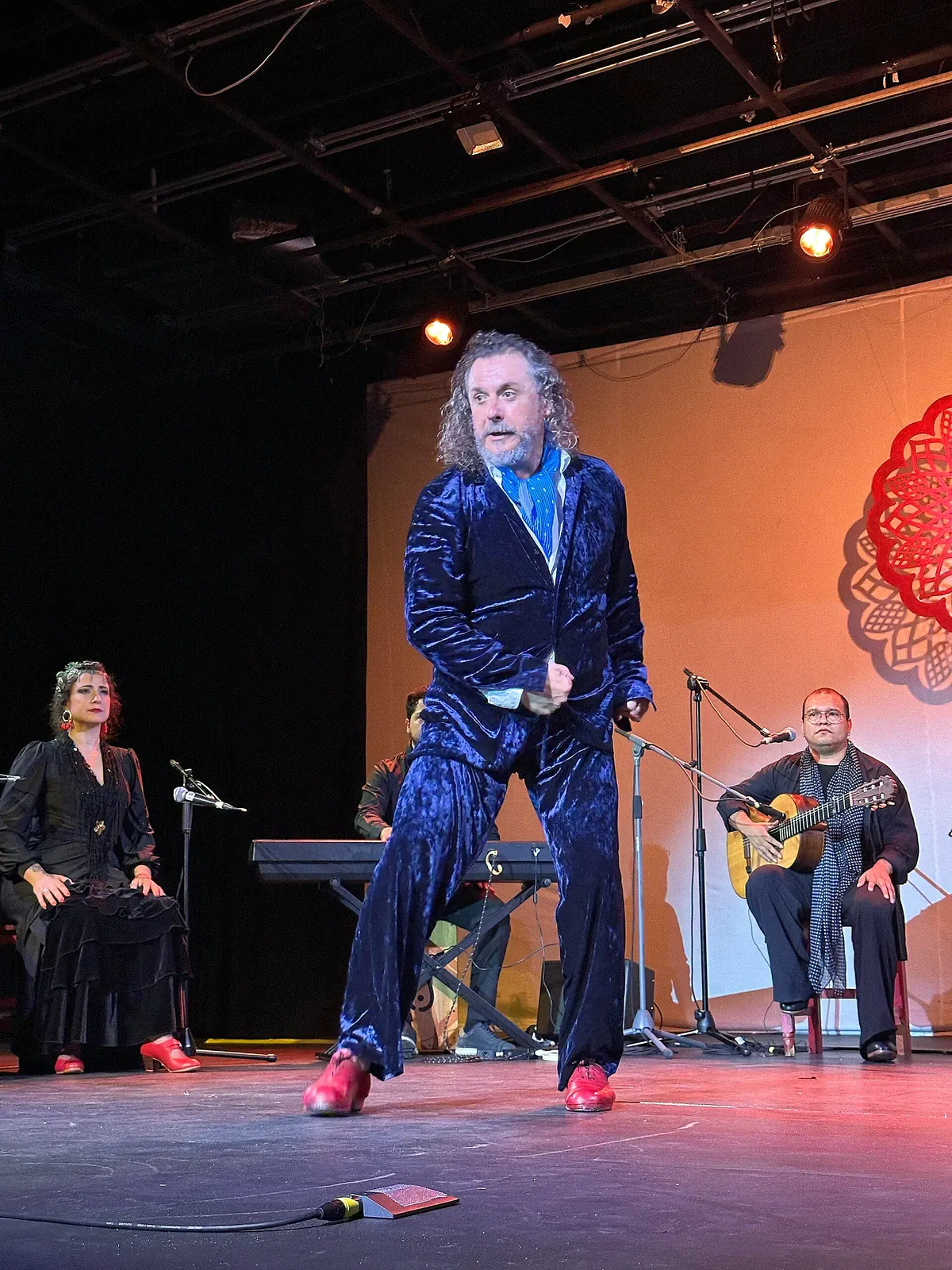
In 1975 Lole y Manuel released Nuevo dia, a gentle duo record with mellotron that reached beyond the aficionados.
Nuevo flamenco, 1979-1995
Camaron’s La leyenda del tiempo (1979) set poems by Lorca to flamenco with electric textures, keyboards, flute, and the guitar of Tomatito and Raimundo Amador. Purists were furious, and the record became a landmark. The Bienal de Flamenco had begun in Seville in 1980, and Paco de Lucia took the guitar to a global audience with John McLaughlin and Al Di Meola on Friday Night in San Francisco (1981).
Younger groups went further. Pata Negra mixed flamenco and blues on Blues de la frontera (1987), released by Nuevos Medios in Madrid. Ketama’s De aki a Ketama (1995) sold over a million copies and won an Ondas Award. The new styles borrowed from jazz, blues, rock and rumba, and they split fans into traditionalists and innovators.
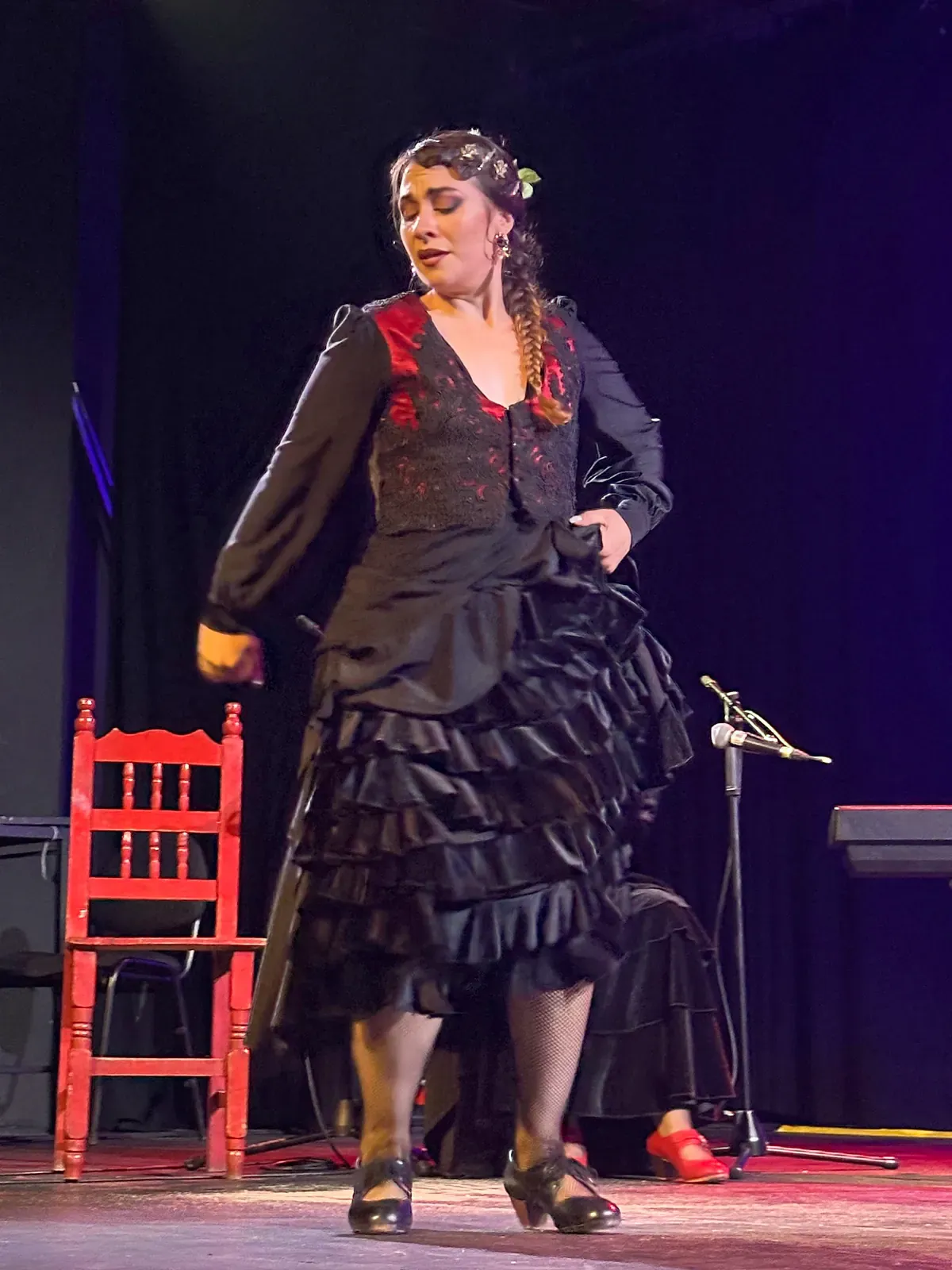
Mainstream success
The single “Entre dos aguas” (1974) made flamenco guitar a mass hit in Spain. Ketama’s “No estamos lokos (Kalikeno)” put nuevo flamenco in the pop charts in 1995. Diego el Cigala and the Cuban pianist Bebo Valdes released Lagrimas negras in 2003, boleros sung with flamenco phrasing, which sold about a million copies. The record tied flamenco to Latin song.
Camaron in 1979 and Enrique Morente’s Omega in 1996, recorded with the rock band Lagartija Nick and setting Lorca and Leonard Cohen to flamenco voice, were both attacked by traditionalists and defended by critics for years.
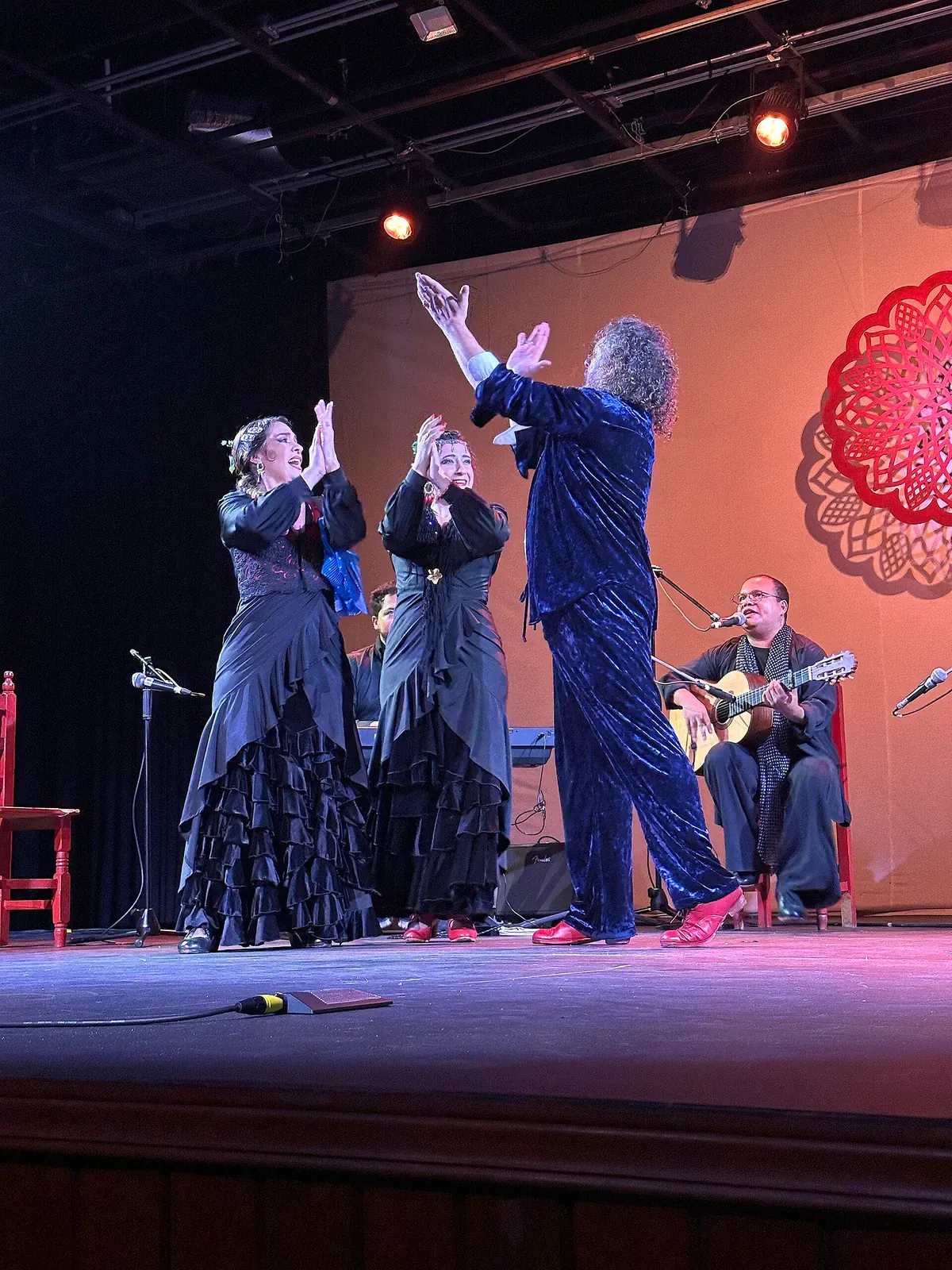
Heritage and crossover, 1996 to present
The biggest voice of the era was lost early: Camaron died in Badalona on 2 July 1992, and about 100,000 people attended his funeral. After that, the heritage question moved to the foreground: how to protect an art while letting it grow. UNESCO’s 2010 listing was one answer. The Festival de Jerez, held each February since 1997, was another.
In 2018 Rosalia and the producer El Guincho released El mal querer on Columbia Records. Palmas and flamenco melisma sat over trap-style production, and the album won the Latin Grammy for Album of the Year in 2019.
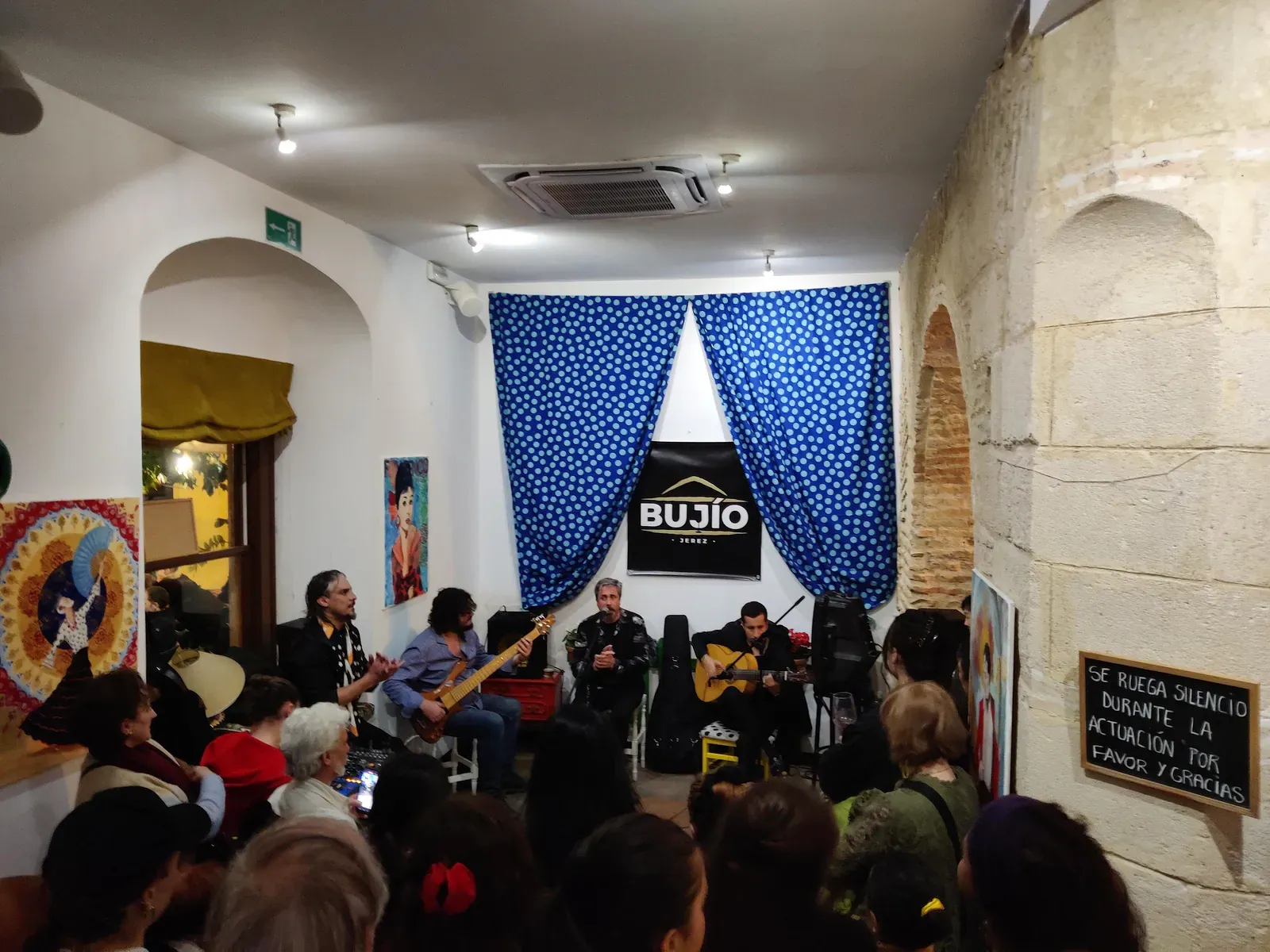
Notable recordings
“Entre dos aguas” (1974). The guitar part grew out of a studio improvisation by Paco de Lucia, played as a flamenco rumba. It made flamenco guitar a mass hit in Spain.
“La leyenda del tiempo” (1979). Camaron sang Lorca verses over jazz-tinted flamenco, with players such as Tomatito and Raimundo Amador around him. Purists were scandalised, and the record still defines nuevo flamenco.
“Malamente” (2018). The first single from El mal querer joined flamenco melisma and palmas to electronic beats and vocal edits.
Culture
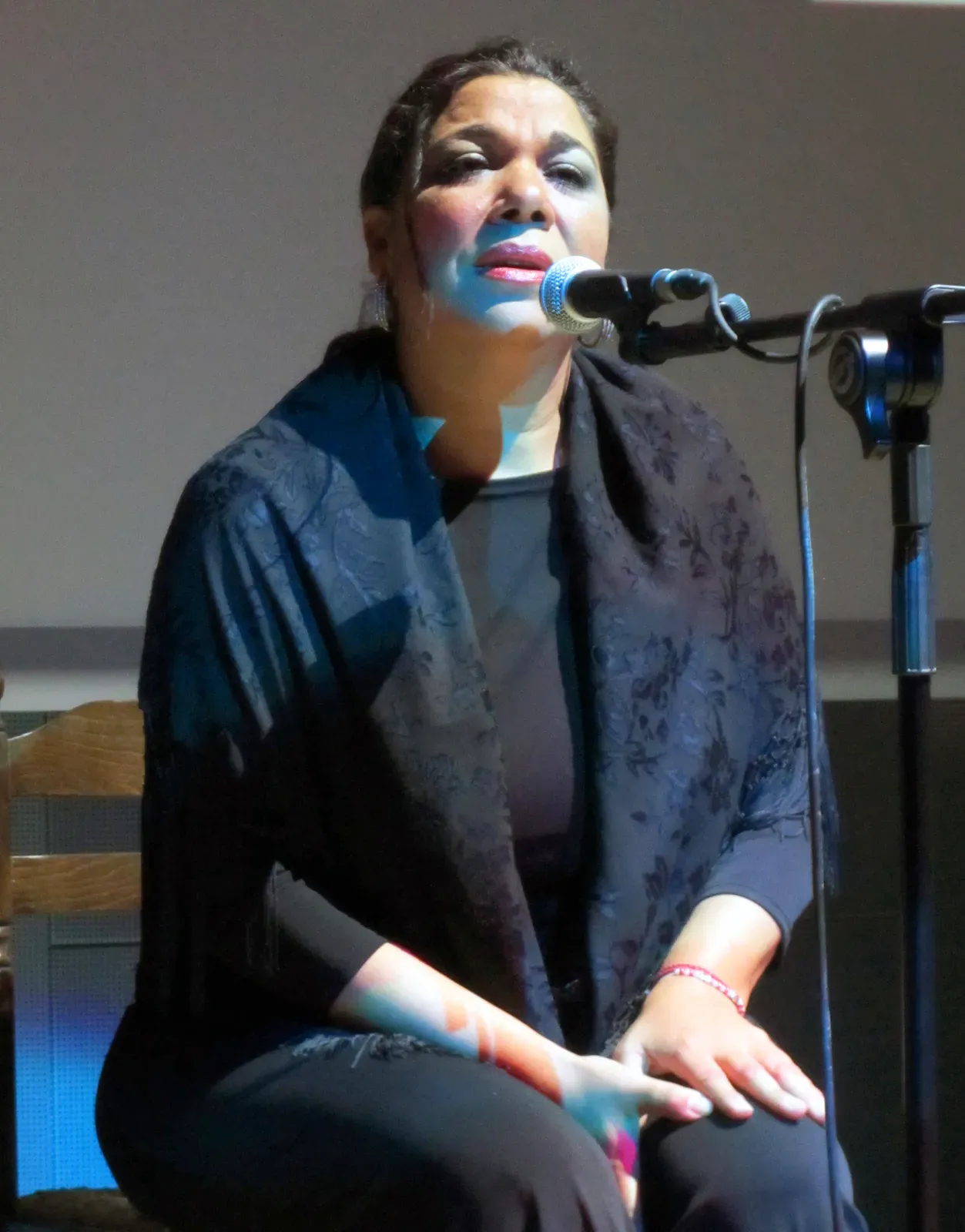
Flamenco has its own words. Duende names the dark, driving intensity a performance can reach, a term Lorca analysed in his 1933 lecture. Jaleo is the shouting from the audience, and “ole” is part of the music. A pena is a fan club that organises recitals and protects local tradition.
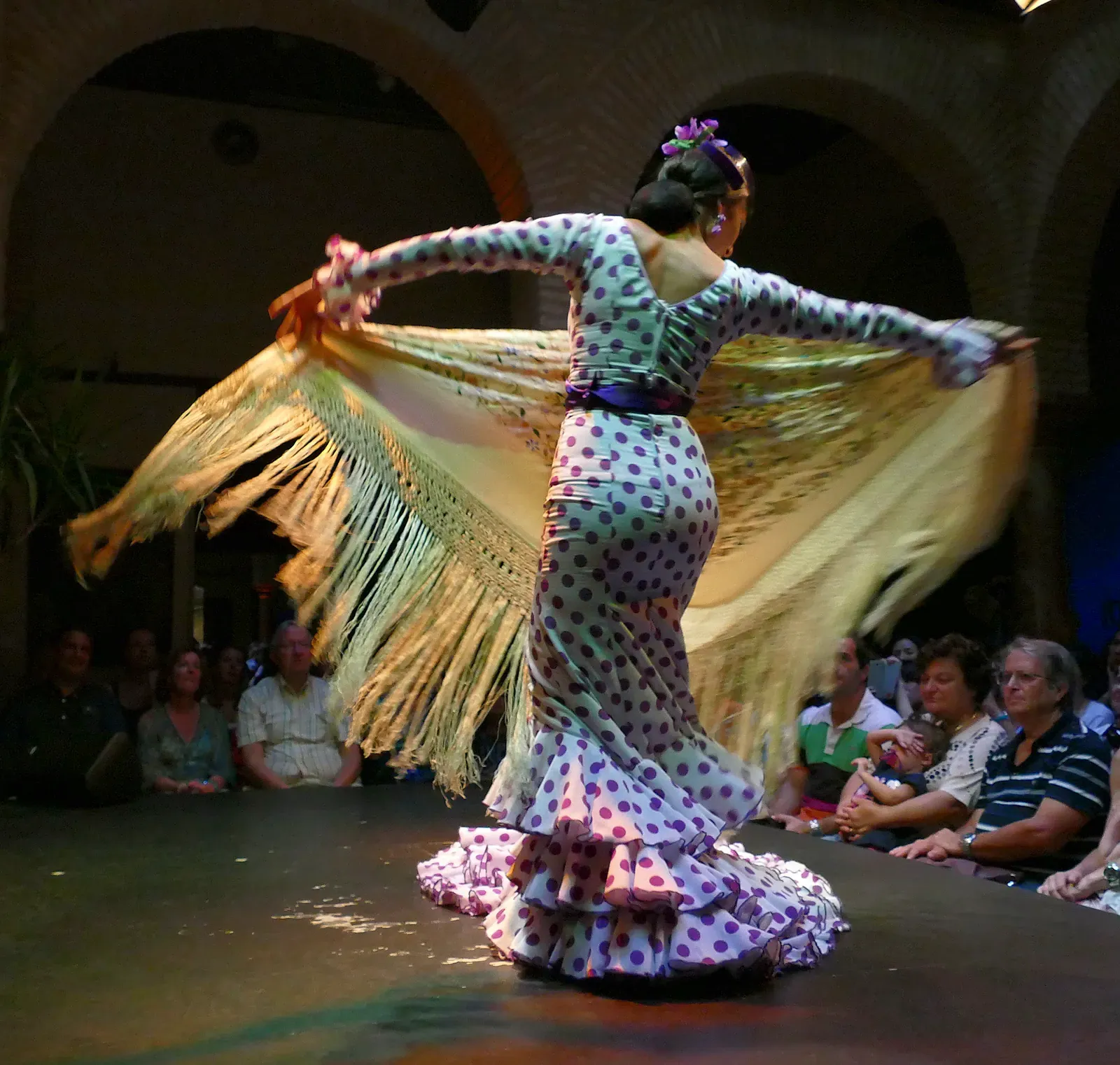
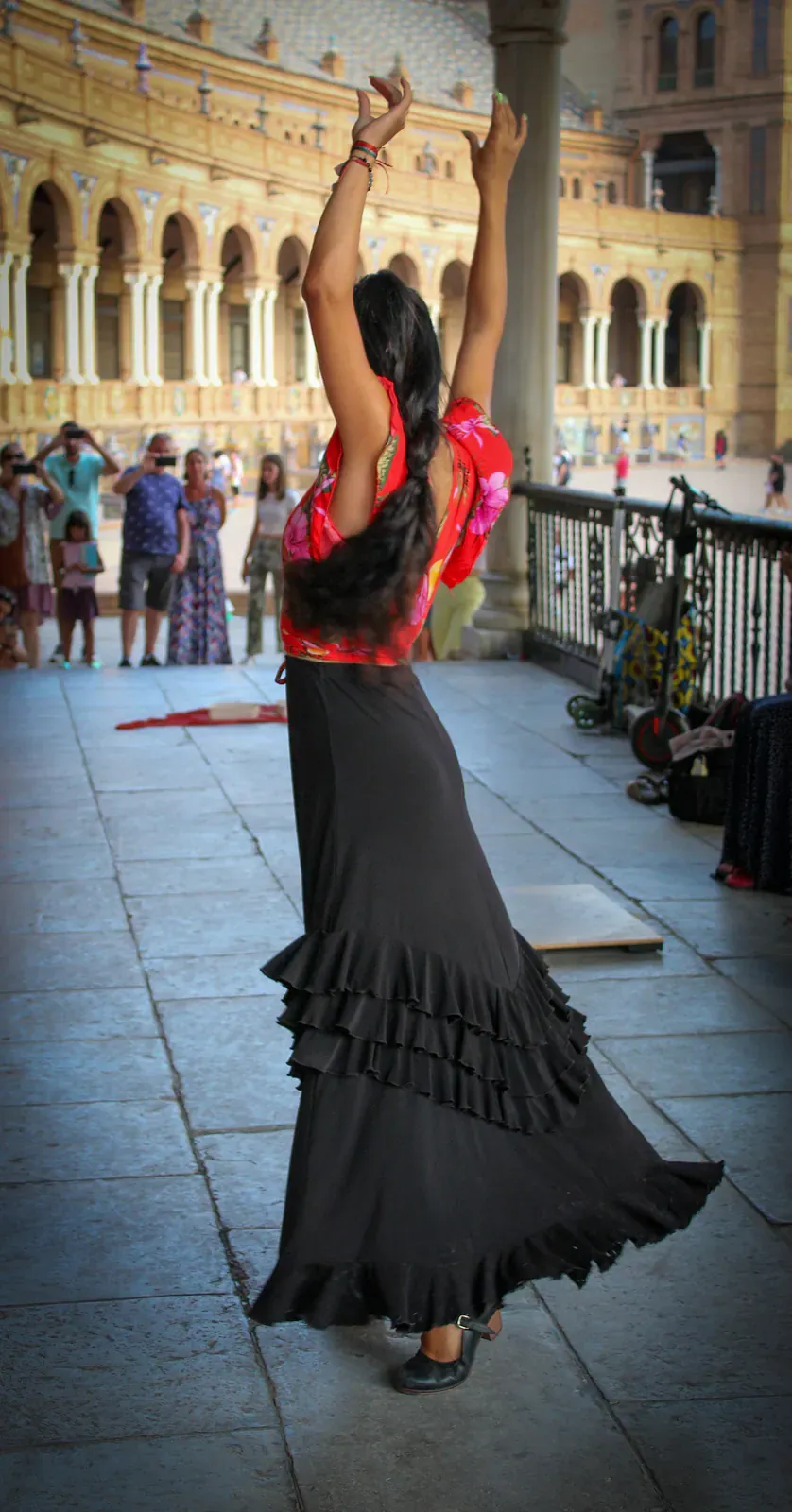
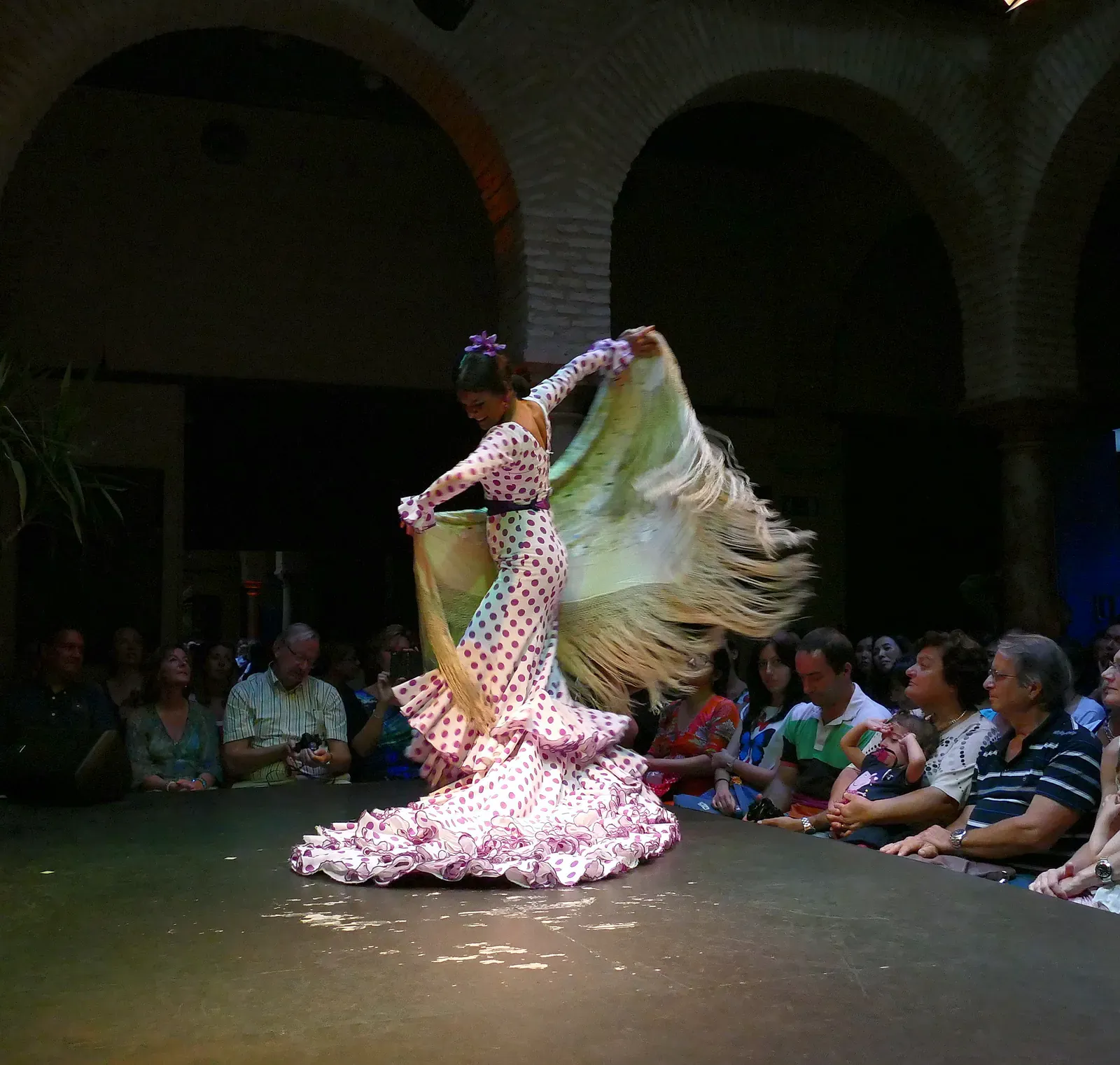
Dance has footwork called zapateado that works like a drum part, plus the ruffled bata de cola for women. Festivals, penas and tablaos give artists a living, and contests such as Cante de las Minas help singers get noticed.
Misconceptions
Myth: flamenco is a dance. Cante is the core. Dancers came later to the fixed forms, and guitarists began as accompanists.
Myth: flamenco is the same as it was. The first documents date from around 1780, cafes paid singers in 1881, the cajon came in after 1977, and electric bass and keyboards were on records by 1979.
Myth: flamenco is only Gitano music. Gitano families shaped it, but its roots include Andalusian folk song and Arab-Andalusian heritage.
Frequently asked questions
What is flamenco music?
Flamenco is an Andalusian tradition of song, guitar and dance that took shape around 1780 in Jerez, Cadiz and Seville. It has dozens of forms called palos, such as soleá and bulerías, and twelve-beat cycles called compas. Palmas and shouts of encouragement replace drums.
Where did flamenco come from?
Flamenco came from Lower Andalusia in southern Spain. Gitano and poor Andalusian communities blended Andalusian folk song, Romani music and Arab-Andalusian heritage. UNESCO recognised it as intangible cultural heritage in 2010.
Which flamenco albums are most influential?
Paco de Lucia’s Fuente y caudal (1973) set the modern guitar standard, and Camaron de la Isla’s La leyenda del tiempo (1979) did the same for the voice. Rosalia’s El mal querer (2018) shows how modern pop uses the same vocabulary.
Where is flamenco performed live?
Tablaos in Seville and Madrid run nightly shows, and the Corral de la Moreria has been open in Madrid since 1956. The Bienal in Seville and the Festival de Jerez each February offer larger programmes.
What is duende in flamenco?
Duende is the dark, emotional force a performance can reach when singer, guitarist and dancer lock in. Federico Garcia Lorca described it in his 1933 lecture, and it is still the word fans use for a night that cannot be repeated.
Sound
Sound sheet
Anatomy of a track
| # | Part | Bars |
|---|---|---|
| 1 | Guitar introduction (salida) | 2 |
| 2 | First copla (cante) | 4 |
| 3 | Falseta (guitar solo) | 4 |
| 4 | Second copla | 4 |
| 5 | Closing cadence (cierre) | 2 |
Signature sounds
- Andalusian cadence (Am-G-F-E) and Phrygian mode
- Melismatic, ornamented singing in tercios
- Twelve-beat compas, accented on 3, 6, 8, 10 and 12 in bulerías
- Palmas and jaleo instead of drums
- Rasgueado strumming and picado scale runs on guitar
- Dance footwork (zapateado) as percussion
Drums and percussion
- Cajon
- Palmas
Techniques
- Rasgueado
- Picado
- Golpe
- Alzapua
- Tremolo
- Zapateado
- Falseta
Keys and modes
Phrygian mode (modo flamenco). Half-step above the tonic gives the characteristic tension; typical of soleá, seguiriyas and tientos.
Andalusian cadence. Descending Am-G-F-E progression that resolves on the dominant; the harmonic signature of the style.
Major mode. Palos such as alegrías and cantiñas use a bright major colour while keeping the flamenco cadence.
Tuning
Standard guitar tuning EADGBE, with a capo (cejilla) to fit the singer's range
Vocals
Raw, melismatic singing in a narrow range with microtonal ornament and portamento, phrased in tercios over the compas.
Scenes
Where it happened
Where and when the sound lived: one bar per city on a shared timeline.
Europe
Active scenes
Peak 7, 1961-2025
Early documented home of the art and host of the Festival de Jerez since 1997.
The first cafe cantante opened here, and the Bienal de Flamenco has run since 1980.
Port city of the Cadiz coast whose alegrias and cantes de ida y vuelta shaped the repertoire; Camaron grew up in nearby San Fernando.
Hosted the 1922 Concurso de Cante Jondo and the cave zambras of Sacromonte; Morente grew up in the Albaicin.
Home of the tablaos where Camaron and Paco de Lucia built their careers, and of Nuevos Medios.
Hosts the Cante de las Minas festival, a leading contest for singers.
Birthplace of Paco de Lucia, who was born here on 21 December 1947.
Venues and places
Seville, 1881 to today. Franconetti cafe cantante that paid singers and made cante a trade.
Granada, 1922 to today. Site of the 1922 contest organised by Falla and Lorca to protect deep song.
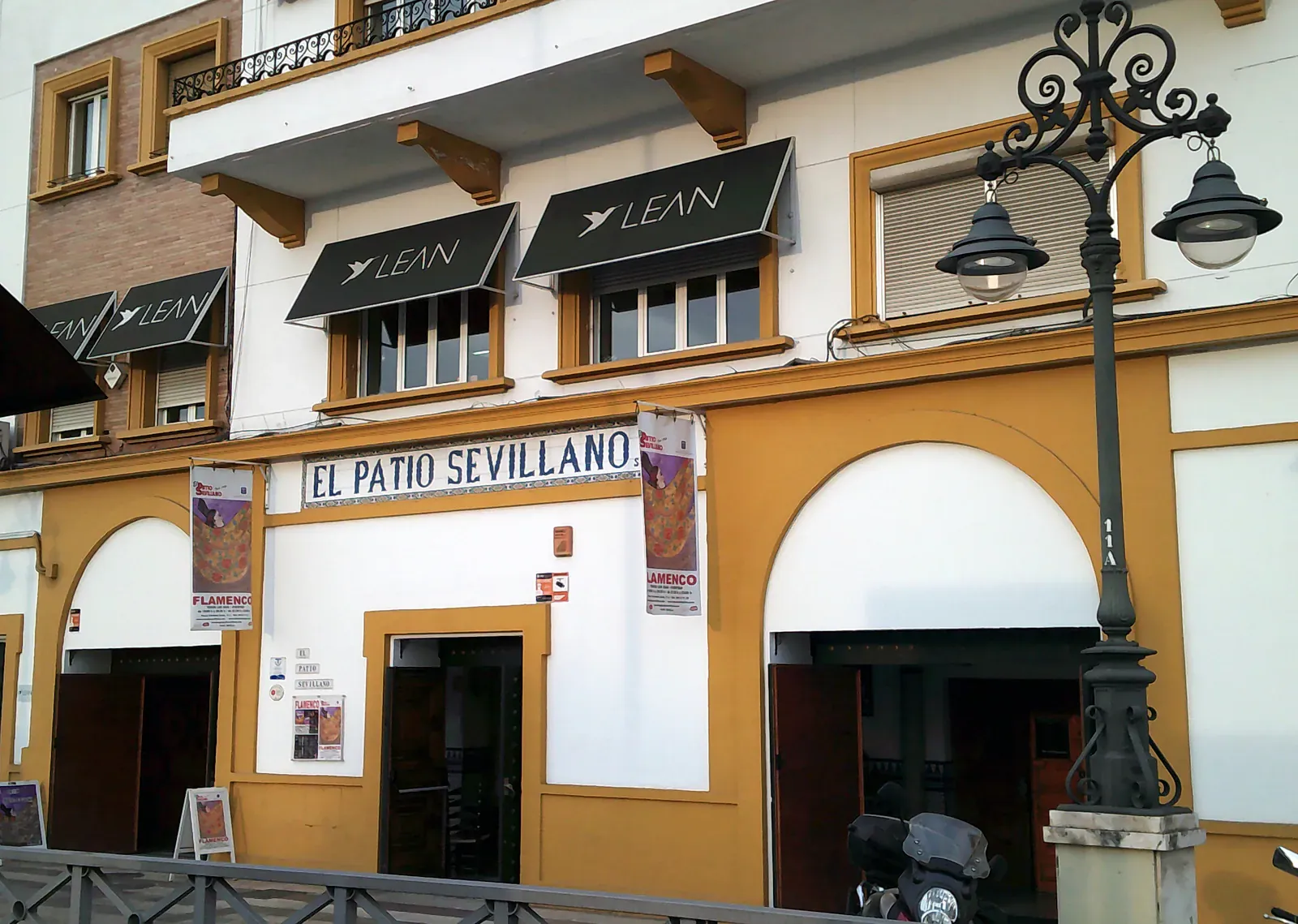
Madrid, 1956 to today. Tablao open since 1956, one of the oldest still running.
Madrid, 1960 to today. Opened in 1960; Camaron was resident artist here for twelve years from 1968.
La Union, 1961 to today. Contest festival launched in 1961 to protect mining songs.
Seville, 1980 to today. Biennial festival, first held in March 1980.
Jerez de la Frontera, 1997 to today. Two-week flamenco festival each February.
Culture
Culture markers
- Zapateado
Percussive footwork that works as a drum part in baile.
Dance - Duende
Name for the dark, spirited intensity a flamenco performance can reach.
Slang - Ole and jaleo
Calls of praise that join the compas during a performance.
Slang - Juerga
Informal flamenco party where musicians and friends take turns in the circle.
Ritual - Bata de cola
Long ruffled dress worn by female dancers.
Fashion
Media
Key media
- 1933Teoria y juego del duende
by Federico Garcia Lorca. Lorca lecture that defined duende for flamenco writing.
Book - 1954Antologia del cante flamenco
by Various. First anthology of recorded cante, a reference for decades.
Compilation - 1963Mundo y formas del cante flamenco
by Ricardo Molina and Antonio Mairena. Reference study of cante that shaped later flamencology.
Book - 1995Flamenco
by Carlos Saura. Concert film with Morente and other leading flamenco artists.
Film
Glossary
Terms on this page
Fast twelve-beat palo from Jerez used for festive endings and improvised dance.
The rhythmic cycle of a palo; soleá and bulerías use twelve beats, with bulerías accented on 3, 6, 8, 10 and 12.
The sense of dark emotional force in a performance, described by Lorca in his 1933 lecture.
Shouts of encouragement such as ole from the audience and other performers.
A flamenco form with its own rhythm, mood and verse pattern, such as soleá, bulerías or seguiriyas.
A club of flamenco fans that organises recitals and keeps local tradition alive.
Heavy twelve-beat palo about grief, among the oldest and most demanding in cante jondo.
Slow, serious palo in twelve beats, often called the mother of flamenco forms.
European folk family