Baltic folk music
Baltic folk music is the traditional song of Lithuania, Latvia and Estonia: dainas, regilaul, sutartinės, Seto leelo and mass song festivals.
Lithuania, Latvia, Estonia, around 1200
European folk family
Born
around 1200
Lithuania, Latvia, Estonia
Subgenres
7
Documented branches
Links
3
Genres it drew on or shaped
Tempo
70-165 BPMLineage
Family tree
Grew out of
Lithuania, Latvia, Estonia
Baltic folk music
Led to (7)
Timeline
Era by era
From the first sparks to today. Select a dot to read the story behind it.
- Village song cultures
1200 to 1863
- National awakening and song festivals
1864 to 1939
- Soviet era and folklore movement
1940 to 1987
- Singing Revolution
1988 to 1991
- Folk revival and world stage
1992 to today
Eras
Moments
- 1 Village song cultures, 1200 to 1863
- 2 National awakening and song festivals, 1864 to 1939
- 3 Soviet era and folklore movement, 1940 to 1987
- 4 Singing Revolution, 1988 to 1991
- 5 Folk revival and world stage, 1992 to today
around 1200
Village song cultures
Dainas, Estonian runo songs, Lithuanian sutartinės and Seto leelo live as unwritten village singing, often with kokles, kanklės or kannel, horns, pipes and bagpipes.
1864
National awakening and song festivals
Mass choir festivals begin in Estonia (1869), Latvia (1873) and Lithuania (1924) while collectors such as Krišjānis Barons gather folk texts into national collections.
- 1864Song celebration at DikļiAn early Latvian song celebration that preceded the first national festival.
- 1869First Estonian Song Festival in TartuOrganised partly by Johann Voldemar Jannsen; male choirs and brass bands only at first.
- 1873First Latvian Song Festival in RigaAbout a thousand singers and thirty orchestra players took part.
- 1894Latvju dainas begins publicationKrišjānis Barons starts publishing his large edition of Latvian dainas, completed in 1915.
- 1924First Lithuanian Song Festival in KaunasAbout 3,000 singers performed on 23-25 August.
1940
Soviet era and folklore movement
Festivals continue under Soviet control; ensembles such as Skandinieki (1976) and Iļģi (1981) revive village repertoire and the kokle.
- 1948Dance festival joins the Latvian Song FestivalThe combined Song and Dance Festival format starts.
- 1955Great Stage opens at Mežaparks, RigaBuilt for about 10,000 singers and 30,000 spectators.
- 1960Vingis Park amphitheatre opens in VilniusOpened in time for the 1960 Lithuanian Song Festival.
- 1976Skandinieki foundedLatvian ensemble built around the Stalts family, with Liv songs in its repertoire.
- 1981Iļģi founded in Iļģuciems, RigaViolinist Ilga Reizniece starts an ensemble of Latvian folk music.
1988
Singing Revolution
Mass singing becomes a political force: night song festivals in Tallinn, the Baltic Way human chain of 1989 and restored independence in 1991.
- 1988Mattiisen's patriotic songs premiere in TartuHis song series at the Tartu Pop Festival in May feeds the Singing Revolution.
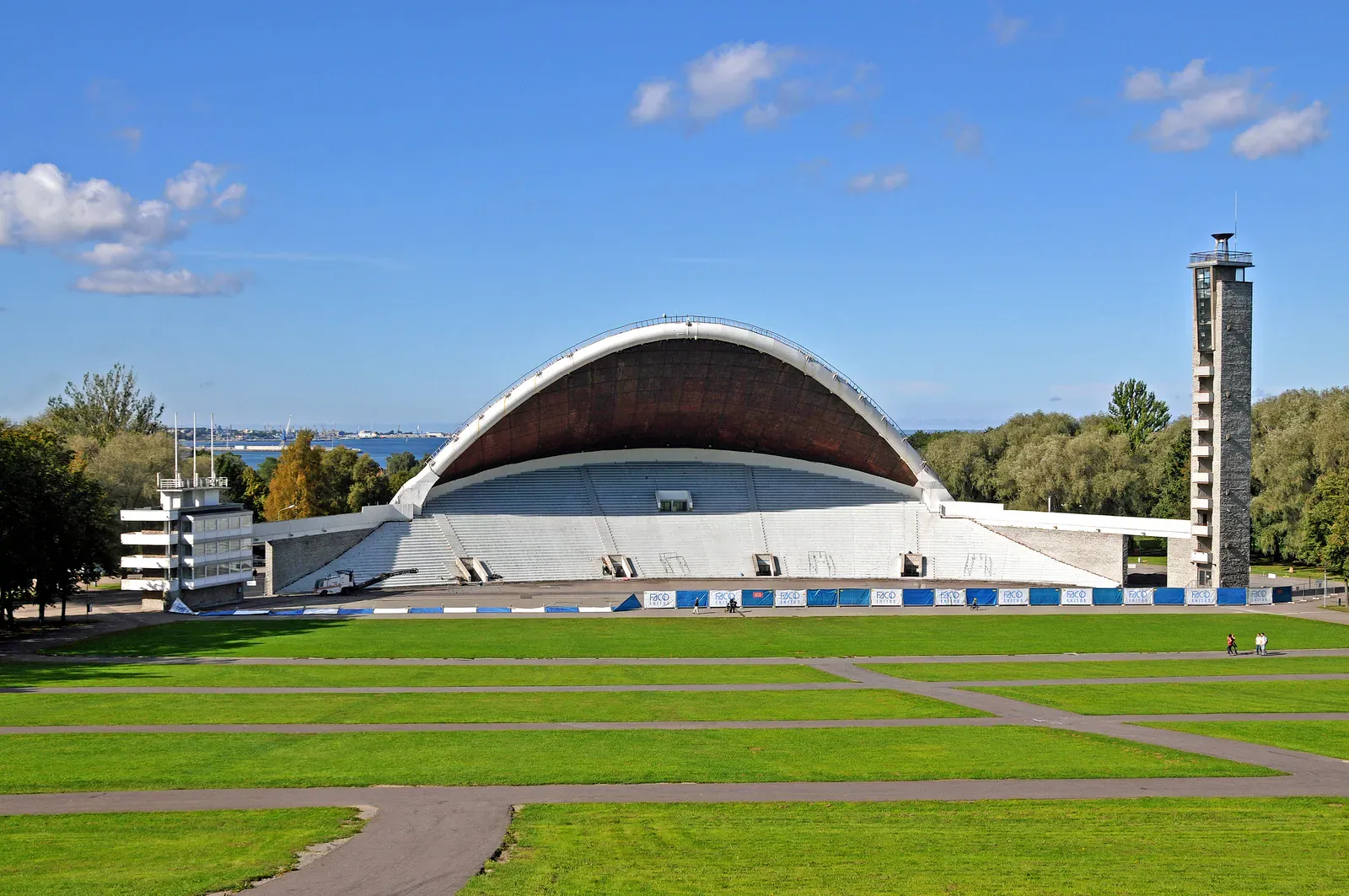
- 1988Song of Estonia on 11 SeptemberMass singing at the Tallinn Song Festival Grounds becomes a political event.
- 1989Baltic Way human chainAbout two million people link Estonia, Latvia and Lithuania on 23 August.
- 1989Kūlgrinda founded in VilniusRitual folklore group of Jonas and Inija Trinkūnas, tied to the Romuva movement.
- 1990Banned songs return at the Latvian festivalThe 1990 festival marks restored independence with previously banned patriotic songs.
- 1990First Baltic Psaltery SymposiumRotating international meetings link kokles, kanklės and kannel makers and players.
1992
Folk revival and world stage
Bands such as Iļģi, Atalyja, Trad.Attack! and Žalvarinis mix archaic songs with rock and electronics, and the song festivals gain UNESCO status (2003, 2008).
- 1993Viljandi traditional music dayFirst day of traditional music on 15 May 1993; the festival name follows in 1994.
- 1998Atalyja founded in VilniusFolk-rock group whose repertoire is mostly sutartinės.
- 2003UNESCO proclaims the Baltic song festivalsNamed a Masterpiece of the Oral and Intangible Heritage on 7 November; inscribed in 2008.
- 2009UNESCO lists Seto leeloPolyphonic singing of the Seto people enters the Intangible Heritage List.
- 2010UNESCO lists sutartinėsLithuanian multipart songs are inscribed on the Intangible Heritage List.
- 2013Trad.Attack! formedEstonian trio mixing archive recordings with rock, pop and electronic parts.
- 2024Žalvarinis enters Eurovizija.LTThe folk-rock band competes in the Lithuanian Eurovision selection with Gaudė vėjai.
- 2025Trad.Attack! goes on indefinite hiatusLast concert at the Viljandi Folk Music Festival in 2025.
Listening path
Anthems
The records that built the sound, grouped by the part they played. Thumbnails come from YouTube; the player loads only when you press play.
- 01
Skandinieki, 2003 · UPE
Traditional Latvian daina sung by the 1976 ensemble that restored village wedding and calendar songs to stage and record.
Start hereOrigin - 02
Iļģi, 2002 · UPE
Daina arranged by Latvia's best-known folk band, which toured widely abroad with its world-music sound.
Start hereBreakthrough - 03
Alo Mattiisen, 1988
Mattiisen's song of solidarity became one of the Singing Revolution's defining mass-singing anthems.
Start hereAnthem - 04
Trad.Attack!, 2014
Trad.Attack!'s early single, a folk song set against rock and electronic backing, later on Ah!.
Crossover - 05
Žalvarinis, 2024
Folk-rock entry in the Lithuanian Eurovision selection that took sutartinė-rooted music to a mass TV audience.
Crossover - 06
Atalyja, 2000
From the debut album of the Vilnius group that brought sutartinės into a folk-rock band.
Revival - 07
Kūlgrinda, 2002
Ritual song from the Romuva-linked Vilnius ensemble, recorded on Ugnies apeigos.
Revival - 08
Mari Kalkun, 2007 · Õunaviks
From the debut album of a songwriter who reworks southeastern Estonian songs for a modern audience.
Revival
Facts
| Family | European folk |
| Origin | Lithuania, Latvia, Estonia |
| Status | Active |
| Tempo | 70 to 165 BPM |
| Meter | Meter varies by tradition: trochaic daina verse, syncopated sutartines, Seto runo lines broken by refrains |
| Subgenres | 7 |
Baltic folk music is the traditional music of Lithuania, Latvia and Estonia, built on short sung verses, drone and polyphonic singing, and zither-type string instruments.
It grew from unwritten village song, was gathered and staged in national movements from the 1860s, and returned in the 1980s as both a political voice and a revival sound. Its institutions, above all the mass song festivals, are as distinctive as its repertoire.
Origins
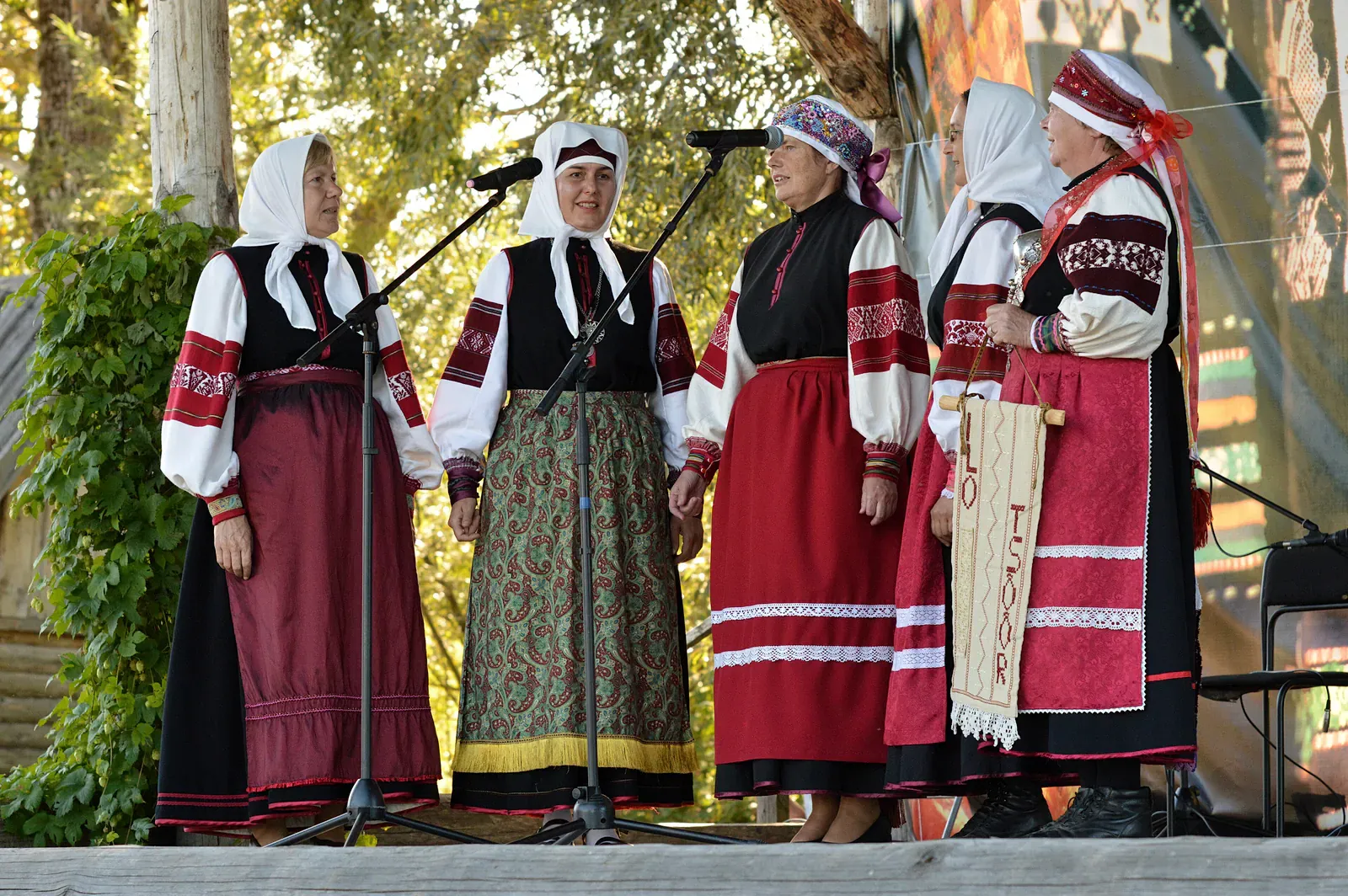
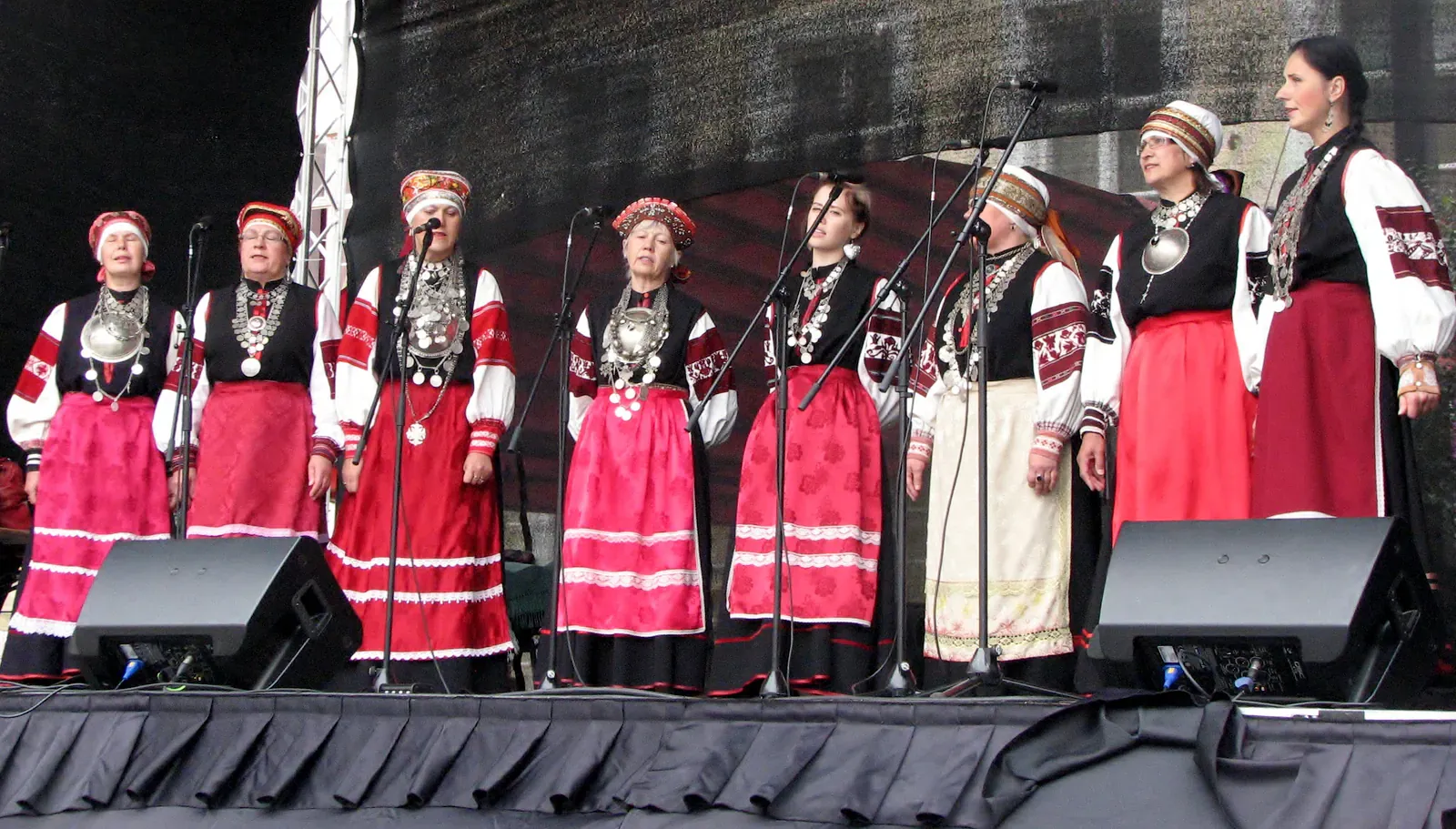
The oldest layer is village singing with no author and no score. In Latvia and Lithuania it centres on the daina, a brief strophic poem, usually unrhymed and in trochaic metre, that carries work, wedding, calendar and funeral themes with traces of pre-Christian belief. Estonia has the regilaul, an archaic runo song in which a lead singer states a line and others take it up. Among the Seto people of south-eastern Estonia this became leelo, a polyphonic form in which a lead singer sets the line and a choir answers with the closing syllables.
Lithuania’s northeast holds the most unusual survival: sutartinės, sung mostly by women in Aukštaitija. Two to four voices interlock in canon and heterophony, with refrain syllables such as sodauto and lylio. Horns, panpipes (skudučiai) and psalteries play the same patterns.
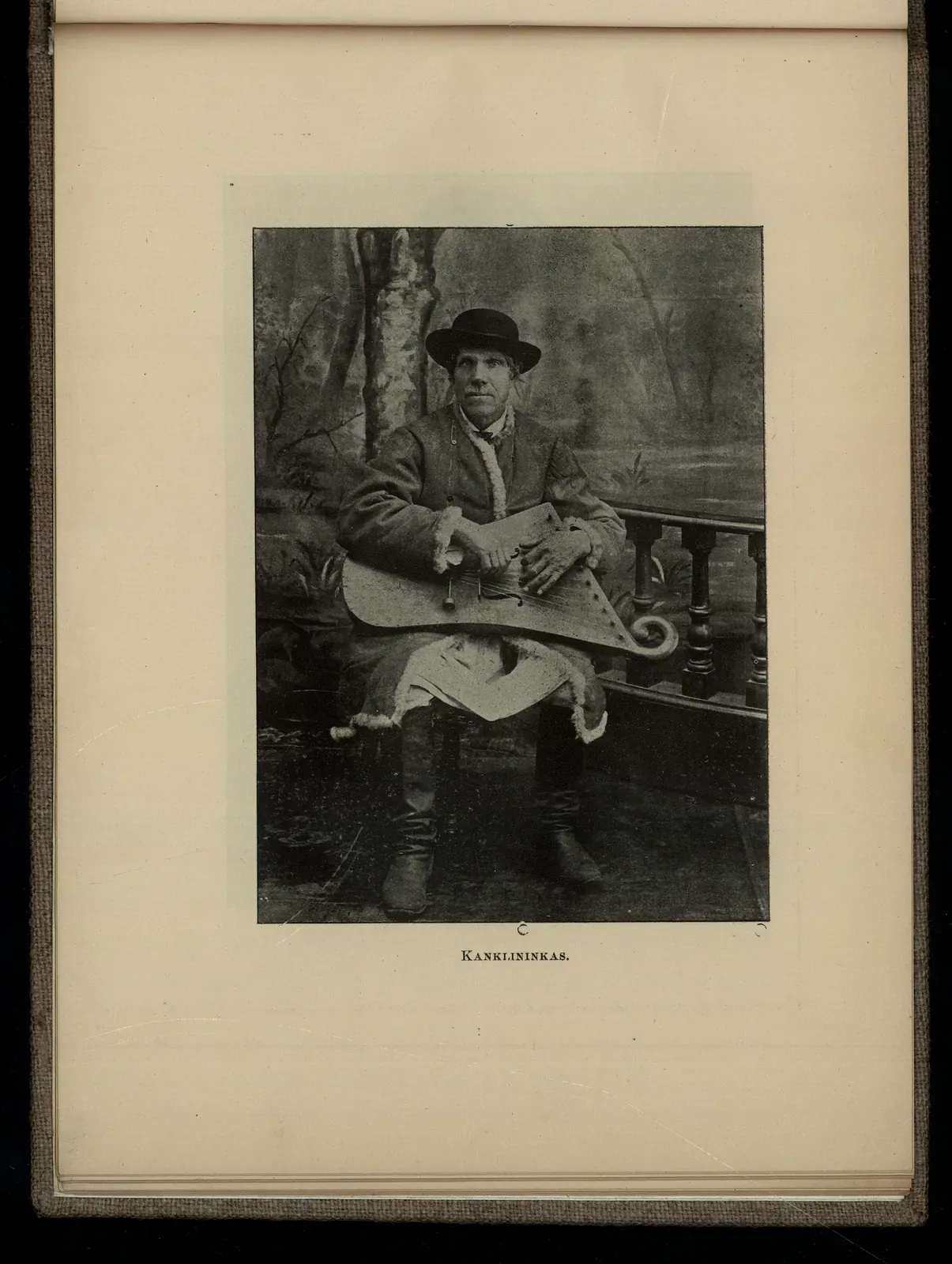
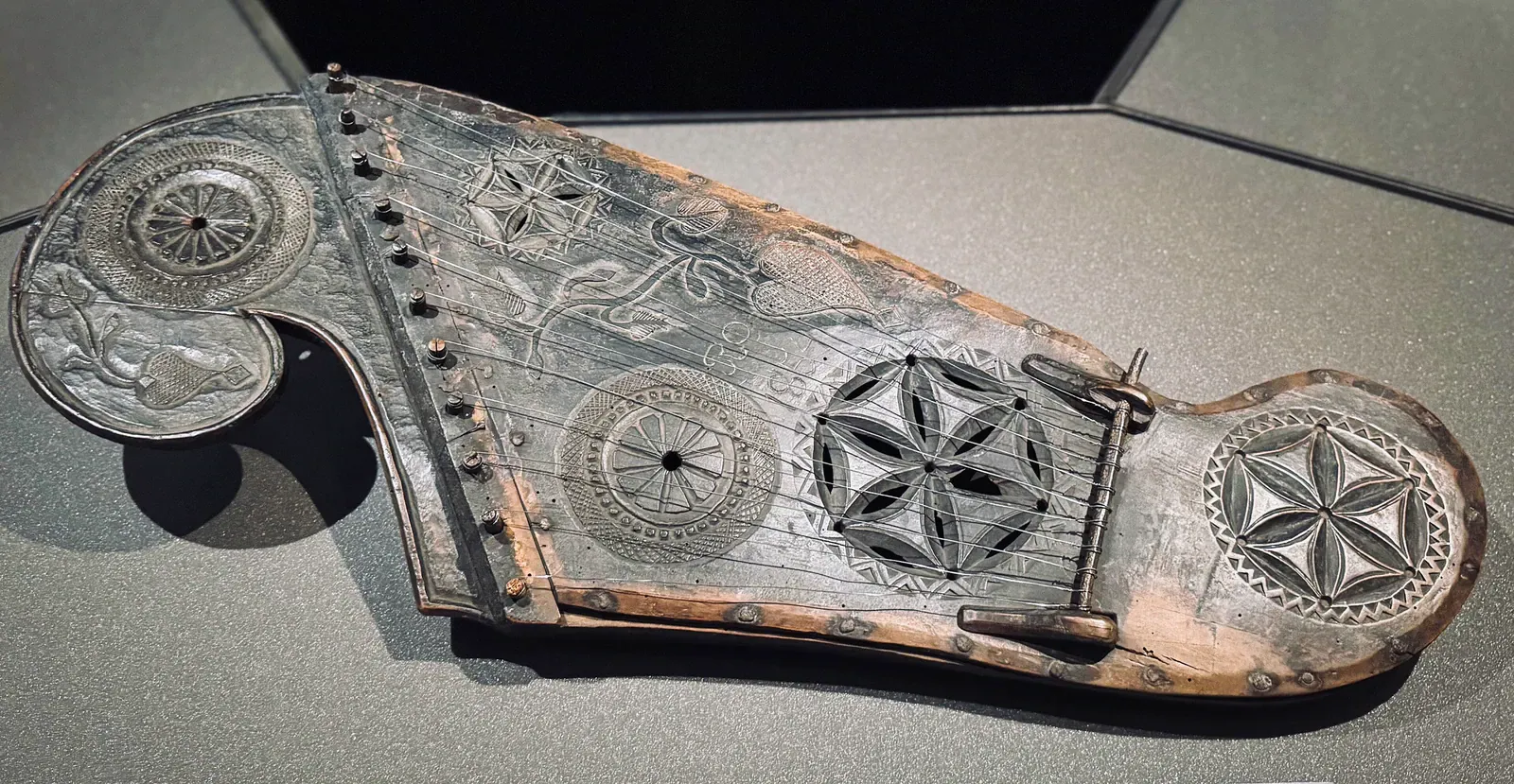
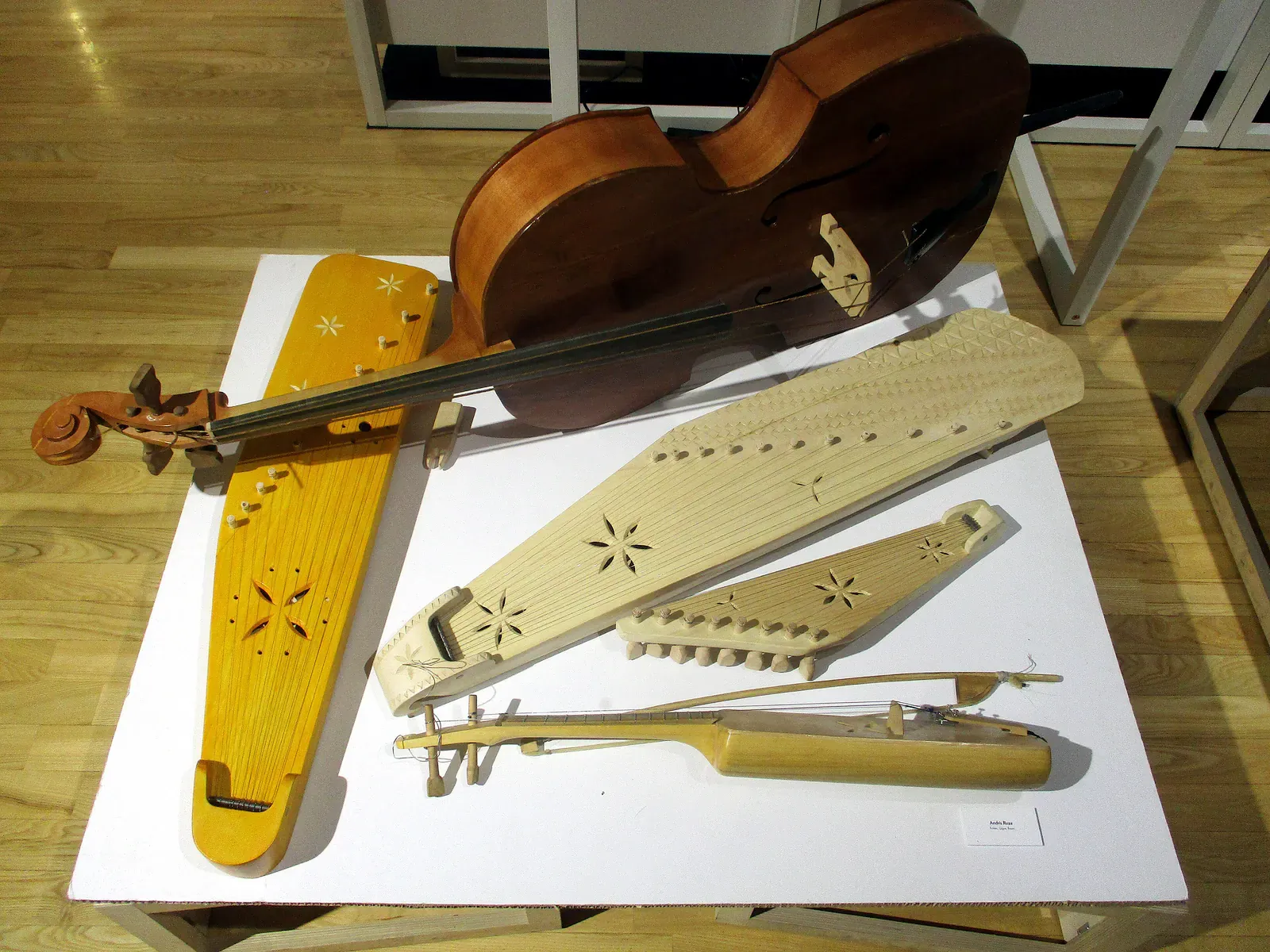
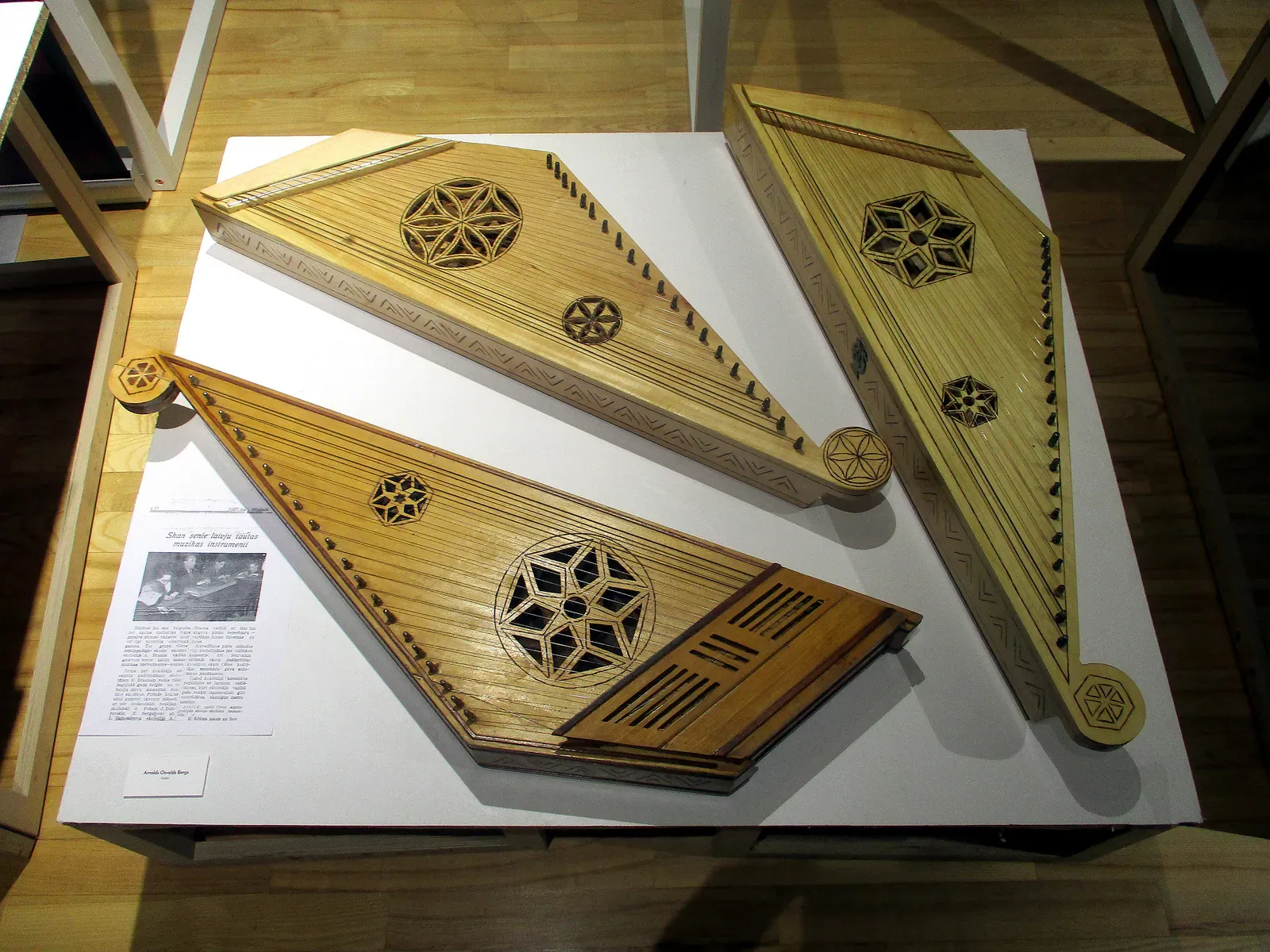
The Latvian kokle, Lithuanian kanklės and Estonian kannel are cousins in a Baltic psaltery family, with strings fanned across a hollowed or boxed body, the lowest often held as drones.
Village song and collection, to 1863
Until the nineteenth century, nearly all of this repertoire lived in memory. Singing marked the farming year, from Midsummer (Jāņi in Latvia, Joninės in Lithuania) to harvest, and it marked every stage of a life, with wedding cycles the longest. Round dances such as the Latvian rotaļa and the Lithuanian suktinis joined song to movement.
National awakening and song festivals, 1864-1939
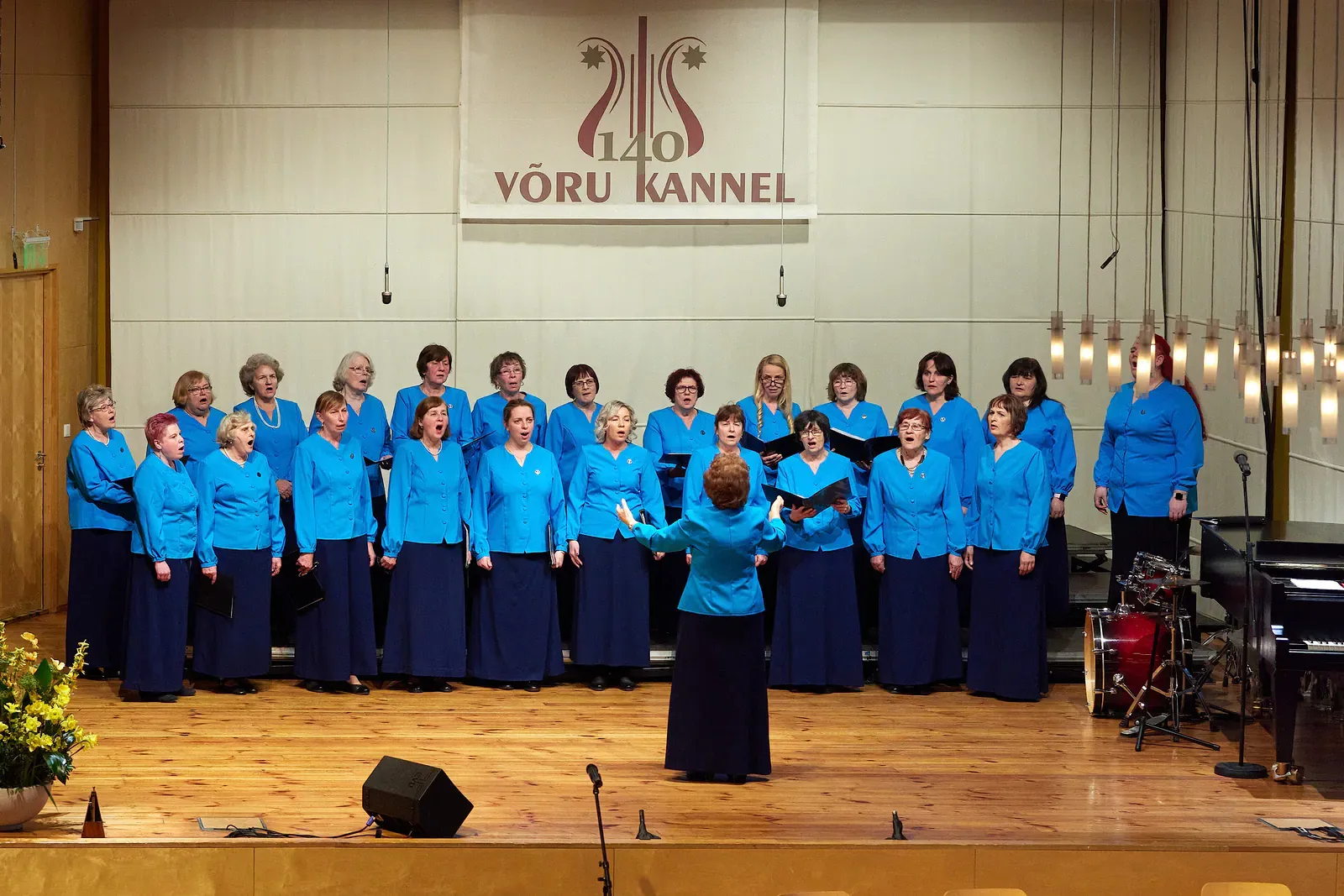
Song festivals turned village habits into national ritual. Estonia held its first in Tartu in 1869, with male choirs and brass bands. Latvia followed in Riga in 1873, with about a thousand singers. Lithuania, then without a state, held its first in Kaunas in 1924, with about 3,000 singers.
Scholarship moved in parallel. Krišjānis Barons issued his edition of Latvian dainas, Latvju dainas, in six volumes between 1894 and 1915, with some 218,000 song texts grouped by type. It became both an archive and a national symbol.
Soviet-era festivals and the folklore movement, 1940-1987
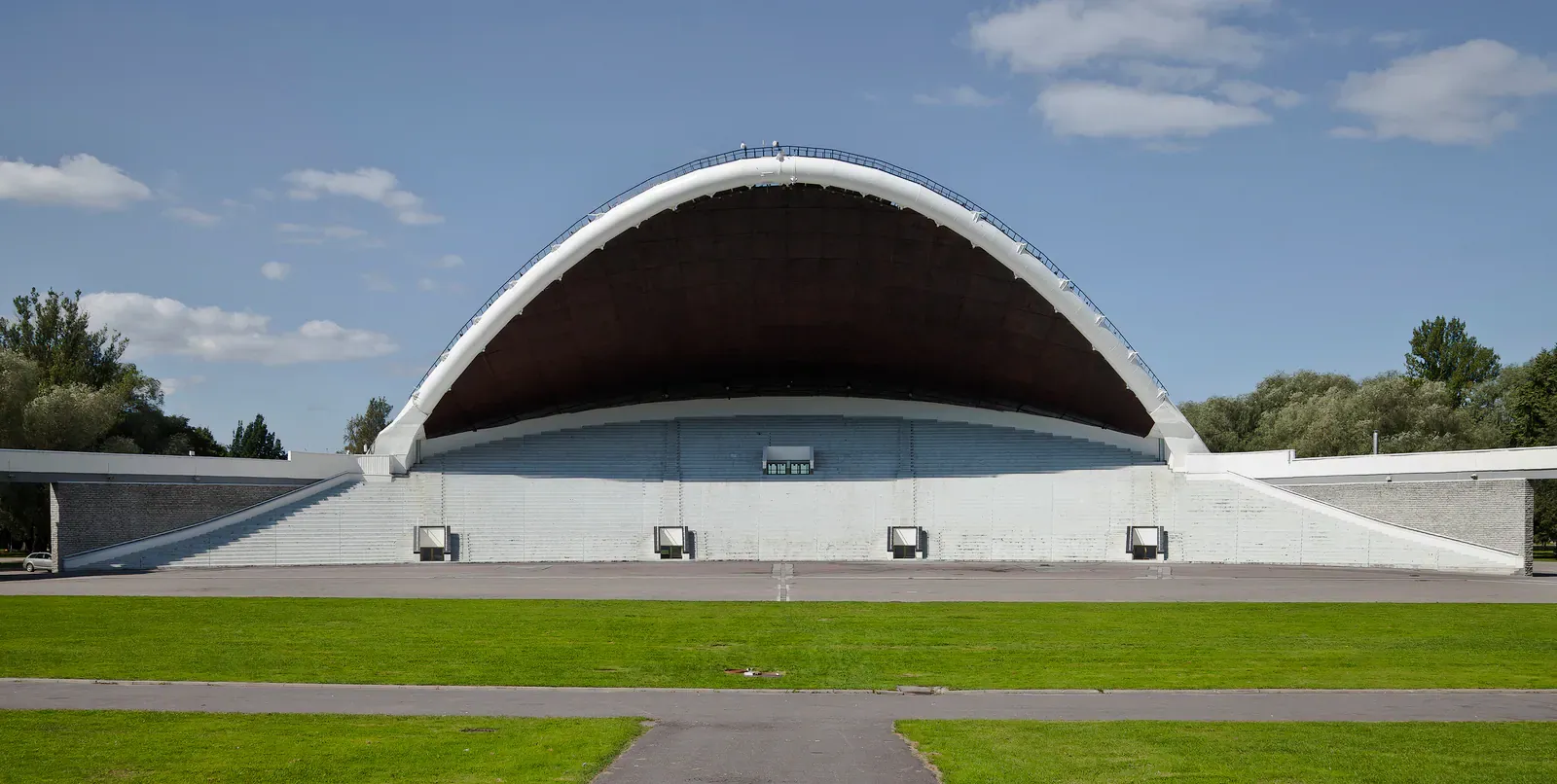
After annexation by the USSR in 1940, the festivals continued under official supervision with Soviet-themed repertoire. Latvia added a dance festival in 1948, which created the combined Song and Dance Festival format. The Great Stage at Mežaparks in Riga opened in 1955, built for about 10,000 singers and 30,000 spectators. Vilnius opened the Vingis Park amphitheatre in 1960.
Alongside these state events, a folklore movement grew in the 1970s and 1980s. Skandinieki, founded in 1976 around the Stalts family, recovered Latvian wedding and calendar songs and Liv material. Iļģi began in 1981 in Iļģuciems, Riga, around the violinist Ilga Reizniece. In Estonia, Gustav Ernesaks, founder of the Estonian National Male Choir, wrote Mu isamaa on minu arm, a choral song that became an unofficial anthem of Estonians in the Soviet period.
Singing Revolution, 1988-1991
In 1988 mass singing became politics. Alo Mattiisen’s Five Patriotic Songs premiered at the Tartu Pop Festival in May, and Ei ole üksi ükski maa (“no land is alone”) became a favourite of crowds. On 11 September 1988 the Song Festival Grounds in Tallinn filled for the gathering known as Song of Estonia, an openly national event in a Soviet republic.
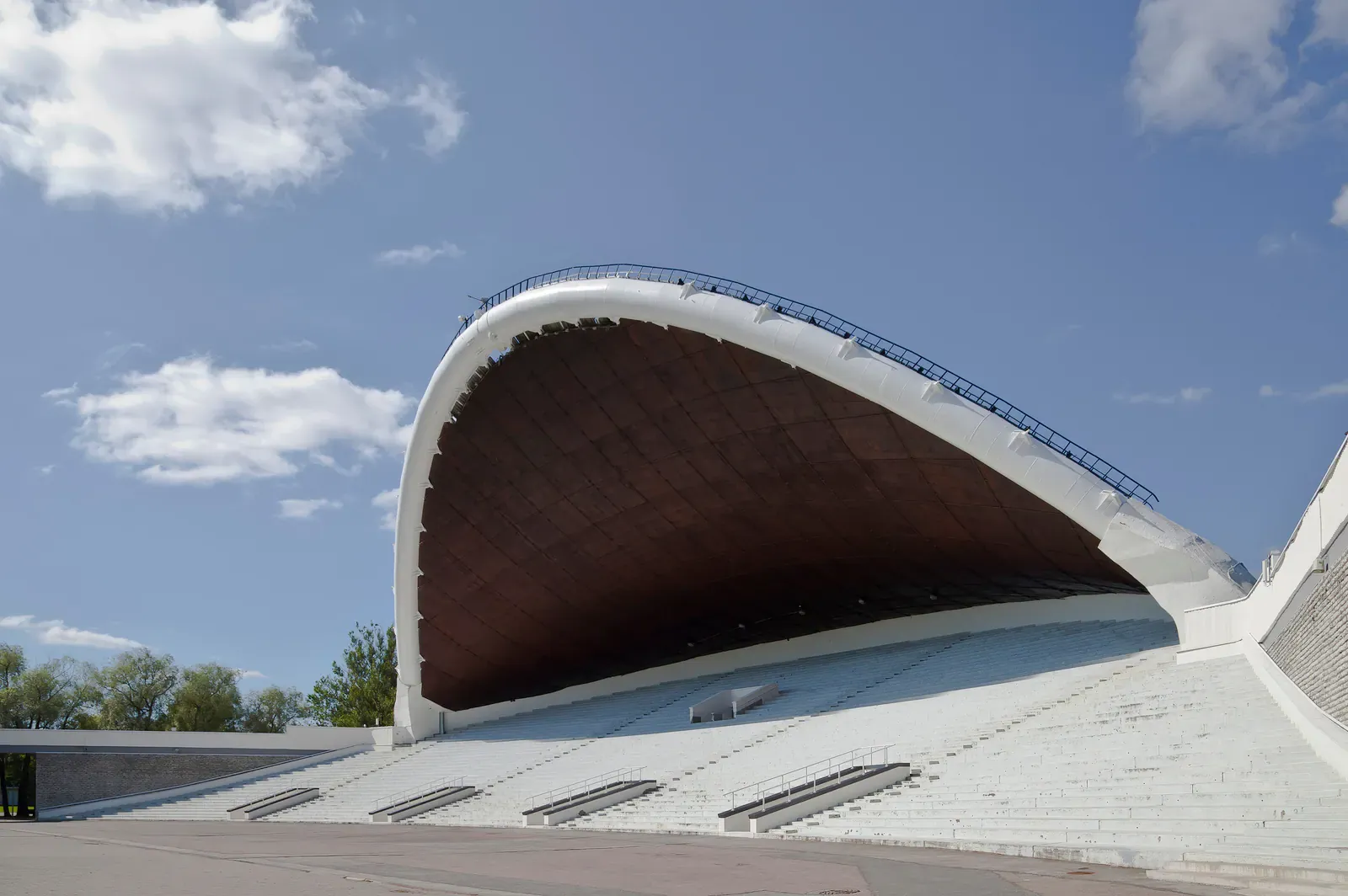
On 23 August 1989, about two million people joined hands in a chain across Estonia, Latvia and Lithuania in the Baltic Way, fifty years after the Nazi-Soviet pact. In 1990 the Latvian festival returned previously banned patriotic songs, and in 1991 the three states regained independence. The Baltic song festivals were proclaimed a Masterpiece of the Oral and Intangible Heritage by UNESCO on 7 November 2003 and inscribed in 2008.
Folk revival and world stage, since 1992
Independence made folk music a choice instead of an obligation. In Lithuania, Jonas and Inija Trinkūnas formed Kūlgrinda in Vilnius, a ritual folklore group tied to the Romuva movement that performs sutartinės, hymns and dances. Atalyja, founded in Vilnius in 1998, put sutartinės into a folk-rock band with electric guitar, flute and kanklės. Žalvarinis, formed in 2001, took the same songs toward metal and progressive rock, and in 2024 entered Eurovizija.LT, the Lithuanian Eurovision selection, with “Gaudė vėjai”.
Latvia’s revival went through UPE, the Riga label that released Iļģi’s albums and Skandinieki’s self-titled album of 2003. Estonia’s links are with Õunaviks, home to Mari Kalkun, a songwriter from the Võro region who sets Estonian and Võro verse to folk-jazz arrangements, and the violinist Maarja Nuut. The trio Trad.Attack!, formed in 2013, built tracks from archive recordings of folk singers over rock and electronic parts, and went on indefinite hiatus after a concert at the Viljandi Folk Music Festival in 2025.
Institutions kept pace. The first Baltic Psaltery Symposium met in 1990 and rotates among kokle, kanklės and kannel makers and players. Viljandi’s traditional music day began in 1993, and the festival it became is the largest annual folk event in Estonia.
Characteristics
Three traits recur. The first is verse: short, strophic lines in trochaic rhythm, with variants of the same text sung to many tunes. The second is texture: drones in voices and strings, antiphony between a leader and a group, and in sutartinės a tight canon whose notes rub against each other deliberately. The third is function. Songs belong to occasions, such as weddings, work and the solstice, and a singing group is a social unit before it is an ensemble.
Mainstream success
Baltic folk music never had a single chart moment. It reached large audiences through public events: the song festivals draw singers and spectators in the tens of thousands. Its pop breakthroughs came through bands. Iļģi toured widely abroad with a world-music sound, Trad.Attack! reached international festivals, and Žalvarinis’s Eurovision-selection entry carried sutartine-based rock to a national TV audience.
Notable recordings
Three tracks tell the story. “Gaužī raud saulīte” by Skandinieki is a traditional Latvian daina recorded by the ensemble that restored village songs to stage and album. “Saule brida miglājos” by Iļģi is a daina in the arrangement that took Latvian folk music abroad. “Ei ole üksi ükski maa” by Alo Mattiisen was written as a song of solidarity and became one of the anthems of the Singing Revolution. The anthems section on this page lists more.
Culture
The social world is Midsummer, weddings and the festival circuit. Līgo and Joninės songs mark the solstice; rotaļa and suktinis keep the game dance alive; Romuva ceremonies, in which Kūlgrinda often performs, link the music to the Lithuanian neopagan movement. Costume is a language: Seto women wear heavy silver breast brooches as part of festival dress.
Legacy
The main legacy is institutional. Three small nations built a shared practice of choral and folk singing, then used it to organise resistance without violence. UNESCO listed the festivals, then Seto leelo and sutartinės.
Misconceptions
The three countries do not share one tradition. Latvian and Lithuanian are Baltic languages, but Estonian belongs to the Finnic family, and the Estonian regilaul belongs to a Finnic runo-song world; “Baltic” here is a political and geographic grouping. Folk music was not simply suppressed under Soviet rule: festivals were encouraged, though with controlled repertoire, which is why revival groups emerged inside the system.
Frequently asked questions
What is Baltic folk music?
Baltic folk music is the traditional song and instrumental music of Lithuania, Latvia and Estonia. It centres on dainas, regilaul and sutartinės, kokle-type psalteries, and the mass song festivals.
What are sutartinės?
Sutartinės are Lithuanian songs for two to four voices, based on canon and heterophony and sung mainly by women in Aukštaitija. UNESCO listed them in 2010.
What is the kokle?
The kokle is a Latvian box zither with a fan of strings, the lowest often serving as drones. It belongs to the same family as the Lithuanian kanklės and the Estonian kannel.
Which Baltic folk bands are best known?
Iļģi and Skandinieki in Latvia, Kūlgrinda, Atalyja and Žalvarinis in Lithuania, and Trad.Attack! and Mari Kalkun in Estonia are the most widely recorded.
Sound
Sound sheet
Anatomy of a track
| # | Part |
|---|---|
| 1 | Lead line stated by one singer |
| 2 | Choir repeats the line or its final syllables |
| 3 | Refrain vocables over drone or canon |
Signature sounds
- Short unrhymed trochaic verse
- Drone voices or drone strings
- Heterophony and canon in sutartinės
- Refrain vocables such as sodauto and lylio
- Psaltery accompaniment on kokle, kanklės or kannel
Techniques
- Heterophony and canon
- Lead and choir response
- Drone strings
- Strum and mute
- Archive vocals over modern backing
Keys and modes
Narrow-range modal melody. Sutartines use simple melodies of two to five pitches.
Diatonic psaltery scale. Kokles are tuned diatonically, for example G-A-C-D-E-F-G-A-B-C on an 11-string instrument.
Tuning
Kokle and related psalteries are tuned diatonically, with some lower strings traditionally used as drones.
Vocals
Mostly women's singing: sutartines in two to four voices and Seto leelo in lead-and-choir form, often over a drone.
Scenes
Where it happened
Where and when the sound lived: one bar per city on a shared timeline.
Europe
Active scenes
Peak 6, 1993-2025
Song Festival Grounds hold the national festival and hosted the 1988 mass singing.
Home of the Latvian festival and of the Skandinieki and Iļģi ensembles.
Vingis Park festival ground and base of Kūlgrinda, Atalyja and Žalvarinis.
Site of the first Lithuanian Song Festival.
Seat of the largest annual folk music festival in Estonia.
Site of the first Estonian Song Festival.
Venues and places
Tallinn, 1928 to today. National song festival venue and site of the 1988 mass singing.
Riga, 1955 to today. Open-air stage for the Latvian Song and Dance Festival.
Vilnius, 1960 to today. Main grounds of the Lithuanian Song Festival.
Viljandi, 1993 to today. July festival at the castle hills; Trad.Attack! played its pre-hiatus concert here.
Riga, 1981 to today. Where Iļģi began as a Latvian folk ensemble.
Culture
Culture markers
- Midsummer song cycles (Līgo and Joninės)
Calendar songs sung at the summer solstice are core repertoire for Baltic folklore ensembles.
Ritual - Rotaļa and suktinis
Latvian game dances and the Lithuanian suktinis, the traditional festival finale dance.
Dance - Romuva ceremonies
Kūlgrinda often performs songs, hymns and sutartinės at rituals of the Lithuanian neopagan movement.
Ritual - Estonian circle and chain dances
Calm dances from ancient circle forms, shown at the Estonian Dance Festival.
Dance
Media
Key media
- 1894Latvju dainas
by Krišjānis Barons. The large edition of Latvian dainas whose texts fed the folklore revival.
Book - 1988Eesti pop IX
by Various. Documents the Estonian song that anchored the Singing Revolution.
Compilation - 2006The Singing Revolution
by James Tusty and Maureen Castle Tusty. Documentary on Estonia's nonviolent road to independence through mass singing.
Film
Glossary
Terms on this page
Short unrhymed trochaic Latvian or Lithuanian folk song or poem, often with pre-Christian themes.
Latvian name for a folklore ensemble that performs village repertoire.
Estonian Song Festival; the Latvian and Lithuanian equivalents are Dziesmu svētki and Dainų šventė.
Archaic Estonian runo song, a verse-based village song form from the oral tradition.
Latvian game dance with sung accompaniment, grouped by how complex the roles are.
Polyphonic singing of the Seto people where a lead singer states a line and a choir repeats the final syllables.
Lithuanian two to four voice polyphony based on heterophony, canon and imitation, sung by women in Aukštaitija.
European folk family