Biguine
Biguine is a dance music from Saint-Pierre, Martinique, joining bèlè rhythm to French ballroom steps, led by clarinet and trombone and a root of zouk.
Saint-Pierre, around 1848
Caribbean family
Born
around 1848
Saint-Pierre
Subgenres
2
Documented branches
Links
5
Genres it drew on or shaped
Tempo
100-120 BPMLineage
Family tree
Grew out of
- Bèlè
Derived from
Saint-Pierre
Biguine
Led to (2)
Timeline
Era by era
From the first sparks to today. Select a dot to read the story behind it.
- Saint-Pierre and Fort-de-France
1848 to 1928
- The Paris dance halls
1929 to 1945
- Wabap and the cadence tide
1946 to 1978
- Zouk and revival
1979 to today
Eras
Moments
- 1 Saint-Pierre and Fort-de-France, 1848 to 1928
- 2 The Paris dance halls, 1929 to 1945
- 3 Wabap and the cadence tide, 1946 to 1978
- 4 Zouk and revival, 1979 to today
around 1848
Saint-Pierre and Fort-de-France
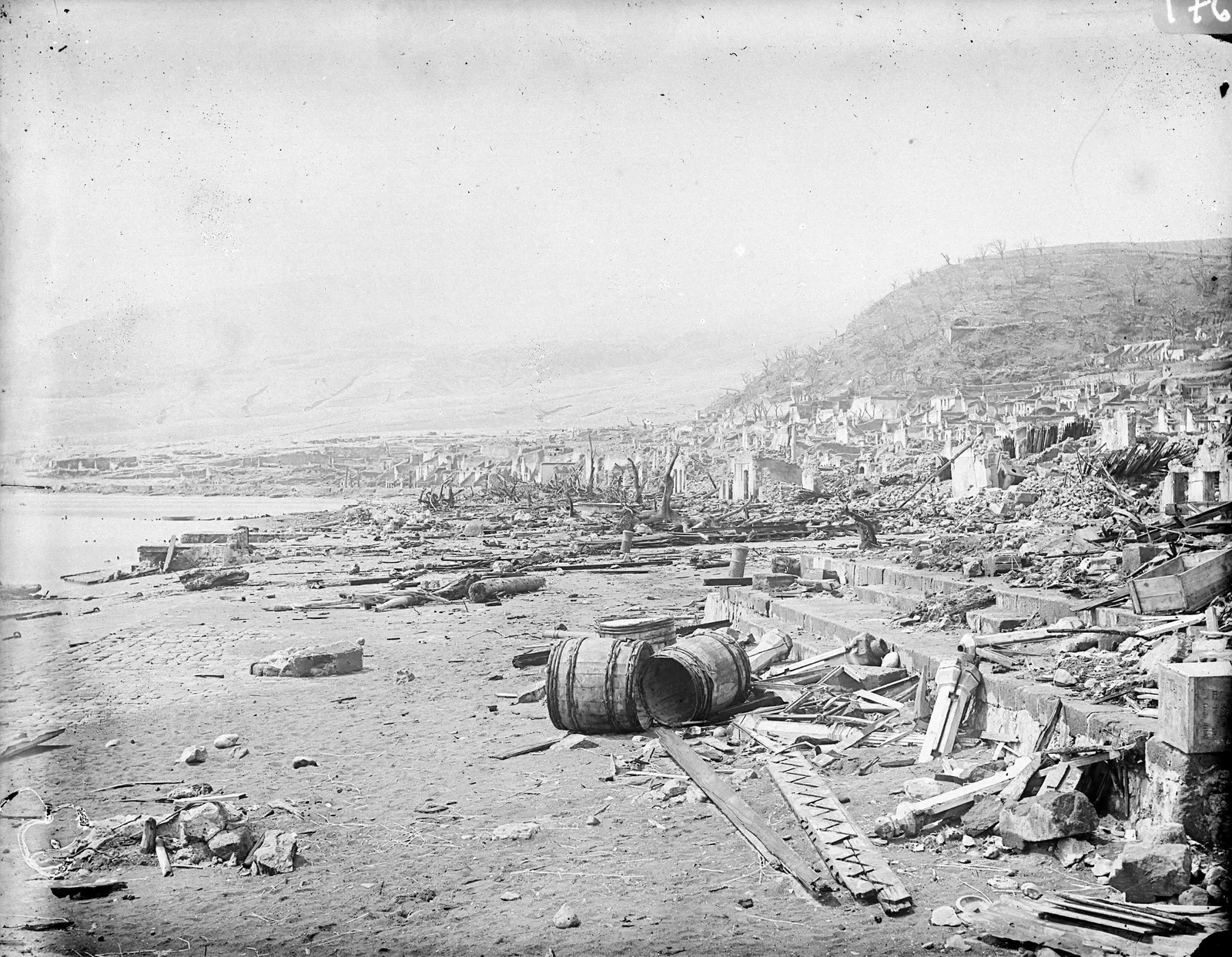
Biguine took shape in Saint-Pierre as bèlè drumming met European polka and ballroom steps. After Mount Pelée destroyed the town in 1902, players such as Alexandre Stellio carried its repertoire to Fort-de-France dance halls.
- 1848Biguine appears around abolitionA dance called polka, built on bèlè and gwoka rhythms with European steps, is later named biguine in the French Antilles.
- 1893First printed mention as béguineA magazine article on the French Antilles spells the dance béguine.
- 1902Mount Pelée destroys Saint-PierreThe eruption of 8 May ends the town's role as biguine's cradle; its repertoire lives on in orchestras elsewhere.
1929
The Paris dance halls
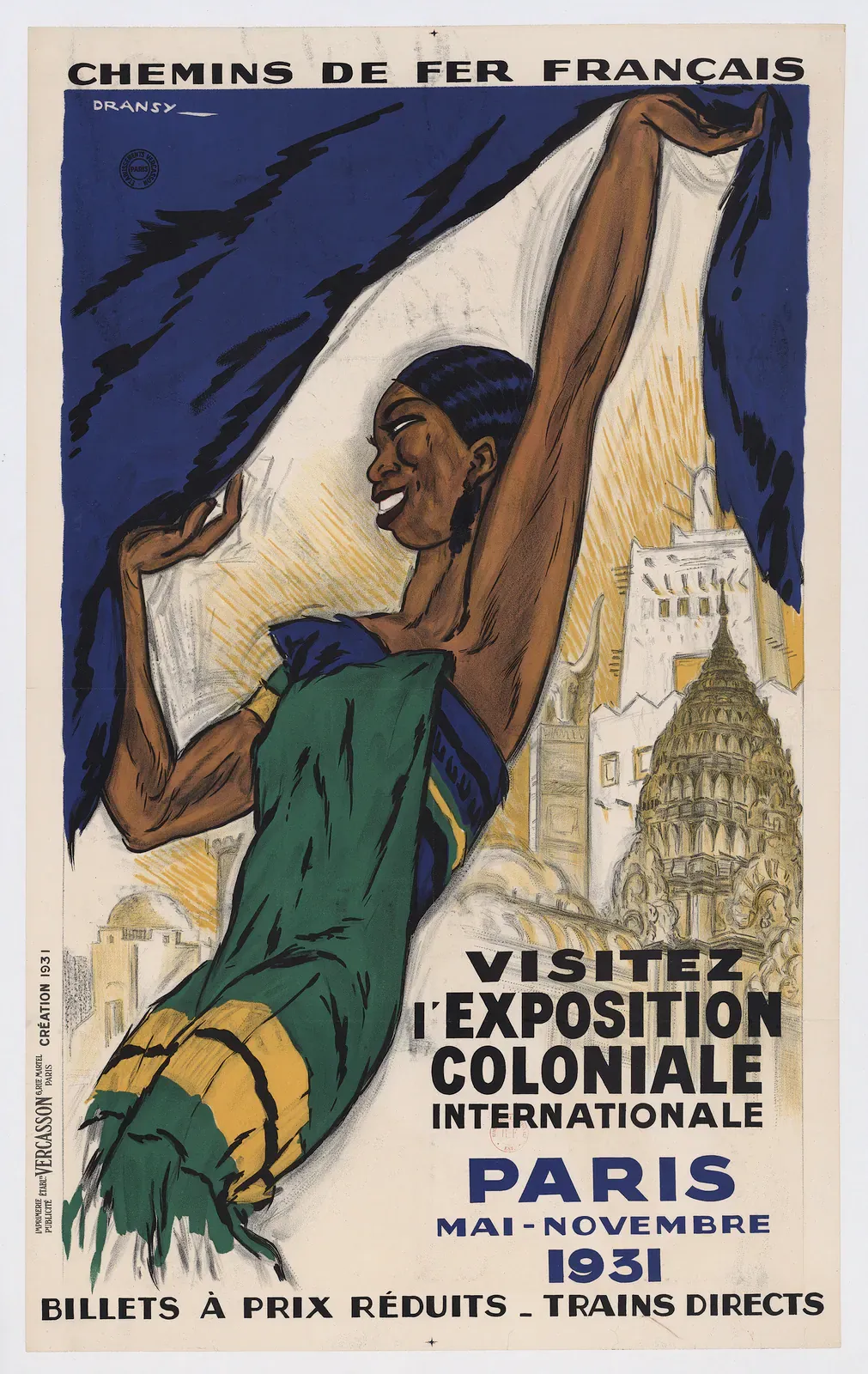
Antillean orchestras settled in Paris cabarets from 1929, and the 1931 Colonial Exhibition made biguine fashionable. Stellio, Léona Gabriel and Ernest Léardée recorded dozens of 78 rpm discs.
- 1929Stellio sails for ParisAlexandre Stellio, Ernest Léardée and Archange Saint-Hilaire leave Martinique on 27 April to open the cabaret La Boule Blanche.
- 1929First Antillean sessions for OdéonStellio's orchestra with singer Léona Gabriel records En sens unique, s'il vous plaît and Ah! Gadé chabine-là on 16 October.
- 1931Colonial Exhibition in ParisStellio's orchestra plays at the Guadeloupe pavilion, and the show opens the golden age of biguine in Paris.
- 1931Léona Gabriel records Maladie d'amourThe folk tune of the French West Indies is first recorded.
1946
Wabap and the cadence tide
Jazz-minded players made wabap from 1952 while Haitian cadence and compas took over island dance floors. Biguine survived in the bals, in carnival vidé and in the new tumbélé blends.
- 1949Salvador's arrangement of Maladie d'amourHenri Salvador's published version makes the tune a standard of French song.
- 1950Cadence and compas take the dance floorsHaitian cadence and compas replace biguine as the main dance music of Martinique and Guadeloupe.
- 1952First wabap recordingsAl Lirvat and Robert Mavounzy record the first wabap, a jazz-inflected biguine with odd-length rhythms.
1979
Zouk and revival
Kassav launched zouk in 1979 on biguine and other local roots, while Malavoi reworked classic biguine for a string-led band. Biguine vidé became the base of zouk béton, and new groups keep early biguine alive.
- 1979Kassav formsThe Guadeloupe and Martinique band starts zouk, which keeps the clarinet and trombone lineage of biguine in a modern dance sound.
- 1986Malavoi's La FiloThe string-led Martinican band records a biguine by Paulo Rosine that becomes one of its best-known pieces.
- 2025Otantik Bigin forms in GuadeloupeThe group sets out to revive the biguine of the early 1900s.
Listening path
Start listening
A short path from an easy way in to the deep end. Thumbnails come from YouTube; the player loads only when you press play.
- 01
Alexandre Stellio, 1930
Stellio's own biguine from the Paris years; listen for the clarinet lead over banjo and trombone.
- 02
Henri Salvador, 1949
The Antillean folk tune in the arrangement that made it known across France.
- 03
Malavoi, 1986
A biguine for a string band; listen for violins taking the old clarinet role.
Facts
| Family | Caribbean |
| Origin | Saint-Pierre, Martinique |
| Emerged | 1890s |
| Status | Active |
| Tempo | 100 to 120 BPM |
| Meter | 2/4 |
| Grew out of | Bèlè |
| Subgenres | 2 |
Biguine is a dance music of the French Antilles that began in Saint-Pierre, Martinique, in the nineteenth century. It joins bèlè drumming and song, rooted in West African traditions, to the steps of French ballroom dances.
Its signature is the interplay of clarinet and trombone over a steady duple pulse, and it fed directly into zouk.
Origins
The word biguine was not the first name for the music. Early on the dance was simply called polka, because it grew from the meeting of the European polka and the music of enslaved people, such as the bèlè of Martinique and the gwoka of Guadeloupe. The form is attested around the abolition of slavery in 1848. Martinicans and Guadeloupeans each claim it, though Saint-Pierre is the town most tied to it, and it also became part of Guyanese carnival music.
Two lines run side by side from the start. The drum biguine, known in Creole as bidgin bèlè, keeps the drum and sticks of the plantation dances, with call and response, improvised solos and a nasal singing voice. The orchestrated biguine took the same rhythms into dance halls and split into three styles: biguine de salon, de bal and de rue. Two theories explain the name. One links it to the verb embéguiner, the other to the English word begin, used by English-speaking musicians.
Saint-Pierre to Fort-de-France, 1848-1928
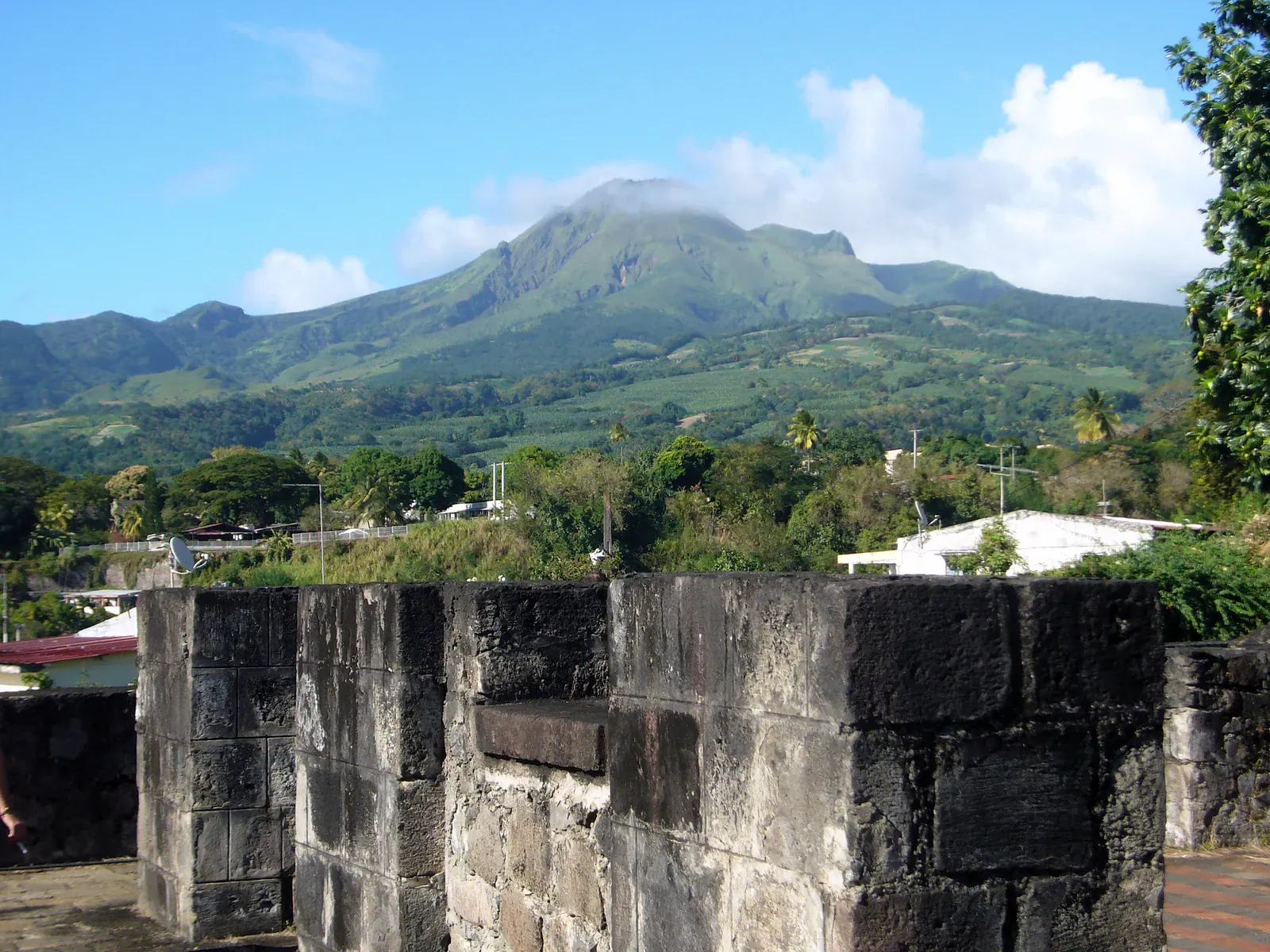
Saint-Pierre was the economic and cultural centre of Martinique until Mount Pelée erupted in 1902 and destroyed it. The repertoire survived in the memory of players. Alexandre Stellio, born in 1885 on the south coast of the island, grew up partly in Cayenne, learned the clarinet largely on his own and came back to Martinique in 1919. He accompanied silent films, then joined the orchestra at the Select-Tango, one of the main dance halls of Fort-de-France, from 1922. Later accounts credit him with fixing many features of the classic Saint-Pierre style.
Paris, 1929-1945
Stellio sailed for France on 27 April 1929 with the trombonist and guitarist Ernest Léardée and the banjoist Archange Saint-Hilaire. The group had been hired to open the Antillean cabaret La Boule Blanche. Their first sessions for Odéon followed in October, including En sens unique, s’il vous plaît and Ah! Gadé chabine-là, with the singer Léona Gabriel. Between 1929 and 1939 Stellio left 128 sides on 78 rpm discs, recorded for Odéon and later Polydor, under names such as Orchestre antillais Alexandre Stellio and Orchestre créole du Madinina.
The Colonial Exhibition of 1931 gave the music a wide audience. Stellio’s orchestra played at the Guadeloupe pavilion, and the years from 1931 to 1939 are often called the golden age of biguine in Paris. Stellio died in Paris in July 1939. Antillean musicians such as Léardée, Robert Mavounzy and Al Lirvat played jazz and biguine in the same Parisian halls.
Wabap and the cadence tide, 1946-1978
After the war the music split in two directions. Jazz-minded players made wabap: the first recordings were cut in 1952 by Lirvat and Mavounzy, and a Lirvat piece sung by Moune de Rivel was titled Biguine wabap in 1954. Wabap adds altered chords and rhythms in five, six and seven beats, and replaced the banjo with the guitar. On the islands, Haitian cadence and compas took over the dance floors from the 1950s. The 1960s blend tumbélé mixed compas and Cuban rhythm with local biguine.
Characteristics
Biguine is in duple time, usually measured between 100 and 120 beats per minute. The tibwa, a pair of sticks played on bamboo or the side of the drum, beats a cinquillo-tresillo pattern, and the maracas called chacha can carry the same figure. In the orchestrated form the clarinet plays the melody and the cello the bass, where New Orleans jazz uses cornet and sousaphone. Melodies use seven-note scales and the rhythm is straight, not swung.
Instruments and production
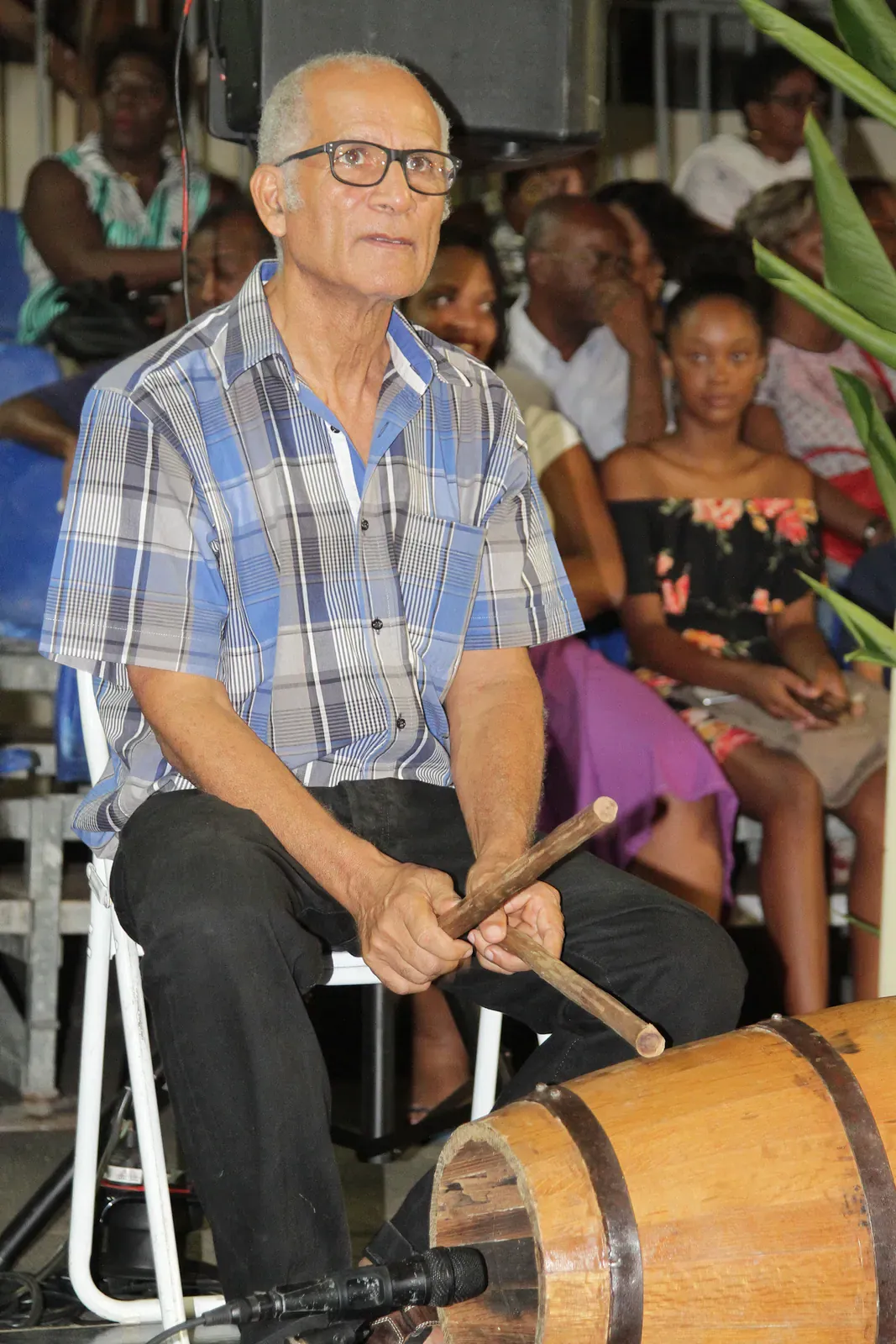
Early orchestras used clarinet, trombone, banjo, cello and percussion. Stellio’s clarinet carried the lead while the trombone answered. Later groups moved the line elsewhere: Malavoi gave violins the role once held by the clarinet. Biguine vidé, the carnival variant, runs faster and is played on improvised drums made from containers, plastic pipes and bells, alongside tibwa and bèlè drums.
Mainstream success
The best-known song linked to the style came from the folk repertoire. Léona Gabriel recorded the folk tune Maladie d’amour in 1931, and Henri Salvador’s arrangement, published in 1949, made it a standard of French song later covered by Jean Sablon, Sacha Distel and Manu Dibango. Cole Porter’s Begin the Beguine carried the name worldwide but not the rhythm.
Notable recordings
Stellio’s Paris Biguine, in two versions in his early sessions, is among his best-known pieces. Maladie d’amour has two lives: Gabriel’s 1931 version is the earliest, and Salvador’s published arrangement the one that most listeners know. Malavoi’s La filo, a biguine by Paulo Rosine from 1986, shows the form carried by strings, with warm phrasing and a lightly philosophical text.
Culture
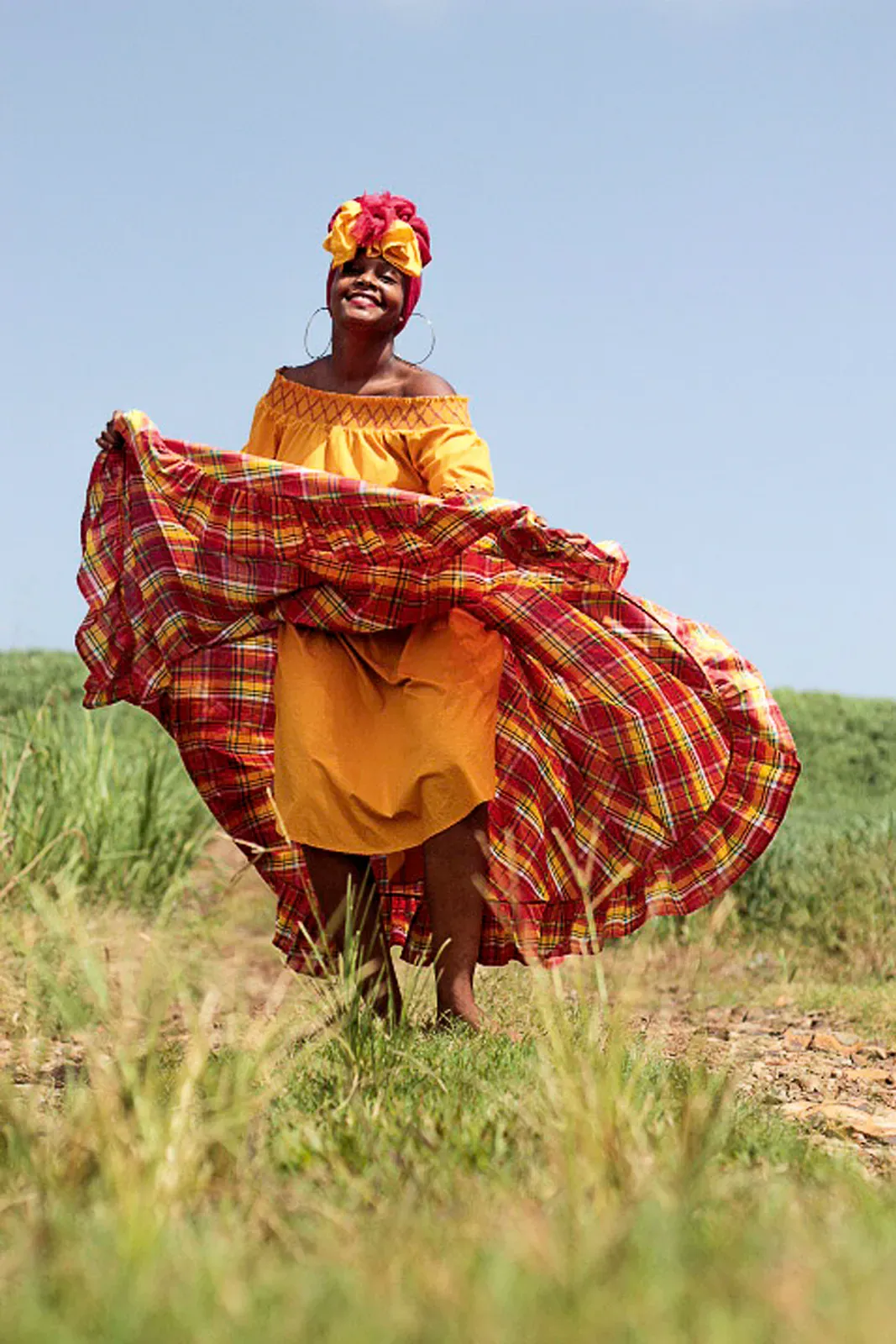
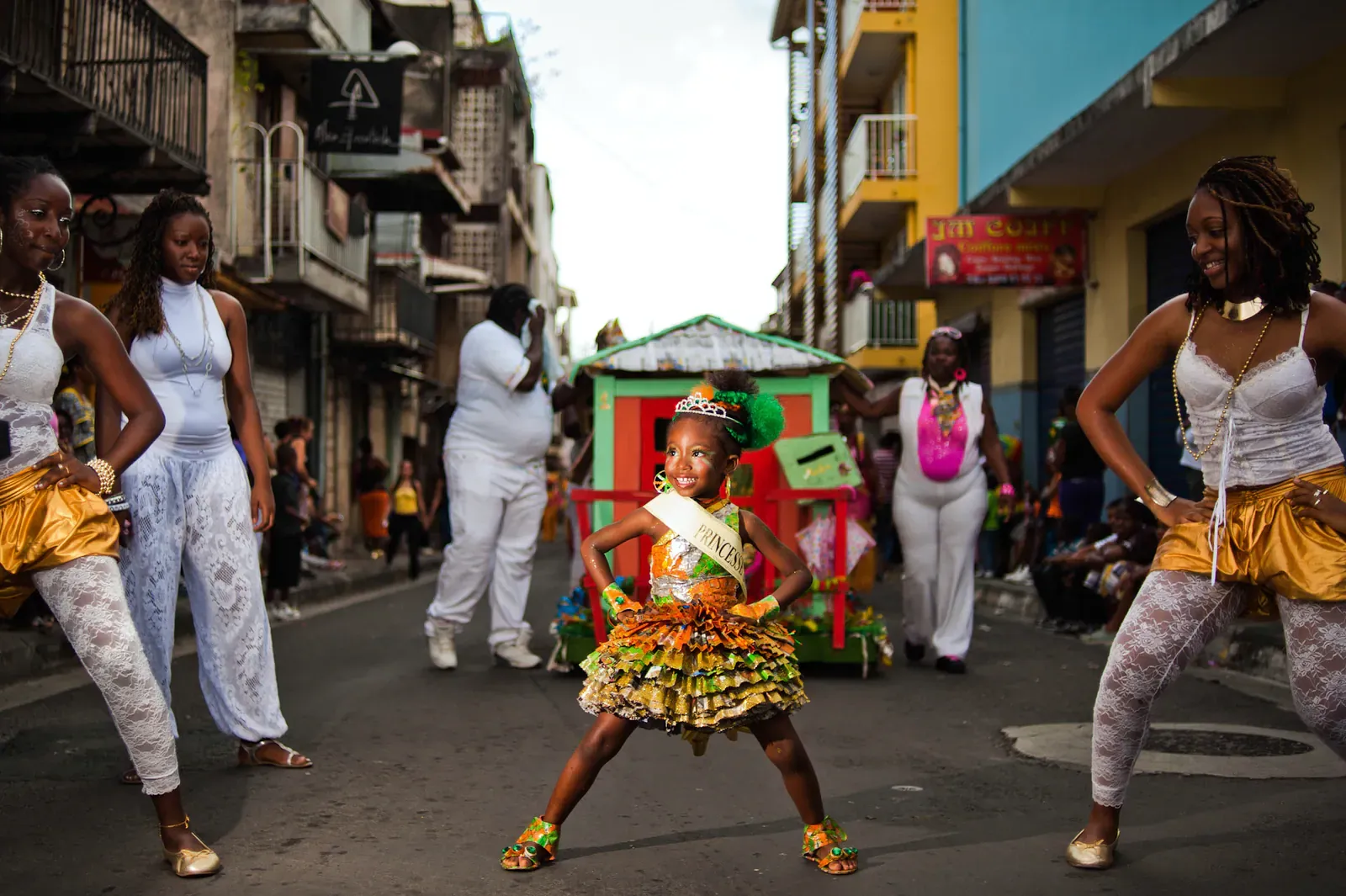
Biguine de bal was a couple dance that mixed nineteenth-century French steps with bèlè rhythm. At Vaval, the carnival of the French Antilles, biguine vidé bands follow a leader who sings a verse and the crowd answers, with costume contests and masquerade. The Basse-Pointe company Pomme-Cannelle stages traditional dances, among them biguine, in period dress. A 2004 Antillean film titled Biguine, with Micheline Mona and Max Télèphe, told the story of a couple of biguine musicians.
Legacy
Biguine’s clarinet and trombone writing can still be heard in cadence and in zouk. Biguine vidé supplied the rhythmic basis of zouk béton, the hard variant of zouk danced as individual jump up. Kassav, formed in 1979, took zouk to a wide audience, and Malavoi’s string-led treatment of old pieces reached an international stage in the 1980s, including a Maracas d’Or prize. Malavoi’s version of Léona Gabriel’s Asi paré, sung with Édith Lefel, was popular in the 1990s. In 2025 the group Otantik Bigin formed in Guadeloupe to revive the biguine of the early 1900s.
Misconceptions
One myth holds that biguine is only jazz in another costume. Jazz uses blues pentatonic scales and swing, and biguine uses seven-note scales and straight rhythm. Its drum patterns descend from the rhythms tolerated on Antillean plantations, a different line from the one that formed jazz. A second myth says that Cole Porter’s Begin the Beguine is a biguine. It is a jazz song that borrows the name. A third says biguine belongs to Martinique alone, yet Guadeloupe has an equal claim, and Guyana keeps its own carnival form.
Frequently asked questions
What is biguine music?
Biguine is a dance music from the French Antilles that combines bèlè drumming with French ballroom steps, led in its orchestral form by clarinet and trombone.
Where does biguine come from?
Biguine began in Saint-Pierre, Martinique, in the nineteenth century, and Guadeloupe also claims a share in its origin.
How is biguine different from jazz?
Biguine uses seven-note scales, straight rhythm, clarinet melody and a cello bass, while New Orleans jazz uses blues scales and swing.
Who were the main biguine musicians?
Alexandre Stellio, Léona Gabriel, Ernest Léardée, Sam Castandet, Robert Mavounzy, Al Lirvat and Moune de Rivel, with Malavoi as a later reference.
Is biguine still played?
Yes. It is still played in dances on the islands and in carnival, and new groups keep early biguine alive. The form also lives on inside the Caribbean family of dance music, including zouk and cadence.
Sound
Sound sheet
Signature sounds
- Clarinet and trombone interplay
- Tibwa cinquillo-tresillo ostinato
- Banjo or guitar strumming under the horns
- Call and response between leader and crowd in vidé
Drums and percussion
- Bèlè drum
- Tibwa
- Chacha
Techniques
- Clarinet and trombone duet
- Tibwa cinquillo-tresillo
- Call and response
- Odd-length wabap phrases
Keys and modes
Seven-note diatonic scales. Traditional biguine uses seven-note scales, not the blues pentatonic of jazz.
Vocals
Creole or French lyrics, solo voice in the orchestrated forms and nasal call and response in the drum biguine.
Scenes
Where it happened
Where and when the sound lived: one bar per city on a shared timeline.
Caribbean
Europe
Active scenes
Peak 2, 1929-1945
Martinique's cultural capital before 1902 and the town most tied to biguine's origin.
Dance halls such as the Select-Tango carried Saint-Pierre's repertoire after the eruption.
Antillean cabarets and bals made biguine fashionable between the wars.
Venues and places
Paris, 1929 to today. Antillean cabaret whose opening brought Stellio's band to France.
Fort-de-France, 1922 to today. One of the main dance halls of Fort-de-France, where Stellio played in Léon Apanon's orchestra.
Culture
Culture markers
- Biguine de bal
Couple dance that joined 19th-century French ballroom steps to bèlè rhythm.
Dance - Vaval carnival vidé
Street bands with call and response, costume contests and masquerade.
Ritual - Ballet Pomme-Cannelle
Basse-Pointe company known for staged biguine in period dress.
Dance
Media
Key media
- 1994Stellio: Le créateur de la biguine à Paris. Intégrale chronologique 1929-1931
by Alexandre Stellio. Reissue of his first Paris recordings in order.
Compilation - 1996La Reine de la Biguine (Maladie d'amour)
by Léona Gabriel. Collects the singer's interwar recordings.
Compilation - 2004Biguine
by Micheline Mona, Max Télèphe. Antillean film about a couple of biguine musicians, a hit on its release.
Film
Glossary
Terms on this page
The drum biguine, built on bèlè drum, tibwa and call and response.
The three orchestrated forms: parlour, ballroom and street.
Fast carnival biguine in which a leader sings a verse and the crowd answers.
Maracas that can carry the tibwa's cinquillo-tresillo pattern.
Pair of sticks played on bamboo or a drum shell that keeps the rhythm.
Jazz-influenced biguine from 1952 with altered chords and rhythms in five, six and seven beats.
Caribbean family