Canzone napoletana
Canzone napoletana is Neapolitan-language song of love and longing for Naples, formalized by the Piedigrotta contest in the 1830s and spread by emigrants.
Naples, 1830
European folk family
Born
1830
Naples
Subgenres
1
Documented branches
Links
9
Genres it drew on or shaped
Tempo
60-135 BPMLineage
Family tree
Timeline
Era by era
From the first sparks to today. Select a dot to read the story behind it.
- Roots, villanella and opera buffa
1224 to 1829
- Piedigrotta and the classical song
1830 to 1949
- Postwar melody and crossovers
1950 to 2015
- New school
2016 to today
Eras
Moments
- 1 Roots, villanella and opera buffa, 1224 to 1829
- 2 Piedigrotta and the classical song, 1830 to 1949
- 3 Postwar melody and crossovers, 1950 to 2015
- 4 New school, 2016 to today
around 1224
Roots, villanella and opera buffa
Ritual and popular songs of Naples, the 16th-century villanella, the tarantella rhythms of the 1600s and the 18th-century opera buffa shaped the later song.
1830
Piedigrotta and the classical song
The Piedigrotta contest, music publishers, wandering posteggiatori and emigrants made the Neapolitan song a repertoire sung around the world.
- 1830Piedigrotta song contestAn annual songwriting competition for the Festival of Piedigrotta makes the Neapolitan song a formal institution; its first winner was Te voglio bene assaje.
- 1876Bideri publishing house foundedFerdinando Bideri founds a Naples music publisher that keeps scores, records and manuscripts of the repertoire.
- 1880Emigrants carry the songs abroadEmigration from Naples and southern Italy between about 1880 and 1920 spreads the songs worldwide.
- 1898'O sole mio writtenLyrics by Giovanni Capurro and music credited to Eduardo di Capua and Alfredo Mazzucchi make the best-known song of the genre.
- 1902Caruso begins to recordThe Naples-born tenor Enrico Caruso makes his first commercial recordings and later records many Neapolitan songs.
- 1911Caruso records Core 'ngratoThe 1911 recording is a standard of the tenor repertoire of Neapolitan song.
1950
Postwar melody and crossovers
After the Piedigrotta festival ended, Carosone added jazz, Murolo and Bruni built the melodic canon, and tenors and Neapolitan rock and dub acts reworked it.
- 1950Piedigrotta festival abandonedThe festival ends in 1950; a Festival of Neapolitan Song on state radio succeeds in the 1950s before it too is dropped.
- 1956Tu vuò fà l'americanoRenato Carosone's single mixes Neapolitan song with swing and rock and roll and becomes one of his biggest hits.
- 1963Murolo's chronological anthologyRoberto Murolo starts releasing a multi-volume LP anthology of Neapolitan song.
- 1991Pavarotti SongbookThe tenor Luciano Pavarotti records an album of Neapolitan and Italian songs for a worldwide audience.
- 2002'O sole mio authorship rulingA Turin judge rules that Alfredo Mazzucchi was co-composer of 'O sole mio and 17 other songs credited to Eduardo di Capua.
around 2016
New school
From the late 2010s, Neapolitan-language acts blend traditional elements with hip hop, electronic and urban music.
- 2016New Neapolitan schoolLiberato, Geolier and Clementino mix Neapolitan elements with hip hop, electronic and urban music.
Listening path
Start listening
A short path from an easy way in to the deep end. Thumbnails come from YouTube; the player loads only when you press play.
- 01
Enrico Caruso, 1911
The Naples-born tenor in a 1911 recording; listen for the melismatic line and sustained climax.
- 02
Renato Carosone, 1956
Neapolitan words over a swing beat; listen for the piano and the American-style rhythm.
- 03
Renato Carosone, 1956
A Carosone classic in the postwar canon.
- 04
Luciano Pavarotti, 1991
A classic Neapolitan song in the operatic tenor tradition, with orchestra.
Facts
| Family | European folk |
| Origin | Naples, Italy |
| Emerged | Formalized 1830s (Festival of Piedigrotta) |
| Status | Active |
| Tempo | 60 to 135 BPM |
| Meter | 6/8 in tarantellas, varies by song |
| Subgenres | 1 |
Canzone napoletana, also called Neapolitan song, is a body of composed popular songs in the Neapolitan language, usually sung by a solo voice, most often male though women have sung it too. Its subjects are love, the serenade and nostalgia for Naples as it once was.
It became a formal institution in the 1830s through a songwriting contest at the Festival of Piedigrotta, and songs such as “’O sole mio”, “Torna a Surriento”, “Funiculì, Funiculà” and “Santa Lucia” are known across the world. It belongs to European folk music, though most of its repertoire is authored rather than anonymous.
Origins
The roots lie centuries before the genre took its name. Popular ritual songs, invocations and lullabies were circulating in Naples when the university was founded by Frederick II in 1224, and in the fifteenth century Neapolitan became the official language of the kingdom, which encouraged composers to write farces, frottole and ballads inspired by popular choruses. In the sixteenth century the villanella alla napoletana, a cheerful song of popular feeling that ranged from polyphony to a single voice with instrumental accompaniment, began to spread across Europe. The seventeenth century brought the first tarantella rhythms, and in the eighteenth the Neapolitan opera buffa influenced the singing and theatricality of the songs. “Lo guarracino”, a tarantella from around 1768 by anonymous authors, was reworked in the nineteenth century like other old songs.
The nineteenth-century trade turned these materials into a repertoire. Music shops and publishers opened in the city early in the century, among them Guglielmo Cottrau and the Calcografia Calì, and collected and republished hundreds of older pieces, sometimes updating them. A second channel was the posteggiatori, wandering musicians who played in indoor venues, in front of post stations and along city streets and sold copielle, sheets with the words and music, often slightly altered from the original.
Piedigrotta and the classical song, 1830-1949
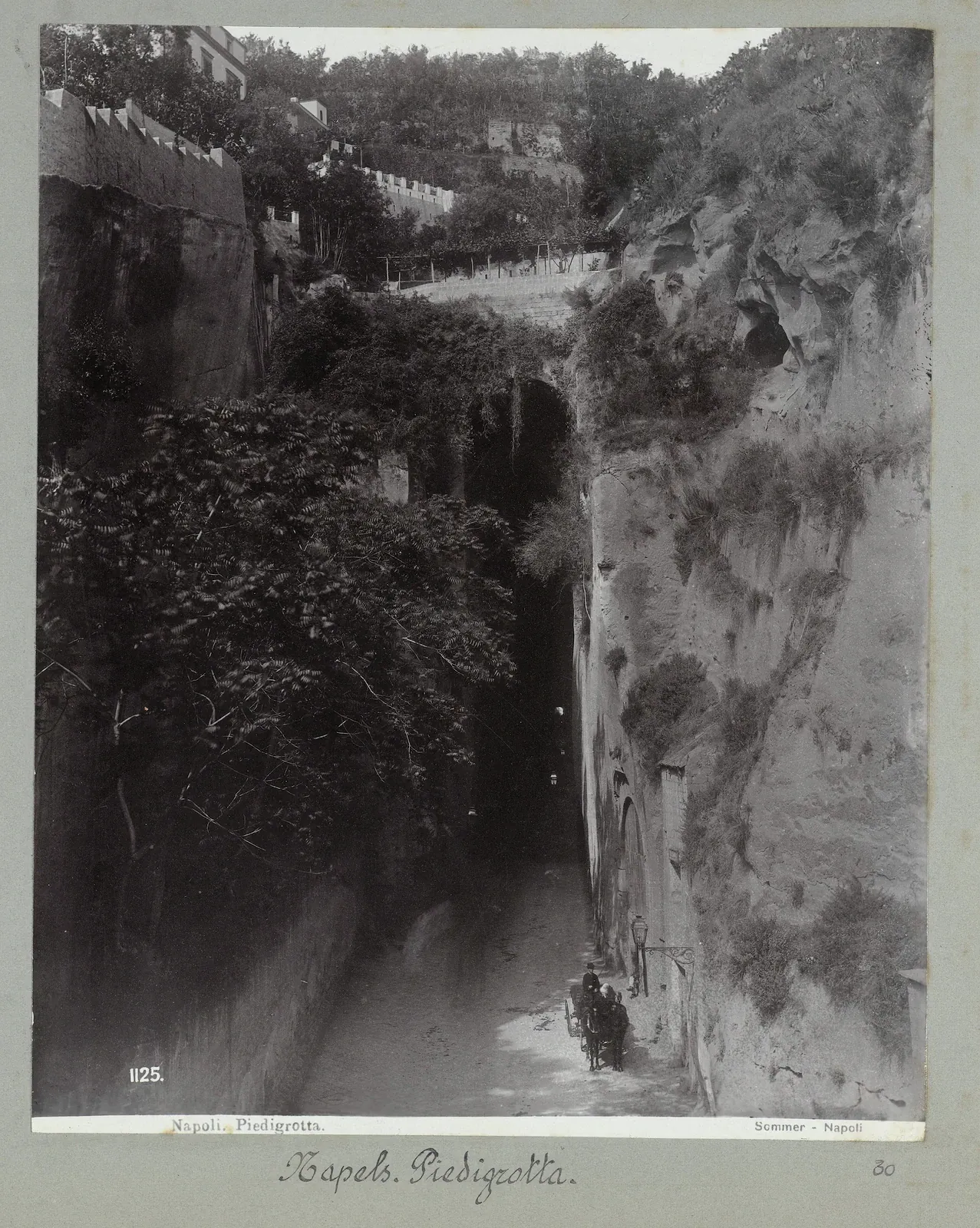
Piedigrotta, a district of the Chiaia quarter, had a church of the Madonna of Piedigrotta and an annual festival. A songwriting competition attached to it made Neapolitan song a formal institution in the 1830s. The first winner, “Te voglio bene assaje”, is traditionally attributed to Gaetano Donizetti. The contest ran regularly until 1950.
Publishing grew alongside it. The house of Bideri, founded in 1876 by Baron Ferdinando Bideri, still holds records, scores and manuscripts of the repertoire, and in 1901 Francesco Feola founded La Canzonetta, which worked with authors such as Libero Bovio, Totò, Gigi Pisano and Giuseppe Cioffi. The themes of the period leaned toward decadence, pessimism and drama.
“’O sole mio”, written in 1898, became the best-known piece of the repertoire. The lyrics are by Giovanni Capurro; the music is credited to Eduardo di Capua and Alfredo Mazzucchi.
Emigrants and the tenors
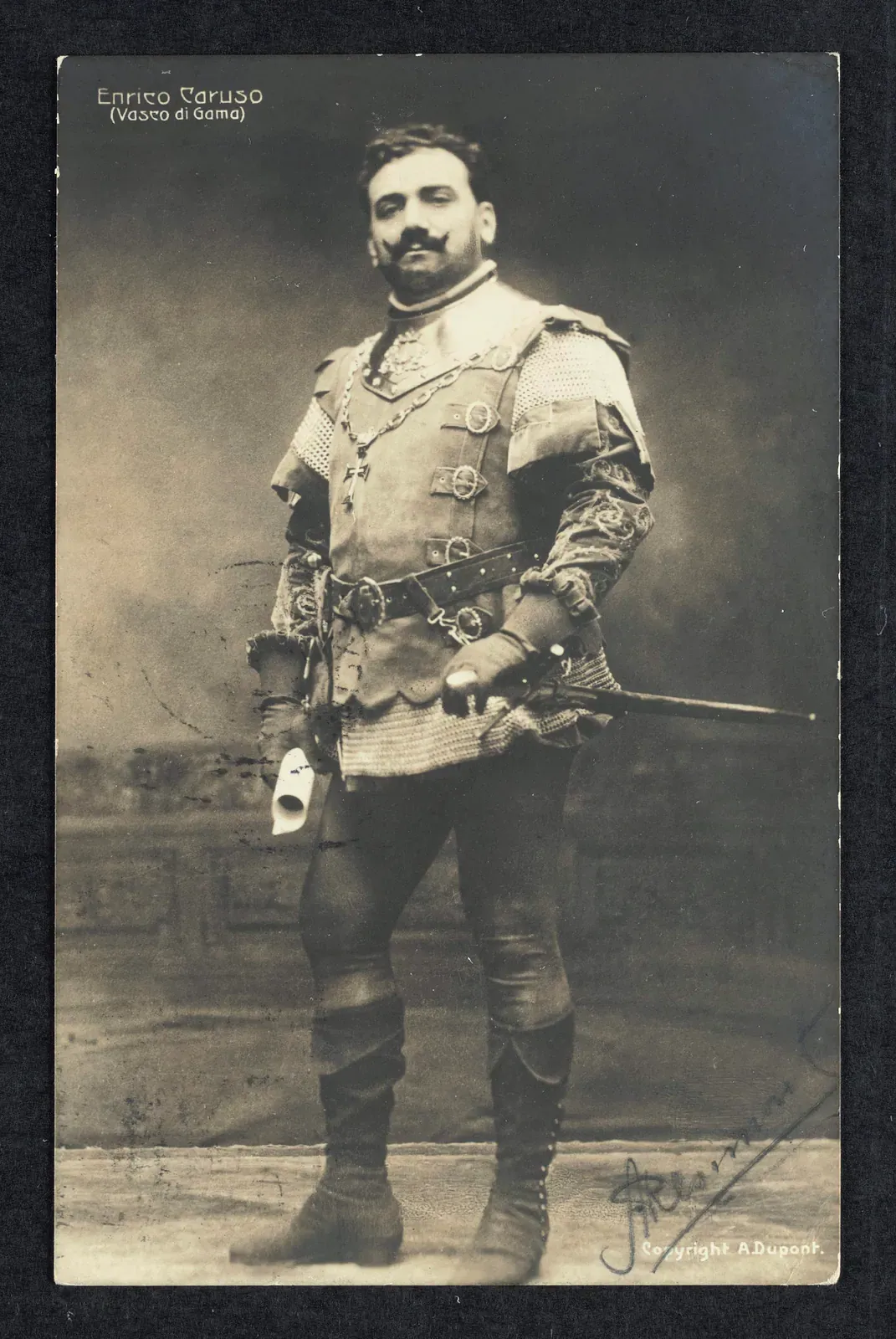
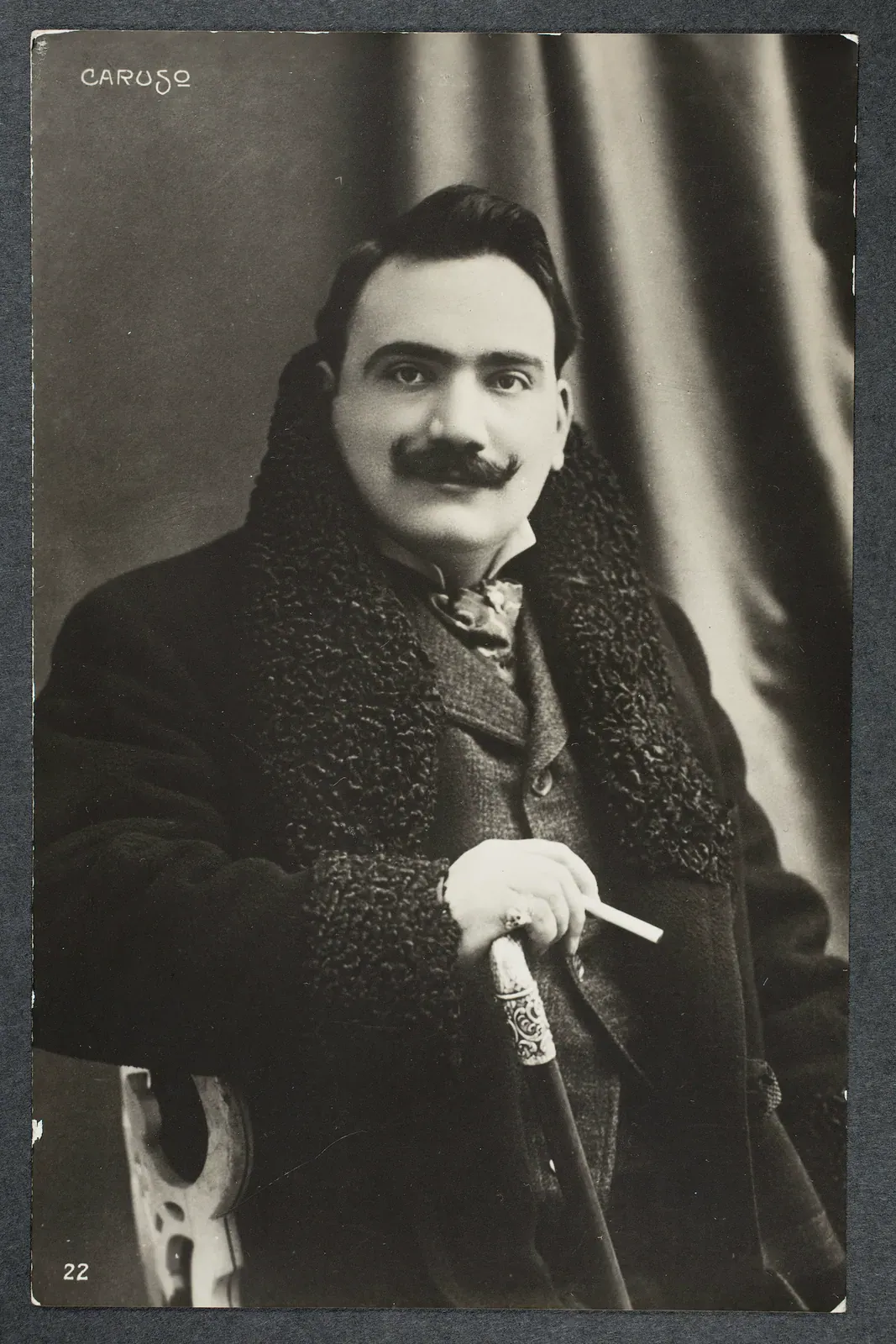
Many Neapolitan songs became world-famous because emigrants from Naples and southern Italy took them abroad between about 1880 and 1920. Enrico Caruso, born in Naples, sang the music of his city as encores at the Metropolitan Opera in New York in the early 1900s and recorded many of the songs, which then became standard repertoire for operatic tenors. His commercial recordings began in 1902, and he recorded for Victor, among them “Core ’ngrato” in 1911 and “’O sole mio” in 1916. Beniamino Gigli, Francesco Albanese, Franco Corelli, Mario Del Monaco, Giuseppe Di Stefano and Tito Schipa followed him into the repertoire.
Postwar melody and crossovers, 1950-2015
When the Piedigrotta festival was abandoned in 1950, a Festival of Neapolitan Song on Italian state radio had some success in the 1950s but was dropped as well. The songs themselves kept coming: “Malafemmena” by Totò, “Maruzzella” by Renato Carosone, “Indifferentemente” by Mario Trevi and “Carmela” by Sergio Bruni became classics in their own right, along with “Vierno” and “Luna rossa”, which won international notice. Aurelio Fierro, winner of five Festivals of Naples, made “’A pizza”, “’A sunnambula” and “Guaglione” famous. Domenico Modugno, born in Apulia, wrote and sang “Resta cu’mmé” and “Tu sì ’na cosa grande”.
Carosone, a pianist who was born Renato Carusone in 1920, was the figure who first combined the tarantella rhythm and classical melodies with jazz-style instrumentation after the war, which helped bring Neapolitan song to the United States. His 1956 single “Tu vuò fà l’americano” is among his biggest successes.
Roberto Murolo worked differently. A singer and guitarist, he was also a composer, scholar and collector, and his twelve-LP “Napoletana” anthology of the 1960s is an annotated survey of Neapolitan song reaching back to the twelfth century. Sergio Bruni, born near Naples in 1921, was nicknamed the voice of Naples and released “Pentagramma napoletano” in 1963.
Characteristics
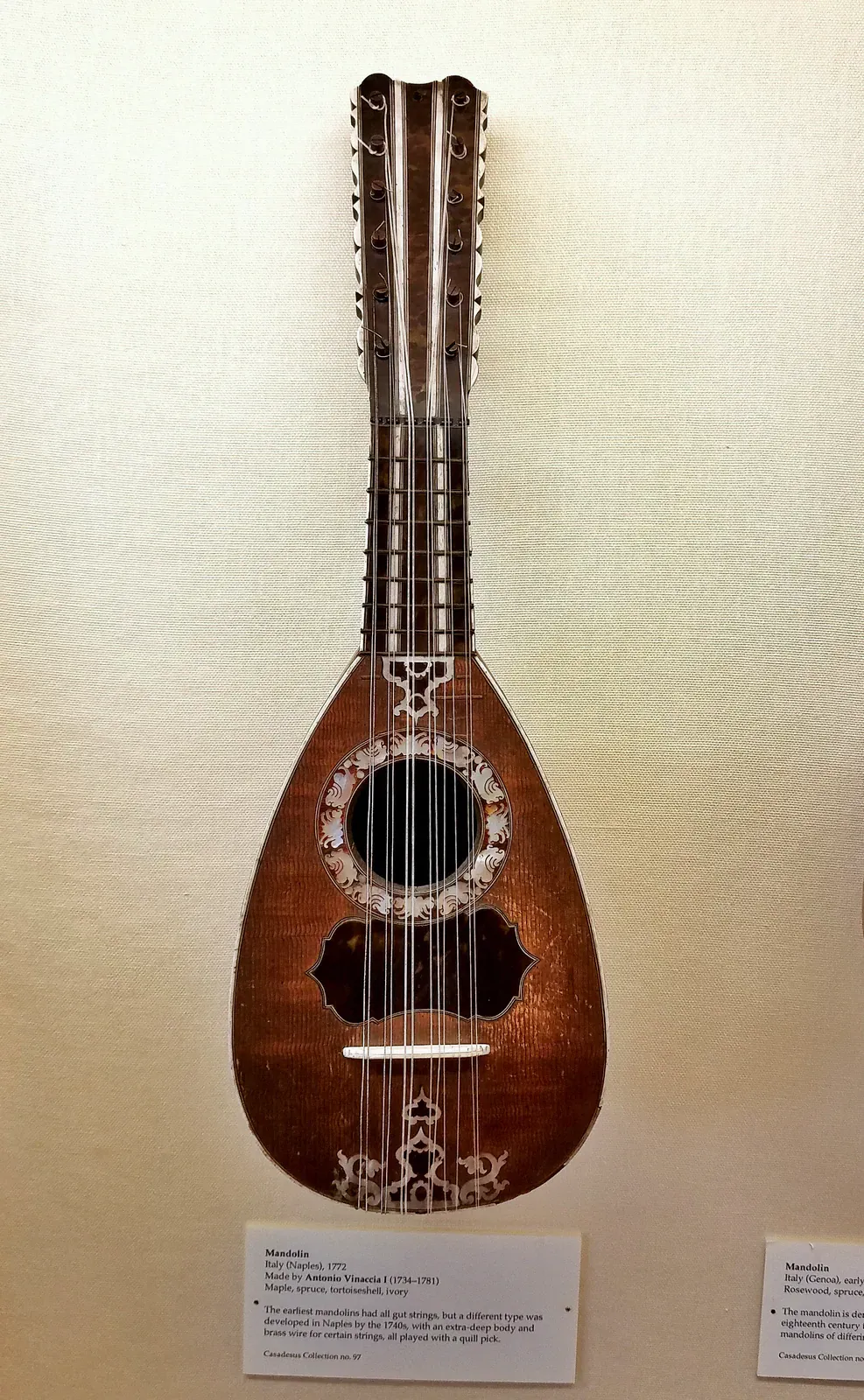
All Neapolitan songs are written and performed in the Neapolitan language. Many non-Neapolitans sing them, but the dialect is crucial to the correct inflection, so they are hard to sing well without it. The traits usually named are the language itself, the mandolin, melisma and the serenade form. Lively pieces use tarantella rhythms in 6/8 or 3/8, and the songs turn up in both minor and major keys.
Instruments and production
The classical instruments are the mandolin and guitar, the colascione (a forerunner of the modern bass) and the triccheballacche, a wooden percussion instrument with aluminium jingles. The tammorra frame drum, the tambourine, the caccavella or putipù, castanets and the piano are also used. The standard voice-and-guitar format suited recordings in every era, from Caruso’s acoustic discs to Murolo’s guitar and Pavarotti’s orchestral arrangements.
Mainstream success
The repertoire became a staple of recital halls. Pavarotti recorded three albums of Neapolitan and Italian songs, including “Pavarotti Songbook” in 1991, and his “Torna a Surriento” is on Decca Classics. Mario Lanza recorded twelve Neapolitan songs on his 1959 album “Mario! Lanza at His Best”, Sergio Franchi’s 1962 RCA debut “Romantic Italian Songs” reached the Billboard top 25, Plácido Domingo recorded “Italia ti amo” and Andrea Bocelli devoted his 2009 album “Incanto” to the style. The Three Tenors also sang songs from Naples.
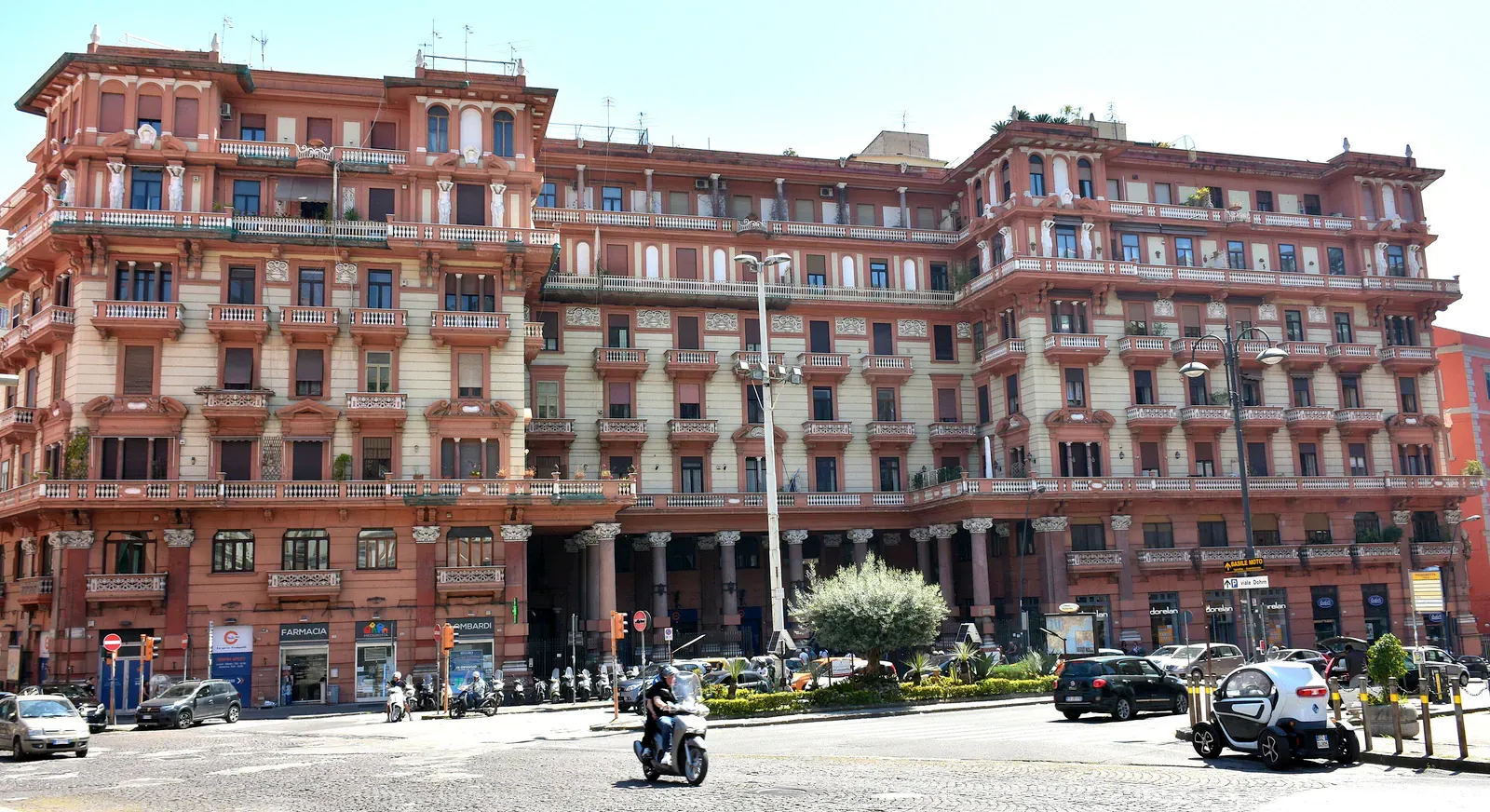
Culture
The festival itself was a seasonal ritual: an annual feast of the Madonna of Piedigrotta that doubled as a competition for new songs. Songs circulated on printed sheets sold by wandering musicians rather than in concert halls, and a famous few were written by outsiders in dialect, such as “’A vucchella” by Gabriele D’Annunzio. Poets and musicians from Naples shaped a theatrical, melodramatic tradition in which nostalgia for the city is a recurring subject.
Legacy
Neapolitan song keeps feeding other styles. Pino Daniele worked as a jazz-rock singer-songwriter, the Nuova Compagnia di Canto Popolare in the folkloric vein, and Almamegretta and 99 Posse blended Neapolitan song with dub and trip hop; Almamegretta appeared on a song with the Bristol duo Massive Attack. From the second half of the 2010s a new school has mixed traditional elements with hip hop, electronic and urban music, with Liberato, Geolier and Clementino among its leading names.
Misconceptions
It is often said that Donizetti wrote “Te voglio bene assaje”, the first winner of the Piedigrotta contest. The attribution is traditional, but a 1984 article showed there is no historical evidence for it. Another common belief is that Eduardo di Capua alone composed “’O sole mio”. For nearly 75 years the music was credited to him only, but in 2002 a judge in Turin ruled that Alfredo Mazzucchi was a legitimate co-composer of that song and 17 others.
A third belief holds that the songs belong only to the past or only to Neapolitans. Non-Neapolitans have written dialect versions, “Tu sì ’na cosa grande” among them, and after 1950 new classics appeared, a line that continues in the 2010s.
Frequently asked questions
What is canzone napoletana?
Canzone napoletana is a body of composed popular songs in the Neapolitan language, normally for a solo voice, on subjects such as love, the serenade and longing for Naples.
What are the most famous Neapolitan songs?
“’O sole mio”, “Torna a Surriento”, “Funiculì, Funiculà” and “Santa Lucia” are the standard examples of canzone napoletana, with later classics such as “Malafemmena”, “Maruzzella” and “Carmela”.
Who made canzone napoletana famous abroad?
Emigrants carried it abroad between about 1880 and 1920, and Enrico Caruso made it international by singing and recording it. Later tenors including Pavarotti kept it in the repertoire.
What is the Piedigrotta festival?
The Festival of Piedigrotta was an annual feast of the Madonna of Piedigrotta in Naples whose songwriting competition made canzone napoletana a formal institution in the 1830s. It ran regularly until 1950.
Sound
Sound sheet
Signature sounds
- Solo voice with mandolin and guitar
- Melismatic vocal line
- Lyrics in Neapolitan on love and longing for Naples
- Tarantella rhythm in lively songs
Drums and percussion
- Tammorra
- Triccheballacche
Techniques
- Melisma
- Mandolin accompaniment
- Dialect inflection
- Serenade form
Keys and modes
Major and minor keys. Neapolitan songs and tarantellas appear in both modes, from lively major to melancholy minor.
Vocals
Usually solo male voice, with many female soloists, singing in Neapolitan.
Scenes
Where it happened
Where and when the sound lived: one bar per city on a shared timeline.
Europe
North America
Active scenes
Peak 2, 1900-2025
Home of the Piedigrotta contest, the publishers and the Neapolitan language of the songs.
Where Caruso sang Neapolitan songs as encores at the Metropolitan Opera in the early 1900s.
Venues and places
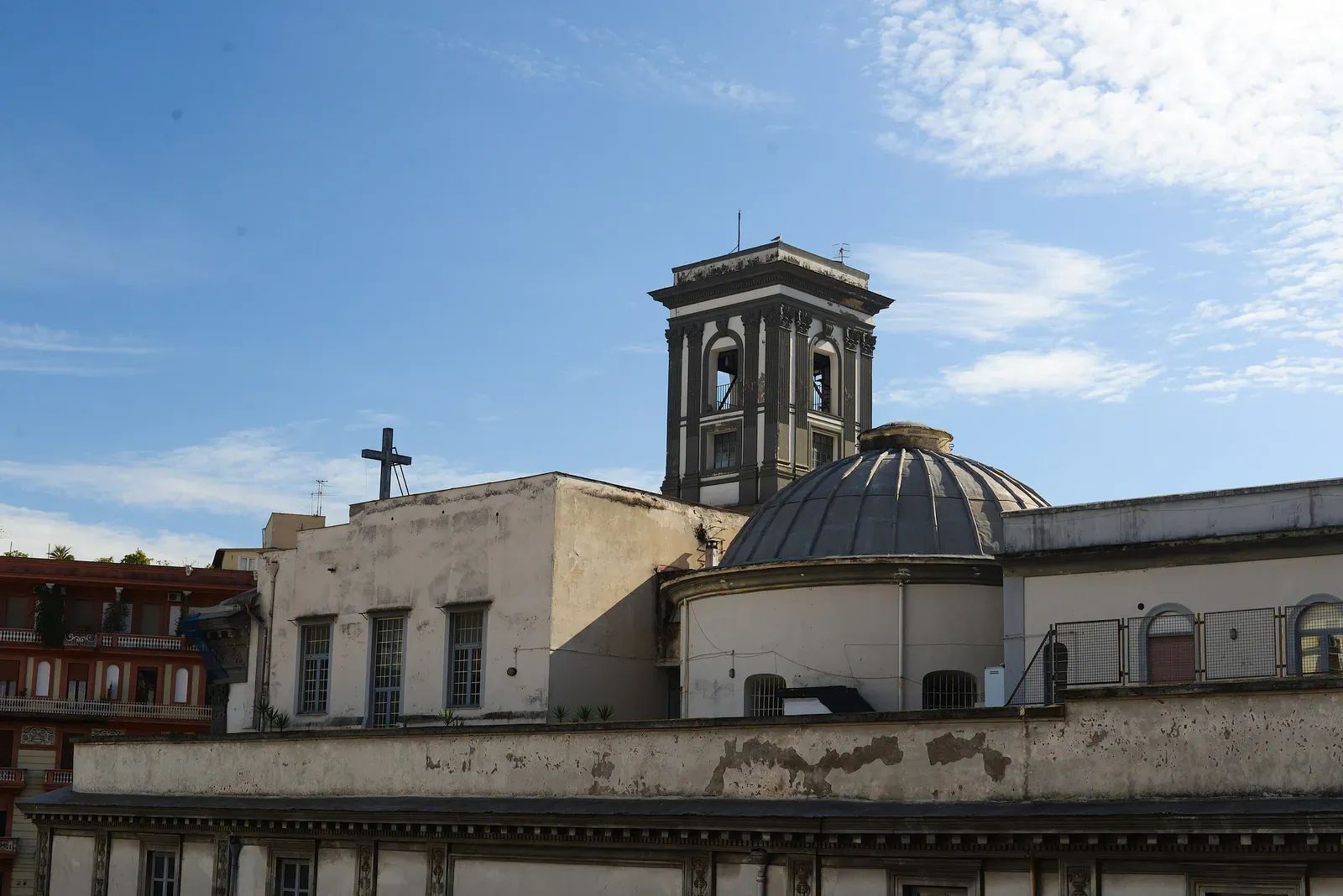
Naples, 1830 to today. Mergellina church whose annual festival hosted the songwriting contest.
Culture
Culture markers
- Piedigrotta festival
Annual feast and songwriting competition held from the 1830s until 1950.
Ritual - Neapolitan dialect
Correct inflection is hard without the dialect, so non-Neapolitan singers struggle to sing the songs right.
Slang - Posteggiatori
Street and cafe musicians who sold printed song sheets.
Ritual
Media
Key media
- 1963Napoletana: Antologia Cronologica della Canzone Partenopea
by Roberto Murolo. Twelve LPs charting the repertoire from medieval songs onward.
Compilation
Glossary
Terms on this page
Sheet carrying the words and score of a song, sold by posteggiatori with slightly changed versions.
Several notes sung on one syllable, a trait of Neapolitan singing.
Festival of the Madonna of Piedigrotta in Naples whose song competition gave the genre its form.
Wandering musician who played songs indoors, at post stations and in the streets, selling printed copies.
Fast dance rhythm, in 6/8 or 3/8, found in lively Neapolitan songs.
Sixteenth-century Neapolitan song form, cheerful and popular, which spread across Europe.
European folk family