Chamber music
Chamber music is art music for a small ensemble with one player to a part and no conductor, from Baroque sonatas to the string quartet and piano trio.
Europe, around 1600
Classical family
Born
around 1600
Europe
Subgenres
13
Documented branches
Links
0
Genres it drew on or shaped
Tempo
55-170 BPMLineage
Family tree
Grew out of
Europe
Chamber music
Led to (13)
Timeline
Era by era
From the first sparks to today. Select a dot to read the story behind it.
- Chamber sonata and trio sonata
1600 to 1750
- Haydn, Mozart and the string quartet
1750 to 1800
- Beethoven to Brahms
1800 to 1890
- Impressionism to the present
1890 to 2026
Eras
Moments
- 1 Chamber sonata and trio sonata, 1600 to 1750
- 2 Haydn, Mozart and the string quartet, 1750 to 1800
- 3 Beethoven to Brahms, 1800 to 1890
- 4 Impressionism to the present, 1890 to 2026
around 1600
Chamber sonata and trio sonata
Chamber and church sonatas grew into the Baroque trio sonata, two treble lines over a bass part, with players and instruments left flexible and a continuo keyboard filling in the harmony.
around 1750
Haydn, Mozart and the string quartet
Serenades and divertimenti gave way to the four-movement string quartet. Haydn, Mozart and Boccherini wrote for noble patrons, and Mozart gave the clarinet and the piano trio their own conversational parts.
- 1772Haydn writes the Op. 20 quartetsSix quartets that earned Haydn the title father of the string quartet.
- 1781Haydn's Op. 33 quartetsWritten for the publisher Artaria and premiered on Christmas Day 1781 in the Viennese apartment of the Russian grand duke's wife.
- 1785Mozart publishes the six Haydn QuartetsPublished in Vienna as Op. 10 and dedicated to Haydn.
- 1795Beethoven's Op. 1 piano triosFirst performed at Prince Lichnowsky's house and published the same year.
1800
Beethoven to Brahms
Patronage gave way to subscription concerts and amateur quartet societies. Beethoven's late quartets set a standard Brahms feared, and Schubert, Mendelssohn and Brahms widened the scorings and harmony.
- 1800Beethoven's Septet, Op. 20, first performedA clarinet, horn, bassoon and strings septet that became one of his most popular works in his lifetime.
- 1806Beethoven's Razumovsky quartets, Op. 59Commissioned by the Russian ambassador in Vienna, Count Razumovsky.
- 1819Schubert's Trout QuintetScored for piano, violin, viola, cello and double bass, not published until 1829.
- 1824Schubert's Death and the Maiden quartetWritten after a serious illness; the slow movement varies his 1817 song.
- 1825Mendelssohn's Octet, Op. 20Written by the 16-year-old composer for four violins, two violas and two cellos.
- 1873Brahms's Op. 51 string quartetsCompleted in Tutzing and published together as Op. 51, dedicated to Theodor Billroth.
- 1879Franck's Piano Quintet in F minorDeveloped the cyclic form that reuses thematic material across movements.
around 1890
Impressionism to the present
Debussy, Ravel and Fauré gave the quartet new colour. Permanent professional quartets, nationalist and serial composers and groups such as the Kronos Quartet carried the repertoire into the modern era.
- 1893Debussy's String Quartet in G minorHis only string quartet, a watershed work for harmony and colour.
- 1901Wigmore Hall opens in LondonOpened as the Bechstein Hall and later became a centre for chamber recitals.
- 1917Budapest String Quartet formedAn ensemble that recorded for HMV, RCA Victor and Columbia until 1967.
- 1960Shostakovich's String Quartet No. 8Written in three days in July 1960.
- 1973Kronos Quartet gives its first performanceFounded by David Harrington in Seattle, it later commissioned more than 1,200 works.
Listening path
Start listening
A short path from an easy way in to the deep end. Thumbnails come from YouTube; the player loads only when you press play.
- 01
Emerson String Quartet, 1785
A slow, dissonant introduction opens a Mozart quartet dedicated to Haydn; listen for four equal voices.
- 02
Takács Quartet, 1797
Haydn's variations on the Austrian imperial hymn, passed from instrument to instrument.
- 03
Brilliant Classics, 1819
Schubert's piano quintet with double bass, built on the song theme in its fourth movement.
- 04
Marc-Andre Hamelin, Takács Quartet, 1879
Cyclic form and French colour at the turn of the 20th century.
- 05
Emerson String Quartet, 1893
Debussy's pizzicato scherzo, which freed the quartet from classical harmony.
Facts
| Family | Classical |
| Origin | Europe |
| Emerged | 16th century onward |
| Status | Active |
| Tempo | 55 to 170 BPM |
| Meter | 4/4 |
| Subgenres | 11 |
Chamber music is art music for a small group of players, one to a part and normally without a conductor, in a repertoire that grew from Baroque sonatas into the string quartet, the piano trio and the quintets of the Classical and Romantic eras.
The name comes from its first home, a room in a palace rather than a hall. It belongs to the Classical family.
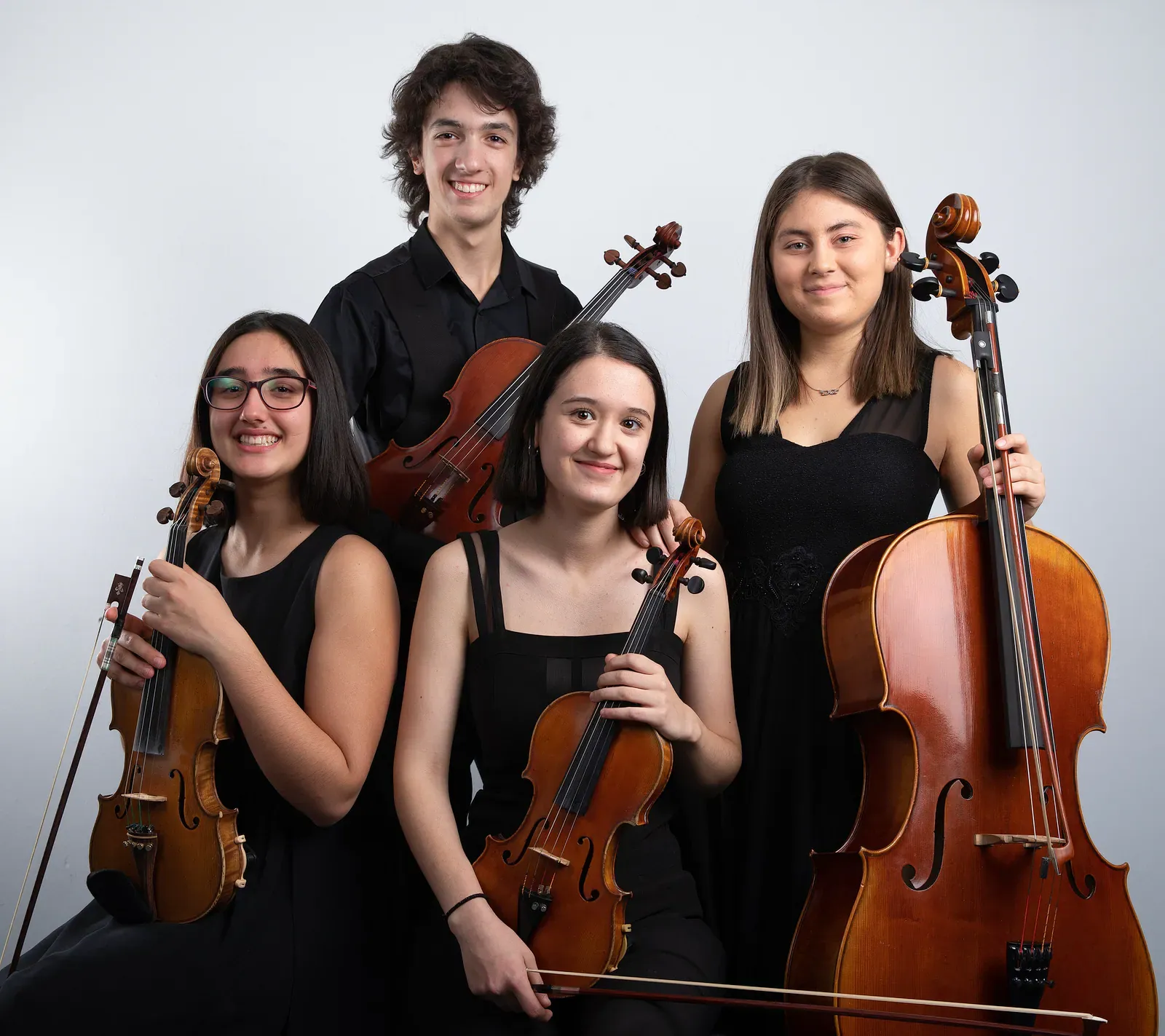
Origins
During the Middle Ages and early Renaissance, instruments mostly accompanied singers, though purely instrumental groups such as consorts of viol-family instruments also existed. Some historians trace chamber music to the sonata da camera, a suite of slow and fast movements with dance tunes, and the sonata da chiesa, the same without dances. Both led to the Baroque trio sonata for two treble instruments over a bass line, with a harpsichord, organ or lute filling in the harmony from figured bass.
The category was loose in the Baroque era. Bach’s The Art of Fugue works on a keyboard or a string quartet, and Handel’s sonatas name a flute, oboe or violin for the same line. Texture was often contrapuntal, with no instrument dominant.
Taste turned toward the lighter galant style in the later eighteenth century. Patrons hired musicians for evening serenades, and composers supplied serenades, nocturnes, divertimenti and cassations for two to six players. The young Joseph Haydn wrote several.
Haydn, Mozart and the Classical quartet, 1770-1800
Haydn is generally credited with creating the modern form, though the scholar Roger Hickman has warned that the idea that he invented the quartet alone rests on a vague history. Haydn wrote his Op. 20 quartets in 1772, and they earned him the title father of the string quartet. His Op. 33 set followed in 1781 for the Viennese publisher Artaria and was premiered on Christmas Day that year in the apartment of the Russian grand duke’s wife. His Op. 76 set of 1797 contains the Emperor quartet, whose slow movement varies the Austrian imperial hymn.
The typical Classical quartet had four movements: a sonata-form opening with two contrasting themes, a slow movement, a minuet or scherzo, and a rondo finale. Haydn worked for the Esterházy court, where a prince who played the baryton prompted many of his string trios. Luigi Boccherini wrote nearly a hundred quartets and more than a hundred quintets with two cellos.
Mozart published six quartets in Vienna in 1785 as his Op. 10, dedicated to Haydn, and they are often seen as the summit of the Classical style. He gave the strings an independent role in his piano trios and quartets, brought the newly invented clarinet into the repertoire with the Kegelstatt Trio and the clarinet quintet, and wrote six string quintets with two violas.
Beethoven and the Romantic hall, 1795-1890
Beethoven made his formal debut with three piano trios, Op. 1, first performed in 1795 at Prince Lichnowsky’s house. Haydn advised against publishing the C minor trio as too radical, and it became the most popular of the set. His Septet, Op. 20, first performed in 1800 for clarinet, horn, bassoon and strings, was a hit that he came to resent for overshadowing his other works. He wrote his first six quartets, Op. 18, between 1798 and 1800 for Prince Lobkowitz and the Op. 59 quartets in 1806 for the Russian ambassador, Count Razumovsky, who played second violin at the premiere.
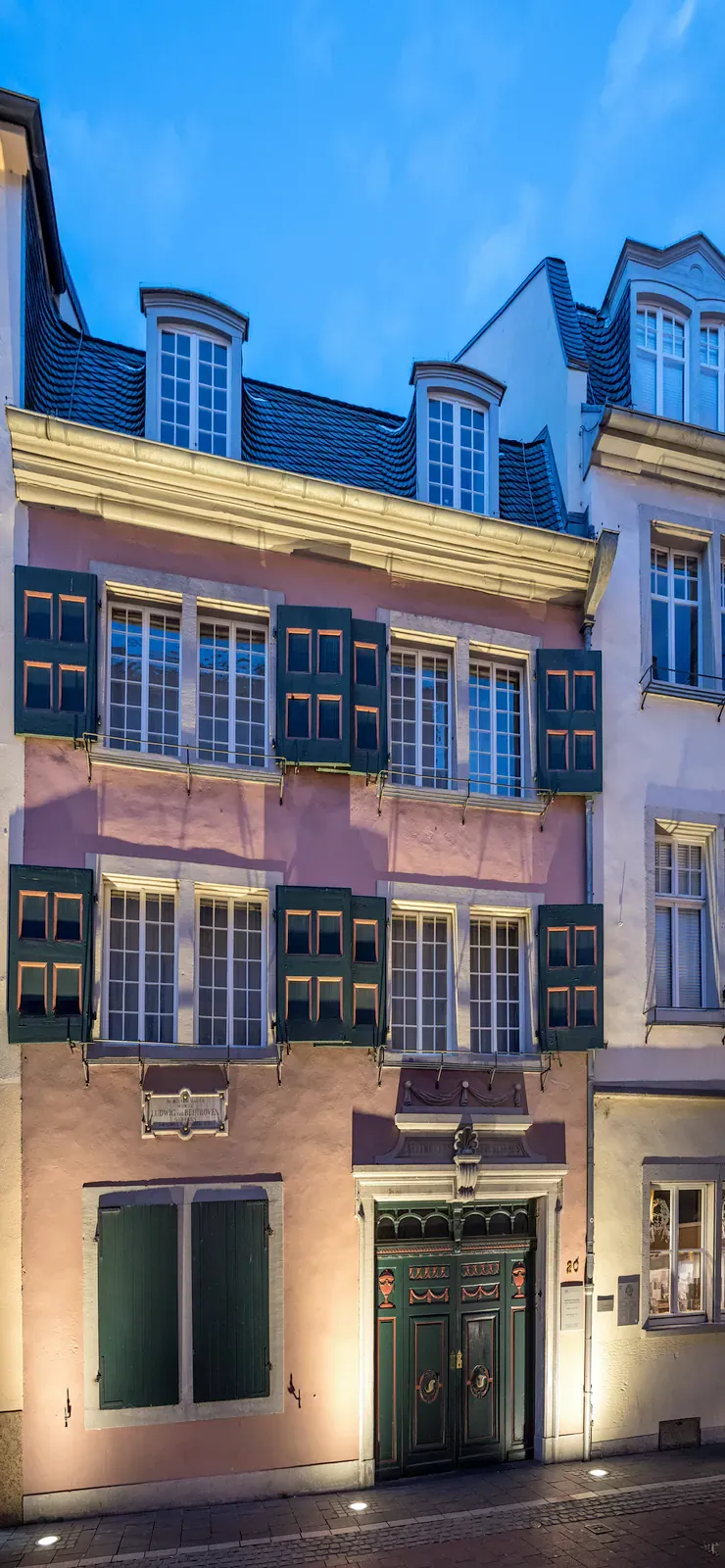
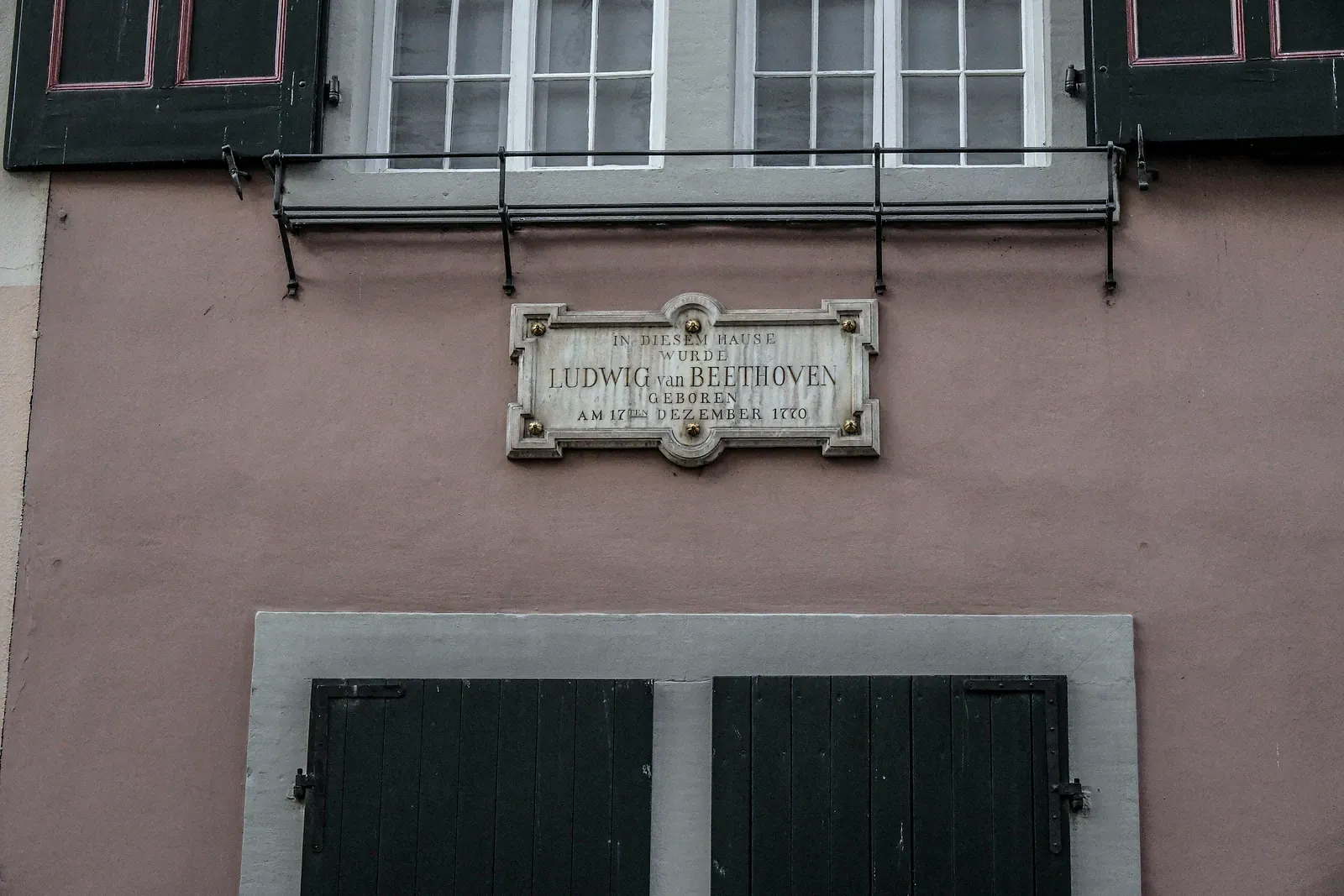
Across 17 quartets, Beethoven moved from Classical convention to music that fits no category. The late quartets use sul ponticello bowing in Op. 131 and the Lydian mode in Op. 132, and Stravinsky called the Grosse Fuge music that will be contemporary forever. They frightened later composers: Brahms wrote and destroyed about twenty quartets before publishing one.
Franz Schubert left 15 quartets, two piano trios, an octet and a quintet for two violins, viola and two cellos. The Trout Quintet of 1819, for piano, violin, viola, cello and double bass, was published only in 1829, the year after his death. The Death and the Maiden quartet of 1824 came after a serious illness and varies his 1817 song of that name. Felix Mendelssohn wrote his Octet in 1825 at sixteen.
As aristocratic patronage collapsed, composers sold printed scores and gave subscription concerts, and amateur quartet societies spread across Germany and France. More than 2,000 quartets were published between 1770 and 1800. Brahms published 24 chamber works, among them three quartets, five piano trios, the Piano Quintet, Op. 34, and the Clarinet Quintet, Op. 115. His Op. 51 quartets, completed in 1873, were dedicated to Theodor Billroth, and the Joachim Quartet premiered his later works.
Impressionism and the modern era, 1890 to the present
César Franck’s Piano Quintet in F minor of 1879 spread the cyclic form, in which themes return through every movement. Debussy’s String Quartet in G minor of 1893, his only quartet, used that form and broke with classical harmony, and Ravel and Fauré added a colour tied to Impressionism. Shostakovich wrote his String Quartet No. 8 in three days in July 1960.
Permanent professional quartets became the main carriers of the repertoire. The Budapest String Quartet, formed in 1917, recorded for HMV, RCA Victor and Columbia until 1967, and the Amadeus Quartet played from 1947 to 1987 with its founding members. The Alban Berg Quartett of Vienna was active from 1970 to 2008. The Takács Quartet, founded in Budapest in 1975, began a Decca series with Haydn’s Op. 76, and the Emerson String Quartet, formed in New York in 1976, recorded for Deutsche Grammophon. London’s Wigmore Hall, opened in 1901 as the Bechstein Hall, became a recital centre.
Characteristics
The defining trait is the conversation between equals. Goethe called a string quartet four rational people conversing, and the image fits music in which one instrument offers a motif and the others answer. Mozart’s piano trios gave the strings their own voices, where Haydn’s had mostly doubled the piano. With one player per part and no conductor, players must manage balance, blend and intonation on their own, which is why chamber music has long been called the music of friends.
Instruments and production
Strings dominate, with a second viola or cello in the quintet and a double bass added for Schubert and Beethoven. The piano joins them in trios, quartets and quintets, and wind instruments appear in mixed works such as Mozart’s clarinet pieces, Brahms’s horn trio and Beethoven’s septet. Music written for a room exposes every line. Recording turned this intimacy into a catalogue, from the early Budapest Quartet discs to the complete Beethoven cycles of the Alban Berg Quartett and others.
Mainstream success
Chamber music never rivalled the symphony for public attention, but individual works broke through. Beethoven’s Septet was played again and again and arranged for many combinations, including a clarinet, cello and piano version by Beethoven himself. Nineteenth-century publishers sold quartet arrangements of folk tunes, symphonies and opera arias. In the 1860s the followers of Liszt and Wagner argued that pure music had run its course after Beethoven, while Brahms and the critic Eduard Hanslick defended it. The Kronos Quartet, first heard in Seattle in 1973, later drew a wider audience by commissioning more than 1,200 works.
Notable recordings
The Takács Quartet’s 1988 Decca release of Haydn’s Op. 76 quartets, Nos. 1 to 3, opened a long association with the label. The Alban Berg Quartett’s 1984 account of the Op. 131 quartet remains a benchmark for Beethoven’s late style. The Hyperion release of the Takács Quartet with Marc-André Hamelin pairs Franck’s quintet with Debussy’s quartet.
Culture
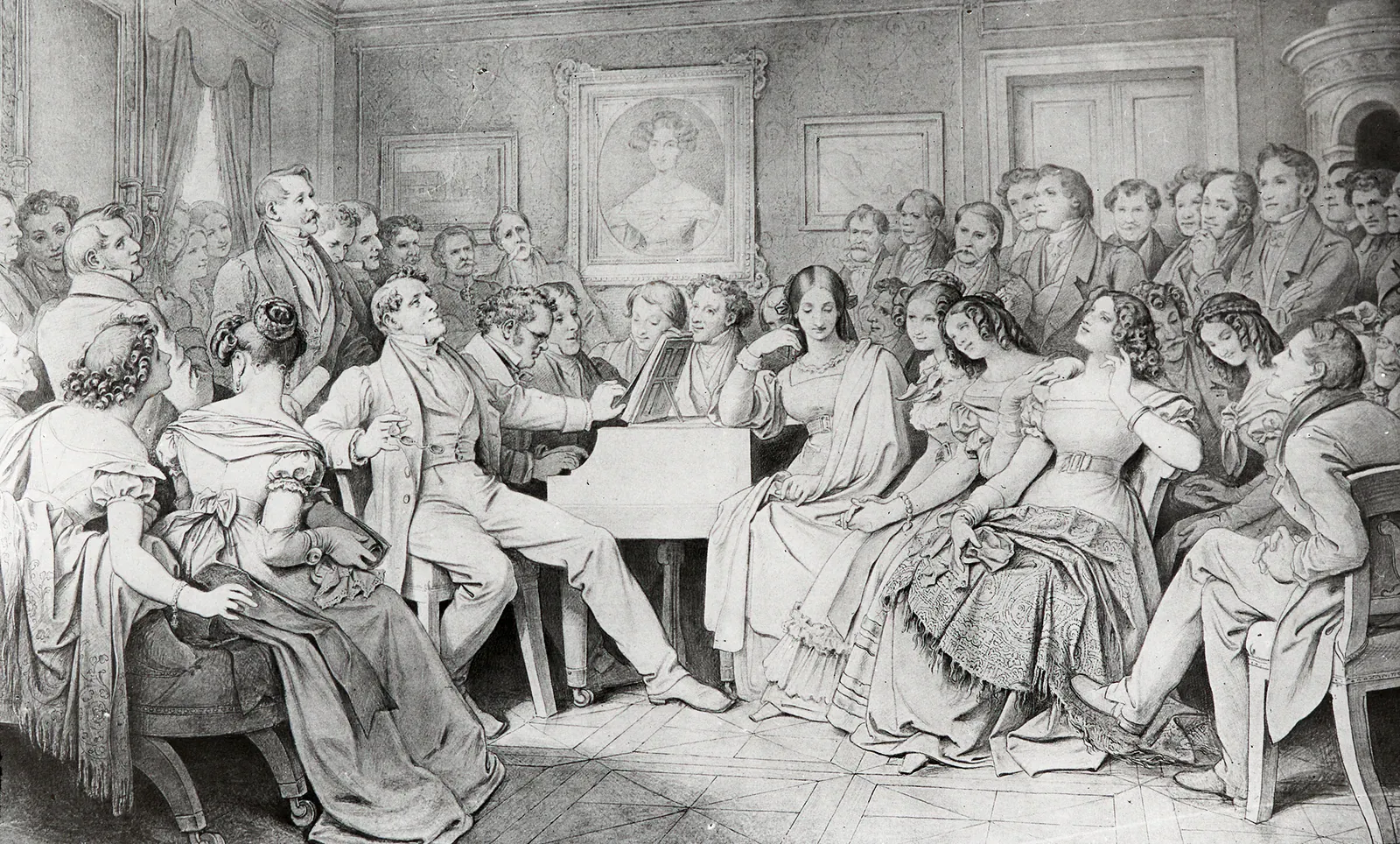
The social setting is part of the genre. In 1820s Vienna the Schubertiaden gathered friends to hear Schubert play, and for over a century chamber music was played mainly by amateurs at home. From the middle of the nineteenth century it became more acceptable for women to play it, and Emily Shinner led one of the first all-women string quartets. Nicknames such as Emperor, Trout and Razumovsky give works a popular identity beyond the opus number.
Legacy
Chamber music supplied models for later form. Schoenberg traced his modernism to Brahms’s developing variation, and Brahms kept counterpoint from Bach and Mozart alive.
Misconceptions
One myth holds that Haydn invented the string quartet alone. Earlier composers had already written precursors, and Hickman argues the history of the genre is more complex. A second says chamber music means only strings, yet Mozart, Beethoven and Brahms wrote for clarinet, horn and bassoon. A third says it belongs in the concert hall, but for more than a hundred years amateurs played it mainly at home.
Frequently asked questions
What is chamber music?
Chamber music is art music for a small ensemble with one performer per part, traditionally small enough for a palace chamber. By convention it usually leaves out solo works.
Why does chamber music have no conductor?
Each part is played by one person, so the players coordinate among themselves. The conversational writing, in which a motif is passed from instrument to instrument, depends on each player listening to the others.
What is a string quartet?
A string quartet is a work or ensemble for two violins, viola and cello. Haydn did much to establish its four-movement plan, and Mozart and Beethoven developed it further.
Sound
Sound sheet
Signature sounds
- One player per part, no conductor
- Four movements: sonata-form allegro, slow movement, minuet or scherzo, finale
- Equal-partner conversation among the lines
Techniques
- Conversational part-writing
- Counterpoint and fugue
- Cyclic form
- Pizzicato and sul ponticello
Keys and modes
Major and minor tonality. Common-practice keys with a home key and modulations, stretched by Brahms and set aside by Debussy.
Church modes. Beethoven's Op. 132 uses the Lydian mode in its slow movement.
Vocals
Mostly instrumental; Brahms revived voice with viola obbligato in his Op. 91 songs.
Scenes
Where it happened
Where and when the sound lived: one bar per city on a shared timeline.
Europe
Active scenes
Peak 4, 1917-2025
Home to Haydn, Mozart, Beethoven and Schubert, whose Schubertiade evenings played chamber works for friends.
Wigmore Hall opened in 1901 and became a leading venue for chamber music.
The Budapest String Quartet began here in 1917, and the Takács Quartet was founded here in 1975.
Franck, Debussy, Ravel and Fauré wrote chamber works that shaped French colour and cyclic form.
Venues and places
London, 1901 to today. Opened as the Bechstein Hall and known for its acoustics in chamber and song recitals.
Culture
Culture markers
- Schubertiaden
Evening gatherings in 1820s Vienna where Schubert's music was played among friends.
Ritual - Amateur quartet societies
Home playing groups spread through Germany and France in the 19th century and ran house concerts.
Ritual - Nicknamed works
Quartets and quintets are known by names such as Emperor, Trout and Razumovsky.
Slang
Glossary
Terms on this page
Light multi-movement piece for a few players, written for evening entertainment in the 18th century.
Each line is played by one performer, in contrast to an orchestra where sections double each part.
Evening of Schubert's music among friends in Vienna, later the name of concert series and festivals.
Opening-movement design with two contrasting themes, a development and a recapitulation.
Baroque form for two treble instruments and a bass line with a keyboard or other chording instrument.
Classical family