Medieval music
Medieval music is the notated art and liturgical music of Western Europe from about 500 to 1400: chant, early polyphony and courtly song.
Western Europe, 500
Classical family
Born
500
Western Europe
Subgenres
15
Documented branches
Links
9
Genres it drew on or shaped
Tempo
55-115 BPMLineage
Family tree
Grew out of
Western Europe, 500
Medieval music
Led to (16)
Timeline
Era by era
From the first sparks to today. Select a dot to read the story behind it.
- Chant and the first notation
500 to 1100
- Courtly song and early organum
1100 to 1160
- Notre-Dame and ars antiqua
1160 to 1300
- Ars nova and the Trecento
1300 to 1400
- Modern revival
1950 to today
Eras
Moments
- 1 Chant and the first notation, 500 to 1100
- 2 Courtly song and early organum, 1100 to 1160
- 3 Notre-Dame and ars antiqua, 1160 to 1300
- 4 Ars nova and the Trecento, 1300 to 1400
- 5 Modern revival, 1950 to today
around 500
Chant and the first notation
Monophonic liturgical chant spreads across Europe, gains neume notation, and the first parallel organum appears around the ninth century.
- 800Frankish chant standardisedCarolingian rulers promote one Roman-style chant repertory across the Frankish realm, the base of Gregorian chant.
- 900First neumed chant booksStaffless neume signs start to survive in Carolingian manuscripts, recording melodic shape.
- 1026Guido of Arezzo and the staffGuido's Micrologus teaches sight-singing with lines and letters, a step toward the modern staff.
around 1100
Courtly song and early organum
Troubadour song begins in southern France while organum, chant with added voices, develops in monasteries like Compostela and St Martial.
- 1100First troubadoursCourtly song in the Occitan language arises in southern France with William IX of Aquitaine.
- 1140Congaudeant catholiciCodex Calixtinus carries a conductus described as the first known piece for three voices.
- 1150Hildegard's SymphoniaHildegard of Bingen compiles a cycle of her chants for her nuns on the Rhine.
around 1160
Notre-Dame and ars antiqua
Paris becomes the centre of polyphony: Leonin and Perotin, rhythmic modes, the conductus and the early motet.
- 1163Notre-Dame construction beginsThe Paris cathedral becomes the home of the Notre-Dame school of polyphony.
- 1180Leonin's Magnus liber organiLeonin is credited with the great book of two-voice organum for the cathedral's liturgy.
- 1198Perotin's Viderunt omnesA four-voice organum for Christmas at Notre-Dame, among the earliest surviving works in four parts.
- 1253Dies irae first writtenThe Requiem sequence appears in a Franciscan missal from Naples, dated between 1253 and 1255.
- 1261Sumer is icumen inThe Reading Rota, a six-part English canon, is copied into a British Library manuscript.
- 1270Cantigas de Santa MariaAlfonso X's court compiles hundreds of Marian songs in Galician-Portuguese with notation.
around 1300
Ars nova and the Trecento
New mensural notation, isorhythm and formes fixes mark Machaut and Vitry in France, Landini and the ballata in Florence.
- 1324Papal rebuke of polyphonyJohn XXII's bull condemns elaborate polyphony in church as a threat to the dignity of chant.
- 1365Machaut's Messe de Nostre DameA complete four-voice mass setting by a single named composer.
- 1397Landini dies in FlorenceThe prolific blind organist's ballate fill much of the Squarcialupi Codex.
- 1399Llibre Vermell de MontserratA manuscript of pilgrim songs and dances is compiled at the Catalan abbey.
around 1950
Modern revival
Early music ensembles reconstruct the repertory; Gothic Voices, Hilliard, Sequentia and the Silos monks reach mass audiences.
- 1952New York Pro Musica foundedNoah Greenberg's group brings medieval and Renaissance music to American concert halls.
- 1968Clemencic Consort foundedRené Clemencic's Vienna ensemble starts a long run of medieval records.
- 1974Hilliard Ensemble and Hespèrion XXTwo long-lived early music groups form in the same year in London and Barcelona.
- 1982A Feather on the Breath of GodGothic Voices' Hildegard album for Hyperion becomes a landmark best-seller of early music.
- 1989Perotin on ECMThe Hilliard Ensemble records Notre-Dame polyphony at Boxgrove Priory.
- 1994Chant by the monks of SilosA compilation of the Spanish abbey's recordings becomes the best-selling Gregorian chant album.
- 2014Hilliard Ensemble disbandsThe quartet ends after four decades with a final concert at Wigmore Hall.
- 2020BardcoreOnline medieval-style covers of pop songs reach a mass audience and a new kind of listener.
Listening path
Anthems
The records that built the sound, grouped by the part they played. Thumbnails come from YouTube; the player loads only when you press play.
- 01
Monteverdi Choir, 1140
Conductus from the Codex Calixtinus that is described as the first known three-voice piece.
Origin - 02
Benedictine Monks of Santo Domingo de Silos, 1994 · EMI Classics
Christmas introit on the Chant compilation, the album that made monastic chant a worldwide bestseller.
Start hereBreakthrough - 03
Perotin, 1198 · ECM Records
Four-voice Christmas organum from Notre-Dame, the high point of ars antiqua; Hilliard Ensemble recording.
Anthem - 04
Hespèrion XXI, 1200
Dance tune after Raimbaut de Vaqueiras, played on period instruments to show the courtly side.
Anthem - 05
Clemencic Consort, 1230
Drinking song from the Carmina Burana manuscript, recorded by the Clemencic Consort in the 1970s.
Anthem - 06
Benedictine Monks of Santo Domingo de Silos, 1253
The Requiem sequence whose melody later haunted film and classical music; sung here by the Silos monks.
Start hereAnthem - 07
Huelgas Ensemble, 1261
English six-part canon, the best-known medieval tune and an easy way in.
Start hereAnthem - 08
Jordi Savall, 1270
Song from Alfonso X's Marian collection, led by Savall, the best-known interpreter of the cantigas.
Anthem - 09
Guillaume de Machaut, 1365
Opening of the first complete mass by one named composer, sung by the Hilliard Ensemble.
Anthem - 10
Jordi Savall, 1399
Pilgrim virelai from the Llibre Vermell, a dance-like song for late-night vigils at Montserrat.
Anthem - 11
Hildegard of Bingen, 1982 · Hyperion
Hildegard's Pentecost sequence on Gothic Voices' landmark A Feather on the Breath of God.
Revival
Facts
| Family | Classical |
| Origin | Western Europe |
| Emerged | C. 500-1400 |
| Status | Revival |
| Tempo | 55 to 115 BPM |
| Meter | Free in chant; metered dances and polyphony |
| Subgenres | 15 |
Medieval music is the written and sung music of Western Europe from roughly 500 to 1400. It began with unaccompanied church chant, produced the first notated music in several parts at Paris, and ran alongside the secular songs and dances of courts and pilgrim roads.
Its defining traits are modal melody, a move from one line to several voices, and a notation that developed from small signs above the text to a staff and measured rhythm. It belongs to the wider classical tradition.
Origins
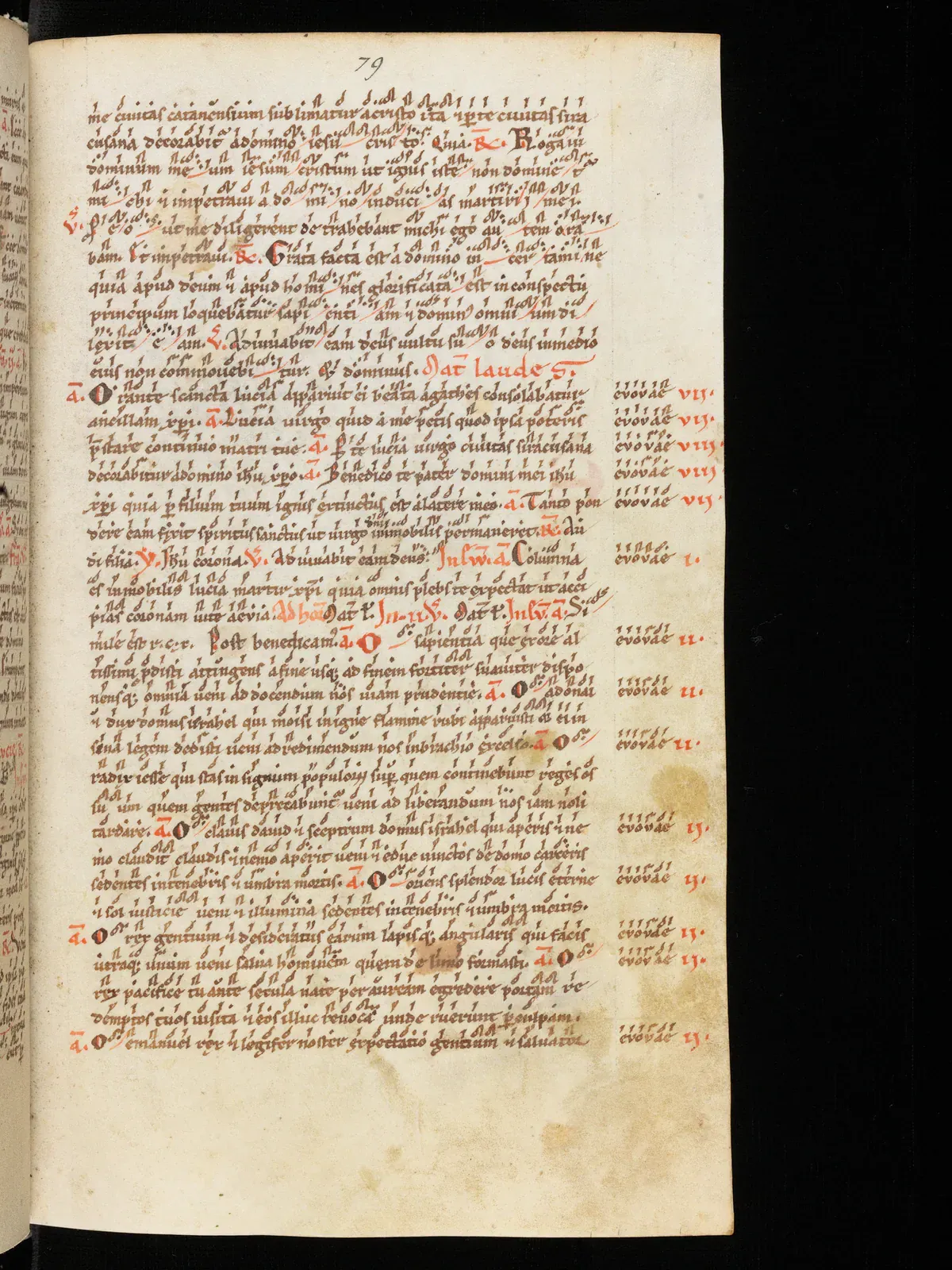
Medieval music began in church. By about 800, Carolingian rulers were pushing one Roman-style chant repertory across the Frankish realm, and that body of song became the base of Gregorian chant. Legend credits Pope Gregory with the melodies, but the surviving chant grew in Frankish lands.
Chant was a single line sung without instruments, in modes rather than major and minor keys. It lived in the Divine Office, the cycle of daily services that monks sang in the monastery.
Chant and early notation
Around 900, neume signs began to survive in Carolingian manuscripts, so a page could remind a singer of a tune. Neumes showed shape but not exact pitch, so teaching a new melody still needed a living teacher. Guido of Arezzo answered this in the Micrologus around 1026, teaching sight-singing with lines and letters, a step toward the modern staff.
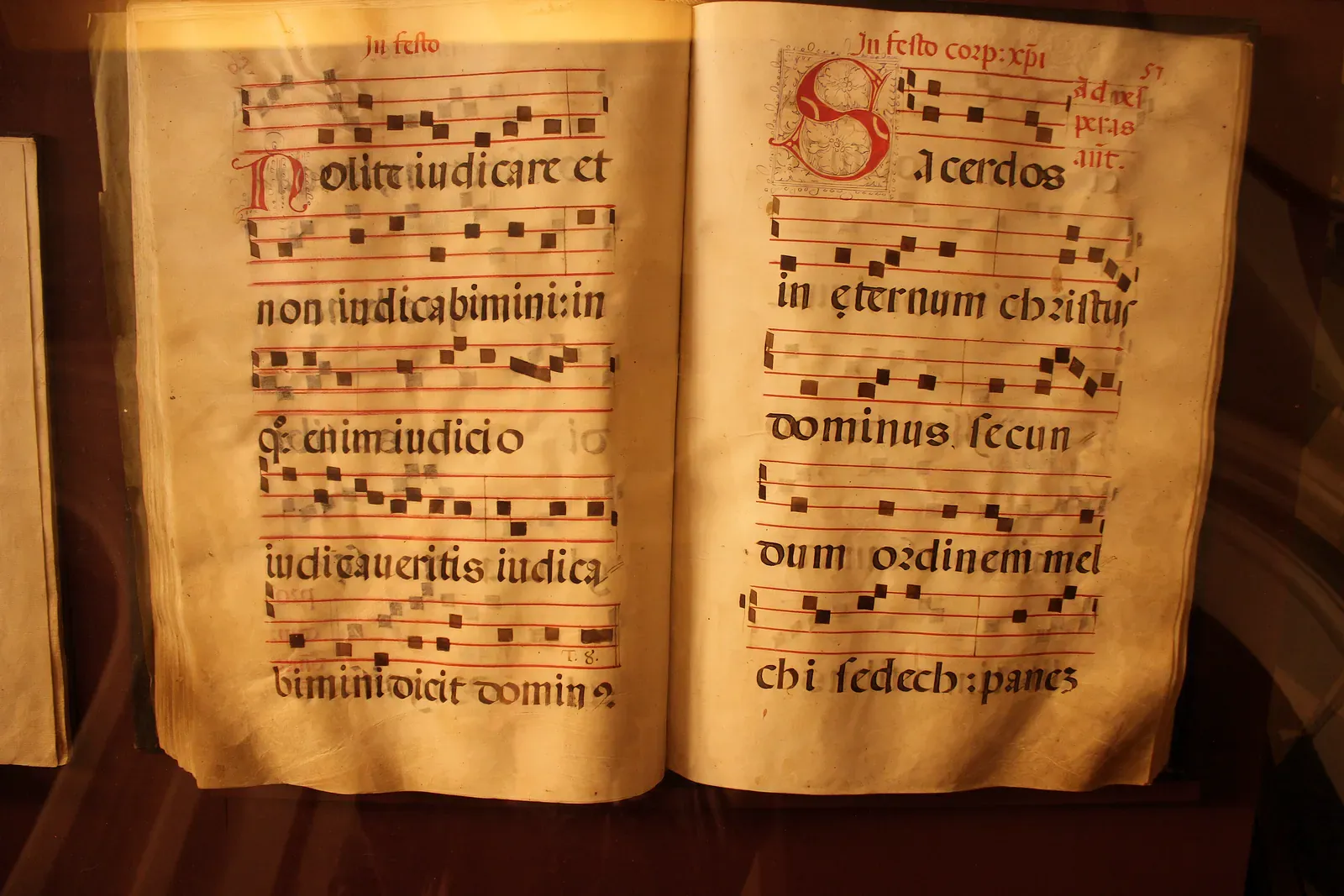
The same centuries brought the first harmony. Around the ninth century, singers began adding a second voice running in parallel to the chant, a practice called organum.
Courtly song and early organum, c. 1100-1150
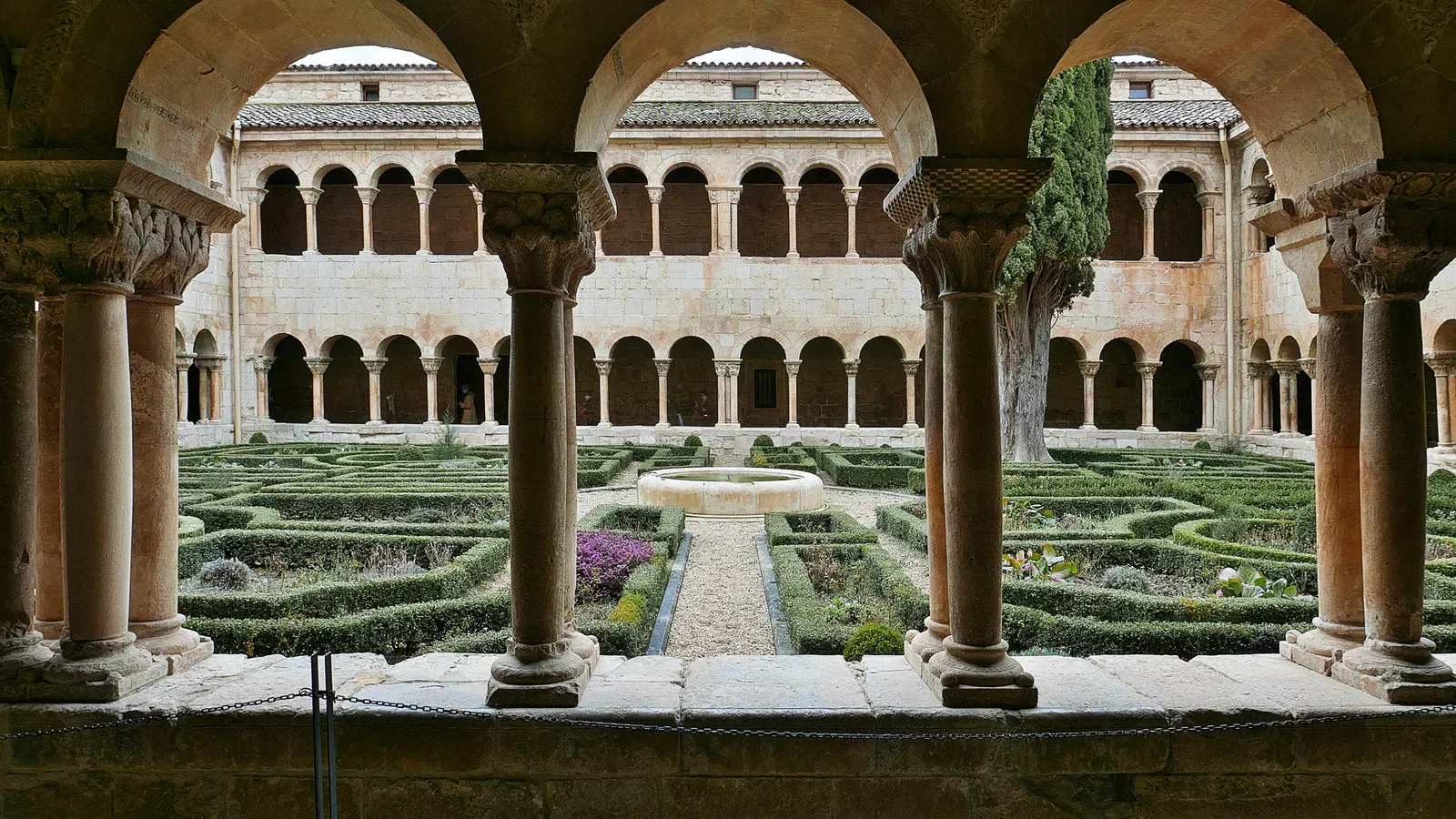
Around 1100 the music split in two directions. In the south of France, William IX of Aquitaine and the first troubadours began writing songs about love in the Occitan language, music made for a court rather than a choir. At the same time, monasteries such as Compostela and St Martial developed organum, chant with added voices.
Pilgrimage tied these worlds together. The road to Santiago de Compostela carried singers and songs across Europe, and the Codex Calixtinus holds Congaudeant catholici, described as the first known piece for three voices. In Germany, Hildegard of Bingen compiled her Symphonia around 1150, a cycle of her own chants for the nuns of her convent on the Rhine.
Notre-Dame and ars antiqua, c. 1160-1300
Paris became the centre of musical writing when work on Notre-Dame began in 1163. Leonin is credited with the Magnus liber organi, the great book of two-voice organum for the cathedral’s liturgy, and Perotin, who followed him, wrote Viderunt omnes around 1198, a Christmas piece in four voices and one of the earliest surviving works in four parts.
The Notre-Dame singers tied their rhythm to patterns called rhythmic modes. They wrote the conductus, a Latin song often newly composed, and the early motet, in which upper voices sing different texts over a chant tenor.

Rhythm needed its own symbols. Around 1280 Franco of Cologne assigned note shapes fixed durations, and the Franconian system let a composer write down exactly how long each note lasted. That unlocked the long, intricate motets of the next century.
The thirteenth century also left songbooks for ordinary people. The Dies irae, the Requiem sequence, appears in a Franciscan missal from Naples dated between 1253 and 1255. In Spain, Alfonso X’s court compiled hundreds of Marian songs in the Cantigas de Santa Maria, in Galician-Portuguese with notation, and an English six-part canon, Sumer is icumen in, was copied into a British Library manuscript around 1261.
Ars nova and the Trecento, c. 1320-1400
The fourteenth century is named for a new way of writing rhythm. The ars nova notation of the Vitry era, around 1320, divided time in twos and threes and allowed complex rhythm, and composers used it for isorhythm, in which a repeating rhythm pattern runs over a repeating pitch pattern of a different length.
Guillaume de Machaut was its master. Working as a canon at Reims from 1337, he wrote the Messe de Nostre Dame around 1365, a complete four-voice mass by one named composer, and he cultivated the formes fixes, songs built on set patterns of refrain. In Italy, Florence had its own school. Francesco Landini, a blind organist who died in 1397, wrote ballate, refrain dance-songs, that fill much of the Squarcialupi Codex.
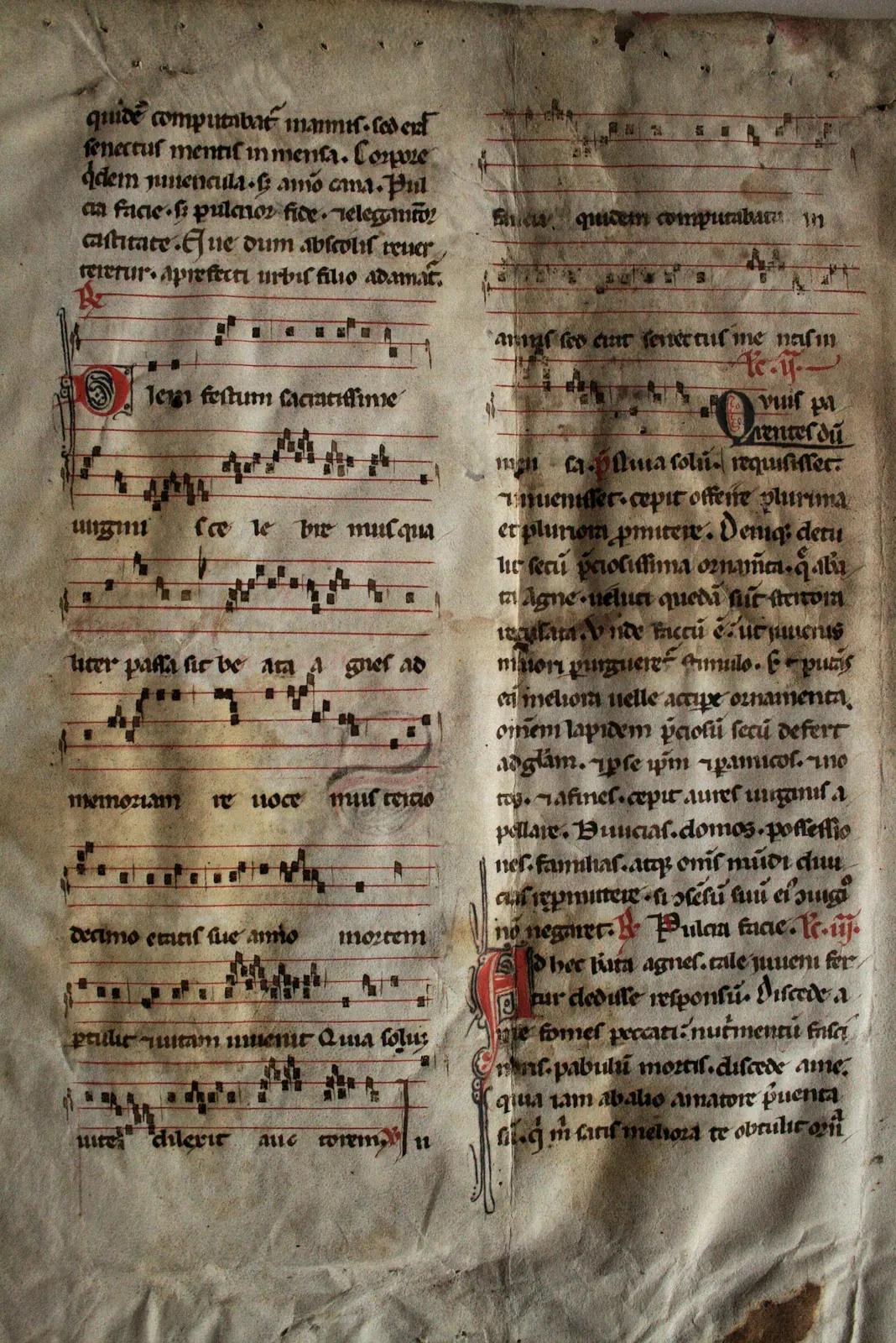
The century ended with pilgrim music in Catalonia. Around 1399, the abbey of Montserrat compiled the Llibre Vermell, a manuscript of songs and dances for pilgrims who sang and danced through night vigils.
Revival and instruments
Medieval music went quiet for centuries, then came back in concert halls. René Clemencic’s Vienna ensemble formed in 1968, and in 1974 two long-lived groups started in the same year, the Hilliard Ensemble in London and Hespèrion XX in Barcelona. These players had to guess at what manuscripts leave out, such as tempo and which instruments joined the singers.
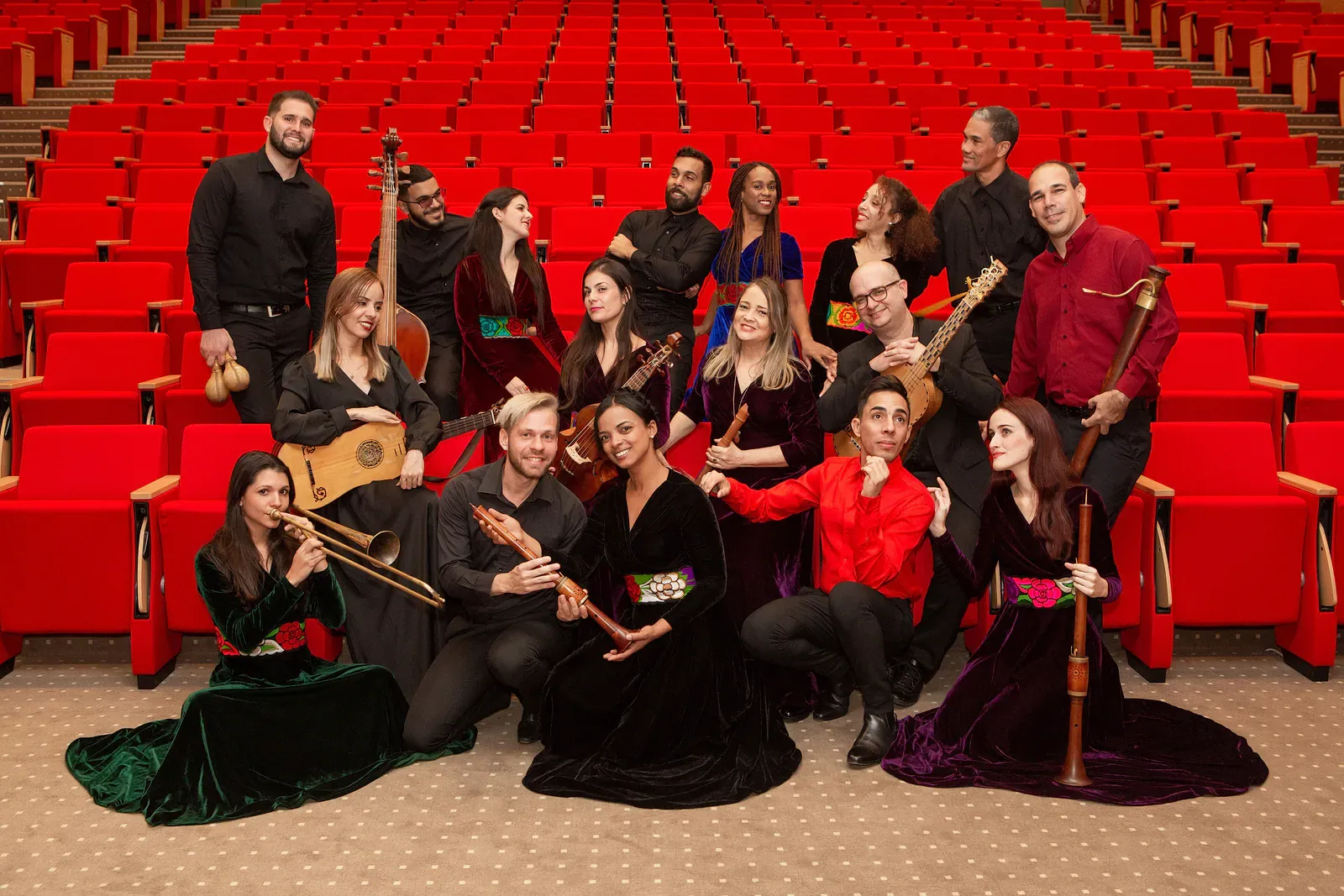
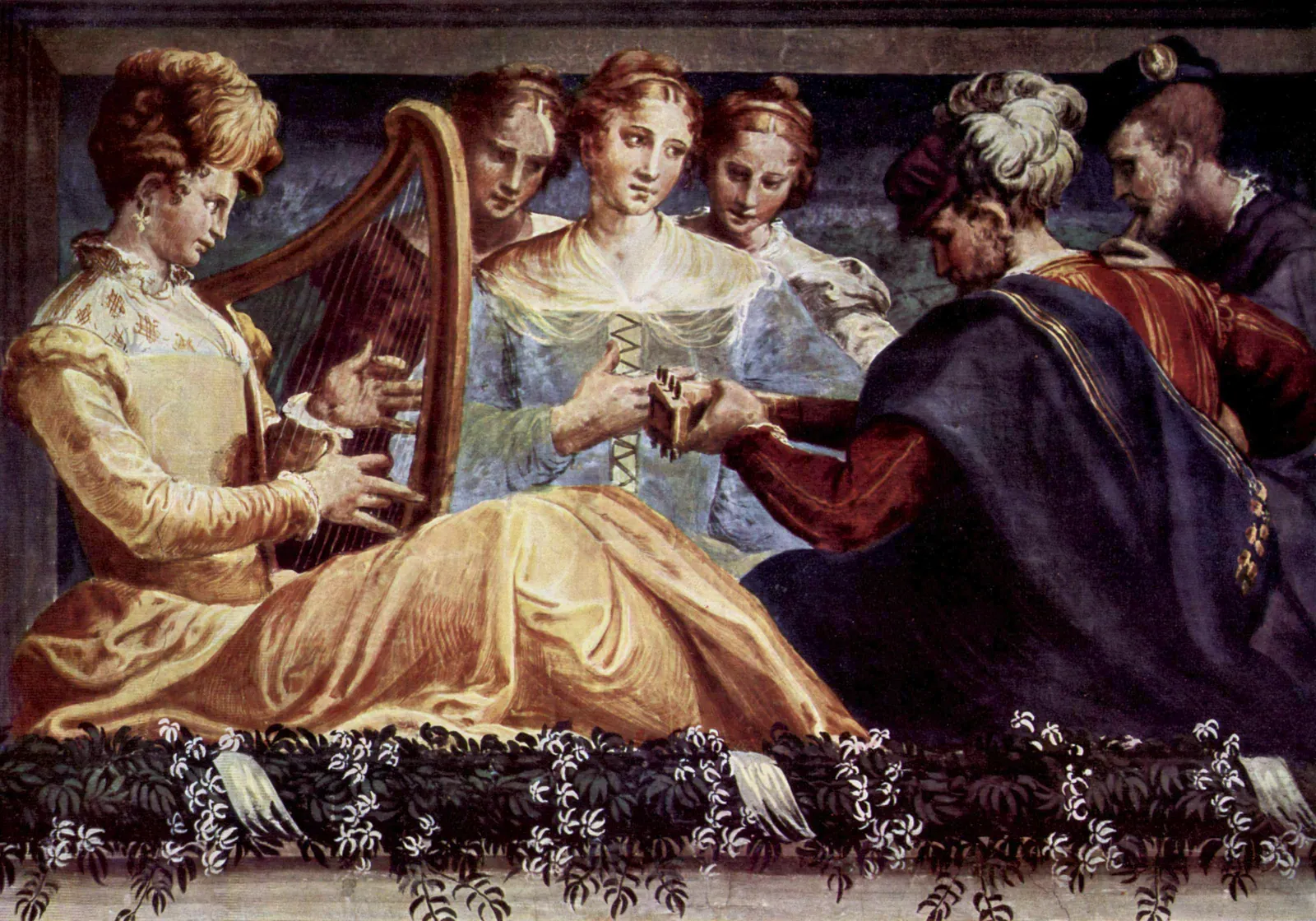
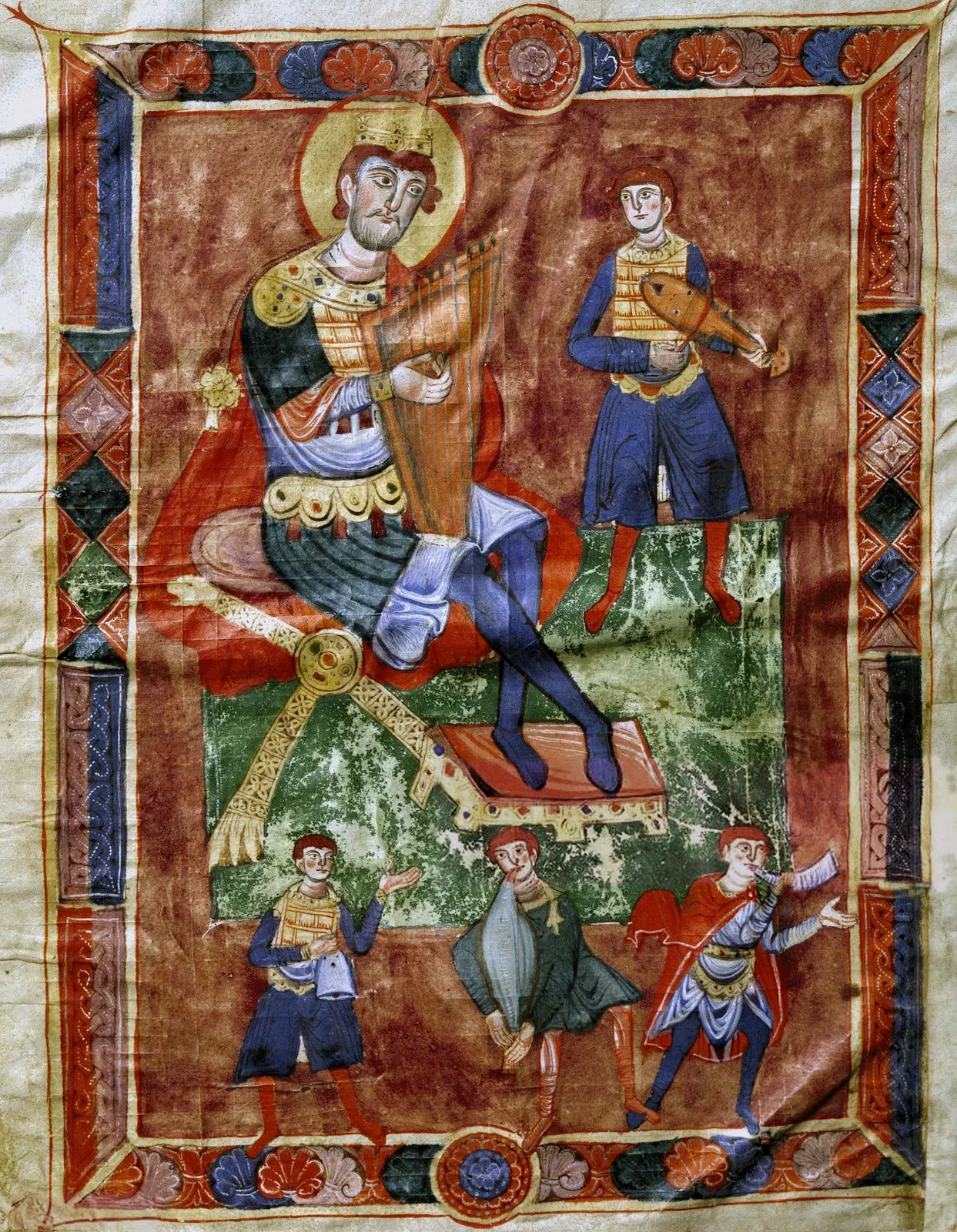
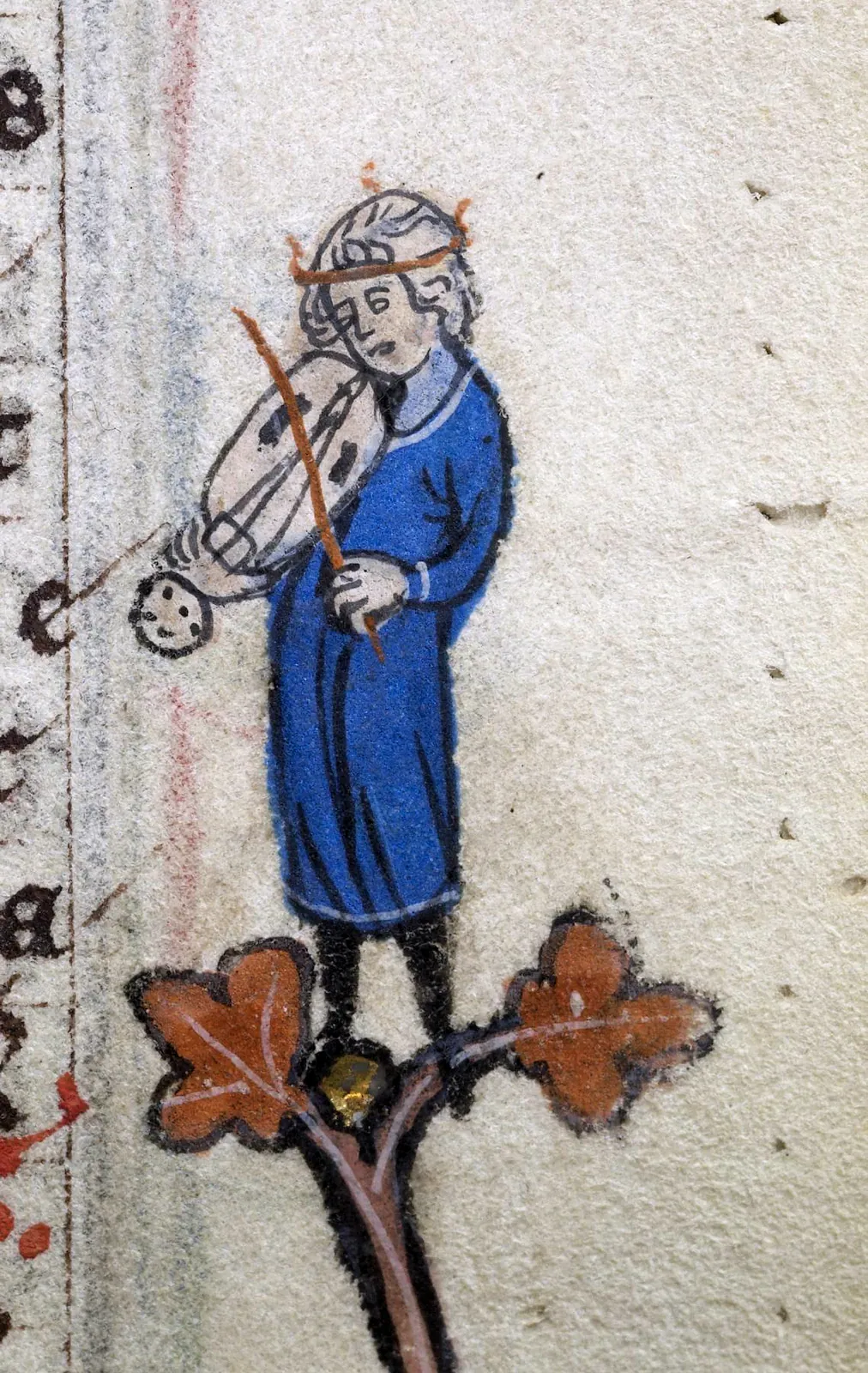
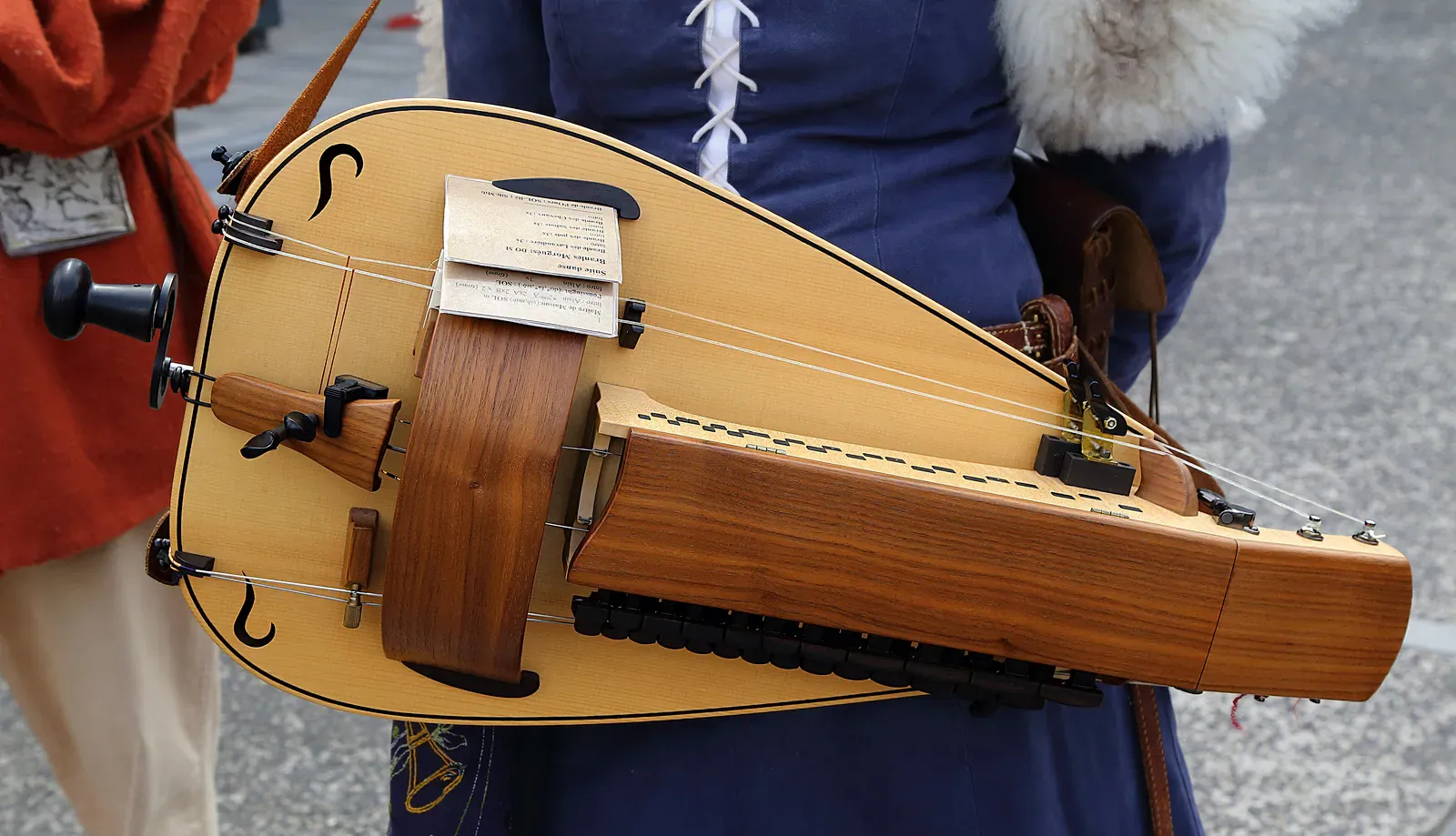
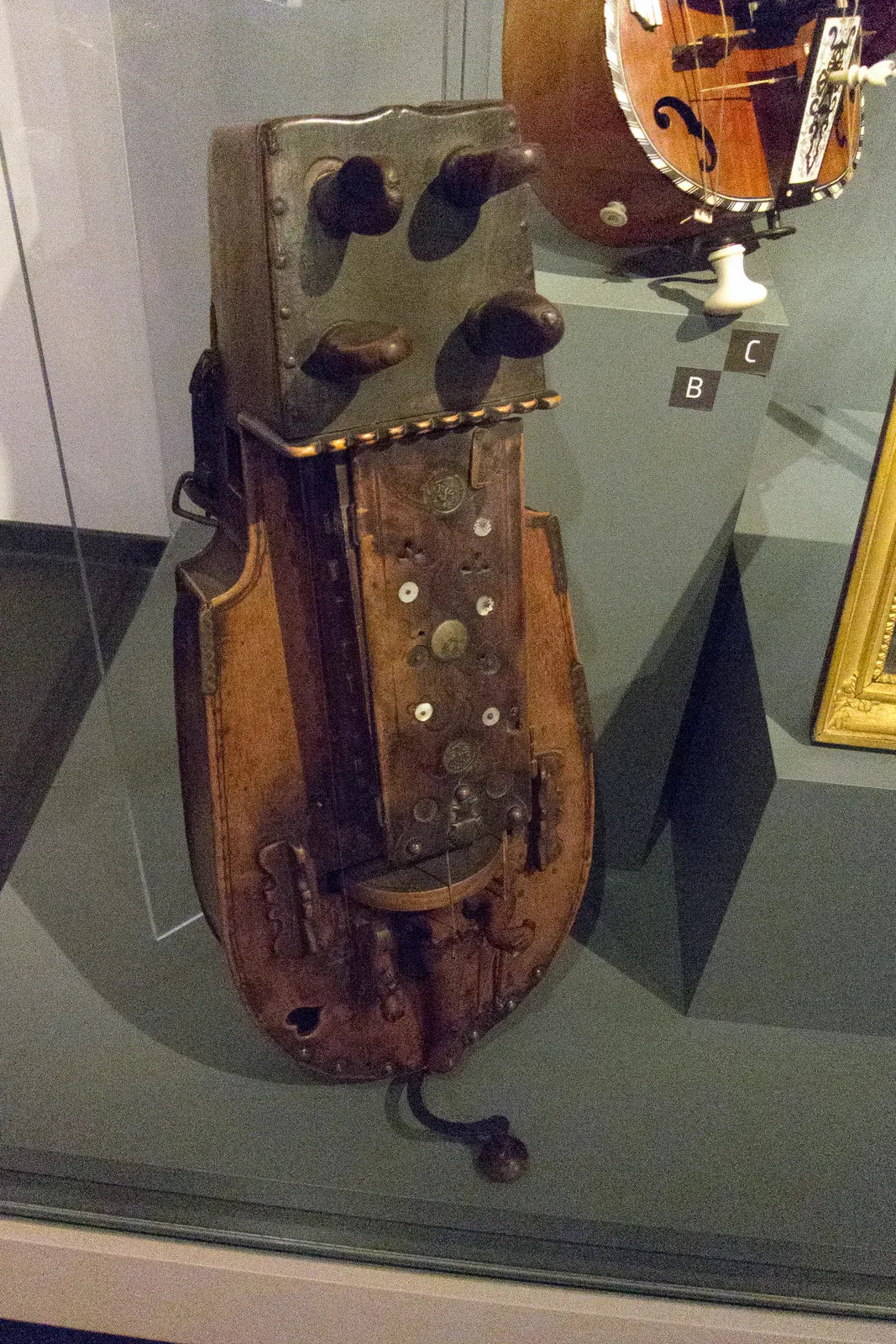
Instruments are part of the guesswork: the vielle, rebec, psaltery, medieval harp, portative organ, shawm and hurdy-gurdy are known mostly from pictures, and players rebuild them from those images.
Mainstream success
Medieval music reached a mass audience through records and film. In 1982, Gothic Voices released A Feather on the Breath of God for Hyperion, with Emma Kirkby singing Hildegard’s chants, and it became a landmark best-seller of early music. Sequentia released Symphoniae, its Hildegard collection, in 1985 on Harmonia Mundi, and in 1989 the Hilliard Ensemble released Perotin, recorded at Boxgrove Priory, on ECM.
Film and chant did the rest. Alain Corneau’s 1991 film Tous les matins du monde had a soundtrack of Jordi Savall’s viol playing that won him a César. In 1994, a compilation titled Chant by the Benedictine monks of Santo Domingo de Silos, released on Angel Records, part of EMI Classics, became the best-selling Gregorian chant album ever, and the same year the Hilliard Ensemble and saxophonist Jan Garbarek released Officium, one of ECM’s biggest sellers. Anonymous 4, an American female quartet, crossed over with An English Ladymass in 1992.
The Hilliard Ensemble disbanded in 2014 after four decades, and in 2020 online medieval-style covers of pop songs, called bardcore, reached a mass audience.
Notable recordings and pieces
Viderunt omnes, for Christmas at Notre-Dame, is Perotin’s four-voice organum. The Hilliard Ensemble recorded it at Boxgrove Priory in Sussex, and that disc opens with this piece.
Sumer is icumen in is the opposite: an English canon in which singers enter one after another on the same tune. It is among the best-known medieval pieces and shows that the repertory was not all solemn.
Mariam matrem virginem attolite comes from the Llibre Vermell. It is a pilgrim virelai, a dance-like song, made for late-night vigils at Montserrat, and Savall has recorded it.
Culture
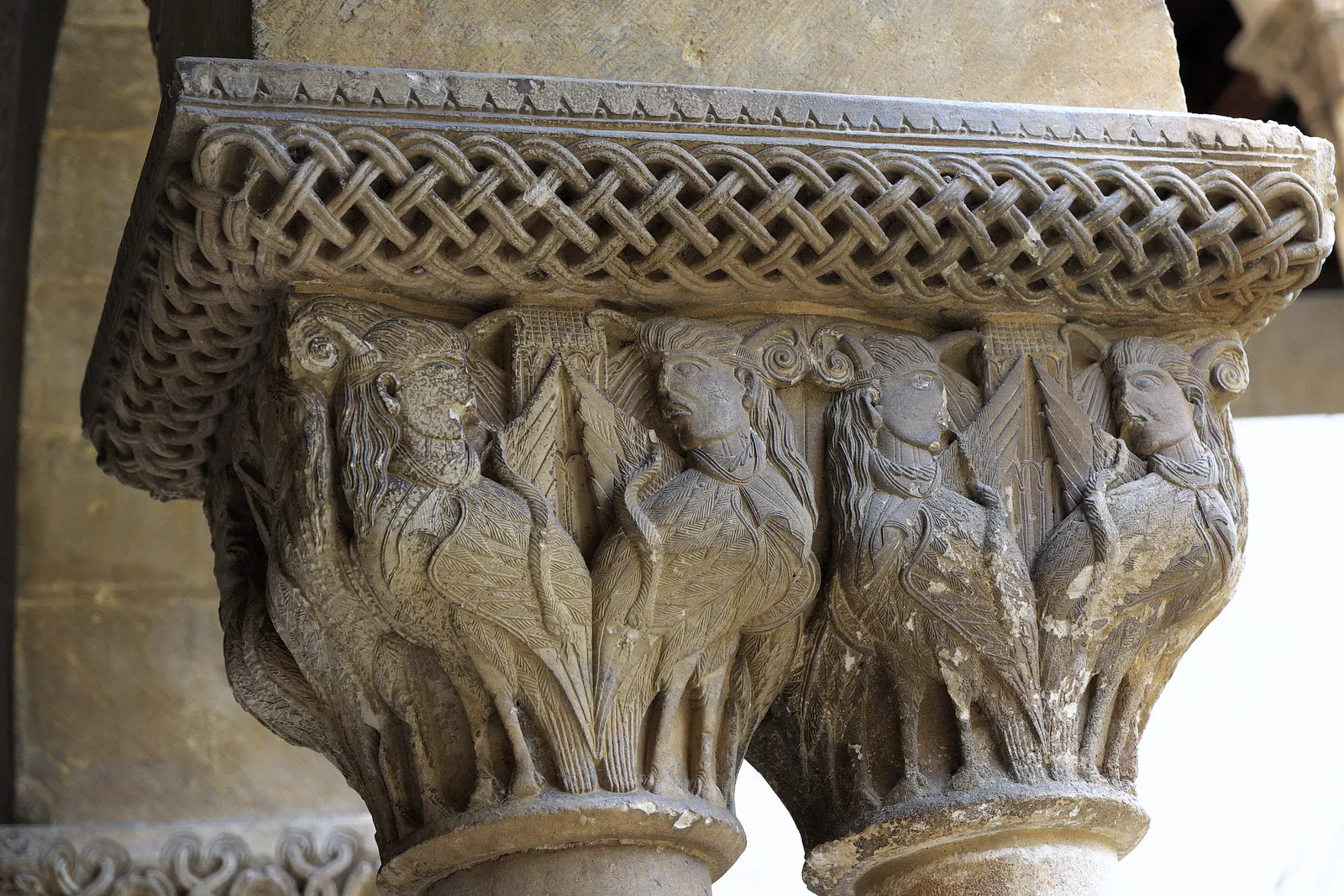
The culture was liturgical first. The Divine Office was the living home of chant, and the Requiem Mass kept the Dies irae sung at funerals for centuries. Songbooks were also works of art: manuscripts such as the Cantigas codices pair melodies with miniature paintings, which is why many images of medieval instruments come from illuminations.
Misconceptions
Three misconceptions are common.
- Chant was all it was. Chant dominated the church, but the troubadours wrote courtly songs in Occitan from about 1100, Alfonso X’s court compiled the Cantigas, and Landini’s ballate were dance-songs.
- It was written crudely, without rhythm. Notation moved from neumes in about 900 to Guido’s staff in 1026, Franconian durations in 1280 and ars nova divisions in 1320.
- Gregory wrote the chant. The melodies grew from the Frankish adoption of a Roman-style repertory around 800, not from one pope.
Frequently asked questions
What is medieval music?
Medieval music is the art music of Western Europe between about 500 and 1400, covering liturgical chant, the first polyphony and secular courtly song. It is usually divided into chant, early organum, the Notre-Dame school, ars nova and the Italian Trecento.
What instruments were used in medieval music?
Medieval music used the vielle, rebec, psaltery, medieval harp, hurdy-gurdy, shawm and portative organ. Much sacred music, including chant, was sung unaccompanied, while instruments mostly played for dances, courts and outdoor festivals.
Who were the most important medieval composers?
Hildegard of Bingen, Leonin, Perotin, Guillaume de Machaut and Francesco Landini are the best-known names of medieval music. Hildegard wrote chant, Leonin and Perotin polyphony at Notre-Dame, Machaut a complete four-voice mass, and Landini Florentine ballate.
Which recordings introduce medieval music?
Well-known entry points are Sumer is icumen in, the chant of the Silos monks, and Gothic Voices’ Hildegard album. Perotin’s Viderunt omnes and Machaut’s Messe de Nostre Dame show the polyphony of Paris and Reims.
Sound
Sound sheet
Anatomy of a track
| # | Part | Bars |
|---|---|---|
| 1 | Intonation by the cantor | 1 |
| 2 | Chant melody (tenor line) | 16 |
| 3 | Added voice or voices (organum) | 16 |
| 4 | Closing cadence | 2 |
Signature sounds
- Modal melody without a fixed key
- Open fifths and octaves in early organum
- Rhythmic modes in Notre-Dame polyphony
- Isorhythm and hocket in Ars nova
- Drone or bordone under dance tunes
- Landini cadence in Trecento ballate
Techniques
- Organum
- Isorhythm
- Hocket
- Drone
- Rhythmic modes
- Musica ficta
Keys and modes
Dorian mode. Church mode on D, common in chant and troubadour song.
Phrygian mode. Church mode on E with a falling half step above the final.
Lydian mode. Church mode on F, often softened with a flat B.
Mixolydian mode. Church mode on G, frequent in chant and dance tunes.
Tuning
Pythagorean tuning built on pure fifths, with no fixed pitch standard
Vocals
Unaccompanied unison chant in monasteries, solo vernacular song at court, and two to four sung voices in polyphony
Scenes
Where it happened
Where and when the sound lived: one bar per city on a shared timeline.
Europe
Active scenes
Peak 3, 1163-1179
Notre-Dame school of Leonin and Perotin, birthplace of measured polyphony.
Pilgrim city whose Codex Calixtinus holds early three-voice music.
Hildegard's convent on the Rhine, source of her chant cycle.
Machaut served as canon at the cathedral for much of his career.
Home of Landini and the Squarcialupi Codex of Trecento music.
Pilgrim abbey that holds the Llibre Vermell songs and dances.
Benedictine abbey whose monks recorded the chant that sold millions in 1994.
Venues and places
Paris, 1163 to today. Cathedral where Leonin and Perotin worked.
Santo Domingo de Silos, 1972 to today. Spanish monastery where the Chant material was recorded in 1972-1982.
Boxgrove, 1988 to today. Sussex priory where the Hilliard Ensemble recorded Perotin in 1988.
Montserrat, 1399 to today. Catalan abbey that keeps the Llibre Vermell manuscript.
London, 1901 to today. Hosted the Hilliard Ensemble's farewell concert in 2014.
Culture
Culture markers
- The Divine Office
Monastic singing of the daily hours was the living home of chant.
Ritual - Requiem Mass
The Dies irae sequence was sung at funerals for centuries.
Ritual - Pilgrim dances
The Llibre Vermell was compiled so pilgrims could sing and dance at night vigils.
Dance - Illuminated songbooks
Manuscripts such as the Cantigas codices pair melodies with miniature paintings.
Artwork - Pilgrimage to Compostela
The route to Santiago shaped travelling repertory like the Codex Calixtinus.
Ritual
Media
Key media
- 1940Music in the Middle Ages
by Gustave Reese. Standard English-language survey of medieval music for decades.
Book - 1978Medieval Music
by Richard Hoppin. Widely used textbook with an anthology of scores.
Book - 1991Tous les matins du monde
by Alain Corneau. Film with Jordi Savall's viol music on the soundtrack; Savall won the Cesar for best music.
Film - 1994Chant
by Benedictine Monks of Santo Domingo de Silos. Compilation of the abbey's chant recordings that became the best-selling Gregorian chant album.
Compilation - 2009Vision: From the Life of Hildegard von Bingen
by Margarethe von Trotta. Feature film on Hildegard of Bingen that renewed interest in her music.
Film
Glossary
Terms on this page
Italian dance-song form with a refrain, central in Landini's output.
A Latin song for one to four voices, usually newly composed rather than built on chant.
Note-against-note, rhythmic counterpoint over a chant tenor, as in Notre-Dame polyphony.
A repeating rhythm pattern laid over a repeating pitch pattern of a different length.
One of the scale patterns that organised medieval melody, ancestor of major and minor.
A polyphonic piece in which upper voices carry different texts over a chant-based tenor.
A chant notation sign showing a melodic gesture, the ancestor of the note.
Early polyphony in which one or more voices are added to a chant line.
Classical family