Renaissance music
Renaissance music is European art music of about 1400 to 1600, defined by imitative vocal polyphony, printed part-books and rising instrumental music.
Europe, 1400
Classical family
Born
1400
Europe
Subgenres
26
Documented branches
Links
7
Genres it drew on or shaped
Tempo
55-125 BPMLineage
Family tree
Grew out of
Derived from
Pushed back against
Europe, 1400
Renaissance music
Led to (27)
Timeline
Era by era
From the first sparks to today. Select a dot to read the story behind it.
- Burgundian and English beginnings
1400 to 1470
- Franco-Flemish peak
1470 to 1520
- Reformation and Counter-Reformation
1520 to 1570
- Madrigal and late flowering
1570 to 1610
- Early music revival
1960 to today
Eras
Moments
- 1 Burgundian and English beginnings, 1400 to 1470
- 2 Franco-Flemish peak, 1470 to 1520
- 3 Reformation and Counter-Reformation, 1520 to 1570
- 4 Madrigal and late flowering, 1570 to 1610
- 5 Early music revival, 1960 to today
around 1400
Burgundian and English beginnings
Dufay, Binchois and Dunstable blend English sweetness with continental craft; thirds and sixths sweeten harmony and the cyclic mass takes shape.
- 1436Dufay's Nuper rosarum flores sung at Florence cathedralIsorhythmic motet for the dedication of the Duomo, often linked to Brunelleschi's dome proportions.
- 1455Printing press arrives in EuropeGutenberg's movable type sets up the technology that later carries printed part-books.
around 1470
Franco-Flemish peak
Ockeghem and Josquin spread imitative polyphony across Europe; Petrucci prints music from 1501 and singers travel between Rome, Milan and Ferrara.
- 1477Tinctoris writes his counterpoint treatiseNaples-based theorist codifies dissonance treatment between the generations of Dufay and Josquin.
- 1483Sistine Chapel consecratedThe papal choir sings there, drawing the best Franco-Flemish singers to Rome; Josquin sang in it from 1489.
- 1485Josquin's Ave Maria... virgo serenaFour-voice motet that opens each phrase with paired imitation; dated about 1485.
- 1501Petrucci prints the OdhecatonVenice printer issues the first collection of polyphonic music printed from movable type.
- 1502Petrucci prints a book of Josquin massesFirst printed volume devoted to one composer; it made Josquin the best-known musician in Europe.
around 1520
Reformation and Counter-Reformation
Luther's chorales, Willaert's Venice and the Council of Trent reshape sacred music while Palestrina and Lassus refine clear, balanced polyphony.
- 1524Wittenberg chorale book appearsJohann Walter's hymnbook gives the Lutheran church polyphonic settings of vernacular chorales.
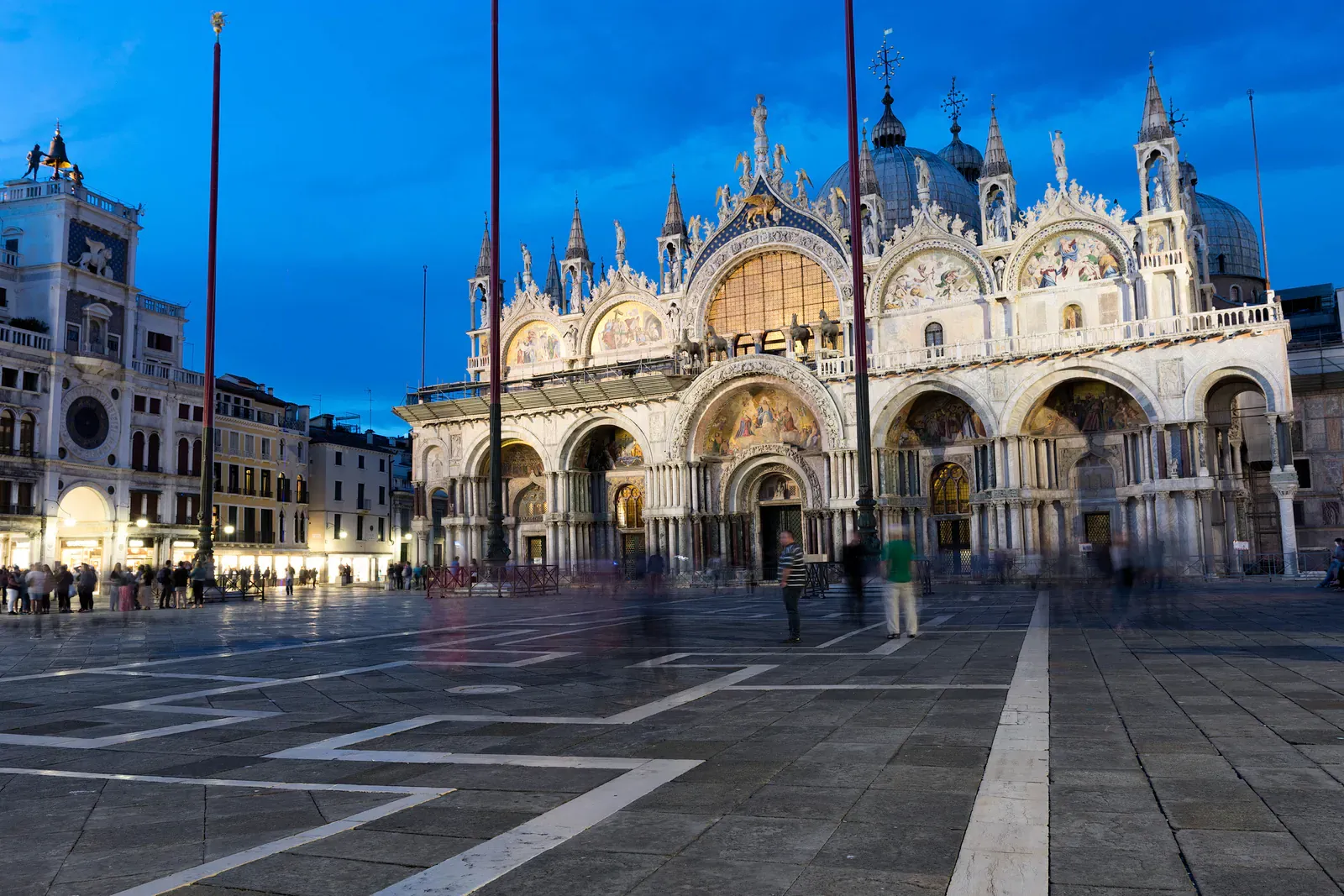
- 1527Willaert becomes maestro di cappella at St Mark'sHe pioneers divided-choir singing in Venice and trains the next generation of Venetian composers.
- 1528Attaingnant prints music in one passParis printer prints staves and notes together, making cheap chanson books possible.
- 1545Council of Trent opensDelegates debate whether complex polyphony hides the sacred text; Palestrina's later clarity becomes the model.
- 1551Susato publishes the DanseryeAntwerp printer-composer issues a famous book of Renaissance dance tunes.
- 1567Palestrina's Missa Papae Marcelli printedSix-voice mass often taken as the ideal of clear Counter-Reformation polyphony.
around 1570
Madrigal and late flowering
Italian madrigals and English ayres reach their height with Byrd, Victoria, Gabrieli and Gesualdo, as the Florentine experiments point toward opera.
- 1570Tallis writes Spem in aliumForty-part motet for eight five-voice choirs, probably first heard in a large English hall.
- 1575Elizabeth I grants Tallis and Byrd a music printing monopolyThe pair open their patent with the joint Cantiones sacrae.
- 1588Musica transalpina published in LondonNicholas Yonge's anthology of Italian madrigals with English words ignites the English madrigal craze.
- 1597Gabrieli's Sacrae symphoniae printedVenetian collection that includes the Sonata pian' e forte for two brass choirs.
- 1600Peri's Euridice performed in FlorenceOne of the earliest operas; solo song over a bass pushes polyphony out of the centre.
- 1600Dowland's Second Booke of Songs or AyresLute song collection that includes Flow my tears.
- 1605Monteverdi's Fifth Book of madrigalsCruda Amarilli sparked the Artusi row over dissonance and Monteverdi's "second practice".
- 1611Gesualdo publishes madrigals Books 5 and 6Chromatic, jagged settings, including Moro, lasso, al mio duolo.
around 1960
Early music revival
Munrow, the Tallis Scholars and the Hilliard Ensemble revive the repertory; Officium and Sting's Dowland album reach pop audiences.
- 1967Early Music Consort of London foundedMunrow and Hogwood popularise period instruments and Renaissance dance on record.
- 1973The Tallis Scholars foundedPeter Phillips forms the Oxford group that makes a cappella Renaissance polyphony a recording staple.
- 1980Gimell label foundedPhillips and Steve Smith start Gimell to record the Tallis Scholars.
- 1994Officium releasedHilliard Ensemble and Jan Garbarek sell well over a million copies on ECM.
Listening path
Anthems
The records that built the sound, grouped by the part they played. Thumbnails come from YouTube; the player loads only when you press play.
- 01
Cantica Symphonia, 1436
Dufay's Florence Duomo motet is where the Renaissance sound begins: smooth, consonant, built on exact proportions.
Origin - 02
The Tallis Scholars, 1485 · Gimell
Josquin's motet fixed the imitative style that defined Renaissance polyphony, one phrase at a time.
Start hereOrigin - 03
Jan Garbarek, 1994 · ECM Records
Morales's sixteenth-century responsory met a jazz saxophone on Officium, a release of more than 1.5 million copies.
Breakthrough - 04
New London Consort, 1551
Printed in Antwerp in 1551, these dance tunes show the instrumental side of the age.
Anthem - 05
The Sixteen, 1567
Palestrina's six-voice mass became the textbook of clear polyphony in the Counter-Reformation.
Anthem - 06
The Sixteen, 1570
Tallis's forty-voice motet defined the English late Renaissance scale and still stuns in performance.
Anthem - 07
Westminster Cathedral Choir, 1572 · Hyperion
Victoria's Christmas motet is among the most sung pieces of Spanish Renaissance music.
Start hereAnthem - 08
London Brass, 1597
Gabrieli's Venetian brass sonata, famous for its contrast of soft and loud choirs.
Anthem - 09
Thomas Dunford, 1600
Dowland's lute song became the most recognised sound of the English ayre.
Start hereAnthem - 10
Claudio Monteverdi, 1605
Monteverdi's madrigal triggered a famous dissonance dispute and a new expressive approach.
Anthem - 11
The Tallis Scholars, 1605 · Gimell
Byrd's short Eucharistic motet, written for secret Catholic worship, is a choral staple.
Anthem - 12
Concerto Italiano, 1611
Gesualdo's madrigal stretches chromatic harmony to a limit that was not heard again for centuries.
Anthem - 13
Sting, 2006 · Deutsche Grammophon
A rock singer sings Dowland with lute, taking Elizabethan song to pop charts in 2006.
Crossover
Facts
| Family | Classical |
| Origin | Europe |
| Emerged | C. 1400-1600 |
| Status | Revival |
| Tempo | 55 to 125 BPM |
| Meter | 2/2 (alla breve) |
| Grew out of | Medieval music |
| Subgenres | 24 |
Renaissance music is the Western art music of roughly 1400 to 1600, written for church, court and town across Europe.
It is defined by imitative polyphony, in which several equal voices take up the same melodic phrase in turn, by modal harmony that grows sweeter and more consonant, and by the arrival of printed music. The period belongs to the classical family, follows medieval music and gives way to Baroque music around 1600.
Origins
The style began in the early fifteenth century where two traditions met. English composers such as John Dunstable favoured full, sweet thirds and sixths, a manner the continent called the contenance angloise. The courts of Burgundy, which employed the best singers of the Low Countries, absorbed it and added continental craft in counterpoint. The result was smoother and more consonant than the angular medieval motet.
Guillaume Dufay is the figure most often placed at this turning point. His motet Nuper rosarum flores was sung at the consecration of Florence cathedral in 1436 and is built on strict numerical proportions. Singers moved between courts, which is how a Netherlandish idiom spread across Italy, France and Spain.
Burgundian and English beginnings, 1400-1470
Dufay and Gilles Binchois led the Burgundian generation, writing masses, motets and courtly songs. The cyclic mass, in which one melody ties together every section, took its standard shape in these decades. Harmony stays modal, built on the church modes, though singers added unwritten accidentals to shape cadences.
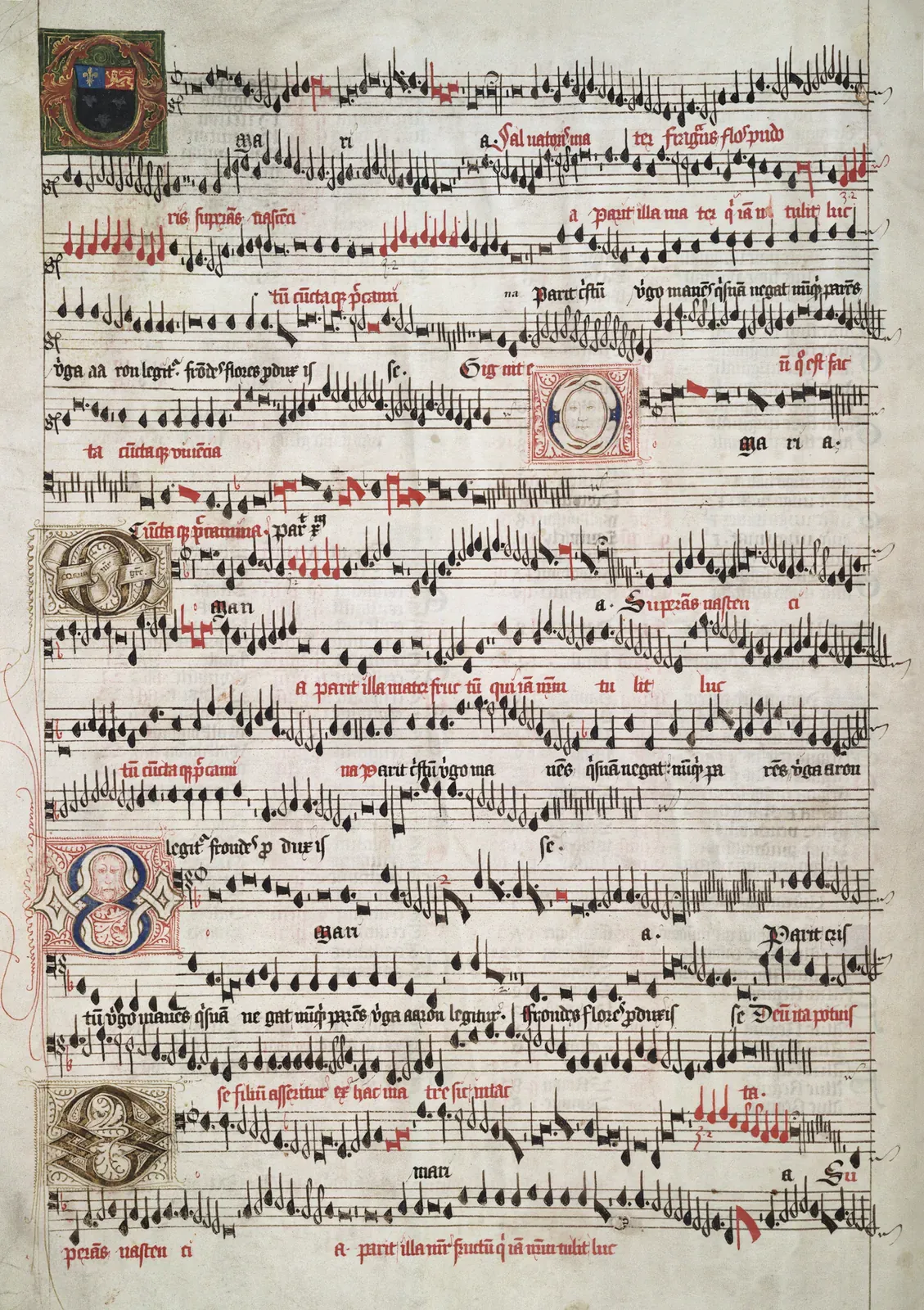
Choirs sang from huge illuminated manuscripts on a lectern, so that the whole choir read from one book.
Franco-Flemish peak, 1470-1520
Johannes Ockeghem and Josquin des Prez carried imitative polyphony to its first full flowering. Josquin worked in Milan, Rome and Ferrara, sang in the papal choir from 1489 and was hired by the Este court in 1503. His motet Ave Maria… virgo serena, dated about 1485, opens each phrase with paired imitation, so that the text is declaimed line by line.
In 1501 the Venetian printer Ottaviano Petrucci published the Harmonice Musices Odhecaton, the first collection of polyphonic music printed from movable type, with 96 pieces. It fixed a Franco-Flemish song repertory in print and carried it to buyers who had never heard the singers.
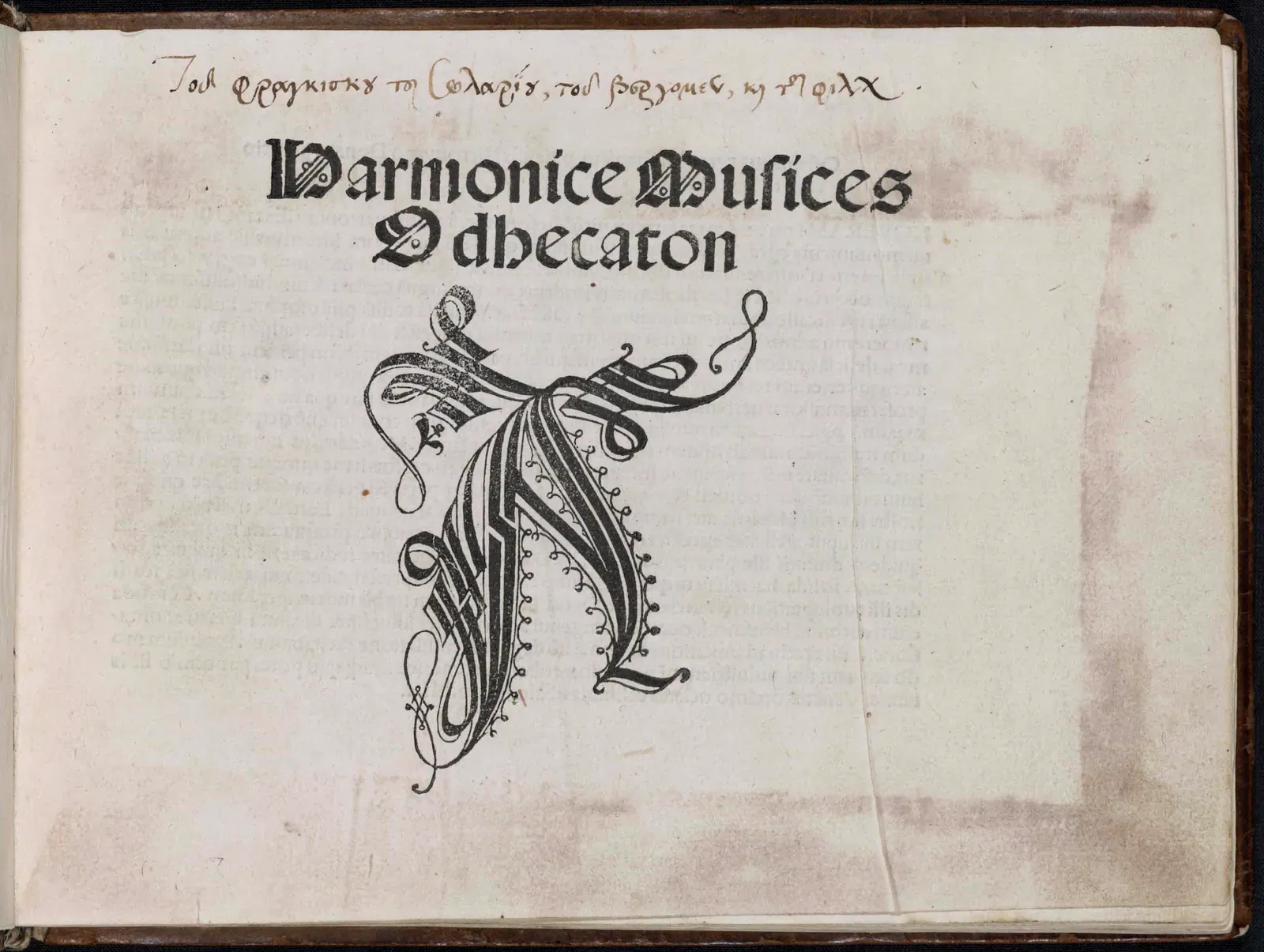
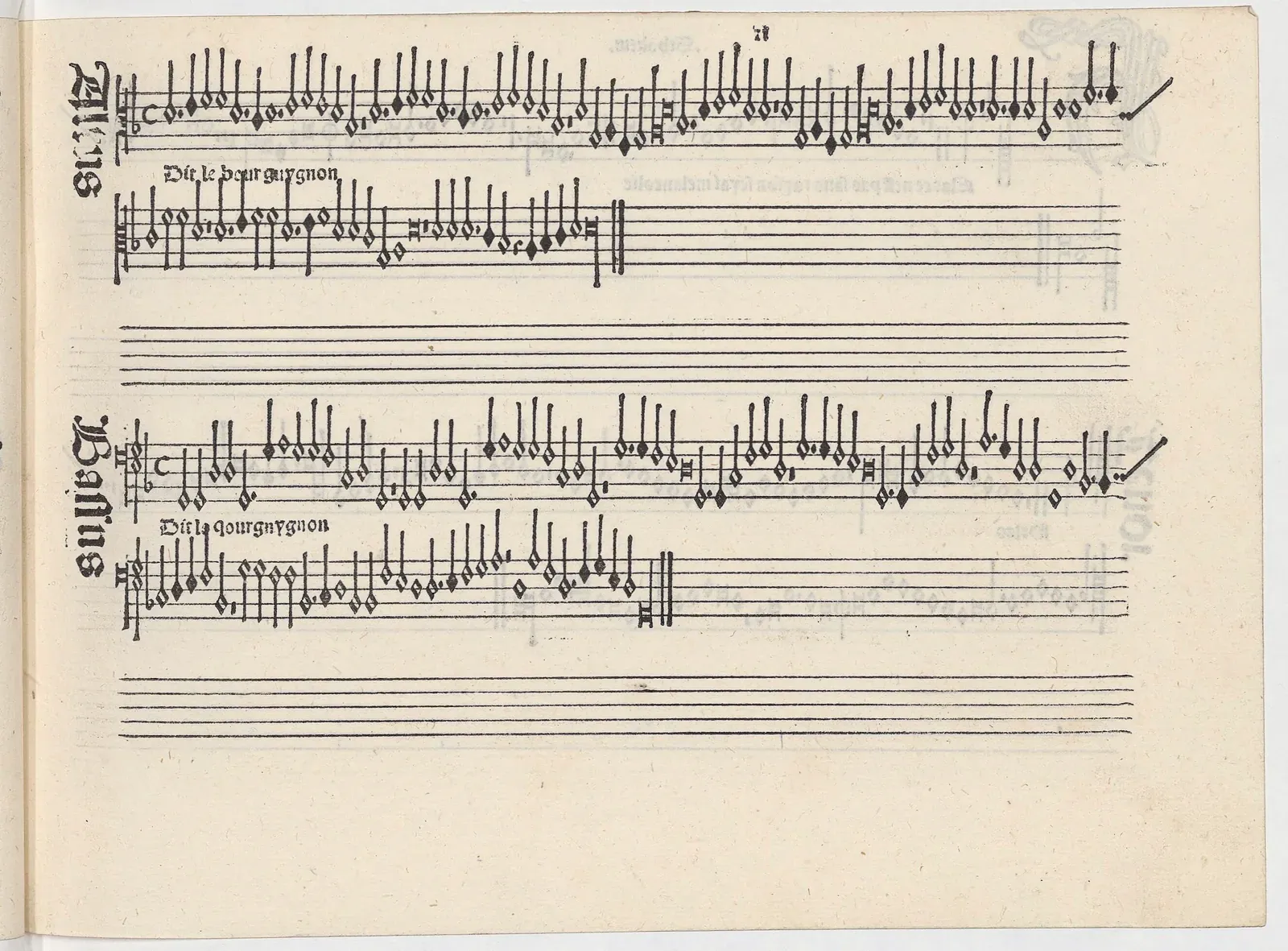
Petrucci followed in 1502 with a book devoted to Josquin’s masses, the first printed volume given to one composer. In 1528 the Paris printer Pierre Attaingnant began to print staves and notes in a single pass, which made cheap chanson books possible.
Reformation and Counter-Reformation, 1520-1570
Religious conflict reshaped sacred music. In 1524 Johann Walter’s Wittenberg hymnbook gave the Lutheran church polyphonic settings of chorales in German. In the Catholic church, the Council of Trent opened in 1545 and discussed whether elaborate polyphony hid the sacred words. Giovanni Pierluigi da Palestrina’s Missa Papae Marcelli, printed in 1567, became the model of clear, balanced writing in six voices.
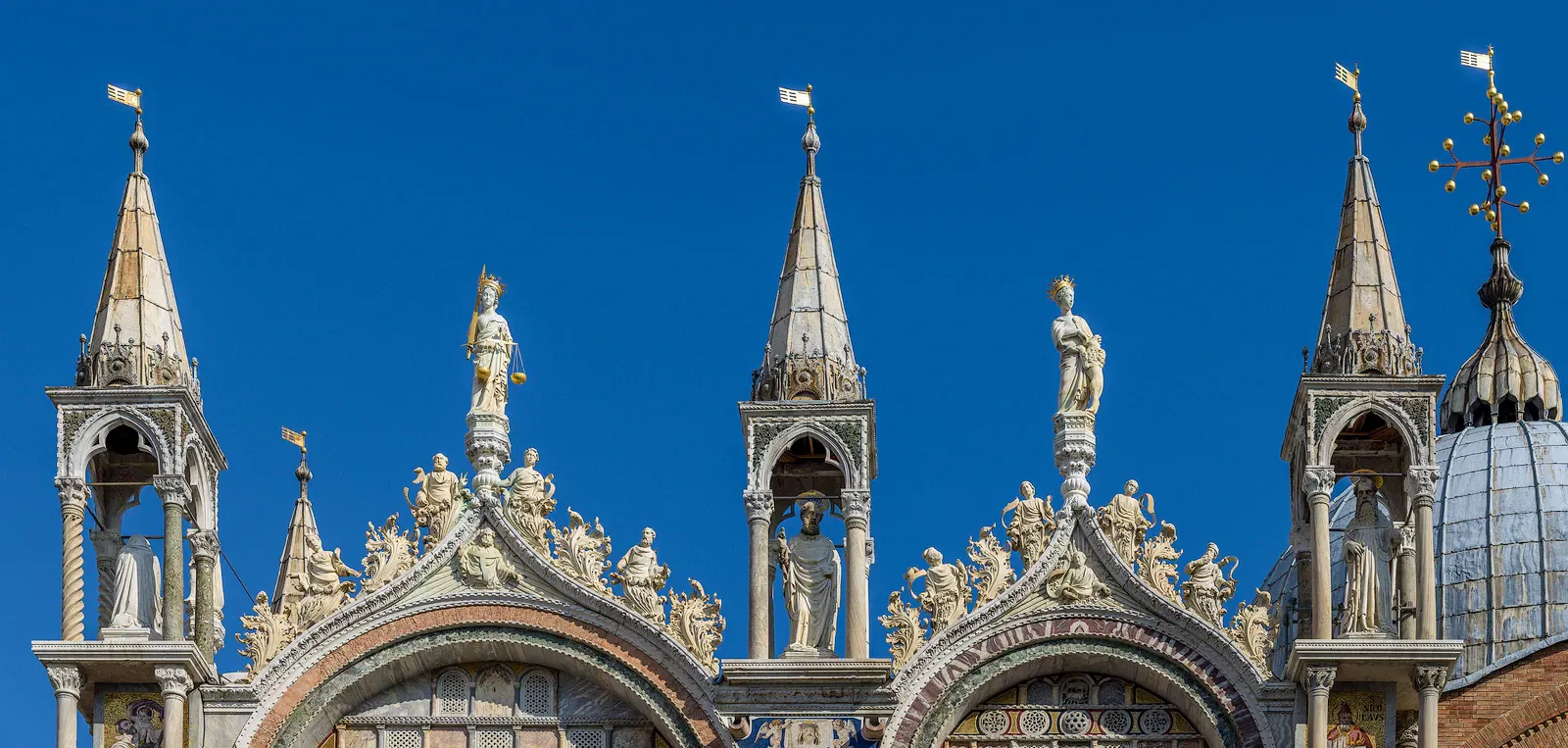
Venice developed its own sound. Adrian Willaert became maestro di cappella at St Mark’s in 1527 and pioneered cori spezzati, split choirs that answer each other from separate galleries of a church.
Madrigal and late flowering, 1570-1610
The last decades gathered the age’s most famous works. Thomas Tallis wrote Spem in alium around 1570, a motet for forty voices arranged as eight choirs of five. In 1575 Elizabeth I granted Tallis and William Byrd a monopoly on printing music in England, and the two opened it with their joint Cantiones sacrae. Byrd, a Catholic, wrote Latin motets and masses that were sung in secret by recusant households, including the short Eucharistic motet Ave verum corpus.
Tomas Luis de Victoria brought a Spanish intensity to Roman polyphony, and in 1597 Giovanni Gabrieli’s Sacrae symphoniae appeared in Venice with the Sonata pian’ e forte for two brass choirs.
Secular music flourished alongside. Nicholas Yonge’s anthology Musica transalpina, published in London in 1588, brought the Italian madrigal to England in English words and started a national craze. John Dowland’s Second Booke of Songs or Ayres of 1600 includes Flow my tears, the best-known English lute song. In Italy the madrigal grew more extreme: Monteverdi’s Cruda Amarilli of 1605 set off an argument about dissonance, and Carlo Gesualdo’s books of 1611 stretched chromatic harmony further than was heard again for centuries. Jacopo Peri’s Euridice, performed in Florence in 1600, was one of the earliest operas, and solo song over a bass line began to push polyphony from the centre.
Characteristics
Renaissance polyphony is built from equal voices, usually four to six, without a single leading line. A point of imitation presents a short melodic idea in one voice after another, and a new phrase of text brings a new idea. Important words are often set in a plain chordal passage, and single words may be illustrated by the music, such as a rising line on a word meaning ascent. Melodies follow the church modes, and cadences are shaped by a suspension and a raised third.
Instruments and production
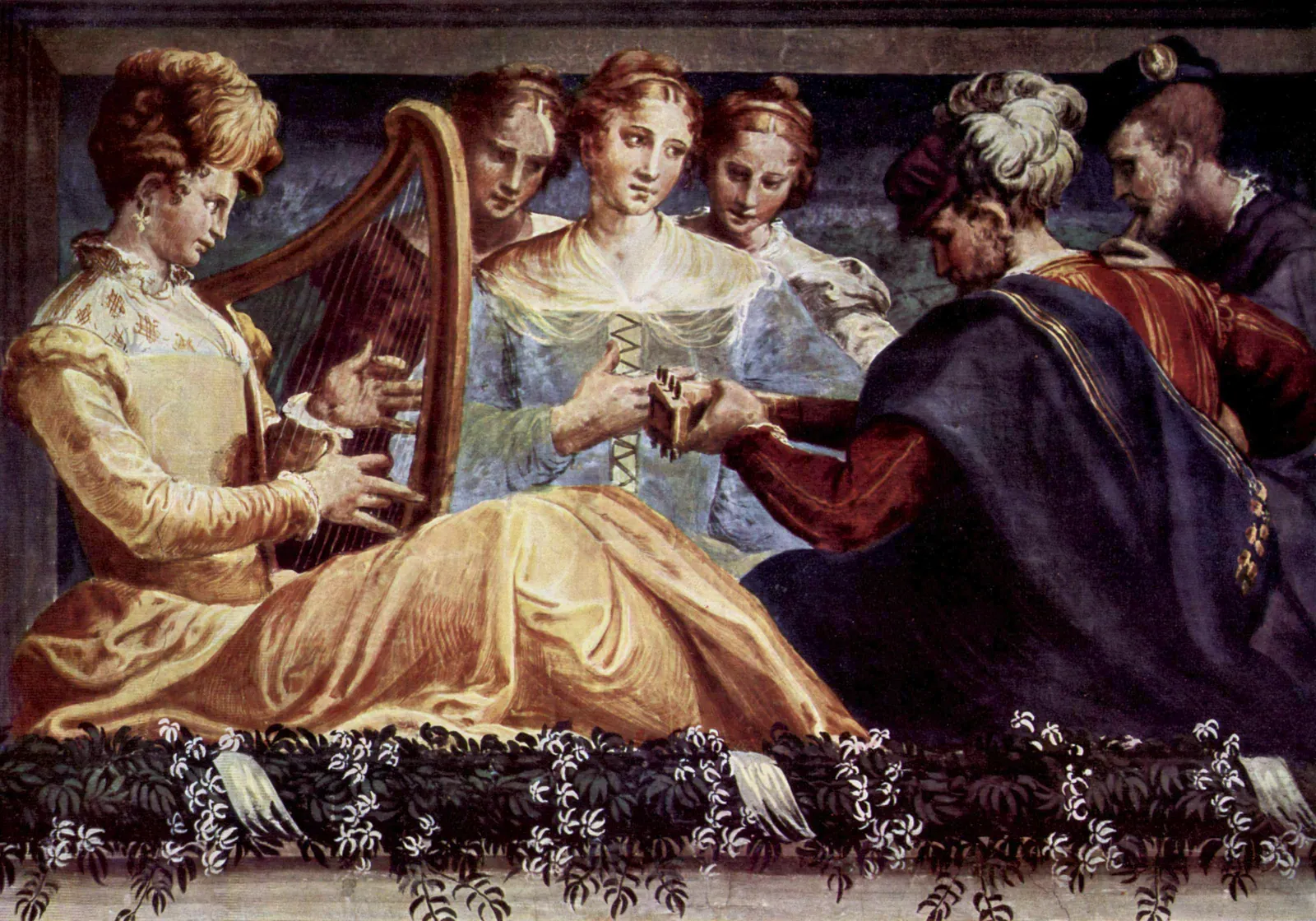
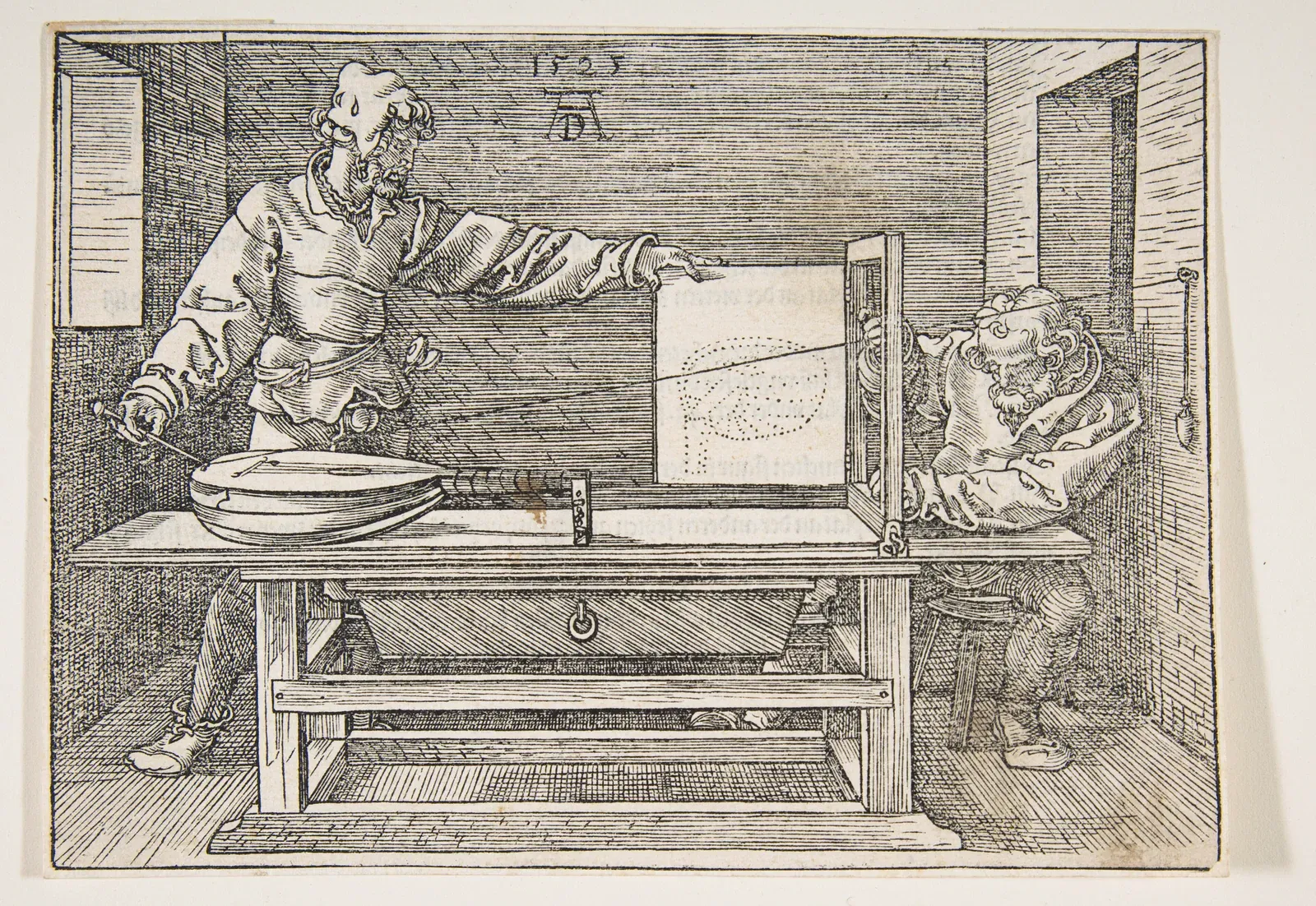
The lute was a plucked, fretted instrument for dances, solo arrangements of vocal pieces and lute songs.
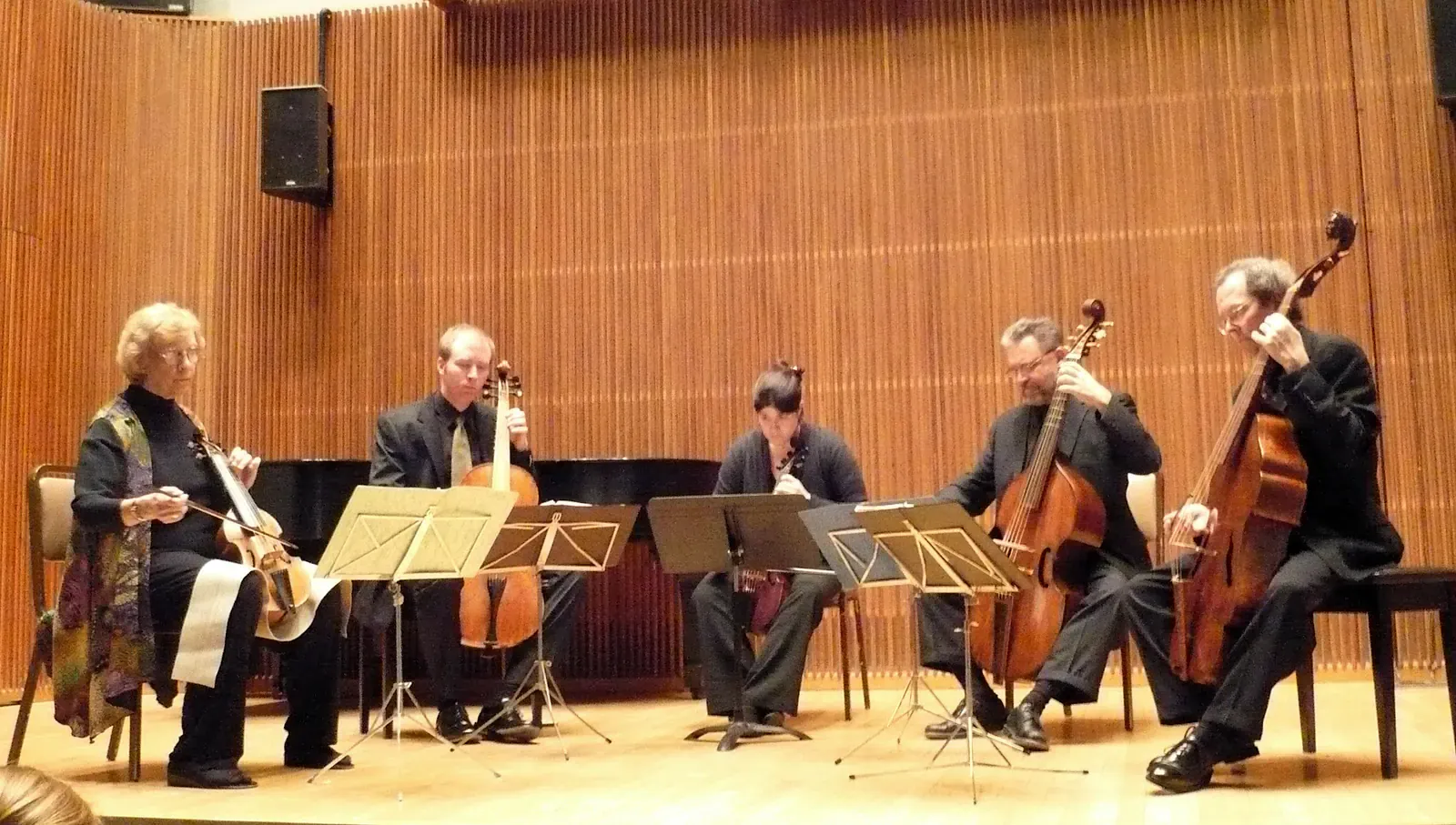
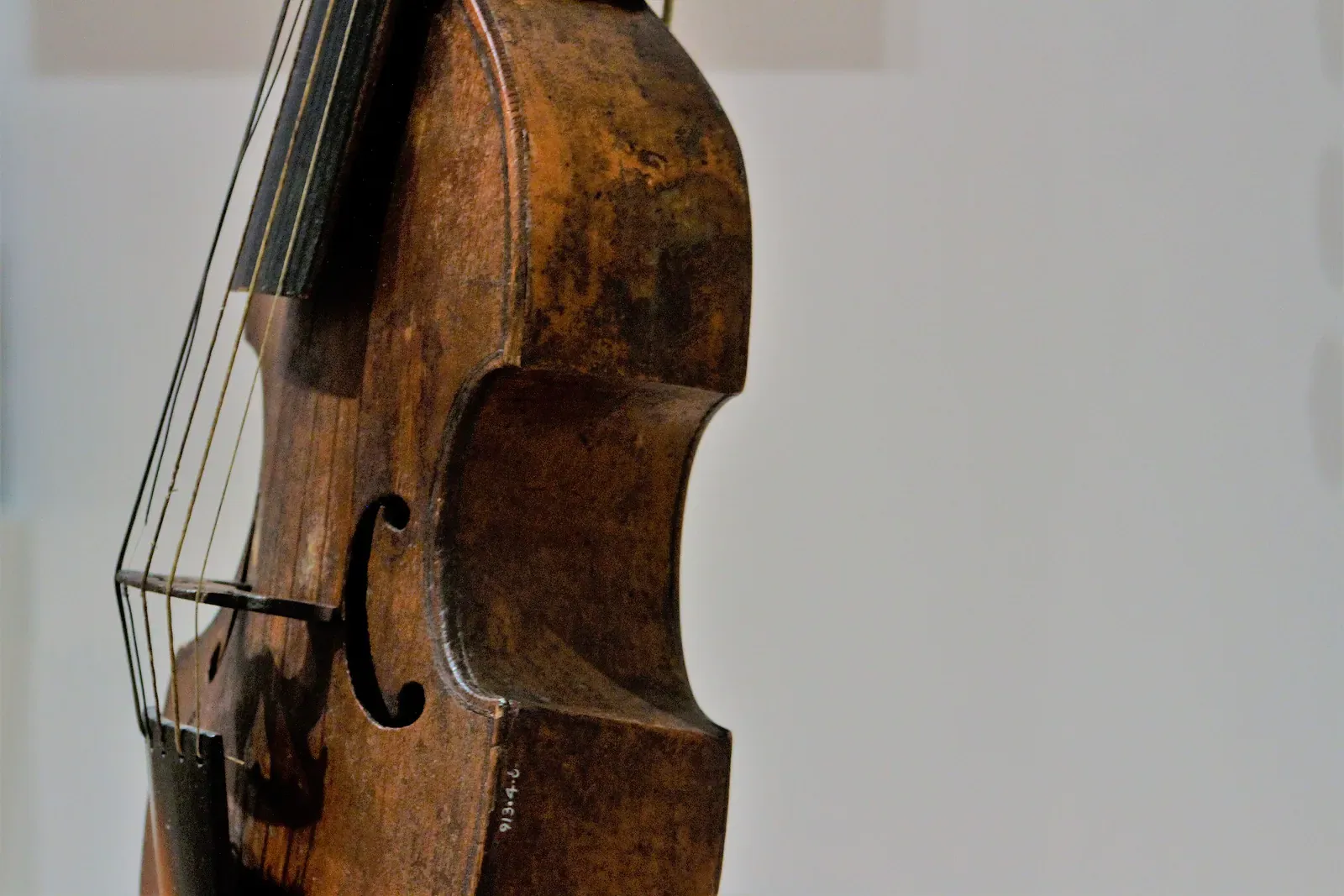
Viols, bowed and fretted, played in consorts of three to six that matched the parts of a vocal piece, and recorders were made in sets of different sizes for the same purpose.
Loud outdoor instruments came from civic wind bands. The shawm, a double-reed instrument, led dance bands and processions, and the cornett, a wooden horn with finger holes, blended with voices. The sackbut, an early trombone with a softer tone than the modern one, doubled the lower voices in church and played in brass choirs in Venice.
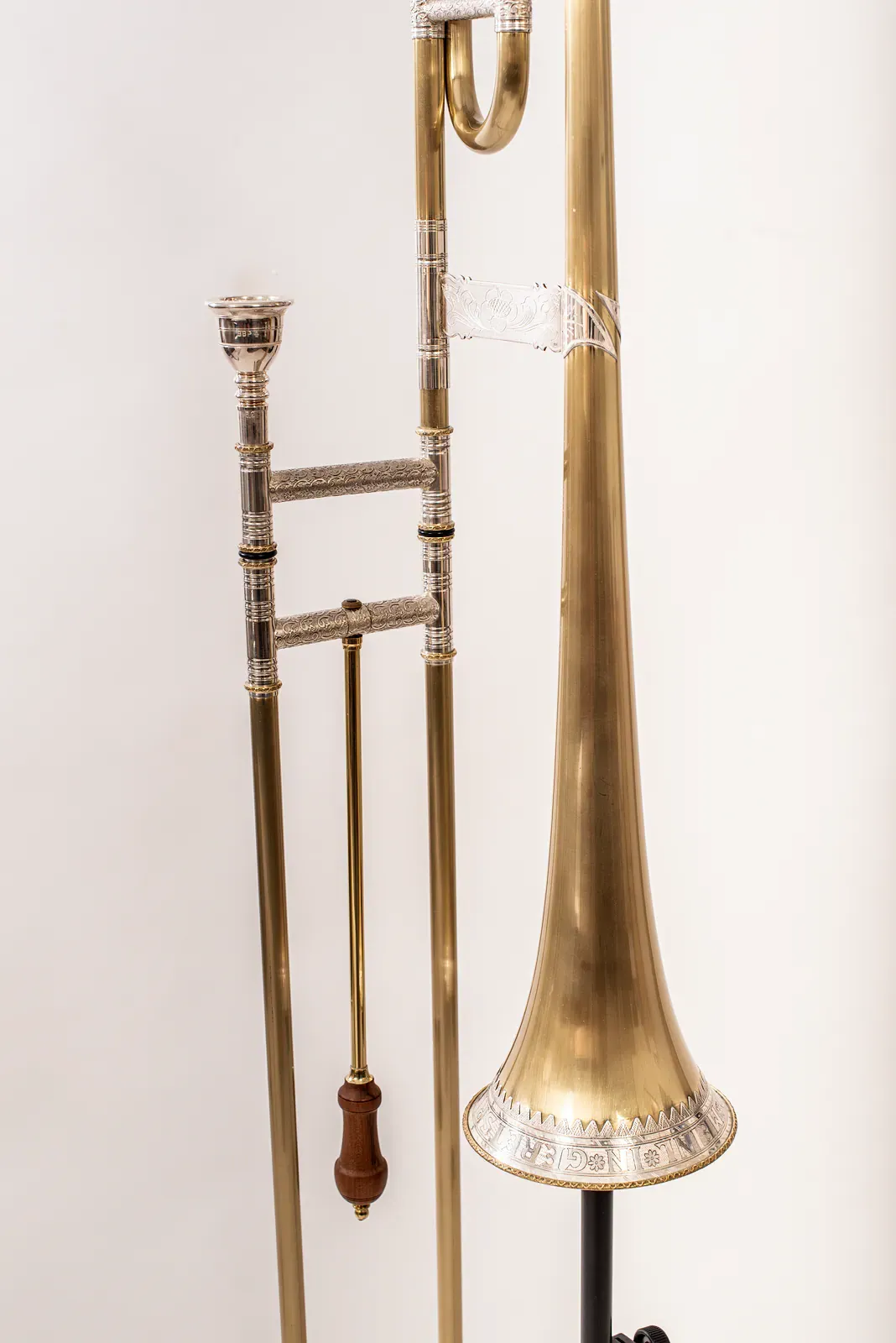
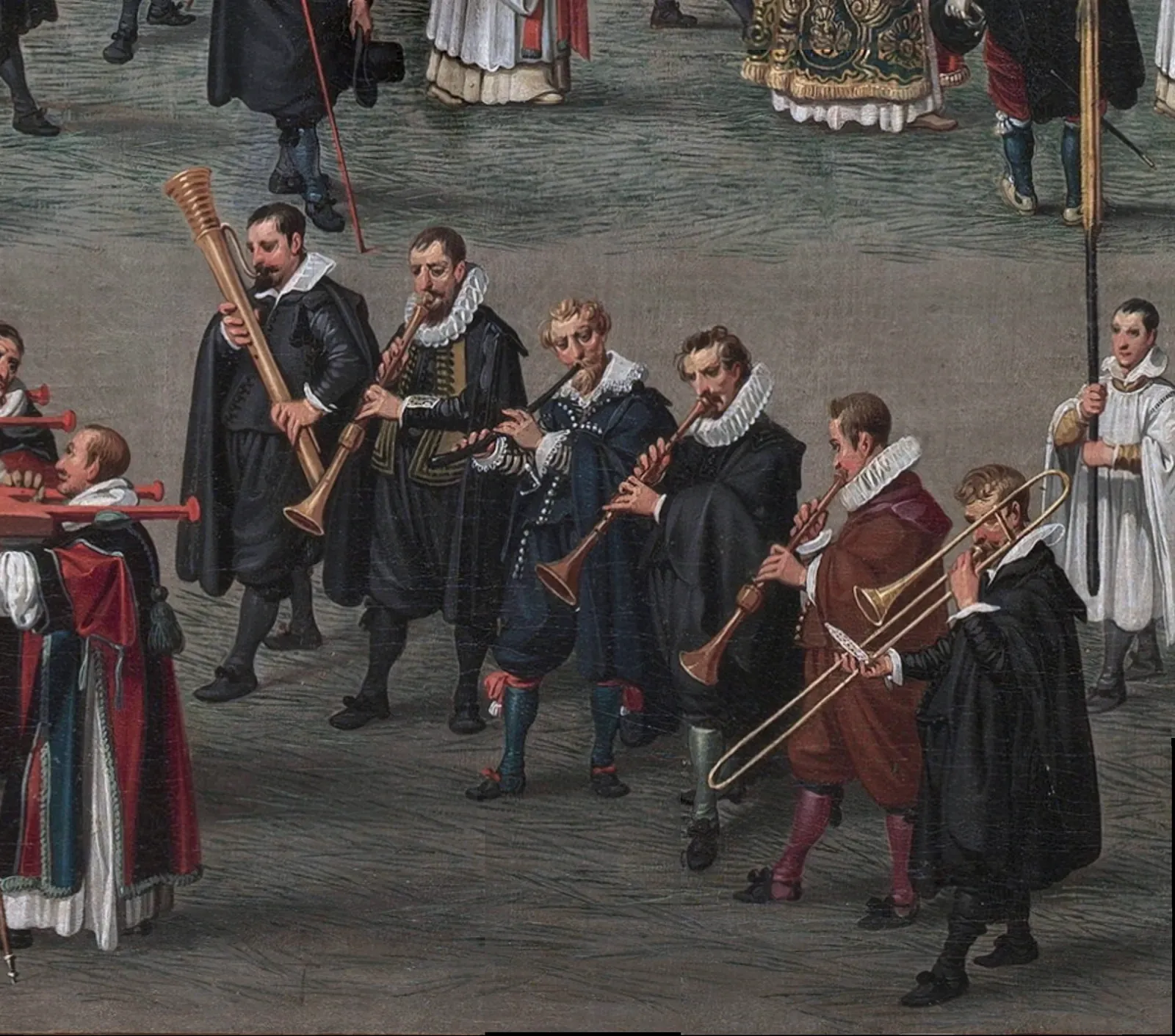
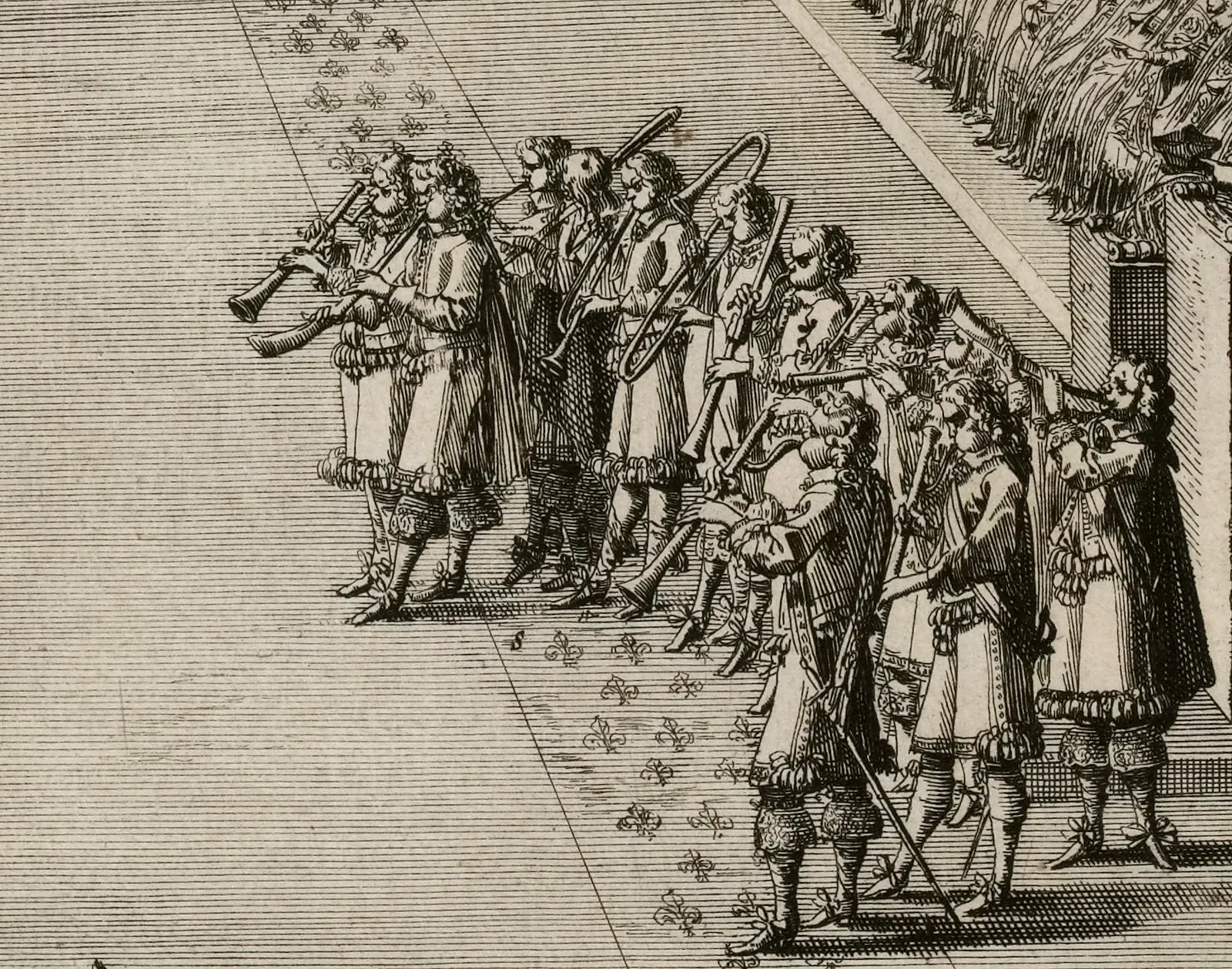
Tuning followed mean-tone and related temperaments, with no fixed pitch standard.
Mainstream success
Renaissance music had no charts, but printed part-books turned amateur singing into a widespread pastime, and dance books such as Tielman Susato’s Danserye, published in Antwerp in 1551, sold tunes for the ballroom.
The great crossover came in the twentieth century. The Early Music Consort of London, founded in 1967, put Tudor court music on record, and its 1970 album The Six Wives of Henry VIII widened the audience for Renaissance instruments. The Tallis Scholars, founded in 1973, made unaccompanied polyphony a recording staple. In 1994 the saxophonist Jan Garbarek and the Hilliard Ensemble released Officium on ECM, joining a sixteenth-century responsory by Cristobal de Morales to jazz saxophone; it sold more than a million copies. In 2006 the rock singer Sting recorded Dowland’s songs with the lutenist Edin Karamazov on Deutsche Grammophon.
Notable recordings
Tallis’s Spem in alium sets eight choirs of five voices passing phrases around the room, until every part sounds together at the climax; the Tallis Scholars’ 1985 recording on Gimell is often the first modern version listeners meet. Victoria’s O magnum mysterium, recorded by the choir of Westminster Cathedral for Hyperion, shows the Spanish side of the style, and Gesualdo’s Moro, lasso, al mio duolo is a madrigal whose chromatic shifts sound far ahead of their date.
Culture
Music was a mark of education. Amateurs in Italy and England sang madrigals from part-books around a table after dinner.
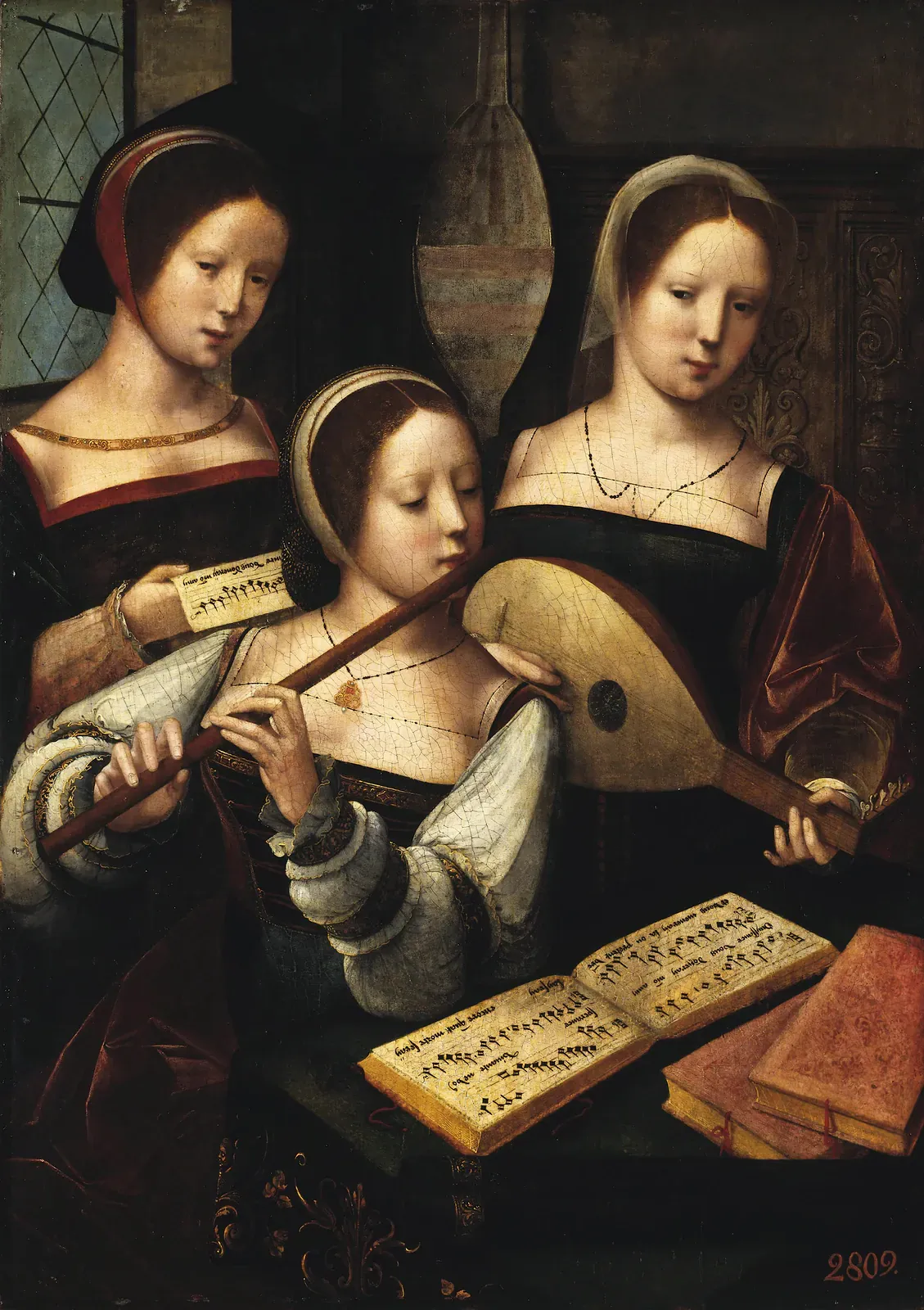
In church, professional male choirs sang Latin masses and motets daily, with boys or high male voices on the top line.
Legacy
The imitative style gave later composers a school of counterpoint, and printing laid the groundwork for a music trade that shipped scores across borders. The revival that began around 1960 created today’s early-music world: specialist choirs, period-instrument ensembles and labels such as Gimell, Hyperion and Harmonia Mundi.
Misconceptions
One common story holds that Palestrina saved polyphony from a ban at the Council of Trent. The council discussed whether complex music obscured the words, but it never banned polyphony, and the tale of one mass rescuing the art is a later legend.
A second assumption is that all Renaissance music was sung unaccompanied. That ideal belongs mostly to modern recordings: cornetts and sackbuts doubled voices in Venetian churches, and organs supported choirs.
Frequently asked questions
What is Renaissance music?
Renaissance music is European art music of about 1400 to 1600, marked by imitative polyphony, equal voices and modal harmony. It covers masses and motets for church, madrigals and chansons for the home, and dances for instruments.
Who are the most famous Renaissance composers?
Josquin des Prez, Guillaume Dufay, Palestrina, Orlande de Lassus, Thomas Tallis, William Byrd and Tomas Luis de Victoria are the best known.
What instruments were used in Renaissance music?
The lute, viol, recorder, sackbut, cornett, shawm, virginal and chamber organ were the main instruments, doubling or replacing voice parts.
How is Renaissance music different from medieval music?
Renaissance music favours equal voices in smooth, consonant imitation, with sweeter thirds and sixths, and from 1501 it travelled in print.
When did the Renaissance period in music end?
The period is dated to about 1600, when solo song over a bass line and the first operas began to push polyphony from the centre and Baroque music took shape.
Sound
Sound sheet
Anatomy of a track
| # | Part |
|---|---|
| 1 | Opening point of imitation (voices enter in turn) |
| 2 | Second point, new text phrase |
| 3 | Contrasting chordal or triple-time passage |
| 4 | Further points of imitation |
| 5 | Closing cadence and amen |
Signature sounds
- Points of imitation passed between voices
- Suspension cadence with a raised third
- Equal voices, no single leading line
- Modal melodies with added musica ficta
- Word painting on key words
- Homophonic passages for important text
Drums and percussion
- Tabor
- Tambourine
Techniques
- Imitative counterpoint
- Cantus firmus writing
- Parody technique
- Polychoral writing
- Word painting
Keys and modes
Church modes. Dorian, Phrygian, Mixolydian and others, with ficta cadences shaping a major-minor feel.
Hexachordal system. Solmization on overlapping six-note groups that guided how singers read and heard intervals.
Tuning
Mean-tone and related temperaments, with no fixed pitch standard
Vocals
Unaccompanied or lightly doubled voices in equal-voiced parts, with boys or high male voices on the top line
Scenes
Where it happened
Where and when the sound lived: one bar per city on a shared timeline.
Europe
Active scenes
Peak 8, 1590-1597
Petrucci's press and St Mark's polychoral tradition under Willaert and the Gabrielis.
Papal chapel and the Roman school of Palestrina; Josquin and Morales sang in the choir.
Dufay's Duomo motet and, after 1573, the Camerata that led toward opera.
Printing centre of Susato and Phalese for Netherlandish music.
Attaingnant's press made the Parisian chanson a printed commodity.
Chapel Royal, Tallis, Byrd and the lute songs and madrigals of Dowland and Morley.
Este court that hired Josquin in 1503 and, in the 1590s, Gesualdo and the Concerto delle donne.
Monteverdi served the Gonzaga court and published his first madrigal books here.
Venues and places
Florence, 1436 to today. Cathedral whose 1436 consecration heard Dufay's Nuper rosarum flores.
Rome, 1483 to today. Papal choir chapel that employed Josquin, Morales and Palestrina.
Venice, 1501 to today. Where the Odhecaton, the first book of printed polyphony, appeared in 1501.
Venice, 1527 to today. Home of the split-choir style under Willaert and the Gabrielis.
London, 1901 to today. Choir sang Tudor and Spanish polyphony from 1901 and became a revival centre.
Oxford, 1973 to today. Site of the Tallis Scholars' first concert, 3 November 1973.
St. Gerold, 1993 to today. Benedictine priory in Vorarlberg where Officium was recorded in September 1993.
Culture
Culture markers
- Pavane and galliard
A slow, stately processional dance followed by a quick leaping one; Arbeau describes both in 1589.
Dance - Branles
Circle and line dances danced by whole groups at court and village balls.
Dance - Latin Mass in the cathedral chapel
Professional male choirs sang polyphonic masses and motets at the daily liturgy of cathedrals and courts.
Ritual - Domestic madrigal singing
Amateurs sang from part-books around a table after dinner, a mark of education in Italy and England.
Ritual - Choirbooks
Large illuminated manuscripts were read by the whole choir around a lectern before part-books replaced them.
Artwork
Media
Key media
- 1597A Plaine and Easie Introduction to Practicall Musicke
by Thomas Morley. English textbook of composition and madrigal style published in the age itself.
Book - 1954Music in the Renaissance
by Gustave Reese. Standard English-language survey of the period, still used in teaching.
Book - 1970The Six Wives of Henry VIII
by Early Music Consort of London. Munrow's album of Tudor court music for dance and song.
Compilation - 1976The Art of the Netherlands
by Early Music Consort of London. Three-record anthology of Franco-Flemish music on period instruments.
Compilation - 1994Officium
by Jan Garbarek and The Hilliard Ensemble. Renaissance and medieval sacred music with jazz saxophone, a major ECM seller.
Compilation - 2003Touching the Void
by Kevin Macdonald. Mountaineering drama that uses Tallis's Spem in alium for a pivotal sequence.
Film
Glossary
Terms on this page
A pre-existing melody, often chant, used as the structural backbone of a polyphonic work.
Split choirs in Venice that answer each other from different galleries of a church.
Unwritten accidentals added by performers to avoid awkward intervals and shape cadences.
A mass built from the themes of an existing motet or chanson rather than from chant.
Separate printed books for each voice, so singers read only their own line.
A short melodic idea entered one voice after another before the next phrase brings a new idea.
The steady beat of mensural music, about as fast as a resting pulse, usually felt on the semibreve.
Melody or harmony that mirrors a word, such as rising lines on "ascendit".
Classical family