Classical music
Classical music is Western art music, written in notation since about 800: chant, polyphony, the Baroque, the symphony, modernism and contemporary composition.
349 genres
Since around 800
Genres
349
In this family
Branches
14
Main subgenres
Since
around 800
Europe
Timeline
Era by era
From the first sparks to today. Select a dot to read the story behind it.
- Chant and early polyphony
800 to 1400
- Renaissance
1400 to 1600
- Baroque
1600 to 1750
- Classical period
1750 to 1820
- Romantic era
1820 to 1900
- Modernism and recording
1900 to 1945
- Postwar to contemporary
1945 to 2026
Eras
Moments
- 1 Chant and early polyphony, 800 to 1400
- 2 Renaissance, 1400 to 1600
- 3 Baroque, 1600 to 1750
- 4 Classical period, 1750 to 1820
- 5 Romantic era, 1820 to 1900
- 6 Modernism and recording, 1900 to 1945
- 7 Postwar to contemporary, 1945 to 2026
around 800
Chant and early polyphony
Plainchant is codified, notation arrives, and Paris and Reims singers add a second voice. The Ars nova of Machaut brings new rhythm.
- 800Gregorian chant is codified under Carolingian ruleA single Roman-Frankish liturgical repertoire spreads across the Frankish empire.
- 1025Guido of Arezzo promotes staff notationLines and clefs let singers learn unseen melodies.
- 1170Notre Dame school of polyphony in ParisOrganum in several parts was developed by the cathedral singers.
- 1365Machaut writes the Messe de Nostre DameIt is the earliest complete mass setting by a single named composer.
around 1400
Renaissance
Smooth vocal polyphony spreads across Europe and the printing press makes music a traded good. Palestrina sets the sacred standard.
- 1501Petrucci prints Harmonice Musices OdhecatonThe Venice edition is the first printed collection of polyphonic songs.
- 1567Palestrina publishes the Missa Papae MarcelliIt became a model of clear sacred polyphony.
around 1600
Baroque
Opera, the concerto and the orchestra take shape around basso continuo. Monteverdi, Vivaldi, Handel and Bach define the age.
- 1607Monteverdi's L'Orfeo premieres in MantuaOne of the earliest operas still regularly staged.
- 1722Bach completes the first book of The Well-Tempered ClavierPreludes and fugues in all 24 keys.
- 1742Handel's Messiah is premiered in DublinThe oratorio became a staple of choral societies.
1750
Classical period
Balanced, song-like melody and sonata form dominate. Vienna becomes the capital of the symphony, quartet and piano sonata.
- 1750Bach diesThe year is the conventional close of the Baroque period.
- 1787Mozart's Don Giovanni premieres in PragueA peak of Classical period opera.
around 1820
Romantic era
Expression, nationalism and virtuosity push harmony and orchestra size. Concert halls and public concerts become the centre of musical life.
- 1824Beethoven's Ninth premieres in ViennaThe first major symphony to add a chorus.
- 1829Mendelssohn revives Bach's St Matthew Passion in BerlinThe performance began the 19th-century Bach revival.
- 1876Bayreuth Festspielhaus opens with the RingWagner builds a theatre for his own music-dramas.
- 1898Deutsche Grammophon is founded in HannoverClassical recording becomes an industry.
around 1900
Modernism and recording
Atonality, rhythmic shocks and neoclassicism challenge the tradition while the gramophone puts it into homes.
- 1902Debussy's Pelléas et Mélisande premieres in ParisAn opera that answers Wagner with understatement.
- 1909Schoenberg writes the Three Piano Pieces, Op. 11Among the first works to abandon tonal centres.
- 1913Stravinsky's Rite of Spring premieres in ParisThe Ballets Russes premiere became a symbol of modernism.
1945
Postwar to contemporary
Serialism, chance, minimalism and sacred minimalism coexist with the LP, the CD and streaming. Period-instrument performance reshapes the older repertoire.
- 1948Columbia introduces the LPLong-playing records fit whole symphonies on two sides.
- 1952Cage's 4'33" is premieredA piece of silence that asks what counts as music.
- 1955Karajan becomes chief conductor of the Berlin PhilharmonicHe led it for 34 years and dominated recording.
- 1969ECM is founded in MunichThe label later built an important contemporary-classical series.
- 1976Einstein on the Beach premieres at AvignonA five-hour minimalist opera.
- 1982The compact disc launchesPhilips and Sony format; classical was an early adopter.
- 1984ECM New Series begins with Tabula RasaSparse sacred minimalism reaches a large audience.
- 1987Naxos is founded in Hong KongBudget CDs widen the audience.
- 2013EMI Classics is sold to WarnerThe label ends after the EMI breakup.
- 2023Apple Music Classical launchesA streaming app built around composers and works.
Roots
Roots and offspring
Europe
Classical
Led to (1)
Facts
| Genres in the family | 349 |
| Main branches | 14 |
| Emerged | C. 1000 onward |
| Key places | Europe |
| Tempo | 55 to 180 BPM |
Classical music is Western art music: composed, written in notation and performed from the score by trained musicians. It began in the monasteries and cathedrals of Europe around 800, when chant was codified under Carolingian rule, and it has been rewritten by every century since.
Its defining traits are notation, large-scale forms such as the symphony and opera, and an institutional setting of church, court, conservatory and concert hall. The library holds 349 classical genres across 14 branches.
The term “classical” also names one period, about 1750 to 1820, so Baroque and Romantic works are classical music but not music of the Classical period.
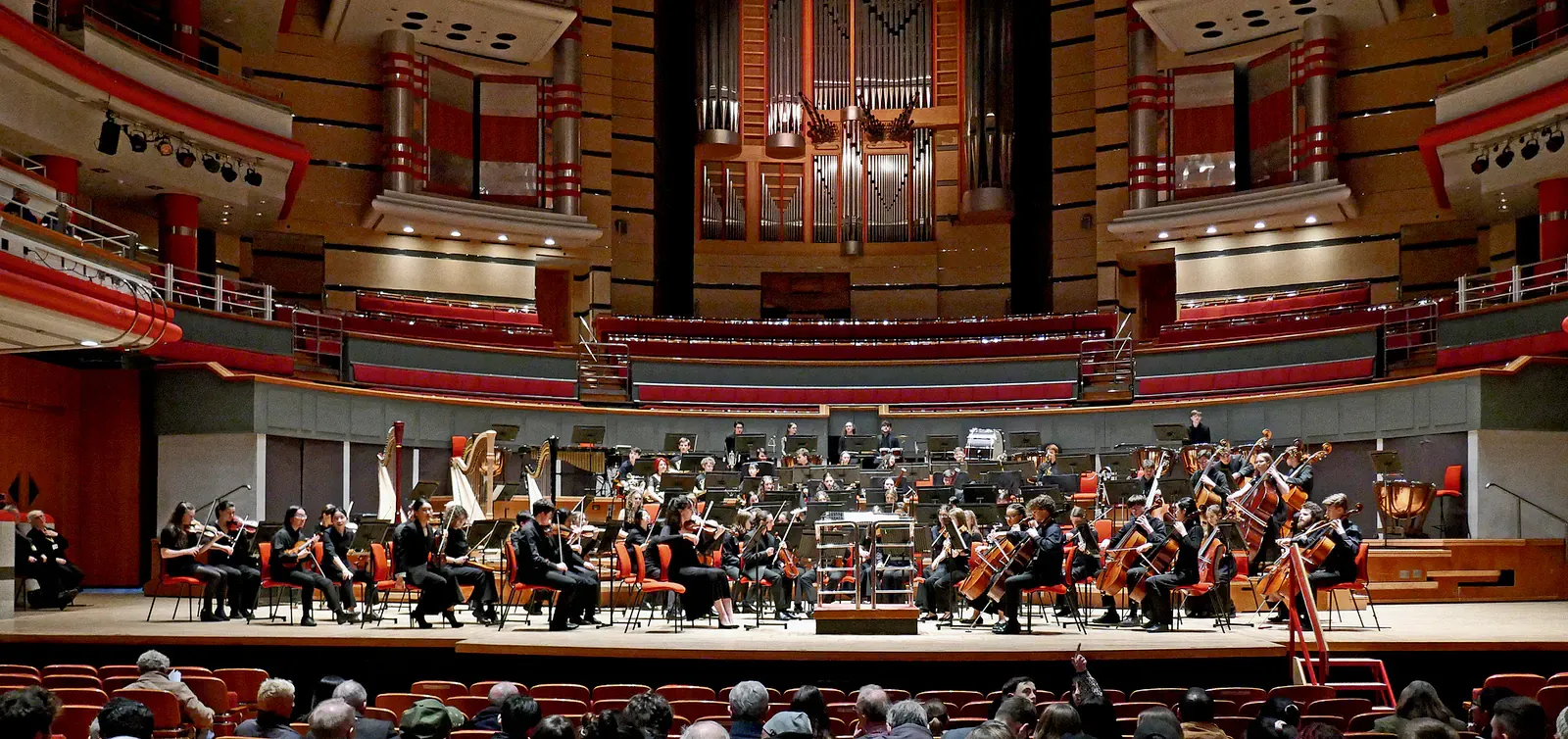
Chant and early polyphony, 800 to 1400
Chant under Carolingian rule fixed a shared repertoire around 800, and singers in different countries needed a way to keep the same melodies, which notation eventually provided. Around 1025 Guido of Arezzo promoted the staff and the sight-singing syllables that became do-re-mi. For the first time a singer could learn a tune from a page.
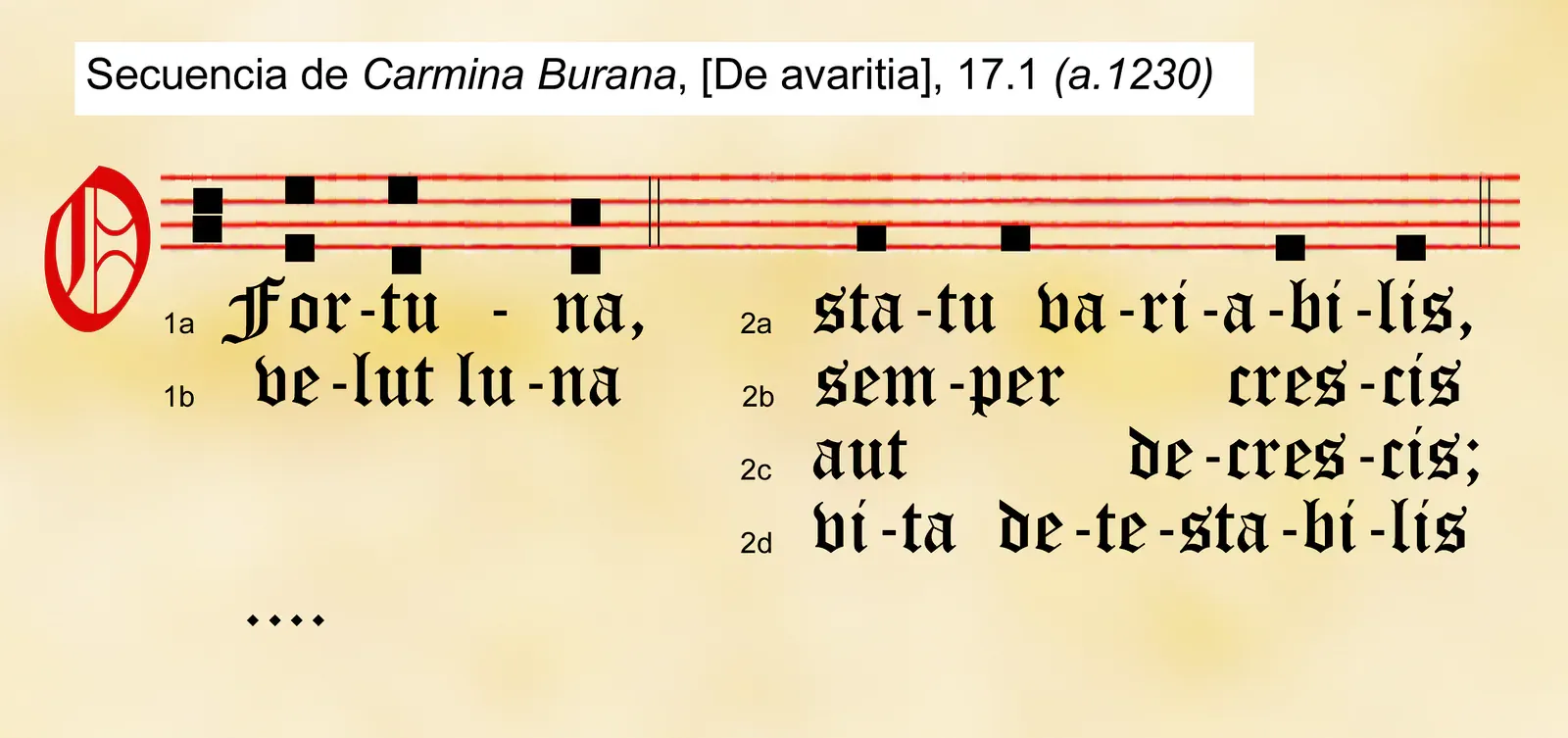
Once pitch could be written, voices could be stacked. At Notre Dame in Paris, from about 1170, the composers later known as Leonin and Perotin set a second and third voice against the chant. Hildegard of Bingen, a German abbess, wrote her own chant in the twelfth century and is among the first composers whose name and music both survive in quantity. By 1365 Guillaume de Machaut had written the Messe de Nostre Dame, a mass for four voices usually described as the first complete setting by a single named composer. His Ars nova rhythms asked singers to count in new ways.
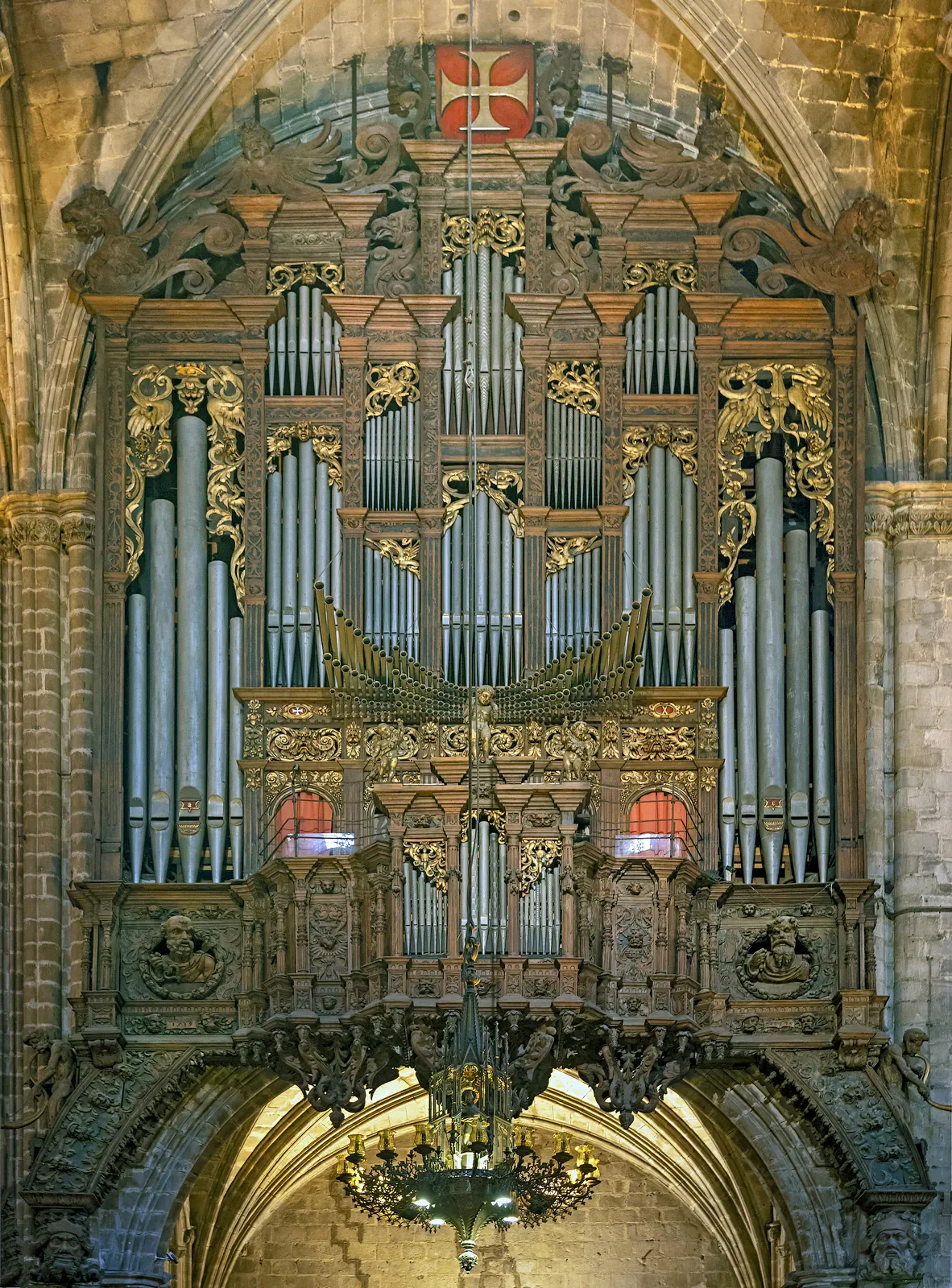
Renaissance, 1400 to 1600
Renaissance music is smooth where earlier polyphony was angular: four or five voices of equal weight, imitating each other, with consonant harmony that sounds calm to modern ears. It spread because of print. In 1501 the Venetian printer Ottaviano Petrucci issued Harmonice Musices Odhecaton, the first collection of polyphony printed from movable type, and music became something amateurs could buy.
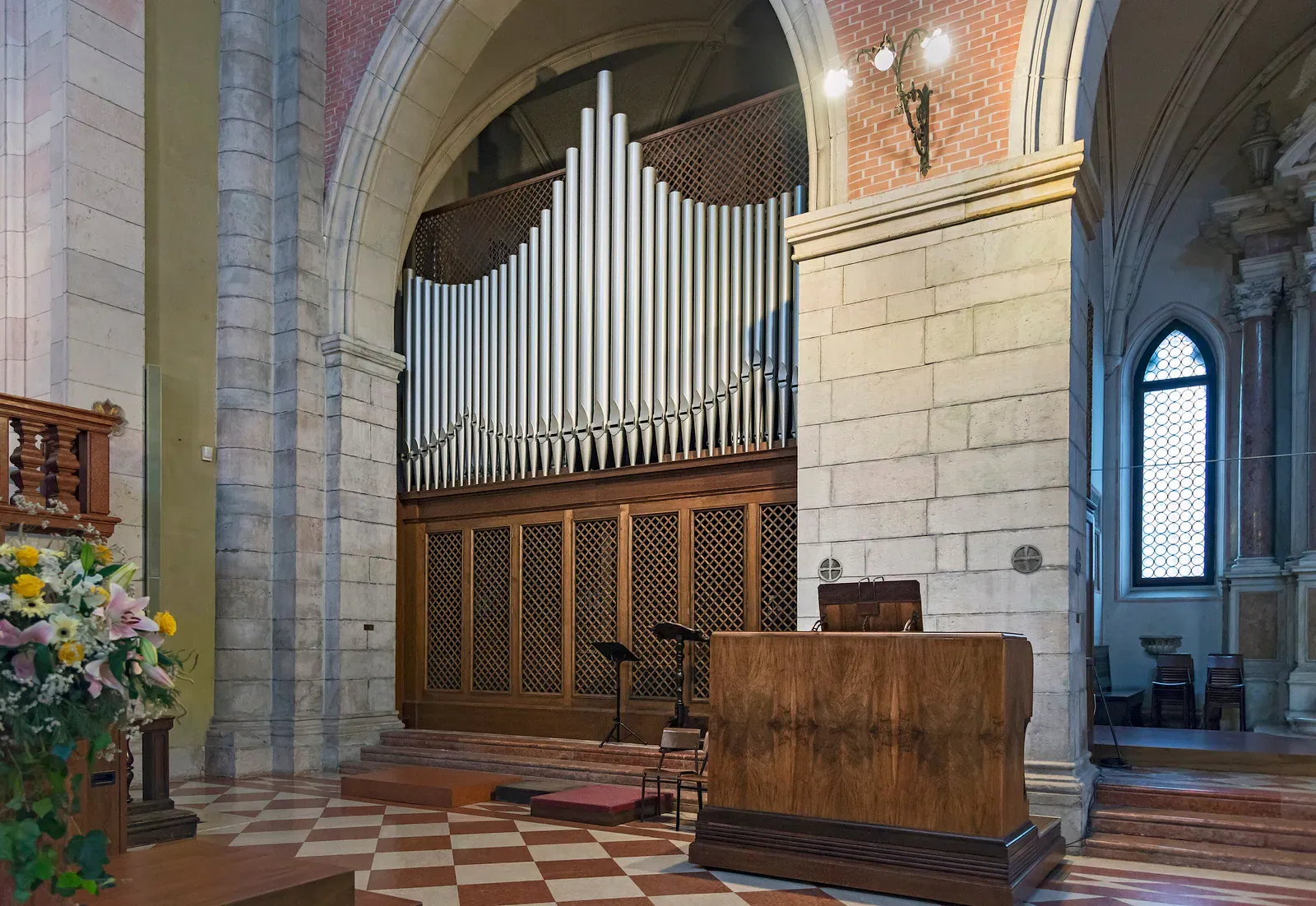
The sacred standard was set by Giovanni Pierluigi da Palestrina, whose Missa Papae Marcelli was published in 1567. Venice meanwhile used its cathedral, San Marco, to try out spatial effects with choirs placed in separate galleries. By 1600 the next break was already forming in Florence and Mantua, where humanist circles wanted a solo voice carrying clear words.
Baroque, 1600 to 1750
That wish produced opera and the bass line. Claudio Monteverdi’s L’Orfeo, premiered in Mantua in 1607, put a solo voice over a continuo group of bass instrument and chord player, and opera moved to public houses in Venice by 1637. Basso continuo became the Baroque engine: a keyboard and a cello outlined the harmony while violins and voices decorated the top.
The cause was craft as much as taste. Violin makers in Cremona raised the quality of the string instrument, and the violin family displaced the viols, which made the concerto and the orchestra possible. Antonio Vivaldi’s concertos, including The Four Seasons (published 1725), turned that into a model that travelled across Europe.
Leipzig was the other centre. Johann Sebastian Bach became cantor of the Thomaskirche in 1723; in 1722 he had completed the first book of The Well-Tempered Clavier, 24 preludes and fugues in every major and minor key. George Frideric Handel took the opposite career, working for audiences in London. His Messiah premiered in Dublin in 1742 as a charity benefit. Bach died in 1750, and the age ended with him, though his music stayed out of fashion for decades.
Classical period, 1750 to 1820
The next generation wanted music that sounded natural. Melody became song-like and symmetrical, the orchestra settled into strings, woodwinds, brass and timpani, and sonata form gave a movement an argument: a theme, a contrast, a return. Vienna became the capital because the Habsburg court, the nobility and a growing public all paid for music.
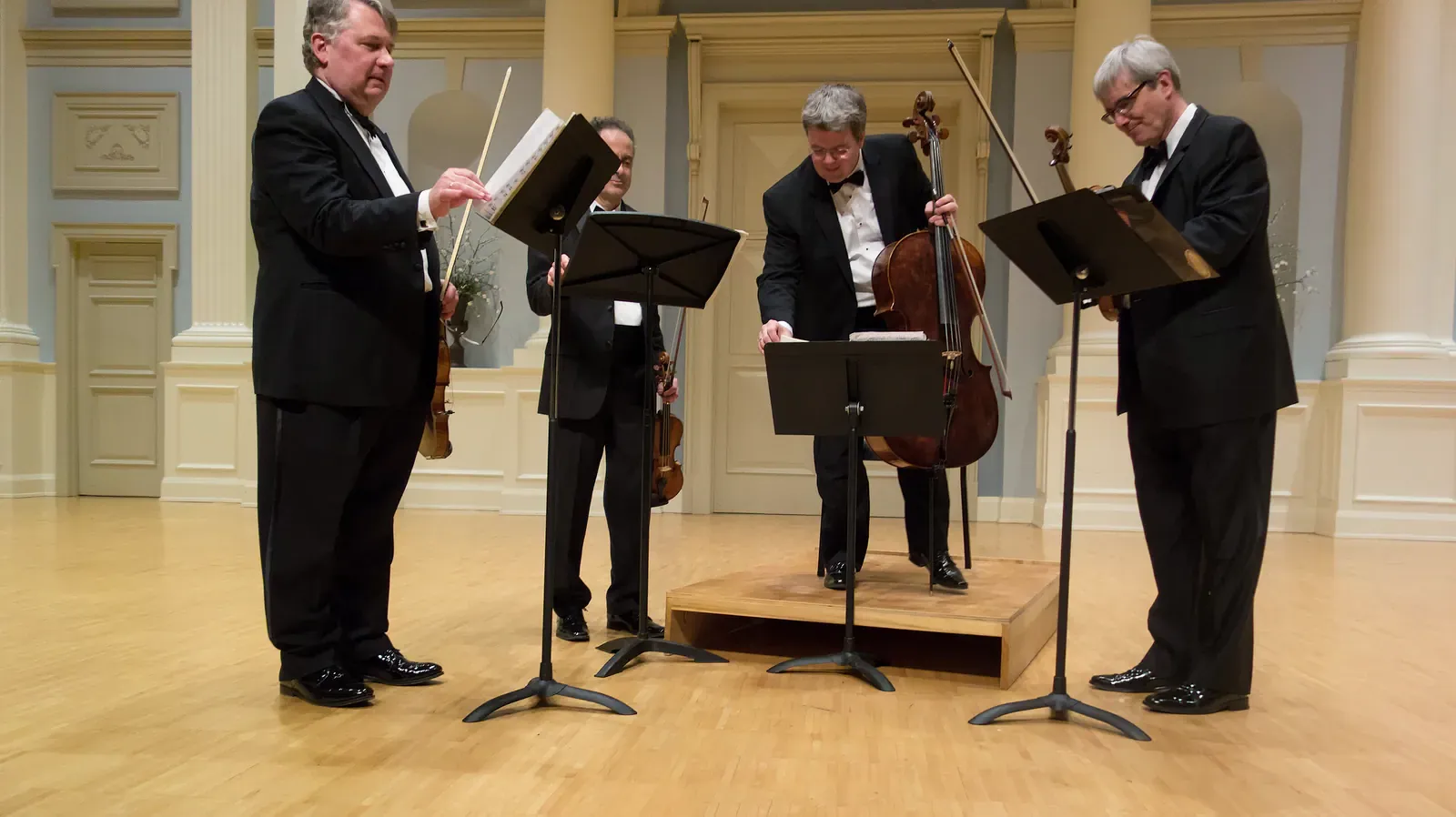
Joseph Haydn, who spent decades in the service of the Esterhazy family, shaped the symphony and the string quartet. Wolfgang Amadeus Mozart left Salzburg for Vienna and made a living from concerts, pupils and opera; Don Giovanni premiered in Prague in 1787. Ludwig van Beethoven then stretched the form until it cracked. His Ninth Symphony, first performed in Vienna on 7 May 1824, added a chorus to the orchestra.
Romantic era, 1820 to 1900
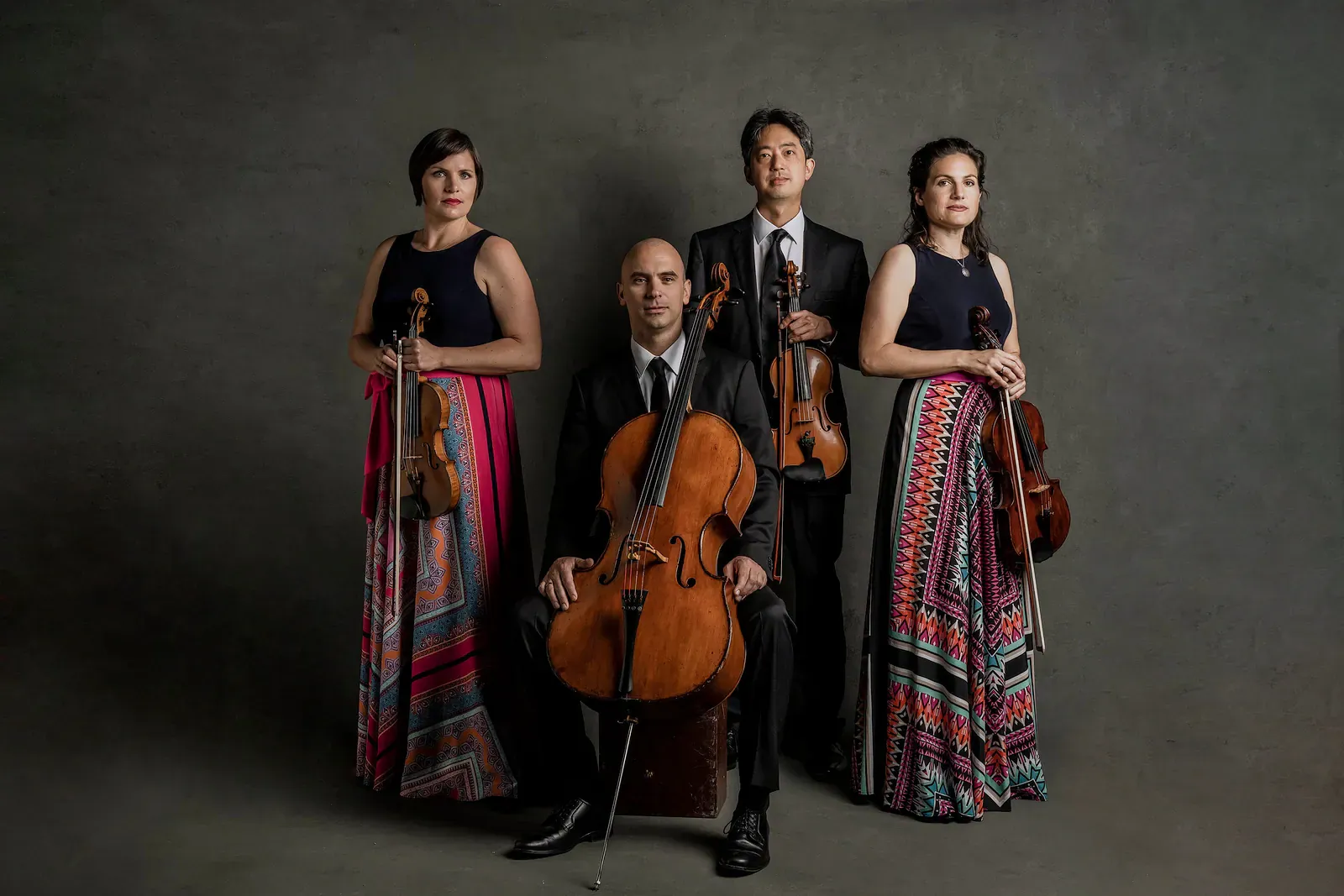
Romantic composers put feeling first. Franz Schubert turned the song into a miniature drama, Frederic Chopin made the piano speak in dances and nocturnes, and Johannes Brahms kept the old forms alive in the new emotional climate. The cause was social as much as artistic: the middle class bought pianos, filled public concert halls and wanted an artist rather than a court servant. In 1829 Felix Mendelssohn conducted Bach’s St Matthew Passion in Berlin, starting the modern revival of old music.
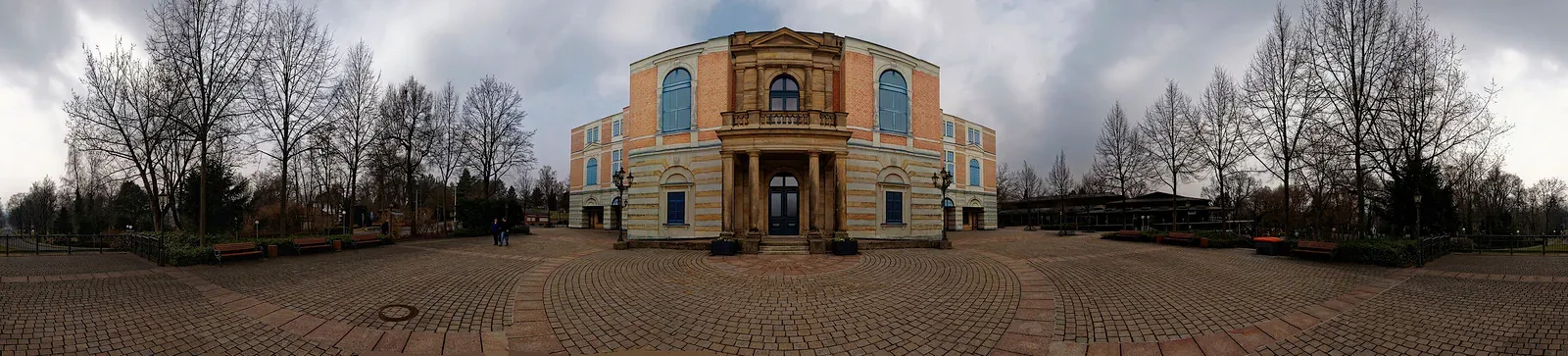
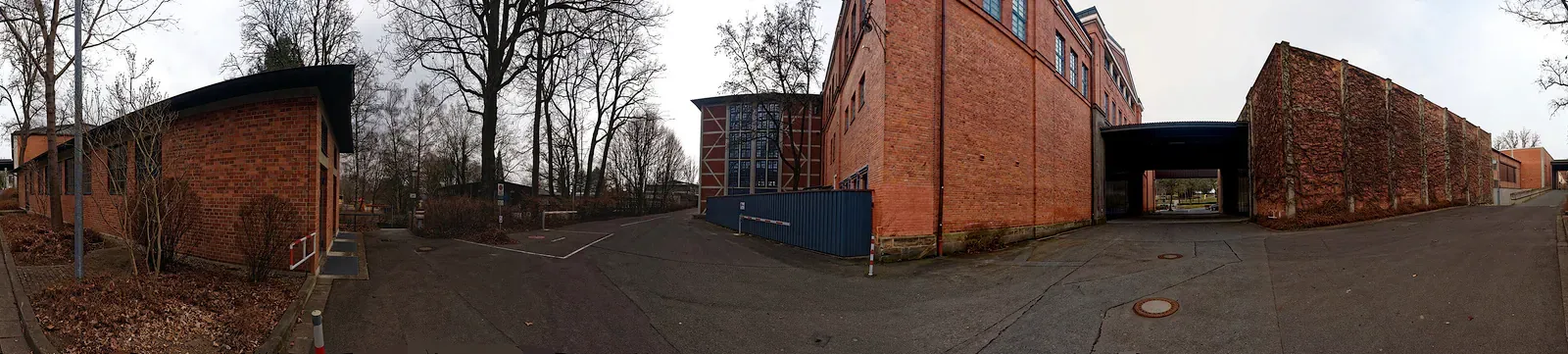
Opera reached its most extreme form with Richard Wagner. The Bayreuth Festspielhaus opened in 1876 with the complete Ring cycle, in a theatre built to Wagner’s own plan with a hidden orchestra pit. The nationalist schools of the later century, in Russia, Bohemia and Scandinavia, sent folk melody into the concert hall.
Modernism and recording, 1900 to 1945
By 1900 harmony had been stretched nearly to breaking. Claude Debussy’s Pelleas et Melisande premiered in Paris in 1902 with a floating harmony that avoided the old tension and release. In 1909 Arnold Schoenberg wrote the Three Piano Pieces, Op. 11, which gave up a home key. Igor Stravinsky’s The Rite of Spring (Paris, 1913) rebuilt rhythm as a violent engine; accounts of the premiere’s uproar differ, but all agree the audience was noisy.
The other revolution was mechanical. Deutsche Grammophon was founded in Hannover in 1898, and the gramophone put the repertoire in homes for the first time. Pablo Casals’ recording of Bach’s cello suites, begun in 1936, brought a neglected work to listeners who would never have found it in a hall. Deutsche Grammophon and EMI Classics set the pattern of the star performer and the house label. Not everyone went radical: Carl Orff’s Carmina Burana (1937) was tonal and rhythmic and became a hit.
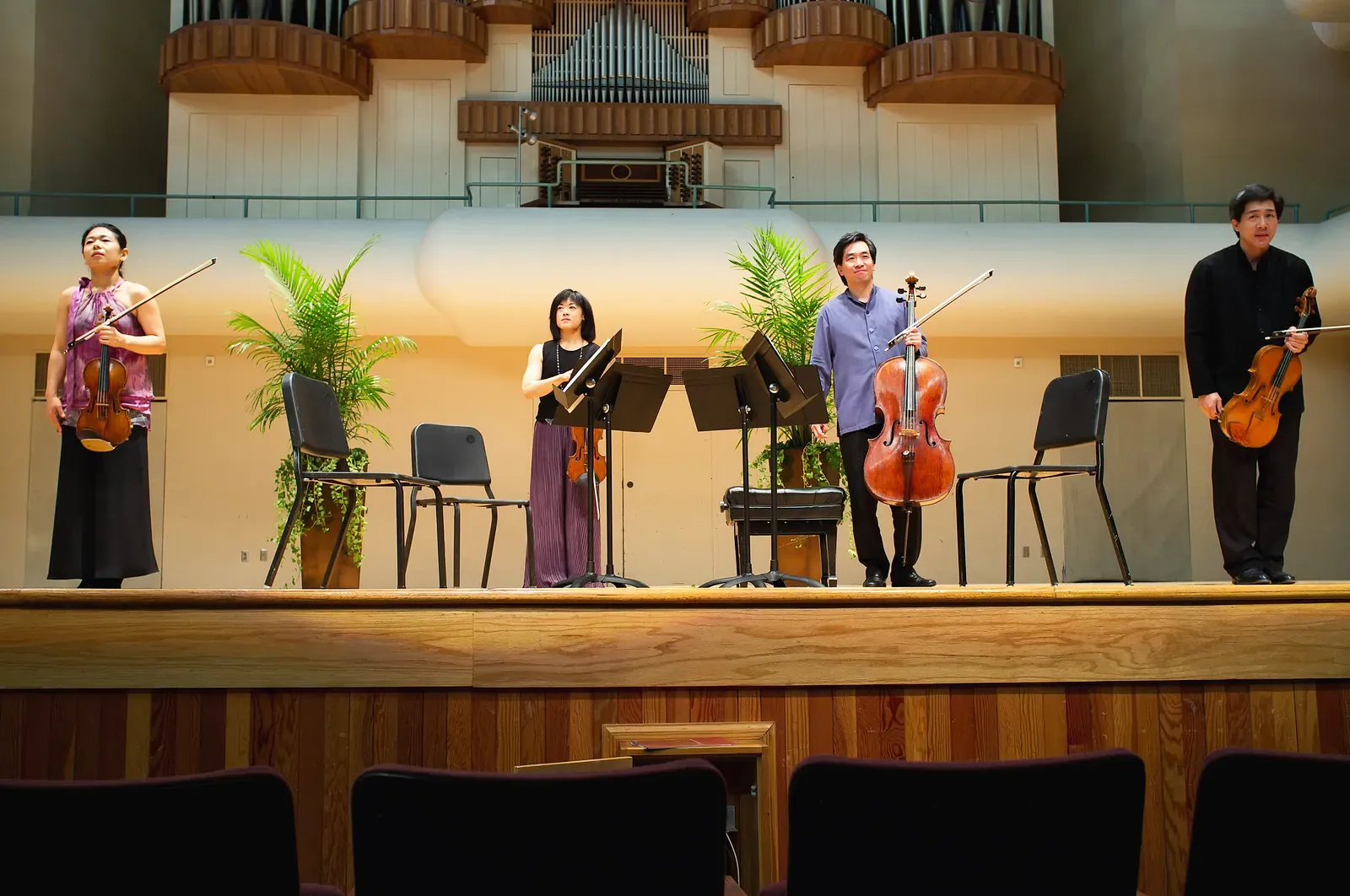
Postwar to contemporary, 1945 to today
After 1945 the scene split. In Darmstadt, composers such as Pierre Boulez pursued total serialism. In New York, John Cage’s 4’33” was first performed in 1952, a piece in which the performer plays nothing. Columbia’s long-playing record arrived in 1948 and let an hour of music sit on one disc. Glenn Gould’s 1955 recording of Bach’s Goldberg Variations made a pianist as famous as a pop star.
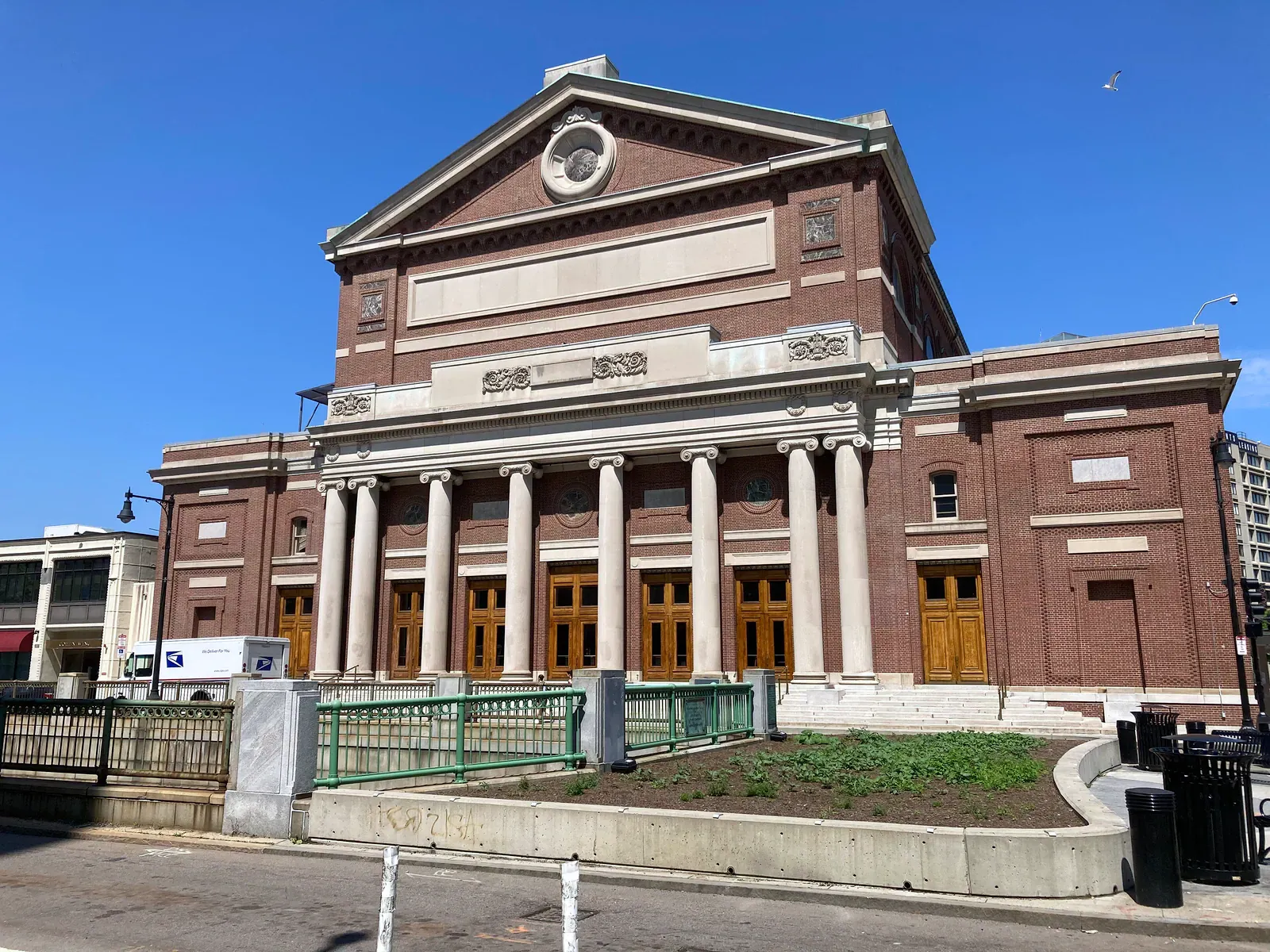
The big conductors became brands. Herbert von Karajan became chief conductor of the Berlin Philharmonic in 1955 and made it one of the best-recorded orchestras in the world, largely for Deutsche Grammophon. Decca Classics staged Georg Solti’s Wagner Ring cycle, begun in 1958, as a landmark of studio technology. Later waves went the other way: Steve Reich’s Music for 18 Musicians (recorded for ECM in 1978) and Philip Glass’s Einstein on the Beach (Avignon, 1976) made repetition a method, and Arvo Part’s Tabula Rasa (1984) made stillness one.
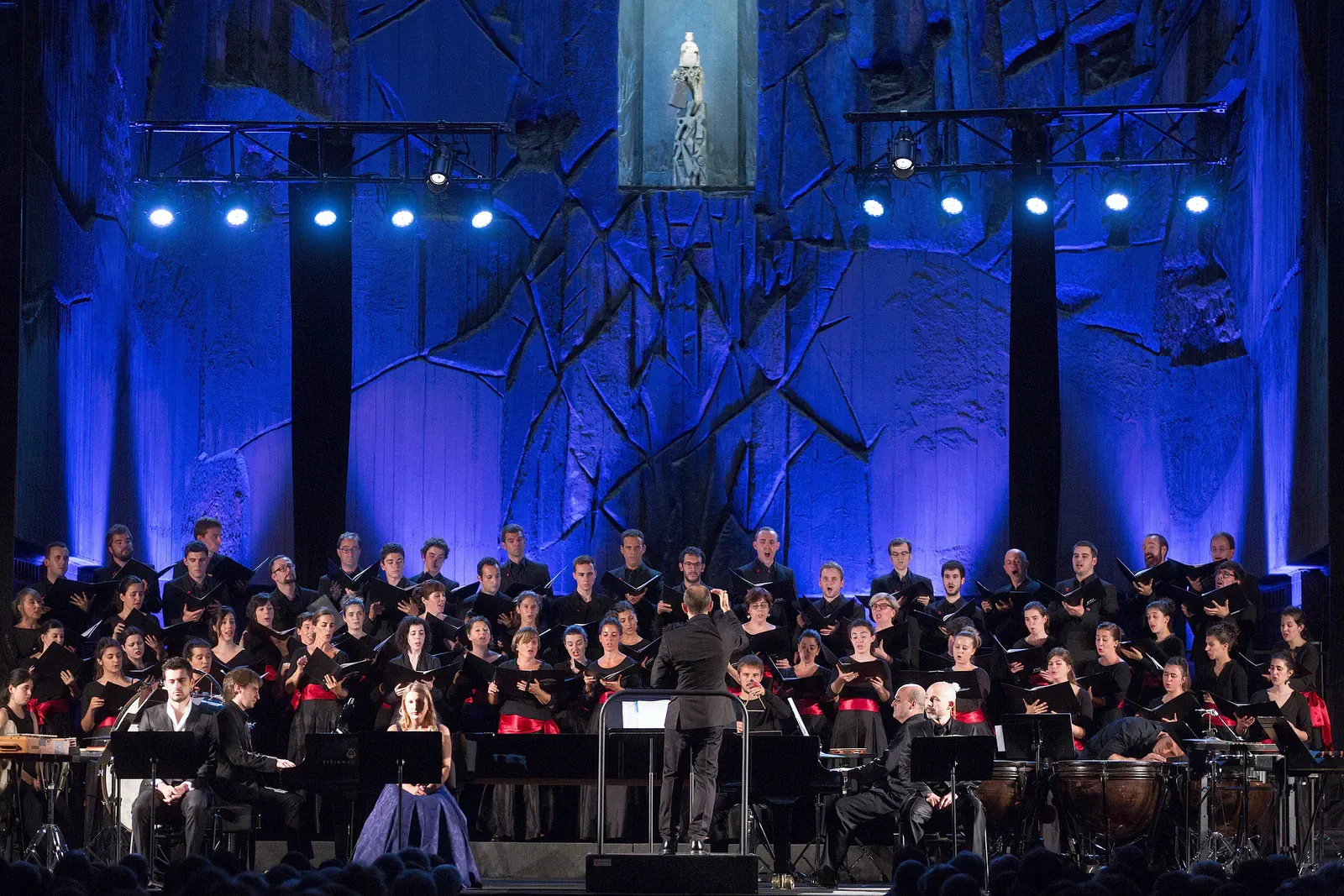
Technology kept moving. The compact disc arrived in 1982, Naxos opened in Hong Kong in 1987 with budget pricing, and period-instrument ensembles stripped old music of its Romantic habits. Apple Music Classical launched in 2023, built around composers, works and movements instead of artists and songs.
Culture
For most of its history classical music was paid for by institutions: the church, then the court, then the subscription concert. That is why composers once wrote to order, a Mass for a feast, a symphony for a prince. Women wrote too, but conservatories and publishers shut many out; Clara Schumann and Fanny Hensel are the best known of those who worked within or around the system.
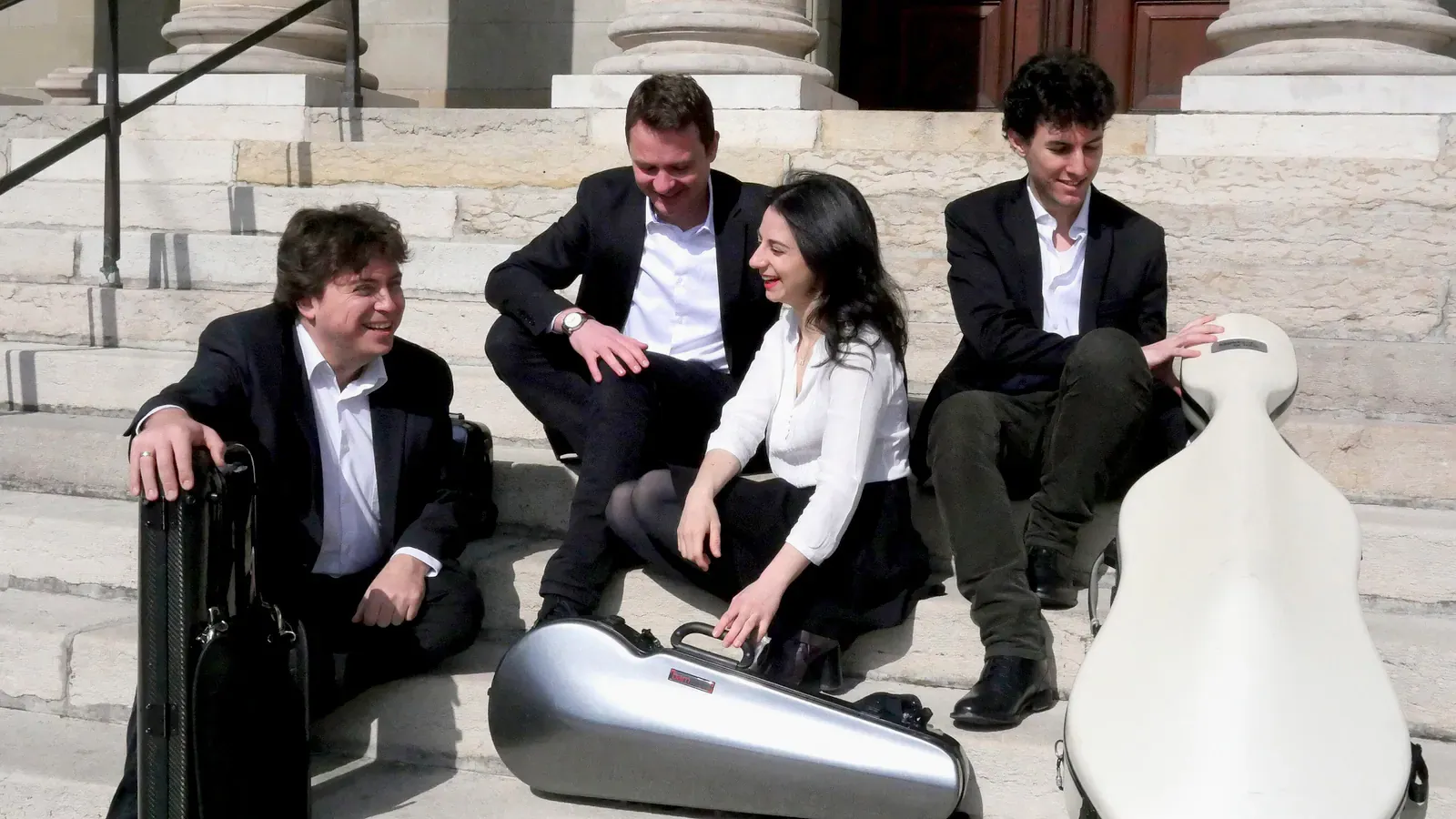
The concert ritual is itself a creation of the nineteenth century: silent audiences, programmes of masterworks, a stage that separates player from listener. Non-Western art traditions such as Hindustani, Carnatic and Persian music are sometimes also called classical, but in this library they sit in their regional families.
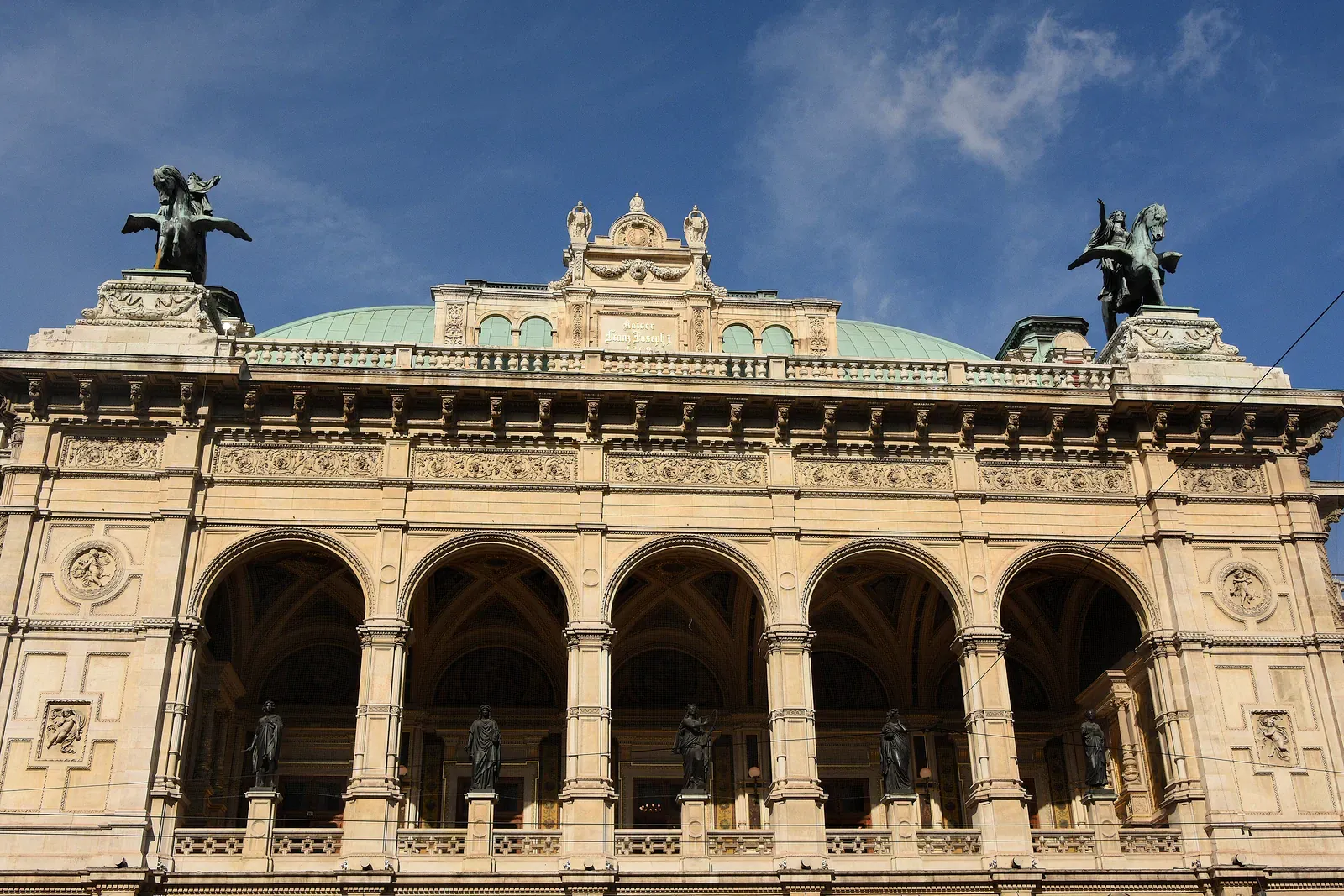
The sound has travelled well beyond the hall. The rock family borrowed its forms (progressive rock especially), and the electronic family carried its orchestration into trance and film-style productions.
Misconceptions
“Classical music means anything old and orchestral.” Strictly, the Classical period is 1750 to 1820, the age of Haydn and Mozart. Bach is Baroque, Chopin is Romantic, Reich is contemporary. All are classical music in the broad sense, and the family covers all of them.
“Palestrina saved church polyphony at the Council of Trent.” The story says his Missa Papae Marcelli convinced the cardinals to keep complex music in church. Historians treat it as legend: the Council raised concerns about intelligibility, no single mass decided the outcome, and the mass was published in 1567, years after the Council ended in 1563.
“Mozart died poor and was thrown in a pauper’s grave.” Mozart’s finances were erratic, but he earned a large income in Vienna in the 1780s. His burial in a common grave was normal in Vienna after the reforms of Joseph II, not a sign that he was abandoned.
Frequently asked questions
What is classical music?
Classical music is the Western art tradition of composed, notated music, from medieval chant around 800 to the present. It covers opera, symphonies, chamber music and choral works, and the Genrology library lists 349 genres in the family.
What are the main eras of classical music?
The usual divisions are Medieval, Renaissance (about 1400 to 1600), Baroque (1600 to 1750), Classical (1750 to 1820), Romantic (1820 to 1900), and the modern and contemporary periods since 1900. The boundaries blur, and composers often straddle two.
Who are the greatest classical composers?
Bach, Mozart and Beethoven appear on almost every list, and Haydn, Schubert, Brahms and Stravinsky follow close behind. The top artists section of this page lists the ten most influential classical artists in the library.
What are the main forms of classical music?
The main forms are the symphony, the concerto, the string quartet and other chamber music, the sonata, the mass and oratorio, and opera. Each grew in a particular era, and the genre explorer on this page groups them by branch.
Subgenres
Genres in the family
14 main branches. Names with their own page are links.
1900, 28 branches
1580, 44 branches
15 branches
21 branches
1730, 11 branches
1789, 18 branches
1945, 21 branches
2 branches
500, 45 branches
- Music of ancient Greece
-800
1598, 58 branches
1650, 15 branches
1400, 32 branches
1800, 25 branches
Sound
What it sounds like
Tempo
- Overall55-180
- Renaissance music60-80
- Baroque music55-160
- Classical period70-145
- Romantic music60-180
Drums and percussion
- Timpani
Techniques
- Counterpoint and fugue
- Basso continuo
- Sonata form
- Ornamentation
- Rubato and vibrato
- Orchestration
- Serialism
- Minimalist process
Keys and modes
Major and minor tonality. Common-practice harmony from the Baroque to the late Romantic era, organised around a home key.
Church modes. Dorian, Phrygian, Lydian and Mixolydian scales underlie chant and Renaissance polyphony.
Chromatic and extended tonality. Late Romantic and early modern works stretch the home key with dense chromatic harmony.
Atonality and twelve-tone rows. Schoenberg and followers dropped the home key from 1909, later organising pitch by rows.
Tuning
Modern A=440; period ensembles use A=415 for the Baroque and about A=430 for the Classical period
Vocals
Trained, mostly unamplified singing: unison chant, polyphonic choirs, and solo operatic voices from soprano to bass.
Hallmarks
- notated
- era-based periodisation
- orchestral and vocal forms
- conservatory tradition
Instruments
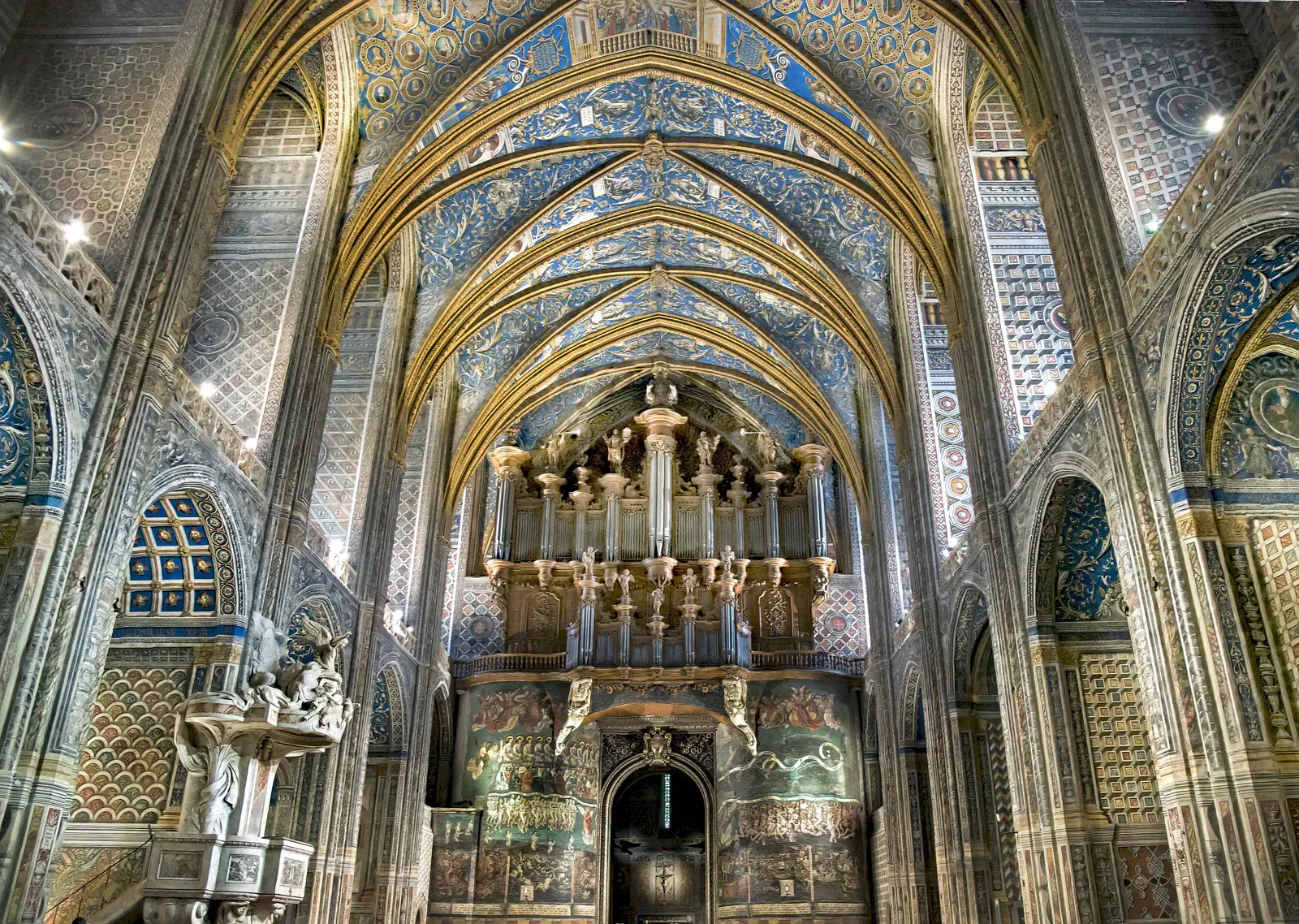
- Pipe organ
Church instrument that anchored sacred music and Bach's keyboard works.
- Lute
Main chordal instrument of Renaissance song and solo music.
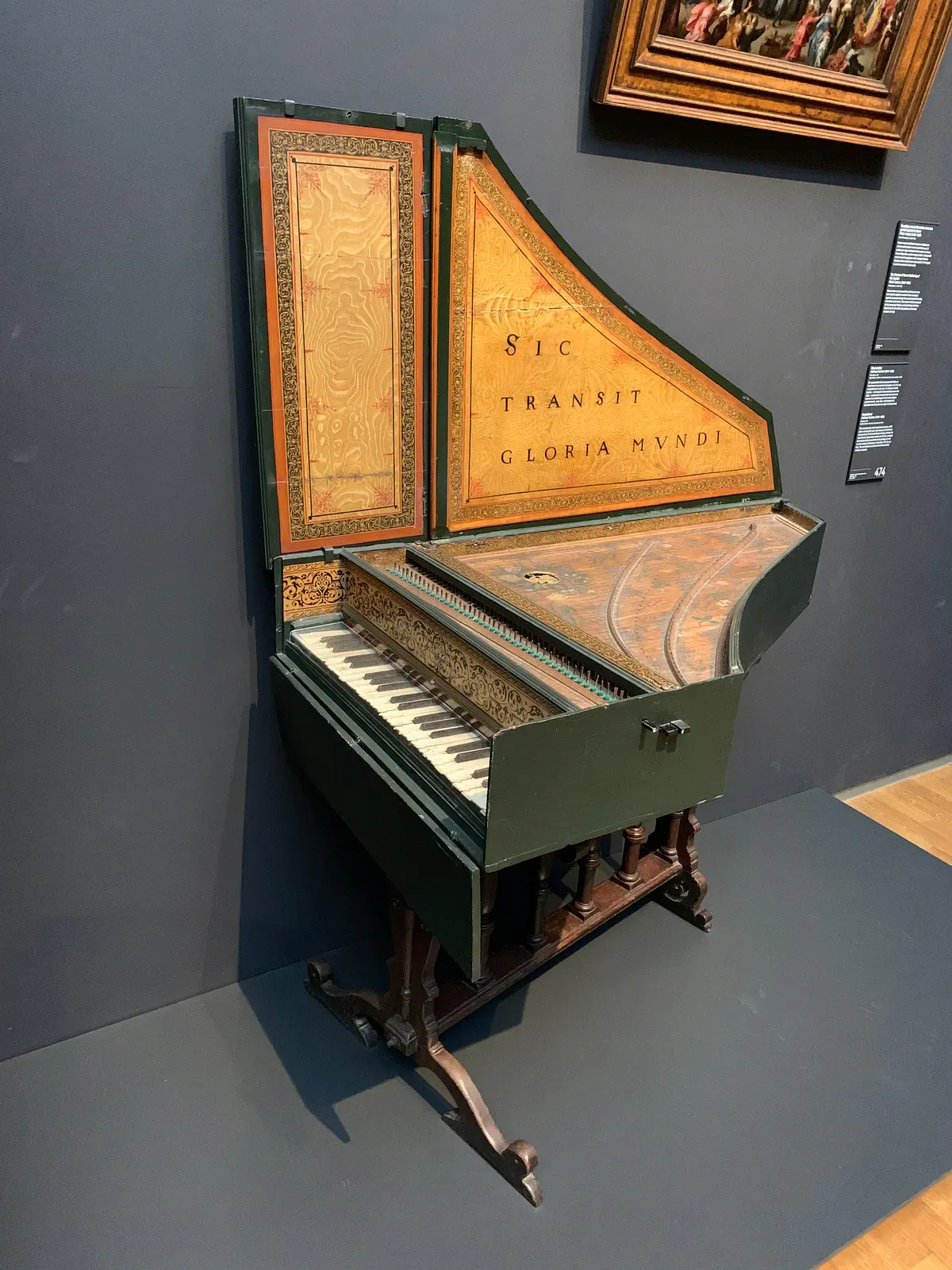
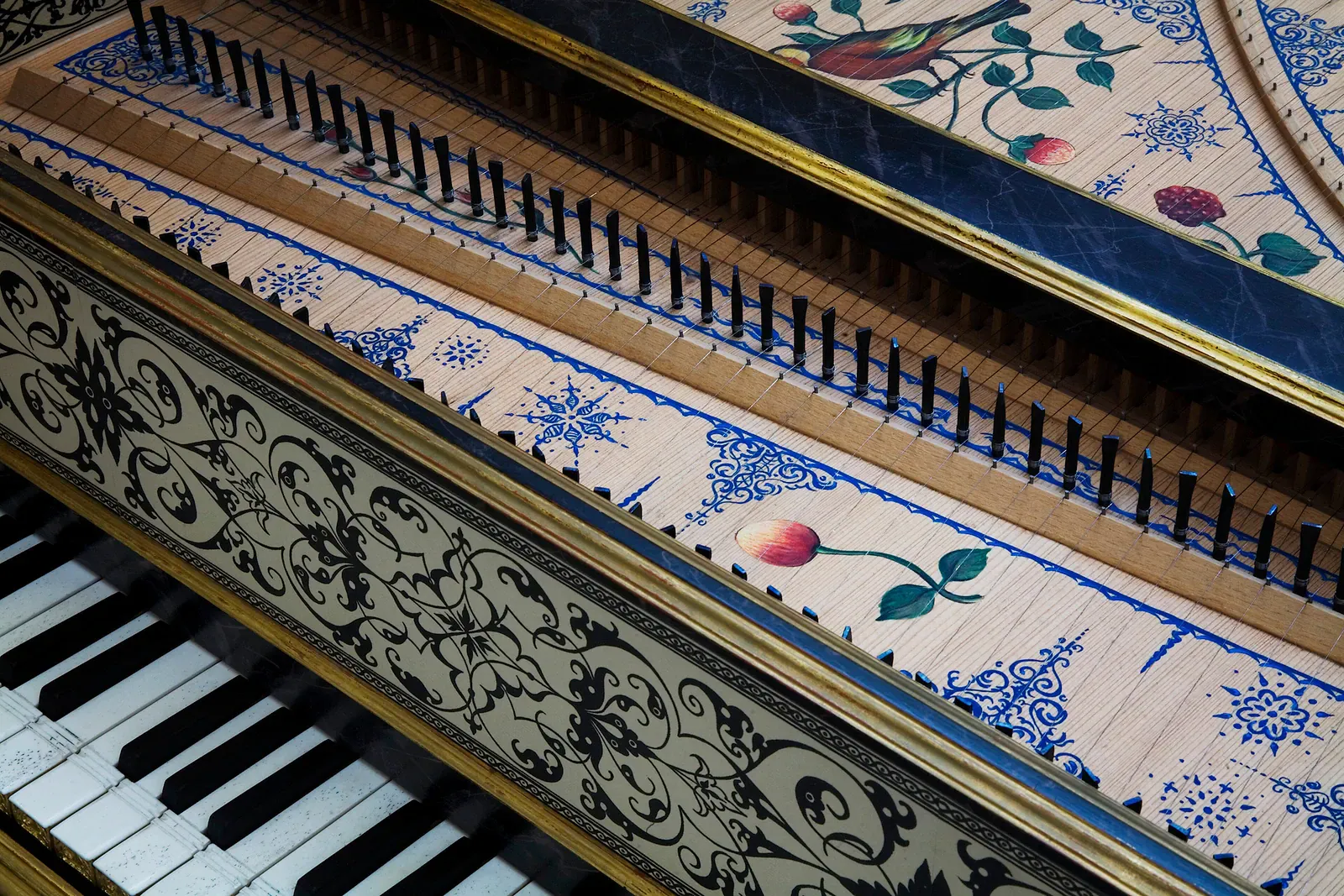
- Harpsichord
Keyboard of the Baroque continuo, revived in the 20th century.
- Violin family
Core of the orchestra since the 17th century.
- Piano
From fortepiano to concert grand, the main solo instrument from Mozart on.
- Clarinet
Added to the orchestra in the late 18th century; Mozart gave it solo status.
- French horn
Connected hunting calls and orchestral colour; core of wind sections.
- Timpani
Orchestral tuned drums that punctuate Baroque and Classical scores.
Technology that shaped it
- 1025Staff notation
Guido of Arezzo is credited with the staff-based system.
- 1501Printed music
Petrucci in Venice printed polyphony with movable type.
- 1877Phonograph
Edison invention began the recording age.
- 1948Long-playing record
Columbia 33 rpm LP suits symphonic length.
- 1982Compact disc
Philips and Sony format, early classical adopter.
- 2023Streaming apps
Apple Music Classical organizes catalogue by work and composer.
Essential records
- 1936Bach: Cello Suites
Pablo Casals. Casals made these suites a concert staple with this recording.
- 1955Bach: Goldberg Variations
Glenn Gould. A debut that made Gould famous and redefined the work.
- 1958Wagner: Der Ring des Nibelungen
Georg Solti. The first studio Ring cycle, a landmark of stereo.
- 1963Beethoven: The Symphonies
Herbert von Karajan. A benchmark cycle of the stereo era.
- 1969Stravinsky: The Rite of Spring
Pierre Boulez. Clear, analytic reading that shaped later performances.
- 1978Music for 18 Musicians
Steve Reich. Minimalism enters the classical catalogue.
- 1982Glassworks
Philip Glass. Short accessible pieces that brought Glass to a wide audience.
- 1982A Feather on the Breath of God
Gothic Voices. Hildegard chants made a hit and sparked a medieval revival.
- 1984Tabula Rasa
Arvo Pärt. Launch of ECM New Series and Pärt international career.
- 1989Vivaldi: The Four Seasons
Nigel Kennedy. A crossover bestseller among the biggest-selling classical albums.
- 1992Symphony No. 3 (Symphony of Sorrowful Songs)
Henryk Górecki, Dawn Upshaw. Unexpected pop-chart success for a contemporary symphony.
Scenes
Where it happened
Where and when the sound lived: one bar per city on a shared timeline.
Europe
North America
Active scenes
Peak 5, 1900-2025
Notre Dame school creates polyphony; later home of Debussy and Boulez.
San Marco, public opera and Vivaldi.
Bach worked at St Thomas and Mendelssohn led the Gewandhaus.
Haydn, Mozart, Beethoven, Schubert and Brahms lived and worked here.
Handel, the Proms and a recording centre for the labels.
Wagner Festival at the purpose-built theatre.
Berlin Philharmonic and Karajan era.
Home of the Metropolitan Opera, Carnegie Hall and minimalist composers.
Base of ECM and its New Series.
Glossary
Terms on this page
Music without a home key.
Baroque bass line played by keyboard and a low instrument.
Works for a small group with one player per part.
A piece for a soloist and orchestra.
Combining independent melodic lines.
A piece built on a theme imitated in every voice.
A drama sung with orchestra, staged with sets and costumes.
A large sacred work for choir, soloists and orchestra, without staging.
A movement structure of exposition, development and recapitulation.
A large orchestral work, usually in four movements.
Families