Classical period music
Classical period music is Western art music of about 1750 to 1820, led by Haydn, Mozart and Beethoven, built on clear phrasing, homophony and sonata form.
Austria, 1730
Classical family
Born
1730
Austria
Subgenres
11
Documented branches
Links
3
Genres it drew on or shaped
Tempo
90-150 BPMLineage
Family tree
Grew out of
- Late Baroque
Derived from
Pushed back against
Late Baroque
Austria, 1730
Classical period
Led to (12)
Timeline
Era by era
From the first sparks to today. Select a dot to read the story behind it.
- Baroque to Classical transition
1750 to 1760
- Formation of the style
1760 to 1775
- Haydn and Mozart
1775 to 1790
- The generation of 1770
1790 to 1820
Eras
Moments
- 1 Baroque to Classical transition, 1750 to 1760
- 2 Formation of the style, 1760 to 1775
- 3 Haydn and Mozart, 1775 to 1790
- 4 The generation of 1770, 1790 to 1820
around 1750
Baroque to Classical transition
After Bach's death composers tried abrupt contrasts of texture, dynamics and harmony: Empfindsamkeit, Scarlatti's sonatas, the Bach sons' lighter rococo idiom.
- 1750Bach's death opens the stylistic searchBetween 1750 and about 1770 composers experimented with the new ideas before Haydn and Mozart matured.
- 1757Haydn takes his first music director postHe worked for the Morzin household, starting the symphony career that earned him the title father of the symphony.
around 1760
Formation of the style
Italy, Vienna, Mannheim and Paris built orchestras and symphony traditions. Haydn wrote over forty symphonies in the 1760s and Sturm und Drang pushed drama.
- 1761Haydn's Morning, Noon and Evening symphoniesA triptych of symphonies solidly in the contemporary mode.
- 1762Gluck's Orfeo ed Euridice premieres at the BurgtheaterFirst performed in Vienna on 5 October 1762 and influential on later German opera.
around 1775
Haydn and Mozart
Haydn's Op. 33 quartets (1781) integrated melody and harmony; Mozart carried the ideas into opera and the virtuoso concerto.
- 1781Haydn's Op. 33 string quartetsWritten for the Vienna publisher Artaria, with melodic and harmonic roles passing among the instruments.
- 1787Mozart composes Eine kleine NachtmusikSerenade No. 13, K. 525, composed for a chamber ensemble.
- 1788Mozart's Symphonies Nos. 40 and 41No. 41 was completed on 10 August 1788 and is Mozart's last and longest symphony.
around 1790
The generation of 1770
Concert societies, publishing and touring grew. Beethoven, Hummel and Cherubini stretched the forms Haydn and Mozart had set, leading into Romanticism.
- 1791The Magic Flute premieres in ViennaPremiered 30 September 1791 at Schikaneder's theatre, two months before Mozart's death.
- 1792Haydn's Surprise Symphony premieres in LondonPremiered 23 March 1792 at the Hanover Square Rooms with Haydn at the fortepiano.
- 1794Beethoven launches his numbered worksHis first published opus was a set of three piano trios.
- 1798Haydn finishes The CreationOratorio written in 1797 and 1798 to a libretto by Gottfried van Swieten.
- 1808Beethoven's Fifth Symphony premieresComposed between 1804 and 1808 and first performed in Vienna in 1808.
- 1834The term Viennese School is coinedMusicologist Raphael Georg Kiesewetter first counted only Haydn and Mozart as members.
Listening path
Start listening
A short path from an easy way in to the deep end. Thumbnails come from YouTube; the player loads only when you press play.
- 01
Wolfgang Amadeus Mozart, 1787
A fast first movement that opens with a Mannheim rocket, a rising arpeggio, over a clear homophonic texture.
- 02
Joseph Haydn, 1791
Listen for the theme and variations and the sudden loud chord in an otherwise quiet theme.
- 03
Wolfgang Amadeus Mozart, 1788
A sonata-form movement in a minor key showing the tonic and dominant contrasts of the style.
- 04
Ludwig van Beethoven, 1801
A slow piano movement showing the fortepiano's sustained, expressive range.
- 05
Ludwig van Beethoven, 1808
The four-note motif drives the movement; the symphony stretches Classical form toward Romanticism.
Facts
| Family | Classical |
| Origin | Austria |
| Emerged | C. 1730-1820 |
| Status | Historical |
| Tempo | 90 to 150 BPM |
| Grew out of | Late Baroque |
| Subgenres | 11 |
Classical period music is the Western art music of roughly 1750 to 1820, between the Baroque and Romantic eras. It is mainly homophonic, with a clear melody over a subordinate chordal accompaniment, and it prefers the light elegance of the galant style to Baroque grandeur.
Its central forms are the symphony, the string quartet, the solo concerto and the sonata, organised around sonata form. The period is also called Viennese Classicism, after the city where Haydn, Mozart and Beethoven worked. It belongs to the wider classical tradition and follows Baroque music.
Origins
The style did not appear at once. After the death of J. S. Bach in 1750, composers spent two decades looking for a more dramatically effective language. High Baroque music expressed one emotion at a time, and each movement kept a largely uniform texture. Younger composers wanted to portray several feelings inside one movement or one character, and that needed variety: abrupt changes of texture, dynamics, harmony or tempo.
The most extreme answer was Empfindsamkeit, the sensitive style, whose best-known practitioner was Carl Philipp Emanuel Bach. Domenico Scarlatti’s more than five hundred keyboard sonatas also used sudden changes of texture, but organised them into balanced phrases, which became a mark of the Classical style. Johann Christian Bach developed the simpler textures and harmonies later called rococo.
The achievement of the great Classical composers was to make such surprises sound logically motivated, so that the expressive and the elegant could join hands.
Formation, 1760-1775
By the late 1750s Italy, Vienna, Mannheim and Paris all had flourishing centres of the new style, with dozens of symphonies and bands of players attached to musical theatres. Opera and other vocal music with orchestra dominated musical events, with concertos and symphonies, which had grown out of the overture, serving as introductions and interludes.
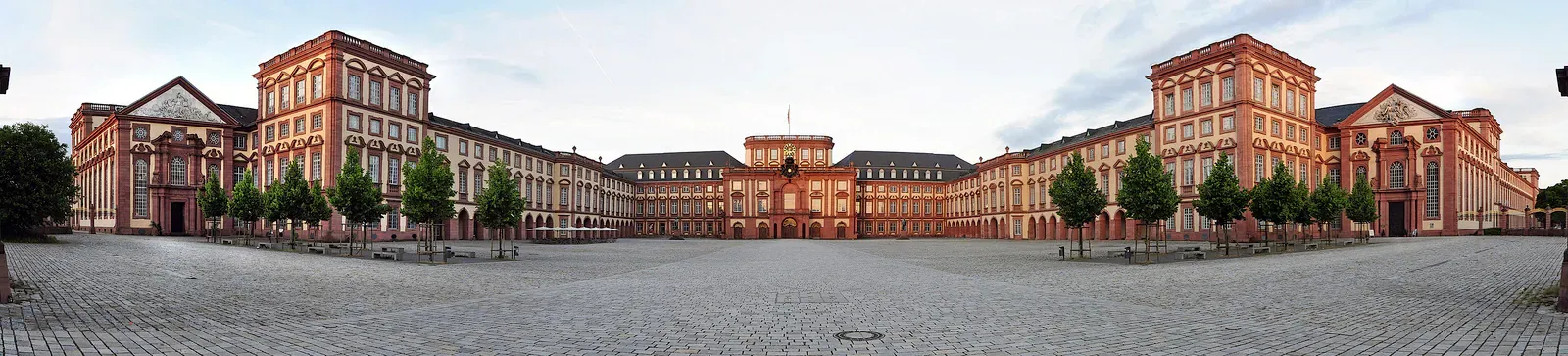
The court orchestra at Mannheim, with Johann Stamitz as the father of the school, introduced the sudden crescendo, the diminuendo, the rising Mannheim rocket and the grand pause. Its composers dropped the basso continuo, kept contrapuntal elaboration to a minimum and are credited with the four-movement symphony, adding the minuet as its third movement.
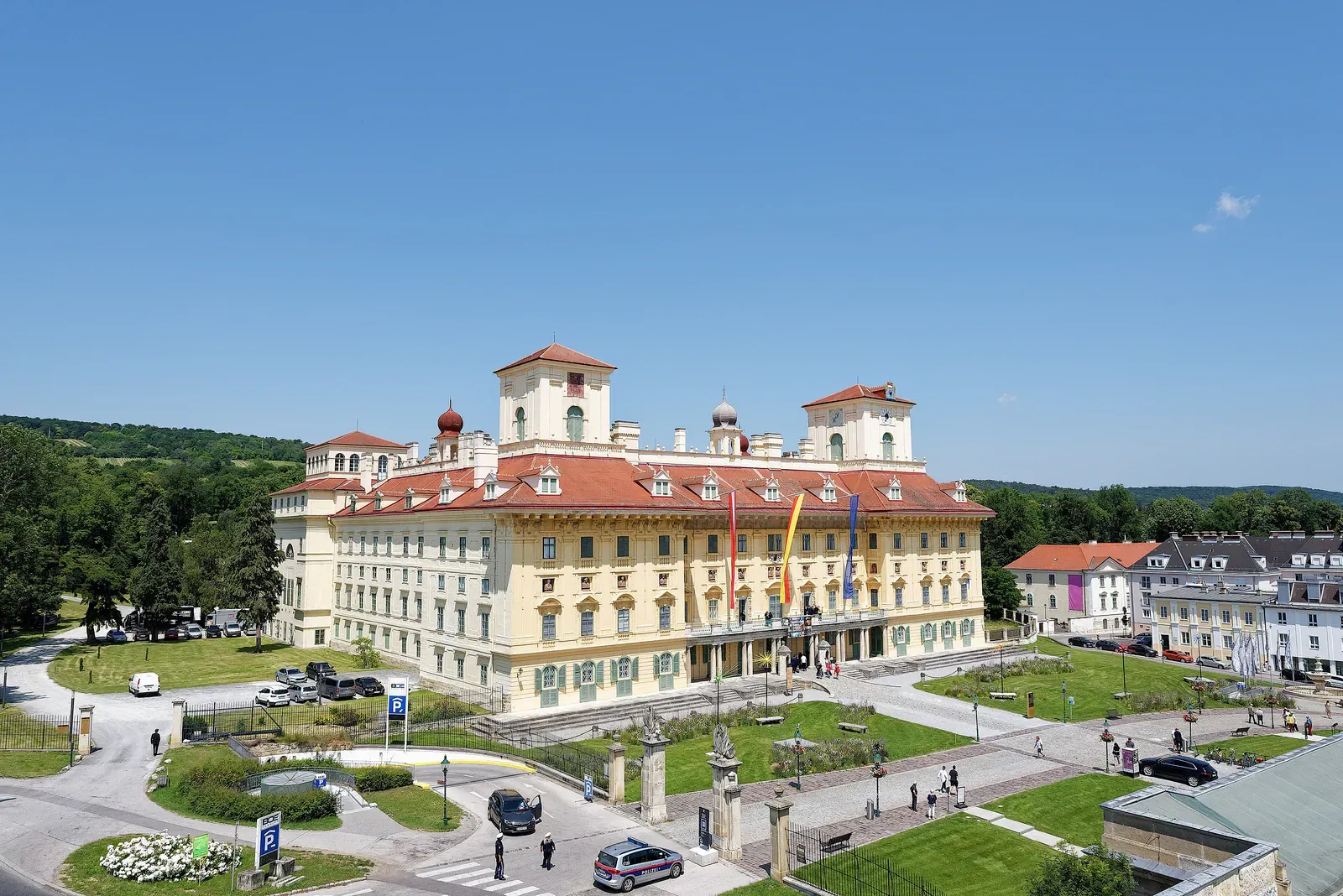
Joseph Haydn was the first great master. He began composing symphonies in the late 1750s and had written the triptych Morning, Noon and Evening by 1761. In the 1760s alone he composed over forty symphonies. Working for decades as music director to a prince gave him resources most composers lacked, including the ability to choose his players. The orchestra grew from strings alone to strings with winds, and the harpsichord or organ continuo faded out between 1750 and 1775.
Opera moved in parallel. Gluck’s Orfeo ed Euridice, first performed at the Burgtheater in Vienna on 5 October 1762, was influential on later German opera.
Haydn and Mozart, 1775-1790
Haydn’s Op. 33 string quartets, written in 1781 for the Vienna publisher Artaria, made the melodic and harmonic roles pass among the instruments, so that it is momentarily unclear which is melody and which is accompaniment. The music flows without obvious interruption through dramatic transitions and climaxes. Haydn then applied the integrated style to orchestral and vocal music, earning the titles father of the symphony and father of the string quartet.
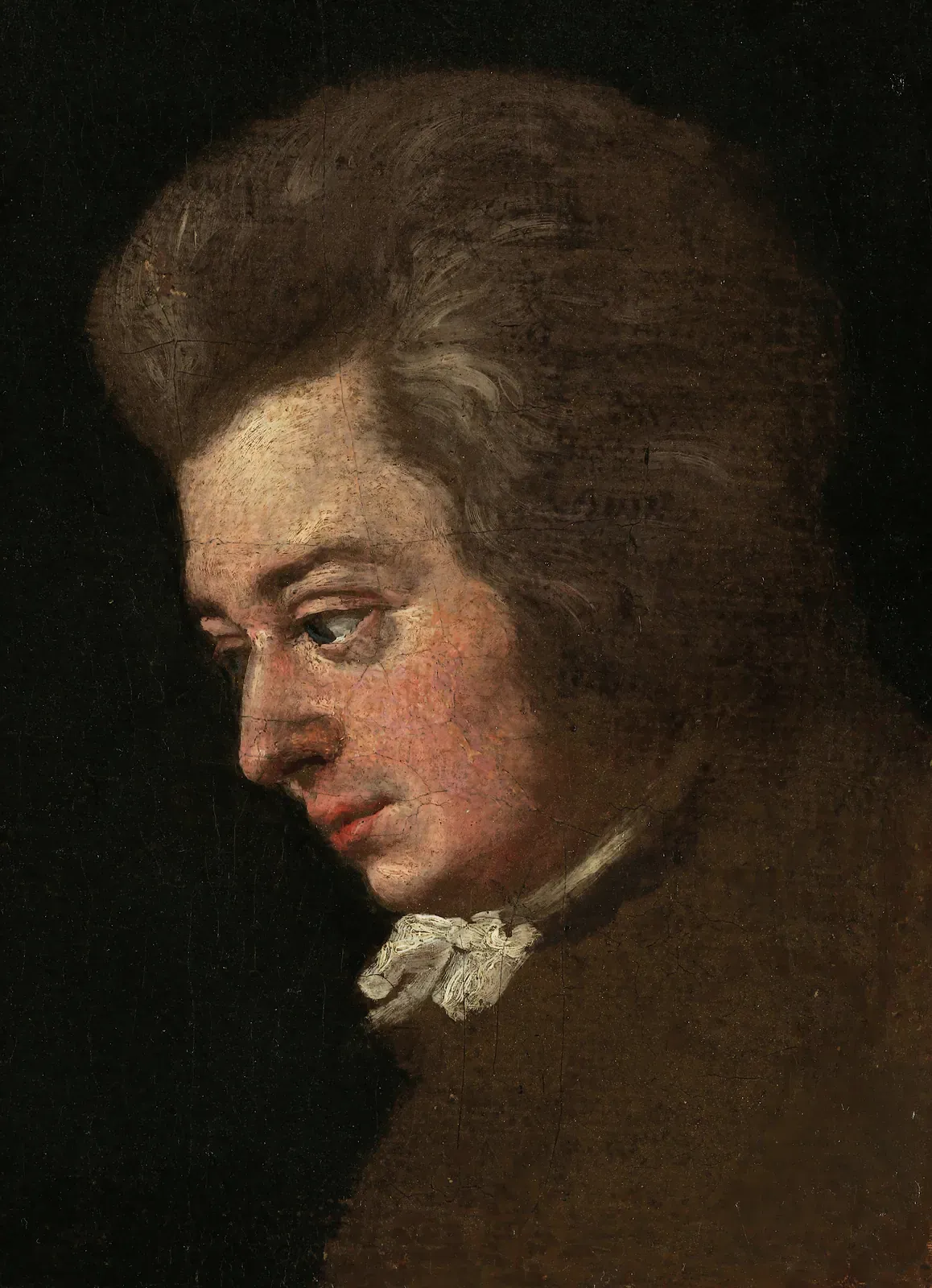
Wolfgang Amadeus Mozart brought a different temperament to Haydn’s ideas. Where Haydn spent his working life at court, Mozart wanted public success in the concert life of cities, which meant writing operas and virtuoso piano concertos that he performed himself. He had a taste for chromatic chords, a welter of melodies in one work and an Italianate sensibility, and he disciplined these through Haydn’s music and later through the polyphony of J. S. Bach. Haydn considered him his only true peer.
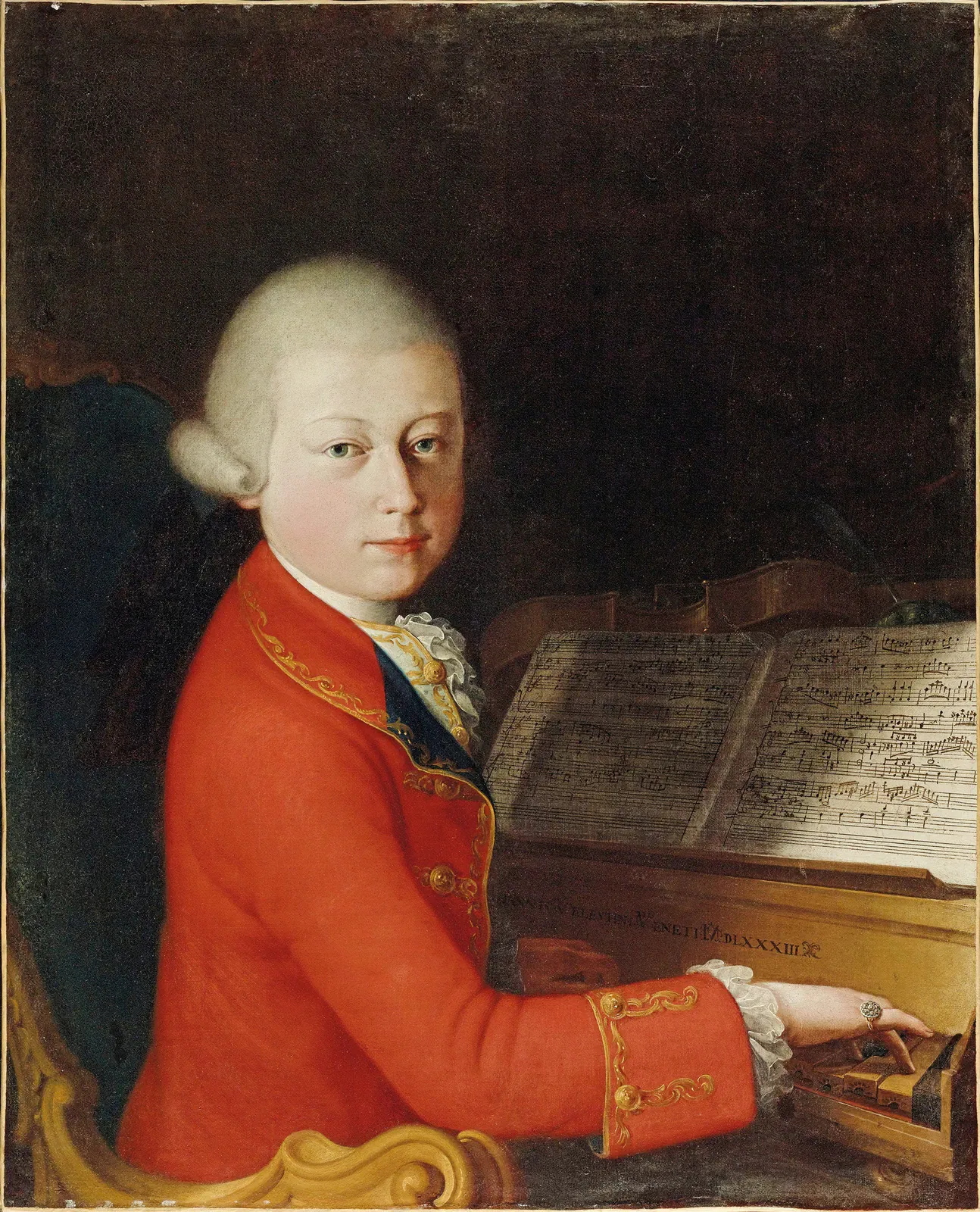
Mozart’s output includes Eine kleine Nachtmusik, composed in 1787 for chamber ensemble, and the Symphony No. 40 in G minor of 1788. His Symphony No. 41 was completed on 10 August 1788 and is his last and longest symphony. His last opera, The Magic Flute, premiered on 30 September 1791 at Schikaneder’s theatre in Vienna, two months before he died.
Vienna, London and the generation of 1770, 1790-1820
When Haydn and Mozart began composing, many symphonies lasted only ten or twelve minutes and the continuo was central. By the 1790s international publication and touring had grown explosively and concert societies had formed. Haydn wrote the London symphonies and the late oratorios. The Surprise Symphony, written in London in 1791, premiered on 23 March 1792 at the Hanover Square Rooms, with Haydn leading from the fortepiano. The Creation, an oratorio to a libretto by Gottfried van Swieten, followed in 1797 and 1798.
A new generation, born around 1770, heard in the late Haydn and Mozart a vehicle for greater expression. Luigi Cherubini settled in Paris in 1788 and achieved fame with Lodoiska in 1791, and Gaspare Spontini’s operas, admired by Weber, Berlioz and Wagner, laid the ground for French and German romantic opera. The most fateful of them was Ludwig van Beethoven, who launched his numbered works in 1794 with three piano trios.
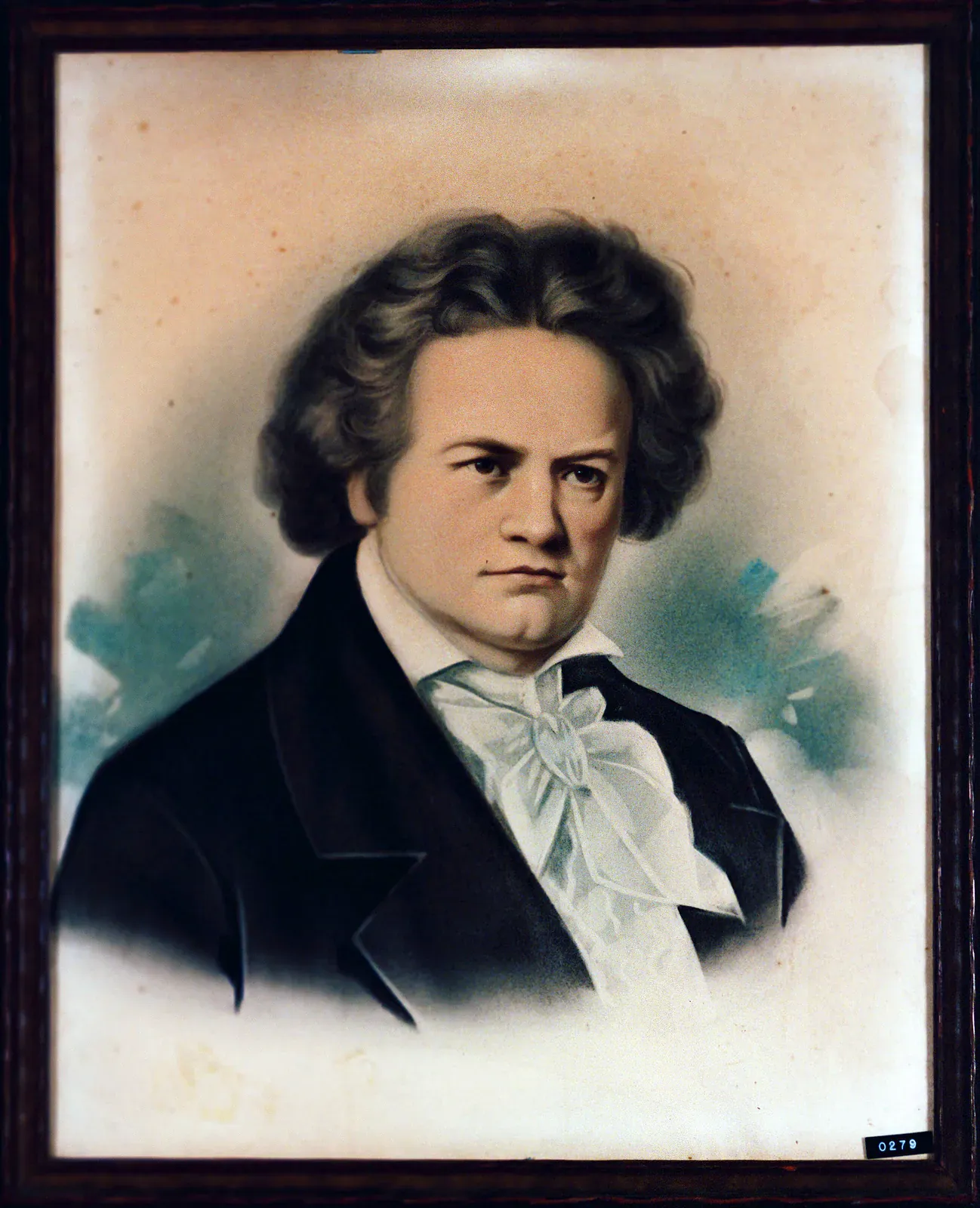
Beethoven’s Piano Sonata No. 14, the Moonlight, was completed in 1801, and the Fifth Symphony was written between 1804 and 1808 and first performed in Vienna in 1808. Franz Schubert, active in the same city, is described as a composer of the late Classical and early Romantic eras, with over six hundred songs.
Characteristics
Themes are built from brief phrases of contrasting figures and rhythms, typically four bars long, so that melodies can seem sparse or terse. The Alberti bass is a typical accompaniment. Structure is clear, with a defined contrast between tonic and dominant introduced by strong cadences, and dynamics highlight the structural points. Baroque music moved between keys through continual chord changes without a sense of arrival; Classical music marks the arrival.
Sonata form developed in the early period and became the most important form. It organised the first movement of most large works, and was also used for slow movements, finales and standalone pieces such as overtures. The standard symphony had four movements: a fast sonata-form movement, a slow movement, a minuet and a fast finale. Variety and contrast inside a piece became more pronounced than before. Counterpoint remained in use, especially later in the period, for symphonies, string quartets and Masses.
Instruments and production
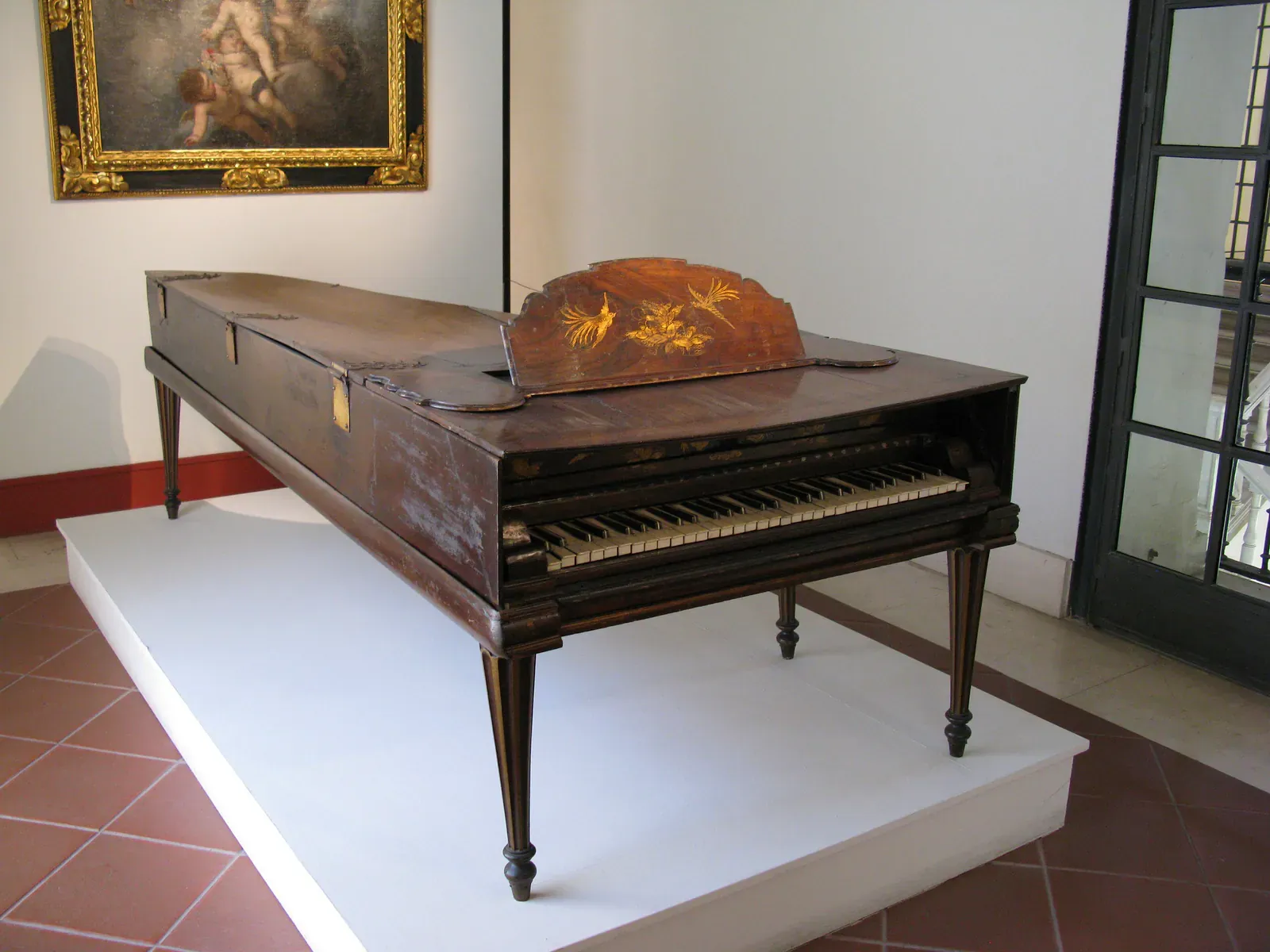
The fortepiano replaced the harpsichord. Because its hammers strike the strings, the player can vary loudness by touch, which supports expressive, sustained melodies. Equal temperament, which makes cadences sound alike in every key, supported the new structural clarity. The string section standardised on violins, violas, cellos and double basses, with basses gradually given their own parts. Woodwinds became a self-contained group of flutes, oboes, clarinets and bassoons.
Culture
Patronage shaped the music: hundreds of noble families in Vienna supported musical establishments. The minuet, a French social dance in triple time, entered the symphony as its third movement. Over the period composers such as Mozart sought a paying public in the city rather than a single court, and concert societies and printed editions spread the style.
Legacy
The Classical forms set the template that later composers extended. Beethoven’s generation stretched sonata form and the symphony, and from the Classical language came the Romantic era. The designation First Viennese School, first used in 1834 by the musicologist Raphael Georg Kiesewetter for Haydn and Mozart and later extended to Beethoven, is the traditional shorthand for the core group. On record, the 1963 set of the Beethoven symphonies by Herbert von Karajan is among the landmark releases of Deutsche Grammophon.
Misconceptions
The word classical is often used for all Western art music, but the Classical period is a specific era of about 1750 to 1820, set apart from the Baroque before it and the Romantic after it. The German term Wiener Klassik is used to separate the era from the other periods colloquially called classical.
Another myth holds that Classical composers dropped counterpoint for simple tunes. Counterpoint was less emphasised, yet composers kept it for symphonies, string quartets and religious works such as Masses, especially later in the period.
A third myth treats the style as purely Viennese. Mozart was born in Salzburg and Beethoven in Bonn, and the new style had centres in Italy, Mannheim and Paris by the late 1750s.
Frequently asked questions
When was the Classical period in music?
The Classical period of music ran from roughly 1750 to 1820. It followed the Baroque and preceded the Romantic era.
Who are the main composers of the Classical period?
Haydn, Mozart and Beethoven are the core of the Viennese Classical school, and Schubert is sometimes added. Gluck, Cherubini and Hummel are also associated with the era.
What is sonata form in Classical music?
Sonata form is the plan for most first movements of symphonies and string quartets, built on a contrast between the tonic and a second key, usually the dominant. Classical composers developed it in the early period and used it more widely than any other form.
Sound
Sound sheet
Anatomy of a track
| # | Part |
|---|---|
| 1 | Fast first movement in sonata form |
| 2 | Slow movement (andante or adagio) |
| 3 | Minuet and trio |
| 4 | Fast finale, often a rondo or sonata form |
Signature sounds
- Four-bar periodic phrases
- Homophony over Alberti bass
- Clear tonic-dominant contrast with strong cadences
- Sudden dynamic contrasts and orchestral crescendos
Techniques
- Sonata form
- Alberti bass
- Mannheim crescendo
- Periodic phrasing
Keys and modes
Tonic and dominant. Sonata form contrasts the home key with the dominant, or the relative major when the home key is minor.
Tuning
Equal temperament, which let cadences sound alike in every key
Vocals
Opera, choral works, oratorio and solo songs with piano such as Schubert's Lieder.
Scenes
Where it happened
Where and when the sound lived: one bar per city on a shared timeline.
Europe
Active scenes
Peak 4, 1791-1819
Hundreds of noble families kept musical establishments, and Haydn, Mozart and Beethoven all worked here.
Court orchestra whose crescendos, drilled playing and four-movement symphony shaped the early style.
Centre of the new style by the late 1750s; Cherubini settled here in 1788.
Haydn's concert visits of 1791 to 1792 produced the Surprise and other London symphonies.
Culture
Culture markers
- Minuet
A French social dance in 3/4 whose stylised form became the third movement of the symphony.
Dance - Aristocratic court concerts
Noble households kept their own orchestras and sponsored competing concert series, especially in Vienna.
Ritual
Glossary
Terms on this page
Broken-chord accompaniment figure beneath a melody, typical of Classical homophony.
The sensitive style of abrupt shifts in texture and dynamics, best known through C. P. E. Bach.
Light, elegant idiom with short balanced phrases that replaced the Baroque's dignified seriousness.
A crescendo built by the whole orchestra, introduced by the Mannheim court composers.
Minuet and trio, the dance-derived third movement that the Mannheim composers added to the symphony.
Movement plan with an exposition of themes in tonic and a contrasting key, a development and a recapitulation, used for most first movements.
Classical family