Romantic music
Romantic music is the 19th-century Western art music of personal feeling, chromatic harmony, larger orchestras, literary programmes and national character.
Europe, 1800
Classical family
Born
1800
Europe
Subgenres
14
Documented branches
Links
5
Genres it drew on or shaped
Tempo
65-150 BPMLineage
Family tree
Grew out of
Derived from
Influenced by
Sturm und Drang
Pushed back against
Europe, 1800
Romantic music
Led to (14)
Timeline
Era by era
From the first sparks to today. Select a dot to read the story behind it.
- Early Romanticism
1800 to 1829
- Virtuosos and programmes
1830 to 1849
- Rival schools and national voices
1850 to 1879
- Late Romanticism
1880 to 1910
Eras
Moments
- 1 Early Romanticism, 1800 to 1829
- 2 Virtuosos and programmes, 1830 to 1849
- 3 Rival schools and national voices, 1850 to 1879
- 4 Late Romanticism, 1880 to 1910
around 1800
Early Romanticism
Beethoven's late works and Schubert's songs and symphonies carry Viennese classicism into a more personal style, while Weber, Rossini and Paganini open German opera, bel canto and virtuoso showmanship.
- 1810Hoffmann's review of Beethoven's FifthE. T. A. Hoffmann's essay sets out the principles of musical Romanticism and ranks pure instrumental music as the art best suited to emotion.
- 1815Schubert composes ErlkönigSchubert sets Goethe's ballad for one singer playing four characters; it became one of the best-known Lieder.
- 1827Chopin begins his nocturnesChopin writes 21 nocturnes between 1827 and 1846, expanding the piano form John Field had started.
- 1828Winterreise is publishedSchubert's 24-song cycle on poems by Wilhelm Müller appears as Op. 89, a peak of the Lied.
1830
Virtuosos and programmes
Berlioz stages a programmatic symphony, Chopin and Schumann write character pieces for piano, Liszt turns the recital into a spectacle and Mendelssohn founds the Leipzig Conservatory.
- 1830Symphonie fantastique premieresBerlioz's five-movement programme symphony, with its recurring idée fixe, first sounds at the Paris Conservatoire on 5 December.
- 1840Schumann composes DichterliebeSixteen Heine settings make Schumann's best-known song cycle.
- 1843Leipzig Conservatory opensFelix Mendelssohn founds Germany's oldest school of music, later a base of the conservative circle around Schumann and Brahms.
- 1848Liszt settles in WeimarLiszt conducts at court until 1859 and premieres Lohengrin, making Weimar a centre of modern music.
1850
Rival schools and national voices
Liszt and Wagner push chromatic harmony and the symphonic poem, Brahms and the conservatives defend absolute music, and Russian, Czech and Nordic composers build national styles.
- 1850Liszt publishes LiebesträumeThree Liszt songs on love poems appear with piano transcriptions; the third became a recital favourite.
- 1865Tristan und Isolde premieresWagner's music drama opens in Munich on 10 June under Hans von Bülow; its chromaticism strains tonality.
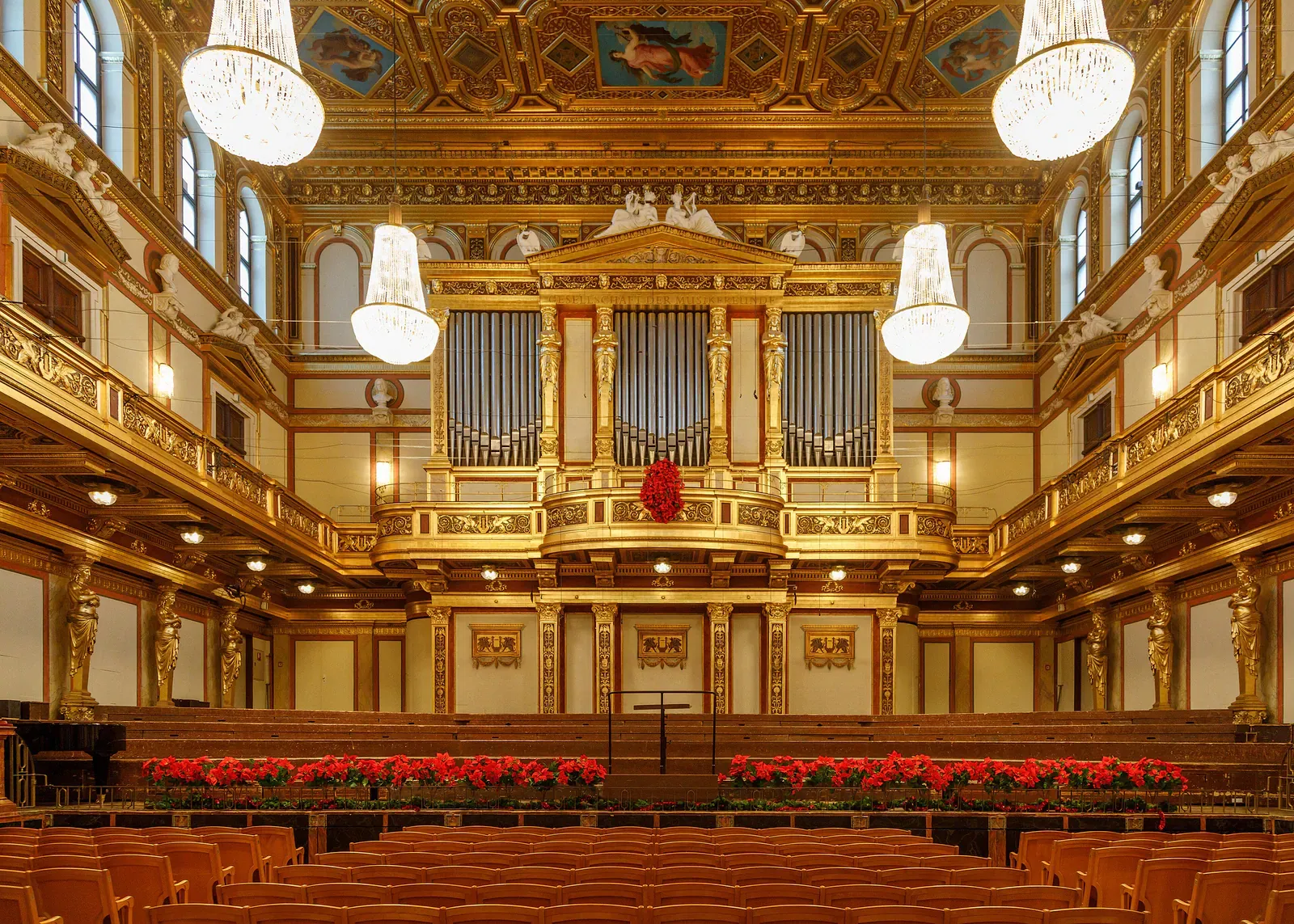
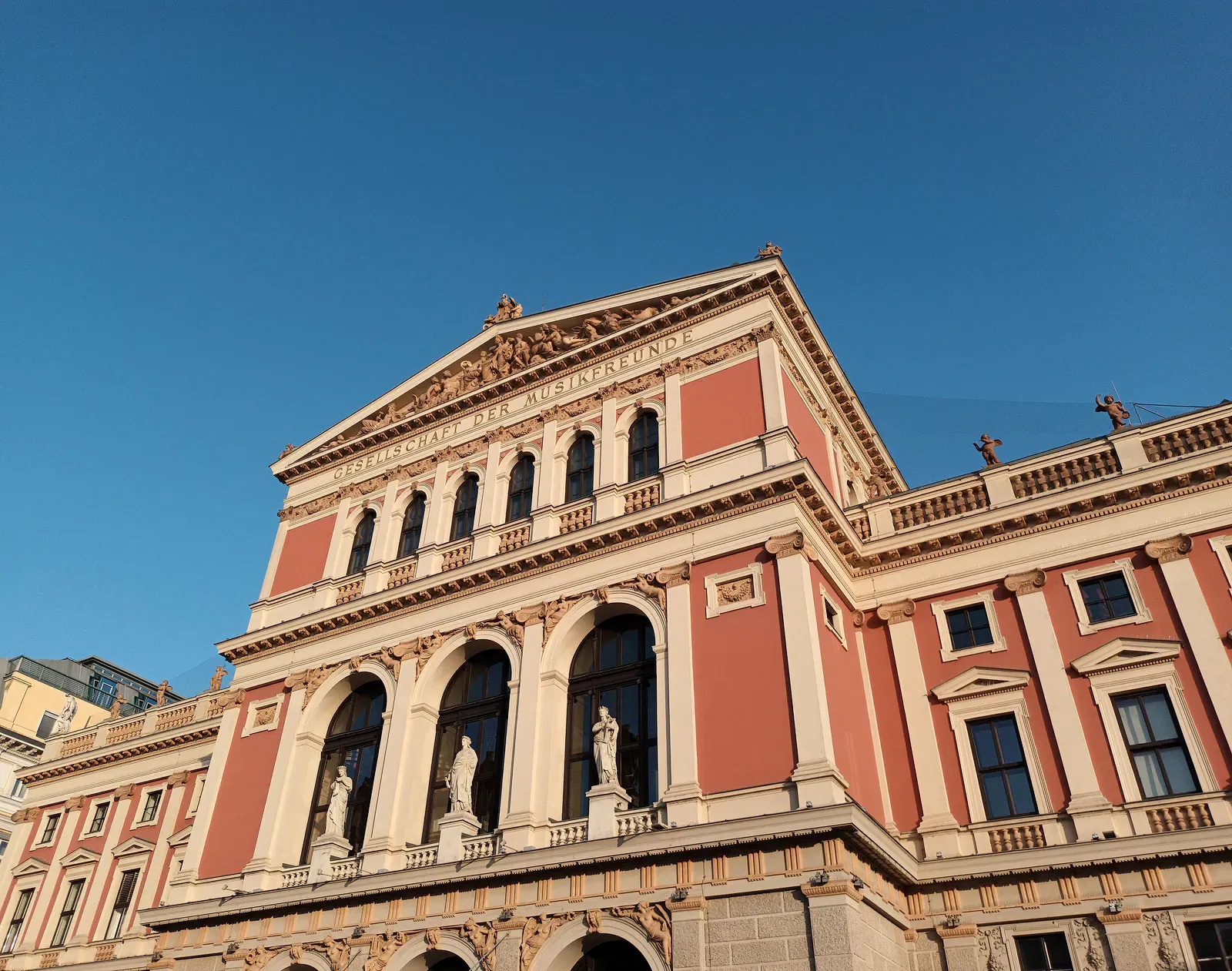
- 1870Vienna's Musikverein opensTheophil Hansen's concert hall becomes the home of the Vienna Philharmonic.
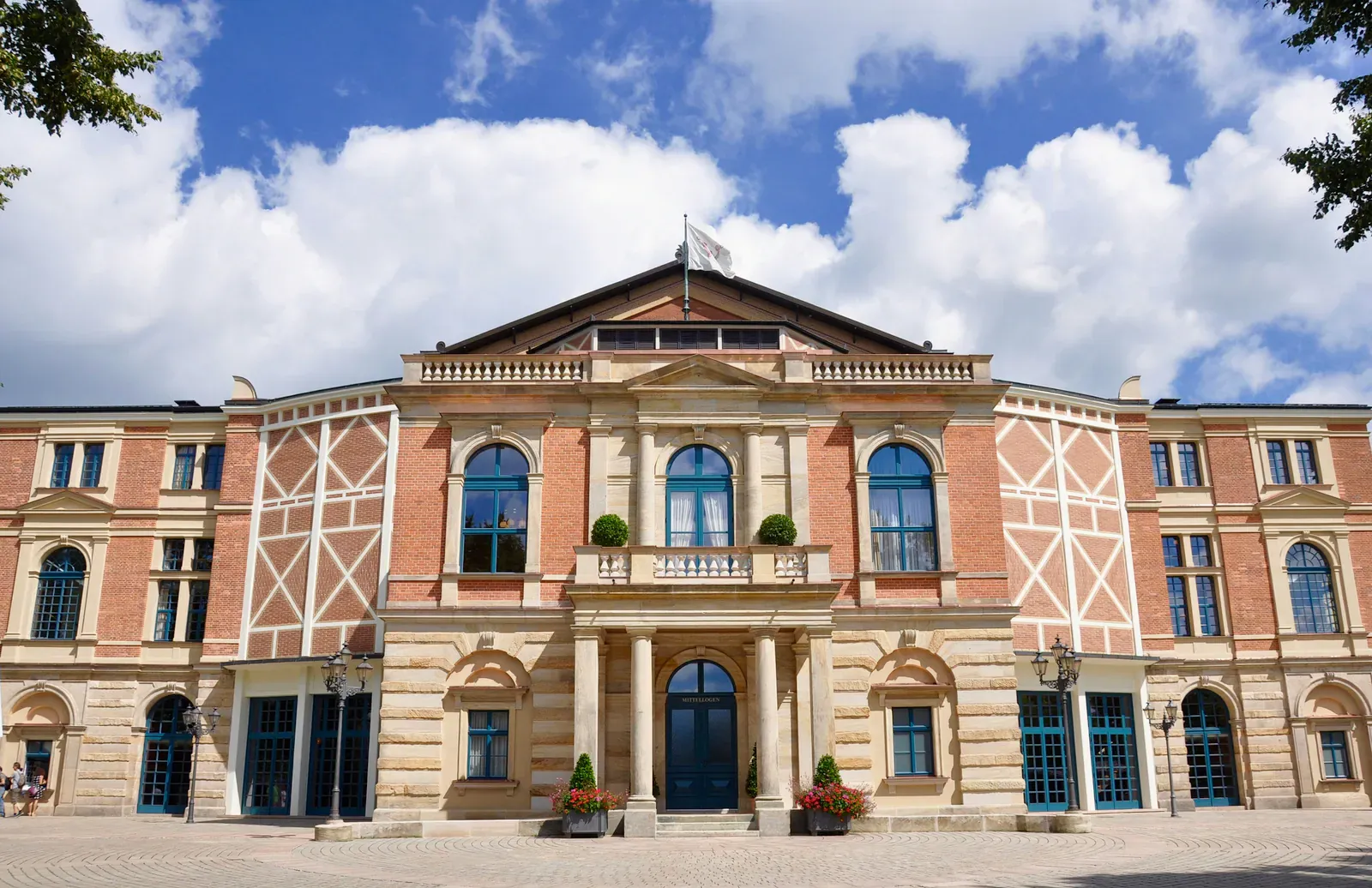
- 1876Bayreuth Festspielhaus opensWagner's own theatre opens with the first complete Ring cycle, 13 to 17 August.
- 1879Brahms completes the Hungarian DancesThe 21 dances, written for piano four hands, were the most profitable works of his career.
1880
Late Romanticism
Tonality stretches toward its limits in the symphonies of Mahler and the operas of Strauss and Puccini, while Debussy, Schoenberg and Stravinsky prepare the break with Romanticism.
- 1882Smetana's Má vlast is heard completeThe six Bohemian symphonic poems play as a set in Prague on 5 November.
- 1893New World Symphony premieresDvořák's Ninth first sounds in New York on 16 December, written while he directed a conservatory there.
- 1902Mahler completes his Fifth SymphonyWritten 1901 and 1902, its Adagietto became a favourite, and its harmony nears the edge of tonality.
Listening path
Start listening
A short path from an easy way in to the deep end. Thumbnails come from YouTube; the player loads only when you press play.
- 01
Franz Schubert, Arthur Grumiaux, 1825
A Schubert song in a violin arrangement; listen for the long, unbroken vocal line over a rolling accompaniment.
- 02
Frédéric Chopin, Lang Lang, 1832
Chopin's best-known nocturne; listen for the ornamented melody over a rocking left hand.
- 03
Richard Wagner, Berlin Philharmonic, 1856
The best-known passage of the Ring cycle; listen for brass leitmotifs over galloping strings.
- 04
Johannes Brahms, Wiener Philharmoniker, 1879
A Brahms dance with sudden tempo changes and a Hungarian folk flavour.
- 05
Gustav Mahler, Berlin Philharmonic, 1902
Strings and harp alone; the slow, yearning late-Romantic style at its most intimate.
Facts
| Family | Classical |
| Origin | Europe |
| Emerged | C. 1800-1910 |
| Status | Historical |
| Tempo | 65 to 150 BPM |
| Meter | varies |
| Grew out of | Classical period |
| Subgenres | 13 |
Romantic music is the Western art music of the nineteenth century, roughly 1800 to 1910, in which composers prized individual expression, long emotional melodies, richer chromatic harmony, larger orchestras and stories drawn from literature, nature and national history.
It grew out of the classical tradition of Haydn, Mozart and Beethoven. Its leading figures include Schubert, Chopin, Schumann, Liszt, Wagner, Brahms and Mahler.
Origins
The Romantic movement began in the later eighteenth century as a reaction to Enlightenment rationalism and the Industrial Revolution. E. T. A. Hoffmann set out its musical principles in an essay on Beethoven’s Fifth Symphony published in 1810, arguing that pure instrumental music, free of words and pictures, was the art best suited to emotion. Through Hoffmann and other German writers, German music moved to the centre of the style.
Beethoven stood at the hinge: his breadth and power left a feeling that sonata form, the symphony and the string quartet had been used up. Social change mattered as much. Composers once kept by aristocratic patrons began writing for public concerts and festivals, and improved keys and valves gave winds and brass more reliable colours.
Early Romanticism, 1800-1829
The first generation worked in the shadow of Viennese classicism. Franz Schubert, who died in 1828 aged 31, carried the new spirit into chamber music, symphonies and above all the Lied, the art song for voice and piano. His Erlkönig, composed in 1815, gives one singer four roles, and his song cycle Winterreise appeared in print in 1828. Weber shaped German opera, Rossini, Donizetti and Bellini led Italian bel canto, and the violinist Paganini made virtuosity a draw. John Field wrote the first piano nocturnes, the form Chopin would make famous.
Virtuosos and programmes, 1830-1849
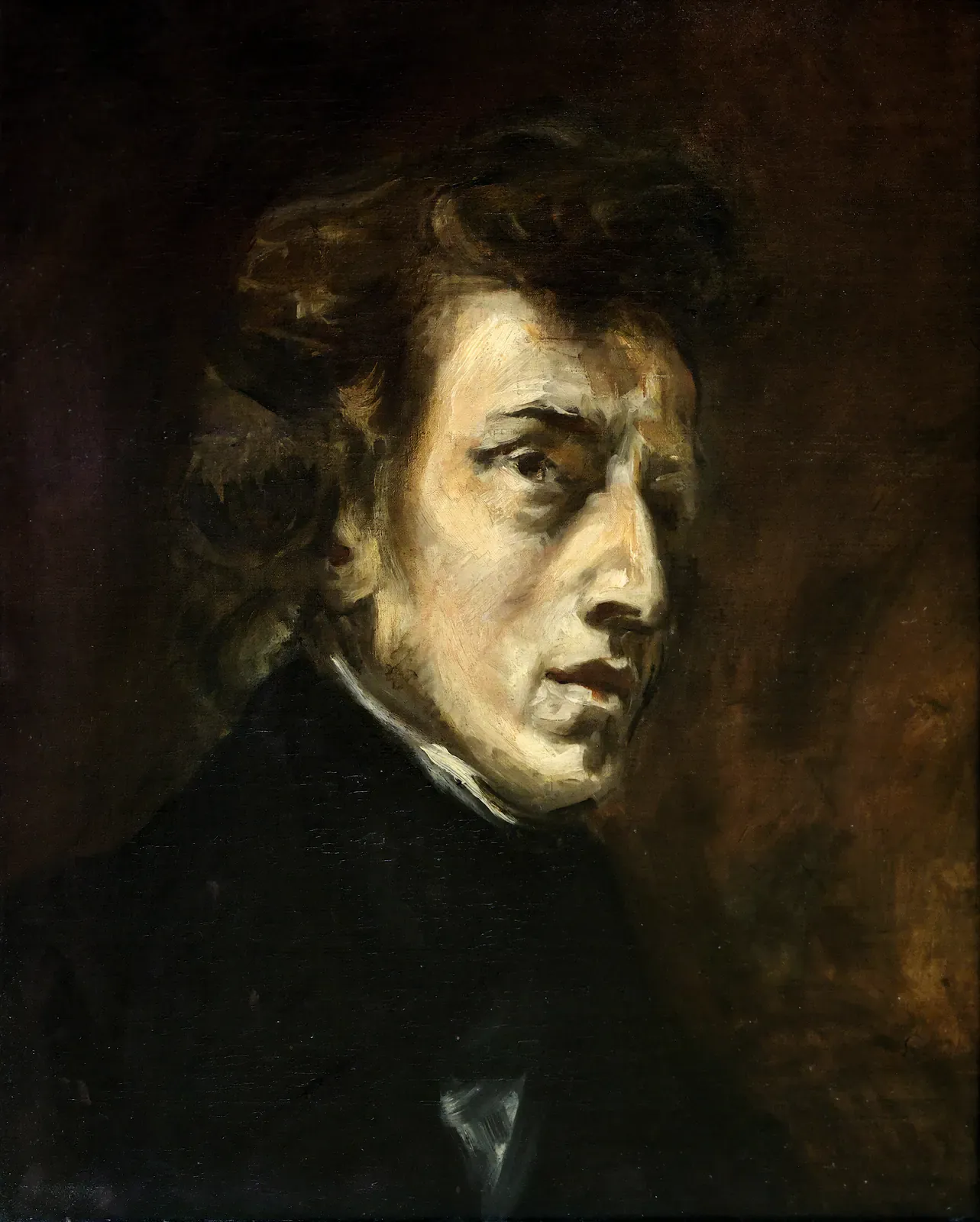
Hector Berlioz premiered his Symphonie fantastique at the Paris Conservatoire on 5 December 1830, with a semi-autobiographical programme and a recurring theme he called the idée fixe. Frédéric Chopin worked on a smaller canvas: 21 nocturnes between 1827 and 1846, plus mazurkas and polonaises whose Polish rhythms became symbols of national feeling. Robert Schumann added the image of the tragedy-haunted artist, and his song cycle Dichterliebe, composed in 1840 on sixteen Heine poems, influenced later musicians. Felix Mendelssohn founded the Leipzig Conservatory in 1843, a base of the conservative camp.
Rival schools and national voices, 1850-1879
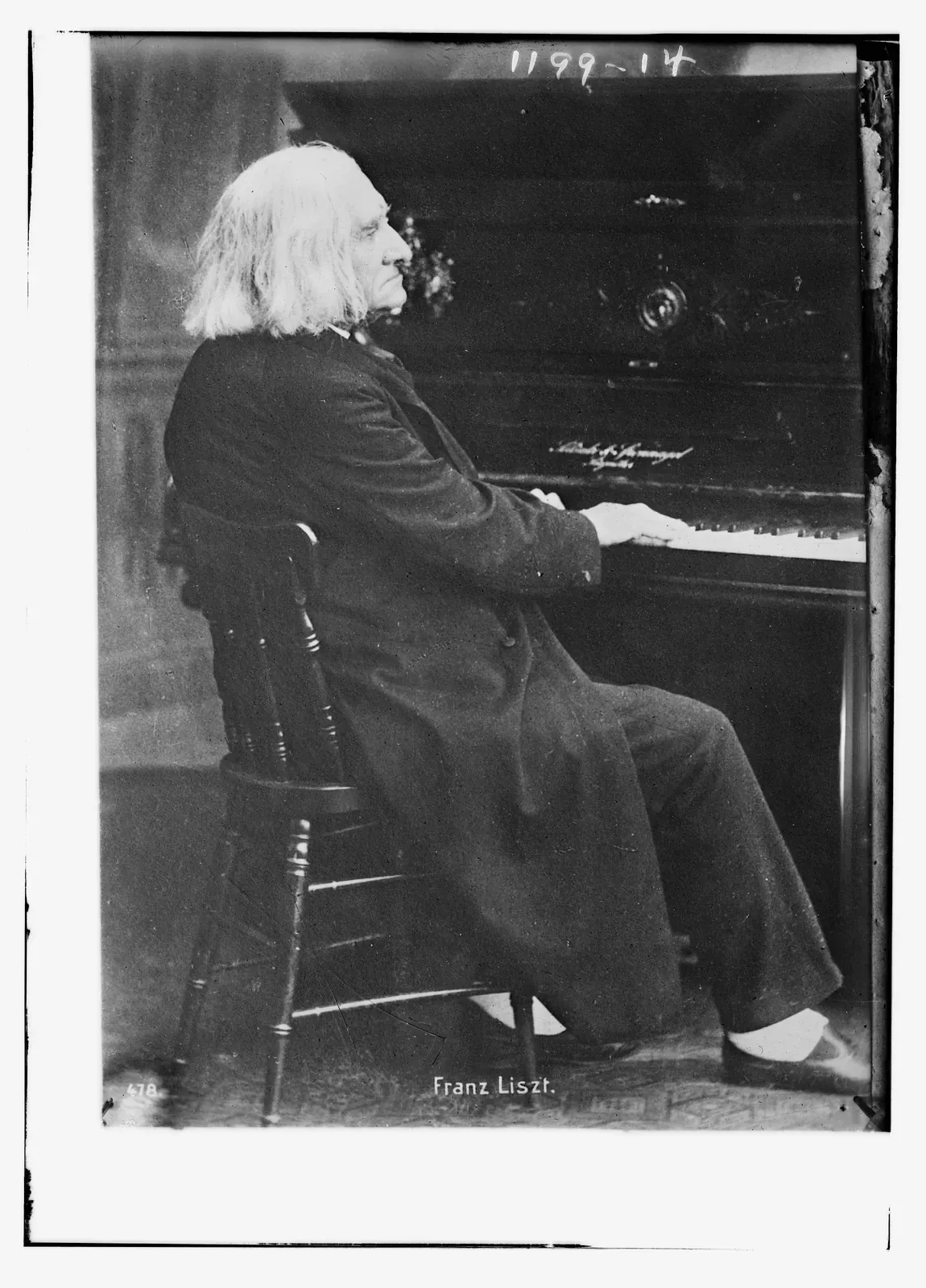
The New German School, led informally by Liszt and Wagner, held that Beethoven had exhausted absolute music and pressed on with chromatic harmony, programme music and the symphonic poem. Liszt settled in Weimar in 1848 and conducted at court until 1859, premiering Wagner’s Lohengrin. Wagner used leitmotifs to hold the four parts of the Ring cycle together and pushed chromaticism to an extreme in Tristan und Isolde, first heard in Munich on 10 June 1865.
Against them stood the conservatives around Johannes Brahms, Joseph Joachim and Clara Schumann, who defended absolute music. Anton Bruckner, a Wagner supporter whose block-like scoring drew on organ registers, fit neither camp. Meanwhile composers wrote for their homelands: The Five worked in Saint Petersburg from 1856 to 1870, and Bedřich Smetana became the founding figure of Czech music with Má vlast.
Late Romanticism, 1880-1910
Late Romanticism stretched the old forms and the tonal system itself. Gustav Mahler’s symphonies, often using the human voice, were especially progressive; his Fifth, written in 1901 and 1902, holds the Adagietto for strings and harp. Richard Strauss took opera to the limits of tonality in Salome and Elektra, and Italian opera moved toward verismo, where only Puccini stayed fully in the repertoire. Debussy and Ravel dissolved structure into shades of timbre, and Schoenberg and Stravinsky led the breaks with Romanticism, a story continued in 20th-century classical music.
Characteristics
Romantic composers favoured long, emotionally charged themes over the short motives of the classical period. They used more chromatic harmony, shifted toward the subdominant and distant keys, widened the dynamic range from ppp to fff and featured virtuoso players. Programme music grew common, and the song cycle, nocturne, concert etude and rhapsody sat beside the symphony, concerto and opera. The night, nature, the supernatural and national identity gave the music its subjects.
Instruments and production
The piano was central: its growth in range and power suited the recital, the character piece and the Lied. The orchestra grew in size and variety, and better keys and valves made winds and brass dependable. Violin virtuosity gave soloists a platform, and the organ left its mark through Franck’s revival and Bruckner’s scoring.
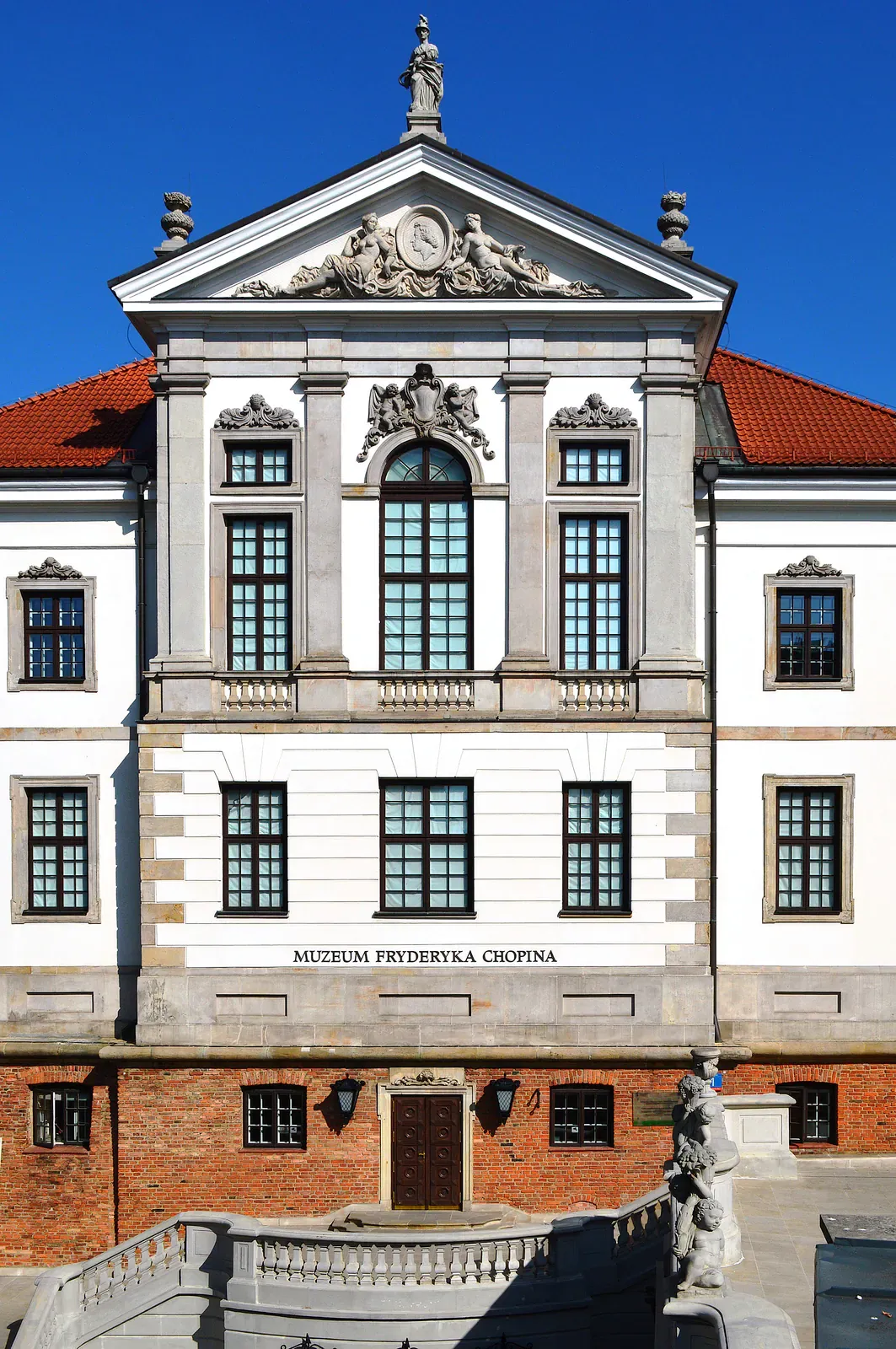
Mainstream success
This was the popular and prestigious music of the Western concert world. Tchaikovsky’s ballets and symphonies became enormously popular, Johann Strauss II made the waltz the sound of Vienna, and Dvořák’s Ninth Symphony, From the New World, premiered in New York on 16 December 1893 and is still among the most played. Much of the repertoire of orchestras, opera houses and piano recitals dates from these years.
Notable recordings
Brahms completed his 21 Hungarian Dances for piano duet in 1879, mostly on Hungarian themes; they were his most profitable works and have been arranged for many ensembles. Wagner’s Tristan und Isolde, composed between 1857 and 1859, was shaped by Schopenhauer and by his bond with Mathilde Wesendonck; he called it an action rather than an opera because the music flowed without set arias. Liszt’s Liebesträume, published in 1850, began as three songs on poems about three forms of love. Labels such as Deutsche Grammophon and Decca Classics have issued many recordings of this repertoire.
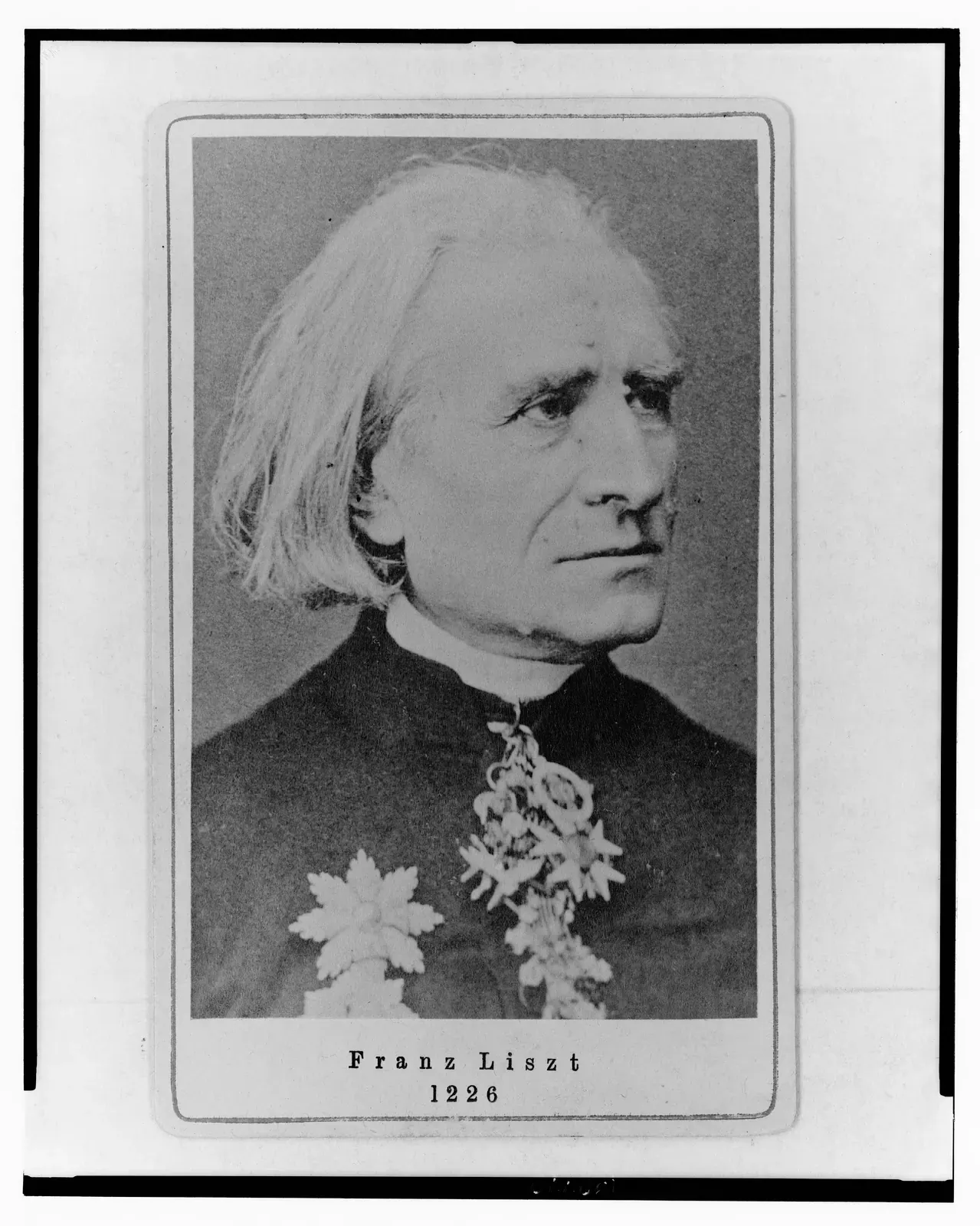
Culture
Concert life became a ritual. Public concerts replaced the court salon, and halls such as the Vienna Musikverein gave the symphony a sacred setting. Wagner took this furthest by building his own theatre at Bayreuth, a place of pilgrimage since 1876. Literature fed the music directly: Berlioz wrote programme notes, Liszt drew symphonic poems from stories, and Schubert and Schumann set the poets of their day.
Legacy
Romanticism broke apart in the early twentieth century into expressionism, led by Schoenberg and the Second Viennese School, and primitivism, led by Stravinsky. Its repertoire remains the core of concert halls and recording catalogues. For the wider story, see the classical family and the baroque and opera pages.
Misconceptions
Romantic music is not defined by romance: the word comes from the Romantic movement in the arts, and much of the music concerns death, nightmare, landscape and national history. It was not a single school, since by the 1850s Liszt and Wagner and the Brahms circle disagreed over whether music should tell stories. And composers did not all depend on rich patrons: with the rise of the middle class, many wrote for public concerts with large paying audiences.
Frequently asked questions
What is Romantic music?
Romantic music is the Western art music of about 1800 to 1910 that stressed personal emotion, expressive melody, chromatic harmony, large orchestras, programmes drawn from literature and nature, and national identity.
Who are the main Romantic composers?
Key figures include Schubert, Chopin, Schumann, Liszt, Berlioz, Wagner, Brahms, Tchaikovsky, Dvořák and Mahler, with opera composers such as Verdi and Puccini.
How is Romantic music different from classical-period music?
Classical-period music often used short themes and balanced forms. Romantic composers used longer, more emotional themes, more chromatic harmony, bigger orchestras and wider dynamics, and wrote more programme music and character pieces.
When did the Romantic period end?
There is no exact date. Late Romanticism, also called post-Romanticism, ran to about 1910, as expressionism and other modern movements formed out of its collapse.
Sound
Sound sheet
Signature sounds
- Long, emotionally charged melodic themes
- Increased chromaticism
- Wide dynamic range, from ppp to fff
- Virtuosic solo writing
Techniques
- Idée fixe
- Leitmotif
- Thematic transformation
- Extended dynamics
Keys and modes
Chromatic, shifting keys. Movement to the subdominant and distant keys rather than the traditional dominant; Wagner and Liszt use elaborate progressions.
Tonality at its limit. Tristan und Isolde and Mahler's symphonies stretch tonal harmony toward modernism.
Vocals
Art songs for solo voice and piano set Romantic poems; opera and choral works use large vocal forces.
Scenes
Where it happened
Where and when the sound lived: one bar per city on a shared timeline.
Europe
Active scenes
Peak 4, 1848-1909
Home of Schubert and later Brahms, and of the Musikverein concert hall from 1870.
Where Berlioz premiered the Symphonie fantastique at the Conservatoire.
Mendelssohn's conservatory and the Gewandhaus made it a base of the conservative camp.
Liszt's court post turned the town into a centre of the New German School.
Site of Wagner's festival theatre, a place of pilgrimage.
Venues and places
Vienna, 1870 to today. Concert hall designed by Theophil Hansen, home of the Vienna Philharmonic since it opened.
Bayreuth, 1876 to today. Wagner's own theatre, opened with the first complete Ring cycle and used only for his works.
Culture
Culture markers
- Public concerts for paying audiences
The rise of the middle class moved composers from aristocratic patronage to public concerts and festivals.
Ritual - Programme notes and literary stories
Berlioz printed an autobiographical programme for the Symphonie fantastique; poems and tales fed songs and symphonic poems.
Artwork - Mazurkas and polonaises
Chopin's national dance rhythms became symbols of Polish identity, and occupying forces banned his polonaises in Warsaw in the Second World War.
Dance - Wagner pilgrimage
The annual Bayreuth Festival draws devotees to Wagner's purpose-built theatre.
Ritual
Glossary
Terms on this page
Instrumental music with no story or text, the ideal of the conservative camp around Brahms.
Berlioz's recurring theme that stands for a person or idea across a work.
A short theme tied to a character or idea, used by Wagner to bind a music drama.
A German art song for voice and piano setting a Romantic poem.
A short, slow piano piece in a night mood, usually ABA with a flowing melody over an arpeggiated left hand.
A one-movement orchestral piece inspired by a story, character or place, developed by Liszt.
Classical family