Concert band
Concert band is the tradition of wind, brass and percussion ensembles without strings, from French Revolutionary bands to the 20th-century wind ensemble.
France, United Kingdom, United States, 1789
Classical family
Born
1789
France, United Kingdom, United States
Subgenres
9
Documented branches
Links
2
Genres it drew on or shaped
Tempo
75-135 BPMLineage
Family tree
Grew out of
France, United Kingdom, United States, 1789
Concert band
Led to (9)
Timeline
Era by era
From the first sparks to today. Select a dot to read the story behind it.
- Revolutionary and military bands
1789 to 1858
- Gilmore, Sousa and the touring band
1859 to 1908
- The first original works
1909 to 1951
- The wind ensemble
1952 to 1984
- Professional and global bands
1985 to today
Eras
Moments
- 1 Revolutionary and military bands, 1789 to 1858
- 2 Gilmore, Sousa and the touring band, 1859 to 1908
- 3 The first original works, 1909 to 1951
- 4 The wind ensemble, 1952 to 1984
- 5 Professional and global bands, 1985 to today
1789
Revolutionary and military bands
French Revolutionary festivals and National Guard bands set the model of massed winds. Bands serve armies and ceremonies, and play mostly marches and orchestral transcriptions.
- 1789Sarrette forms the Paris National Guard bandBernard Sarrette gathers 45 musicians, with Francois Joseph Gossec as artistic director.
- 1795The Paris Conservatoire is organisedThe school that grew from the Guard band is formalised under the name Conservatoire.
- 1798The United States Marine Band is establishedCreated by act of Congress on 11 July, it is the oldest US military band.
- 1858Gilmore's Band is foundedPatrick Gilmore later stages the Boston peace jubilees of 1869 and 1872 with massed bands.
1859
Gilmore, Sousa and the touring band
Patrick Gilmore stages vast peace jubilees and John Philip Sousa leaves the Marine Band for a civilian touring band. Marches and arrangements fill the programmes.
- 1892Sousa leaves the Marine Band for the Sousa BandThe civilian touring band becomes his base until his death in 1932.
- 1896The Stars and Stripes ForeverSousa's march became the official US national march by act of Congress in 1987.
1909
The first original works
Holst writes serious music for military band, bandmasters organise, and Grainger and Hindemith add landmark scores.
- 1909Holst completes the First Suite in E-flatOfficially premiered in 1920, it convinced composers that serious music could be written for band.
- 1929The American Bandmasters Association is formedEdwin Franko Goldman founds it to raise the standing of concert bands.
- 1937Grainger writes Lincolnshire PosyCommissioned by the American Bandmasters Association and premiered by the Milwaukee Symphonic Band.
- 1951Hindemith premieres Symphony in B-flatThe US Army Band plays it on 5 April with the composer conducting.
1952
The wind ensemble
Frederick Fennell founds the Eastman Wind Ensemble and records for Mercury. Commissions grow, and works such as Music for Prague 1968 enter the repertory.
- 1952Fennell founds the Eastman Wind EnsembleAbout 40 players, scaled to the size of an orchestra's wind section.
- 1958Mercury records Lincolnshire PosyFennell and the Eastman Wind Ensemble make one of their 22 Mercury albums.
- 1969Music for Prague 1968 premieresHusa wrote it after the Soviet crushing of the Prague Spring; Ithaca College Concert Band played it in January.
- 1973Reed's Armenian Dances Part I premieresThe University of Illinois Symphonic Band plays it in January at a CBDNA convention.
- 1978First US symphonic digital recordingFennell and the Cleveland Symphonic Winds record Holst's two suites for Telarc.
1985
Professional and global bands
Civilian professional bands, university programmes and Japanese wind orchestras sustain a commissioning culture across continents.
- 1985The Dallas Wind Symphony is foundedBegins as a reading band for local professionals and grows into a concert-season ensemble.
Listening path
Start listening
A short path from an easy way in to the deep end. Thumbnails come from YouTube; the player loads only when you press play.
- 01
The President's Own U.S. Marine Band, 1896
The defining concert march, played by the band Sousa once led.
- 02
The President's Own U.S. Marine Band, 1909
The opening movement of the cornerstone original work for band.
- 03
University of Michigan Symphony Band, 1937
Grainger's folk-song portraits in a wind-band performance.
- 04
The President's Own U.S. Marine Band, 1951
A major composer writes a full symphony for band.
- 05
The President's Own U.S. Marine Band, 1969
A modern programmatic landmark of the wind ensemble.
Facts
| Family | Classical |
| Origin | France, United Kingdom, United States |
| Emerged | Late 18th century onward |
| Status | Active |
| Tempo | 75 to 135 BPM |
| Meter | varies by piece |
| Subgenres | 8 |
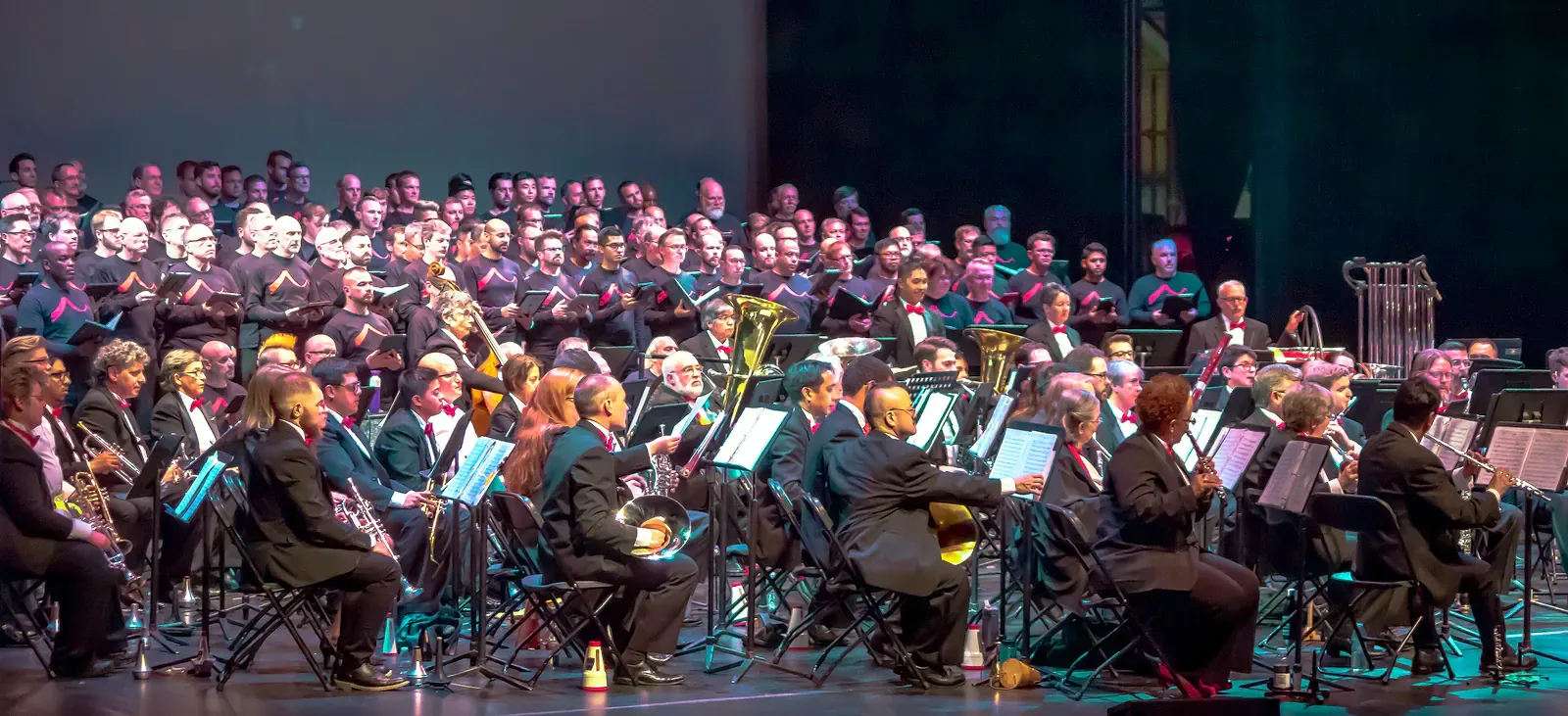
A concert band, also called a wind band, symphonic band or wind ensemble, is an ensemble of woodwind, brass and percussion players with no string section, which is what separates it from an orchestra.
Its roots lie in the bands of the French Revolution of 1789, and it reached its modern form in the 20th century as civic, military and school bands gained an original repertory beside marches and orchestral transcriptions. It belongs to the classical family and sits close to 20th-century classical music, which supplied many of its landmark scores.
Origins
The concert band descends from the large bands that played at patriotic festivals during the French Revolution. Bernard Sarrette, a National Guard officer who was not himself a musician, gathered 45 musicians in Paris, and Francois Joseph Gossec served as their artistic director. The municipality enlarged the body to 78 players in 1790. When the paid guard was cut, Sarrette kept the musicians together and won a free music school, which was organised in 1795 as the Conservatoire.
Serious composers stayed away from the medium at first. Bands had no fixed instrumentation, which made it hard to write the right parts, and the wind instruments of the day were hard to keep in tune. Bands therefore leaned on arrangements of orchestral and operatic movements, a habit that has survived. Ottoman military bands are thought to be the oldest variety of marching band, dating from the 13th century.
Revolutionary and military bands, 1789-1858
Through the 19th century, wind bands existed mainly as military bands for ceremonies and festivals, and their music was mostly marches. They were heard in concert only when they played transcriptions of orchestral or operatic pieces. Instruments changed with the work: clarinets replaced the older oboes in the 18th century, trombones and cornets replaced heavier instruments, and keys and valves made notes easier to play.
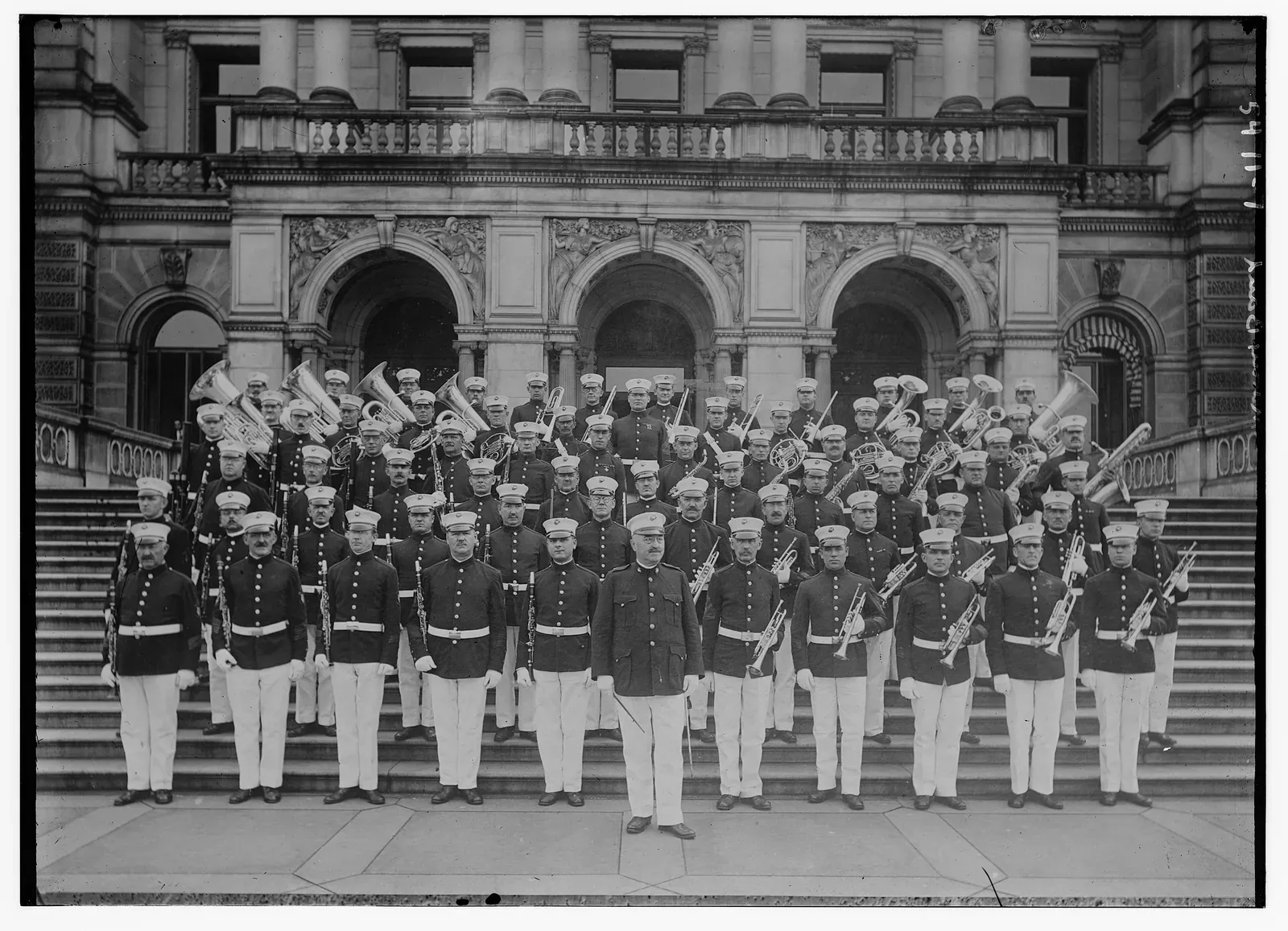
The United States Marine Band was created by act of Congress on 11 July 1798 and has played at every presidential inauguration since 1801. The Royal Hawaiian Band followed in 1836, created by royal decree of King Kamehameha III.
Gilmore, Sousa and the touring band, 1859-1908
Patrick Gilmore, an Irish-born bandmaster, founded Gilmore’s Band in 1858 and made the wind band a public attraction. His National Peace Jubilee of 1869 and World’s Peace Jubilee of 1872 in Boston gathered massed bands before audiences in coliseums built for 60,000 and 120,000 people.
John Philip Sousa took the model further. He had joined the Marine Band as an apprentice in 1868 and directed it for 12 years from 1880. In 1892 he left to organise the civilian Sousa Band, which toured until his death in 1932 and carried harps among its winds. His marches, among them Semper Fidelis, The Washington Post and The Stars and Stripes Forever of 1896, defined the concert march. Congress made The Stars and Stripes Forever the national march of the United States in 1987. Sousa also aided the development of the sousaphone, the marching tuba that bears his name.
The first original works, 1909-1951
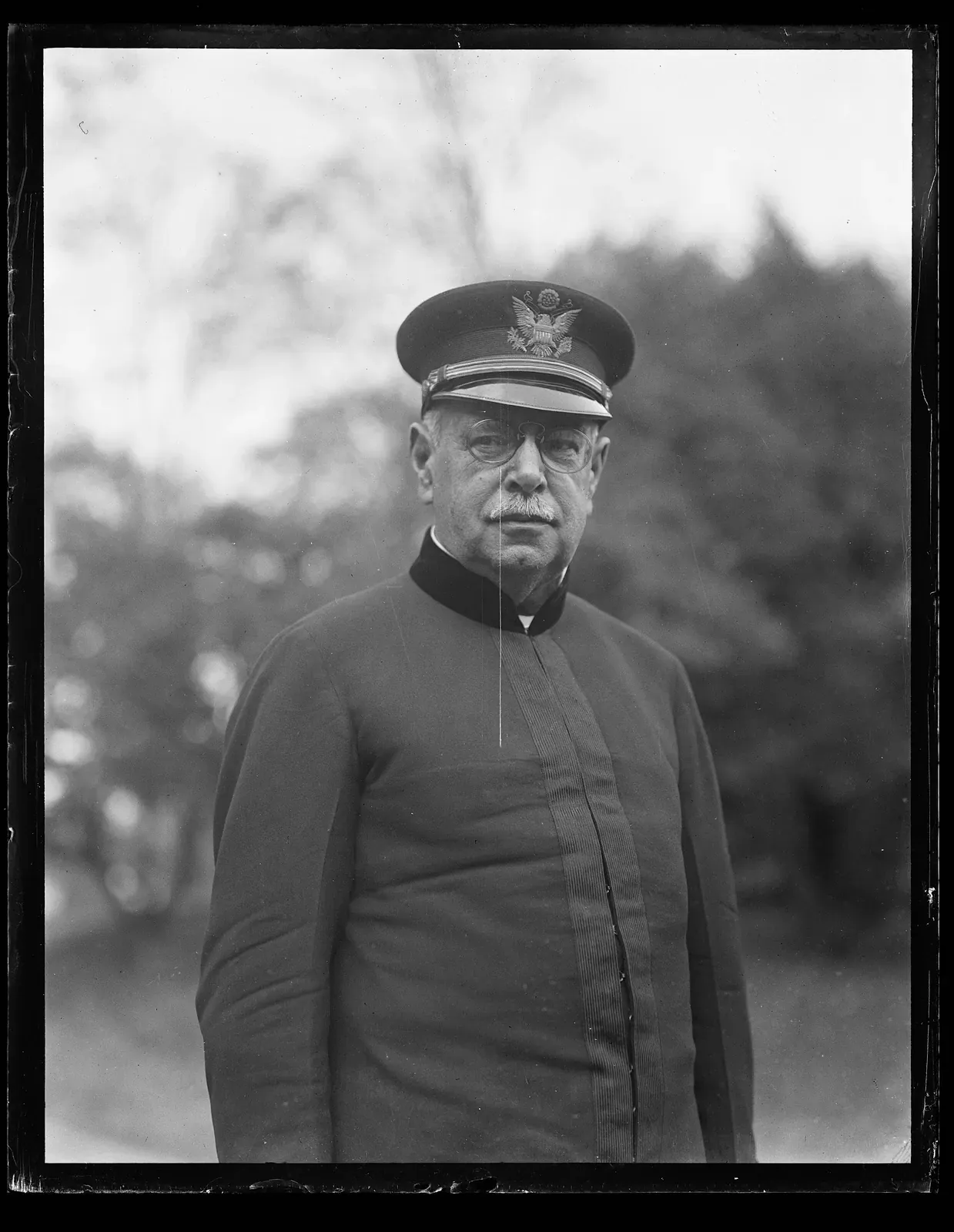
Early in the 20th century, composers began to write for band rather than adapt for it. Gustav Holst completed his First Suite in E-flat for Military Band in 1909, though it was officially premiered only in 1920. With the Second Suite in F of 1911, it convinced many composers that serious music could be written for band. Percy Grainger followed with Lincolnshire Posy, commissioned by the American Bandmasters Association and premiered on 7 March 1937 by the Milwaukee Symphonic Band. Each of its six movements portrays the singer of a folk song that Grainger had collected in Lincolnshire in 1905 and 1906.
Edwin Franko Goldman formed the American Bandmasters Association in 1929 to raise the esteem of concert bands, whose reputation suffered beside orchestras because of outdoor venues and a repertory borrowed from them. The College Band Directors National Association followed in 1941. In 1951 Paul Hindemith wrote his Symphony in B-flat for Band, premiered by the US Army Band on 5 April with the composer conducting.
The wind ensemble, 1952-1984
Frederick Fennell, convalescing in 1952, conceived a smaller kind of band scaled to the size of an orchestra’s wind section, which allowed greater clarity and better intonation. He recruited nearly 40 students at the Eastman School of Music in Rochester, New York, and the Eastman Wind Ensemble gave its first concert in Kilbourn Hall on 8 February 1953. He wrote to nearly 400 composers for new music. Fennell coined the term wind ensemble for this model of about one player per part.
Recordings carried the idea. From 1953 Fennell recorded over 300 compositions on 29 albums for Mercury Records, 22 of them with his own ensemble, including Lincolnshire Posy in 1958. The Mercury Living Presence catalogue is now handled by Decca Classics. In 1978 Fennell and the Cleveland Symphonic Winds made the first symphonic digital recording in the United States for Telarc, pairing Holst’s two suites. Commissions grew too: Karel Husa wrote Music for Prague 1968 after the Soviet suppression of the Prague Spring, and Ithaca College Concert Band premiered it in January 1969. Alfred Reed’s Armenian Dances, built on folk songs from the collection of Komitas, followed in 1973 at a college band directors convention.
Professional and global bands, 1985 onward
Professional civilian bands now exist in many countries, though few offer full-time posts. The Dallas Wind Symphony began in 1985 as a reading band for local professionals who wanted to play demanding wind music, and it established a formal season at the Meyerson Symphony Center in 1990. In Japan, the Tokyo Kosei Wind Orchestra and a commissioning market supported by the All-Japan Band Association produce a large body of new works. Under Donald Hunsberger the Eastman ensemble recorded for CBS Masterworks, now Sony Classical, and its 1987 album Carnaval with Wynton Marsalis was nominated for a Grammy.
Characteristics
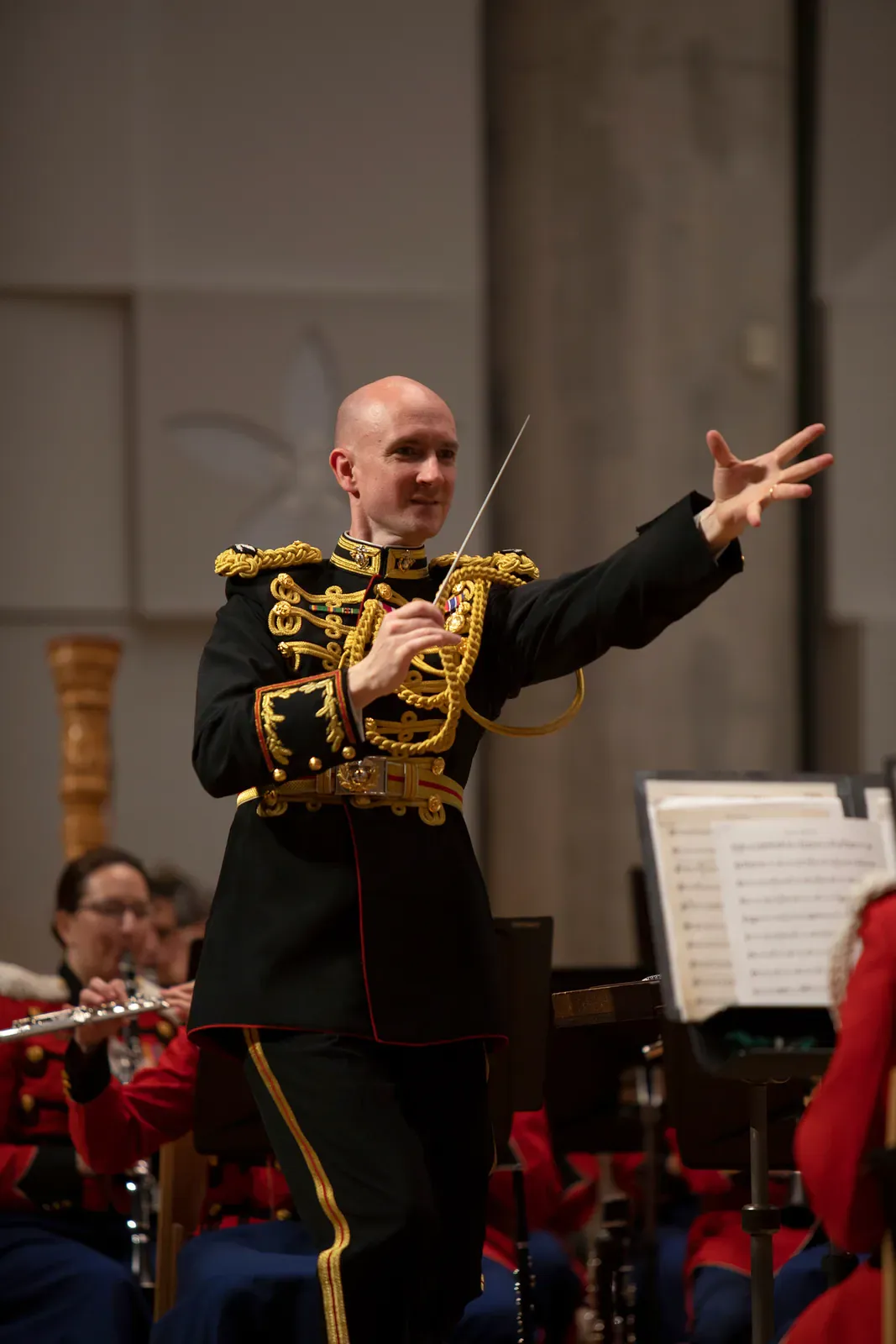
The concert band performs mostly stationary, unlike a marching band, whose main purpose is to play while marching. Its repertory covers original wind compositions, concert marches, orchestral transcriptions, light music and popular arrangements. Instrumentation is not fully standardised: composers add or omit parts, and a large concert band can reach 200 players from a set of only 35 parts, whereas a wind ensemble uses very little doubling.
Instruments and production
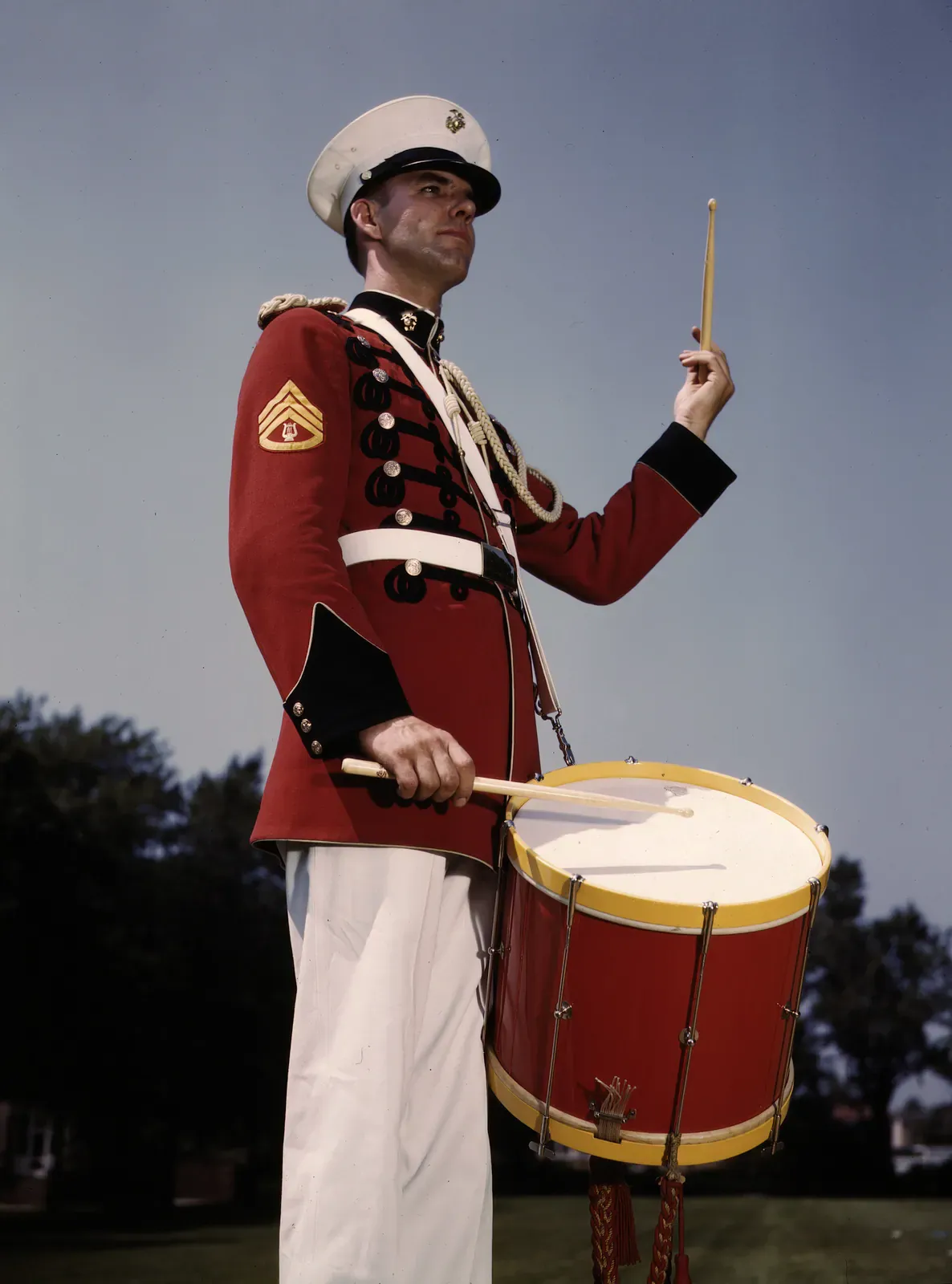
Percussion is the most visible difference from the orchestra. Bands commonly call for large batteries, and timpani are now counted as part of the percussion section so that one player may double on other instruments. Euphoniums and tubas often play in pairs, and flutes and clarinets split into divisi parts. Strings are not absent: the string bass and harp are often scored, and the United States Air Force Band uses a full section of cellos.
Mainstream success
The band’s commercial high point came with Sousa, whose touring ensemble drew wide audiences. Later success was quieter and institutional: Fennell’s Mercury albums put the repertory on record, and school programmes spread it to young players.
Notable recordings
Holst’s First Suite has three movements, a Chaconne, an Intermezzo and a March. Lincolnshire Posy is the other pillar: Grainger kept the stylised delivery of each folk singer he had heard, rather than modernising the tunes as Ralph Vaughan Williams did. Music for Prague 1968 shows how band music can carry a political subject, written while Husa listened to the BBC broadcast of the events on a radio at his cottage in the United States.
Culture
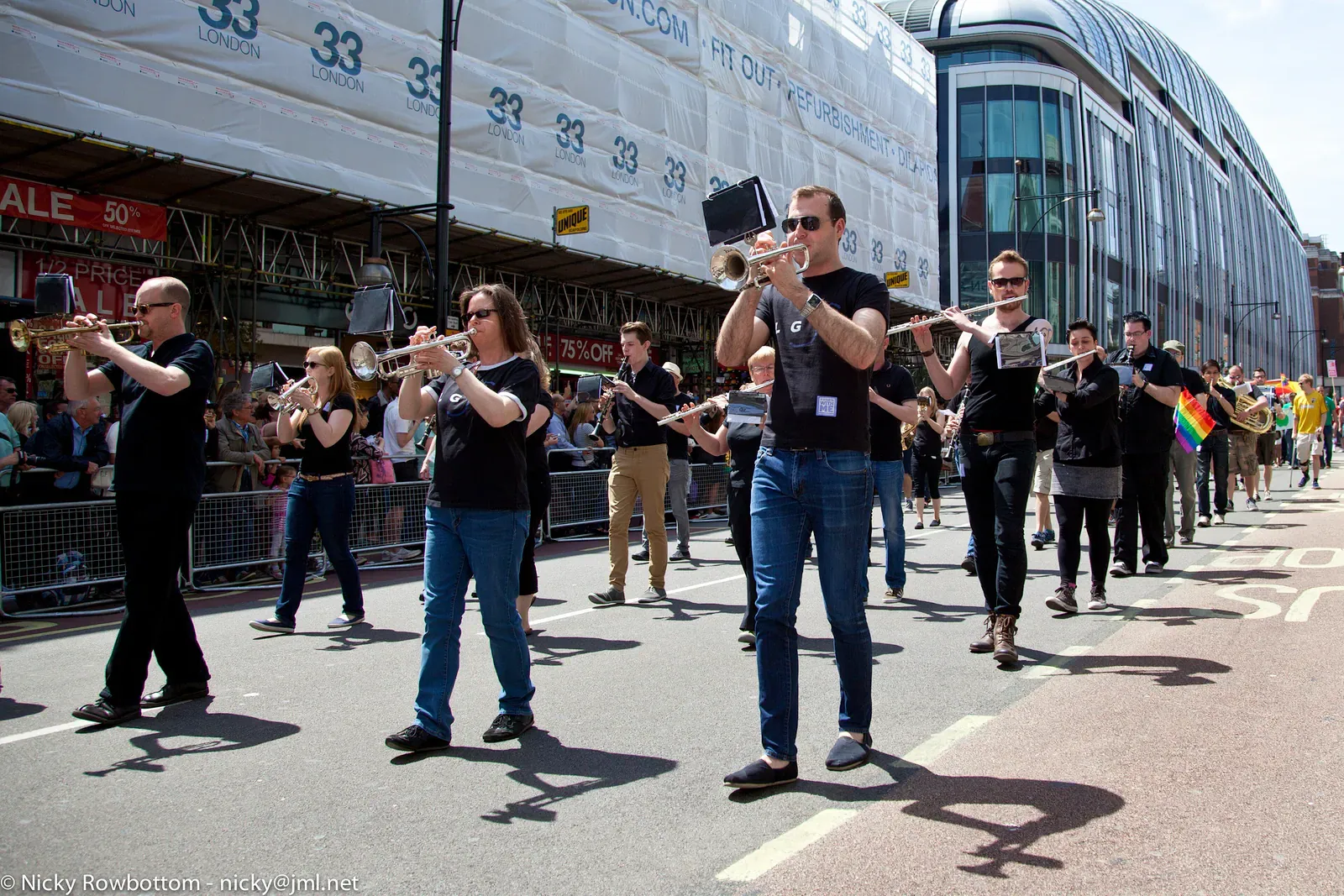
Community bands, volunteer groups of amateur players, grew with industrialisation as instruments became cheaper, and the American Civil War sent former military musicians home to start their own. In United States schools the names form a ladder, with Concert Band as the introductory level, Symphonic Band as the intermediate level and Wind Ensemble as the advanced one.
Legacy
Wind music has moved from outdoor entertainment to a repertory with its own composers, commissions and associations. The World Association of Symphonic Bands and Ensembles, founded in 1983, supports that work internationally.
Misconceptions
A concert band is not the same as a marching band. The instruments overlap, but the concert band is stationary and the marching band exists to play on the move. A second myth holds that bands have no serious music. The repertory was thin until early in the 20th century, but Holst, Grainger, Hindemith and Husa have since given it a canon. A third holds that bands are only military. Civilian community, school and professional bands now make up most of the field.
Frequently asked questions
What is the difference between a concert band and an orchestra?
A concert band has woodwinds, brass and percussion but no string section, while an orchestra is built around strings. Bands may add a string bass or harp.
What is a wind ensemble?
A wind ensemble is a band with about one player per part, a model Frederick Fennell established at the Eastman School of Music in 1952.
Which composers wrote the foundational band works?
Gustav Holst’s First Suite in E-flat of 1909 and Percy Grainger’s Lincolnshire Posy of 1937 are the usual starting points, followed by Hindemith, Husa and Reed.
Who is the March King?
John Philip Sousa, composer of The Stars and Stripes Forever and director of the Marine Band and the Sousa Band.
Sound
Sound sheet
Signature sounds
- Winds and percussion, no string section
- Many players doubling each part
- A large percussion battery
Drums and percussion
- Timpani
Techniques
- Orchestral transcription
- One player per part
- Folk-song settings
- Divisi writing
Keys and modes
Flat keys. Holst's First Suite is in E-flat and Hindemith's Symphony in B-flat.
Scenes
Where it happened
Where and when the sound lived: one bar per city on a shared timeline.
Europe
North America
Asia
Active scenes
Peak 5, 1986-2025
National Guard bands and the school behind the Conservatoire.
Home of the Marine Band and Sousa's long tenure.
Eastman School of Music, birthplace of the wind ensemble.
Dallas Wind Symphony, a full professional civilian band.
Tokyo Kosei Wind Orchestra recorded with Fennell and anchors a large commissioning market.
Venues and places
Rochester, 1953 to today. First concert of the Eastman Wind Ensemble, 8 February 1953.
Dallas, 1990 to today. Where the Dallas Wind Symphony set up its formal concert season.
Culture
Culture markers
- Presidential inaugurations
The Marine Band has played at every US inauguration since 1801.
Ritual - Concert, symphonic and wind ensemble
US school ladder names for introductory, intermediate and advanced bands.
Slang - Volunteer community bands
Amateur town bands rehearse regularly and play marches, patriotic tunes and popular music.
Ritual
Media
Key media
- 1953American Concert Band Masterpieces
by Frederick Fennell. Start of Fennell's Mercury recordings of band standards.
Compilation - 1987Carnaval
by Eastman Wind Ensemble and Wynton Marsalis. Grammy-nominated cornet showpiece album that reintroduced the tradition.
Compilation
Glossary
Terms on this page
Conductor title of a military band, also called director of music.
A part split among players, common in clarinets and flutes.
A group meeting to play new music, as the Dallas Wind Symphony began.
A larger band with several players on each part.
An orchestral or operatic work rearranged for band, the core of the early repertory.
A band with about one player per part, a term coined by Fennell.
Classical family