Orchestral music
Orchestral music is art music for a conductor-led ensemble of strings, winds, brass and percussion, from the Baroque suite to the Romantic symphony.
Europe, 1650
Classical family
Born
1650
Europe
Subgenres
9
Documented branches
Links
3
Genres it drew on or shaped
Tempo
65-135 BPMLineage
Family tree
Grew out of
Europe, 1650
Orchestral music
Led to (9)
Timeline
Era by era
From the first sparks to today. Select a dot to read the story behind it.
- Court and church ensembles
1600 to 1750
- The Classical orchestra
1750 to 1800
- Beethoven and the Romantic orchestra
1800 to 1880
- Late Romantic and modernist scores
1880 to 1945
- Recording era and contemporary symphonists
1945 to today
Eras
Moments
- 1 Court and church ensembles, 1600 to 1750
- 2 The Classical orchestra, 1750 to 1800
- 3 Beethoven and the Romantic orchestra, 1800 to 1880
- 4 Late Romantic and modernist scores, 1880 to 1945
- 5 Recording era and contemporary symphonists, 1945 to today
around 1600
Court and church ensembles
Orchestras were not standardised: Bach had up to 18 players at Koethen while Corelli's Rome orchestra ran from 35 to 80. A basso continuo group anchored the sound, and the concerto and suite took shape.
- 1597Gabrieli's Sacrae symphoniaeGiovanni Gabrieli's Sacrae symphoniae uses the word symphony in its sense of sounding together, an early use in a title.
- 1607Monteverdi's L'Orfeo opens with a fanfareThe opera starts with a toccata for muted trumpets, an early instrumental opening from which later overtures grew.
- 1626King's Twenty-Four Violins foundedThe French royal court's five-part string band, active until 1761, is an early large string ensemble.
around 1750
The Classical orchestra
Milan, Mannheim and Vienna built the symphony. Strings plus pairs of oboes or flutes, bassoons and horns became the core, and the three-movement Italian form gave way to four movements.
- 1757Haydn becomes music director for the Morzin familyHaydn takes his first post as director of a noble household orchestra in Vienna's competitive concert scene.
- 1786Mozart's Prague SymphonyA late example of the three-movement Classical symphony.
- 1792Haydn's Surprise Symphony premieres in LondonSymphony No. 94, the second of the twelve London symphonies, is first heard at the Hanover Square Rooms on 23 March.
around 1800
Beethoven and the Romantic orchestra
Beethoven raised the symphony to a supreme form and fixed doubled winds and brass as the norm. Berlioz and Liszt added programme symphonies and the symphonic poem; Wagner expanded the orchestra again.
- 1824Beethoven's Ninth premieresFirst performed in Vienna on 7 May, it is the first symphony by a major composer to score vocal parts.
- 1830Berlioz's Symphonie fantastiqueA programmatic five-movement symphony first played at the Paris Conservatoire on 5 December.
- 1848Liszt begins the symphonic poemsFranz Liszt starts the 13 works he calls symphonic poems, single-movement orchestral pieces that illustrate a non-musical source.
around 1880
Late Romantic and modernist scores
Mahler pushed orchestras toward 120 players, Stravinsky's ballets broke rhythmic habits, Schoenberg compressed the symphony into one movement and Prokofiev revived the Classical manner.
- 1882Berlin Philharmonic foundedThe orchestra, later led by Furtwangler, Karajan and Abbado, becomes a standard-setter for the repertoire.
- 1895Mahler's Resurrection Symphony premieresSymphony No. 2, written 1888-1894, runs 80 to 90 minutes and uses vocal soloists and chorus.
- 1913The Rite of Spring premiereThe 29 May Paris premiere of Stravinsky's ballet causes a sensation; the riot label came from later accounts.
- 1940Fantasia reaches cinemasDisney's film sets classical works to animation, with Leopold Stokowski conducting the Philadelphia Orchestra, and is the first commercial stereo film.
around 1945
Recording era and contemporary symphonists
Recording made flawless execution the standard and built the careers of star conductors such as Herbert von Karajan. Postmodern composers kept writing symphonies in large numbers.
- 1955Karajan takes over the Berlin PhilharmonicHis 1955-1989 tenure builds the orchestra's recorded sound and a star-conductor culture.
Listening path
Start listening
A short path from an easy way in to the deep end. Thumbnails come from YouTube; the player loads only when you press play.
- 01
Beethoven, Vienna Philharmonic, 1808
The four-note fate motif and a C minor opening that ends in C major, the model later symphonists followed.
- 02
Haydn, Berlin Philharmonic, 1791
Classical-era orchestral writing at its clearest, from the composer called the father of the symphony.
- 03
Tchaikovsky, Berlin Philharmonic, 1876
The best-known ballet theme, a stage score turned into a concert suite.
- 04
Mahler, Vienna Philharmonic, 1894
The late Romantic scale: 80 to 90 minutes, huge forces and a vocal finale.
- 05
Stravinsky, Berlin Philharmonic, 1913
The modernist ballet score that changed how orchestras handle rhythm.
Facts
| Family | Classical |
| Origin | Europe |
| Emerged | 17th century onward |
| Status | Active |
| Tempo | 65 to 135 BPM |
| Meter | 4/4 |
| Subgenres | 6 |
Orchestral music is art music written for an orchestra, a large instrumental ensemble of strings, woodwinds, brass and percussion led by a conductor.
It took shape in Europe from the 17th century and is defined by the forms the ensemble made possible: the symphony, concerto, overture, suite, symphonic poem and ballet score. It belongs to the classical family and shares ground with Baroque music, opera and the film score.
Origins
The word symphony comes from the Greek for a sounding together, and in the late 16th and early 17th centuries it appeared in titles such as Giovanni Gabrieli’s Sacrae symphoniae (1597) and Heinrich Schütz’s collections of the 1620s and 1640s. These were mostly sacred vocal works with instruments. The French king’s five-part string band, the Twenty-Four Violins, ran from 1626 to 1761, and Monteverdi’s L’Orfeo (1607) opened with a fanfare for muted trumpets, an early instrumental opening.
Baroque orchestras were not standardised. Bach worked at Koethen with an ensemble of up to 18 players, while Corelli’s orchestra in Rome ran from 35 to 80 players and was enlarged to 150 for special occasions. A basso continuo group, such as harpsichord or organ with bass instruments, anchored the sound. The concerto began as vocal music in the late 16th century; Italians such as Corelli and Torelli published instrumental concertos about a century later, and Vivaldi wrote hundreds for violin and other soloists. The suite, a set of dances that reached up to five movements by the early 17th century, and the overture, an instrumental introduction to an opera, ballet or oratorio, completed the early repertory.
The Classical orchestra, 1750-1800
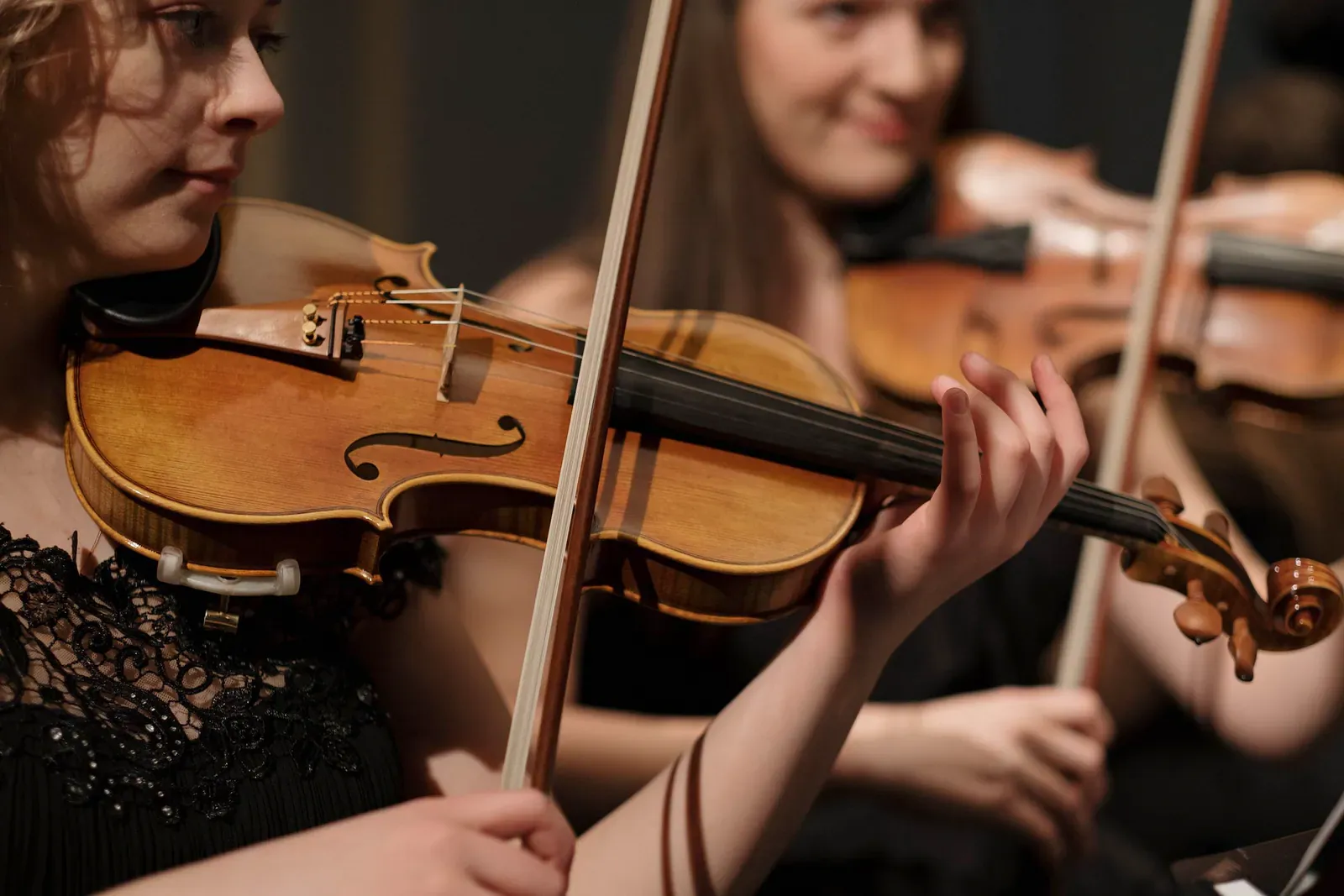
The symphony of the 18th century was cultivated with great intensity, and the aristocracy supported it. Vienna was perhaps the most important place for symphony composition, where hundreds of noble families kept musical establishments; Haydn took his first post as director for the Morzin family in 1757 and found his orchestra one of many competing ensembles in the city. Milan, around Giovanni Battista Sammartini, and Mannheim, where Johann Stamitz’s court orchestra was called an army of generals by Charles Burney, were other early centres.
Early symphonies were string pieces in four parts; horns, oboes, flutes, bassoons, clarinets, trumpets and timpani were added until the late-century orchestra held strings, pairs of winds, horns and timpani. The Italian symphony, often used as an opera overture, had three movements: fast, slow, fast. Over the century four movements became the custom, though about half of Haydn’s first thirty symphonies have three and the young Mozart favoured three. Haydn wrote at least 106 symphonies in 36 years and Mozart at least 47 in 24, and Mozart’s Prague Symphony of 1786 is an outstanding late three-movement example.
Beethoven and the Romantic orchestra, 1800-1880
At the start of the 19th century Beethoven lifted the symphony from an everyday genre produced in large numbers to a supreme form in which a composer put the highest ambition into a few works. His Fifth moves from a stormy C minor first movement to a triumphant major finale, a plan later followed by Brahms and Mahler. His Sixth is programmatic, with bird calls, a storm and five movements. His Ninth, first performed in Vienna on 7 May 1824, was the first symphony by a major composer to score vocal soloists and a chorus.
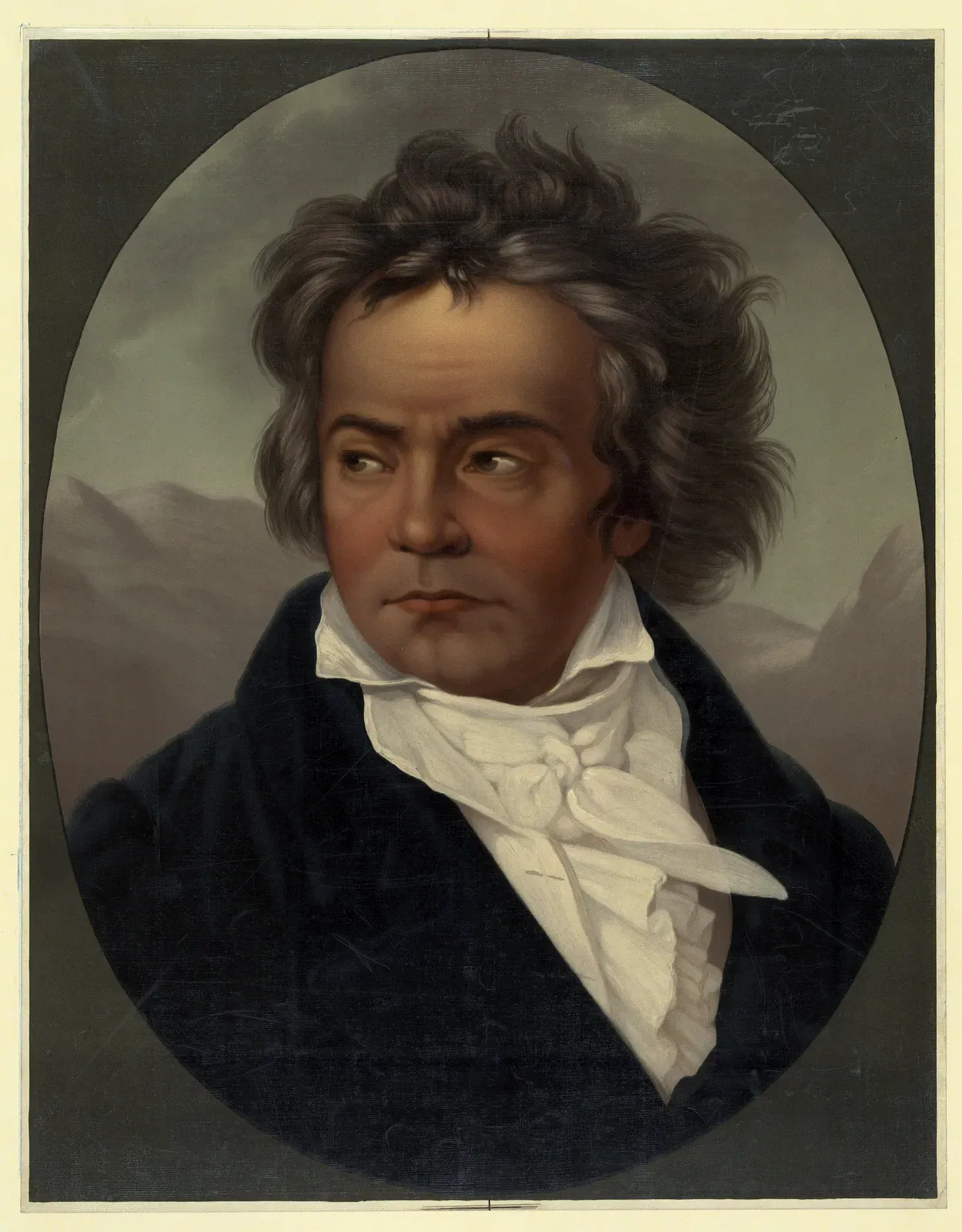
Beethoven’s scoring, with paired flutes, oboes, clarinets, bassoons, horns and trumpets, became the standard complement. Trombones, once confined to church and theatre, entered the symphony in his Fifth, Sixth and Ninth. Schubert, Mendelssohn and Schumann wrote symphonies in the classical mould, while Berlioz favoured programme works: his Symphonie fantastique, first performed at the Paris Conservatoire on 5 December 1830, has five movements and a story. From 1848 Franz Liszt wrote 13 symphonic poems, single-movement orchestral pieces that illustrate a poem, painting, landscape or other non-musical source. Richard Wagner’s Bayreuth orchestra, founded for his music dramas, pushed scoring further; Das Rheingold calls for six harps.
Late Romantic and modernist scores, 1880-1945
Orchestras at the start of the 20th century were larger, better funded and better trained, and composers wrote bigger works. Mahler’s Third, finished in 1896, is among the longest symphonies regularly played, near 100 minutes, and his Eighth is nicknamed the Symphony of a Thousand for its forces. His Second, written between 1888 and 1894 and first performed in 1895, runs 80 to 90 minutes. Orchestras reached as many as 120 players in works of Wagner and Mahler.
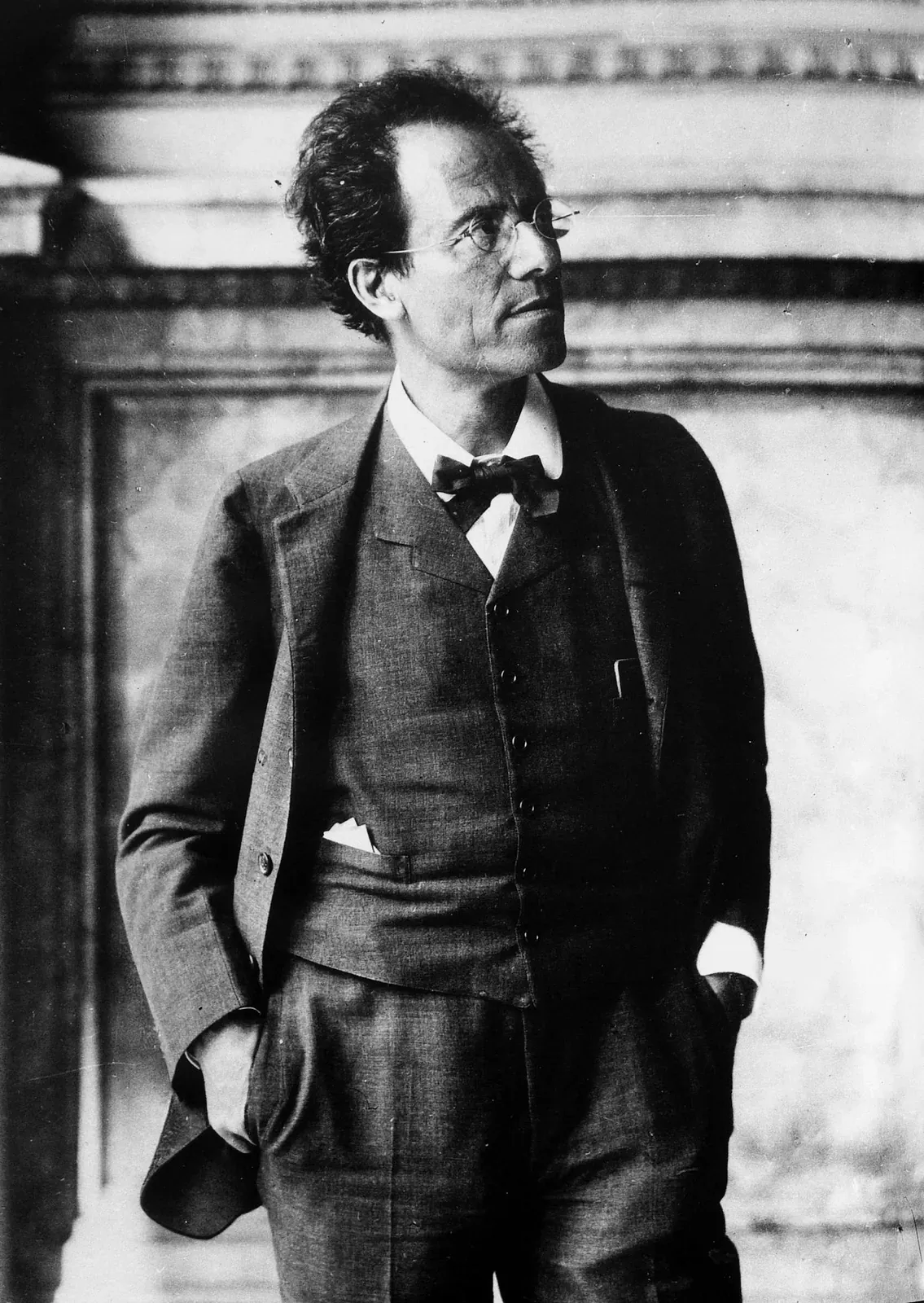
The 20th century diversified the form. Shostakovich, Rachmaninoff and Nielsen kept the four movements; Sibelius’s Seventh has one; Richard Strauss’s Alpine Symphony is one movement divided into 22 parts. Prokofiev’s Classical Symphony (1916-17) and Stravinsky’s Symphony in C (1938-40) deliberately evoked the 18th century. Ballet drove orchestral writing too: Tchaikovsky’s Swan Lake (1875-76) failed at first and became among the most popular ballets, and Stravinsky’s Firebird (1910), Petrushka (1911) and The Rite of Spring (1913) were written for Diaghilev’s Ballets Russes.
Characteristics
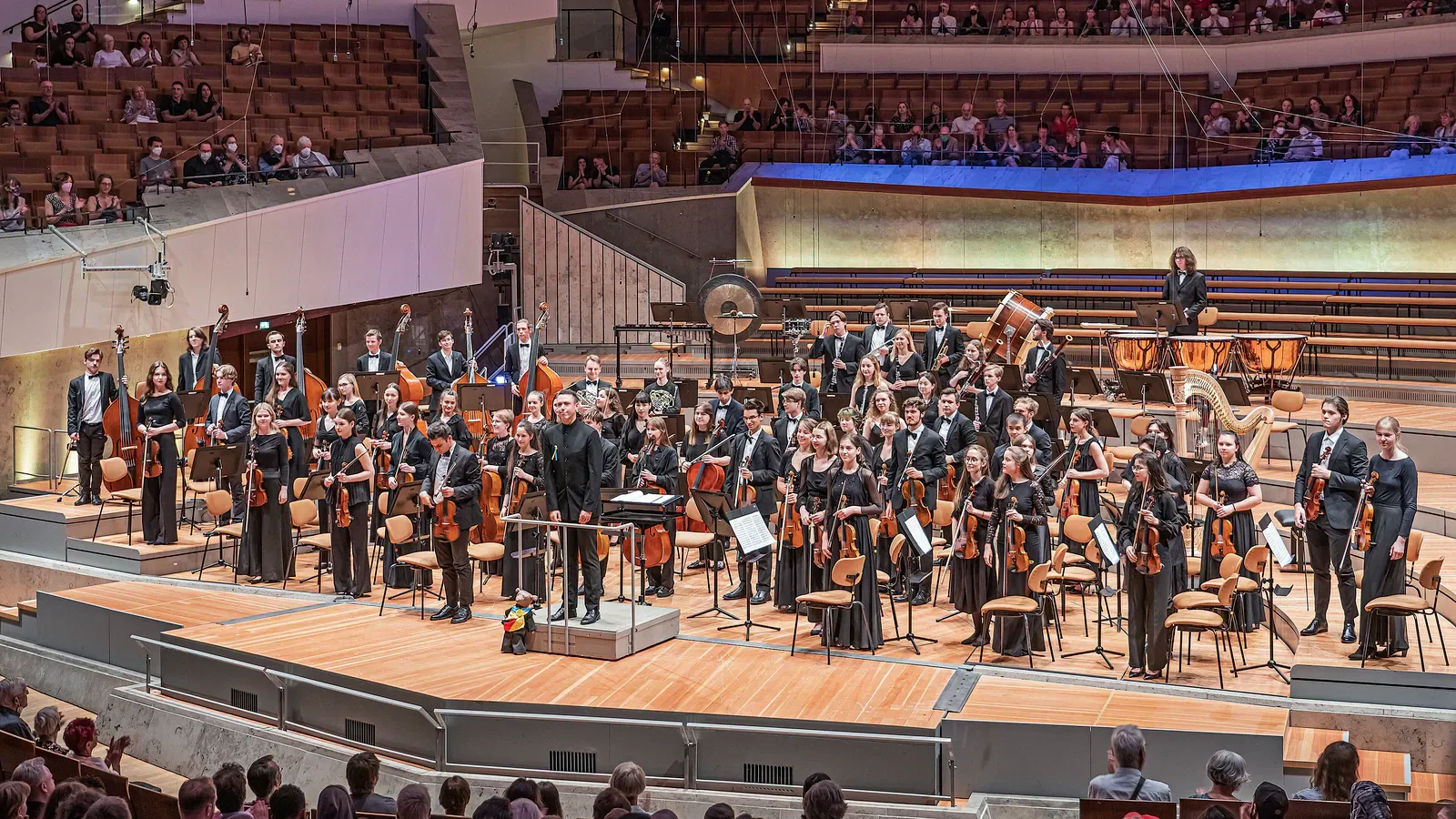
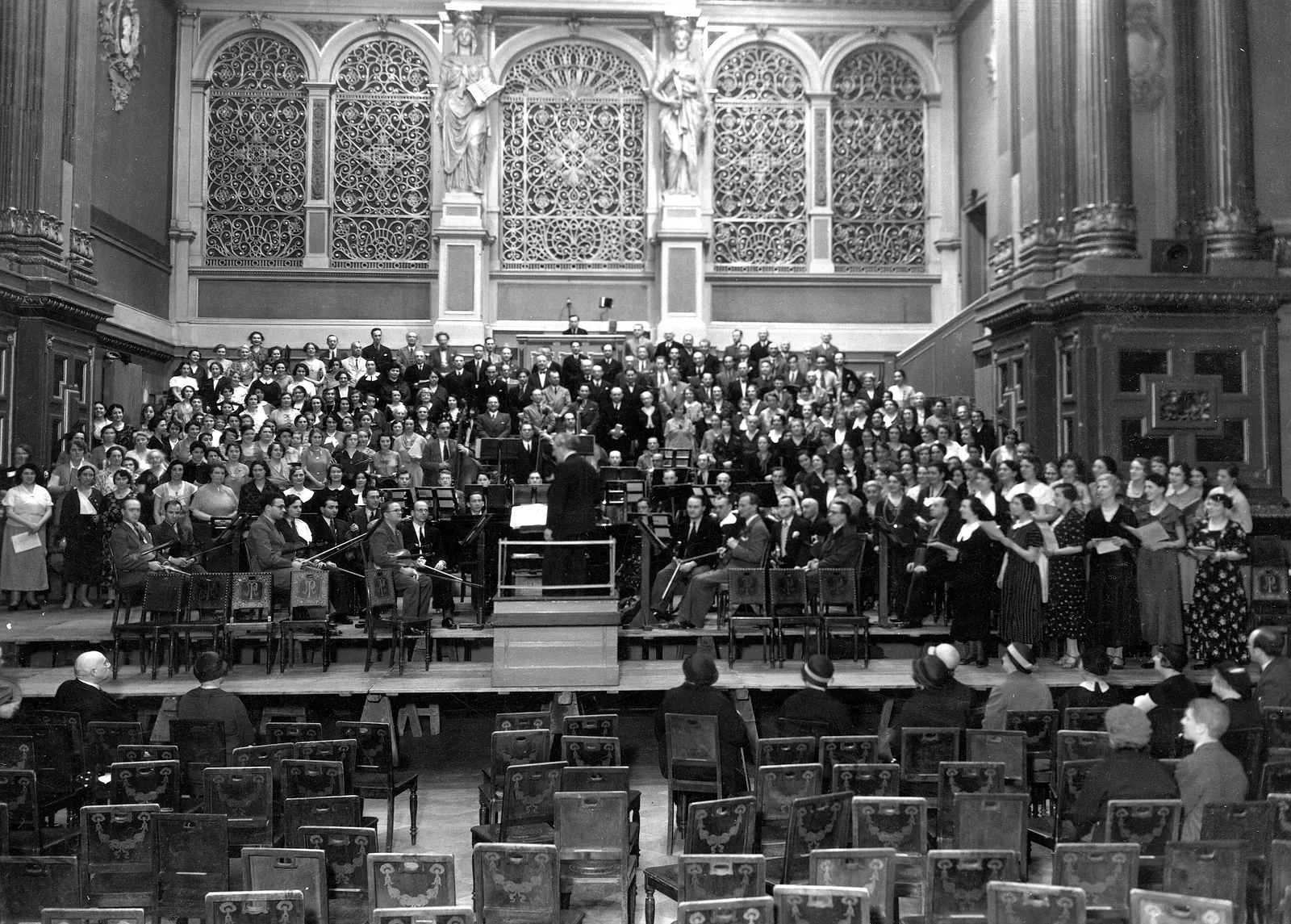
An orchestra normally has four sections: strings (violin, viola, cello, double bass), woodwinds, brass and percussion, with harp and keyboards as occasional additions. A full orchestra numbers from about 70 to over 100 players; a chamber orchestra has no more than about 50. A conductor, using a baton, unifies the ensemble, sets the tempo and shapes the sound, and rehearses the players before the concert. The multi-movement cycle is the typical shape. Symphonies are usually in three or four movements, often with the first in sonata form, and a concerto sets one or more soloists against the orchestra, usually in three movements with a slow movement between two fast ones. Tempos run from slow, near 65 beats per minute in the Boléro, to quick Allegro movements around 135. Calling a work a symphony still implies seriousness; sinfonietta is the word for a shorter or lighter piece.
Instruments and production
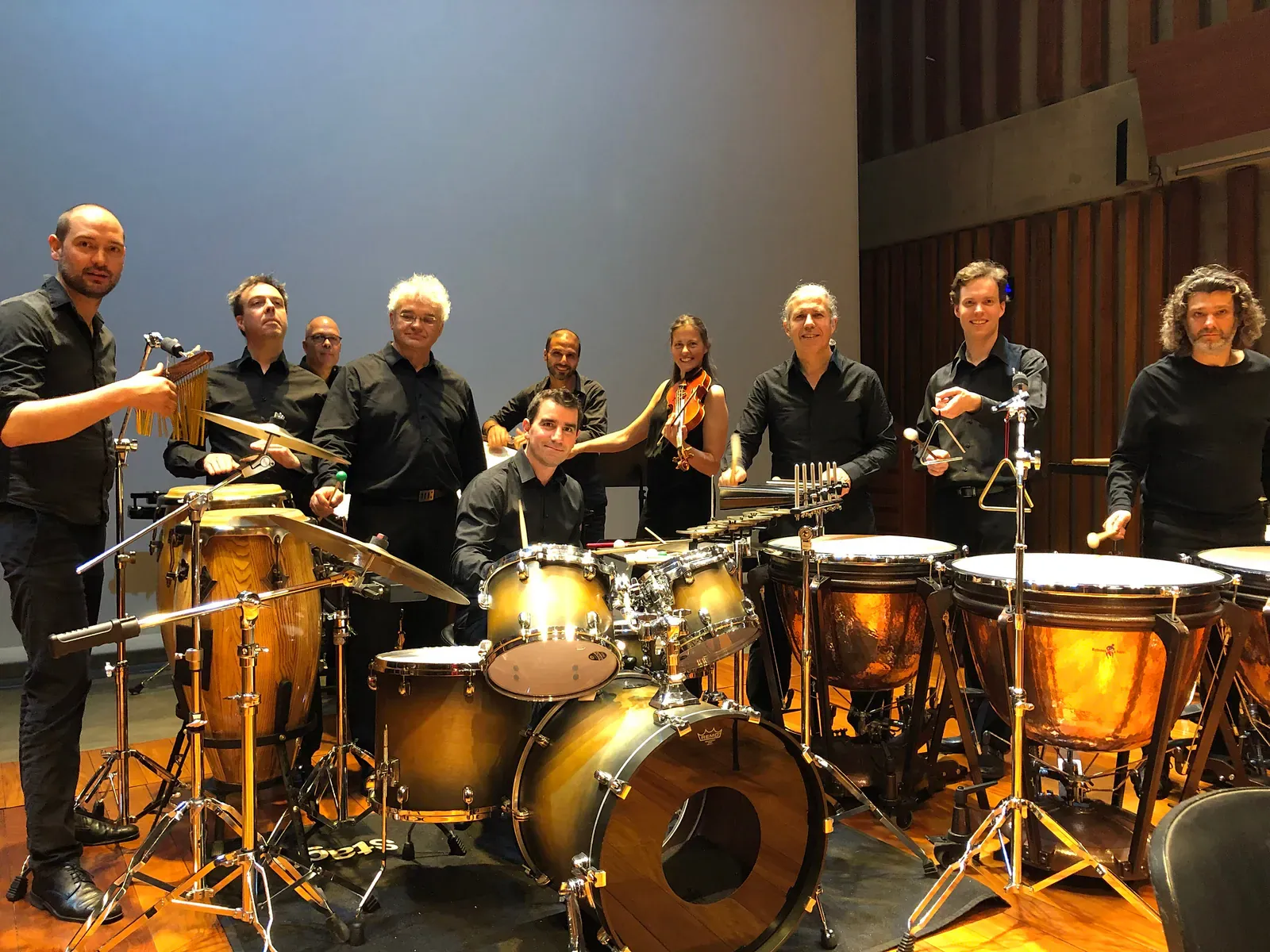
The Romantic orchestra added more wind and brass, harp and a wider range of percussion to the Classical core. Extra instruments appear for particular effects: cornets in Swan Lake and Debussy’s La Mer, the Wagner tuba in Stravinsky’s Rite of Spring and Bruckner’s Seventh, the saxophone in Ravel’s Boléro, and in the late 20th century even electric guitar or synthesisers. Recording changed expectations. With the recording era, minor errors in intonation could be heard by critics, so execution standards rose, and later audio editing allowed small mistakes to be fixed.
Mainstream success
Orchestral music reached a mass audience through the concert hall, the opera house and the gramophone. Recordings brought a renewed focus on star conductors and the quality of orchestral execution; Herbert von Karajan led the Berlin Philharmonic from 1955 to 1989. Classical labels such as Deutsche Grammophon, Decca Classics and EMI Classics carried the repertoire to homes. Disney’s Fantasia (1940), with Leopold Stokowski and the Philadelphia Orchestra, was the first commercial film released in stereo.
Notable recordings
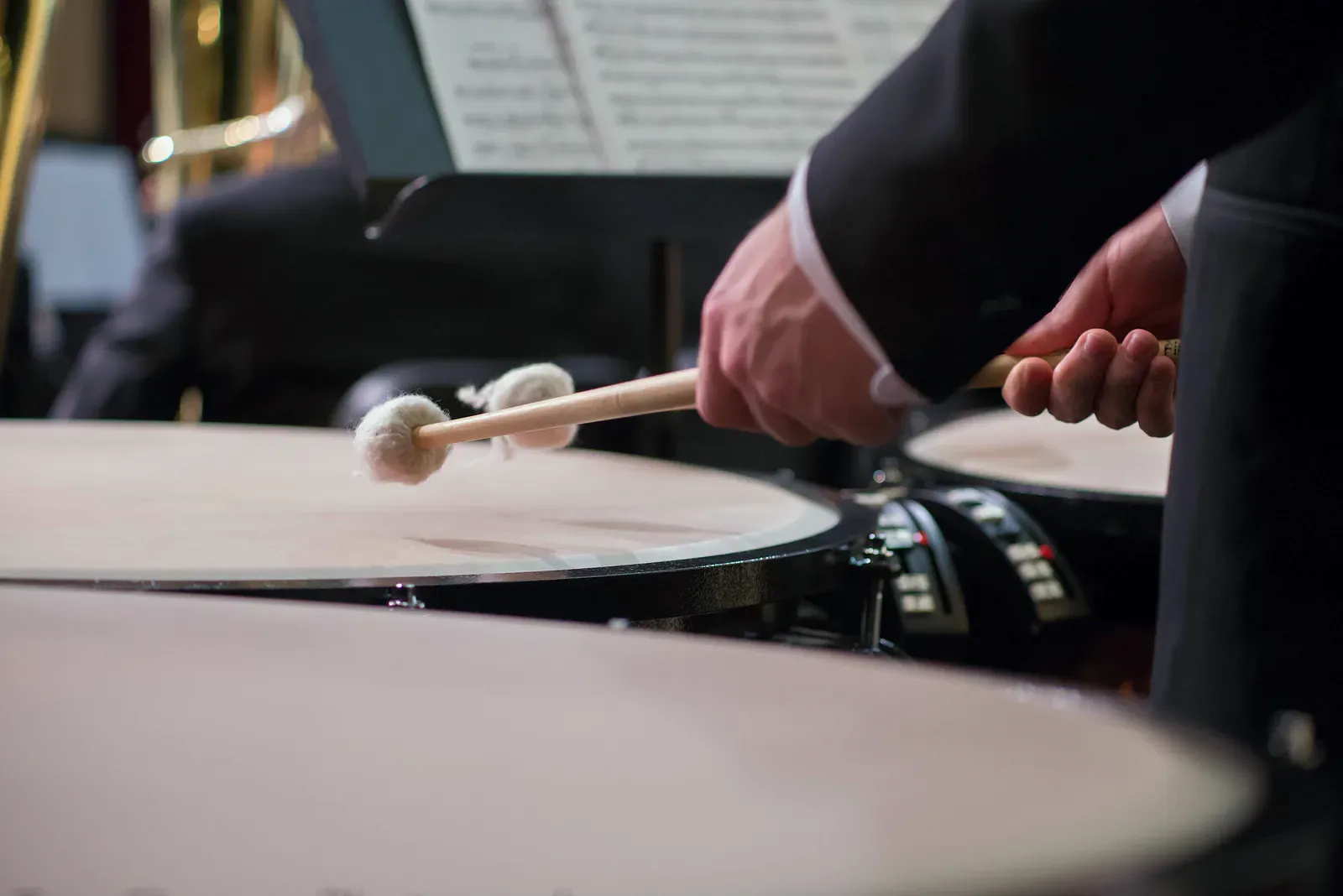
Haydn’s Symphony No. 94, the Surprise, is the second of his twelve London symphonies, written in 1791 for his first English visit and premiered at the Hanover Square Rooms on 23 March 1792 with Haydn at the fortepiano. Beethoven’s Fifth begins with a four-note motif, often described as fate knocking at the door, and moves from C minor to C major. The Rite of Spring, written for the 1913 Paris season of Diaghilev’s Ballets Russes with choreography by Nijinsky, divided its first audience on 29 May 1913 at the Théâtre des Champs-Élysées, and it is now a staple of the concert hall as well as the ballet.
Culture
The conductor, the podium and the baton are the ritual centre of an orchestral concert, and the Berlin Philharmonic, founded in 1882, grew out of Bilse’s Band. The first-night reaction to The Rite of Spring is remembered as a riot, though that wording appeared only in reviews of later performances in 1924.
Legacy
The symphony orchestra remains the standard large ensemble of Western art music. Composers kept writing symphonies into the 21st century; Peter Maxwell Davies wrote ten, and Leif Segerstam’s list includes 371.
Misconceptions
A common belief is that orchestras were always huge. Bach had at most 18 players at Koethen, and Classical orchestras were smaller than Romantic ones; the peak of 120 players came with Wagner and Mahler. Another is that every symphony has four movements, yet Beethoven’s Sixth has five and Sibelius’s Seventh has one. A third is that The Rite of Spring caused a riot at once; the word riot arrived later and the premiere’s reception was mixed.
Frequently asked questions
How many movements does a symphony have?
Most symphonies have three or four, typically with the first in sonata form, though some have five or only one.
Who is the father of the symphony?
Haydn is often given that title, having written at least 106 symphonies over 36 years.
What is a symphonic poem?
A symphonic poem, or tone poem, is an orchestral piece in one movement that illustrates a poem, story, painting or landscape; Liszt began the genre in 1848.
Sound
Sound sheet
Anatomy of a track
| # | Part |
|---|---|
| 1 | Fast first movement in sonata form |
| 2 | Slow movement |
| 3 | Dance movement (minuet or scherzo) |
| 4 | Fast finale |
Signature sounds
- Conductor-led ensemble of 70 to 100 players
- Four sections: strings, woodwinds, brass, percussion
- Multi-movement cycles with contrasting tempos
- Score read by the conductor, parts read by players
Drums and percussion
- Timpani
- Bass drum
Techniques
- Sonata form
- Programmatic scoring
- Doubled winds and brass
- Choral finale
Keys and modes
C minor to C major. Beethoven's Fifth moves from a stormy minor opening to a triumphant major finale.
D minor to D major. Beethoven's Ninth ends in the parallel major with chorus.
Vocals
Mostly instrumental; chorus and soloists appear in some symphonies.
Scenes
Where it happened
Where and when the sound lived: one bar per city on a shared timeline.
Europe
Active scenes
Peak 4, 1882-2025
Home of the Milanese school around Giovanni Battista Sammartini, an early centre of the symphony.
Perhaps the most important symphony city, where hundreds of noble families kept musical establishments.
Court orchestra of the Elector Palatine under Johann Stamitz, praised for discipline and new dynamic effects.
Base of the Berlin Philharmonic, founded in 1882.
Culture
Culture markers
- The conductor and baton
A conductor on a podium sets the tempo and shapes the ensemble, usually with a short baton.
Ritual - Sinfonietta
The label for a work of more modest aims than a full symphony.
Slang - The Rite of Spring premiere riot
The 1913 uproar became legend, though the word riot came from reviews of later performances.
Ritual
Media
Key media
- 1940Fantasia
by Walt Disney Productions. Animated film set to orchestral pieces, with Leopold Stokowski conducting the Philadelphia Orchestra.
Film
Glossary
Terms on this page
A Baroque group of chord and bass instruments, such as harpsichord or organ plus cello, playing the bass line.
A work for one or more soloists accompanied by an orchestra, typically in three movements.
An instrumental introduction to an opera, ballet or oratorio, later also an independent concert piece.
A shorter or lighter work than a symphony.
A one-movement orchestral piece that illustrates a poem, story, painting or landscape.
An extended orchestral work in several movements, usually three or four, the first often in sonata form.
Classical family