Film score
Film score is music composed for a motion picture and timed to its images, from silent-era live accompaniment to modern hybrid orchestral-electronic work.
Hollywood, 1895
Stage and screen family
Born
1895
Hollywood
Subgenres
13
Documented branches
Links
25
Genres it drew on or shaped
Tempo
65-140 BPMLineage
Family tree
Grew out of
- Late Romantic music
Derived from
Hollywood, 1895
Film score
Led to (19)
Timeline
Era by era
From the first sparks to today. Select a dot to read the story behind it.
- Live accompaniment
1895 to 1927
- Studio golden age
1927 to 1960
- Jazz, modernism and Europe
1955 to 1975
- Blockbuster revival and synths
1975 to 1995
- Hybrid orchestral era
1995 to 2015
- Texture and minimalism
2015 to today
Eras
Moments
- 1 Live accompaniment, 1895 to 1927
- 2 Studio golden age, 1927 to 1960
- 3 Jazz, modernism and Europe, 1955 to 1975
- 4 Blockbuster revival and synths, 1975 to 1995
- 5 Hybrid orchestral era, 1995 to 2015
- 6 Texture and minimalism, 2015 to today
1895
Live accompaniment
Pianists, organists and small orchestras play in the cinema from cue sheets and mood catalogues. A few films get their own commissioned scores.
- 1895Live music joins the first public film screeningsPianists and small bands accompany early shows, long before any score is composed for a film.
- 1908Saint-Saens scores L'Assassinat du duc de GuiseA leading concert composer writes an original score for a French film, an early landmark of composed film music.
- 1926Vitaphone brings a synchronised score to Don JuanSound-on-disc lets a recorded orchestral score play in sync with a feature film.
1927
Studio golden age
Sound film brings staff orchestras and continuous late-Romantic scoring. Steiner, Korngold, Newman and Rozsa build the leitmotif template.
- 1933Steiner's King Kong sets the sound-era templateA near-continuous orchestral score built on recurring themes shows what sound film can do with music.
- 1939Korngold wins the Oscar for The Adventures of Robin HoodAn opera-house symphonist gives the swashbuckler its late-Romantic voice.
- 1940Fantasia premieres with FantasoundAn early multichannel sound system for an orchestral film.
1955
Jazz, modernism and Europe
Jazz, atonal strings, pop-flavoured themes and the Italian western sound pull scoring away from the studio template.
- 1955The Man with the Golden Arm brings jazz scoringElmer Bernstein's jazz score opens the way for urban jazz film music.
- 1960Herrmann's Psycho uses strings aloneA string-orchestra score of stabbing and shrieking figures becomes the model for horror scoring.
- 1961Mancini's Breakfast at Tiffany's makes the score a hit albumMoon River crosses from film into the pop mainstream.
- 1962The James Bond Theme debuts in Dr. NoIts brassy, twangy guitar riff and big-band swing define spy-film sound.
- 1964A Fistful of Dollars launches the Morricone western soundWhistles, electric guitar and wordless voices replace the American western orchestra.
- 1965Studio staff orchestras wind downComposers are hired film by film and record with freelance players, often in London or Rome.
- 1973The Godfather score is withdrawn from the OscarsThe nomination was pulled because part of the music had been used in an earlier film.
1975
Blockbuster revival and synths
Jaws and Star Wars bring back the full symphonic score, while Carpenter, Vangelis and others make synthesizers a film-scoring voice.
- 1975Williams's Jaws makes a two-note motif famousA minimal motif for the shark shows how a theme can carry a thriller.
- 1977Star Wars revives the full symphonic scoreA leitmotif score for the London Symphony Orchestra becomes one of the best-known film scores ever.
- 1978Carpenter's Halloween themeA piano and synthesizer figure in 5/4, composed by the director, shows how little a hit score needs.
- 1981Vangelis's Chariots of Fire makes synths mainstreamAn all-electronic main theme wins an Oscar and reaches the popular charts.
- 1983Sakamoto's Merry Christmas Mr. LawrenceThe composer also acts in the film; the piano theme becomes a standard well beyond cinema.
around 1995
Hybrid orchestral era
Sampled and live orchestra, synths and sound design merge. Zimmer's studio collective sets the default sound of big-budget cinema.
- 1995Zimmer wins the Oscar for The Lion KingA synth-and-orchestra composer takes the top prize for a mainstream animated film.
- 2000Gladiator sets the hybrid templateZimmer and Lisa Gerrard combine orchestra, electronics and wordless vocals in an epic score.
around 2015
Texture and minimalism
Composers from outside film, such as cellists and rock musicians, win top awards with sparse, instrument-led and electronic scores.
- 2020Gudnadottir wins the Oscar for JokerA cellist's dark, low-register score wins the top film music award.
Listening path
Anthems
The records that built the sound, grouped by the part they played. Thumbnails come from YouTube; the player loads only when you press play.
- 01
Max Steiner, 1933
A near-wall-to-wall orchestral score built on recurring themes that set the template for the sound-era film score.
Origin - 02
John Williams, 1975
Its two-note shark motif became a pop-culture shorthand and won Williams an Oscar.
Breakthrough - 03
John Williams, 1977
Revived the full symphonic leitmotif score and made a film theme a global fanfare.
Start hereBreakthrough - 04
Max Steiner, 1939
The sweeping Gone with the Wind theme shows the golden-age Romantic style at full scale.
Anthem - 05
Bernard Herrmann, 1960
Strings alone drive a thriller, a sound copied across horror cinema ever since.
Start hereAnthem - 06
John Barry, 1962
Twanging guitar and brass swing that set the sound of the spy film.
Anthem - 07
Ennio Morricone, 1966
Coyote-like calls, electric guitar and a wordless chant define the Italian western sound.
Start hereAnthem - 08
Nino Rota, 1972
A melancholy, lyrical theme that gave a crime epic its Old World identity.
Anthem - 09
John Carpenter, 1978
A minimalist piano-and-synth figure that showed the director-composer approach and shaped slasher music.
Anthem - 10
Henry Mancini, 1961 · RCA Records
A film theme that left the screen to become a pop standard and won Oscars for Mancini.
Crossover - 11
Vangelis, 1981
An all-synthesizer main theme that won an Oscar and became a popular hit.
Crossover - 12
Ryuichi Sakamoto, 1983
A piano-led electronic theme that became a modern standard far beyond the film.
Crossover - 13
Hans Zimmer, 2010
A slow, swelling hybrid cue from Inception that became a touchstone of modern epic scoring.
Revival - 14
Hildur Gudnadottir, 2019
Solo cello at the core of an Oscar-winning score that signalled a turn to spare, textural writing.
Revival
Facts
| Family | Stage and screen |
| Origin | Hollywood, United States |
| Emerged | 1890s onward |
| Status | Active |
| Tempo | 65 to 140 BPM |
| Meter | Varies by cue |
| Grew out of | Late Romantic music |
| Subgenres | 12 |
A film score is original music composed to accompany a motion picture and timed to its images, usually heard by the audience but not by the characters.
It grew out of live musical accompaniment at the first public film shows in the 1890s, took its modern form in Hollywood after sound film arrived in the late 1920s, and now spans full symphony orchestras, solo instruments and synthesizers. Its defining traits are cues cut to the picture, recurring themes tied to characters and ideas, and a balance between orchestral and electronic sound.
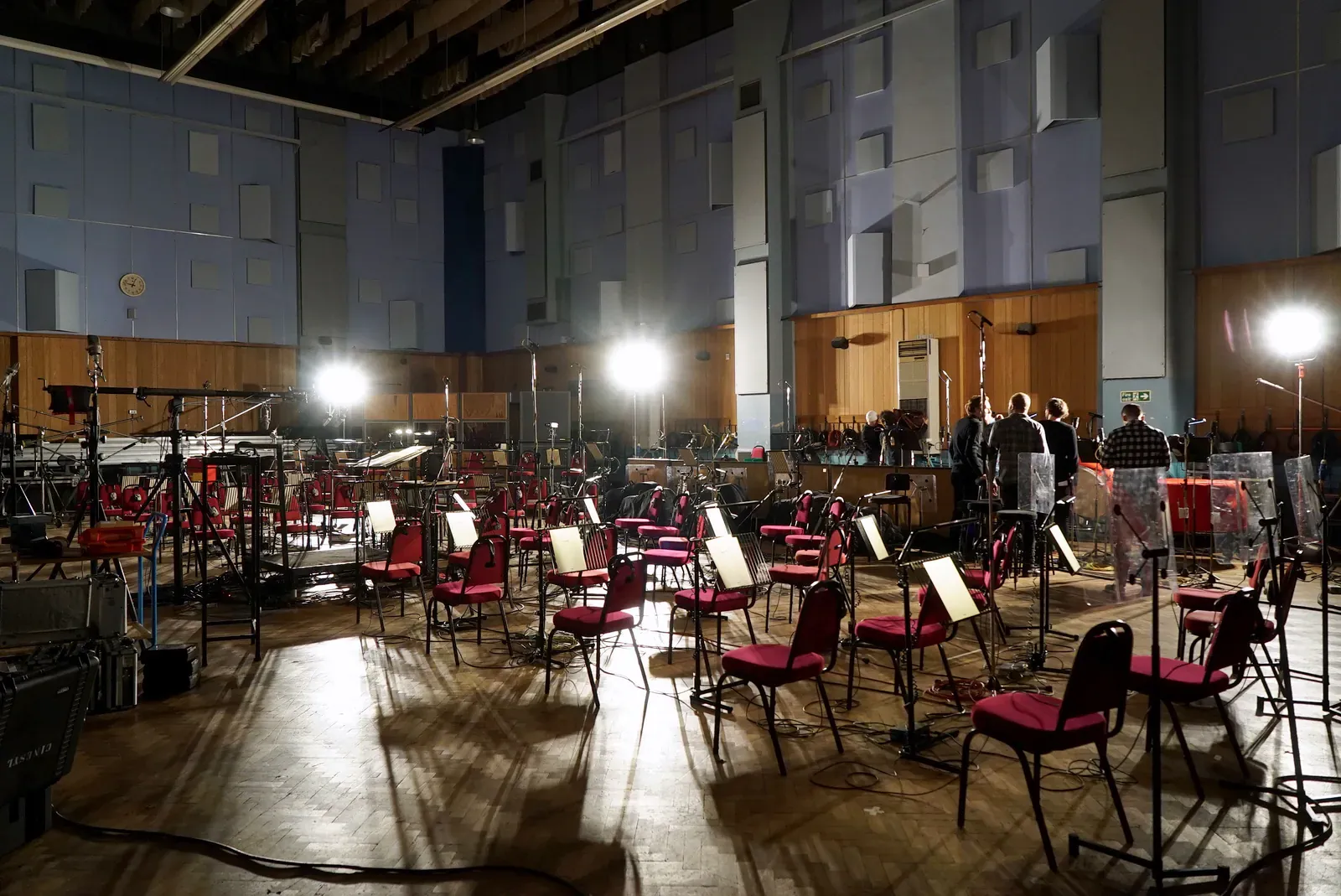
Origins
Music was part of cinema from the first paid screenings in 1895. Pianists, organists and small bands played in the hall, working from cue sheets and catalogues of mood pieces sorted by emotion: chase, storm, love, pursuit. Music written for one particular film came early: Camille Saint-Saëns composed an original score for the French film L’Assassinat du duc de Guise in 1908, and Berlin became a centre of composed silent-film music, with Edmund Meisel’s score for Battleship Potemkin in 1926.
The technical break came the same year, when the sound-on-disc system Vitaphone played a recorded orchestral score in sync with the feature Don Juan.
Hollywood studio era, 1927-1960
Sound film moved film music to Los Angeles. Studios kept staff orchestras and composers under contract, and the scoring stage became part of the production line. Max Steiner’s near-continuous score for King Kong in 1933, built on recurring themes, showed what music could do under dialogue and action. His Tara’s Theme for Gone with the Wind followed in 1939. Erich Wolfgang Korngold, an opera-house composer from Vienna, brought a full late-Romantic voice to swashbucklers and won the Academy Award for the 1938 film The Adventures of Robin Hood. Alfred Newman and Miklos Rozsa carried the style forward.
The method was leitmotif, borrowed from Wagner’s opera: a short musical idea attached to a person, place or feeling and varied as the story changes. Music was also timed closely to on-screen action, a habit later nicknamed mickey-mousing.
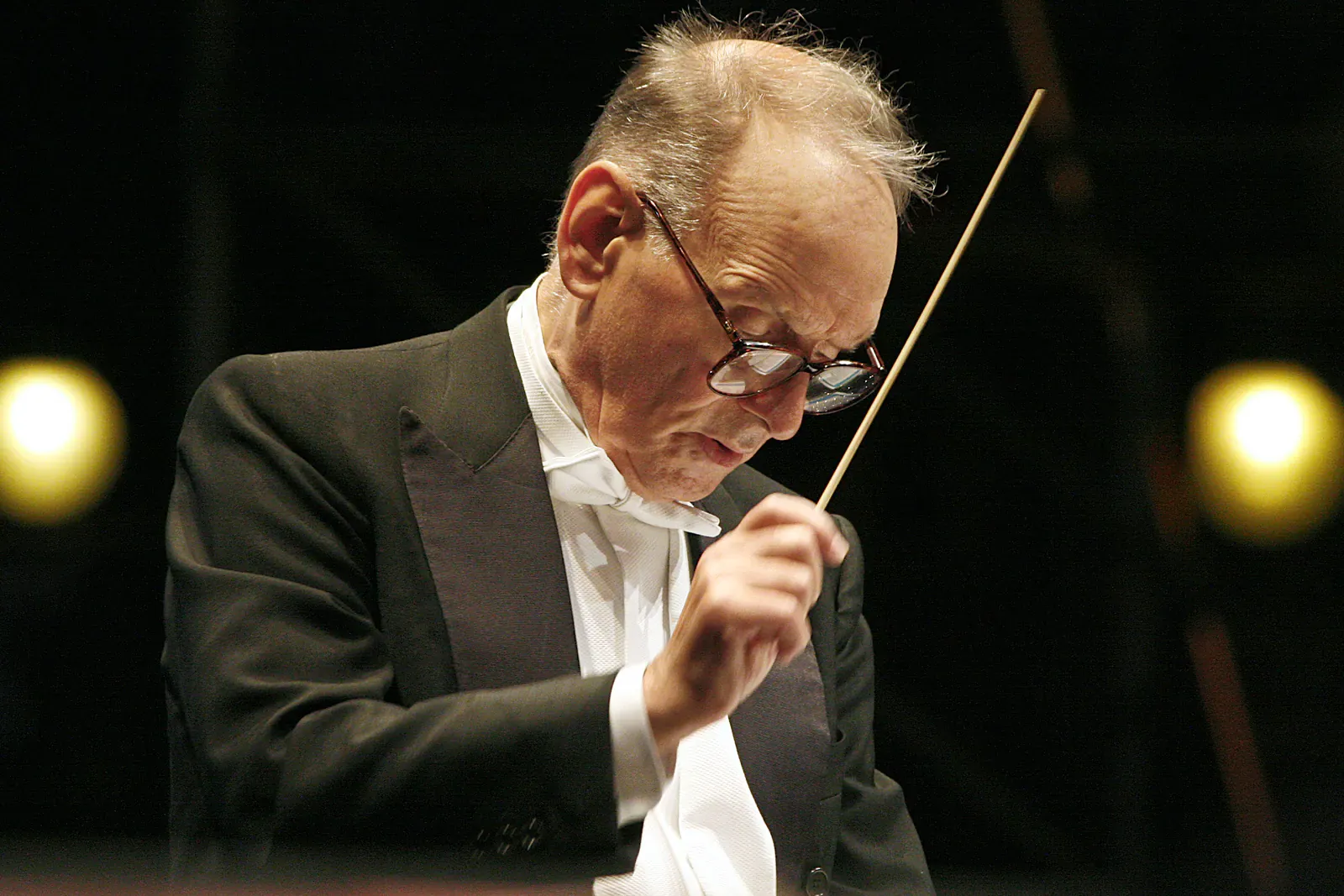
Jazz, modernism and Europe, 1955-1975
From the mid-1950s composers stepped away from the Romantic template. Elmer Bernstein’s jazz score for The Man with the Golden Arm in 1955 opened the way for urban jazz film music. Bernard Herrmann wrote Psycho in 1960 for strings alone, with stabbing and shrieking figures that became the model for horror scoring. John Barry’s arrangement of the James Bond theme, which debuted in Dr. No in 1962, put a twangy guitar riff and big-band brass at the centre of spy-film sound.
Henry Mancini’s Breakfast at Tiffany’s in 1961 showed that a score could be a commercial record. The album came out on RCA Victor, Moon River won the Oscar for best song, and Mancini took a second statue for the score. In Rome, Ennio Morricone’s music for A Fistful of Dollars in 1964 launched a sound of whistles, electric guitar and wordless voices that reshaped the western for filmmakers worldwide.
By the mid-1960s the studio system was shrinking: composers were hired film by film and recorded with freelance players, often in London or Rome.
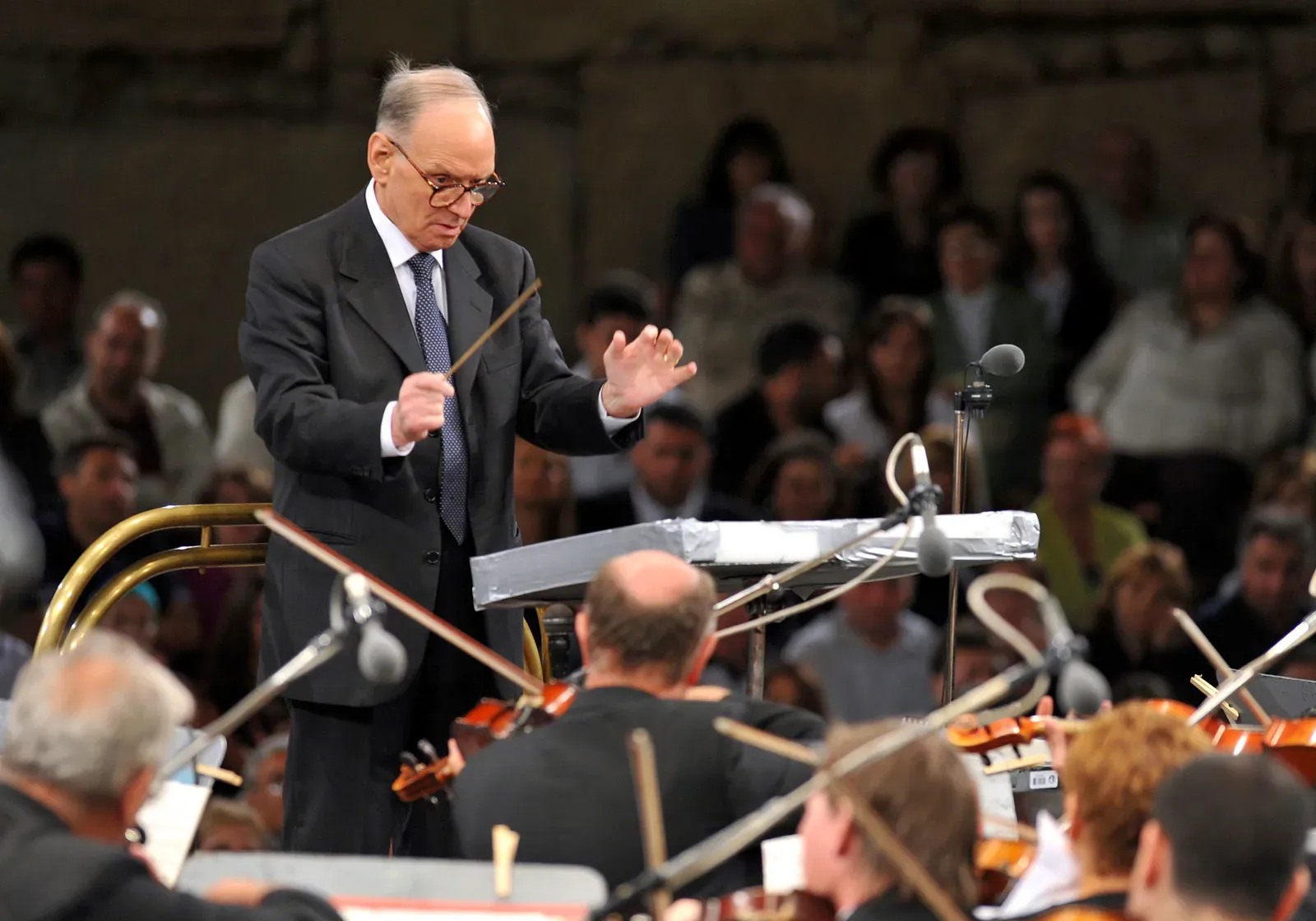
Blockbuster revival and synthesizers, 1975-1995
John Williams’s two-note motif for Jaws in 1975 showed how little a theme needs in order to carry a thriller. Two years later Star Wars, recorded with the London Symphony Orchestra, brought back a full leitmotif score. Dolby Stereo, introduced in 1975, gave theatres a clearer and wider orchestral sound.
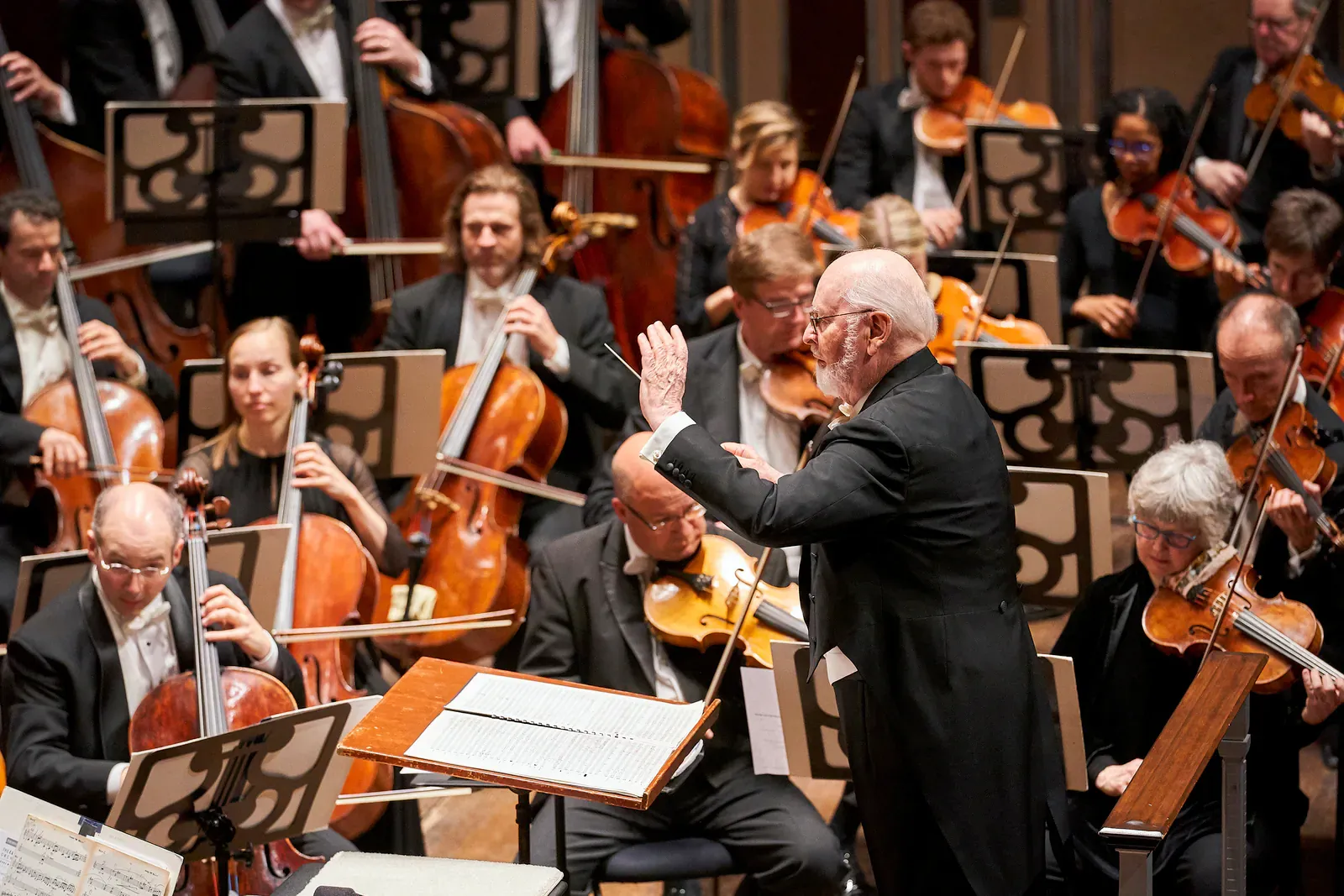
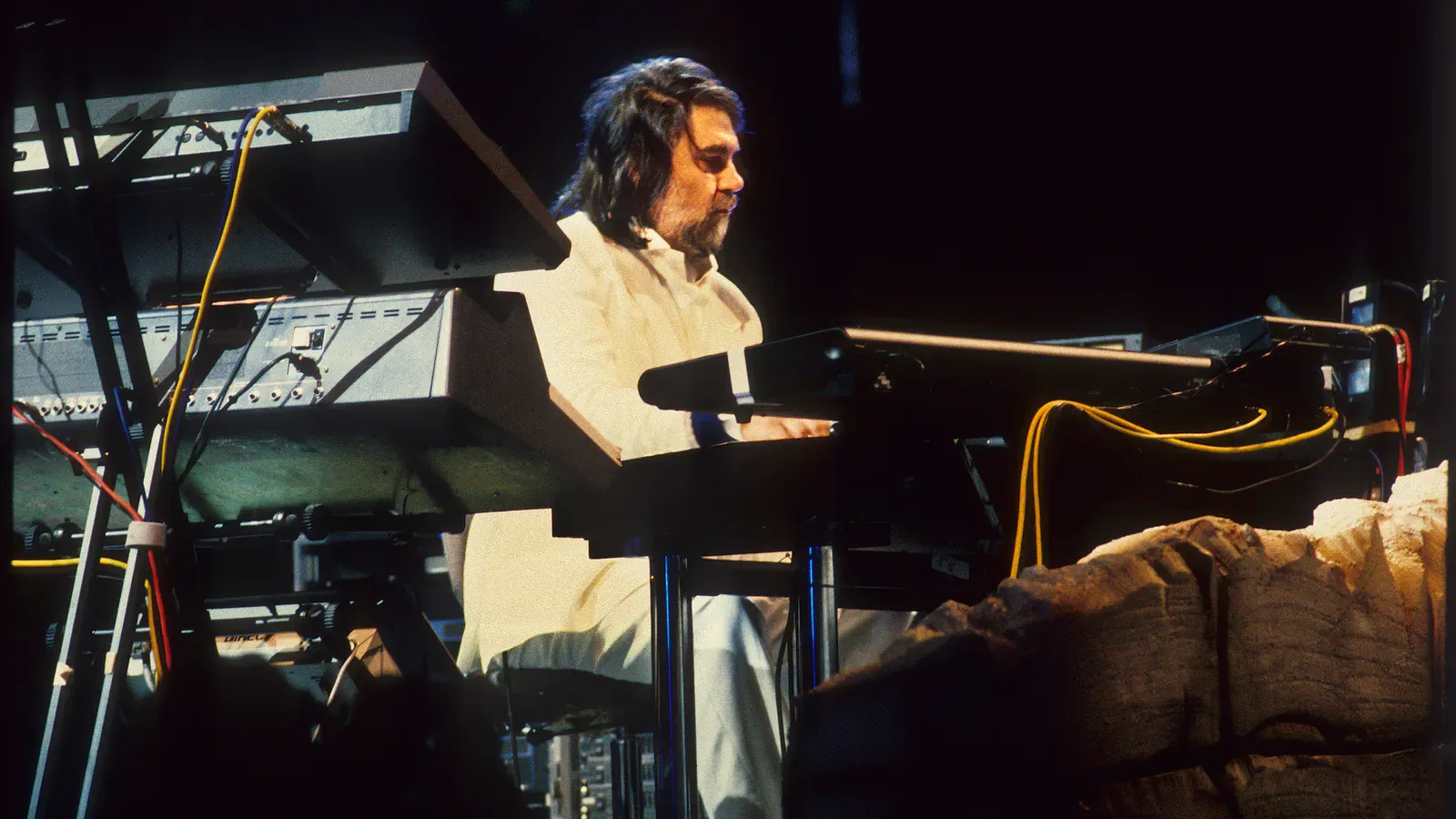
Electronics arrived in parallel. John Carpenter wrote and played the Halloween theme himself in 1978, a piano and synthesizer figure in 5/4 that needed no orchestra at all. Vangelis scored Chariots of Fire in 1981 with an all-electronic main theme that won an Oscar and reached the popular charts, and in 1982 his Yamaha CS-80 brass tones defined the sound of Blade Runner. Ryuichi Sakamoto’s piano theme for Merry Christmas, Mr. Lawrence in 1983 became a standard far beyond cinema. MIDI, standardised in 1983, let synthesizers and computers be sequenced together, so a composer could mock up a whole score before recording it.
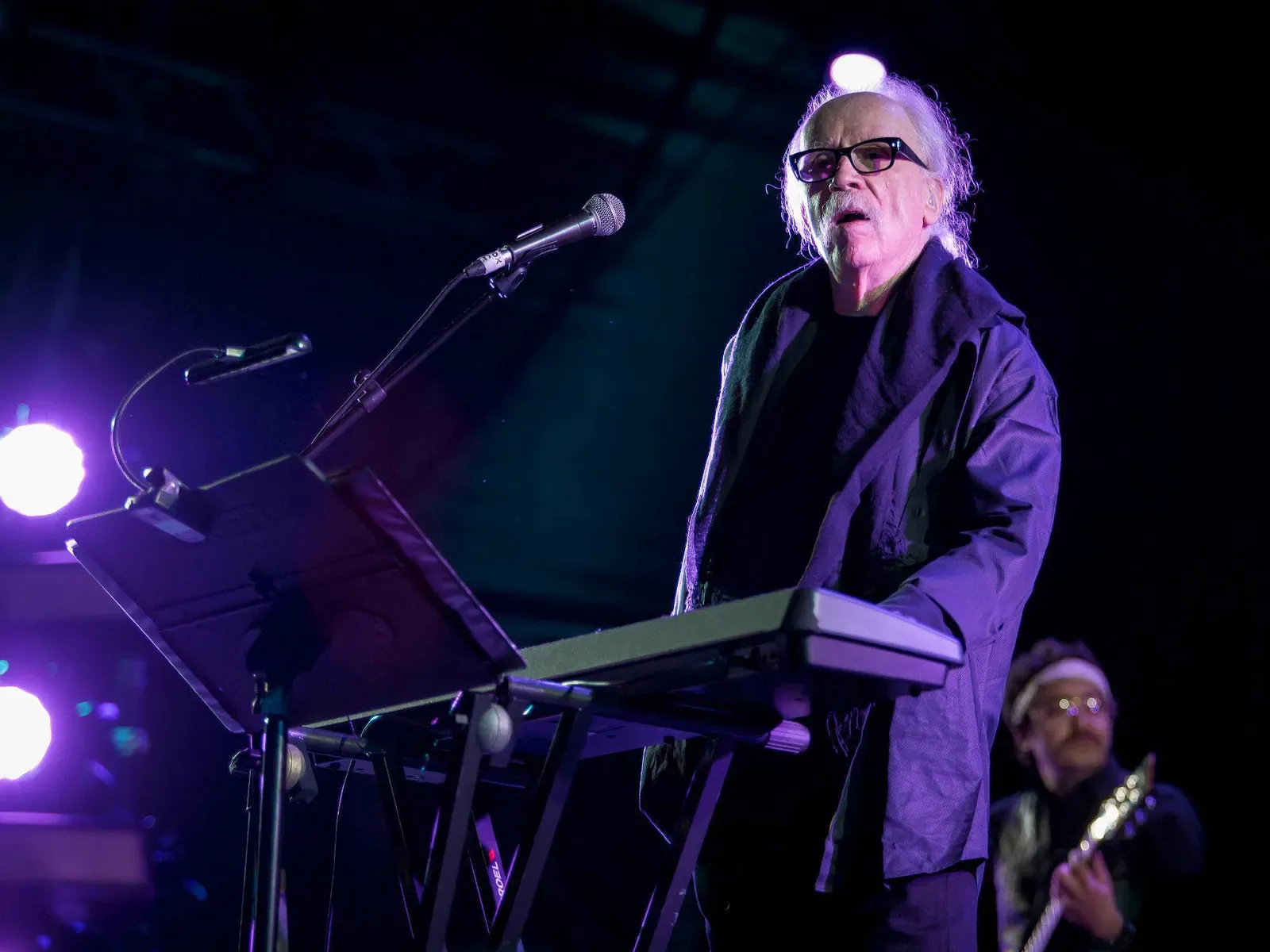
Hybrid orchestral era, 1995-2015
Hans Zimmer, a synthesizer player who moved into film scoring, won the Academy Award for The Lion King in 1995. In 1989 he and Jay Rifkin had founded the Media Ventures studio in Santa Monica, later renamed Remote Control Productions. The blended style that emerged there put live strings and brass over synthesizers, percussion loops and sound design. Gladiator in 2000, written with the singer Lisa Gerrard, set the template for epic cinema, and Inception in 2010 pushed it toward slowed-down themes and heavy brass.
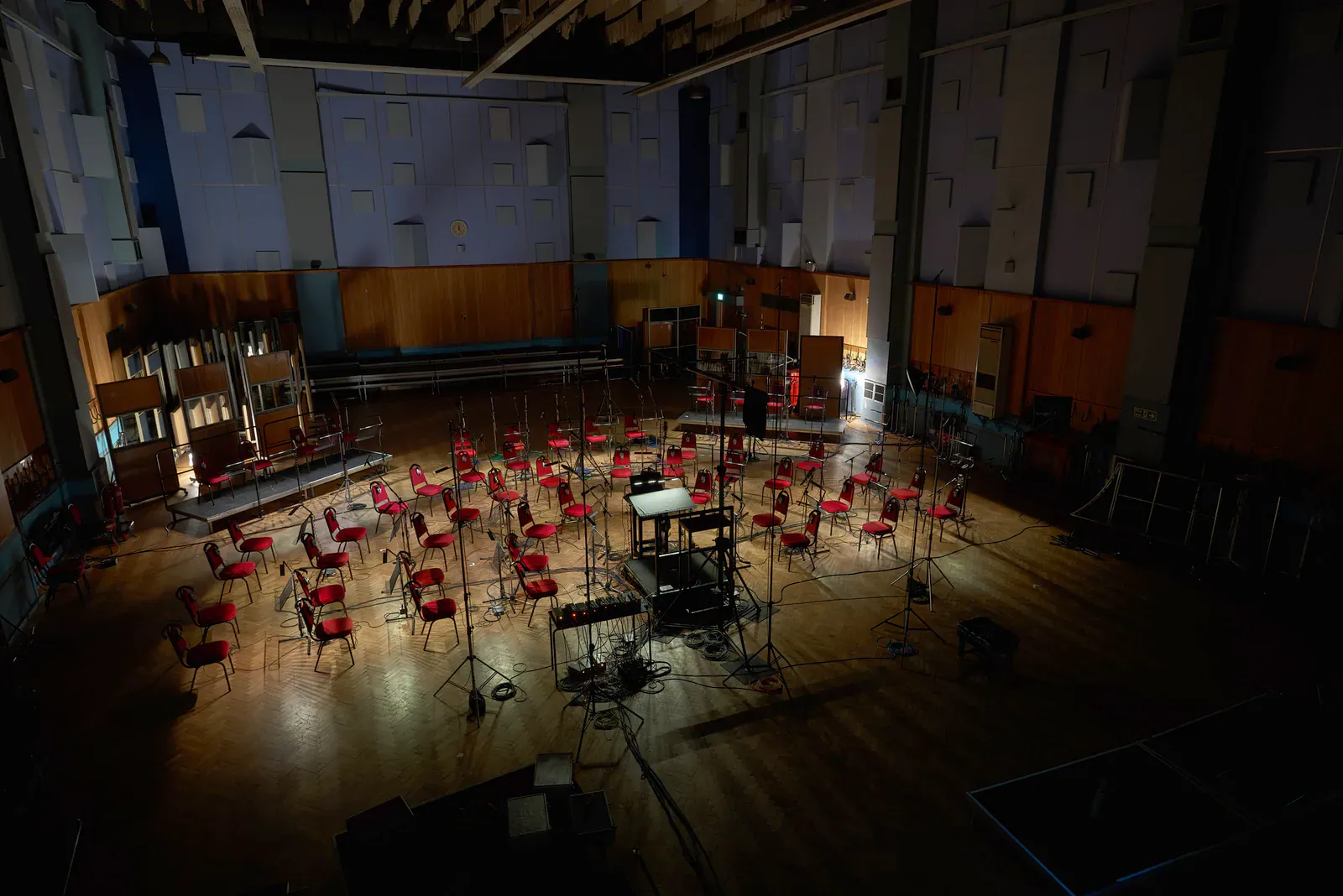
Recording still centred on London, where AIR Studios, opened in a converted church at Lyndhurst Hall in Hampstead in 1992, joined Abbey Road as a main room for large film orchestras.
Texture and minimalism, 2015 onward
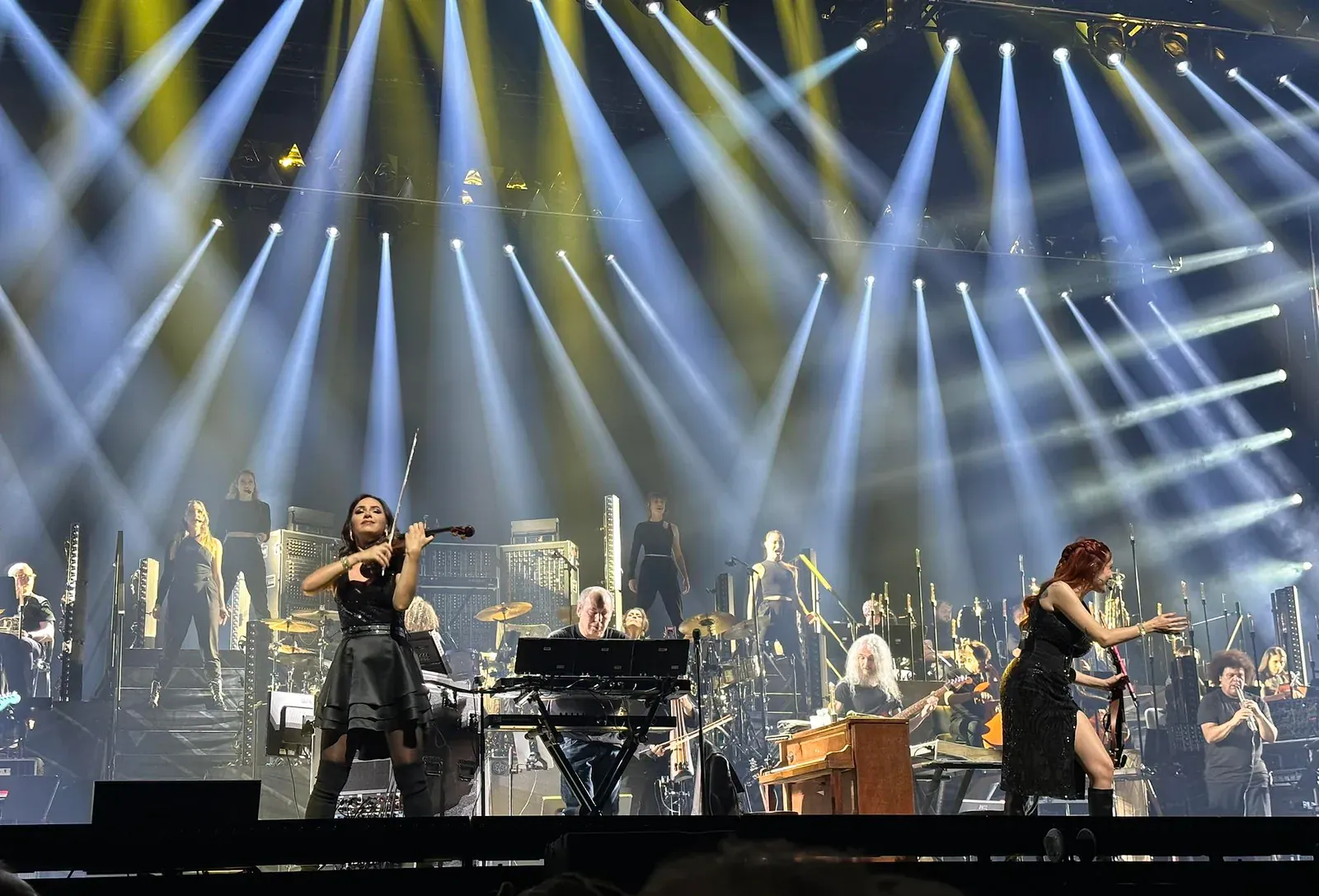
Recent winners have often come from outside the film world. Hildur Gudnadottir, a cellist, won the Oscar for Joker in 2020 with a dark, low-register score built on her own instrument. Cellists, rock musicians and electronic artists now score drama and horror with sparse, instrument-led music, while the huge-orchestra approach remains standard for franchise cinema.
Characteristics
A score is built in cues, short pieces timed to specific scenes. A typical film has a main title that states the central theme, underscore that sits beneath dialogue, stingers placed on shocks, occasional source music that the characters can hear, and an end-credits suite. Composers place cues against hit points in the picture and often write to a locked edit, though many first hear their ideas replaced by a temporary track of existing music chosen by the director or editor, a habit composers call temp love.
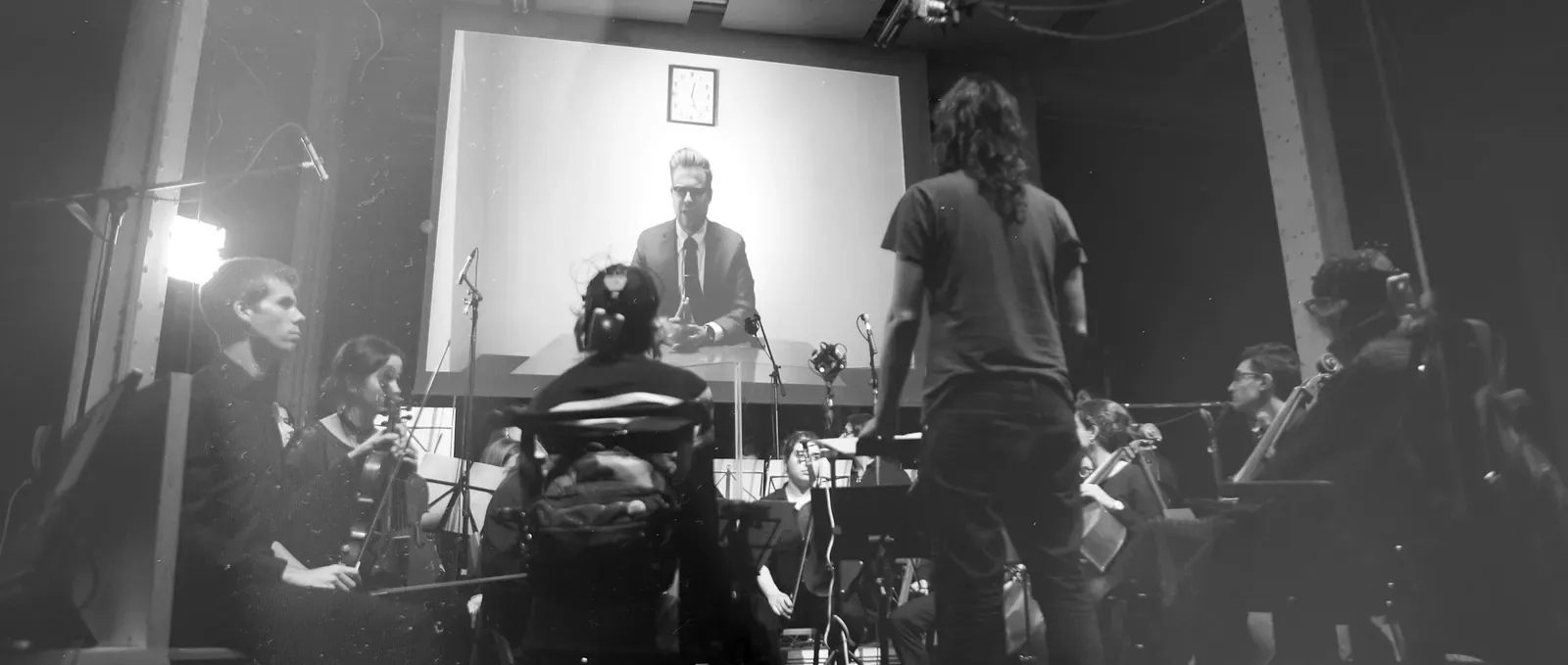
The typical ensemble is the symphony orchestra, but the genre has distinctive sounds of its own: the theremin for unease, solo piano for intimate themes, and reverb-heavy electric guitar for western and spy films. Meter and tempo vary by cue.
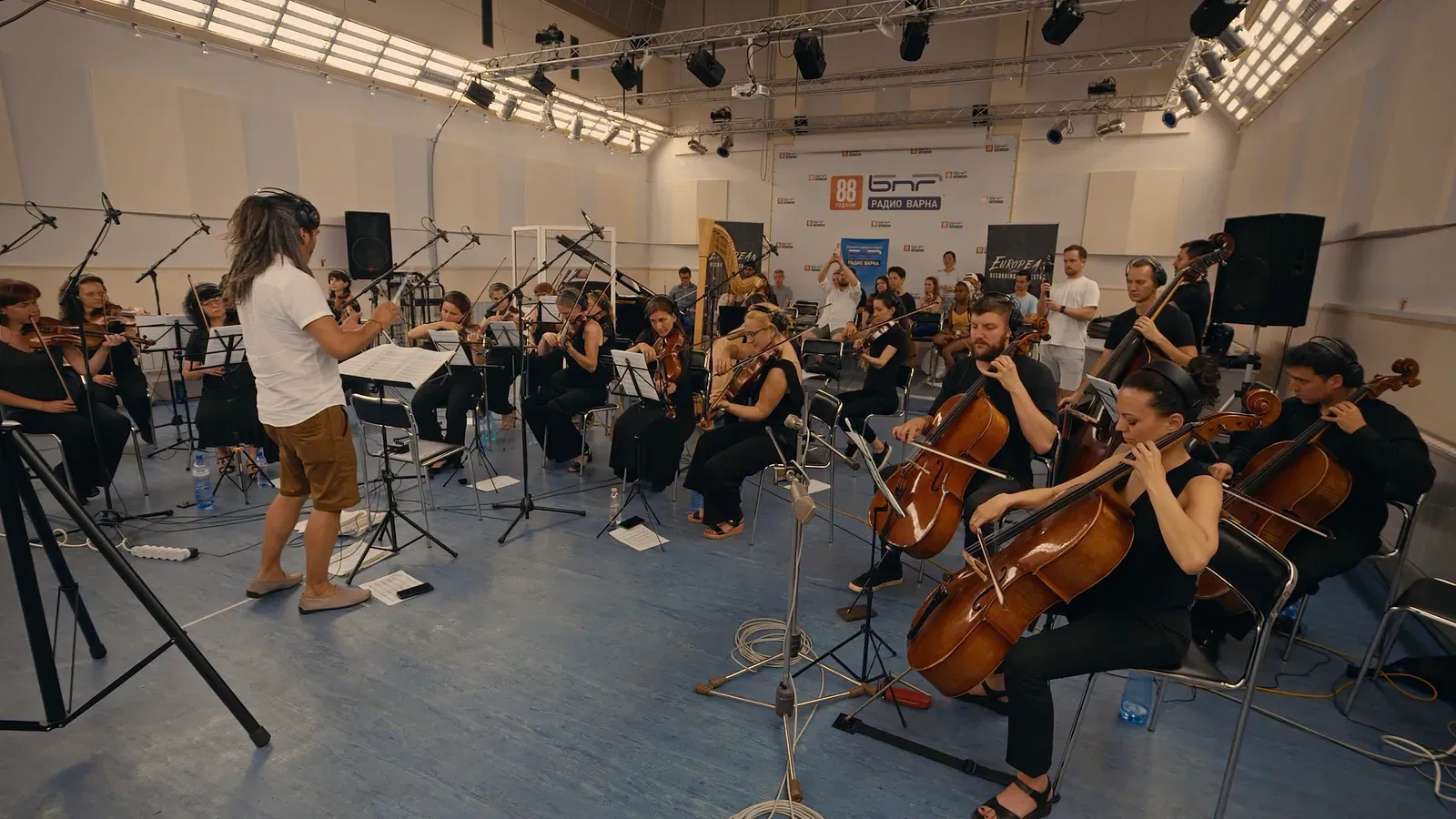
Mainstream success
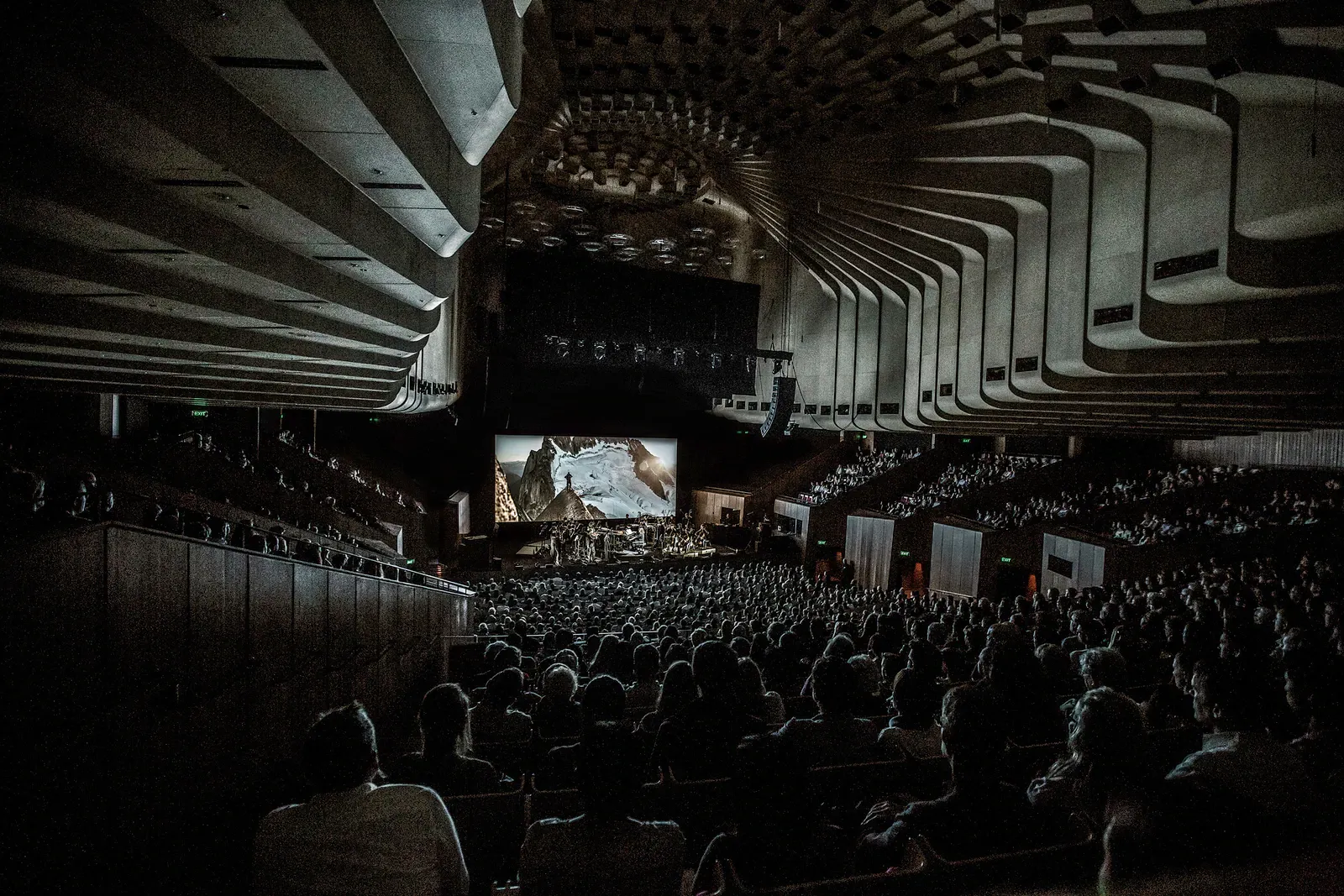
Scores reach the public most often through soundtrack albums. Mancini’s Breakfast at Tiffany’s stayed on the Billboard albums chart for more than ninety weeks, and the Chariots of Fire theme reached the top of the US singles chart in 1982. Best original score has been an Academy Award category since the 1930s. Film-in-concert performances, in which an orchestra plays the whole score live to a screened film, are now a regular part of orchestral seasons.
Notable recordings
Steiner’s King Kong (1933) and Herrmann’s Psycho (1960) are the models for continuous orchestral and horror scoring. Morricone’s The Good, the Bad and the Ugly (1966) turned a film theme into a popular record. Nino Rota’s music for The Godfather (1972) is one of the best-known love themes in film, although its Oscar nomination was withdrawn because part of the music had been used in an earlier film. Zimmer’s Inception (2010) and Gudnadottir’s Joker (2019) mark the recent turning points.
Culture
Film music has its own collector culture. Specialist labels keep scores in print and rescue older ones: Varese Sarabande, founded in Los Angeles in 1978, Intrada, Silva Screen in London, Milan and Lakeshore, with Waxwork on vinyl and Film Score Monthly in archival releases.
Legacy
Film scoring carried the Romantic orchestra into the twentieth century and made it familiar to audiences who never bought concert tickets. Its techniques, such as leitmotif, hit points and hybrid orchestral sound, now shape trailer music, television and video game scores. The genre belongs to the wider stage and screen family.
Misconceptions
A soundtrack and a score are not the same thing. The score is the music composed for the film; the soundtrack is every piece of music in it, including songs and source music, and a soundtrack album may contain no score at all.
Film scores are not always orchestral. Halloween used a lone synthesizer and piano, Chariots of Fire an all-electronic theme, and Morricone’s westerns whistles and electric guitar.
Nor are scores always the work of one person: large productions use orchestrators and additional composers.
Frequently asked questions
What is the difference between a film score and a soundtrack?
A film score is the original music composed for a film, while a soundtrack contains all its music, including licensed songs. Many soundtrack albums combine both.
When did film scoring begin?
Live music accompanied films from the first public screenings in 1895. Original scores for single films date from 1908, and recorded synchronised scores from the mid-1920s.
What instruments are used in film scores?
The symphony orchestra is the default, joined by synthesizers, guitars, piano, theremin and voices depending on the film.
Sound
Sound sheet
Anatomy of a track
| # | Part |
|---|---|
| 1 | Main title (theme statement) |
| 2 | Underscore cues spotted to scenes |
| 3 | Stingers and hit points |
| 4 | Source cues (music heard in the scene) |
| 5 | End-credits suite |
Signature sounds
- Leitmotifs tied to characters and ideas
- Cues timed to the picture and its hit points
- Underscore that sits under dialogue
- Brass fanfare or string swell at the main title
- Orchestra layered with synths and sound design in the hybrid style
Drums and percussion
- Timpani
- Sampled cinematic percussion
Synths and software
- CS-80
- Moog modular synthesizer
- Cubase
- Logic Pro
- Digital Performer
- Pro Tools
Techniques
- Leitmotif
- Spotting and hit points
- Click-track synchronisation
- Mickey-mousing
- Temp track and re-scoring
- Hybrid layering
Tuning
Western equal-tempered orchestral tuning, concert pitch near A=440 Hz; cues may be in any key.
Vocals
Mostly wordless: solo voice or choir used as colour, as in Morricone's westerns. Songs belong to the song-score branch.
Scenes
Where it happened
Where and when the sound lived: one bar per city on a shared timeline.
Europe
North America
Active scenes
Peak 5, 1989-2025
Edmund Meisel's score for Battleship Potemkin made Berlin a centre of composed silent-era accompaniment.
Home of the studio scoring stages and the film composers who defined the golden-age sound.
Orchestras and rooms such as Abbey Road record many of the world's film scores.
Home of Morricone and the session musicians behind the Italian western and giallo sounds.
Base of the Media Ventures and Remote Control studio collective behind the hybrid-orchestral sound.
Venues and places
London, 1931 to today. Studio One, its large orchestral room, hosts many film scoring sessions.
London, 1992 to today. A converted church hall in Hampstead that became a regular film-scoring room.
Culver City, 1924 to today. The former MGM lot, where studio orchestras and later freelancers have recorded scores.
Rome, 1937 to today. Rome's film studio complex, centre of the Italian film industry that Morricone and Rota worked in.
Culture
Culture markers
- Live-to-picture concerts
An orchestra performs the score live while the film plays on a screen.
Ritual - Oscar for Best Original Score
The Academy's score award, which turns composers such as Steiner and Williams into household names.
Ritual - Mickey-mousing
Shorthand for music that tracks on-screen movements too literally.
Slang - Temp love
Directors getting attached to the placeholder music in the rough cut, which composers must then follow or replace.
Slang
Media
Key media
- 1947Composing for the Films
by Hanns Eisler and Theodor Adorno. An early critical book on the way Hollywood used music.
Book - 1987Unheard Melodies
by Claudia Gorbman. A key academic study of narrative film music.
Book - 1990On the Track
by Fred Karlin and Rayburn Wright. A standard guide for working film composers.
Book - 1990Film Score Monthly
by Lukas Kendall. The collectors' magazine that also grew into a major score label.
Zine - 2016Score: A Film Music Documentary
by Matt Schrader. A documentary featuring dozens of film composers on how scores are made.
Film
Glossary
Terms on this page
A metronome in the players' headphones that keeps the recording synced to picture.
A single piece of score timed to one scene or sequence.
Music that the characters in the film can hear, as opposed to underscore.
A recurring theme tied to a character, place or idea.
Music that mirrors on-screen action beat by beat.
The session where director and composer decide where music starts and stops.
Existing music cut into a rough edit as a guide for the final score.
Stage and screen family