Television music
Television music is music written or chosen for TV: series themes, underscore and sports or news packages, shaped by short formats since the late 1940s.
United States, United Kingdom, 1948
Stage and screen family
Born
1948
United States, United Kingdom
Subgenres
7
Documented branches
Links
3
Genres it drew on or shaped
Tempo
70-145 BPMLineage
Family tree
Grew out of
Derived from
United States, United Kingdom, 1948
Television music
Led to (7)
Timeline
Era by era
From the first sparks to today. Select a dot to read the story behind it.
- Live bands and borrowed tunes
1948 to 1957
- Jazz riffs, spies and tape music
1958 to 1969
- Synthesisers and chart themes
1970 to 1989
- Cinematic series scoring
1990 to 2026
Eras
Moments
- 1 Live bands and borrowed tunes, 1948 to 1957
- 2 Jazz riffs, spies and tape music, 1958 to 1969
- 3 Synthesisers and chart themes, 1970 to 1989
- 4 Cinematic series scoring, 1990 to 2026
1948
Live bands and borrowed tunes
Early network television leaned on live studio musicians, stock recordings and tunes carried over from radio serials, with themes kept short and tied to a single programme.
- 1948US network television begins to growEarly programmes carried live studio bands, borrowed tunes and library discs, setting the short, repeatable theme as the format's musical signature.
1958
Jazz riffs, spies and tape music
Filmed series brought commissioned scores: Mancini's Peter Gunn, Schifrin's Mission: Impossible, and in Britain the tape-built Doctor Who theme from the BBC Radiophonic Workshop.
- 1958BBC Radiophonic Workshop foundedThe BBC unit at Maida Vale began producing incidental sounds and new music for radio and later television.
- 1958Peter Gunn debuts on American televisionHenry Mancini's jazz-flavoured score for the detective series set a template for commissioned TV themes.
- 1959The Music from Peter GunnThe RCA Victor album opened with the theme, earned Mancini two Grammys, and Ray Anthony's single reached number 8 on the Hot 100.
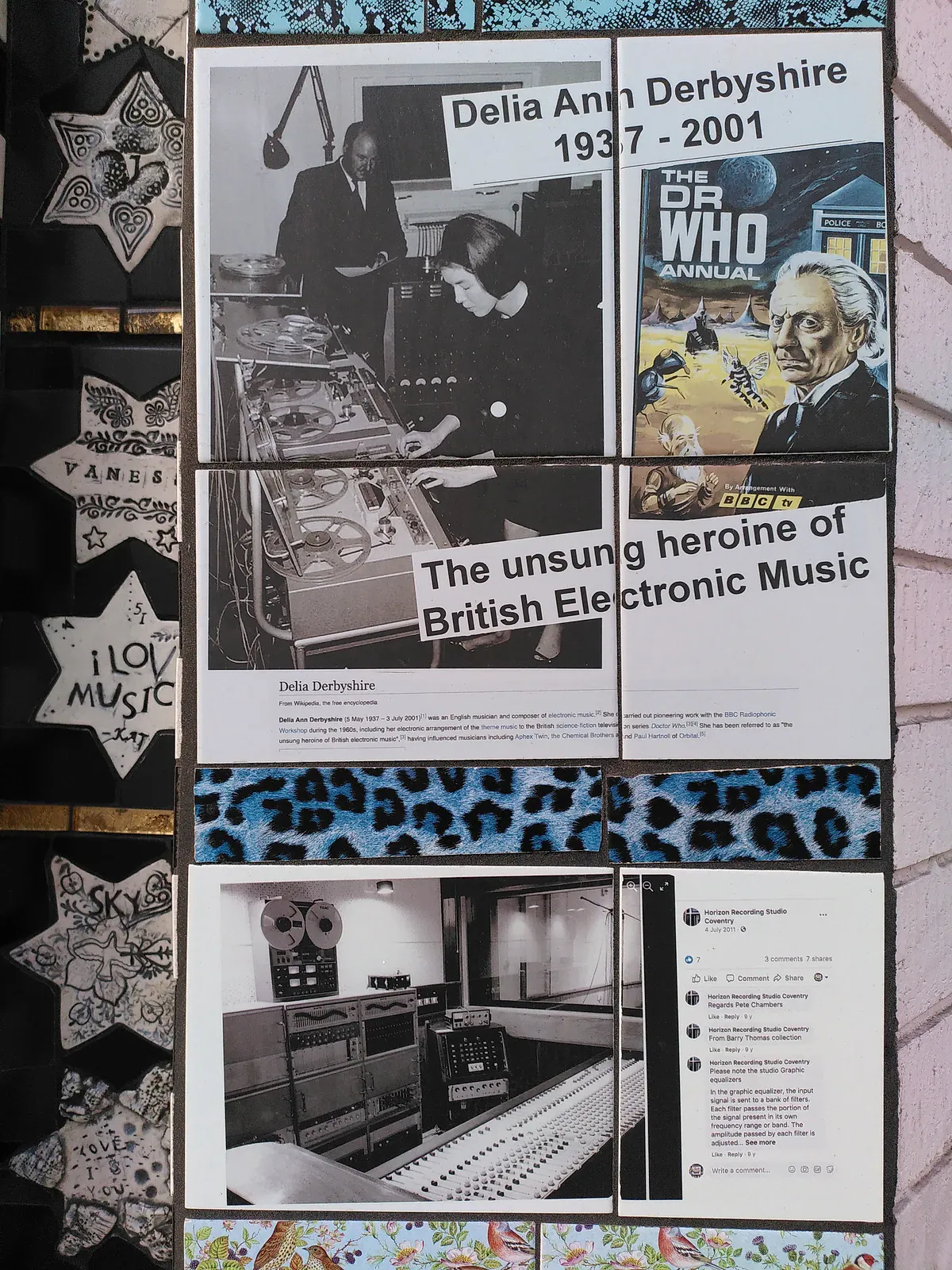
- 1963Doctor Who theme realised on tapeDelia Derbyshire built Ron Grainer's score from spliced tape, oscillators and filtered noise, the first electronic signature tune on television.
- 1966Mission: Impossible premieresLalo Schifrin's theme in five-beat meter became one of the most recognised TV cues.
- 1968Hockey Night in Canada themeDolores Claman's theme grew so iconic that it was called Canada's second national anthem, and losing its rights in 2008 became a national story.
1970
Synthesisers and chart themes
Session players and synthesisers took over the title cue. Hill Street Blues reached number 10 and Miami Vice number 1 on the Billboard Hot 100, and soundtrack albums became a product.
- 1981Hill Street Blues theme hits the chartMike Post's piece with Larry Carlton on guitar reached number 10 on the Hot 100 and won a Grammy.
- 1985Miami Vice Theme reaches number oneJan Hammer's synthesiser theme topped the Hot 100 and won two Grammys; the soundtrack led the album chart for 11 weeks.
1990
Cinematic series scoring
Orchestral and electronic scoring grew with Twin Peaks and later prestige drama, while many titles shrank to a few seconds and library music filled out the rest of the schedule.
- 1990Soundtrack from Twin PeaksAngelo Badalamenti's album, released by Warner Bros. in September, carried the show's slow, brooding theme to a wide audience.
- 1998Radiophonic Workshop closesThe BBC unit shut in March 1998 after much of its work had been outsourced.
- 2011Game of Thrones title musicRamin Djawadi's cello-led main title showed the cinematic scale of premium cable drama scoring.
Listening path
Start listening
A short path from an easy way in to the deep end. Thumbnails come from YouTube; the player loads only when you press play.
- 01
Henry Mancini, 1958
The jazz-edged detective theme that set the template for commissioned TV themes; listen for the guitar and piano ostinato.
- 02
Lalo Schifrin, 1966
The five-beat spy theme that left television for the cinema; count the uneven pulse.
- 03
Mike Post, 1981
A TV theme that became a Hot 100 hit, with Larry Carlton's guitar leading.
- 04
Angelo Badalamenti, 1990
A slow synthesiser and guitar theme that gave prestige drama a new sound.
Facts
| Family | Stage and screen |
| Origin | United States, United Kingdom |
| Emerged | 1940s onward |
| Status | Active |
| Tempo | 70 to 145 BPM |
| Meter | 4/4 |
| Grew out of | Film score |
| Subgenres | 5 |
Television music is music written for, or selected for, television programmes: series themes, episode underscore, and the signature tunes of news, sports and station branding.
It took shape in the United States and Britain from 1948 and descends from film scoring, but it is shaped by its own conditions: short opening titles, weekly deadlines and a home audience that hears the same few bars hundreds of times. Its best-known form is the theme tune, a hook short enough to identify a programme in seconds.
Origins
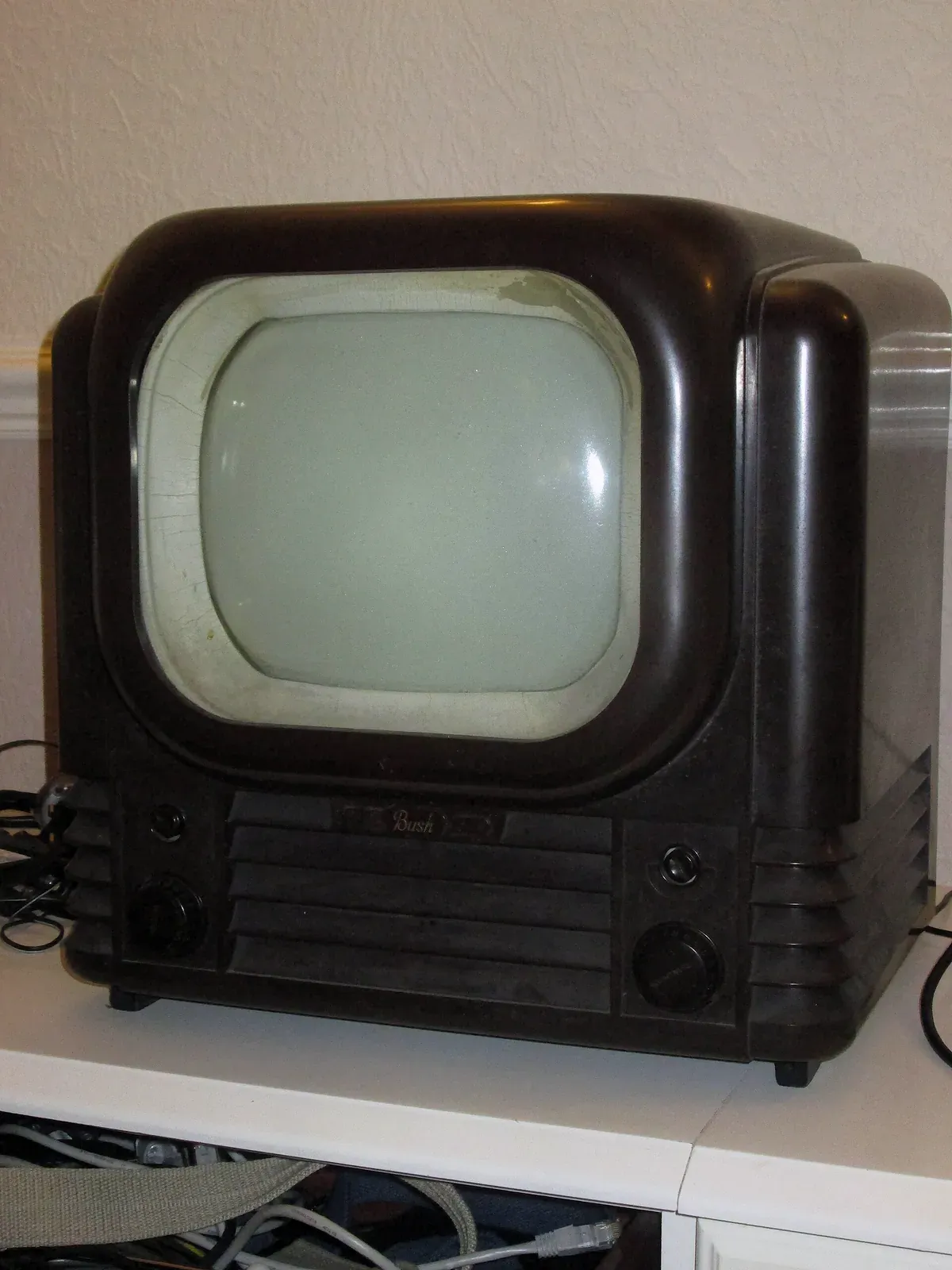
Early programmes relied on live studio bands, borrowed popular tunes and recordings pulled from stock, and many carried over habits from radio serials, where a recurring theme told listeners what was starting. The idea of a signature theme transferred naturally to the screen. In the 1950s the film studios’ discovery that a theme could be promoted as a record, as with the title song of High Noon in 1952, also fed television, and a few series themes later became hits in their own right.
Beside commissioned music, a second supply chain grew up: production music, also called library or stock music, which is recorded in advance and licensed for use in film, television and radio. It fills most of the schedule that has no budget for original composition, and it remains a quiet foundation of the form. The related page on film scoring covers the older tradition that television borrowed from, and the broader stage and screen family places both.
Jazz, spies and tape, 1958-1969
The late 1950s brought the first themes that audiences knew as music rather than as a label. Henry Mancini’s score for the detective series Peter Gunn, which began in 1958, rested on a single obstinate figure, guitar and piano in unison, with saxophones and brass shouting over it. Mancini later described the theme as closer to rock and roll than jazz, and its one-chord ostinato was soon imitated across crime and adventure series. The piano riff on the original recording was played by John Williams, later a major film composer. The RCA Victor album The Music from Peter Gunn appeared in 1959, and a Ray Anthony single of the theme reached number 8 on the Billboard Hot 100. Mancini was nominated for an Emmy and won two Grammys, and the recording entered the Grammy Hall of Fame in 2005.
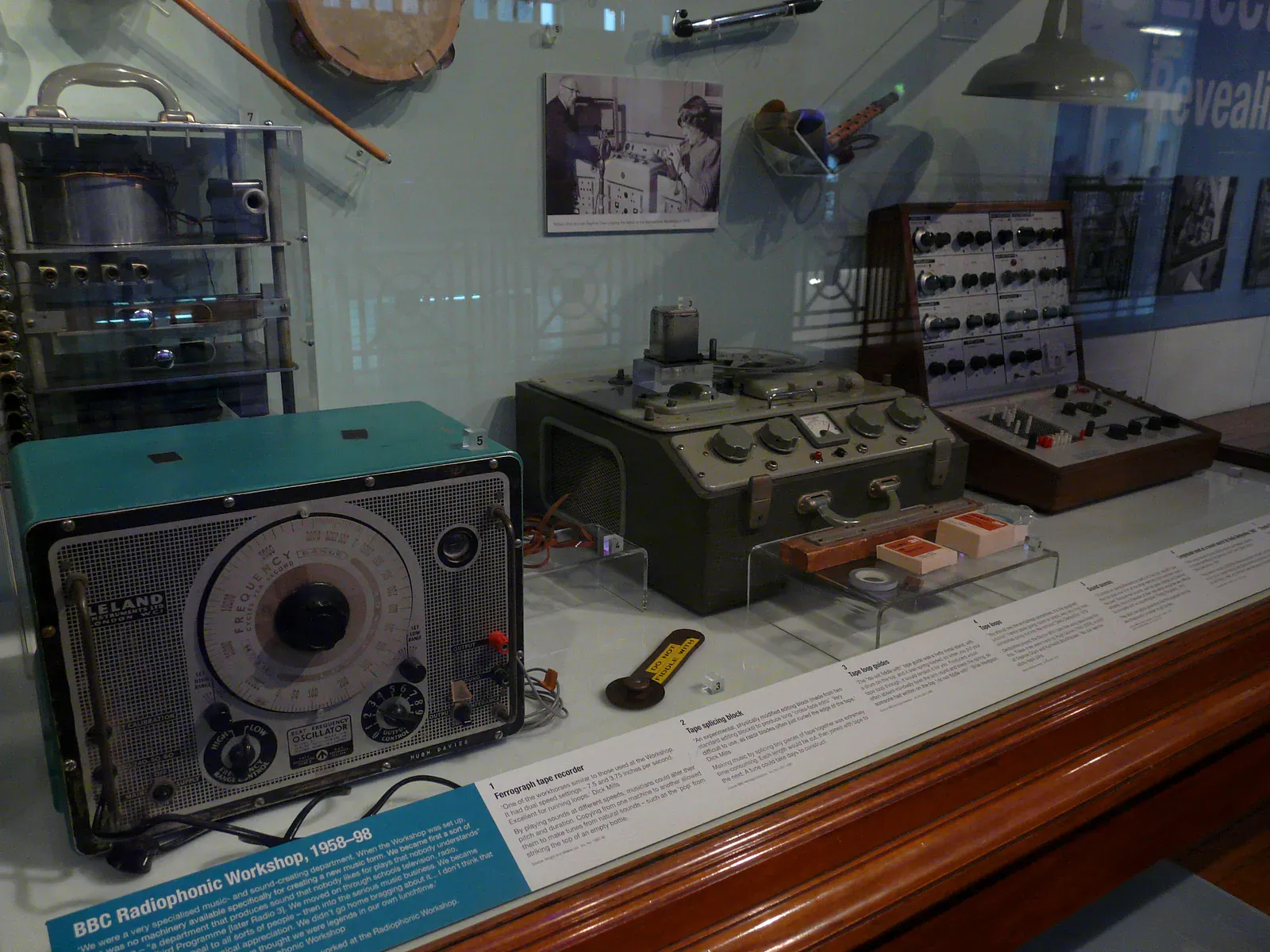
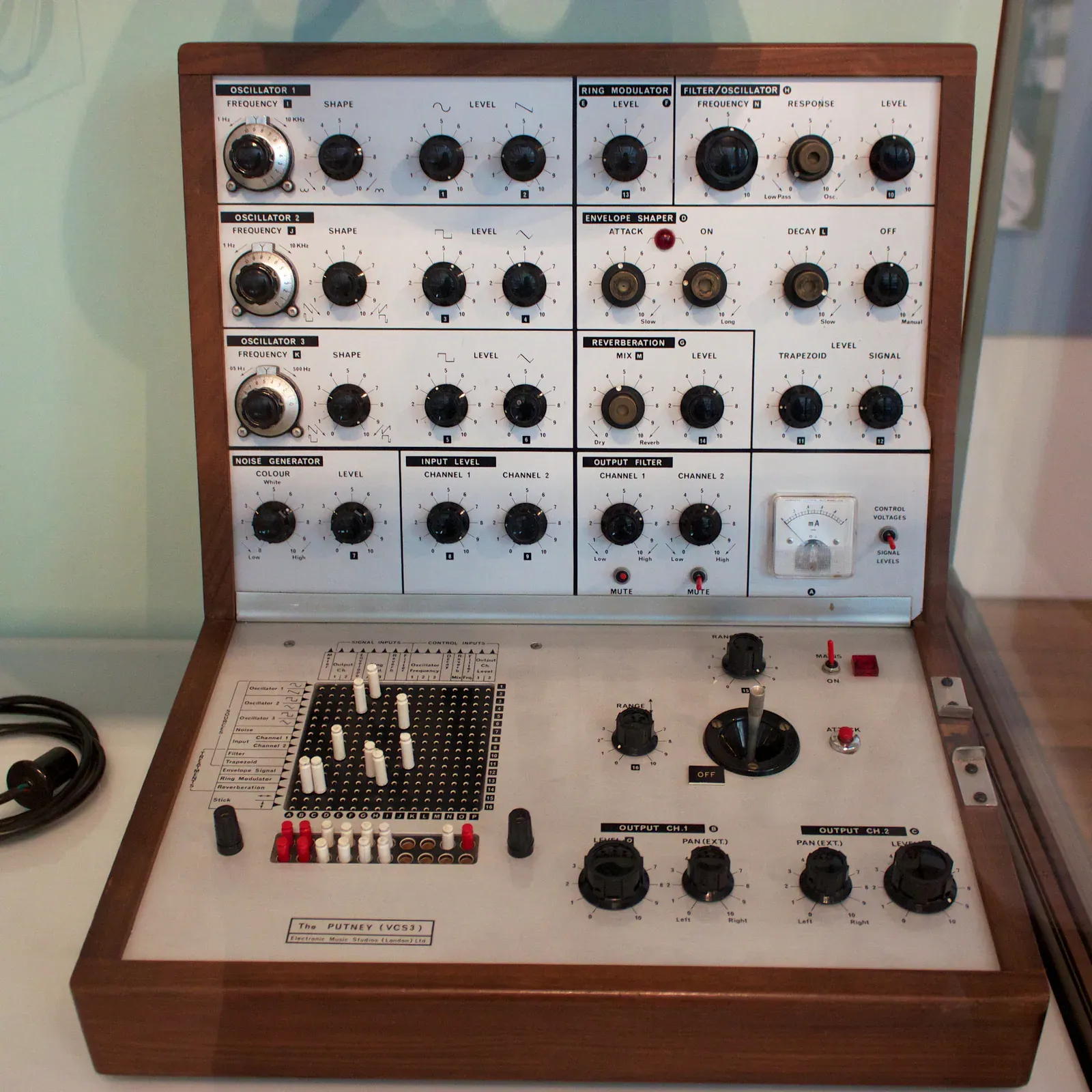
Britain took a different route. The BBC Radiophonic Workshop, set up in 1958 at Maida Vale in London, produced incidental sounds and new music for radio and later television. In 1963 Delia Derbyshire used its tools to realise a score by the Australian composer Ron Grainer for a new science-fiction series, Doctor Who. Each note was made separately from a plucked string, filtered white noise and test-tone oscillators, then repitched by changing tape speed, cut to length and spliced. With no multitrack machines, the lines were mixed by running a separate tape machine for each and starting them together. The result is regarded as the first electronic signature tune on television. Grainer is said to have asked whether he had really written it, and Derbyshire answered that she had written most of it. BBC rules about keeping the unit anonymous stopped her from sharing the composer credit or royalties.
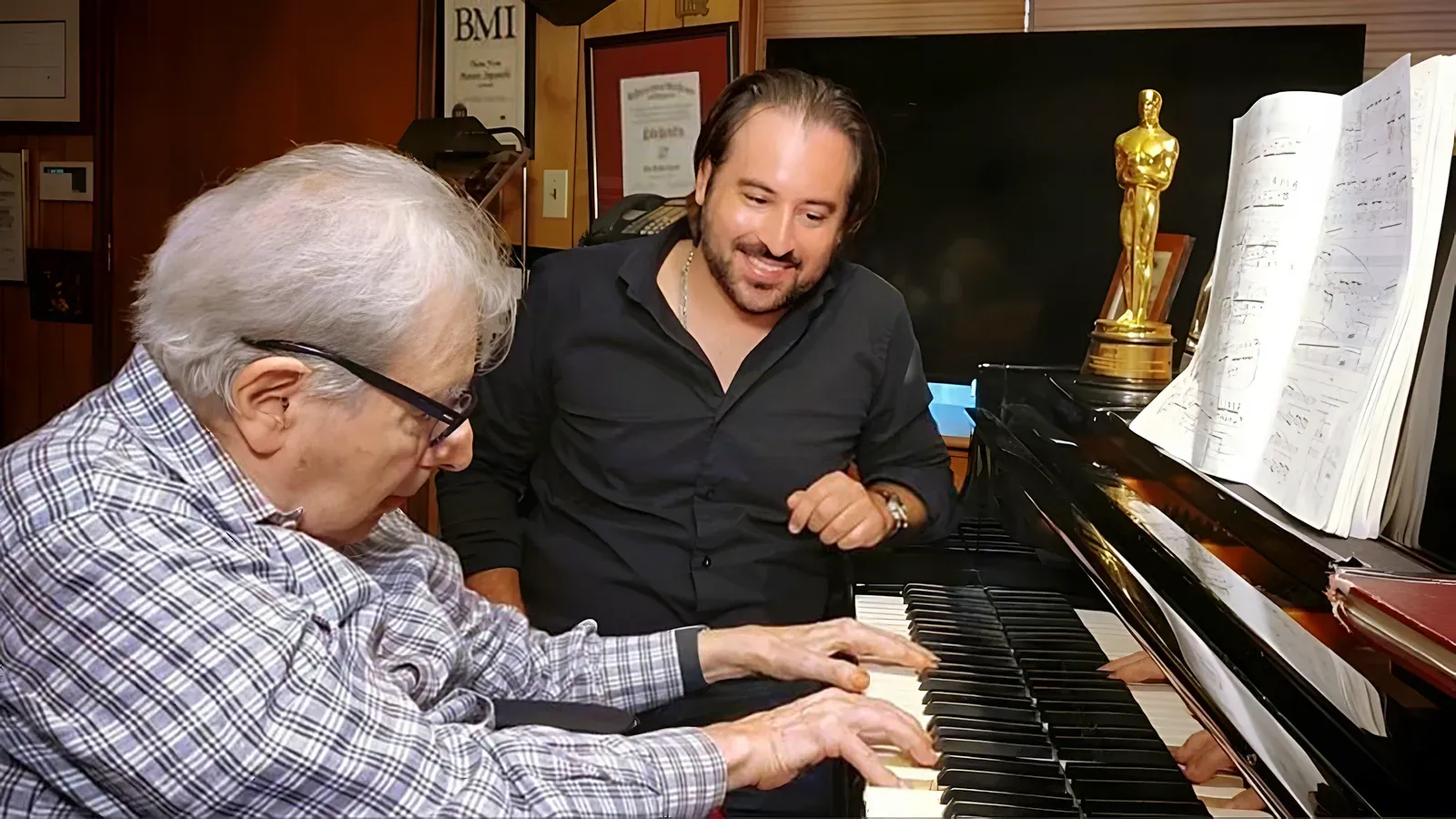
The same decade produced the best-known American spy theme. Lalo Schifrin wrote the music for Mission: Impossible in 1966 in a five-beat meter, a pattern that matches the Morse code letters M and I if a dash lasts one and a half beats. He called the working title Burning Fuse and recalled writing the main theme in about 90 seconds. Schifrin’s jazz background and Latin American roots ran through many of his television and film scores.
Synthesisers and chart themes, 1970-1989
By the 1970s and 1980s the title cue had become a product. Mike Post, who wrote themes for The Rockford Files, Hill Street Blues, Magnum, P.I. and later Law and Order, built them with session players and a pop-minded ear. The theme from Hill Street Blues, with Larry Carlton on guitar, reached number 10 on the Hot 100 in November 1981 and won a Grammy. The series itself won eight Emmys in its first season. Post’s themes were collected on the 1982 album Television Theme Songs, and in 1990 the Hill Street Blues soundtrack was reissued on the specialist label Silva Screen.
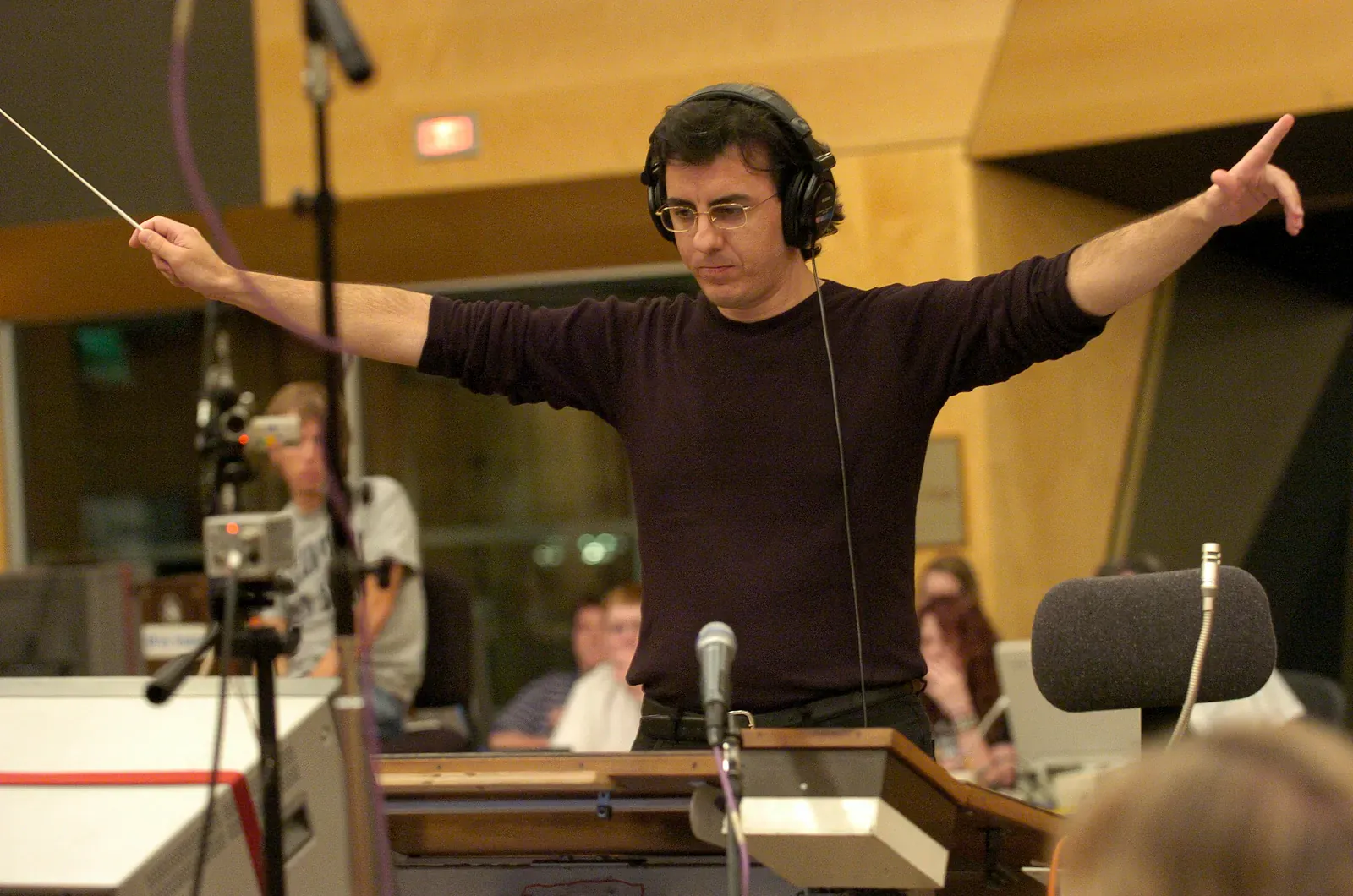
Miami Vice, which began in 1984, took the idea further. Jan Hammer’s synthesiser theme was released as a single in 1985, reached number one on the Hot 100 and won two Grammys. Together with a Glenn Frey song it kept the show’s soundtrack at the top of the US album chart for 11 weeks, which made it the most successful television soundtrack until High School Musical passed it in 2006. It was also the last instrumental to top the Hot 100 until 2013.
Cinematic scoring, 1990 to the present
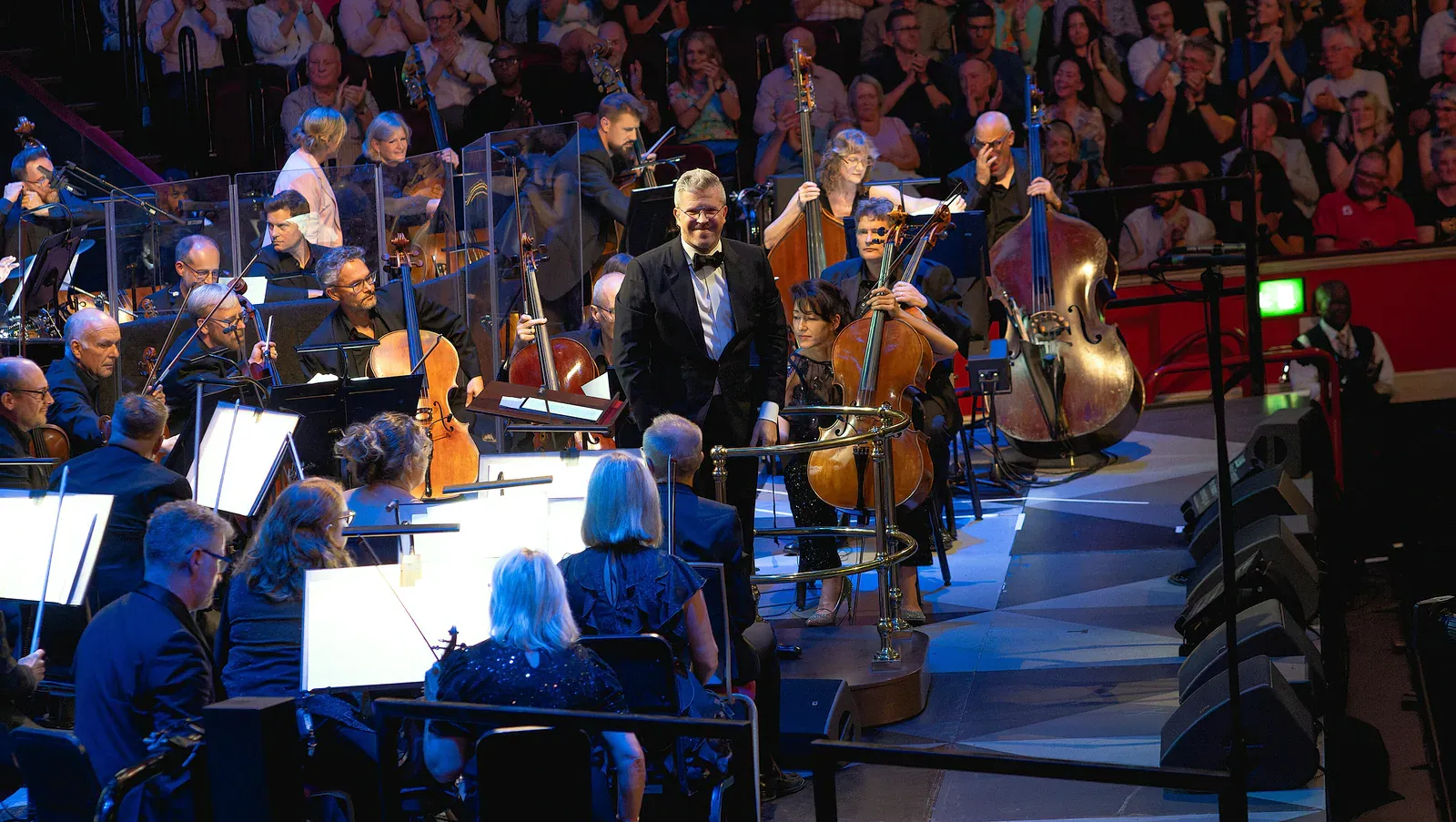
The 1990s and after lifted television scoring toward cinema. Angelo Badalamenti’s slow, brooding music for Twin Peaks reached listeners through a Warner Bros. album in September 1990, mostly instrumental with three tracks sung by Julee Cruise. Later prestige drama such as Game of Thrones, whose cello-led main title by Ramin Djawadi arrived in 2011, brought film-scale orchestration and electronics to the weekly series. At the same time many programmes shortened or dropped their opening themes. The long-running 60 Minutes uses only the ticking of a stopwatch, and Regular Show plays its theme only over the closing credits.
Characteristics
A theme is built to be heard repeatedly and to identify a programme quickly, so it usually opens with a short, distinctive hook and keeps an ostinato or bass figure underneath the melody. The same material is often edited in two lengths: a trimmed version for the opening titles and a fuller one, often including a contrasting bridge, for the closing credits. Within an episode, underscore works in cues timed to scenes. A programme may carry its theme, a handful of recurring motifs and a store of library cues, and the three often overlap.
Instruments and production
The palette follows the technology of each decade: live studio orchestras and jazz combos in the 1950s and 1960s, tape and oscillators at the BBC, then synthesisers and drum machines in the 1980s, and sample libraries and hybrid orchestras since. Weekly schedules favour small ensembles of session players and, in later decades, composers who work to picture with digital tools.
Mainstream success
Television music is mainstream by definition, but only some pieces escaped the screen. Peter Gunn, Hill Street Blues and Miami Vice reached the Hot 100, and Mission: Impossible moved into films and a cover version by Adam Clayton and Larry Mullen Jr. Sports shows may be the most closely tied of all: in Britain the Match of the Day and Grandstand themes stand for football, and Soul Limbo by Booker T. and the M.G.’s for cricket, while in North America Hockey Night in Canada’s theme is sometimes called Canada’s second national anthem. When the CBC lost its rights to the tune in 2008 it became a national story.
Notable recordings
Peter Gunn is the template for the riff-driven detective theme, and its simplicity explains its reach. The 1963 Doctor Who theme shows how a television deadline could produce a landmark of electronic music years before commercial synthesisers were common. Miami Vice Theme shows the reverse: a polished, synthesiser-led single that sold in record shops and reached number one.
Culture
The theme turns the start of a programme into a ritual, and in the sports world it becomes a signal that a weekly event has begun. Fans identify programmes from a few notes, and theme tunes pass between generations of viewers, especially for long-running serials and soap operas that kept their themes largely unchanged for decades.
Legacy
Television music trained a generation of composers, from Mancini, Schifrin and Post to the BBC’s tape pioneers, and it set the template for the short, branded musical logos now used by streaming services and video games. Its influence runs into video game music, where recurring themes and short loops serve a similar purpose, and it has kept the Radiophonic Workshop’s methods alive in electronic music long after the unit closed in March 1998.
Misconceptions
It is often said that Doctor Who’s theme was made on a synthesiser. It was not: in 1963 Derbyshire built it from tape, a plucked string, white noise and test-tone oscillators, before commercial synthesisers were generally available. It is also assumed that a famous theme must have been the work of a single composer. The Doctor Who theme was written by Grainer and realised by Derbyshire, and the credit was long given to Grainer alone. A third belief is that television themes are always short. Many were released in full length, and the Mission: Impossible and Hill Street Blues pieces also exist as full-length recordings.
Frequently asked questions
What is television music?
Television music is music composed or selected for TV programmes, including theme tunes, underscore and the music of news and sports packages.
Who wrote the Doctor Who theme?
Ron Grainer wrote the score, and Delia Derbyshire realised it at the BBC Radiophonic Workshop in 1963, using spliced tape and oscillators.
What is production music in television?
Production music, also called library or stock music, is pre-recorded music licensed for use in television, film and radio, and it fills much of the schedule.
Which TV theme reached number one in the United States?
Jan Hammer’s Miami Vice Theme reached number one on the Billboard Hot 100 in 1985.
Sound
Sound sheet
Anatomy of a track
| # | Part | Bars |
|---|---|---|
| 1 | Hook or ostinato | 4 |
| 2 | Main melody | 8 |
| 3 | Bridge (often heard only in the long version) | 8 |
| 4 | Return and button | 4 |
Signature sounds
- Short repeatable hook
- Ostinato bass or riff under the melody
- Cut-down opening version and fuller closing version
- Odd meters such as 5/4 for tension
Techniques
- Ostinato riff
- Tape splicing
- Odd meter
- Edit to length
Keys and modes
E minor Phrygian. The mode of the Doctor Who theme.
Minor-key ostinato. Peter Gunn runs on one chord throughout, with a blues-rock riff on top.
Vocals
Mostly instrumental themes; sung theme songs appear in sitcoms and drama.
Scenes
Where it happened
Where and when the sound lived: one bar per city on a shared timeline.
North America
Europe
Active scenes
Peak 3, 1958-2025
Studio musicians recorded series themes and scores for Hollywood-made television.
The BBC and its Radiophonic Workshop produced electronic and incidental music for British television.
Network headquarters and early live broadcasting, with music for news and sports packages.
Venues and places
London, 1958 to today. BBC studios in Delaware Road where the Radiophonic Workshop was based.
Los Angeles, 1958 to today. Hollywood studio where the Peter Gunn recordings were made.
Culture
Culture markers
- Opening-credits sequence
The theme plays over titles and doubles as a signal that the programme is starting.
Ritual - Sports-broadcast themes
In Britain and North America sports shows such as Match of the Day and Monday Night Football are tied to their theme tunes.
Ritual - Theme tune
British term for a programme's signature music, also called a signature tune.
Slang
Media
Key media
- 1982Television Theme Songs
by Mike Post and Larry Carlton. An Elektra album collecting Post's TV themes, showing the theme as a standalone recording.
Compilation
Glossary
Terms on this page
A single piece of music timed to a scene or segment.
Music heard while the opening credits roll.
Pre-recorded music licensed for use in television; also called library, stock or sync music.
The signature piece played over a programme's opening or closing titles.
Background music under dialogue and action.
Stage and screen family