Rock
Rock is guitar-driven band music built on a backbeat, born in the United States in the early 1950s and grown into a family of 445 genres.
445 genres
Since 1954
Genres
445
In this family
Branches
65
Main subgenres
Since
1954
Southern United States
Timeline
Era by era
From the first sparks to today. Select a dot to read the story behind it.
- Rock and roll
1951 to 1959
- Beat groups and the British Invasion
1960 to 1966
- Psychedelia and the album era
1966 to 1974
- Punk, new wave and post-punk
1974 to 1982
- Alternative and the MTV age
1983 to 1999
- Digital age
2000 to 2026
Eras
Moments
- 1 Rock and roll, 1951 to 1959
- 2 Beat groups and the British Invasion, 1960 to 1966
- 3 Psychedelia and the album era, 1966 to 1974
- 4 Punk, new wave and post-punk, 1974 to 1982
- 5 Alternative and the MTV age, 1983 to 1999
- 6 Digital age, 2000 to 2026
1951
Rock and roll
Rhythm and blues, country and gospel collide on Memphis, Chicago and New York records. Teenagers get their own music, and the electric guitar becomes the lead voice.
- 1951Rocket 88 is recorded in MemphisJackie Brenston and Ike Turner's band cut it at Sam Phillips's studio; Chess issued it, and it is often named the first rock and roll record.
- 1954Elvis Presley records That's All RightHis first single, cut at Sun Studio in July, joins blues and country in one performance.
- 1955Rock Around the Clock reaches number oneBill Haley's single tops the US chart after it features in the film Blackboard Jungle.
- 1955Chuck Berry releases MaybelleneHis first single for Chess sets the template of guitar riff, story lyric and teenage subject.
- 1956Heartbreak Hotel makes Elvis a national starHis first RCA single hits number one in the US and starts the first rock and roll boom.
- 1959The Day the Music DiedA plane crash on 3 February kills Buddy Holly, Ritchie Valens and the Big Bopper.
1960
Beat groups and the British Invasion
Liverpool and London bands rework American rock and roll and R&B, and the Beatles and Rolling Stones send it back across the Atlantic. Garage bands and folk rock follow.
- 1962The Beatles release Love Me DoTheir first single for Parlophone opens the British beat boom.
- 1962Fuzz and the Marshall amp arriveThe Maestro Fuzz-Tone and the Marshall JTM45 both appear in 1962 and shape the sound of distorted guitar.
- 1964The Beatles play The Ed Sullivan ShowTheir 9 February US TV debut launches the British Invasion.
- 1965The Rolling Stones release SatisfactionA fuzz-guitar riff makes the song their first US number one.
- 1965Dylan plugs in at NewportHis electric set at the Newport Folk Festival splits folk purists and opens folk rock.
1966
Psychedelia and the album era
Rock turns to long forms, studio invention and festivals. Progressive, hard, glam and southern rock grow out of the blues-rock and psychedelic boom.
- 1967Monterey Pop and the Summer of LoveThe June festival brings Hendrix to US audiences and puts San Francisco's psychedelic bands on the map.
- 1967Sgt. Pepper's Lonely Hearts Club BandThe Beatles' studio-built album makes the LP, not the single, rock's main art form.
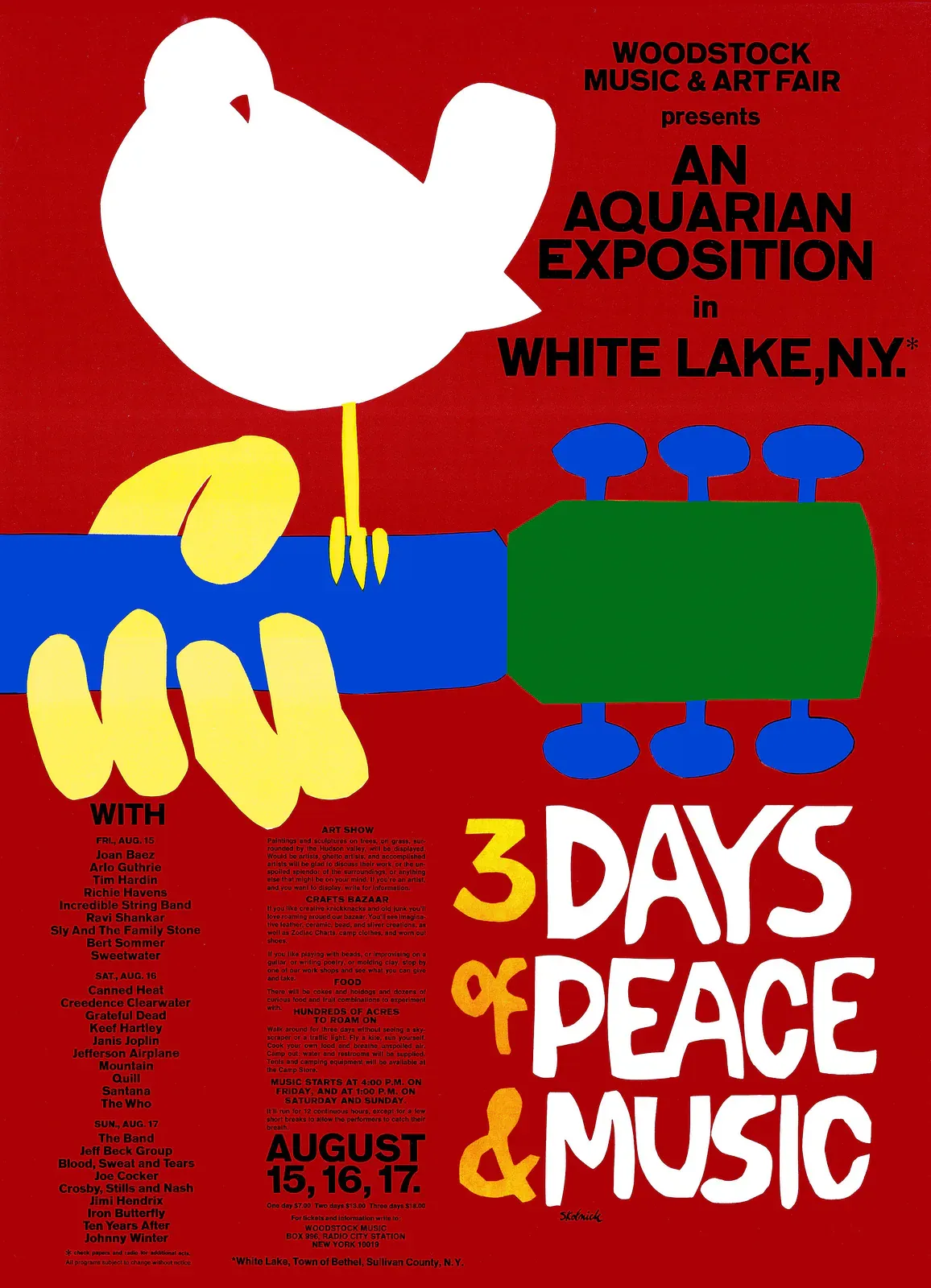
- 1969Woodstock festivalAbout 400,000 people gather in upstate New York in August, and the festival becomes a symbol of the era.
- 1969Led Zeppelin release their debut albumBlues-rock turned up to maximum volume helps define hard rock.
- 1970The Beatles splitPaul McCartney announces his departure in April, ending the band that had set the pace of the decade.
- 1972David Bowie releases The Rise and Fall of Ziggy StardustA concept album and persona that sets the model for glam rock.
- 1973CBGB opens in New YorkThe Bowery club becomes the base for Television, Patti Smith, Blondie and the Ramones.
1974
Punk, new wave and post-punk
A reaction against stadium excess: short songs, cheap gear, independent labels. Post-punk and new wave widen the palette within a few years.
- 1976The Ramones release their debut albumFourteen songs in about 29 minutes give punk its blueprint.
- 1976Stiff Records is foundedThe London indie label puts out The Damned's New Rose, the first UK punk single, in October.
- 1979Joy Division release Unknown PleasuresFactory's debut LP for the band defines the sound of post-punk Manchester.
- 1981MTV launchesThe 1 August channel makes the video a promotional necessity for rock acts.
1983
Alternative and the MTV age
College radio, indie labels and then MTV carry underground rock to the mainstream. Grunge, Britpop and shoegaze define the 1990s.
- 1988Nirvana release Love Buzz on Sub PopTheir first single appears on the Seattle label that would help create grunge.
- 1991Nevermind is releasedNirvana's second album displaces Michael Jackson from the US number one slot in January 1992 and brings alternative rock to the mainstream.
- 1994Kurt Cobain diesThe Nirvana frontman's death in April ends the band and marks the end of grunge's peak.
2000
Digital age
Garage revivals, file sharing and streaming reshape how rock is made and found. Hip hop overtakes it in US consumption, while guitar bands keep a global cult and festival base.
- 2001The Strokes release Is This ItTheir debut leads a garage rock revival; Rough Trade issued it in the UK in August, before RCA in the US in October.
- 2017Hip hop overtakes rock in US consumptionNielsen's year-end report names R&B/hip hop the most consumed genre in the US, ahead of rock.
- 2021Maneskin win EurovisionThe Italian rock band's win with Zitti e buoni gives guitar rock a global pop moment.
Roots
Roots and offspring
Grew out of
Derived from
Derived from
Derived from
Derived from
Derived from
Derived from
Pushed back against
Traditional popTin Pan Alley
Southern United States, 1954
Rock
Led to (6)
Facts
| Genres in the family | 445 |
| Main branches | 64 |
| Emerged | 1940s to 1950s |
| Key places | Southern United States, Midwestern United States |
| Tempo | 70 to 200 BPM |
Rock is guitar-driven band music built on a backbeat. It began in the United States in the early 1950s, when rhythm and blues, country and gospel met the electric guitar on records made for teenagers, and Britain sent it back transformed a decade later.
The library holds 445 rock genres, 64 of them direct branches, and dates the family from 1954.
Rock and roll, 1951 to 1959
In March 1951 a band drove to Memphis with an amplifier that, in the usual telling, fell off the car and split its speaker cone. The band stuffed paper into it, and the guitar on “Rocket 88” came out fuzzy and rude. The record was credited to Jackie Brenston and his Delta Cats, but the players were Ike Turner’s Kings of Rhythm. Sam Phillips recorded it, Chess released it, and it went to number one on the R&B chart.
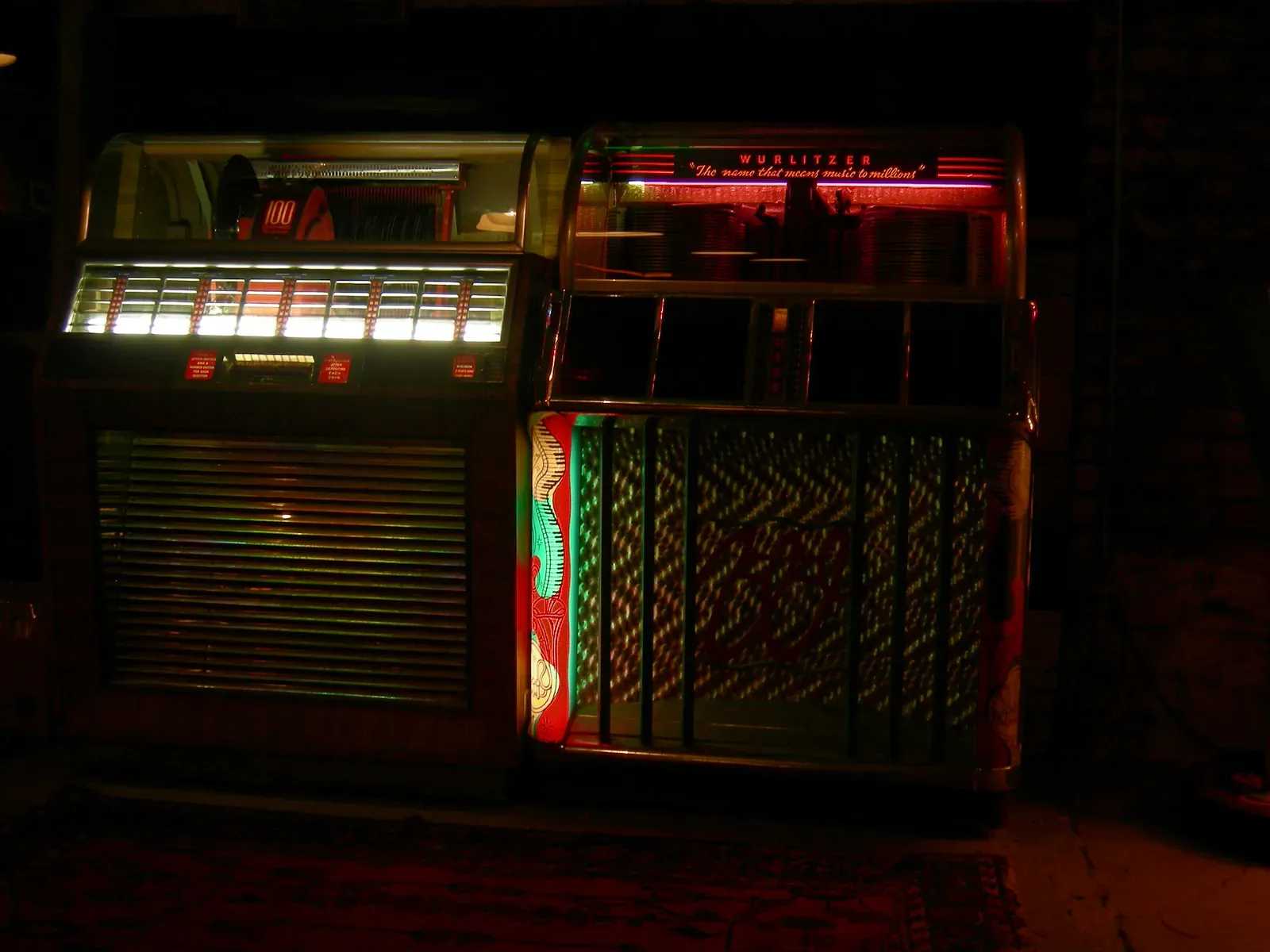
The cause of the boom was cheap hardware and a new buyer. Fender’s Telecaster, launched in 1950, was the first mass-produced solid-body electric guitar: loud enough for a dance hall and cheap enough for a working band. RCA’s 45 rpm single, from 1949, fitted jukeboxes and a teenager’s allowance. Chuck Berry’s “Maybellene” (1955, Chess) put the pieces together: a guitar riff, a story lyric and a teenage subject. Bill Haley’s “Rock Around the Clock” reached number one on 9 July 1955 after it opened the film Blackboard Jungle.
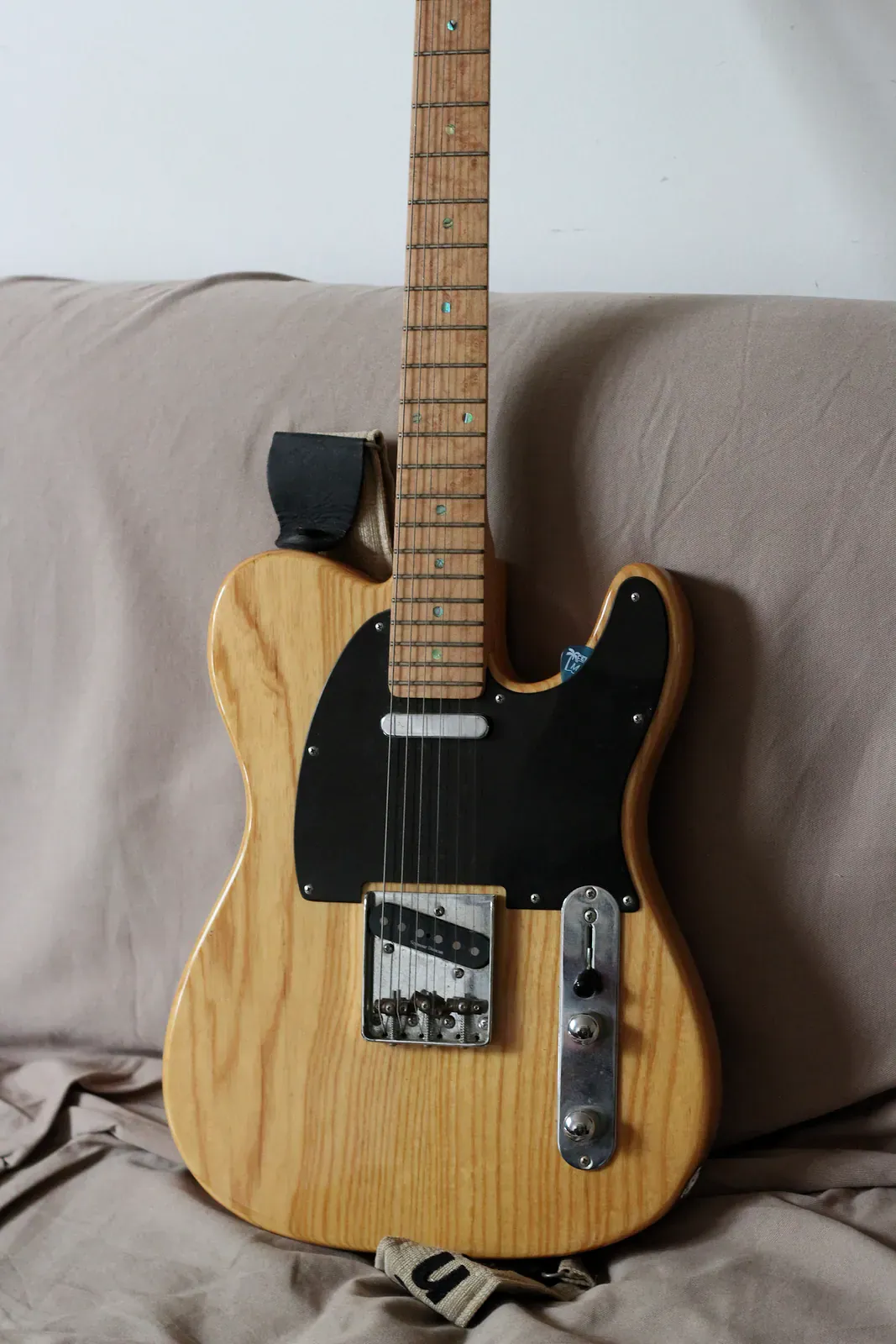
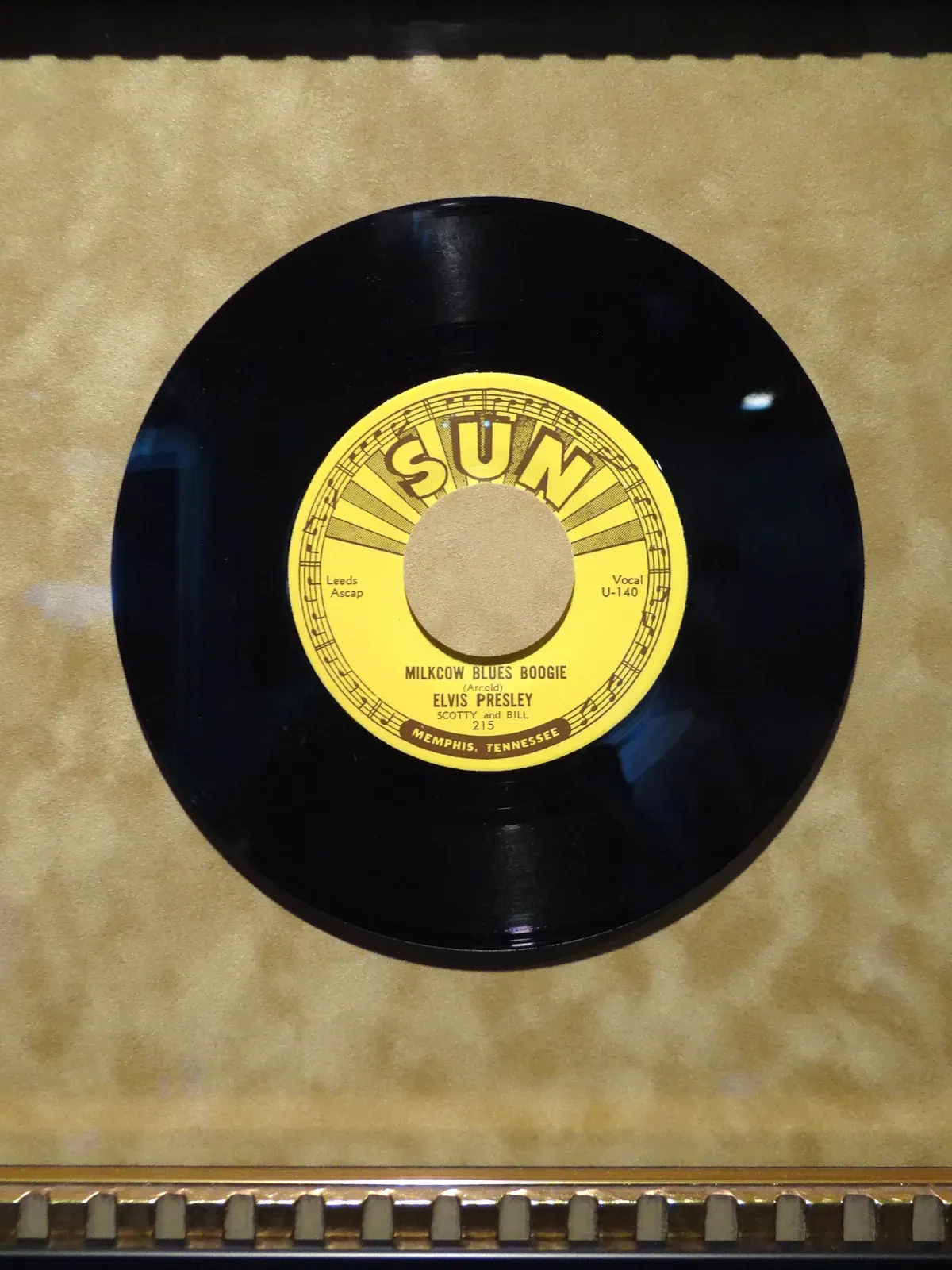
Memphis was the other engine. At Sun Studio on 5 July 1954, Elvis Presley, Scotty Moore and Bill Black were messing around between takes and found “That’s All Right”: Presley on acoustic rhythm guitar, Moore on electric lead, Black on string bass, no drums. When RCA took over, “Heartbreak Hotel” (1956) made him a national star. Then the first boom stalled. On 3 February 1959 a plane crash killed Buddy Holly, Ritchie Valens and the Big Bopper, and rock and roll entered a quiet few years.
Beat groups and the British Invasion, 1960 to 1966
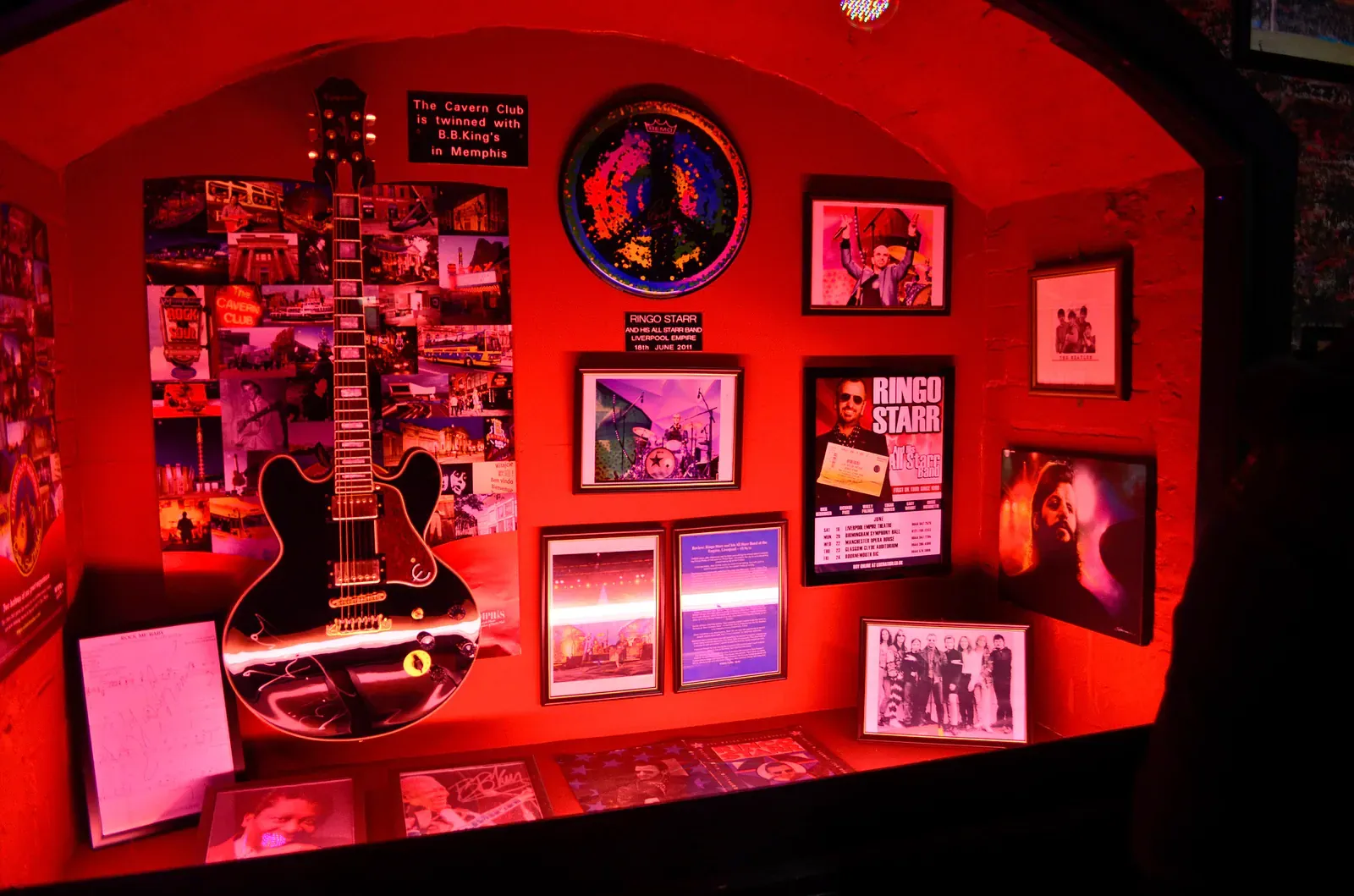
Liverpool teenagers heard American records that US radio had moved past, and played them back faster. The Beatles played the Cavern Club 292 times between 1961 and 1963 by the DJ Bob Wooler’s count, or 275 by the author Barry Miles’s. “Love Me Do” came out on Parlophone in 1962, and their 9 February 1964 appearance on The Ed Sullivan Show opened the American market to a wave of British bands.
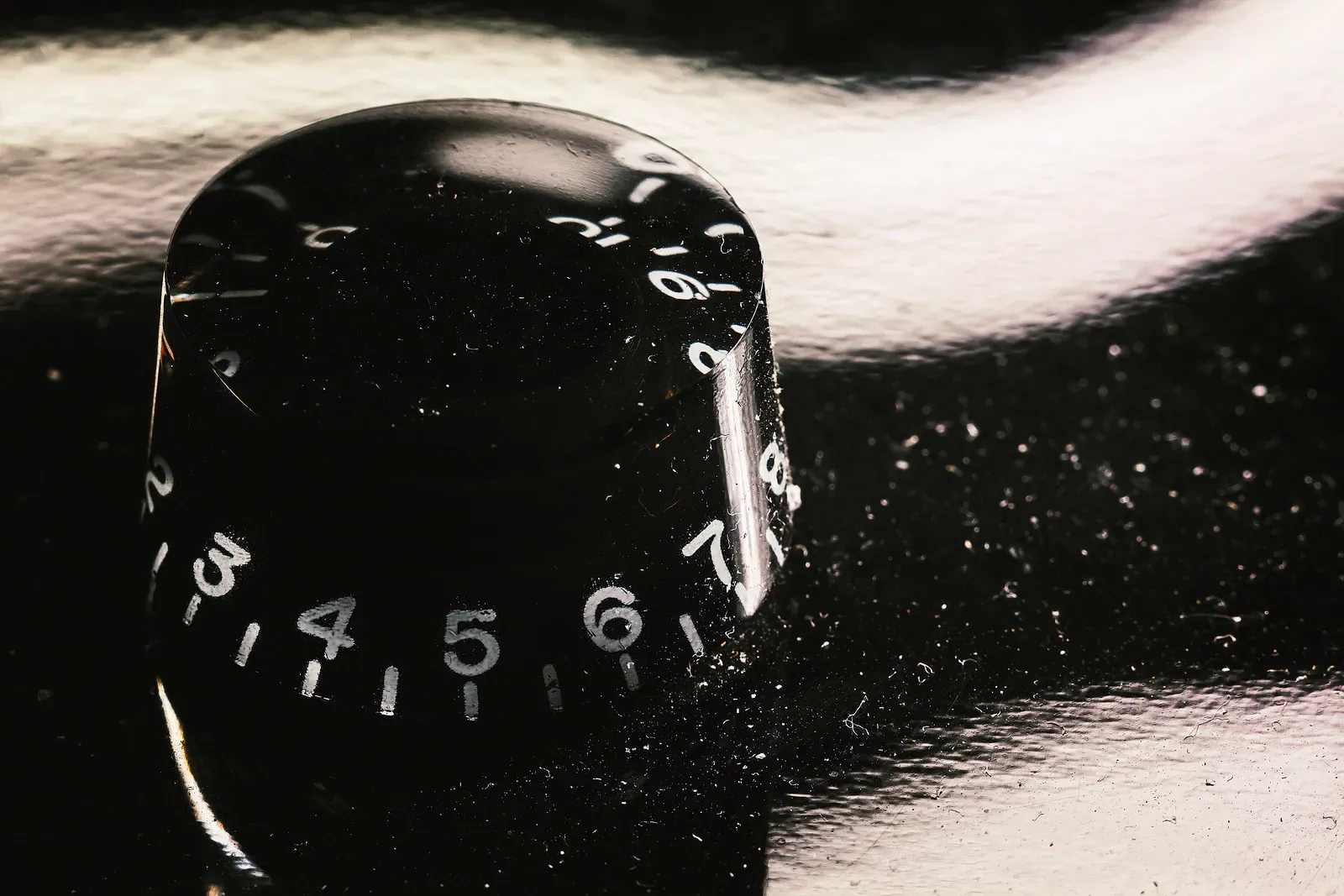
London took the other route, through rhythm and blues. The Rolling Stones’ “Satisfaction” (1965) hung a bored vocal on a fuzz-guitar riff and gave them a first US number one. The fuzz came from a machine: the Maestro Fuzz-Tone appeared in 1962, the same year Marshall began selling the JTM45 head from a shop in Hanwell, west London, because local guitarists wanted an alternative to imported American amps. Distortion went from accident to goal.
The most argued night of the period was 25 July 1965, when Bob Dylan played an electric set at the Newport Folk Festival and was booed. The Byrds had just made “Mr. Tambourine Man” a chiming electric single, and folk rock followed. “Rock and roll” quietly lost its second half.
Psychedelia and the album era, 1966 to 1974
Once the studio became an instrument, the album replaced the single. The Beatles’ Revolver (1966) used tape loops, Indian instruments and backwards guitar. Sgt. Pepper’s Lonely Hearts Club Band (1967) was built entirely in the studio and made the LP rock’s main art form. Jimi Hendrix turned feedback, wah and fuzz into a new voice on Are You Experienced (1967), and the Velvet Underground cut a very different New York record the same year, with noise, drones and street-level lyrics.
Places mattered. San Francisco’s Fillmore and Haight-Ashbury gave the Grateful Dead and Jefferson Airplane a home, and Monterey Pop in June 1967 carried the scene to a national audience. Detroit’s MC5 and Stooges played a louder, rawer rock that anticipated punk. About 400,000 people gathered at Woodstock in August 1969.
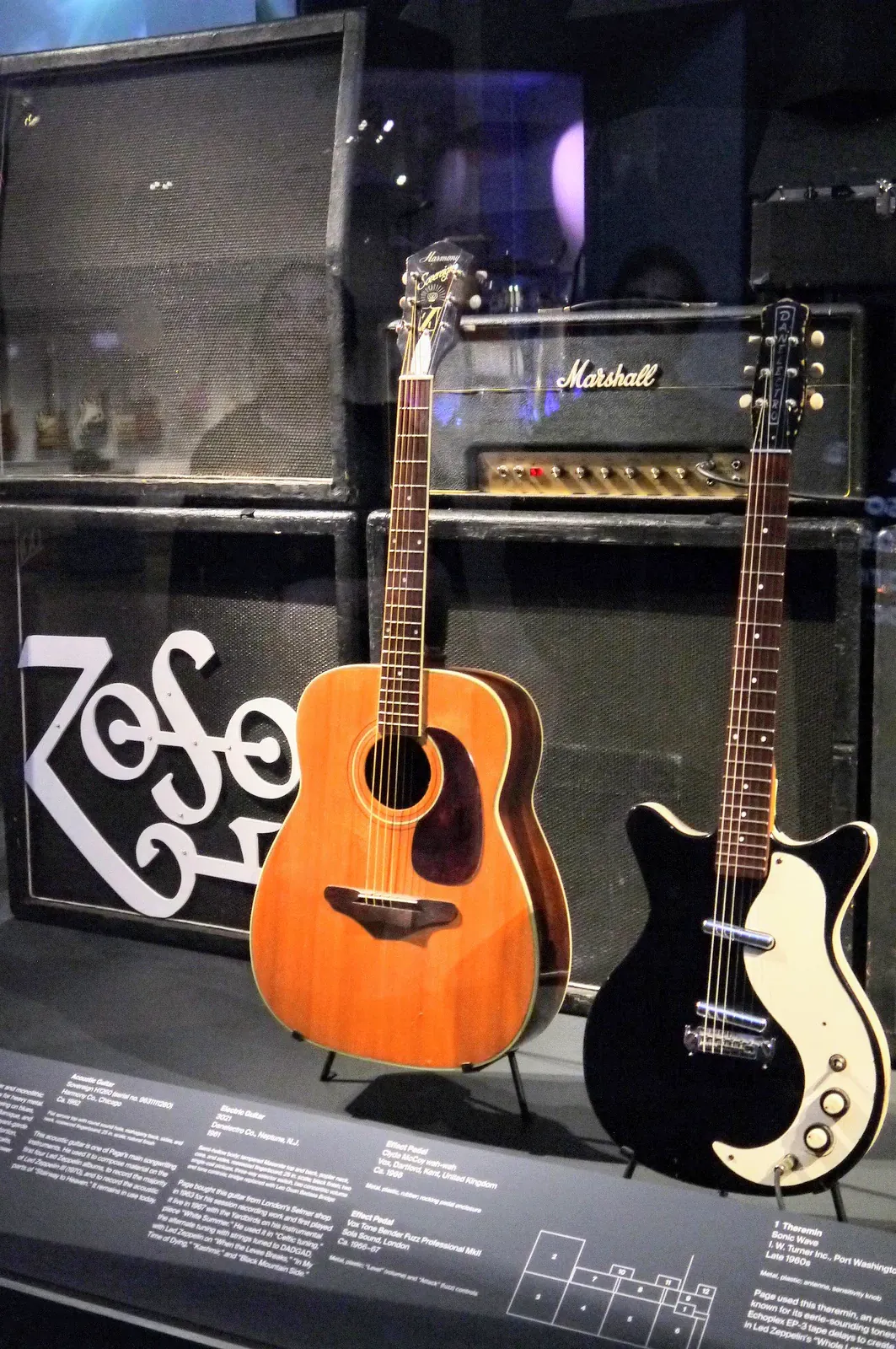
The same boom split into hard rock, progressive rock and glam. Led Zeppelin’s 1969 debut turned blues-rock up to maximum volume, and Led Zeppelin IV (1971) mixed folk, blues and heavy riffs. David Bowie’s The Rise and Fall of Ziggy Stardust (1972) made a concept album and a persona into the model for glam. The era had also lost its centre: Paul McCartney announced his departure from the Beatles in April 1970, ending the band that had set the pace.
Punk, new wave and post-punk, 1974 to 1982
By the mid-1970s rock had become expensive: stadium tours, 20-minute solos, a gap between band and audience. Punk was the reaction. CBGB opened on the Bowery in 1973 and became the base for Television, Patti Smith, Blondie and the Ramones. The Ramones’ 1976 debut packed 14 songs into about 29 minutes and gave punk rock its blueprint: short, fast, three chords, no solos.
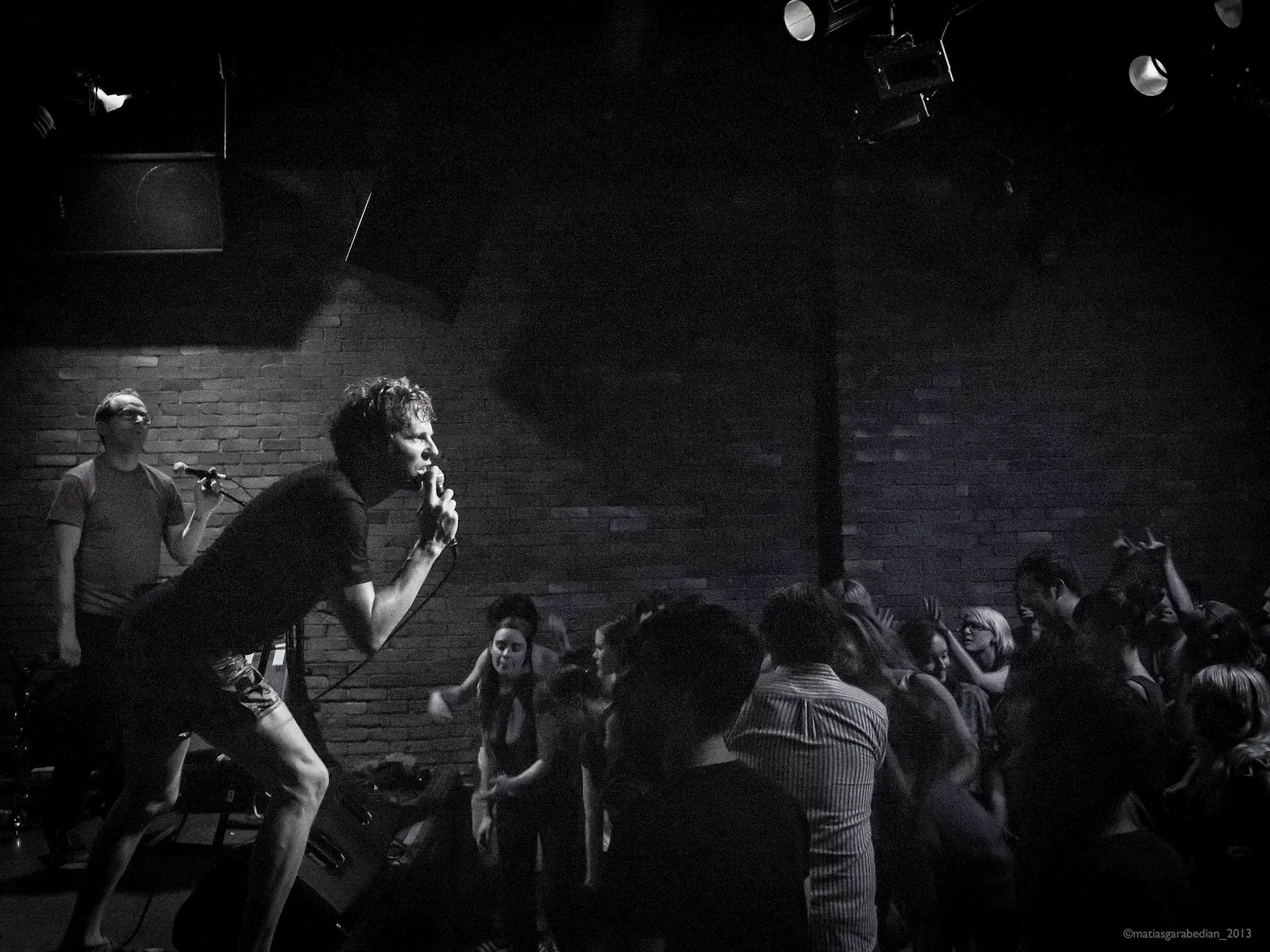
London answered within months. Stiff Records, founded in 1976, issued The Damned’s “New Rose” that October, the first UK punk single, and the Sex Pistols’ circle made the style a scandal. The lesson was economic: a band could record cheaply, press its own records and skip the majors.
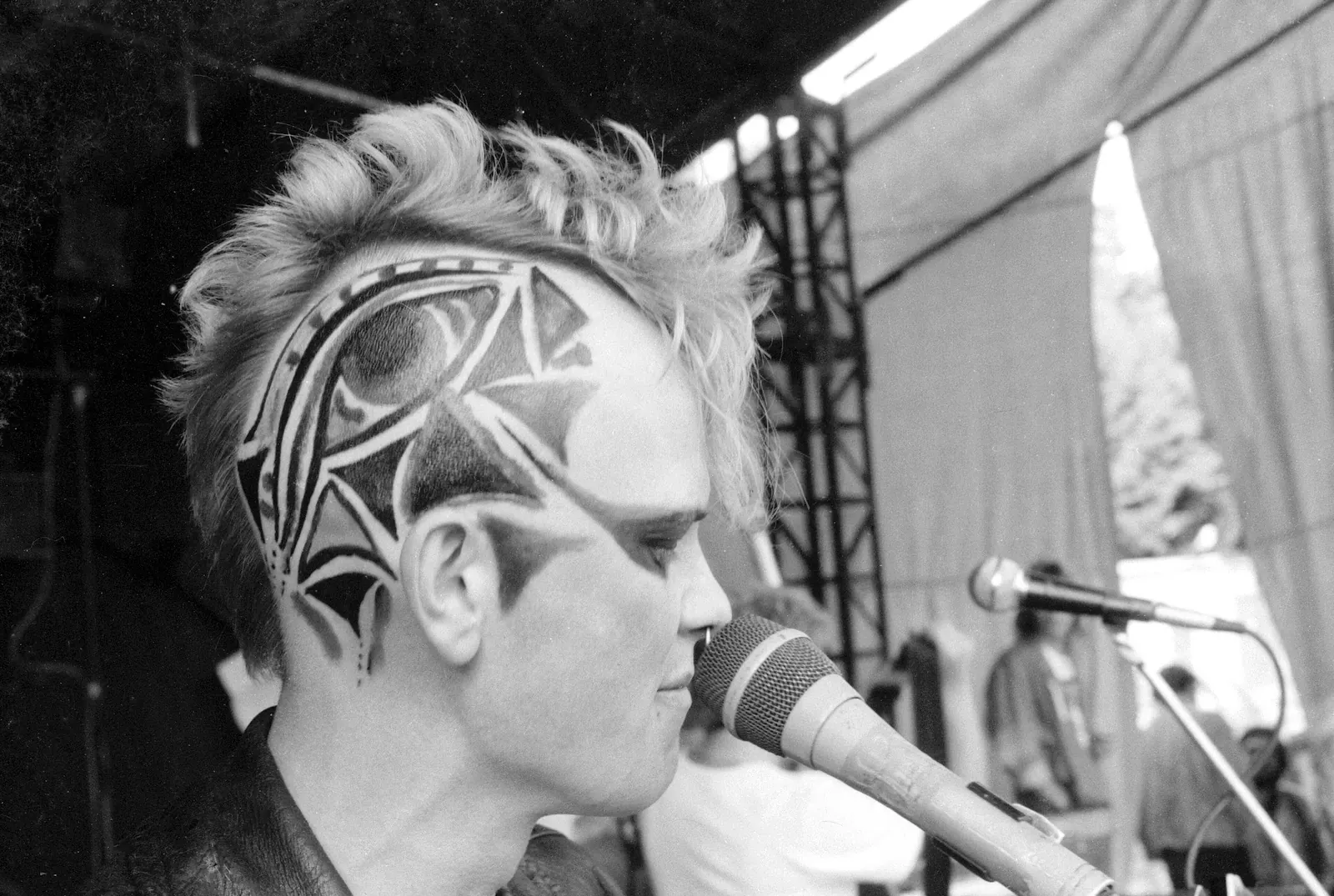
Within a few years the palette widened. Factory released Joy Division’s Unknown Pleasures in 1979, and Manchester gained a sound of space, bass and dread. New wave added hooks and keyboards and took over early-1980s radio.
Alternative and the MTV age, 1983 to 1999
MTV launched on 1 August 1981, and within a few years a video was a promotional necessity. The compact disc (1982) reissued rock’s back catalogue and fed a classic-rock market. Outside that machine, the underground built its own: college radio, tour vans and independent labels such as Dischord in Washington, D.C., home of Minor Threat and Fugazi.
Then Seattle. Sub Pop released Nirvana’s first single, “Love Buzz”, in 1988, and Nevermind (1991) displaced Michael Jackson from the US number one slot in January 1992. Quiet verse, loud chorus: the dynamic of “Smells Like Teen Spirit” put alternative rock at the top of the charts. Kurt Cobain’s death in April 1994 marked the end of grunge’s peak. Radiohead’s OK Computer (1997) then rebuilt the guitar band with electronics and unease.
Characteristics
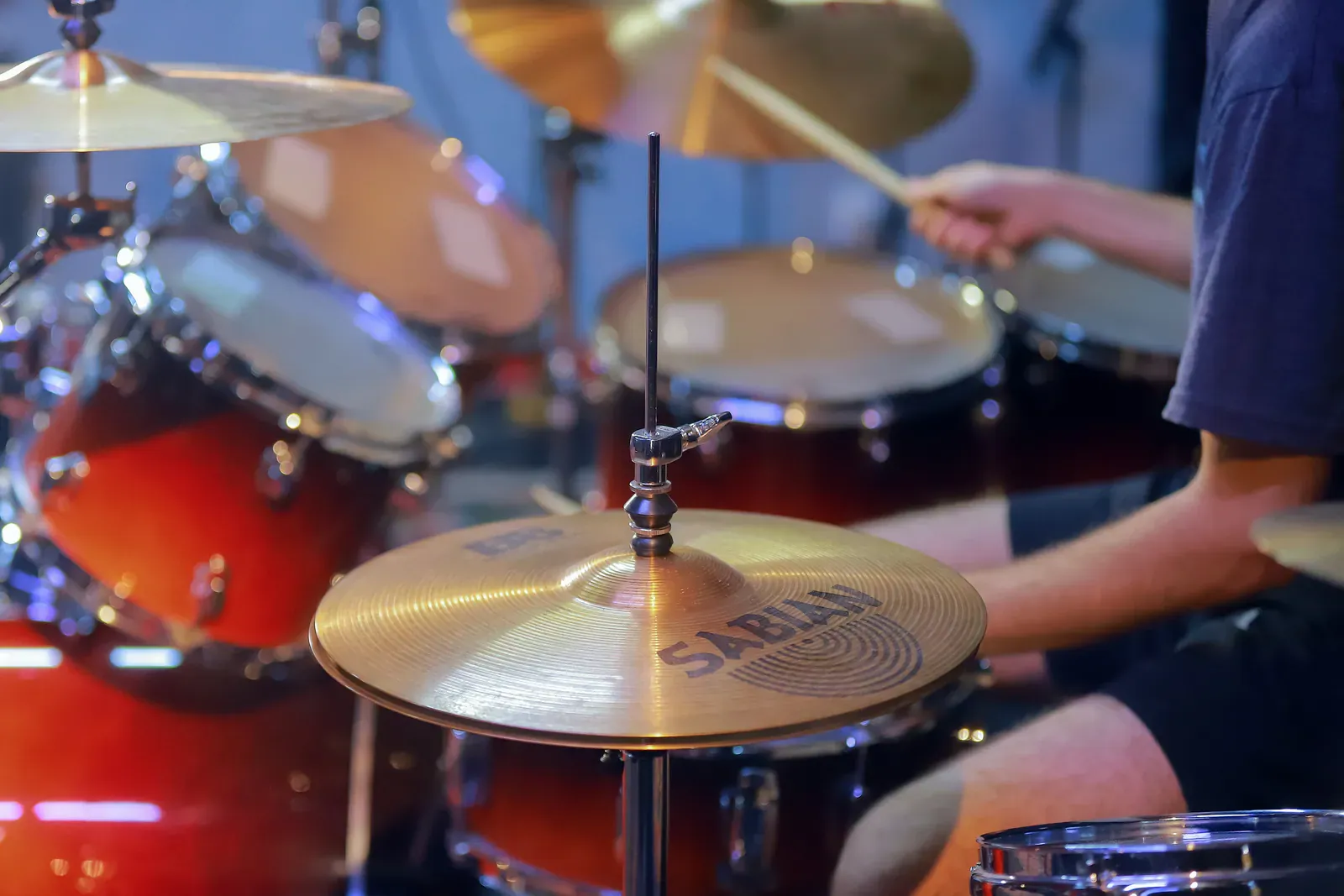
Rock is usually played in 4/4 with a backbeat: the snare lands on beats two and four. Songs rest on short riffs and verse-chorus forms, often over blues-derived chord patterns and pentatonic melodies. Most styles share a core line-up of electric guitar, bass guitar and drum kit, with vocals on top and keyboards where the style calls for them. The family splits along tempo and intensity, from the slow swing of early rock and roll to the sprint of punk.
Instruments and production
The sound was shaped by gear. Fender’s Precision Bass (1951) let bassists leave the upright instrument, the Hammond B-3 organ (1954) became a staple of blues rock and progressive rock, and Ludwig kits spread after the Beatles’ 1964 American broadcast. Overdriven amplifiers, from the JTM45 onward, made distortion a choice. Multitrack tape made the studio part of the composition, and digital audio workstations now handle most recording and editing.
Digital age, 2000 to the present
The Strokes’ Is This It (2001) restarted the guitar band as a cultural force. Rough Trade issued it in the UK in August, two months before the US release on RCA, and it led a garage rock revival. The change that mattered more arrived through the network: file sharing, then Spotify (2008), replaced album sales and flattened the old line between catalogue and new rock.
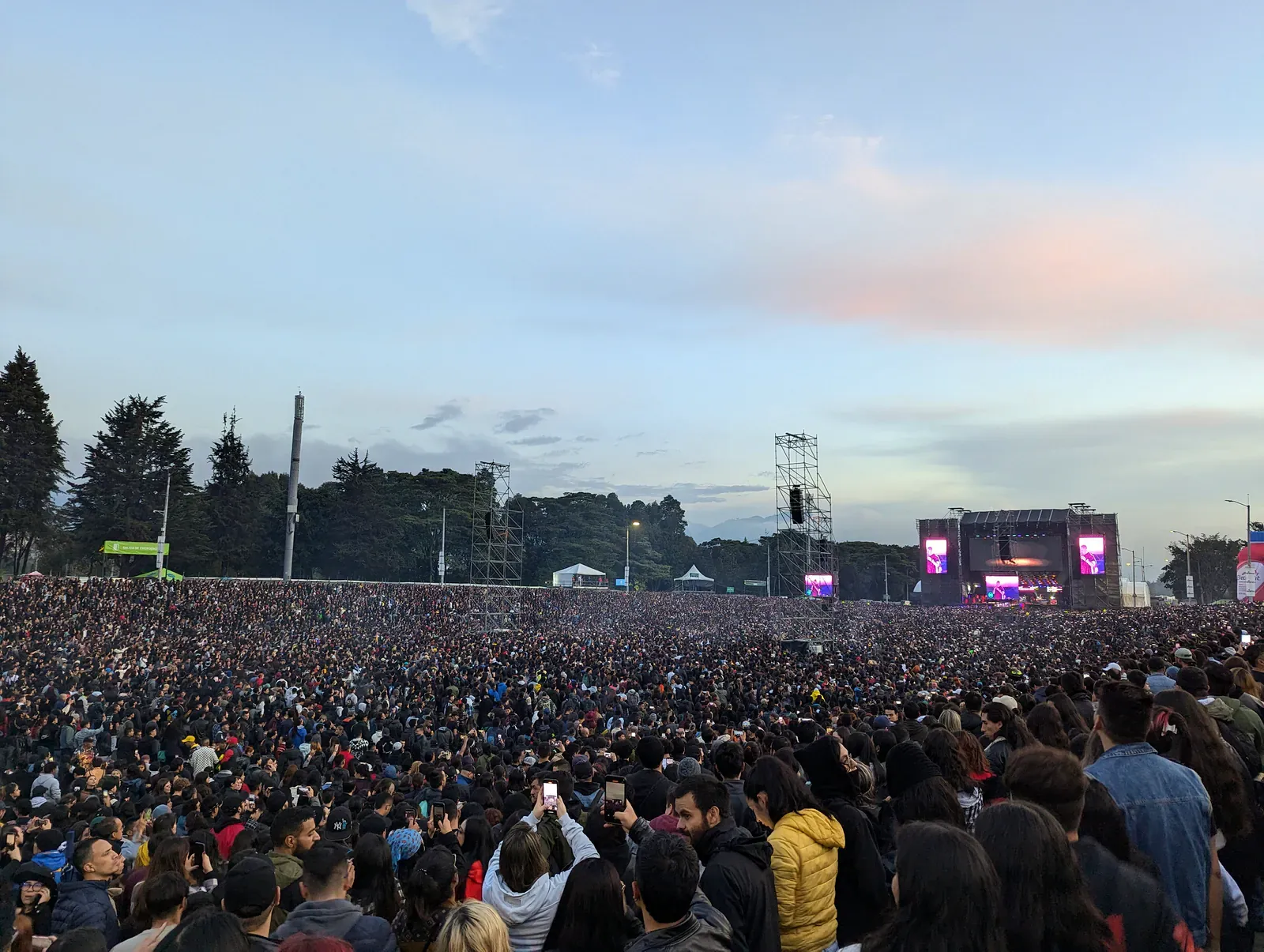
In 2017 Nielsen’s year-end report named R&B and hip hop the most consumed genre in the US, ahead of rock. Rock’s centre of gravity moved to festivals, vinyl and cult followings. It still surfaces: the Italian band Maneskin won Eurovision in 2021 with “Zitti e buoni”.
Culture
Rock was a teenage market first. Records, jukeboxes and later FM radio sold it to people who had spare money and no stake in their parents’ taste. Its roots were Black and Southern: Rocket 88, Berry, Tharpe and the electric blues that fed British bands. Its biggest earners were often white, and that tension is part of the story.
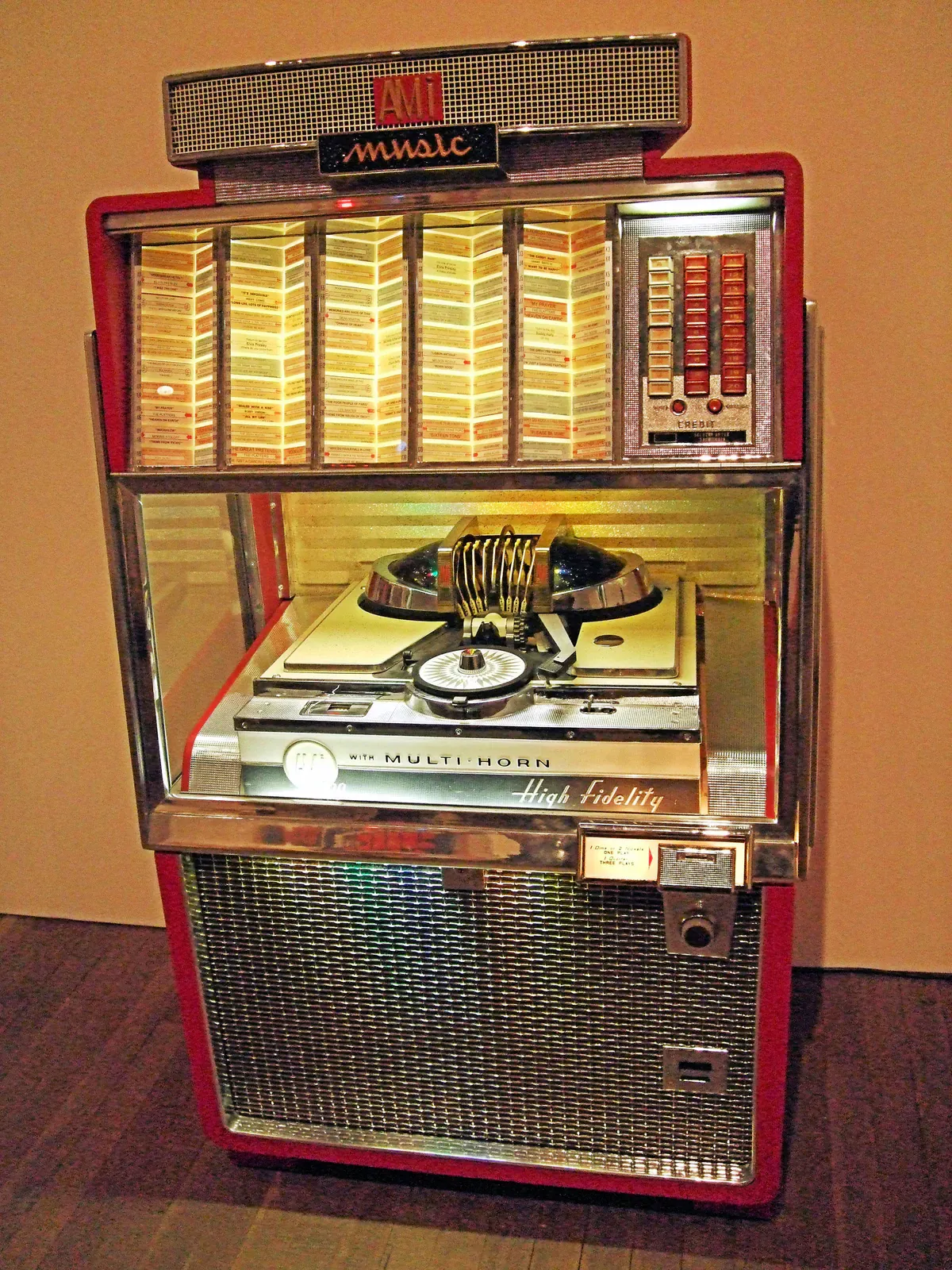
Scenes were economic units. A Memphis studio, a Liverpool cellar, a New York club, a Seattle label: each gave a young band a room, an audience and a way to get a record out. Fashion followed: glam glitter, punk safety pins and grunge flannel were signals about identity and belonging.
Rock was also territorial. On 12 July 1979 at Comiskey Park, a Chicago radio DJ, Steve Dahl, blew up a crate of disco records between two baseball games. More than 50,000 people came, roughly 7,000 rushed the field, 39 were arrested and the White Sox forfeited the second game. In 2004 Kelefa Sanneh named the attitude in the New York Times: rockism, “idolizing the authentic old legend (or underground hero) while mocking the latest pop star; lionizing punk while barely tolerating disco”.
Everywhere else, rock became a local dialect. Anatolian rock brought Turkey’s saz and makam modes to a fuzz box. In Latin America it fed Rock en español, and the Latin family picks up that thread. On the dance floor, the electronic family is next door.
Misconceptions
“Rocket 88 was the first rock and roll record.” Sam Phillips later called it that, and it is a fair candidate, but the claim is debated. Sister Rosetta Tharpe’s 1945 record “Strange Things Happening Every Day” had electric lead guitar and a driving backbeat, and the Rock and Roll Hall of Fame inducted her in 2018. Rock has a pile-up of ingredients, not a first record.
“Dylan was booed at Newport for going electric.” The booing is real, but the cause is disputed. Greil Marcus read it as betrayal. Pete Seeger blamed distortion in the sound. The organist Al Kooper pointed out that Dylan’s set was about 15 minutes, when others played 45 minutes to an hour.
“Rock is dead.” In 2017 Nielsen’s year-end report put R&B and hip hop ahead of rock in US consumption, so rock lost the top spot. It did not vanish. Maneskin’s 2021 Eurovision win showed guitar rock could still have a global pop moment, and the family has kept growing: 445 genres and counting.
Frequently asked questions
What is rock music?
Rock is guitar-driven popular music built on a backbeat, usually played by a band with electric guitar, bass guitar and drum kit. It grew out of 1950s rock and roll in the United States and branched from the mid-1960s into a family of 445 genres in the Genrology library.
When did rock music start?
Rock and roll took shape in the early 1950s, with “Rocket 88” in 1951 and Elvis Presley’s Sun recordings in 1954. The library dates the rock family from 1954, and “rock” proper took over as a name in the mid-1960s.
What is the difference between rock and punk rock?
Punk rock is one branch of rock, a mid-1970s reaction against stadium excess that favours short songs, cheap gear and independent labels. Rock as a whole also includes slower, more elaborate styles such as progressive rock. See punk rock for that branch.
Who invented rock and roll?
No single person did. Chuck Berry, Elvis Presley, Sister Rosetta Tharpe, Ike Turner and Bill Haley all shaped it. Rock and roll is better read as a convergence of rhythm and blues, country and gospel.
Subgenres
Genres in the family
65 main branches. Names with their own page are links.
- Aboriginal rock
1975
- Afro rock
1968, 1 branch
- Alternative rock
1980, 27 branches
- Anatolian rock
1965
1966, 2 branches
- Asian rock
1958, 22 branches
- Aussie rock
1955, 1 branch
1958, 8 branches
1963, 1 branch
- Brass rock
1967
- Brazilian rock
1957, 1 branch
- Canadian rock
1957
- Christian rock
1969, 1 branch
- Classic rock
1981, 2 branches
- Comedy rock
1955
- Country rock
1966
- Dream pop
1984, 2 branches
- Electronic rock
1968
- Emo
1985, 8 branches
- Euro-rock
1958, 26 branches
- Experimental rock
1965
1964, 3 branches
- Funk rock
1968
1958, 5 branches
1971, 2 branches
1966, 6 branches
1978, 39 branches
- Heartland rock
1975, 1 branch
1980, 24 branches
- Indorock
1957
- Industrial rock
1979
- Instrumental rock
1956, 1 branch
- Irish showband
1955
- J-rock
1958, 11 branches
- Jam band
1965
- Jewish rock
1975
- Kiwi rock
1955
1968
- Latin rock
1958
- Math rock
1988, 2 branches
1976, 12 branches
1978, 3 branches
- Piano rock
1970
- Pop rock
1958
1984, 7 branches
1977, 35 branches
- Post-rock
1991, 3 branches
- Power pop
1967
1967, 11 branches
1965, 9 branches
- Pub rock
1972
1974, 63 branches
- Rap rock
1983, 1 branch
- Reggae rock
1975
1949, 2 branches
1957, 15 branches
- Rock opera
1968, 1 branch
1954, 4 branches
- Roots rock
1967, 3 branches
- Russian rock
1964, 2 branches
1988, 5 branches
1966, 3 branches
- Southern rock
1969
- Stoner rock
1990, 1 branch
1958, 5 branches
Sound
What it sounds like
Tempo
- Overall70-200
- Rock and roll120-185
- Hard rock80-190
- Punk rock130-190
- Progressive rock75-150
- Psychedelic rock85-150
- Indie rock80-170
- Shoegaze85-170
- Post-rock80-140
- Grunge75-185
- Hardcore punk135-200
Drums and percussion
- Ludwig drum kit
Synths and software
- Hammond B-3
- Mellotron
Techniques
- Backbeat
- Power chords
- Overdrive and distortion
- Pentatonic soloing
- Twelve-bar blues
Keys and modes
Minor pentatonic. Blues-derived scale behind most riffs and guitar solos.
Major pentatonic. Common in melodies and solos of rock and roll and country rock.
Blues scale. Minor pentatonic plus a flattened fifth, used for bent-note solos.
Tuning
Standard guitar tuning (E A D G B E), with drop D and lower tunings in heavier styles
Vocals
Lead vocal over a band, from crooning and shouting to screamed delivery, often with backing harmonies
Hallmarks
- electric guitar
- bass guitar
- drum kit
- verse-chorus song form
- backbeat
- band format
Instruments
- Electric guitar
The lead voice of rock, played clean, overdriven or fed back.
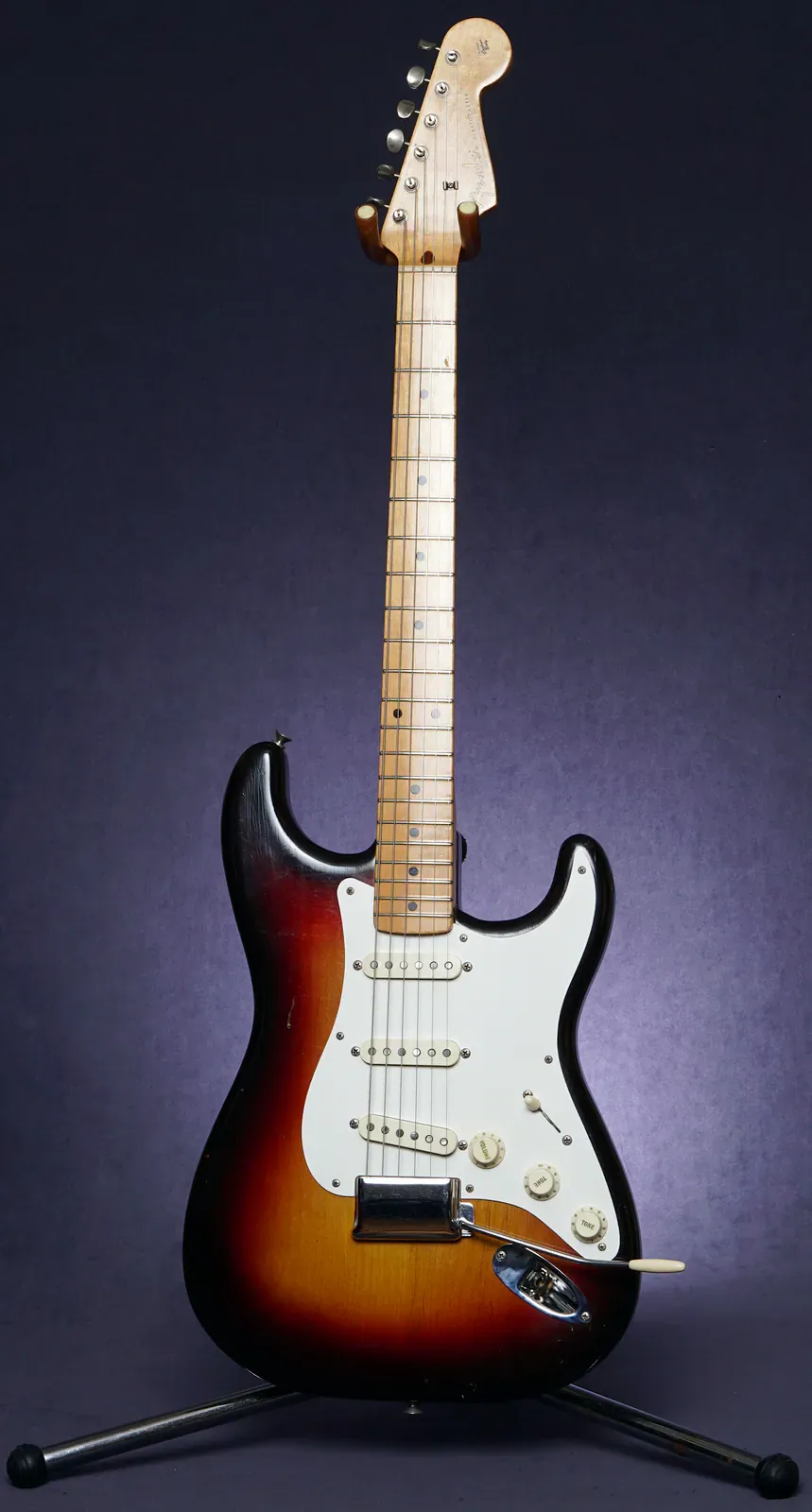
- Fender Telecaster and Stratocaster
The solid-body guitars of 1950s California, central to blues rock, surf and punk.
- Gibson Les Paul
A heavier-sounding guitar with humbucking pickups, favoured for hard rock and sustain.
- Fender Precision Bass
The electric bass that gave rock a portable, loud low end.
- Drum kit
Kick, snare and cymbals set the backbeat that defines rock rhythm.
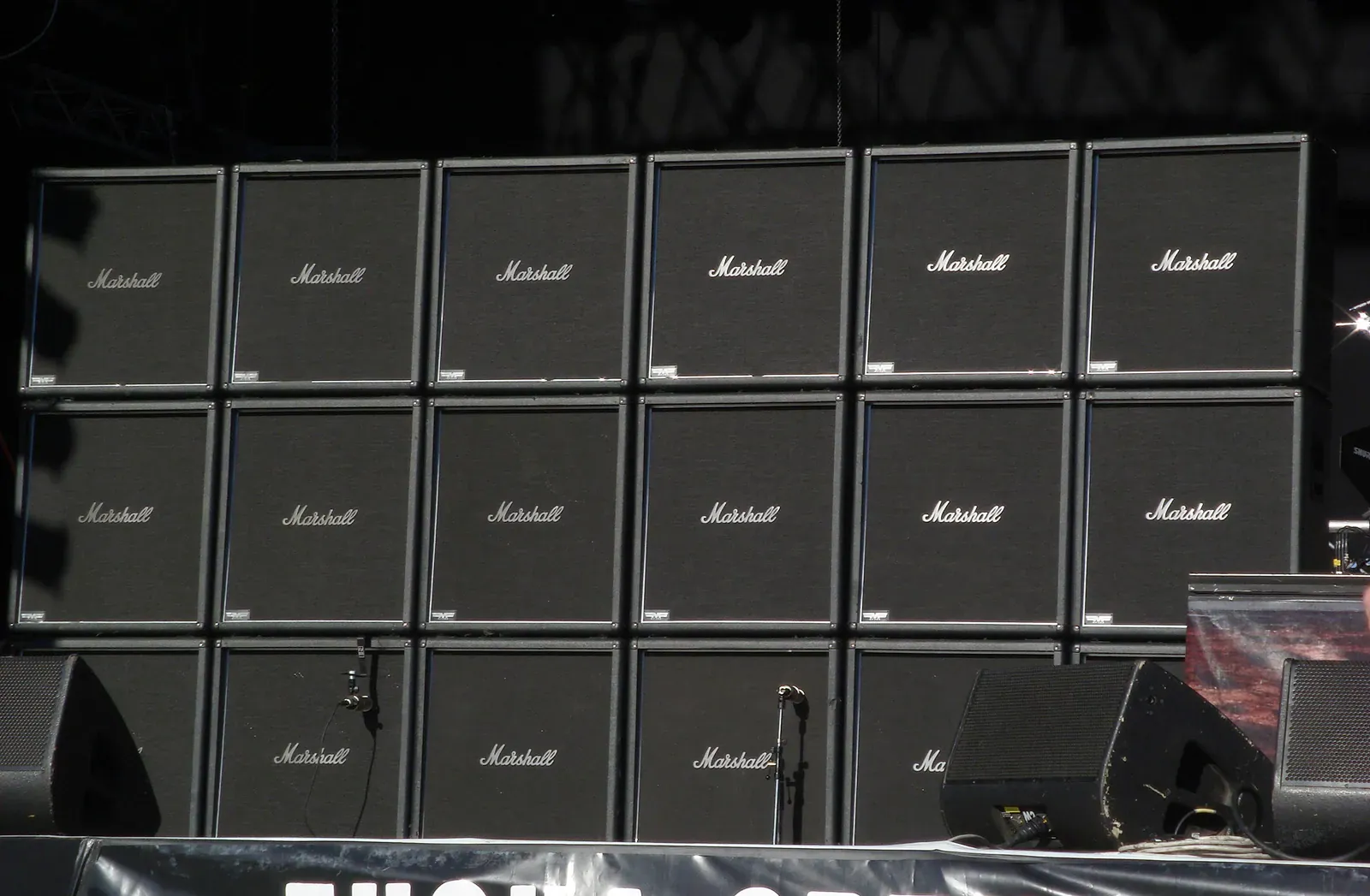
- Marshall stack
Valve amplifiers and speaker cabinets that supplied the crunch of 1960s and 1970s rock.
- Hammond B3 organ
A tonewheel organ that fills out blues, prog and hard rock textures.
- Fuzz and wah pedals
Effects that turn the guitar into a snarling or vocal-like instrument.
Technology that shaped it
- 194945 rpm single
RCA's small vinyl disc suited jukeboxes and teenage record buying.
- 1950Fender Telecaster (Broadcaster)
The first mass-produced solid-body electric guitar, a cheap and loud instrument for dance bands and later rock.
- 1962Maestro Fuzz-Tone and Marshall JTM45
Fuzz and valve overdrive made distortion a desirable tone.
- 1981MTV
Cable video channel that made image as important as the record.
- 1982Compact disc
Digital format that reissued rock's back catalogue and drove the classic-rock market.
- 2008Spotify and streaming
Streaming replaces album sales and flattens the old line between catalogue and new rock.
Essential records
- 1955Maybellene
Chuck Berry. The riff, car-and-girl lyric and driving backbeat set the pattern for rock and roll songwriting.
- 1956Elvis Presley
Elvis Presley. His first LP collects the Sun and RCA sides that carried rock and roll to a national audience.
- 1965Highway 61 Revisited
Bob Dylan. Electric folk poetry that proved rock could carry literary lyrics.
- 1966Revolver
The Beatles. Tape loops, Indian instruments and backwards guitar open the studio as an instrument.
- 1967Are You Experienced
The Jimi Hendrix Experience. Feedback, wah and fuzz turn the electric guitar into a new voice.
- 1967The Velvet Underground & Nico
The Velvet Underground. Noise, drones and street-level lyrics became a template for punk and alternative rock.
- 1971Led Zeppelin IV
Led Zeppelin. The hard rock album that mixes folk, blues and heavy riffs, and carries Stairway to Heaven.
- 1976Ramones
Ramones. Short, fast, three-chord songs with no solos set the punk template.
- 1979Unknown Pleasures
Joy Division. Space, bass and dread give post-punk its sound and look.
- 1991Nevermind
Nirvana. Punk energy with pop hooks puts alternative rock at the top of the charts.
- 1997OK Computer
Radiohead. Guitar rock rebuilt with electronics and unease, a high point of 1990s art rock.
- 2001Is This It
The Strokes. Lean, garage-minded rock that restarted the guitar band as a cultural force in the 2000s.
Scenes
Where it happened
Where and when the sound lived: one bar per city on a shared timeline.
North America
Europe
Active scenes
Peak 5, 1966
Sun Studio and Sam Phillips recorded Elvis, Carl Perkins, Johnny Cash and Jerry Lee Lewis.
The Cavern Club and the Mersey beat bands produced the Beatles.
Home of the R&B boom, the Rolling Stones, Led Zeppelin, glam, pub rock and the Sex Pistols.
The Fillmore and the Haight-Ashbury scene fostered the Grateful Dead and Jefferson Airplane.
The MC5 and the Stooges played a loud, raw rock that anticipated punk.
The Velvet Underground, then CBGB's Ramones, Television and Blondie.
Factory Records, Joy Division, New Order, The Smiths and the Madchester scene.
Dischord Records and the hardcore and post-hardcore scene of Minor Threat and Fugazi.
Sub Pop, Nirvana, Soundgarden and Mudhoney made grunge.
Glossary
Terms on this page
A radio format that played album tracks rather than singles.
Strong accents on beats two and four of a bar, usually the snare drum.
A record built around one theme or story rather than loose single songs.
Do-it-yourself: bands that record, release and tour outside the major-label system.
The howl of an amplifier picking up its own sound, used as a musical effect.
A two- or three-note chord of root and fifth, played loud and distorted.
A short repeated guitar figure that anchors a song.
The standard chord pattern behind much early rock and roll and blues rock.
Families