New wave
New wave is pop-minded rock that grew out of punk in New York and London in 1976-1977, adding synthesizers, hooks and clean production.
United Kingdom, United States, 1976
Rock family
Born
1976
United Kingdom, United States
Subgenres
10
Documented branches
Links
47
Genres it drew on or shaped
Tempo
115-160 BPMLineage
Family tree
Grew out of
Derived from
- Power pop
Derived from
- Pub rock
Derived from
United Kingdom, United States, 1976
New wave
Led to (20)
Timeline
Era by era
From the first sparks to today. Select a dot to read the story behind it.
- Punk's pop wing
1976 to 1978
- Radio and the charts
1978 to 1980
- Synths, video and MTV
1981 to 1984
- Fade and afterlife
1985 to 1999
- Revival
2000 to today
Eras
Moments
- 1 Punk's pop wing, 1976 to 1978
- 2 Radio and the charts, 1978 to 1980
- 3 Synths, video and MTV, 1981 to 1984
- 4 Fade and afterlife, 1985 to 1999
- 5 Revival, 2000 to today
1976
Punk's pop wing
Bands from CBGB and the London pub scene keep punk's speed but add tunes, keyboards and tighter writing. Sire's "new wave" label spreads in 1977.
- 1976Stiff Records opens in LondonThe independent label becomes the home of Elvis Costello and Madness.
- 1977Sire campaigns to replace "punk" with "new wave"Label chief Seymour Stein asks radio programmers to use the new term for his signings.
- 1977Talking Heads: 77 and Psycho KillerThe New York art-school quartet brings angular, nervous pop to Sire.
- 1977Elvis Costello releases My Aim Is TrueThe debut album on Stiff arrives with Watching the Detectives later the same year.
1978
Radio and the charts
Blondie, The Cars, The Police and Gary Numan reach the top of the charts. Disco rhythms, reggae and synthesizers enter the sound.
- 1978The Cars release their debut albumBoston band takes power pop and synthesizers to FM radio.
- 1978The Police release RoxanneA reggae-tinged single from the debut Outlandos d'Amour.
- 1978The B-52's release Rock Lobster on DB RecordsThe Athens, Georgia group issues its first single on a small independent label before signing to Warner.
- 1979Heart of Glass reaches number oneThe disco-inflected Blondie single tops the UK and US charts.
- 1979Gary Numan's Cars tops the UK chartA synthesizer-led single reaches number one on its original release.
- 1980Devo's Whip It goes top 20 in the USThe Freedom of Choice single makes the Akron group radio regulars.
1981
Synths, video and MTV
MTV launches in 1981 and British acts with filmed videos dominate US radio. Duran Duran, A Flock of Seagulls and the Go-Go's define the look.
- 1981MTV launches in the United StatesThe channel is short of American clips and leans on British new wave acts with ready-made videos.
- 1982Beauty and the Beat reaches number oneThe Go-Go's become the first all-women group that wrote their songs and played their instruments to top the US albums chart.
- 1982Duran Duran release RioThe album and its filmed videos start the second British invasion.
- 1983Hungry Like the Wolf peaks at number 3 in the USHeavy MTV rotation pushes the single up the chart.
- 1983Modern English's I Melt with You is used in the film Valley GirlThe 1982 single becomes a US favourite through the movie soundtrack.
- 1984The Police go on hiatusThe biggest band of the genre stops after the Synchronicity tour as synth-pop and alternative rock take over.
1985
Fade and afterlife
The term loosens as synth-pop and alternative rock split the audience. Film soundtracks and 1980s radio keep the songs alive.
2000
Revival
The Killers, Interpol and other bands return to jittery guitars and synthesizers in the 2000s. The 1980s catalogue stays in heavy streaming and radio rotation.
- 2004The Killers release Hot FussThe Las Vegas debut brings new wave synths and hooks back to the charts.
Listening path
Anthems
The records that built the sound, grouped by the part they played. Thumbnails come from YouTube; the player loads only when you press play.
- 01
Talking Heads, 1977 · Sire Records
Early proof that punk-era New York could make nervous, funky, hook-driven pop.
Origin - 02
Elvis Costello, 1977 · Stiff
Reggae-influenced noir single that defined the British pub-rock-to-new-wave route.
Origin - 03
Blondie, 1979 · #1 Billboard Hot 100, 1979 · Chrysalis Records
Punk-scene band takes a disco rhythm and a drum machine to number one in the UK and US.
Start hereBreakthrough - 04
The Go-Go's, 1981 · I.R.S. Records
Punk-trained Los Angeles band lands a pop hit that leads their chart-topping debut album.
Breakthrough - 05
Duran Duran, 1982 · #3 Billboard Hot 100, 1983
A glossy filmed video on MTV turns the band into stars in the US.
Start hereBreakthrough - 06
A Flock of Seagulls, 1982 · Jive Records
Echoing guitar, synthesizer bass and a quiff-heavy video capture the early MTV look.
Breakthrough - 07
The Police, 1978 · A&M Records
Reggae pulse under a pop melody; the template for the Police sound.
Anthem - 08
The Cars, 1978 · Elektra
Guitar hook and synth pulse in a compact radio single; an easy way into the sound.
Start hereAnthem - 09
Devo, 1980 · Warner Records
Jerky electronic rhythm and de-evolution humour put the art side of the genre on US radio.
Anthem - 10
Gary Numan, 1979 · #1 UK Singles, 1979 · Beggars Banquet
Synthesizer-led track that reached number one in the UK and set the cool, mechanical pop look.
Crossover - 11
Madness, 1982 · Stiff
London ska-pop group reaches the US with a story-song built on piano and a bouncing beat.
Crossover - 12
Modern English, 1982 · 4AD
British indie single that found a large US audience through radio and a 1983 film.
Crossover - 13
The Killers, 2003 · Island Records
Twenty-first-century guitar-and-synth pop that revived the early-1980s sound.
Revival
New wave is a style of pop-minded rock that grew out of punk in New York and London in 1976-1977. It keeps punk’s short songs and nervous energy but adds hooks, keyboards, quirky vocals and cleaner studio production.
In the early 1980s it dominated radio and MTV in the United States and the United Kingdom, and the rock family still draws on its sound.
Origins
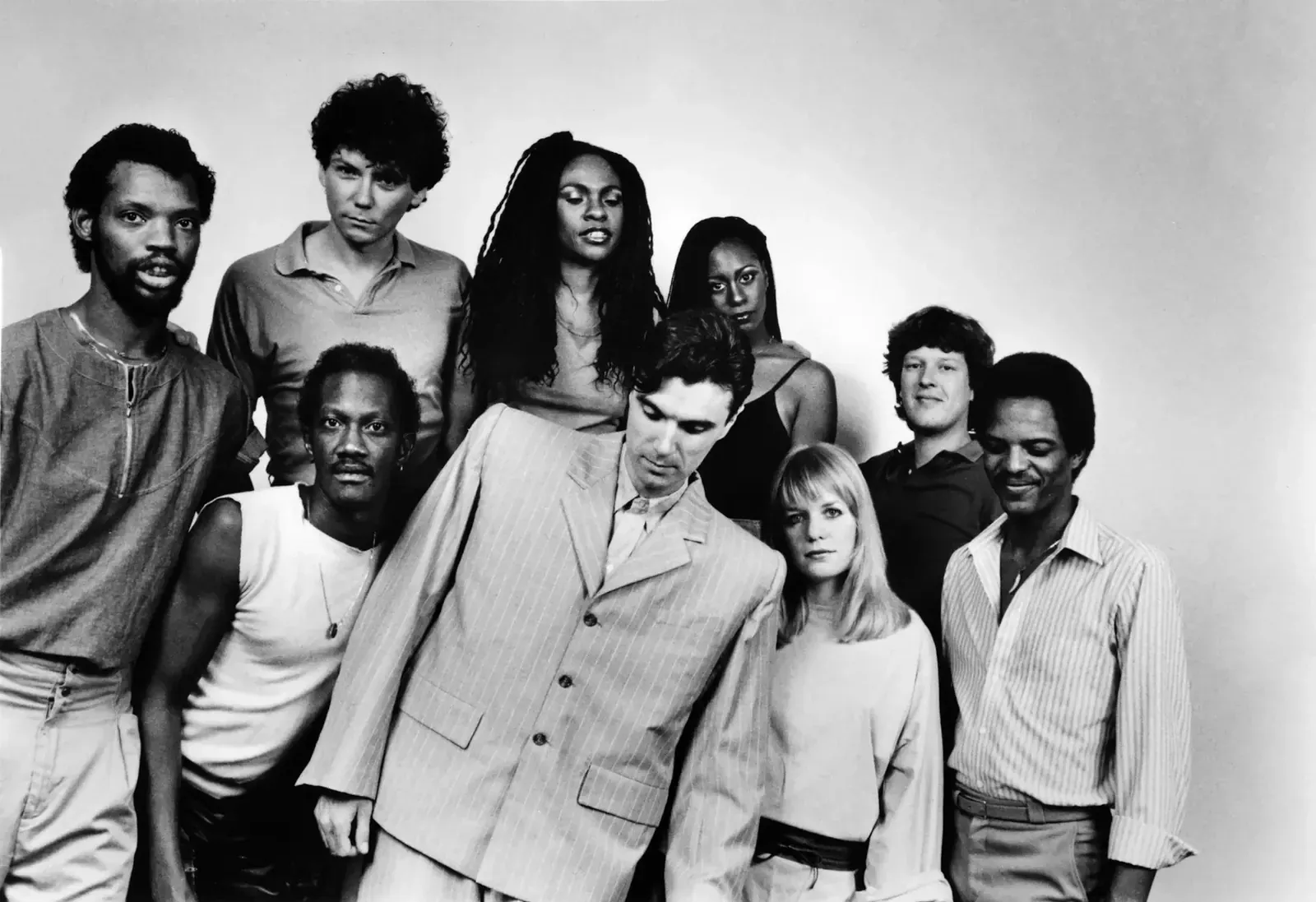
The scene started in the same rooms as punk rock. In New York, CBGB and Max’s Kansas City hosted Talking Heads and Blondie. In London, pub-rock bands and the independent label Stiff Records, opened in 1976, supplied Elvis Costello and later Madness. Many of these bands shared punk’s speed but wrote tighter tunes and had little interest in shock.
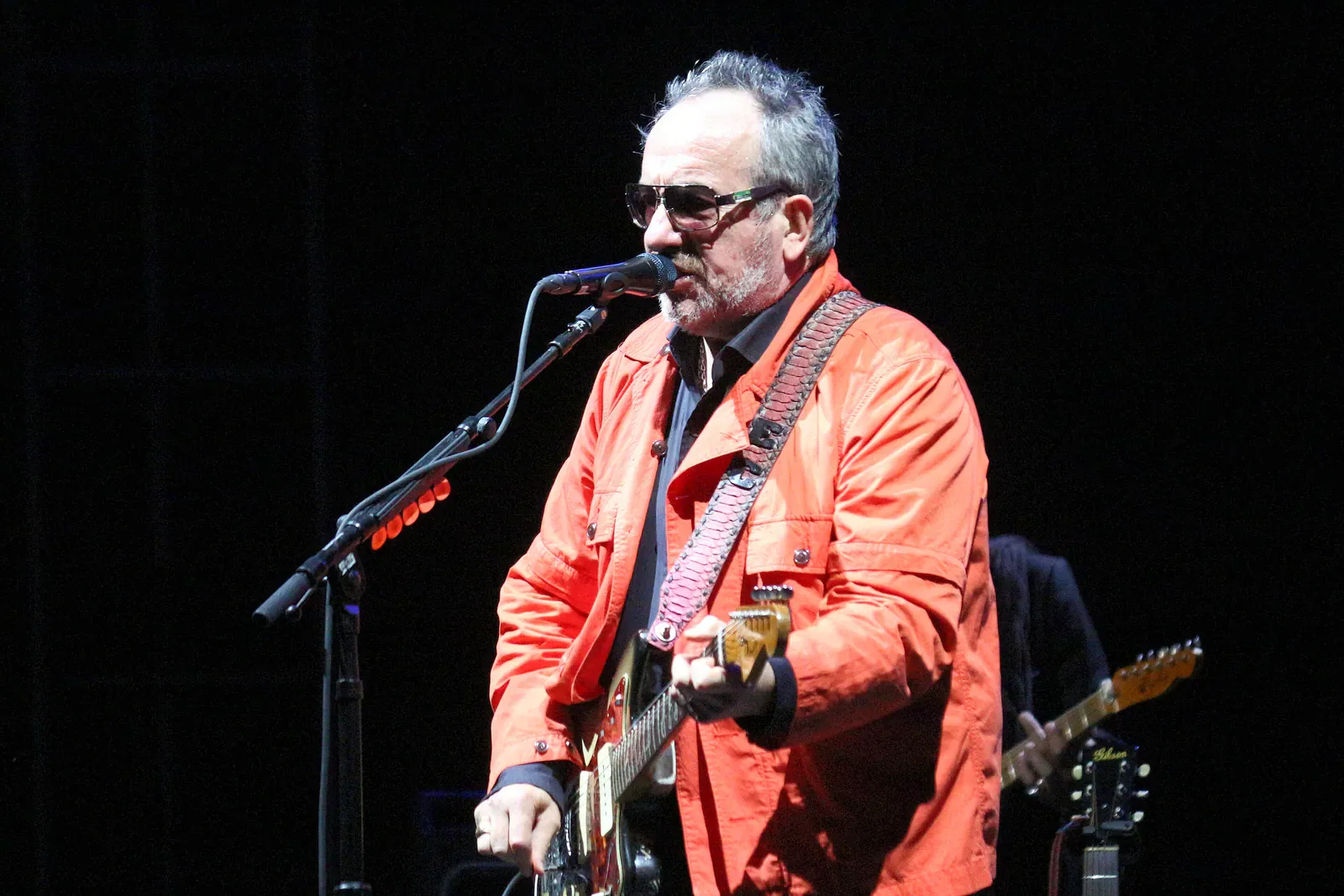
The name came from a label strategy. In 1977 the Sire chief Seymour Stein asked radio programmers to use “new wave”, a phrase borrowed from French cinema, for his signings instead of “punk”. Sire released Talking Heads: 77 that year, with Psycho Killer, and the term spread across the industry within months.
Punk’s pop wing, 1976-1978
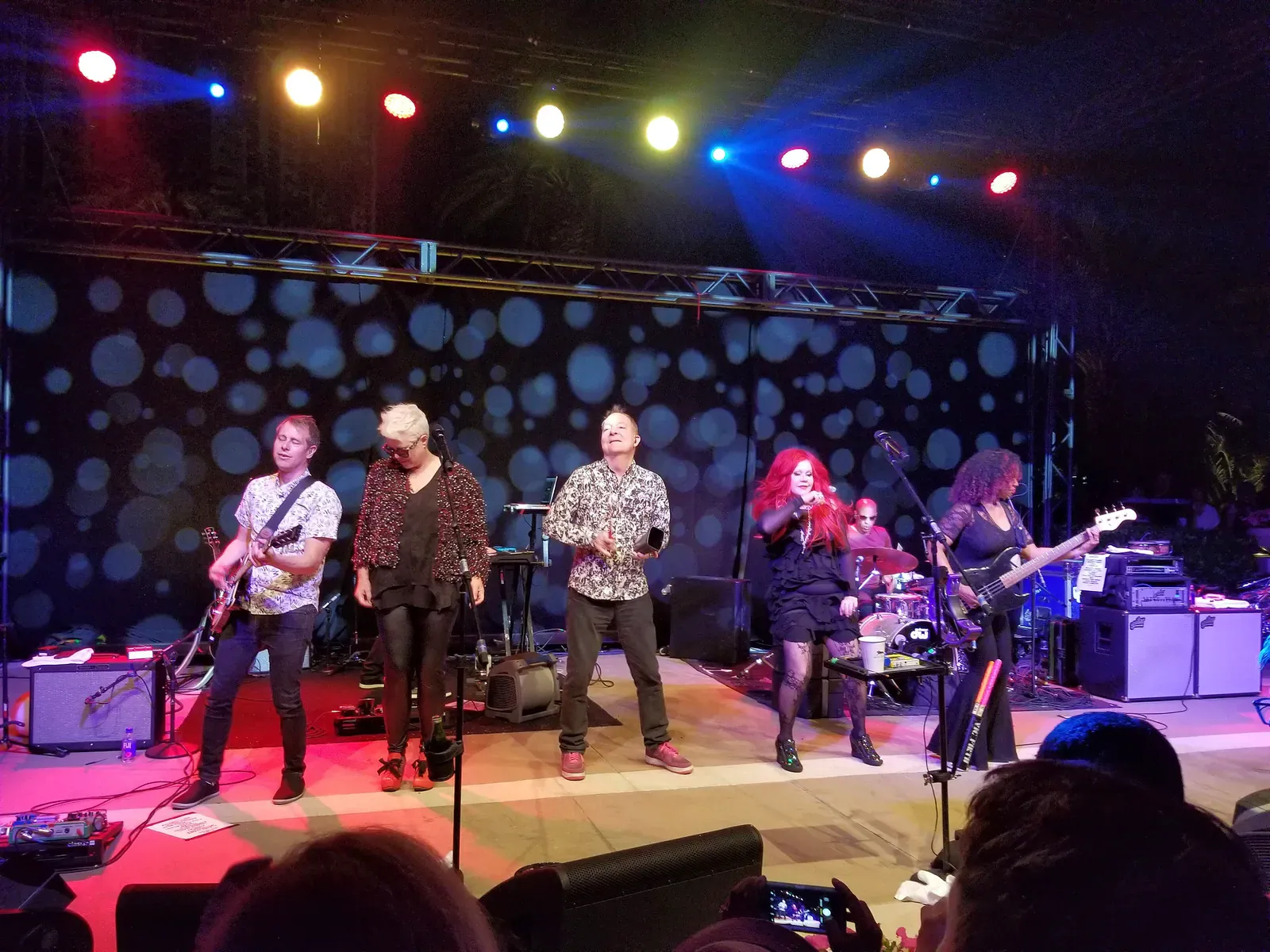
The first records came from art-school and bar-band backgrounds. Talking Heads, formed by New York art students, wrote angular and jittery songs. Costello’s Watching the Detectives mixed noir lyrics with a reggae-influenced groove, and The B-52’s in Athens, Georgia, released Rock Lobster on the small DB Records label in 1978 before signing to a major.
Radio and the charts, 1978-1980
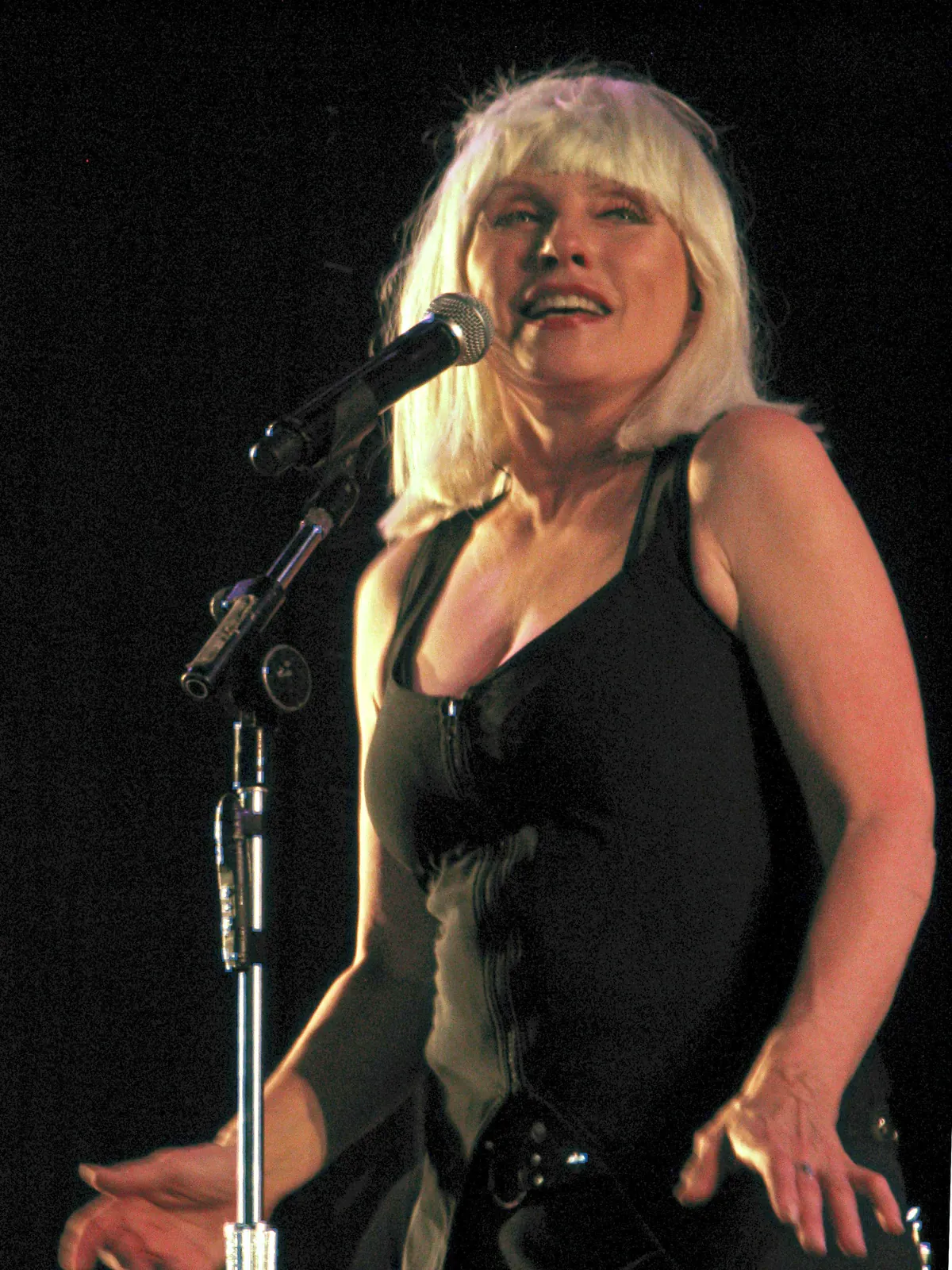
New wave reached the charts first through radio. The Cars released their debut on Elektra in 1978, and its mix of power pop and synthesizers suited FM stations. The Police issued Roxanne the same year on A&M, laying a reggae pulse under a pop melody. Blondie’s Parallel Lines, released on Chrysalis, produced Heart of Glass, which took a disco rhythm and a drum machine to number one in the UK and the US in 1979.
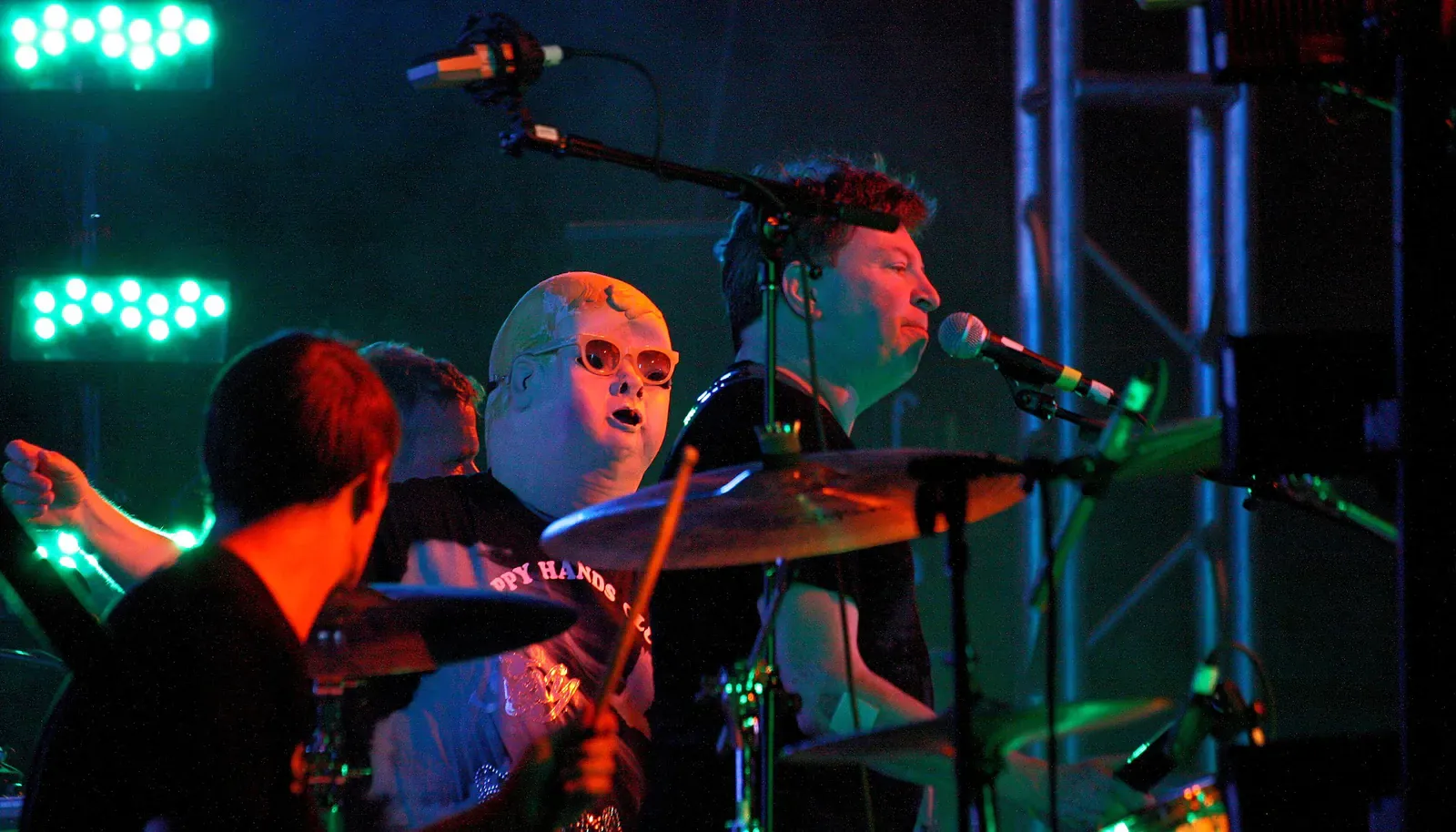
Gary Numan took the electronic route. His single Cars, built on synthesizers, topped the UK chart in 1979 on Beggars Banquet, and its parent album The Pleasure Principle was almost guitar-free. Devo, from Akron, Ohio, offered a satirical, jerky electronic version, and Whip It reached the US top 20 in 1980 on Warner.
Synths, video and MTV, 1981-1984
MTV launched in the United States in 1981 with few American clips to play, and it leaned on British acts that already had filmed videos. Duran Duran, A Flock of Seagulls and Madness found US audiences this way. Duran Duran’s Rio (1982) and the filmed Hungry Like the Wolf video, shot in Sri Lanka, took the band to number 3 on the US singles chart in 1983. The 1982 single by Modern English on 4AD became a favourite in the US after it was used in the 1983 film Valley Girl. A Flock of Seagulls released I Ran on Jive, and its swept-up hair set a visual style.
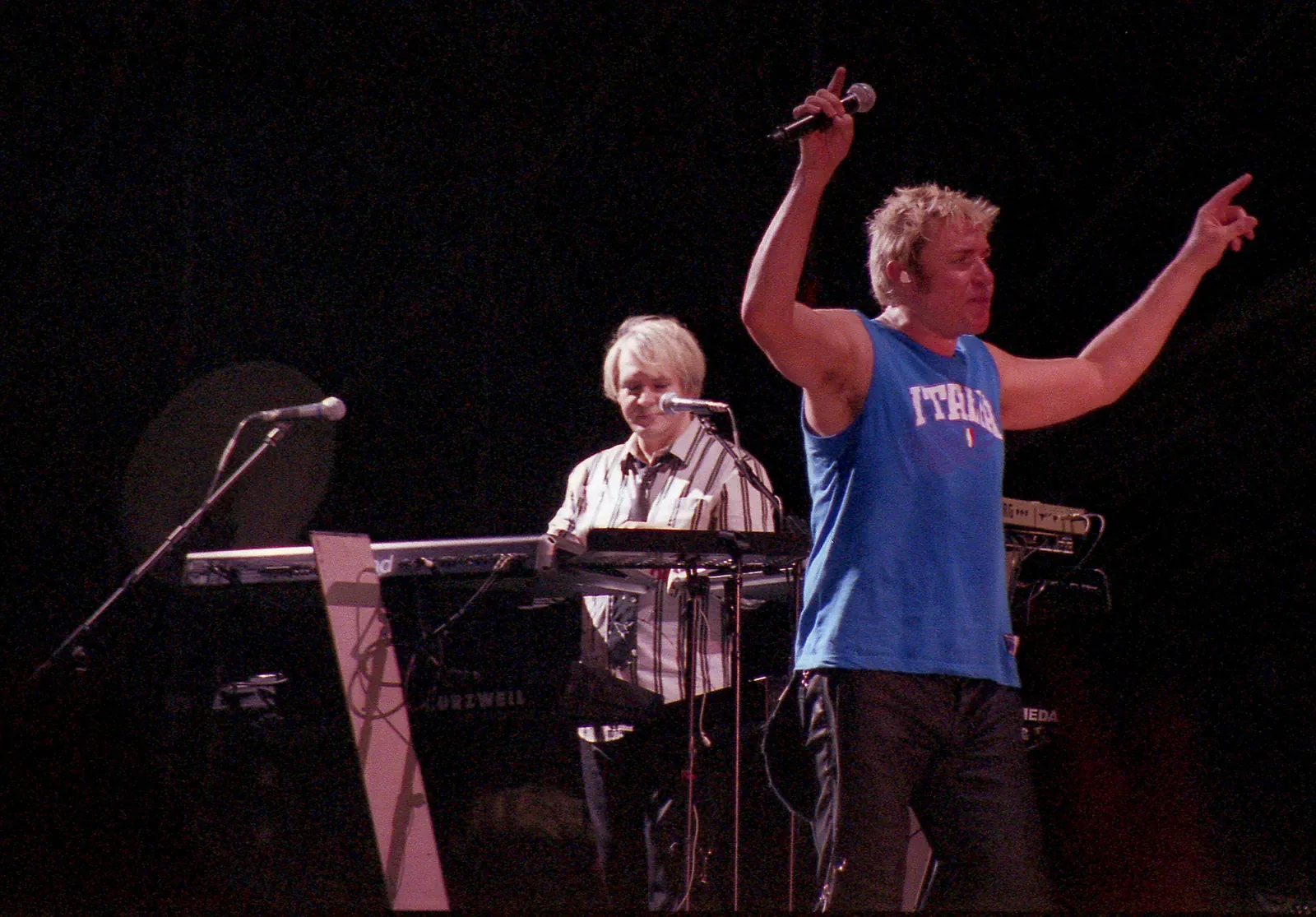
The Go-Go’s, a Los Angeles band with punk roots, released Beauty and the Beat on I.R.S. in 1981, and in 1982 it became the first number-one US album by an all-women group who wrote their songs and played their own instruments. In 1984 The Police went on hiatus after the Synchronicity tour, as synth-pop and alternative rock were splitting the audience.
Fade and afterlife, 1985-1999
By the mid-1980s the label “new wave” loosened and bands moved toward synth-pop, college rock or mainstream rock. The songs lived on in film soundtracks and on radio. Pretty in Pink (1986) brought the sound to teenagers in the US, and the Rhino compilation series Just Can’t Get Enough: New Wave Hits of the ’80s (1994) fixed a canon for the genre.
Revival, 2000 onward
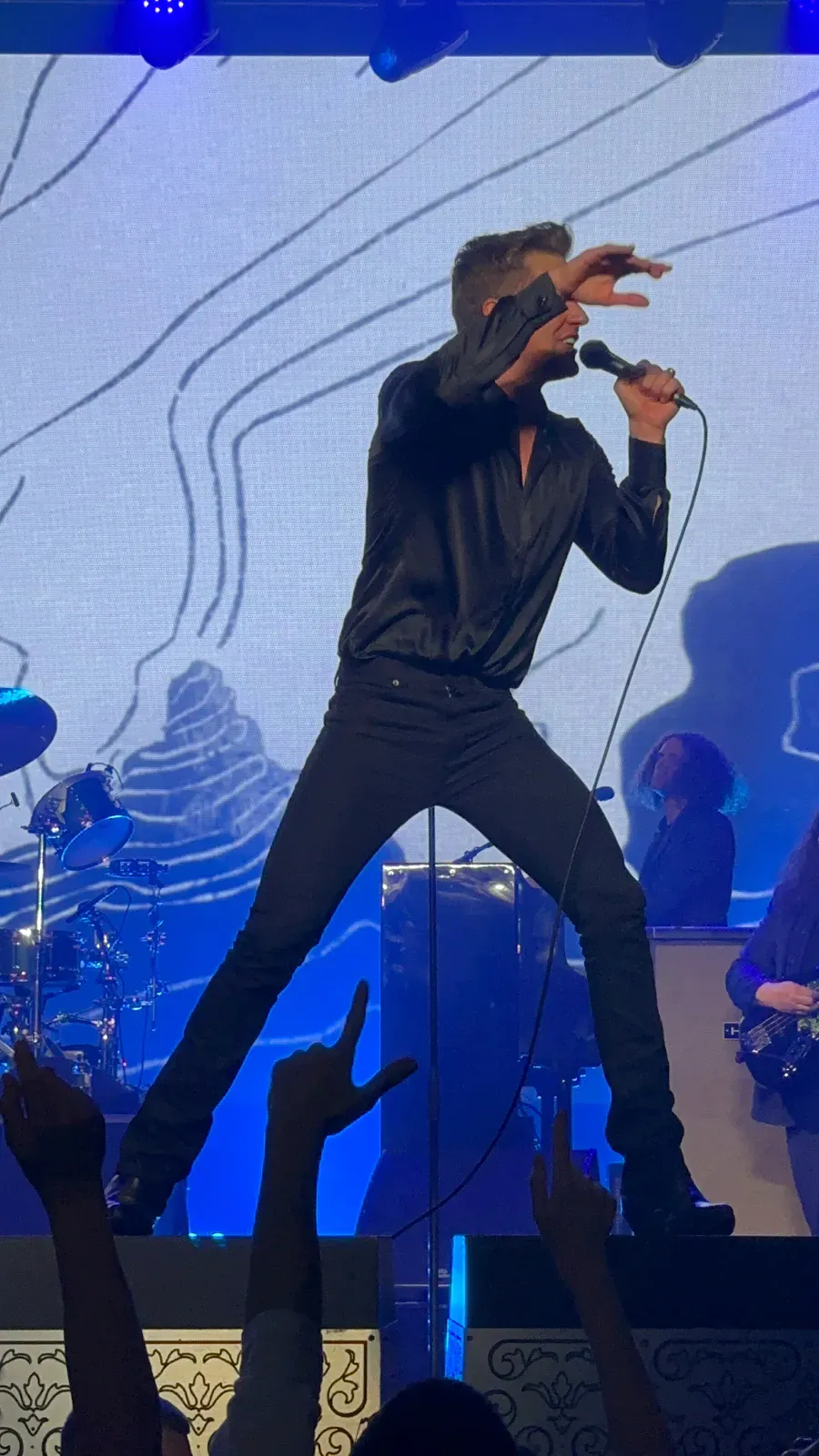
In the 2000s bands such as The Killers and Interpol returned to jittery guitars and synthesizers. The Killers’ Hot Fuss (2004) and Mr. Brightside brought new wave hooks back to the charts, and 1980s catalogues stayed in heavy streaming and radio rotation.
Characteristics
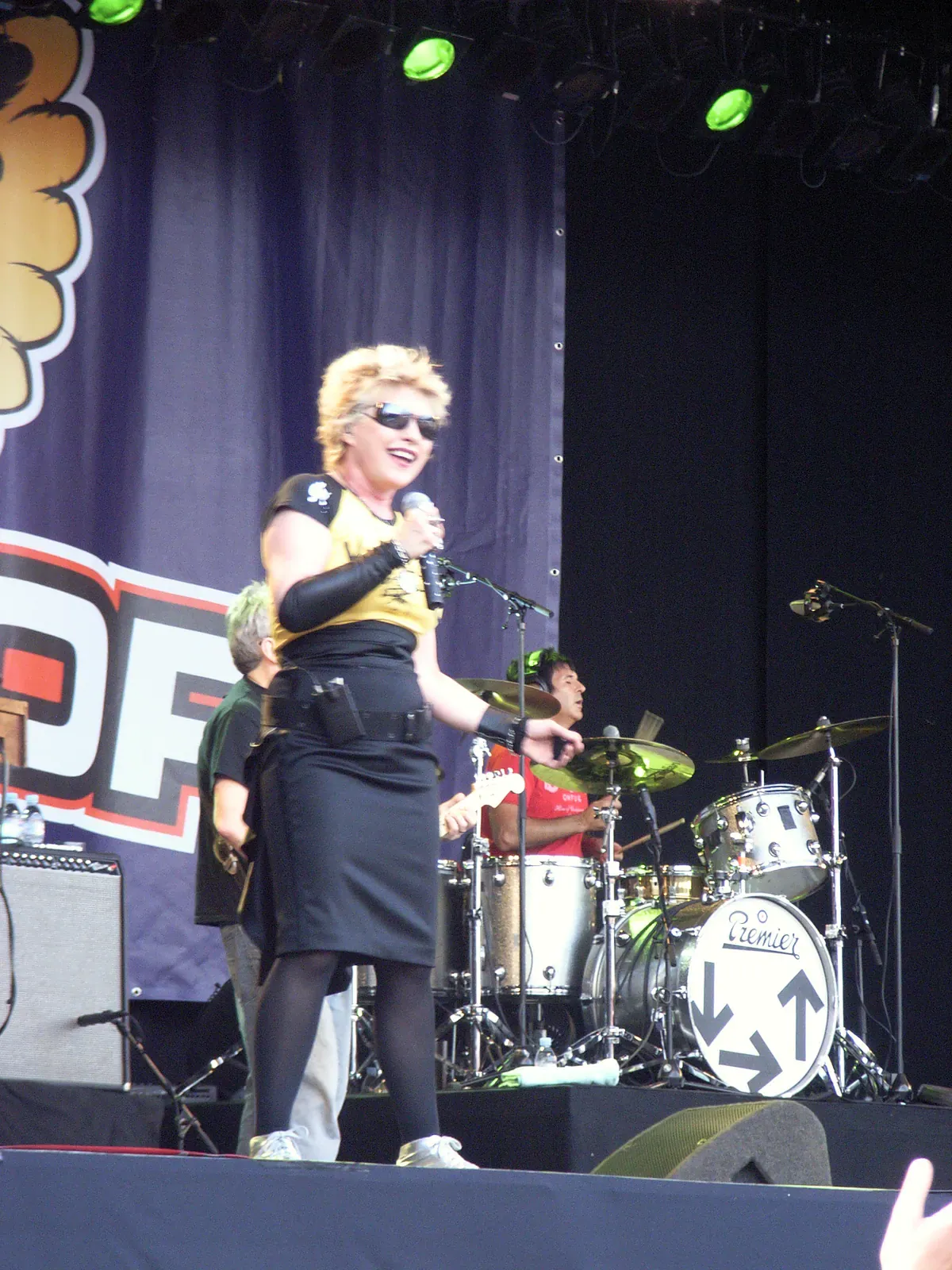
Most new wave songs run three to four minutes with a hooked chorus, a clean or trebly guitar tone, a melodic bass line and tight, dry drums. Tempos usually sit between 115 and 160 BPM in 4/4. Vocals are deadpan, nervy or high-pitched, with shared vocals in groups like the Go-Go’s and The B-52’s. A staccato synthesizer line often doubles the guitar riff or answers it. Rhythms borrowed from disco and reggae gave the music a danceable pulse that punk lacked.
Instruments and production
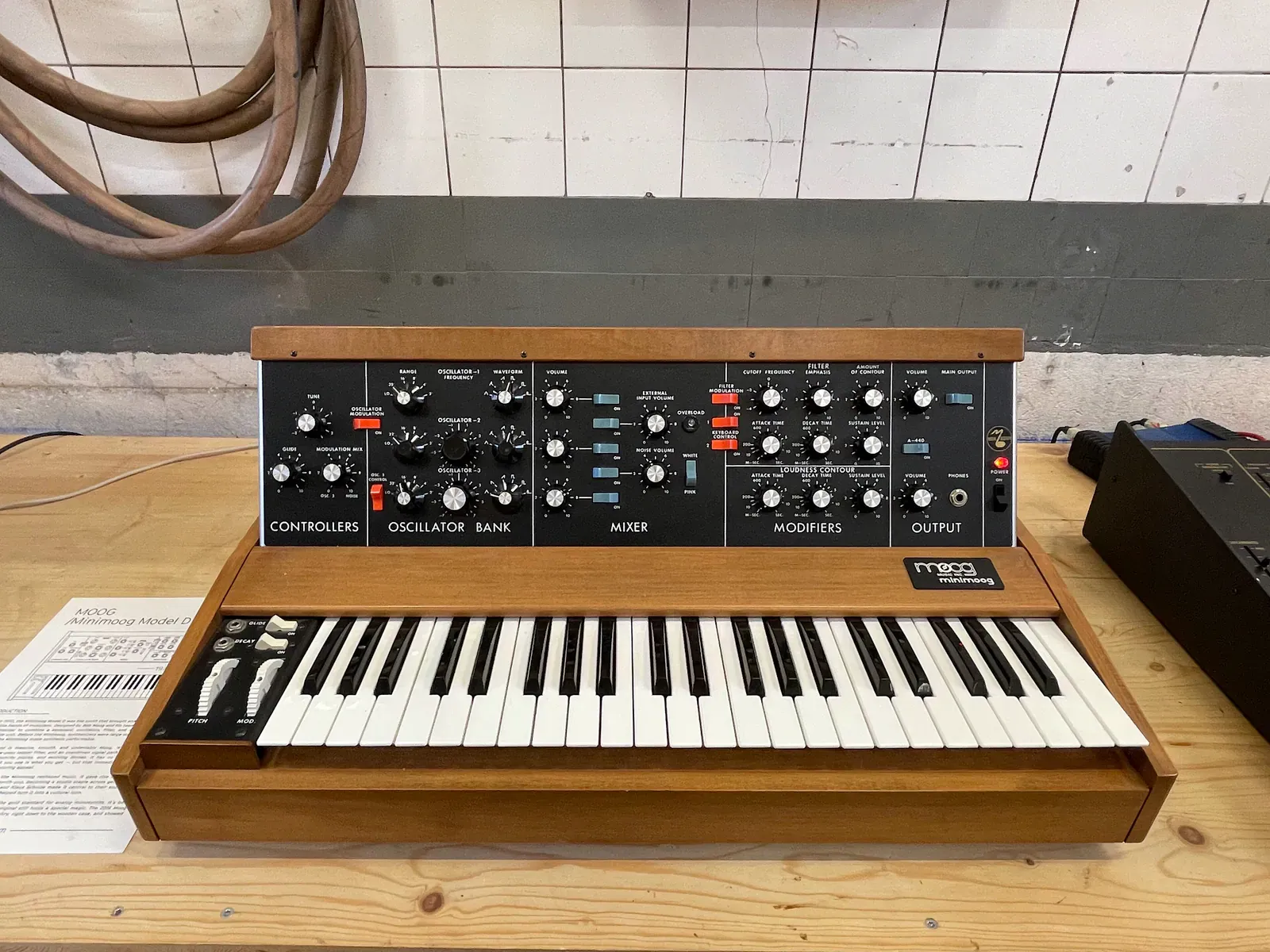
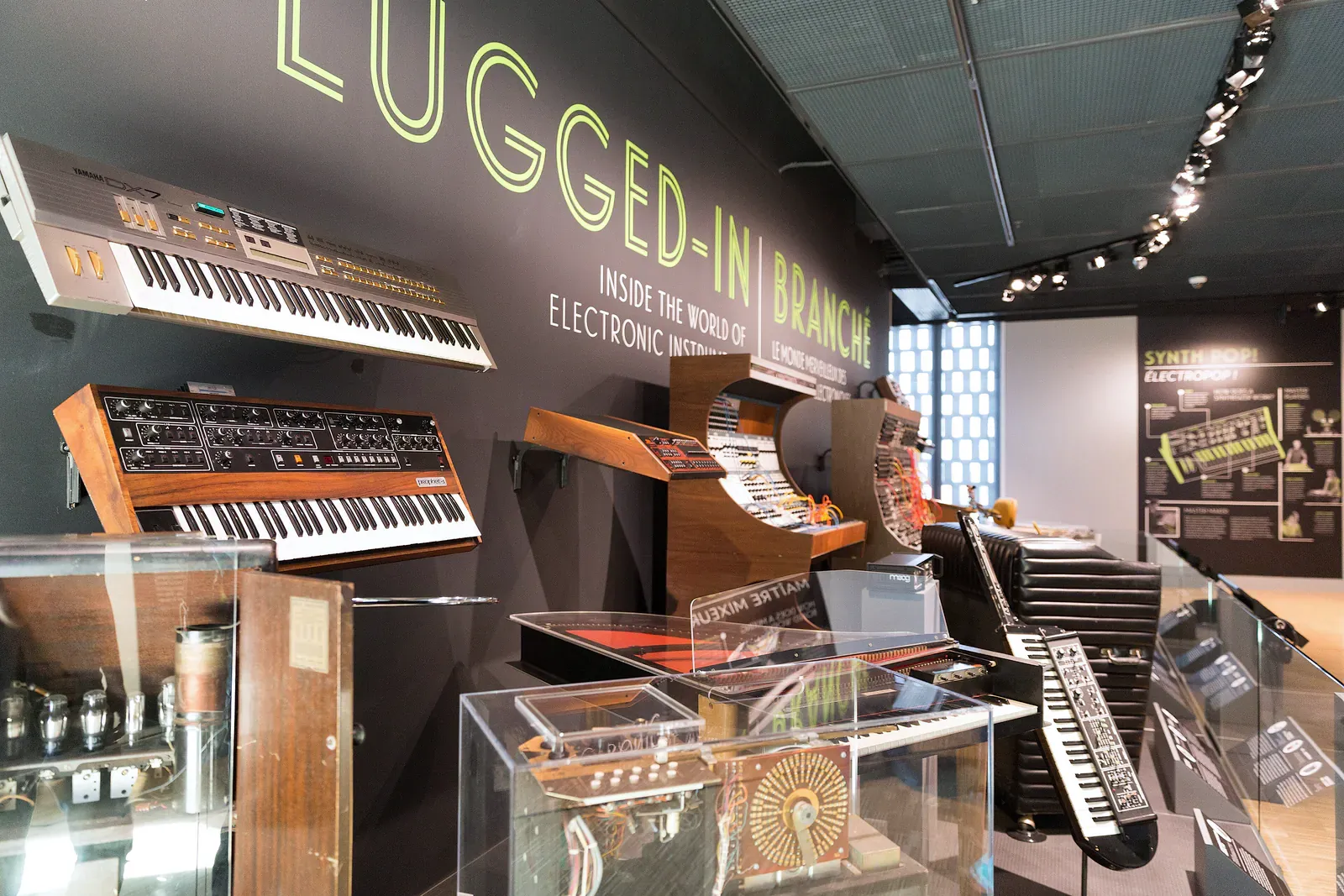
Analogue synthesizers carried the new sound. The Minimoog supplied bass and lead lines for Gary Numan and The Cars, the Prophet-5, introduced in 1978, offered polyphonic pads and programmable sounds, and the Polymoog added string-like lines. Drum machines also appeared: the Roland CR-78 on Heart of Glass and, from 1980, the sampled Linn LM-1 on many early-1980s pop records. The Fairlight CMI (1979) and the MIDI standard (1983) later let studio-led acts program entire arrangements.
Notable recordings
Three records show the range. Psycho Killer (1977) proved that punk-era New York could make nervous, funky pop. Heart of Glass (1979) showed that a punk band could top the charts with a disco beat. Cars (1979) set a cool, mechanical look and an electronic template that later synth-pop bands followed.
Culture
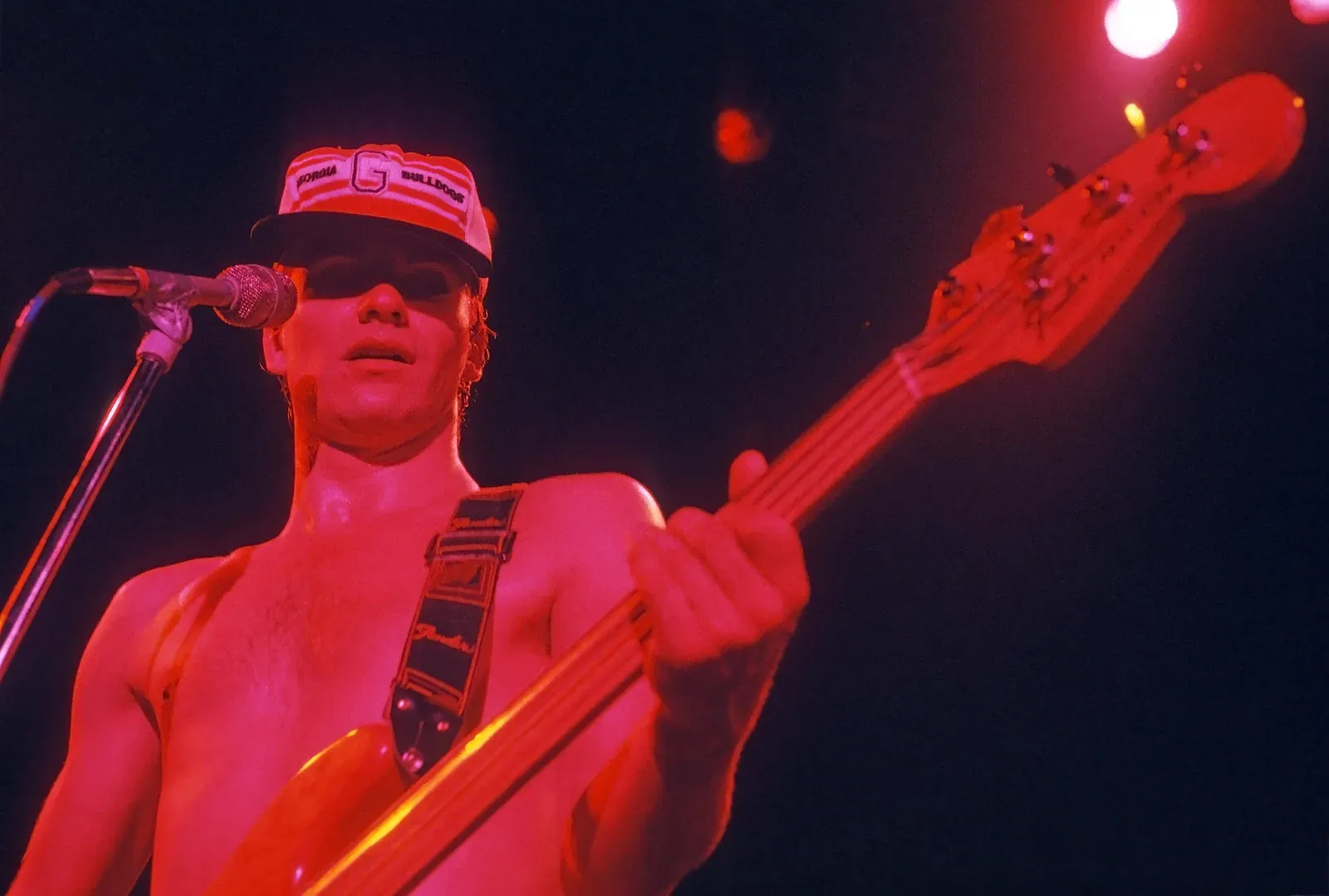
The look was as important as the sound. Skinny ties and narrow lapels, borrowed from 1960s mods, marked many early bands, and Devo’s red terraced “energy dome” hats became a trademark. In the early 1980s swept-up hair and sculpted cuts defined A Flock of Seagulls and many others. The narrative music video made bands into film characters, and Rodney Bingenheimer’s radio show on KROQ in Los Angeles broke many bands. The concert film Urgh! A Music War (1982) captured The Police, Devo and Gary Numan on stage.
Legacy
New wave bridged punk and the mass audience, and showed that a band could be both ironic and tuneful. It supported the second British invasion on US television, prepared the ground for alternative rock and college radio, and left a template for synth-and-guitar bands from The Killers onward.
Misconceptions
One misconception is that new wave means synth-pop. Many early new wave records, such as Costello’s My Aim Is True and Talking Heads: 77, were guitar-led, and the genre treats synth-pop as a related but separate style. A second is that the term is a British invention: it was pushed by Sire in New York in 1977, borrowing from French film. A third is that MTV created the genre. Heart of Glass and Cars were number-one singles in 1979, two years before the channel launched, although MTV did extend the genre’s reach.
Frequently asked questions
What is new wave music?
New wave is a pop-oriented offshoot of punk that appeared in 1976-1977, blending short, hooky songs with synthesizers, clean guitar and polished production. Blondie, Talking Heads, The Cars and The Police are among its best-known acts.
What is the difference between new wave and punk?
Punk is faster, rawer and more distorted, while new wave adds keyboards, melody and studio polish. Both started in the same clubs in New York and London, and many bands moved from one to the other.
Is synth-pop the same as new wave?
No. Synth-pop is led by synthesizers rather than guitars. The two overlap in the early 1980s, and bands such as Duran Duran and Gary Numan are placed in both.
Which bands are new wave?
Core acts include Talking Heads, Blondie, Elvis Costello, The Police, The Cars, Devo, Duran Duran, Gary Numan, the Go-Go’s and The B-52’s. The Killers revived the style in the 2000s.
Sound
Sound sheet
Anatomy of a track
| # | Part | Bars |
|---|---|---|
| 1 | Intro (riff or synth pulse) | 8 |
| 2 | Verse | 16 |
| 3 | Chorus | 8 |
| 4 | Verse | 16 |
| 5 | Chorus | 8 |
| 6 | Bridge or instrumental break | 8 |
| 7 | Final choruses | 16 |
Signature sounds
- Short songs of about three to four minutes with a hooked chorus
- Staccato synthesizer line doubling or answering the guitar
- Clean, trebly guitar and offbeat or reggae-influenced rhythm
- Prominent melodic bass
- Deadpan, quirky or high-pitched vocals
Drums and percussion
- Roland CR-78
- Linn LM-1
Synths and software
- Minimoog
- Prophet-5
- Polymoog
Techniques
- Staccato synth riff doubling the guitar
- Offbeat reggae guitar and bass
- Disco-style four-on-the-floor beat
- Dry, close-miked drums
- Deadpan or nervy vocals
Keys and modes
Major keys with simple chords. Many hits rest on plain, hooky chord progressions.
Natural minor. I Ran is written in A minor, a colder mood than the major-key hits.
Vocals
Deadpan, nervy or high-pitched lead vocals; shared or call-and-response vocals in groups like The B-52's and the Go-Go's.
Scenes
Where it happened
Where and when the sound lived: one bar per city on a shared timeline.
North America
Europe
Active scenes
Peak 7, 1978-1981
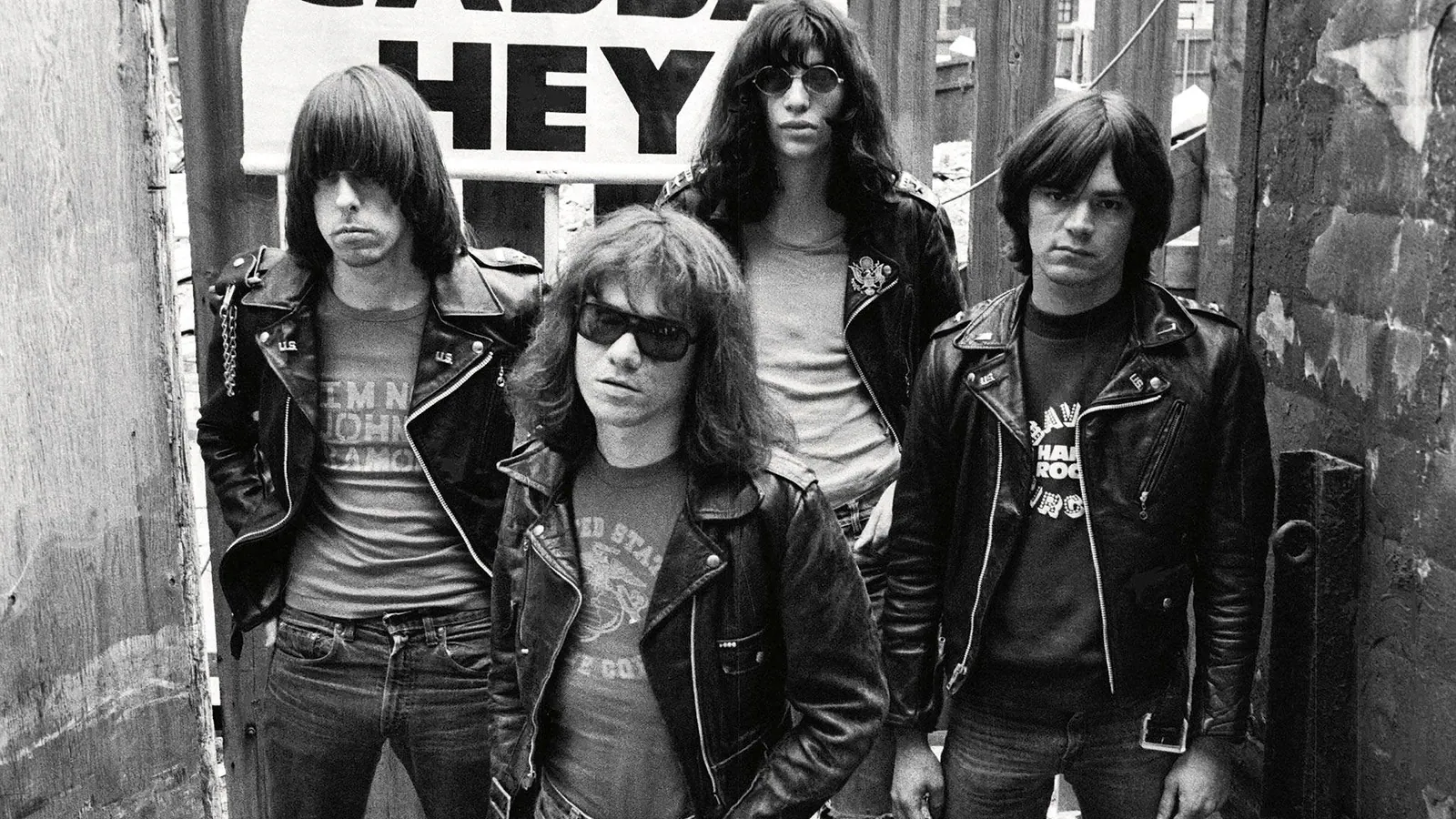
CBGB, Max's Kansas City and the Mudd Club hosted Talking Heads, Blondie and Ramones.
Stiff Records, pub rock and Marquee gigs fed Costello, the Police and Madness.
Devo built its electronic concept band away from the coastal scenes.
The B-52's started here; the college town became a hub for later alternative bands.
The Go-Go's and local radio built a pop-punk to new wave bridge.
Duran Duran came up through the Rum Runner club before MTV.
The Cars formed here from local rock and art-school circles.
Venues and places
New York, 1973 to 2006. Early home of Talking Heads and Blondie.
New York, 1965 to 1981. Where Blondie and Talking Heads played to the art and music crowd.
New York, 1978 to 1983. A Tribeca club that mixed new wave bands, art and dance nights.
Los Angeles, 1964 to today. Sunset Strip room where the Go-Go's and other LA bands played.
London, 1958 to 1988. A key London stage for new bands in the late 1970s and 1980s.
Birmingham, 1967 to 1987. Birmingham club where Duran Duran began and its members worked.
Culture
Culture markers
- Skinny ties and narrow lapels
A slim suit look borrowed from 1960s mods marked many early bands.
Fashion - Devo's energy dome hats
Red terraced plastic hats worn in the Whip It video became the band's emblem.
Fashion - Swept-up hair
The long fringe and sculpted cuts of A Flock of Seagulls and others shaped the early-1980s look.
Fashion - The narrative music video
Hungry Like the Wolf, filmed in Sri Lanka, showed bands as film characters rather than performers.
Artwork - "New wave" as a label
Sire borrowed the term from French cinema in 1977 to separate its acts from punk.
Slang
Media
Key media
- 1976Rodney on the ROQ
by Rodney Bingenheimer. A Los Angeles radio show that broke punk and new wave bands on KROQ.
Radio - 1982Urgh! A Music War
by Derek Burbidge. Concert film with The Police, Devo, Gary Numan and others.
Film - 1983Valley Girl
by Martha Coolidge. Teen comedy whose soundtrack boosted Modern English and other new wave acts.
Film - 1986Pretty in Pink
by Howard Deutch. Teen film whose soundtrack spread new wave and post-punk to a wider US audience.
Film - 1994Just Can't Get Enough: New Wave Hits of the '80s
by Various. Rhino series of volumes that fixed the radio canon of the genre.
Compilation
Glossary
Terms on this page
A device that plays programmed rhythm patterns, used as an alternative to a drummer.
A filmed clip made to promote a single; the central medium of the MTV era.
A term for post-punk pop that keeps punk's energy but adds hooks, keyboards and polished production.
Guitar pop built on short, bright choruses; a key ingredient in The Cars and Blondie.
A mid-1970s British circuit of stripped-down bar bands that fed early new wave.
The early-1980s wave of British acts that won the US market through MTV.
Pop music led by synthesizers rather than guitars; overlaps with new wave but is treated as a separate genre here.
Rock family