Art rock
Art rock is rock with avant-garde and high-art ambitions, formed in New York and London from 1966, prizing studio craft, concept and unusual song form.
United States, United Kingdom, 1966
Rock family
Born
1966
United States, United Kingdom
Subgenres
2
Documented branches
Links
21
Genres it drew on or shaped
Tempo
75-135 BPMLineage
Family tree
Grew out of
- Experimental rock
Derived from
Derived from
Influenced by
United States, United Kingdom, 1966
Art rock
Led to (7)
Timeline
Era by era
From the first sparks to today. Select a dot to read the story behind it.
- Studio ambition
1966 to 1970
- Art school and glam
1971 to 1976
- Berlin, New York and new wave
1977 to 1984
- Alternative art rock
1985 to 1996
- Digital age
1997 to 2026
Eras
Moments
- 1 Studio ambition, 1966 to 1970
- 2 Art school and glam, 1971 to 1976
- 3 Berlin, New York and new wave, 1977 to 1984
- 4 Alternative art rock, 1985 to 1996
- 5 Digital age, 1997 to 2026
1966
Studio ambition
The Velvet Underground with Andy Warhol, Frank Zappa, the Beatles on Sgt. Pepper and King Crimson in 1969 pushed rock toward avant-garde ideas, long forms and the studio as a tool.
- 1966Freak Out! by the Mothers of InventionFrank Zappa's debut double album is among the first rock records built around satire and avant-garde collage.
- 1967The Velvet Underground & NicoProduced by Andy Warhol with a banana sleeve, it set drone, noise and literary lyrics beside pop songs.
- 1967Sgt. Pepper's Lonely Hearts Club BandThe Beatles treat the studio as an instrument and present the album as one conceptual work.
- 1969In the Court of the Crimson KingKing Crimson's debut, released in October, mixes Mellotron orchestration, jazz improvisation and symphonic structure.
1971
Art school and glam
Roxy Music, David Bowie, Brian Eno and Pink Floyd joined theatrical image, synthesizers and concept albums, while Eno left Roxy in 1973 and began his own solo records.
- 1972Roxy Music's debut albumA debut of retro glamour, saxophone and Brian Eno's synthesizer treatments, released in June.
- 1973The Dark Side of the MoonPink Floyd's concept album, recorded at Abbey Road, made studio detail and themes of mental strain a mainstream subject.
- 1973Brian Eno leaves Roxy MusicAfter For Your Pleasure, Eno quits and starts a solo career.
- 1974Here Come the Warm JetsEno's first solo album mixes pop songs with unconventional treatments and a rotating cast of guests.
- 1975Oblique StrategiesBrian Eno and Peter Schmidt publish a deck of cards with creative prompts that Eno uses in the studio.
1977
Berlin, New York and new wave
Bowie and Eno worked in Berlin, Talking Heads reached funk and polyrhythm on Remain in Light, and Peter Gabriel and Kate Bush made early use of gated drums and the Fairlight sampler.
- 1977David Bowie's LowRecorded partly in France and mixed in West Berlin with Brian Eno, its second side turns to ambient instrumentals.
- 1977Talking Heads: 77The New York band's debut brings nervy, art-school songwriting out of the CBGB scene.
- 1978Kate Bush's Wuthering HeightsHer debut single, inspired by Emily Bronte's novel, reaches number one in the UK.
- 1980Remain in LightTalking Heads and producer Brian Eno build songs from looped African-influenced rhythm tracks, released in October.
- 1980Gated reverb drum soundPeter Gabriel's third album, with Phil Collins on drums, helps to popularize the gated reverb snare.
- 1982Kate Bush and the Fairlight CMIBush first uses the Fairlight sampler on Never for Ever in 1980 and builds The Dreaming around it, an early use of digital sampling in a rock album.
1985
Alternative art rock
Kate Bush's Hounds of Love and Peter Gabriel's So brought studio-built art rock to a pop audience, with Gabriel's Sledgehammer video a landmark of the music-video age.
- 1985Hounds of LoveKate Bush's fifth album splits into a pop side and a conceptual suite, made largely at her home studio.
- 1986Peter Gabriel's Sledgehammer videoThe stop-motion video made with Aardman Animations becomes a landmark of the music-video age.
1997
Digital age
Radiohead's OK Computer and Kid A, Arcade Fire's Funeral and Bowie's Blackstar kept the form alive, with online release as a new tool.
- 1997OK ComputerRadiohead's third album joins guitar rock with studio processing and a theme of alienation, released in June.
- 2000Kid ARadiohead trade guitars for electronics and Ondes Martenot, and the album still reaches number one in the US and UK.
- 2004Funeral by Arcade FireThe Montreal band's debut brings orchestral instruments and large arrangements back to indie rock.
- 2007Radiohead release In Rainbows onlineThe band offers the album as a pay-what-you-want download before any physical release.
- 2016BlackstarDavid Bowie's final album, built with jazz musicians, is released two days before his death.
Listening path
Start listening
A short path from an easy way in to the deep end. Thumbnails come from YouTube; the player loads only when you press play.
- 01
King Crimson, 1969
The opening track of the founding record of the style, mixing jazz and hard rock.
- 02
Roxy Music, 1972
Roxy Music's first single, which brought art-school glam to the singles chart.
- 03
Kate Bush, 1978
A literary, high-register art-pop single that reached number one in the UK.
- 04
Talking Heads, 1981
A Brian Eno-produced single built on polyrhythm and spoken-sung vocals.
- 05
Radiohead, 1997
A multi-part, six-minute single that took art rock structure into the 1990s mainstream.
Facts
| Family | Rock |
| Origin | United States, United Kingdom |
| Emerged | 1960s |
| Status | Active |
| Tempo | 75 to 135 BPM |
| Meter | 4/4, with frequent shifts to 7/4 or 7/8 |
| Grew out of | Experimental rock, Psychedelic rock |
| Subgenres | 2 |
Art rock is rock music made with experimental or avant-garde ambitions, high-art references and a priority on sound, concept and studio craft over convention.
It took shape from 1966 in New York and London, when bands began to treat the album as a single work and the recording studio as an instrument. Typical traits are unconventional song forms, literary or theatrical lyrics, and textures from tape, Mellotron and synthesizer.
Origins
The style grew out of psychedelic rock and experimental rock, with borrowings from the avant-garde, classical music, jazz and folk. In 1966 Frank Zappa’s Mothers of Invention released the double album Freak Out!, built on satire and collage. In 1967 the Velvet Underground and Nico, produced by Andy Warhol and wrapped in his banana sleeve, set drone, noise and literary lyrics beside pop songs. The same year the Beatles presented Sgt. Pepper’s Lonely Hearts Club Band as one conceptual work made inside the studio.
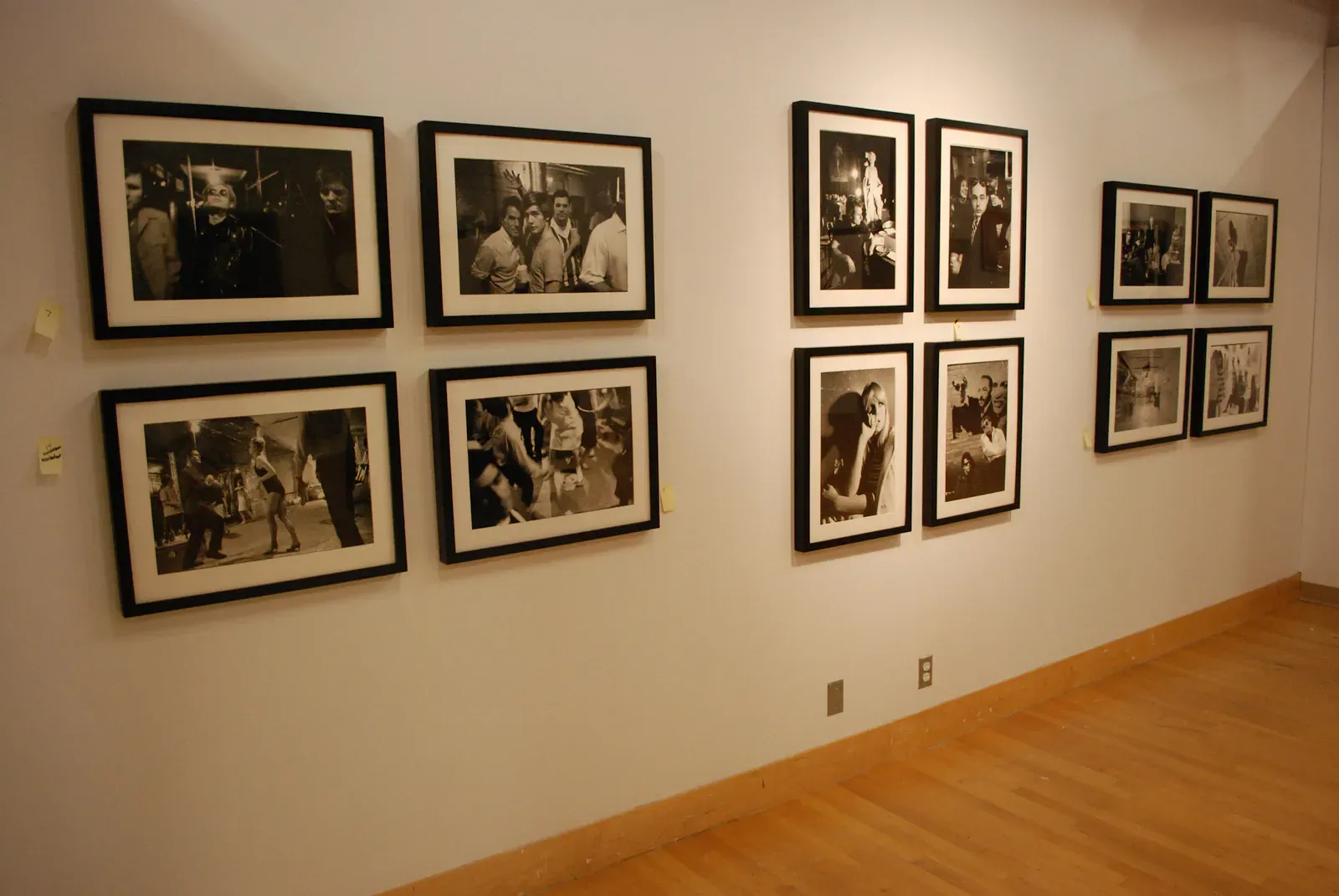
The label side mattered too. The Velvet Underground and Nico came out on Verve Records, a jazz imprint, while London artists found homes at Island Records and EG Records, both tied to Roxy Music and King Crimson.
London and New York, 1966-1970
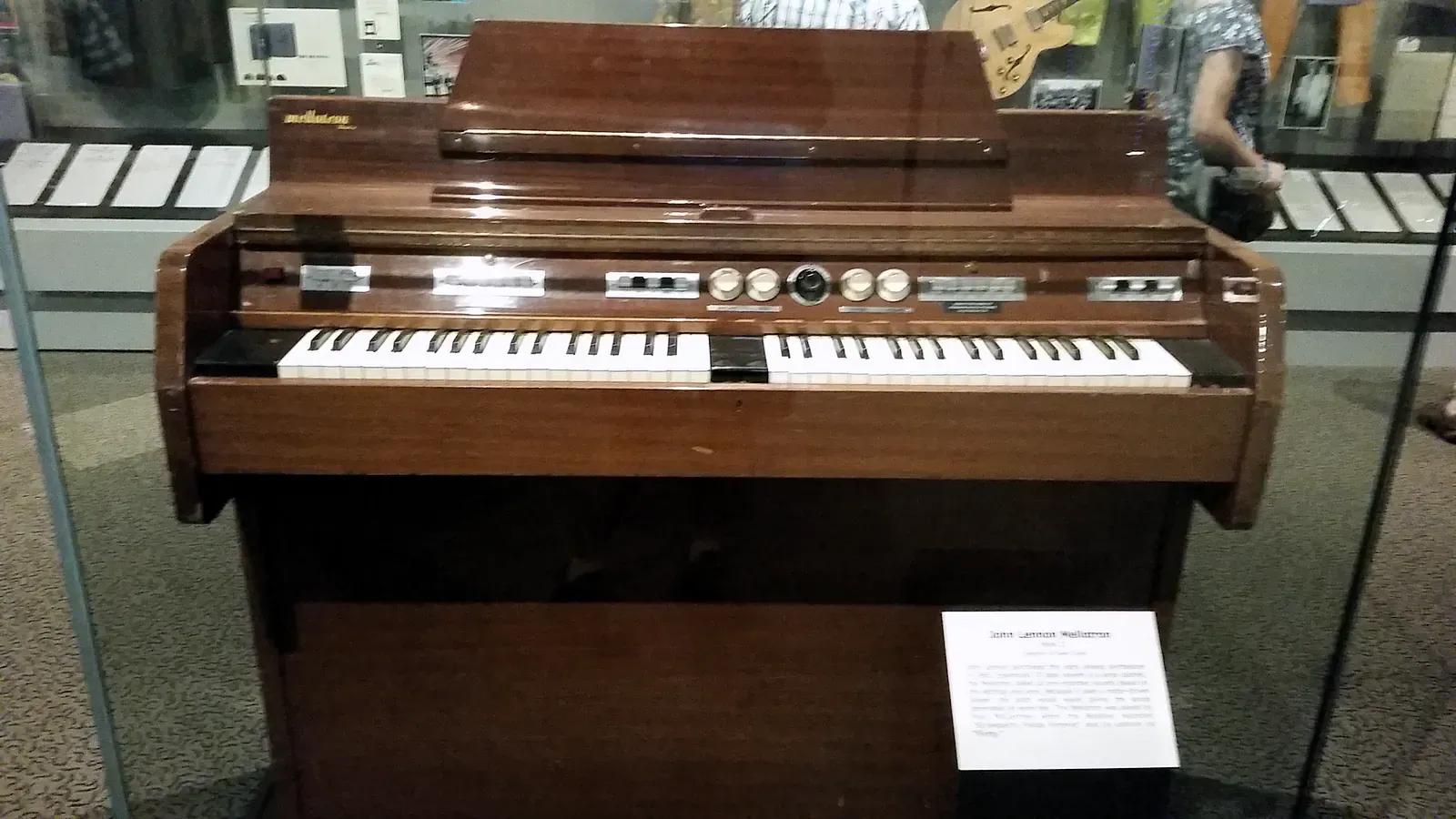
King Crimson’s In the Court of the Crimson King, released in October 1969, showed that rock could carry classical and jazz structures on a large scale. The album opens with the jarring 21st Century Schizoid Man and moves through Mellotron orchestration, improvised passages and symphonic movements.
Art school and glam, 1971-1976
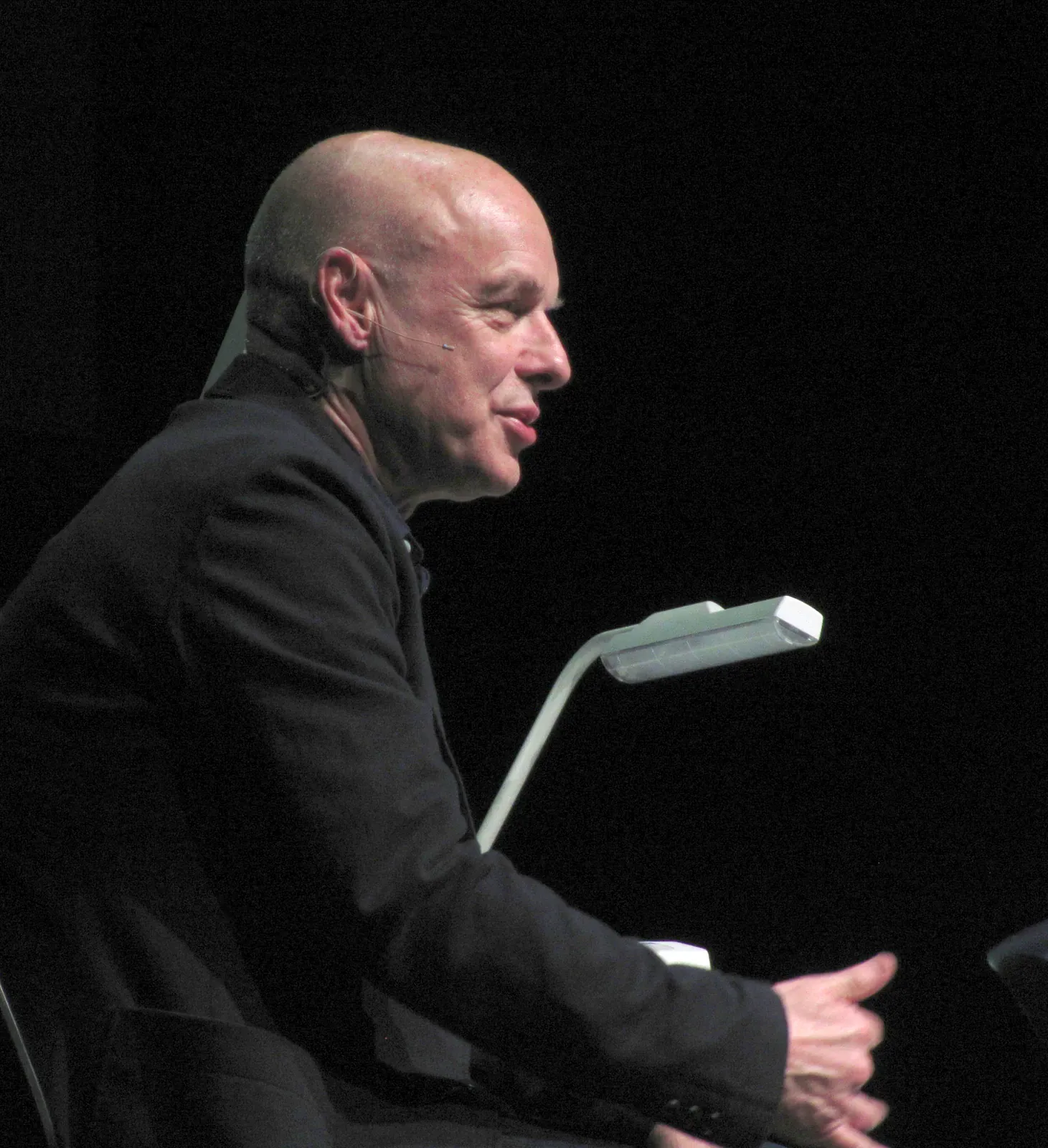
Roxy Music’s first album, released in June 1972, joined retro glamour, saxophone and Brian Eno’s synthesizer treatments. The stage looks, styled by Antony Price, mixed 1950s kitsch with science fiction. David Bowie moved between characters such as Ziggy Stardust, which showed that an artist could change identity from one album to the next. Eno left Roxy Music in 1973 and began solo records with Here Come the Warm Jets in 1974.
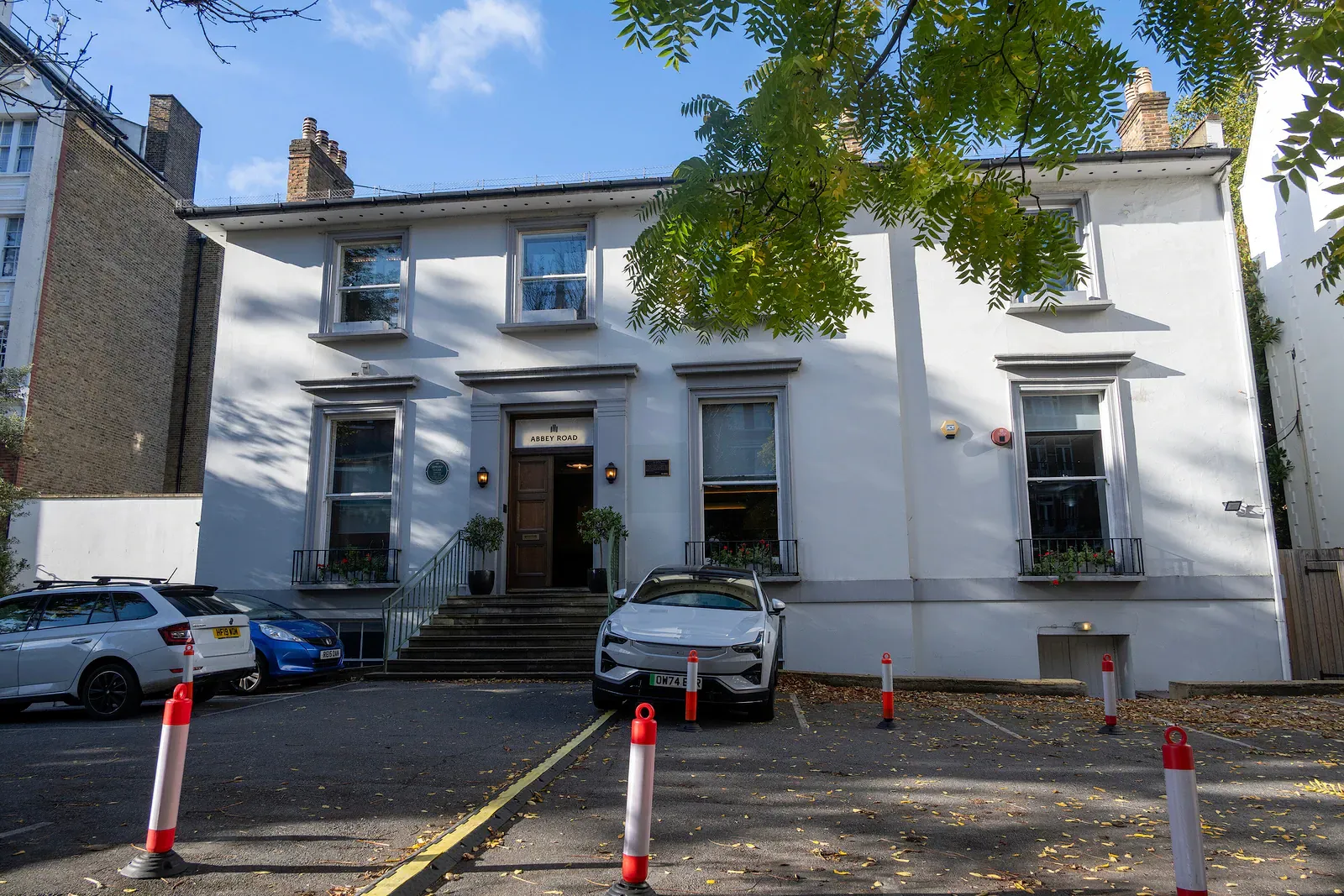
Pink Floyd’s The Dark Side of the Moon, recorded at Abbey Road in London and released in 1973, made studio detail and themes of mental strain a mainstream subject; the prism cover came from the design group Hipgnosis. In 1975 Eno and the painter Peter Schmidt published Oblique Strategies, a deck of cards with creative prompts that Eno used in the studio.
Berlin, New York and new wave, 1977-1984
In 1977 David Bowie released Low, recorded partly in France and mixed in West Berlin with Eno; its second side turned to ambient instrumentals, a bridge to what became ambient music. Hansa Studio in Berlin was one of the rooms of the period. In New York, Talking Heads: 77 brought nervy, art-school songwriting out of the CBGB scene, the same club circuit that fed new wave and post-punk. Their label was Sire.
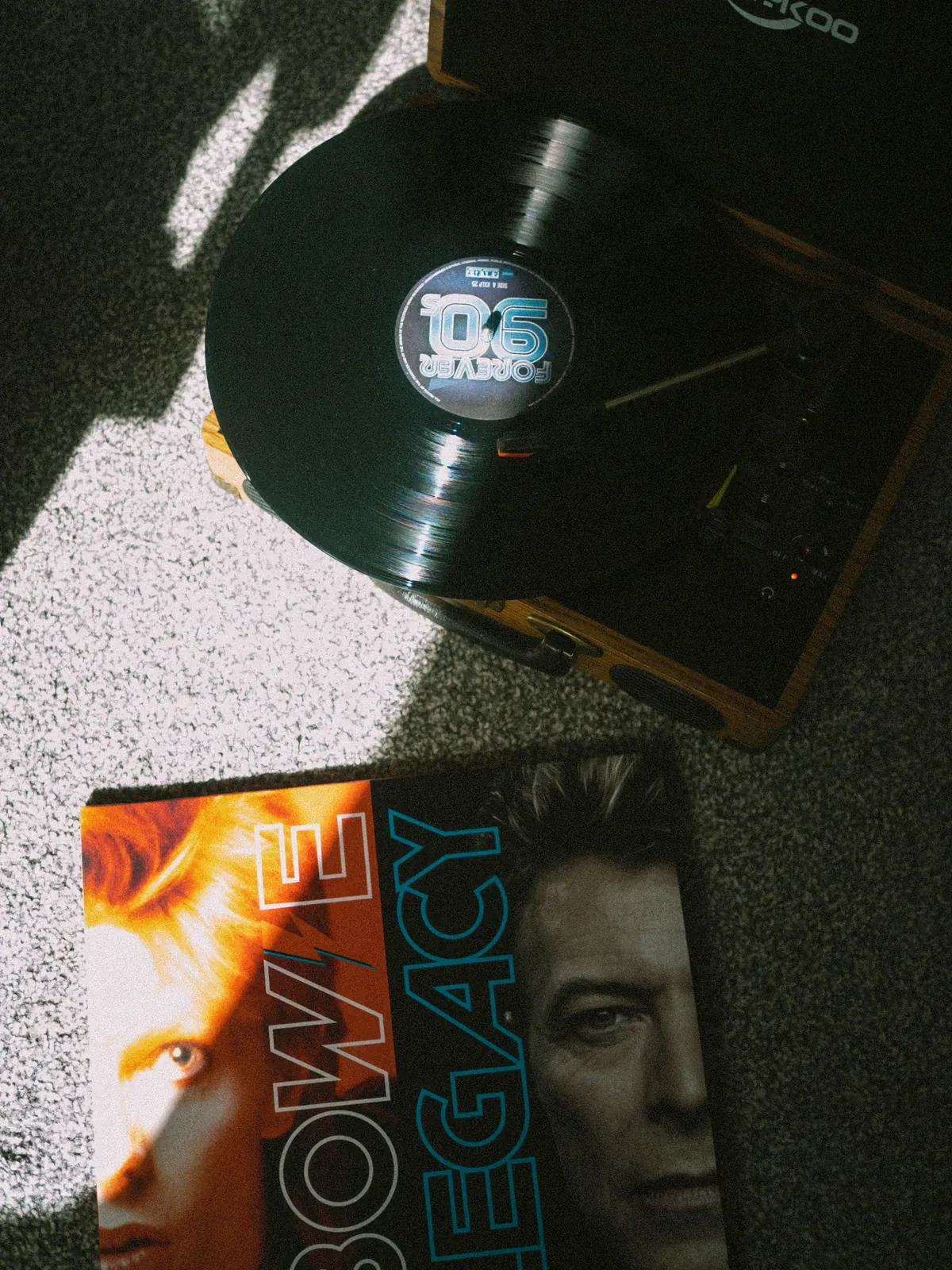
In 1980 Talking Heads and Eno built Remain in Light from looped, African-influenced rhythm tracks. The same year Peter Gabriel’s third album, with Phil Collins on drums, helped to popularize the gated reverb snare. Kate Bush, whose debut single Wuthering Heights reached number one in the UK in 1978, first used the Fairlight CMI sampler on Never for Ever in 1980 and built The Dreaming around it in 1982, an early use of digital sampling on a rock album.

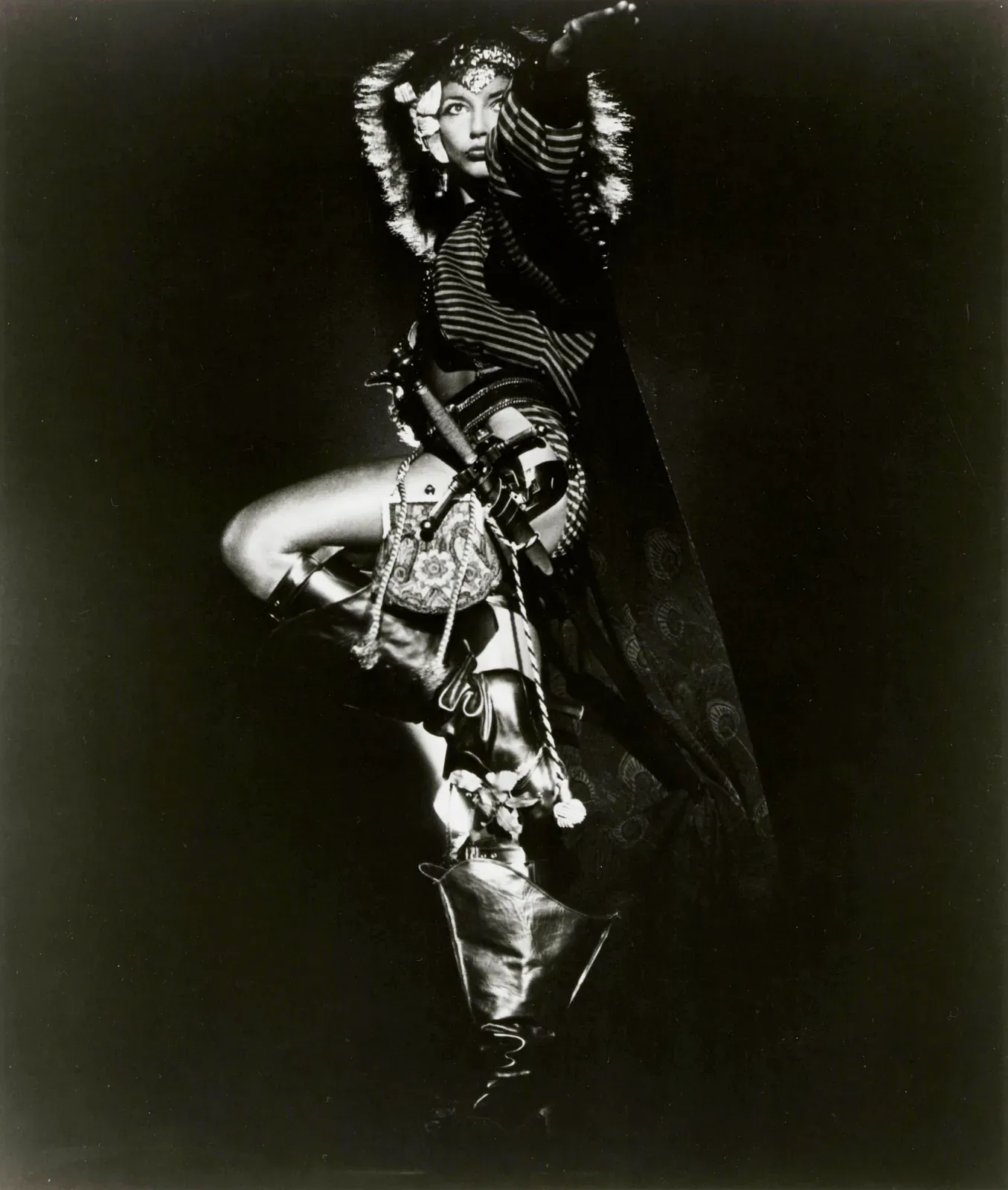
Alternative art rock, 1985-1996
Kate Bush’s Hounds of Love, released in 1985, split into a pop side and a conceptual suite and was made largely at her home studio. It showed that a sampler-based work could reach a mass audience. A year later Peter Gabriel’s Sledgehammer video, made in stop-motion with Aardman Animations, became a landmark of the music-video age, and his album So carried art rock to the charts.
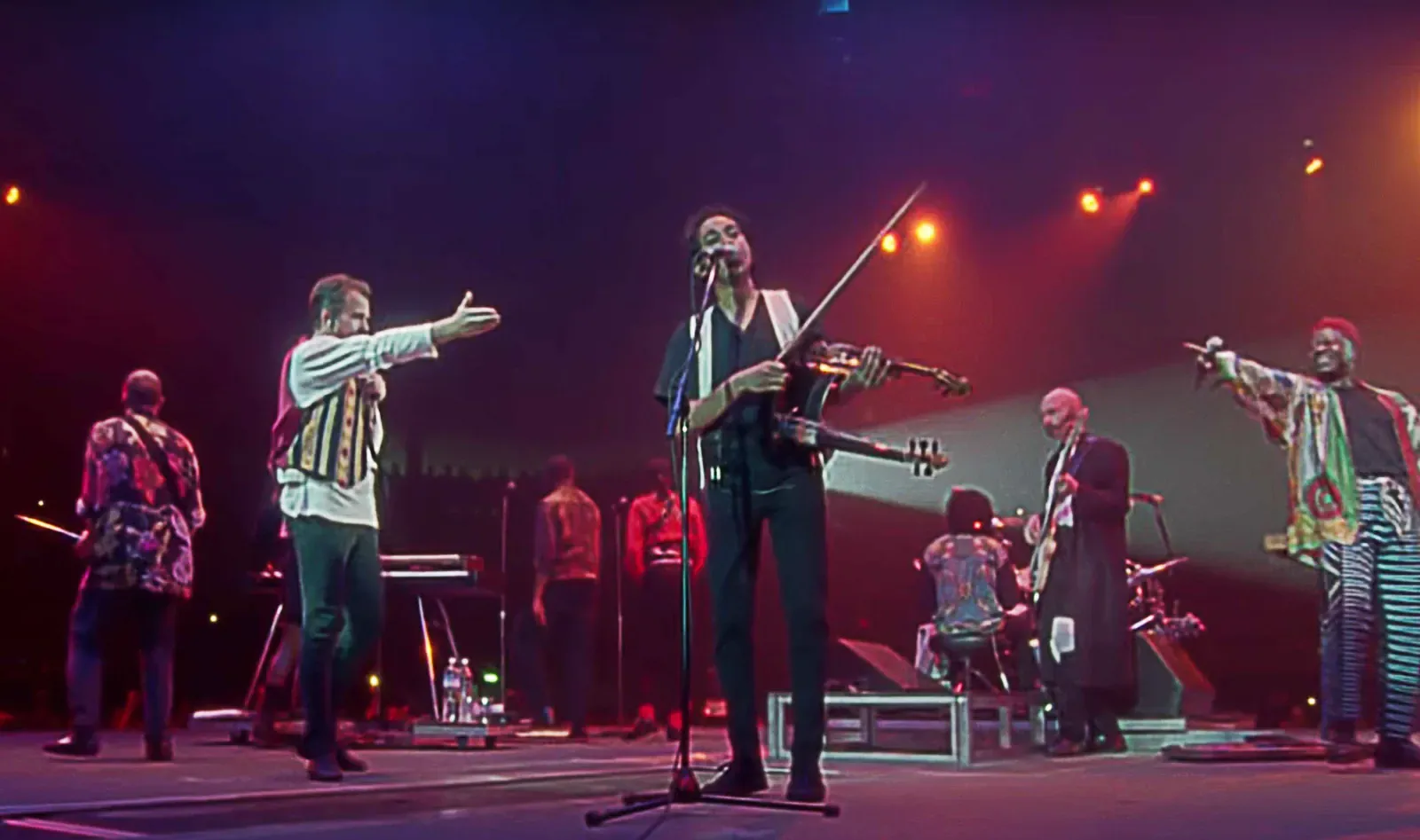
Digital age, 1997-2026
Radiohead’s OK Computer, released in June 1997, joined guitar rock with studio processing and a theme of alienation. Kid A in 2000 swapped guitars for electronics and the Ondes Martenot, and still reached number one in the US and UK. The Oxford scene from 1991 to 2005 and the Montreal scene around Arcade Fire from 2003 carried the style forward; Funeral in 2004 brought orchestral instruments and large arrangements back to indie rock.
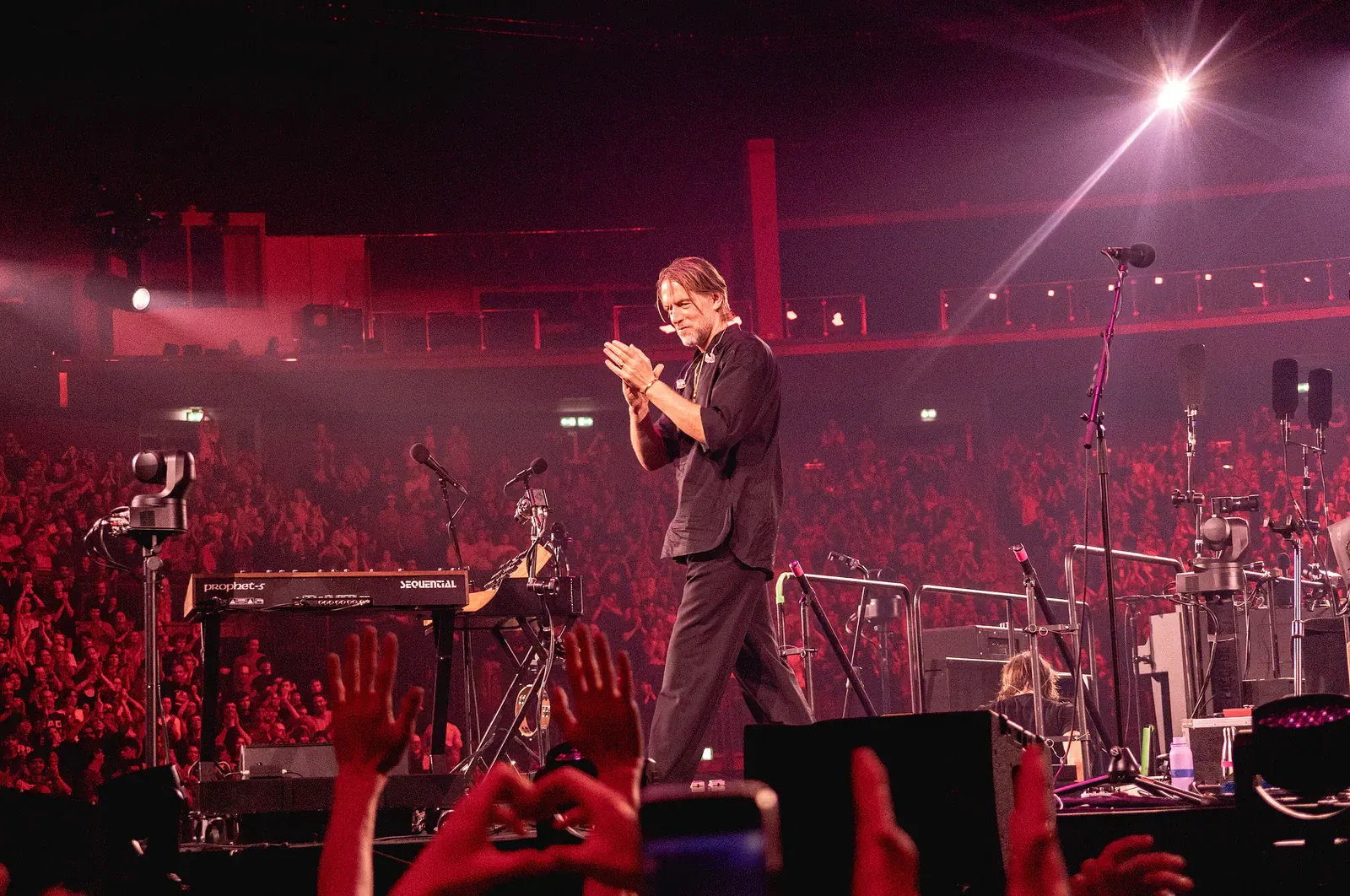
David Bowie’s final album, Blackstar, built with jazz musicians, appeared in 2016 two days before his death.
Characteristics
Art rock treats the album as a planned object. Songs shift key, meter or tempo within a track, and long or through-composed forms replace the verse-chorus loop. Lyrics draw on literature, painting or an invented character, as with Wuthering Heights or the Bowie personae. Vocal delivery is often mannered or theatrical, from Bryan Ferry’s croon to Kate Bush’s high register and Thom Yorke’s falsetto. The reference points are outside rock: the avant-garde, classical music, jazz and folk.
Instruments and production
The studio is the main instrument. Tape loops, Mellotron strings and synthesizer treatments appear from the first generation, and Robert Fripp and Eno’s tape-loop technique, called Frippertronics, builds guitar layers from two machines. The Fairlight sampler and the gated drum sound mark the early 1980s, and by 2000 laptops and the Ondes Martenot sat beside guitars.
Notable recordings
The Dark Side of the Moon became one of the best-selling records ever made, which shows how far a concept album could travel. Remain in Light brought layered polyrhythm and sampled-style loops to the form. Hounds of Love and its sampler-built suite proved that a home-studio work could reach the charts. Roxy Music’s debut, King Crimson’s first album and the Velvet Underground and Nico each set a template that later art and punk bands copied.
Culture
The visual side counted as much as the sound. Warhol’s banana sleeve made the cover a piece of art, and Hipgnosis made the prism sleeve for Pink Floyd. Roxy Music’s glamour and Bowie’s personae turned stage image into part of the work. Films carried the style to wider audiences: Pink Floyd: Live at Pompeii (1972), The Man Who Fell to Earth (1976) with Bowie, Stop Making Sense (1984) with Talking Heads, and Meeting People Is Easy (1998), a documentary on Radiohead. Eno’s diary A Year with Swollen Appendices (1996) gave a rare account of the working method.
Legacy
Art rock fed art pop and electronic rock, and its subgenres include cello rock and Wagnerian rock. The habit of treating the studio, sleeve and stage as parts of one work shaped new wave, art punk and later alternative rock. The release of In Rainbows online in 2007 showed that the approach reached to distribution as well.
Misconceptions
Art rock is often treated as another name for progressive rock. The two overlap, and King Crimson sits in both, but art rock also includes short songs: the first side of Low is made of them, and Talking Heads built their music on tight, rhythmic pieces.
The style is also assumed to be inaccessible. The Dark Side of the Moon is one of the best-selling albums in history, Wuthering Heights reached number one in the UK, and Kid A topped the charts in the US and UK.
A third belief is that art rock ended in the 1970s. Hounds of Love, So, OK Computer, Funeral and Blackstar all appeared after 1985, and the form remains active.
Frequently asked questions
What is art rock?
Art rock is rock music with experimental or avant-garde aims, high-art references and a focus on studio craft, concept and unusual song form. It began in 1966 with records such as Freak Out! and The Velvet Underground and Nico.
How is art rock different from progressive rock?
Art rock stresses concept, theatrical image and studio treatment, and often uses short songs. Progressive rock stresses long compositions and instrumental virtuosity. Bands such as King Crimson and Pink Floyd appear in both.
Which albums define art rock?
The Velvet Underground and Nico (1967), In the Court of the Crimson King (1969), Roxy Music (1972), Low (1977), Remain in Light (1980), Hounds of Love (1985) and OK Computer (1997) are the usual reference points.
Who are the main art rock artists?
Roxy Music, King Crimson, David Bowie, Brian Eno and Talking Heads lead the genre, with Kate Bush, Peter Gabriel and Radiohead extending it into later decades.
Sound
Sound sheet
Anatomy of a track
| # | Part | Bars |
|---|---|---|
| 1 | Intro (texture or riff) | 8 |
| 2 | Verse | 16 |
| 3 | Refrain | 8 |
| 4 | Verse | 16 |
| 5 | Contrasting section (new key, meter or texture) | 16 |
| 6 | Final refrain | 8 |
| 7 | Coda or fade | 8 |
Signature sounds
- Studio effects and tape treatments
- Mellotron or synthesizer texture
- Shifts of key, meter or tempo within a song
- Lyrics drawn from literature, art or a character
- Long or through-composed forms
- Theatrical or mannered vocal delivery
Synths and software
- Mellotron
- EMS VCS3
- Fairlight CMI
Techniques
- Tape loops
- Oblique Strategies
- Gated reverb drums
- Odd meters
- Concept and song cycle
Tuning
Standard 12-tone equal temperament, A=440; guitars mostly in standard tuning, with Robert Fripp's new standard tuning (C-G-D-A-E-G) on later King Crimson records.
Vocals
Mannered or theatrical delivery, from Bryan Ferry's croon to Kate Bush's high register and Thom Yorke's falsetto.
Scenes
Where it happened
Where and when the sound lived: one bar per city on a shared timeline.
North America
Europe
Active scenes
Peak 3, 1976
Home of Roxy Music, King Crimson and Bowie, and of the Island and EG labels.
From the Velvet Underground and Warhol's Factory to the CBGB scene of Talking Heads.
Bowie and Eno made Low and "Heroes" at Hansa studio near the Wall.
Radiohead formed here and recorded OK Computer and Kid A nearby.
Arcade Fire and Godspeed You! Black Emperor made large-scale rock in the city.
Venues and places
Berlin, 1962 to today. Bowie's "Heroes" was recorded here, near the Berlin Wall.
London, 1931 to today. Where the Beatles made Sgt. Pepper and Pink Floyd made The Dark Side of the Moon.
New York, 1973 to 2006. Early home of Talking Heads.
New York, 1965 to 1981. A club where the Velvet Underground played in 1970.
New York, 1964 to today. Andy Warhol's studio, linked to the early Velvet Underground.
London, 1969 to today. King Crimson played the free Rolling Stones concert here in July 1969.
Montreal, 1995 to today. Studio where Arcade Fire recorded Funeral.
Culture
Culture markers
- Roxy Music glamour
Stage looks styled by Antony Price mixed 1950s kitsch and science fiction.
Fashion - Bowie's personae
Ziggy Stardust and the Thin White Duke showed an artist could change character between albums.
Fashion - The banana sleeve
Andy Warhol's banana cover for The Velvet Underground & Nico made the sleeve a piece of art.
Artwork - Hipgnosis sleeves
Studio Hipgnosis made the prism cover for Pink Floyd's The Dark Side of the Moon.
Artwork
Media
Key media
- 1972Pink Floyd: Live at Pompeii
by Adrian Maben. Concert film shot in an empty Roman amphitheatre.
Film - 1976The Man Who Fell to Earth
by Nicolas Roeg. Bowie's film debut, made in the same period as the Berlin albums.
Film - 1984Stop Making Sense
by Jonathan Demme. Talking Heads concert film widely regarded as a landmark.
Film - 1996A Year with Swollen Appendices
by Brian Eno. Eno's diary of 1995 describes art rock making from the inside.
Book - 1998Meeting People Is Easy
by Grant Gee. Documentary on Radiohead's OK Computer tour.
Film
Glossary
Terms on this page
The British art colleges where many members of Roxy Music, Pink Floyd and others studied.
An album built around a single theme or story rather than separate songs.
A guitar looping technique developed by Robert Fripp and Brian Eno.
A tape-replay keyboard that plays recorded strings, flutes or choirs.
A set of creative prompt cards by Brian Eno and Peter Schmidt.
A set of linked songs meant to be heard in order, as on Hounds of Love.
Using recording tools such as tape loops, effects and mixing as part of the composition.
Rock family