Avant-garde music
Avant-garde music breaks with conventions of harmony, form and performance. It began with Schoenberg, Russolo and Varèse and spread into jazz and rock.
1890
Experimental family
Born
1890
Links
11
Genres it drew on or shaped
Tempo
100-145 BPMLineage
Family tree
Timeline
Era by era
From the first sparks to today. Select a dot to read the story behind it.
- Breaking tonality and the concert hall
1890 to 1919
- Machines, percussion and noise
1920 to 1945
- Darmstadt, tape and chance
1946 to 1967
- Rock, jazz and institutions
1968 to 1989
- Labels and archives
1990 to today
Eras
Moments
- 1 Breaking tonality and the concert hall, 1890 to 1919
- 2 Machines, percussion and noise, 1920 to 1945
- 3 Darmstadt, tape and chance, 1946 to 1967
- 4 Rock, jazz and institutions, 1968 to 1989
- 5 Labels and archives, 1990 to today
around 1890
Breaking tonality and the concert hall
Schoenberg abandons the key centre, Russolo writes a manifesto for noise, and the 1913 Paris premiere of Stravinsky's Rite of Spring ends in uproar.
- 1909Schoenberg writes the Three Piano Pieces, Op. 11Among the first atonal works, composed without a key centre.
- 1912Pierrot lunaire premieres in BerlinSchoenberg's song cycle for speaking voice and five players makes Sprechstimme famous.
- 1913Russolo's The Art of NoisesThe Futurist manifesto argues that industrial noise should replace the orchestra's limited timbres.
- 1913The Rite of Spring riotStravinsky's ballet premieres at the Théâtre des Champs-Élysées and the audience protests loudly.
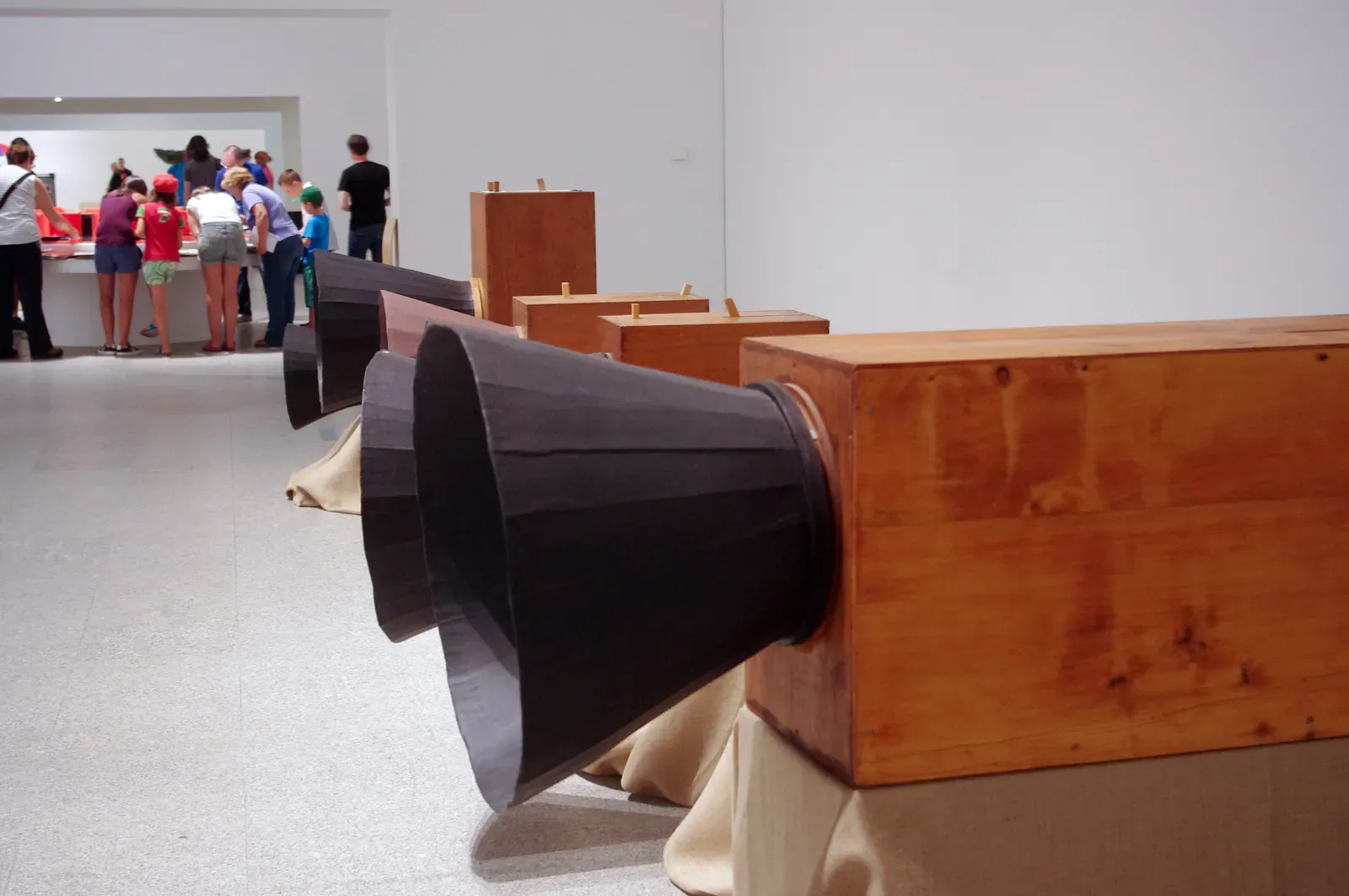
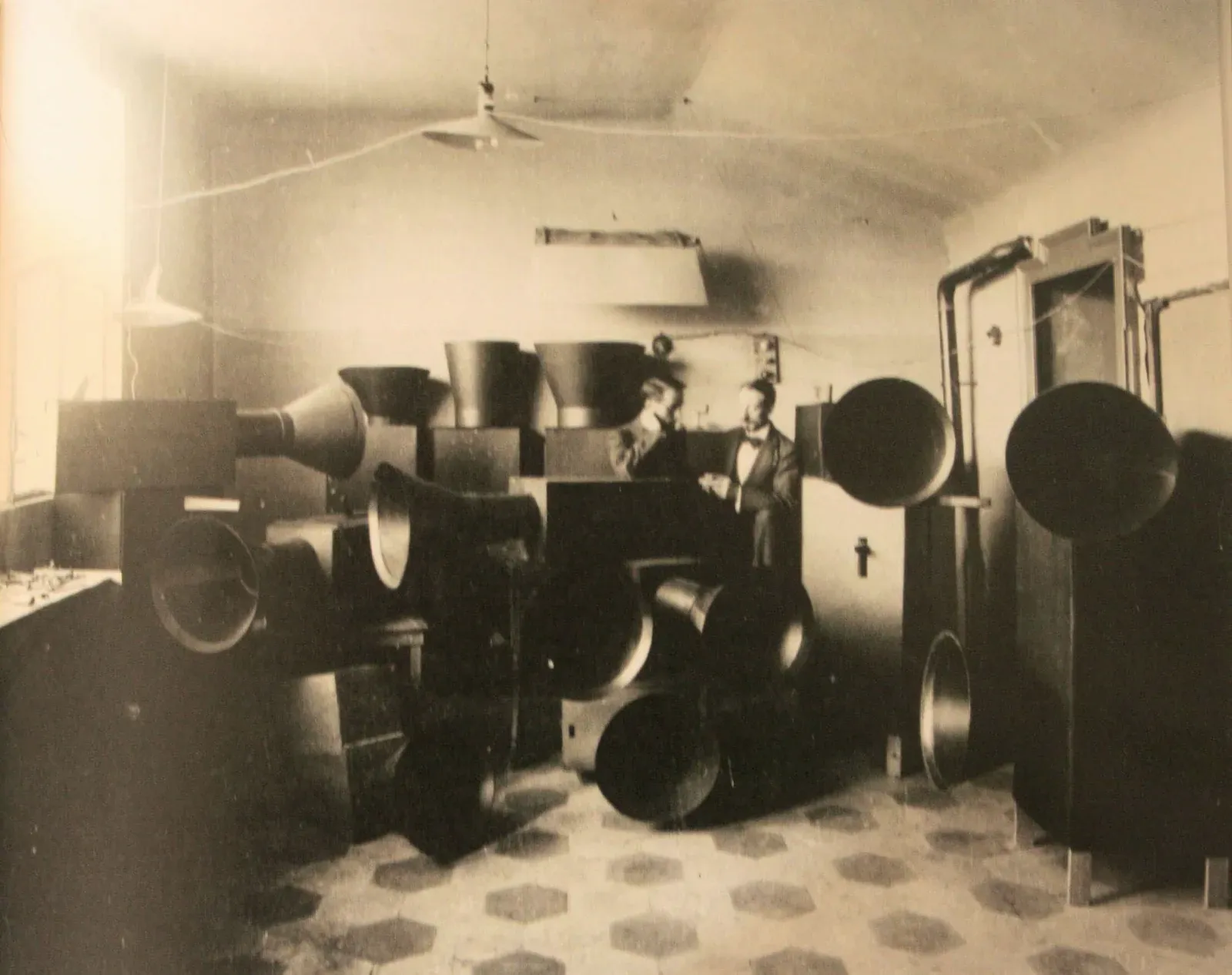
- 1914Russolo's noise intoners in concertLuigi Russolo and Ugo Piatti present their intonarumori, noise machines with horns, to audiences in Milan.
1920
Machines, percussion and noise
Varèse and Antheil build works from sirens, anvils and mechanical rhythm, while the Second Viennese School refines twelve-tone writing until Webern's death in 1945.
- 1921Varèse completes AmériquesWritten for a very large orchestra with sirens, it is the first work Varèse composed after moving to the United States.
- 1931Varèse writes IonisationA work for thirteen percussionists that treats unpitched percussion as serious concert music.
- 1945Webern is killedAnton Webern dies in September; some musicologists date the post-war avant-garde from his death.
1946
Darmstadt, tape and chance
Summer courses, radio studios in Paris and Cologne and Cage's chance methods split the post-war avant-garde into serialist, electronic and indeterminate camps.
- 1946Darmstadt summer courses beginThe Ferienkurse für Internationale Neue Musik become the main gathering place for serial and electronic composers.
- 1948Schaeffer's first concrete studiesPierre Schaeffer broadcasts the Cinq études de bruits, built from recorded sounds on discs in a Paris radio studio.
- 1951WDR studio opens in CologneThe Studio for Electronic Music of West German Radio is the first of its kind in the world.
- 19524'33" premieres at WoodstockDavid Tudor sits at the piano on 29 August and plays nothing; the audience hears the room.
- 1956Gesang der JünglingeStockhausen joins a boy's recorded voice with electronic sounds at the WDR studio.
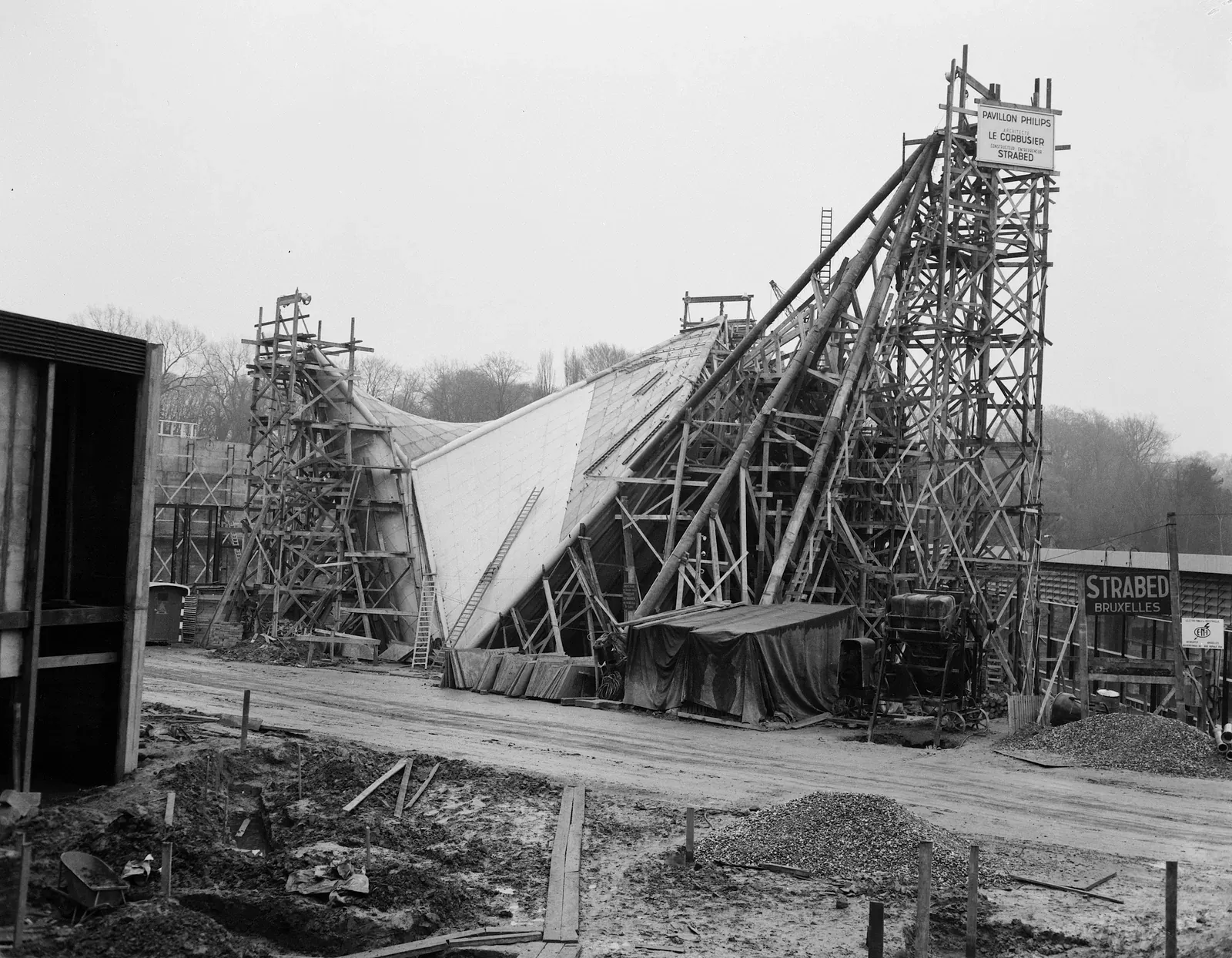
- 1958Poème électronique at the Philips PavilionVarèse's eight-minute tape piece plays through loudspeakers in Le Corbusier's pavilion at the Brussels World's Fair.
- 1962Fluxus festival in WiesbadenArtists and composers inspired by Cage stage a series of experimental performances under the Fluxus name.
- 1966Freak Out! is releasedThe Mothers of Invention bring musique concrète, satire and long-form composition to a rock debut on Verve.
1968
Rock, jazz and institutions
Zappa, the Beatles and Henry Cow carry avant-garde methods into rock, Rock in Opposition organises the movement, and IRCAM opens in Paris.
- 1968The Beatles release Revolution 9Lennon, Ono and Harrison assemble tape loops and spoken fragments into an eight-minute sound collage on the White Album.
- 1968Henry Cow form in CambridgeFred Frith and Tim Hodgkinson start the group that later leads the Rock in Opposition movement.
- 1977IRCAM opens in ParisPierre Boulez's institute for research in music and sound opens beside the Centre Pompidou.
- 1978Rock in Opposition festival in LondonHenry Cow invite four continental groups to a March festival that names a movement of bands outside the music industry.
1990
Labels and archives
Specialist labels such as Tzadik and Sub Rosa and large reissue projects catalogue a century of work, and the term mostly serves as a grouping across genres.
- 1995John Zorn founds TzadikThe New York label becomes a home for avant-garde, free improvisation and Jewish-identity music.
Listening path
Start listening
A short path from an easy way in to the deep end. Thumbnails come from YouTube; the player loads only when you press play.
- 01
Edgard Varèse, 1931
Thirteen percussionists with sirens and anvils: noise treated as structure.
- 02
Karlheinz Stockhausen, 1956
A boy's voice cut up and set among electronic tones in the Cologne studio.
- 03
Edgard Varèse, 1958
The tape piece made for the Philips Pavilion, built from bells, sirens and voices.
- 04
The Mothers of Invention, 1966
An easy entry: rock with abrupt breaks and a satirical lyric, opening Freak Out!.
- 05
The Beatles, 1968
A tape-loop collage that put concrete methods in front of a mass audience.
Facts
| Family | Experimental |
| Emerged | Late 19th century onward |
| Status | Active |
| Tempo | 100 to 145 BPM |
| Meter | Free or changing; steady 4/4 in rock crossovers |
Avant-garde music is music that pushes beyond the accepted conventions of harmony, form, timbre or performance, usually by taking an existing tradition to an extreme position and openly challenging its audience.
It took shape in Europe between about 1890 and 1914, when composers dropped the key centre and Futurists proposed noise as a musical material. It is a grouping label more than a single sound: the term is applied to concert music, jazz, rock and hip hop, and belongs to the Experimental family.
Origins
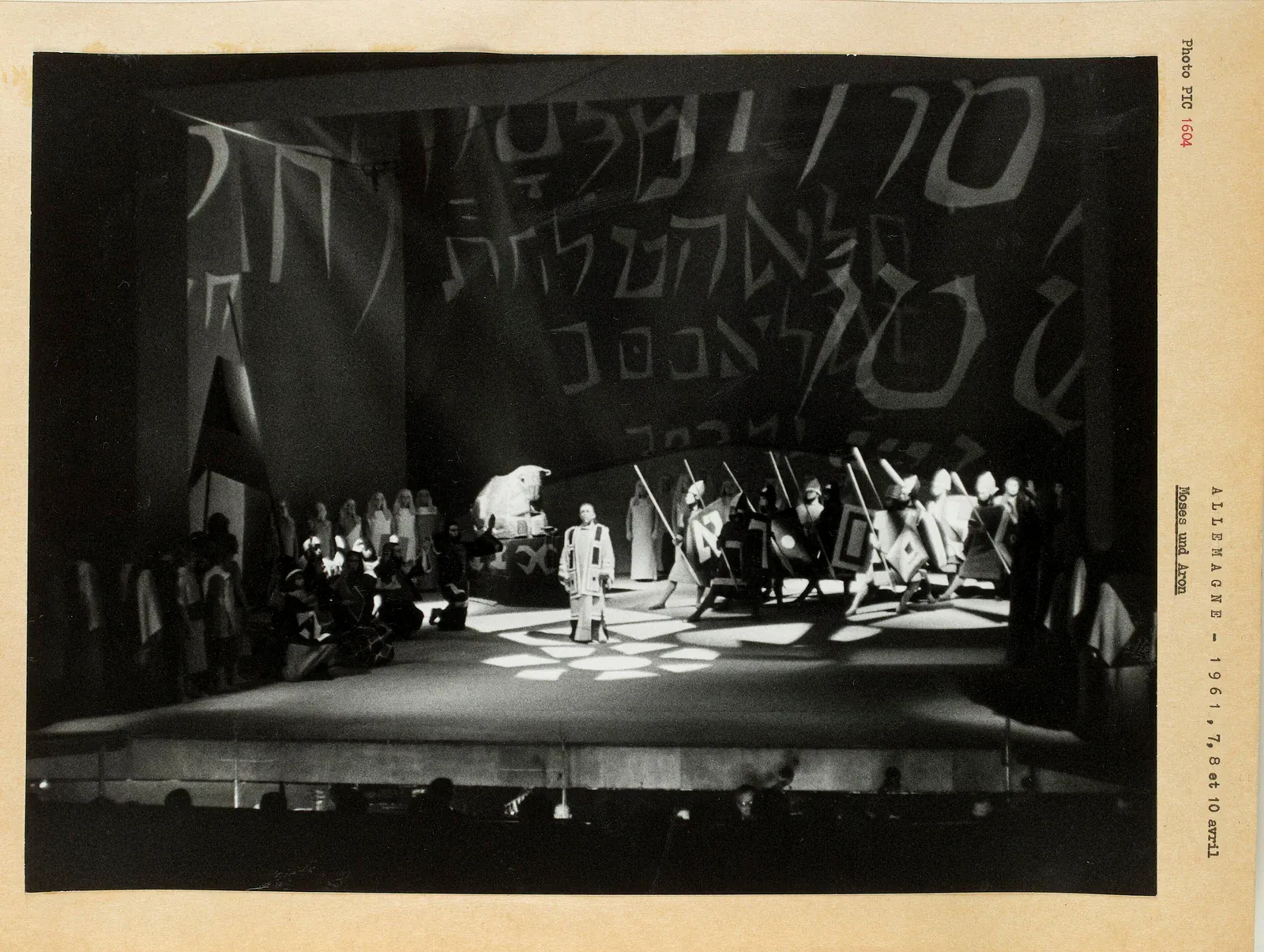
The first break was harmonic. Arnold Schoenberg’s Three Piano Pieces, Op. 11, written in 1909, are among the earliest works with no key centre, and his Pierrot lunaire, premiered in Berlin in 1912, paired that language with Sprechstimme, a voice that sits between speech and song. A year later Luigi Russolo, a Futurist painter in Milan, argued in The Art of Noises that the ear had adapted to factory and street sound and that instruments should be built to make it. His intonarumori, horned noise machines played by Russolo and his assistant Ugo Piatti, were shown to Milan audiences in 1914.
The term implies a critique of existing aesthetic conventions. In music that meant provocation as much as technique, and early scandals such as the 1913 premiere of Stravinsky’s Rite of Spring, when the Paris audience protested loudly, fixed the idea that new music could cause a riot.
Machines and percussion, 1920-1945
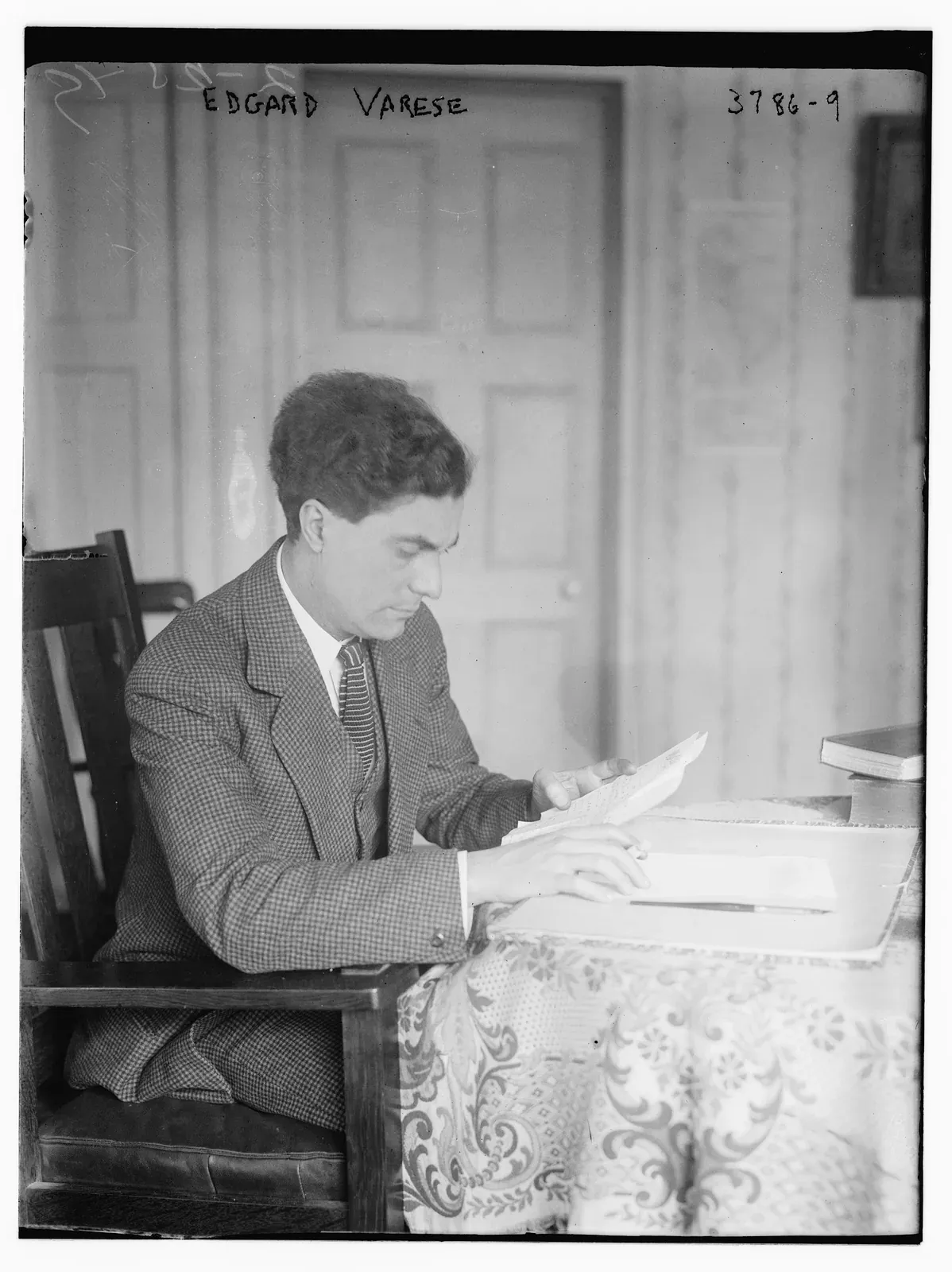
Edgard Varèse, a Parisian who settled in New York in 1915, treated music as organised sound. His Amériques, written between 1918 and 1921 for a very large orchestra with sirens, was followed by Ionisation, completed in 1931 for thirteen percussionists. It was among the first concert pieces for percussion alone and showed that unpitched sound could carry a structure by itself. George Antheil’s mechanical score for the 1924 film Ballet Mécanique pushed in the same direction.
Meanwhile Schoenberg developed the twelve-tone technique, in which all twelve pitches are placed in a row and used before any repeats, and his pupils Alban Berg and Anton Webern refined it. Webern’s death in September 1945 is the date some musicologists use for the beginning of the post-war avant-garde, although others place the start earlier.
Darmstadt, tape and chance, 1946-1967
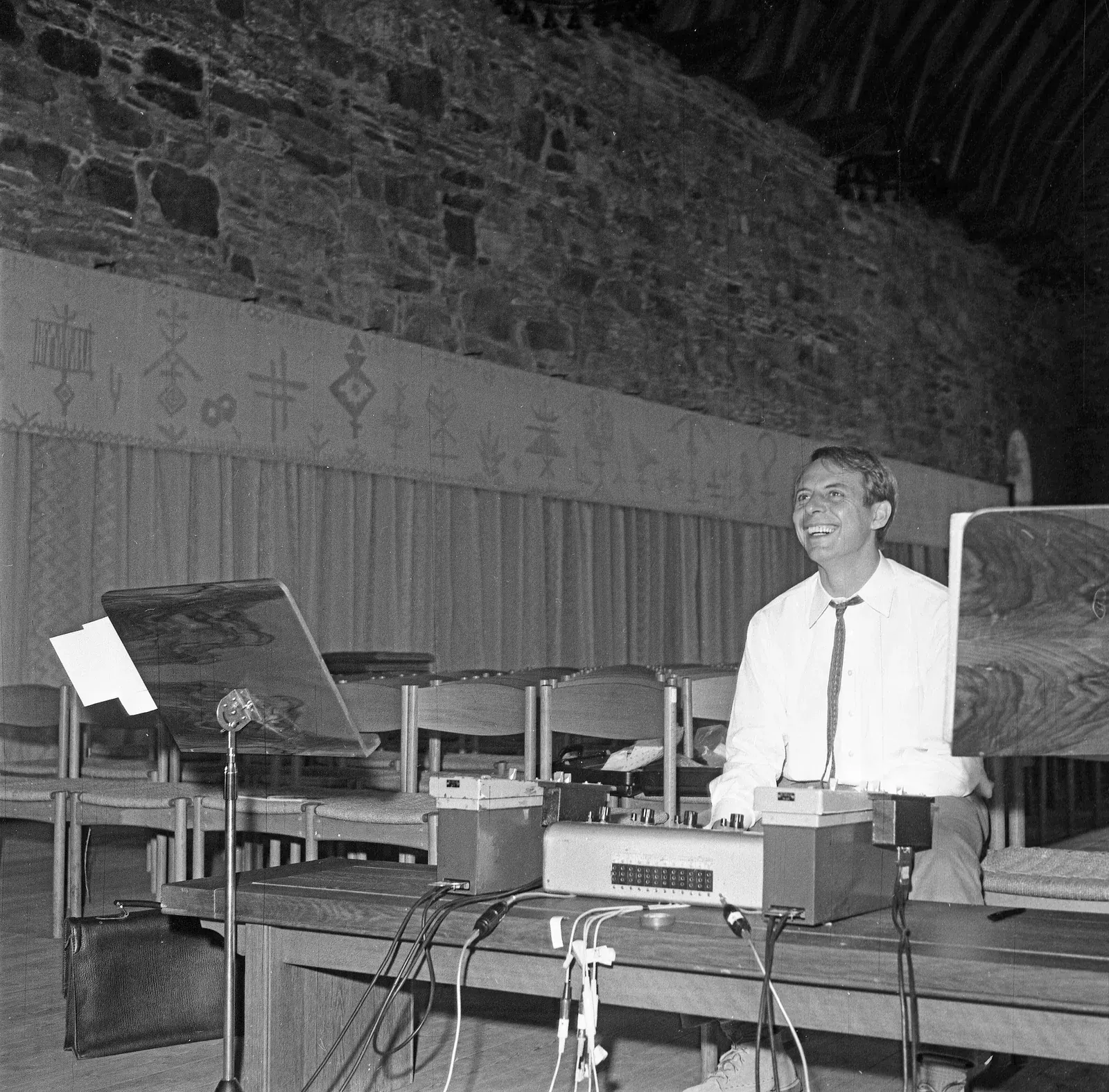
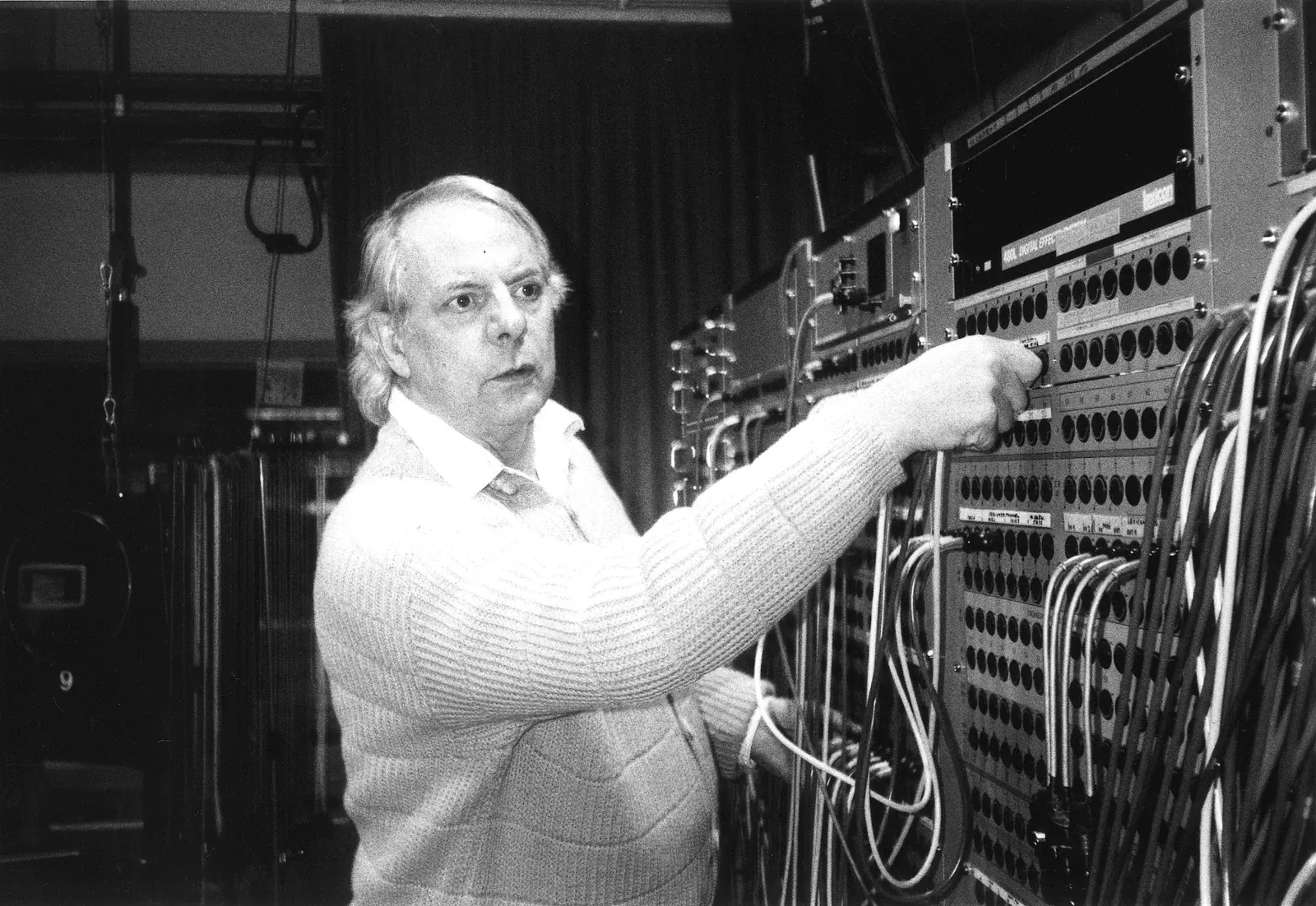
The Darmstadt summer courses, founded in 1946, became the main meeting place for composers such as Pierre Boulez and Karlheinz Stockhausen, who extended Schoenberg’s row to rhythm, dynamics and timbre. Two technologies changed the sound at the same time. In 1948 Pierre Schaeffer broadcast his Cinq études de bruits, the first musique concrète, built from recorded sounds on discs in a Paris radio studio, and in 1951 the Studio for Electronic Music of West German Radio opened in Cologne. Stockhausen’s Gesang der Jünglinge, realised there in 1955 and 1956, combined a recording of a twelve-year-old boy’s voice with electronic tones and became a model for later tape work.
In New York John Cage went the opposite way. He used dice and the I Ching to decide notes, and in 1952 David Tudor gave the premiere of his 4’33” at Woodstock by sitting at the piano and not playing. The result was scandal and later a canonical example of the genre. Cage’s circle fed the Fluxus festivals of the early 1960s, and its related field is covered in Fluxus. Tape work in Paris and Cologne is covered in Musique concrète and Electroacoustic music.
Rock, jazz and institutions, 1968-1989
From the 1960s avant-garde methods crossed into popular forms. Avant-garde jazz took up collective and free improvisation (see Avant-garde jazz). In rock, Frank Zappa and the Mothers of Invention released their debut in June 1966 on Verve, often cited as one of rock’s first concept albums, and in November 1968 the Beatles put an eight-minute tape collage, Revolution 9, on a double album. Revolution 9 was made mainly by John Lennon with Yoko Ono and George Harrison, and was influenced by musique concrète.
The same years produced institutions. Henry Cow formed at Cambridge in 1968, and in March 1978 they invited four continental groups to London for a festival called Rock in Opposition, which named a movement of bands that the music industry refused to recognise. IRCAM, the institute for research in music and sound founded at the request of French president Georges Pompidou, opened in Paris in 1977 under Boulez. Related rock styles are covered in Experimental rock.
Characteristics
Avant-garde works rarely share a sound, but they share a stance. Pitch is organised by rows, sets or processes rather than a home key. Silence and noise count as material. A rule or chance process often replaces melody, and extremes of dynamics and timbre are used on purpose. Scores may be drawn shapes, as in graphic notation, or leave outcomes open so that each performance differs, a method known as indeterminacy. Tempo is often free or changing, and where there is a steady beat, as in rock crossovers, it ranges from about 100 to 145 BPM.
Instruments and production
The sources are as varied as the aims. Cage’s prepared piano, which has bolts, screws and rubber between the strings, turned one player into a percussion section. Varèse and Russolo used sirens, anvils and noise machines. In the studio, tape recorders allowed cutting, reversing and layering, while sine-tone generators in Cologne built electronic sound from nothing.
Mainstream success
Most avant-garde music never reached charts, and its reach came through crossovers. Revolution 9 sat on a best-selling album, and Zappa built a long career on Verve, Bizarre and his own labels. Specialist labels carried the rest: Deutsche Grammophon documented Stockhausen and the Darmstadt generation, Sub Rosa issued an anthology of noise and electronic music in 2002, and Tzadik, founded by John Zorn in New York in 1995, became a home for avant-garde, free improvisation and related music.
Notable recordings
Poème électronique shows how far the genre went in one work. Varèse composed this eight-minute tape piece for the Philips Pavilion at the 1958 Brussels World’s Fair, a building Le Corbusier designed with Xenakis. Sound moved around the walls through many loudspeakers, so listeners heard the architecture as part of the music. Gesang der Jünglinge, by contrast, was a studio task: Stockhausen built its sounds one tone at a time in Cologne across 1955 and 1956.
Ionisation is the most direct way in: thirteen players with sirens, a piano and unpitched percussion in a work of about six minutes.
Culture
The culture of avant-garde music is built around the shock of the premiere. The Rite of Spring in 1913, Ballet Mécanique in 1924 and 4’33” in 1952 all became lore. Visual artists were close allies, from Léger and Man Ray on the Ballet Mécanique film to the Fluxus circle, and graphic scores, such as Cornelius Cardew’s Treatise, made the page itself an artwork. Theory mattered too: Theodor Adorno’s Philosophy of New Music (1949) set Schoenberg against Stravinsky, and Cage’s Silence (1961) collected his writings on chance.
Legacy
The genre’s methods are now ordinary tools. Tape collage, sampling, drone and noise all descend from the studios of Paris and Cologne, and graphic and chance scores are taught in conservatories. The label survives mainly as a way to group work across genres, from 20th-century classical and contemporary classical to jazz, rock and hip hop. It also remains a stance: the question is less what a piece sounds like than what convention it breaks.
Misconceptions
Avant-garde and experimental music are often treated as the same thing. A common distinction holds that avant-garde music takes an extreme position inside a tradition, while experimental music lies outside it. A second view adds a motive: avant-garde works challenge social and artistic values on purpose, so Schoenberg’s early scores and Cage’s whole career count, but later modernists who never set out to provoke are usually called modernist instead.
The idea that 4’33” is silence is also wrong. The score tells the performer to play nothing for the length of the piece, and the point is that the sound of the room, the audience and the weather fills the time.
Finally, not all avant-garde music is atonal or unlistenable. Cage’s Sonatas and Interludes for prepared piano are percussive and bright, Ionisation has a clear rhythmic pulse, and the Beatles’ collage Revolution 9 appeared on a mass-market album.
Frequently asked questions
What is avant-garde music?
Avant-garde music is music that deliberately breaks with the prevailing conventions of harmony, form, timbre or performance. It includes twelve-tone and chance works by Schoenberg and Cage, tape music by Schaeffer and Stockhausen, and rock and jazz that borrow those methods.
Who are the main avant-garde composers?
The central names are Arnold Schoenberg, Edgard Varèse, John Cage and Karlheinz Stockhausen. Frank Zappa is the best-known rock figure, and Luigi Russolo and Pierre Schaeffer shaped the use of noise and recorded sound.
How does avant-garde music differ from experimental music?
Avant-garde music pushes a tradition to an extreme, while experimental music works outside any tradition and treats the result as an open question. The two overlap, and the same composer can be placed in both.
Where should a first-time listener start?
Varèse’s Ionisation, Stockhausen’s Gesang der Jünglinge and the Mothers of Invention’s Hungry Freaks, Daddy cover percussion, tape and rock in a few minutes each, and the videos on this page give the shortest path in.
Sound
Sound sheet
Anatomy of a track
| # | Part |
|---|---|
| 1 | Row, cell or process stated |
| 2 | Permutation, variation or chance |
| 3 | Contrast of silence, sound mass and noise |
| 4 | Open or abrupt ending |
Signature sounds
- No tonal centre
- Noise and silence as material
- A rule or chance process in place of melody
- Extreme contrasts of dynamics and timbre
Techniques
- Twelve-tone rows
- Chance operations
- Prepared piano
- Tape montage
- Graphic scores
Keys and modes
No key centre. Atonal pitch material replaces major and minor keys in much serial writing.
Twelve-tone row. All twelve pitches ordered in a fixed series, then inverted and reversed.
Tuning
Mostly 12-tone equal temperament; some composers use microtonal or just-intonation systems
Vocals
Speech-song in Pierrot lunaire, treated recorded voices in tape works, and sung or shouted lyrics in rock crossovers
Scenes
Where it happened
Where and when the sound lived: one bar per city on a shared timeline.
Europe
North America
Active scenes
Peak 6, 1951-2025
Pierrot lunaire premiered here in 1912.
Home of Russolo's noise machines and the Futurist manifesto The Art of Noises.
Varèse arrived in 1915; later Cage, Fluxus and the downtown scene made it the centre of American avant-garde music.
Host of the summer courses where post-war serialism and electronic music were argued out.
Schaeffer's radio studio started musique concrète in 1948; IRCAM followed in 1977.
The WDR electronic studio, where Stockhausen worked, opened here in 1951.
Venues and places
Paris, 1913 to today. Stage of the Rite of Spring premiere in 1913.
Cologne, 1951 to today. Where Stockhausen realised Gesang der Jünglinge in 1955 and 1956.
Brussels, 1958 to today. Le Corbusier's pavilion at the 1958 World's Fair, designed with Xenakis, where Poème électronique played.
Culture
Culture markers
- Scandal premieres
Walkouts and protests at the Rite of Spring in 1913 and 4'33" in 1952 became part of the genre's lore.
Ritual - Graphic scores
Composers such as Cage and Cornelius Cardew replaced staff notation with drawn shapes, as in Cardew's Treatise.
Artwork - Sound and architecture
The Philips Pavilion fused sound, light and building in 1958.
Artwork
Media
Key media
- 1924Ballet Mécanique
by Fernand Léger and Dudley Murphy. A Dadaist film with a mechanical score by George Antheil, shown in Vienna in 1924.
Film - 1949Philosophy of New Music
by Theodor Adorno. Contrasts Schoenberg's radicalism with Stravinsky's restoration in a defining critique of modernism.
Book - 1961Silence
by John Cage. Cage's lectures and writings on chance, silence and indeterminacy, published by Wesleyan University Press.
Book
Glossary
Terms on this page
Music in which chance, such as dice or coin tosses, decides some choices.
Music that avoids a tonal centre, so no single note acts as home.
A composition whose score leaves outcomes open, so each performance differs.
Varèse's phrase for music as arranged sound, not only pitches and melodies.
A vocal style between speech and song, written on staves with a speaking pitch contour.
A method by which all twelve pitches are ordered in a row and used before any repeats.
Experimental family