Noise Music
Noise music builds compositions from distortion, feedback and non-musical sound, from Russolo's 1913 manifesto to Japanese and American scenes.
Italy, United States, Japan, 1913
Experimental family
Born
1913
Italy, United States, Japan
Subgenres
3
Documented branches
Links
34
Genres it drew on or shaped
Tempo
75-100 BPMLineage
Family tree
Grew out of
Derived from
Italy, United States, Japan, 1913
Noise Music
Led to (4)
Timeline
Era by era
From the first sparks to today. Select a dot to read the story behind it.
- Futurist and concrete noise
1913 to 1959
- Fluxus, free improv and feedback
1960 to 1978
- Cassettes, power electronics and Kansai noise
1979 to 1989
- Harsh noise and the Japanoise export
1990 to 1999
- Wolf Eyes, Tonic and the US wave
2000 to 2012
- Walls, archives and streaming
2013 to 2025
Eras
Moments
- 1 Futurist and concrete noise, 1913 to 1959
- 2 Fluxus, free improv and feedback, 1960 to 1978
- 3 Cassettes, power electronics and Kansai noise, 1979 to 1989
- 4 Harsh noise and the Japanoise export, 1990 to 1999
- 5 Wolf Eyes, Tonic and the US wave, 2000 to 2012
- 6 Walls, archives and streaming, 2013 to 2025
1913
Futurist and concrete noise
Russolo's 1913 manifesto and noise machines, then Schaeffer's tape pieces (1948) and Cage's radios (1951), make noise a compositional material.
- 1913Russolo writes The Art of NoisesThe Futurist manifesto argues that noise sounds belong in music.
- 1914Intonarumori concert in MilanRussolo's noise-machine orchestra plays at the Teatro dal Verme on 21 April; the audience riots.
- 1948Schaeffer's Concert de bruitsPierre Schaeffer broadcasts the first musique concrete pieces from recorded noise.
- 1951Cage's Imaginary Landscape No. 4Twelve radios are played as instruments by 24 performers.
1960
Fluxus, free improv and feedback
Group Ongaku (1960), AMM (1965) and Lou Reed's Metal Machine Music (1975) push feedback, volume and non-musical sound into rock and the avant-garde.
- 1960Group Ongaku forms in TokyoTakehisa Kosugi and Yasunao Tone's group mixes tape work with improvised noise.
- 1965AMM forms in LondonThe free-improvisation group builds long pieces from radios, feedback and prepared instruments.
- 1975Lou Reed's Metal Machine MusicA double LP of guitar feedback released by RCA in July and pulled from sale within weeks.
- 1976Industrial Records foundedThrobbing Gristle's label spreads noise-based performance art on record.
1979
Cassettes, power electronics and Kansai noise
Merzbow, Whitehouse, Hijokaidan and Incapacitants start in 1979-1981; cassette labels and mail order link Osaka, Tokyo, London and the US.
- 1979Merzbow beginsMasami Akita and Kiyoshi Mizutani start the project and a cassette label, Lowest Music & Arts.
- 1980Whitehouse and Come OrganisationWilliam Bennett's group releases Birthdeath Experience and the term power electronics follows.
- 1980Hijokaidan plays its first named showThe Kyoto group, billed under that name by mistake at ACB Hall in June, becomes a model for chaotic live noise.
- 1981Incapacitants form in OsakaToshiji Mikawa's project becomes a duo and sets the sound of 'hard noise'.
- 1984RRRecords opens in LowellRon Lessard's shop and label becomes the main US outlet for Japanese noise.
- 1985Hanatarash's backhoe showYamantaka Eye drives a backhoe into a Tokyo venue; the band is banned from many clubs afterwards.
- 1986Boredoms form in OsakaEye and Ikuo Taketani of Hanatarash start a band that takes noise toward psychedelic rock.
- 1988Merzbow plays the USSRJazz-on-Amur festival in Khabarovsk is among the first overseas Japanoise shows.
1990
Harsh noise and the Japanoise export
Digital recording, the Merzbow boom on Alchemy, Release and Extreme, and US tours make Japanese noise the genre's centre of gravity.
- 1990Cloud Cock OO GrandMerzbow's first digital recording, which moves his work toward dense harsh noise.
- 1990Koenji 20000V opens in TokyoA small live house that becomes a hub for punk, noise and the avant-garde until a fire in 2009.
- 1999Merzbow adopts laptopsMacintosh computers join his rig and lead to the beat-driven Merzbeat series.
2000
Wolf Eyes, Tonic and the US wave
Wolf Eyes sign to Sub Pop (2004), Brooklyn and Detroit scenes grow, and post-noise offshoots spread into psychedelia and ambient.
- 2000MerzboxExtreme issues 50 CDs of Merzbow work from 1979 to 1997 in a 1,000-copy edition.
- 2004Wolf Eyes release Burned Mind on Sub PopA noise act on a rock indie label reaches a wide audience and tours with Sonic Youth.
- 2007Tonic closes in New YorkThe Lower East Side avant-garde room shuts in April after rent rises.
2013
Walls, archives and streaming
Harsh noise wall spreads through Bandcamp and small labels; Merzbow's archival Slowdown series (2018) puts decades of tape work online.
- 2018Merzbow's Slowdown seriesAn archival label begins releasing past recordings and exceeds 100 titles by 2022.
Listening path
Anthems
The records that built the sound, grouped by the part they played. Thumbnails come from YouTube; the player loads only when you press play.
- 01
Luigi Russolo, 1914
The first piece for intonarumori, premiered in Milan in 1914, made noise the music itself.
Start hereOrigin - 02
John Cage, 1951
Twelve radios played as instruments, a landmark of chance and live noise.
Origin - 03
Wolf Eyes, 2004 · Sub Pop
The title track of the Sub Pop album that brought American noise to a wider audience.
Start hereBreakthrough - 04
Throbbing Gristle, 1978 · Industrial Records
A slow pulse and filtered voice from the Industrial Records scene that fed power electronics.
Anthem - 05
Merzbow, 1990
A long Merzbow piece that shows the dense harsh-noise sound of the Japanese scene.
Anthem - 06
Yoko Ono, 1970 · Apple
Screamed vocals over a loose band on a major-label rock album.
Crossover - 07
Lou Reed, 1975 · RCA Records
A star rock act's side of pure feedback that RCA withdrew from sale.
Crossover
Facts
| Family | Experimental |
| Origin | Italy, United States, Japan |
| Emerged | 1910s Italy; 1960s-70s revival |
| Status | Active |
| Tempo | 75 to 100 BPM |
| Meter | free, mostly unmetered; occasional pulse or loop |
| Grew out of | Musique Concrète |
| Subgenres | 3 |
Noise music is a branch of experimental music that treats distortion, feedback, static and non-musical sound as its main material and largely drops conventional melody, harmony and rhythm.
Its roots lie in Futurist Italy around 1913, and its modern form took shape in Japan, Britain and the United States from 1979 onward. It is usually loud, unmetered and built from long, dense pieces.
Origins
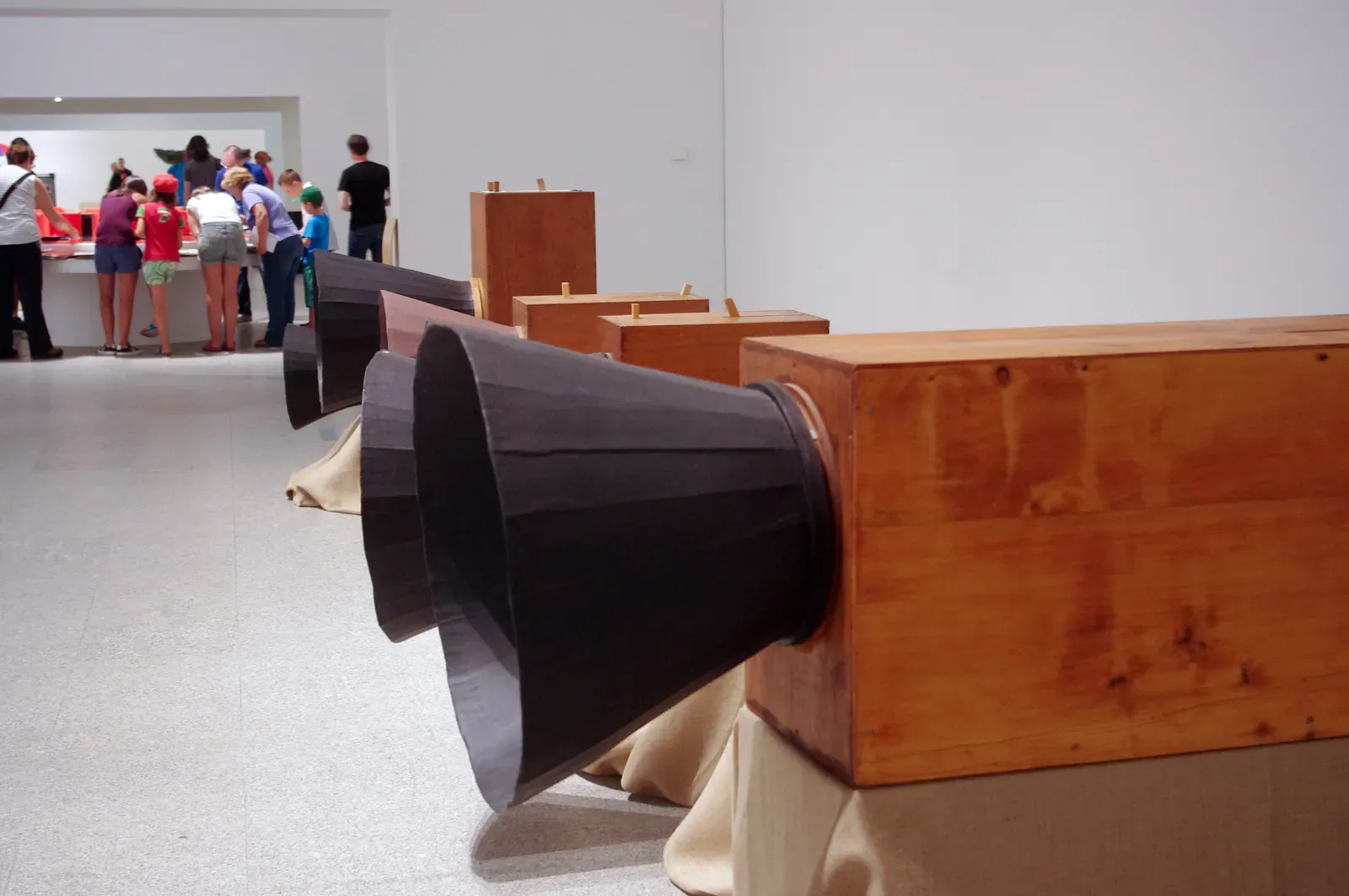
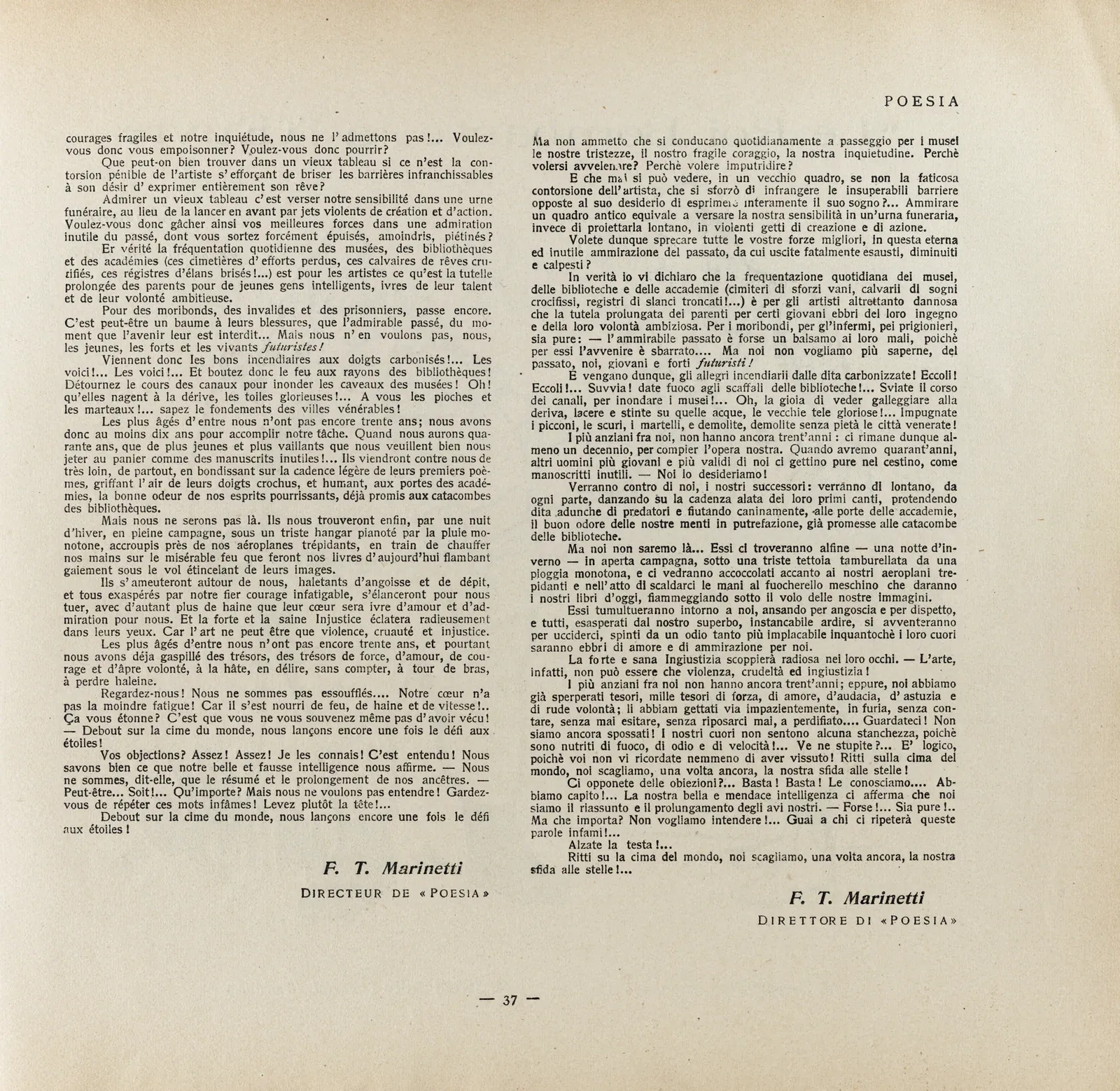
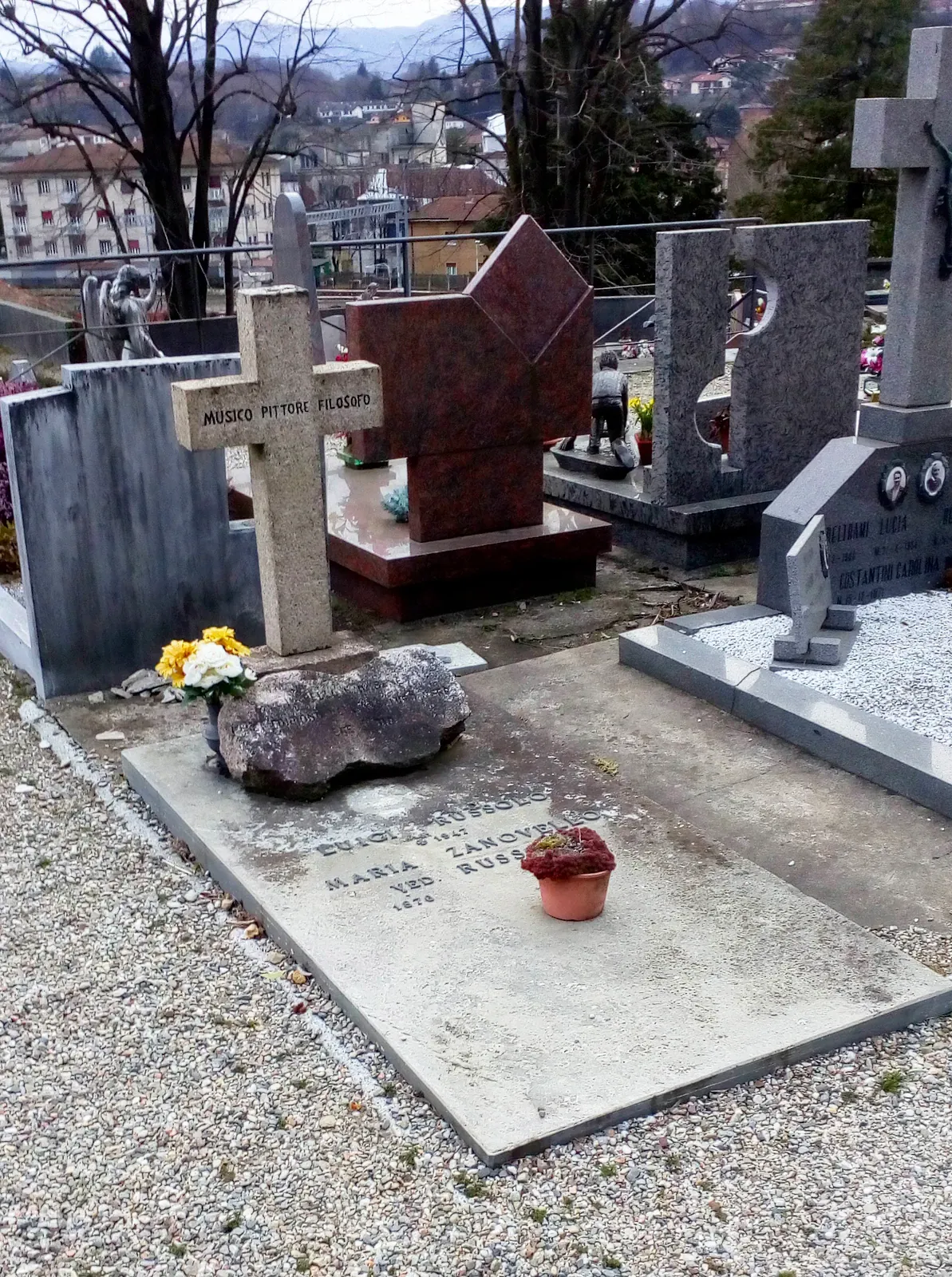
The founding text is Luigi Russolo’s The Art of Noises, written in 1913. Russolo, a Futurist painter, argued that factories, engines and crowds had made the old orchestra sound thin, and that noise sounds belonged in music. He did not stop at theory. With Ugo Piatti he built the intonarumori, boxes with horns and cranks that produced howls, rumbles, hisses and crackles in tuned families.
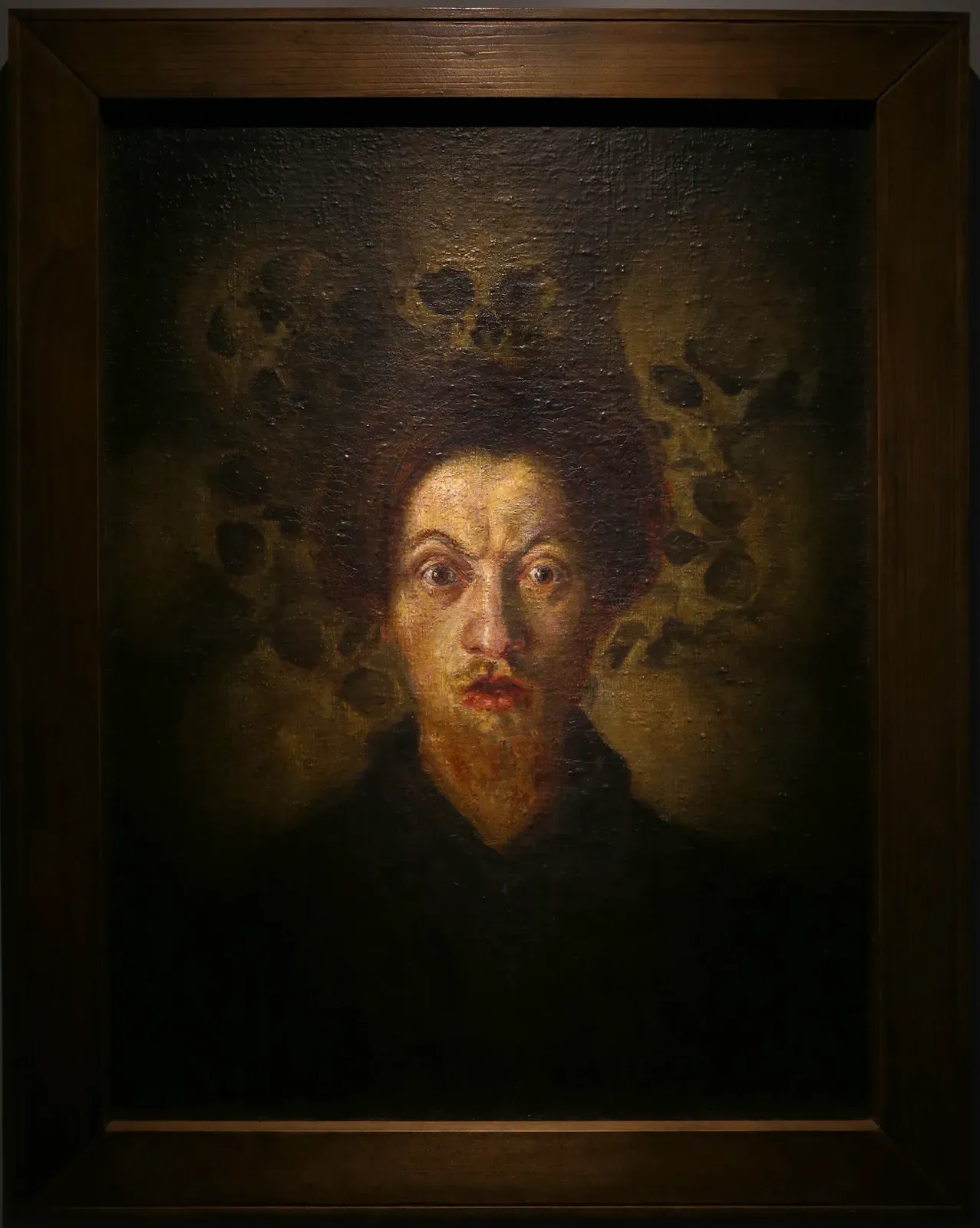
The first public concert of the machines took place at the Teatro dal Verme in Milan on 21 April 1914. The audience rioted. The program included “Risveglio di una citta”, the first piece written for intonarumori, and it is the earliest anthem of the genre because it made noise the music itself, not an effect inside an orchestral piece. Russolo’s machines were later lost, and what survives are reconstructions and recordings.
Futurist and concrete noise, 1913-1959
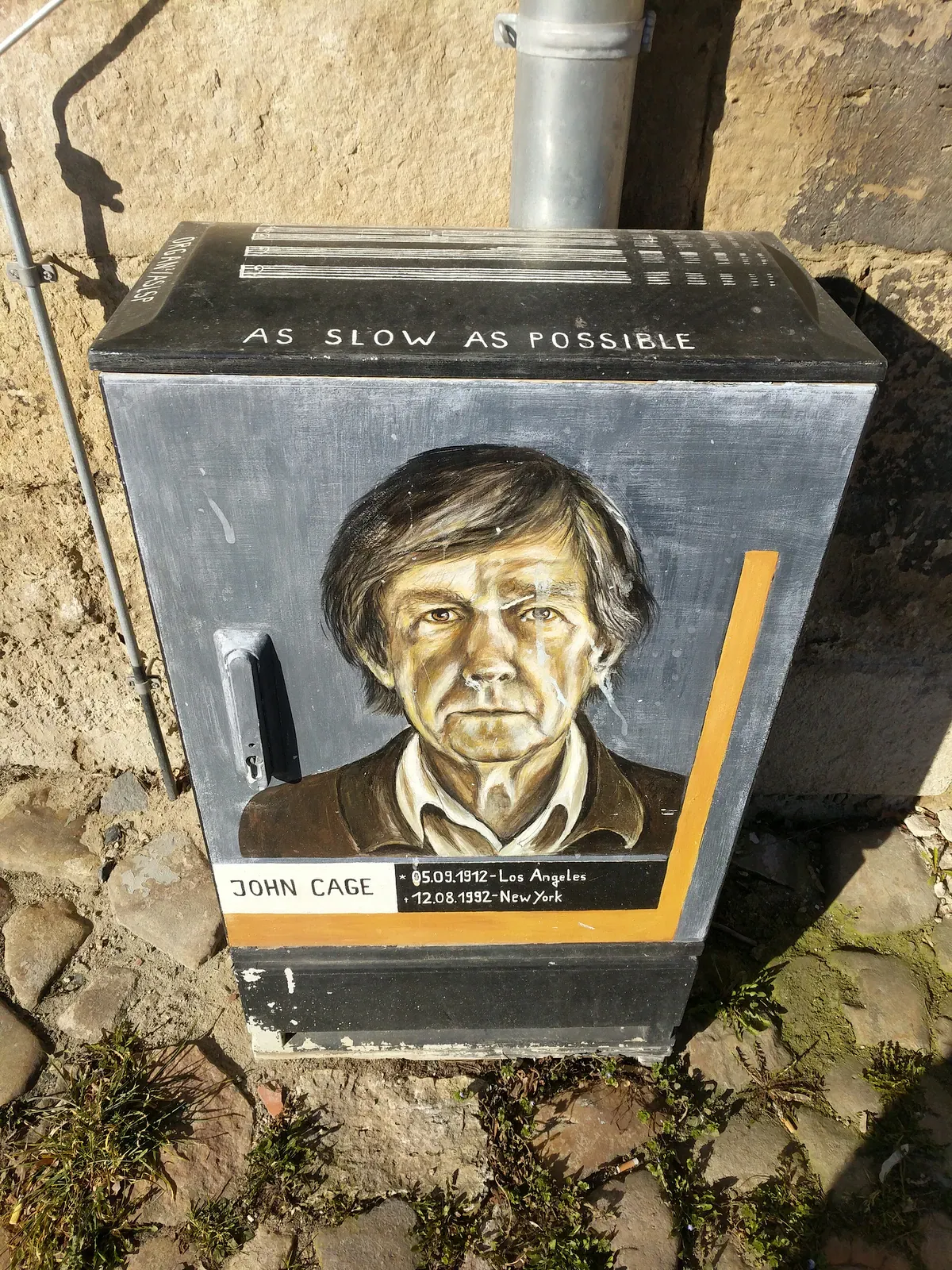
After Russolo the idea moved from instruments to recording. Pierre Schaeffer broadcast his Concert de bruits in Paris in 1948, assembling the first musique concrete pieces from recorded noise. In the United States John Cage wrote Imaginary Landscape No. 4 in 1951 for twelve radios and 24 performers, so that whatever the broadcasts carried became the sound of the piece. These composers came from the concert hall, and they treated noise as a compositional material that could be organised. The genre’s later players mostly reversed that: they started from raw noise and resisted organisation. Related ground is covered on the electroacoustic page.
Fluxus, free improvisation and feedback, 1960-1978
In Tokyo, Group Ongaku formed in 1960 around Takehisa Kosugi and Yasunao Tone, combining tape work with improvised noise. AMM began in London in 1965 and built long pieces from radios, feedback and prepared instruments, close to the free improvisation scene. Rock reached the same territory by another road. Lou Reed’s Metal Machine Music, a double album of amplifier feedback, came out on RCA in July 1975 and was pulled from sale within weeks. Reed’s record turned noise into a mainstream scandal. In 1976 Throbbing Gristle launched Industrial Records, which spread noise-based performance art on record and fed directly into the industrial genre.
Cassettes, power electronics and Kansai noise, 1979-1989
The decade that defined the genre began with several starts at once. Masami Akita and Kiyoshi Mizutani began Merzbow in 1979, together with a cassette label, Lowest Music and Arts. The name comes from Kurt Schwitters’s Merzbau, a Dada work. In 1980 William Bennett’s Whitehouse released Birthdeath Experience on his Come Organisation, and the term power electronics followed. Hijokaidan, a Kyoto group, played its first named show in Tokyo in June 1980, and Incapacitants formed in Osaka in 1981.
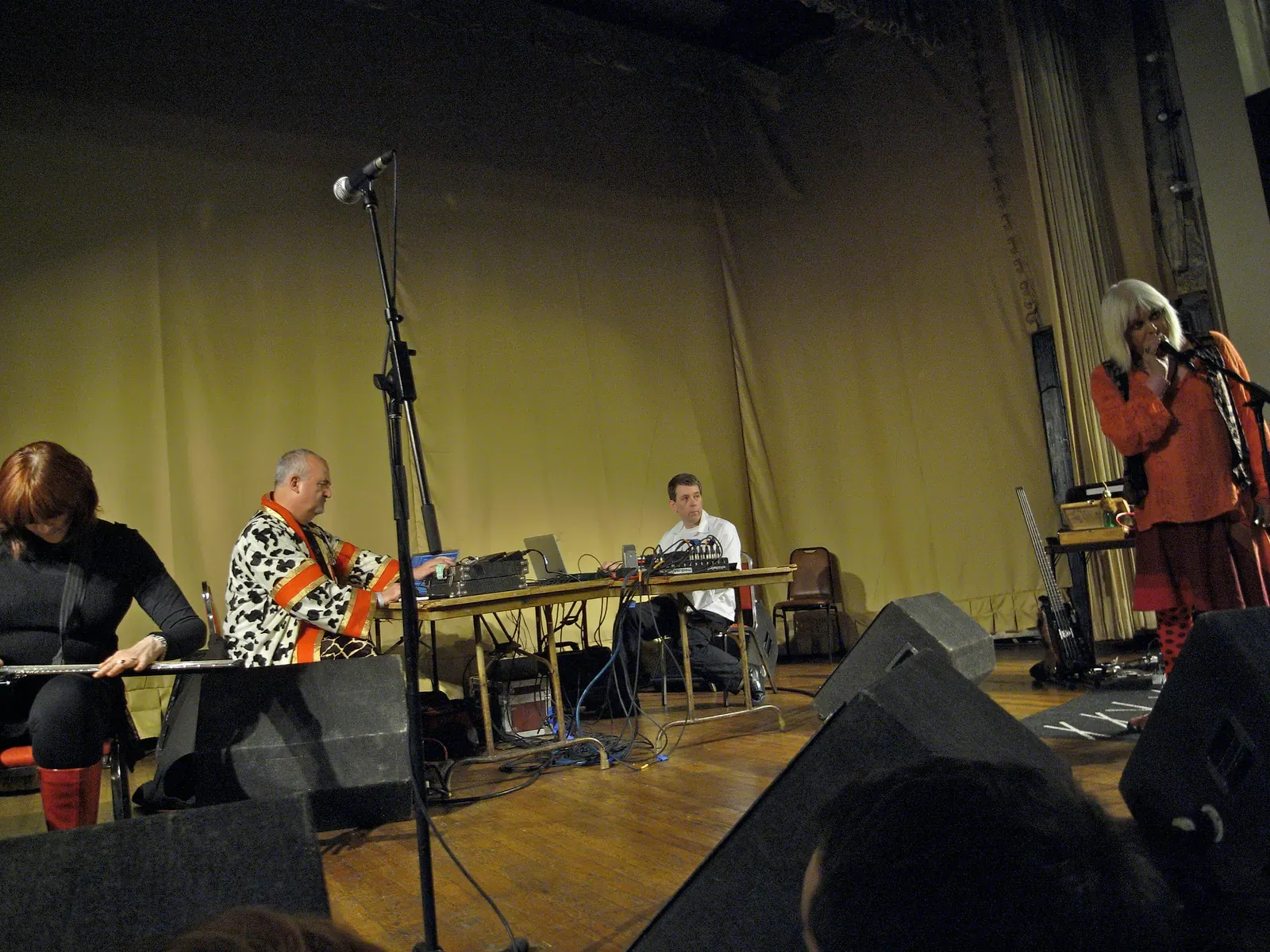
Cassettes were the medium. Anyone could dub a tape, mail it and receive one back, and that economy linked Osaka, Tokyo, London and the United States. In 1984 Ron Lessard opened RRRecords in Lowell, Massachusetts, which became the main American outlet for Japanese noise. The live side was dangerous by design. In 1985 Yamantaka Eye of Hanatarash drove a backhoe into a Tokyo venue, and the band was banned from many clubs afterward. Boredoms, started in Osaka in 1986 by Eye and Ikuo Taketani, took the energy toward psychedelic rock.
Harsh noise and the Japanoise export, 1990-1999
Digital recording changed the sound. Merzbow’s Cloud Cock OO Grand in 1990 was his first digital album and moved his work toward dense, saturated harsh noise. Koenji 20000V opened in Tokyo that year and became a hub for punk, noise and the avant-garde until a fire in 2009. Western labels turned Japanese noise into an export: Extreme Records issued Merzbox, 50 discs of Merzbow work from 1979 to 1997, in 2000 in a 1,000-copy edition. Merzbow adopted Macintosh laptops around 1999, and his Merzbeat series added beats to the noise.
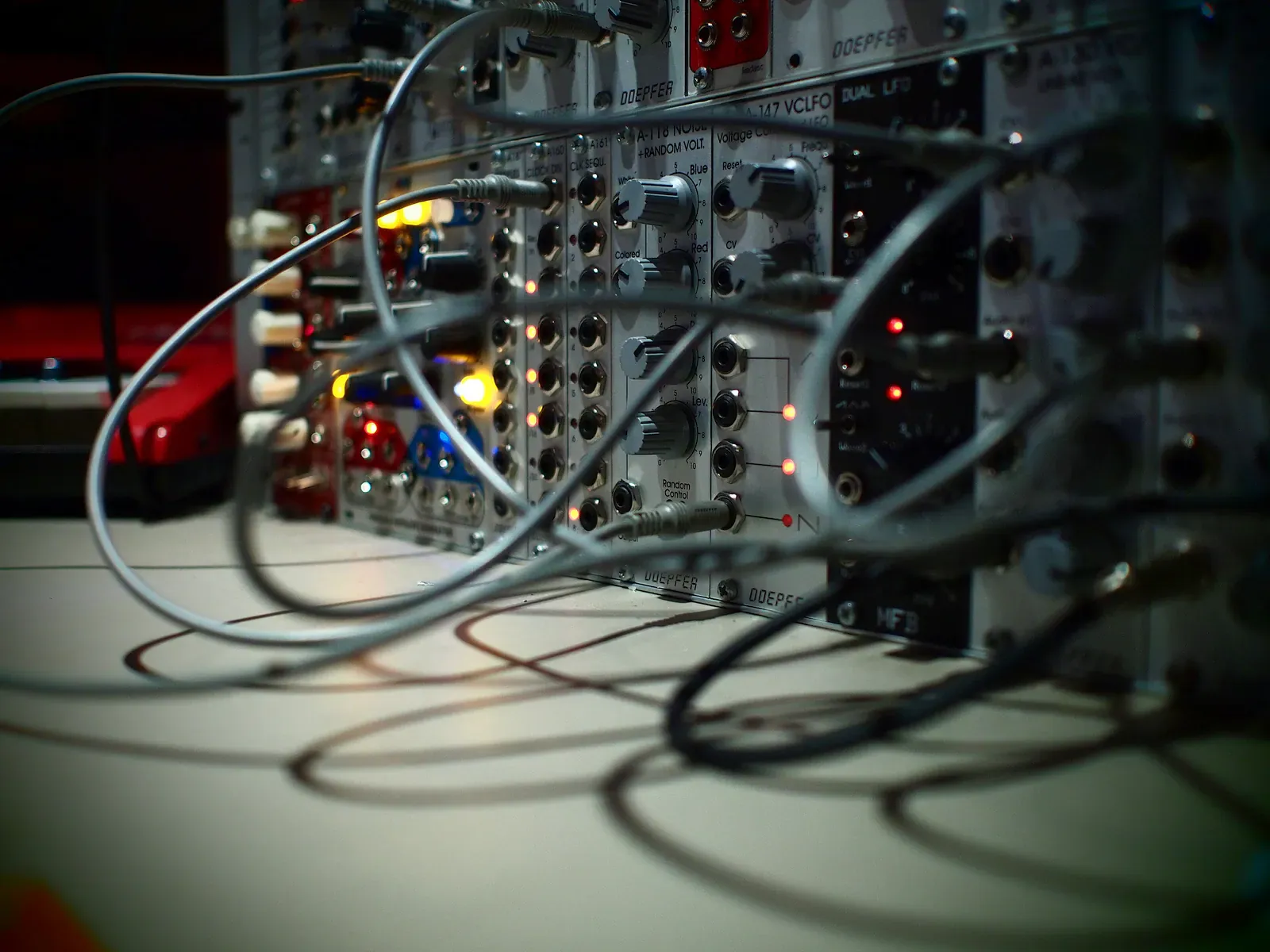
Wolf Eyes, Tonic and the American wave, 2000-2012
Michigan tape and lathe-cut scenes around Ann Arbor and Detroit produced Wolf Eyes, who signed to Sub Pop and released Burned Mind in 2004. A noise act on a rock indie label reached an audience far beyond the tape trade and toured with Sonic Youth. In New York the Lower East Side room Tonic hosted avant-garde and noise shows from 1998 until it closed in April 2007 after rent rises. The decade also saw noise spread sideways into psychedelia and ambient.
Characteristics
Noise music rarely has a key, chord changes or a stable pulse. A piece usually starts from one source such as feedback, adds layers of distortion, holds a plateau, then changes source or volume suddenly and ends with an abrupt cut. Volume is part of the material, and listeners often describe the music as physical. The harshest strands, harsh noise and harsh noise wall, strip variation almost entirely, while power electronics adds shouted or processed vocals over electronic roar.
Instruments and production
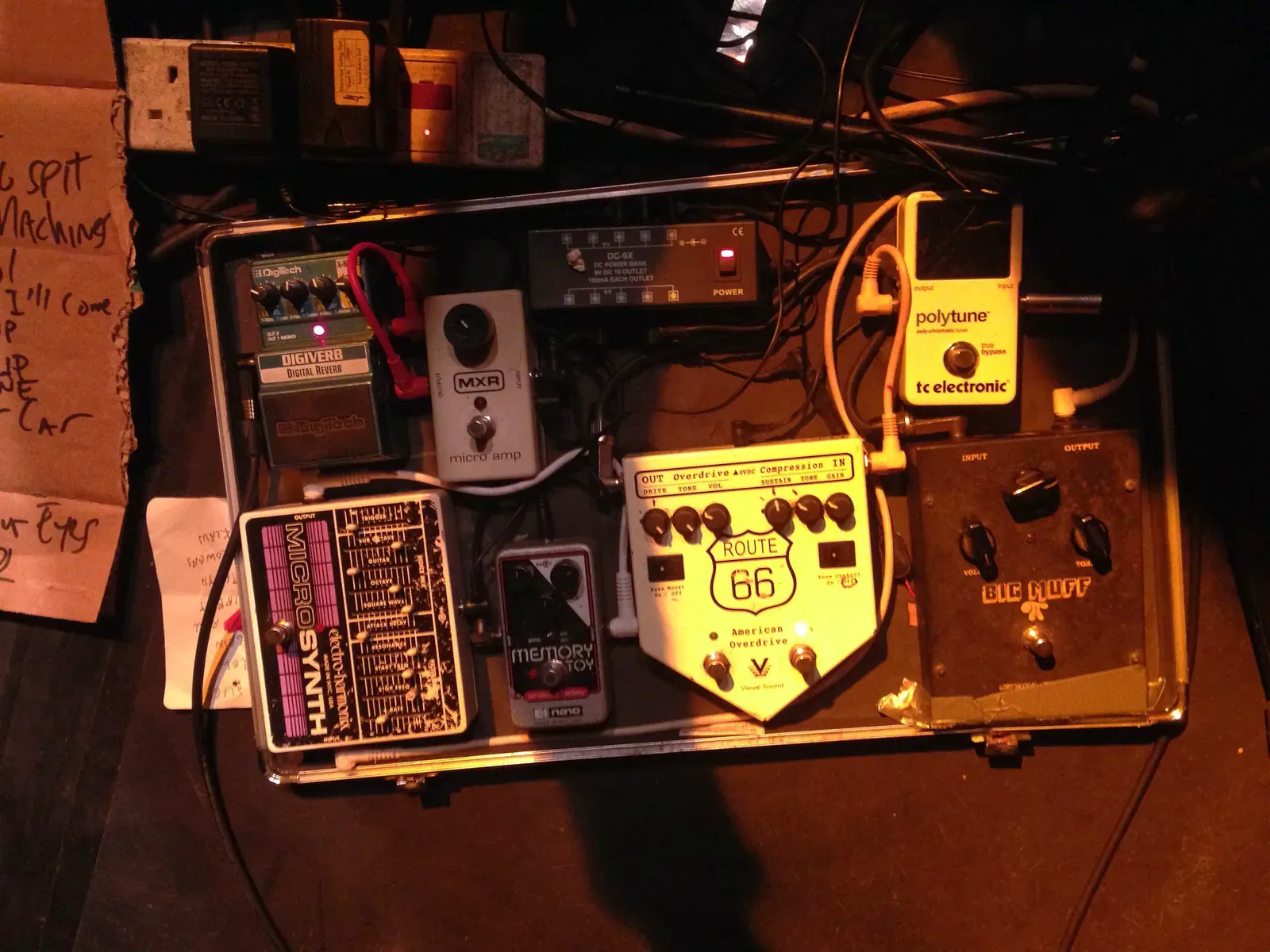
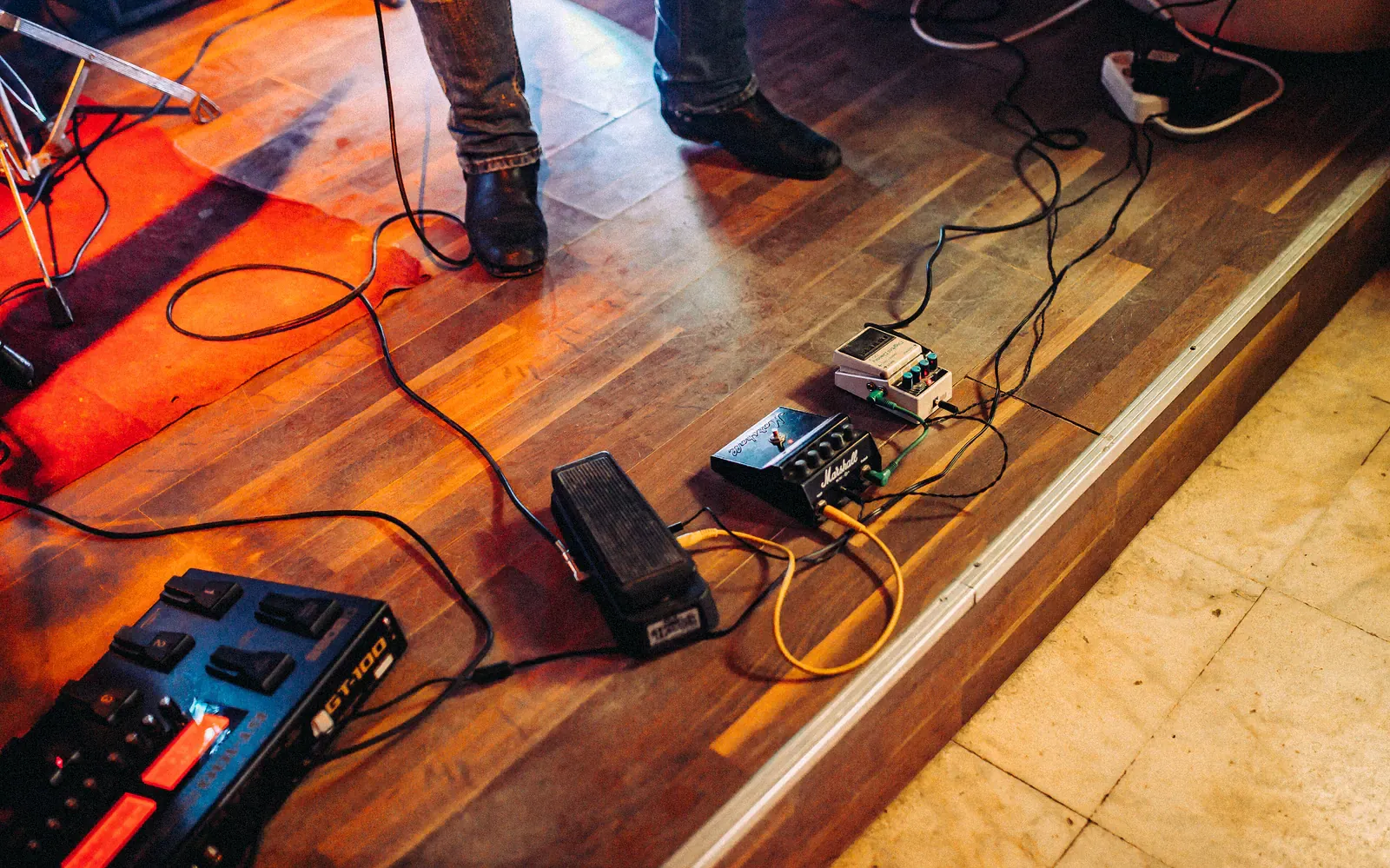
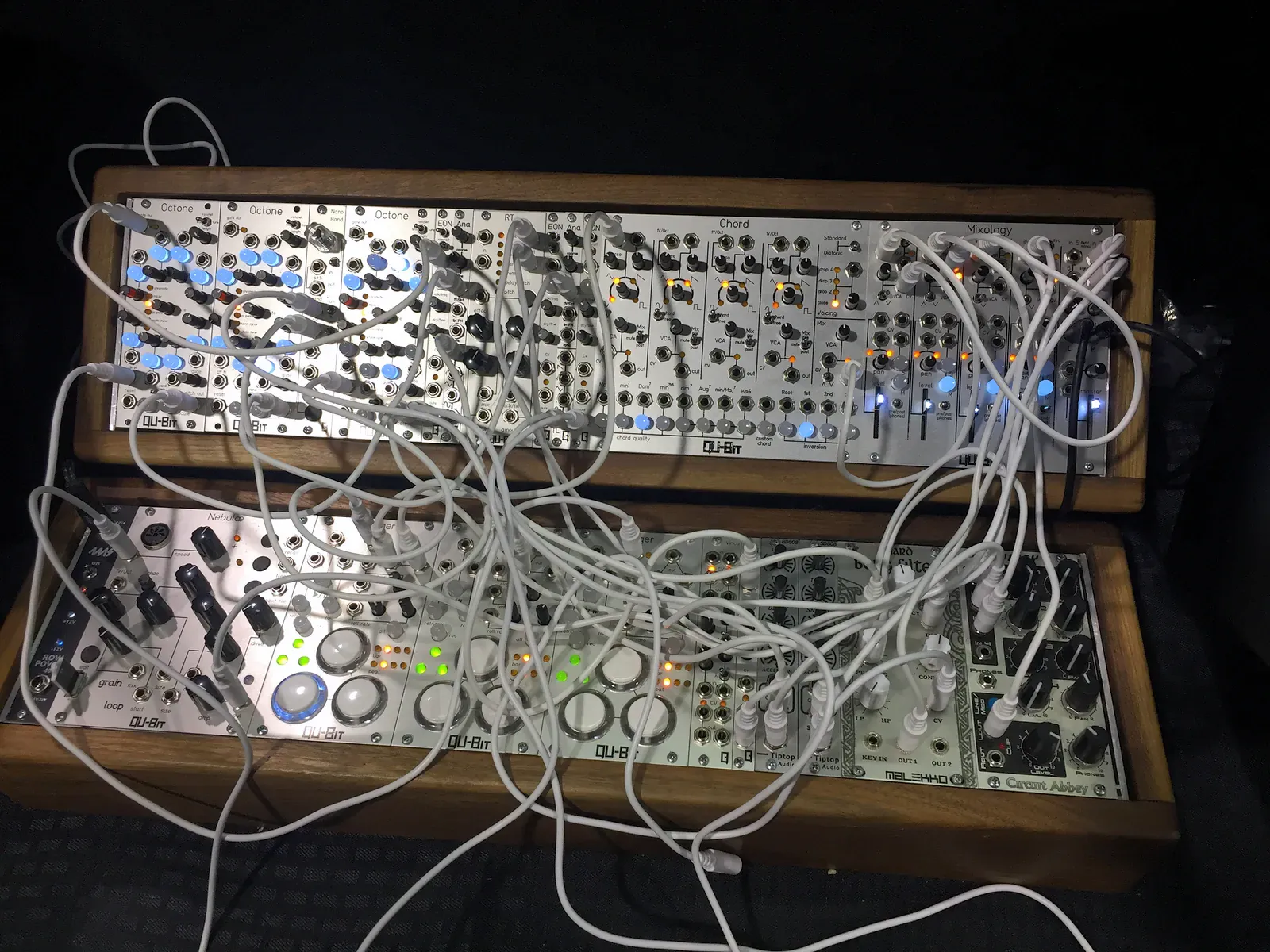
Early makers used found objects and cheap electronics: contact microphones on metal and springs, cassette decks, four-track recorders and effects pedals. A mixing desk patched into itself, called no-input mixing, generates tones from its own feedback. Hanatarash amplified drills, saws and scrap metal. Later artists used modular systems and laptops, and the line between instrument and machine blurred. What stayed constant was a preference for sources that were not designed to make music, so that the performer shapes unstable sound instead of playing notes.
Notable recordings
Metal Machine Music, Part 1 by Lou Reed is the best-known case of noise entering the rock market, and the withdrawal by RCA shows how unready the industry was. Whitehouse’s Birthdeath Experience gave power electronics a name and a template. Merzbow’s Rainbow Electronics from 1990 shows the dense, long-form harsh noise that followed digital recording. Boredoms’ Vision Creation Newsun (1999) turned their noise-rock past into drum-led psychedelia. Wolf Eyes’ Burned Mind is the usual answer to the question of which noise album found a rock audience.
Culture
Noise has always been a small, self-organised economy. Labels issued tapes in handmade packaging, and RRRecords released tapes in plated steel, plexiglass and custom flags. Shows are short, loud and sometimes destructive: early Hijokaidan and Hanatarash gigs involved wrecking gear, throwing food and risking injury. The word Japanoise names the scene around Merzbow, Hijokaidan and Incapacitants, and the label Tzadik later brought parts of it to wider avant-garde audiences. Artists tend to be listener-collectors who trade tapes by mail and later share files, and the scene sustains itself through zines, mail order and small venues rather than radio.
Legacy
Noise left its mark on industrial and noise rock, on drone and ambient, and on the idea of the sound artist. Harsh noise wall has spread on Bandcamp and through small labels. Merzbow’s archival Slowdown series, begun in 2018, has put decades of tape work online and by 2022 passed 100 titles. The genre belongs to the wider experimental family, where it is the part that most flatly refuses melody.
Misconceptions
A common claim is that noise music is just random volume. Most pieces are structured by the maker, with sudden changes, layered sources and chosen plateaus; Russolo’s machines were built in tuned families and played from scores. Another myth is that noise began with Japan. The Japanese scene gave the genre its modern shape from 1979, but the idea dates to Russolo in 1913, and Schaeffer and Cage worked on it in 1948 and 1951. A third is that noise has no audience. Wolf Eyes toured with Sonic Youth, and Merzbow has issued hundreds of releases.
Frequently asked questions
What is noise music?
Noise music is a form of experimental music that uses distortion, feedback and non-musical sound as its main material and largely avoids melody, harmony and steady rhythm.
Who invented noise music?
Luigi Russolo is usually credited, with his 1913 manifesto The Art of Noises and his intonarumori noise machines. Noise as a modern scene began with groups such as Merzbow and Whitehouse in 1979 and 1980.
What is Japanoise?
Japanoise is the name for the Japanese noise scene from about 1979, built around Merzbow, Hijokaidan and Incapacitants, and known for extreme volume and chaotic live shows.
What is harsh noise?
Harsh noise is the densest strand of noise music, built from saturated distortion with little melody or rhythm, and strongly tied to Merzbow’s digital recordings from 1990.
Sound
Sound sheet
Anatomy of a track
| # | Part |
|---|---|
| 1 | Onset: feedback or a single noise source |
| 2 | Build: layers of distortion pile up |
| 3 | Plateau: a dense, sustained wall or slow evolution |
| 4 | Shift: a sudden change of source or volume |
| 5 | End: abrupt cut or fade |
Signature sounds
- No melody, chord changes or fixed key
- Distortion, feedback and static as the main material
- Extreme volume
- Non-musical sources: tools, radios, tape, contact mics
- Shouted, processed or absent vocals
- Long, often unchanging single pieces
Techniques
- Feedback loops
- No-input mixing
- Tape and cassette collage
- Harsh noise wall
- Live destruction
- Shouted vocals
Tuning
No fixed tuning or pitch centre: feedback, distortion and untuned electronics replace scales.
Vocals
Absent, screamed or shouted, often distorted; power electronics puts a direct, confrontational voice up front.
Scenes
Where it happened
Where and when the sound lived: one bar per city on a shared timeline.
Europe
Asia
North America
Active scenes
Peak 6, 1998-2025
Russolo and the Futurists stage the first noise concerts.
Home of Alchemy Records, Incapacitants' start and the Hanatarash and Boredoms line.
Merzbow's base, with live houses such as Koenji 20000V from 1990.
Industrial Records and Whitehouse's Come Organisation put power electronics on record.
RRRecords makes this Massachusetts town a mail-order hub.
Wolf Eyes and the Michigan tape and lathe-cut scene.
Tonic (1998-2007) and the Brooklyn scene of the 2000s.
Venues and places
Milan, 1914 to today. Site of Russolo's intonarumori concert on 21 April 1914.
Berlin, 1982 to today. Festival founded by Dimitri Hegemann at the Kreuzberg club SO36 and home to industrial and noise acts.
Lowell, 1984 to today. Record shop and label that sold and issued noise by mail order.
Tokyo, 1990 to today. A small live house for punk, noise and the avant-garde; a fire closed it in 2009.
New York, 1998 to today. Lower East Side room for experimental music until its closing in April 2007.
Culture
Culture markers
- Destructive live shows
Early Hijokaidan and Hanatarash gigs involved wrecking gear, throwing food and risking injury.
Ritual - Japanoise
A portmanteau of Japanese and noise, used for the scene around Merzbow, Hijokaidan and Incapacitants.
Slang - Power electronics
A style label coined by William Bennett of Whitehouse.
Slang - Handmade packaging
RRRecords and other small labels issued tapes in plated steel, plexiglass and custom flags.
Artwork - Dada naming
Merzbow's name comes from Kurt Schwitters' Merz collage works.
Artwork
Media
Key media
- 1913The Art of Noises
by Luigi Russolo. The Futurist manifesto that is the field's founding text.
Book - 1985Noise: The Political Economy of Music
by Jacques Attali. A theory book that treats noise as a social and political force.
Book - 1999Noise, Water, Meat
by Douglas Kahn. A history of sound in the arts that places noise at its centre.
Book - 2007Noise/Music: A History
by Paul Hegarty. A survey from Russolo to Japanese noise.
Book - 2008People Who Do Noise
by Various. A documentary with Smegma, Yellow Swans and Daniel Menche.
Film
Glossary
Terms on this page
A loop of sound from speaker to pickup that builds into a sustained howl.
A loud, abrasive style of dense distortion and static that grew from Kansai noise in the early 1980s.
A static, unchanging block of distorted sound, often one layer for the whole piece.
Noise-making instruments designed by Luigi Russolo from 1913.
The Japanese noise scene, from Kansai no wave to Merzbow and Hijokaidan.
Patching a mixing desk's output back into its input to generate tones with no outside source.
Sound used for its texture and intensity, not for melody, harmony or steady rhythm.
A confrontational style of shouted vocals over electronic noise; William Bennett of Whitehouse coined the term.
Experimental family