Industrial Music
Industrial music is an experimental genre of noise, tape, machines and harsh vocals that began around Throbbing Gristle and Industrial Records in 1970s Britain.
Sheffield, 1975
Experimental family
Born
1975
Sheffield
Subgenres
9
Documented branches
Links
46
Genres it drew on or shaped
Tempo
75-165 BPMLineage
Family tree
Grew out of
Derived from
Derived from
Influenced by
Sheffield, 1975
Industrial Music
Led to (10)
Timeline
Era by era
From the first sparks to today. Select a dot to read the story behind it.
- Industrial music for industrial people
1975 to 1980
- Metal, machines and dance floors
1981 to 1987
- Arenas and platinum
1988 to 1996
- Mainstream echoes
1997 to 2013
- Revival and reissue
2014 to 2025
Eras
Moments
- 1 Industrial music for industrial people, 1975 to 1980
- 2 Metal, machines and dance floors, 1981 to 1987
- 3 Arenas and platinum, 1988 to 1996
- 4 Mainstream echoes, 1997 to 2013
- 5 Revival and reissue, 2014 to 2025
1975
Industrial music for industrial people
Throbbing Gristle in London and Cabaret Voltaire in Sheffield build tape-and-noise music, and Industrial Records gives the genre its name.
- 1975Throbbing Gristle formBorn out of the COUM Transmissions performance art group in Hull and London.
- 1976Industrial Records foundedThrobbing Gristle start the label and adopt the slogan industrial music for industrial people, credited to Monte Cazazza.
- 1976Prostitution exhibition at the ICAA Conservative MP calls the group wreckers of civilisation after their October 1976 debut.
- 1977The Second Annual ReportFirst Throbbing Gristle album, on Industrial Records.
- 1978United / Zyklon B Zombie singleThrobbing Gristle single on Industrial Records.
- 197920 Jazz Funk GreatsThrobbing Gristle album that disguises a cold electronic record behind a lounge-jazz cover.
- 1979Nag Nag NagCabaret Voltaire single on Rough Trade, a Sheffield template for tape-loop dance music.
- 1980Laibach form in TrbovljeThe Slovenian group is founded on 1 June and later joins the Neue Slowenische Kunst collective.
1981
Metal, machines and dance floors
Einstürzende Neubauten, Skinny Puppy and Front 242 spread the sound across Berlin, Vancouver and Belgium; Wax Trax! and Mute carry it to clubs.
- 1981Throbbing Gristle disbandThe split spawns Psychic TV and Coil, while Ministry and Front 242 start the same year.
- 1982Skinny Puppy form in VancouvercEvin Key starts the project that Nettwerk soon signs.
- 1984Neubauten concert at the ICATheir Concerto for Voice and Machinery with drills and metal ends in a riot.
- 1985Halber MenschEinstürzende Neubauten album on Some Bizzare with the dance-leaning Yü-gung.
- 1987Opus DeiLaibach album on Mute with the German-language cover Geburt einer Nation.
1988
Arenas and platinum
Ministry, Nine Inch Nails and KMFDM bring harder, guitar-heavy industrial to Lollapalooza and the US charts.
- 1988Front by FrontFront 242 album that carries Headhunter and puts EBM on US dance floors via Wax Trax!.
- 1988The Land of Rape and HoneyMinistry album with Stigmata, the turn toward heavy guitar industrial.
- 1989Pretty Hate MachineNine Inch Nails debut on TVT, later triple platinum.
- 1991Nine Inch Nails at LollapaloozaThe festival tour exposes industrial to a large rock audience.
- 1992Ministry play LollapaloozaAlongside Red Hot Chili Peppers and Pearl Jam on the second tour.
- 1994The Downward SpiralNine Inch Nails album on Nothing Records, the highest selling US industrial record.
1997
Mainstream echoes
Rammstein and others make the sound a stadium staple while the original pioneers regroup and then split.
- 1997SehnsuchtRammstein album with Du hast, a No. 1 album in Germany.
- 1999Columbine and RammsteinPress link the shooters' clothing to the band, which issues a statement rejecting any connection.
- 2004Throbbing Gristle reuniteThe four-piece return and record new albums until 2010.
2014
Revival and reissue
Wax Trax! returns, Laibach and Ministry keep releasing, and the 1980s catalogue is reissued for a new audience.
- 2014Wax Trax! relaunchedJulia Nash revives the label with a 12-inch single.
- 2015Laibach play North KoreaThe only group to have played both North and South Korea.
Listening path
Anthems
The records that built the sound, grouped by the part they played. Thumbnails come from YouTube; the player loads only when you press play.
- 01
Throbbing Gristle, 1978 · Industrial Records
A first-generation Industrial Records single from the band that named the genre.
Origin - 02
Cabaret Voltaire, 1979 · Rough Trade
Sheffield tape-loop dance single that gave the first wave a rhythmic hook.
Start hereOrigin - 03
Nine Inch Nails, 1990 · TVT Records
The single that opened the US mainstream and rock radio to industrial.
Breakthrough - 04
Nine Inch Nails, 1994 · Nothing Records
Heavily censored MTV hit from The Downward Spiral that made industrial a mass-market sound.
Start hereBreakthrough - 05
Throbbing Gristle, 1979 · Industrial Records
Throbbing Gristle's most danceable track, from 20 Jazz Funk Greats.
Anthem - 06
Einstürzende Neubauten, 1985 · Some Bizzare
Metal percussion locked into a dance pulse on Halber Mensch.
Anthem - 07
Skinny Puppy, 1986 · Nettwerk
Defined North American electro-industrial and inspired Nine Inch Nails' first song.
Anthem - 08
Nitzer Ebb, 1987 · Mute
Barked vocals over relentless drums: an EBM club staple.
Anthem - 09
Ministry, 1988
Ministry's turn to guitar-heavy industrial, a template for industrial metal.
Anthem - 10
KMFDM, 1993
Industrial rock protest anthem that became KMFDM's signature.
Anthem - 11
Laibach, 1987 · Mute
German-language cover of Queen's One Vision that carried martial industrial to pop audiences.
Crossover - 12
Front 242, 1988 · Wax Trax!
An EBM dance-floor hit with an Anton Corbijn video that crossed into club and alternative scenes.
Crossover - 13
Rammstein, 1997
German-language industrial metal hit that made the sound a worldwide stadium act.
Start hereCrossover
Facts
| Family | Experimental |
| Origin | Sheffield, United Kingdom |
| Emerged | Mid-to-late 1970s |
| Status | Active |
| Tempo | 75 to 165 BPM |
| Meter | Free in the noise and tape first wave; steady 4/4 in EBM |
| Grew out of | Noise Music, Musique Concrète |
| Subgenres | 8 |
Industrial music is a branch of experimental music that builds songs from noise, tape loops, machines and shock. It began in Britain in the mid-1970s around Throbbing Gristle and their label, Industrial Records, then spread to Germany, Belgium, North America and Slovenia.
Its defining traits are factory sound, harsh or processed vocals, sampling and transgressive themes, and its heavier branches sold millions of records in the 1990s.
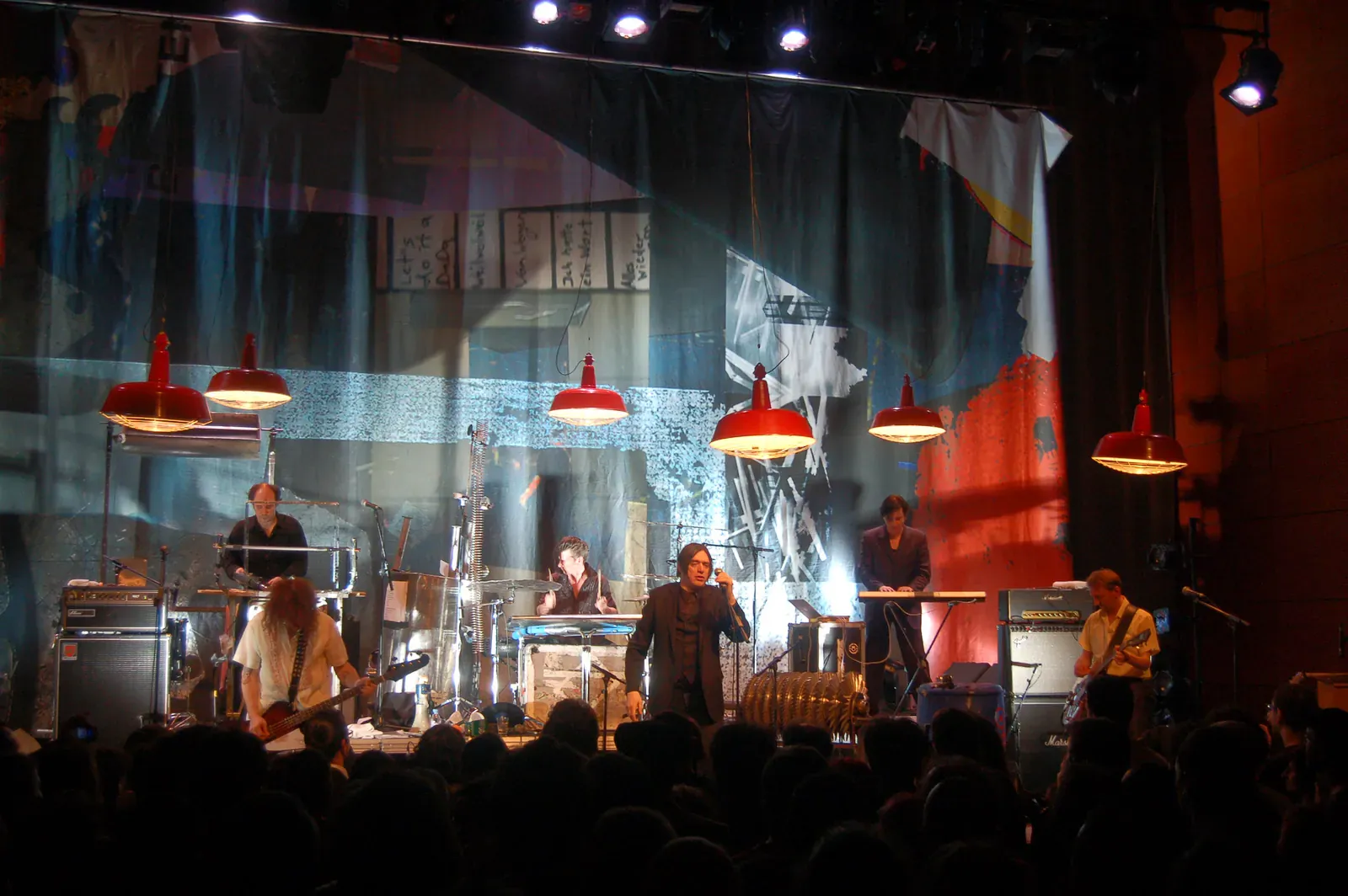
Origins
Industrial music started as an art project before it was a sound. In 1975 the performance group COUM Transmissions, based in Hull and London, became Throbbing Gristle: Genesis P-Orridge, Cosey Fanni Tutti, Peter Christopherson and Chris Carter. A year later they set up Industrial Records and took the slogan “industrial music for industrial people”, a line credited to the San Francisco artist Monte Cazazza.
The machines were cheap and homemade. Carter built a keyboard-and-cassette rig called the Gristle-izer, and the band worked with tape loops, feedback and tape cut-ups, a collage habit inherited from musique concrete and the writer William Burroughs. Their debut at the Institute of Contemporary Arts in London in October 1976, the Prostitution exhibition, drew a Conservative MP’s accusation that they were wreckers of civilisation. That outrage was part of the plan.
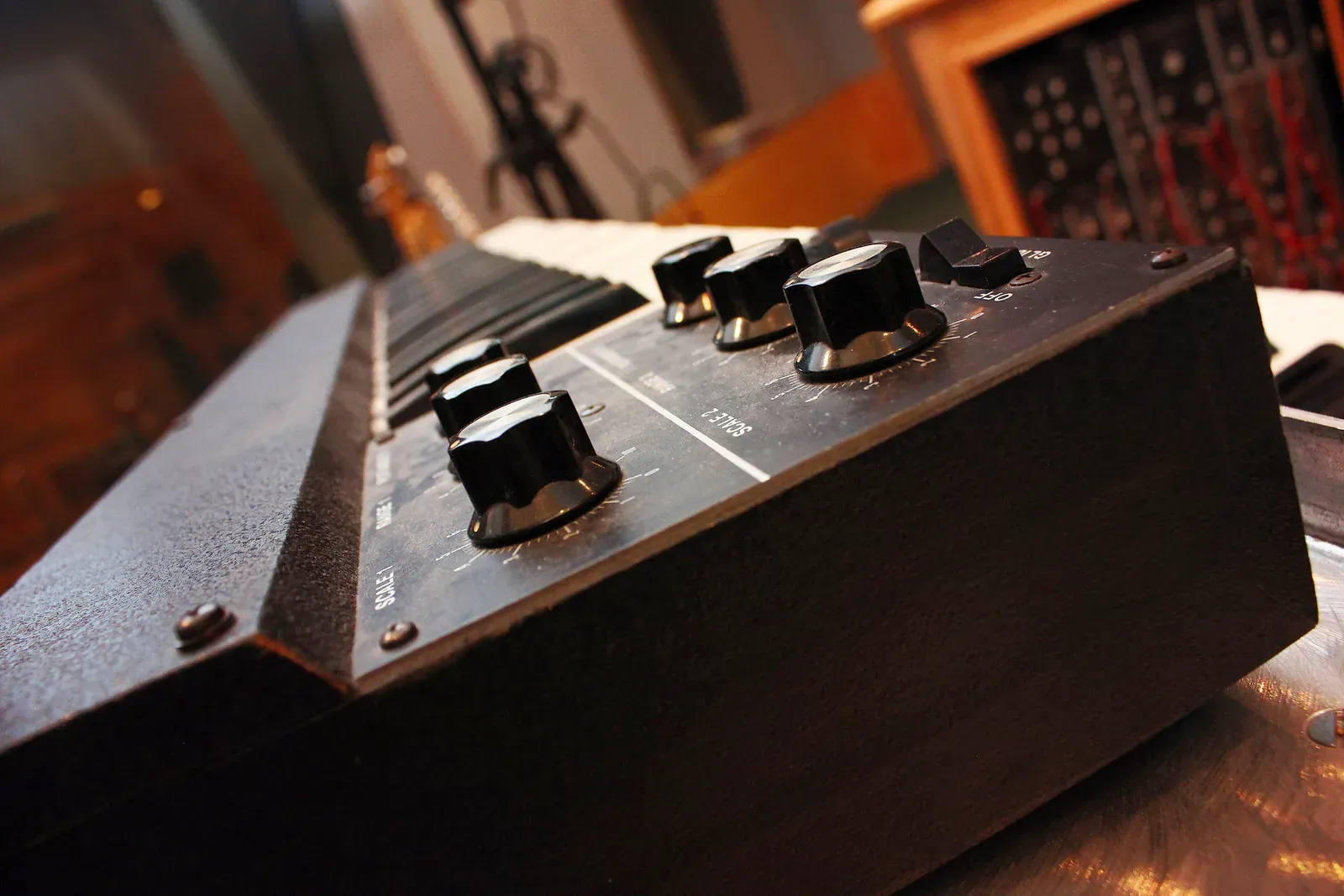
Britain, 1975-1980
The word “industrial” pointed at the factory, at mass production, and at the music industry itself. The Second Annual Report appeared in 1977 and 20 Jazz Funk Greats in 1979. The latter hid a cold electronic record behind a cover that looked like a lounge-jazz sleeve, a joke that also worked as a trap for record buyers.
Sheffield ran a parallel line. Cabaret Voltaire, working in a city built on steel, made tape-loop dance music with treated instruments, and “Nag Nag Nag” in 1979 gave the new sound a hook for dancing. Their label, Rough Trade, put it out. In 1980 a very different group appeared in Trbovlje, a mining town in then-Yugoslavia: Laibach, who adopted uniforms and the manner of a state.
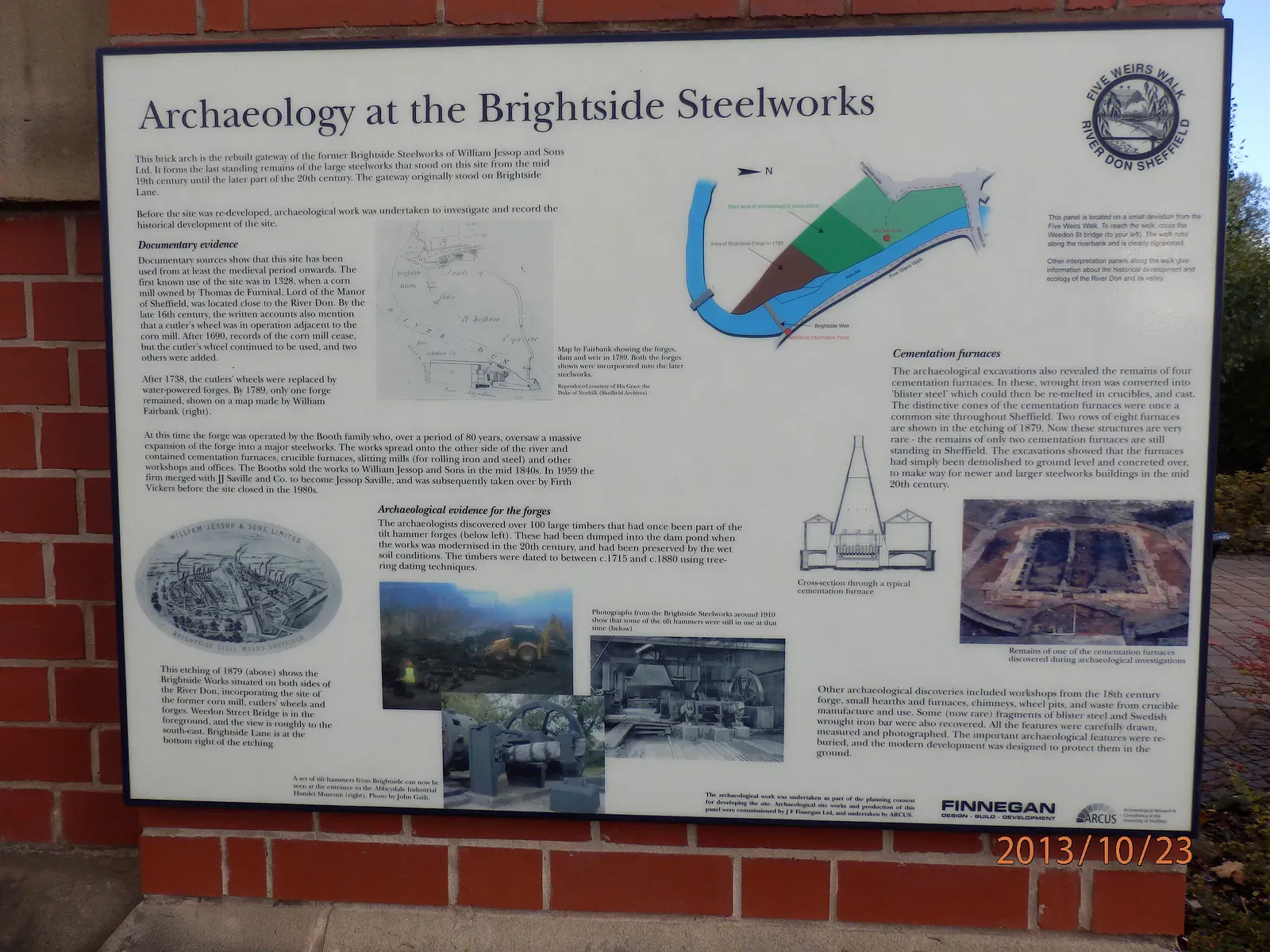
Europe and North America, 1981-1987
Throbbing Gristle split in 1981, and the pieces became Psychic TV and Coil. By then the idea had gone abroad. In West Berlin, Einstürzende Neubauten played drills and scrap metal, and a 1984 concert at the ICA, with its Concerto for Voice and Machinery, ended in a riot. Their album Halber Mensch (1985) came out on Some Bizzare, the London label run by Stevo, and showed that scrap-metal percussion could carry real songs.
In Vancouver, Skinny Puppy formed in 1982 and signed to Nettwerk. Mind: The Perpetual Intercourse (1986) set the template for North American electro-industrial, with theatrical live shows. In Belgium, Front 242 built a stripped, sequenced style that came to be called electronic body music, or EBM. Its 4/4 drum-machine pulse is close to the techno that was growing in Detroit.
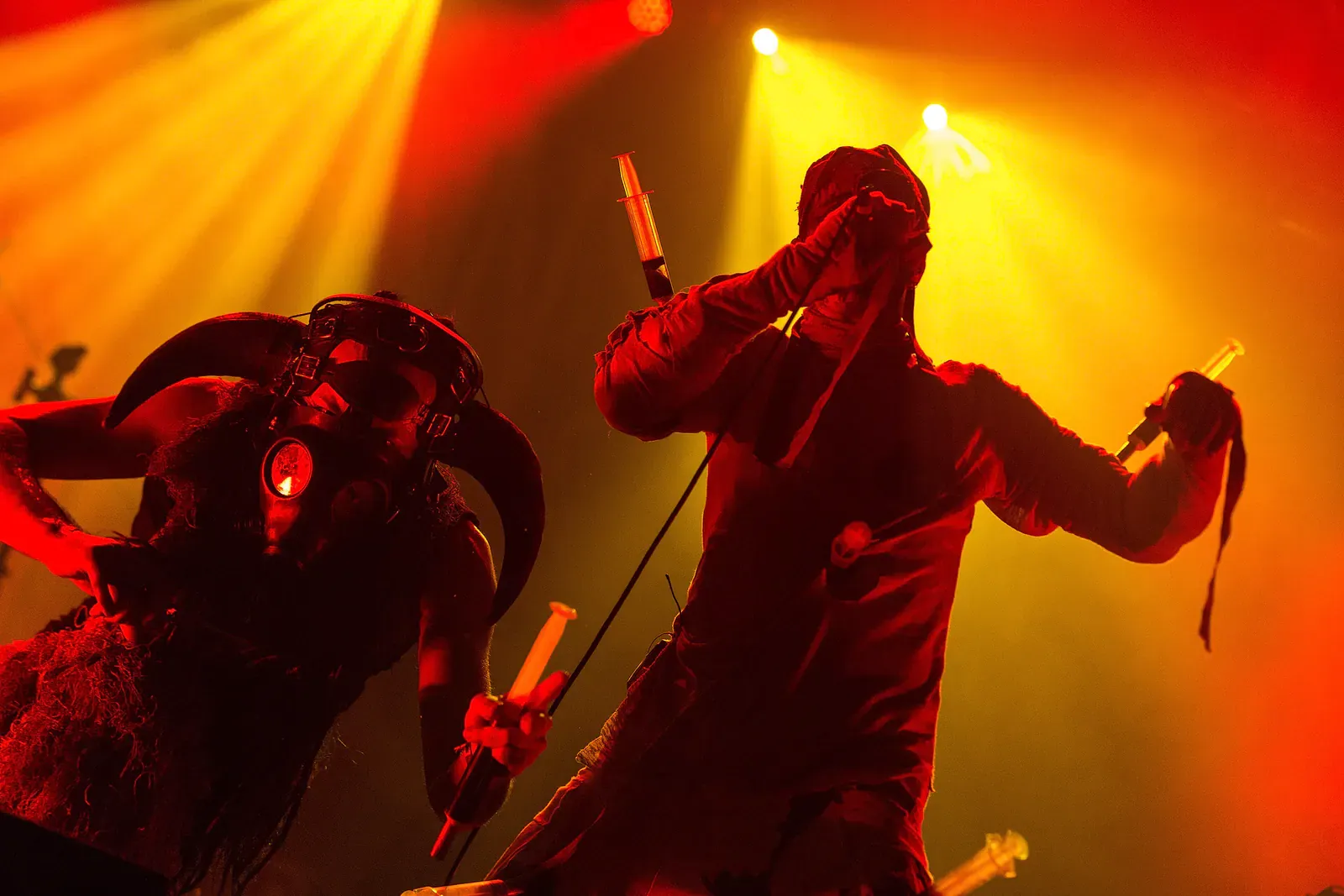
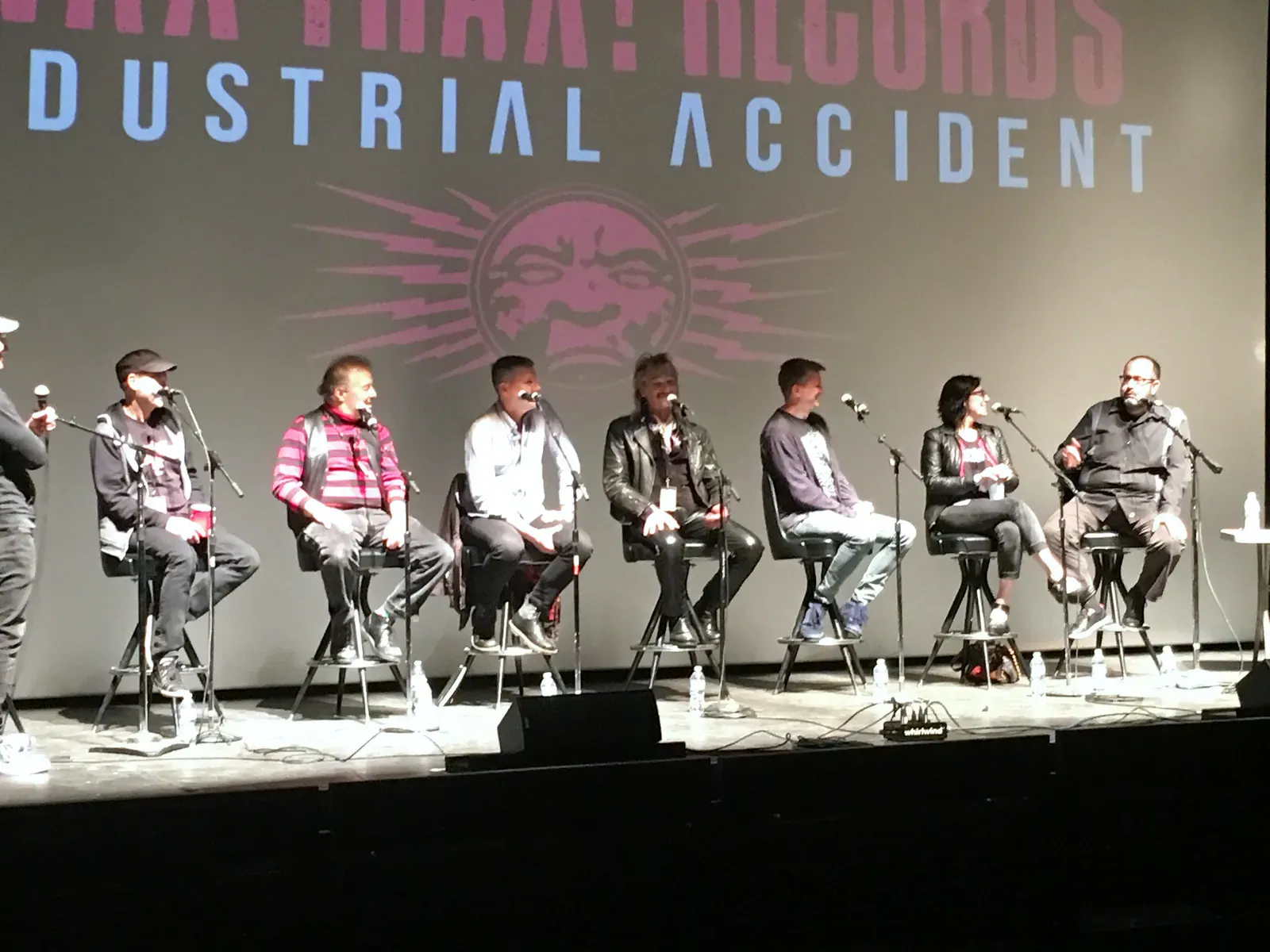
Two labels carried the sound across borders. Mute in London released Laibach’s Opus Dei in 1987 and Nitzer Ebb’s early records. In Chicago, Wax Trax! issued the American versions of Front 242 and housed the early Ministry.
Arenas and platinum, 1988-1996
The turn came in 1988. Front by Front, with “Headhunter”, carried EBM to American dance floors on Wax Trax!. The same year Ministry’s The Land of Rape and Honey fused samples with heavy guitar, a template for industrial metal and for what is now filed in the metal family.
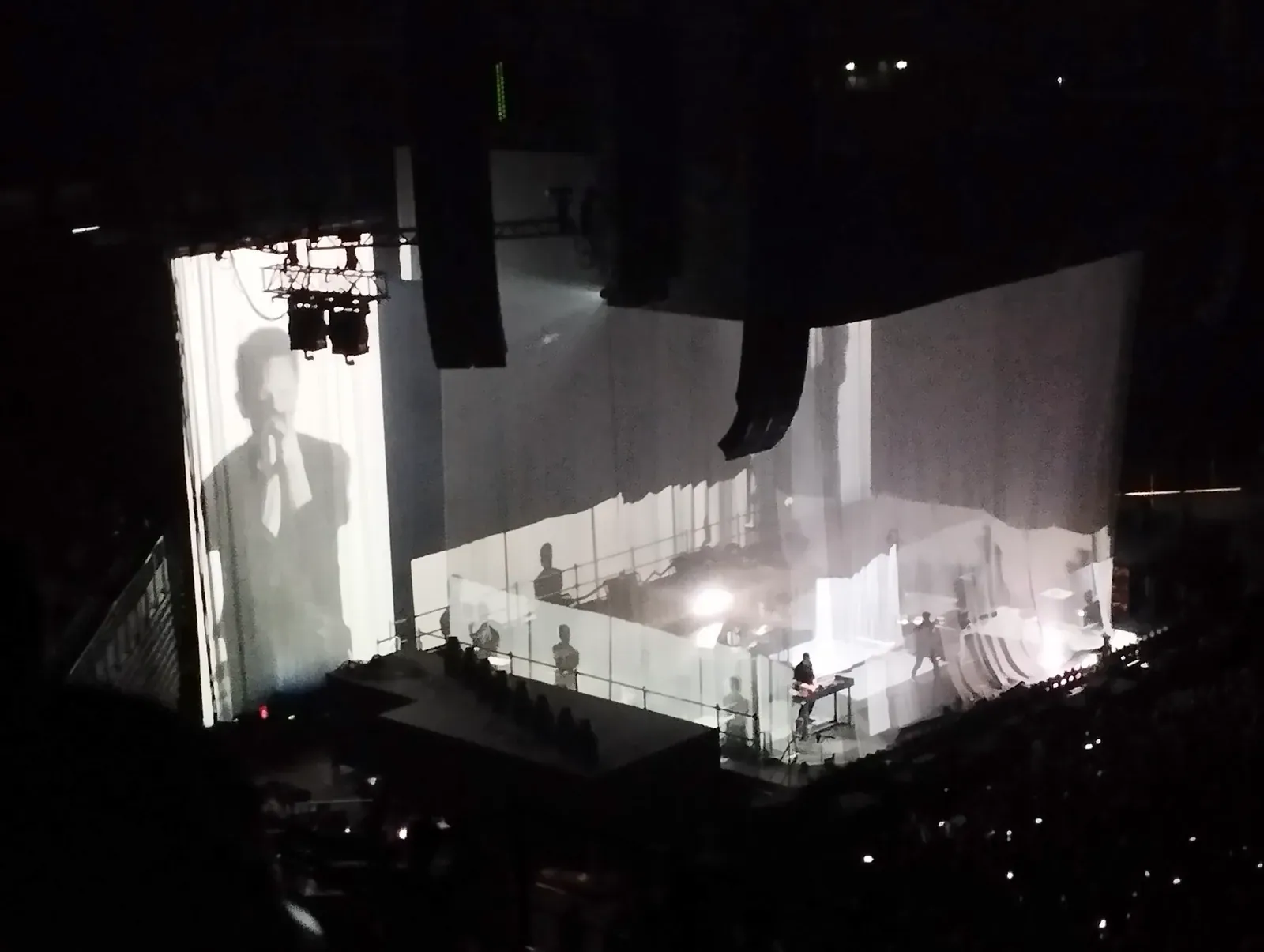
Trent Reznor followed. Pretty Hate Machine (1989), on TVT Records, fused synth-pop and noise, and its single “Head Like a Hole” got the project onto rock radio. Nine Inch Nails played Lollapalooza in 1991, and Ministry played it in 1992. In 1994 The Downward Spiral came out on Reznor’s own label, Nothing Records, and became the biggest-selling American industrial record. That summer the band’s set at Woodstock ’94 was a mud-covered event that reached a vast audience.
Revival and reissue, 1997-2025
After 1997 the sound spread into metal, goth and dance scenes in a dozen directions. Throbbing Gristle reunited in 2004 and recorded new albums until 2010. In 2014 Julia Nash revived Wax Trax! with a 12-inch single, and in 2015 Laibach played in North Korea, the only group to have played both Koreas. Ministry and Laibach keep releasing, and the 1980s catalogue has been reissued for a new audience.
Characteristics
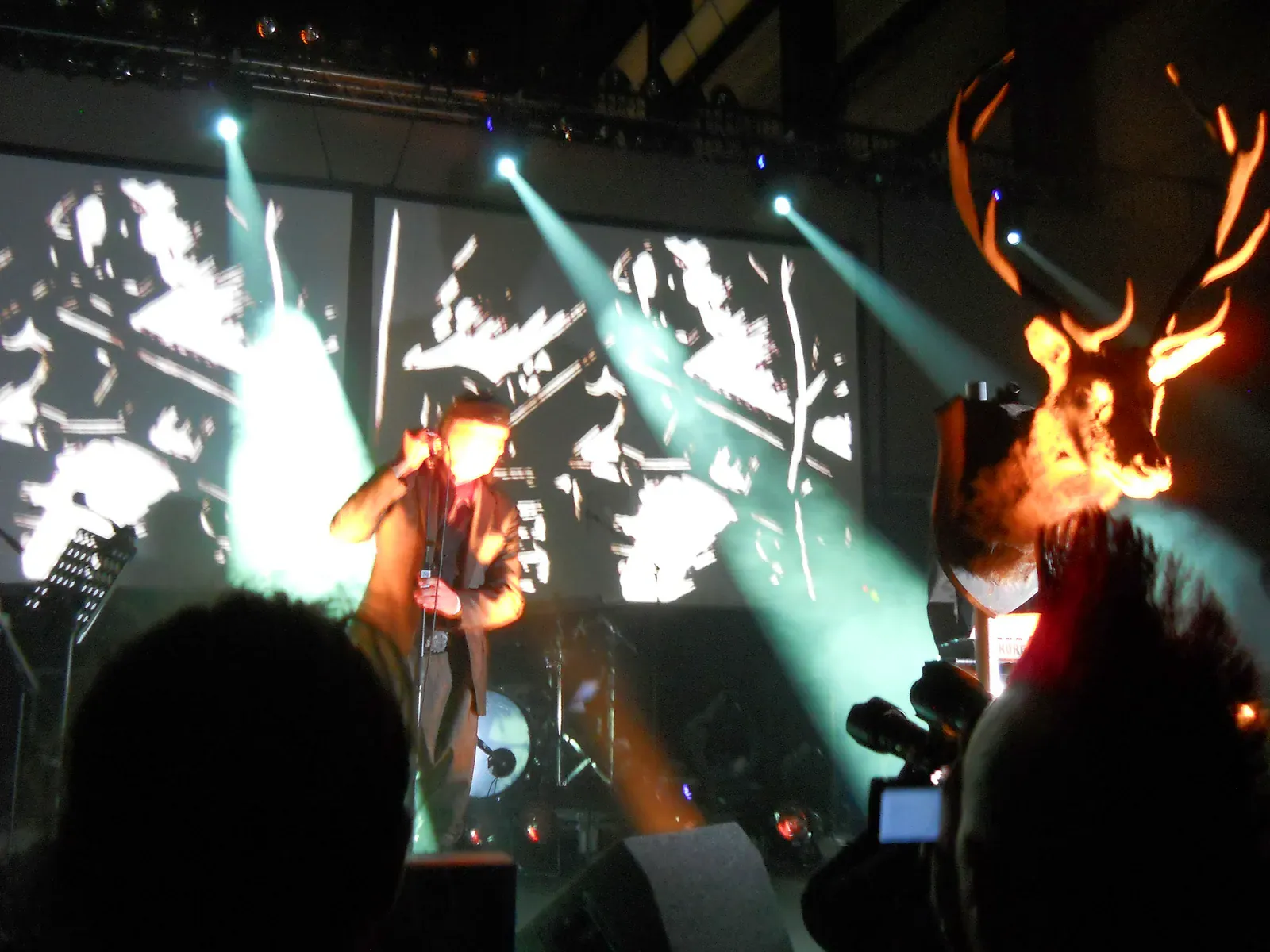
Early industrial is built on noise textures, found sound, tape manipulation and transgressive themes. Vocals are shouted, chanted or heavily processed, and lyrics and imagery often deal with control, violence and technology. The rhythm is either free, as in the tape-and-noise first wave, or a steady 4/4 pulse in EBM and electro-industrial. Songs usually move from a noise or tape intro to a sequenced pulse, a chanted verse, a break of samples or metal hits, and a distorted outro.
Instruments and production
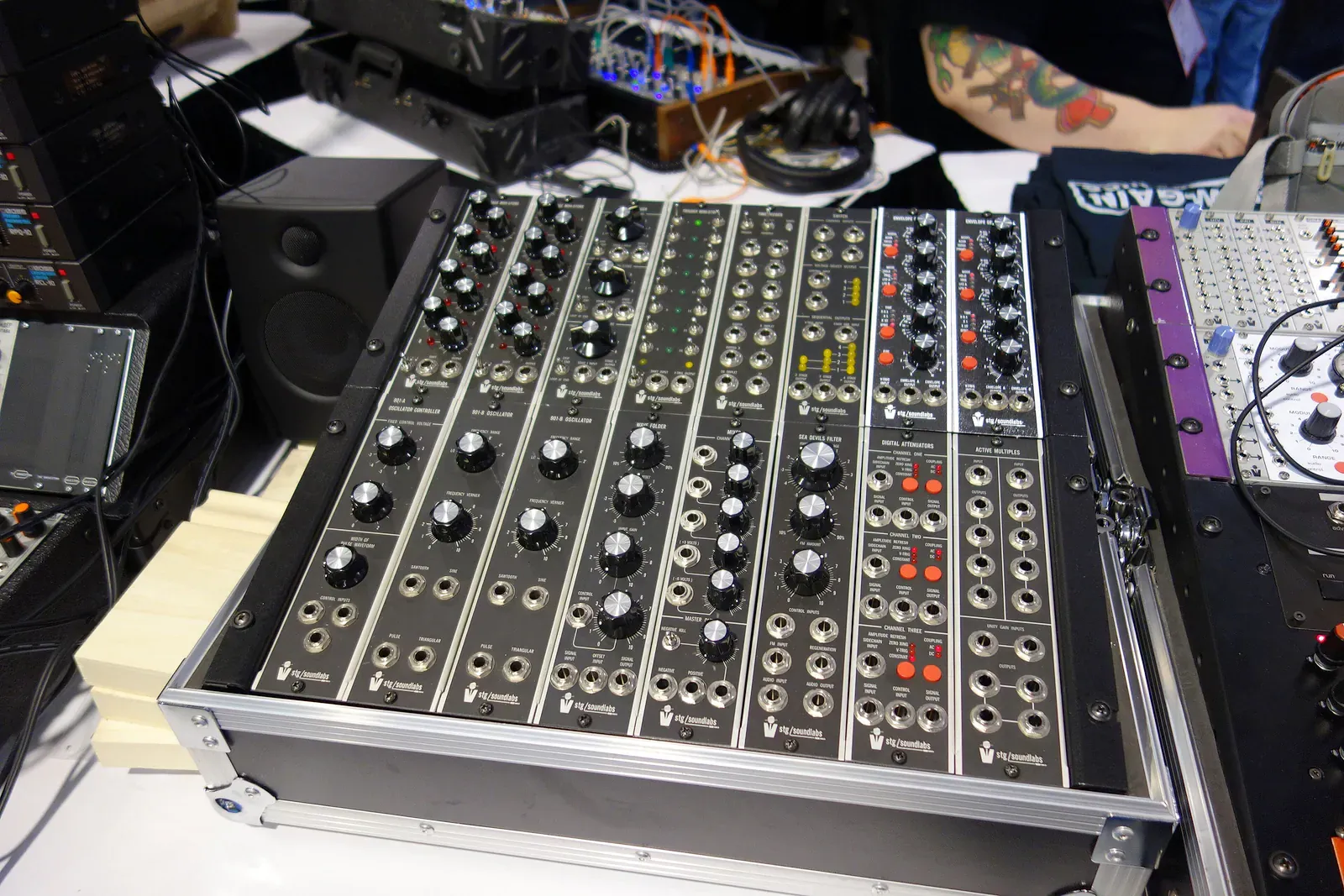
The first wave used what was cheap: cassette machines, tape loops, custom fuzzboxes and modified synthesizer modules. Neubauten and others struck scrap metal and power tools as percussion. In the 1980s analog sequencers, drum machines such as the Roland TR-808 and TR-909 and samplers such as the Emulator II gave EBM and electro-industrial their repetitive bass lines and sampled voices. Production leans on distortion, cut-up editing and layered noise rather than clean mixing.
Mainstream success
Industrial went mainstream through rock radio and MTV, not dance clubs. Lollapalooza put Ministry and Nine Inch Nails next to the biggest alternative bands of the early 1990s, and “Closer” made the sound a mass-market one.
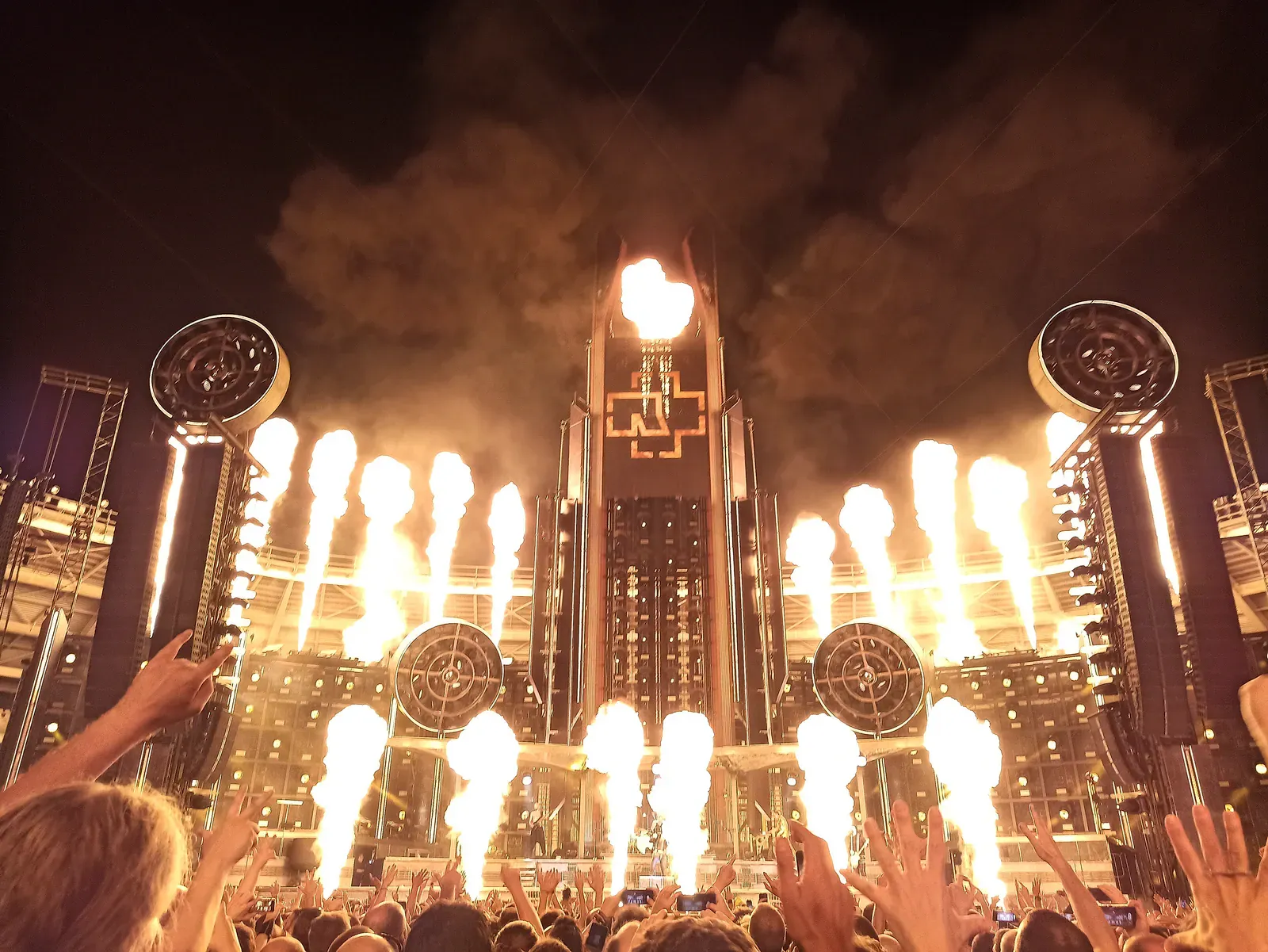
The crossover also came from Europe. Laibach’s German-language version of Queen’s “One Vision”, called “Geburt einer Nation”, reached pop listeners in 1987. Rammstein’s Sehnsucht (1997), with “Du hast”, went to number one on the German album chart and made a German-language industrial metal band a world stadium act. In 1999 the press connected the Columbine shooters’ clothing to Rammstein, and the band issued a statement rejecting any connection.
Notable recordings
“Nag Nag Nag” shows how Sheffield turned experiment into pop: a dance single from tape-loop and treated-instrument music, unlike anything else on the radio in 1979.
“Dig It” by Skinny Puppy defined North American electro-industrial in 1986, and it inspired Nine Inch Nails’ first song. “Closer” went the other way: a sparse record whose video MTV cut heavily, and a bridge between the underground and the charts.
Culture
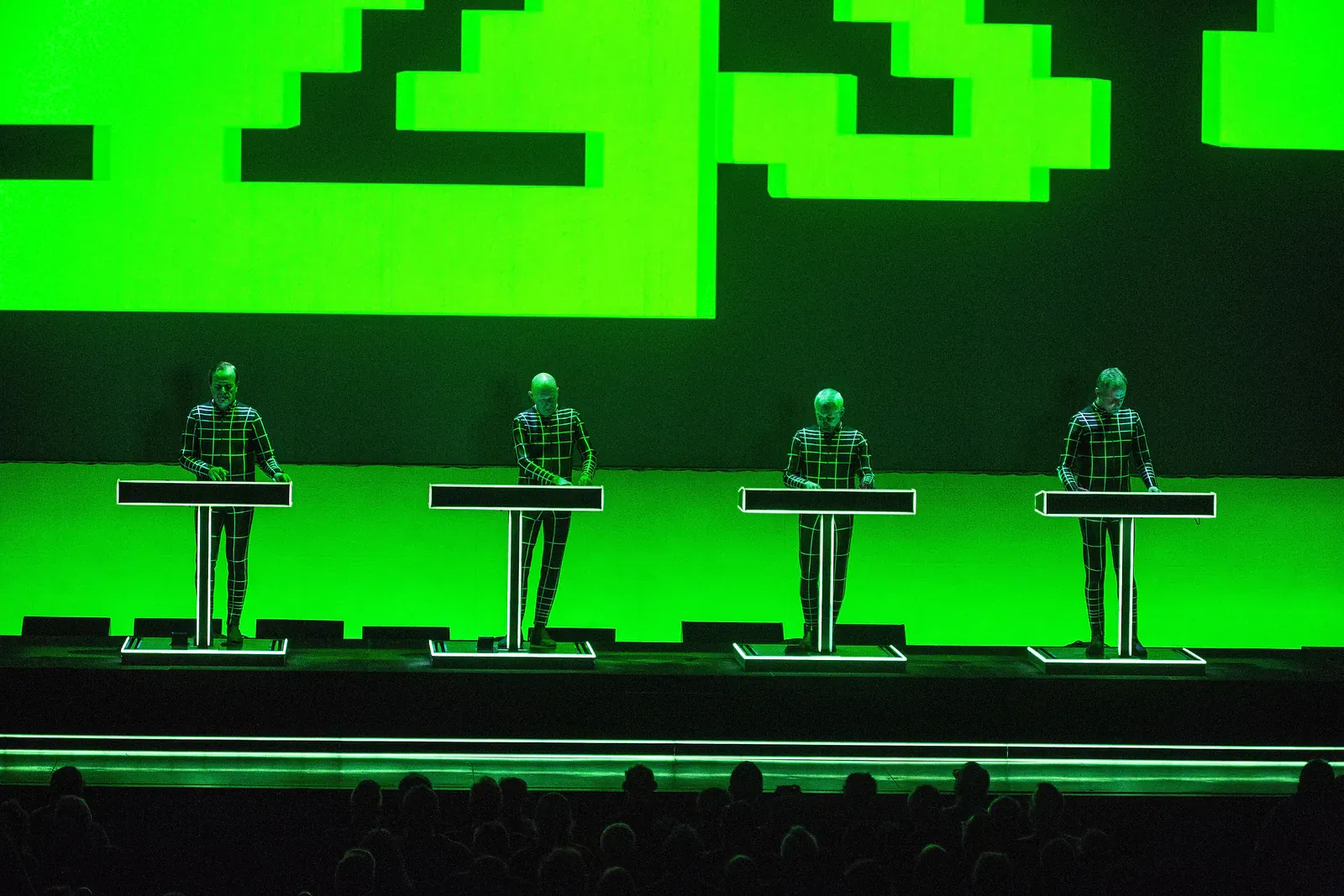
Industrial culture began in provocation. The Industrial Records logo used a photograph of Auschwitz, a deliberate shock that the label has been criticised for ever since. Laibach wore army-style uniforms, which led to a 1983 ban on the group’s name in Yugoslavia, lifted in 1985. Live shows were confrontational on purpose, from COUM Transmissions to Neubauten’s drills to Skinny Puppy’s theatre.
The scene economy was small and independent, built on 12-inch singles and club nights. Books such as RE/Search’s Industrial Culture Handbook (1983) mapped the scene and gave later fans a reading list.
Misconceptions
Industrial means heavy metal with synths. Industrial rock and metal are a late branch. The first wave was tape, noise and performance art, and EBM is built on dance rhythms, not guitars.
Nine Inch Nails started the genre. Reznor arrived in 1989, thirteen years after Industrial Records was founded and years after Throbbing Gristle, Cabaret Voltaire, Neubauten and Skinny Puppy. He took the sound to the biggest audience, but he did not start it.
Industrial music is political extremism. Laibach’s uniforms and Throbbing Gristle’s provocations were deliberate irony and critique, aimed at power and propaganda. The bands themselves rejected the extremist readings that people sometimes put on them.
Frequently asked questions
What is industrial music?
Industrial music is an experimental genre that uses noise, tape, machines and harsh or processed vocals. It began in Britain in the mid-1970s with Throbbing Gristle and Industrial Records, and later split into EBM, electro-industrial, industrial rock and industrial metal.
Who started industrial music?
Throbbing Gristle, formed in 1975 in London, started it, and their label Industrial Records gave the genre its name in 1976. Cabaret Voltaire in Sheffield worked in parallel at the same time.
What is the difference between industrial and EBM?
Industrial music is the wider family, with noise and tape at its root. EBM, or electronic body music, is a dance-focused branch with sequenced bass, a steady 4/4 drum-machine beat and shouted vocals, led by Front 242 and Nitzer Ebb.
Which bands are essential to industrial music?
Throbbing Gristle, Cabaret Voltaire, Einstürzende Neubauten, Skinny Puppy, Front 242, Ministry, Nine Inch Nails and Rammstein cover the genre’s range. Typical entry records are “Nag Nag Nag” by Cabaret Voltaire, “Closer” by Nine Inch Nails and “Du hast” by Rammstein, with Throbbing Gristle’s 20 Jazz Funk Greats and Front 242’s Front by Front for the roots.
Sound
Sound sheet
Anatomy of a track
| # | Part | Bars |
|---|---|---|
| 1 | Noise or tape intro | 8 |
| 2 | Sequenced pulse or drum entry | 16 |
| 3 | Chanted or shouted verse | 32 |
| 4 | Break with samples or metal hits | 8 |
| 5 | Return and distorted outro | 16 |
Signature sounds
- Distorted, shouted or processed vocals
- Found-sound and metal percussion
- Sequenced analog bass
- Tape loops and samples
- Transgressive lyrics and imagery
Drums and percussion
- Roland TR-808
- Roland TR-909
- Emulator II
- Scrap metal percussion
Synths and software
- Korg MS-20
Techniques
- Tape loops
- Cut-up
- Found-sound and metal percussion
- Distortion
- Sequenced bass lines
Keys and modes
Dark minor and chromatic. Minor-leaning bass sequences over atonal noise layers.
Tuning
12-TET, A=440, with detuned or untuned noise layers
Vocals
Shouted, chanted or heavily processed delivery.
Scenes
Where it happened
Where and when the sound lived: one bar per city on a shared timeline.
Europe
North America
Active scenes
Peak 7, 1982-1984
Cabaret Voltaire's home town and a hub for DIY electronic experiment.
Throbbing Gristle, Industrial Records, Psychic TV and Coil.
Einstürzende Neubauten and the building-site noise scene.
Wax Trax! and the Ministry and KMFDM orbit.
Nettwerk, Skinny Puppy and spin-offs.
Front 242's base, the cradle of Belgian EBM.
Laibach's town of origin in then-Yugoslavia.
Venues and places
London, 1976 to today. Site of the Prostitution exhibition (1976) and the Neubauten concert (1984).
Chicago, 1978 to today. Lincoln Park shop and label that fed the Chicago industrial scene.
Saugerties, 1994 to today. Nine Inch Nails' mud-soaked set reached a vast audience.
Culture
Culture markers
- Industrial Records logo
Built on a photograph of Auschwitz, part of the label's deliberate provocation.
Artwork - Industrial music for industrial people
Slogan printed on Industrial Records releases.
Slang - Military uniforms
Laibach used army-style uniforms and armbands, which led to a 1983 name ban in Yugoslavia lifted in 1985.
Fashion - Confrontational live shows
From COUM and Neubauten drills to Skinny Puppy theatrics, the gig itself was a provocation.
Ritual
Media
Key media
- 1983Industrial Culture Handbook
by RE/Search. Interviews with Throbbing Gristle, SPK, Monte Cazazza and others that mapped the culture.
Book - 1994The Crow
by Alex Proyas. Its soundtrack placed Nine Inch Nails alongside rock acts for a wider audience.
Film - 1999Wreckers of Civilisation
by Simon Ford. A history of Throbbing Gristle and COUM Transmissions.
Book
Glossary
Terms on this page
Technique of splicing recordings to build collage; an early tape practice.
Electronic body music: sequenced bass, 4/4 drum machines and shouted vocals.
Slogan of Industrial Records, credited to Monte Cazazza, from which the genre takes its name.
Drum-heavy, militaristic sound exemplified by Laibach.
Umbrella for experimental offshoots after Throbbing Gristle's 1981 split.
Harsh, confrontational noise with screamed vocals, pioneered by Whitehouse.
Experimental family