Experimental & Avant-Garde music
Experimental and avant-garde music treats sound, silence and chance as material, from Russolo's noise machines in 1913 to tape studios, industrial and drone.
76 genres
Since 1913
Genres
76
In this family
Branches
18
Main subgenres
Since
1913
Noise before tape
Timeline
Era by era
From the first sparks to today. Select a dot to read the story behind it.
- Noise before tape
1913 to 1947
- Studios, tape and chance
1948 to 1959
- Scores, scenes and free playing
1960 to 1974
- Industrial culture and the noise underground
1975 to 1989
- Labels, laptops and drones
1990 to 2009
- Archives and networks
2010 to 2026
Eras
Moments
- 1 Noise before tape, 1913 to 1947
- 2 Studios, tape and chance, 1948 to 1959
- 3 Scores, scenes and free playing, 1960 to 1974
- 4 Industrial culture and the noise underground, 1975 to 1989
- 5 Labels, laptops and drones, 1990 to 2009
- 6 Archives and networks, 2010 to 2026
1913
Noise before tape
Futurists, Varèse and others argue that noise and machines belong in music, years before tape makes it practical to compose with any sound.
- 1913Russolo publishes The Art of NoisesThe Futurist manifesto calls for machine, street and crowd noise as musical material.
- 1933Varèse's Ionisation premieresA concert work for percussion ensemble and sirens, with no pitched melody instruments.
1948
Studios, tape and chance
Radio and broadcast studios in Paris, Cologne and elsewhere turn recorded sound into material, while Cage hands the score over to chance and silence.
- 1948Schaeffer's first concrete studiesPierre Schaeffer broadcasts Étude aux chemins de fer from Paris radio, built from train recordings.
- 1950Symphonie pour un homme seulSchaeffer and Pierre Henry compose a large concrete work from voices, footsteps and objects.
- 1951Cologne radio founds an electronic studioThe WDR studio draws Stockhausen and others to compose from synthesised tones.
- 1952Cage's 4'33" premieresDavid Tudor sits at the piano in Woodstock and does not play, so room sound becomes the piece.
- 1956Gesang der JünglingeStockhausen mixes a boy's recorded voice with electronic sounds in one of the first spatial tape works.
- 1958Poème électronique at Expo 58Varèse's tape piece plays through hundreds of speakers in the Philips Pavilion in Brussels.
- 1958BBC Radiophonic Workshop opensDaphne Oram helps found the studio that makes tape and electronic sound for radio and television.
1960
Scores, scenes and free playing
Fluxus events, minimalism and drone, and groups like AMM make performance, duration and improvisation the experiment, often outside concert halls.
- 1962Fluxus festival in WiesbadenFestival of the Fluxus group puts performance, events and chance art on stage in Germany.
- 1964In C premieres in San FranciscoTerry Riley's 53 patterns, played at free pace by an ensemble, launch minimalism.
- 1965AMM forms in LondonA group of improvisers and jazz players starts playing without scores, hierarchy or repeated patterns.
- 1970Incus Records startsDerek Bailey, Evan Parker, Tony Oxley and Michael Walters found a musician-run label for free improvisation.
1975
Industrial culture and the noise underground
Throbbing Gristle, Neubauten and Merzbow build small labels and tape networks where noise, shock and DIY ethics replace the studio establishment.
- 1975Eno's Discreet Music on ObscureBrian Eno's quiet tape-loop piece appears on his own label, which also issues Bryars, Nyman and Budd.
- 1976Industrial Records opensThrobbing Gristle start the label whose slogan names industrial music.
- 1979Merzbow beginsMasami Akita starts the noise project in Tokyo and later releases hundreds of titles.
- 197920 Jazz Funk GreatsThrobbing Gristle release a cover-art parody with mellow tracks that mock easy listening.
- 1980Einstürzende Neubauten form in West BerlinA group plays scrap metal and power tools on stage, starting with early shows in Berlin.
- 1985Oswald coins plunderphonicsJohn Oswald's essay names the art of composing from recognisable existing recordings.
1990
Labels, laptops and drones
Cheap computers and specialist labels like Mego, Raster and Tzadik spread glitch, laptop noise and drone worldwide, and drone metal fills clubs.
- 1994Mego starts in ViennaThe label brings laptop glitch and digital noise to a wider audience.
- 1995Tzadik Records foundedJohn Zorn opens a New York label for avant-garde, experimental and Jewish culture series.
- 1996Merzbow's Pulse DemonA dense wall of digital noise that many listeners treat as the genre's reference point.
- 1998Sunn O))) forms in SeattleStephen O'Malley and Greg Anderson turn amplifier volume and slow chords into drone music.
- 2002Sub Rosa anthology of noiseThe label's multi-disc Anthology of Noise and Electronic Music traces noise from 1921 to 2001.
- 2008PAN opens in BerlinBill Kouligas starts a label linking experimental music with contemporary art and club culture.
2010
Archives and networks
A stable international scene of small labels, archival reissues and festivals keeps the field alive after its founders die, with Bandcamp as the main shop.
- 2010Throbbing Gristle endPeter Christopherson dies in November 2010 and the group ends its second period of work.
- 2022AMM plays its last showThe London group ends after a final performance at Café Oto in July 2022.
- 2025Sunn O))) sign to Sub PopThe drone duo move to a rock indie label for new work, announced in October 2025.
Roots
Roots and offspring
Pushed back against
ClassicalSerialism
1913
Experimental
Facts
| Genres in the family | 76 |
| Main branches | 18 |
| Emerged | Early 20th century |
| Tempo | 45 to 170 BPM |
Experimental and avant-garde music is music made to find out what sound can do, rather than to repeat a known form.
It began in the early twentieth century, when the Futurist Luigi Russolo argued in 1913 that machine noise belonged in music, and it spread through tape studios, chance scores, free improvisation, industrial noise and drone. It is defined by method, not by sound: a chance score, a tape splice and an amplifier pushed to its limit all count.
Origins: noise before tape
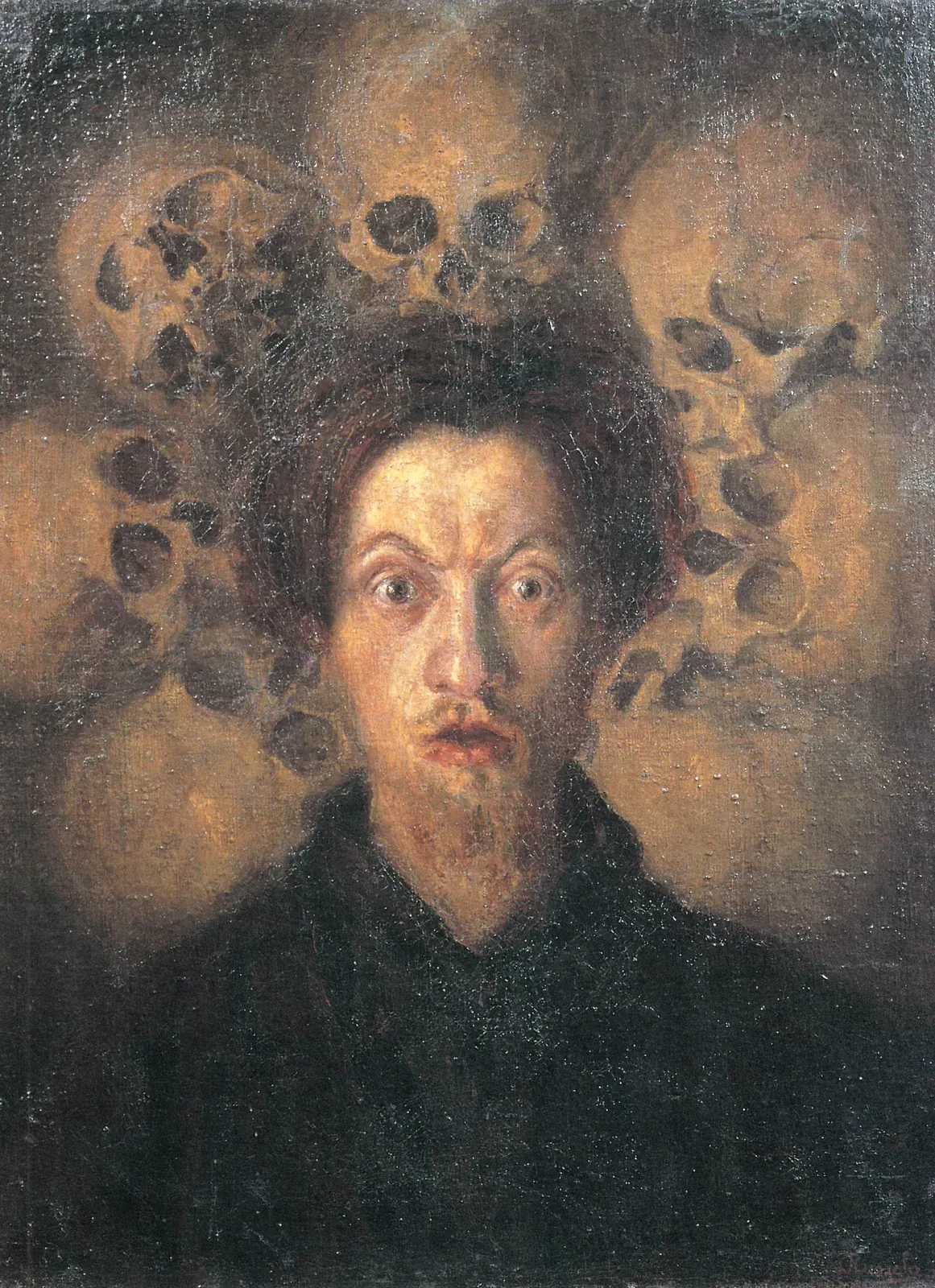
The first argument came before the machinery. In his 1913 text The Art of Noises, Russolo claimed that industrial life had trained listeners to enjoy more complex sounds than a violin could give them. He then built noise-making boxes called intonarumori, and a 1914 concert in Milan with the poet Filippo Tommaso Marinetti caused a riot. None of his original instruments survived, only replicas, so the idea outlived the hardware. Edgard Varese took the thought into the concert hall, and his Ionisation (1933) was scored for percussion and sirens.
Composing with any sound was still impractical, because there was no way to store one. That is why this era is mostly a set of manifestos and a few pieces, waiting for a medium.
Studios, tape and chance
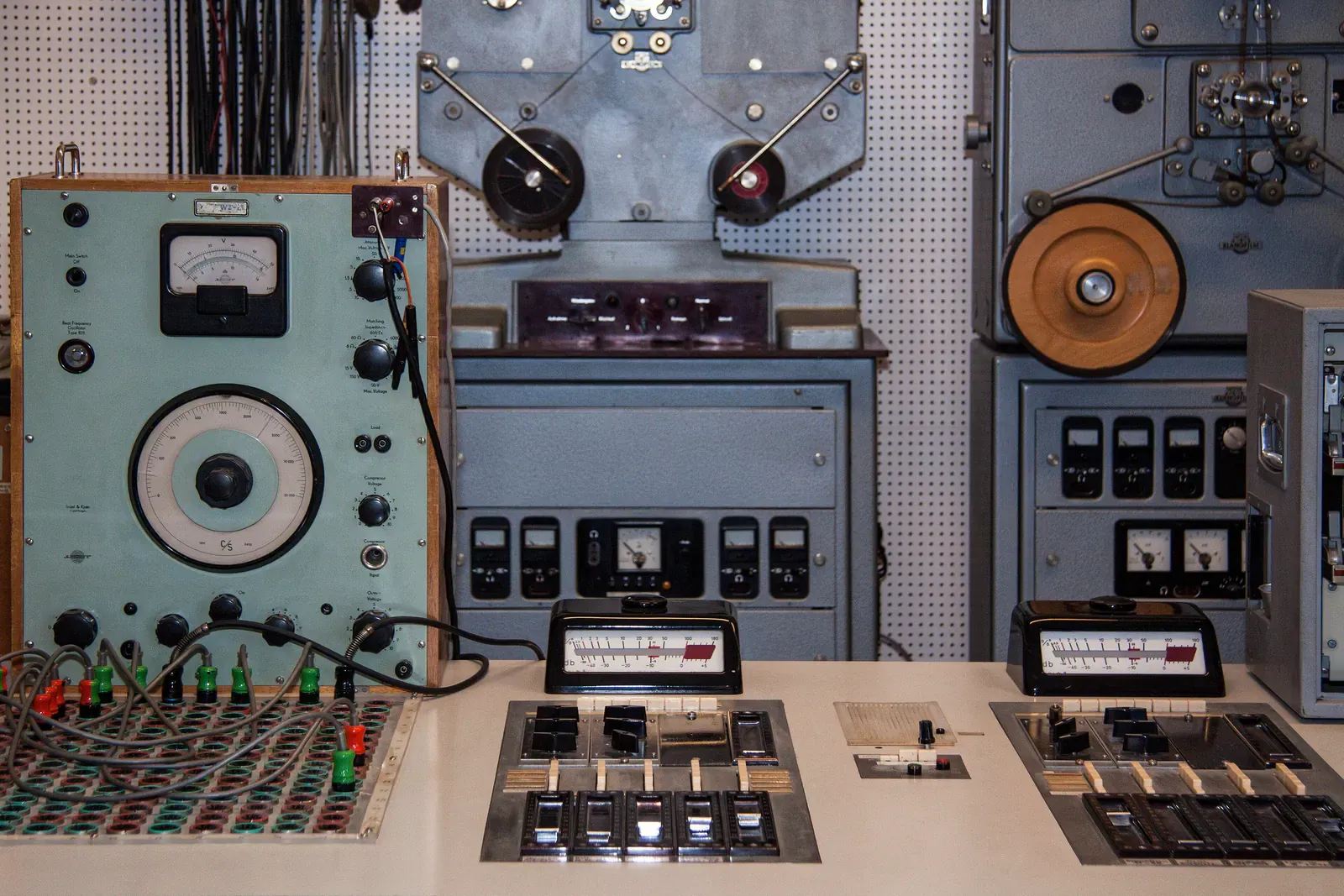
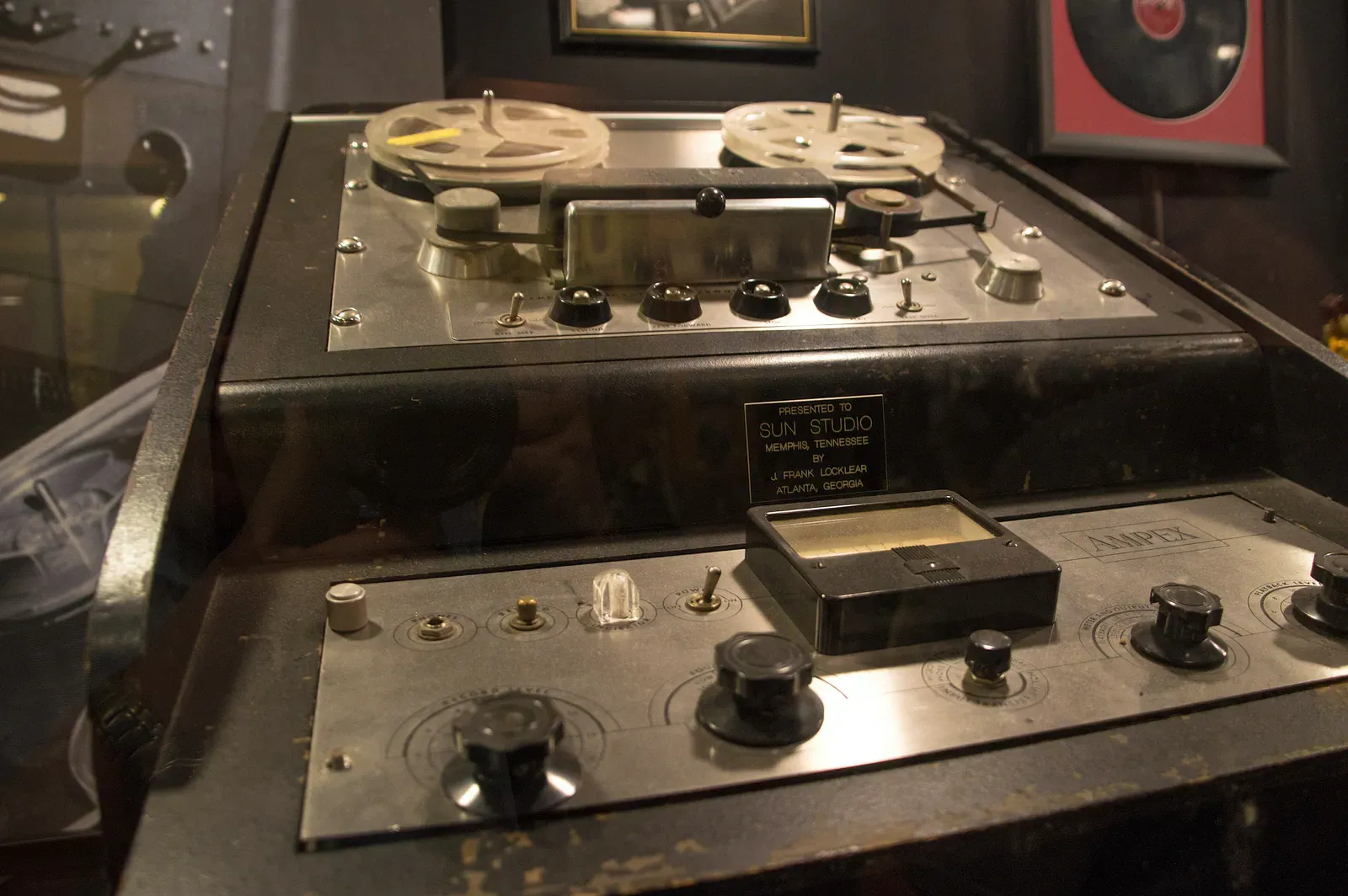
The medium came from radio broadcasting. In Paris, Pierre Schaeffer premiered five Etudes de bruits on 5 October 1948, among them the railway study Etude aux chemins de fer, built from recorded trains. In 1951 his group at French radio became the first purpose-built electroacoustic studio, and he and Pierre Henry produced Symphonie pour un homme seul (1950-1951). Cologne’s radio studio was founded in 1951 and gave its first public concert in 1953, and Karlheinz Stockhausen’s Gesang der Junglinge (1956) mixed a recorded boy’s voice with synthesized sound. Two schools, one working from recordings and one from oscillators, taught the same lesson: a composer could now shape sound itself.
John Cage went the other way and gave control to chance. After visiting a soundproof chamber at Harvard in 1951 and hearing his own body, he concluded that silence does not exist. His 4’33” premiered on 29 August 1952 in Woodstock, New York, with pianist David Tudor, and its three movements lasted 30 seconds, 2 minutes 23 seconds and 1 minute 40 seconds. The audience supplied the sounds.
Scores, scenes and free playing
By the 1960s the experiment was a social event. Fluxus held a festival in Wiesbaden in 1962, and in San Francisco the Tape Music Center hosted the premiere of Terry Riley’s In C on 4 November 1964. The score fits on one page: 53 short modules in C major, each repeated as often as a player likes. Steve Reich suggested adding a steady pulse so the group could stay together, and Pauline Oliveros played accordion in the first performance. The 1968 Columbia recording turned minimalism into a commercial force and entered the US National Recording Registry in 2022.
In London, AMM formed in 1965 and recorded AMMMusic (1966), using contact microphones and everyday objects, and in 1970 Derek Bailey and Evan Parker helped set up Incus Records to release improvisers on their own terms. Meanwhile voltage-controlled synthesizers moved into studios, and in 1975 Brian Eno started Obscure Records, which put out Gavin Bryars, Michael Nyman and his own Discreet Music.
Industrial culture and the noise underground
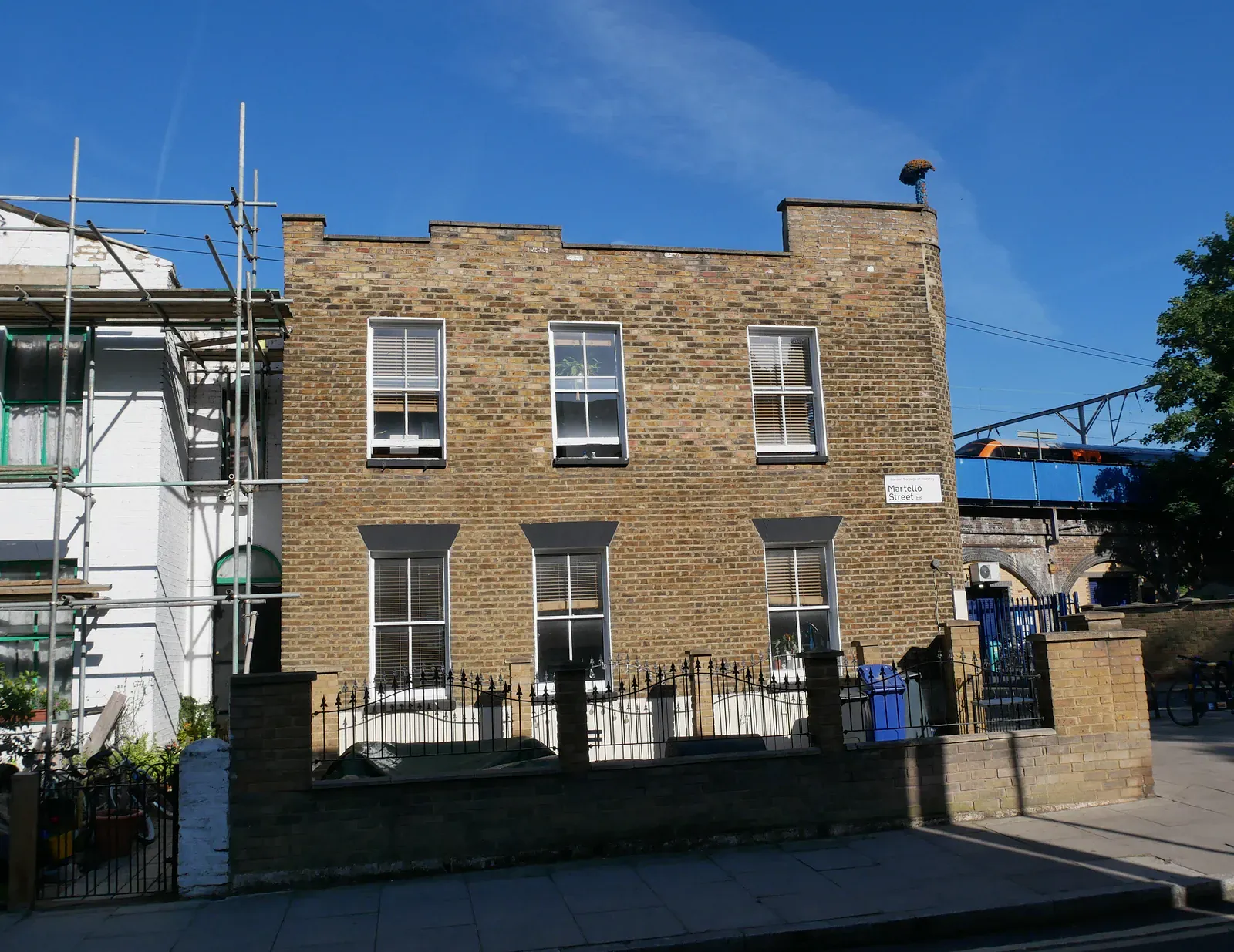
Punk’s self-made, independent attitude met the avant-garde in 1976. Throbbing Gristle, growing out of the performance group COUM Transmissions, made its public debut at the Prostitution exhibition at the Institute of Contemporary Arts in October 1976, and founded Industrial Records the same year. Their slogan, industrial music for industrial people, named a genre. Their Hackney studio, the Death Factory, stood on Martello Street.
Their 20 Jazz Funk Greats (1979) was a joke played straight: smooth electronic pop with an unsettling edge. The group split in 1981, reunited from 2004, and ended in 2010 after Genesis P-Orridge left and Peter Christopherson died.
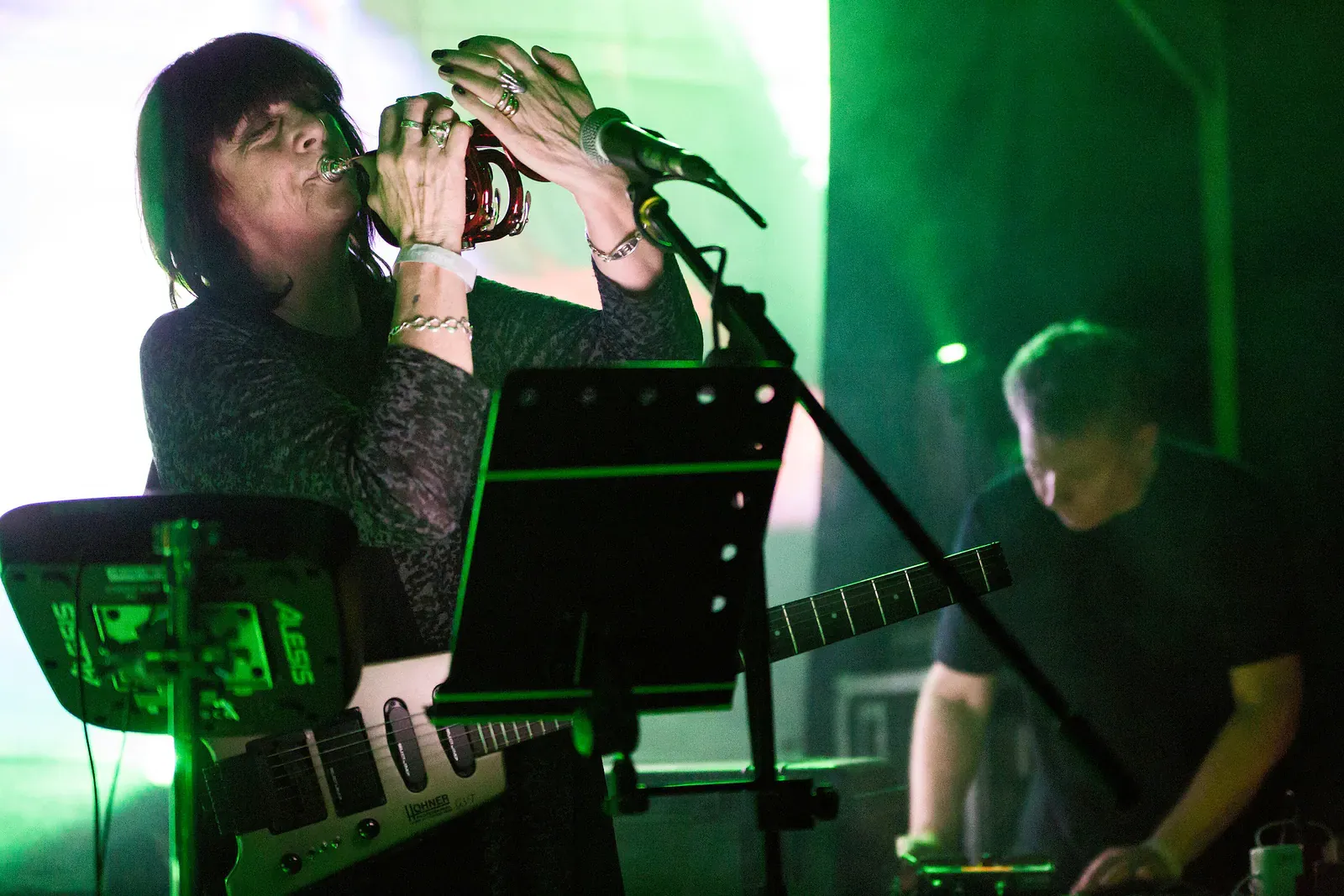
Other groups followed the same path. Einstürzende Neubauten formed in West Berlin on 1 April 1980 and built instruments from scrap metal and building tools for their debut Kollaps (1981). In Tokyo, Masami Akita began Merzbow in 1979, taking the name from Kurt Schwitters’ Merzbau, and has since released more than 500 recordings. Tapes, fanzines and mail-order made a network that needed no record shop.
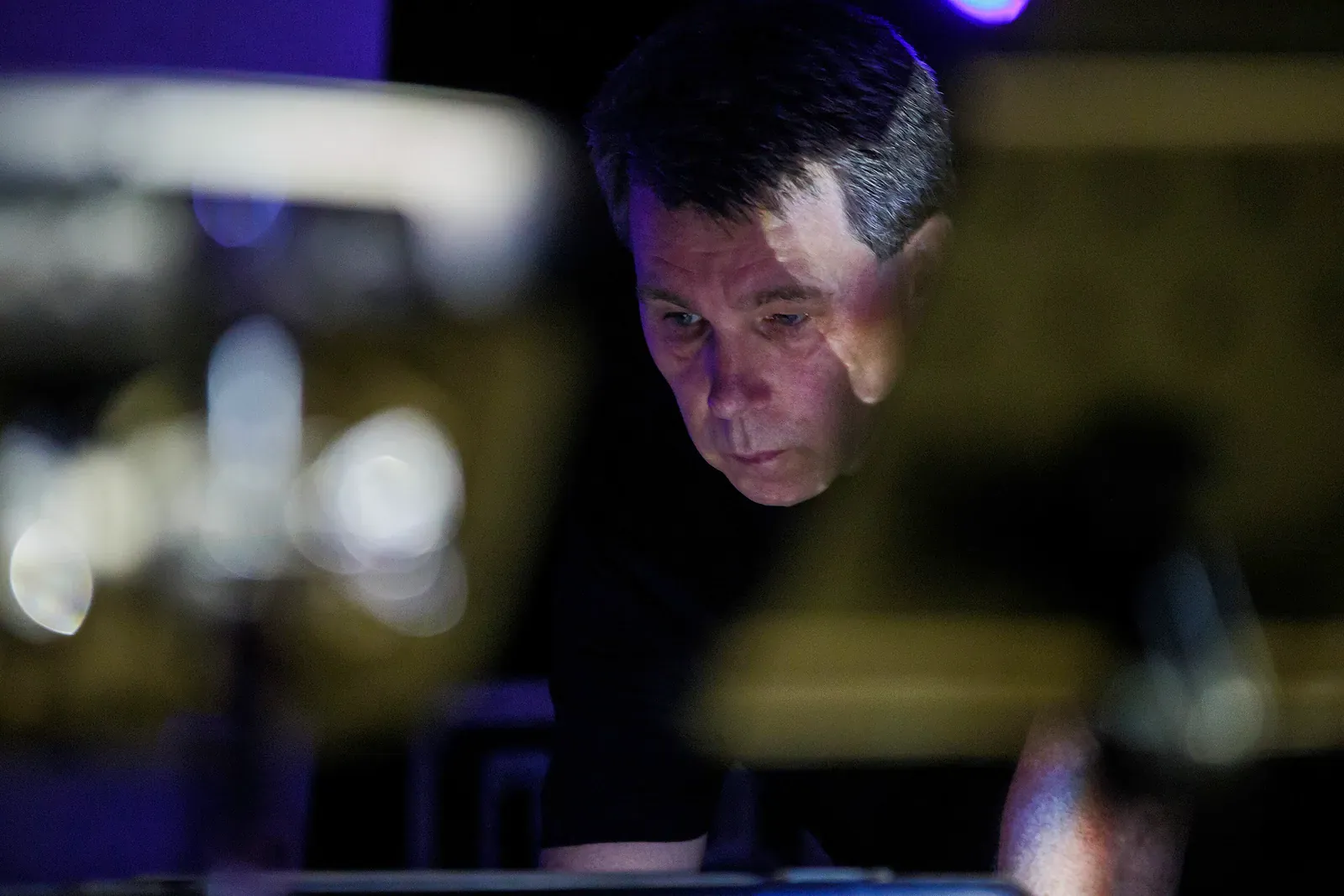
Labels, laptops and drones
The 1990s gave the underground cheap computers and a new generation of labels. Sub Rosa opened in Brussels in 1987 and published its Anthology of Noise & Electronic Music from 2002. Editions Mego began in Vienna in 1994 as Mego, and John Zorn started Tzadik in New York in 1995. In Chemnitz, Raster gave glitch a clinical look from 1996, while Touch in London, running since 1982, backed field recording and drone. Sub Rosa and Room40 in Brisbane, founded in 2000, kept the documentary habit.
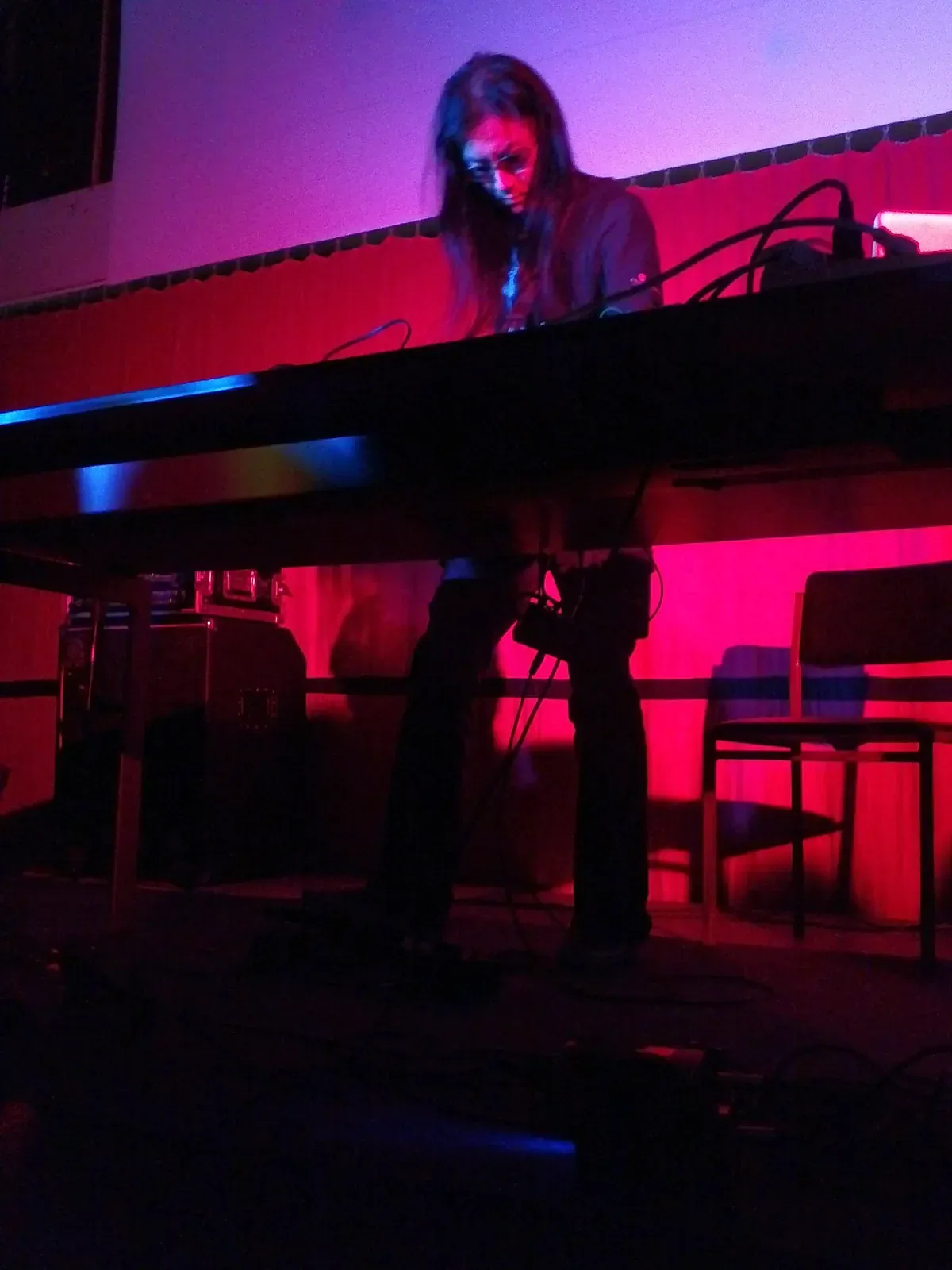
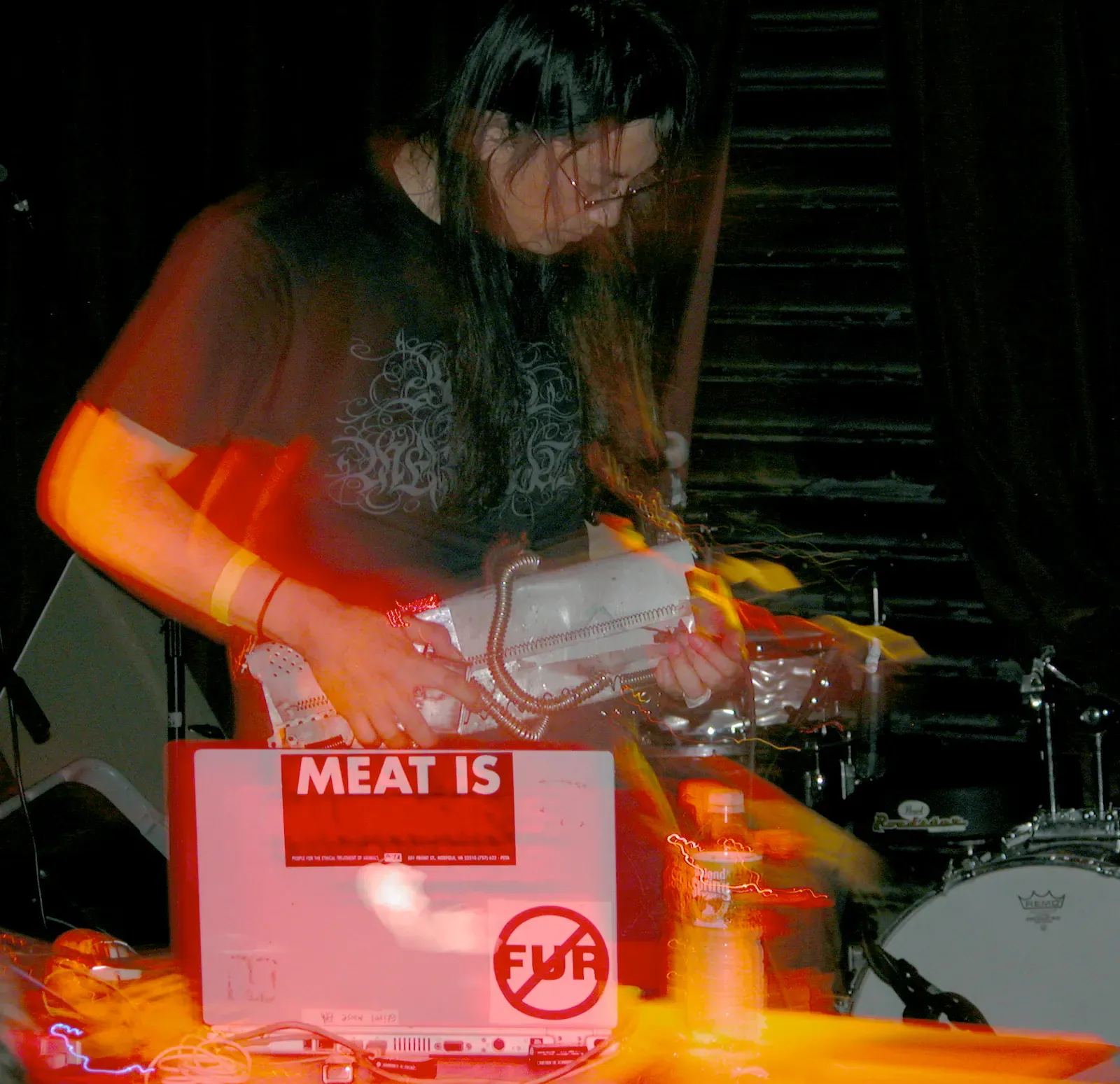
Computers changed the sound of the period. John Oswald coined plunderphonics in 1985, and Merzbow’s Pulse Demon (1996) turned noise into a wall. Akita’s own work shifted over decades from household objects to harsh electronics, then laptops, then acoustic instruments again.
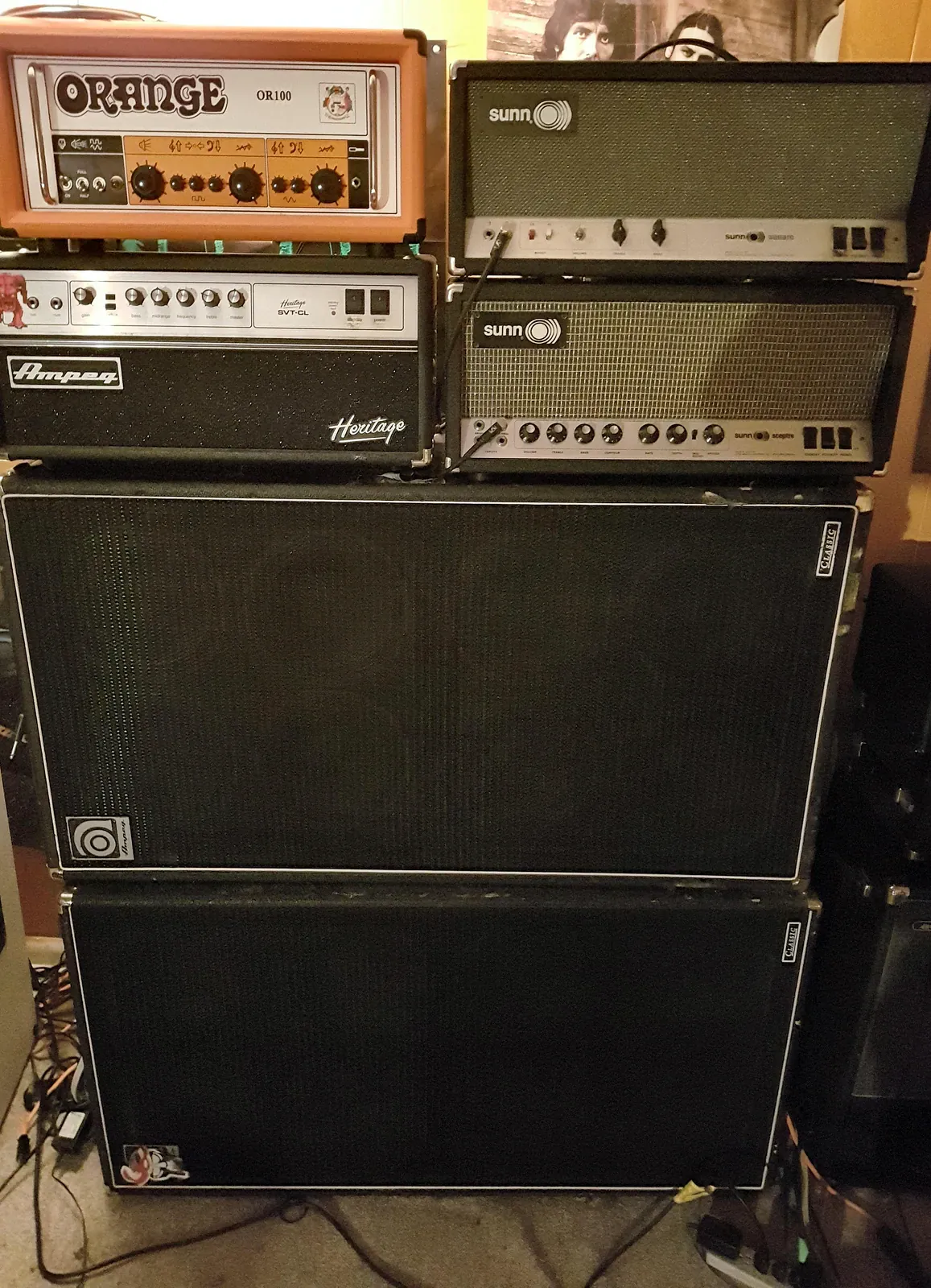
Drone found a second home in metal. Sunn O))) formed in Seattle in 1998 and took its name from the amplifier brand, a play also on the band Earth. Their shows rely on robes, fog and very high volume, and Monoliths & Dimensions (2009) is its best-known album.
Archives and networks, 2010 to the present
Since 2010 the scene has become a stable international circuit. PAN opened in Berlin in 2008 and treats club music and art as one field, while Black Truffle, founded by Oren Ambarchi in 2009, reissued Charlemagne Palestine’s Godbear on vinyl. Founders have been dying: Peter Rehberg of Mego in 2021 and AMM’s end in 2022. The labels remained, and in October 2025 Sunn O))) signed to Sub Pop, a sign that the margins are talking to the mainstream.
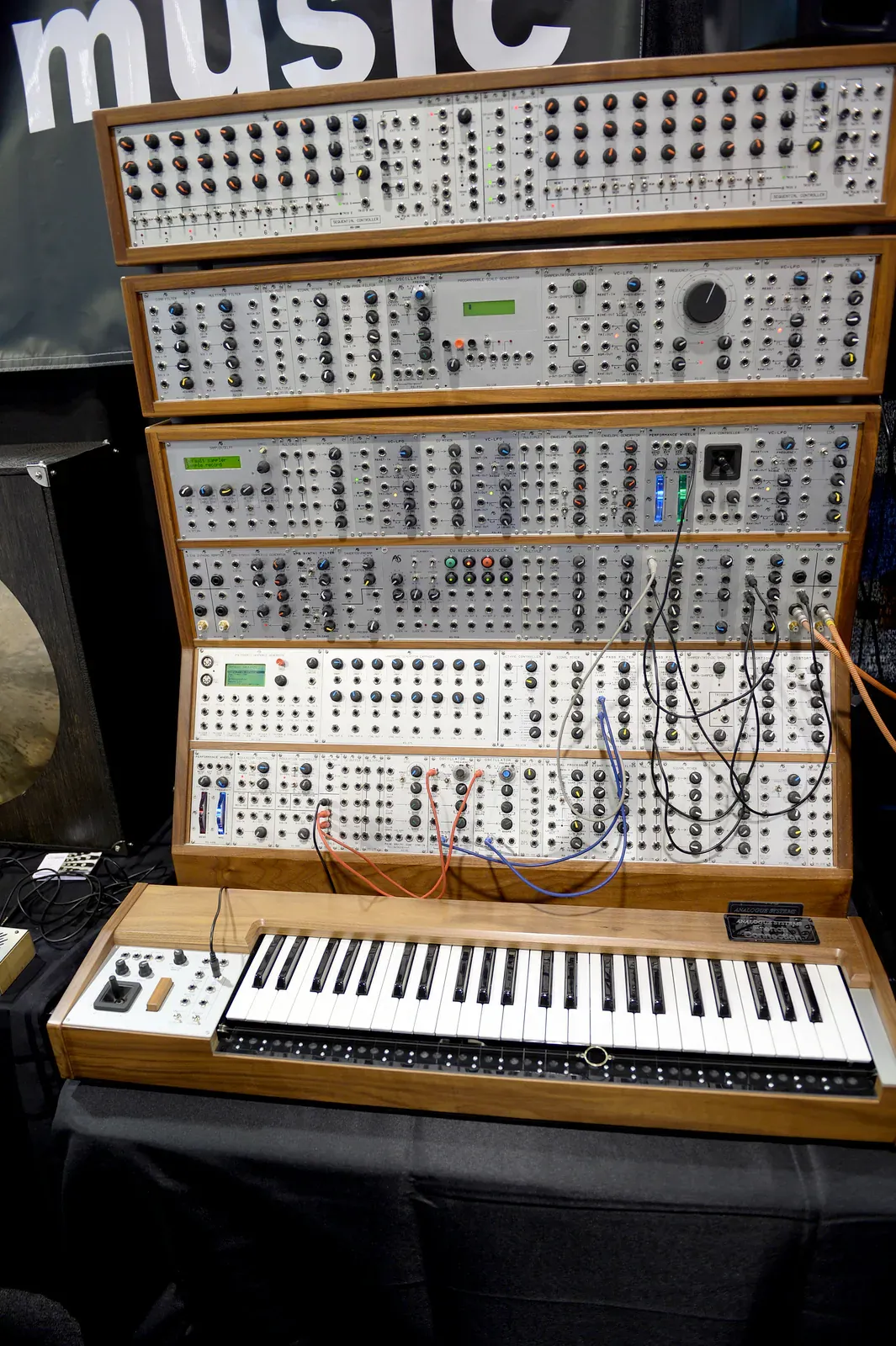
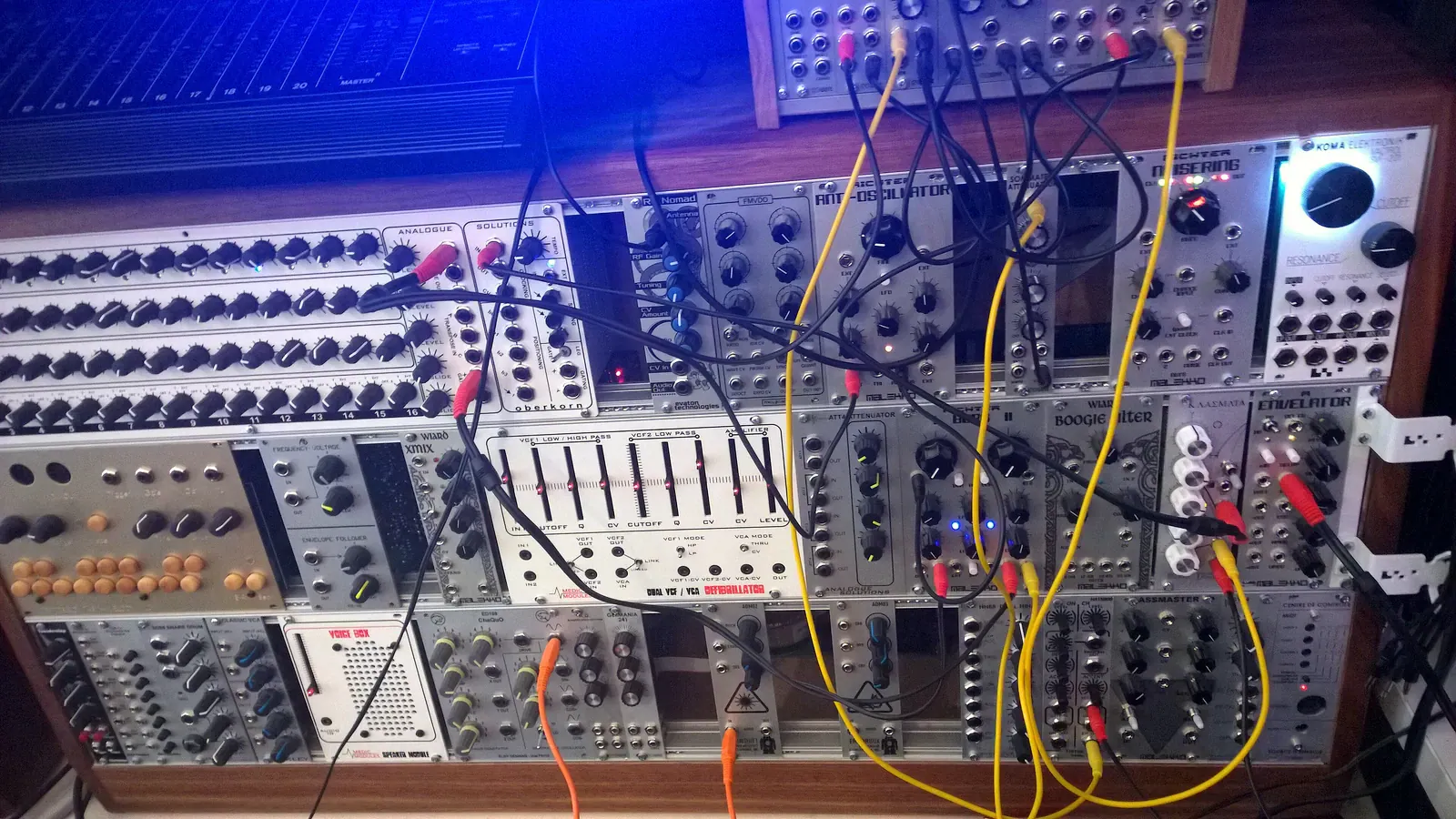
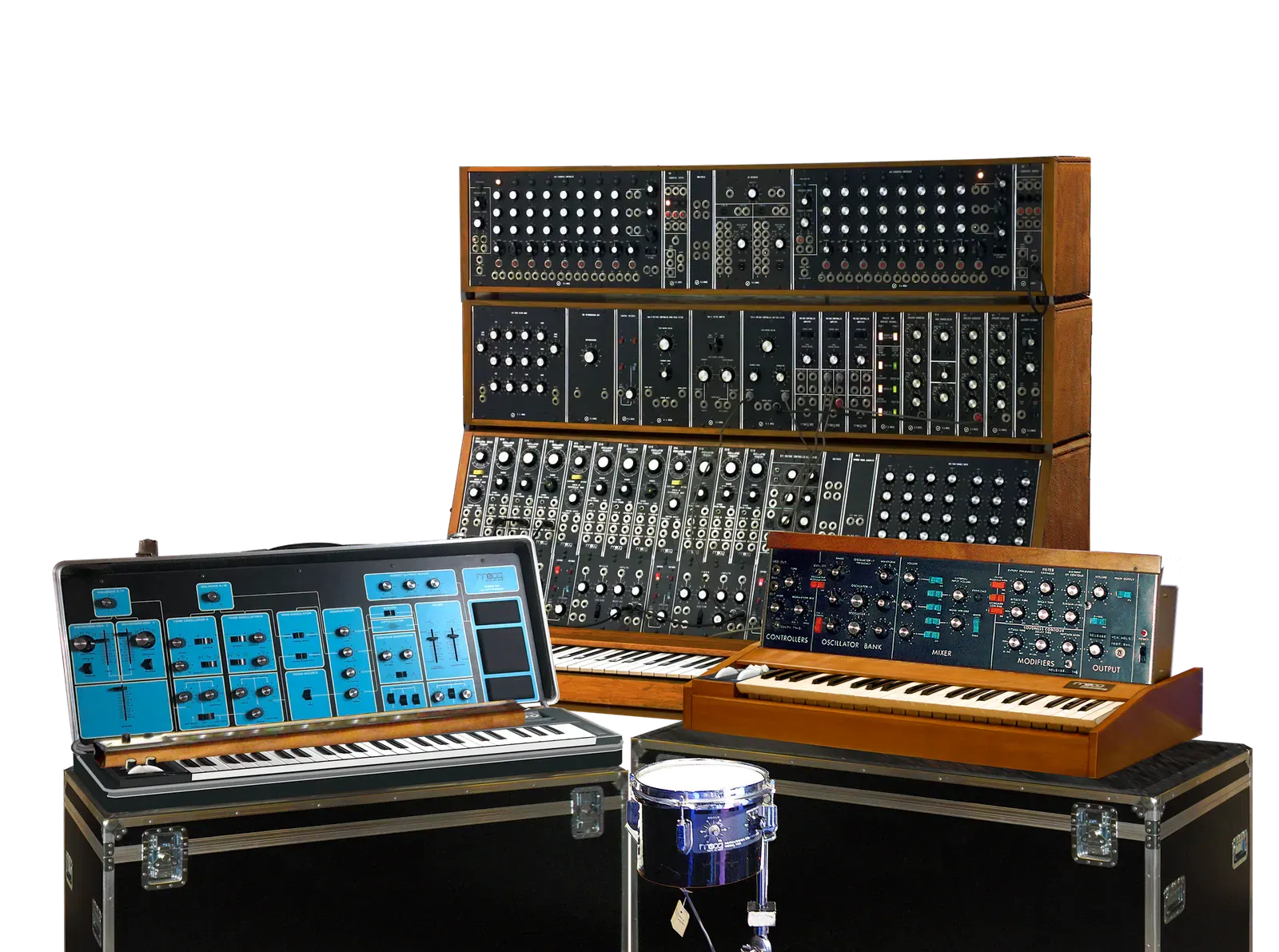
Modular synthesizers have returned: where a Moog system once filled a room, a Eurorack case now fits on a desk.
Characteristics
The common trait is an open question at the start of a piece. Works may be unmetered, unpitched or built from chance, and many have no vocals. Form follows the material: a tape piece is shaped by its splices, a drone by the length of one sustained tone, a free improvisation by what the players hear. Most of it is also specified with care, which separates it from random noise.
Instruments and production
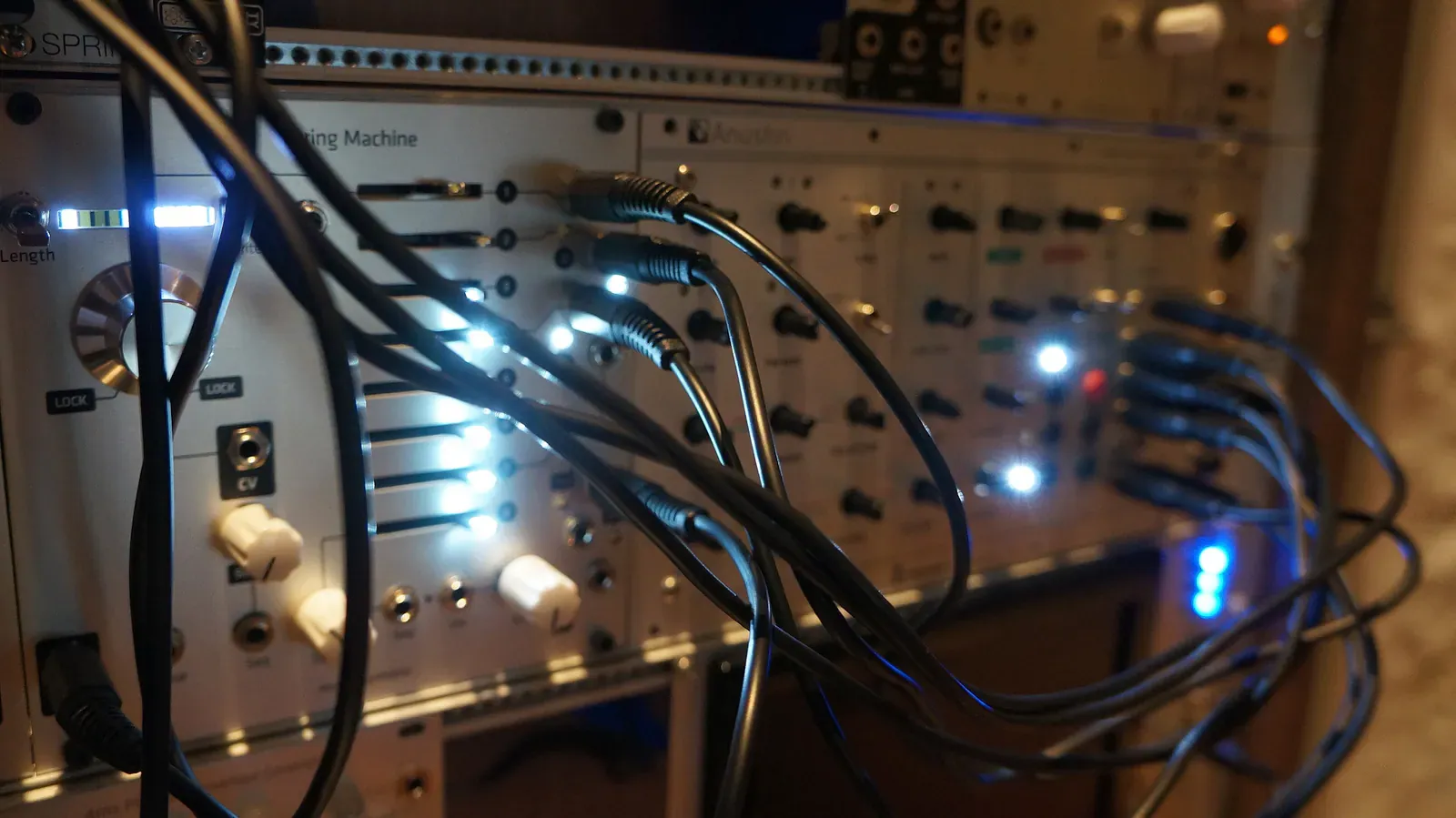
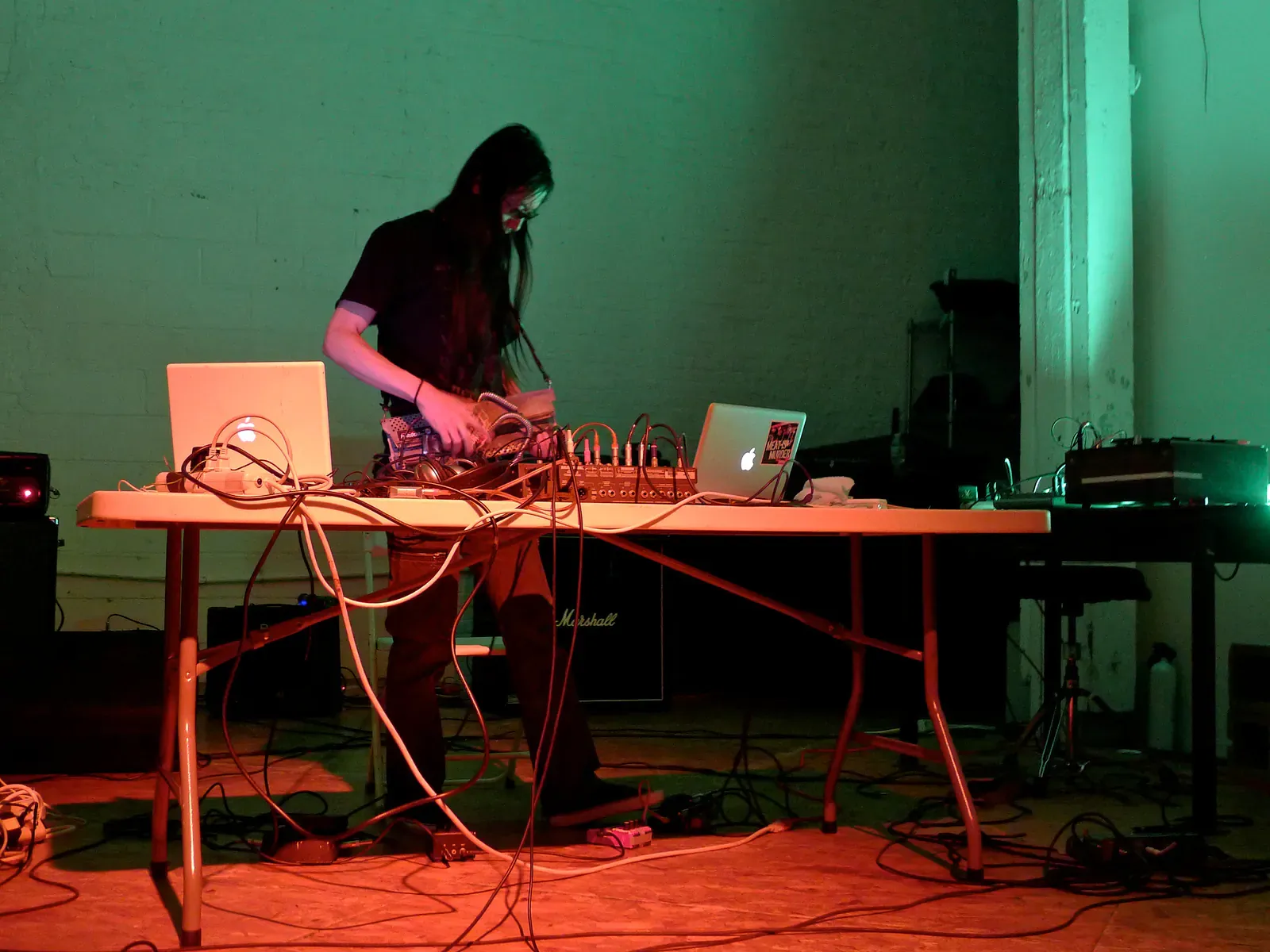
Instruments are often adapted or invented: Russolo’s noise boxes, Cage’s prepared piano, contact microphones, amplified feedback and scrap metal. Tape recorders, voltage-controlled modular synthesizers and, from the 1990s, laptops running real-time software each opened a new studio practice. Production usually means building sound rather than capturing a performance, so the studio is an instrument.
Mainstream success
The field has rarely charted. Its crossover came through borrowed techniques and a few records: the 1968 recording of In C made minimalism a commercial force, Throbbing Gristle’s 20 Jazz Funk Greats reached listeners through its pop surface, and Sunn O))) signed to Sub Pop in October 2025. Elsewhere the music spread through tape trading, fanzines, mail order and small labels.
Culture
The audience was small and mostly self-organised. Radio engineers, art students and poets made the first works; later, tape traders, record-shop owners and gallery programmers kept it going. Money was tight, so labels adopted odd structures: Tzadik runs as a not-for-profit cooperative, and Touch began as a cassette magazine. Venues were galleries, churches and warehouses, not clubs, and festivals such as Room40’s Open Frame (2005 to 2019) gave scattered listeners a place to meet.
The politics were mixed. Industrial groups used shock, and Russolo’s Futurist circle is linked to Italian fascism. Akita, by contrast, has been vegan and straight-edge since the early 2000s and supports animal rights.
Legacy
Techniques first tried here, such as tape manipulation, sampling, feedback and live processing, are now ordinary studio practice in electronic music, pop and film scoring. The labels and archives that documented the scene continue to reissue its recordings.
Misconceptions
“It is just random noise.” Most of it is carefully specified. In C has 53 numbered modules, and the three movements of 4’33” have exact durations. Riley and Cage chose what to leave open.
“4’33” is silence.“ Cage heard silence as impossible. After his 1951 visit to Harvard’s soundproof chamber, he treated the room’s sounds as the content of the piece.
“It is unlistenable.” Throbbing Gristle’s Hot on the Heels of Love is a smooth electronic pop song, and Brian Eno’s Discreet Music (1975) was designed to be played quietly in the background. Plenty of experimental work is gentle.
Frequently asked questions
What is experimental music?
Experimental music is music whose method is uncertain at the start, using chance, new instruments, tape, noise or silence. The term covers musique concrete, free improvisation, industrial, noise, drone and sound art.
When did experimental music start?
Its first manifesto was Luigi Russolo’s The Art of Noises in 1913. Practical work began with Pierre Schaeffer’s tape pieces in Paris in 1948 and John Cage’s chance works in the early 1950s.
What is the difference between experimental and avant-garde music?
The two overlap. Avant-garde usually means a break from classical tradition by trained composers, while experimental includes self-taught noise, improvised and tape-based work with no concert-hall roots. Many artists, such as Cage and Eno, sit in both.
Which recordings introduce experimental music?
Gentle entry points are Eno’s Discreet Music and Riley’s In C, followed by Throbbing Gristle’s 20 Jazz Funk Greats; the heaviest drone and noise records sit at the far end. See also the electronic and classical family pages for neighbouring styles.
Subgenres
Genres in the family
18 main branches. Names with their own page are links.
3 branches
1967
1960
1958, 1 branch
1948, 7 branches
2 branches
1960, 4 branches
1965, 10 branches
1975, 14 branches
- Musique Actuelle
1983
1948, 2 branches
1913, 8 branches
1996
1985, 1 branch
2 branches
2 branches
1916, 2 branches
Sound
What it sounds like
Tempo
- Overall45-170
- Industrial Music75-170
- Minimalism65-115
- krautrock and motorik90-155
- IDM and glitch80-130
- drone and drone metal45-70
Synths and software
- Buchla 100 series
- Moog modular synthesizer
- EMS VCS3
- Doepfer A-100
Techniques
- Tape splicing and looping
- Chance operations
- Prepared instruments
- Contact microphone amplification
- Feedback and extreme amplification
- Found-object percussion
- Live electronics and real-time processing
Tuning
No fixed system: 12-TET on prepared piano, just intonation and microtonal tunings, and unpitched noise, with many works unmetered.
Instruments
- Tape recorder
Lets composers cut, loop, slow and reverse recorded sound, the base of concrete music.
- Prepared piano
Cage's piano with objects between the strings turns it into a percussion ensemble.
- Intonarumori
Russolo's noise machines, the first instruments built for noise music.
- Modular synthesizer
Buchla and Moog systems give studios and performers voltage-controlled electronic sound.
- Contact microphone
Picks up vibrations in objects and surfaces, used by improvisers and noise artists.
- Amplified feedback guitar
Amplifier volume and feedback are the sound source in drone and noise guitar.
- Scrap metal and found objects
Neubauten and industrial groups use building tools and junk as percussion.
- Laptop and Max/MSP
Software lets one performer process sound live, the core of 1990s laptop music.
Technology that shaped it
- 1951Studio tape editing
Cut-and-splice tape lets composers shape sound as material.
- 1959Oramics
Daphne Oram's machine reads drawn film shapes as sound parameters.
- 1964Voltage-controlled synthesizer
Moog and Buchla build modular synthesizers used by composers.
- 1979Fairlight CMI sampler
Sampling brings recorded sound into the instrument, later used by plunderphonics and industrial artists.
- 1997Max/MSP
Patch-based software gives performers a live processing environment on a laptop.
Essential records
- 1950Symphonie pour un homme seul
Pierre Schaeffer and Pierre Henry. The first long concrete work shows a whole piece can be built from recorded noises.
- 19524'33"
John Cage. A score of silence that turns listening to the room into the music.
- 1956Gesang der Jünglinge
Karlheinz Stockhausen. A landmark of spatial electronic music that blends a human voice with synthesised sound.
- 1958Poème électronique
Edgard Varèse. An early large-scale tape piece made for a pavilion with hundreds of speakers.
- 1966AMMMusic
AMM. A document of free improvisation by a group with no scores and no bandleader.
- 1968In C
Terry Riley. The first recording of the minimalist score, with a steady pulse and shifting patterns.
- 1971Solo Guitar
Derek Bailey. A solo guitar record that shows non-idiomatic improvisation in its purest form.
- 1975Discreet Music
Brian Eno. A slow tape-delay piece that Eno later called a model for ambient music.
- 197920 Jazz Funk Greats
Throbbing Gristle. Industrial music at its most deceptive, hiding disquiet behind smooth electronic pop.
- 1981Kollaps
Einstürzende Neubauten. A debut of metal percussion, drills and feedback that gave German industrial its sound.
- 1996Pulse Demon
Merzbow. A saturated harsh noise album often cited as the extreme reference point of the genre.
- 2009Monoliths & Dimensions
Sunn O))). Drone metal with brass, choir and strings that made the style a concert-hall event.
Scenes
Where it happened
Where and when the sound lived: one bar per city on a shared timeline.
Europe
North America
Asia
Active scenes
Peak 5, 1962-2010
Radio studios and the Groupe de Recherches Musicales make musique concrète.
The WDR electronic studio becomes the centre of Elektronische Musik and Stockhausen's work.
Cage, Fluxus, minimalists and Tzadik's Downtown scene make it a long-running centre.
The Tape Music Center hosts Riley, Oliveros and Subotnick and the premiere of In C.
AMM, Incus, Industrial Records and Touch show how the city feeds improvised and industrial work.
The 1962 Fluxus festival gathers the first international group of event artists.
Neubauten, PAN and a club-linked experimental scene settle in the city.
Merzbow and the Japanoise scene make Tokyo the capital of harsh noise.
Mego turns the city into the home of laptop glitch and digital noise.
Glossary
Terms on this page
Pauline Oliveros's practice of attending to all sounds, wanted or not.
Music built on long, sustained tones where timbre and duration matter more than melody.
Group playing with no set tune, key or rhythm, decided as the music happens.
A noise style of dense, loud, saturated sound with little rhythm or pitch.
A method of composing or performing in which chance or the performer decides parts of the result.
Music assembled from recorded sounds, not notes, first developed in Paris in 1948.
Composing new pieces from recognisable pieces of existing recordings.
A piano whose strings carry objects such as screws and rubber to change its tone.
Families