Plunderphonics
Plunderphonics is music built from recognizable existing recordings, named by Canadian composer John Oswald in 1985 and shaped by copyright fights.
Canada, 1985
Experimental family
Born
1985
Canada
Subgenres
1
Documented branches
Links
15
Genres it drew on or shaped
Tempo
80-130 BPMLineage
Family tree
Grew out of
Derived from
Derived from
Influenced by
Canada, 1985
Plunderphonics
Led to (1)
Timeline
Era by era
From the first sparks to today. Select a dot to read the story behind it.
- Cut-ins and tape collage
1956 to 1984
- Oswald and the naming
1985 to 1992
- Digital sampling and the album
1993 to 2003
- Mashups and free downloads
2004 to today
Eras
Moments
- 1 Cut-ins and tape collage, 1956 to 1984
- 2 Oswald and the naming, 1985 to 1992
- 3 Digital sampling and the album, 1993 to 2003
- 4 Mashups and free downloads, 2004 to today
1956
Cut-ins and tape collage
Novelty cut-in singles in 1956 and James Tenney's 1961 manipulation of an Elvis record showed that a known recording could be raw material. Double Dee and Steinski began their cut-and-paste Lessons in 1983.
- 1956The Flying SaucerDickie Goodman and Bill Buchanan build a fake radio report of an alien invasion around snippets of contemporary hits.
- 1961Tenney's Collage No. 1 (Blue Suede)James Tenney cuts and processes Elvis Presley's Blue Suede Shoes into a new piece, treating a pop single as material.
- 1983Double Dee and Steinski's first LessonA winning remix entry for Tommy Boy snips many records into one hip-hop collage and starts the Lessons series.
1985
Oswald and the naming
John Oswald named the practice in 1985, mailed his Plunderphonic discs free to radio and press, and was ordered to destroy them in 1990. Negativland's U2 single drew a lawsuit in 1991.
- 1985Oswald's plunderphonics essayJohn Oswald coins the word in an essay on audio piracy as a compositional prerogative.
- 1987Escape from NoiseNegativland's fourth album pushes radio, ad and talk fragments into song form on a record about media noise.
- 1987Beats + PiecesColdcut release an early cut-and-paste single made with samplers.
- 1989Oswald's Plunderphonic CDA 25-track disc where every track reworks one artist, with sources printed openly and no clearances sought; it was never sold.
- 1989Paul's BoutiqueThe Beastie Boys and the Dust Brothers layer samples from funk, soul, rock and jazz into a dense hip-hop album.
- 1990CRIA orders Plunderphonic destroyedThe Canadian Recording Industry Association demands that undistributed copies be destroyed, after complaints including one over Michael Jackson's Bad.
- 1991Negativland and the U2 singleIsland Records sues over an EP that sampled U2 and carried cover art that made U2 more prominent than the band.
1993
Digital sampling and the album
CDs and samplers allowed Plexure's thousand-track collage in 1993, DJ Shadow's Endtroducing..... in 1996 and The Avalanches' Since I Left You in 2000, all built almost entirely from other people's records.
- 1993PlexureOswald stacks fragments of over 1,000 CD releases from 1982 to 1993 into one accelerating collage.
- 1994GrayfoldedCommissioned by the Grateful Dead camp, Oswald merges fragments of over a hundred live Dark Star performances.
- 1995Sonic OutlawsCraig Baldwin's documentary follows Negativland and the U2 dispute.
- 1996Endtroducing.....DJ Shadow assembles an album from record-shop finds, a turntable and a sampler.
- 1998Deconstructing BeckAn anonymous compilation made only from Beck samples, released without Geffen's approval, starts a legal fight and the Illegal Art label.
- 2000Since I Left YouThe Avalanches build a seamless pop album from thousands of vinyl samples.
2004
Mashups and free downloads
Danger Mouse's Grey Album, Girl Talk's Night Ripper and Feed the Animals and J Dilla's Donuts moved the method online, where releases circulated as free or pay-what-you-want downloads.
- 2004The Grey AlbumDanger Mouse mixes Jay-Z's Black Album with the Beatles' White Album; EMI tries to stop its distribution.
- 2006DonutsJ Dilla's instrumental album of short sample loops is often named beside Endtroducing..... and Since I Left You.
- 2008Feed the AnimalsGirl Talk releases a pay-what-you-want download made almost wholly of samples.
- 2016WildflowerThe Avalanches return after sixteen years with a second sample-built album.
Listening path
Start listening
A short path from an easy way in to the deep end. Thumbnails come from YouTube; the player loads only when you press play.
- 01
The Avalanches, 2000
An easy way in: sampled film dialogue, horns and a horse whinny sound like a single comic song.
- 02
DJ Shadow, 1996
Slow, hazy sample layers that made the sampled album a listening format.
- 03
Coldcut, 1997
A cut-and-paste dance track in the line of Coldcut's 1987 Beats + Pieces.
- 04
Girl Talk, 2008
Pop and hip-hop hits chopped into short bursts in the file-sharing era.
- 05
Negativland, 2019
Four decades on, the band still builds songs from broadcast and found speech.
Facts
| Family | Experimental |
| Origin | Canada |
| Emerged | 1985 |
| Status | Active |
| Tempo | 80 to 130 BPM |
| Meter | 4/4 |
| Grew out of | Sound Collage, Musique Concrète |
| Subgenres | 1 |
Plunderphonics is music assembled from recognizable pieces of existing recordings, where the listener is meant to hear whose records were used. The word was coined in 1985 by the Canadian composer John Oswald, in an essay that defended audio piracy as a compositional prerogative.
A track often contains nothing but borrowed sound, and the borrowing is the subject: pop singers, radio announcers and famous records are bent, stacked and cut until they say something new. The genre sits inside sound collage in the experimental family and has been argued over in courts as often as in reviews.
Origins
The idea predates the word. In 1956 Dickie Goodman and Bill Buchanan released The Flying Saucer, a fake radio report on an alien invasion in which the “interviews” were answered by snippets of current hits. In 1961 the composer James Tenney cut and processed Elvis Presley’s Blue Suede Shoes into Collage No. 1, treating a lowbrow pop single as raw material for art music. Oswald has also named William Burroughs’ cut-up method as an influence, and he began making plunderphonic recordings in the 1970s.
The 1985 essay gave the practice a name and a defence. Oswald used the term strictly: a plunderphonic piece draws on one artist’s recordings and nothing else, and the source must stay recognizable. A recording that hides its origins was not the point. Looser use followed, and today the word is applied to nearly any music made almost entirely from samples.
Oswald and the copyright fights, 1985-1992
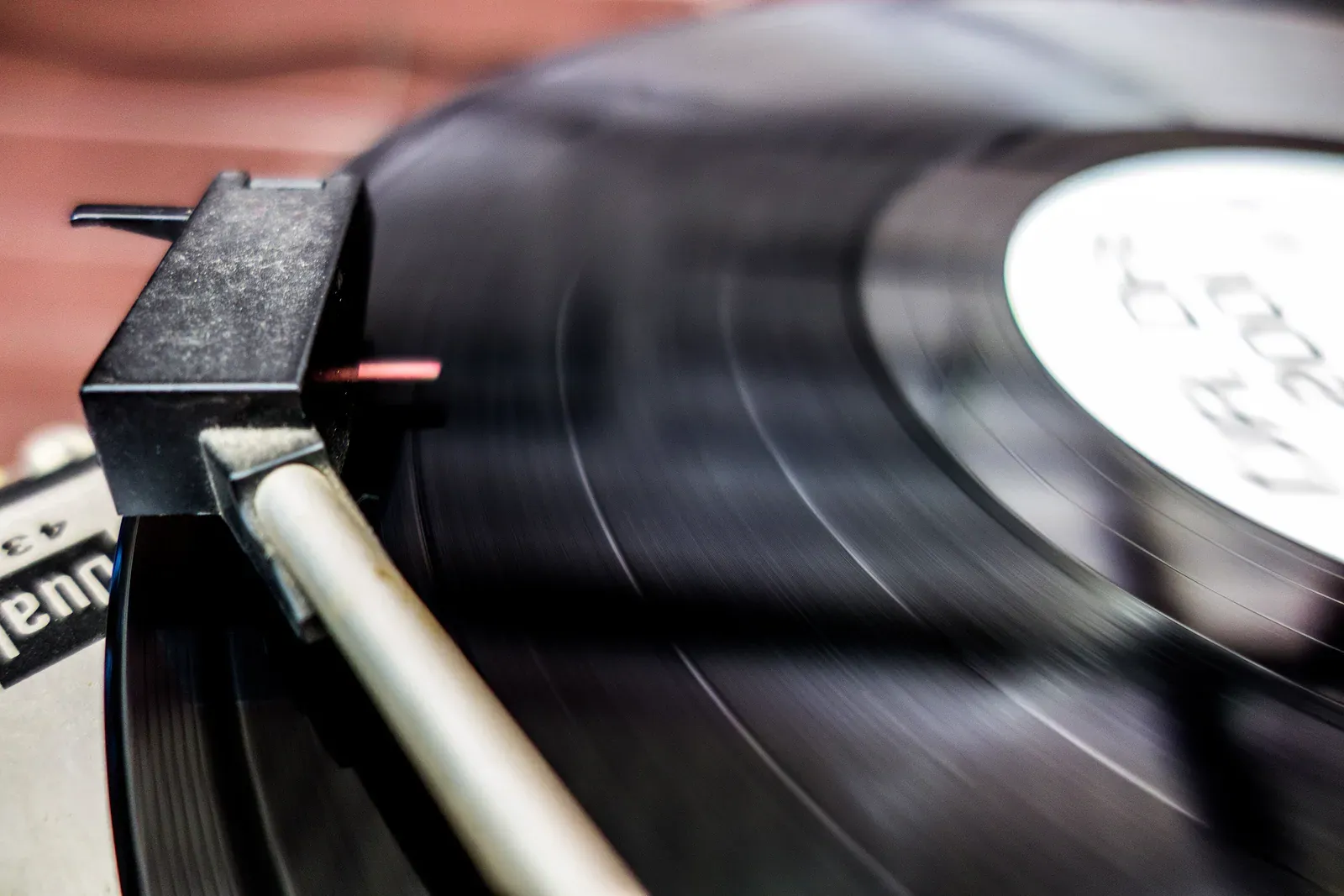
In 1988 Oswald mailed an EP called Plunderphonics to press and radio stations. One track slowed a Dolly Parton single on a Lenco turntable until she sounded like a man, another reworked Elvis Presley’s Don’t with new overdubs by musicians including Bill Frisell, and a third shuffled Stravinsky’s The Rite of Spring. In 1989 he expanded it to a 25-track CD, Plunderphonic, with a single artist behind every track and the sources listed on the packaging. No permission was sought and the disc was never sold; Oswald paid for the pressing himself and let stations broadcast it.
The record industry reacted in 1990. The Canadian Recording Industry Association, acting for several artists, demanded that the remaining copies be destroyed. One complaint concerned Michael Jackson’s Bad, which Oswald had chopped into tiny pieces and rearranged as Dab, and another concerned the cover, which turned Jackson’s image into a naked woman. The remaining copies were destroyed, and the episode became the genre’s founding legal story.
Negativland, a group formed in Concord, California, in 1979, hit the same wall a year later. Its 1991 EP U2 contained two parodies of I Still Haven’t Found What I’m Looking For, built on unauthorized samples of the song and outtakes from the radio host Casey Kasem. The sleeve printed the title U2 in much larger type than the band’s own name, and U2’s label, Island Records, sued over both the sampling and the cover. In a 1992 interview, the guitarist The Edge said U2 themselves were uneasy about the lawsuit. The band documented the case in the 1995 book and CD Fair Use, and Craig Baldwin’s film Sonic Outlaws covered it on screen.
From hip-hop to the album, 1983-2003
Plunderphonics shares a technique with hip-hop but not a purpose. In 1983 Double Dee and Steinski, working on a Tommy Boy remix contest in New York, snipped many records into a single cut-and-paste piece and followed it with further Lessons, which circulated on promotional pressings. In London, Coldcut put out the sampler-built single Beats + Pieces in 1987. Negativland’s Escape from Noise (1987) pushed broadcast fragments into the shape of an album, and the Beastie Boys and the Dust Brothers layered samples from funk, soul, rock and jazz on Paul’s Boutique in 1989.
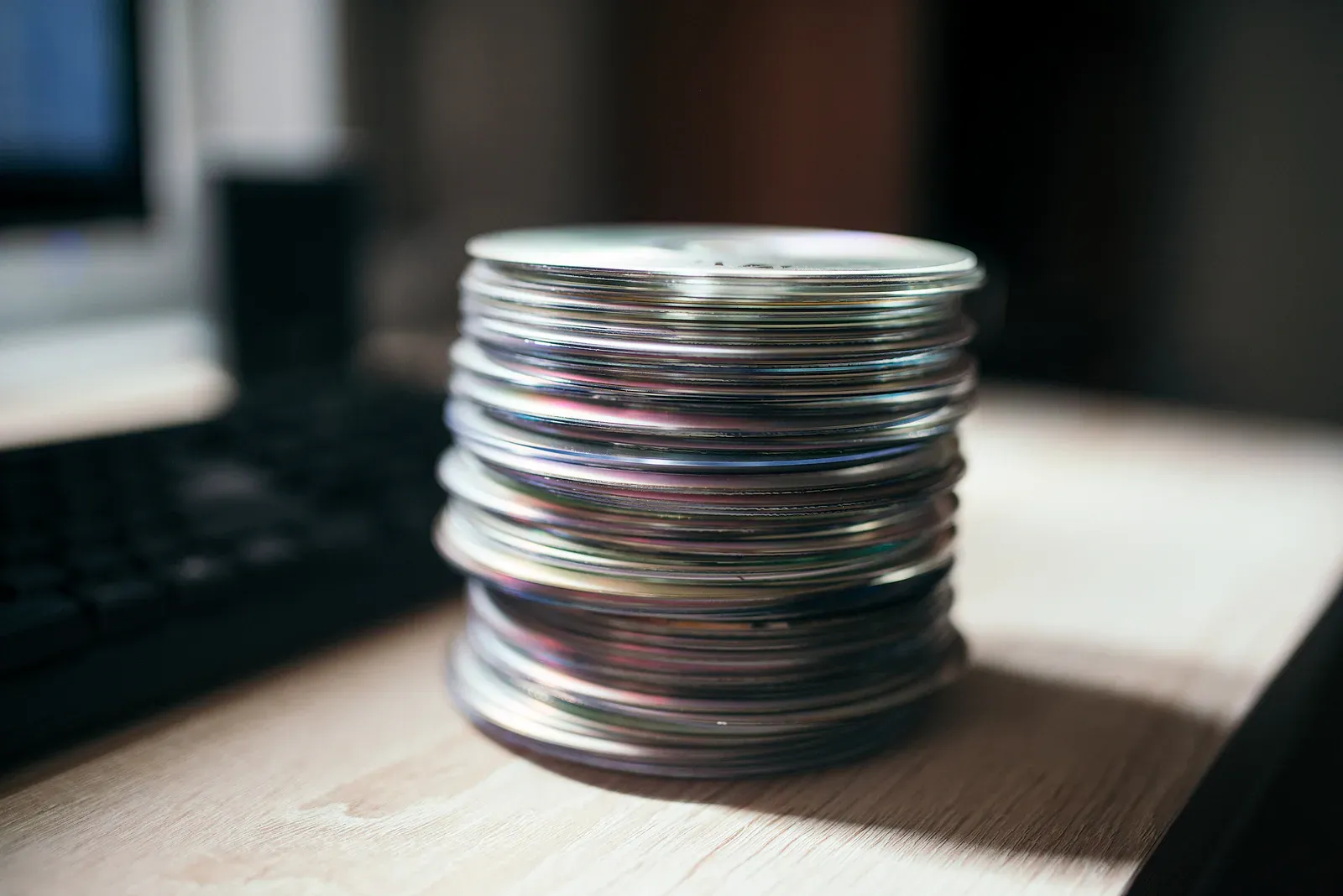
The compact disc, introduced in 1982, changed the scale. Oswald’s Plexure (1993) microsampled fragments of more than 1,000 commercial releases made between 1982 and 1993 and stacked them into one accelerating collage of about 20 minutes. His Grayfolded, begun in 1993 and issued as two discs in 1994 and 1995, merged fragments of more than a hundred Grateful Dead performances of the song Dark Star, recorded between 1968 and 1993, into two pieces of about an hour each. The commission came from within the Dead’s circle.
Two albums then brought the method to a wide audience. DJ Shadow’s Endtroducing….. (Mo’ Wax, 1996) was built almost entirely from samples, a turntable and an Akai sampler. The Avalanches’ Since I Left You (2000), made in Melbourne, assembled thousands of vinyl fragments into a continuous pop record whose sources are nearly impossible to separate by ear. Critics often name these two, along with J Dilla’s Donuts (2006), as the most important albums in the loose, modern sense of the term.
Mashups and free downloads, 2004 onwards
After 1998, when the anonymous compilation Deconstructing Beck assembled 13 tracks from Beck samples without approval from his label and started a legal fight, a small label named Illegal Art became the genre’s home. In 2004 Danger Mouse mixed Jay-Z’s Black Album with the Beatles’ White Album as The Grey Album, and EMI tried to stop its distribution even though the project had approval from Jay-Z and from Paul McCartney and Ringo Starr.
Gregg Gillis, who records as Girl Talk, scaled the idea to dance-floor length. His albums Night Ripper (2006) and Feed the Animals (2008) pack dozens of pop and hip-hop hits into short bursts. Illegal Art released Feed the Animals as a pay-what-you-want download on 19 June 2008. The mashup is a related form but a looser one: it joins two or three songs, while plunderphonics at its strictest uses one source and at its widest uses thousands.
Characteristics
Recognition is the defining trait. Meaning comes from placing a known voice or riff in an unexpected setting. Tracks change source, key and tempo abruptly, since each fragment keeps the pitch of its original record, and the result is often deliberately jarring. Spoken material is common: educational films, news broadcasts, sermons and radio announcers supply voices that cannot be mistaken for a band. Oswald’s strict form, one artist per track, is rare today.
Instruments and production
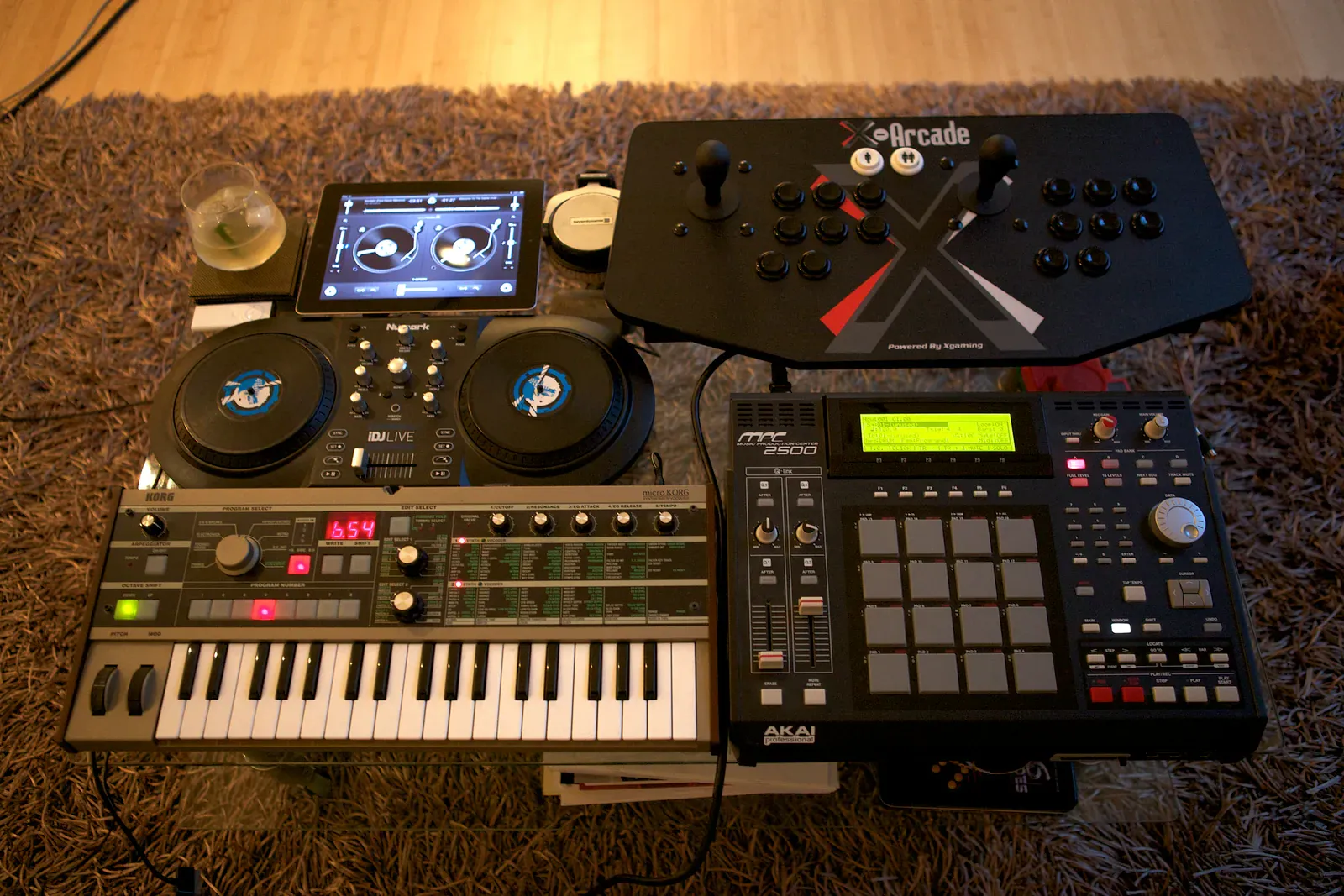
The tools shaped the music. Tape and razor blade came first, then the turntable, which could slow, speed and loop a record. Samplers such as the Akai MPC60 let producers chop drum breaks and vocal phrases onto pads, and the compact disc supplied clean digital copies. Oswald’s electroquotations, exact clones of fragments of commercial recordings, depended on that precision. Later, laptop editing software made dense, fast cutting practical, and Girl Talk’s albums are built that way.
Culture
The genre grew its own politics. Negativland used the term culture jamming for turning mass-media material back against its message, and the U2 case made its members public voices on copyright. Many artists in the field argue that quotation of shared culture falls under fair use, and courts have never given a blanket answer.
Legacy
Plunderphonics did not produce a single scene. It left a set of ideas that other genres adopted: the sample-based album, the mashup, the free download, and the argument that a recording can be a source as well as a product. The ideas sit close to hip-hop, vaporwave and the older tradition of musique concrète, and The Avalanches’ 2016 album Wildflower showed the method still working sixteen years after Since I Left You.
Misconceptions
Plunderphonics is not simply another word for hip-hop sampling. Hip-hop uses a sample as one layer under new rapping and playing, while Oswald’s definition makes the borrowed recording itself the entire material and the hearable source the point.
Oswald did not sell his plunderphonic discs. Plunderphonic was distributed free to radio and press and never offered in shops, and the legal order followed anyway.
Plunderphonics did not begin in 1985. The word did, but cut-in singles such as The Flying Saucer date to 1956 and Tenney’s Elvis collage to 1961, and Oswald had been working in the method since the 1970s.
Frequently asked questions
What is plunderphonics?
Plunderphonics is music made from recognizable samples of existing recordings, a term coined by John Oswald in 1985. In its strict form every sound comes from borrowed records and the sources stay audible.
How is plunderphonics different from sampling in hip-hop?
Hip-hop commonly takes a short sample as a base for new rhythm and vocals. Plunderphonics often uses borrowed material alone and treats its recognizability as part of the work.
Who made the first plunderphonics records?
John Oswald made the first works under the name, including the 1988 Plunderphonics EP and the 1989 Plunderphonic CD. Earlier recordings such as Tenney’s 1961 Collage No. 1 used the same approach before the word existed.
Is plunderphonics legal?
Uncleared samples can breach copyright, and Oswald’s discs and Negativland’s U2 single were both challenged. Artists often rely on fair use arguments, which have not been settled in a way that covers all such work.
Which albums are the best known?
Oswald’s Plexure and Grayfolded, Negativland’s Escape from Noise, DJ Shadow’s Endtroducing….., The Avalanches’ Since I Left You and Girl Talk’s Feed the Animals are the usual starting points.
Sound
Sound sheet
Anatomy of a track
| # | Part |
|---|---|
| 1 | Recognisable source loop or break |
| 2 | Layered fragments from other recordings |
| 3 | Abrupt cut to a new source |
| 4 | Collision of all sources at once |
Signature sounds
- Quotations from famous records that listeners can name
- Sudden jumps of key, tempo or source
- Broadcast, film and spoken-word fragments
- Source lists printed on the sleeve
Drums and percussion
- Akai MPC60
Techniques
- Layering many sources
- Looping
- Pitch and speed shifting
- Single-source reworking
- Source-credited packaging
Keys and modes
Clashing keys. Fragments from different sources overlap in their own keys and are left unresolved.
Source key retained. In hip-hop-based pieces, a loop keeps its original key and others are pitch-shifted to fit.
Tuning
Follows each source, often pitch-shifted by varispeed or software
Vocals
Mostly sampled voices, from pop singers to radio announcers, with little or no new singing
Scenes
Where it happened
Where and when the sound lived: one bar per city on a shared timeline.
North America
Europe
Oceania
Active scenes
Peak 4, 1997-2025
Negativland formed here in 1979 and later ran Seeland Records from the San Francisco Bay Area.
Double Dee and Steinski made the Lessons for Tommy Boy Records.
Coldcut formed in 1986 and built cut-up records around samplers and video.
The Avalanches formed here in 1997 and recorded Since I Left You.
Culture
Culture markers
- Culture jamming
Negativland's term for turning mass-media material against its own message.
Slang - Altered album covers
Oswald's Plunderphonic sleeve transformed a Michael Jackson cover image, a point cited in the legal complaint.
Artwork - Free and pay-what-you-want release
Oswald gave discs away to radio and press; Girl Talk released Feed the Animals as a pay-what-you-want download.
Ritual
Media
Key media
- 1995Sonic Outlaws
by Craig Baldwin. A documentary on Negativland and the U2 dispute.
Film - 1995Fair Use: The Story of the Letter U and the Numeral 2
by Negativland. A book and CD on the U2 lawsuit with essays on copyright.
Book - 1998Deconstructing Beck
by Illegal Art. An album of 13 tracks made only from Beck samples.
Compilation
Glossary
Terms on this page
Reusing mass-media material to turn it against its own message.
William Burroughs' method of cutting text and rearranging it, which influenced Oswald.
Oswald's word for an exact digital clone of a fragment of a commercial recording.
A US legal doctrine allowing some unlicensed use of copyrighted work, cited by many sample-based artists.
A track that combines two or more existing recordings into a new one.
Music made from recognisable existing recordings, a word coined by John Oswald in 1985.
Experimental family