Sound Collage
Sound collage is a composition method that assembles existing recordings, found sound and broadcasts into new works, from 1930s tape to modern sampling.
1928
Experimental family
Born
1928
Subgenres
2
Documented branches
Links
6
Genres it drew on or shaped
Tempo
80-115 BPMLineage
Family tree
Grew out of
Derived from
Sound Collage
Led to (3)
Timeline
Era by era
From the first sparks to today. Select a dot to read the story behind it.
- Montage, discs and tape
1928 to 1959
- Quotation and the cut-up
1960 to 1982
- Samplers, mixes and lawsuits
1983 to 1999
- Software and the mainstream
2000 to today
Eras
Moments
- 1 Montage, discs and tape, 1928 to 1959
- 2 Quotation and the cut-up, 1960 to 1982
- 3 Samplers, mixes and lawsuits, 1983 to 1999
- 4 Software and the mainstream, 2000 to today
1928
Montage, discs and tape
Film-maker Walter Ruttmann assembled recorded sound in 1928, Cage wrote for turntables in 1939, and Pierre Schaeffer built the first musique concrète from train recordings in 1948. Tape then made splicing routine.
- 1928Ruttmann's WeekendWalter Ruttmann edits recorded speech, music and noise into a sound film, an early documented electronic collage.
- 1939Cage's Imaginary Landscape No. 1John Cage scores variable-speed turntables playing frequency records, the first of his found-sound works.
- 1948Schaeffer's railway studyPierre Schaeffer assembles Etude aux chemins de fer from train recordings played on several turntables, the first musique concrète piece.
- 1952Williams MixCage completes a tape collage of hundreds of spliced fragments, chosen by chance operations.
1960
Quotation and the cut-up
James Tenney reworked an Elvis single in 1961, the Beatles ended their 1968 double album with a tape montage, and Holger Czukay layered shortwave radio into songs. Collage moved from the studio into rock.
- 1961Tenney's Collage No. 1 (Blue Suede)James Tenney cuts and processes Elvis Presley's hit record into a new piece, an early case of a pop record as raw material.
- 1968The Beatles close with Revolution 9The White Album ends with a long tape montage of spoken fragments, effects and looped sources.
1983
Samplers, mixes and lawsuits
Steinski's hip-hop mixes, Negativland's tape pieces and John Oswald's plunderphonics used pop records as raw material. Legal threats over uncleared samples shaped how the work was released.
- 1983Steinski's Lesson 1Steinski and Double Dee cut a Tommy Boy remix contest entry out of records, TV and film dialogue.
- 1985Oswald coins plunderphonicsJohn Oswald names the practice in an essay defending the use of existing recordings as a compositional right.
- 1987Negativland's Escape from NoiseThe band's SST album mixes found speech, radio and tape loops into song-length collages.
- 1989Oswald's Plunderphonic is withdrawnA 25-track CD of unlicensed reworkings is destroyed after a legal threat from the Canadian recording industry over a Michael Jackson piece.
- 1991The U2 single and the Island lawsuitNegativland's U2 EP draws a suit from Island Records and a break with SST, and becomes a fair-use test case.
- 1993Oswald's PlexureThousands of fragments from over 1,000 commercial CD tracks are layered into one accelerating piece.
2000
Software and the mainstream
The Avalanches built a whole album from thousands of samples in 2000, and Girl Talk's 2008 mashup albums brought collage to pop audiences while fair-use arguments continued.
- 2000The Avalanches' Since I Left YouA debut album stitched from thousands of sampled records reaches wide audiences.
- 2008Girl Talk's Feed the AnimalsA mashup album of hundreds of short pop and hip-hop samples is released for free download.
Listening path
Start listening
A short path from an easy way in to the deep end. Thumbnails come from YouTube; the player loads only when you press play.
- 01
The Avalanches, 2000
The easiest way in: thousands of samples that sound like one song.
- 02
Holger Czukay, 1979
A pop-era piece built on recorded foreign radio and voice.
- 03
The Beatles, 1968
Tape collage inside a bestselling rock record.
- 04
Negativland, 1987
Found speech looped and cut into a deliberate provocation.
Facts
| Family | Experimental |
| Status | Active |
| Tempo | 80 to 115 BPM |
| Meter | 4/4 |
| Grew out of | Musique Concrète |
| Subgenres | 2 |
Sound collage is a way of composing in which new works are assembled from existing recorded material: found sound, radio and television fragments, spoken word, and other people’s music. The clashes between sources are kept audible rather than smoothed over.
It grew out of experimental film and radio sound in the 1920s and 1930s, passed through tape studios in the 1950s, and became a pop and hip-hop practice once samplers and compact discs made recorded fragments easy to copy. It belongs to the experimental family and descends from musique concrète.
Origins
The first documented electronic collage is Weekend, made in 1928 by the film-maker Walter Ruttmann, who edited recorded words, music and noise into a sound picture of a city weekend. Earlier composers had stitched quotations together on paper: Charles Ives layered tunes in Central Park in the Dark in 1906. What was new in the recording age was that the material itself, not a written imitation of it, could be rearranged.
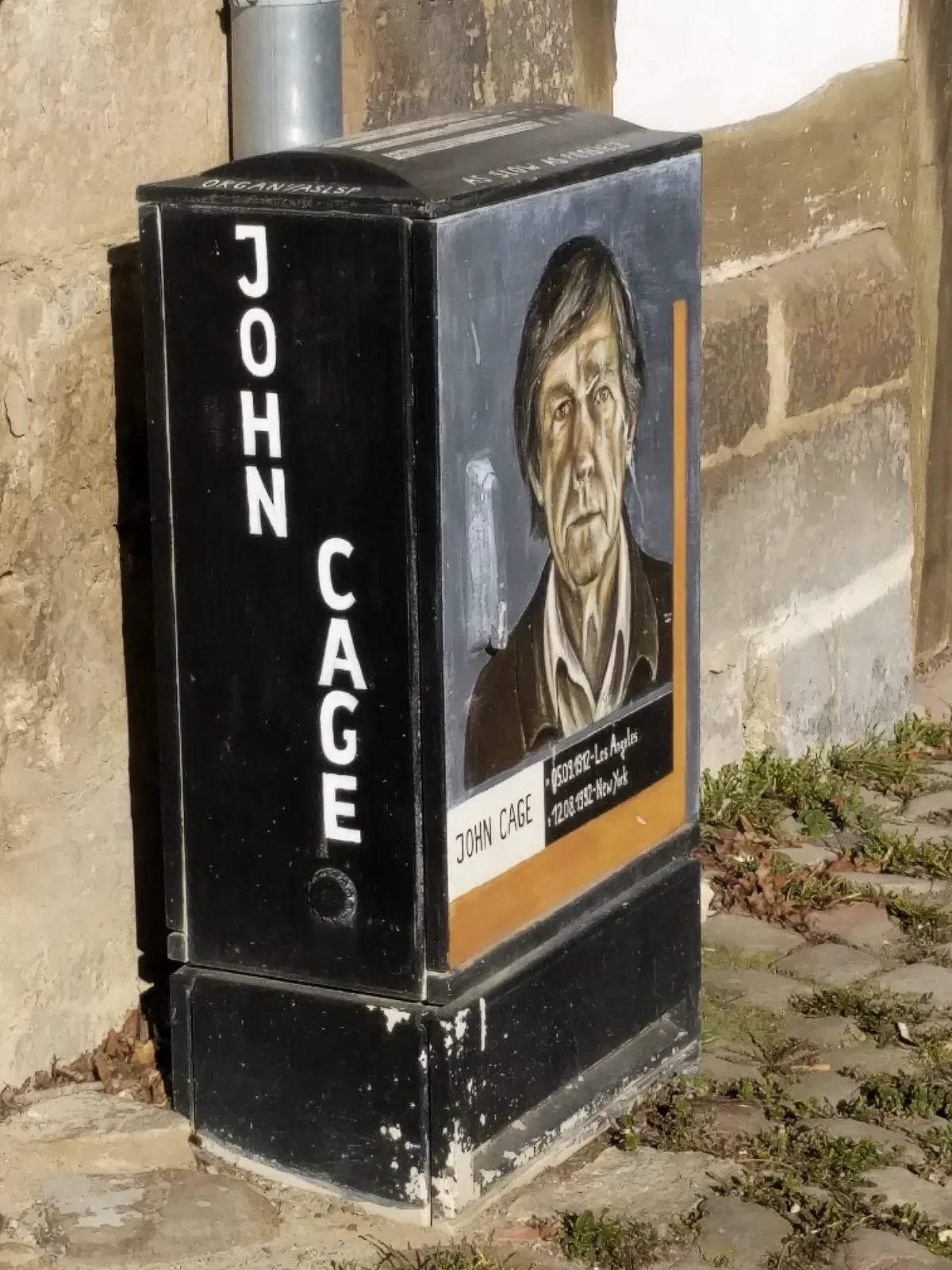
In 1939 John Cage wrote Imaginary Landscape No. 1 for variable-speed turntables playing frequency test records, treating the record player as an instrument and the record as a sound source. In 1948 Pierre Schaeffer recorded trains onto discs, some with lock grooves that made them repeat, and mixed them on several turntables into Etude aux chemins de fer, the first piece of musique concrète.
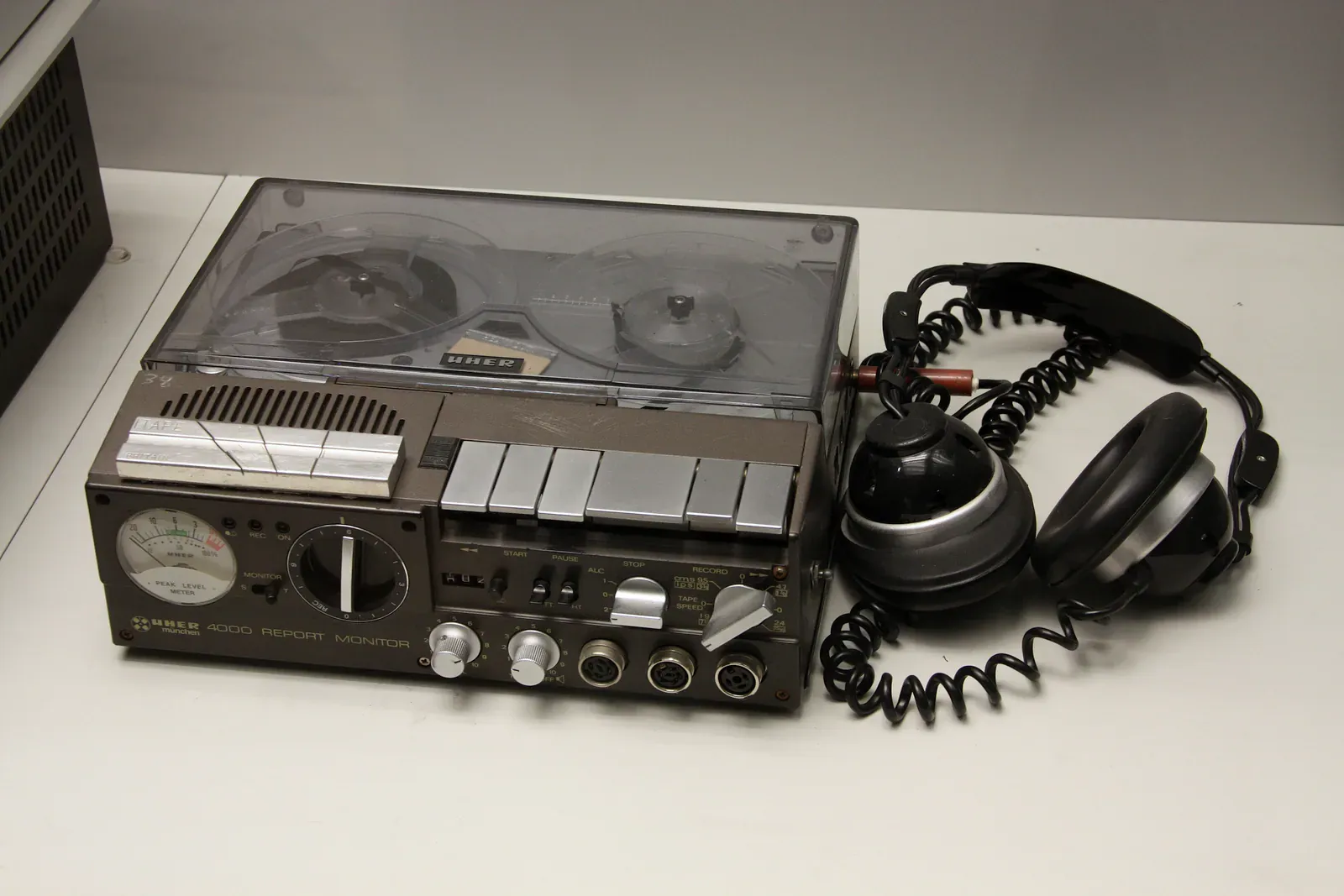
Tape and the studio, 1950-1960
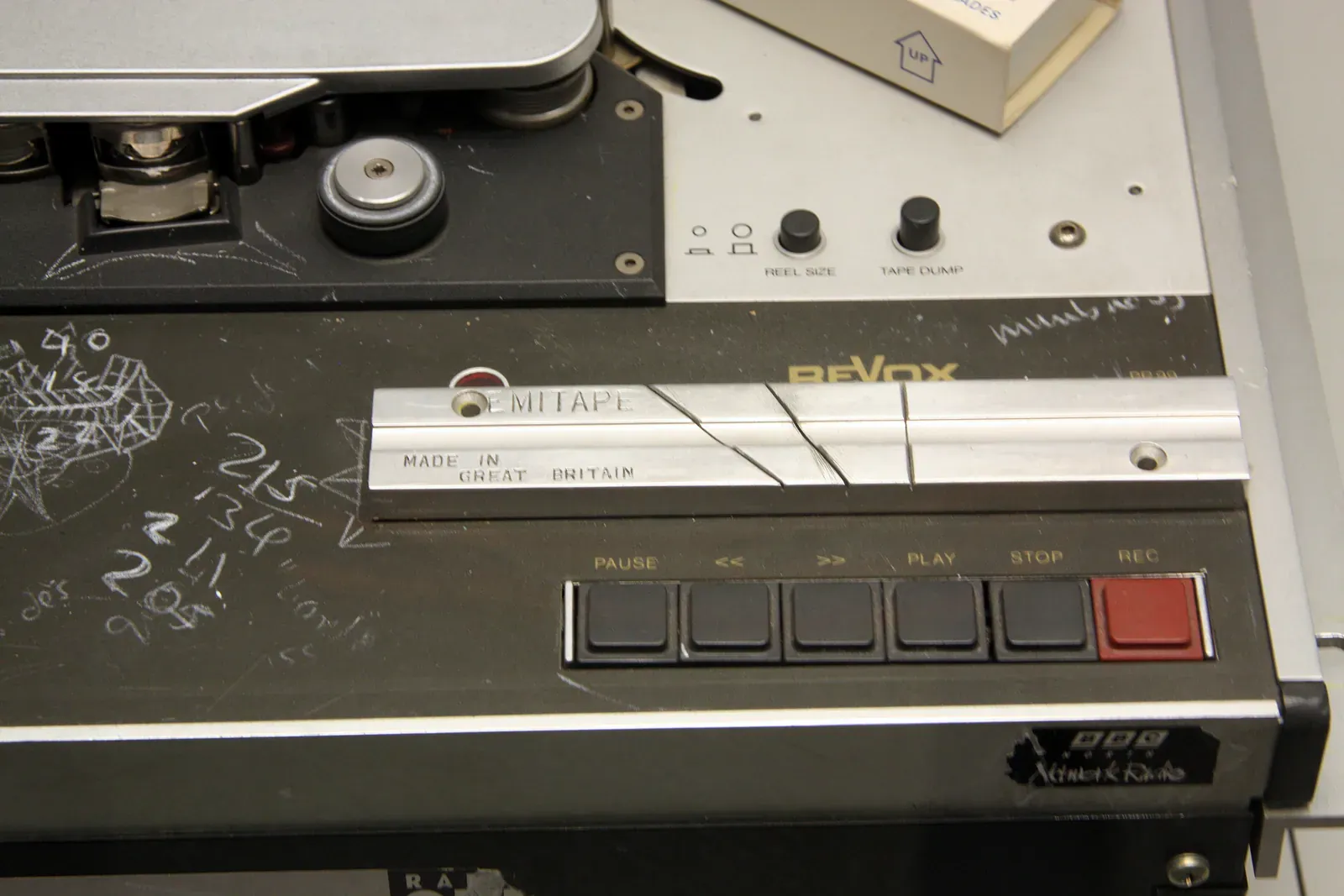
Magnetic tape turned collage into a craft of scissors and adhesive. Schaeffer, Pierre Henry, Stockhausen, Boulez, Messiaen and others made studies from spliced material at radio studios in Paris and Cologne in the early 1950s. In 1952 Cage completed Williams Mix, a tape collage of many hundreds of fragments whose order and length were fixed by chance operations.
Quotation and the cut-up, 1960-1982
In 1961 James Tenney processed Elvis Presley’s Blue Suede Shoes into Collage No. 1, one of the first pieces to take a hit record as its raw material rather than a field recording. Composers such as Luciano Berio went on to layer quotations over a complete movement by Mahler in the third part of Sinfonia. The literary cut-up method of William Burroughs and Brion Gysin was applied to tape, and the groups around industrial music took it up.
Rock came to the method through the studio. The Beatles closed their 1968 double album with Revolution 9, a long montage of looped tapes and spoken fragments. In 1979 Holger Czukay, a former member of Can and an early sampling pioneer, released Movies, which used recorded broadcasts as musical material. Club DJs of the 1970s, meanwhile, were re-editing records they played, a form of collage that stayed on the dance floor.
Samplers, mixes and lawsuits, 1983-1999
Hip-hop supplied a new route. In 1983 Doug DiFranco and Steven Stein, working as Double Dee and Steinski, won a Tommy Boy remix contest with a mix cut from records, television clips and film dialogue. Their Lessons followed, and The Motorcade Sped On set Walter Cronkite’s reports of the Kennedy assassination over a drum break. Steinski’s work became a model for Coldcut, DJ Shadow and the Avalanches.
The same decade produced the first fights over legality. John Oswald began making single-source reworkings in the 1970s and coined the word plunderphonics in a 1985 essay. In 1988 he mailed an EP to radio stations and the press, and in 1989 he issued a 25-track CD with every source credited on the sleeve. It was never sold, and the remaining copies were destroyed after the Canadian recording industry threatened legal action over a chopped-up Michael Jackson song. His 1993 piece Plexure layered fragments of more than 1,000 commercial CD tracks, and he later made Grayfolded from Grateful Dead concert tapes at Phil Lesh’s invitation.
Negativland, formed in the San Francisco Bay Area in 1979 and named after a Neu! song, built collages from radio, advertising and found speech, and coined the term culture jamming in 1984. After a run of albums on SST, including Escape from Noise in 1987, their 1991 U2 single drew a lawsuit from Island Records. SST then fell out with the band, which published a book and CD about the case in 1995.
Software and the mainstream, 2000 onward
In 2000 the Avalanches, formed in Melbourne in 1997, released Since I Left You, an album built from thousands of sampled records that sounds like a single continuous pop work. Girl Talk’s Feed the Animals followed in 2008 and was released for free download. DJ Shadow’s 1996 Endtroducing is often grouped with these records. Software replaced the tape bench: a laptop can hold and align thousands of fragments, which changed the scale of collage but not the method.

Characteristics
A collage keeps its sources recognisable and lets them disagree. Keys, tempos and recording qualities clash, and pieces often change source without warning. Some works use one source only, as in Oswald’s single-artist reworkings; others, like Plexure, use thousands. Spoken word, announcers and broadcast material are common because they carry meaning of their own, and the piece often makes a comment on its sources, in the way culture jamming does. The sound sheet on this page lists the tempo, keys and techniques.
Instruments and production
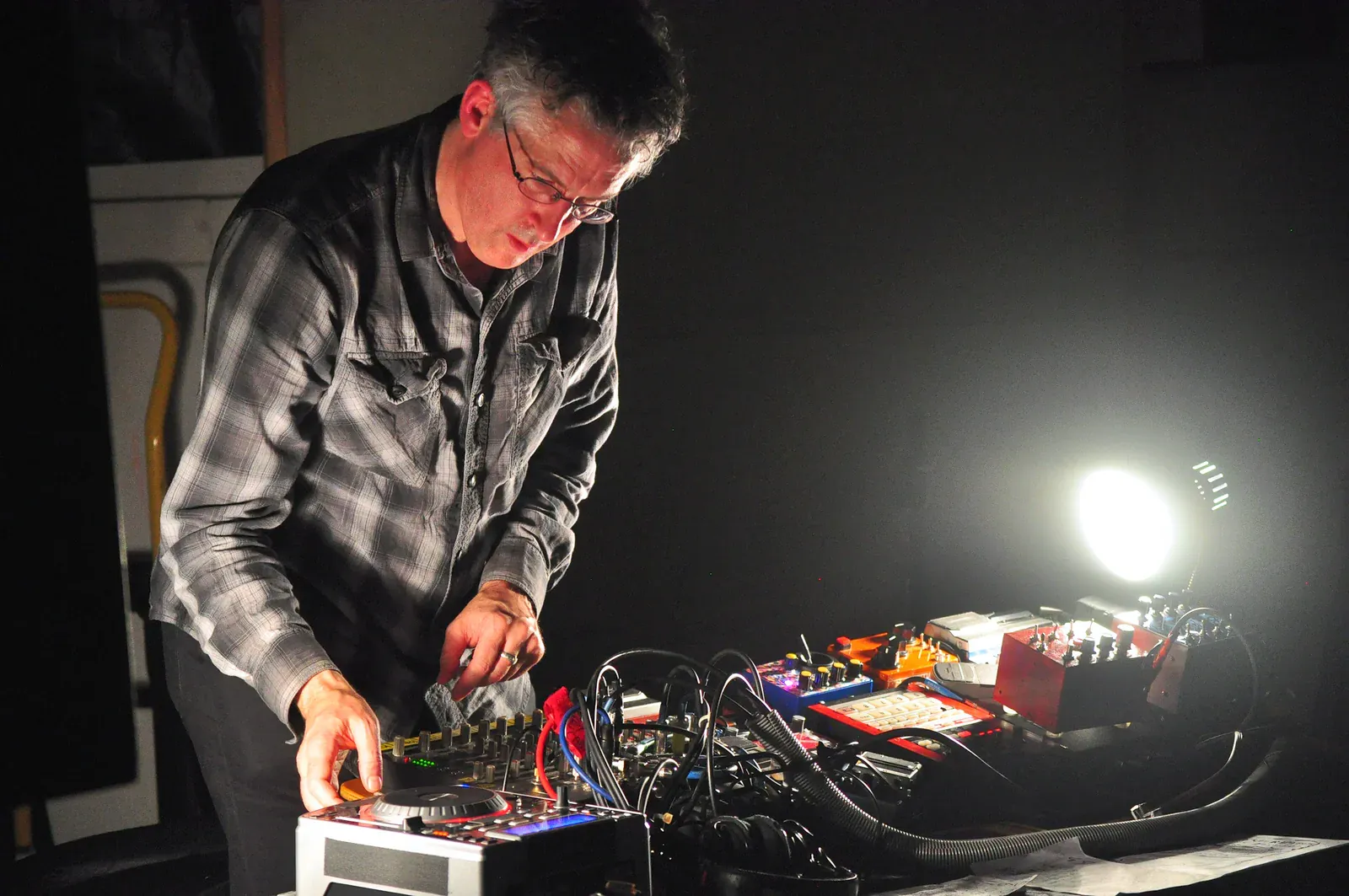
The tools have been the tape recorder with a razor blade and splicing block, the turntable, the radio, and later the hardware sampler and the digital audio workstation. Each changed what was easy. Tape favoured slow, careful assembly, turntables favoured live triggering and looping, and the compact disc allowed exact digital clones that Oswald called electroquotations.
Notable recordings
Revolution 9 was recorded in 1968 from looped tapes and spoken voices, and its closing place on a bestselling album put tape collage in front of a mass audience. Escape from Noise showed that a collage could be arranged like an album, and Christianity Is Stupid is its best-known cut. Since I Left You is the other pole: a collage made so smooth that most listeners hear it as songs.
Culture
Collage has long been linked to arguments about ownership. Oswald listed every stolen source on his sleeves, and Negativland argued their work was fair use and wrote about it at length. Films such as Sonic Outlaws and RiP!: A Remix Manifesto followed the disputes, which turned collage into a public case about what recorded sound may be reused. The scene has been small and often self-published, with artists running their own labels or releasing for free.
Legacy
The method shaped hip-hop production, the Avalanches’ kind of sample-built pop, mashup records and much electronic music. It also created a legal vocabulary: arguments about fair use, sampling clearance and appropriation that continue in music and in other media. Newer branches include epic collage, named around 2013 for digital works that mix ambient, glitch and text-to-speech.
Misconceptions
It is not simply remixing. A remix reworks one song for a new use, while a collage works with the differences between sources and may use dozens or thousands of them. It is not a digital invention either: the first pieces date from 1928, 1939 and 1948, long before samplers. And it is not always unlicensed theft. Many works use public-domain, self-made or cleared material, and the legal status of the rest has been argued case by case rather than settled once.
Frequently asked questions
What is sound collage?
Sound collage is a composition method that builds new works from existing recordings and found sound, keeping the clashes between sources audible. Examples include Cage’s Williams Mix, the Beatles’ Revolution 9 and the Avalanches’ Since I Left You.
What is the difference between sound collage and plunderphonics?
Plunderphonics is John Oswald’s term for music made by reworking recognisable existing recordings, and it is a form of sound collage. Sound collage is the wider category and also covers tape cut-ups, found sound and radio montage.
Is sound collage the same as sampling?
No. Sampling is a technique that sound collage often uses, but it is also found in hip-hop, dance and pop where the result is not a collage. In collage the borrowed pieces are the main material and are not hidden.
Is sound collage legal?
It depends on the sources, the country and the use. Unlicensed collages have drawn legal threats, notably against Oswald’s Plunderphonic in 1989 and Negativland’s U2 single in 1991. Artists have defended their work as fair use, and many releases use cleared or self-made material.
Who invented sound collage?
No single person did. Ruttmann made an early electronic example in 1928, Cage wrote for turntables in 1939, and Schaeffer made the first musique concrète from recorded trains in 1948. The word plunderphonics dates from 1985.
Sound
Sound sheet
Anatomy of a track
| # | Part |
|---|---|
| 1 | Looped source or drum break |
| 2 | Layered fragments from other recordings |
| 3 | Abrupt cut to a new source |
Signature sounds
- Recognisable quotations from existing records
- Sudden changes of key, tempo or source
- Spoken-word and broadcast fragments
- Looped breaks under changing material
Techniques
- Tape splicing
- Looping
- Pitch and speed shifting
- Layering of many sources
- Source-credited packaging
Keys and modes
Clashing keys. Fragments from different sources overlap in their own keys and are left unresolved.
Tuning
Follows each source, often pitch-shifted by varispeed or software
Vocals
Mostly sampled speech, broadcast announcers and found voices rather than a lead singer
Scenes
Where it happened
Where and when the sound lived: one bar per city on a shared timeline.
North America
Europe
Oceania
Active scenes
Peak 6, 1997-2025
Schaeffer's radio studio and later the GRM turned recorded sound into composition material.
Cage's chance works, Steinski's mixes and the downtown tape scene made the city a hub.
Stockhausen's studio at the broadcaster WDR produced Hymnen, built from anthems and radio sound.
John Oswald worked here when he formulated and released plunderphonics.
Negativland formed in this Bay Area suburb and ran their own label from it.
The Avalanches formed here and made their sample-built debut over several years.
Culture
Culture markers
- Culture jamming
Negativland's 1984 term for reusing mass-media material against its own message.
Slang - Open source credits
Plunderphonic sleeves list every sampled source, making the borrowing part of the work.
Artwork - Electroquotation
Oswald's word for a bit-exact fragment of a commercial CD, used as a quotation.
Slang
Media
Key media
- 1995Sonic Outlaws
by Craig Baldwin. A documentary on Negativland and the U2 dispute that put culture jamming on screen.
Film - 1995Fair Use: The Story of the Letter U and the Numeral 2
by Negativland. The band's account of the lawsuit, with essays on copyright and fair use.
Book - 2009RiP!: A Remix Manifesto
by Brett Gaylor. A documentary about remix and copyright that features Negativland and Girl Talk.
Film
Glossary
Terms on this page
Negativland's 1984 term for turning mass-media material against itself.
Technique of cutting recorded material at random and rejoining it, borrowed from literature.
Oswald's word for an exact digital clone of a fragment of a commercial recording.
US copyright doctrine allowing limited use of protected work, often cited by collage artists.
Oswald's term for music made by reworking recognisable existing recordings.
A work assembled from existing recorded sound, where clashes between sources stay audible.
Experimental family