Downtown Music
Downtown music is the experimental American scene of Lower Manhattan lofts and clubs, from Yoko Ono's 1960 series to minimalism, no wave and improvisation.
Lower Manhattan, New York, 1960
Experimental family
Born
1960
Lower Manhattan, New York
Links
5
Genres it drew on or shaped
Tempo
75-150 BPMLineage
Family tree
Grew out of
Pushed back against
Lower Manhattan, New York, 1960
Downtown Music
Timeline
Era by era
From the first sparks to today. Select a dot to read the story behind it.
- Lofts and instruction pieces
1960 to 1969
- Minimalism and the ensembles
1970 to 1977
- Guitars, performance art and new music
1978 to 1985
- Improvisation, totalism and clubs
1986 to today
Eras
Moments
- 1 Lofts and instruction pieces, 1960 to 1969
- 2 Minimalism and the ensembles, 1970 to 1977
- 3 Guitars, performance art and new music, 1978 to 1985
- 4 Improvisation, totalism and clubs, 1986 to today
1960
Lofts and instruction pieces
Yoko Ono's Chambers Street loft series, curated by La Monte Young and Richard Maxfield, moved new music out of uptown halls into informal lofts and brief Fluxus-style concept scores.
- 1960Yoko Ono's loft seriesOno opens her loft at 112 Chambers Street for concerts curated by La Monte Young and Richard Maxfield, the usual start of Downtown music.
1970
Minimalism and the ensembles
Long drones, phasing motifs and steady pulse defined the decade, with Young's Dream House, Philip Glass's Music in Twelve Parts and Steve Reich's ensemble works.
- 1970Reich's Four Organs and Phase PatternsSteve Reich's album of phasing organ pieces is among the first minimalist releases.
- 1974Glass releases Music in Twelve PartsParts 1 and 2 appear on record from a cycle Philip Glass wrote between 1971 and 1974 for his own ensemble.
- 1976Einstein on the Beach premieresGlass and Robert Wilson's opera opens on 25 July at the Avignon Festival, a five-hour work built on repetition.
1978
Guitars, performance art and new music
Branca and Rhys Chatham carried minimalism onto electric guitars, Laurie Anderson broke through with O Superman, and The Kitchen's 1979 festival gave the scene the name new music.
- 1978Music for 18 Musicians on ECMECM issues Reich's pulsing ensemble piece on record and reaches a far wider audience.
- 1978Mudd Club and Roulette openThe Mudd Club on White Street (1978-1983) and the Roulette loft space (founded 1978) give no wave and new music rooms in Tribeca.
- 1979New Music New York festivalThe Kitchen's festival shows the Downtown scene to a wide audience and popularises the label new music.
- 1981Branca's The AscensionGlenn Branca's debut album, released in November by 99 Records, explores resonances from multiple electric guitars in alternate tunings.
- 1981Anderson's O SupermanLaurie Anderson's voice-and-vocoder single, issued as an EP, carries Downtown performance art onto record.
- 1983Tellus cassette magazineTellus Audio Cassette Magazine begins its run to 1993 from the Lower East Side, documenting downtown music, no wave and sound art.
- 1985Niblock leads Experimental IntermediaPhill Niblock is appointed director of the New York foundation for avant-garde music.
1986
Improvisation, totalism and clubs
John Zorn and Elliott Sharp led a free-improvising wave based at the Knitting Factory, while Bang on a Can (1987) pushed rhythmic, rock-inflected totalism.
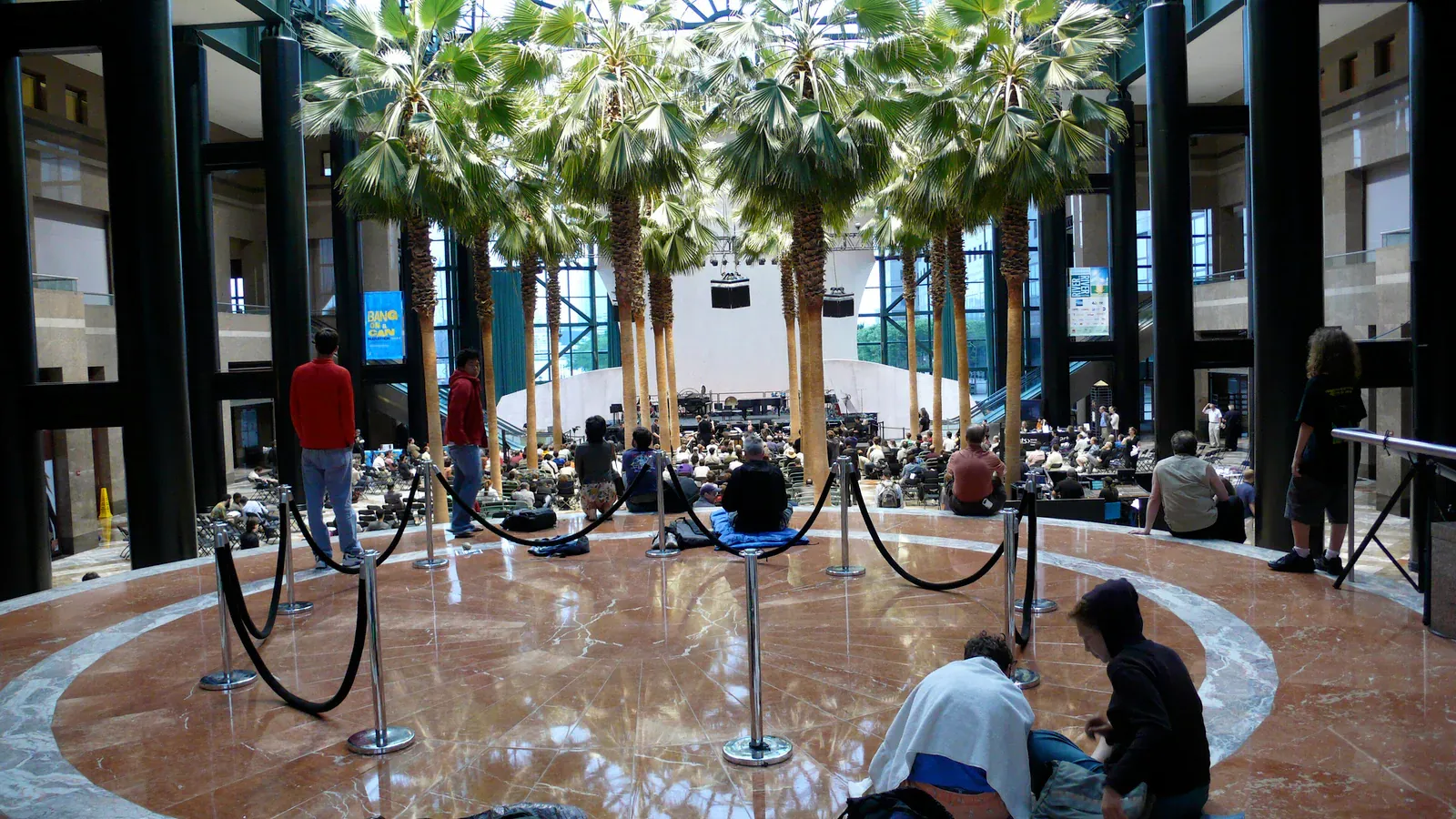
- 1987Knitting Factory and Bang on a CanThe Knitting Factory opens and Julia Wolfe, David Lang and Michael Gordon found Bang on a Can, centres for the improvising and totalist waves.
- 1988John Zorn forms Naked CityZorn starts the band as a composition workshop mixing jazz, surf, punk and grindcore; it ran until 1993.
- 1995Zorn founds TzadikThe New York label becomes the main outlet for Zorn's circle and later Downtown artists.
- 2005The Stone opensJohn Zorn founds the not-for-profit experimental music space in April, named for the concertgoer Irving Stone.
Listening path
Start listening
A short path from an easy way in to the deep end. Thumbnails come from YouTube; the player loads only when you press play.
- 01
Laurie Anderson, 1981
The most widely heard Downtown record; listen for the vocoder and the repeating syllable pulse.
- 02
Philip Glass, 1976
Opening of Glass's opera; counted numbers over repeating organ figures.
- 03
Steve Reich, 1978
The ECM recording of Reich's pulsing piece; follow the changing harmonic cycle.
- 04
Glenn Branca, 1981
Massed electric guitars in alternate tunings, where Downtown meets no wave.
Facts
| Family | Experimental |
| Origin | Lower Manhattan, New York, United States |
| Emerged | 1960 |
| Status | Historical |
| Tempo | 75 to 150 BPM |
| Meter | 4/4 or free |
Downtown music is a loose scene of American experimental music that grew in Lower Manhattan from 1960 and is defined less by a style than by what it refused: the ensembles and manners of European concert music and the rules of commercial pop.
It overlaps with experimental music, minimalism, free improvisation and no wave, and it took its name from the contrast with the concert halls uptown.
Origins
The scene is usually dated to 1960, when Yoko Ono, then an early Fluxus artist, opened her loft at 112 Chambers Street, in the area later called Tribeca, for a concert series curated by La Monte Young and Richard Maxfield. Until then most classical performance in New York took place uptown, around Juilliard and Columbia. The loft series started a tradition of informal concerts in lofts, churches and converted industrial rooms, with music far more experimental than the modern-classical series uptown.
The first Downtown wave was conceptual. Fluxus artists wrote pieces from a short instruction or idea: Young’s “Draw a straight line and follow it” is the standard example. John Cage’s attitude to chance, silence and everyday sound ran through much of this work, though not all Downtown composers shared it.
Minimalism and the ensembles, 1970-1977
Minimalism was the second movement to dominate. It began with repeated short motifs that drifted out of phase through small differences in speed, and grew into a style of simple diatonic music with clear linear processes. Steve Reich and Philip Glass became its public faces. The original minimalists, among them Young, Tony Conrad, John Cale, Charlemagne Palestine and Phill Niblock, were known less for pretty sound than for extreme length, loud volume and attention-testing stillness.
Young and the artist Marian Zazeela built the Dream House, a sound and light installation of continuous sine-wave drones; a later version has occupied space above their Church Street loft in Tribeca since 1993. Glass wrote Music in Twelve Parts between 1971 and 1974 for his own amplified ensemble, and its first parts reached record in 1974. In July 1976 his opera Einstein on the Beach, made with Robert Wilson, premiered at the Avignon Festival. It runs about five hours and lets the audience come and go.
Guitars, performance art and new music, 1978-1985
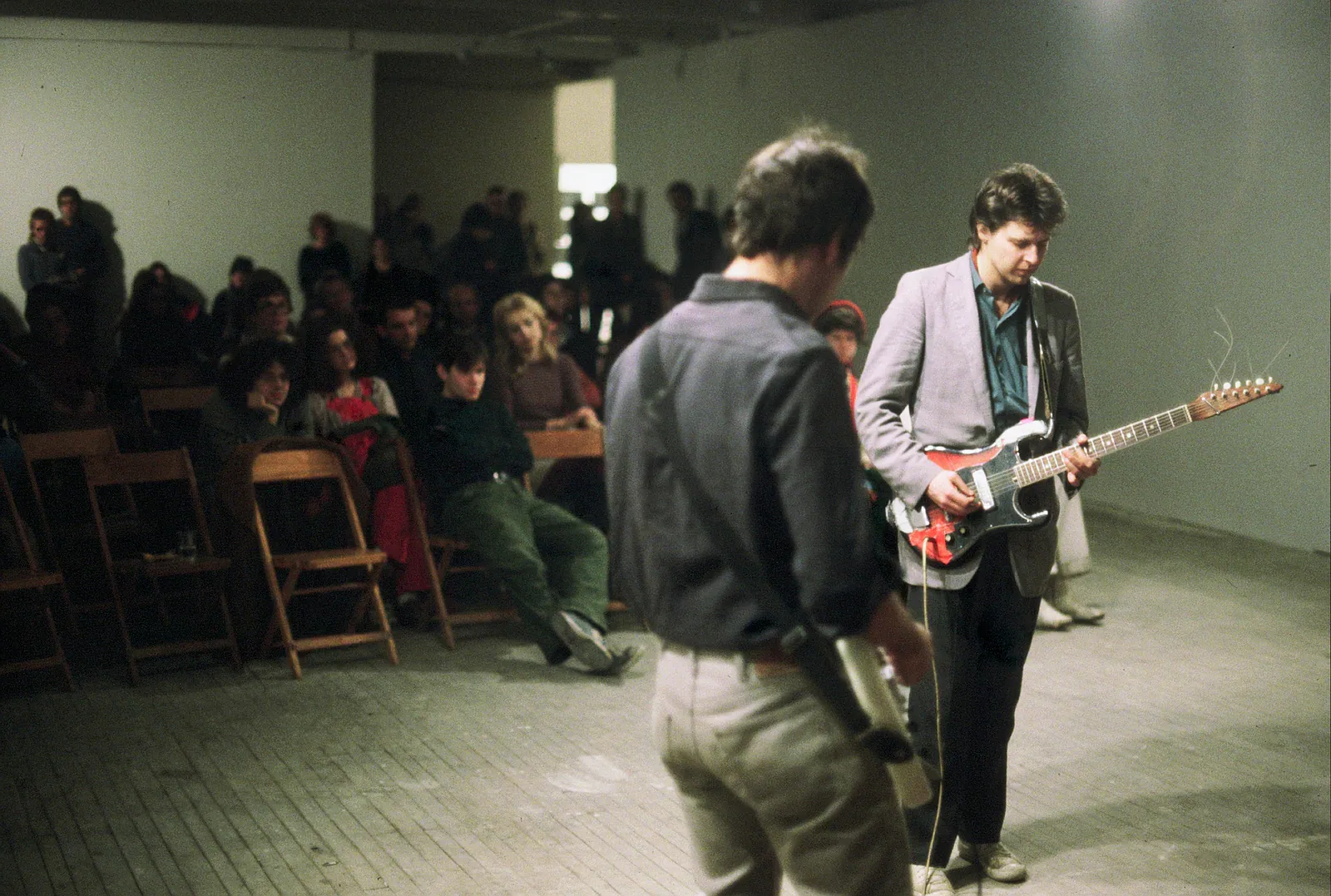
Around 1978 the scene met punk and no wave. The Mudd Club on White Street (1978 to 1983) became a hub for post-punk and no wave events, and the Roulette loft space was founded the same year. Two quite different threads grew here. One was art rock made by visual artists, often theatrical and amateur in spirit; the other, shaped by Rhys Chatham, moved minimalism onto rock instruments, with static pieces for electric guitars over a backbeat. Glenn Branca scored massed amplified guitars in alternate tunings, and groups such as DNA, Sonic Youth, Live Skull and Swans came out of this overlap with no wave.
Laurie Anderson represented a third thread, solo performance art with text and technology, which suited a scene with almost no funding for large ensembles. Her single “O Superman” appeared in 1981. In 1979 The Kitchen presented a New Music New York festival that showed the scene to a wide public, and the term new music spread through the New Music America festivals that ran from 1979 to 1990. The Tellus Audio Cassette Magazine, active from 1983 to 1993, documented the scene on cassette from the Lower East Side.
Improvisation, totalism and the clubs, 1986 onward
Free improvisation, rooted in the work of Terry Riley and Pauline Oliveros, took over Downtown in the early 1980s under John Zorn and Elliott Sharp. Rehearsal space was scarce and expensive, so extemporised music suited the city, and it gave jazz-trained players a way out of jazz conventions. The Knitting Factory opened in 1987 as its main club, mixing experimental music with poetry and performance. Zorn formed Naked City in 1988 as a composition workshop that mixed jazz, surf, punk and grindcore; it ran until 1993.
Postminimalism and totalism grew from minimalism. Postminimalism kept the steady beat and diatonic harmony but was less linear and used amplified chamber groups. Totalism added rhythmic complexity and rock-style drive, and it was boosted by Bang on a Can, founded in 1987 by Julia Wolfe, David Lang and Michael Gordon. Zorn founded the Tzadik label in 1995 and The Stone, a not-for-profit experimental space in Greenwich Village, in April 2005.
Characteristics
Downtown music has no single principle. What its pieces share is that, when they first appeared, they were too unusual to count as serious modern music for uptown audiences, through excessive length, stasis, simplicity, extemporaneity, consonance, noisiness or vernacular reference. A common thread is the creative attitude of John Cage, but it is not universal. The scene also resembled a battlefield on which movements took turns on top: conceptualism, minimalism, performance art, art rock, free improvisation, postminimalism and totalism.
The sound is therefore varied, but a few features recur: repeated motifs that shift out of phase, drones held for very long periods, simple modal or diatonic harmony, massed electric guitars, brief instruction scores and extemporaneous playing. Tempo is not a defining feature; the measured pulse of the best-known recordings runs from about 75 to 150 beats per minute, and many pieces have no beat at all.
Instruments and production
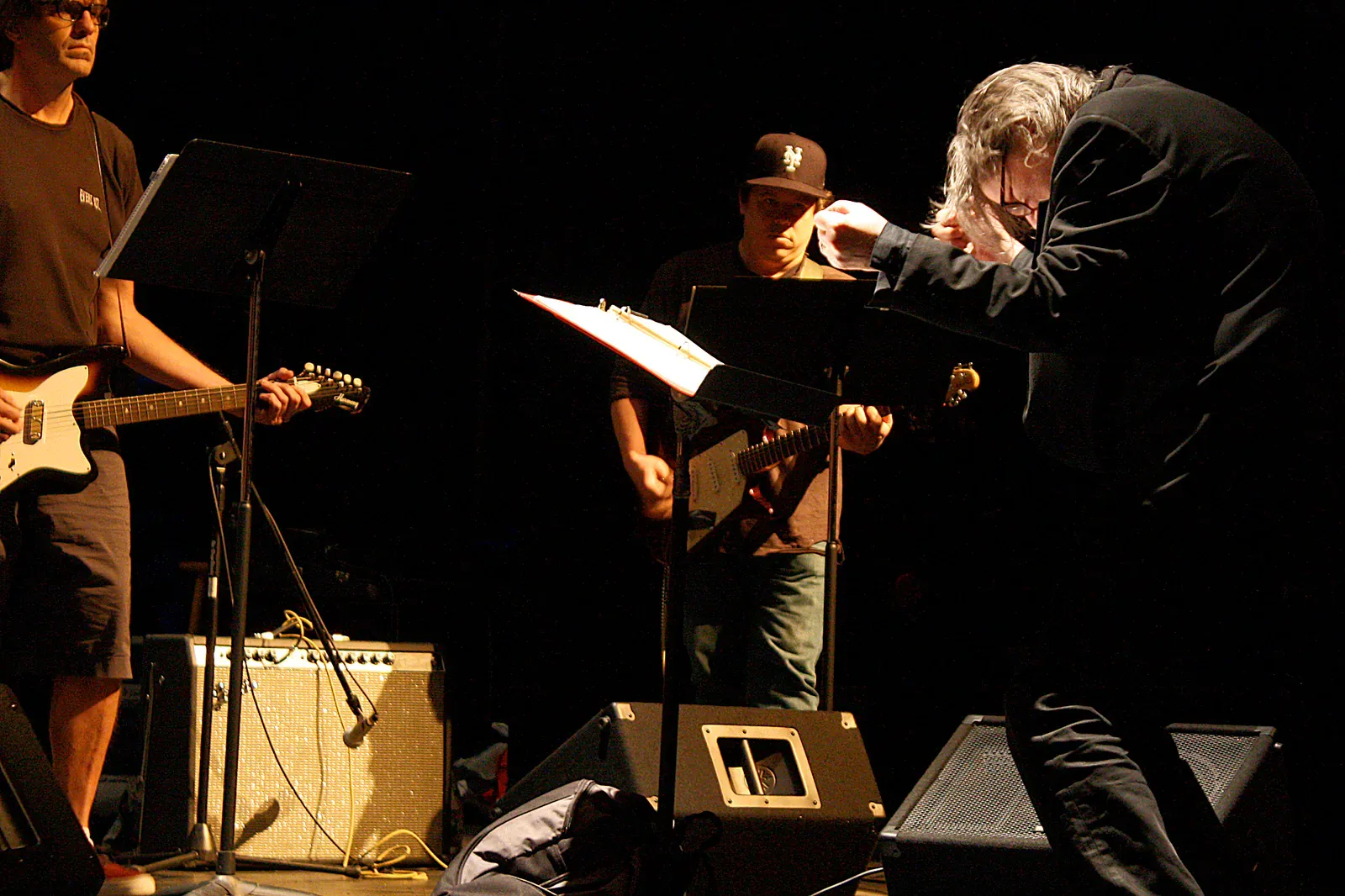
Downtown composers often wrote for their own ensembles, so the instruments were those of the people at hand. Glass and Reich used amplified keyboards and organs with winds and voices. Young and Zazeela used sine-wave oscillators for the Dream House drones, and Young’s The Well-Tuned Piano relies on just intonation, a tuning from pure ratios rather than equal temperament. Branca and Chatham built ensembles of electric guitars and changed their tuning to bring out harmonic resonances. Zorn’s circle centred on the saxophone and jazz-trained rhythm sections.
Notable recordings
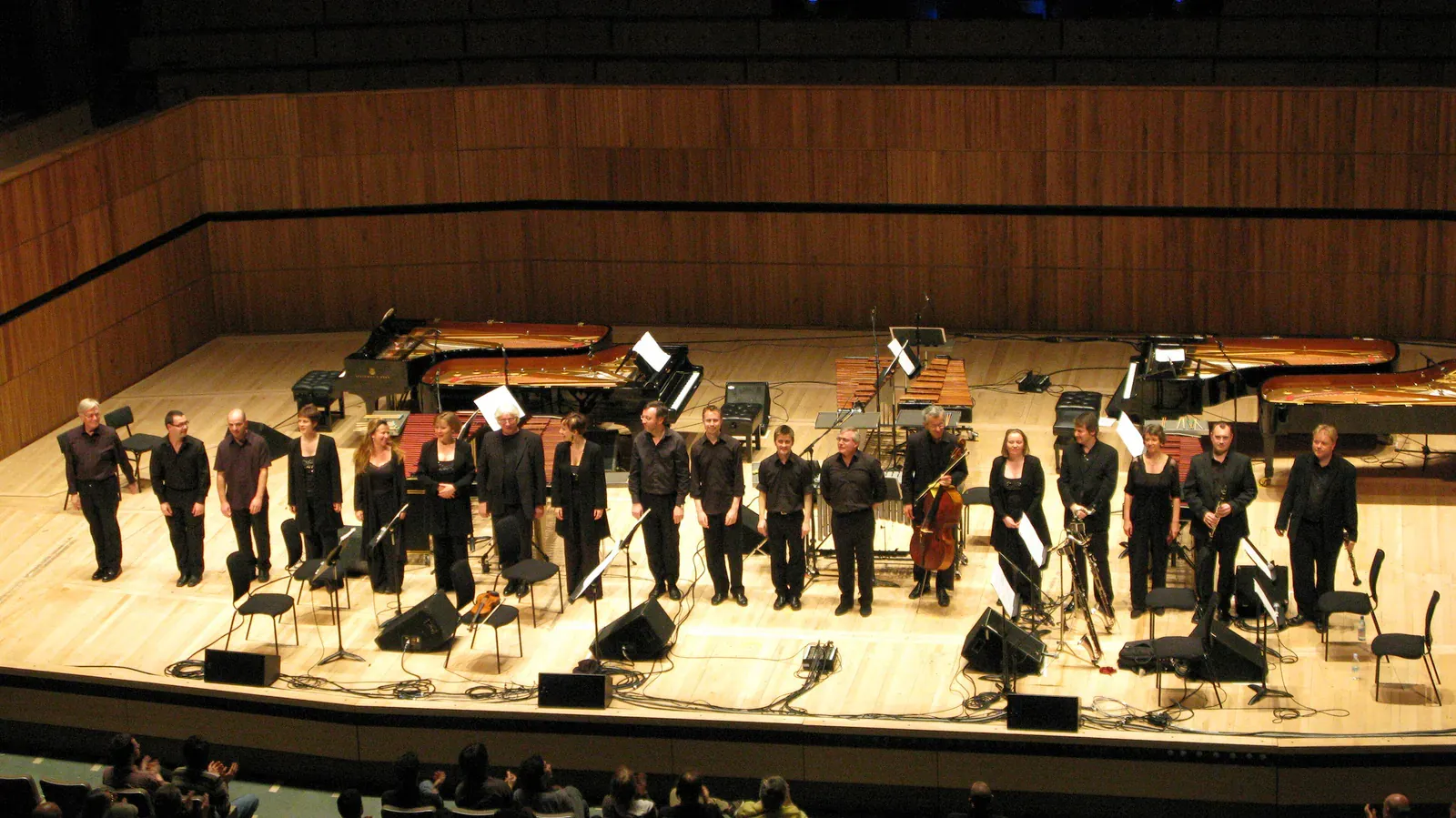
Reich’s Music for 18 Musicians was released by ECM in 1978. It is a pulsing piece for 18 players built on a cycle of chords, and its recording brought minimalism to a much wider audience than the loft circuit. Branca’s The Ascension came out in November 1981 on 99 Records; it explored resonances from several electric guitars in alternate tunings and sold more than 10,000 copies, which was considerable for the scene.
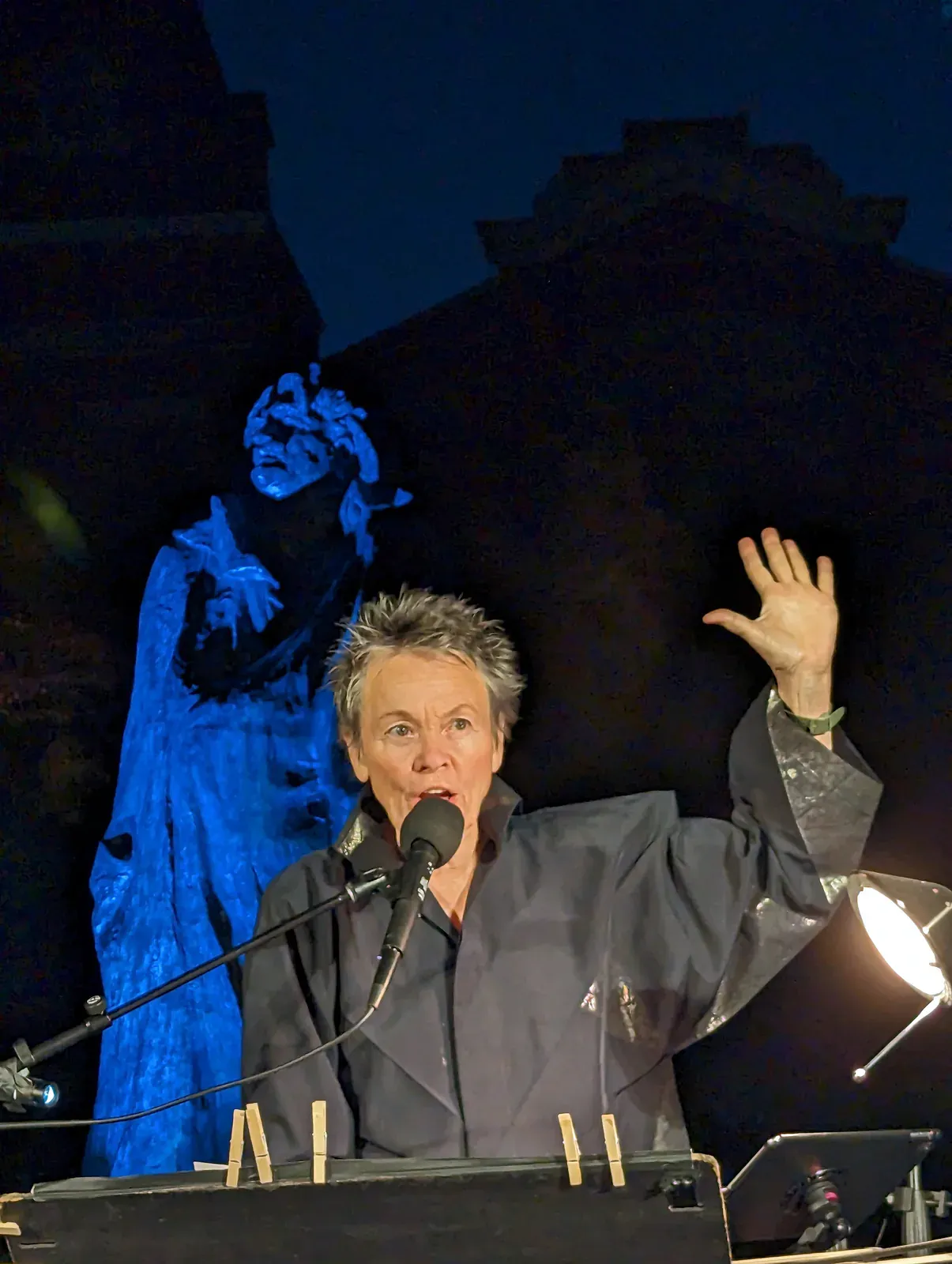
Anderson’s O Superman, a vocoder-processed spoken piece with a repeating syllable pulse, put Downtown performance art on record in 1981. Young’s The Well-Tuned Piano, begun in 1964 and first recorded in 1987, shows the scene’s taste for duration: one performance on record runs over five hours. Zorn’s Spillane (1987) is a suite of sharply cut blocks in his file-card compositional style, issued on Nonesuch.
Culture
The loft concert was the central ritual. Lofts and converted industrial spaces let composers play without a concert hall’s rules, and they set a pattern that later venues such as The Kitchen, Roulette, the Knitting Factory and The Stone kept. Concerts could be very long, very quiet or very loud, and audiences were small and mostly made up of other artists.
Legacy
Some Downtown music, in particular that of Glass, Reich, Zorn and Morton Feldman, later became widely accepted in the mainstream history of music. The movements it fostered fed rock, jazz and concert music: Branca and Chatham influenced noise rock through bands such as Sonic Youth, and the term experimental music is often used for the same territory. Bang on a Can, The Stone and the Tzadik catalogue show a scene that has kept its structures long after its first decades.
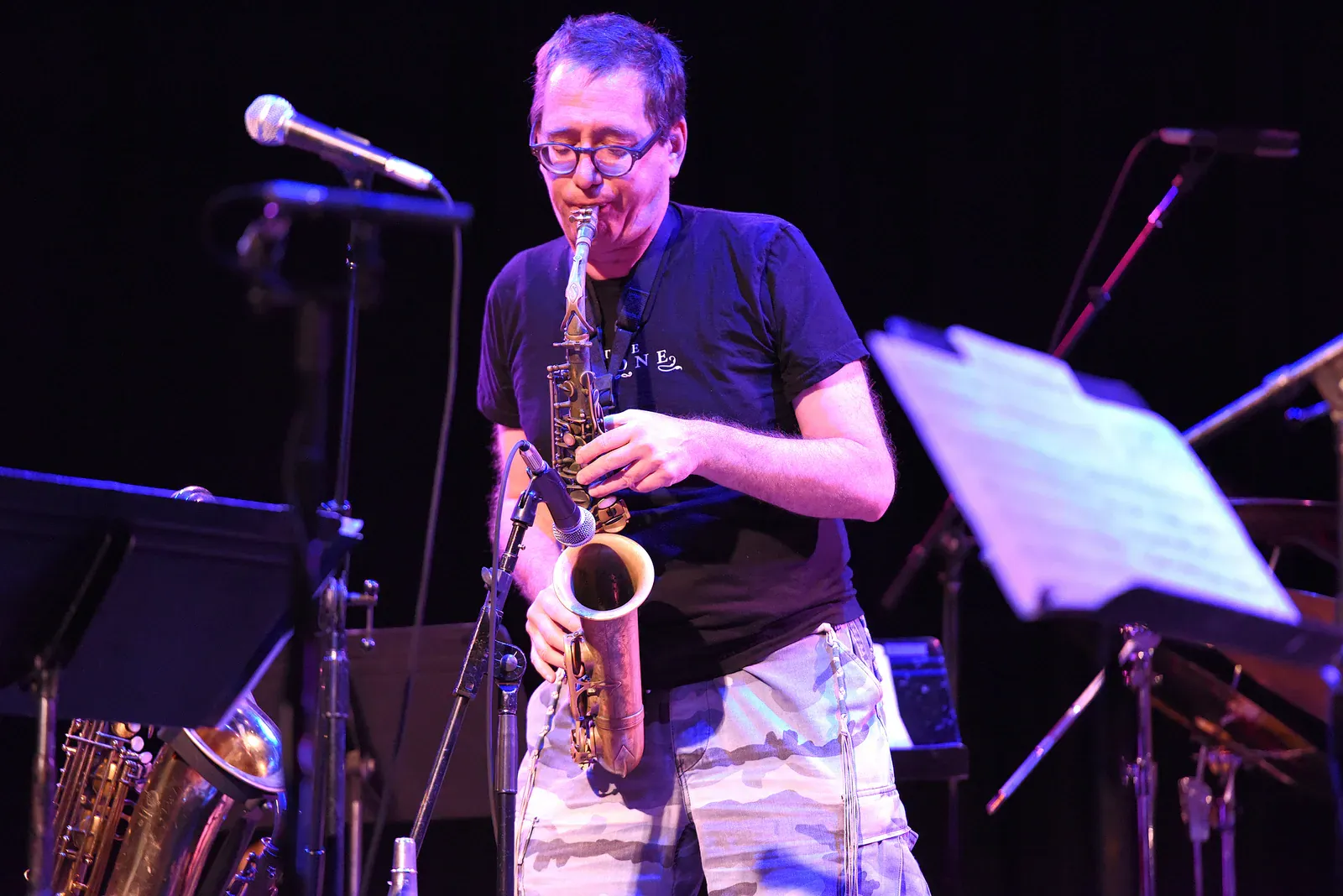
Downtown is also no longer limited to Manhattan. Cities such as Chicago, San Francisco and even Birmingham, Alabama, have developed alternative scenes that use the same name. Related genre pages include drone, noise and free jazz.
Misconceptions
One myth is that Downtown music is the same as minimalism. Minimalism was one movement among several, and the scene also included conceptual, performance, art-rock, improvisation and totalist waves. A second is that Downtown means any experimental music made in New York. The term has a particular history from 1960 and a particular opposition to uptown institutions, though experimental music is used almost as a synonym in general discussion.
Frequently asked questions
What is the difference between uptown and downtown music?
Uptown music means the modern concert music of the Juilliard and Columbia circles, with European-style ensembles and manners. Downtown music grew in lofts and clubs below it and rejected those norms along with commercial pop conventions.
When did Downtown music begin?
It is dated to 1960, when Yoko Ono opened her loft at 112 Chambers Street for a concert series curated by La Monte Young and Richard Maxfield.
Who are the main Downtown composers?
La Monte Young, John Cage as an influence, Philip Glass, Steve Reich, Laurie Anderson, Glenn Branca, Rhys Chatham and John Zorn are the best-known names, along with Phill Niblock, Pauline Oliveros and Terry Riley.
Is Downtown music the same as no wave?
No. The two overlapped around 1978, especially in groups that moved minimalism onto electric guitars, but no wave was a punk-linked scene and Downtown music covers a wider span of styles.
Sound
Sound sheet
Signature sounds
- Short motifs repeating and drifting out of phase
- Sustained drones in just intonation
- Massed amplified guitars in alternate tunings
- Brief instruction or concept scores
- Extreme length, stasis or extemporaneity
Techniques
- Phase shifting
- Sustained drone
- Massed amplified guitars
- Free improvisation
Keys and modes
Just intonation. Pure-ratio tuning used for Young's drones and The Well-Tuned Piano.
Diatonic modes. Simple consonant harmony typical of minimalism and postminimalism.
Tuning
Just intonation, alternate guitar tunings and equal temperament
Vocals
Mostly instrumental; Anderson's spoken and vocoded text and Glass's counted syllables are the main vocal forms.
Scenes
Where it happened
Where and when the sound lived: one bar per city on a shared timeline.
North America
Active scenes
Peak 3, 2005-2025
Loft district where Ono's series, Roulette and the Mudd Club created informal rooms outside the uptown concert hall.
Home of Tellus and later the Knitting Factory-era improvising scene.
Location of The Stone, the long-running Zorn-led space for experimental music.
Venues and places
New York, 1960 to today. Loft where Ono's 1960 series, curated by La Monte Young and Richard Maxfield, began Downtown music.
New York, 1978 to today. Performance space for experimental dance and new music, founded in 1978 and now in downtown Brooklyn.
New York, 1978 to today. White Street club (1978-1983) for post-punk and no wave events.
New York, 1987 to today. Club mixing experimental music, poetry and performance, later with its own label.
New York, 2005 to today. Not-for-profit experimental music space founded by John Zorn.
Culture
Culture markers
- Instruction scores
Fluxus-style pieces from brief instructions, such as Young's 'Draw a straight line and follow it'.
Artwork - Loft concerts
Informal performances in lofts and converted industrial spaces instead of formal uptown halls.
Ritual - Light and sound installations
Young and Zazeela's Dream House pairs sine-wave drones with Zazeela's lighting.
Artwork
Media
Key media
- 1974Experimental Music: Cage and Beyond
by Michael Nyman. Defines experimental music against the avant-garde; its term overlaps with Downtown.
Book - 1983Tellus Audio Cassette Magazine
Cassette magazine documenting the scene from 1983 to 1993.
Zine - 2006Music Downtown: Writings from the Village Voice
by Kyle Gann. Collected criticism that maps the scene from the inside.
Book
Glossary
Terms on this page
Sound and light installation by Young and Marian Zazeela with continuous sine-wave drones.
Style built on short repeated motifs, phasing and static harmony, led by Reich and Glass and earlier by Young.
Term that gained currency after the Kitchen's 1979 festival and the New Music America festivals (1979-1990).
Steady-beat, diatonic music less linear than minimalism, often for amplified chamber groups.
A style growing from minimalism that adds rhythmic complexity and rock-style drive, boosted by Bang on a Can.
Shorthand for the European-derived modern concert music at institutions such as Juilliard and Columbia, against which Downtown defined itself.
Experimental family