Free jazz
Free jazz drops fixed chord changes, regular meter and set form for collective improvisation. It emerged in the US from 1958 and spread to Europe by 1968.
New York City, 1958
Jazz family
Born
1958
New York City
Subgenres
5
Documented branches
Links
35
Genres it drew on or shaped
Tempo
80-155 BPMLineage
Family tree
New York City, 1958
Free jazz
Led to (11)
Timeline
Era by era
From the first sparks to today. Select a dot to read the story behind it.
- Coleman, Taylor and the break from changes
1956 to 1964
- ESP-Disk, Impulse and the New Thing
1964 to 1970
- Chicago, Berlin and the New York lofts
1968 to 1980
- Continuing practice
1981 to today
Eras
Moments
- 1 Coleman, Taylor and the break from changes, 1956 to 1964
- 2 ESP-Disk, Impulse and the New Thing, 1964 to 1970
- 3 Chicago, Berlin and the New York lofts, 1968 to 1980
- 4 Continuing practice, 1981 to today
1956
Coleman, Taylor and the break from changes
Cecil Taylor recorded Jazz Advance in 1956, and Ornette Coleman's 1958 to 1961 records dropped chord changes and fixed form. His Free Jazz double quartet session of 1960 named the movement.
- 1956Cecil Taylor's Jazz AdvanceTaylor's first album, recorded in 1955 and released in 1956, already stretched harmony and rhythm with percussive piano playing.
- 1958Ornette Coleman's Something Else!!!!Coleman's first album, for Contemporary, used no fixed chord sequence in many of its tunes.
- 1959The Coleman quartet opens at the Five SpotThe autumn 1959 residency in New York split critics and drew a crowd that included Leonard Bernstein.
- 1959The Shape of Jazz to ComeColeman's first Atlantic album, with Don Cherry, Charlie Haden and Billy Higgins, opened with Lonely Woman.
- 1960Coleman records Free JazzThe double quartet session of December 1960, issued in 1961, supplied the name of the style.
- 1963Bernard Stollman founds ESP-DiskThe New York label became the main outlet for Albert Ayler, Sun Ra and other free players.
1964
ESP-Disk, Impulse and the New Thing
Albert Ayler, Sun Ra, Archie Shepp and the late John Coltrane pushed toward collective, high-energy playing. Small labels such as ESP-Disk and Impulse released the records, and Coltrane's death in 1967 marked a turning point.
- 1964The October Revolution in JazzTrumpeter Bill Dixon organized four days of avant-garde concerts at the Cellar Cafe in New York, followed by the Jazz Composers Guild.
- 1964Albert Ayler records Spiritual UnityThe trio session with Gary Peacock and Sunny Murray, recorded in July 1964, was released on ESP-Disk in 1965.
- 1965The AACM forms in ChicagoPianist Muhal Richard Abrams and colleagues founded the Association for the Advancement of Creative Musicians in May 1965.
- 1965Coltrane records AscensionRecorded in June 1965 with 11 players, including Archie Shepp and Pharoah Sanders, it combined collective and solo improvisation.
- 1967John Coltrane diesColtrane died in July 1967 at age 40, leaving late works such as Interstellar Space unreleased until 1974.
1968
Chicago, Berlin and the New York lofts
The AACM in Chicago, Peter Brötzmann's circle in West Germany and the New York loft scene took the idiom into new forms and ran their own labels, festivals and rooms.
- 1968Brötzmann's Machine GunThe Peter Brötzmann Octet recorded it in Berlin in May 1968, a landmark of the German free scene.
- 1969FMP is founded in West BerlinFree Music Production grew out of Brötzmann's circle and the Total Music Meeting festival.
1981
Continuing practice
Veterans and younger players kept free jazz alive through festivals, small labels and reissues. Brötzmann played until his death in 2023, and free-rooted groups continue to record for labels such as Impulse.
Listening path
Start listening
A short path from an easy way in to the deep end. Thumbnails come from YouTube; the player loads only when you press play.
- 01
Ornette Coleman, 1959
Opened The Shape of Jazz to Come with a mournful theme and no chord changes, the starting point of the style.
- 02
Albert Ayler Trio, 1965
The album with Ghosts, a folk-like melody broken apart by raw saxophone, with bass and drums in free time.
- 03
John Coltrane, 1965
Eleven musicians in collective improvisation, the best-known jazz record of the energy-music wave.
- 04
Sun Ra, 1973
The Arkestra's chant-led, theatrical side of free jazz.
Free jazz is a style of improvised music that gives up fixed chord changes, a steady meter and a set song form, and builds each piece from melodic ideas, collective interplay and sound itself.
It formed in the United States between 1958 and 1965, mostly in New York, and spread to Chicago, Berlin and Paris before the decade ended. It descends from bebop and hard bop, and it belongs to the wider jazz family.
Origins
Two musicians were already stretching jazz before the term existed. The pianist Cecil Taylor recorded Jazz Advance in 1956, with a percussive attack and an enlarged harmonic vocabulary. In Los Angeles, the saxophonist Ornette Coleman recorded Something Else!!!! for Contemporary in 1958, using tunes with no fixed chord sequence and abrupt shifts of tempo and mood. Coleman’s reasoning was that a freely invented melodic line, not a repeating set of chords, could decide where the harmony went.
His quartet, with the trumpeter Don Cherry, the bassist Charlie Haden and the drummer Billy Higgins, moved to New York and signed with Atlantic. The Shape of Jazz to Come, recorded in May 1959 and opened by the mournful theme “Lonely Woman”, showed that a working band could play without a chord chart and still sound ordered. The quartet’s residency at the Five Spot Cafe from November 1959 divided critics and drew a crowd that included Leonard Bernstein.
Coleman then took the idea to its limit. On 21 December 1960 he recorded Free Jazz with a double quartet: Coleman, Cherry, Scott LaFaro and Higgins in the left channel, Eric Dolphy, Freddie Hubbard, Haden and Ed Blackwell in the right. The 37-minute piece, issued in 1961 as Free Jazz: A Collective Improvisation, gave the style its name.
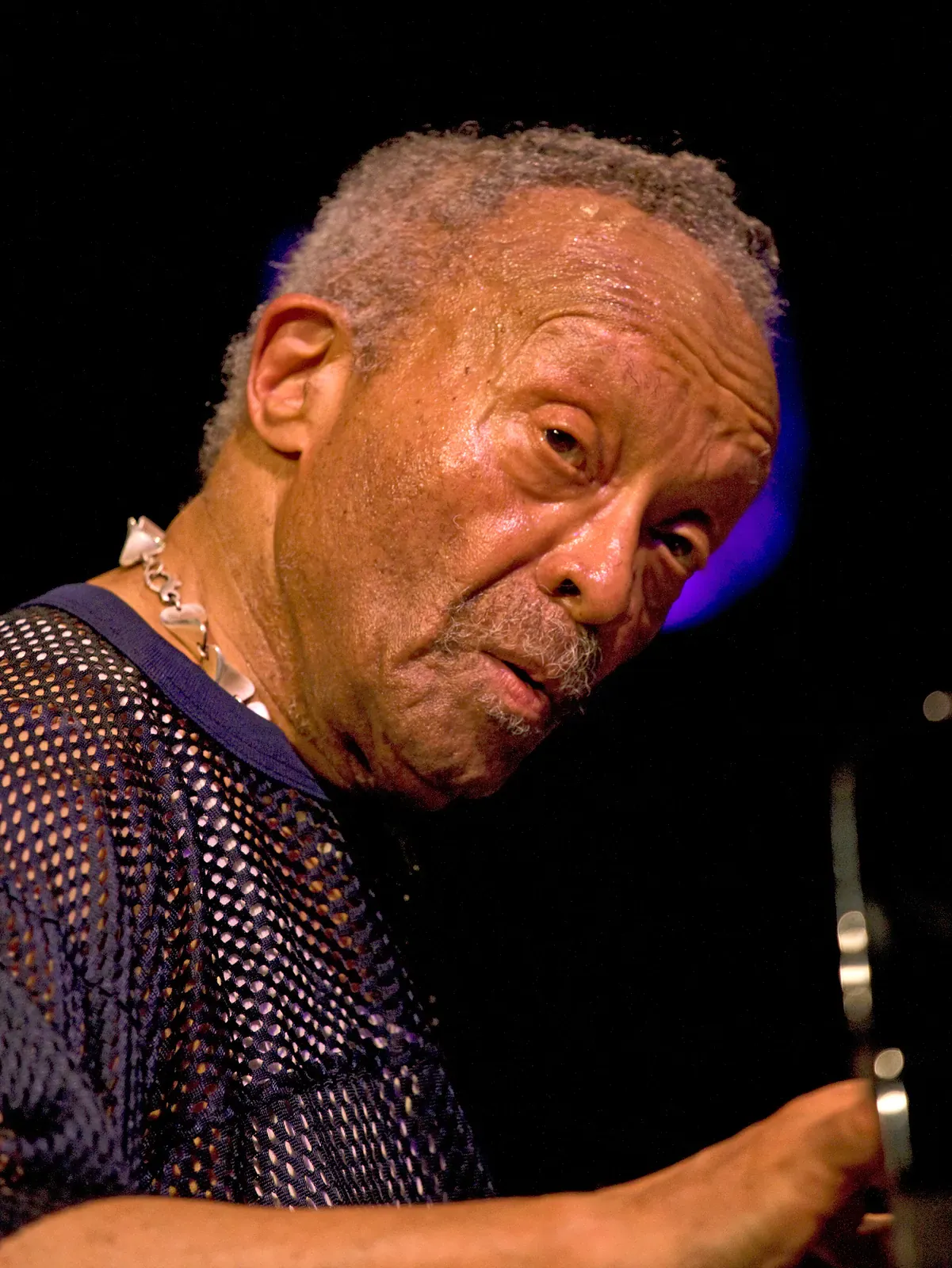
New York, 1960-1967
Through the early 1960s Taylor, working with the saxophonist Jimmy Lyons and the drummer Sunny Murray from 1962, moved fully into tone clusters and rhythm without a steady beat. His Cafe Montmartre sessions in Copenhagen in 1962 and Unit Structures in 1966 mark that path. The saxophonist Albert Ayler, who had played rhythm and blues and bebop, recorded with Taylor in 1962 and then built a language of broad vibrato, honks and shrieks around folk-like and hymn-like tunes.
A small label gave the music a home. Bernard Stollman founded ESP-Disk in 1963, and its catalogue of Ayler, Sun Ra and others made it the central outlet of the New Thing, as critics called it. Ayler’s Spiritual Unity, recorded in July 1964 with the bassist Gary Peacock and Sunny Murray and released in 1965, set the song “Ghosts” against raw saxophone sound in free time. In October 1964 the trumpeter Bill Dixon organized four days of concerts at the Cellar Cafe, the October Revolution in Jazz, and the Jazz Composers Guild followed.
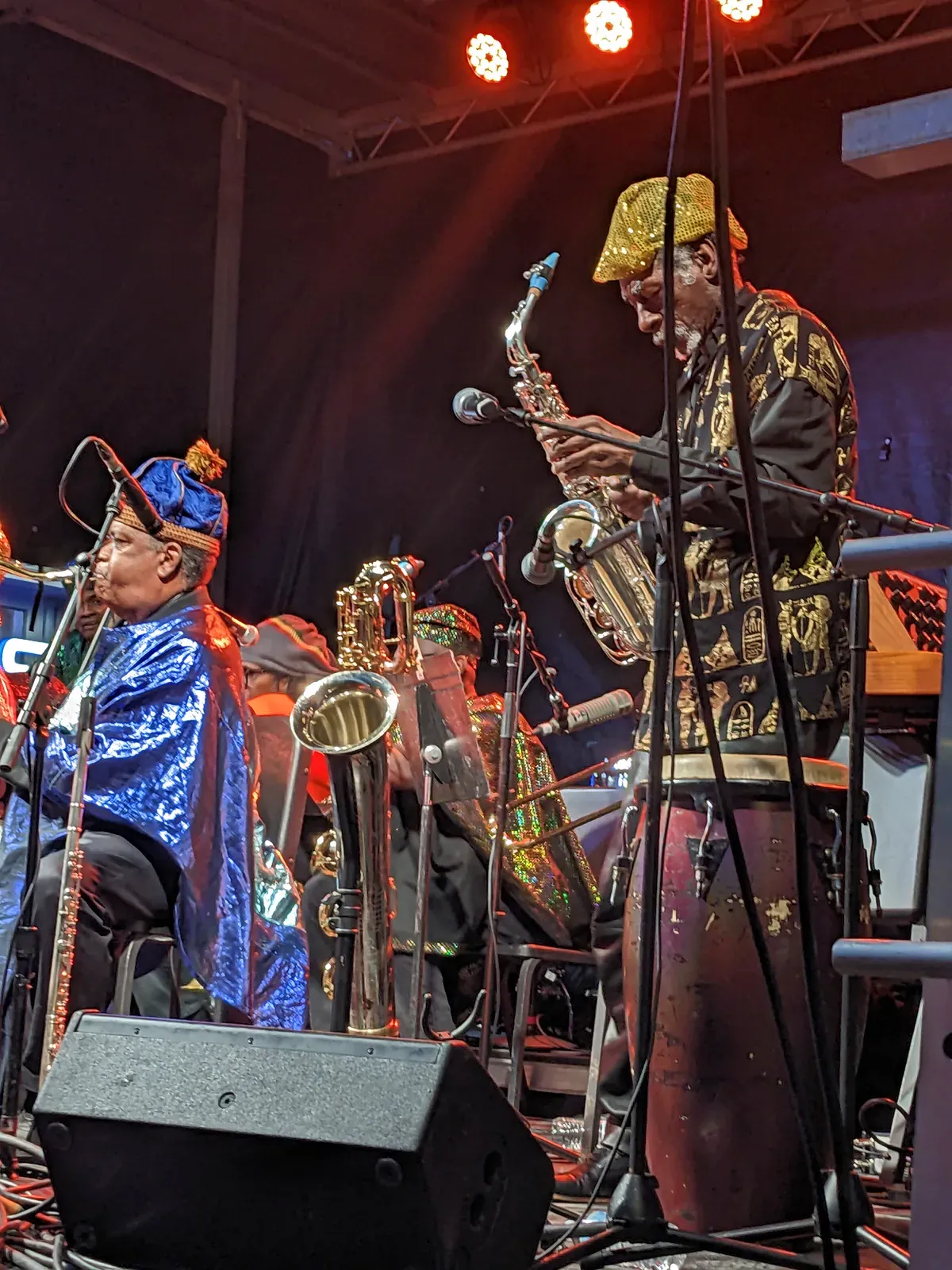
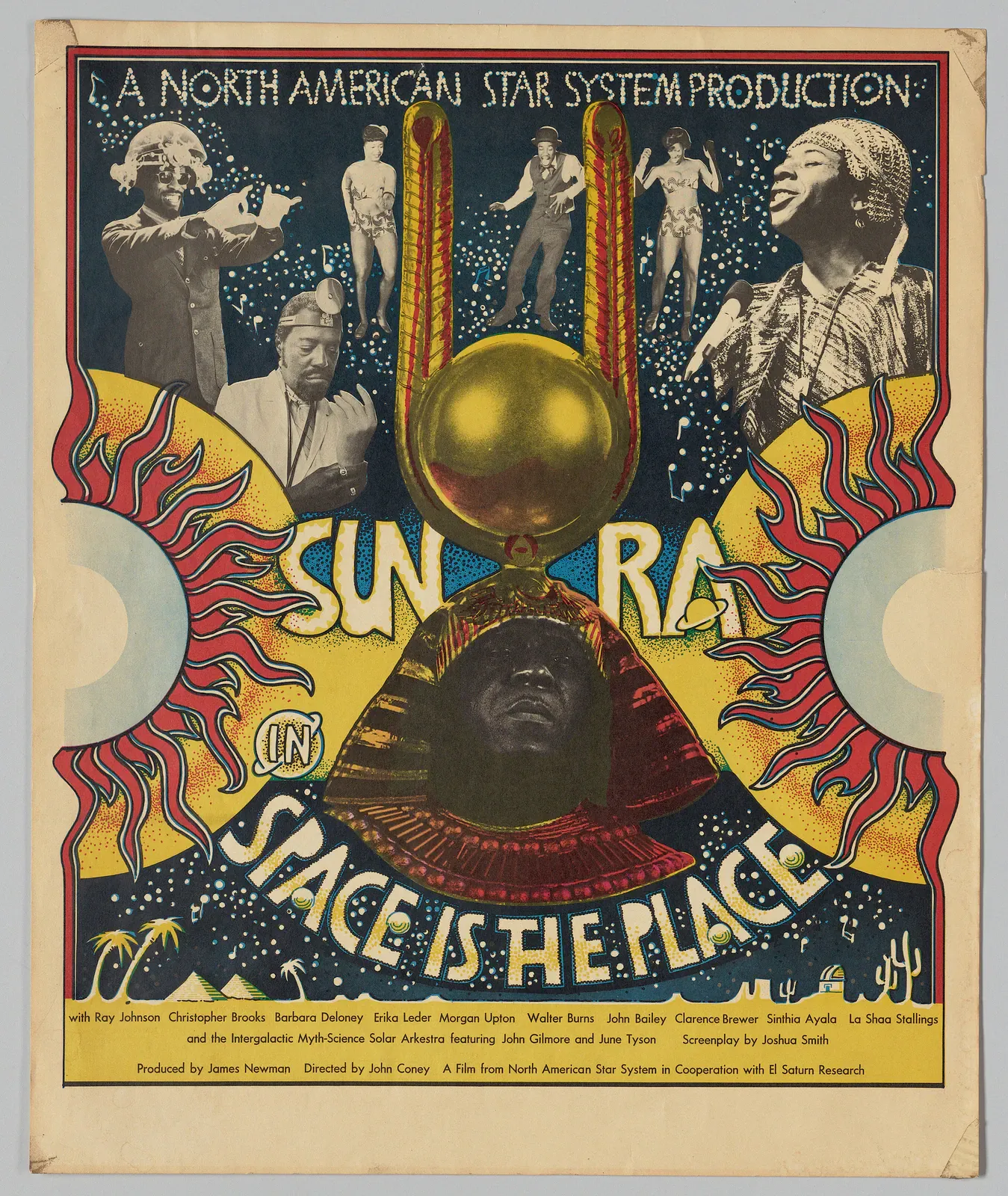
The pianist and bandleader Sun Ra had led the Arkestra since the 1950s in Chicago, and his cosmic philosophy, chanting and theatrical dress ran alongside the free players. His Heliocentric Worlds albums for ESP-Disk appeared in 1965, and the band kept performing after his death in 1993.
The big commercial name came through Impulse. John Coltrane had already moved from hard bop through modal playing, and he told an interviewer in 1963 that he felt indebted to Coleman. On 28 June 1965 he recorded Ascension with ten other players, including Archie Shepp, Pharoah Sanders, John Tchicai and Marion Brown. Its collective sections, broken by solos, followed the Free Jazz design, and Coltrane and Sanders used overblowing to produce harsh, multiphonic tones. Coltrane died in July 1967 at age 40, and Impulse released late sessions such as Interstellar Space in 1974.
Chicago, Berlin and Paris, 1965-1975
Outside New York the music took local shapes. In Chicago, the pianist Muhal Richard Abrams and colleagues founded the Association for the Advancement of Creative Musicians in May 1965, a cooperative that organized its own concerts and composition. Players from that circle, including the Art Ensemble of Chicago, based themselves in Paris from 1969 and recorded for French labels.
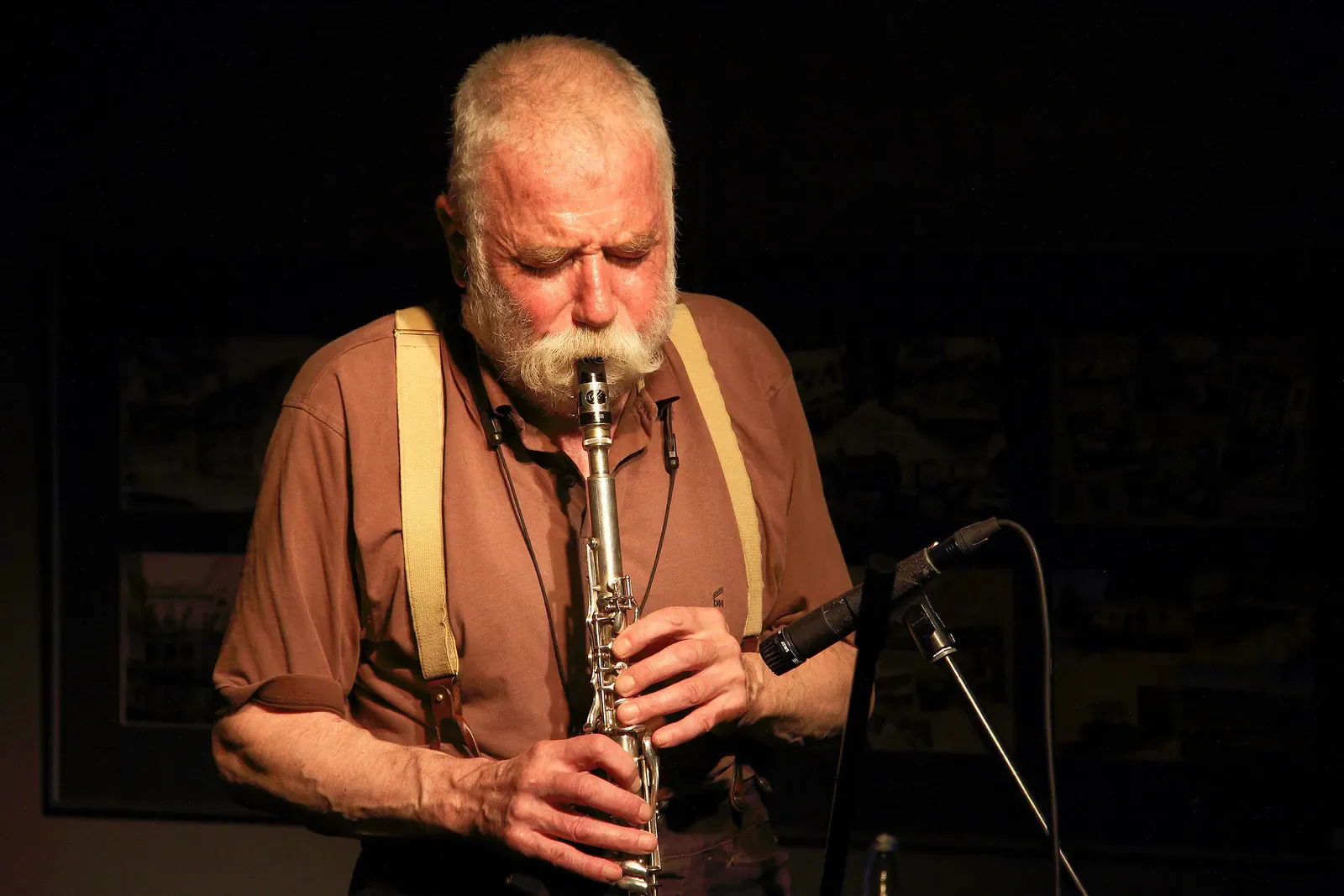
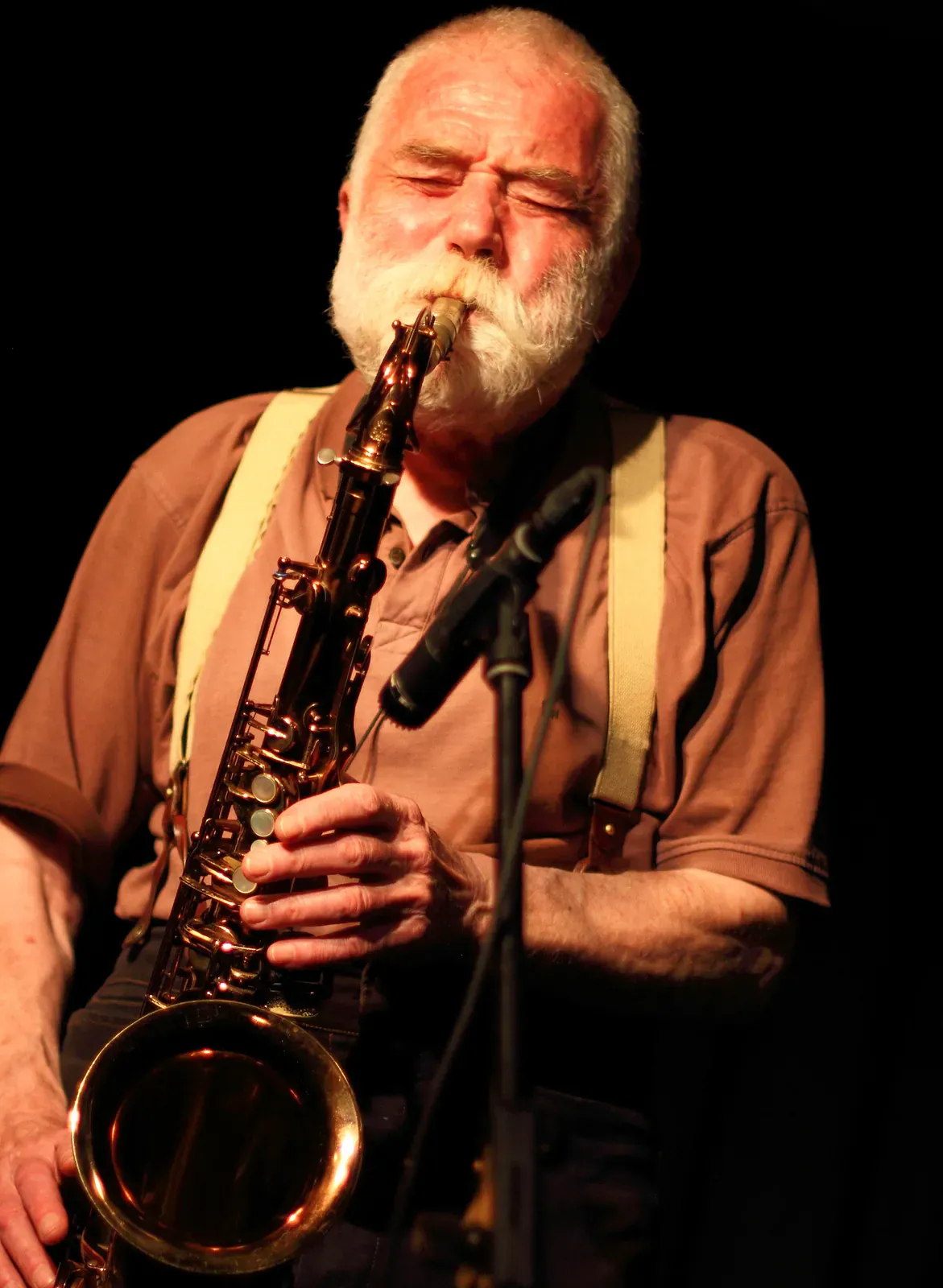
In West Germany the saxophonist Peter Brötzmann built a harder, louder variant. His octet recorded Machine Gun in Berlin in May 1968, with two bassists and two drummers and players such as Evan Parker, Willem Breuker, Han Bennink and Peter Kowald. The Total Music Meeting festival began in Berlin in 1968, and FMP was founded in West Berlin in 1969 as a label for this scene. Free improvisation, which drops even the jazz vocabulary, grew in parallel in London.
Characteristics
Free jazz keeps pulse, and often swing, but without a regular meter; frequent speeding up and slowing down gives it a wave-like movement. Chord cycles are replaced by melodic, timbral or structural plans, so a performance may start with a composed theme and then move into collective playing. Instruments are pushed past their normal range with overblowing, multiphonics, shrieks and clusters. The playing places high value on each musician’s own sound.
The style was not a clean break. Blues phrases, diatonic fragments and the collective improvisation of early New Orleans jazz keep returning inside it, and many players looked to African, Arabic and Indian music, with Ed Blackwell’s use of a West African talking drum as one example. Some sections use tonal themes while others dissolve into noise.
Instruments and production
The core line-up is a reed or brass front line over bass and drums, often without a piano, though Taylor made the piano a percussive lead voice. Coleman played a plastic Grafton alto saxophone, and Cherry a small pocket trumpet. Recordings were mostly made live in the studio in one or two takes, and Free Jazz used stereo to place one quartet in each channel. Producers aimed to capture the energy of the room rather than polish it.
Mainstream success
Free jazz never became a chart style. Its audience was small, concentrated in New York, Chicago and a few European cities, and many early records sold in limited numbers. Coltrane’s Impulse catalogue gave it the widest exposure, and critics split over it for years, with many early reviewers suspecting that dropping familiar elements hid a lack of technique. By the mid-1970s that view was marginal, and a body of critical writing had grown up around the music.
Notable recordings
The Shape of Jazz to Come and Free Jazz show Coleman’s two stages: a band playing melody-led improvisation, then a double quartet playing together without a head. Spiritual Unity is often cited as the model for how a simple, hymn-like tune can be broken apart without being lost. Ascension is the best-known large-group record, and Machine Gun is the reference point for the European scene. Taylor’s Unit Structures shows how much planning could lie behind music that sounds unplanned.
Culture
Many critics and musicians tied the word “free” to the civil-rights era, pointing to events such as the 1954 Brown v. Board of Education decision, the 1961 Freedom Riders and the 1963 voter-registration drives, and they read the music as a response to the experience of Black Americans. Amiri Baraka’s Black Music (1968) and the French study Free Jazz/Black Power (1971) set that reading out in print. Musicians also ran their own institutions, from the AACM to the New York lofts such as Studio Rivbea, which Sam and Bea Rivers opened in 1970.
The album sleeve of Free Jazz carried Jackson Pollock’s painting White Light, tying the music to gestural abstraction. Terms such as “energy music” came into use for the dense, loud playing of the late 1960s.
Legacy
Free jazz changed what an improviser could do: players now use extended techniques, open forms and collective interplay as ordinary tools, in jazz and far beyond it. It fed avant-garde jazz, loft jazz, free improvisation and the later European scene, and it influenced rock and noise musicians who borrowed its intensity. Labels such as Impulse still release music rooted in it.
Misconceptions
It is often described as random noise, but most of its leading players worked with composed themes and structural plans, and Coleman, Taylor and Ayler each developed their own systems of composition. It is also said to be the work of players who could not play conventionally; yet Coltrane, Dolphy and Ayler all had deep training in bebop, blues or rhythm and blues. A third myth treats it as an American-only style, when the German, Dutch and British scenes developed their own sound within a few years of the New York records.
Frequently asked questions
What is free jazz?
Free jazz is a style of jazz that drops fixed chord changes, regular meter and set song forms, and relies on collective improvisation, melody and timbre. It developed in the United States from the late 1950s.
Who invented free jazz?
No single person invented it, but Ornette Coleman is the figure most often credited, and the style takes its name from his 1960 recording Free Jazz. Cecil Taylor was working toward the same goals in parallel.
What is the difference between free jazz and free improvisation?
Free jazz still draws on jazz language, such as blues phrases, swing pulse and themes, while free improvisation tries to avoid any shared idiom. Free improvisation developed in London in the mid-1960s, partly in parallel.
Which labels are linked with free jazz?
ESP-Disk released Ayler and Sun Ra, Impulse issued Coltrane’s late work, and Atlantic recorded Coleman’s early albums. FMP in Berlin was the main European label for the style.
Sound
Sound sheet
Anatomy of a track
| # | Part |
|---|---|
| 1 | Composed theme or head |
| 2 | Collective improvisation |
| 3 | Solo features over free pulse |
| 4 | Return to theme or open ending |
Signature sounds
- Theme stated in unison, then abandoned
- No chord changes or repeating form
- Overblown saxophone cries and clusters
- Drums as texture, with accelerando and ritardando
Drums and percussion
- Jazz drum kit
- Talking drum
Techniques
- Collective improvisation
- Overblowing and multiphonics
- Tone clusters
- Melody-led improvisation
- Pulse without regular meter
- Timbral extremes
Keys and modes
Atonal and pantonal lines. Melodies need not follow a key centre or fixed chord sequence.
Blues and diatonic fragments. Blues, diatonic and altered dominant phrases still recur inside free playing.
Tuning
Equal temperament on piano and bass; horns bend and split pitch freely
Vocals
Mostly instrumental; wordless shouts, chants, spoken word and yodel-like singing (Leon Thomas) appear on some records
Scenes
Where it happened
Where and when the sound lived: one bar per city on a shared timeline.
North America
Europe
Active scenes
Peak 4, 1969-1971
Home of the Five Spot, ESP-Disk, Impulse sessions, the October Revolution and the loft scene.
Sun Ra's Arkestra rehearsed there in the 1950s, and the AACM formed there in 1965.
Site of the Total Music Meeting, FMP and the Brötzmann octet recordings.
American players such as Archie Shepp and the Art Ensemble of Chicago recorded for French labels while based there.
Venues and places
New York, 1956 to today. Cooper Square club where the Coleman quartet played its famous 1959 residency.
New York, 1964 to today. East Village bar where Sun Ra's Arkestra and other free players performed through the late 1960s.
New York, 1970 to today. Sam and Bea Rivers' loft on Bond Street became a centre of the 1970s loft scene.
Copenhagen, 1959 to today. Copenhagen jazz club where Cecil Taylor recorded in 1962.
Berlin, 1968 to today. Free-music festival started in West Berlin by Brötzmann and Jost Gebers as a counter to the Berlin Jazz Days.
Culture
Culture markers
- The New Thing
Name critics used in the 1960s for the avant-garde jazz around Coleman, Taylor, Ayler and Coltrane.
Slang - Energy music
Term for the dense, high-volume collective playing of the late 1960s.
Slang - Arkestra costumes
Sun Ra's band performed in sequined robes and Egyptian-styled headdresses as part of its cosmic stage show.
Fashion - White Light cover
The Free Jazz album sleeve used a Jackson Pollock painting, White Light, to signal the music's gestural, non-linear approach.
Artwork
Media
Key media
- 1968Black Music
by Amiri Baraka. Essay collection by the poet and critic that tied the New Thing to Black politics.
Book - 1971Free Jazz/Black Power
by Philippe Carles and Jean-Louis Comolli. French study of free jazz and its political setting.
Book - 1974Space Is the Place
by John Coney and Sun Ra. Afrofuturist feature with Sun Ra and the Arkestra.
Film
Glossary
Terms on this page
Several players improvise at once without a soloist and accompanist split.
Late 1960s free jazz played at high volume and density with continuous intensity.
Coleman's theory in which harmony, melody, rhythm and speed have equal weight and players need not share a key.
Several pitches sounded at once on a wind instrument, used by Coltrane and Sanders.
Forcing a saxophone past its normal register to make harsh, high or split tones.
1960s term for the avant-garde jazz movement.
Jazz family