Ethno jazz
Ethno jazz joins jazz improvisation with non-Western modes, rhythms and instruments from Africa, Asia and the Middle East, developed from the 1950s.
United States, United Kingdom, India, South Africa, 1955
Jazz family
Born
1955
United States, United Kingdom, India, South Africa
Subgenres
6
Documented branches
Links
5
Genres it drew on or shaped
Tempo
65-130 BPMLineage
Family tree
Grew out of
Influenced by
United States, United Kingdom, India, South Africa, 1955
Ethno jazz
Led to (6)
Timeline
Era by era
From the first sparks to today. Select a dot to read the story behind it.
- First crossings
1955 to 1969
- Raga, ECM and the fusion bands
1970 to 1979
- Chamber world jazz
1980 to 1999
- Global scenes
2000 to today
Eras
Moments
- 1 First crossings, 1955 to 1969
- 2 Raga, ECM and the fusion bands, 1970 to 1979
- 3 Chamber world jazz, 1980 to 1999
- 4 Global scenes, 2000 to today
around 1955
First crossings
Weston, Coltrane, Lateef and the Harriott-Mayer double quintet bring African, Indian and Middle Eastern materials into modal jazz.
- 1960Randy Weston records Uhuru AfrikaA suite for African independence, arranged by Melba Liston with Langston Hughes, on Roulette.
- 1961Coltrane records Africa/BrassFirst Impulse album, released 1 September 1961 with a 21-piece ensemble and the modal piece "Africa".
- 1961Yusef Lateef records Eastern SoundsOboe, flutes and other Eastern instruments over a jazz rhythm section, issued in 1962.
- 1963Duke Ellington hears Dollar Brand in ZurichSathima Bea Benjamin brings Ellington to hear the Cape Town pianist, leading to a Paris trio recording.
- 1966Indo-Jazz Suite by the Harriott-Mayer double quintetFive Indian and five jazz musicians play John Mayer's raga-based writing.
- 1967Weston settles in MoroccoHe runs the African Rhythms Club in Tangier until 1972.
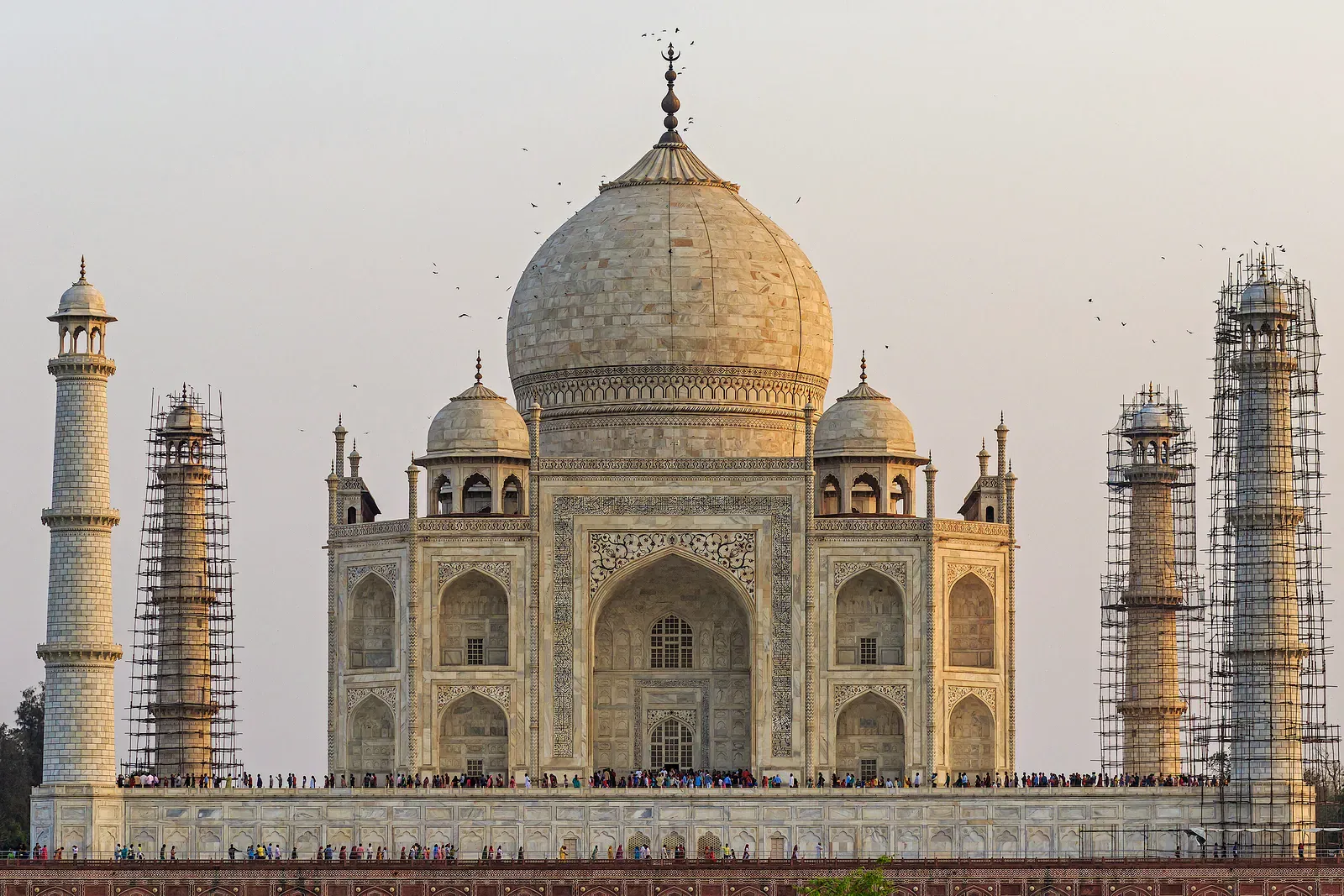
- 1969Paul Horn records Inside at the Taj MahalSolo flute recorded on 25 April 1968 in the tomb, issued 1969; later credited with over a million sales.
- 1969ECM founded in MunichManfred Eicher starts the label that later carries Garbarek, Brahem and Codona.
1970
Raga, ECM and the fusion bands
Shakti, Oregon and Codona form, ECM is already open in Munich, and Mannenberg turns Cape jazz into a protest anthem.
- 1974Mannenberg recorded in Cape TownRecorded in June 1974 in a single improvised take; later an anti-apartheid anthem.
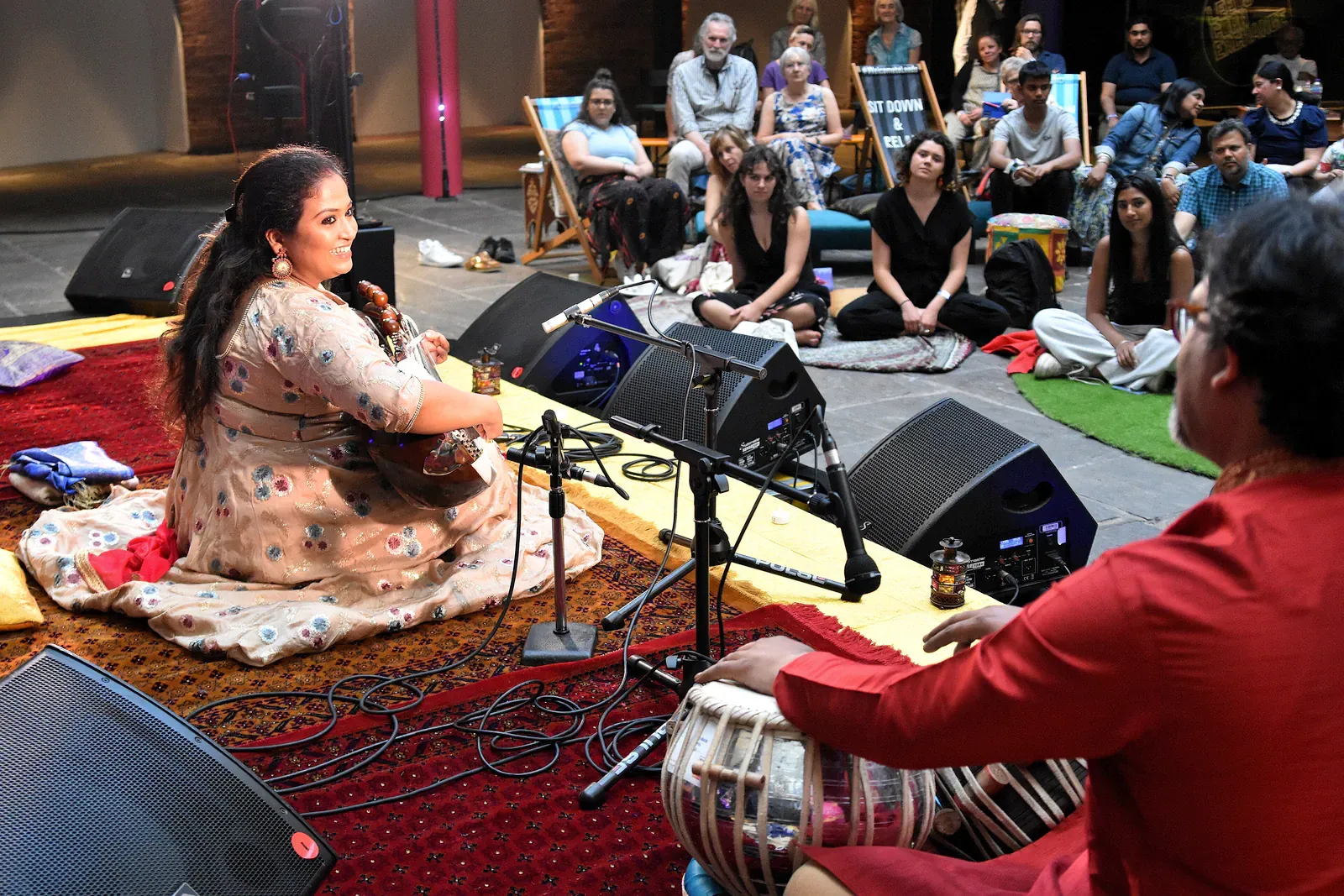
- 1975Shakti record live at Southampton CollegeAcoustic Indo-jazz with John McLaughlin, L. Shankar, Zakir Hussain and Vikku Vinayakram, issued 1976.
- 1975Don Cherry releases Brown RiceJazz with Indian, African and Middle Eastern strands.
- 1978Codona record their first albumCherry, Collin Walcott and Nana Vasconcelos record in September 1978; the trio releases three ECM albums, 1979 to 1983.
1980
Chamber world jazz
Spacious ECM-style recordings reach a wide audience with Officium; oud players and Azerbaijani jazz-mugham reach Europe; world jazz becomes a commercial label around 1990.
- 1990World jazz becomes a commercial labelAround 1990 the term gains its own commercial meaning through globalization.
- 1994Officium released on ECMGarbarek and the Hilliard Ensemble, recorded in 1993 at Propstei St. Gerold; over a million copies sold.
- 1996Rabih Abou-Khalil releases Arabian WaltzOud-led jazz built around a 3/4 title piece.
2000
Global scenes
Brahem, Youssef, Hamasyan and Indian-American players keep folk modes and odd meters at the centre of contemporary jazz.
- 2000Anouar Brahem releases Astrakan CafeOud, clarinet and percussion trio, recorded in 1999 in Austria for ECM.
- 2015Tigran Hamasyan releases MockrootArmenian folk modes and odd meters in a jazz-rock trio, issued 17 February 2015 on Nonesuch.
- 2024Shakti win a Grammy for This MomentBest Global Music Album, their first studio album in more than 45 years.
Listening path
Anthems
The records that built the sound, grouped by the part they played. Thumbnails come from YouTube; the player loads only when you press play.
- 01
Randy Weston, 1960
Opening movement of Uhuru Afrika, an early jazz suite built on African themes.
Origin - 02
John Coltrane, 1961 · Impulse!
Long modal title piece of Coltrane's Impulse debut, jazz held on a single African-flavoured centre.
Origin - 03
Yusef Lateef, 1962
Gentle entry point to Eastern Sounds, with the Eastern instruments placed in a jazz ballad.
Start hereOrigin - 04
John Mayer (composer), 1967 · Columbia Records
Indo-Jazz Fusions piece where Indian instruments and a jazz quintet share the stage.
Origin - 05
Paul Horn, 1969 · Epic Records
Solo flute in the Taj Mahal, from an album reported to have sold over a million copies.
Start hereBreakthrough - 06
Abdullah Ibrahim, 1974
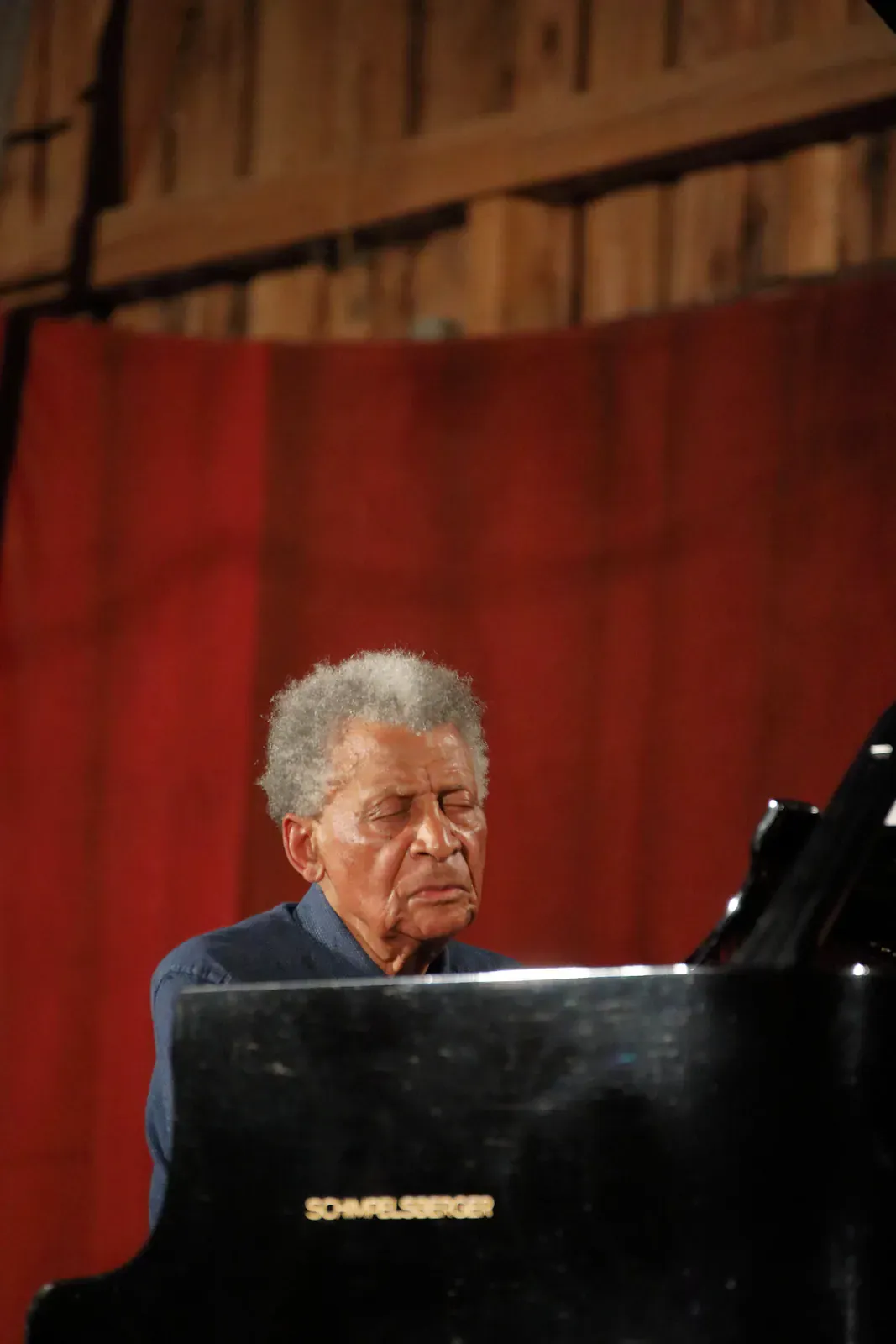
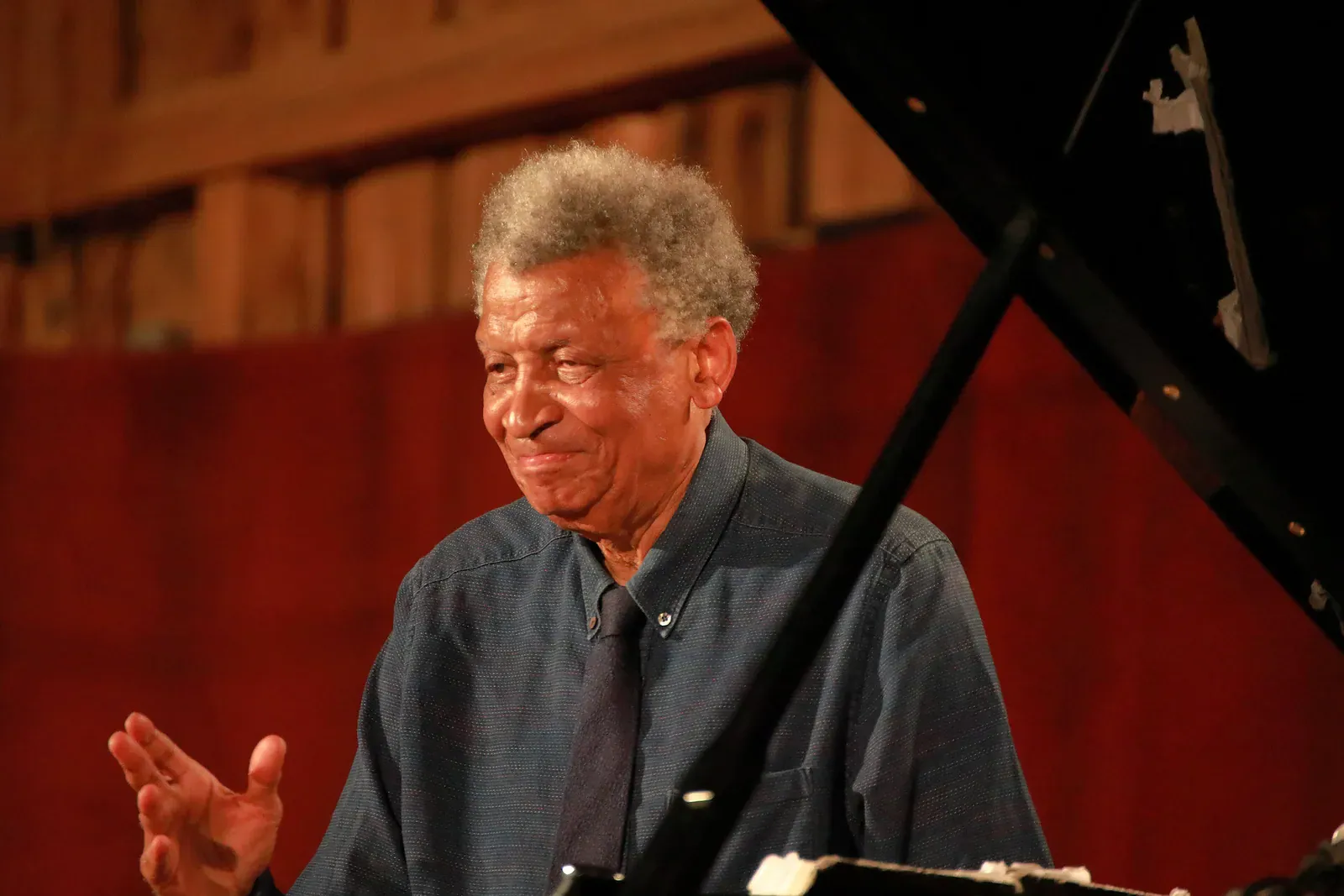
Cape jazz groove that became the unofficial anthem of anti-apartheid South Africa.
Anthem - 07
Don Cherry, 1975
Title track of Cherry's album joining jazz to Indian, African and Middle Eastern ideas.
Anthem - 08
Rabih Abou-Khalil, 1996
Oud-led waltz in 3/4, the title piece of Abou-Khalil's 1996 album.
Anthem - 09
Anouar Brahem, 2000 · ECM Records
Short oud-and-clarinet piece from the Brahem trio's ECM album.
Anthem - 10
Shakti, 1976
Long live piece from Shakti's debut, Carnatic rhythm played with jazz improvisation.
Crossover - 11
Jan Garbarek, 1994 · ECM Records
Saxophone over a Morales motet, from the ECM album that sold over a million copies.
Start hereCrossover - 12
Tigran Hamasyan, 2015 · Nonesuch Records
Armenian-flavoured odd-meter piece from Mockroot.
Revival
Facts
| Family | Jazz |
| Origin | United States, United Kingdom, India, South Africa |
| Emerged | 1950s-1960s |
| Status | Active |
| Tempo | 65 to 130 BPM |
| Meter | 4/4 and 3/4, with odd meters |
| Subgenres | 6 |
Ethno jazz, also called world jazz, is jazz that takes its modes, rhythms and instruments from non-Western traditional musics, mainly African, Asian and Middle Eastern.
It developed internationally from the mid-1950s, in New York, London, Cape Town and Baku, and acquired the name world jazz as a commercial category around 1990. Its working materials are modal frameworks, additive and odd meters, and traditional instruments placed beside a jazz rhythm section.
Origins
The genre grew out of modal and free jazz. Once a piece could stay on one scale for minutes, players had room to bring in scales and rhythms that were not European. Randy Weston recorded the suite Uhuru Afrika in 1960, built on African independence themes with orchestration by Melba Liston and words by Langston Hughes, and issued it on Roulette. In 1961 John Coltrane recorded Africa/Brass, his first album for Impulse, at Rudy Van Gelder’s studio in Englewood Cliffs with a 21-piece ensemble; the modal title piece rests on a single African-flavoured centre.
Yusef Lateef answered from another angle, recording Eastern Sounds in 1961 and issuing it in 1962; it put oboe, flutes and other non-Western instruments over a standard jazz rhythm section. His quiet reading of a film theme on that record remains the easiest door into it. The common move in all three projects was the same: the jazz grammar of improvisation stayed, and the source of melodic and rhythmic material moved outside the American songbook.
First crossings, 1955-1969
Two lines ran side by side in the 1960s: American players reaching toward Africa and Asia, and musicians from those regions bringing their own traditions into jazz. Weston moved to Tangier in 1967 and ran the African Rhythms Club there until 1972. In 1963 the singer Sathima Bea Benjamin brought Duke Ellington to hear the Cape Town pianist Dollar Brand in Zurich, which led to a trio recording.
In London, the saxophonist Joe Harriott and the Indian-born composer John Mayer formed the Indo-Jazz Fusions double quintet, five Indian and five jazz musicians playing Mayer’s raga-based writing. The Indo-Jazz Suite appeared in 1966, and “Mishra Blues” followed on Columbia in 1967. London stayed the group’s base until Harriott’s death in 1973.
In Baku, Vagif Mustafazadeh joined jazz harmony to the Azerbaijani modal tradition, the root of jazz-mugham; his daughter Aziza Mustafa Zadeh later carried it abroad. The older mugham tradition supplies the modes and the room for long improvisation.
Raga, ECM and the fusion bands, 1970-1979
By the 1970s the experiments had become small groups with settled personnel. In June 1974 the Cape Town pianist, by then Abdullah Ibrahim, recorded “Mannenberg” in a single improvised take. The piece, driven by a Cape jazz groove, became the unofficial anthem of anti-apartheid South Africa, and Basil Coetzee and Robbie Jansen played it at rallies in the 1980s.
Shakti recorded live at Southampton College on 5 July 1975 with John McLaughlin, L. Shankar, Zakir Hussain and Vikku Vinayakram, an acoustic Indo-jazz group working in the Carnatic tradition; the album was issued in 1976. Don Cherry released Brown Rice in 1975, and in 1978 recorded the first album of Codona with Collin Walcott and Nana Vasconcelos; the trio made three albums for ECM, issued from 1979 to 1983.
ECM, founded in Munich in 1969 by Manfred Eicher, became the label most tied to the genre. Its spacious recordings later set the template for chamber world jazz.
Cape Town and its jazz
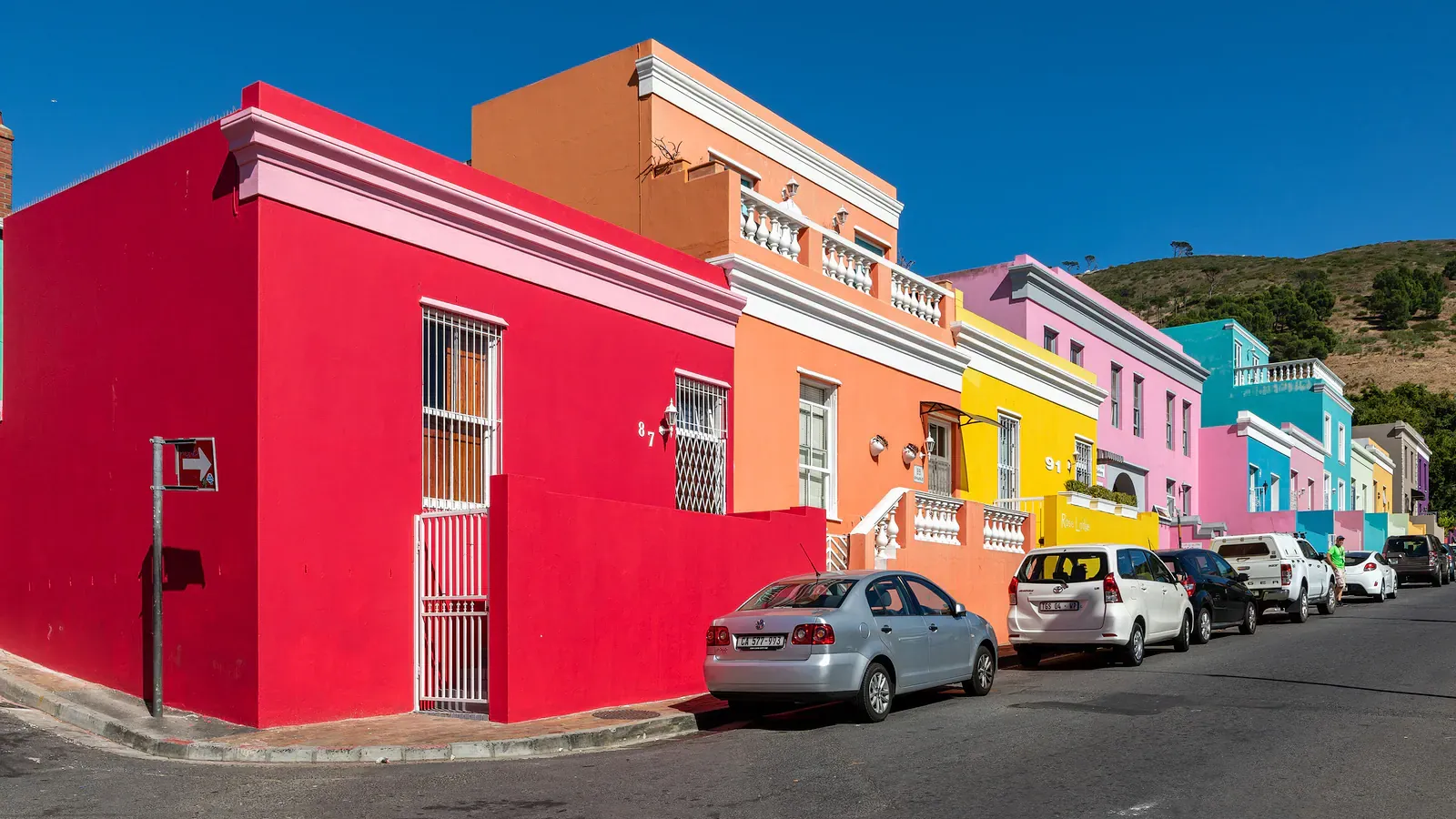
Cape Town is the genre’s clearest case of a local tradition becoming jazz. Cape jazz began there in the late 1950s with the Jazz Epistles, and it mixes township, church and carnival music. The annual Klopse parade each January feeds street-band music into it.

Chamber world jazz, 1980-1999
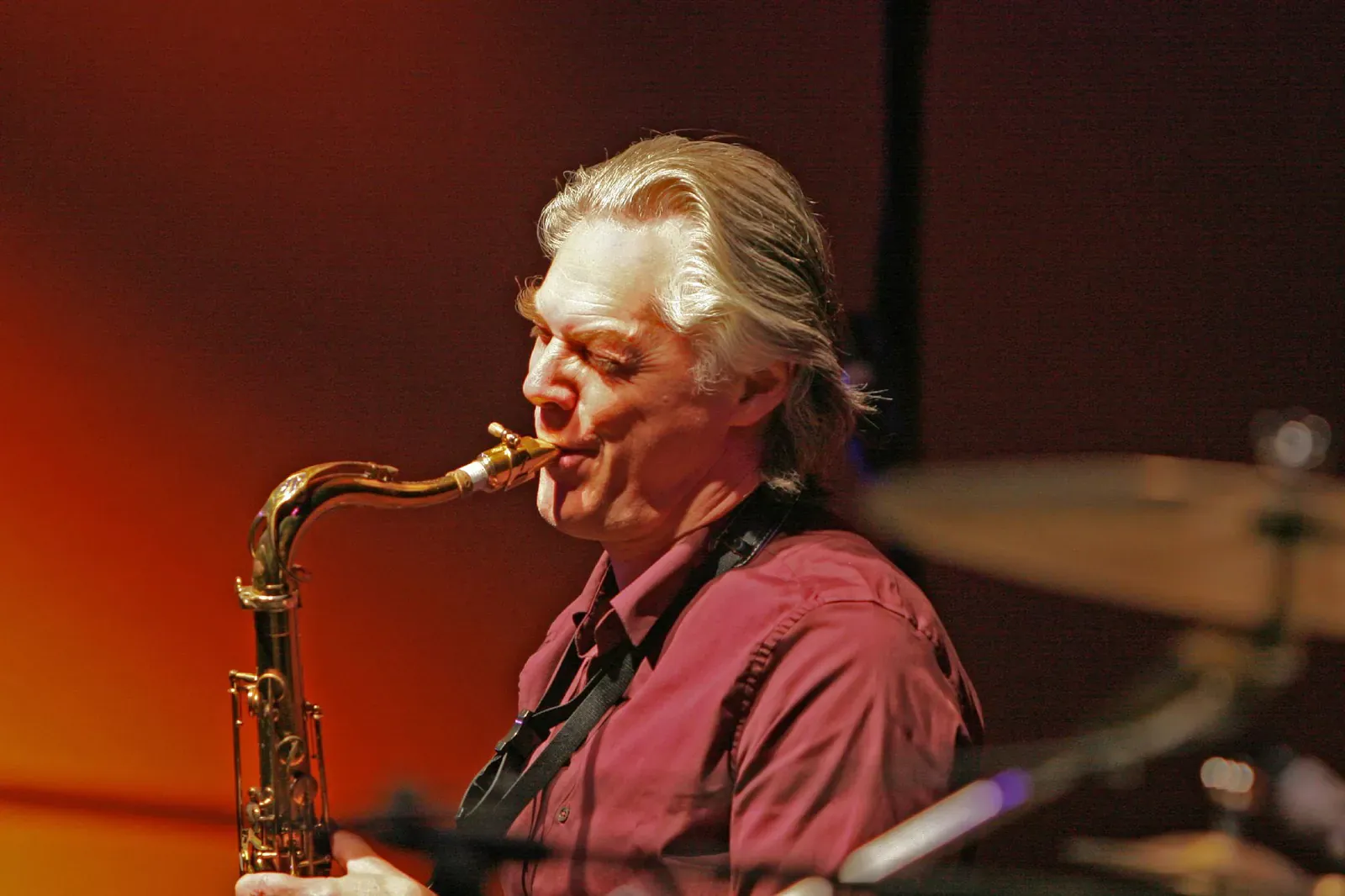
ECM carried the genre to a wide audience. In 1994 the label released Officium, the saxophonist Jan Garbarek with the Hilliard Ensemble, recorded in 1993 at the Propstei St. Gerold monastery in Austria. A saxophone line over a Morales motet carried the album to sales of over a million copies.
Arabic-world players moved to the centre in the same years. The oud-led waltz “Arabian Waltz” by Rabih Abou-Khalil, who settled in Munich after leaving Lebanon in 1978, gave its name to his 1996 album. His 13-part television series Visions of Music, from 1998, explored jazz fusion with world traditions. The term world jazz took on its commercial meaning around 1990, when globalization turned such records into a shelf category.
Instruments and production
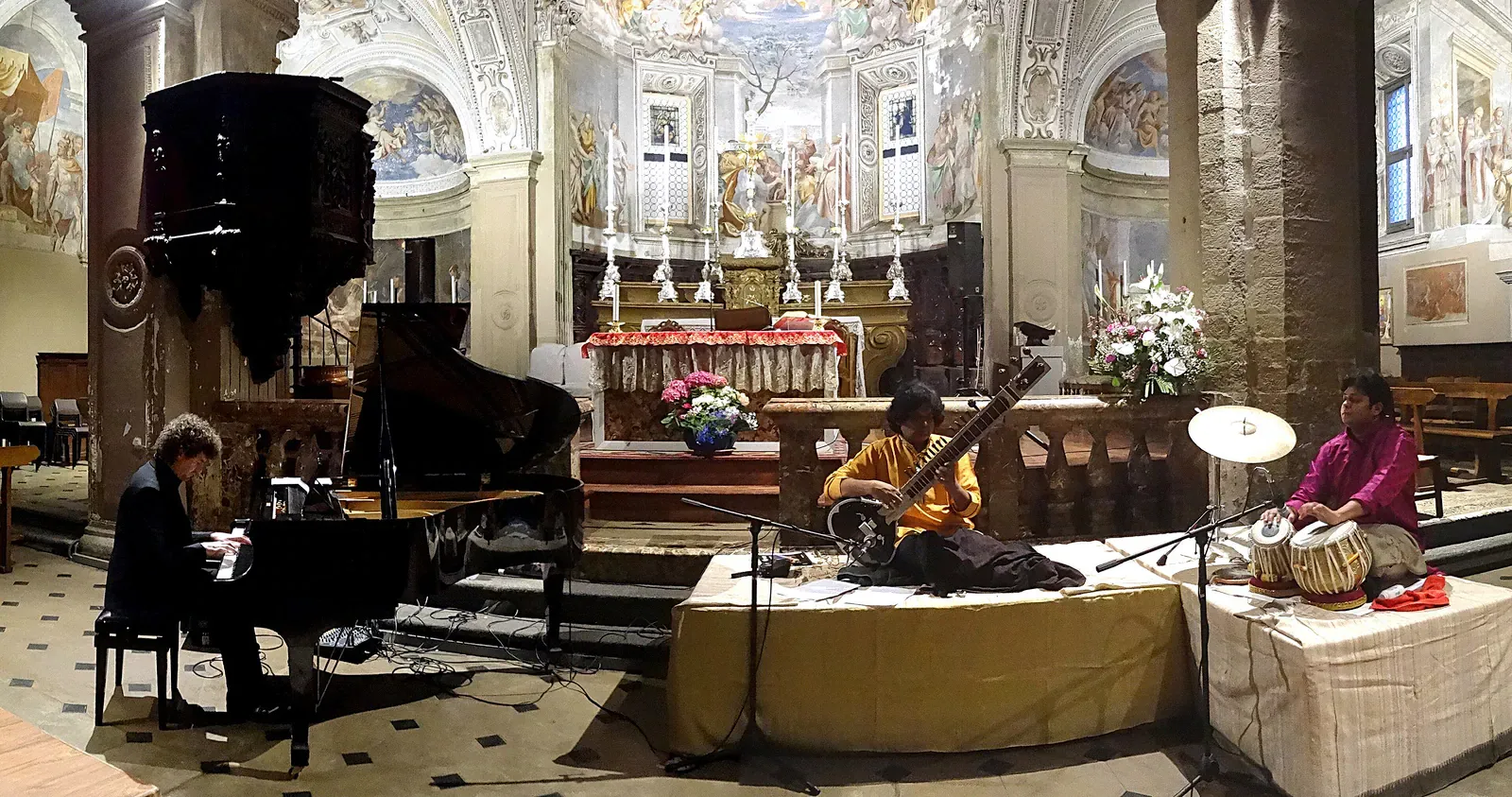
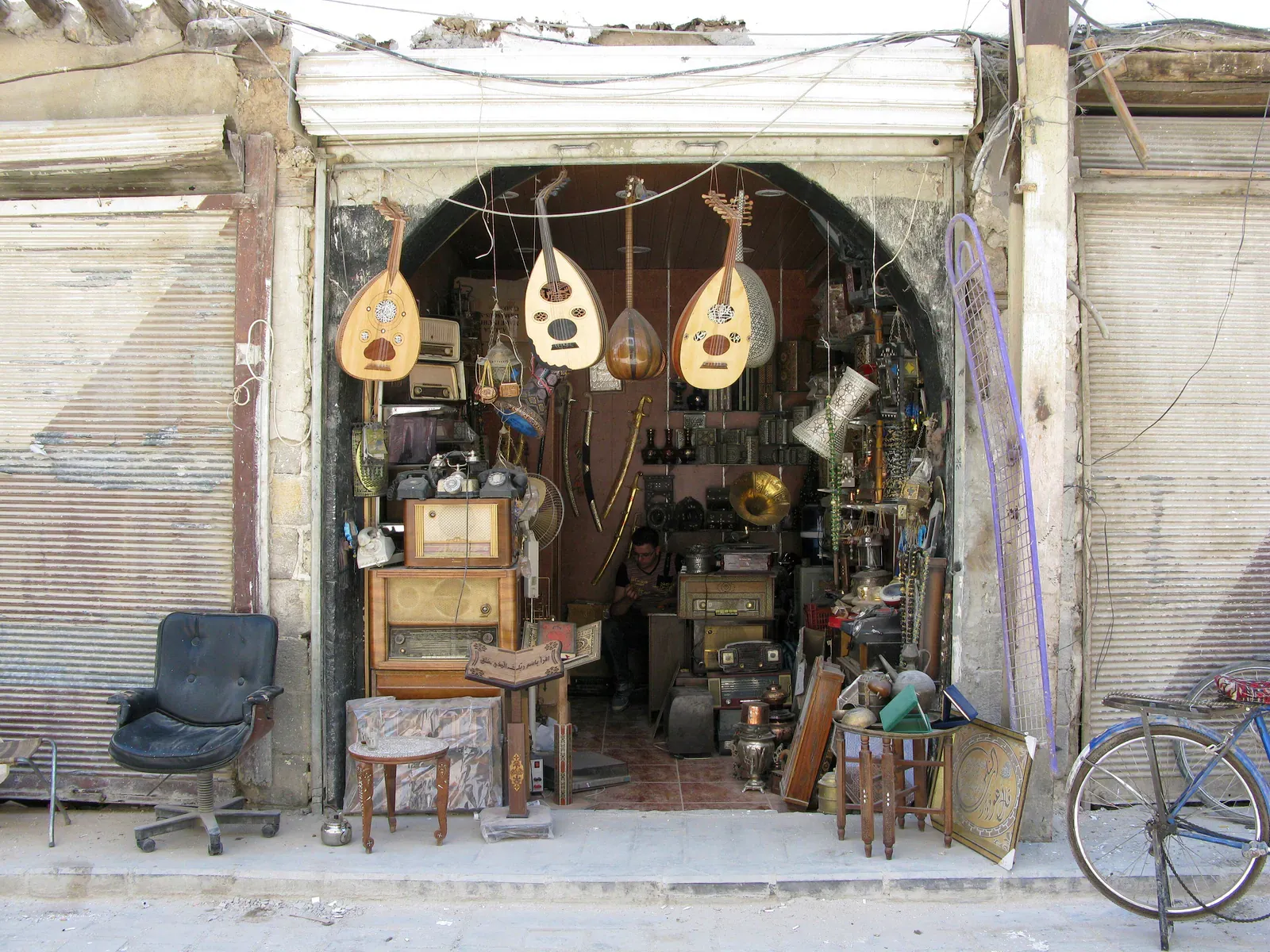
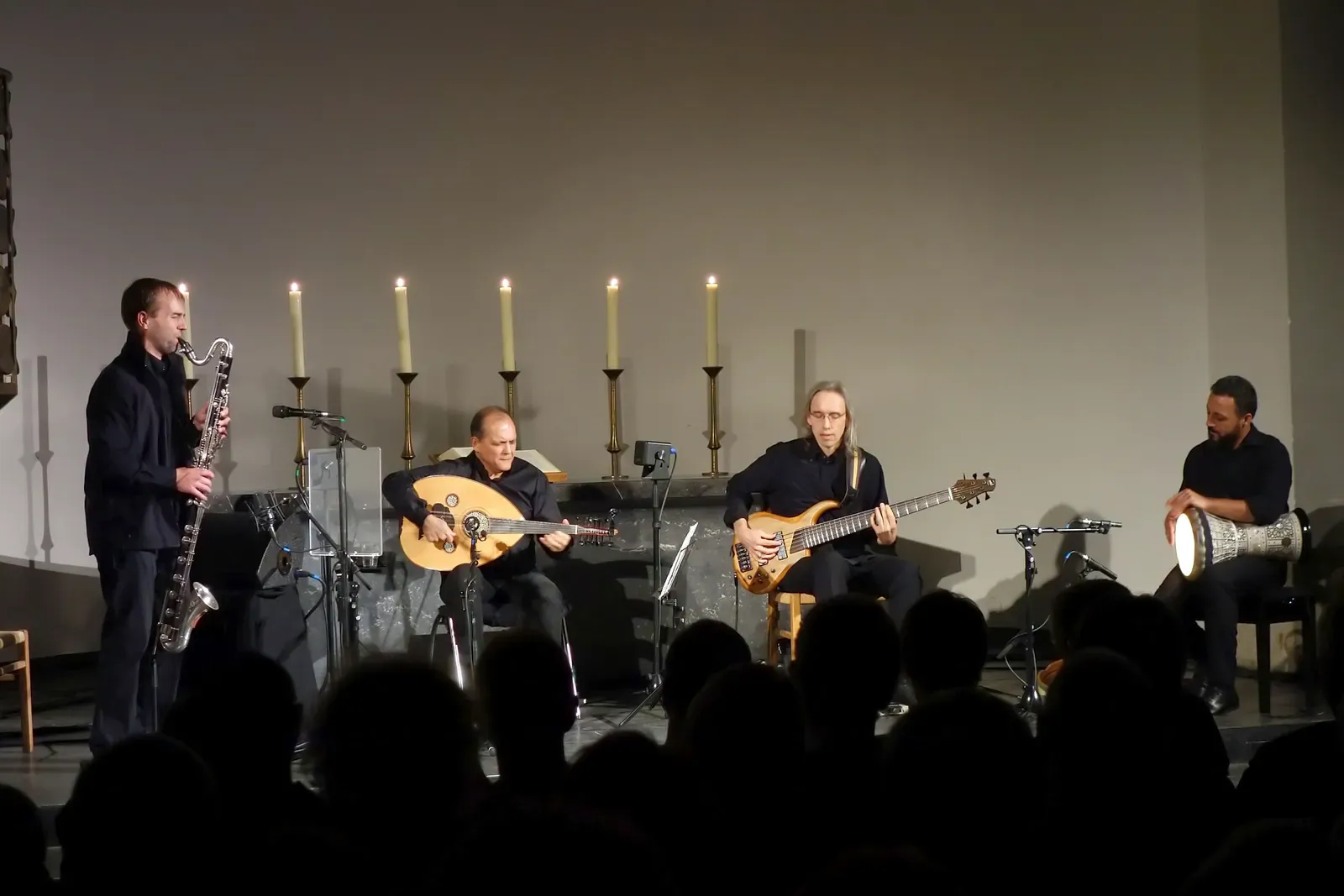
Traditional instruments enter jazz as lead voices, not colour. The oud, a pear-shaped fretless lute, carries melody in Arabic-jazz chamber groups, and sitar, tabla, oboe and flute appear where a project draws on South Asia or the Middle East. Production tends to be acoustic, with records made in churches and monasteries, and a rhythm section that adapts to the borrowed meters.
Global scenes, 2000 to the present
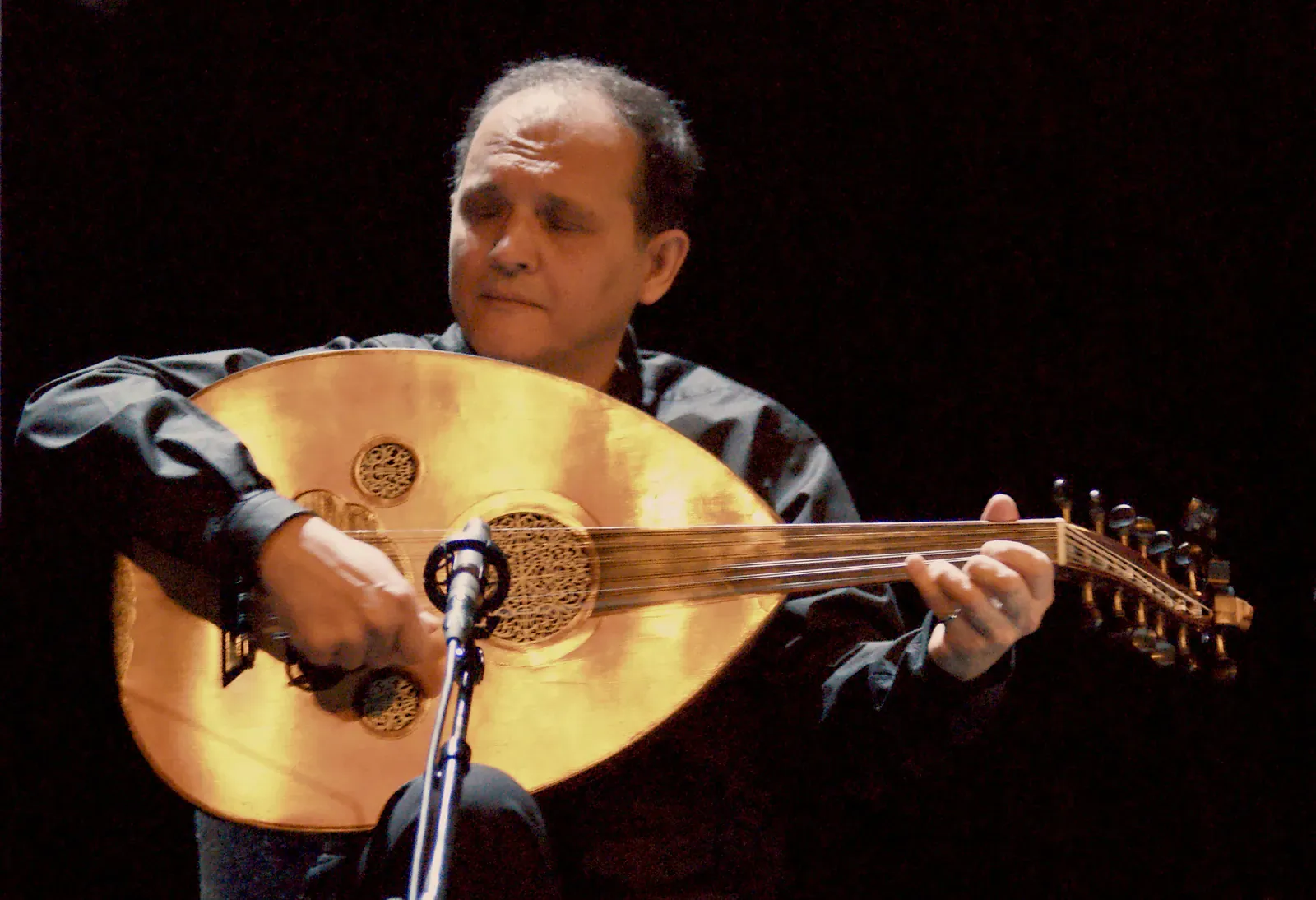
Anouar Brahem’s Astrakan Cafe, recorded in 1999 in Austria and released in 2000, paired oud with clarinet and percussion, and became a reference for Arabic-jazz chamber music. The Tunisian oudist plays maqamat and taqsim, and improvises within them.
Tigran Hamasyan released Mockroot on Nonesuch on 17 February 2015, bringing Armenian folk modes and odd meters into a jazz-rock trio. In 2024 Shakti won the Grammy for Best Global Music Album with This Moment, their first studio album in more than 45 years.
Culture
The scene is organised around concert halls, churches, festivals and record labels, not dance floors. Ritual and political contexts matter: Cape Town’s Klopse carnival gives Cape jazz its street-band roots, and anti-apartheid rallies gave “Mannenberg” its second life. The genre also depends on artist-initiated places such as Weston’s African Rhythms Club in Tangier.
Legacy
Ethno jazz reset what jazz could draw on after bebop: modal frameworks, non-Western tunings and odd meters now sit in contemporary jazz as ordinary tools. It sits beside flamenco jazz and other regional blends, and it feeds new scenes in Baku, Cape Town and Yerevan. The jazz family treats it as a branch with its own sub-styles: Afro-jazz, Arabic jazz, flamenco jazz, Indo-jazz, jazz-mugham and world fusion.
Misconceptions
World jazz is sometimes dated to the 1990s because that is when the commercial label appeared, but the crossings are older: Uhuru Afrika and Africa/Brass date from 1960 and 1961, and the Indo-Jazz Suite from 1966. It is also sometimes treated as Western musicians borrowing from elsewhere; yet Cape jazz grew from Cape Town’s own streets and churches, jazz-mugham from Baku’s modal tradition, and Indo-jazz from a double quintet in which half the players were Indian. A third belief equates the genre with a world-music sampler. The records usually keep jazz structure, with solos over a changing or modal groove, and the borrowed tradition determines the scale and meter, not the form of the whole piece.
Frequently asked questions
What is ethno jazz?
Ethno jazz is jazz combined with non-Western traditional music, using modes, rhythms and instruments from regions such as Africa, South Asia and the Middle East. Players keep jazz improvisation but draw melodic material from other traditions.
What is the difference between ethno jazz and world jazz?
World jazz is the name the genre received around 1990 when it became a commercial category. Ethno jazz and ethnic jazz are older labels for the same body of music.
Who started ethno jazz?
No single founder exists. Randy Weston, John Coltrane, Yusef Lateef, Joe Harriott and John Mayer all released projects between 1960 and 1966 that brought African, Indian and Middle Eastern materials into jazz.
Which labels are linked with ethno jazz?
ECM, based in Munich, is the label most associated with it, through Garbarek, Brahem and Codona. Impulse, Columbia, Epic and Nonesuch released key early and later albums.
Sound
Sound sheet
Anatomy of a track
| # | Part |
|---|---|
| 1 | Drone or unaccompanied opening on the traditional instrument |
| 2 | Theme stated on the traditional instrument or a horn |
| 3 | Jazz improvisation over a modal or raga-based centre |
| 4 | Rhythmic section with tabla or hand percussion |
| 5 | Return of the theme |
Signature sounds
- Raga-based or maqam-based melody under jazz improvisation
- Modal improvisation held on one centre for long stretches
- Traditional instruments beside a jazz rhythm section
- Double ensemble of jazz and traditional players
Drums and percussion
- Tabla
Techniques
- Modal improvisation
- Raga-based structure
- Double-ensemble writing
- Taqsim-style solos
Keys and modes
Raga-based modes. Mayer's Indo-Jazz Suite uses ragas such as Megha and Gaud-Saranga.
Arabic maqam. Oud players like Brahem learn it as maqamat and taqsim.
Mugham modes. Azerbaijani jazz-mugham sets mugham motifs inside jazz harmony.
Scenes
Where it happened
Where and when the sound lived: one bar per city on a shared timeline.
Africa
North America
Asia
Europe
Active scenes
Peak 6, 1969-1972
Coltrane, Lateef and Weston recorded their African and Eastern projects in the New York area.
Home of the Indo-Jazz Fusions double quintet until Harriott's death.
Cape jazz began here with the Jazz Epistles; Mannenberg was recorded here in 1974.
ECM's base; Abou-Khalil also settled here after leaving Lebanon in 1978.
Vagif Mustafazadeh joined jazz harmony to mugham, later carried abroad by his daughter Aziza.
Randy Weston ran the African Rhythms Club here.
Venues and places
St. Gerold, 1993 to today. Austrian monastery where Officium (1993) and Astrakan Cafe (1999) were recorded.
Englewood Cliffs, 1961 to today. Rudy Van Gelder's studio, where Africa/Brass was cut in 1961.
Agra, 1968 to 1968. Paul Horn recorded Inside in the tomb on 25 April 1968.
Southampton, 1975 to 1975. Shakti's live album was recorded here on 5 July 1975.
Culture
Culture markers
- Cape Town Klopse carnival
Annual January parade whose street-band music feeds Cape jazz.
Ritual - Anti-apartheid rallies
Mannenberg was performed by Basil Coetzee and Robbie Jansen at protests in the 1980s.
Ritual
Media
Key media
- 1998Visions of Music
by Rabih Abou-Khalil. 13-part TV series in which Abou-Khalil explores jazz fusion with world traditions.
Film
Glossary
Terms on this page
Jazz from Cape Town mixing township, church and carnival music; Mannenberg is among its best-known tunes.
Harriott and Mayer's format of five jazz players and five Indian musicians.
Arabic modal system; oud players such as Brahem learn it as maqamat and taqsim.
Azerbaijani modal improvisational tradition that jazz-mugham joins to jazz harmony.
Indian melodic framework; Indo-jazz writers set jazz improvisation over raga-based structures.
Unmetered improvisation in a maqam, usually by one soloist.
Jazz family