Ragtime
Ragtime is syncopated piano music from 1890s Black communities: Scott Joplin, Maple Leaf Rag, sheet music, Tin Pan Alley, 1920s decline and the 1970s revival.
Missouri, 1895
Jazz family
Born
1895
Missouri
Subgenres
8
Documented branches
Links
33
Genres it drew on or shaped
Tempo
75-125 BPMLineage
Family tree
Timeline
Era by era
From the first sparks to today. Select a dot to read the story behind it.
- Sedalia and the Mississippi Valley
1895 to 1899
- Classic ragtime
1899 to 1910
- Tin Pan Alley and the dance craze
1910 to 1919
- Stride, novelty and quiet decline
1920 to 1949
- Revival
1950 to today
Eras
Moments
- 1 Sedalia and the Mississippi Valley, 1895 to 1899
- 2 Classic ragtime, 1899 to 1910
- 3 Tin Pan Alley and the dance craze, 1910 to 1919
- 4 Stride, novelty and quiet decline, 1920 to 1949
- 5 Revival, 1950 to today
1895
Sedalia and the Mississippi Valley
Black pianists in Missouri river towns and St. Louis turn cakewalk, march and minstrel tunes into syncopated piano pieces; the first instrumental rags reach print in 1897.
- 1893Chicago World's Fair spreads ragtimeThe Chicago fair is credited with introducing ragtime to a wide US audience.
- 1895Ben Harney registers a ragtime songHis "Good Old Wagon" song was copyrighted in January 1895 in Louisville.
- 1897Tom Turpin publishes Harlem RagIt is the first rag published by an African American.
1899
Classic ragtime
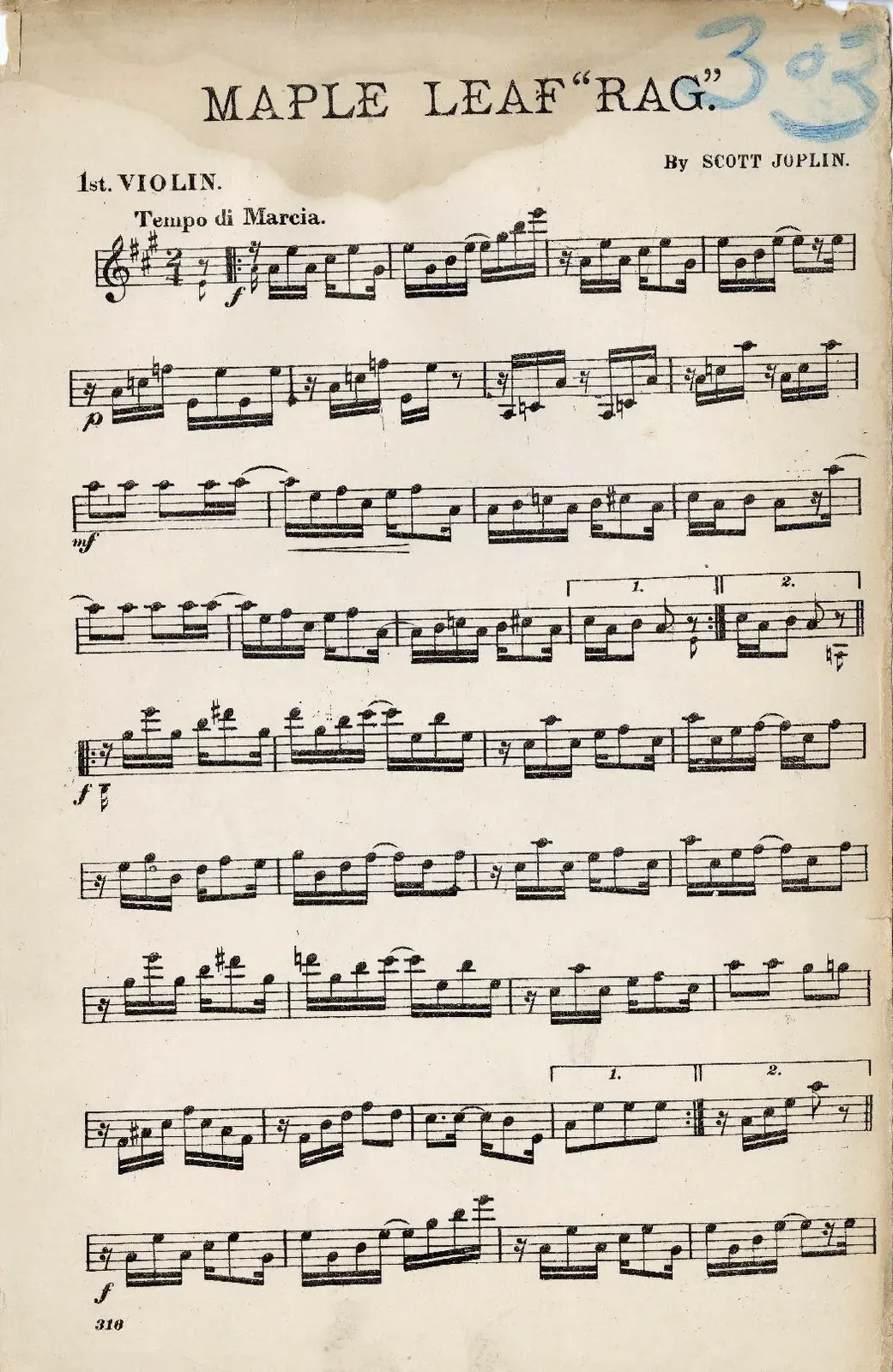
Maple Leaf Rag makes Joplin and his publisher John Stark famous. Joplin, James Scott and Joseph Lamb write multi-strain concert rags that the Stark firm prints.
- 1899Joplin's Original Rags is publishedCarl Hoffman of Kansas City printed it, copyrighted in March, months before Maple Leaf Rag.
- 1899Joplin sells Maple Leaf Rag to StarkSigned on August 10 for a one cent royalty per copy; copyrighted in September.
- 1902The Entertainer is publishedJoplin's rag appeared from Stark in St. Louis.
- 1905Stark opens a New York officeMaple Leaf Rag sales let the Sedalia firm expand to St. Louis and then New York.
- 1906James Scott publishes Frog Legs RagStark's second best seller after Maple Leaf Rag.
- 1907Joplin moves to New York and meets LambJoplin recommends Joseph Lamb to Stark the same year.
- 1908Joseph Lamb publishes SensationHis first rag, issued by Stark with Joplin's backing.
around 1910
Tin Pan Alley and the dance craze
Ragtime becomes a national fashion: songs, bands and one-step dances carry the name, often with little syncopation, while Harlem pianists push the style toward jazz.
- 1911Berlin's Alexander's Ragtime BandThe biggest ragtime song hit, though it holds almost no ragtime syncopation.
- 1912First ragtime concerts in BritainThe American Ragtime Octette played the London Hippodrome.
- 1915Treemonisha gets a poor rehearsal stagingJoplin finished his ragtime opera in 1911; the 1915 run-through drew a small audience.
- 1917Scott Joplin diesHe died on 1 April 1917 aged 48, largely forgotten.
around 1920
Stride, novelty and quiet decline
Jazz overtakes ragtime. Harlem stride and the novelty piano of Zez Confrey keep its technique alive while the classic rags fade from print.
- 1920Jazz overtakes ragtimeThe shift came in the early 1920s.
- 1921James P. Johnson records Carolina ShoutThe stride test piece that Duke Ellington and others learned.
- 1921Zez Confrey writes Kitten on the KeysSold over a million sheet-music copies and launched novelty piano.
around 1950
Revival
Folkways and Vanguard recordings, Max Morath on television, Joshua Rifkin's 1970 Joplin album and the film The Sting bring ragtime back as concert music.
- 1959Joseph Lamb gets a Folkways album"A Study in Classic Ragtime" came out a year before he died.
- 1959Max Morath hosts The Ragtime Era26 half-hour programs on National Educational Television, 1959 to 1961.
- 1970Rifkin's Piano Rags by Scott JoplinThe Nonesuch LP sold 100,000 copies in a year and later passed a million.
- 1973The Sting uses Joplin's ragsMarvin Hamlisch adapted them; the soundtrack came out on MCA.
- 1973The Red Back Book wins a GrammyThe New England Ragtime Ensemble took Best Chamber Music Performance.
- 1974The Entertainer hits number 3Hamlisch's version peaked at number 3 on the Billboard Hot 100 in May 1974.
- 1976Joplin receives a special Pulitzer PrizeCited for his contribution to American music.
Listening path
Anthems
The records that built the sound, grouped by the part they played. Thumbnails come from YouTube; the player loads only when you press play.
- 01
Tom Turpin, 1897
First published rag by a Black composer; a later official Topic recording of the 1897 composition.
Origin - 02
Scott Joplin, 1899
Joplin's first published rag, months before Maple Leaf Rag; a later official recording of the composition.
Origin - 03
Scott Joplin, 1899 · John Stark & Son
The Stark hit that made ragtime a national style; heard in Rifkin's 1970 recording of the 1899 composition.
Start hereBreakthrough - 04
Marvin Hamlisch, 1973 · #3 Billboard Hot 100, 1974 · MCA Records
Hamlisch's film arrangement of Joplin's 1902 rag reached number 3 on the Hot 100 in 1974.
Start hereBreakthrough - 05
Scott Joplin, 1902 · John Stark & Son
A bright Joplin rag showing the classic form; Rifkin's later recording of the 1902 composition.
Anthem - 06
James Scott, 1906 · John Stark & Son
James Scott's Stark hit, second only to Maple Leaf Rag in sales; a later official recording.
Anthem - 07
Joseph Lamb, 1908 · John Stark & Son
Lamb's debut rag, Joplin-approved and a model of the classic style; a later official recording.
Anthem - 08
Eubie Blake, 1917
Blake said he composed it in 1899 and wrote it down in 1917; a fast, flashy East Coast rag. Official recording.
Anthem - 09
James P. Johnson, 1921
Johnson's 1921 recording moved the rag into stride and jazz piano and became a test piece.
Crossover - 10
Zez Confrey, 1921
Novelty piano hit that sold over a million sheet-music copies; official upload of a Confrey recording.
Crossover - 11
Joshua Rifkin, 1970 · Nonesuch Records
Rifkin's 1970 Nonesuch recording of Joplin's 1902 rag began the revival that the film later widened.
Start hereRevival
Facts
| Family | Jazz |
| Origin | Missouri, United States |
| Emerged | 1890s |
| Status | Revival |
| Tempo | 75 to 125 BPM |
| Meter | 2/4 |
| Subgenres | 8 |
Ragtime is syncopated piano music, built from march form and a steady left hand, that grew out of Black communities in the Midwest and South of the United States in the 1890s. It was popular until the 1910s and is a main ancestor of jazz.
It was written down and sold as sheet music and piano rolls, and its classic form uses several 16-bar strains with a change of key for the trio.
Origins
It started as a collision of tunes people already knew. The cakewalk, a strutting contest dance with its own songs, supplied the rhythmic swagger. Brass-band marches supplied the strains and the key changes. Minstrel-show songs and banjo playing supplied the rest. Black pianists in river towns and cities wove these into pieces where the right hand syncopates against a steady left.
The 1893 World’s Fair in Chicago is credited with showing the new style to a national audience. In January 1895 Ben Harney copyrighted a ragtime song in Louisville. Two years later Tom Turpin of St. Louis published Harlem Rag, the first rag by a Black composer to reach print. Printed, it could travel.
Sedalia and the Mississippi Valley, 1895 to 1899
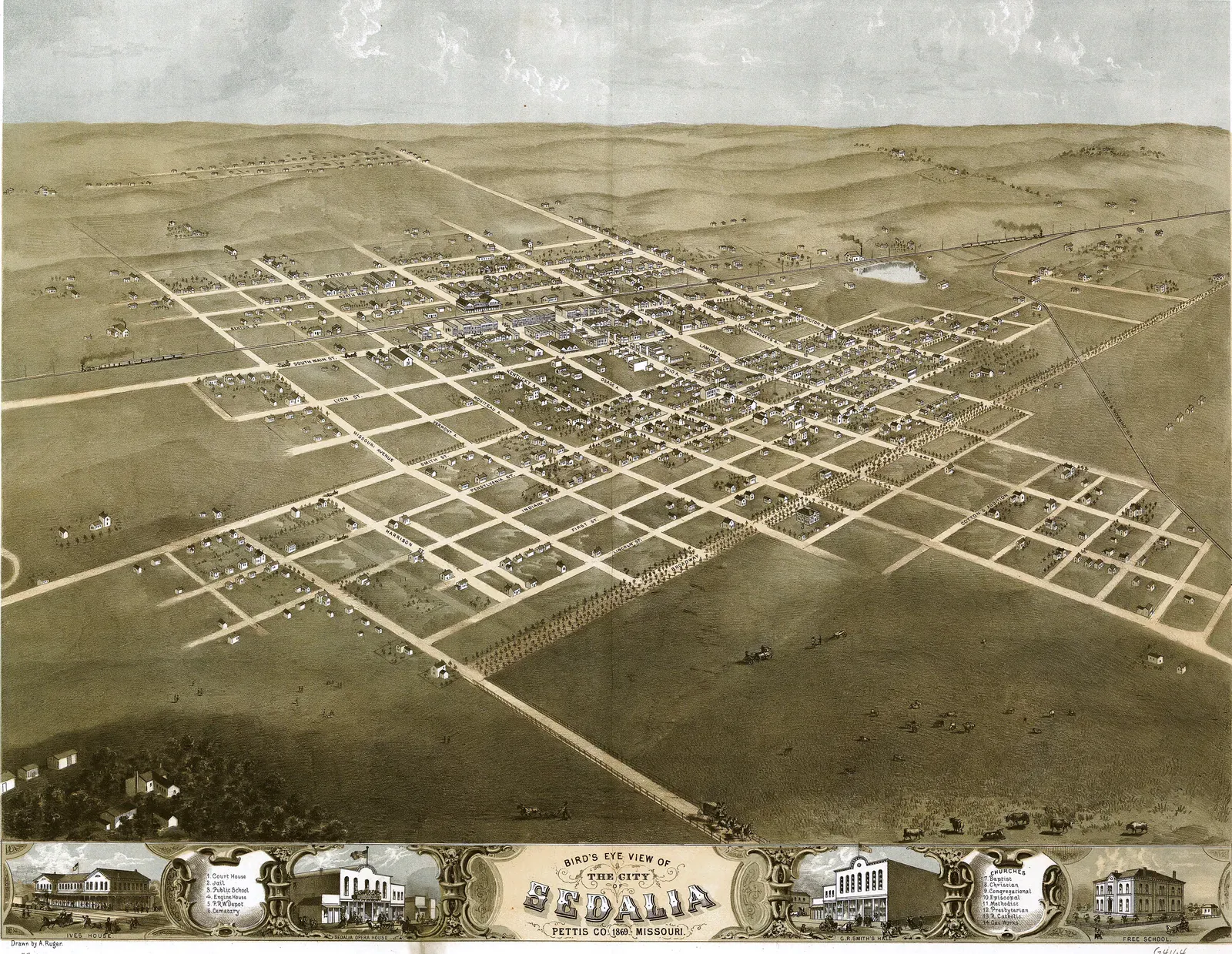
The railroad town of Sedalia, Missouri, gave ragtime its first publishing home. Scott Joplin arrived in 1894 and played at the Maple Leaf Club, which the famous rag is thought to be named after. In St. Louis, Tom Turpin’s Rosebud Cafe drew the best ragtime pianists of the day until it closed in 1906.
Joplin’s first published rag, Original Rags, came out in 1899 from Carl Hoffman of Kansas City and was copyrighted in March. A few months later he took a different piece to a local firm.
Classic ragtime, 1899 to about 1910
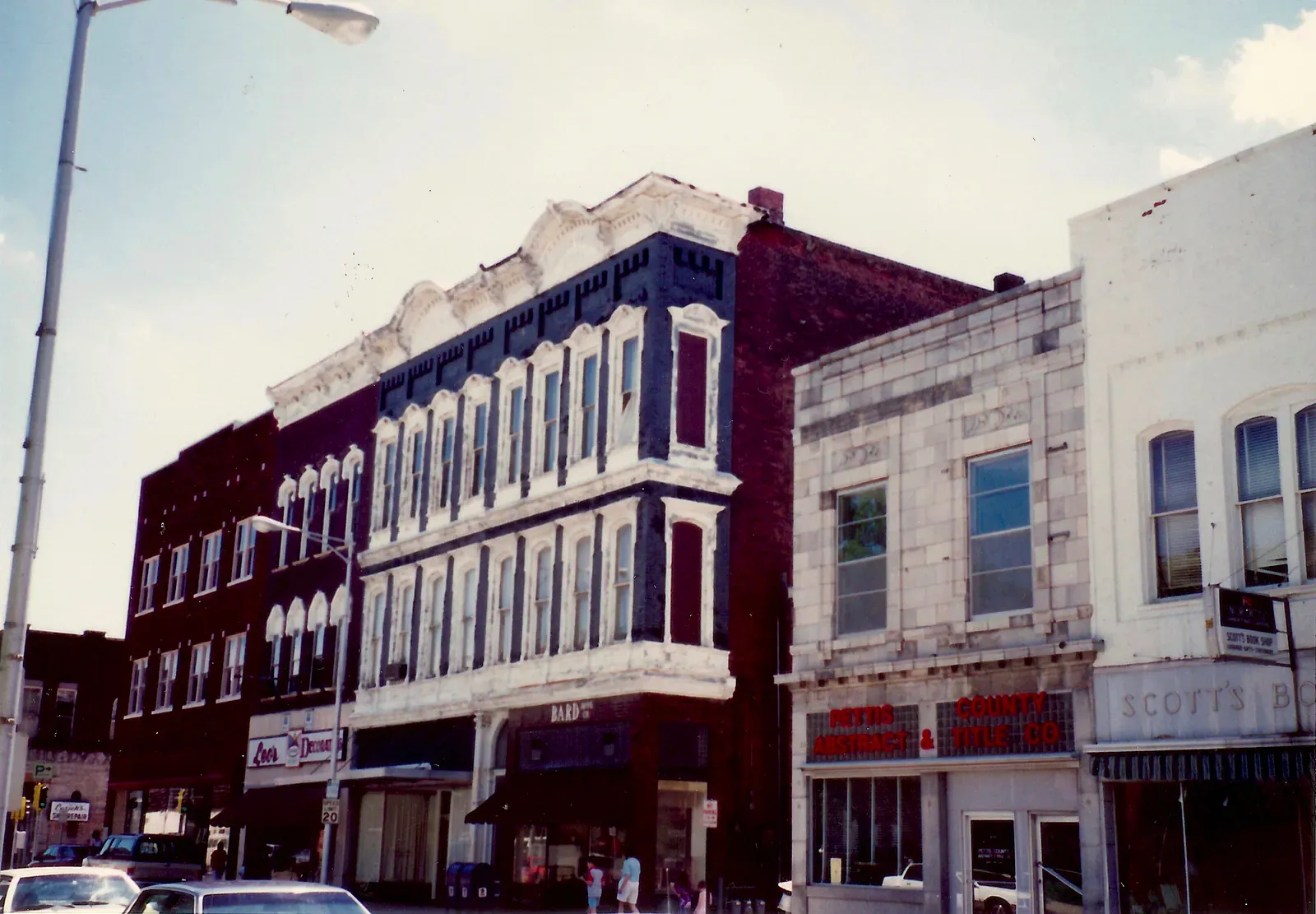
The piece was Maple Leaf Rag, and the buyer was John Stark and Son, a publisher of printed scores; there were no ragtime records to sell yet. The one cent per copy that Joplin signed for in August 1899 looks small, but the royalty turned a pianist into a working composer.
Maple Leaf Rag became the pattern for a style now called classic ragtime. Sales let Stark move to St. Louis and open a New York office in 1905. In 1906 James Scott’s Frog Legs Rag became his second best seller. Joplin recommended Joseph Lamb to Stark in 1907, and the firm published Lamb’s first rag, Sensation, in 1908.
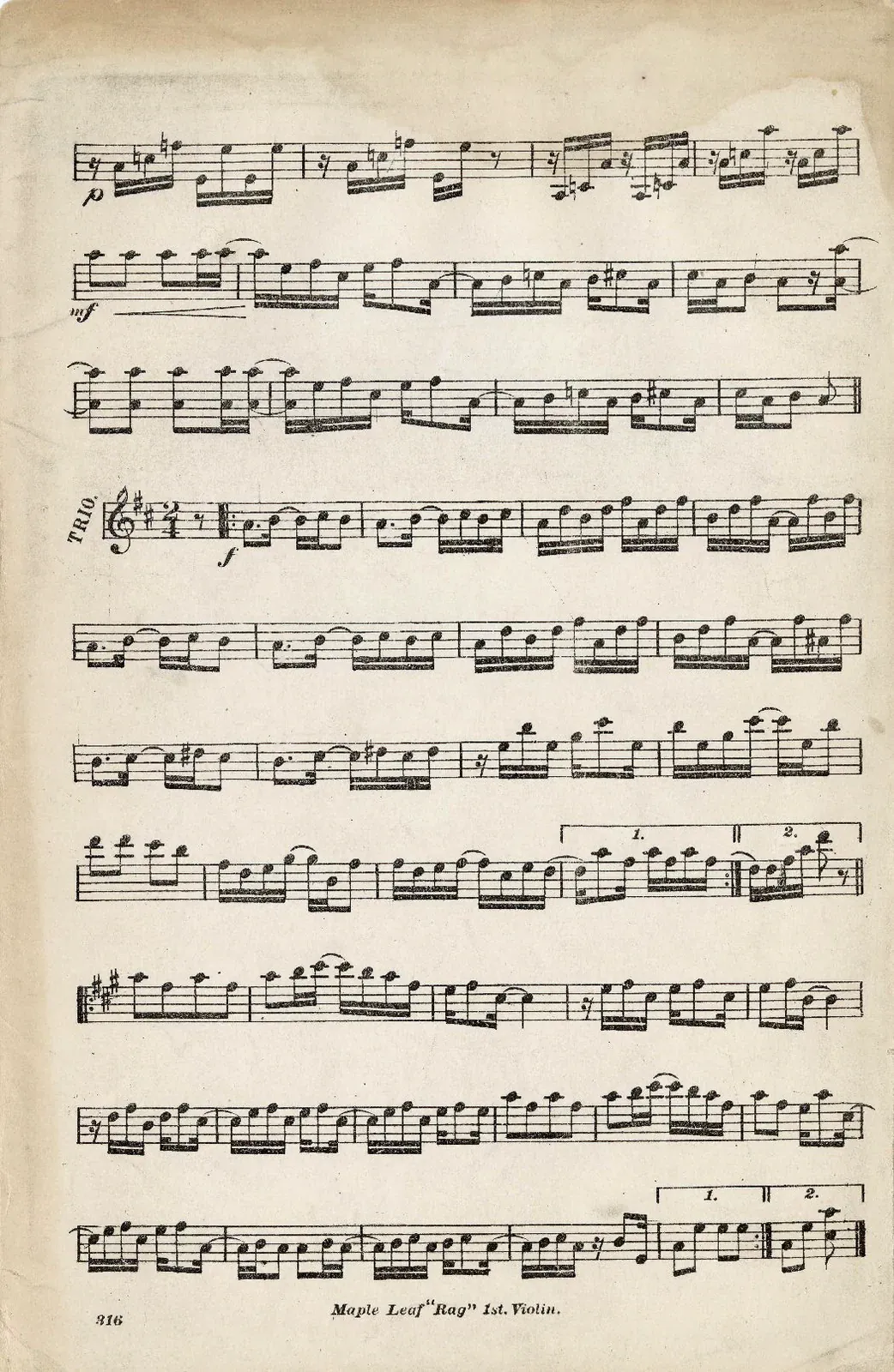
What made these rags different from the pop songs that borrowed the name was construction. A classic rag runs through an AABBACCDD plan of 16-bar strains, with the trio in a fresh key, and it is played at a measured pace. Played at a gallop, the layers blur.
Tin Pan Alley and the dance craze, about 1910 to 1919
By 1910 the word had escaped the piano. Songwriters in New York’s Tin Pan Alley stamped “rag” on tunes, and bands played one-steps and turkey trots under the name. Irving Berlin’s Alexander’s Ragtime Band (1911) was the biggest song hit of the lot, and it has almost no ragtime syncopation. A year later the American Ragtime Octette played the London Hippodrome, the first ragtime concerts in Britain.
Joplin moved to New York in 1907 and finished his ragtime opera Treemonisha in 1911, but the 1915 rehearsal staging drew a small audience. He died on 1 April 1917, aged 48, largely forgotten.
In Harlem, meanwhile, Luckey Roberts and James P. Johnson were pushing the style toward something faster and more virtuosic.
Stride, novelty and a quiet decline, 1920 to 1949
Jazz overtook ragtime in the early 1920s, and it did so partly by absorbing it. James P. Johnson recorded Carolina Shout in 1921, a stride piece that Duke Ellington and other young pianists learned note by note. The same year Zez Confrey wrote Kitten on the Keys, which sold over a million copies of sheet music and started the novelty piano craze. Both depended on rag technique.
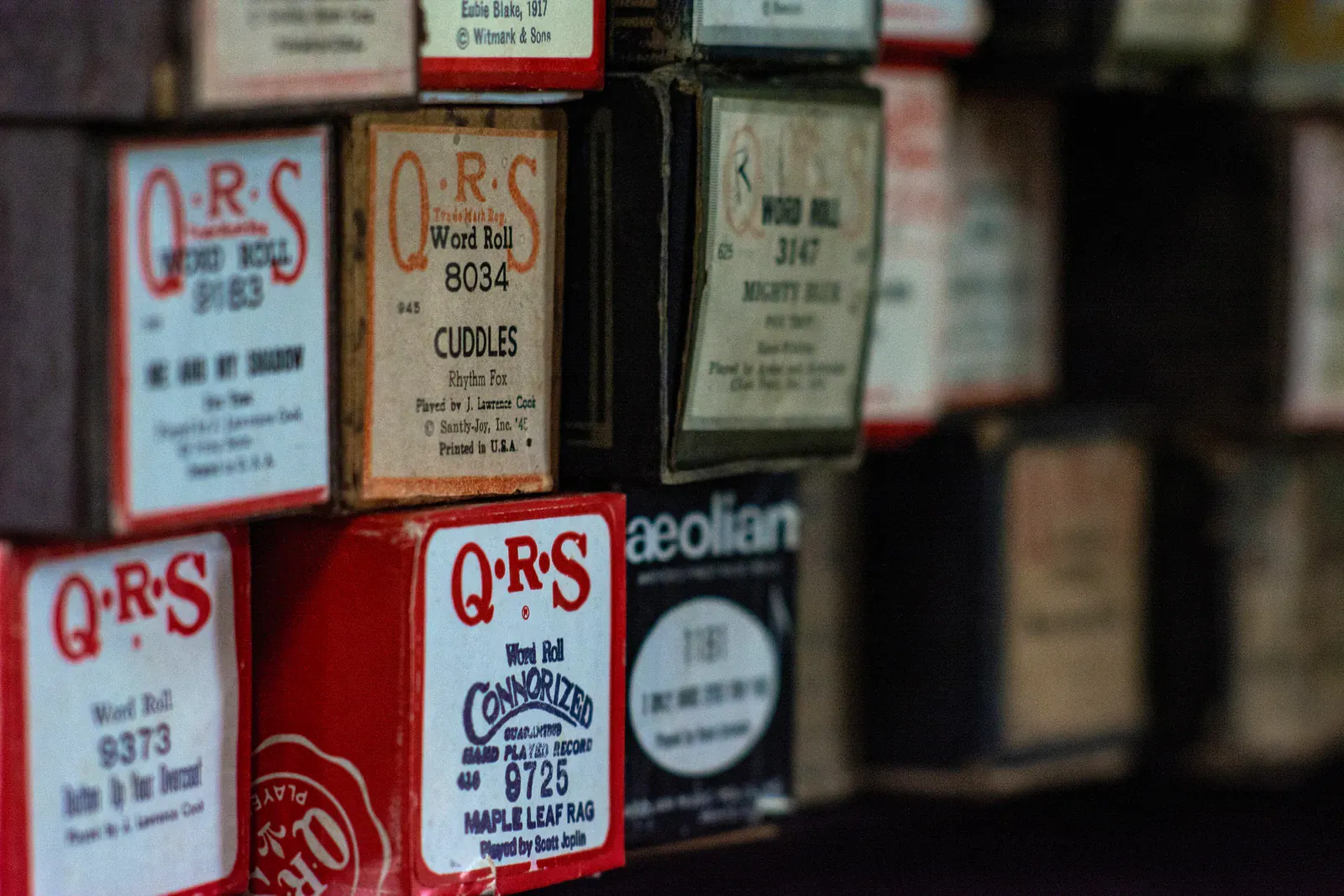
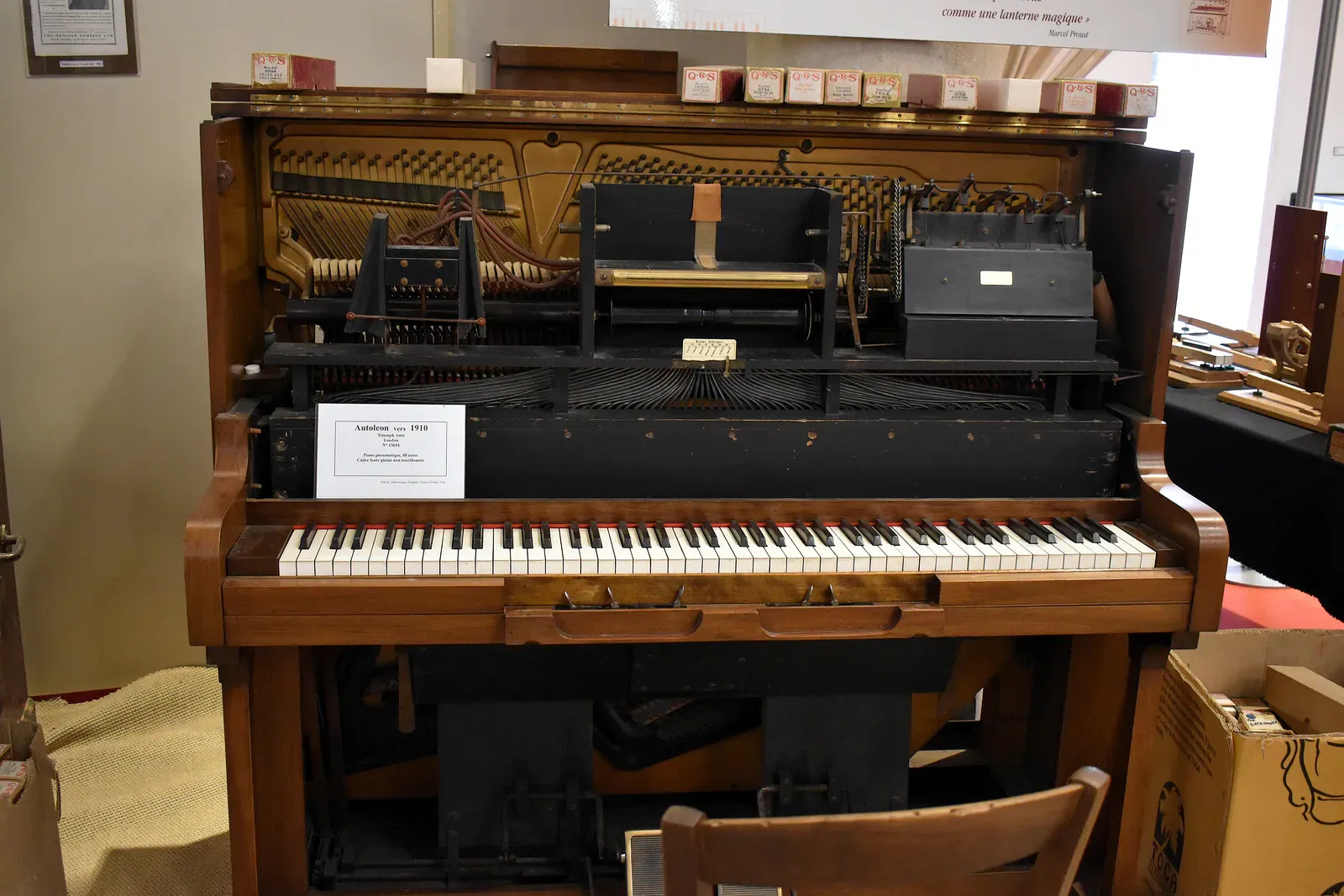
The classic rags dropped out of print. Ragtime survived in the hands of stride players and in the QRS rolls of the player-piano trade.
Revival, 1950 to now
The comeback was slow. A 1950 book, They All Played Ragtime, helped start it. In 1959 Joseph Lamb made an album for Folkways, a year before his death, and Max Morath began his television series The Ragtime Era. Recordings on Folkways and Vanguard kept the repertoire in circulation.
Then came 1970, when Joshua Rifkin recorded Piano Rags by Scott Joplin for Nonesuch. It sold 100,000 copies in a year and later passed a million. It presented Joplin as serious composer, not a barroom entertainer. In 1973 the film The Sting used Joplin rags in Marvin Hamlisch’s arrangements, and the Hamlisch version of The Entertainer reached number 3 on the Billboard Hot 100 in May 1974. That same year Sedalia started its Scott Joplin Ragtime Festival. In 1976 Joplin received a special Pulitzer Prize.
Mainstream success
Ragtime went mainstream twice, and each time it was carried by a physical object. First it was sheet music and the piano roll, which put a rag into any parlor with a piano. Then in the 1970s it was an LP and a film soundtrack. The second wave had a hidden twist: The Entertainer was published in 1902, seventy years before the film.
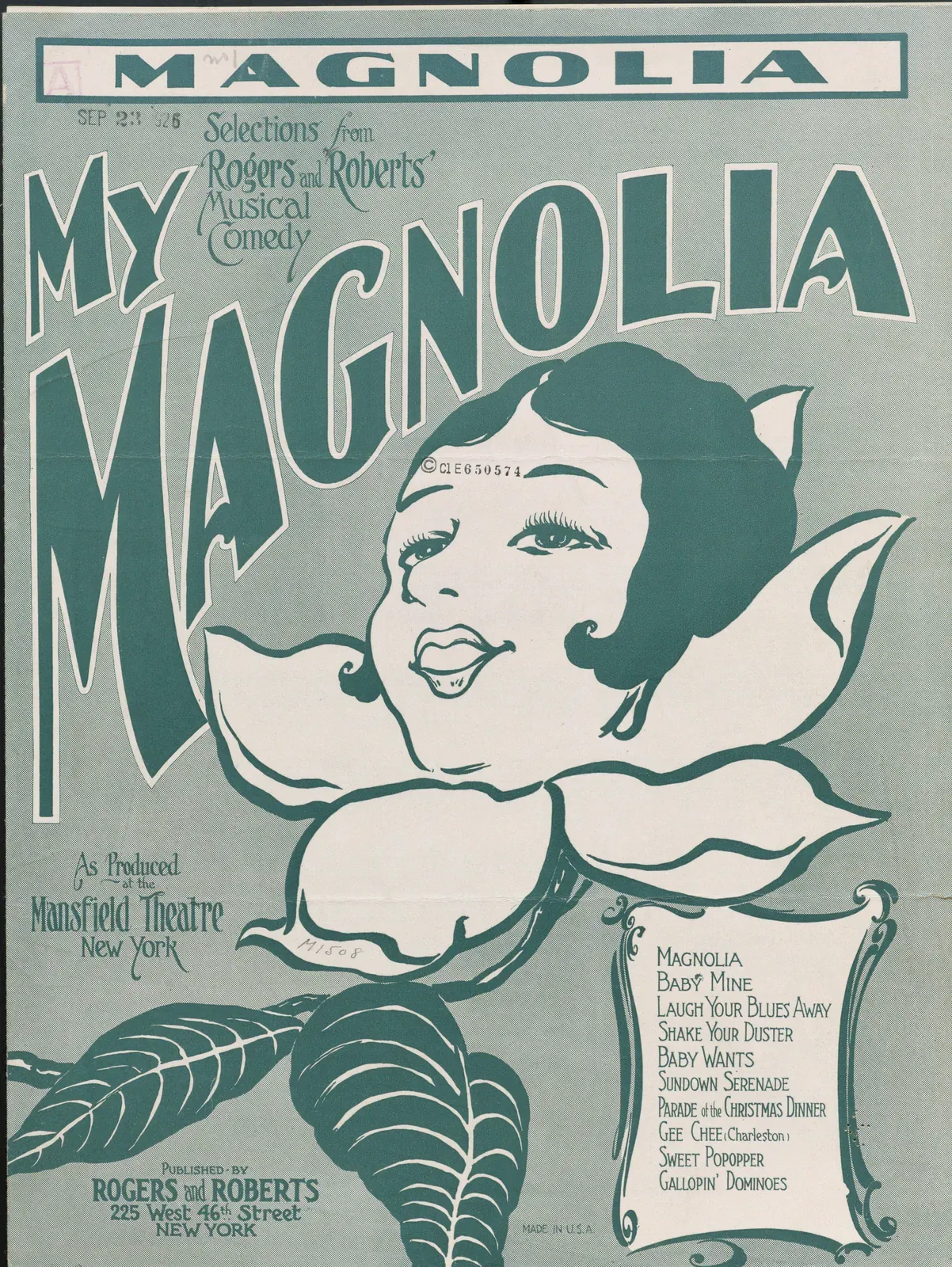
The first wave also brought a backlash: many “ragtime” songs of the 1910s were ordinary songs with the word on the cover.
Notable recordings
Maple Leaf Rag (1899). Joplin wrote it in Sedalia, signed it over to Stark on 10 August 1899, and it was copyrighted that September. The oldest known recording is a 1906 US Marine Band disc. It influenced rag composers for at least twelve years.
Frog Legs Rag (1906). James Scott worked as a theatre pianist, organist and bandleader in Kansas City. His rag is Stark’s second best seller after Joplin’s hit, proof that the firm had a catalogue and not just one song.
The Entertainer (1902 and 1973). Published by Stark in St. Louis, Hamlisch’s film arrangement took it to number 3 on the Hot 100 seventy years later.
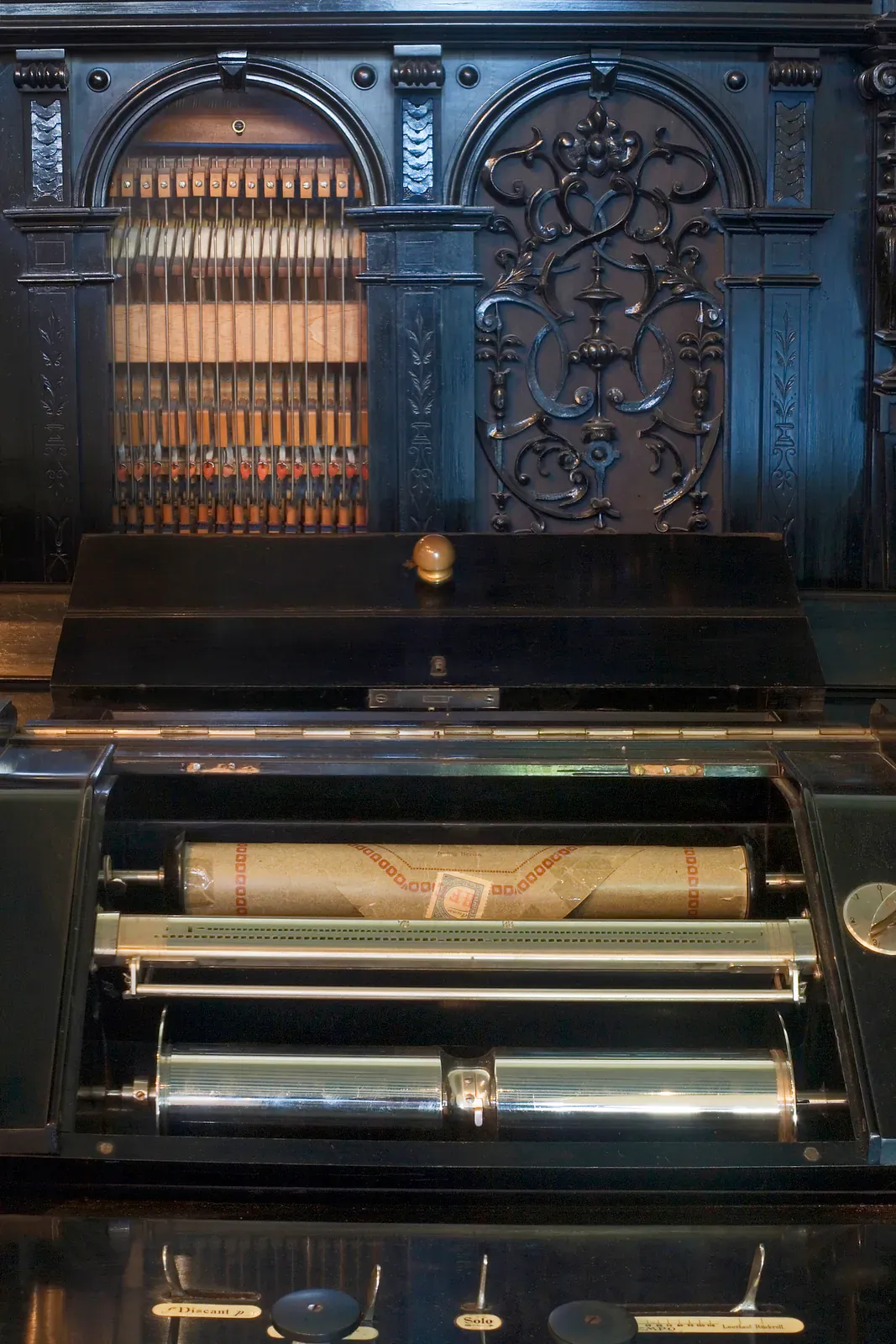
Culture
Ragtime ran through the cakewalk, then the one-step and the turkey trot. It also had a dark side in its packaging. Sheet music was sold with illustrated covers, and some carried racist caricatures of Black people. Pianists also held contests where they dueled for speed and invention; in Harlem these became the “cutting contests” that fed stride piano.
To “rag” a tune meant to syncopate it, from “ragged time”.
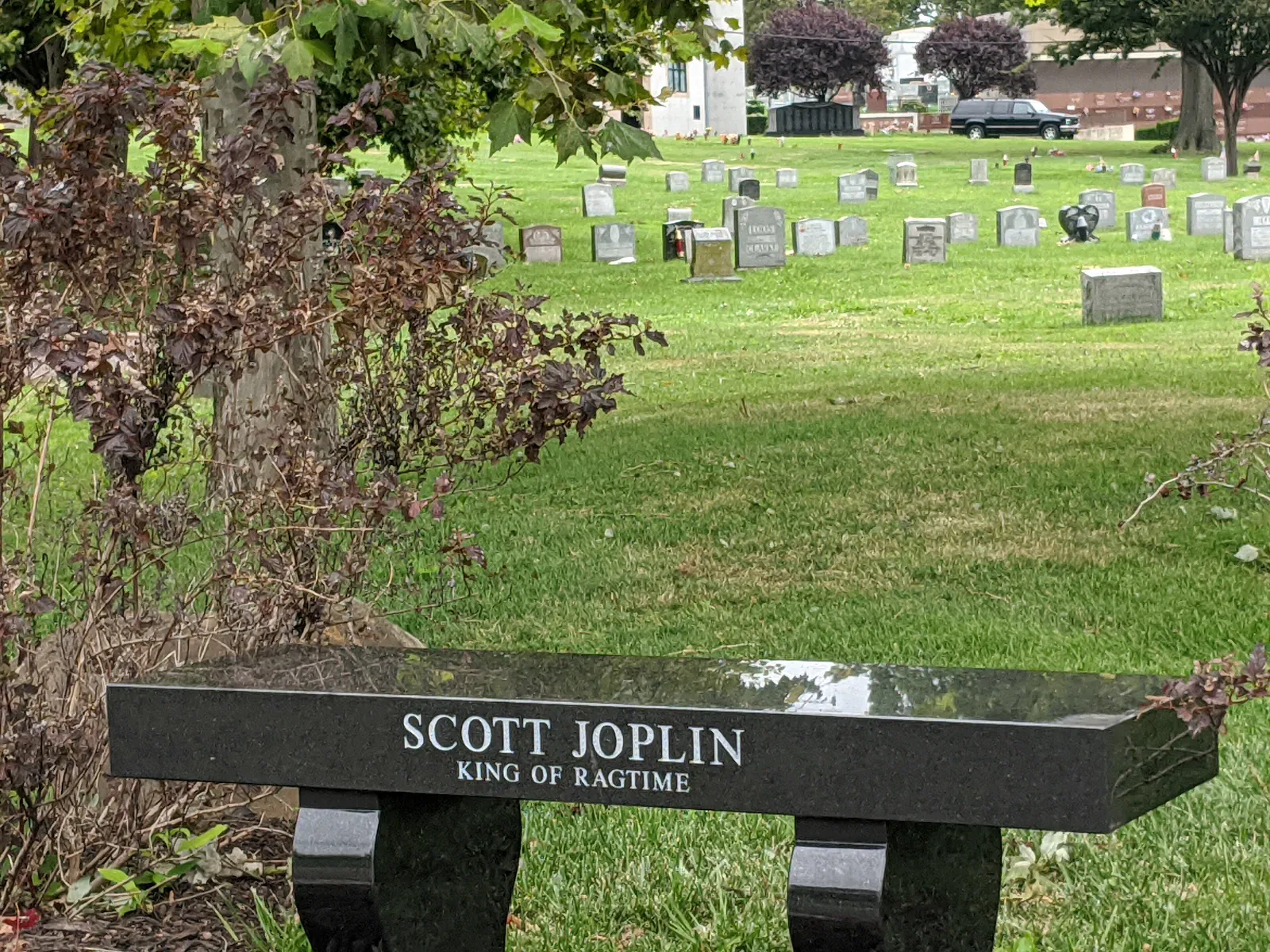
Misconceptions
“Ragtime is fast honky-tonk piano.” A classic rag is played at a measured pace. The stereotype comes from player pianos run too fast and from pop imitations.
“The Sting wrote The Entertainer.” Joplin published it in 1902. The film of 1973 used Hamlisch’s arrangement of it and brought it a mass audience.
“Alexander’s Ragtime Band is ragtime.” It was the biggest ragtime song hit of 1911, yet it has almost no real ragtime syncopation.
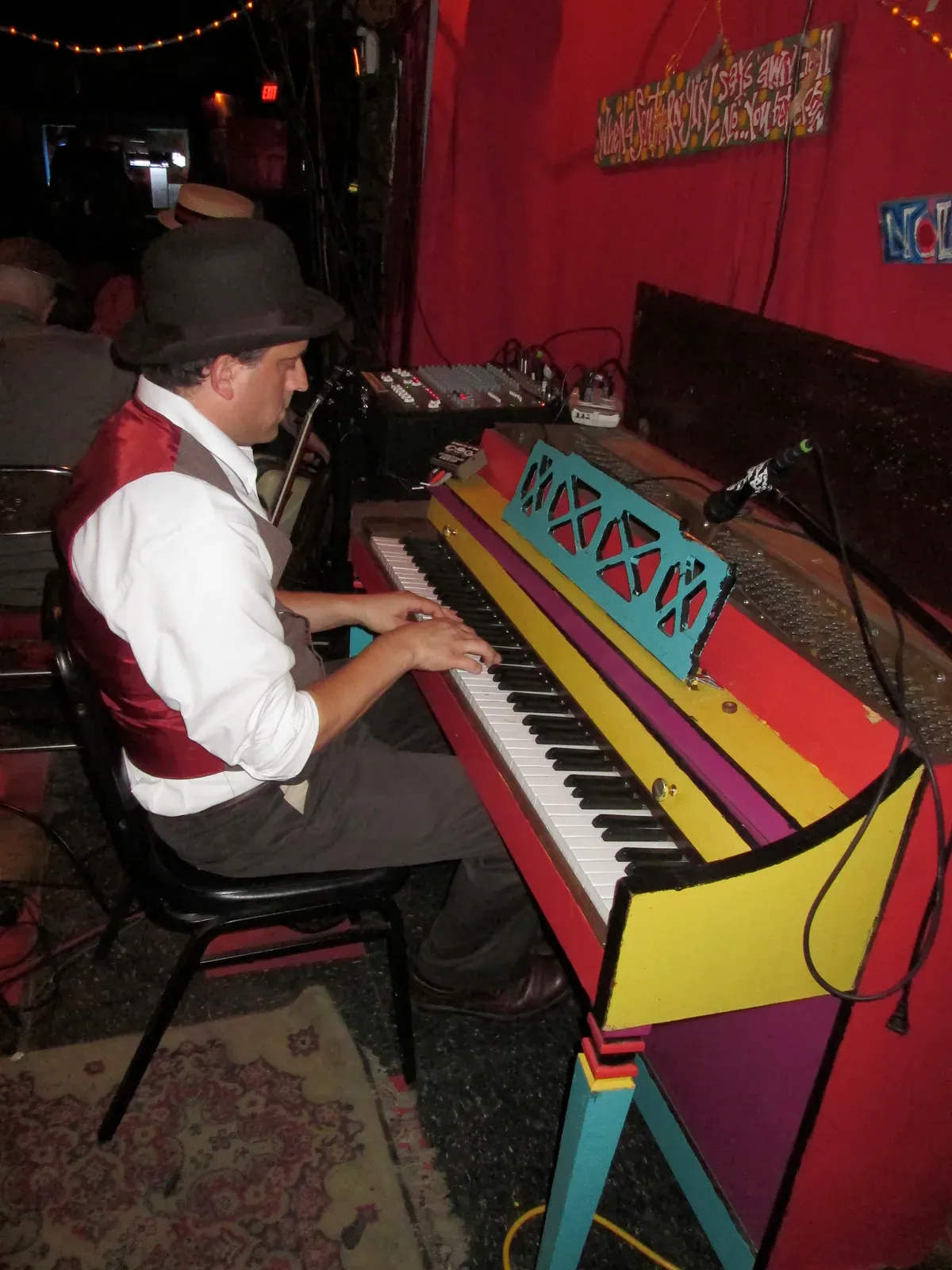
Frequently asked questions
What is ragtime music?
Ragtime is syncopated piano music from the 1890s, in which a steady left-hand bass supports a right-hand melody that accents the off-beats. It usually follows a march-like plan of 16-bar strains, such as AABBACCDD, and was sold mainly as sheet music.
Who invented ragtime?
No single person did. Black pianists in Missouri and the Mississippi Valley turned the cakewalk, marches and minstrel tunes into rags in the 1890s. Tom Turpin published the first rag by a Black composer in 1897, and Scott Joplin made the form famous with Maple Leaf Rag in 1899.
What is the difference between ragtime and jazz?
Ragtime is written out and follows fixed strains, while jazz leans on improvisation. Ragtime came first and is a main forerunner of jazz; stride piano is the bridge, and jazz overtook ragtime in the early 1920s.
Which ragtime pieces are best known?
Scott Joplin’s Maple Leaf Rag (1899) and The Entertainer (1902) are the best known. The Entertainer reached the public again through Rifkin’s 1970 recording and Hamlisch’s 1974 arrangement, a top-3 hit. Rags by James Scott, Joseph Lamb and Eubie Blake round out the classic repertoire.
Sound
Sound sheet
Anatomy of a track
| # | Part | Bars |
|---|---|---|
| 1 | Intro | 4 |
| 2 | A strain (repeated) | 16 |
| 3 | B strain (repeated) | 16 |
| 4 | A strain returns | 16 |
| 5 | C strain, the trio (repeated) | 16 |
| 6 | D strain (repeated) | 16 |
Signature sounds
- Syncopated right-hand melody over a steady left-hand bass
- March-style multi-strain form such as AABBACCDD
- 16-bar strains
- Modulation to a new key for the trio
- Played at a measured pace, not fast
Techniques
- Syncopation
- Oom-pah left hand
- Multi-strain march form
Keys and modes
Tonic to subdominant. Opening strains stay in the home key; the trio modulates up a fourth to the subdominant, as in Maple Leaf Rag (A-flat to D-flat).
Scenes
Where it happened
Where and when the sound lived: one bar per city on a shared timeline.
North America
Active scenes
Peak 5, 1914-1915
Joplin arrived in 1894 and played the Maple Leaf Club; Stark published Maple Leaf Rag here.
Tom Turpin's Rosebud Cafe drew Joplin and other ragtime pianists, and Stark moved his firm here.
The 1893 World's Fair gave ragtime a national audience; later a base for Artie Matthews.
Tin Pan Alley turned ragtime into a song fashion; Joplin moved here in 1907.
Luckey Roberts and James P. Johnson turned ragtime into stride piano.
James Scott worked as theatre pianist, organist and bandleader here.
Venues and places
Sedalia, 1898 to today. Where Joplin played in Sedalia; Maple Leaf Rag is thought to be named after it.
St. Louis, 1900 to today. Tom Turpin's saloon, a meeting place for ragtime pianists until it closed in 1906.
Chicago, 1893 to today. The 1893 fair, credited with introducing ragtime to a national audience.
Palm Beach, 1924 to today. Luckey Roberts played society engagements here from 1924.
New York, 1912 to today. James Reese Europe's Clef Club orchestra played here in 1912, taking syncopated Black music into a concert hall.
Sedalia, 1974 to today. Annual festival in Joplin's Missouri home town.
Culture
Culture markers
- Cakewalk
The strutting contest dance whose rhythms fed early rags.
Dance - One-step and turkey trot
Social dances of the 1910s danced to ragtime bands.
Dance - Illustrated sheet music covers
Rags sold as sheet music, often with racist caricature covers.
Artwork - Piano contests
Pianists dueled to show speed and invention, later called cutting contests in Harlem.
Ritual - Ragging
To rag a tune meant syncopating it; the name came from "ragged time".
Slang
Media
Key media
- 1950They All Played Ragtime
by Rudi Blesh and Harriet Janis. Early history of ragtime, often credited with helping start the revival.
Book - 1959The Ragtime Era (TV series)
by Max Morath. 26 half-hour TV programs on the history of the music.
Film - 1959Joseph Lamb: A Study in Classic Ragtime
by Joseph Lamb. Folkways album by a surviving classic composer.
Compilation - 1970Scott Joplin: Piano Rags
by Joshua Rifkin. The Nonesuch LP that turned Joplin into concert repertoire.
Compilation - 1973The Sting
by George Roy Hill. The film whose Hamlisch-arranged Joplin score sent ragtime into the Top 10.
Film - 1973The Red Back Book
by New England Ragtime Ensemble. Band-arranged Joplin-era rags that won a Grammy.
Compilation
Glossary
Terms on this page
A strutting dance and march-like song that fed into early rags.
Concert-style piano rags of Joplin, Scott and Lamb, published by Stark.
1920s virtuoso piano pieces such as Kitten on the Keys.
A slower, bluesier rag, as in Artie Matthews' Pastime Rags.
A self-contained theme, usually 16 bars, that makes up a section of a rag.
Harlem piano style that grew from ragtime, with a leaping left hand.
Accenting the off-beats of the melody against a steady bass.
The third section of a rag, often in a new key; Maple Leaf Rag moves from A-flat to D-flat.
Jazz family