Latin jazz
Latin jazz fuses jazz harmony and improvisation with Afro-Cuban and Brazilian rhythm. It took shape in New York in the 1940s around Machito and Dizzy Gillespie.
New York City, 1940
Jazz family
Born
1940
New York City
Subgenres
5
Documented branches
Links
12
Genres it drew on or shaped
Tempo
95-140 BPMLineage
Family tree
Grew out of
Influenced by
New York City, 1940
Latin jazz
Led to (5)
Timeline
Era by era
From the first sparks to today. Select a dot to read the story behind it.
- The Spanish tinge
1880 to 1939
- Cubop and mambo
1940 to 1959
- Bossa, boogaloo and Havana
1960 to 1979
- Exile, awards and orchestras
1980 to 2026
Eras
Moments
- 1 The Spanish tinge, 1880 to 1939
- 2 Cubop and mambo, 1940 to 1959
- 3 Bossa, boogaloo and Havana, 1960 to 1979
- 4 Exile, awards and orchestras, 1980 to 2026
around 1880
The Spanish tinge
The habanera and tresillo figure enter ragtime, blues and early jazz, and Ellington-era writing borrows Caribbean colour without a clave structure.
- 1914St. Louis Blues carries a habanera bass lineW. C. Handy writes a tresillo-habanera figure into a blues hit, an early sign of the Caribbean pulse inside jazz.
- 1936CaravanJuan Tizol and Duke Ellington's piece, an early proto-Latin jazz composition, enters the repertoire.
1940
Cubop and mambo
Machito's Afro-Cubans, Mario Bauza, Dizzy Gillespie and Chano Pozo fuse clave-based rhythm with bebop harmony in New York.
- 1940Machito forms the Afro-Cubans in New YorkThe band, with Mario Bauza as musical director, pairs Cuban rhythm sections with swing-style big band writing.
- 1943Bauza composes TangaRegarded as the first piece to put jazz solos over an overt clave structure, it began as a Cuban descarga.
- 1946Palladium Ballroom opens in ManhattanThe Broadway club became the home of the New York mambo craze and of the big Latin bands.
- 1947Gillespie and Pozo premiere MantecaBauza introduces the bebop trumpeter to the Cuban conga player, and their Carnegie Hall premiere in September yields the first clave-based jazz standard.
- 1948Chano Pozo dies at 33Pozo's death ends a partnership of a single year that reshaped how jazz used the conga drum.
- 1949Birdland opens and hosts Afro-Cuban jamsThe Broadway club opened in December 1949; Machito's band had been trading jam-session sets with Parker, Gillespie and others in the late 1940s.
- 1950Afro-Cuban Jazz SuiteChico O'Farrill's extended work for Machito's orchestra shows large-scale composition built on Afro-Cuban rhythm.
- 1959Mongo Santamaria records Afro BlueThe first jazz standard built on a 3:2 cross-rhythm, later taken up by John Coltrane.
1960
Bossa, boogaloo and Havana
Jazz samba and bossa nova reach the American charts, Mongo Santamaria and Cal Tjader cross over, and Irakere founds a Cuban branch in Havana.
- 1962Jazz Samba brings bossa nova to the United StatesStan Getz and Charlie Byrd's album on Verve starts the bossa nova craze among American jazz players.
- 1964Getz/GilbertoThe album with Joao and Astrud Gilberto and the single The Girl from Ipanema make bossa nova a worldwide hit.
- 1965Cal Tjader's Soul SauceThe vibraphonist's Verve album, with a title track built on a Dizzy Gillespie composition, mixes mambo, bolero and boogaloo.
- 1973Chucho Valdes founds Irakere in HavanaThe band mixes batá drums, rock instrumentation and jazz improvisation and brings Afro-Cuban jazz into Cuban popular music.
1980
Exile, awards and orchestras
Cuban players such as Paquito D'Rivera and Arturo Sandoval settle abroad, a Grammy category opens in 1995, and repertory orchestras keep the tradition in concert halls.
- 1980Irakere wins a GrammyThe Cuban band takes the Best Latin Recording award for its self-titled album.
- 1995Grammy category for Latin jazz opensBest Latin Jazz Performance is first awarded to Arturo Sandoval; it becomes Best Latin Jazz Album in 2001.
- 2013Grammy Latin jazz category reinstatedThe Recording Academy folds the category away in 2012, then restores it after protests and a lawsuit by Latin jazz musicians.
Listening path
Start listening
A short path from an easy way in to the deep end. Thumbnails come from YouTube; the player loads only when you press play.
- 01
Dizzy Gillespie, 1947
The first clave-based jazz standard; listen for the conga pattern under the trumpet theme.
- 02
Mongo Santamaria, 1959
A 3:2 cross-rhythm bass line carries the tune; it became a jazz standard.
- 03
Cal Tjader, 1965
The crossover hit: vibraphone over congas in an easy mambo groove.
- 04
Irakere, 1974
The Cuban branch: batá drums, electric guitar and a horn section playing jazz solos.
Facts
| Family | Jazz |
| Origin | New York City, United States |
| Emerged | 1940s |
| Status | Active |
| Tempo | 95 to 140 BPM |
| Meter | 4/4 |
| Subgenres | 4 |
Latin jazz is jazz built on Latin American rhythm, mostly Afro-Cuban and Afro-Brazilian. It combines the harmony and improvised solos of jazz with percussion such as congas, timbales and bongos.
Its core came together in New York in the 1940s, when Cuban musicians in the city began arranging dance music around a clave pattern and playing it with bebop soloists.
Origins
The two traditions had touched long before. The habanera, a Cuban dance rhythm, spread through the Americas in the nineteenth century, and its tresillo figure turns up in the bass lines of early blues and ragtime. W. C. Handy used it in “St. Louis Blues” in 1914, and Jelly Roll Morton called the same figure the Spanish tinge, an ingredient he thought jazz could not do without. Ellington’s “Caravan” (1936), written with Juan Tizol, added Caribbean colour but still had no clave structure underneath.
The turn came with Cuban players who settled in New York. The trumpeter Mario Bauzá, who had worked in swing bands, and the bandleader Frank Grillo, known as Machito, formed the Afro-Cubans in 1940. The band put a Cuban rhythm section behind horn writing taken from American big bands. In 1943 Bauzá composed “Tanga”, a piece that grew out of a Cuban descarga, or jam session, and put jazz solos over a clave-based groove. It is generally taken as the first overtly clave-based jazz piece.
New York, 1940-1959
Bauzá introduced the bebop trumpeter Dizzy Gillespie to the Cuban conga player Chano Pozo, and the two worked together in 1947. Their “Manteca” premiered at Carnegie Hall in September of that year and became the first jazz standard rhythmically built on clave. The layered guajeo patterns of the opening section were Pozo’s, and Gillespie wrote the bridge. Pozo died in December 1948 at the age of 33, but conga drums had by then become part of jazz.
The Palladium Ballroom on Broadway, open from 1946, became the centre of the mambo craze that began in 1948. The same bandleaders played jazz clubs such as Birdland, which opened in December 1949, where Charlie Parker, Gillespie and others sat in with Machito’s orchestra. The long jam sessions were new to Latin music, which had mostly stayed under four minutes per record. In 1950 the arranger Chico O’Farrill wrote the Afro-Cuban Jazz Suite for the Machito orchestra, showing that the style could carry extended composition.
Bossa, boogaloo and Havana, 1960-1979
Brazil supplied the second stream. Bossa nova, developed in Rio de Janeiro in the 1950s by Antonio Carlos Jobim, Joao Gilberto and others, took samba as its base and added jazz-influenced harmony. American players picked it up quickly: the Stan Getz and Charlie Byrd album Jazz Samba came out in 1962 on Verve Records, and Getz/Gilberto followed in 1964, bringing “The Girl from Ipanema” with Astrud Gilberto to a worldwide audience. A fuller history of the Brazilian side is on the bossa nova page.
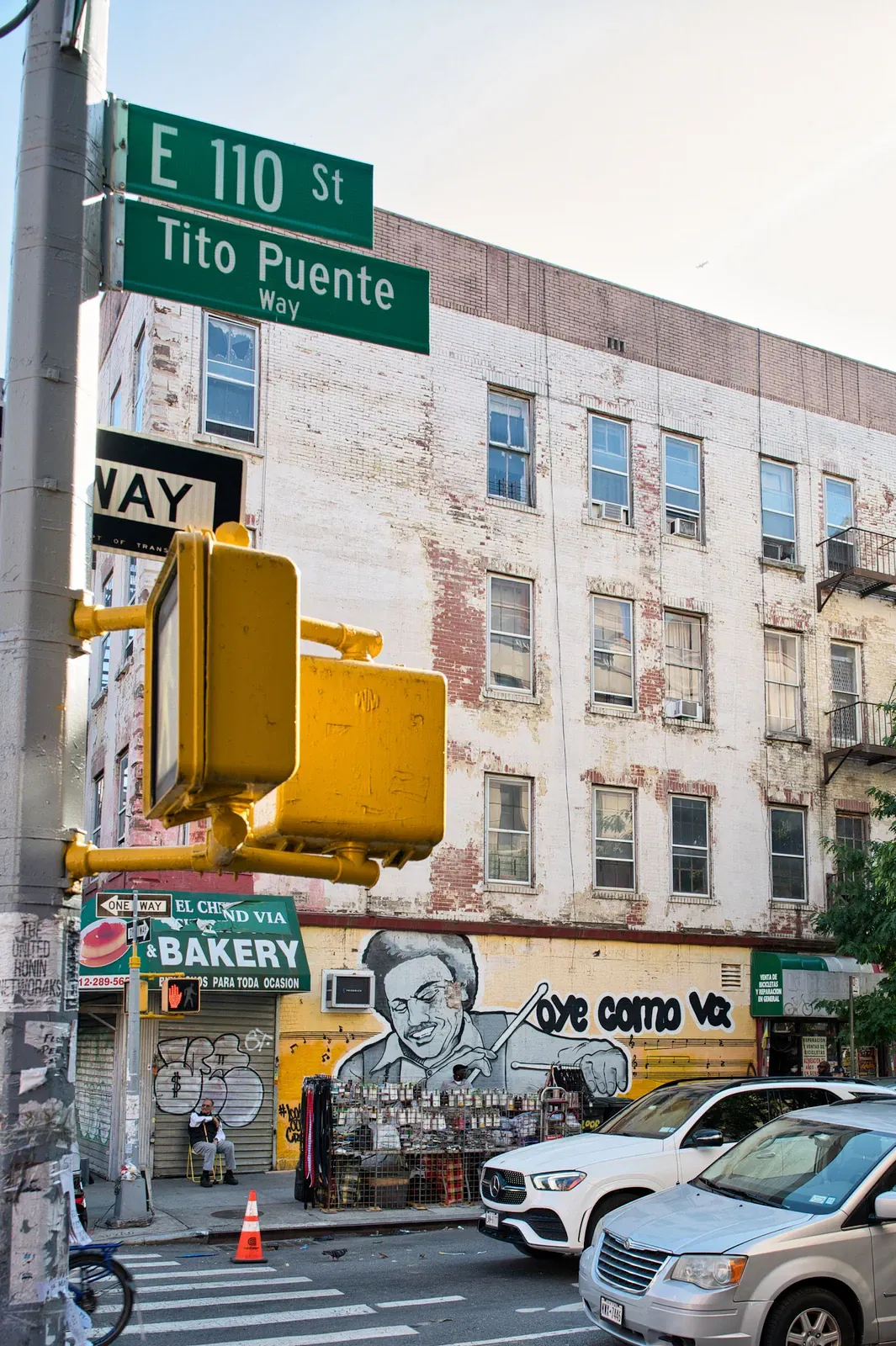
On the Cuban side, the percussionist Mongo Santamaria recorded “Afro Blue” in 1959, built on a six-against-four bass ostinato that suits jazz improvisation, and it became a standard. The vibraphonist Cal Tjader, based in the San Francisco Bay Area and recording for Fantasy and later Verve, reached pop audiences with “Soul Sauce” in 1965. Tito Puente, whose records also appeared on Tico Records, moved between mambo and jazz settings from the 1950s onward.
In Havana, Chucho Valdes founded Irakere in 1973. The band added batá drums, electric guitar and a horn section playing jazz solos to Cuban dance rhythm. Its “Bacalao con pan” of 1974 was the first Irakere piece to use batá, and its self-titled album won the Grammy for Best Latin Recording in 1980.
Characteristics
The organizing device is clave, a two-bar pattern played in either 3-2 or 2-3 order. Mario Bauzá worked out much of the 3-2 and 2-3 terminology, and an arrangement can move from one side of the clave to the other without breaking the groove. Over it the piano plays repeating guajeo figures, the bass lands ahead of the beat, and conga, bongo and timbale parts interlock. Soloists improvise on jazz harmony, often over a montuno vamp. Afro-Brazilian pieces use a bossa or samba pattern instead, with a quieter, more harmonic feel.
Tempo covers a wide span. Recordings by canonical bands run from roughly 95 beats per minute up to about 140, and most pieces are in 4/4, although “Afro Blue” works in a 12/8 feel.
Instruments and production
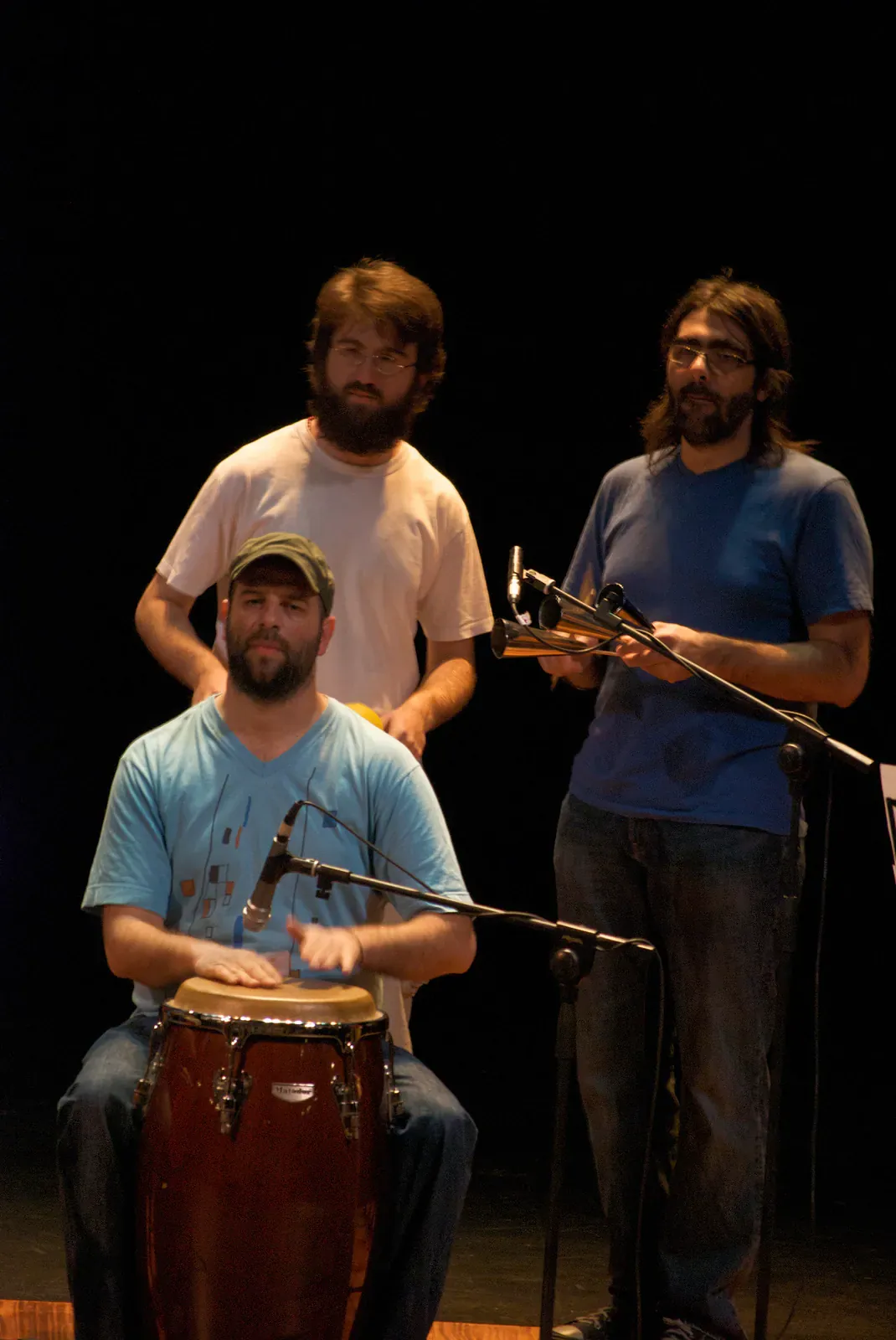
The rhythm section is the signature. Congas, bongos and timbales sit beside a drum kit, with piano and double bass, and horns such as trumpets and saxophones carry the arrangements. Tito Puente led from the timbales and also played vibraphone, Tjader’s main instrument.
Mainstream success
The first wide audience came through dancers. Mambo bands filled the Palladium in the late 1940s and 1950s, and by the early 1960s bossa nova was on American radio. “Soul Sauce” gave Tjader a pop hit in 1965 and Getz/Gilberto made bossa nova a commercial genre. The saxophonist Paquito D’Rivera left Cuba in 1980 and the trumpeter Arturo Sandoval, also of Irakere, in 1990. Sandoval received the first Grammy for Best Latin Jazz Performance in 1995. The category was renamed Best Latin Jazz Album in 2001, removed in the 2012 overhaul, and reinstated in 2013 after protests and a lawsuit by Latin jazz musicians.
Notable recordings
“Tanga” dates from 1943, and in February 1949 the Machito orchestra featured the tenor saxophonist Flip Phillips on a five-minute take issued on the album The Jazz Scene. “Manteca” reached disc in 1948 and went on to be recorded by many jazz players. “Afro Blue” appears on Santamaria’s 1959 album and later became a John Coltrane vehicle. The Irakere piece “Bacalao con pan” shows the Cuban side of the story, built on batá drums with electric guitar.
Culture
Latin jazz grew from nightclub and ballroom life. Mambo dancing at the Palladium tied the bands to a large dancing public. The Cuban word descarga, meaning a jam session, entered New York’s jazz vocabulary through late-night sets in which visiting players sat in with the Afro-Cubans. The film Black Orpheus (1959) spread bossa nova abroad, and The Mambo Kings (1992) revisited the Palladium years.
Legacy
Chucho Valdes, Paquito D’Rivera, Gonzalo Rubalcaba and Arturo O’Farrill, Chico’s son, have all won repeatedly in the Grammy category, and repertory orchestras such as O’Farrill’s Afro Latin Jazz Orchestra, which began in 2002, keep the Machito and Gillespie book in concert halls. Its influence runs into salsa, which shares many musicians, and into later jazz fusion. It belongs to the wider jazz family and borrows the harmony of bebop.
Misconceptions
One common belief is that Latin jazz is jazz with Latin flavour added by outsiders. The record shows the opposite: Cuban-born musicians in New York built the clave-based form from 1943 on, and the first big names were Bauzá, Machito, Pozo and later Mongo Santamaria. A second belief treats it as the same thing as salsa. Salsa is a vocal dance music; Latin jazz is built around improvised instrumental playing, even though the two share players such as Tito Puente and Eddie Palmieri. A third is that it is only Cuban. The usual division is into an Afro-Cuban stream and an Afro-Brazilian one, which includes samba and bossa nova.
Frequently asked questions
What is the difference between Latin jazz and Afro-Cuban jazz?
Afro-Cuban jazz is the earliest and best-known form of Latin jazz, based on Cuban clave and dance rhythm. Latin jazz is the wider term, which also covers Brazilian styles such as samba jazz and bossa nova.
When did Latin jazz start?
The usual starting point is the early 1940s, when Machito and Mario Bauzá formed the Afro-Cubans in New York in 1940. “Tanga” in 1943 and “Manteca” in 1947 are the pieces most often given as its first landmarks.
What instruments are used in Latin jazz?
Congas, bongos and timbales provide the rhythm, with a jazz rhythm section of piano, bass and drums. Trumpets and saxophones lead, and the vibraphone is common in bands such as Tjader’s.
Who are the most important Latin jazz artists?
Machito, Mario Bauzá, Dizzy Gillespie, Chano Pozo, Tito Puente, Mongo Santamaria, Cal Tjader and Irakere are the names most often cited for the genre’s first decades.
Sound
Sound sheet
Anatomy of a track
| # | Part |
|---|---|
| 1 | Head: melody over a clave vamp |
| 2 | Solos over the montuno or a jazz form |
| 3 | Horn mambo section or shout chorus |
| 4 | Percussion break or descarga |
| 5 | Head out |
Signature sounds
- Clave, in 3-2 or 2-3, as the organizing pattern
- Piano guajeo and montuno under the horns
- Conga, timbale and bongo layers over a jazz bass line
- Bebop-derived harmony and extended improvised solos
Drums and percussion
- Congas
- Timbales
- Bongos
- Drum kit
Techniques
- Clave-based arranging
- Guajeo comping
- Tumbao bass
- Extended descarga solos
Keys and modes
Minor modes with dominant vamps. Minor and dominant montuno vamps are common, with bebop chord substitutions.
Tuning
12-TET, A=440; congas and timbales tuned to the key
Vocals
Mostly instrumental, with occasional Spanish or Portuguese vocals and coro refrains.
Scenes
Where it happened
Where and when the sound lived: one bar per city on a shared timeline.
North America
Caribbean
Latin America
Active scenes
Peak 4, 1957-2025
Home of the Afro-Cubans, the Palladium and Birdland, and the jam sessions that created Cubop.
Source of the rhythm sections and, from 1973, of Irakere's Cuban branch of Latin jazz.
Bossa nova and samba-jazz take shape in the beachside neighborhoods and spread north.
Cal Tjader's base, with Fantasy Records documenting a West Coast strand of Latin jazz.
Venues and places
New York, 1946 to today. Broadway club (1946 to 1966) where the mambo craze began and the big Latin bands played.
New York, 1949 to today. Original Broadway jazz club (1949 to 1965) where Afro-Cuban and bebop players shared the stand.
New York, 1958 to today. Greenwich Village club that hosted Mongo Santamaria's live recordings of the 1960s.
Culture
Culture markers
- Mambo dancing
Social dancing at the Palladium tied jazz to dancers who judged bands by their drive.
Dance - Descarga
Cuban word for a jam session, used in New York for the long improvised sets.
Slang - Late-night jam sessions
Players such as Parker and Gillespie sat in with Machito's band at Birdland and other rooms.
Ritual
Media
Key media
- 1959Black Orpheus
by Marcel Camus. Its Brazilian score by Luiz Bonfa and Antonio Carlos Jobim helped bring bossa nova abroad.
Film - 1992The Mambo Kings
by Arne Glimcher. A feature film set in the Palladium era, with Tito Puente's music on screen.
Film - 1993The Original Mambo Kings: An Afro-Cubop Anthology
by Various. Collects Machito, Gillespie and Bauza recordings from the Cubop years.
Compilation
Glossary
Terms on this page
The two-bar rhythmic guide pattern, in 3-2 or 2-3 order, that organizes everything else in the arrangement.
Bebop fused with Afro-Cuban rhythm in the late 1940s.
A Cuban jam session, and the style of extended improvised playing that carried over into New York.
A repeating syncopated figure, often arpeggiated, played on piano, tres or strings.
A repeating vamp section, usually the open part of a piece where soloists improvise.
A three-note 3+3+2 rhythmic cell found in habanera and early jazz bass lines.
Jazz family