Swing music
Swing is dance-driven jazz of the 1930s and 40s. From Henderson and Goodman to Basie, the Savoy Ballroom and the 1990s revival: how big band swing rose.
New York City, 1928
Jazz family
Born
1928
New York City
Subgenres
4
Documented branches
Links
34
Genres it drew on or shaped
Tempo
120-220 BPMLineage
Family tree
Grew out of
- Dixieland
Derived from
Derived from
New York City, 1928
Swing
Led to (8)
Timeline
Era by era
From the first sparks to today. Select a dot to read the story behind it.
- Hot dance bands
1924 to 1934
- The craze begins
1935 to 1937
- Peak of the bands
1938 to 1941
- War, strike and decline
1942 to 1949
- Nostalgia and swinging pop
1950 to 1988
- Neo-swing revival
1989 to 2005
Eras
Moments
- 1 Hot dance bands, 1924 to 1934
- 2 The craze begins, 1935 to 1937
- 3 Peak of the bands, 1938 to 1941
- 4 War, strike and decline, 1942 to 1949
- 5 Nostalgia and swinging pop, 1950 to 1988
- 6 Neo-swing revival, 1989 to 2005
1924
Hot dance bands
Henderson, Ellington and Armstrong build the orchestra, the arranged call-and-response and the featured soloist in New York and Chicago.
- 1924Fletcher Henderson takes the Roseland BallroomHenderson's band opens at the Roseland in July and becomes New York's best-known black dance orchestra.
- 1926Savoy Ballroom opens in HarlemThe block-long Lenox Avenue ballroom opens on March 12 and becomes home to the Lindy Hop.
- 1932It Don't Mean a Thing (If It Ain't Got That Swing)Ellington's February 2 Brunswick record puts the word swing in the title years before the craze.
- 1934Goodman wins the Let's Dance radio slotBenny Goodman needs hotter charts and buys arrangements from Fletcher Henderson, whose own band folds.
1935
The craze begins
Goodman's Palomar night, Basie's radio broadcasts and the Savoy battles turn swing into a national dance music.
- 1935Goodman records King Porter StompThe July 1 session of Henderson's arrangement becomes a Victor hit and a big band standard.
- 1935Goodman at the Palomar BallroomThe August 21 Los Angeles night with a dancing crowd is often named the start of the swing era.
- 1937Sing, Sing, Sing recordedGoodman's 8 minutes 43 seconds Hollywood take on July 6 fills both sides of a 12-inch 78.
- 1937One O'Clock Jump recordedBasie's July 7 Decca session turns a Reno Club radio riff into his signature tune.
- 1937Webb beats Goodman at the SavoyChick Webb's band wins the Harlem battle of the bands against the King of Swing.
1938
Peak of the bands
Carnegie Hall, Miller, Shaw, Dorsey and Webb dominate the charts, radio and ballrooms.
- 1938Goodman at Carnegie HallThe January 16 concert lifts jazz onto the stage of the New York hall.
- 1938Artie Shaw records Begin the BeguineThe July 24 Bluebird session makes Shaw a star and the song a swing standard.
- 1938A-Tisket, A-TasketChick Webb and Ella Fitzgerald record on May 2 a Decca hit that ranks first on Your Hit Parade.
- 1939Glenn Miller at Glen Island CasinoA record opening-night crowd of 1,800 in spring 1939 lifts the band into stardom.
- 1939Lester Leaps InCount Basie's Kansas City Seven record Lester Young's I Got Rhythm contrafact for Vocalion on September 5.
- 1939Chick Webb diesWebb dies on June 16 at 34, and Ella Fitzgerald takes over the band.
- 1940I'll Never Smile AgainTommy Dorsey with Frank Sinatra tops the first Billboard best-sellers list for 12 weeks.
- 1941Take the A Train recordedBilly Strayhorn's tune is first commercially recorded on February 15 and becomes the Ellington theme.
1942
War, strike and decline
The recording strike, wartime losses, taxes, singers and bebop shrink the big band business.
- 1942Chattanooga Choo Choo goes goldGlenn Miller gets the first gold record on February 10 after more than 1.2 million sales.
- 1942Musicians' recording strikeInstrumental recording halts from August 1942 until November 1944, helping singers beat the bands.
- 1944Glenn Miller disappearsHis plane vanishes over the English Channel on December 15 while he leads an Army Air Forces band.
- 1945Caldonia tops the race chartLouis Jordan's jump blues for Decca, cut January 19, spends seven weeks first on the race chart.
1950
Nostalgia and swinging pop
Surviving bands tour; singers like Sinatra keep a swing feel in pop and in nostalgia shows.
- 1958Savoy Ballroom closesThe Harlem hall shuts on July 10 and is demolished in 1959 for housing.
1989
Neo-swing revival
Royal Crown Revue, Big Bad Voodoo Daddy and Brian Setzer bring swing back to clubs and the charts.
- 1989Swing revival begins in Los AngelesRoyal Crown Revue and Big Bad Voodoo Daddy form and start the American neo-swing scene.
- 1998Jump, Jive an' WailThe Brian Setzer Orchestra hit and the Gap Khakis Swing ad push the revival to its peak.
Listening path
Anthems
The records that built the sound, grouped by the part they played. Thumbnails come from YouTube; the player loads only when you press play.
- 01
Duke Ellington, 1932 · Brunswick
Put the word swing in a song title and gave the feel its manifesto, with Ivie Anderson singing.
Origin - 02
Benny Goodman, 1935 · RCA Records
Henderson's arrangement of Jelly Roll Morton's tune set the pattern of sections answering each other.
Origin - 03
Benny Goodman, 1937 · RCA Records
Louis Prima's tune stretched to two sides of a 78 by Gene Krupa's tom-tom drive, the sound of the craze.
Start hereBreakthrough - 04
Artie Shaw, 1938 · Bluebird
Shaw's clarinet and Jerry Gray's arrangement turned a Cole Porter song into a number-three hit.
Start hereBreakthrough - 05
Chick Webb, 1938 · Decca Records
Ella Fitzgerald's nursery-rhyme novelty with the Savoy house band became a million-seller.
Breakthrough - 06
Glenn Miller, 1939 · Bluebird
The riff-driven tune that became the best-selling swing instrumental.
Start hereBreakthrough - 07
Count Basie, 1937 · Decca Records
A blues riff from the Reno Club in Kansas City that became the closing theme of Basie shows for decades.
Anthem - 08
Count Basie, 1939 · Vocalion
Lester Young's I Got Rhythm contrafact showed the small-group, solo-first side of swing.
Anthem - 09
Tommy Dorsey, 1940 · RCA Records
Dorsey with Frank Sinatra and the Pied Pipers made the ballad side of swing a 12-week number one.
Anthem - 10
Duke Ellington, 1941 · RCA Records
Billy Strayhorn's tune became the Ellington orchestra's signature and the swing era's best-known theme.
Anthem - 11
Glenn Miller, 1941 · Bluebird
The first gold record, awarded in 1942 after more than 1.2 million copies.
Anthem - 12
Louis Jordan, 1945 · Decca Records
Jordan's small-band jump blues carried swing's beat into rhythm and blues and early rock and roll.
Crossover - 13
The Brian Setzer Orchestra, 1998 · Interscope Records
Setzer's big band cover of Louis Prima's 1956 tune won a Grammy and put swing on 1990s radio.
Revival
Facts
| Family | Jazz |
| Origin | New York City, United States |
| Emerged | Late 1920s-1930s |
| Status | Revival |
| Tempo | 120 to 220 BPM |
| Meter | 4/4 |
| Grew out of | Dixieland, Orchestral jazz |
| Subgenres | 4 |
Swing is dance-oriented jazz played by arranged big bands, and it ruled American popular music from the mid-1930s to the mid-1940s. It grew in New York, Kansas City and Chicago out of jazz, blues and Black dance orchestras, and it matters because it made jazz the music a whole country danced to.
Origins
It started in Black dance orchestras of the 1920s, years before anyone sold it as a craze. Ragtime and blues supplied riffs and a loose, rolling beat. Dixieland and orchestral jazz supplied the idea of a larger band that plays arranged parts.
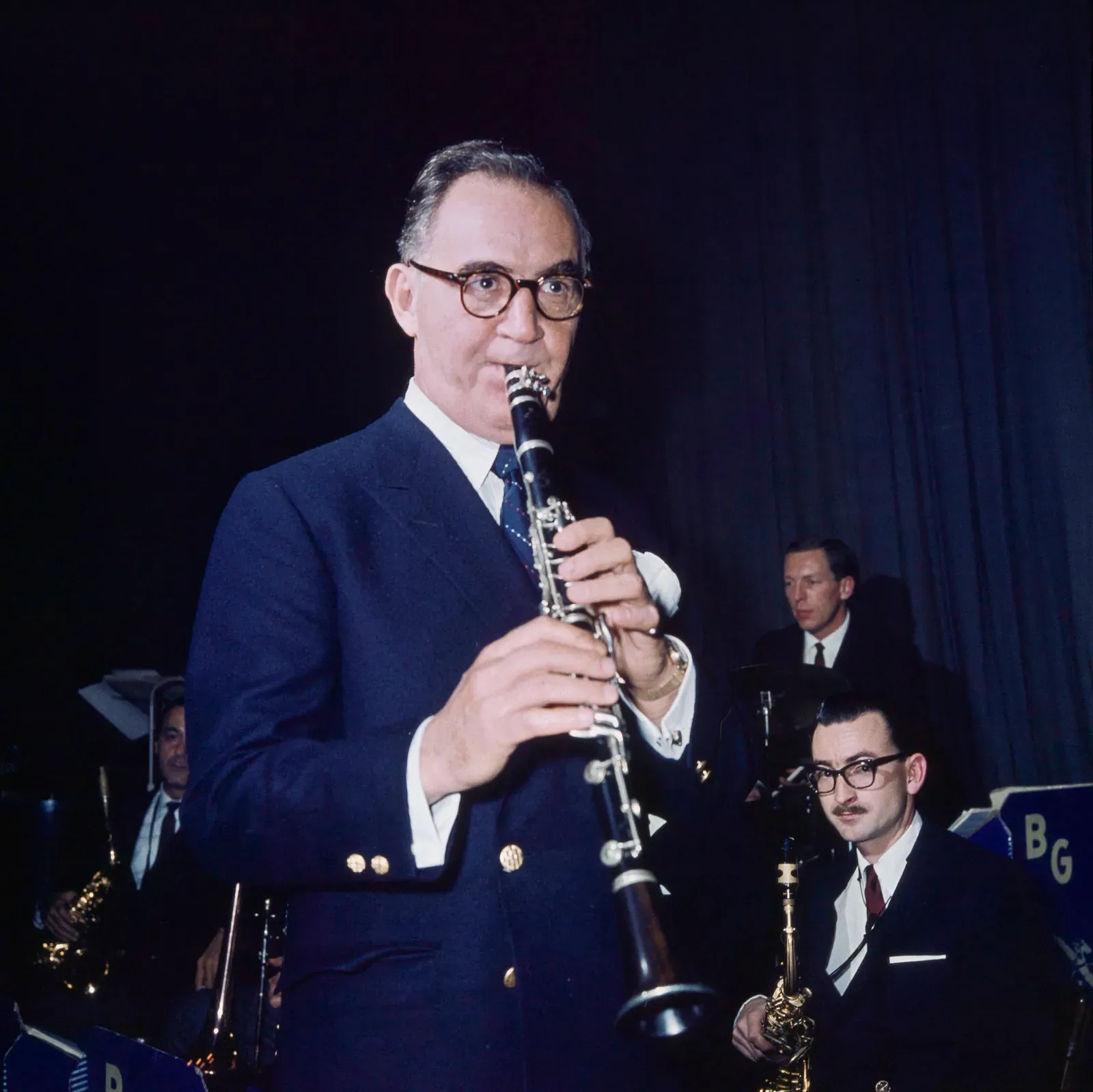
Two records show the step. On 2 February 1932 Duke Ellington’s orchestra cut “It Don’t Mean a Thing (If It Ain’t Got That Swing)” for Brunswick, with Ivie Anderson singing. Three years later Benny Goodman recorded Fletcher Henderson’s arrangement of Jelly Roll Morton’s “King Porter Stomp” for Victor on 1 July 1935. Henderson’s pattern of reed and brass sections answering each other became the template for the whole era.
Hot dance bands, 1924 to 1934
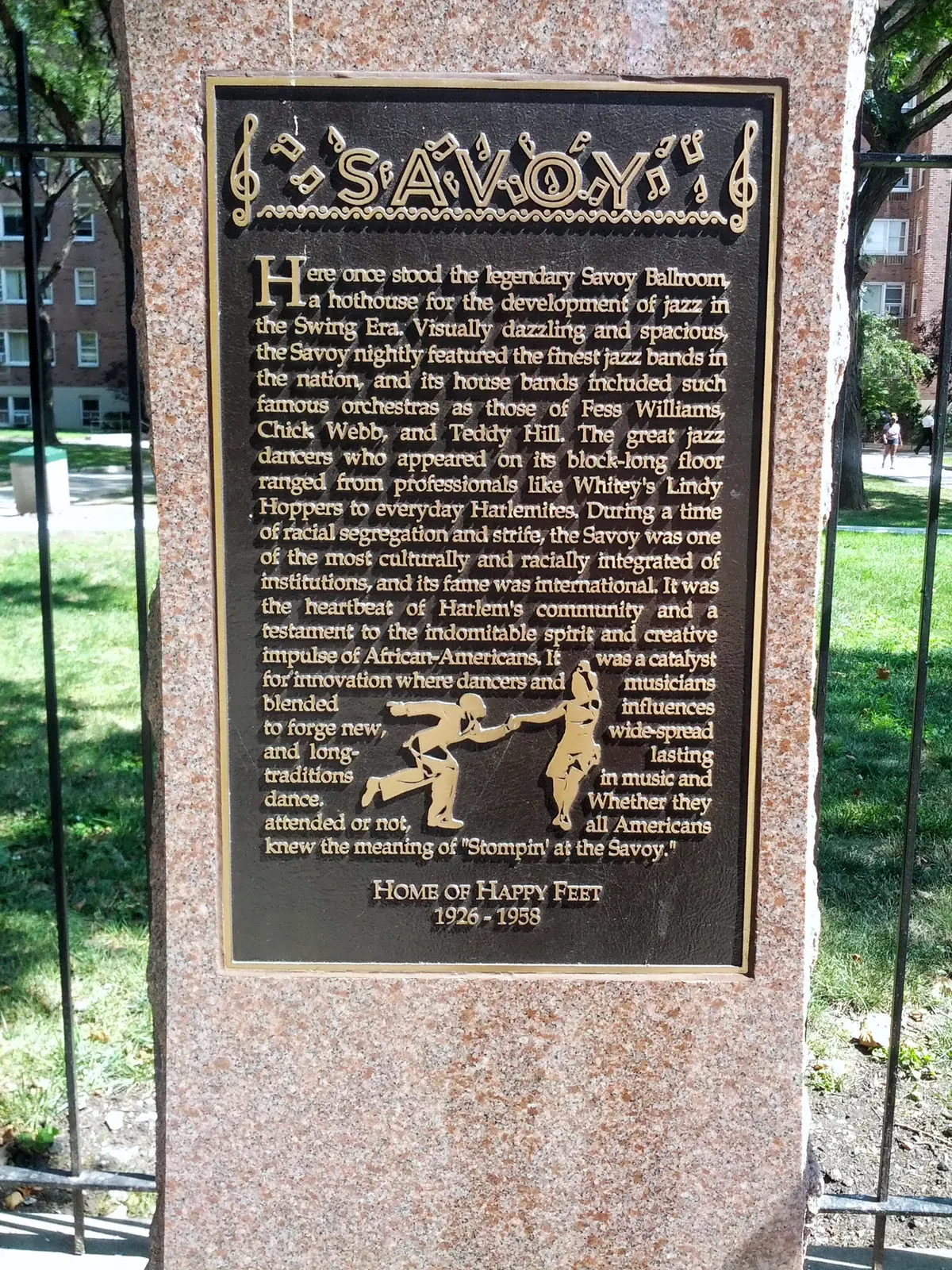
Fletcher Henderson’s orchestra opened at New York’s Roseland Ballroom in July 1924 and became the city’s best-known Black dance band. Louis Armstrong sat in its trumpet section in 1924 and 1925, and the lesson he brought, that a solo can swing against written parts, shaped everything afterward. In Harlem the Savoy Ballroom opened on 12 March 1926 with a block-long floor, and Ellington led the house band at the Cotton Club from 1927 to 1931.
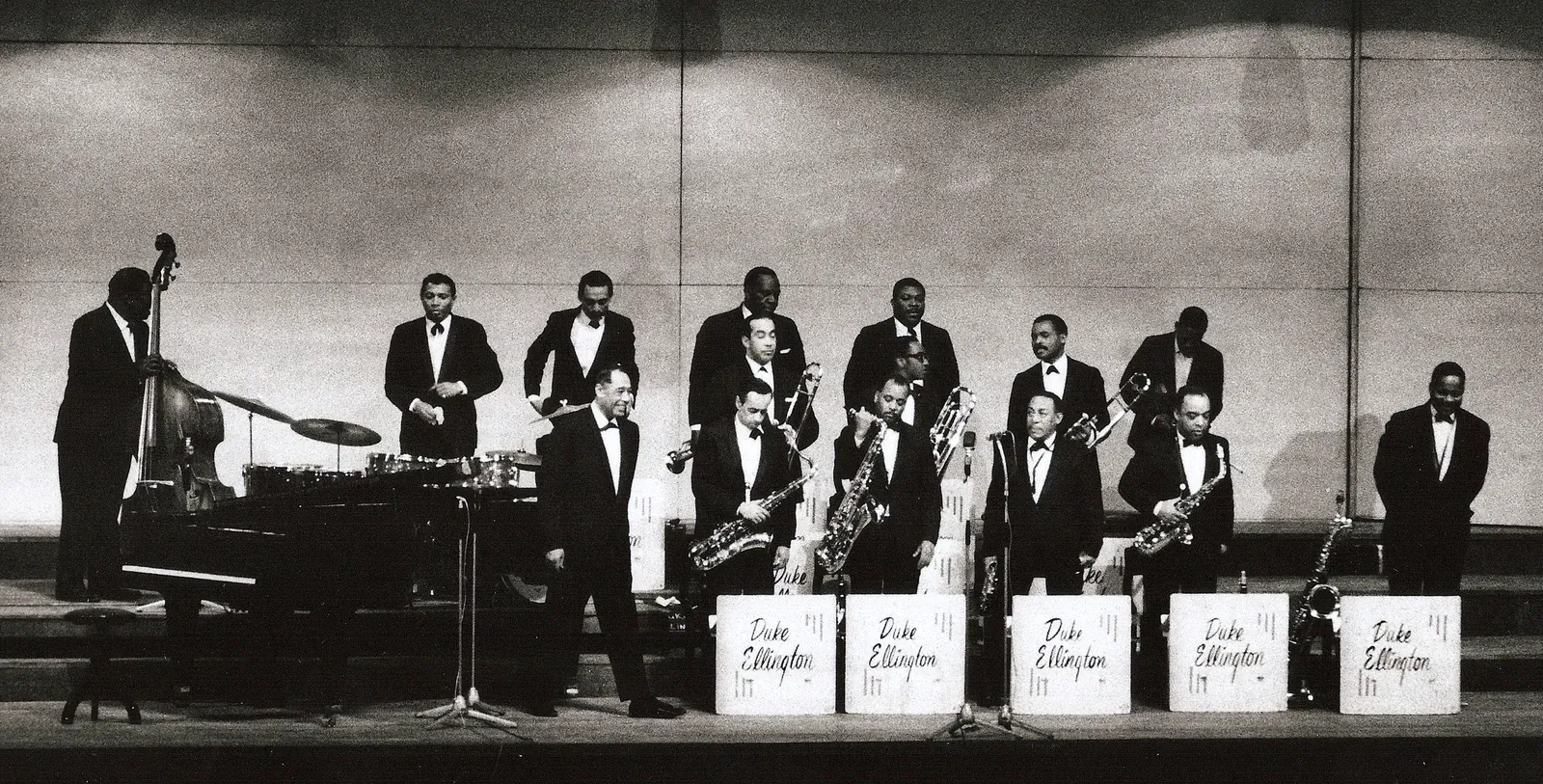
Henderson’s own band folded in 1934, the same year Goodman, a white clarinetist from Chicago, won a Saturday night slot on NBC’s Let’s Dance and bought Henderson’s arrangements to fill it.
The craze begins, 1935 to 1937
Goodman’s band played the Palomar Ballroom in Los Angeles on 21 August 1935, and the dancing crowd that answered the band’s hottest charts is often named the start of the swing era. Radio did the rest. Late-night remote broadcasts from ballrooms reached the whole country, and Goodman’s Camel Caravan show kept the music on the air from 1936.
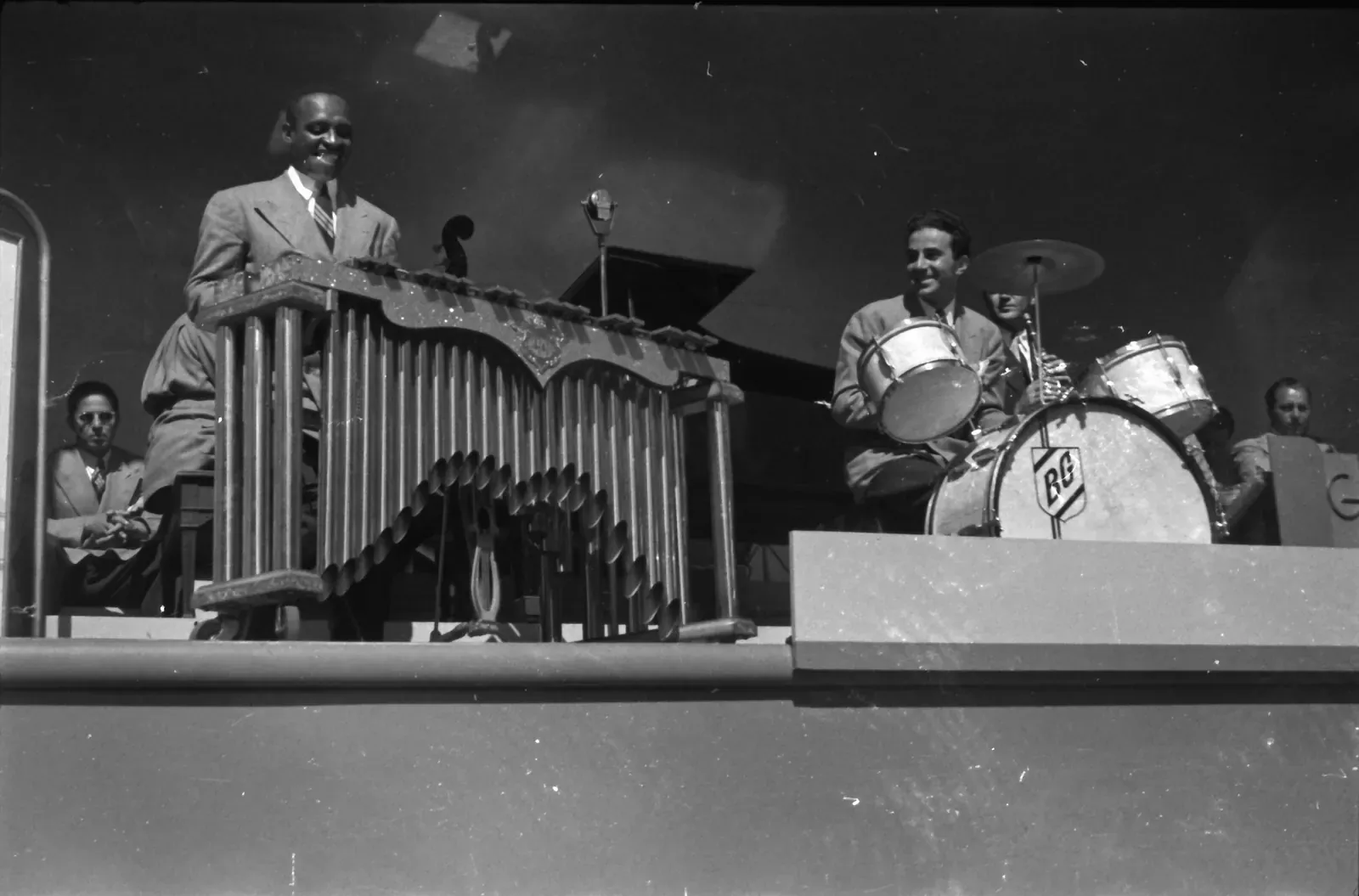
Goodman also broke a color line: in the mid-1930s he put pianist Teddy Wilson and vibraphonist Lionel Hampton on stage in his trio and quartet, years before baseball integrated.
The sound of the craze arrived on 6 July 1937 in a Hollywood studio. Goodman’s “Sing, Sing, Sing,” built on Louis Prima’s tune and Gene Krupa’s tom-tom drive, ran 8 minutes 43 seconds and filled both sides of a 12-inch 78. The next day Count Basie’s band cut “One O’Clock Jump” for Decca, a riff from Kansas City’s Reno Club radio broadcasts that became his signature.
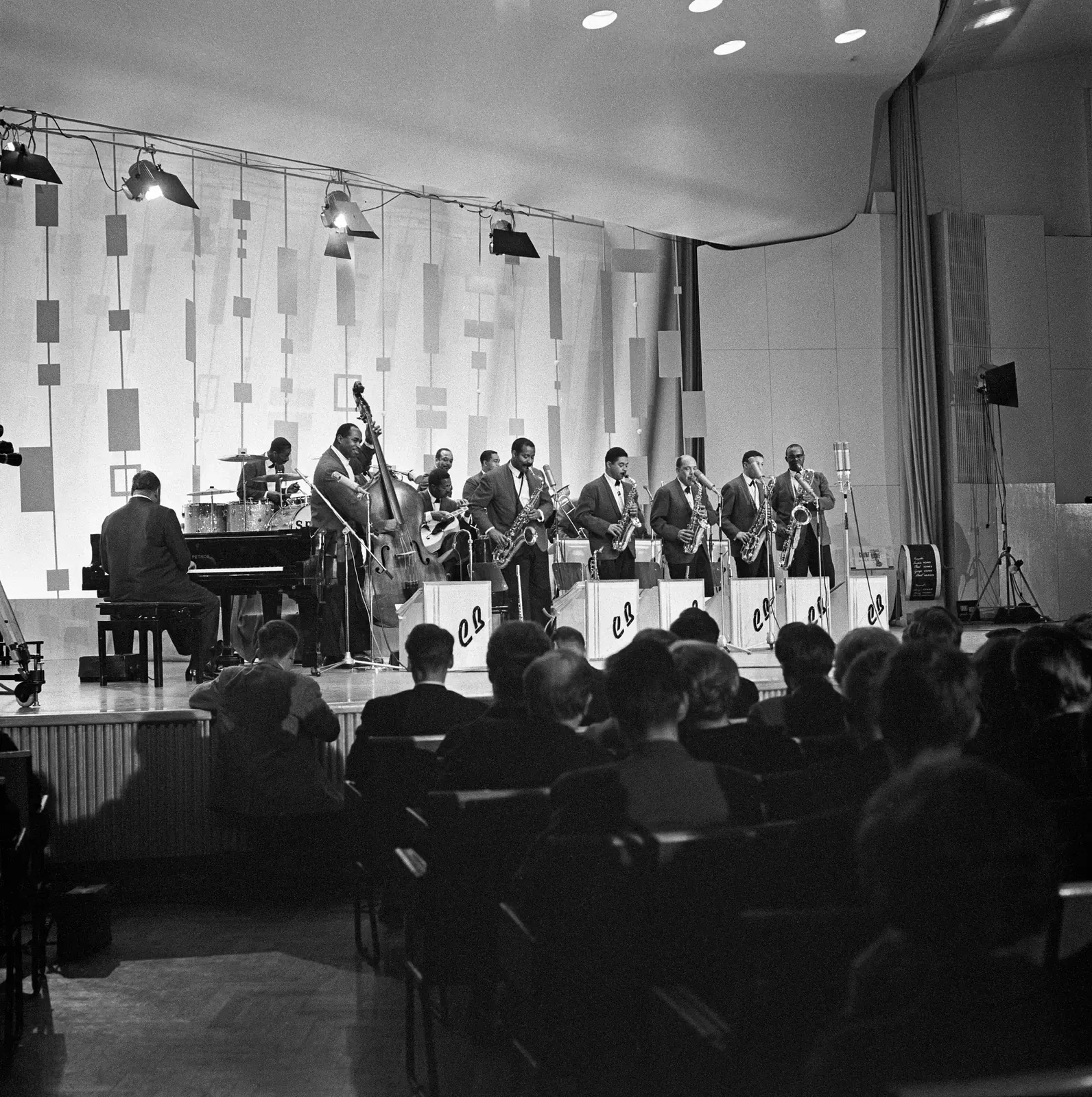
Kansas City gave swing its looser, riff-driven branch, built on head arrangements worked out in rehearsal and on guitarist Freddie Green’s steady four-beat chords.
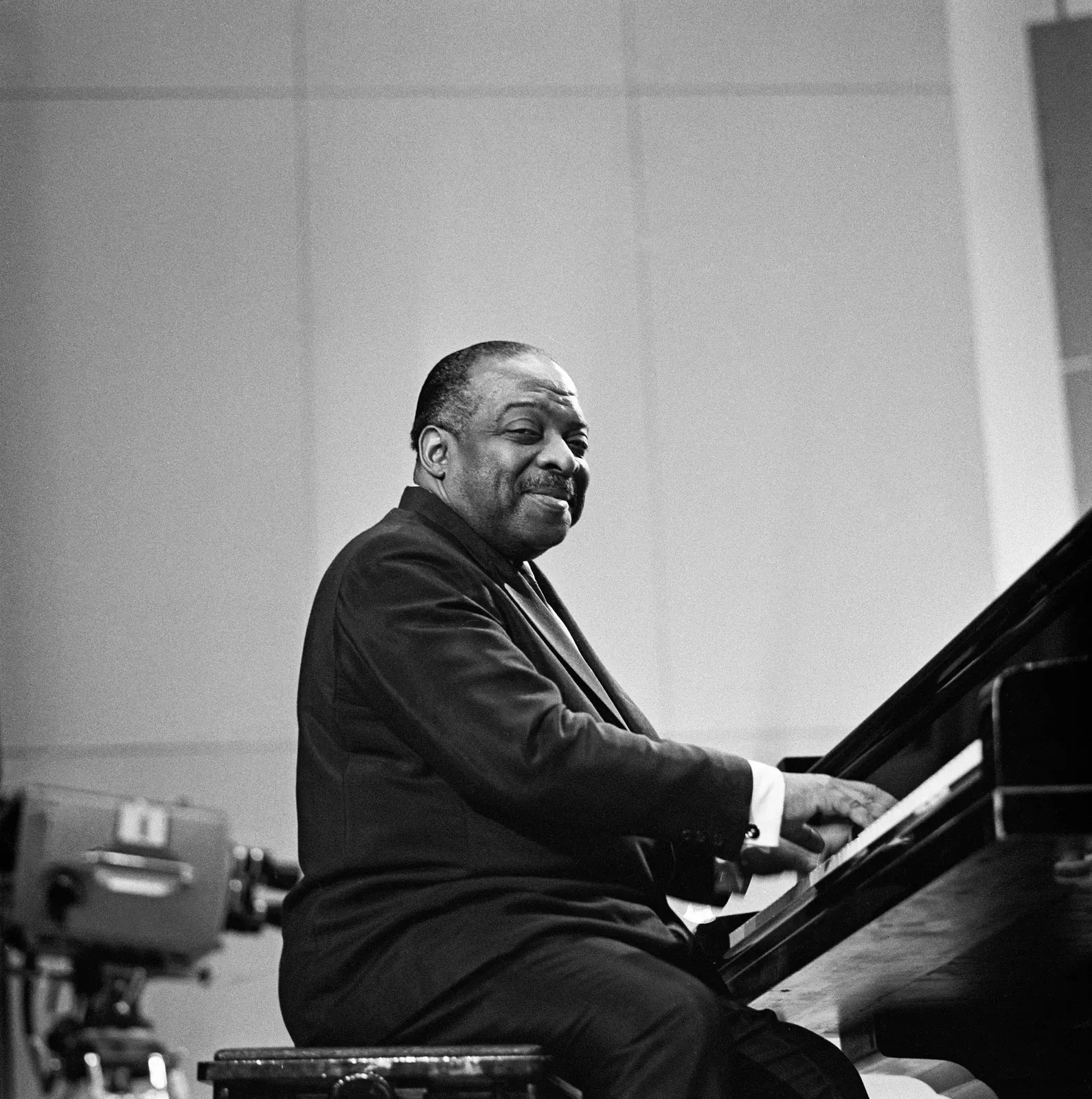
Peak of the bands, 1938 to 1941
On 16 January 1938 Goodman’s band played Carnegie Hall, a landmark for jazz. The live album of the night appeared in 1950 and sold for decades. At the Savoy that same era, Chick Webb’s band beat Goodman in a 1937 battle of the bands, and in May 1938 Webb’s young singer Ella Fitzgerald recorded “A-Tisket, A-Tasket” for Decca, which reached first place on Your Hit Parade.
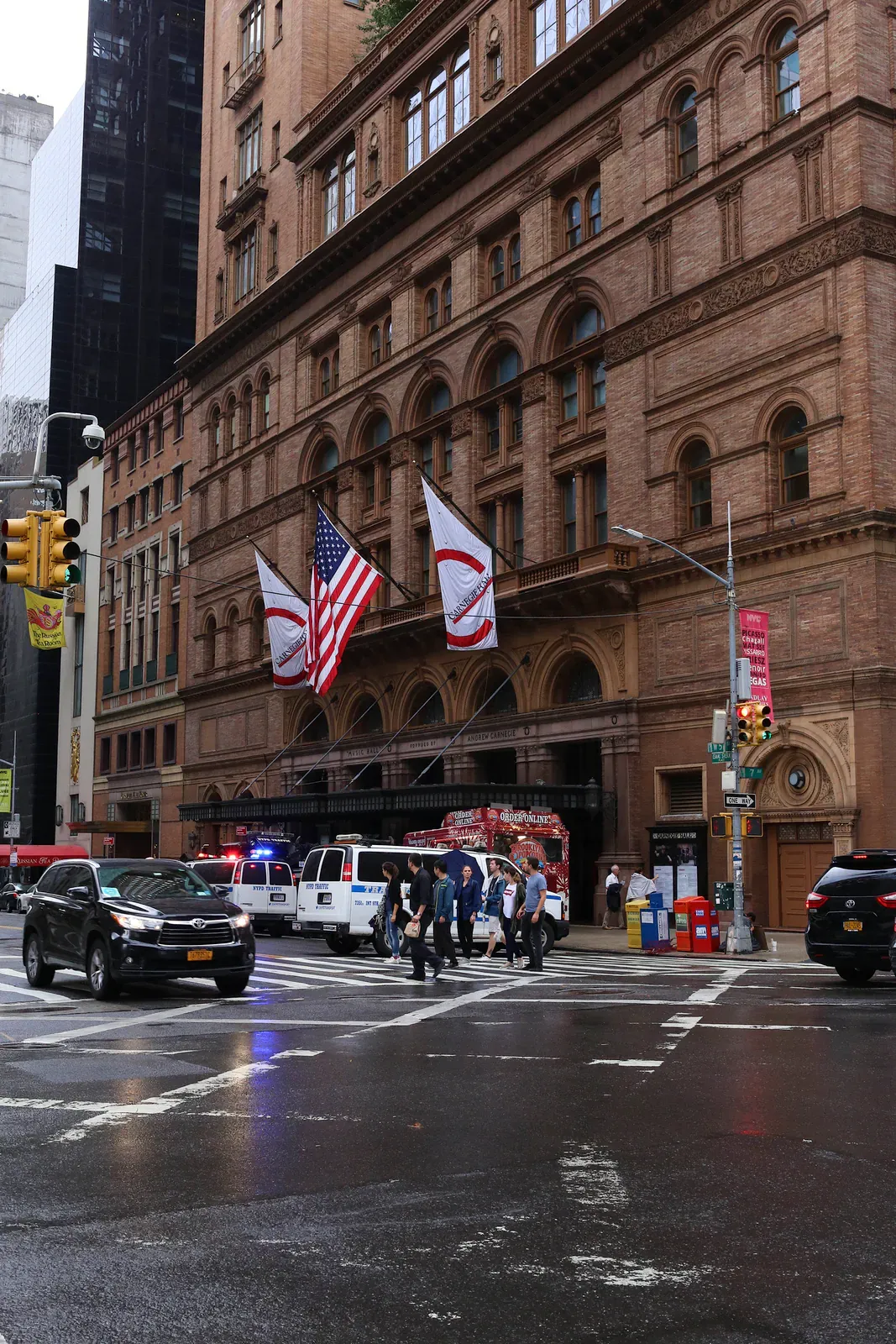
Artie Shaw’s clarinet and Jerry Gray’s arrangement made Cole Porter’s “Begin the Beguine” (Bluebird, 1938) a number-three hit. Glenn Miller drew a record opening-night crowd of 1,800 to the Glen Island Casino in New Rochelle in spring 1939, and “In the Mood” became the best-selling swing instrumental. Tommy Dorsey, with Frank Sinatra and the Pied Pipers, held the top of the first Billboard best-sellers list for 12 weeks with “I’ll Never Smile Again” on RCA Victor.
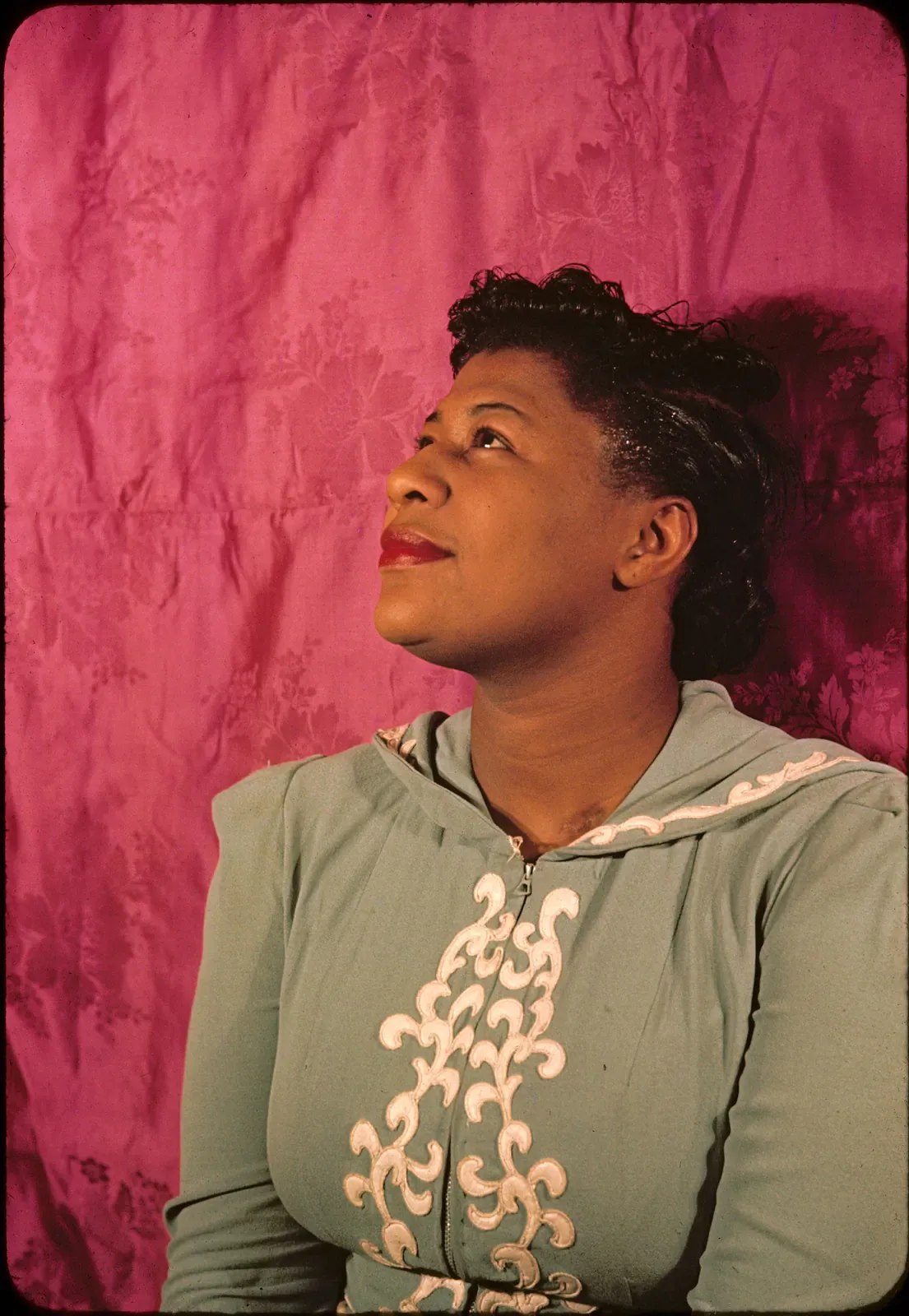
War, strike and decline, 1942 to 1949
The boom did not survive the war. From August 1942 the musicians’ union stopped instrumental recording, and the ban lasted until November 1944. Singers, who were not covered by it, took over the hit parade. Players were drafted, travel was rationed, and Glenn Miller disappeared on a flight over the English Channel on 15 December 1944 while leading an Army Air Forces band. After the war, taxes, high payrolls and the new bebop of small groups cut the big band business down.
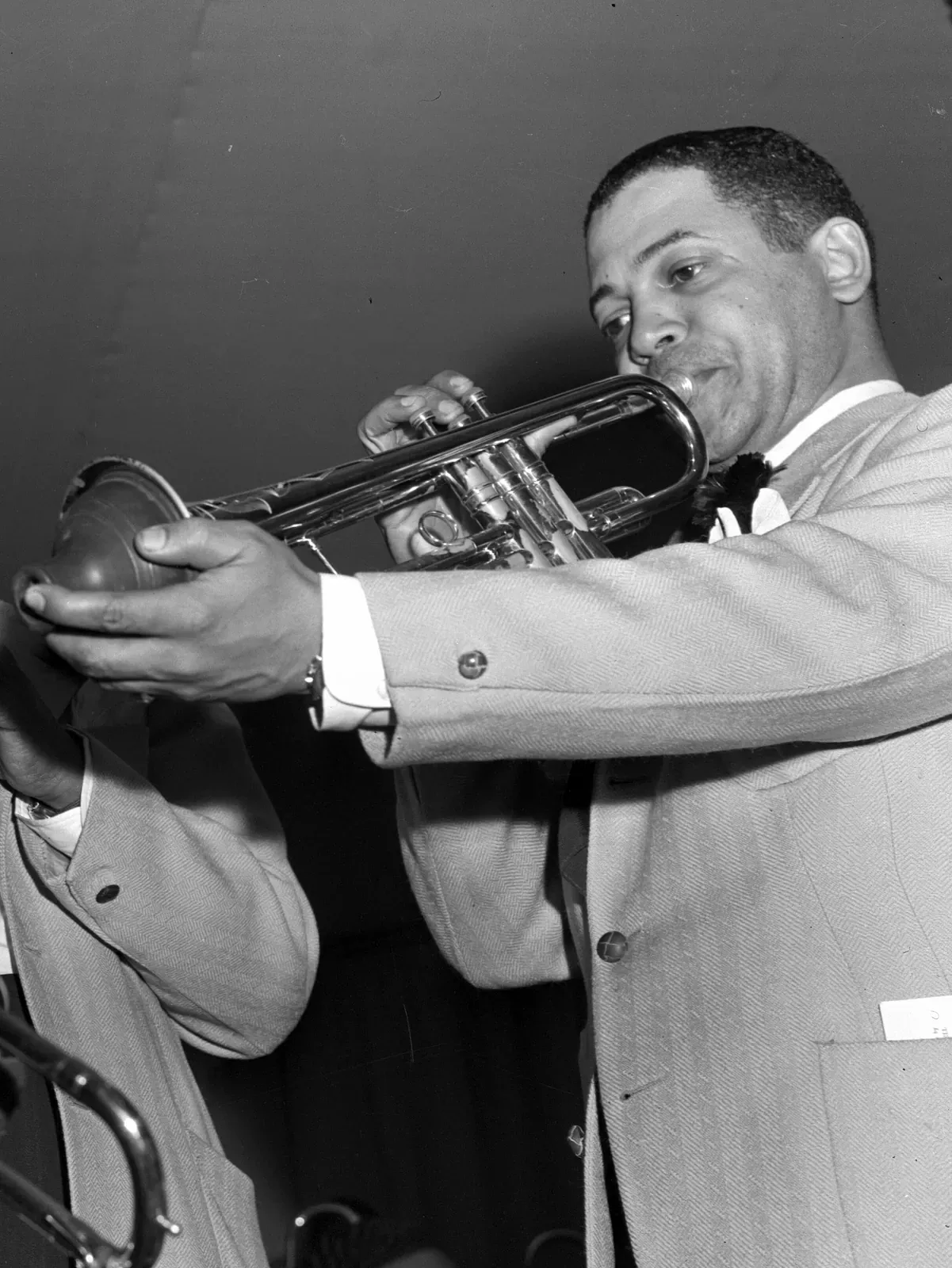
Not everything shrank. Louis Jordan’s small-band “Caldonia” spent seven weeks first on the race chart in 1945, and its jump-blues beat fed rhythm and blues and then early rock and roll. In the country family, western swing adapted the same feel.
Nostalgia and swinging pop, 1950 to 1988
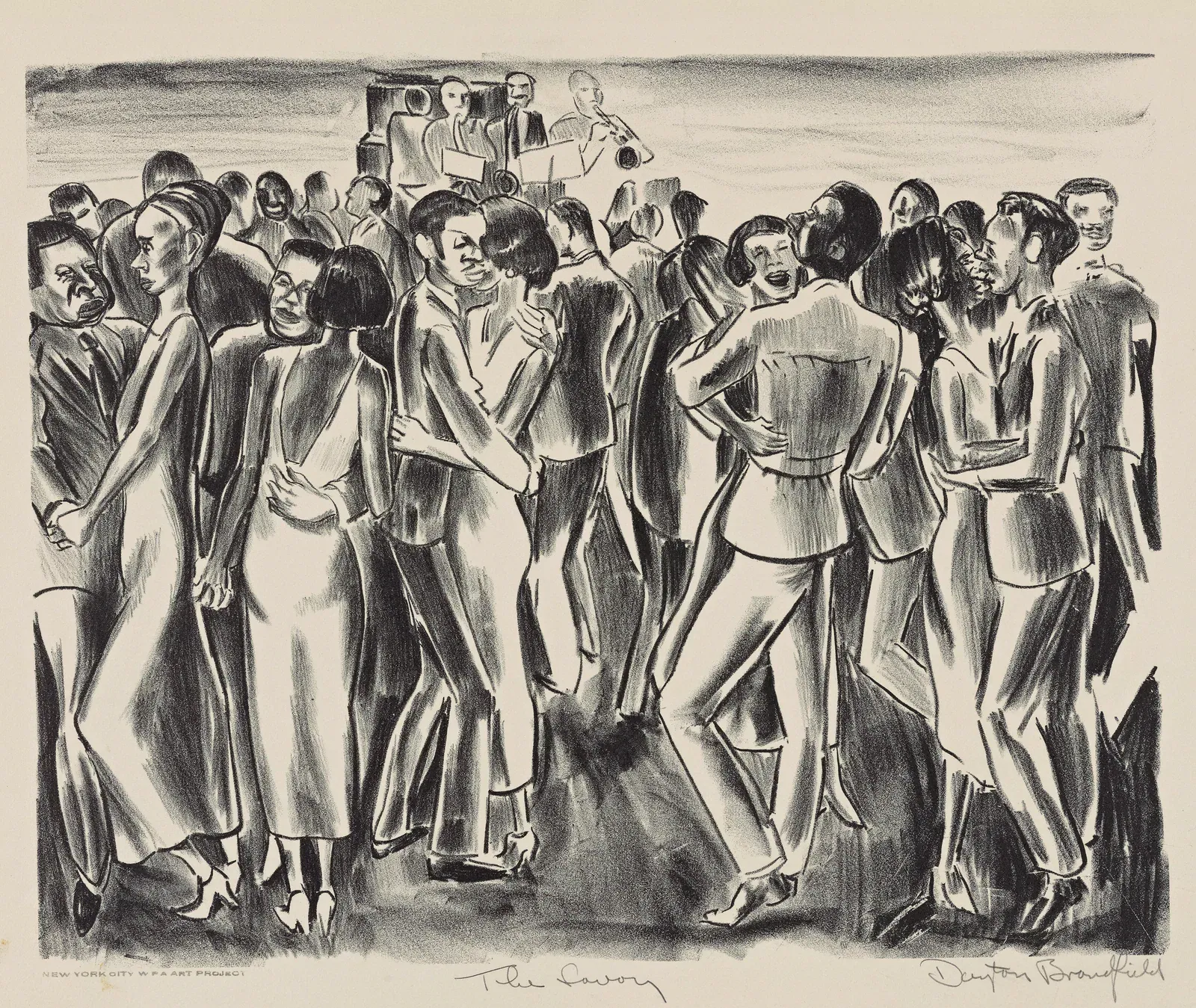
From the 1950s the surviving bands toured on nostalgia, and Frank Sinatra kept a swing pulse at the center of pop. The Savoy Ballroom closed on 10 July 1958 and was demolished the next year for housing. The music stayed in the repertoire, but as heritage, not as the sound of the day.
Neo-swing revival, 1989 to now
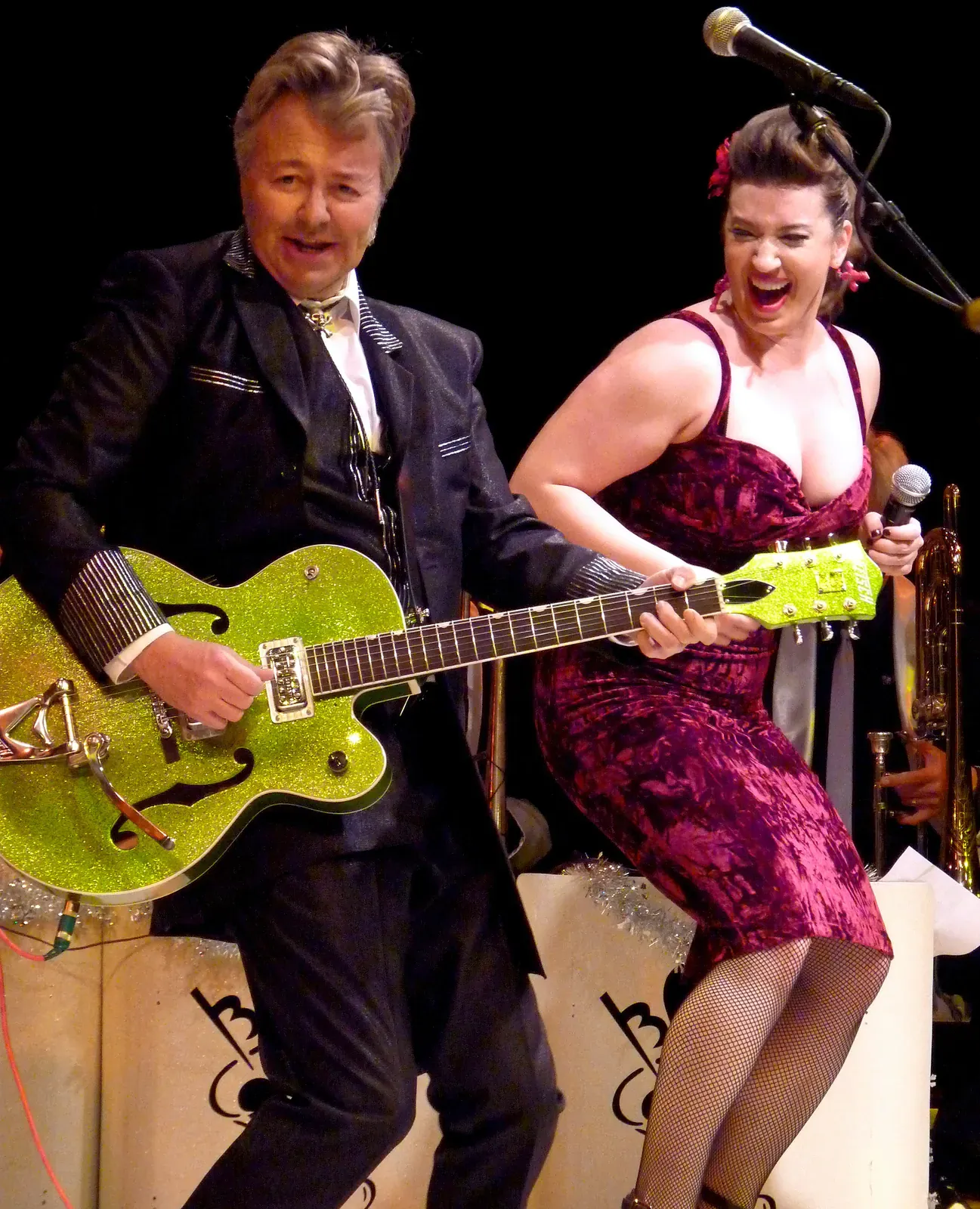
In 1989 Royal Crown Revue and Big Bad Voodoo Daddy formed in Los Angeles and started the neo-swing scene. San Francisco’s Club DeLuxe and Los Angeles clubs filled with dancers, and the 1996 comedy Swingers carried the look to a wide audience. In 1998 the Brian Setzer Orchestra’s “Jump, Jive an’ Wail” and a Gap Khakis ad pushed the revival to its peak, and the same year’s album The Dirty Boogie brought it to pop radio on Interscope.
Characteristics
Swing pairs written section playing, reeds against brass, with improvised solos over a walking bass and a steady four-beat pulse. A strong rhythm section of guitar, bass and drums anchors the band, and arrangements are built on swung eighth notes, riff backgrounds and a closing shout chorus. Tempos run from about 120 to 220 BPM in 4/4.
Instruments and production
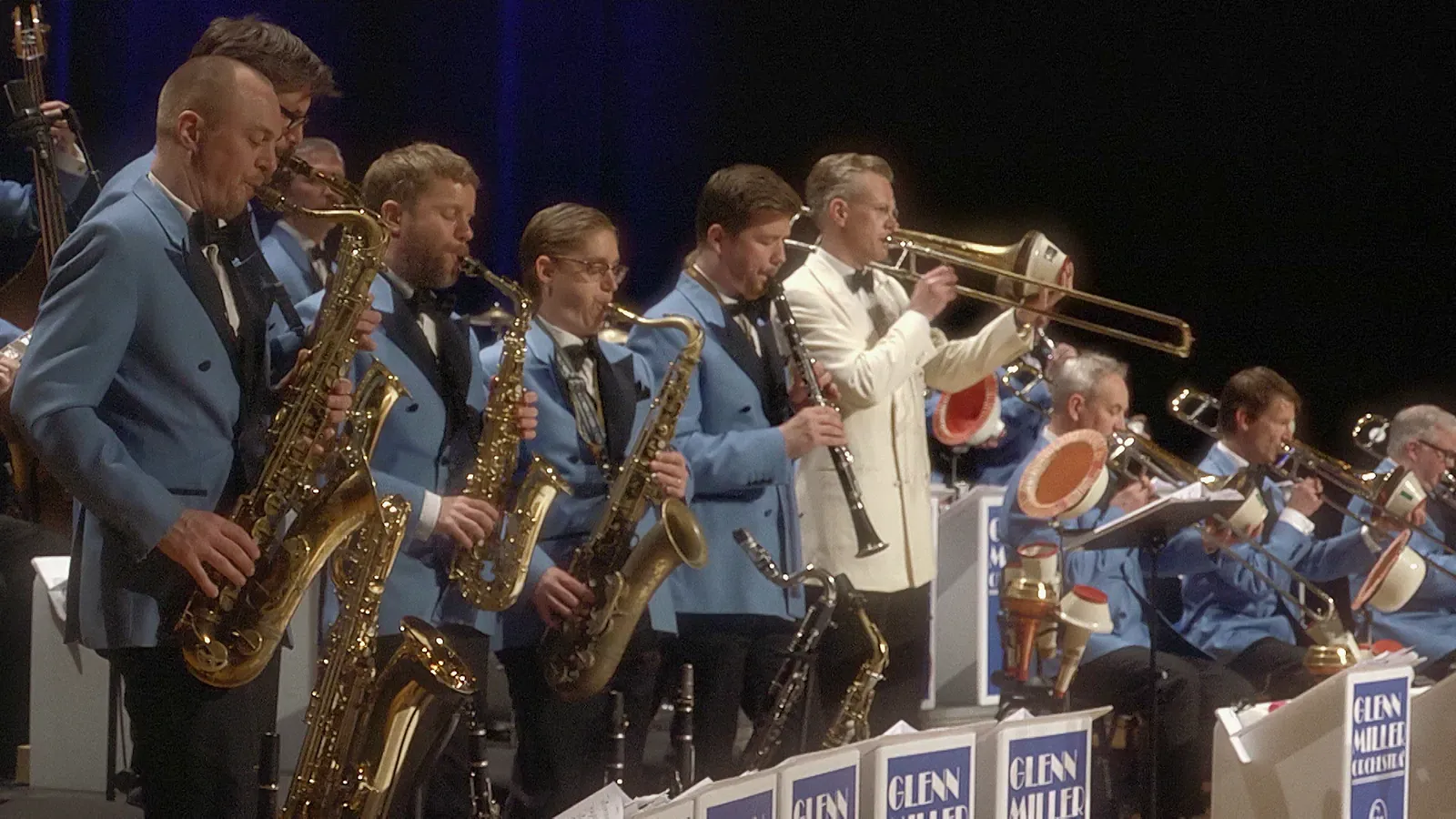
A band of saxophone, trumpet and trombone sections faces a rhythm section of double bass, drum kit with hi-hat, rhythm guitar and piano. Clarinet led the Goodman and Shaw bands. Drummers such as Gene Krupa and Chick Webb became bandstand stars, and Freddie Green’s steady four-beat chords drove the Basie band. In 1939 Charlie Christian’s amplified guitar entered the Goodman sextet and led solos.
Mainstream success
Swing went mainstream faster than most genres, in about three years, because three machines were ready for it. Network radio carried live ballroom sets nightly. The 78 rpm record held a hit on each side, and long pieces such as “Sing, Sing, Sing” used both. From 1938 the coin-operated jukebox put records on every dance floor. Labels such as RCA Victor, Decca, Brunswick, Vocalion and Bluebird sold the bands to the country, and “Chattanooga Choo Choo” by Glenn Miller became the first gold record on 10 February 1942 after more than 1.2 million sales.
Notable recordings
“Sing, Sing, Sing” (1937). Louis Prima wrote the tune, and Goodman’s version stretched it around Gene Krupa’s tom-toms until it needed two sides of a 78.
“One O’Clock Jump” (1937). Basie built it as a blues riff in Kansas City, and it closed his shows for decades.
“Take the A Train” (1941). Billy Strayhorn’s tune was first commercially recorded by Ellington’s band on 15 February 1941 and became the orchestra’s theme and the era’s best-known signature.
Culture
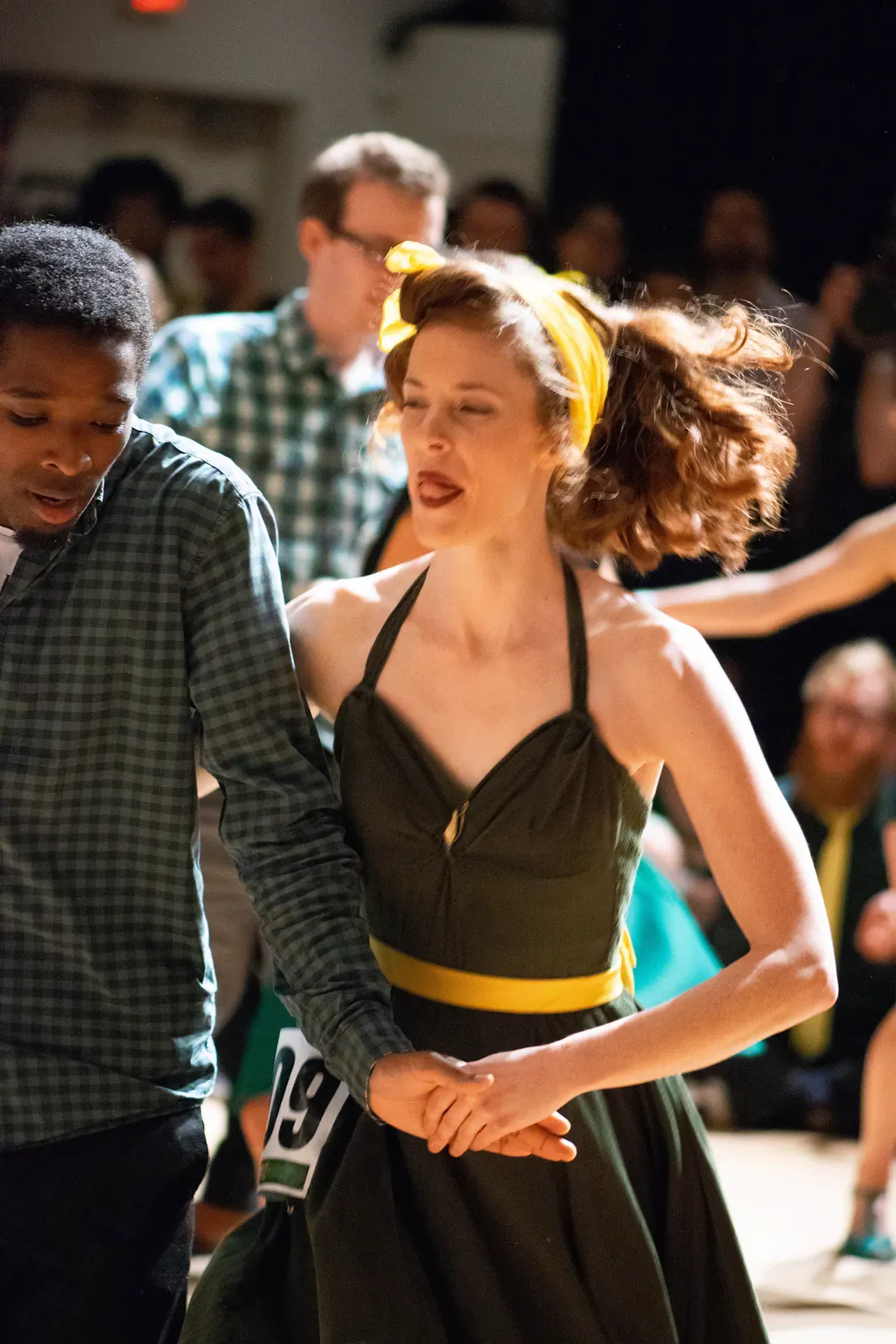
The Lindy Hop came out of Harlem in the late 1920s and was danced nightly at the Savoy, and Whitey’s Lindy Hoppers carried it into film. The wider craze version was called jitterbug. Hepcat slang, spread by Lester Young and others, gave the language the word “cool”, and the wide-cut zoot suit came back in the 1990s.
Legacy
Swing made jazz the music a whole country danced to. Neo-swing bands and dancers revived the repertoire from 1989, and touring orchestras still carry the leaders’ names.
Misconceptions
“Swing is only big band music.” Small groups mattered from the start. Basie’s Kansas City Seven recorded Lester Young’s “Lester Leaps In” on 5 September 1939.
“Goodman invented swing.” The word was on an Ellington record in 1932 and the arrangements Goodman rode in 1935 were Henderson’s. His part was reaching a mass audience.
“Swing died when the war ended.” The big band business shrank after 1945, but the music never left: Lindy Hop survived and the 1990s revival brought new bands.
Frequently asked questions
What is swing music?
Swing is dance-oriented jazz of the 1930s and 40s, played by big bands in 4/4 at about 120 to 220 BPM. It combines swung eighth notes, a walking bass, reeds answering brass and improvised solos.
When was the swing era?
The swing era runs from about 1935, when Benny Goodman’s Palomar Ballroom night started the craze, to about 1946, when the big band business shrank after the war, the recording ban and bebop.
Who are the most famous swing bandleaders?
Benny Goodman, Count Basie, Duke Ellington, Glenn Miller, Artie Shaw and Tommy Dorsey led the best-known swing bands, with Fletcher Henderson and Chick Webb as key founders, and Ella Fitzgerald and Lester Young as its great voices.
What is the difference between swing and jazz?
Swing is one style of jazz. Earlier jazz such as Dixieland used small groups and collective improvisation; swing used larger arranged bands for dancing. Bebop, which followed, was for listening.
Is swing music still popular?
Swing is a niche now but a living one. The 1990s revival brought bands such as Royal Crown Revue and the Brian Setzer Orchestra, and Lindy Hop dancers still keep the old records in play.
Sound
Sound sheet
Anatomy of a track
| # | Part | Bars |
|---|---|---|
| 1 | Intro (rhythm section or riff) | 4 |
| 2 | Head chorus (melody) | 32 |
| 3 | Solo choruses | 32 |
| 4 | Shout chorus (section call-and-response) | 16 |
| 5 | Out chorus | 16 |
Signature sounds
- Swung eighth notes
- Reed against brass call-and-response
- Riff backgrounds behind solos
- Walking bass
- Rhythm section anchored on guitar, bass and drums
- Arranged ensemble plus improvised solos
Drums and percussion
- Slingerland Radio King
Techniques
- Swung eighth notes
- Walking bass
- Call and response
- Riff backgrounds
- Shout chorus
- Head arrangement
- Four-beat guitar comping
Keys and modes
B-flat major (rhythm changes). The 32-bar I Got Rhythm progression, usually played in B-flat, underlies many swing-era tunes.
Twelve-bar blues. Basie's One O'Clock Jump is a twelve-bar blues built on band riffs, recorded in F and in D-flat.
Scenes
Where it happened
Where and when the sound lived: one bar per city on a shared timeline.
North America
Active scenes
Peak 4, 1935-1940
Harlem's Savoy and Cotton Club, Roseland and Carnegie Hall made the city swing's capital.
Riff-based, blues-heavy Basie and Moten style grew in the city's clubs.
Home of the Grand Terrace and the hub where Goodman built his band.
The Palomar night of 1935 and later the Derby club of the 1990s revival.
Club DeLuxe and swing-dance nights anchored the revival.
Venues and places
New York, 1926 to today. Harlem hall where Chick Webb ruled and the Lindy Hop was born; closed in 1958.
New York, 1919 to today. Henderson's home from 1924; shut in 2014.
New York, 1923 to today. Whites-only Harlem club where Ellington was house band from 1927 to 1931.
Los Angeles, 1925 to today. Goodman's 1935 night here marked the start of the era; burned down on 2 October 1939.
New York, 1938 to today. Goodman's 16 January 1938 concert brought swing to the classical hall.
New Rochelle, 1939 to today. Where Glenn Miller drew a record opening-night crowd in spring 1939.
Culture
Culture markers
- Lindy Hop
Harlem partner dance from the late 1920s, danced at the Savoy and spread by Whitey's Lindy Hoppers in film.
Dance - Jitterbug
The national craze version of swing dancing, danced to the white and black bands alike.
Dance - Battle of the bands
Rival orchestras played head to head at the Savoy; Webb beat Goodman in 1937.
Ritual - Hepcat language
Slang spread by Lester Young and others, including the word cool.
Slang - Zoot suit
Wide-cut suit tied to swing dance halls and revived in the 1990s.
Fashion
Media
Key media
- 1934Let's Dance
by NBC. The Saturday night radio show that brought Goodman's band to a national audience.
Radio - 1936Camel Caravan
by Benny Goodman. Goodman's CBS radio show kept swing on the air.
Radio - 1941Sun Valley Serenade
by Glenn Miller. Film that carried Chattanooga Choo Choo to cinema audiences.
Film - 1950The Famous 1938 Carnegie Hall Jazz Concert
by Benny Goodman. The live album of the Carnegie night, a bestseller for decades.
Compilation - 1996Swingers
by Doug Liman. The comedy that helped bring the revival into the mainstream.
Film
Glossary
Terms on this page
A head-to-head contest between two orchestras, judged by the dancers.
A tune worked out and memorized in rehearsal without a written score.
A name for the energetic swing dancing of the craze era.
A short repeated phrase used as a melody or a background behind soloists.
The last high-energy chorus where the whole band plays together.
Bass playing a steady note on every beat.
Jazz family