Orchestral jazz
Orchestral jazz is large-ensemble jazz from written arrangements and sectional scoring, developed in 1920s New York by Whiteman, Henderson and Ellington.
New York City, 1920
Jazz family
Born
1920
New York City
Subgenres
1
Documented branches
Links
6
Genres it drew on or shaped
Tempo
70-175 BPMLineage
Family tree
Timeline
Era by era
From the first sparks to today. Select a dot to read the story behind it.
- Symphonic jazz
1920 to 1925
- Harlem bands and arrangers
1926 to 1937
- Concert halls and extended works
1938 to 1949
- Third stream and studio orchestras
1950 to 1969
Eras
Moments
- 1 Symphonic jazz, 1920 to 1925
- 2 Harlem bands and arrangers, 1926 to 1937
- 3 Concert halls and extended works, 1938 to 1949
- 4 Third stream and studio orchestras, 1950 to 1969
1920
Symphonic jazz
Paul Whiteman's New York dance orchestra scored jazz for concert settings and, at Aeolian Hall in 1924, premiered Gershwin's Rhapsody in Blue, orchestrated by Ferde Grofe.
- 1920Whiteman records WhisperingPaul Whiteman's orchestra records Whispering for Victor, a dance-band hit that makes him the best-known bandleader of the decade.
- 1921Fletcher Henderson's first recordsHenderson makes his first records in New York, starting a catalogue that shapes written big-band jazz.
- 1924An Experiment in Modern MusicWhiteman presents a concert at Aeolian Hall in New York on 12 February that ends with Gershwin's Rhapsody in Blue.
- 1924Rhapsody in Blue recordedWhiteman's orchestra records Rhapsody in Blue for Victor on 10 June with Gershwin at the piano.
- 1924Armstrong joins HendersonLouis Armstrong joins Henderson's orchestra at the Roseland Ballroom, and his phrasing changes how the band swings.
1926
Harlem bands and arrangers
Fletcher Henderson, Don Redman and Duke Ellington built sectional scoring for reeds, brass and rhythm, and wrote the arrangements that fed the swing era.
- 1926The StampedeHenderson's orchestra records The Stampede on 14 May, with Coleman Hawkins soloing over Don Redman's arrangement.
- 1927Ellington at the Cotton ClubEllington's orchestra opens at Harlem's Cotton Club in December and begins years of radio broadcasts and recordings.
- 1927Black and Tan FantasyEllington and trumpeter Bubber Miley record their blues-based piece for Victor and other labels.
- 1930Mood IndigoEllington records Mood Indigo with an unusual voicing of muted trumpet, muted trombone and clarinet.
1938
Concert halls and extended works
Jazz orchestras moved into Carnegie Hall, and Ellington wrote long-form pieces such as Black, Brown and Beige while larger bands added strings and concert-music techniques.
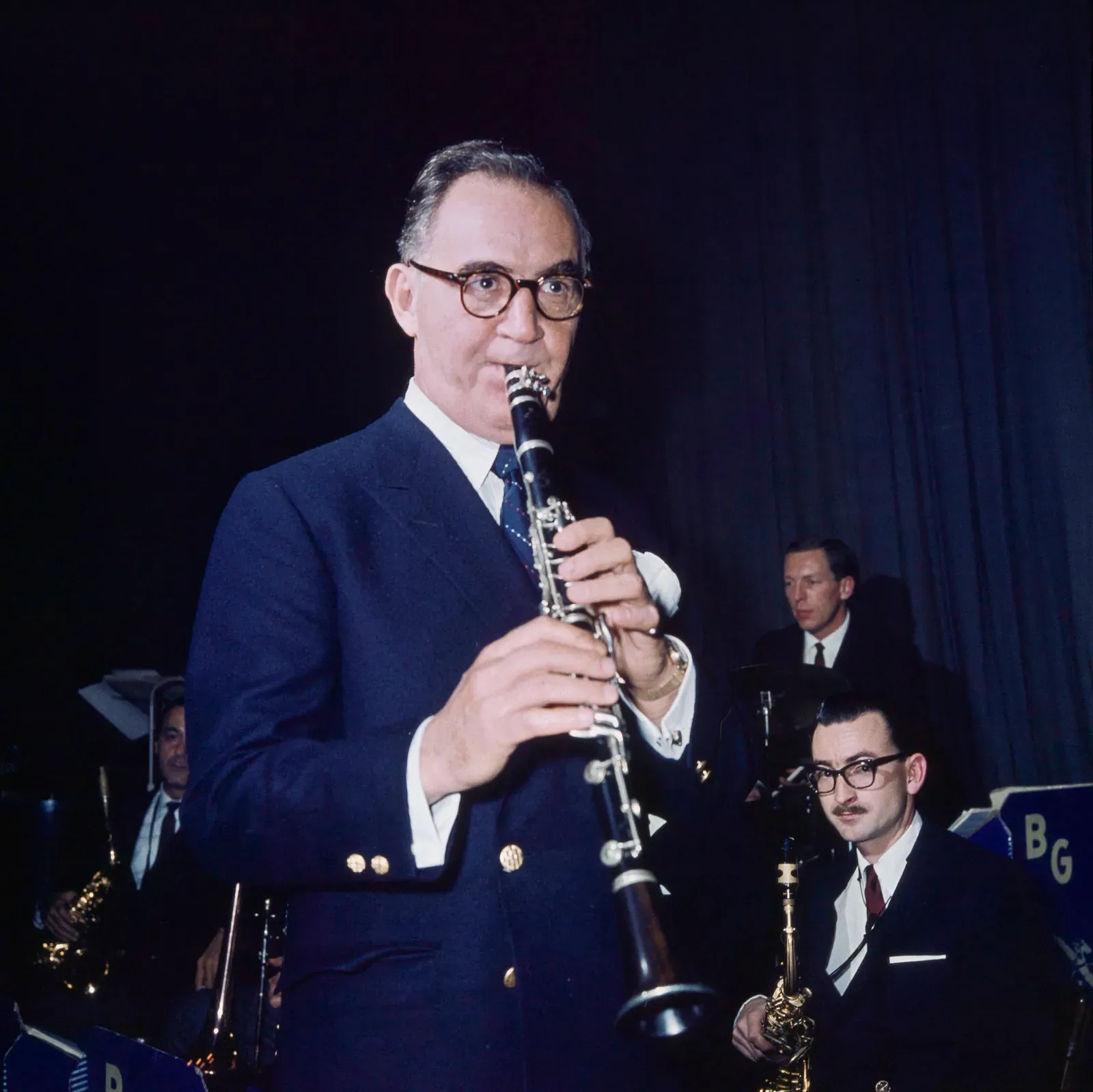
- 1938Jazz at Carnegie HallBenny Goodman's orchestra plays a concert at Carnegie Hall on 16 January, a landmark for jazz in the concert hall.
- 1943Black, Brown and BeigeEllington premieres his long-form suite at Carnegie Hall on 23 January.
1950
Third stream and studio orchestras
Gil Evans scored Miles Davis for brass, woodwinds and harp on Columbia, and Gunther Schuller named the meeting of jazz and classical music the third stream.
- 1957Miles AheadMiles Davis and arranger Gil Evans record an album of orchestral settings for Columbia.
- 1957Third stream namedComposer Gunther Schuller coins the term third stream for music that joins jazz and classical practice.
- 1960Sketches of SpainDavis and Evans release a Columbia album built around Rodrigo's Concierto de Aranjuez, scored for a large orchestra.
Listening path
Start listening
A short path from an easy way in to the deep end. Thumbnails come from YouTube; the player loads only when you press play.
- 01
Fletcher Henderson, 1926
Listen for the reeds and brass answering each other before Coleman Hawkins's solo.
- 02
Duke Ellington, 1927
Plunger-muted trumpet and trombone carry a blues theme over a written band arrangement.
- 03
Duke Ellington, 1930
An orchestration built on one unusual voicing of three muted horns.
- 04
Miles Davis, 1960
Gil Evans's orchestra frames Davis's trumpet in a long, concerto-like arrangement.
Facts
| Family | Jazz |
| Origin | New York City, United States |
| Emerged | 1920s |
| Status | Historical |
| Tempo | 70 to 175 BPM |
| Meter | 4/4 |
| Grew out of | Dixieland |
| Subgenres | 1 |
Orchestral jazz, also called symphonic jazz, is jazz played by a large ensemble from written arrangements, with the sectional scoring and formal ambition of concert music and room for improvised solos.
It took shape in New York in the 1920s around the bandleaders Paul Whiteman and Fletcher Henderson and the composer Duke Ellington. It grew out of New Orleans jazz and ragtime and borrowed its scale and structure from European orchestral practice.
Origins
Early New Orleans bands improvised collectively, with cornet, clarinet and trombone weaving around one another over a two-beat pulse. When musicians moved north to Chicago and New York in the early 1920s, they met a dance craze, a growing record industry and ballrooms that wanted more players and a fuller sound. Arranged music suited that market. Audiences already knew the tunes from phonograph records and radio, and a scored band could reproduce them night after night.
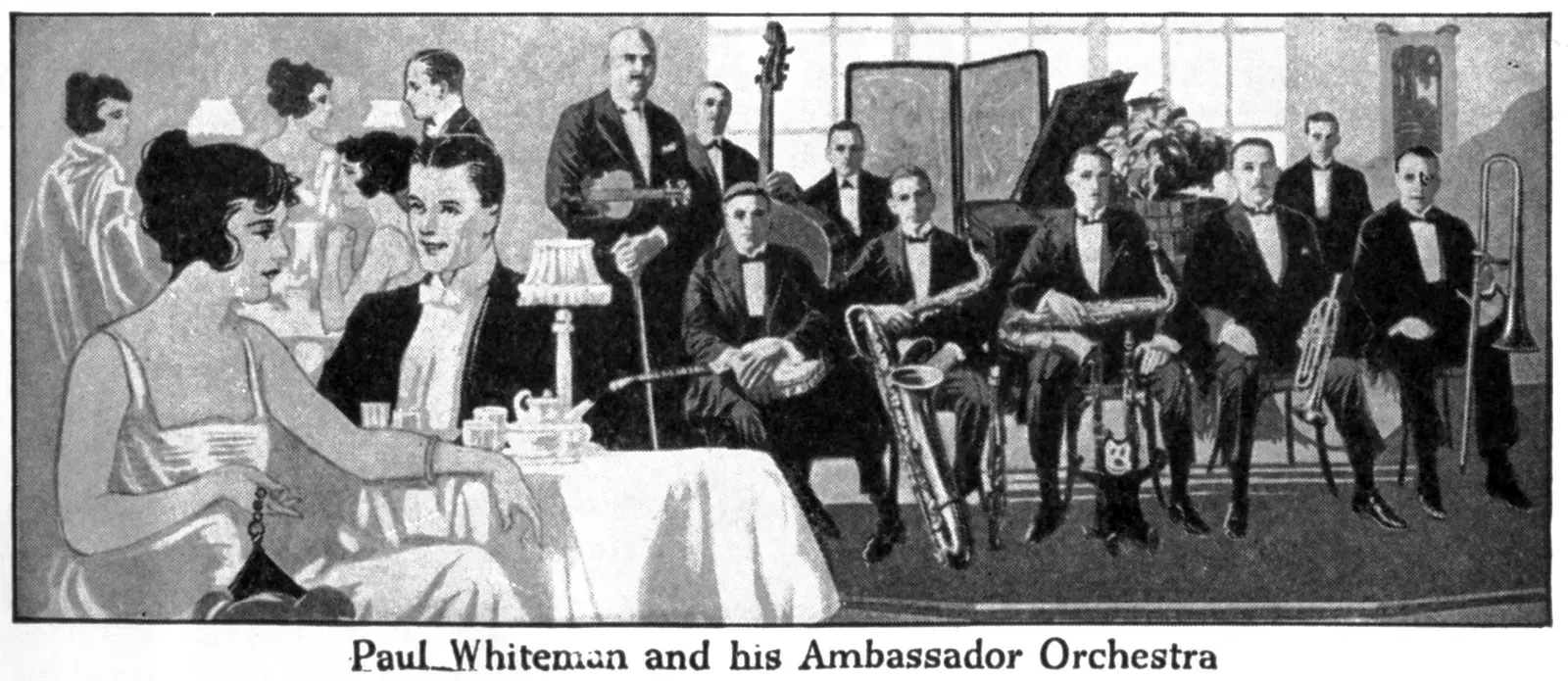
Paul Whiteman, a violinist from Denver who had played in symphony orchestras, led the most popular dance band of the early 1920s and was billed as the King of Jazz. His orchestra recorded Whispering for Victor in 1920 and treated jazz as something to be scored, rehearsed and presented. Whiteman’s idea of symphonic jazz was criticised then and since for smoothing the music, but it supplied the template of a large band with written parts.
The defining moment came on 12 February 1924, when Whiteman presented “An Experiment in Modern Music” at Aeolian Hall in New York. The concert ended with George Gershwin’s Rhapsody in Blue, with the composer at the piano and the orchestration by Ferde Grofe. Whiteman’s orchestra recorded it for Victor that June. The performance argued that jazz could carry a concert-length composition.
Harlem arrangers, 1926-1937
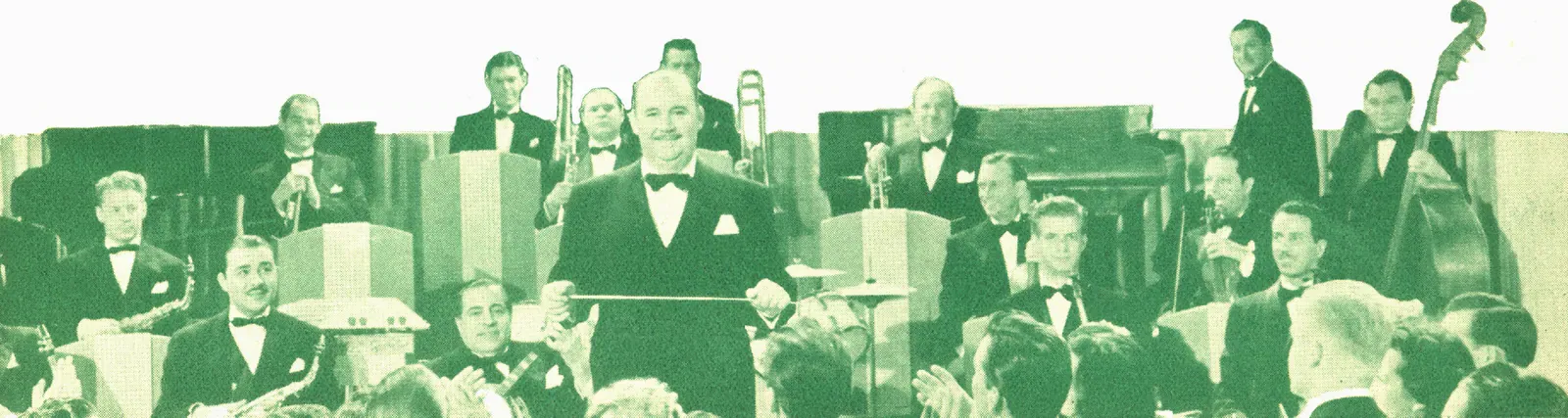
While Whiteman filled concert halls, black bandleaders in Harlem developed a harder-swinging form of scoring. Fletcher Henderson, a pianist who made his first records in 1921, led a band at the Roseland Ballroom, and Louis Armstrong joined it in 1924. Armstrong’s phrasing taught the band to swing, and the arrangers Don Redman and later Henderson himself worked out how to split a band into reeds, brass and rhythm that answer one another. The Stampede, recorded on 14 May 1926 with Coleman Hawkins among the soloists, shows the method: short scored phrases trade between sections before each solo.
This sectional scoring became the grammar of the big band. Henderson’s arrangements were later played by other leaders, and the bass line moved from the tuba’s two beats to the walking four beats of the string bass, which made the music easier to dance to and gave it the drive of the swing era. For the style that this arranging fed, see swing.
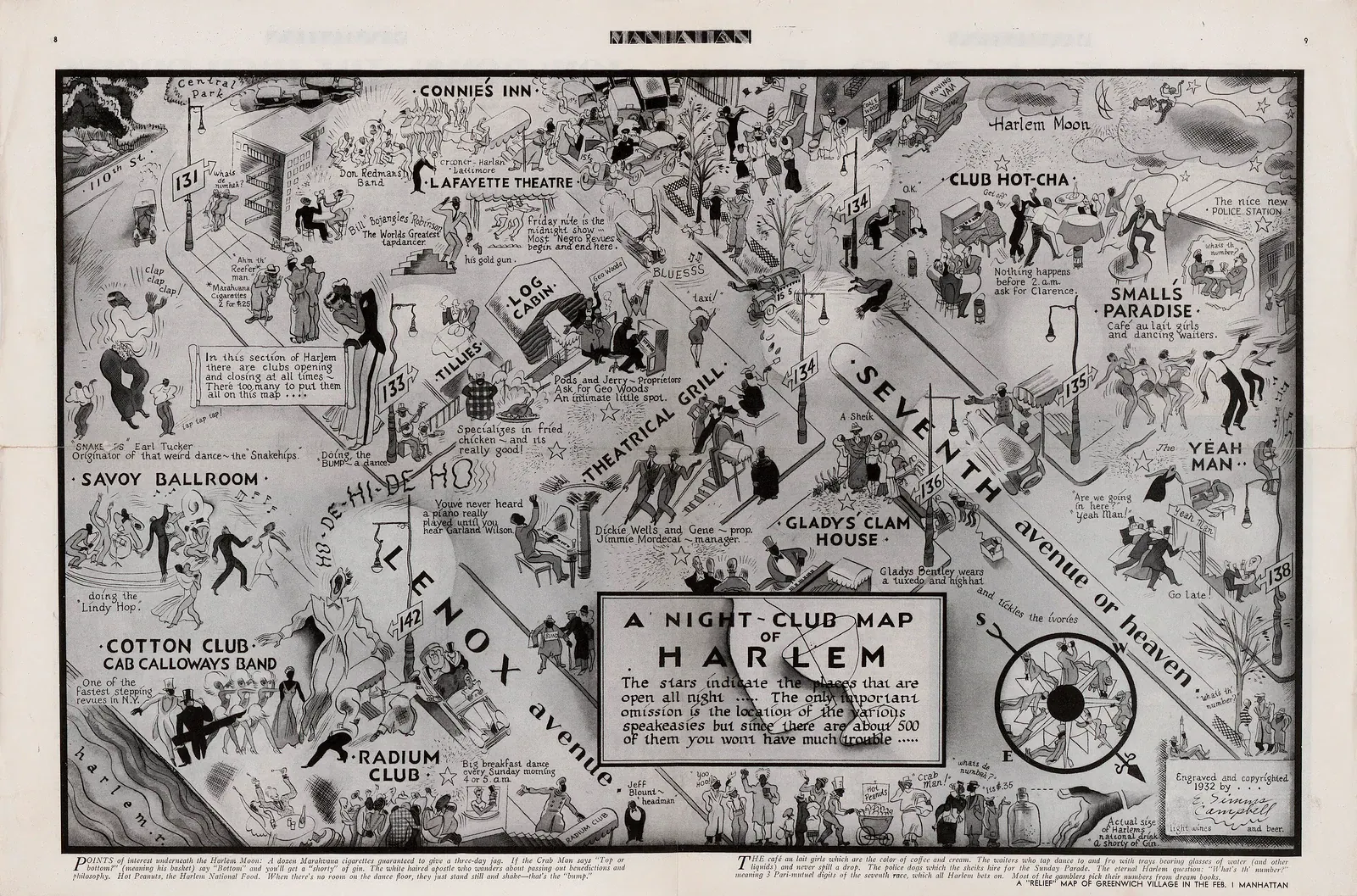
Duke Ellington took the idea furthest. His orchestra began a long engagement at the Cotton Club in Harlem in December 1927, with weekly radio broadcasts that spread its sound. Ellington wrote for specific players, so trumpeter Bubber Miley’s plunger-muted growl shaped Black and Tan Fantasy in 1927, and clarinettist Barney Bigard’s low register anchored Mood Indigo in 1930, which scored muted trumpet, muted trombone and clarinet in a close voicing. His band kept some of the same players for decades, and from 1939 the arranger Billy Strayhorn worked with him. Ellington’s catalogue is often cited as the high point of the form.
Concert halls, 1938-1949
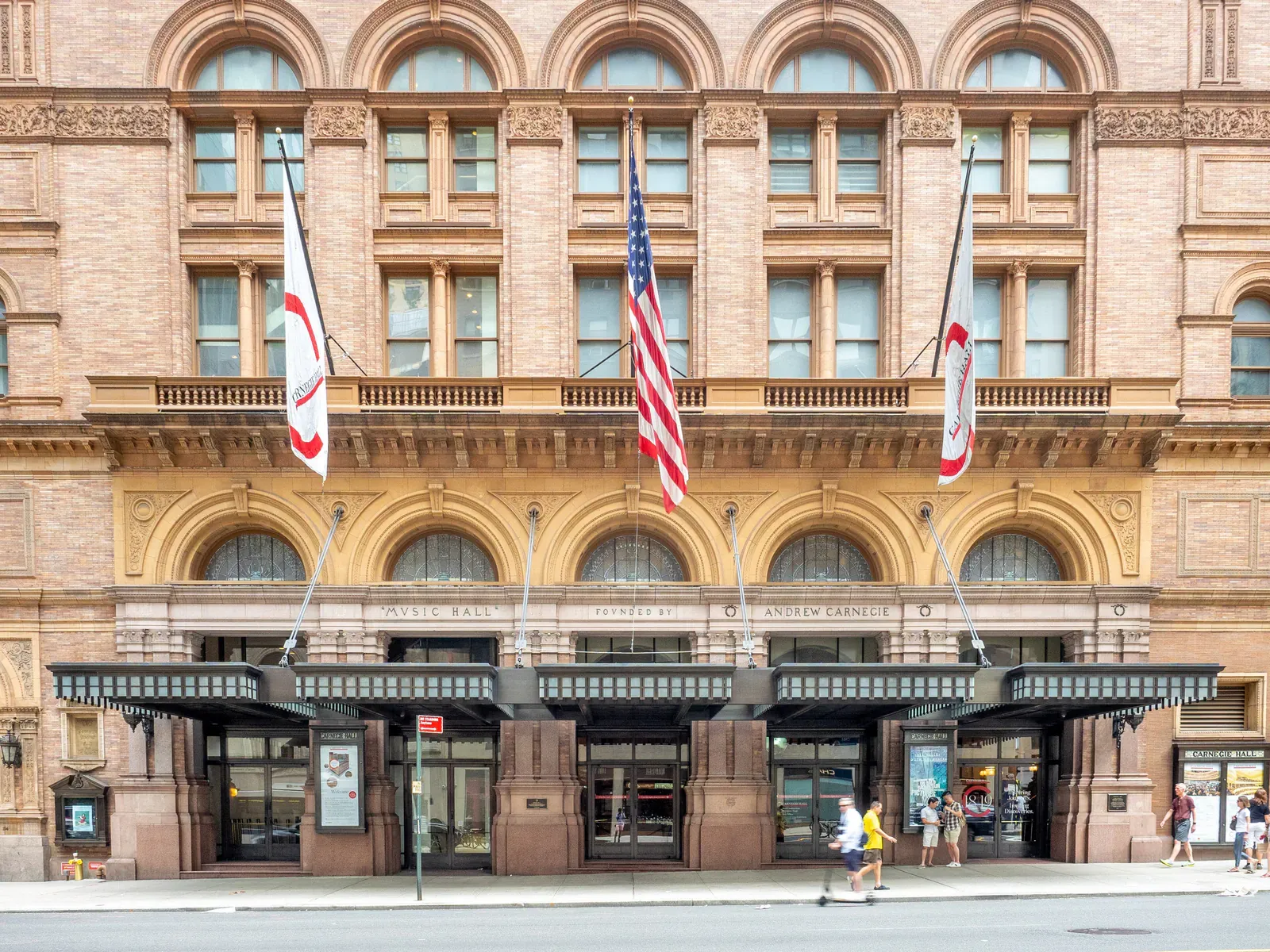
By the late 1930s the big band had become popular music, and its leaders turned to the concert hall. Benny Goodman’s orchestra played Carnegie Hall on 16 January 1938, a concert regarded as a landmark for jazz presented as listening music. Ellington gave Carnegie Hall his own concerts and premiered the long suite Black, Brown and Beige there on 23 January 1943. The piece told a history of African Americans in sections that ran far beyond a 32-bar chorus.
Other bands added strings, French horns and woodwinds. Stan Kenton’s orchestra enlarged the sound further around 1950, trading dance work for pieces written to be heard.
Third stream and studio orchestras, 1950-1969
After the war, orchestral writing passed to arrangers who worked in studios and on records. Gil Evans scored Miles Davis with a large band of brass, woodwinds and a harp on Miles Ahead in 1957, and then on Sketches of Spain in 1960, built around an arrangement of the Adagio from Joaquin Rodrigo’s Concierto de Aranjuez. These albums for Columbia kept space for one improvising soloist while the orchestra framed him, much like a concerto.
In 1957 the composer Gunther Schuller named the meeting of jazz improvisation and classical technique the third stream, a label that covered music by composers from both worlds. The big dance orchestra shrank as small combos and bebop took over clubs. For the small-group styles that replaced it, see bebop and cool jazz.
Characteristics
The form depends on a written score. A typical piece opens with a short introduction, states a theme for the whole ensemble, hands out solo choruses over written backgrounds, and closes with a full-band shout and coda. Reed, brass and rhythm sections each have their own parts, which answer one another in call and response. Many pieces use flat keys that suit wind instruments, and Ellington’s harmony adds blue notes and extended chords.
Instruments and production
The core is a reed section of saxophones and clarinets, a trumpet section and a trombone section, and a rhythm section of piano, bass and drums. Early bands used banjo and tuba for the rhythm, which gave way to guitar and string bass. Whiteman’s concert band added violins, and later arrangers brought in French horns, flutes, harp and orchestral percussion. Mutes are a major source of colour: straight mutes, cup mutes and the rubber plunger give brass sections growls and wah effects.
Recording technology shaped the form. Electrical microphone recording in 1925 captured a large band more accurately than the acoustic horn did, and network radio broadcasts from clubs carried orchestras to a national audience.
Notable recordings
Rhapsody in Blue (1924) is the best-known early recording, the first set of Gershwin’s concert work for a jazz band. The Stampede (1926) is the standard example of Henderson’s sectional method, with the reeds and brass trading phrases before the solos. Mood Indigo (1930) shows orchestration as the central idea: the piece is memorable mainly because of how three muted horns are stacked. Sketches of Spain (1960) shows the form’s later, studio-bound life, with a large orchestra built around one trumpet voice.
Culture
Large orchestras were ballroom workhorses. Couples danced the foxtrot and later swing steps at halls such as the Roseland, and the dance trade paid for the bands. Trade slang sorted bands into hot, meaning improvised and hard-swinging, and sweet, meaning smoother and more arranged, a split that Whiteman’s orchestra often fell on the sweet side of. The seated jazz concert at Aeolian Hall and Carnegie Hall created a different ritual, asking audiences to listen instead of dance. The Whiteman film King of Jazz (1930) carried the orchestra to cinema audiences.
Harlem’s clubs were also segregated in practice. The Cotton Club featured black performers for an all-white audience, which shaped how Ellington’s music was heard in its first years.
Legacy
Orchestral jazz fixed the template of the jazz orchestra: sectional scoring, written backgrounds under solos and a leader-composer. The big band of the swing era came directly from it, and the concert-hall presentation of jazz, the long-form suite and the third stream descended from Whiteman, Ellington and Evans.
Misconceptions
One common claim is that Whiteman invented jazz because he was called its king. The title was a publicity label; jazz was already a decade old and had black pioneers in New Orleans, Chicago and Harlem, and many critics place Henderson and Ellington above Whiteman as musicians.
Another is that orchestral jazz meant no improvisation. The scores usually leave space for solos, and players such as Hawkins, Armstrong and Bigard were featured improvisers. Ellington wrote parts for individual players, which made their voices part of the score.
A third is that the genre ended with the swing era. Large-ensemble jazz writing continued in the work of Gil Evans, in third stream pieces and in later big bands.
Frequently asked questions
What is orchestral jazz?
Orchestral jazz is jazz for a large ensemble that plays arranged and composed music, usually with sections of reeds, brass and rhythm and sometimes strings, while soloists still improvise.
Who created orchestral jazz?
Paul Whiteman presented it as symphonic jazz in the early 1920s, and Fletcher Henderson, Don Redman and Duke Ellington developed its scoring in Harlem. Ellington’s work is often cited as its peak.
What is the difference between orchestral jazz and big band?
Orchestral jazz is the broader tradition of large written ensembles, including concert works and third stream pieces. Big band usually names the dance-oriented ensemble of reeds, brass and rhythm that dominated the swing era.
What was Rhapsody in Blue’s role in orchestral jazz?
Gershwin’s Rhapsody in Blue, premiered by Whiteman’s orchestra at Aeolian Hall on 12 February 1924, showed that jazz materials could carry a concert-length work and is the most famous example of symphonic jazz.
How fast is orchestral jazz?
Recorded examples run from about 70 beats per minute for Mood Indigo to about 175 for fast Henderson stomps, in 4/4 time.
Sound
Sound sheet
Anatomy of a track
| # | Part | Bars |
|---|---|---|
| 1 | Introduction | 8 |
| 2 | Ensemble theme chorus | 32 |
| 3 | Solo chorus over written backgrounds | 32 |
| 4 | Shout chorus (full band) | 16 |
| 5 | Coda | 8 |
Signature sounds
- Reeds, brass and rhythm section answering one another
- Written arrangement with space for improvised solos
- Concert-style extended forms such as suites and rhapsodies
Drums and percussion
- Drum kit
- Timpani and orchestral percussion
Techniques
- Sectional scoring
- Plunger-muted brass
- Written solos and backgrounds
- Extended form
Keys and modes
Flat keys, B-flat and E-flat. Common in band writing because they sit well on trumpets, clarinets and saxophones.
Blues-inflected major and minor. Blue notes and extended chords colour the harmony, notably in Ellington's writing.
Vocals
Mostly instrumental; wordless or sung choruses by a band vocalist appear in some pieces.
Scenes
Where it happened
Where and when the sound lived: one bar per city on a shared timeline.
North America
Active scenes
Peak 2, 1920-1940
Whiteman's concerts, Henderson's Roseland Ballroom band and Ellington's Harlem engagements all grew here.
A second hub for dance orchestras, where Earl Hines led a big band at the Grand Terrace from 1928.
Venues and places
New York City, 1924 to today. Hall where Whiteman gave the 1924 concert that premiered Rhapsody in Blue.
New York City, 1919 to today. Dance hall that was the base of Fletcher Henderson's orchestra from 1924.
New York City, 1923 to today. Harlem nightclub where Ellington's orchestra played from 1927 and was heard on radio.
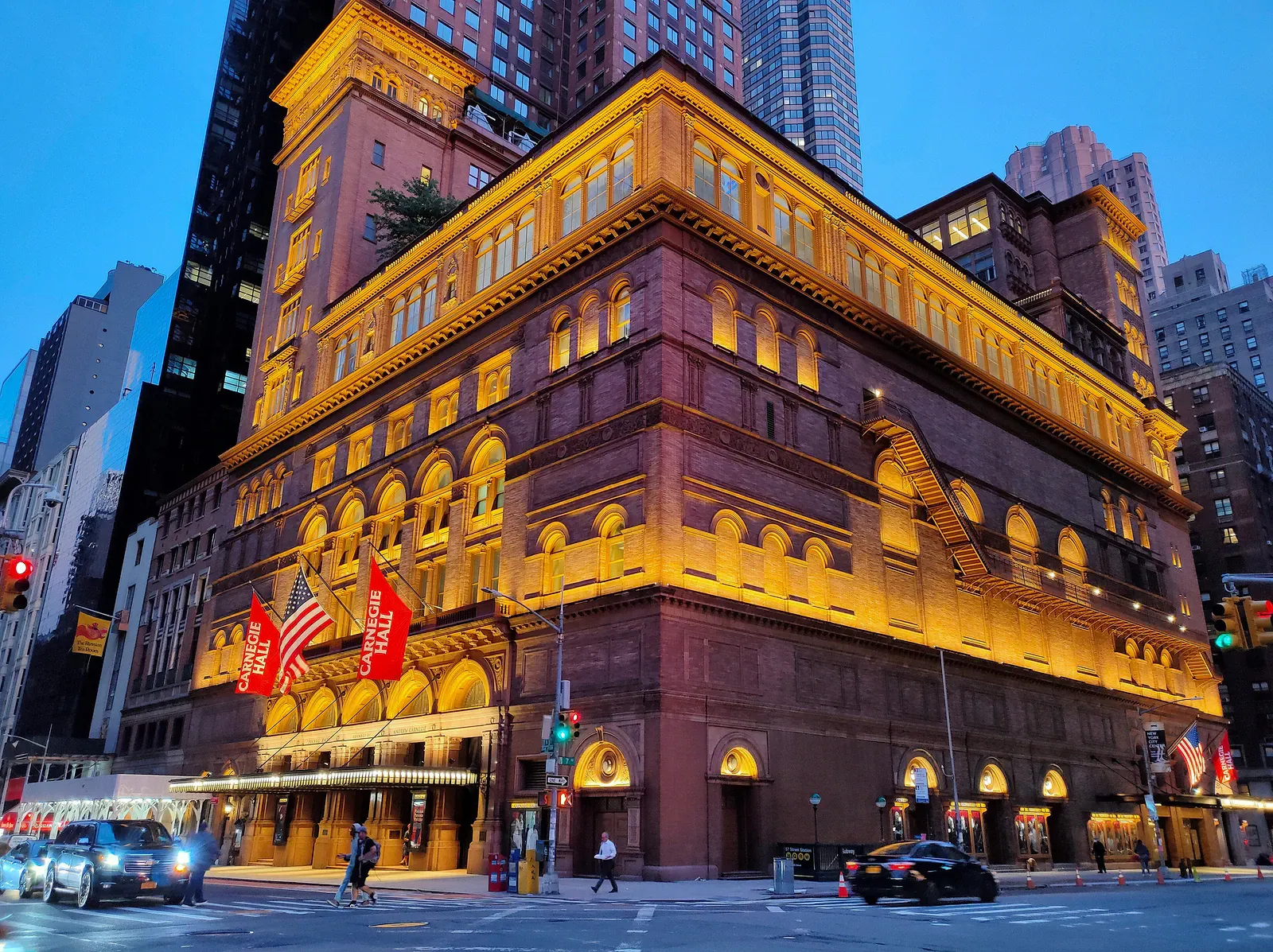
New York City, 1891 to today. Concert hall that hosted Goodman's 1938 concert and Ellington's 1943 premiere of Black, Brown and Beige.
Culture
Culture markers
- Ballroom dance orchestras
Large orchestras played foxtrot and other couple dances for ballroom crowds, which paid for the bands.
Dance - Hot and sweet
Trade terms split improvised, hard-swinging bands from smoother, arranged dance bands such as Whiteman's.
Slang - The jazz concert
Seated concerts in Aeolian and Carnegie Hall treated jazz as listening music rather than only dance music.
Ritual
Media
Key media
- 1930King of Jazz
by Universal Pictures. A Whiteman revue film that carries Rhapsody in Blue to cinema audiences.
Film - 1935Symphony in Black
by Paramount. A short film built around Ellington's extended work A Rhapsody of Negro Life.
Film
Glossary
Terms on this page
A band's written arrangement, the main document of an orchestral jazz piece.
A memorised arrangement worked out in rehearsal, the unwritten counterpart to a fully scored chart.
Writing separate parts for reed, brass and rhythm sections that answer one another.
Early term for jazz scored for a large orchestra and presented in concert style, associated with Whiteman.
A 1957 term for music that blends jazz improvisation with classical forms and techniques.
Jazz family