Mugham
Mugham is Azerbaijan's modal art music: improvised vocal and instrumental suites on seven principal modes, set to classical poetry, tied to the Karabakh school.
Azerbaijan, around 1500
Central Asian and Caucasian family
Born
around 1500
Azerbaijan
Subgenres
9
Documented branches
Links
17
Genres it drew on or shaped
Tempo
75-120 BPMLineage
Family tree
Grew out of
Azerbaijan
Mugham
Led to (9)
Timeline
Era by era
From the first sparks to today. Select a dot to read the story behind it.
- Court, majlis and toy
1500 to 1900
- Shusha school and the gramophone
1901 to 1920
- Conservatory, opera and orchestra
1921 to 1990
- Heritage and world stage
1991 to today
Eras
Moments
- 1 Court, majlis and toy, 1500 to 1900
- 2 Shusha school and the gramophone, 1901 to 1920
- 3 Conservatory, opera and orchestra, 1921 to 1990
- 4 Heritage and world stage, 1991 to today
around 1500
Court, majlis and toy
Mugham grows into professional court music and is passed from master to pupil, played at weddings (toy) and private gatherings of connoisseurs (majlis). Sufi circles also keep it.
- 1600Mugham becomes professional palace musicIn the 16th and 17th centuries the art is cultivated by court musicians and the dastgah suite form takes shape.
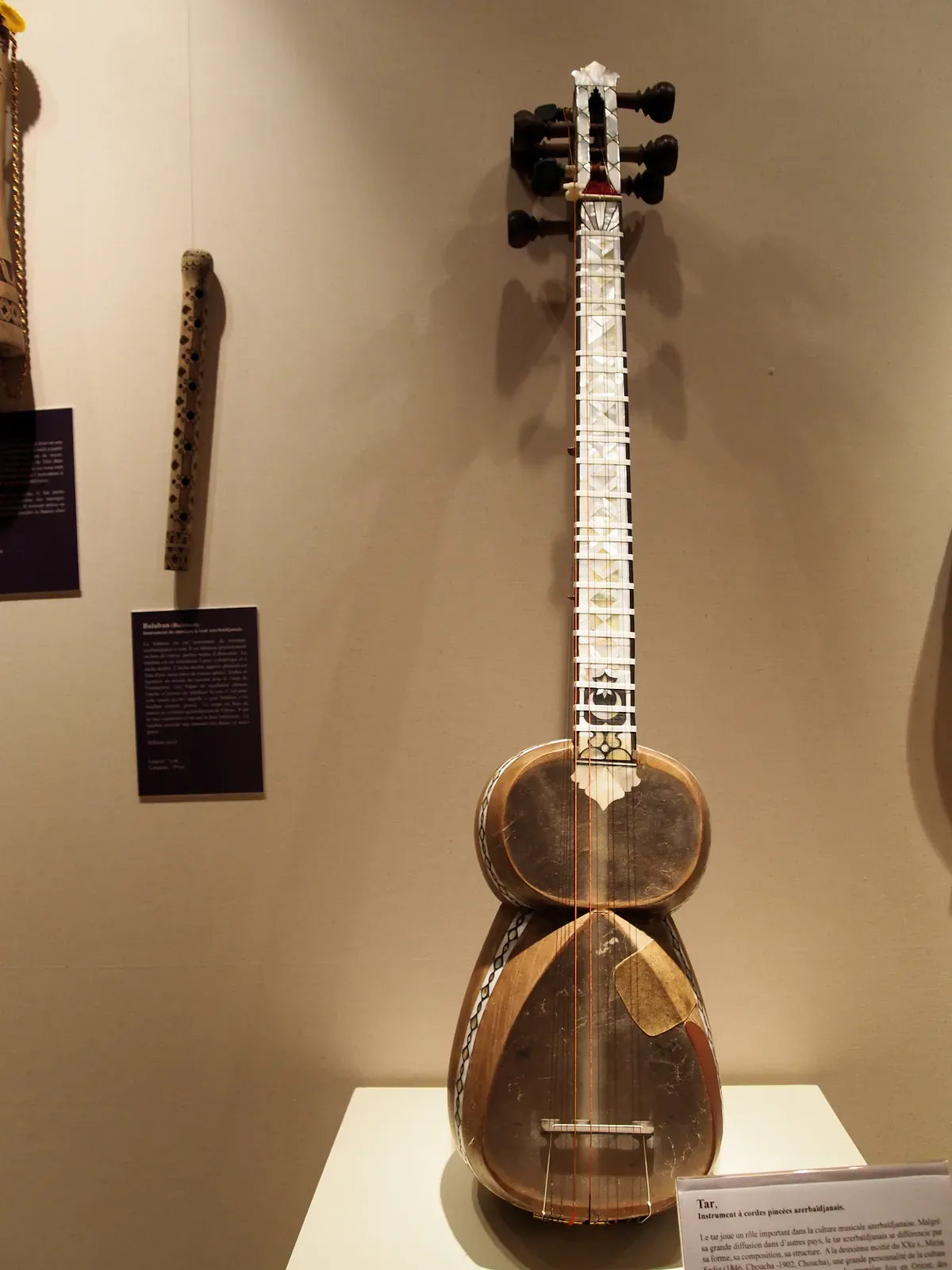
- 1870Sadigjan reworks the tarThe Azerbaijani tar gets extra strings and sympathetic strings, becoming the lead instrument of the mugham trio.
1901
Shusha school and the gramophone
Karabakh singers from Shusha give the first public mugham concerts in Shusha and Baku, make the first records from 1906, and Hajibeyov stages mugham in opera in 1908.
- 1901First public mugham concerts in ShushaJabbar Garyaghdioglu performs with tar player Gurban Pirimov and kamancha player Sasha Oganezashvili, before Baku concerts in 1902.
- 1906First gramophone records of mugham singersThe Gramophone company records Azerbaijani singers, with Jabbar Garyaghdioglu among the first.
- 1908Leyli and Majnun premieres in BakuHajibeyov's opera, premiered on 25 January at the Taghiyev Theatre, is called the first opera of the Muslim East.
- 1909Gramophone expedition records the CaucasusEngineer Franz Hampe records for the Gramophone Company across the Caucasus and Central Asia, and Jabbar Garyaghdioglu's mugham discs are among the results.
- 1913Seyid Shushinski records in Kiev
1921
Conservatory, opera and orchestra
Mugham is taught in conservatories and philharmonic halls, written down by Hajibeyov, rescored for orchestra by Amirov and mixed with jazz by Vagif Mustafazadeh.
- 1934Jabbar wins the Transcaucasian arts OlympicsAt 74 he takes first prize in Tbilisi.
- 1945Hajibeyov publishes his theory of Azerbaijani folk musicThe Principles of Azerbaijan Folk Music sets out the modal system behind mugham.
- 1946Amirov writes the first symphonic mugham, ShurFikret Amirov scores a mugham mode for a full orchestra and opens the symphonic mugham genre.
- 1960Khan Shushinski founds a mugham studioHe trains younger singers in the mugham tradition.
- 1968Vagif Mustafazadeh launches jazz mughamThe Baku pianist builds jazz improvisation on mugham modes and starts a movement that lasts into the 1970s.
- 1968Amirov completes Gulustan Bayati-ShirazHis best known symphonic mugham later reaches skating arenas in the West.
- 1977Vagif forms the Mugam ensembleThe instrumental group plays his jazz mugham until his death in 1979.
- 1978Waiting for Aziza wins in MonacoVagif takes first prize for the composition at an international jazz festival.
- 1985Agdam Mugham School opensIt trains a generation of singers known as the Karabakh Nightingales.
- 1989Khari Bulbul festival starts in ShushaIt marks the centenary of Seyid Shushinski and gives mugham a yearly Karabakh stage until 1992.
1991
Heritage and world stage
Alim Qasimov carries mugham to foreign labels and festivals, UNESCO proclaims it in 2003 and inscribes it in 2008, and Baku opens the International Mugham Centre.
- 1992Shusha falls, festival and school life haltedKarabakh's mugham centres lose their home during the First Nagorno-Karabakh War.
- 1999Alim Qasimov wins the IMC-UNESCO Music Prize and releases Love's Deep OceanThe album with daughter Fargana appears on Network Medien in Germany.
- 2003UNESCO proclaims mugham a masterpiece of intangible heritage
- 2008UNESCO inscribes mugham; International Mugham Centre opens in BakuThe Baku centre opened on 27 December with a 350-seat hall and a recording studio.
- 2009International World of Mugham Festival begins
- 2021Khari Bulbul festival returns to ShushaIt resumed in May 2021 after the 2020 war, when Azerbaijan regained the city.
Listening path
Anthems
The records that built the sound, grouped by the part they played. Thumbnails come from YouTube; the player loads only when you press play.
- 01
Jabbar Garyaghdioglu, 1909 · The Gramophone Company
Jabbar Karyagdy's 1909 Gramophone Company disc is among the earliest recorded mugham singing, with the Karabakh school at full strength.
Start hereOrigin - 02
Alim Qasimov, 1999
From Love's Deep Ocean, the record that took Qasimov's improvised mugham to Western world-music audiences.
Start hereBreakthrough - 03
Alim Qasimov, 2010
Alim and Fargana Qasimov sing the Bayati-Shiraz mode with their ensemble, the easiest way into the full vocal form.
Start hereAnthem - 04
Fargana Qasimova, 2010
Fargana Qasimova sings the Shushtar mode and shows the next generation of khananda singing.
Anthem - 05
Uzeyir Hajibeyov, 1908
The first opera of the Muslim East takes its melodies from mugham modes and moves the art from majlis to opera house.
Crossover - 06
Fikret Amirov, 1968
The best known symphonic mugham turns the Bayati-Shiraz mode into an orchestral work heard far beyond Azerbaijan.
Crossover - 07
Aziza Mustafa Zadeh, 1995 · Columbia Records
Vagif's daughter plays jazz piano shaped by mugham modes with guests such as Al Di Meola and Bill Evans.
Crossover - 08
Alim Qasimov, 2019 · Buda Musique
Qasimov sings verse by Seyid Azim Shirvani to music by Michel Godard in a European mugham fusion.
Crossover
Facts
| Family | Central Asian and Caucasian |
| Origin | Azerbaijan |
| Emerged | Ancient, reconstructed after 14th-century Mongol-era disruption; schools formalized late 19th-early 20th century |
| Status | Active |
| Tempo | 75 to 120 BPM |
| Meter | free rhythm with metred episodes |
| Subgenres | 9 |
Mugham is the modal art music of Azerbaijan, in which a solo singer and a small group of string players improvise suites on one of seven principal modes, setting classical poetry to long, ornamented melodic lines.
It took its modern concert form in Shusha and Baku in the late 19th and early 20th centuries, and it belongs to the same wide family of modal traditions as Persian dastgah, Arab maqam and Central Asian maqom. UNESCO proclaimed it a masterpiece of intangible heritage in 2003 and inscribed it in 2008.
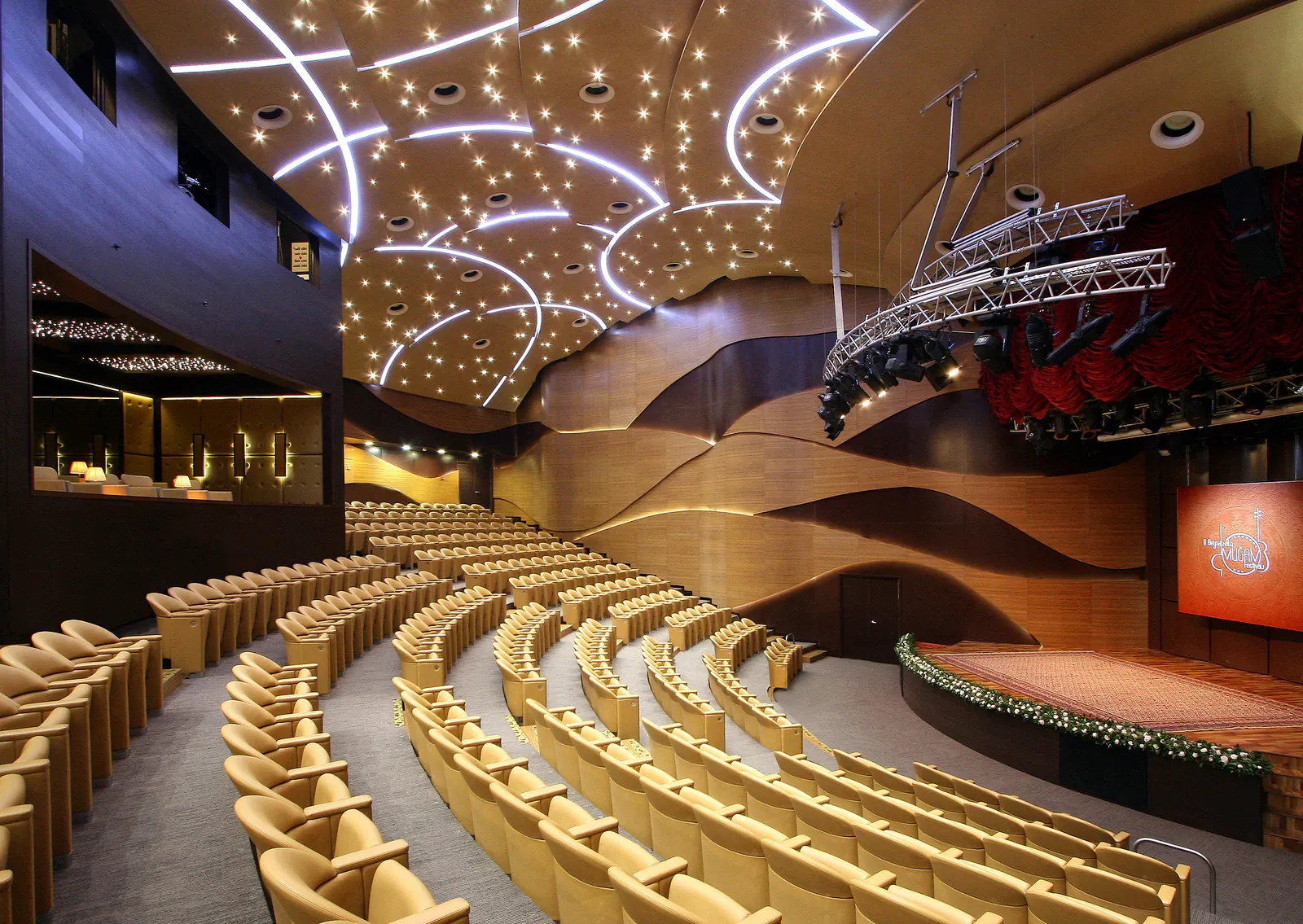
Origins
The tradition predates recorded sources. Its theory and repertoire passed orally from master to pupil, and its older forms are linked to the modal systems of the Persianate world. By the 16th and 17th centuries mugham was cultivated by professional court musicians, and the multi-part suite, the dastgah, had taken shape.
Outside the palace it lived in two settings. The toy, or wedding, called for singers and instrumentalists at celebrations, while the majlis was a private gathering of connoisseurs where a poem and a mode were matched to the mood of the room. Sufi circles and religious dramatic performances kept their own versions.
The instrument that defines the accompaniment was rebuilt late in this period. Around 1870 the Shusha master Sadigjan added strings to the tar, widening its range to the form played today.
Court, majlis and toy, to 1900
Through the 19th century the main centre was the Karabakh town of Shusha, high in the hills and known as a conservatoire of the Caucasus. Singers there trained by apprenticeship, memorising modes, poems and the order of sections from a teacher. Their style, with its wide range and long phrases, became the Karabakh school; Shirvan and Baku developed their own manners of performance.
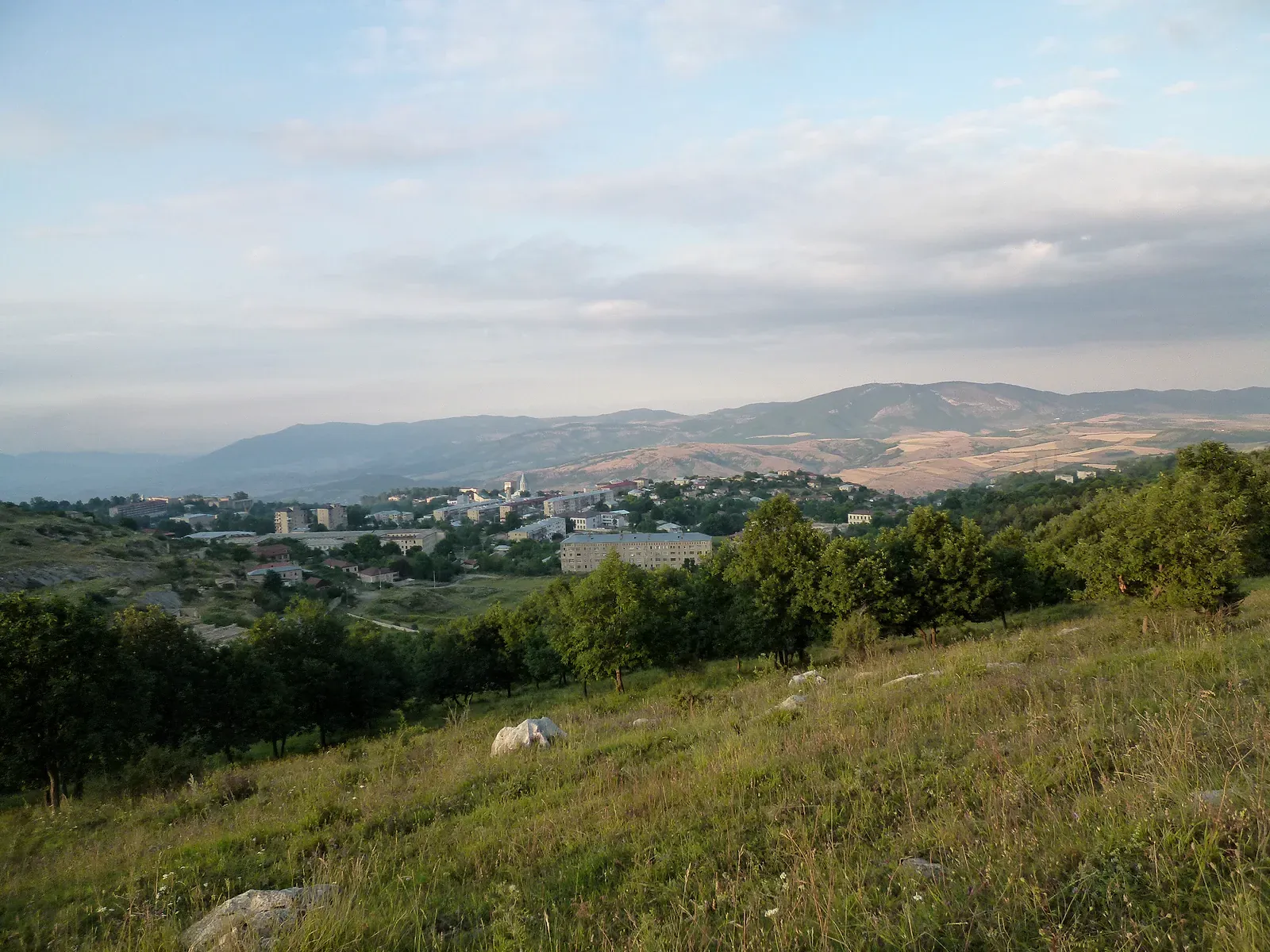
Shusha and Baku, 1901-1920
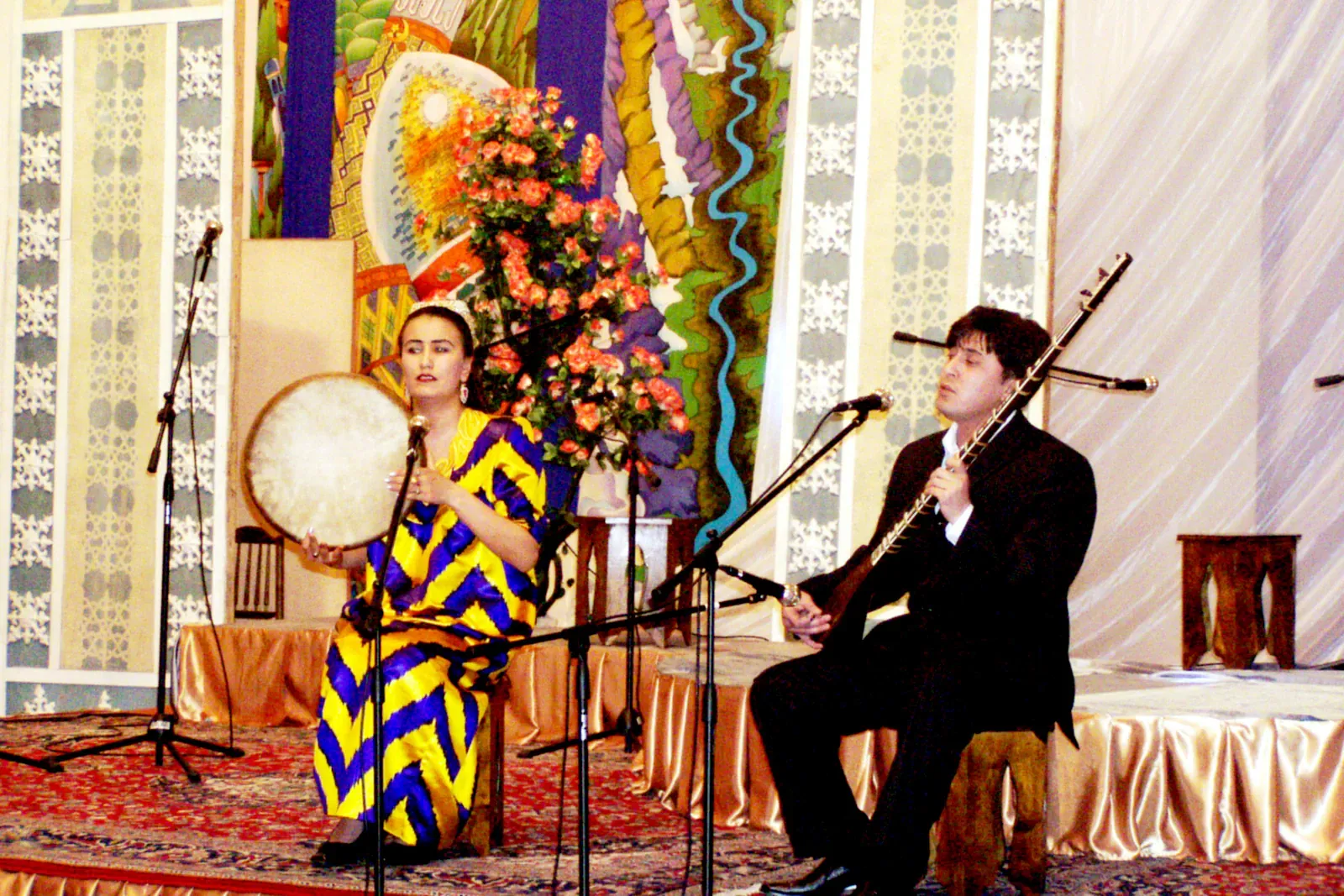
Public concerts changed the audience. In 1901 the singer Jabbar Garyaghdioglu performed in Shusha with the tar player Gurban Pirimov and the kamancha player Sasha Oganezashvili, and similar concerts followed in Baku in 1902. The trio of voice, tar and kamancha, with the singer’s own frame drum, became the standard small ensemble.
Recording followed. The Gramophone Company recorded Azerbaijani singers from 1906, and a field expedition in 1909 captured Jabbar’s discs among many others from the Caucasus and Central Asia. Seyid Shushinski recorded in Kiev in 1913 and gave concerts in Tbilisi. Discs let improvised performances travel and let later generations study them.
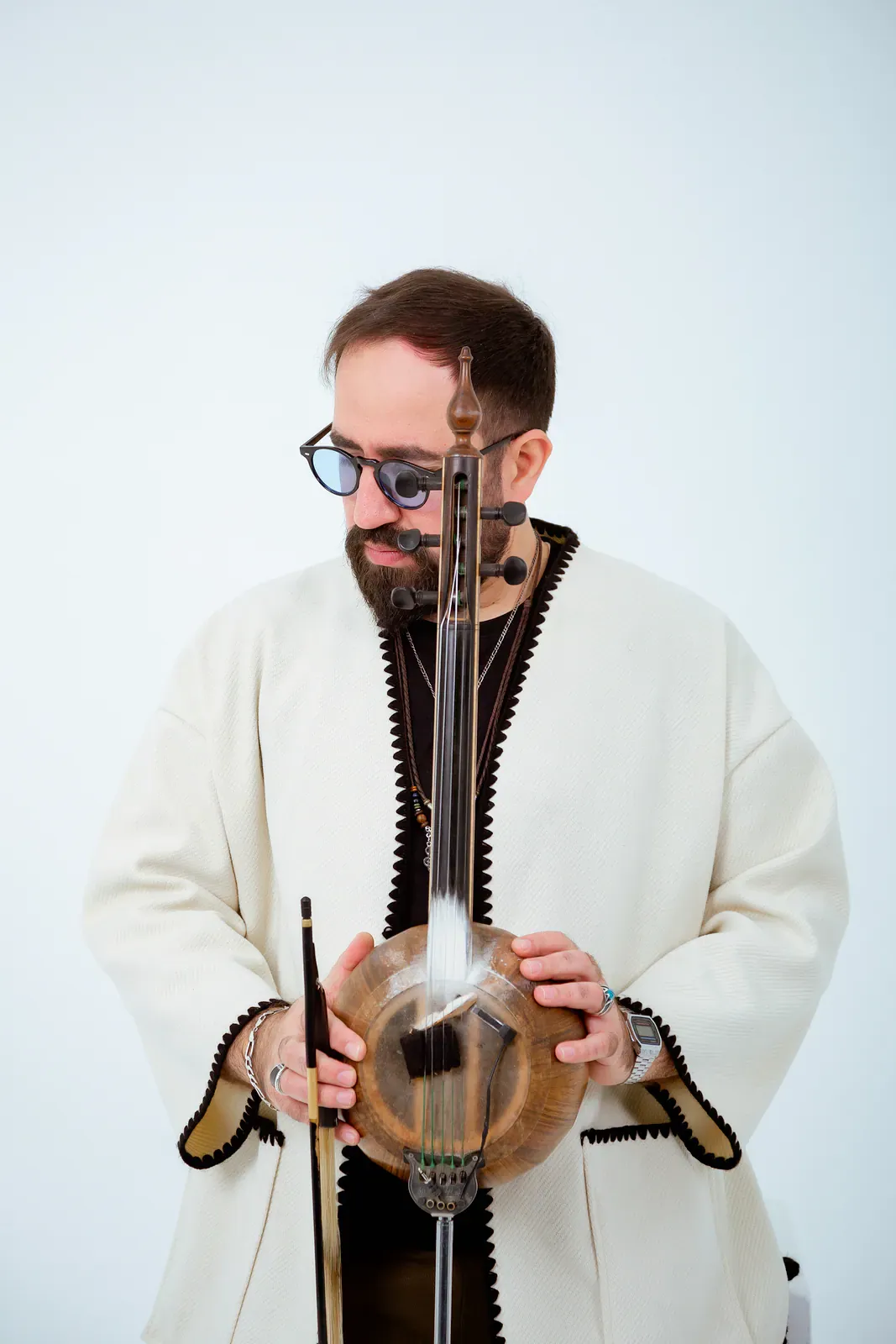
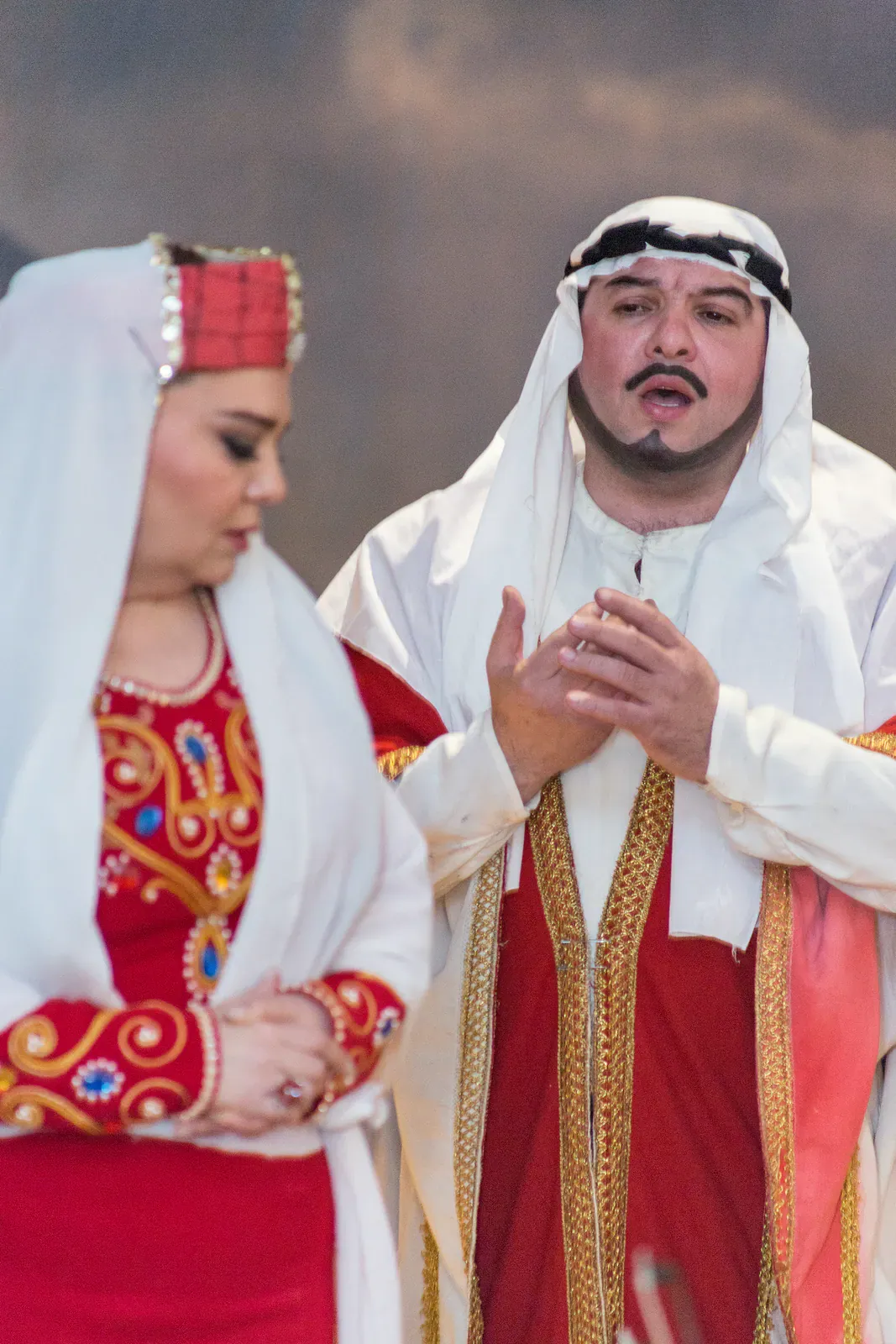
In 1908 Uzeyir Hajibeyov’s Leyli and Majnun opened at the Taghiyev Theatre in Baku. It is described as the first opera of the Muslim East, and its melodies and structure draw on mugham modes. Mugham had moved from the majlis to the opera house.
Conservatory, opera and orchestra, 1921-1990
Under Soviet rule mugham was taught in conservatories and performed in philharmonic halls. Hajibeyov published The Principles of Azerbaijan Folk Music in 1945, setting out the modal system behind mugham.
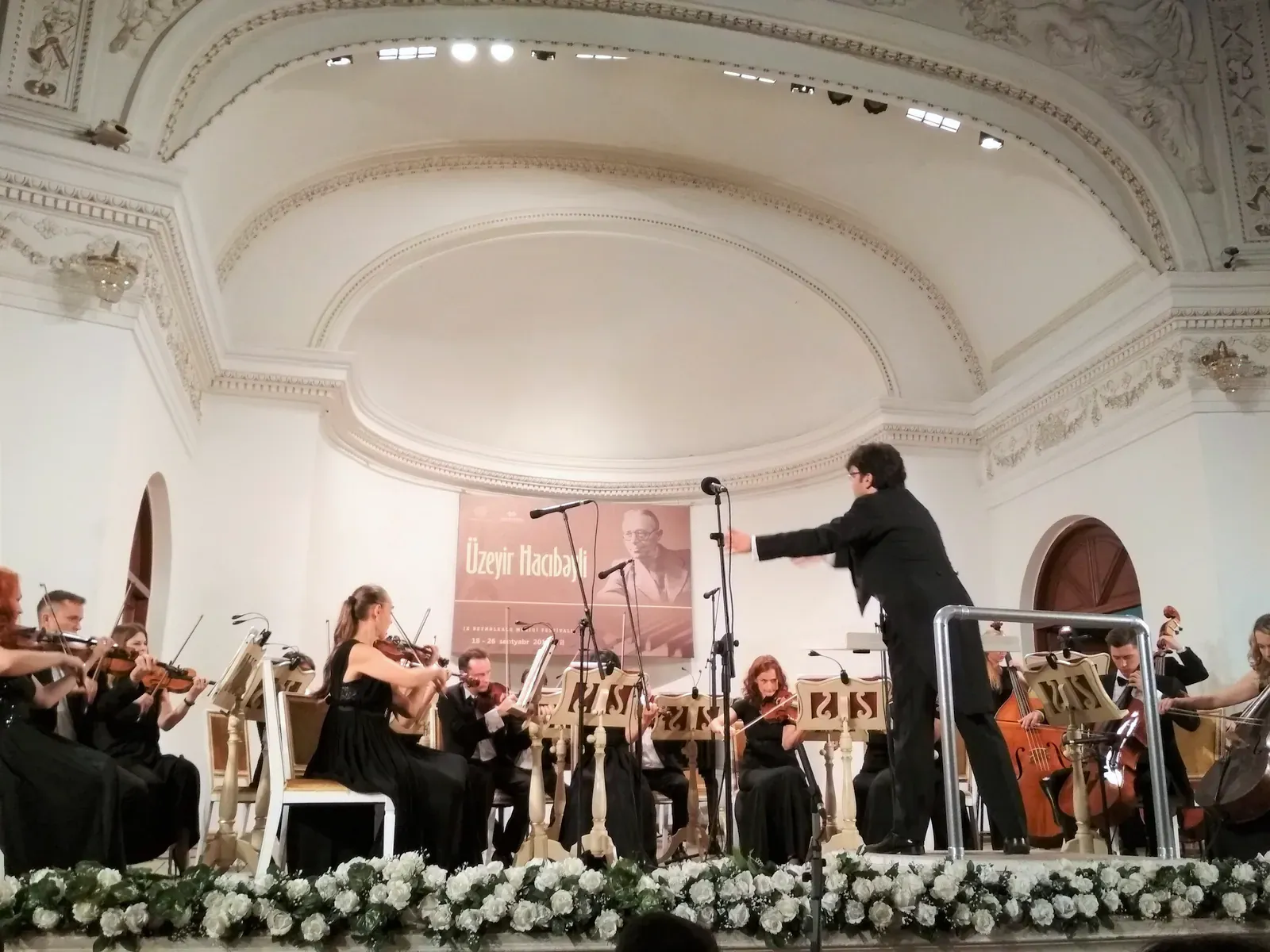
Fikret Amirov scored modes for full orchestra, beginning with Shur in 1946, and opened the genre of symphonic mugham. His Gulustan Bayati-Shiraz of 1968 became the best known example; an American figure skater used it for a programme in 1996. Naxos later issued his orchestral mugham scores.
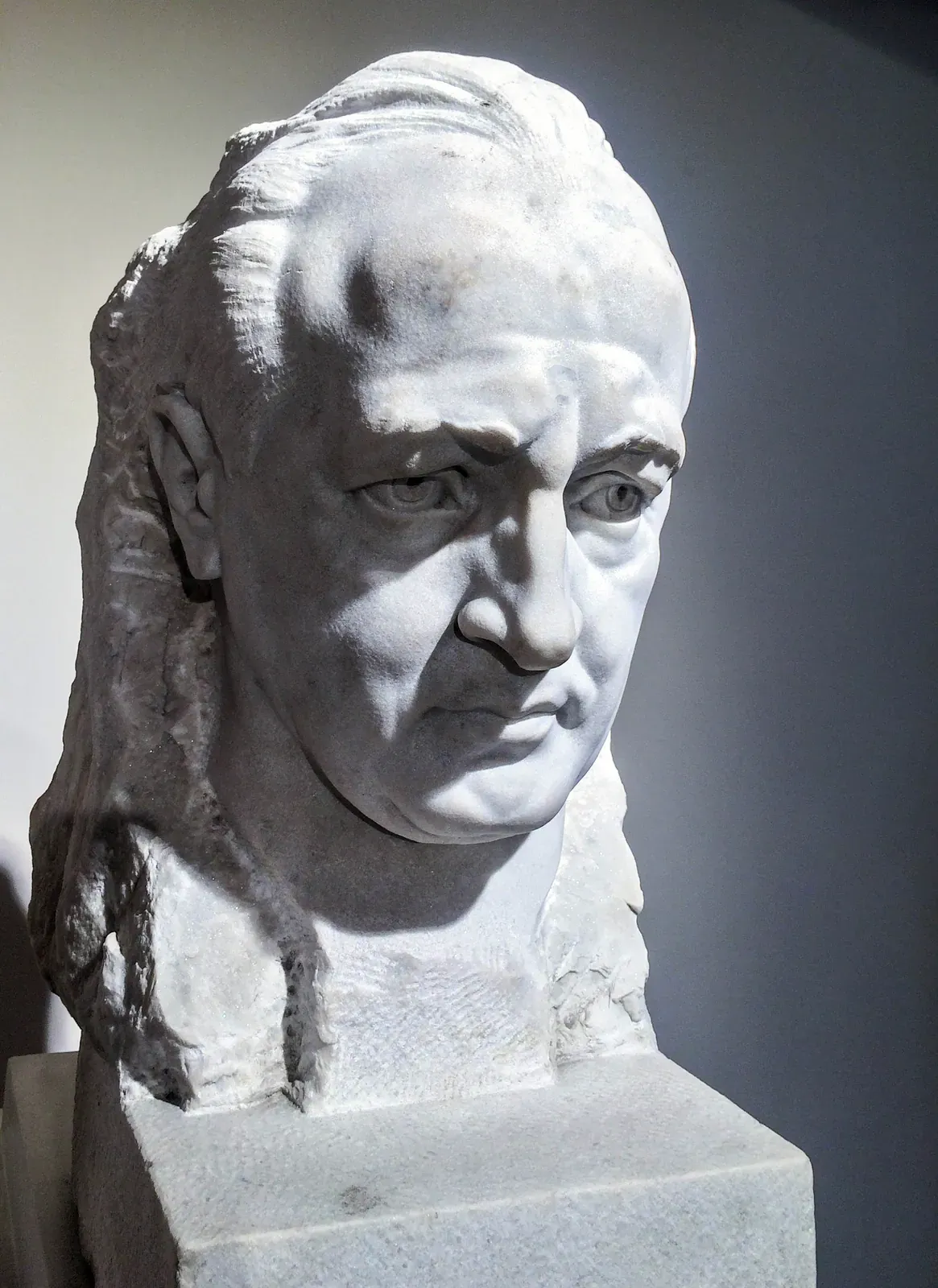
Jazz took up the modes too. In the late 1960s the Baku pianist Vagif Mustafazadeh began improvising on mugham scales, founding the movement called jazz mugham, and formed the Mugam ensemble in 1977. His daughter Aziza Mustafa Zadeh brought the sound to a European major label with her 1991 debut.
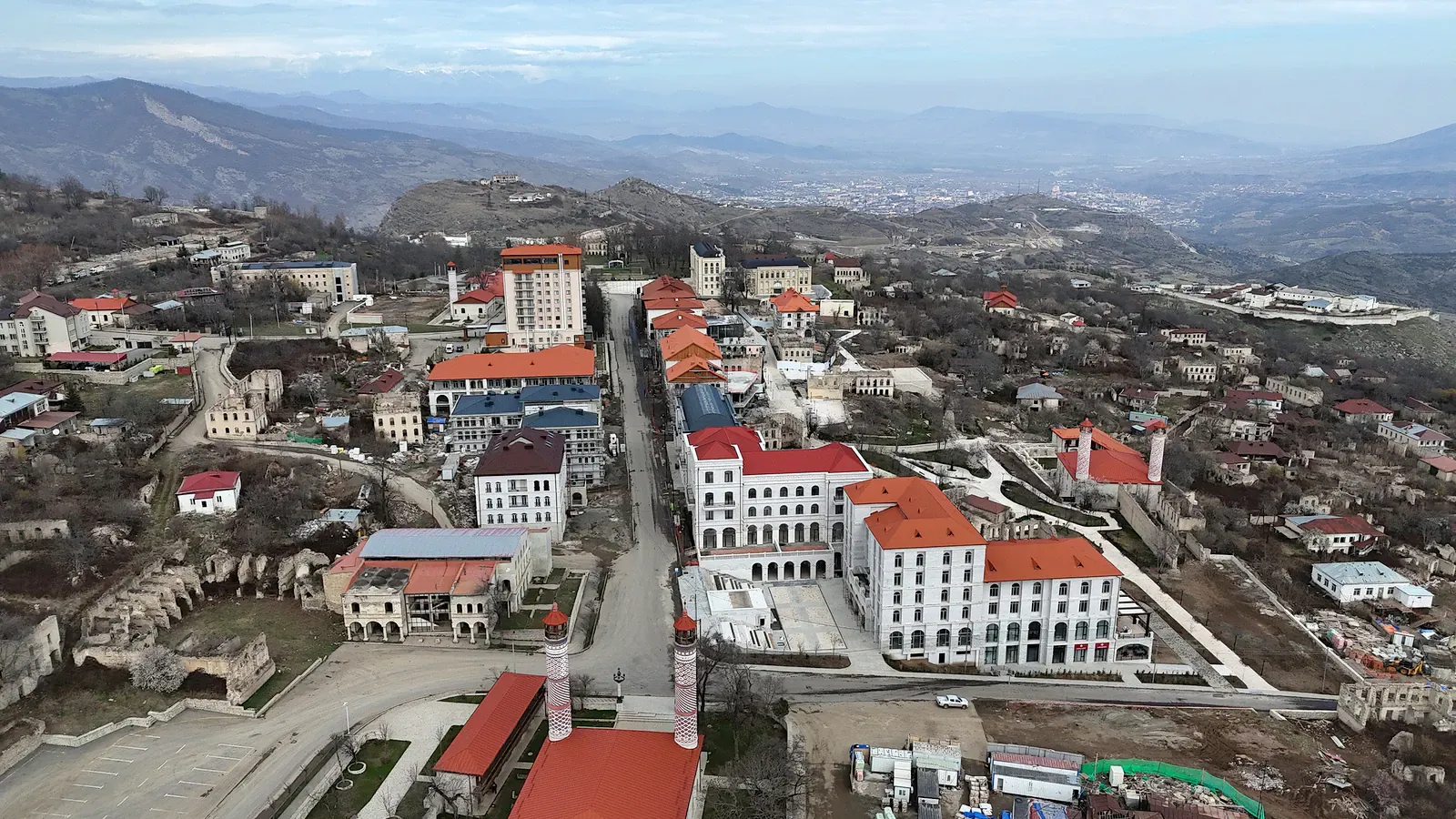
Karabakh remained the centre of vocal training. The Agdam Mugham School opened in 1985, and the Khari Bulbul festival in Shusha began in 1989 for the centenary of Seyid Shushinski. After the capture of Shusha in 1992, the festival and the town’s teaching life stopped.
Heritage and world stage, 1991 to present
After independence, recordings reached Western listeners. A French multi-volume anthology of mugham began appearing in 1990, and Ocora released Alim Qasimov’s improvisation. In 1999 Qasimov won the IMC-UNESCO Music Prize, and Love’s Deep Ocean, made with his daughter Fargana and released in Germany in 1999, introduced his work to world-music audiences. Later releases appeared on Smithsonian Folkways and Buda Musique.
The International Mugham Centre opened in Baku in December 2008, the year of the UNESCO inscription, and the International World of Mugham Festival began in 2009. In 2021 the Khari Bulbul festival returned to Shusha.
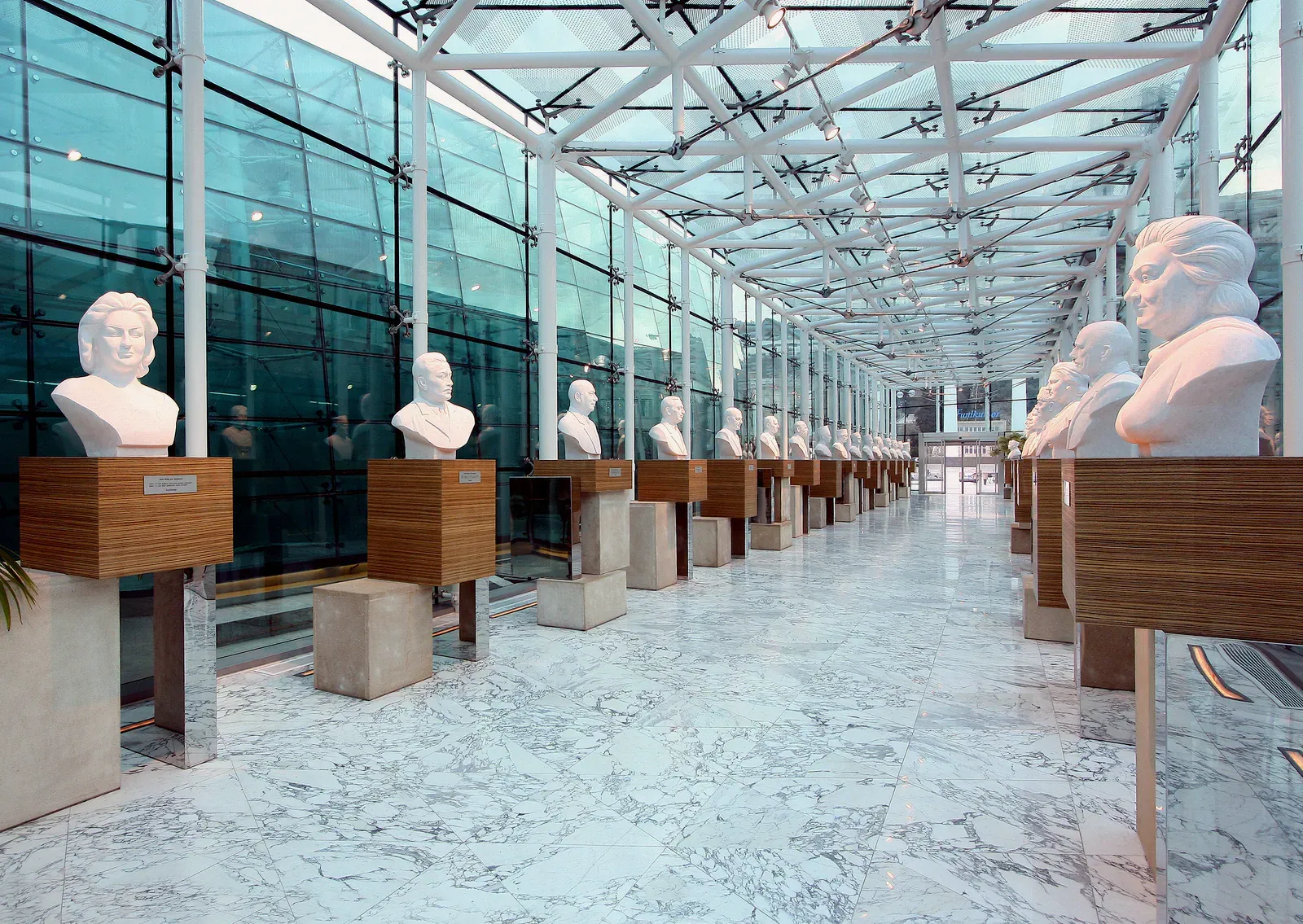
Characteristics
A mugham suite is organised by mode. The seven principal modes are Rast, Shur, Segah, Chahargah, Bayati-Shiraz, Shushtar and Humayun, each with its own emotional colour and set of melodic turns. The singer opens with the daramad, a section that introduces the mode, then moves through free-rhythm improvisation in which verse is sung over sustained and ornamented lines. Metred episodes, the tasnif (a song) and the rang (a dance), interrupt the free passages and give the suite its contrasts. Pitch and intensity rise toward the end.
The texts come from classical poetry, so a performer needs to know the verse as well as the mode. Metred varieties known as zarbi mugham, such as Heyrati and Karabakh Shikastasi, stand outside the free-rhythm modes. For instruments, scales and playing techniques, see the sound sheet on this page.
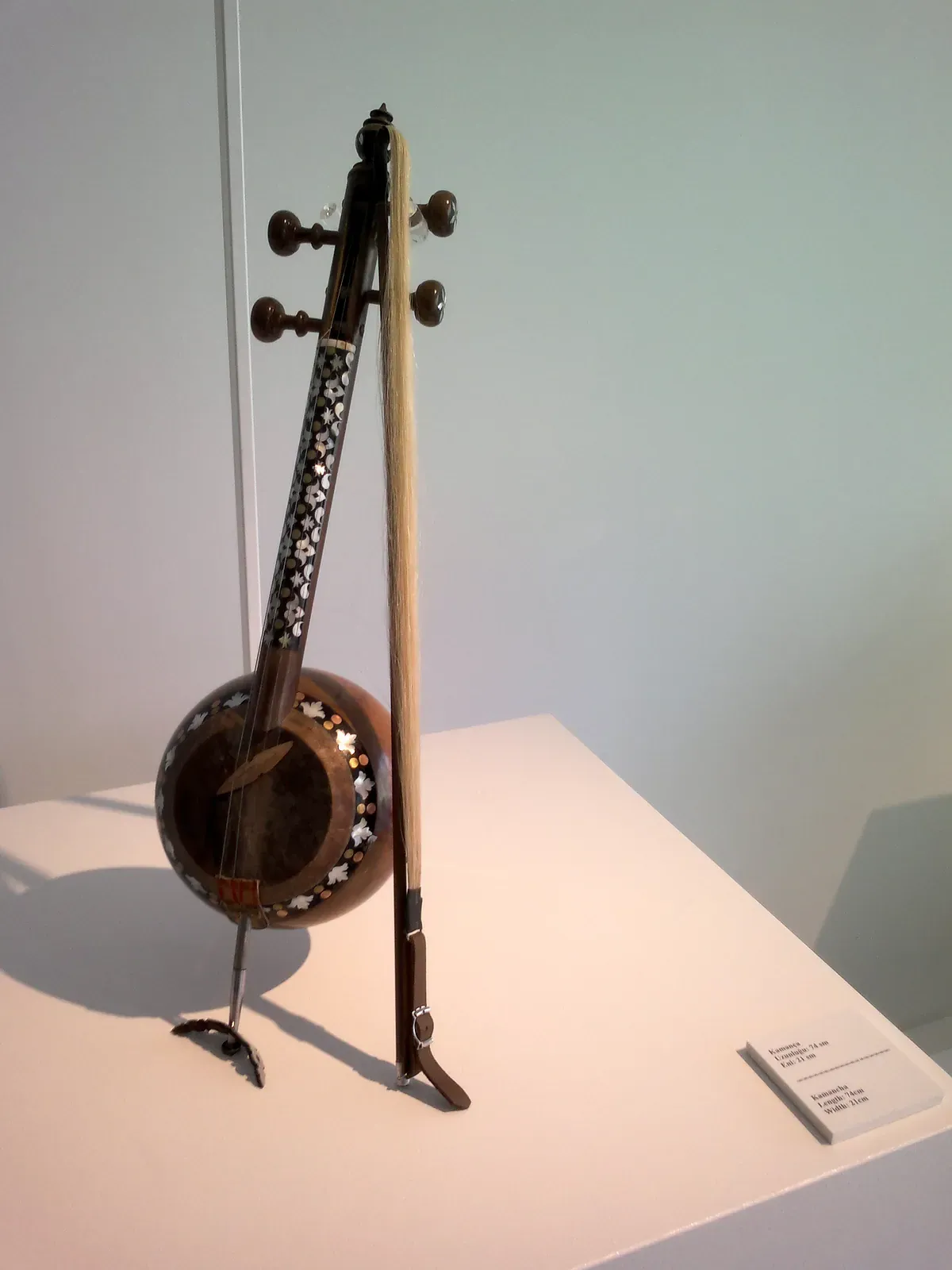
Mainstream success
Mugham has never been pop. Its reach came through opera houses, orchestras, state broadcasting and, since the 1990s, the world-music circuit. Hajibeyov’s opera and Amirov’s orchestral works carried the modes to audiences who never heard a khananda, and the Qasimov recordings of the late 1990s and 2000s gave it a following in Europe and North America. UNESCO status in 2003 and 2008 added institutional backing.
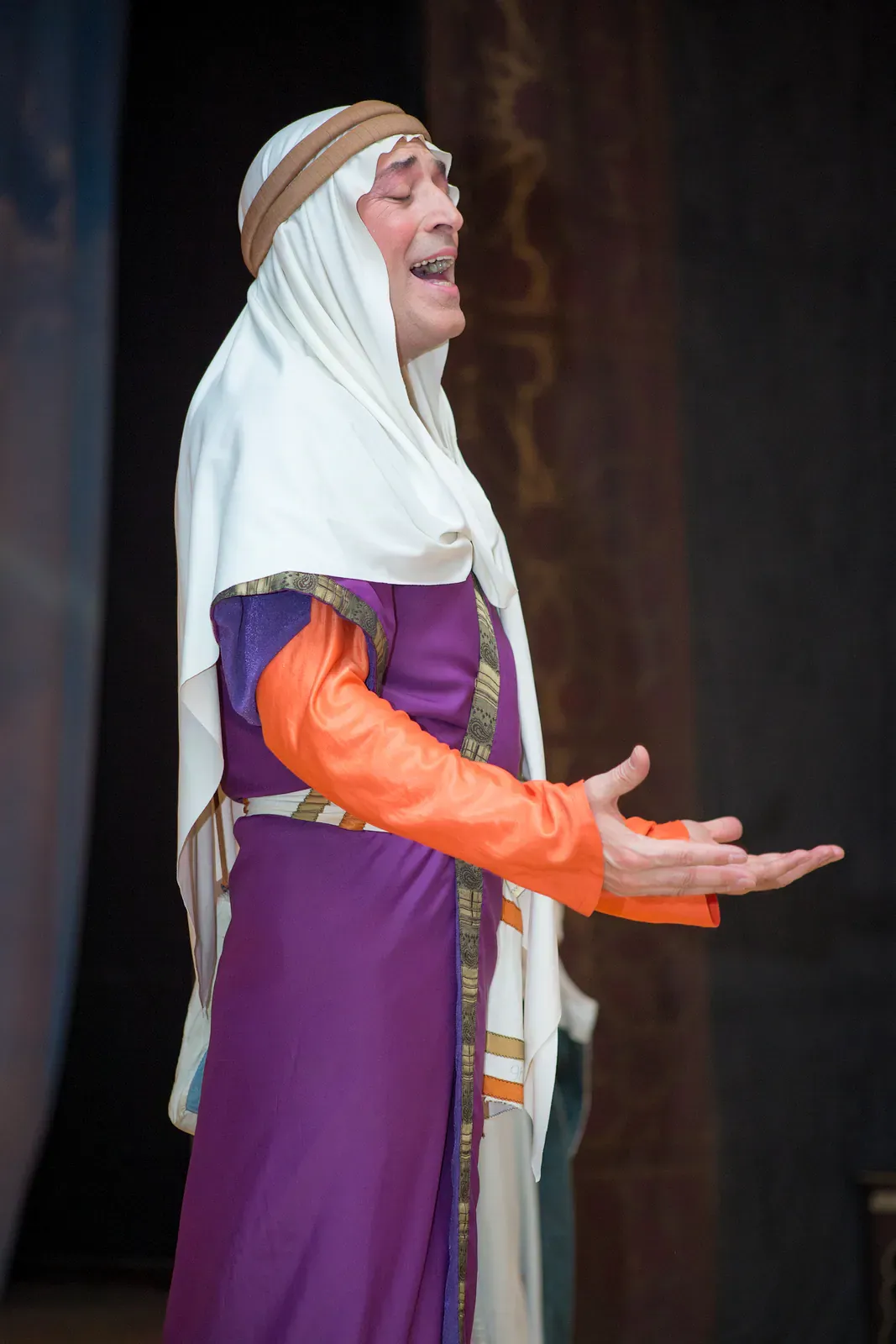
Notable recordings
The 1909 Gramophone Company discs of Jabbar Garyaghdioglu are among the earliest recorded mugham singing. They were reissued in 2002 by Topic Records on a collection of the expedition’s Caucasus and Central Asia recordings, and they show the Karabakh school before the conservatory era.
Qasimov’s Love’s Deep Ocean is the main Western entry point: nine pieces for the voices of father and daughter. Amirov’s Gulustan Bayati-Shiraz shows the same mode in orchestral dress. Vagif Mustafazadeh’s “Waiting for Aziza” won first prize at an international jazz festival in Monaco in 1978.
Culture
Mugham is bound to occasions. Weddings and majlis gatherings still call for it, and a master is expected to read the room, choosing mode and poem to fit. The title khananda is often given to masters from Shusha. Teaching follows the master-pupil model, with conservatory courses alongside it.
The tar appears on Azerbaijan’s one-manat banknote, issued since 2006, and the opening of the International Mugham Centre tied the art to national cultural policy.
Legacy
Mugham supplied the melodic basis of Azerbaijani opera, symphonic writing and jazz. It has relatives rather than offspring: the Uyghur muqam and the other modal suites of the Central Asian and Caucasian family share ideas and suite structures but have separate repertoires and histories. The loss of Karabakh’s teaching centres in the 1990s showed how dependent the tradition is on a few schools, and the return of the Shusha festival is part of an effort to rebuild them.
Misconceptions
One common claim is that mugham is a folk song form. It is a professional art music with a theoretical system, trained performers and a classical poetic repertoire, and the folk tradition of the ashik is a separate art. A second is that it is the same as Iranian or Arab music. It shares ancestors and a modal approach with them, but its seven modes, suite order and Karabakh vocal style are Azerbaijani. A third is that mugham is entirely improvised. Performers improvise within a mode and a set order of sections, drawing on a memorised stock of melodic phrases.
Frequently asked questions
What is mugham?
Mugham is the modal art music of Azerbaijan. A singer and a small group of players improvise suites on one of seven principal modes, setting classical poetry to long, ornamented melodies.
What instruments are used in mugham?
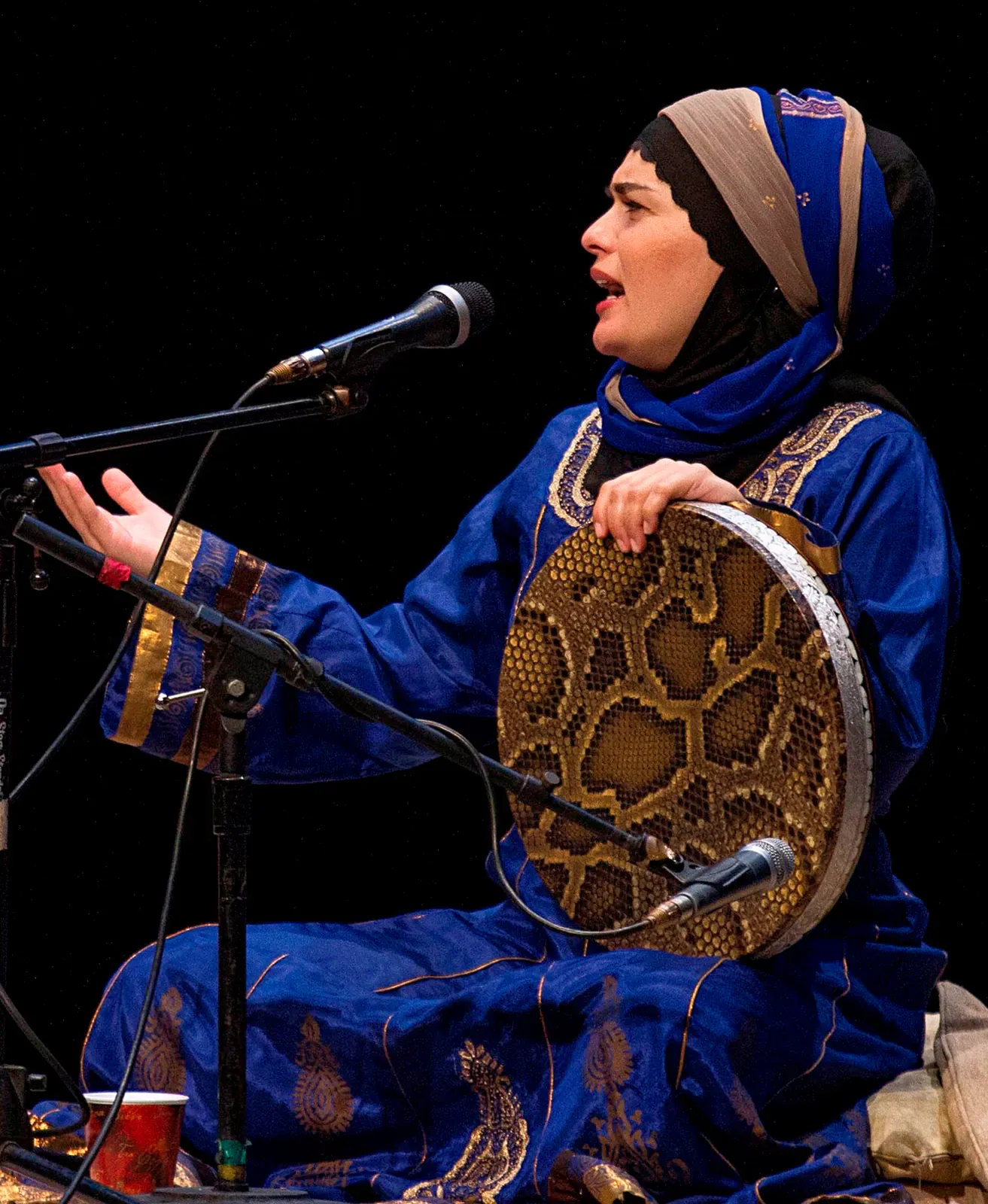
The standard group is a singer who plays the gaval frame drum, with a tar and a kamancha. Larger ensembles add the balaban, qanun or oud.
Who are the most famous mugham singers?
Jabbar Garyaghdioglu and Seyid Shushinski of the early recorded era, Khan Shushinski and Bulbul in the Soviet period, and Alim Qasimov and his daughter Fargana Qasimova today.
Is mugham recognised by UNESCO?
Yes. UNESCO proclaimed the Azerbaijani mugham a masterpiece of intangible heritage in 2003 and inscribed it on the Representative List in 2008.
Sound
Sound sheet
Anatomy of a track
| # | Part |
|---|---|
| 1 | Daramad (opening, mode introduced by the singer or tar) |
| 2 | Improvised vocal sections set to classical poetry |
| 3 | Tasnif (metred song episode) |
| 4 | Rang (metred dance episode) |
| 5 | Return to rising pitch and intensity, ending the suite |
Signature sounds
- Singer with gaval frame drum, tar and kamancha trio
- Improvisation inside one of seven principal modes
- Classical Azerbaijani poetry as text
- Free-rhythm sections alternating with metred tasnif and rang
- Rising intensity and pitch across the suite
Drums and percussion
- Gaval
Techniques
- Improvisation within a mode
- Free-rhythm recitative
- Tasnif
- Rang
- Rising intensity
- Singer plays the gaval
Keys and modes
Rast. One of the seven principal mugham modes.
Shur. One of the seven principal mugham modes.
Segah. One of the seven principal modes, especially common in performance.
Shushtar. One of the seven principal mugham modes.
Bayati-Shiraz. One of the seven principal mugham modes.
Chahargah and Humayun. The remaining two of the seven principal modes.
Tuning
The Azerbaijani tar has 11 strings and the kamancha has four.
Vocals
A solo khananda sings classical and medieval Azerbaijani poetry in improvised, ornamented lines, accompanied by tar and kamancha.
Scenes
Where it happened
Where and when the sound lived: one bar per city on a shared timeline.
Asia
Europe
Active scenes
Peak 5, 1999-2025
Called a conservatoire of the Caucasus, home of the Karabakh school and birthplace of Jabbar, Seyid, Khan and Bulbul.
The capital hosts the Philharmonic, the opera, the conservatory and since 2008 the International Mugham Centre.
Seyid Shushinski gave concerts here for years, and Jabbar won the 1934 Transcaucasian arts Olympics here.
Alim Qasimov's first CD, a volume of an anthology of Azerbaijani mugham, was recorded here in 1989 and published in 1990.
Network Medien released Love's Deep Ocean here, opening the German world-music market to mugham.
Venues and places
Shusha, 1989 to today. Started to mark Seyid Shushinski's centenary, held yearly until 1992 and resumed in 2021.
Baku, 1908 to today. Premiere house of Hajibeyov's Leyli and Majnun.
Baku, 2008 to today. A 350-seat hall with a recording studio and instrument collection on the Baku boulevard.
Baku, 2009 to today. A festival that brings Azerbaijani and foreign performers together.
Culture
Culture markers
- Toy and majlis
Mugham is performed at weddings and at private gatherings of connoisseurs.
Ritual - Sufi and religious drama contexts
Mugham was also cultivated in Sufi orders and religious dramatic performances.
Ritual - Rang
Dance episodes in a mugham suite give a fixed rhythm after improvised sections.
Dance - Khananda
The name for the solo mugham singer, a title often given to masters from Shusha.
Slang - The tar on the banknote
The tar appears on the one-manat banknote, issued since 2006.
Artwork
Media
Key media
- 1945Principles of Azerbaijan Folk Music
by Uzeyir Hajibeyov. The founding theory text of the modern mugham system.
Book - 1990Anthologie du Mugam d'Azerbaidjan
by Various. A multi-volume French anthology of Azerbaijani mugham, the first volume with Alim Qasimov, issued by Maison des Cultures du Monde.
Compilation - 2002Before the Revolution: A 1909 Recording Expedition in the Caucasus and Central Asia
by Various. Topic Records and the British Library reissue the Gramophone Company field recordings, including Jabbar Karyagdy.
Compilation - 2007Music of Central Asia, Volume 6: Spiritual Music of Azerbaijan
by Alim and Fargana Qasimov. A Folkways release that carried mugham into the Silk Road catalogue.
Compilation
Glossary
Terms on this page
The opening section that introduces a mugham mode.
The full multi-part mugham suite built on one of the seven principal modes.
The solo singer in mugham, who often plays the gaval frame drum.
A modal, largely improvised art music that sets classical poetry to sung and played suites.
A rhythmic dance episode inside a mugham suite.
A metered song episode placed between free-rhythm sections.
A metred variety such as Heyrati, Arazbari or Karabakh Shikastasi, set against the free-rhythm main modes.
Central Asian and Caucasian family