Uyghur muqam
Uyghur muqam is the classical suite tradition of Xinjiang: twelve modal cycles of narrative songs and dance pieces, recorded in the 1950s and listed by UNESCO.
Xinjiang, around 1526
Central Asian and Caucasian family
Born
around 1526
Xinjiang
Subgenres
18
Documented branches
Links
23
Genres it drew on or shaped
Tempo
95-130 BPMLineage
Family tree
Grew out of
Influenced by
Xinjiang
Uyghur muqam
Led to (18)
Timeline
Era by era
From the first sparks to today. Select a dot to read the story behind it.
- Court and oasis traditions
1526 to 1950
- Recorded canon
1951 to 1965
- Disruption and revival
1966 to 1999
- Heritage listing and global stage
2000 to today
Eras
Moments
- 1 Court and oasis traditions, 1526 to 1950
- 2 Recorded canon, 1951 to 1965
- 3 Disruption and revival, 1966 to 1999
- 4 Heritage listing and global stage, 2000 to today
around 1526
Court and oasis traditions
Oral suites kept by oasis town masters; later tradition credits Amannisa Khan of Yarkand with collecting the Twelve Muqam in the 16th century.
- 1526Amannisa Khan bornLater sources credit her with collecting the Twelve Muqam at the Yarkand court; the only named early source dates from 1854.
- 1560Death of Amannisa KhanShe died in childbirth and was buried near Yarkent.
- 1854History of Musicians by Mu'jizThe sole named historical source on Amannisa Khan; a Uyghur translation appeared in 1982.
1951
Recorded canon
Turdi Akhun and Omar Akhun recorded the cycles in 1951 and 1954; Wan Tongshu transcribed them and the result was published in 1960.
- 1951Wan Tongshu records Turdi AkhunA Beijing musician was sent to preserve the muqam; masters were invited to Urumqi for recording.
- 1954Second Urumqi recording sessionsThe full Twelve Muqam was taped with Turdi Akhun and Omar Akhun.
- 1956Death of Turdi Akhun
- 1959Radio Ensemble founded in UrumqiSingers such as Abliz Shakir joined the new state ensemble.
- 1960Twelve Muqam transcriptions publishedWan Tongshu's transcriptions of the 1950s recordings became the core of the official canon.
around 1966
Disruption and revival
Canon work stopped in the Cultural Revolution, and collecting, recording and transcribing resumed afterwards.
- 1966Cultural Revolution halts canon workUyghurs were forbidden to sing the muqam.
- 1972Abliz Shakir rehabilitatedHe went on to rediscover muqam sections and a cycle called Ishret Engiz.
- 1990Ocora releases Turkestan chinois, XinjiangSabine Trebinjac and Jean During produced a three-volume CD set of muqam, Dolan and song repertoire.
2000
Heritage listing and global stage
UNESCO proclaimed the art in 2005 and inscribed it in 2008, while tours, CDs and Wu Man collaborations reached foreign audiences.
- 2000Globe Style CD from a London tourThe Uyghur Musicians from Xinjiang were recorded in London on an Asian Music Circuit tour.
- 2004Abdulla Majnun series Classical Traditions of the Uyghurs
- 2005UNESCO proclaims the Uyghur Muqam of XinjiangNamed a Masterpiece of the Oral and Intangible Heritage of Humanity in November 2005.
- 2008UNESCO Representative List inscriptionThe same year Rachel Harris published her study of how the Twelve Muqam canon was made.
- 2012Borderlands released on Smithsonian FolkwaysWu Man joined Sanubar Tursun, Hesenjan Tursun and Abdulla Majnun.
- 2013Sanubar Tursun releases ArzuHer first solo album fully available in the Western market, on Felmay.
- 2017Dutar singer Abdurehim Heyit detainedReportedly held in March 2017 after performing a song of ancestral respect; later reports gave conflicting accounts.
- 2018Sanubar Tursun European dates cancelledHer French shows were cancelled in November 2018 after she reportedly could not leave China.
- 2025Death of Abliz ShakirThe singer and muqam researcher lived 1939 to 2025.
Listening path
Anthems
The records that built the sound, grouped by the part they played. Thumbnails come from YouTube; the player loads only when you press play.
- 01
The Uyghur Musicians from Xinjiang, 2000
Rak is the first cycle of the canon, here in its Ili form as an easy way into the suite structure.
Start hereOrigin - 02
The Uyghur Musicians from Xinjiang, 2000
A second Ili cycle that shows the shift from slow vocal sections toward dance rhythm.
Anthem - 03
The Uyghur Musicians from Xinjiang, 2000
The Turpan version of Nawa, a regional variant outside the official Kashgar-based set.
Anthem - 04
Abdulla Majnun, 2004
A Khotan-trained master sings a classical section from the Twelve Muqam.
Anthem - 05
Abdulla Majnun, 2004
Majnun's Chahargah mashrap shows the dance finale of a full muqam.
Start hereAnthem - 06
Sanubar Tursun, 2013 · Felmay
A lyrical song-led track from the leading modern female voice of the tradition.
Start hereAnthem - 07
Sanubar Tursun, 2013 · Felmay
Dutar-led song from Arzu that shows how muqam style shapes newer repertoire.
Anthem - 08
Wu Man, 2012 · Smithsonian Folkways
Pipa meets Uyghur musicians on a Chebbiyat theme, the tradition's clearest cross-cultural recording.
Crossover - 09
Wu Man, 2012 · Smithsonian Folkways
A festive dance piece reworked for the Borderlands ensemble.
Crossover
Facts
| Family | Central Asian and Caucasian |
| Origin | Xinjiang, China |
| Emerged | Roots in Han/Tang-era melody, reshaped by Amannisa Khan, 16th century |
| Status | Active |
| Tempo | 95 to 130 BPM |
| Meter | free opening, then metered cycles |
| Subgenres | 18 |
Uyghur muqam is the classical music of the Uyghur people of Xinjiang, in northwest China: a set of twelve modal suites, the Twelve Muqam, each mixing sung narrative, instrumental pieces and a lively dance finale.
It grew out of oasis towns along the Silk Road and was fixed as a written canon in the 1950s. UNESCO recognised it in 2005 and 2008.
Origins
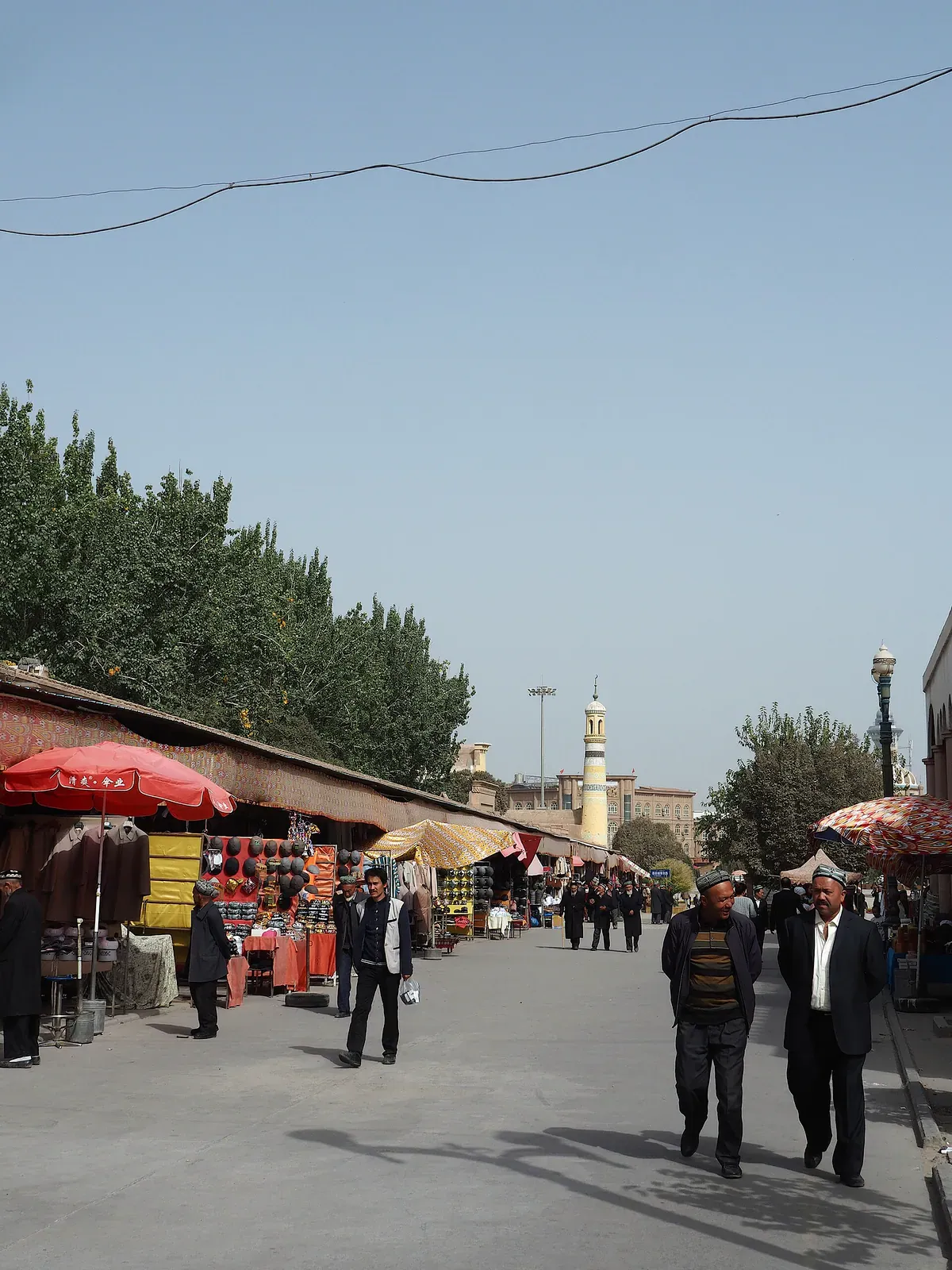
Nobody can date the beginning exactly. The cycles were carried by memory in the oasis towns around the Taklamakan desert, such as Kashgar, Yarkand, Hotan and Turpan, in the centuries when caravans linked China, Persia and the Mediterranean. The musical grammar has relatives in Arabic maqam, which fits that trade geography.
Later tradition names a woman as the architect of the canon: Amannisa Khan, born around 1526 and credited with collecting and reorganising the Twelve Muqam at the Yarkand court. She died in childbirth in 1560. The claim is hard to test, because the only named early source is a musicians’ history from 1854. Her story still matters, because Uyghur audiences treat her as the mother of the tradition, and a 1983 play and a mausoleum in her birthplace keep her memory in public view.
Court and oasis traditions, up to 1950
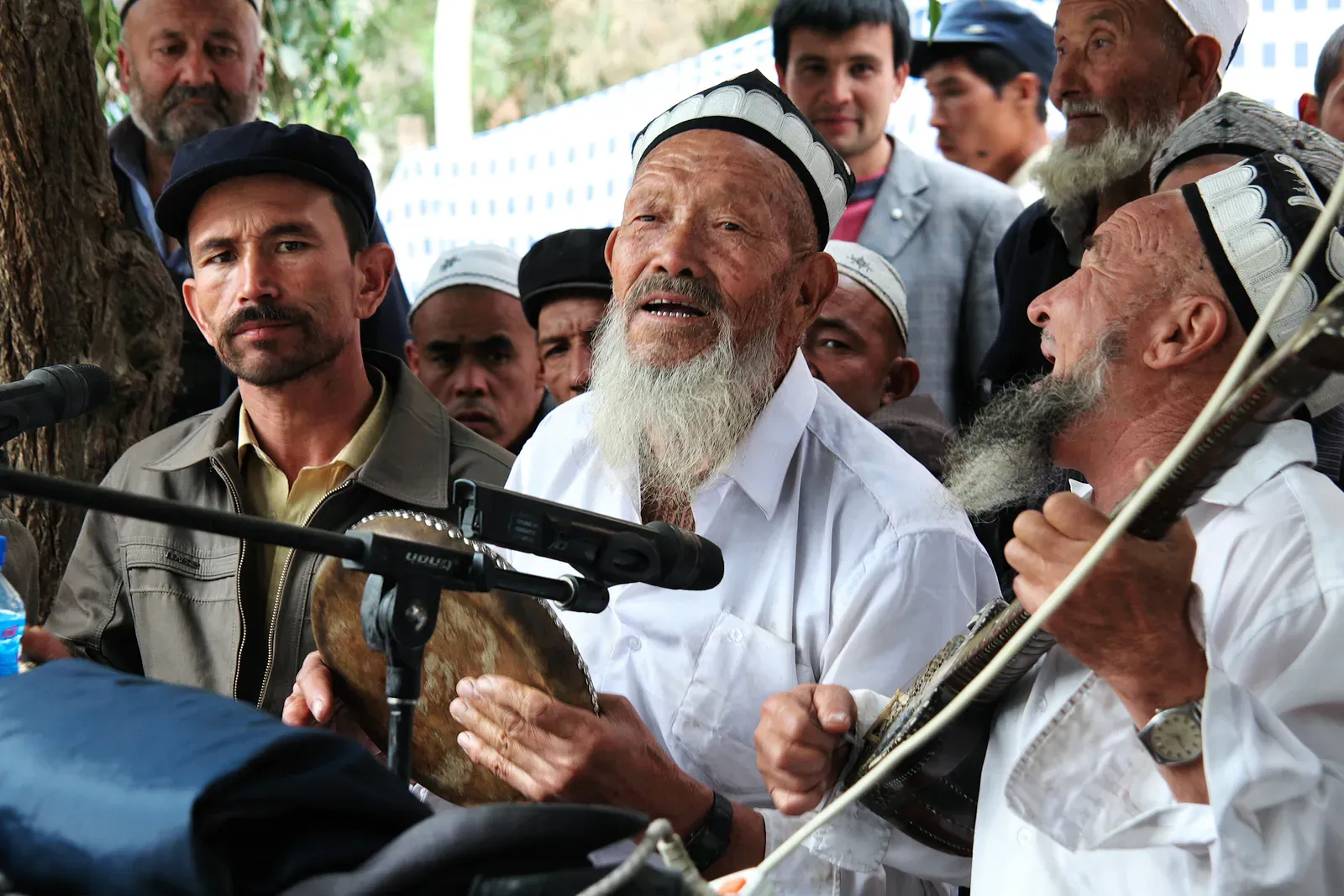
Before the recordings, a muqam lived in performers, not on paper. Masters in each oasis town taught their versions by ear, so Kashgar, Ili, Turpan, Hotan and Hami each kept distinct variants. The natural home of the music was the meshrep, a community evening of music, poetry and games, and the final dance song of each cycle has roots in Sufi gathering traditions.
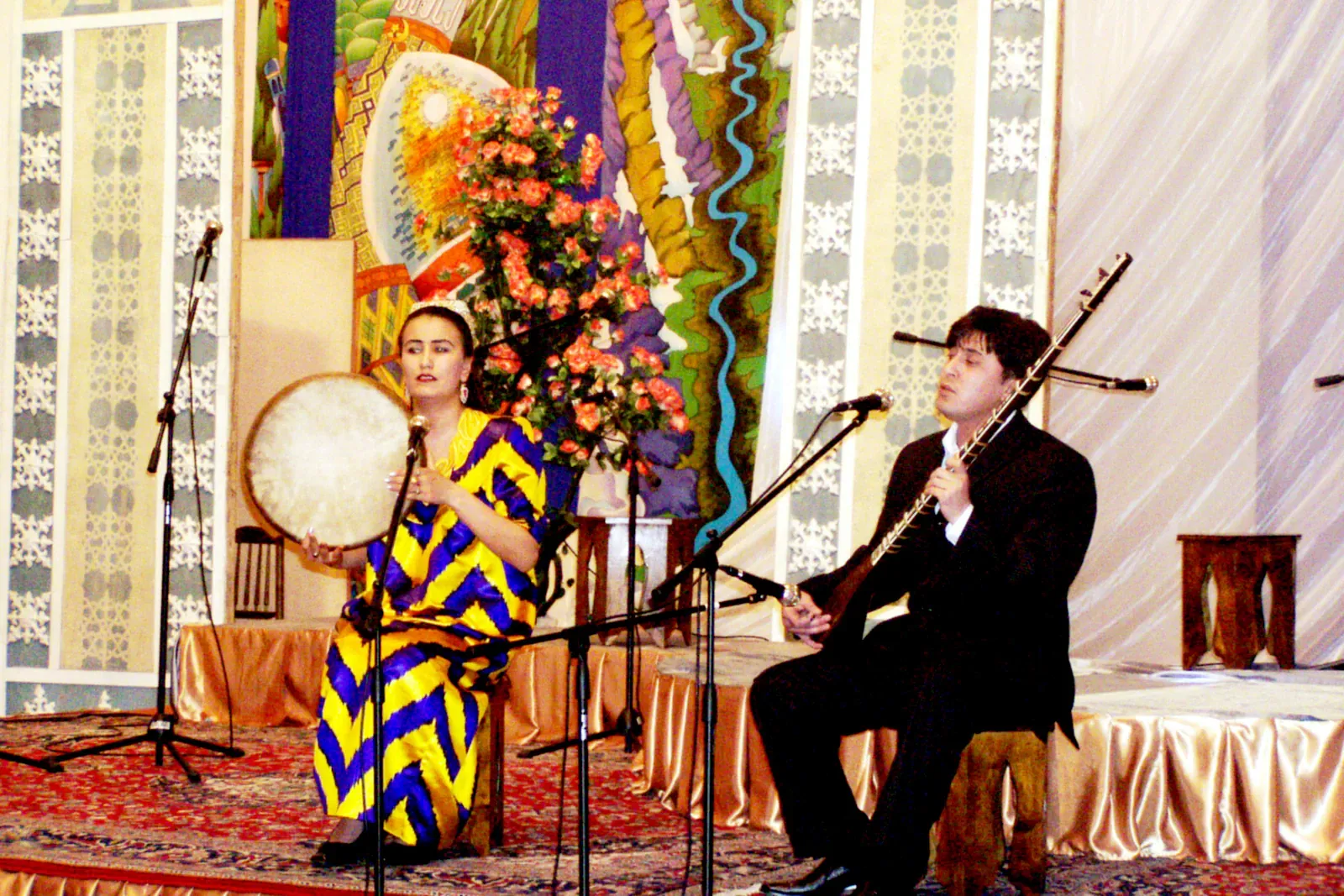
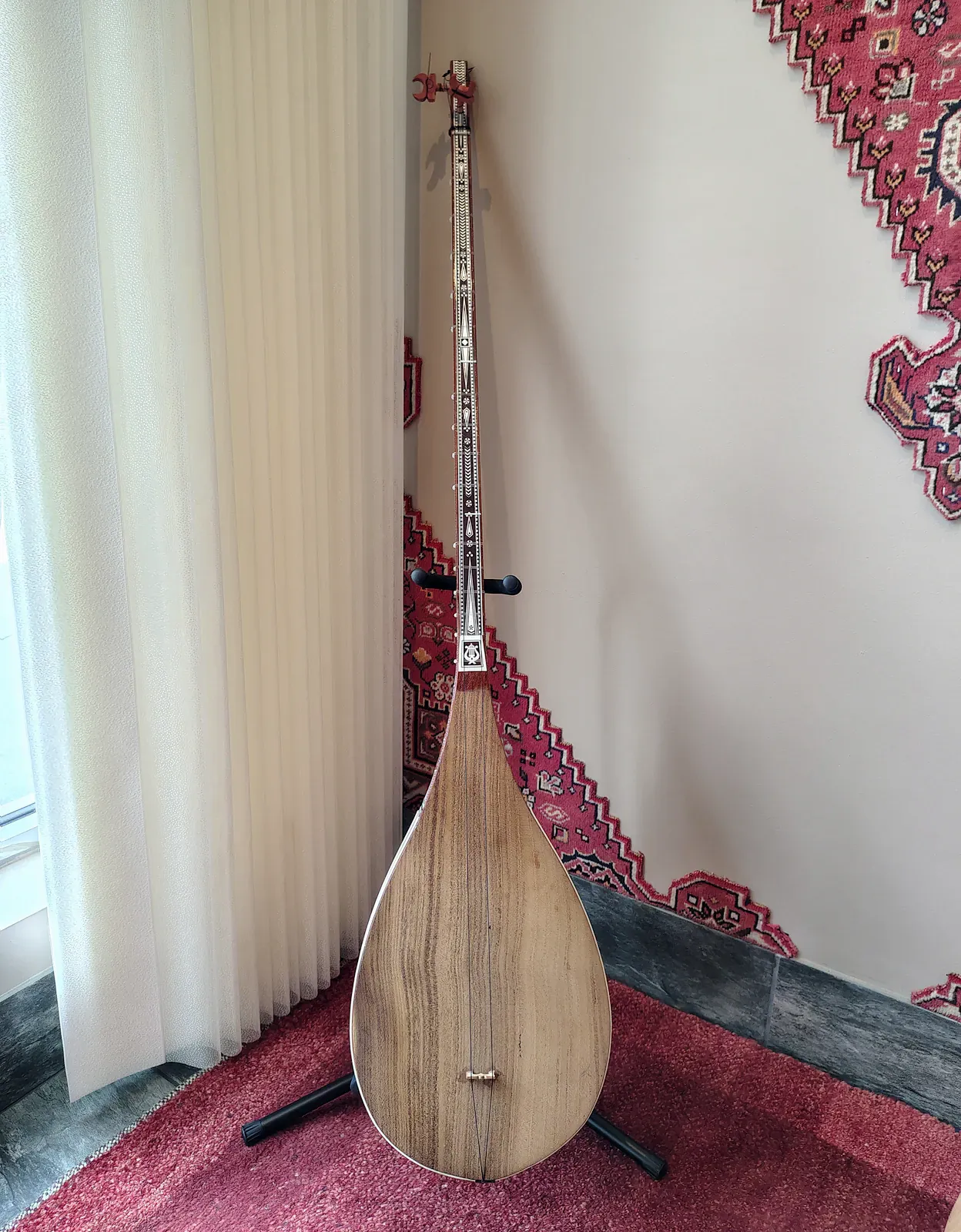
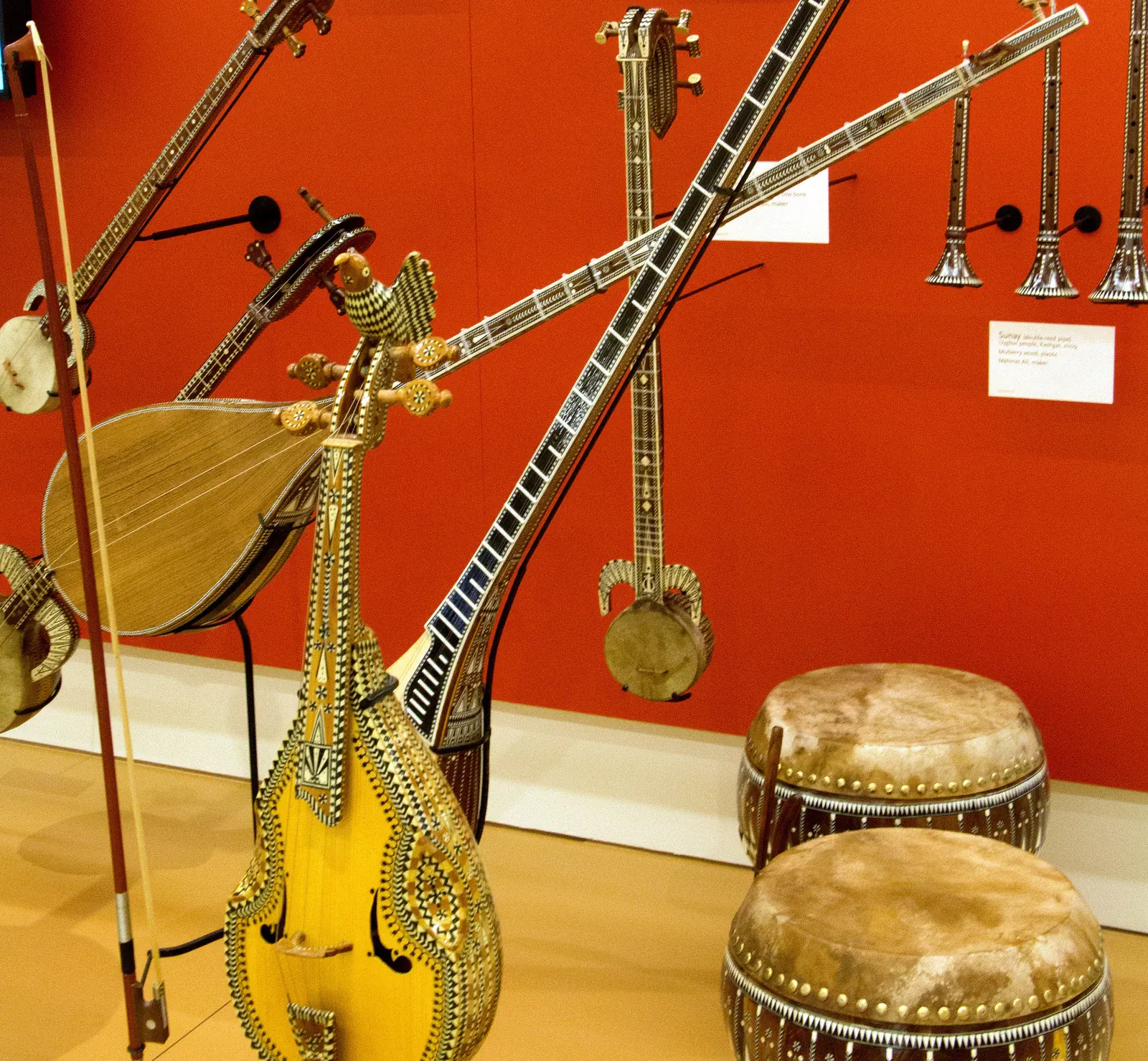
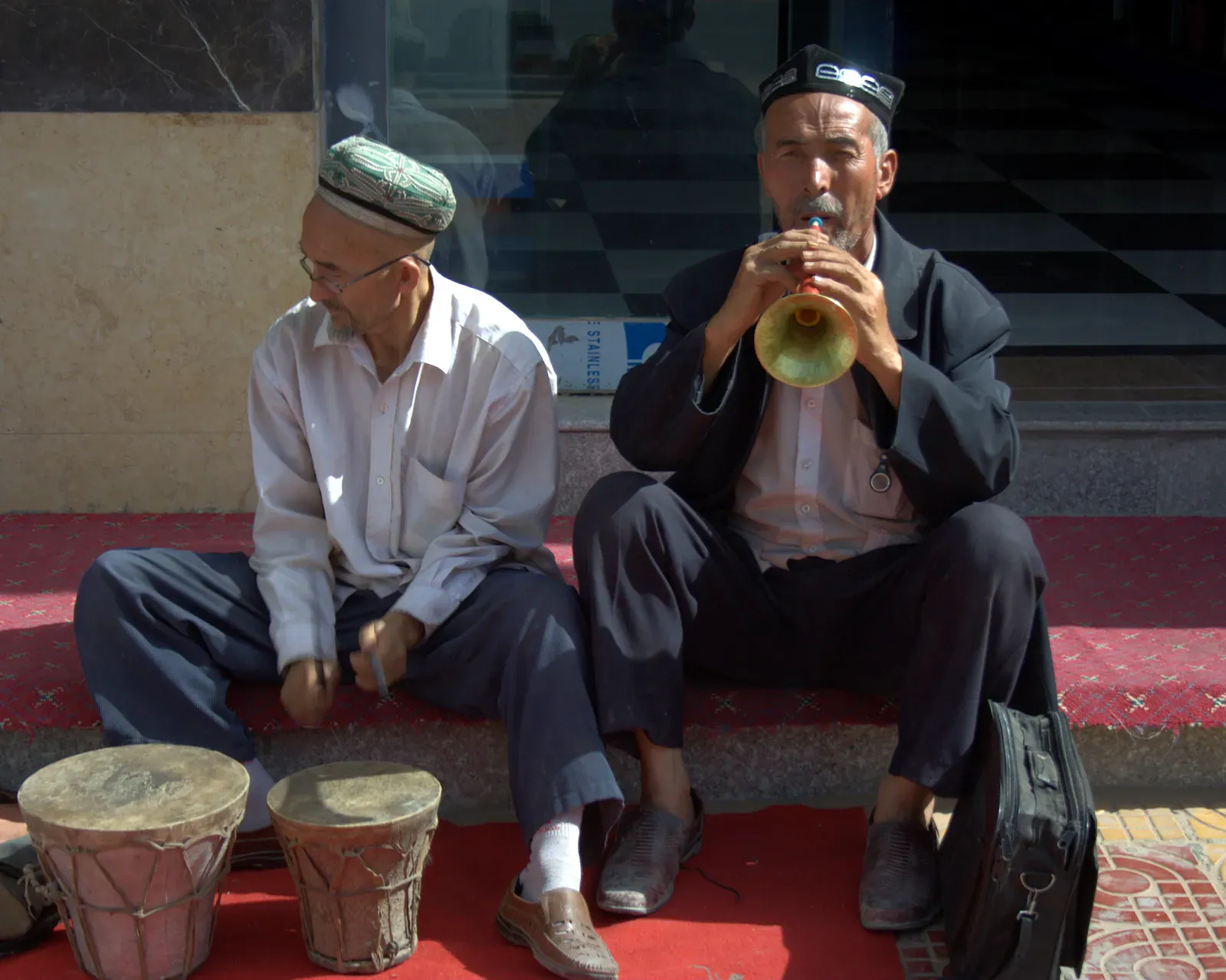
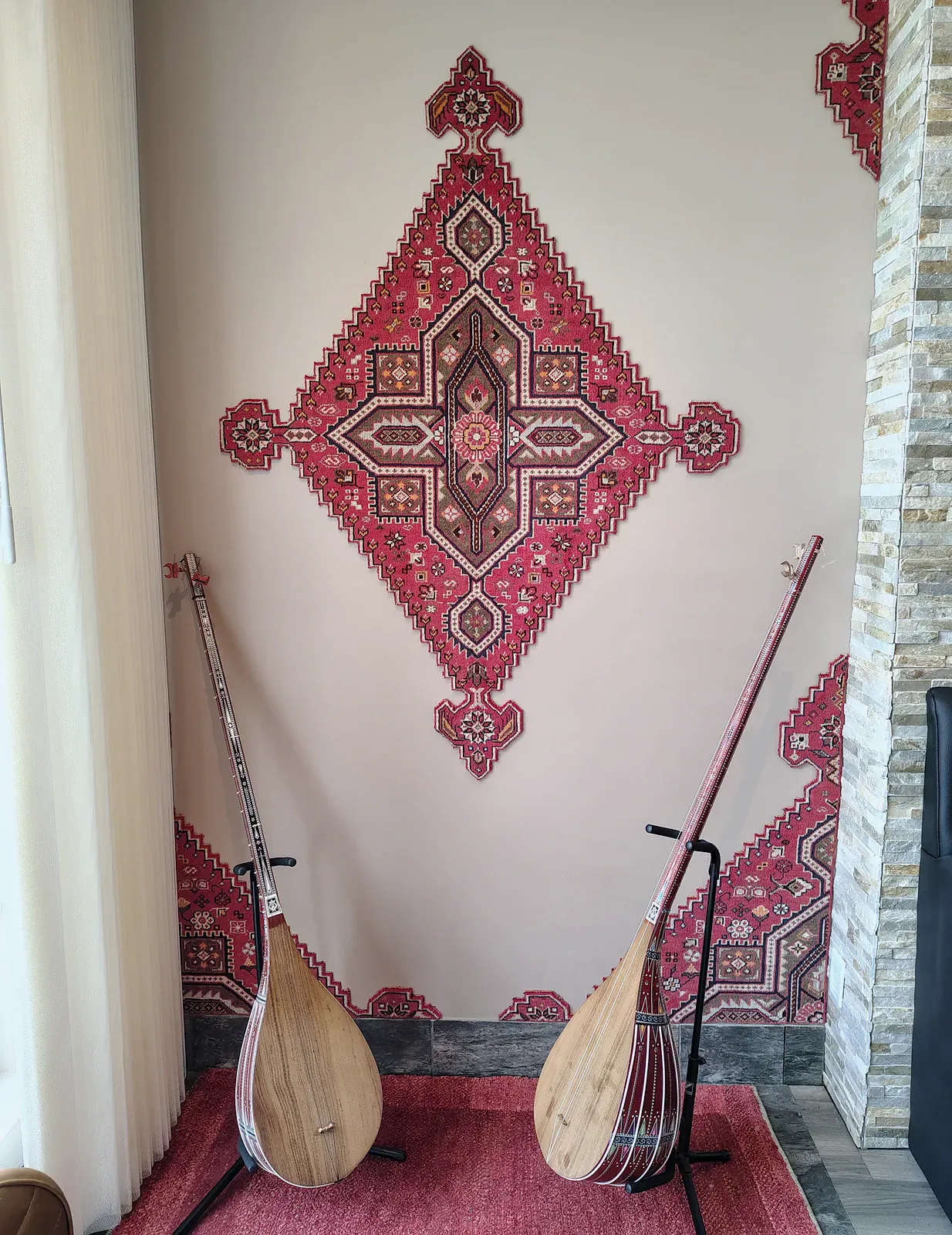
An ensemble centres on plucked lutes such as the dutar, tambur and rawap, the bowed satar, a hammered dulcimer called the chang, and a frame drum, the dap, that plays a leading role in the instrumental sections. Each muqam is built on its own mode, and one cycle runs 20 to 30 pieces, about two hours.
Recorded canon, 1951 to 1965
The shift from oral cycles to a fixed text happened fast. In 1951 the Beijing musician Wan Tongshu was sent to preserve the muqam, and masters were invited to Urumqi to be recorded. In 1954 the full Twelve Muqam was taped with Turdi Akhun and Omar Akhun. Wan transcribed the tapes into staff notation, and the result was published in 1960. In 1959 a state Radio Ensemble began in Urumqi, and singers such as Abliz Shakir joined it.
This saved a repertoire that could have vanished, but it also froze it. A living tradition with many local versions became one official set, centred on the Kashgar tradition, and regional variants such as Turpan sat outside it. The scholar Rachel Harris later wrote a study of how that canon was made.
Disruption and revival, 1966 to 1999
Canon work stopped with the Cultural Revolution from about 1966, when Uyghurs were forbidden to sing the muqam. Abliz Shakir was rehabilitated in 1972 and went on to rediscover muqam sections and a cycle called Ishret Engiz.
The revival came in stages, and collecting, recording and transcribing resumed. In 1990 the French label Ocora issued a three-volume CD set, Turkestan chinois / Xinjiang, produced by Sabine Trebinjac and Jean During, which introduced muqam, Dolan and song repertoire to listeners abroad.
Heritage listing and global stage, 2000 to today
From 2000 the muqam reached foreign audiences through tours and discs. A group called The Uyghur Musicians from Xinjiang was recorded in London on an Asian Music Circuit tour for the Globe Style CD Music from the Oasis Towns of Central Asia, with Ili and Turpan excerpts. Abdulla Majnun, who learned the suites in Hotan, issued the series Classical Traditions of the Uyghurs in 2004. In 2012 the pipa player Wu Man joined Uyghur singers and lutenists on Borderlands, released by Smithsonian Folkways, and in 2013 Sanubar Tursun released Arzu on Felmay, her first solo album fully available in the Western market.

Mainstream success
It never had a breakthrough single. Its audience grew by other routes. UNESCO proclaimed the Uyghur Muqam of Xinjiang a Masterpiece of the Oral and Intangible Heritage of Humanity in November 2005 and inscribed it on its Representative List in 2008. Researchers and record labels put the cycles on CD. The Borderlands volume came from the Aga Khan Music Initiative series with Smithsonian Folkways.
The dutar took a second path into popular Uyghur music through Abdurehim Heyit, a Kashgar-born singer known for his Duttarim albums. Today the tradition is carried by state ensembles, teachers and listeners who find it through recordings and video.
Notable recordings
The Urumqi sessions, 1951 to 1954. The most influential recordings were not made as an album at all. They were a preservation project, with masters such as Turdi Akhun performing the cycles for tape in Urumqi. Turdi Akhun died in 1956, four years before the transcriptions were published.
Music from the Oasis Towns of Central Asia, 2000. This disc captured an ensemble on tour in London, with notes by Rachel Harris. Its Raq Muqam of Ili makes the structure audible: a free introduction, slow songs, then rhythm taking over.
Borderlands, 2012. Wu Man brought her pipa together with Uyghur singers Sanubar Tursun, Hesenjan Tursun and Abdulla Majnun. It is the clearest case of the tradition meeting another one on equal terms, with pieces such as Chebiyat and Shadiana.
Culture
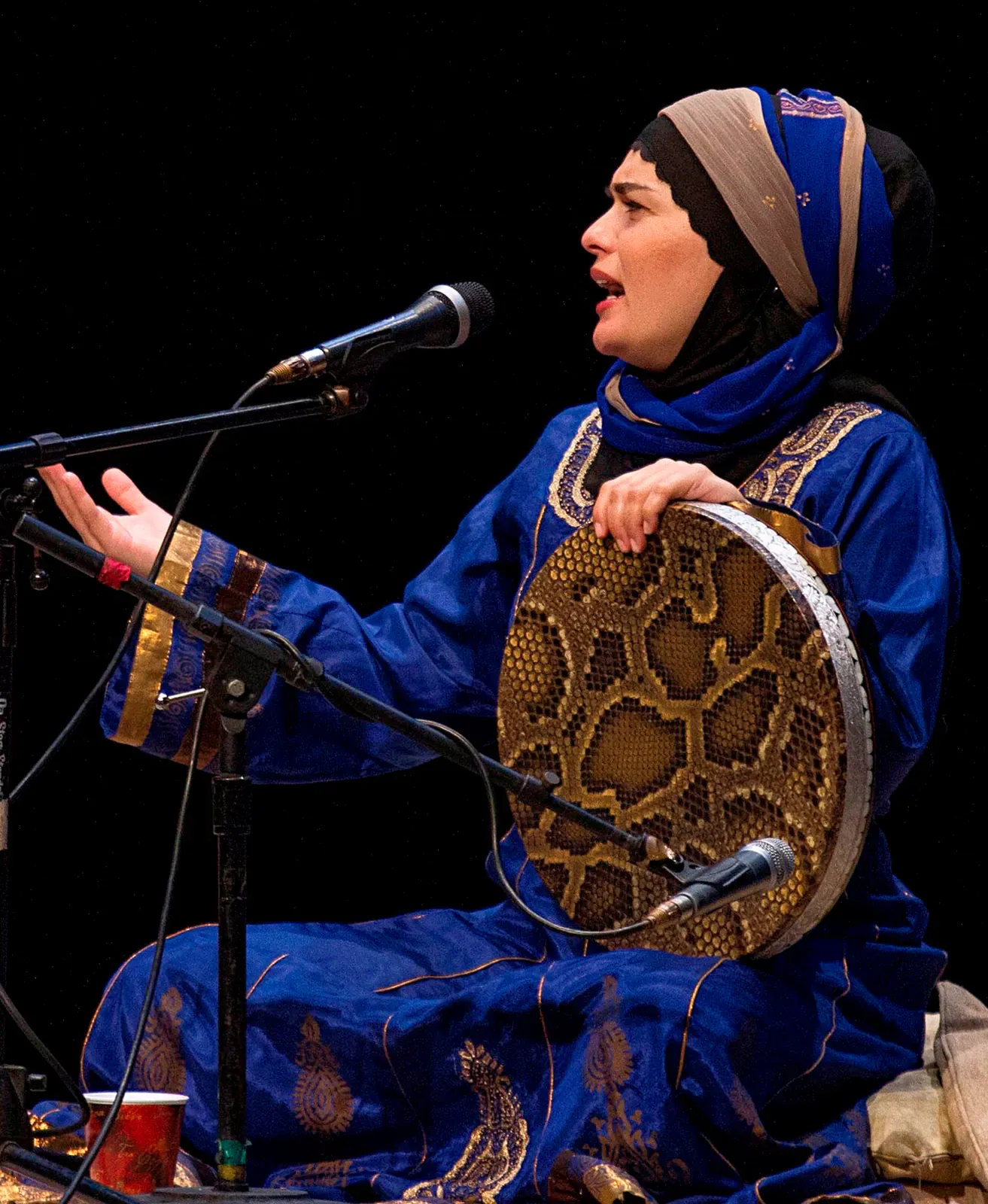
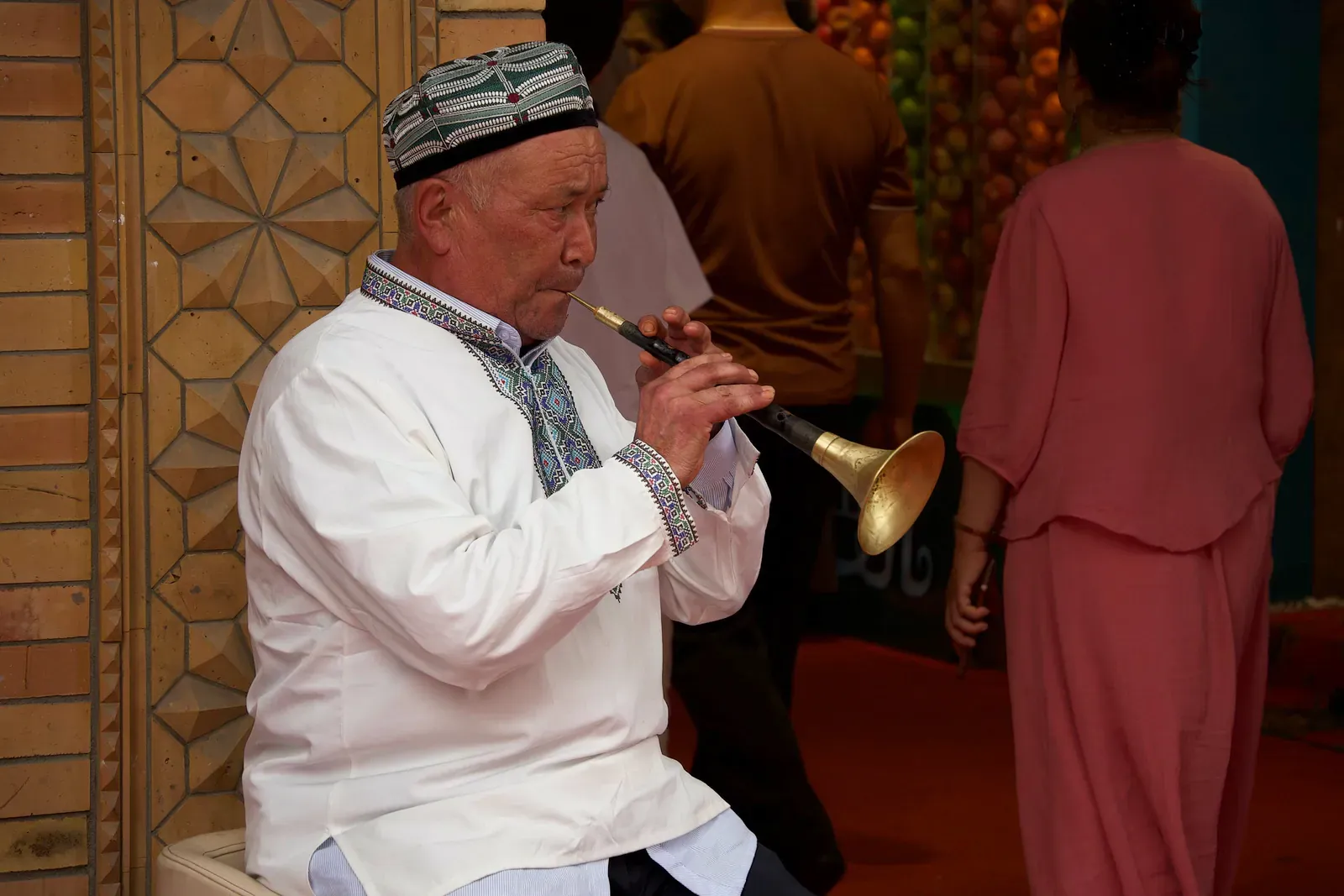
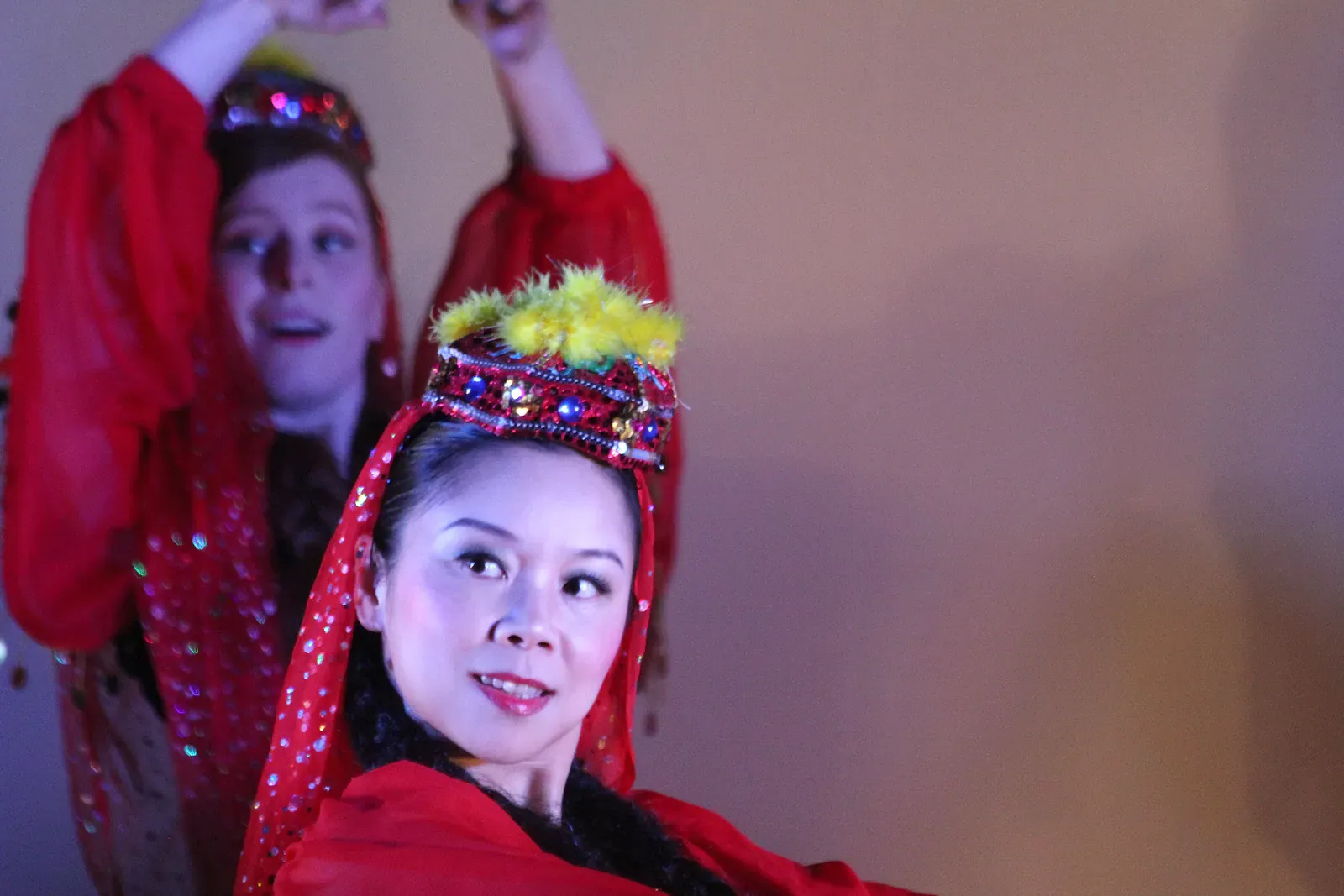
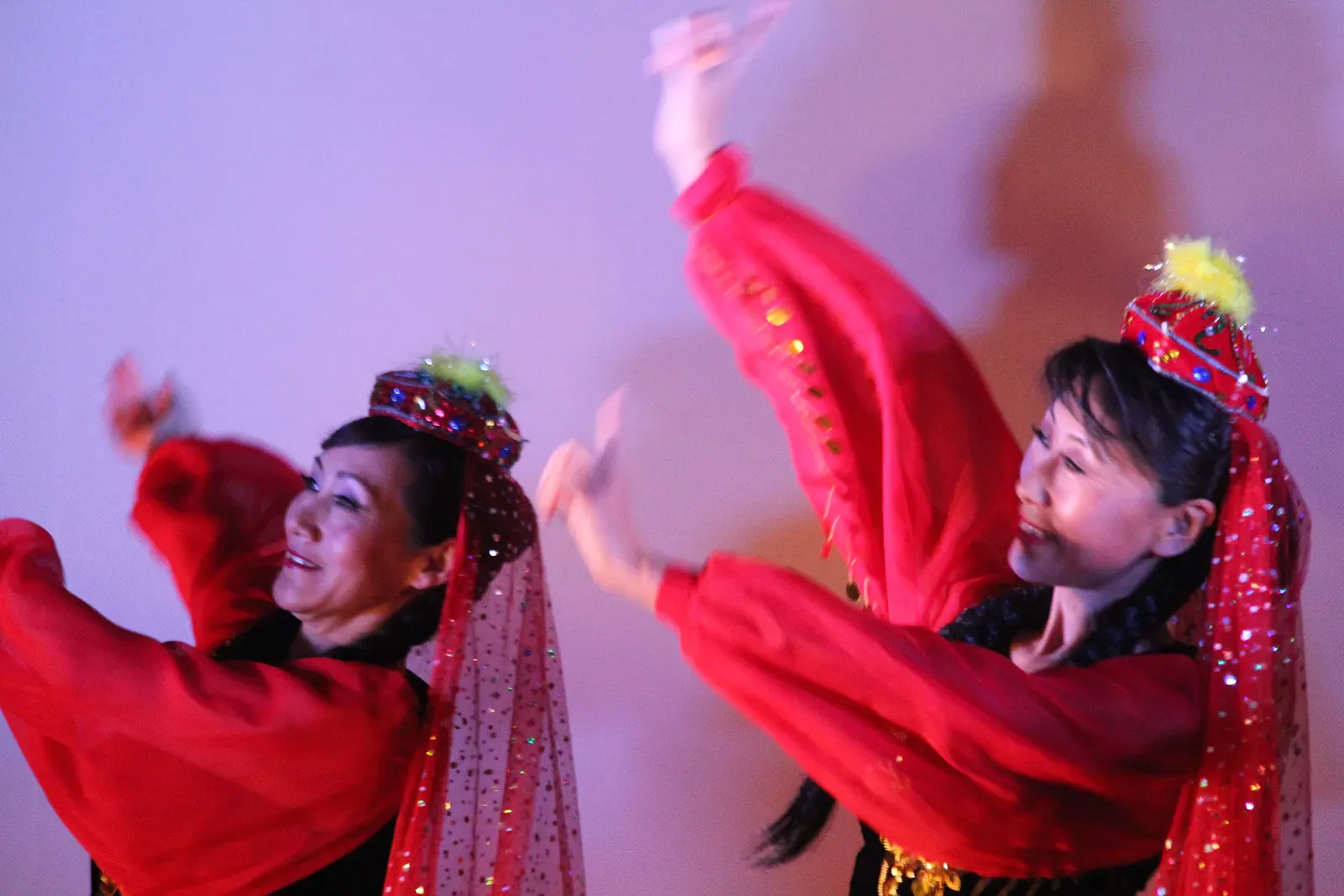
The meshrep is the heart of it: an evening where food, poetry, music and games share a room, and where muqam and mashrap were traditionally sung. UNESCO notes that these gatherings are held less often than before. The closing mashrap is a dance song with Sufi roots, and stage dance in embroidered caps and bright veils has become its public face.
The scene is also shaped by politics. Reports say the dutar singer Abdurehim Heyit was held in March 2017 after performing a song of ancestral respect, and later accounts conflicted. Sanubar Tursun’s French dates were cancelled in November 2018 after she reportedly could not leave China. These cases show that musicians’ travel and public work are tied to wider conditions in Xinjiang.
Misconceptions
“It is folk music.” Muqam is a classical art with trained masters, a modal system and a written canon. Folk song and the Dolan repertoire are separate traditions, and the Ocora set documented them side by side.
“Amannisa Khan composed it.” Tradition credits her with collecting and organising the Twelve Muqam, not inventing them. The musical material is far older, and the only named early source on her dates from 1854.
“The Twelve Muqam is one fixed work.” The version most people hear is the 1950s edition, built from recordings and transcribed in 1960. Regional variants such as Turpan and Hami differ from it.
Frequently asked questions
What is Uyghur muqam?
Uyghur muqam is the classical suite tradition of the Uyghur people in Xinjiang, built from twelve modal cycles. Each cycle combines a free-rhythm introduction, narrative songs and a lively dance finale.
How long is a Uyghur muqam performance?
One Uyghur muqam of 20 to 30 pieces lasts about two hours. A full performance of all Twelve Muqam takes roughly 24 hours.
What instruments are used in Uyghur muqam?
The usual set is the dutar, tambur, rawap, satar, chang dulcimer and the dap frame drum. The diltar, a double-necked lute, was devised by Abdulla Majnun.
Which recordings introduce Uyghur muqam?
Raq Muqam of Ili shows the full structure, the Charigah mashrap sung by Abdulla Majnun shows a dance finale, and Sanubar Tursun’s Derdi Tolidur Yarning is song-led.
Is Uyghur muqam protected by UNESCO?
Yes. UNESCO proclaimed it a Masterpiece of the Oral and Intangible Heritage of Humanity in 2005 and listed it on the Representative List in 2008.
For the wider region, see the Central Asian music page.
Sound
Sound sheet
Anatomy of a track
| # | Part |
|---|---|
| 1 | Naghma (free-rhythm introduction, then metered pieces) |
| 2 | Dastan (narrative songs) |
| 3 | Mashrap (lively dance songs) |
Signature sounds
- Seven-note modal framework
- Instrumental marghul doubling a vocal piece
- Dutar and tambur with dap frame drum
- One muqam of 20-30 pieces lasting about two hours
Drums and percussion
- Dap
Techniques
- Free-rhythm introduction
- Rhythmic acceleration
- Named pieces with rhythmic patterns
- Merghul
Keys and modes
Twelve muqam modes. Twelve suites in twelve modes, each a set of melodic formulas that guides composition and improvisation.
Seven-note scale. The cycles are built on a seven-note scale.
Vocals
Solo and group singing of classical poetry in dastan narrative songs, and sung dance pieces in the mashrap.
Scenes
Where it happened
Where and when the sound lived: one bar per city on a shared timeline.
Asia
Active scenes
Peak 1, 1951-2025
Site of the state recordings, the Radio Ensemble and the Muqam Ensemble.
Culture
Culture markers
- Meshrep gatherings
Community evenings where muqam and mashrap were traditionally performed, now held less often according to UNESCO.
Ritual - Mashrap dance
The fast closing section of each muqam is a dance song with Sufi roots.
Dance - Amannisa Khan play
Seypidin Azizi dramatized her life in a 1983 play and a mausoleum was built in her birthplace in the 1990s.
Artwork
Media
Key media
- 1960Twelve Muqam transcriptions
by Wan Tongshu. Published edition built from the 1950s Turdi Akhun recordings.
Book - 1990Turkestan chinois / Xinjiang - Musiques ouigoures
by Sabine Trebinjac and Jean During. Three-CD Ocora set of muqam, Dolan and song repertoire.
Compilation - 2000Music from the Oasis Towns of Central Asia
by The Uyghur Musicians from Xinjiang. Globe Style CD with notes by Rachel Harris.
Compilation - 2008The Making of a Musical Canon in Chinese Central Asia: The Uyghur Twelve Muqam
by Rachel Harris. Scholarly account of how the oral cycles became a fixed canon.
Book - 2012Music of Central Asia Vol. 10: Borderlands
by Wu Man and Master Musicians from the Silk Route. Folkways and Aga Khan Music Initiative release with Uyghur lead voices.
Compilation
Glossary
Terms on this page
A slower metered narrative song section, often romantic in theme.
Instrumental double of a vocal piece, faster and lighter with frequent modulation.
The lively dance-song finale, tied to Sufi gathering traditions.
Community gathering with music, poetry and games where muqam was traditionally sung.
The unmetered, taxim-like opening section of a muqam.
A suite of vocal and instrumental pieces built on a shared mode; the Twelve Muqam hold roughly 300 or more pieces.
Central Asian and Caucasian family