Central Asian and Caucasian music
Music of the steppes, oases and Caucasus, from Bukharan maqom and Tuvan throat singing to Georgian polyphony, Soviet pop and Mongolian hunnu rock.
125 genres
Since around 1000
Genres
125
In this family
Branches
26
Main subgenres
Since
around 1000
Kazakhstan, Uzbekistan, Kyrgyzstan, Tajikistan, Turkmenistan, Mongolia, Georgia, Armenia, Azerbaijan
Timeline
Era by era
From the first sparks to today. Select a dot to read the story behind it.
- Courts, caravans and epics
1000 to 1917
- Notation and orchestras
1918 to 1953
- State ensembles and estrada
1954 to 1990
- Independence and discovery
1991 to 1999
- Heritage programmes
2000 to 2017
- Hunnu rock and Soviet digging
2018 to 2026
Eras
Moments
- 1 Courts, caravans and epics, 1000 to 1917
- 2 Notation and orchestras, 1918 to 1953
- 3 State ensembles and estrada, 1954 to 1990
- 4 Independence and discovery, 1991 to 1999
- 5 Heritage programmes, 2000 to 2017
- 6 Hunnu rock and Soviet digging, 2018 to 2026
around 1000
Courts, caravans and epics
Bukharan and Khivan courts keep maqam suites, nomads carry epics and dombra, komuz and morin khuur kuys, Georgians sing three-part feasts. Nothing is recorded, everything is memorised.
- 1550Amannisa Khan and the Uyghur muqamTradition credits the Yarkent queen with gathering and shaping the Twelve Muqam.
- 1823Kurmangazy is bornThe dombra composer whose kuys such as Saryarka became pillars of Kazakh instrumental music.
- 1908Leyli and Majnun premieres in BakuUzeyir Hajibeyov's opera builds on mugham and is called the first opera of the Muslim East.
around 1918
Notation and orchestras
Soviet cultural policy writes tradition down. Folk instruments are tuned to European scales and merged into orchestras, while maqom is suppressed as feudal.
- 1934Zhubanov founds the first Kazakh folk orchestraAhmet Zhubanov organises dombra players into an orchestra later named after Kurmangazy (1944).
- 1951Soviet authorities suppress maqomShashmaqam is condemned as feudal; separate Tajik and Uzbek versions develop afterwards.
- 1951Wan Tongshu and Turdi Akhun record the Twelve MuqamA rescue project in Xinjiang preserves the Uyghur canon from the memory of one master.
1954
State ensembles and estrada
State choirs and Radio Moscow carry folk to Western ears, Kabul builds a pop scene around radio and cassettes, and Tashkent presses disco and psychedelia on Melodiya-era plants.
- 1968Anzor Erkomaishvili founds Ensemble RustaviThe Tbilisi group tours more than 50 countries with Georgian polyphony.
- 1973Ahmad Zahir becomes the voice of Kabul popHis mix of Persian poetry, Indian classical and Western pop dominates Afghan radio and cassettes.
- 1977Georgian Tchakrulo flies on VoyagerA Georgian state ensemble's recording and an Azerbaijani mugham are on NASA's Golden Record.
- 1978Yashlik albumThe Almaty Uyghur ensemble mixes folk melody with jazz, estrada and early synths.
- 1989I Will Not Be Sad in This WorldDjivan Gasparyan's duduk album brings Armenian music to Western listeners.
- 1990Tuva: Voices from the Center of AsiaSmithsonian Folkways issues an early Western release of Tuvan music.
1991
Independence and discovery
The USSR ends and Tuvan throat singers reach Western stages. Afghan music goes underground under the Taliban, and mugham reaches world audiences through Alim Qasimov.
- 1991Albert Kuvezin founds Yat-Kha in MoscowTuvan throat singing meets electric guitar and punk.
- 1992Huun-Huur-Tu form in TuvaThe quartet takes throat singing and igil to Western festivals.
- 1996Taliban ban music in KabulInstruments are smashed and Radio Afghanistan becomes Voice of Sharia; its archive is hidden and survives.
- 1999Genghis Blues wins at SundanceThe film about Paul Pena and Kongar-ool Ondar wins the audience award and an Oscar nomination (2000).
- 1999Alim Qasimov wins the IMC-UNESCO Music PrizeThe mugham singer's rise brings Azerbaijani improvisation to world stages.
2000
Heritage programmes
The Aga Khan Music Initiative, UNESCO lists and Smithsonian Folkways records document living masters. A music institute opens in Kabul in 2010.
- 2000Aga Khan Music Initiative foundedThe programme funds documentation, teaching and recording of Central Asian masters.
- 2003UNESCO proclaims mugham a masterpiece of intangible heritageAzerbaijan's classical vocal-instrumental art enters the list.
- 2003Yol BolsinSevara Nazarkhan's Hector Zazou-produced album on Real World carries Uzbek songs abroad.
- 2005UNESCO lists the Uyghur Twelve MuqamThe Xinjiang tradition is recognised as intangible heritage.
- 2006Music of Central Asia series beginsSmithsonian Folkways and the Aga Khan Music Initiative issue the first of ten volumes.
- 2008UNESCO lists shashmaqam, Georgian polyphony and the morin khuurThree core traditions are inscribed in the same year.
- 2010Afghanistan National Institute of Music opensAhmad Naser Sarmast opens the Kabul school on 20 June, teaching Afghan and Western music.
- 2014UNESCO lists Kazakh dombra kuyThe küy tradition of dombra pieces with spoken stories is recognised.
2018
Hunnu rock and Soviet digging
The Hu take Mongolian throat singing to rock charts, and diggers in Tashkent and London reissue Central Asian psych, disco and folk-pop from the 1970s and 80s.
- 2018The Hu release Wolf TotemThe Mongolian band's video reaches Billboard's hard rock digital chart top in April 2019.
- 2024Synthesizing the Silk RoadsOstinato and collector Anvar Kalandarov reissue Soviet-era Tashkent disco and folktronica.
- 2025Maqom Soul reissues YashlikThe new Tashkent label restores the 1978 Uyghur ensemble album.
Facts
| Genres in the family | 125 |
| Main branches | 26 |
| Emerged | Ancient |
| Tempo | 65 to 155 BPM |
Central Asian and Caucasian music is the traditional and modern music of the steppes, mountain valleys and oasis cities from Mongolia and Tuva through Kazakhstan, Uzbekistan, Kyrgyzstan and Tajikistan to Afghanistan, Azerbaijan, Georgia and Armenia.
It developed over more than a thousand years around epic song, throat singing, maqam suites and polyphony, mostly passed on by ear until the Soviet century. Its defining traits are modal and often non-tempered melody, drones, long-necked lutes and horse-head fiddles, and free or cyclic rhythm.
Courts, caravans and epics, before 1918
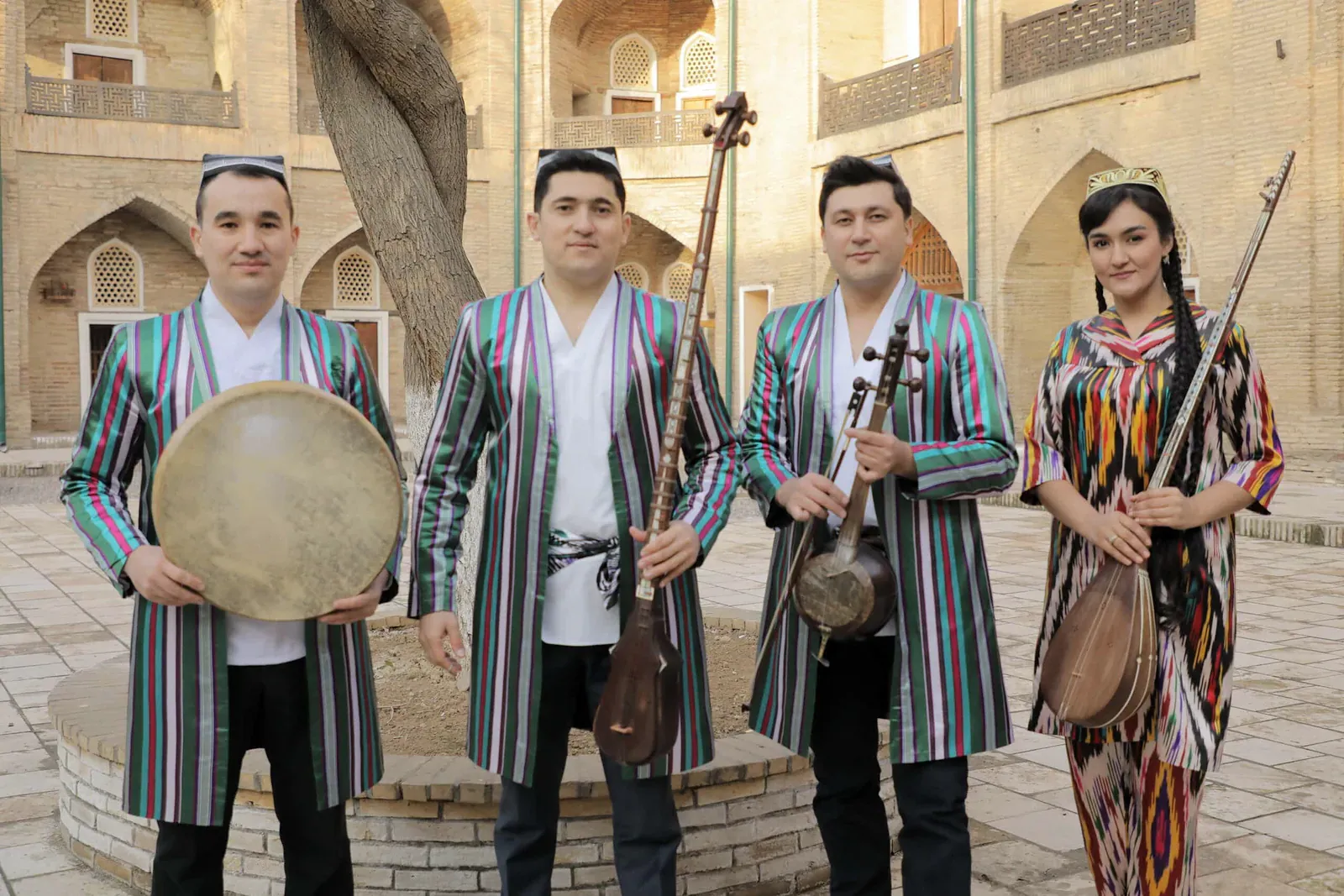
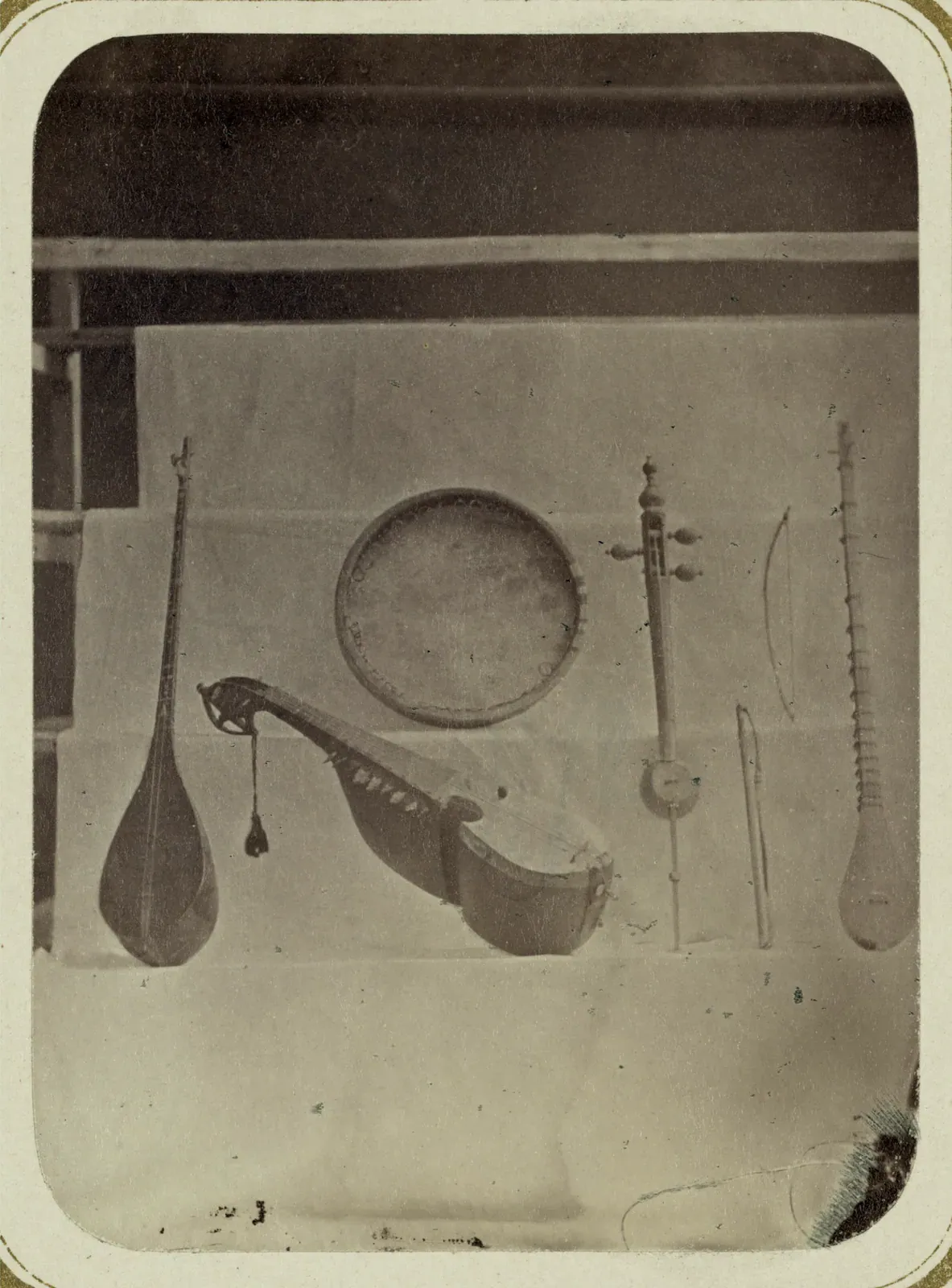
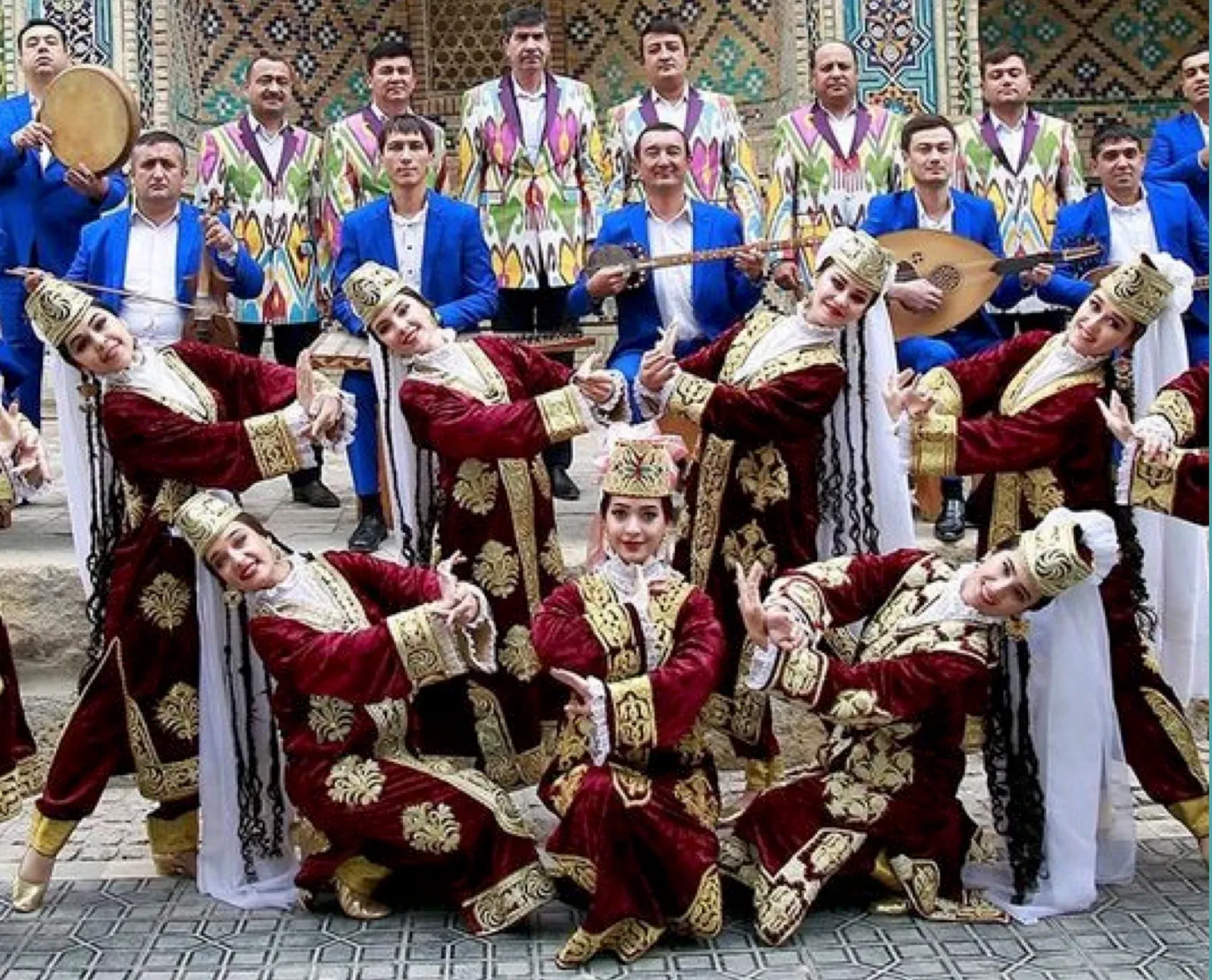
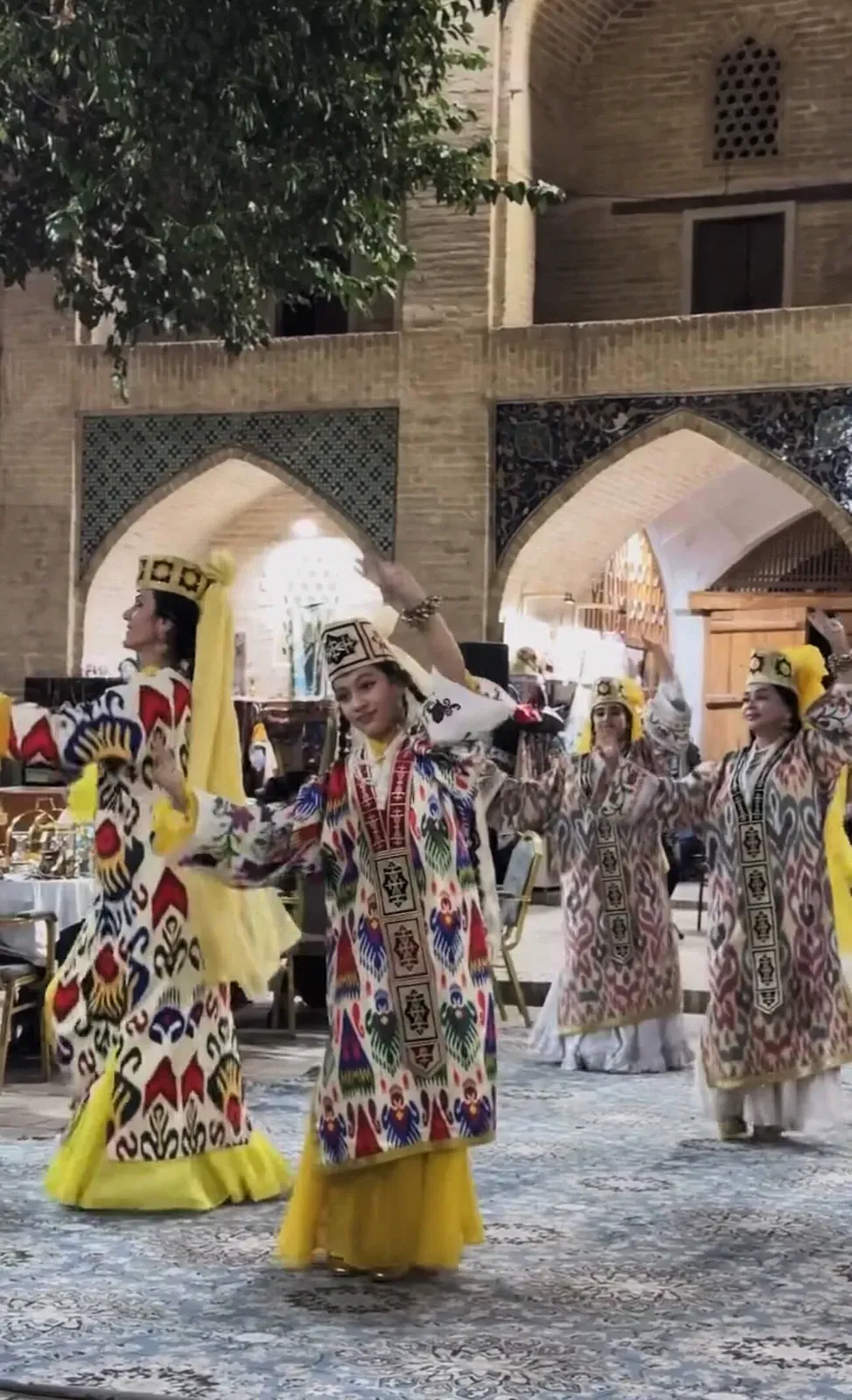
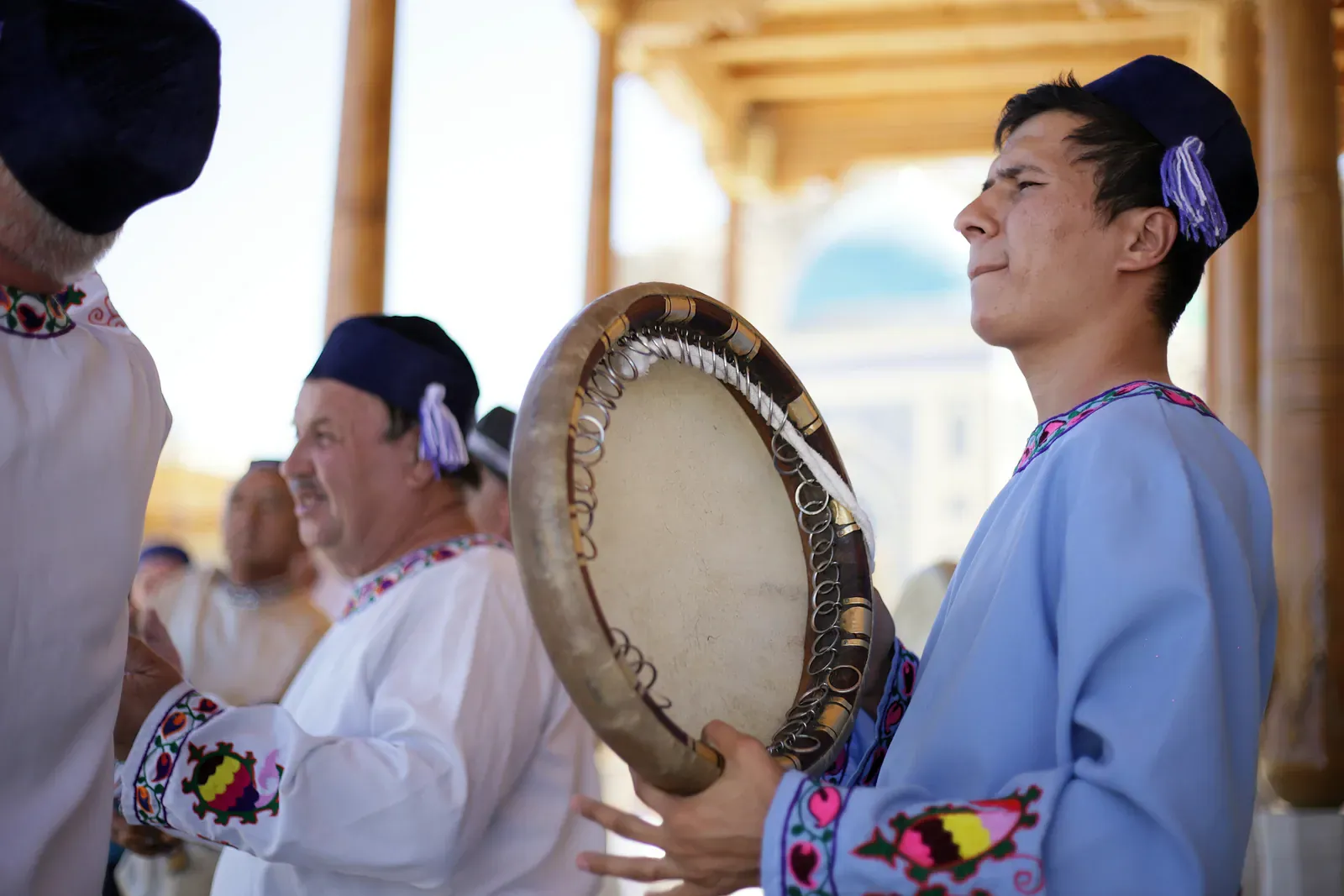
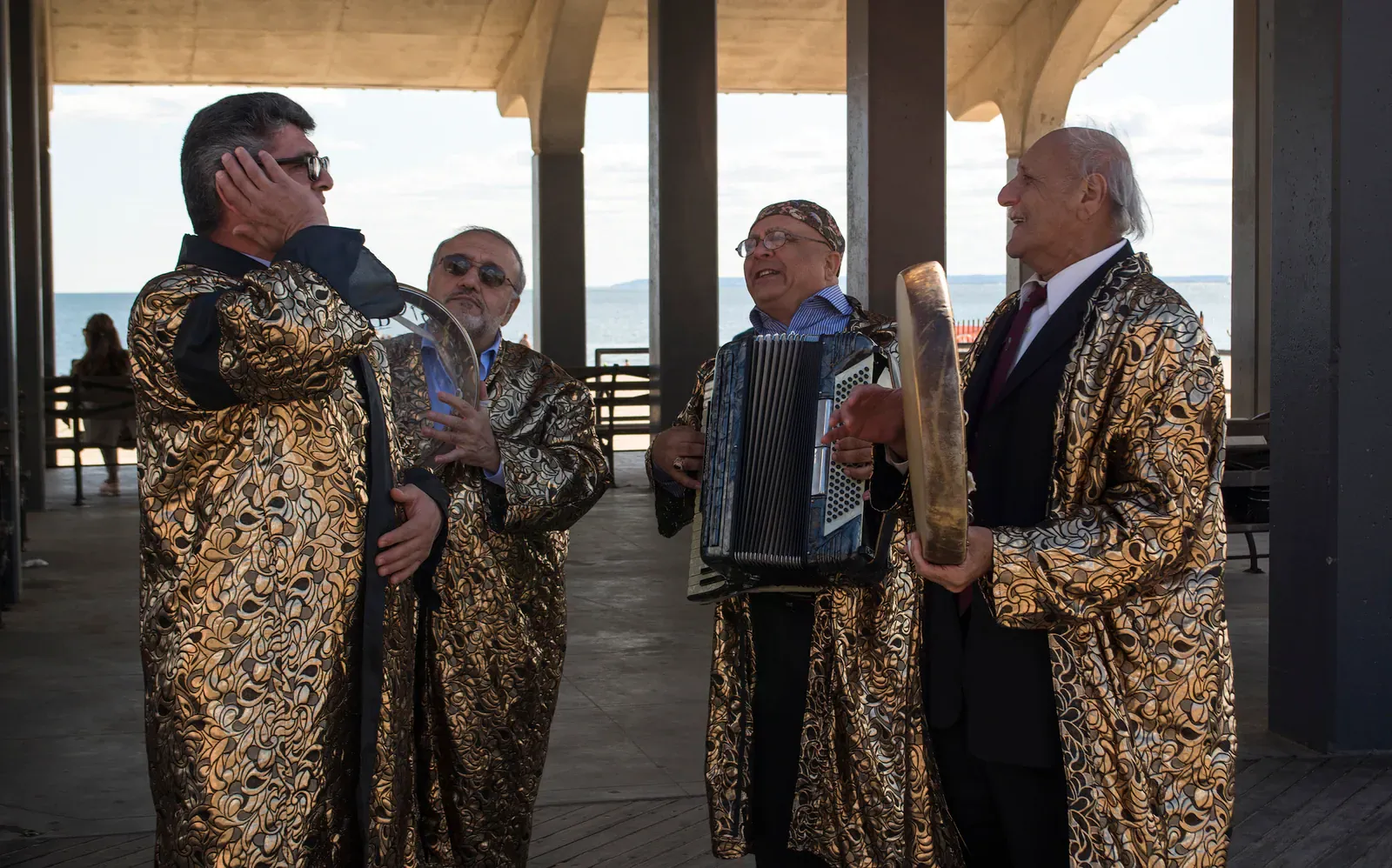
Two worlds made this music, and they rarely sounded alike. In the oasis cities of Bukhara, Khiva and Samarkand, court musicians kept the maqam: long suites in fixed modes, sung to Sufi poetry about divine love. Shashmaqam, the Bukharan form, means “six maqams” in Persian, and the accompaniment is spare: long-necked lutes, a bowed lute and a frame drum.
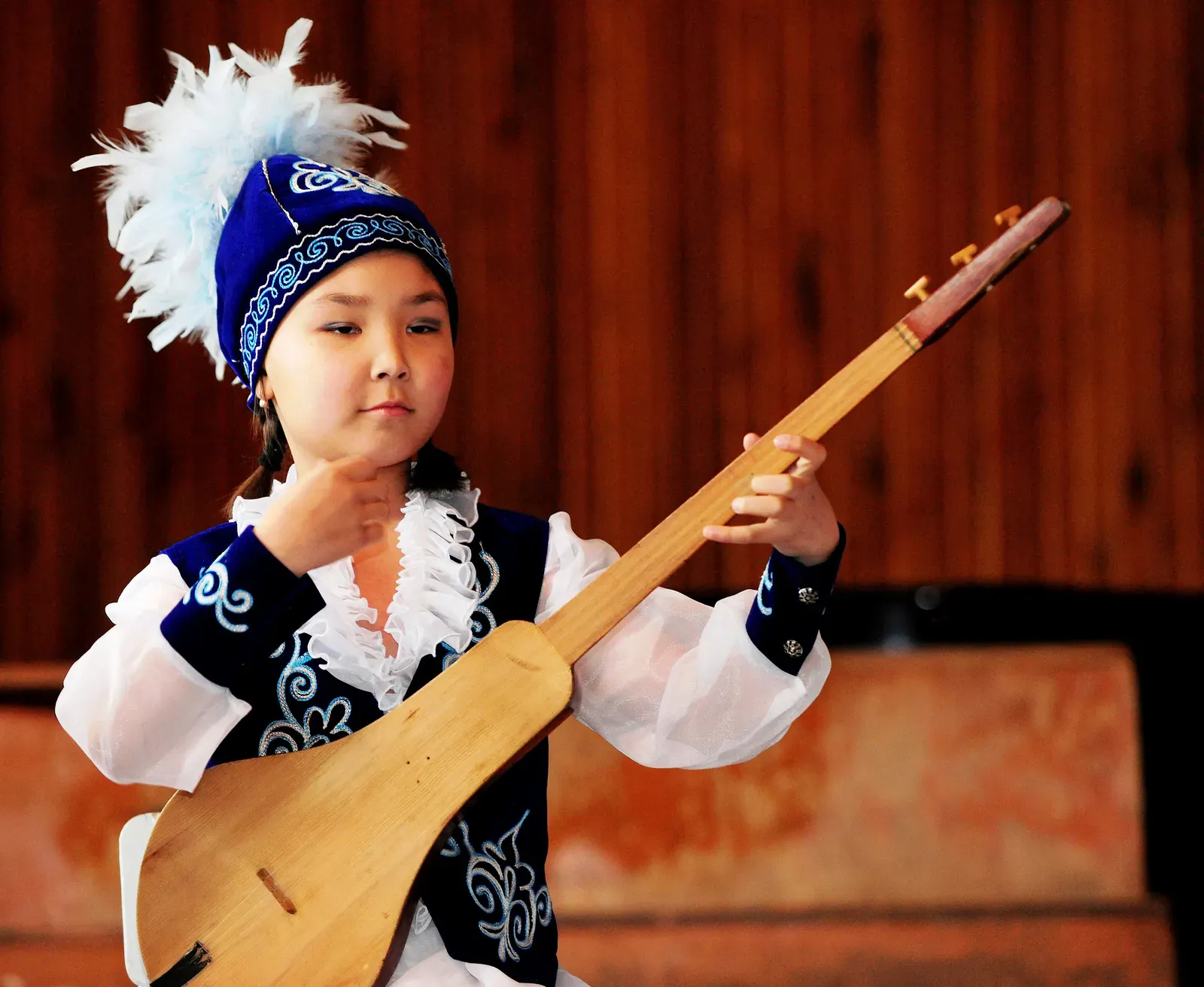
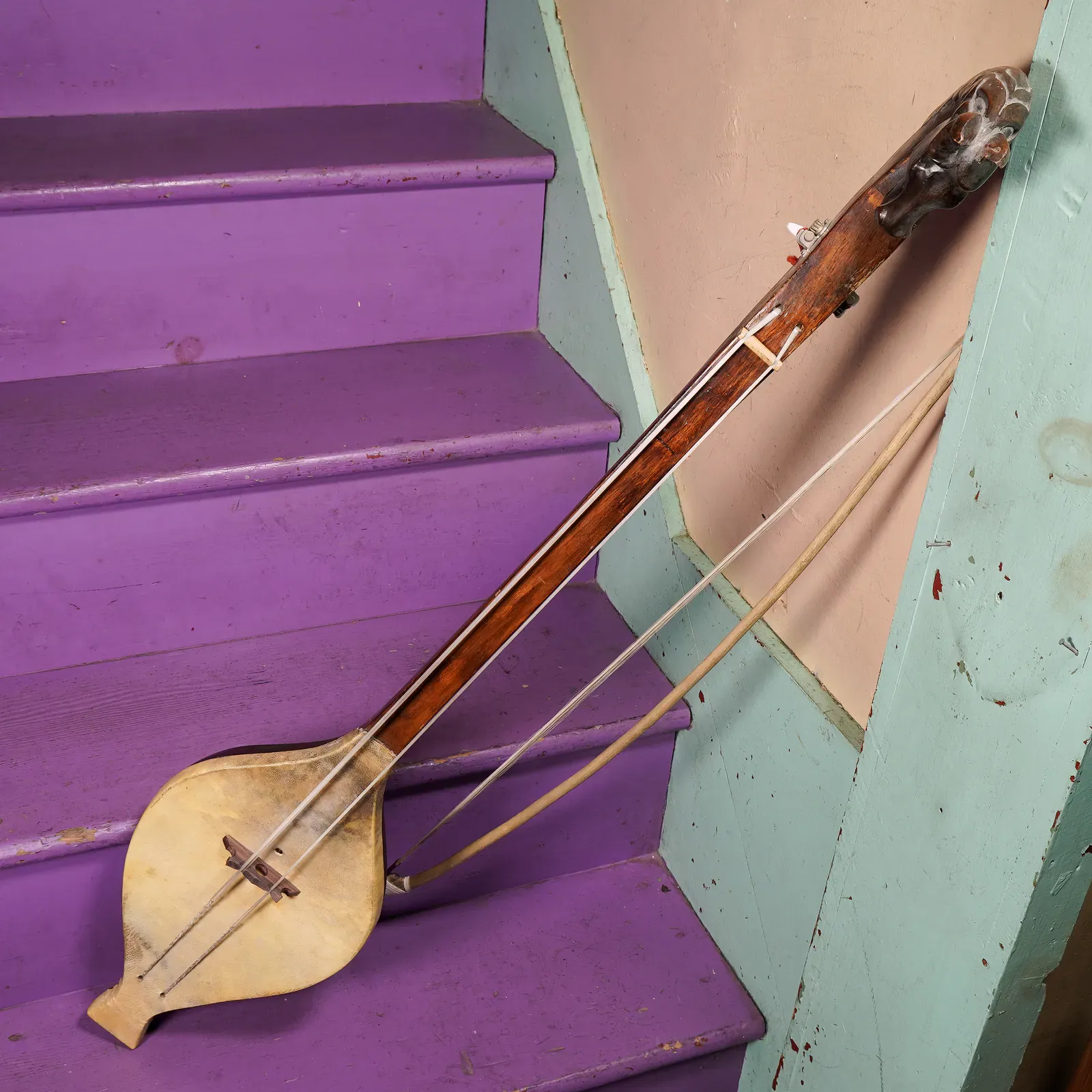
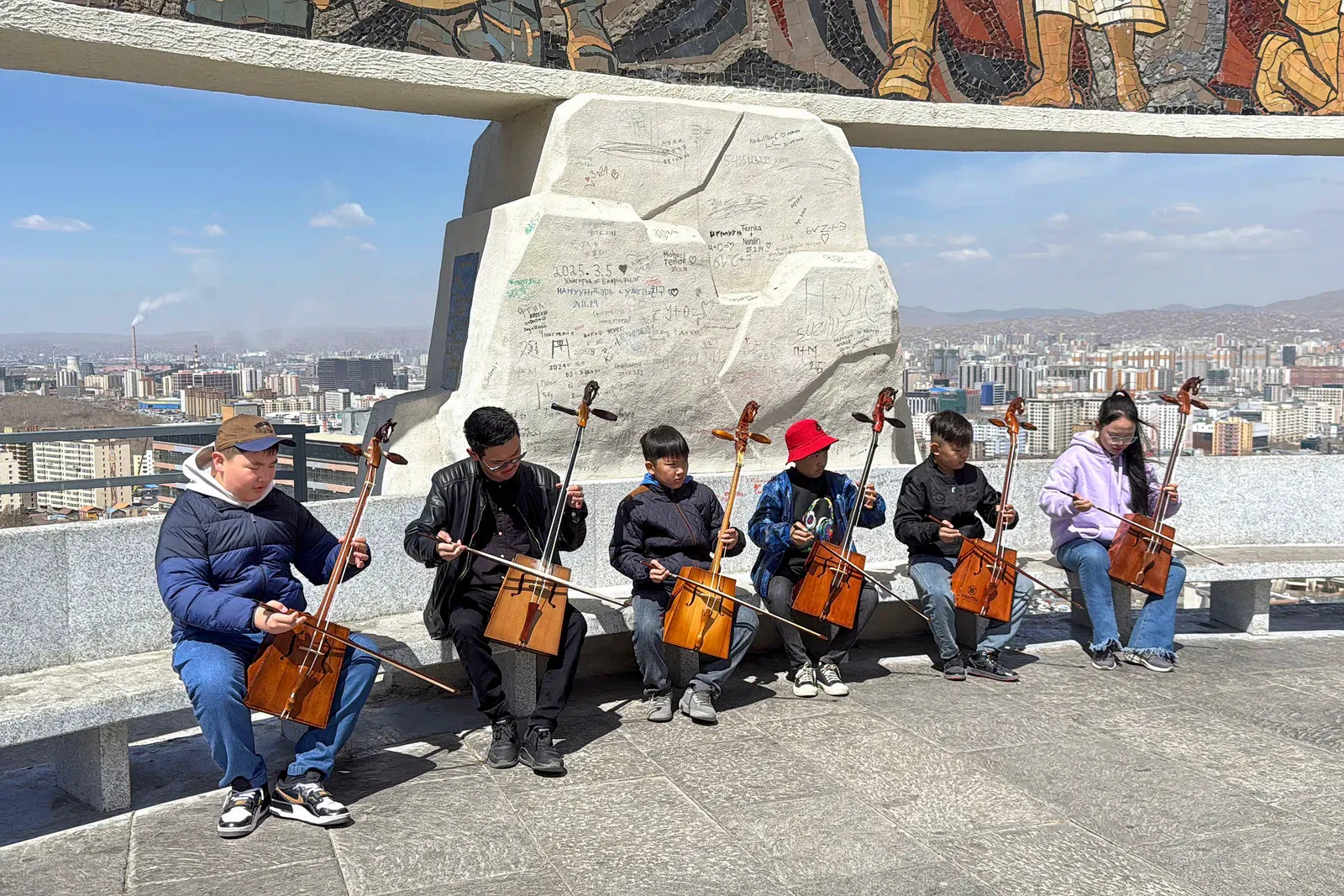
On the steppe, music travelled with herders. A Kazakh composer such as Kurmangazy (born about 1823) built instrumental küys for the two-stringed dombra, and the repertoire crystallised in the eighteenth and nineteenth centuries through players like him and Tattimbet. Kyrgyz singers carried the Manas epic, and Mongolians told the story of a boy and his dead horse to explain the horsehead fiddle. Nothing was written down. Every tune lived as long as someone remembered it.
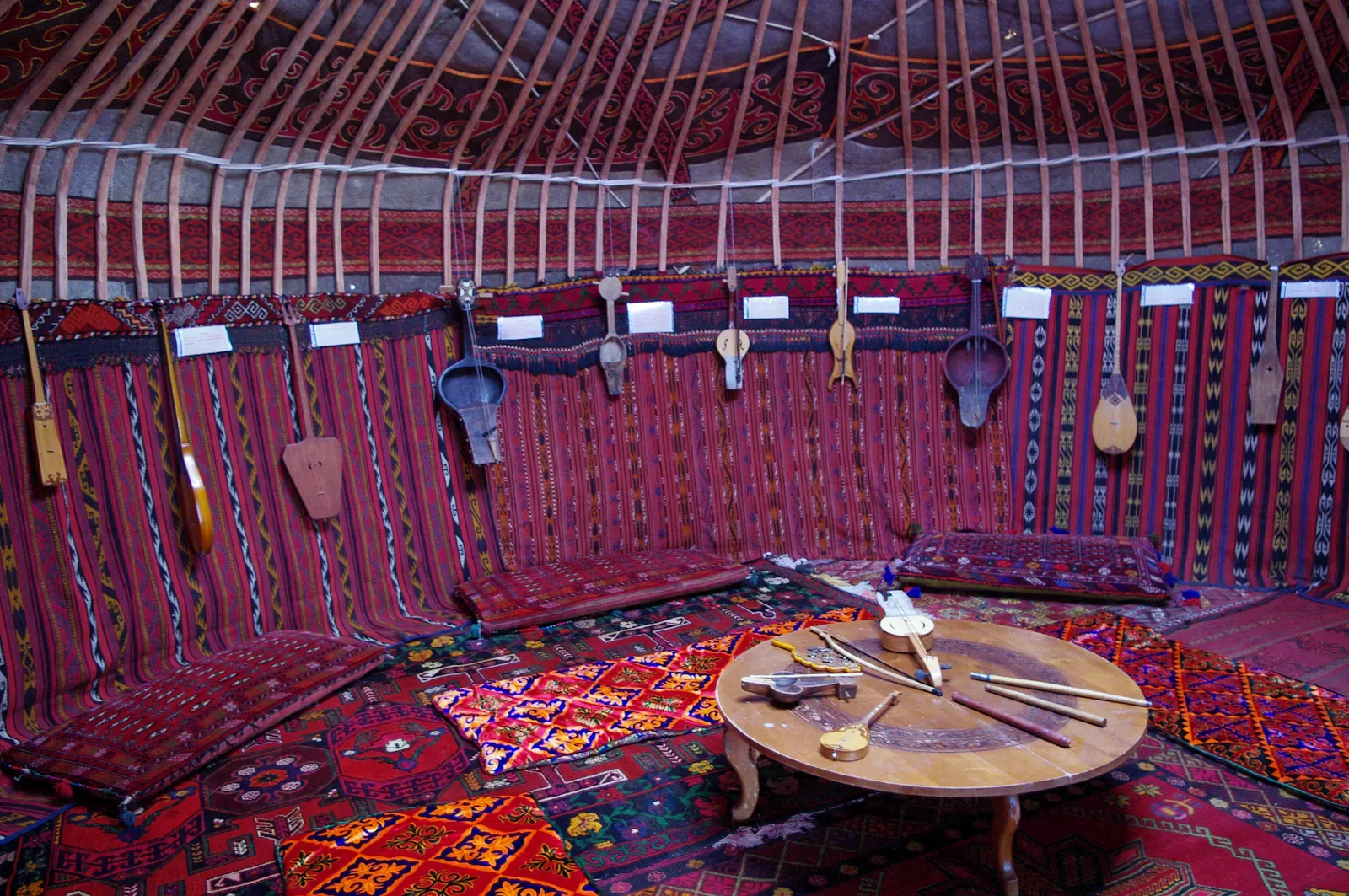
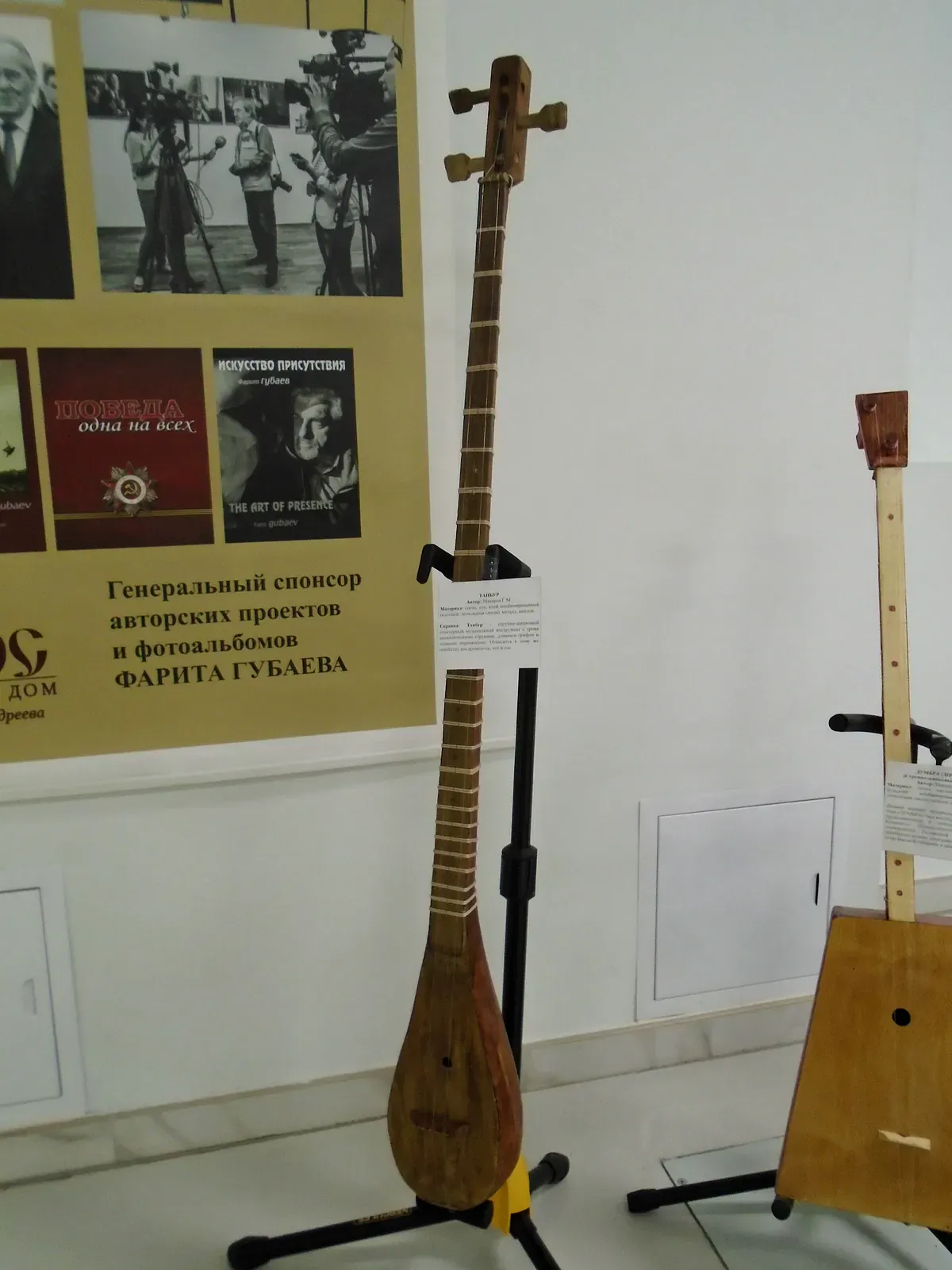
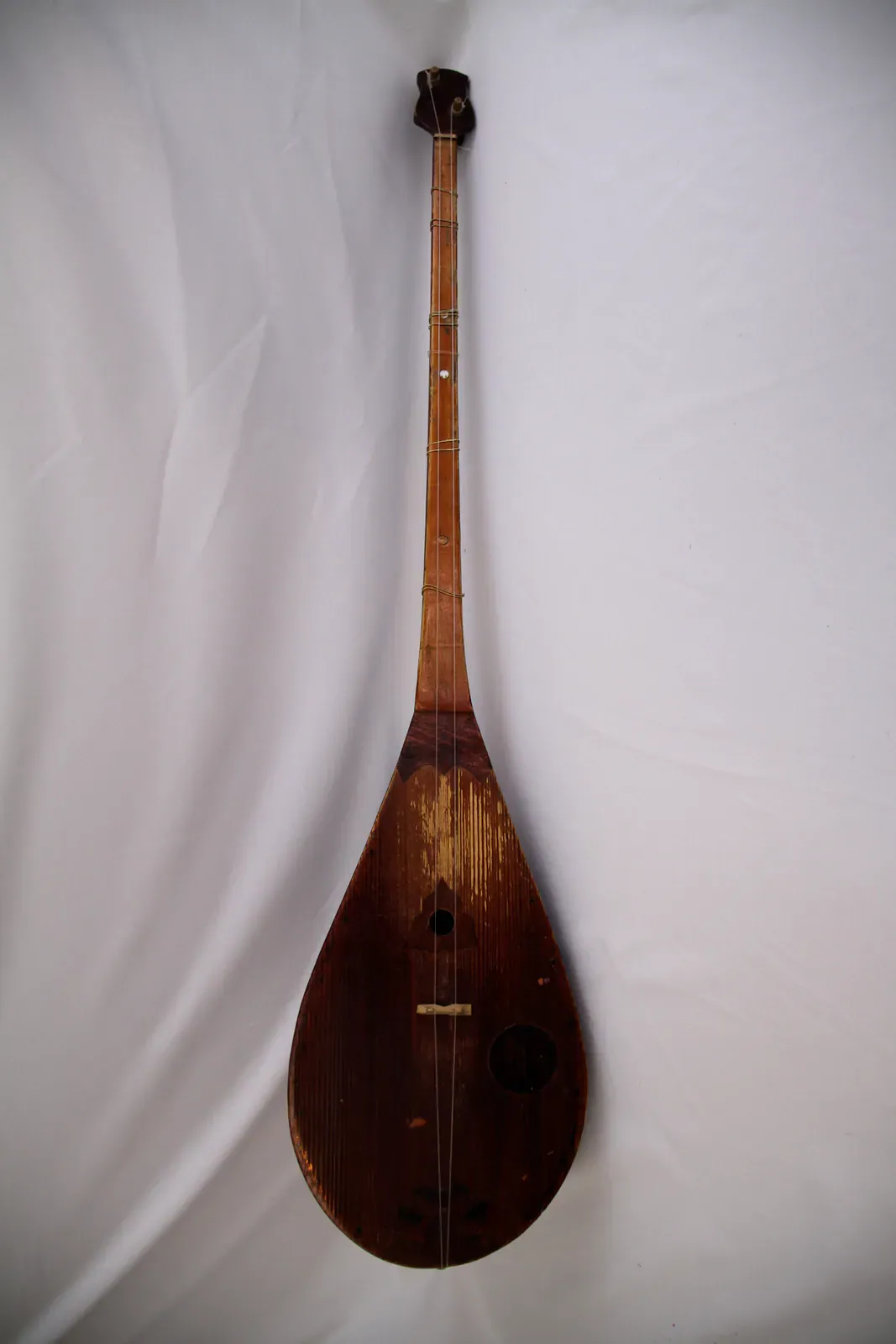
The cities and the steppe also played different instruments. The tanbur and its cousin the dutar are long-necked lutes of the oases, while the komuz of Kyrgyzstan is a three-string lute carved from a single piece of apricot or juniper wood.
Notation and orchestras, 1918 to 1953
Soviet cultural policy wrote tradition down and then edited it. Ahmet Zhubanov founded the first Kazakh folk orchestra in 1934, putting dombra players into an ensemble that was later named after Kurmangazy. Folk instruments were tuned to European scales to fit the orchestra.
Maqom was treated as suspect. In 1951 shashmaqam was condemned as an echo of the feudal ruling class. After a mid-1950s reversal, separate Tajik and Uzbek versions grew up in Dushanbe and Tashkent. In Xinjiang the pressure ran the other way: in the 1950s a rescue project recorded the Uyghur Twelve Muqam from the memory of one master, Turdi Akhun.
State ensembles and estrada, 1954 to 1990
From the mid-1950s the state made stars. Radio Moscow and regional ensembles sent choirs and dancers on tour, and Georgia’s Rustavi Ensemble, founded by Anzor Erkomaishvili in 1968, took three-part polyphony to more than 50 countries. A different Georgian state ensemble’s “Tchakrulo” flew on NASA’s Voyager Golden Record in 1977.
Beside the official stage grew a pop underground. In Kabul, Ahmad Zahir mixed Persian poetry, Indian classical music and Western pop on radio and cassette in the 1970s. In Tashkent and Almaty, vocal-instrumental ensembles mixed folk melody with disco, jazz and early synthesizers. The Uyghur band Yashlik, formed in 1973 at a theatre in Almaty, issued its album in 1978.
Independence and discovery, 1991 to 1999
The USSR ended in 1991 and the world arrived. Smithsonian Folkways had already issued Tuva: Voices from the Center of Asia in 1990, an early Western release of Tuvan music. Yat-Kha formed in Moscow in 1991, setting throat singing against electric guitar, and Huun-Huur-Tu formed in Tuva in 1992 and toured Western festivals. The physicist Richard Feynman’s attempt to reach Tuva was the subject of a 1988 BBC documentary.
The Tuvans sing in several styles. Khoomei is soft, sygyt is a piercing whistle, and kargyraa is a deep growl. In 1999 the film Genghis Blues, about the blues singer Paul Pena and Kongar-ool Ondar, won the Sundance audience award.
Elsewhere the decade was darker. The Taliban banned music in Kabul in 1996, and Radio Afghanistan’s archive was hidden and survived. Meanwhile Azerbaijan’s Alim Qasimov won the IMC-UNESCO Music Prize in 1999 and brought mugham improvisation to world stages.
Heritage programmes, 2000 to 2017
After 2000 the work became documentation. The Aga Khan Music Initiative began in 2000 to fund teaching, research and recording of masters. In 2006 it started the Music of Central Asia series with Smithsonian Folkways, which went on to run to ten volumes. UNESCO proclaimed mugham (2003) and the Uyghur Twelve Muqam (2005), inscribed shashmaqam, Georgian polyphony and the morin khuur (2008), and added Kazakh dombra küy (2014).
In Kabul, Ahmad Naser Sarmast opened the Afghanistan National Institute of Music on 20 June 2010, teaching Afghan and Western music side by side. It was one of several attempts to rebuild a scene that the Taliban had broken.
Hunnu rock and Soviet digging, 2018 to 2026
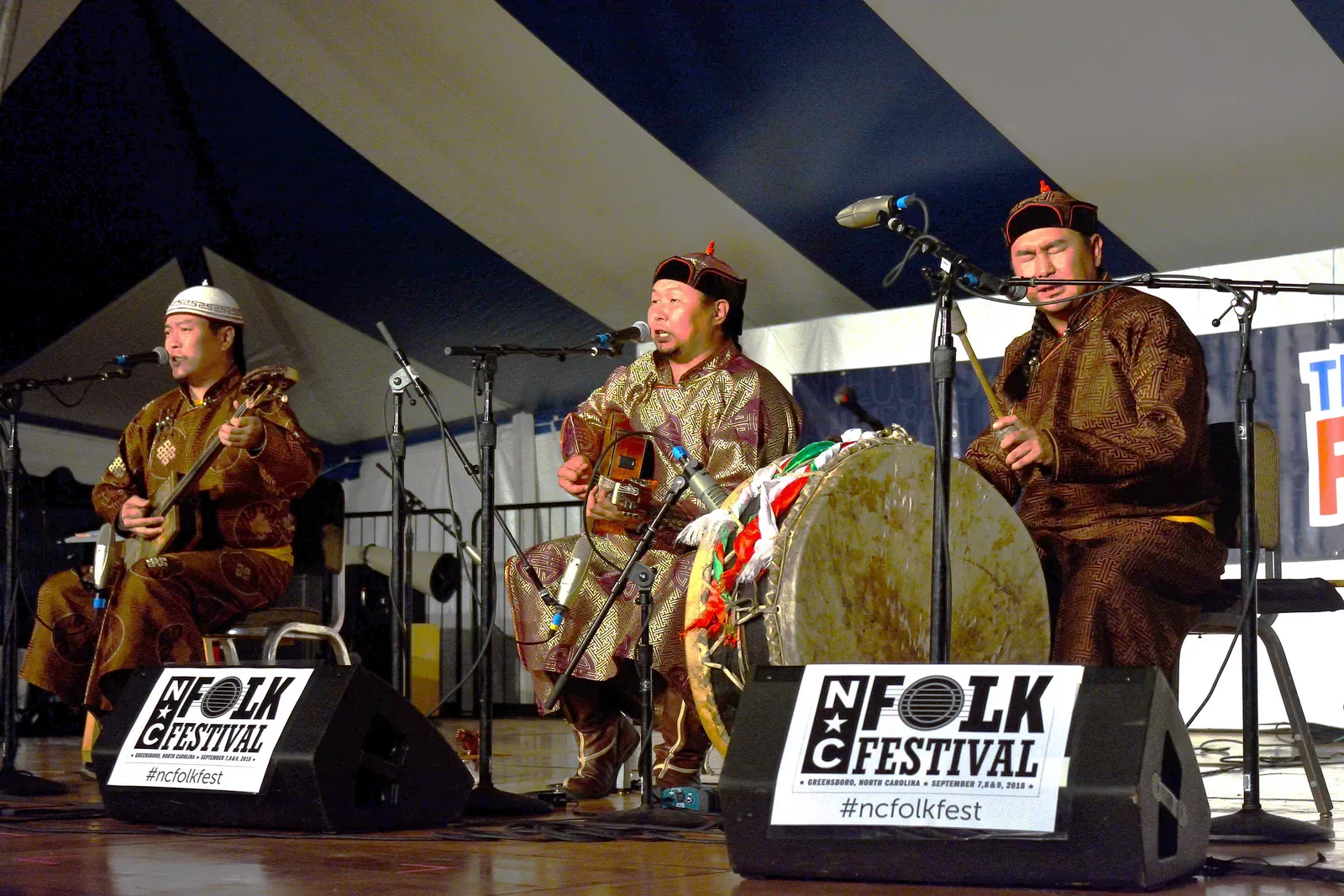
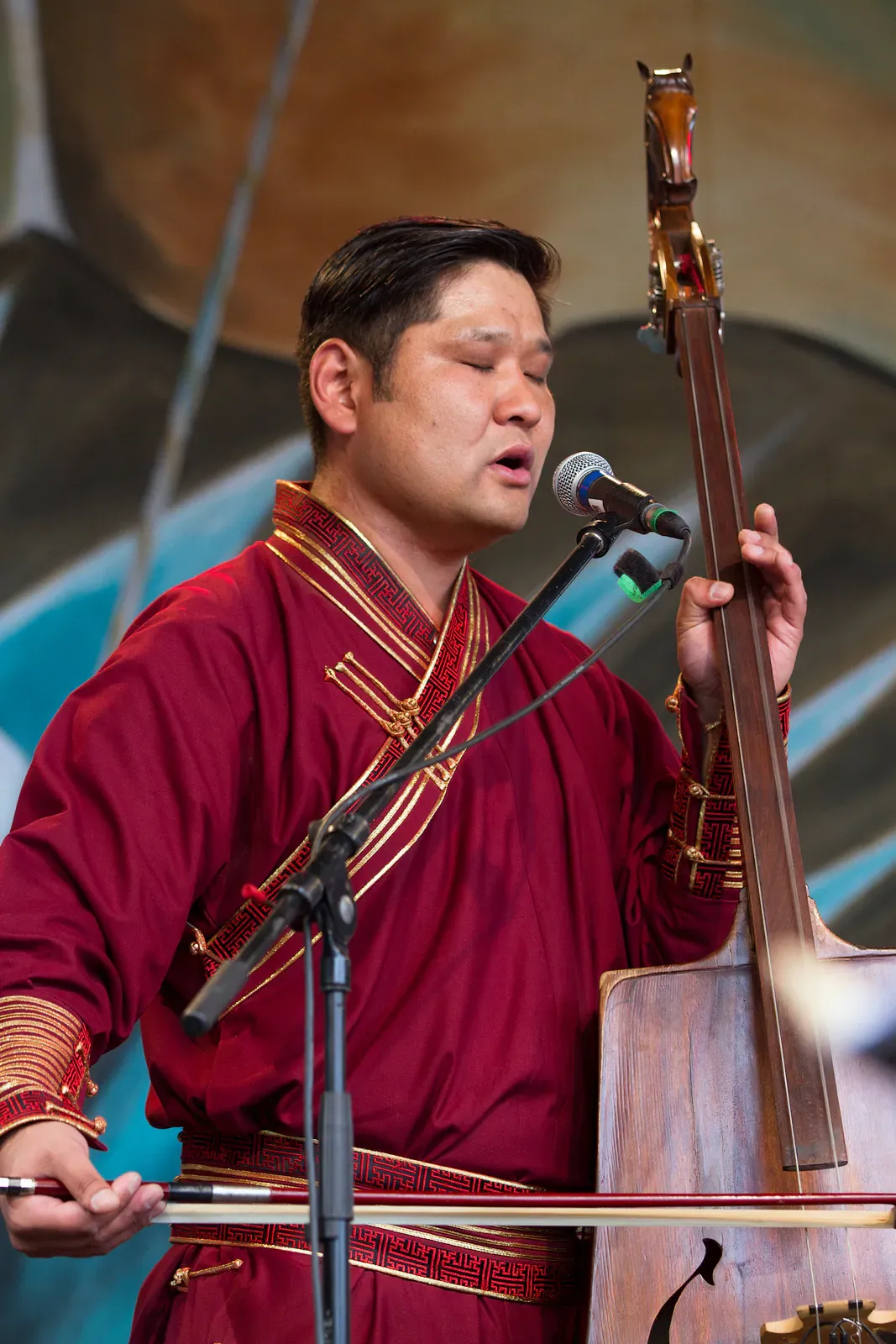
The newest turn came from the metal circuit. The Hu, a Mongolian band formed in Ulaanbaatar in 2016, set morin khuur and throat singing against heavy guitars and called the result hunnu rock. “Wolf Totem” reached number one on Billboard’s Hard Rock Digital Song Sales in April 2019, and the band’s label, Better Noise Music, is a rock and metal company.
At the same time collectors started to mine the Soviet republics. Anvar Kalandarov of Tashkent brought more than 100 records from his shelves to the New York label Ostinato, which issued Synthesizing the Silk Roads in 2024. He then founded Maqom Soul, which reissued Yashlik, and co-compiled Digging Central Asia with London’s Death Is Not The End in 2026.
Culture
It was made by herders, court musicians, wandering bards and wedding bands, and heard at feasts, weddings and singing contests. Georgian men sing polyphony around the table, Kazakh dombra players tell stories through küys, and Bukharan court musicians kept the maqam. Today much of the audience is global: festivals, Folkways records and streaming. Recent interest has come largely from collectors, small labels and heritage programmes. Listeners of folk music will find familiar habits here, and classical music has its own modal traditions to compare with the maqam.
Misconceptions
“Throat singing is only Tuvan.” Tuva is its best-known home, with three named styles (khoomei, sygyt and kargyraa), but Mongolian bands such as The Hu use it too, so it belongs to more than one country.
“The Soviets simply destroyed it.” The record is mixed. Folk orchestras such as Zhubanov’s in 1934 and the 1950s Uyghur rescue project saved or spread repertoire, while the same state condemned shashmaqam that year as feudal.
“It is all ancient and untouched.” Soviet-era disco, Uyghur jazz-folk like Yashlik and The Hu’s rock are all Central Asian music too, and the 2024 Ostinato compilation was assembled from 1970s and 1980s pop.
Frequently asked questions
What is Central Asian music?
Central Asian music is the traditional and modern music of Mongolia, Tuva, Kazakhstan, Uzbekistan, Kyrgyzstan, Tajikistan, Afghanistan and the Caucasus. It includes epic song, throat singing, maqam suites and dombra küys. The library groups 126 genres in this family.
What is shashmaqam?
Shashmaqam is a classical vocal and instrumental suite tradition from Bukhara, shared by Uzbekistan and Tajikistan. The name means “six maqams” in Persian, and UNESCO listed it in 2008. It was condemned as feudal in the Soviet Union in 1951.
What instruments are used in Central Asian music?
The main ones are the dombra, komuz, dutar and tanbur lutes, the morin khuur and igil horse-head fiddles, and the doira frame drum. The library’s profile lists nine, including the rubab, duduk and kobyz.
Which recordings introduce Central Asian music?
An early reference is Tuva: Voices from the Center of Asia (Smithsonian Folkways, 1990) for throat singing, Alim Qasimov for mugham and the 2024 Synthesizing the Silk Roads compilation for Soviet-era pop.
Subgenres
Genres in the family
26 main branches. Names with their own page are links.
- Aitysh
- Altai kai
- Armenian-American kef music
- Ashik tradition
4 branches
- Duduk music
- Falak
2 branches
- Georgian polyphonic singing
8 branches
- Kazakh traditional music
8 branches
- Khakas kai
- Khomus music
- Kyrgyz traditional music
5 branches
- Meykhana
- Mongolian traditional music
7 branches
9 branches
9 branches
- North Caucasus music
7 branches
- Olonkho
- Rabiz
1975, 2 branches
9 branches
- Toyuk
- Turkmen bagshy tradition
2 branches
7 branches
18 branches
- Uzbek traditional music
2 branches
Sound
What it sounds like
Tempo
- Overall65-155
- Shashmaqam75-145
- Mugham75-120
- Uyghur muqam95-130
- Georgian polyphonic singing65-130
- Tuvan throat singing75-140
- Kazakh traditional music80-155
- Meykhana75-115
- Rabiz85-150
Drums and percussion
- Doira
- Dap
Techniques
- Overtone singing
- Tokpe and shertpe
- Drone bass
- Krimanchuli
- Usul cycles
- Long song
Keys and modes
Shashmaqam modes. Six maqoms (Buzruk, Rost, Nav, Dugoh, Segoh, Iraq), each paired with rhythmic cycles
Mongolian pentatonic. Long songs use a five-note scale without semitones, major or minor in colour
Mugham modes. Azerbaijani improvised modes such as Shur, Segah and Chahargah
Georgian heptatonic scale. Close-to-even steps with neutral thirds and near-pure fourths and fifths; no consensus on exact tuning
Tuning
Non-tempered: dombra strings usually a fourth apart (D-G); Georgian singing uses near-pure fourths and fifths with neutral thirds
Vocals
Throat singing, melismatic maqam song, improvised mugham, epic recitation and three-part Georgian polyphony
Instruments
- Dombra
Kazakh two-string lute that carries the küy repertoire.
- Komuz
Fretless three-string Kyrgyz lute, accompanies epics and aitysh.
- Morin khuur
Mongolian horsehead fiddle, inscribed by UNESCO in 2008.
- Igil
Tuvan two-string horsehair fiddle that backs throat singing.
- Tanbur
Long-necked lute central to shashmaqam and Uyghur muqam ensembles.
- Rubab
Afghan and Central Asian plucked lute with sympathetic strings.
- Duduk
Armenian double-reed instrument with a sorrowful tone.
- Doira
Frame drum that sets the rhythm of maqom suites.
- Kobyz
Kazakh bowed instrument linked to shamanic healing music.
Technology that shaped it
- 1934Folk orchestra tuning
Kazakh instruments were re-tuned to the tempered scale for orchestras.
- 1964Melodiya pressing plants
The Soviet state label pressed records for local republics including Tashkent.
- 1990Field recording
Ethnomusicologist Ted Levin's Tuva recordings brought throat singing to Western listeners.
Essential records
- 1989I Will Not Be Sad in This World
Djivan Gasparyan. The duduk record that made Armenian lament a world-music staple.
- 1990Tuva: Voices from the Center of Asia
Various artists. An early Western release of Tuvan throat singing.
- 1994The Orphan's Lament
Huun-Huur-Tu. Shanachie album that took Tuvan overtone singing to Western audiences.
- 1997The Legendary Art of Mugham
Alim Qasimov Ensemble. A document of Qasimov's improvised mugham, later reissued by Network.
- 1999Love's Deep Ocean
Alim Qasimov and Fargana Qasimova. Father-daughter mugham duets, released the year Qasimov won the IMC-UNESCO Music Prize.
- 1999Dalai Beldiri
Yat-Kha. Tuvan throat singing set to rock; won a German critics' prize.
- 2003Yol Bolsin
Sevara Nazarkhan. Uzbek songs recast for Western ears on Real World Records.
- 2006Tengir-Too: Mountain Music from Kyrgyzstan
Ensemble Tengir-Too. Volume 1 of the Music of Central Asia series, new Kyrgyz arrangements.
- 2017Achai
Alash. Tuvan ensemble tribute to Kongar-ool Ondar.
- 2019The Gereg
The Hu. Hunnu rock debut with morin khuur, tovshuur and throat singing.
- 2024Synthesizing the Silk Roads
Various artists. Soviet-era Tashkent studio music reissued by Ostinato.
Scenes
Where it happened
Where and when the sound lived: one bar per city on a shared timeline.
Asia
Europe
Active scenes
Peak 9, 1990-2025
Shashmaqam, Soviet pop and disco, and today's reissue diggers.
Court city where the shashmaqam suite is thought to have formed.
Mugham and its opera and symphony offshoots.
Zhubanov's folk orchestra and the Yashlik ensemble.
Capital of Tuva, home of khoomei competitions.
Morin khuur, khoomii and the hunnu rock of The Hu.
Rustavi and the state polyphony ensembles.
Radio Afghanistan, Ahmad Zahir and the National Institute of Music.
Seat of the Twelve Muqam documentation in Xinjiang.
Glossary
Terms on this page
A contest of improvised verse between two singers (akyns) with dombra or komuz.
Soviet-era light pop and variety music, often with local folk elements.
A deep, growling Tuvan throat-singing style.
Tuvan overtone singing; the word is also used for the family of throat styles.
A Kazakh instrumental piece, usually on dombra, tied to a story.
A Kyrgyz performer of the Manas epic.
A modal system that guides composition and improvisation in suites.
Azerbaijani modal tradition of vocal-instrumental improvisation.
The Uyghur modal suite tradition, canonically twelve muqams.
Families