Throat singing
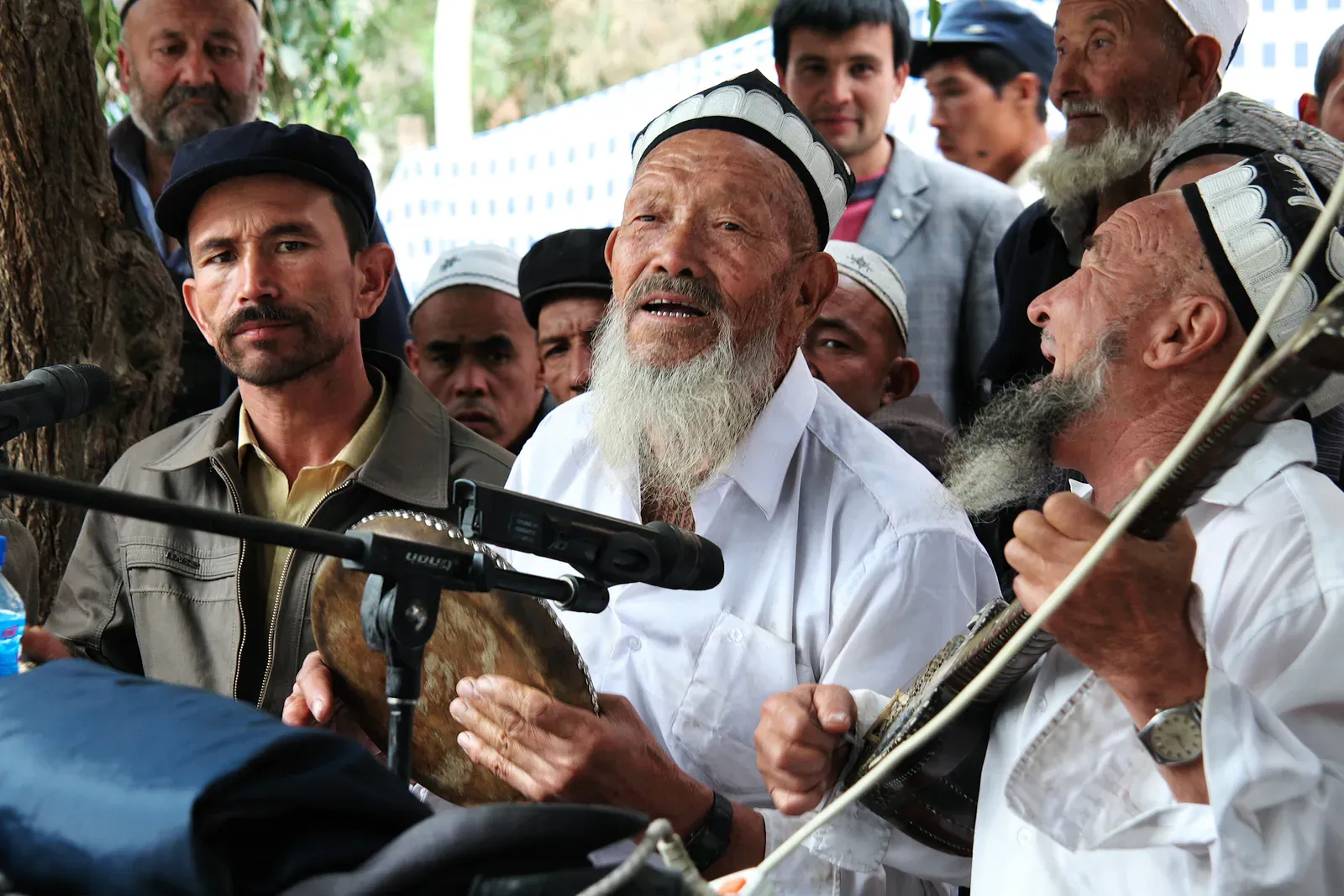
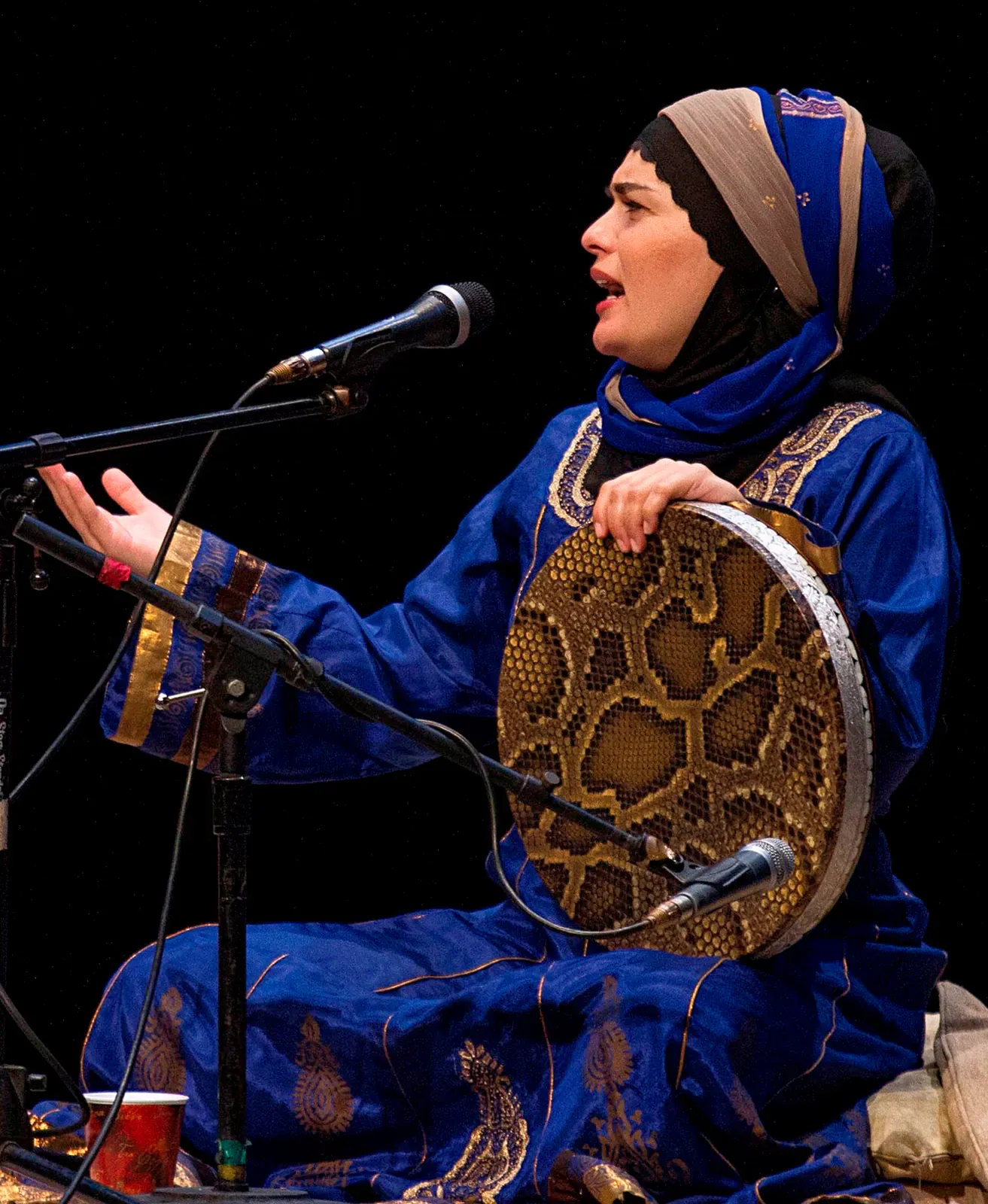
Throat singing is an umbrella for guttural vocal traditions: Tuvan and Mongolian khoomei, Inuit katajjaq, Sardinian tenore, Xhosa umngqokolo and others.
Tuva, 1968
Central Asian and Caucasian family
Born
1968
Tuva
Links
5
Genres it drew on or shaped
Tempo
75-130 BPMLineage
Family tree
Timeline
Era by era
From the first sparks to today. Select a dot to read the story behind it.
- Western ears
1968 to 1991
- World-music circuit
1992 to 2003
- Heritage and crossover
2004 to 2015
- Heavy and viral
2016 to today
Eras
Moments
- 1 Western ears, 1968 to 1991
- 2 World-music circuit, 1992 to 2003
- 3 Heritage and crossover, 2004 to 2015
- 4 Heavy and viral, 2016 to today
1968
Western ears
From the 1960s, Western composers and singers began to study overtone techniques. Collegium Vocale Köln and Stockhausen's Stimmung date from 1968, and David Hykes founded his Harmonic Choir in 1975.
- 1968Stimmung and Collegium Vocale KölnKarlheinz Stockhausen's Stimmung is among the first concert works to use overtone singing, and Collegium Vocale Köln begins using the technique.
- 1975David Hykes founds the Harmonic ChoirHykes starts Harmonic Chant in New York and his Harmonic Choir, a Western overtone ensemble.
- 1976Last Ainu rekuhkara singer diesThe Ainu duet practice, close to Inuit katajjaq, ends with its last practitioner.
1992
World-music circuit
Huun-Huur-Tu formed in 1992, the Inuit duo Tudjaat in 1994, and the Tenores di Bitti reached Real World in 1996. Genghis Blues won at Sundance in 1999.
- 1992Huun-Huur-Tu formThe Tuvan quartet becomes the best-known touring ensemble of the style.
- 1994Tudjaat formedTwo Inuit women from Nunavut, Madeleine Allakariallak and Phoebe Atagotaaluk, record traditional katajjaq for a wider audience.
- 1996S'amore 'e mamaThe Tenores di Bitti recording that brought Sardinian tenore to Real World's audience.
- 1999Genghis Blues wins at SundanceThe documentary on Paul Pena's trip to Tuva won the 1999 Sundance documentary award and was nominated for an Oscar.
2004
Heritage and crossover
Tanya Tagaq sang on Björk's Medúlla in 2004, UNESCO listed the Sardinian tenore in 2005 and Tuvan throat singing in 2009, and Tagaq's Animism won the Polaris Music Prize in 2014.
- 2004Björk's MedúllaTanya Tagaq's collaboration with Björk, including this album, made her widely known in Canada and abroad.
- 2005UNESCO lists cantu a tenoreThe four-voice Sardinian singing is proclaimed intangible cultural heritage.
- 2005Tagaq's SinaaHer first album, nominated for a 2006 Juno Award as Aboriginal Recording of the Year.
- 2009UNESCO lists Tuvan throat singingTuvan throat singing joins the Representative List of the Intangible Cultural Heritage of Humanity.
- 2014Animism wins the Polaris Music PrizeTanya Tagaq's album, released in May on Six Shooter Records, takes the prize on 22 September and a Juno in 2015.
- 2014Quebec designates Nunavik katajjaniqIt becomes the first item given intangible cultural heritage status by the province.
2016
Heavy and viral
Tagaq's Retribution and the formation of The Hu came in 2016. The Hu's Wolf Totem topped a Billboard chart in 2019, taking Mongolian throat singing to a rock audience.
- 2016The Hu formed in UlaanbaatarConservatory students pair throat singing and the morin khuur with heavy rock, a style they call hunnu rock.
- 2019Wolf Totem tops a Billboard chartOn 11 April it reaches number one on Hard Rock Digital Song Sales, a first for a Mongolian act.
Listening path
Start listening
A short path from an easy way in to the deep end. Thumbnails come from YouTube; the player loads only when you press play.
- 01
The Hu, 2018
Throat singing and morin khuur at rock volume, the easiest way in.
- 02
Huun-Huur-Tu, 1994
Tuvan overtones over igil and a horse-gait pulse, from The Orphan's Lament.
- 03
Tanya Tagaq, 2014
Solo Inuit-derived throat singing against a pulsing band, from Animism.
- 04
Tanya Tagaq, 2016
The title track of her 2016 album, the harshest end of the style.
Facts
| Family | Central Asian and Caucasian |
| Origin | Tuva, Russia |
| Status | Active |
| Tempo | 75 to 130 BPM |
Throat singing is a group of vocal practices from several unrelated cultures that share a guttural, resonant sound unlike ordinary chest or head voice.
It includes the khoomei and khoomii of Tuva, Mongolia and the Altai, the Inuit duet game katajjaq, the four-voice cantu a tenore of Sardinia, the low umngqokolo of Thembu Xhosa women and the deep chant of Tibetan monks. It sits within the Central Asian and Caucasian family because its best-known centre is the Tuva, Mongolia and Altai region, but it is a worldwide set of traditions, not one lineage.
Origins
The name comes from the Tuvan word xöömei and the Mongolian xöömi, which mean throat and guttural. The English term translates those words, and peoples in Mongolia, Russia, Japan, South Africa, Canada, Italy, China and India now use the term for their own singing.
The term is imprecise. Every kind of singing produces sound in the throat, and some performers find the phrase demeaning because it implies strain. It is also not a synonym of overtone singing. Overtone singing amplifies selected harmonics by shaping the mouth and pharynx, while throat singing mostly means a changed voice source, so a style such as Tuvan kargyraa can combine both. For the Tuvan tradition in detail, see Tuvan throat singing.
None of these practices has a documented single point of origin. Some anthropologists place the Sardinian tenore in Nuragic times, and Inuit katajjaq is described as an old oral tradition passed down through generations of women, but firm dates are absent for all of them.
Inuit katajjaq
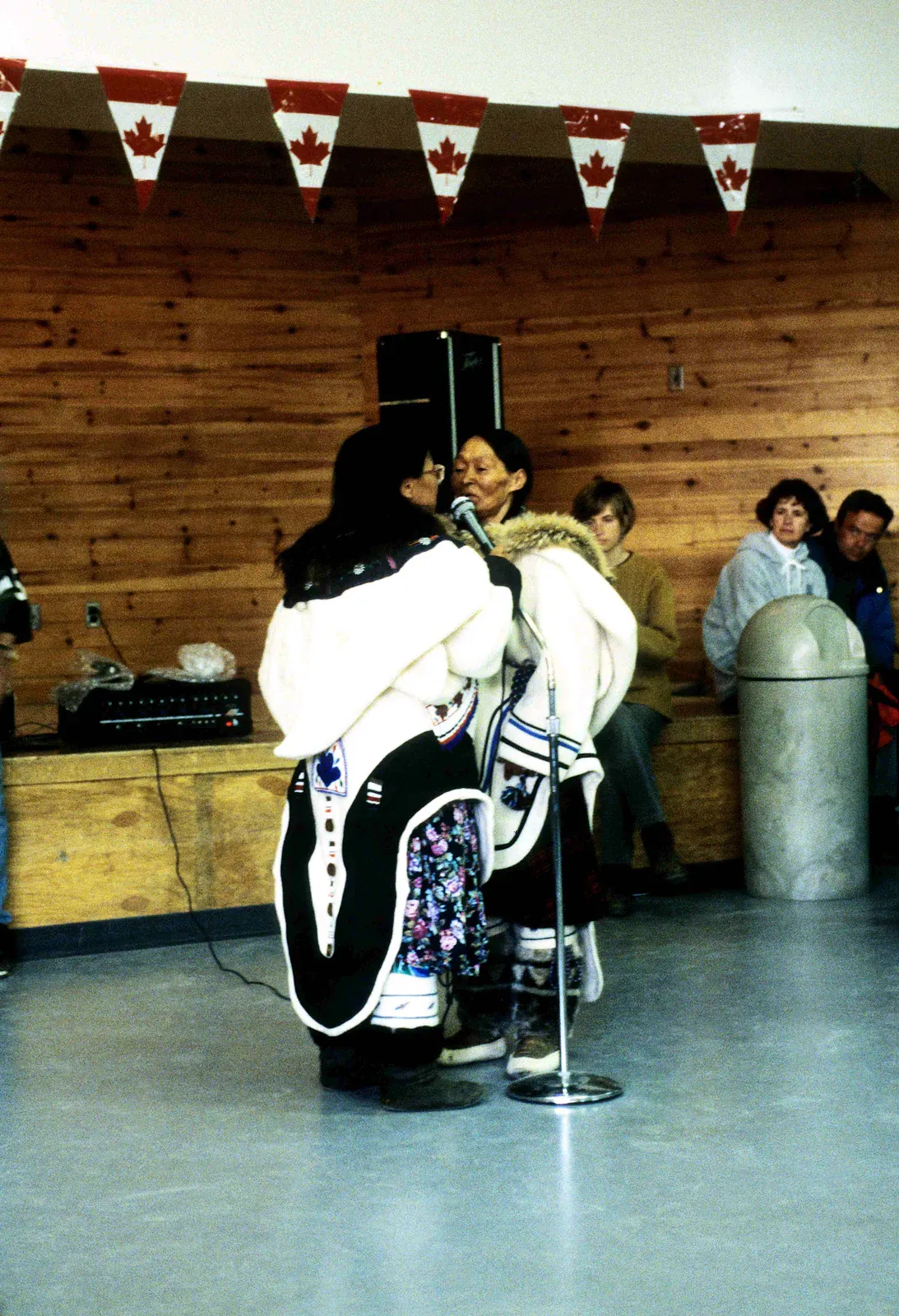
Katajjaq, also called katajjaniq in Nunavik in northern Quebec, was a form of entertainment among Inuit women while men were away hunting, and it was seen as a vocal and breathing game more than as music. Two women stand face to face, often holding each other’s arms. One sets a short rhythmic pattern and repeats it with brief silences, and the other fills the gaps with a pattern of her own. The sounds are voiced and unvoiced, on inhalation and on exhalation, and can imitate wind, water and animals. The first to run out of breath or lose the rhythm laughs or stops and is eliminated. A round lasts between one and three minutes.
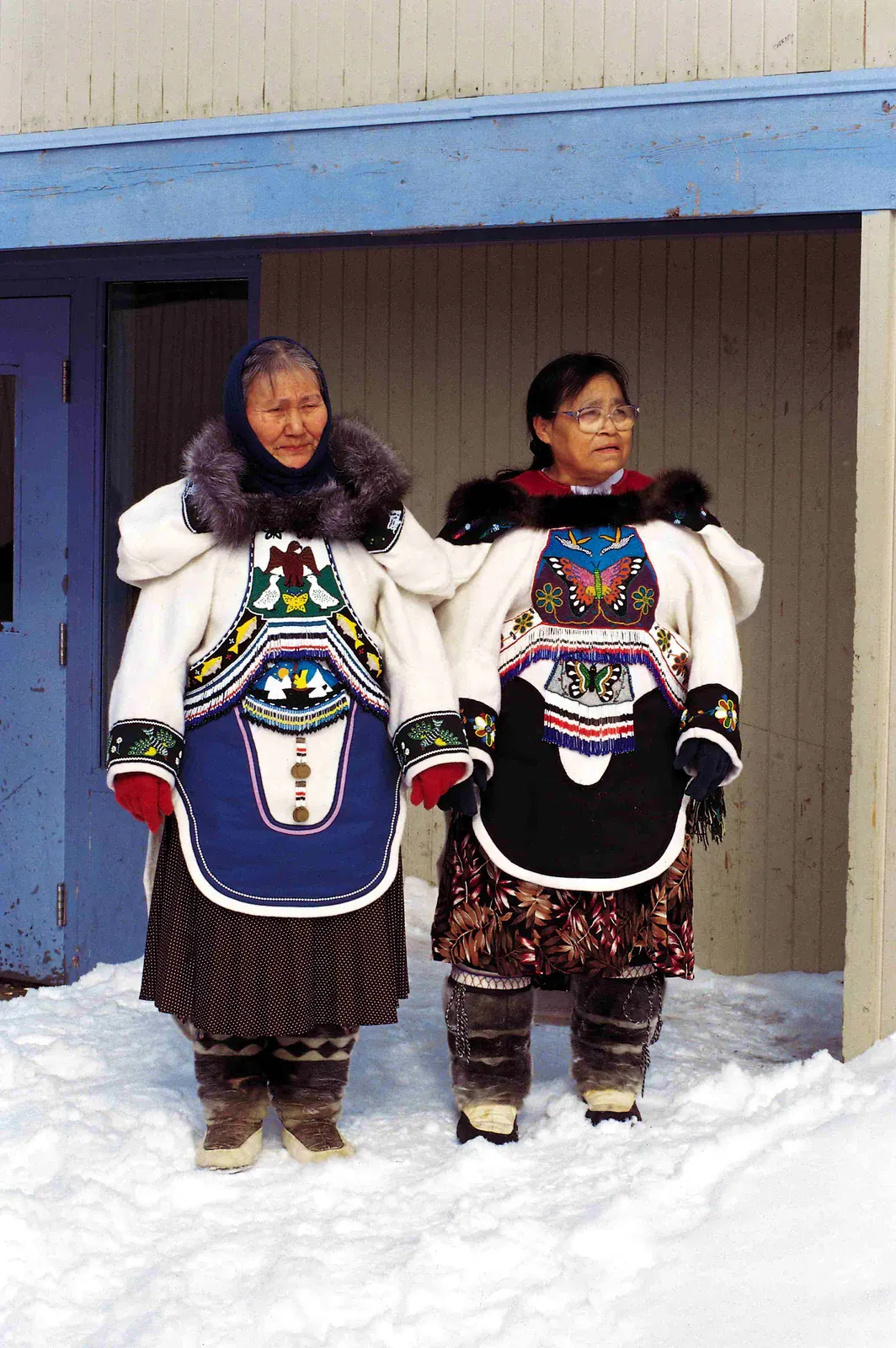
Katajjaq no longer serves to bring hunters home or attract animals, but it keeps its roles of entertainment and group cohesion and appears at holidays and political events in Nunavik. In 2014 the Quebec government made it the first cultural item to receive intangible cultural heritage status in the province.
Sardinia, Tibet, southern Africa and Japan
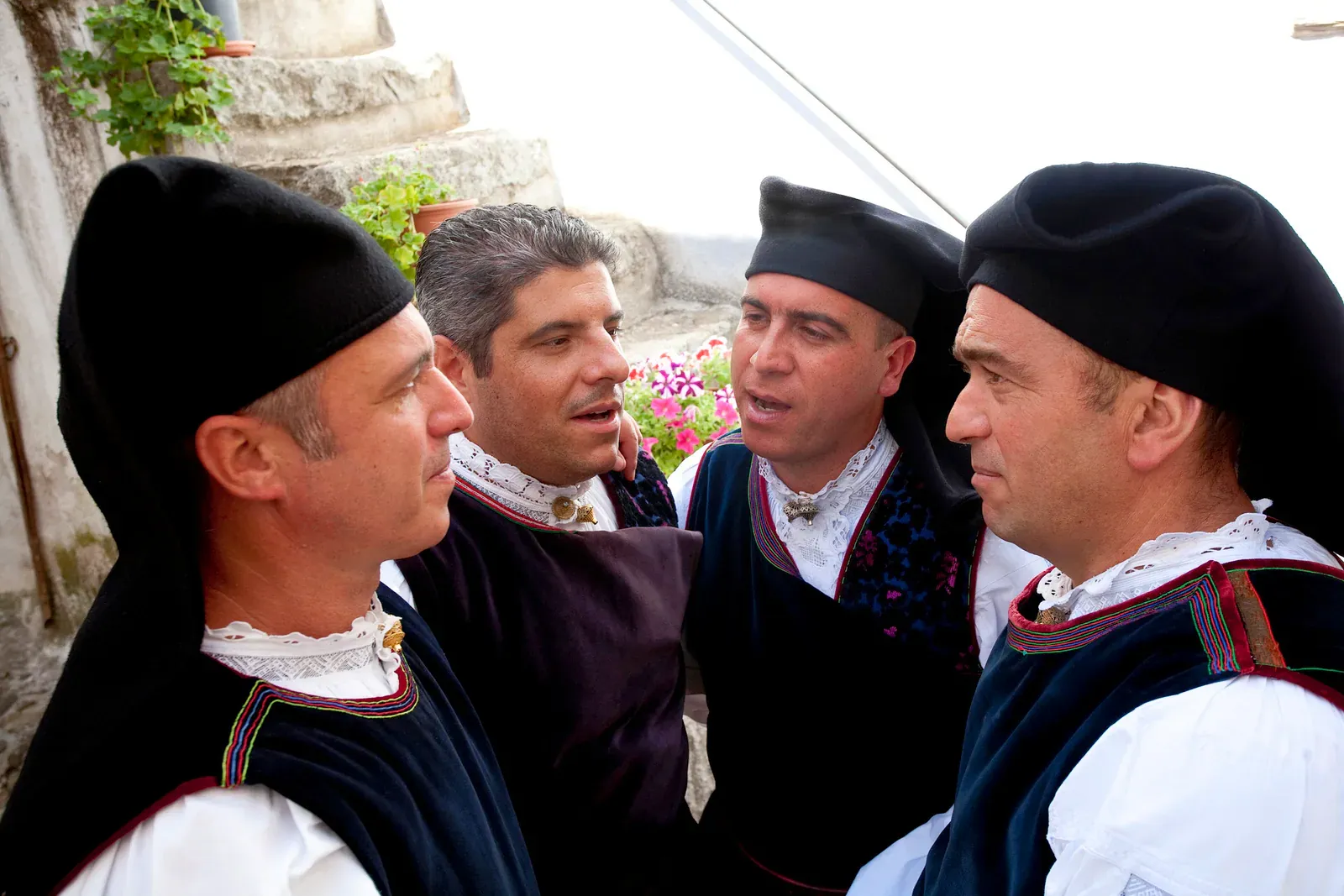
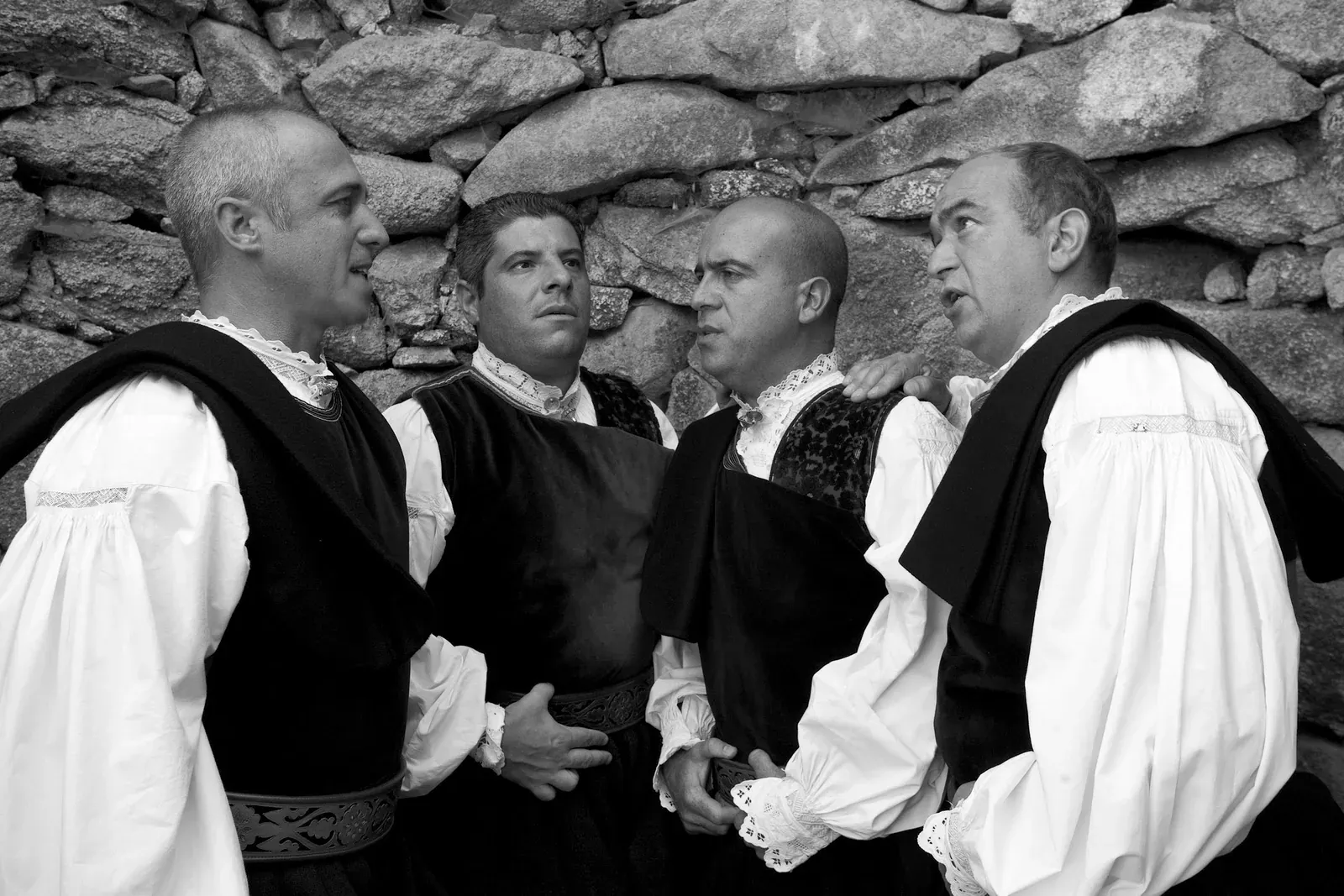
In Sardinia, mainly in the Barbagia, four men stand in a close circle and sing the cantu a tenore. The oche carries a solo poem, the mesu oche, contra and bassu answer with a chorus of nonsense syllables, and the contra and bassu use a throat technique. The bassu sings the same note as the oche and the contra a fifth above the bassu. The sound differs from village to village so clearly that a listener can name the village. UNESCO recognised the tradition in 2005. See Cantu a tenore for the full story.
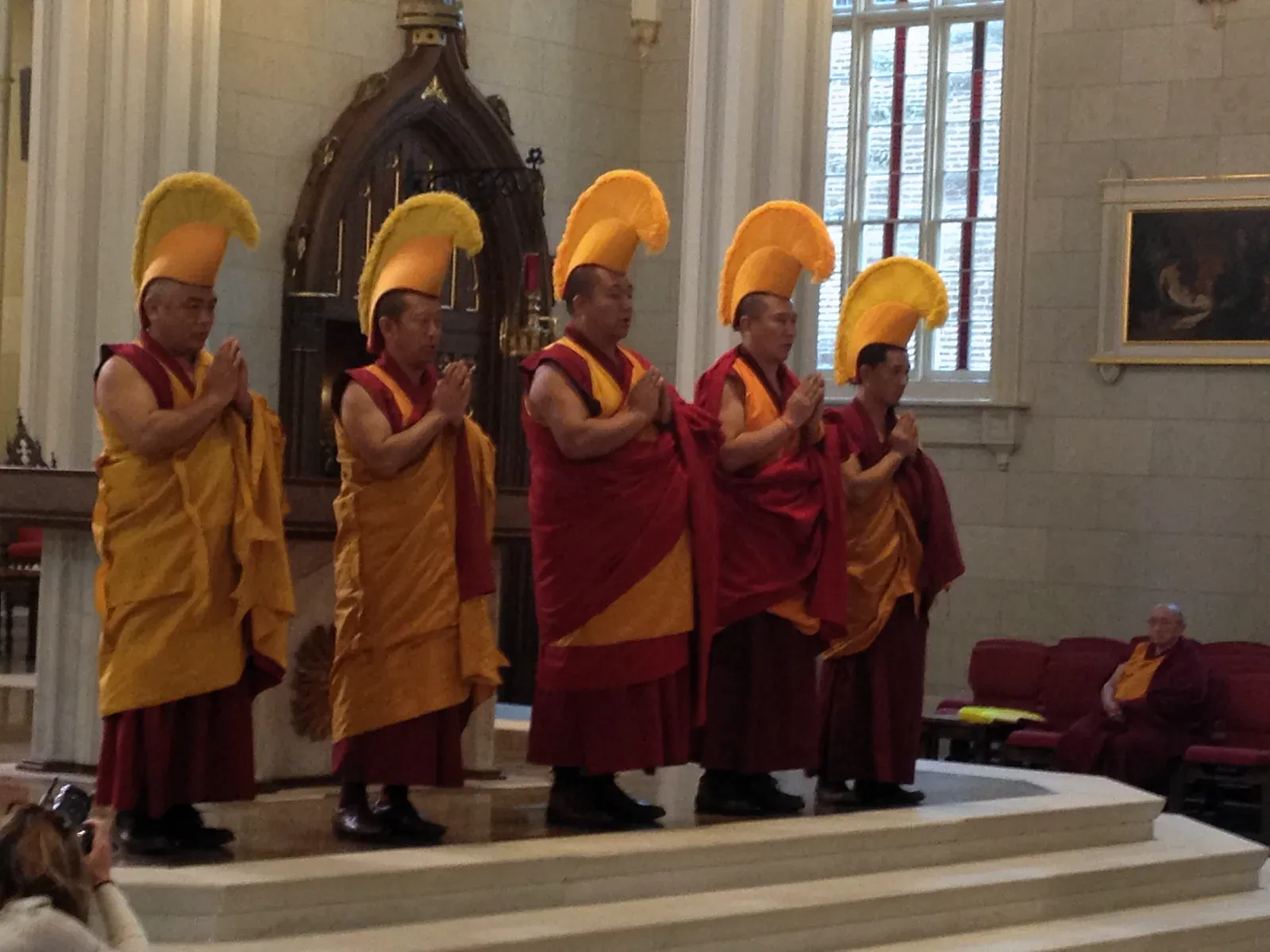
Tibetan Buddhist chanting uses the lowest register of the voice in ceremonies and prayers, often with more than one monk chanting at once. Named styles include gyuke, the lowest, along with dzoke and gyer. Some Thembu Xhosa women of South Africa sing umngqokolo, a low, rhythmic style similar to Tuvan kargyraa, often in call and response over complicated polyrhythms. The Ainu of Hokkaido had a related duet called rekuhkara, in which one woman formed a tube with her hands and chanted into her partner’s mouth cavity. It ended in 1976, when its last practitioner died.
Western ears, 1968-1991
Interest outside the source cultures started in the 1960s. Collegium Vocale Köln began using overtone techniques in 1968, the year Karlheinz Stockhausen wrote Stimmung, and the researcher Trần Quang Hải began studying overtone singing in Paris in 1969. David Hykes founded Harmonic Chant and the Harmonic Choir in New York in 1975. Hugo Zemp’s 1989 film The Song of Harmonics, made with Trần, won prizes in Estonia, France and Canada.
World-music circuit, 1992-2003
Touring ensembles carried the practices onto festival stages. Huun-Huur-Tu formed in 1992 and released The Orphan’s Lament in 1994. The Inuit duo Tudjaat formed in 1994 around Madeleine Allakariallak and Phoebe Atagotaaluk. The Tenores di Bitti brought Sardinian polyphony to the Real World audience with S’amore ’e mama in 1996, and Lester Bowie and Ornette Coleman have worked with them. The documentary Genghis Blues, about the blues singer Paul Pena’s trip to a Tuvan competition, won the documentary award at Sundance in 1999 and was nominated for an Oscar.
Heritage and crossover, 2004-2015
Tanya Tagaq, an Inuk singer from Cambridge Bay in Nunavut, became widely known through her work with Björk, including the 2004 album Medúlla. She developed a solo form of Inuit throat singing while studying visual arts in Nova Scotia, because she did not have a singing partner. UNESCO listed the Sardinian tenore in 2005 and Tuvan throat singing in 2009. Her Animism, released in May 2014 on Six Shooter Records, won the Polaris Music Prize on 22 September and the 2015 Juno Award for Aboriginal Recording of the Year.

Heavy and viral, 2016 onward
Tagaq’s Retribution came out in October 2016 and sold out a Toronto show a month later. In the same year, students of the Mongolian State Music and Dance Conservatory formed The Hu in Ulaanbaatar, with the producer Bayarmagnai Dashdondog choosing the members. They paired throat singing and the morin khuur with heavy guitars and called it hunnu rock. Two videos posted in late 2018, Yuve Yuve Yu and Wolf Totem, led to the 11 April 2019 chart result in which Wolf Totem reached number one on Billboard’s Hard Rock Digital Song Sales, the first Mongolian act to top a Billboard chart.
Characteristics
The main sound families are overtone singing, with two simultaneous pitches from one voice, undertone singing, which adds subharmonics below the sung note, and growl and ventricular-fold voices such as kargyraa, Tibetan gyuke and the Sardinian contra and bassu. Katajjaq differs: it depends on rhythm and breath exchange between two people, not on a held note.
Tempo exists only where there is a pulse. Measured recordings by Tagaq, Sainkho Namtchylak and The Hu fall between about 75 and 130 beats per minute.
Instruments and production
Mongolian and Tuvan acts often add a horsehead fiddle, the morin khuur in Mongolia and the igil in Tuva, as well as the tovshuur lute and the jaw harp. The Hu mixes these with distorted guitars and a rock rhythm section, while Tagaq performs as a solo vocalist with a band, extending a form that is traditionally a duet.
Notable recordings
Huun-Huur-Tu’s Ancestors, from The Orphan’s Lament, sets Tuvan overtones over an igil line and a horse-gait pulse. Tagaq’s Uja, from Animism, builds around her solo vocal and a pulsing band, and Retribution pushes the voice to a harsher register. The Hu’s Wolf Totem is the usual entry point for rock listeners.
Culture
The social function differs by region. Katajjaq is a contest among women, taught by elders who correct sloppy rhythm much as a Western vocal coach would. The tenore is male and communal, tied to village identity. Tibetan chant belongs to monasteries, and in Tuva and Mongolia the singing is linked to pastoral life.
Legacy
Throat singing has moved from local custom to film, concert halls and heavy music. Western performers teach it in workshops and overtone choirs, composers write for it, and singers such as Tagaq and The Hu show that its vocabulary works in rock. Listings in 2005, 2009 and 2014 show institutions treating the practices as heritage.
Misconceptions
It is often said that throat singing and overtone singing are the same. They overlap, since many throat styles contain overtones, but the terms describe different things: one a family of voice qualities, the other a technique of resonance. A second claim is that the practices share a single source. Inuit, Sardinian, Xhosa and Tibetan styles developed in unrelated cultures that happened to find similar voice effects.
A third claim is that throat singing is exclusively male. Katajjaq is traditionally sung by women, umngqokolo is sung by women, and Tuvan women now perform every style.
Frequently asked questions
What is throat singing?
Throat singing is the name for several guttural vocal traditions, including Tuvan and Mongolian khoomei, Inuit katajjaq, Sardinian cantu a tenore, Xhosa umngqokolo and Tibetan chant. They differ in technique.
Where does throat singing come from?
It has no single origin. The best-known centre is Tuva, Mongolia and the Altai, and separate traditions exist in northern Canada, Sardinia, South Africa and Tibet.
What is the difference between throat singing and overtone singing?
Overtone singing is a technique that produces two pitches by amplifying harmonics, while throat singing is a broader label for guttural voice. Some styles, such as Tuvan kargyraa, use both.
Who are the best-known throat singers today?
Tanya Tagaq of Nunavut, Huun-Huur-Tu of Tuva, the Hu of Mongolia and the Tenores di Bitti of Sardinia are the best-known performers.
How do Inuit women sing katajjaq?
Two women stand face to face and trade short rhythmic patterns of breath until one cannot keep up and laughs or stops.
Sound
Sound sheet
Anatomy of a track
| # | Part |
|---|---|
| 1 | Leading line or drone |
| 2 | Second voice enters in the gaps or on the chorus syllables |
| 3 | Layered overlap of patterns or voices |
| 4 | End when a singer runs out of breath or the chorus closes |
Signature sounds
- Two or more pitches from one voice
- Face-to-face duet traded in breaths (katajjaq)
- Four-voice tenore with bassu and contra on a throat register
- Low growl register (kargyraa, umngqokolo, Tibetan gyuke)
Techniques
- Overtone singing
- Undertone singing
- Katajjaq
- Tenore throat voices
Keys and modes
Harmonic series over a drone. Melodies pick harmonics of a held fundamental, as in Tuva and Mongolia.
Tuning
Overtone melodies from the natural harmonic series, not equal temperament; Sardinian contra sings a fifth above the bassu
Vocals
Solo, duet or four-voice chorus, mostly unaccompanied; modern acts add fiddles, lutes or rock bands.
Scenes
Where it happened
Where and when the sound lived: one bar per city on a shared timeline.
Europe
North America
Asia
Active scenes
Peak 3, 2016-2025
Village in the Barbagia and home of the Tenores di Bitti, the best-known Sardinian tenore.
Northern Quebec territory where katajjaniq is a living tradition at holidays and celebrations; Quebec gave it heritage status in 2014.
Where conservatory-trained throat singers formed The Hu.
Culture
Culture markers
- The breath contest
In katajjaq two women face each other and trade rhythmic patterns until one laughs or stops, usually within one to three minutes.
Ritual - Village voice
Each Sardinian village tenore sings with a style so distinct that listeners can name the village from the sound.
Ritual - Monastic chant
Tibetan monks use the lowest voice register, called gyuke, in ceremonies and prayers, often several at once.
Ritual
Media
Key media
- 1989The Song of Harmonics
by Hugo Zemp. Film with researcher Tran Quang Hai on overtone singing, awarded in Estonia, France and Canada.
Film - 1999Genghis Blues
by Roko Belic. Documentary of blues singer Paul Pena's journey to the Tuvan throat-singing competition.
Film
Glossary
Terms on this page
Sardinian polyphony for four men: oche (solo), mesu oche, contra and bassu, the last two using throat techniques.
Inuit throat singing: a game between two women, face to face, of alternating breathy rhythmic patterns.
A technique producing two distinct pitches at once by shaping the mouth and pharynx to amplify harmonics of a fundamental.
An umbrella term for guttural vocal practices worldwide; it is not a precise acoustic category and is not a synonym of overtone singing.
A low, rhythmic throat style of Thembu Xhosa women in South Africa, similar to Tuvan kargyraa.
Singing with subharmonics, at ratios such as 1:2, 1:3 and 1:4 below the sung pitch.
Central Asian and Caucasian family