Tuvan throat singing
Tuvan throat singing is the overtone and undertone singing of Tuva, a pastoral art with styles such as khoomei, sygyt and kargyraa, listed by UNESCO in 2009.
Tuva, 1944
Central Asian and Caucasian family

Born
1944
Tuva
Subgenres
7
Documented branches
Links
15
Genres it drew on or shaped
Tempo
95-170 BPMLineage
Family tree
Grew out of
Tuva
Tuvan throat singing
Led to (7)
Timeline
Era by era
From the first sparks to today. Select a dot to read the story behind it.
- Herding song and state ensembles
1944 to 1987
- Discovery abroad
1988 to 1991
- Touring ensembles
1991 to 1999
- Heritage and fusion
2000 to today
Eras
Moments
- 1 Herding song and state ensembles, 1944 to 1987
- 2 Discovery abroad, 1988 to 1991
- 3 Touring ensembles, 1991 to 1999
- 4 Heritage and fusion, 2000 to today
1944
Herding song and state ensembles
Tuva ended its independent status in 1944 and became part of the Soviet Union. Khoomei stayed a herders' art of the steppe and river valleys while state folk ensembles such as Sayani took it onto stages.
- 1921People's Republic of Tannu TuvaTuva becomes an independent state, a status it keeps until 1944.
- 1944End of Tuvan independenceTuva leaves independent status and is absorbed into the Soviet Union.
1988
Discovery abroad
A BBC film on Richard Feynman's wish to reach Tuva in 1988, a Smithsonian Folkways anthology in 1990 and the book Tuva or Bust! in 1991 introduced Tuvan throat singing to Western audiences.
- 1988The Quest for Tannu TuvaThe BBC Horizon film follows physicist Richard Feynman's attempt to reach Tuva and shows Tuvan throat singing to a wide audience.
- 1990Tuva: Voices from the Center of AsiaSmithsonian Folkways issues an early Western release of Tuvan music.
1991
Touring ensembles
Yat-Kha formed in 1991 and Huun-Huur-Tu in 1992. Albums from 1993 on, Kongar-ool Ondar's American career and the film Genghis Blues in 1999 made khoomei a fixture of world-music festivals.
- 1991Albert Kuvezin founds Yat-Kha in MoscowTuvan throat singing meets electric guitar and electronics.
- 1991Tuva or Bust!Ralph Leighton's book on the Feynman quest ships with a flexi disc of Tuvan throat singing.
- 1992Huun-Huur-Tu form in TuvaThe quartet, first called Kunggurtug, takes traditional song and throat singing to Western festivals.
- 1992Ondar wins an international contestKongar-ool Ondar's win brings invitations to Europe and the United States.
- 199360 Horses in My HerdHuun-Huur-Tu's first album, recorded in London and Mill Valley, California.
- 1994The Orphan's LamentThe second Huun-Huur-Tu album, recorded in New York City and Moscow with Anatoli Kuular in the line-up.
- 1998Tyva Kyzy foundedThe ensemble, directed by Choduraa Tumat, becomes the first women's group in Tuva to perform all styles of throat singing.
- 1999Genghis Blues wins at SundanceThe documentary on blind American singer Paul Pena's trip to Tuva wins the festival's documentary Audience Award and an Academy Award nomination follows.
- 1999Alash formed at Kyzyl Arts CollegeThe students, first named Changy-Xaya, later become Tuva's best-known younger ensemble.
2000
Heritage and fusion
A new generation led by Alash trained at the Kyzyl Arts College and toured abroad. UNESCO listed Tuvan throat singing as intangible heritage in 2009, and rock and avant-garde projects extended the styles.
- 2004Alash wins the International Khoomei SymposiumThe ensemble takes first prize in the symposium's competition.
- 2006Alash tours the United StatesA Library of Congress invitation starts yearly American tours with school workshops.
- 2009UNESCO lists Tuvan throat singingIt enters the Representative List of the Intangible Cultural Heritage of Humanity.
Listening path
Start listening
A short path from an easy way in to the deep end. Thumbnails come from YouTube; the player loads only when you press play.
- 01
Huun-Huur-Tu, 1993
The whistling sygyt style at the centre of the group's debut album.
- 02
Huun-Huur-Tu, 1994
A Huun-Huur-Tu piece from The Orphan's Lament, the album that followed the debut and widened their audience abroad.
- 03
Huun-Huur-Tu, 1997
A song from If I'd Been Born an Eagle, the 1997 album recorded in the Netherlands.
- 04
Huun-Huur-Tu, 2008
A Kaigal-ool Khovalyg composition from Mother Earth! Father Sky!, showing the mature ensemble.
- 05
Huun-Huur-Tu, 2010
A traditional-text track from Ancestors Call, a late album of the group.
Facts
| Family | Central Asian and Caucasian |
| Origin | Tuva, Russia |
| Emerged | Ancient pastoral-animist practice |
| Status | Active |
| Tempo | 95 to 170 BPM |
| Subgenres | 7 |
Tuvan throat singing is the vocal art of Tuva, a republic of Russia on the Mongolian border, in which one singer sounds a low fundamental and shapes its overtones into a second, whistling or flute-like melody. The best-known style is khoomei, a word also used for the whole tradition.
It grew out of pastoral life on the steppe and in the river valleys, and it belongs to the wider Central Asian and Caucasian music family. UNESCO added Tuvan throat singing to its Representative List of the Intangible Cultural Heritage of Humanity in 2009.
Origins
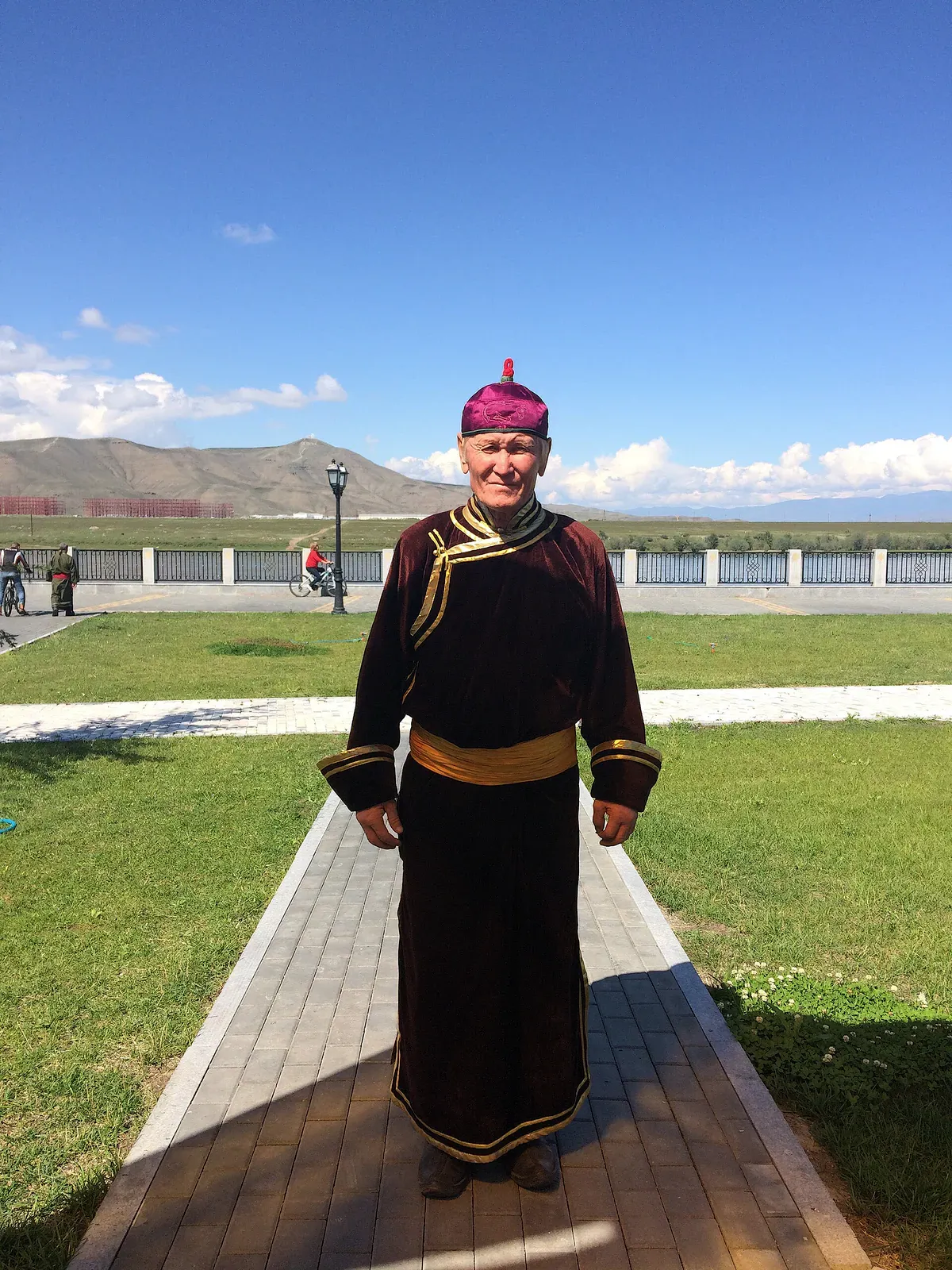
The history of the technique reaches far back, and no firm date for its beginning exists. Many male herders could throat sing, and ethnomusicologists tie khoomei to pastoral animism, the belief that natural objects have a spirit expressed in their sound as well as their shape. Singers traditionally travel into the countryside to find the right river or mountainside, and the open landscape lets the sound carry a long way.
Tuva was an independent state, the People’s Republic of Tannu Tuva, from 1921 to 1944, after which it became part of the Soviet Union. Throat singing stayed a herders’ art in daily use: women who knew it sang while milking cows and to lull their children, and the styles borrow from the sounds of birds, brooks and horses.
Herding song and state ensembles, 1944-1987
Within the Soviet Union the art moved from the yurt to the platform. State folk ensembles such as Sayani presented Tuvan song on stage, and several of the musicians who later became known abroad passed through them, among them Kongar-ool Ondar and Sainkho Namtchylak.
Discovery abroad, 1988-1991
Western awareness began with a story about a scientist. The 1988 BBC Horizon film The Quest for Tannu Tuva followed the physicist Richard Feynman’s wish to reach Tuva, and it was repackaged for American television in 1989. Smithsonian Folkways released the anthology Tuva: Voices from the Center of Asia in 1990, an early Western release of Tuvan music, and Ralph Leighton’s 1991 book Tuva or Bust! included a flexi disc of throat singing.
Touring ensembles, 1991-1999
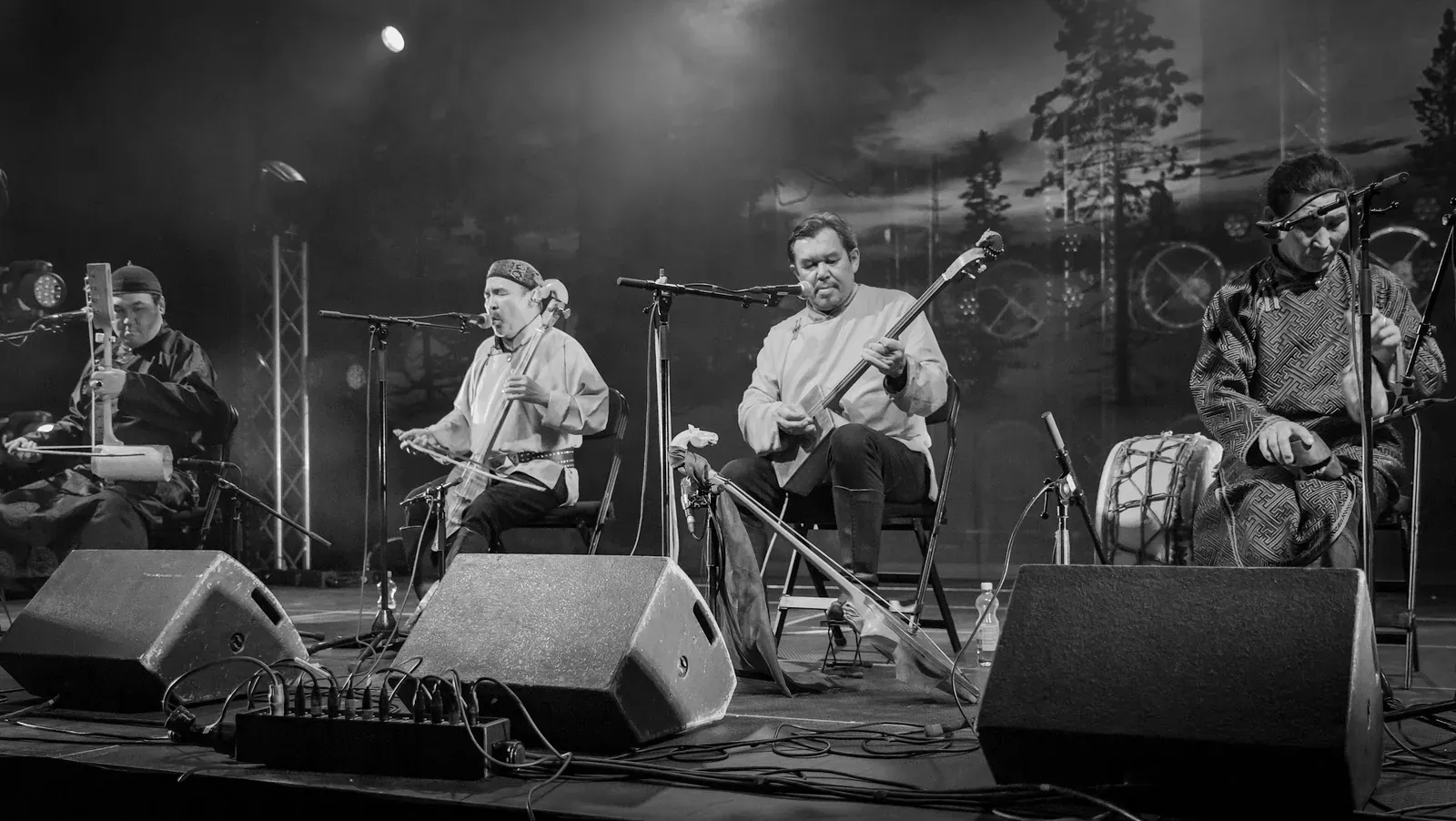
The early 1990s produced the groups that defined the sound abroad. Albert Kuvezin founded Yat-Kha in Moscow in 1991, joining his deep kanzat kargyraa to electric guitar and electronics. Huun-Huur-Tu began in 1992 as the quartet Kunggurtug, founded by Kaigal-ool Khovalyg, the brothers Alexander and Sayan Bapa, and Kuvezin, and it concentrated on traditional songs full of horses and steppe imagery. Its first album, 60 Horses in My Herd, was recorded in London and Mill Valley, California, and appeared in 1993 on Shanachie. The Orphan’s Lament followed in 1994 with Anatoli Kuular in the line-up.
Kongar-ool Ondar became the face of khoomei for Western audiences. After a 1992 contest win brought invitations to Europe and the United States, he appeared on American television, invited the blind blues musician Paul Pena to Tuva, and featured in the film Genghis Blues, which won the documentary Audience Award at Sundance in 1999 and received an Academy Award nomination. His album Back Tuva Future was released on Warner Bros. Records. In the same decade Sainkho Namtchylak, who had lived in Vienna since 1991, recorded albums such as Out of Tuva (1993) that placed throat singing among avant-garde jazz and electronics, and the women’s ensemble Tyva Kyzy formed in 1998.

Heritage and fusion, 2000 onward
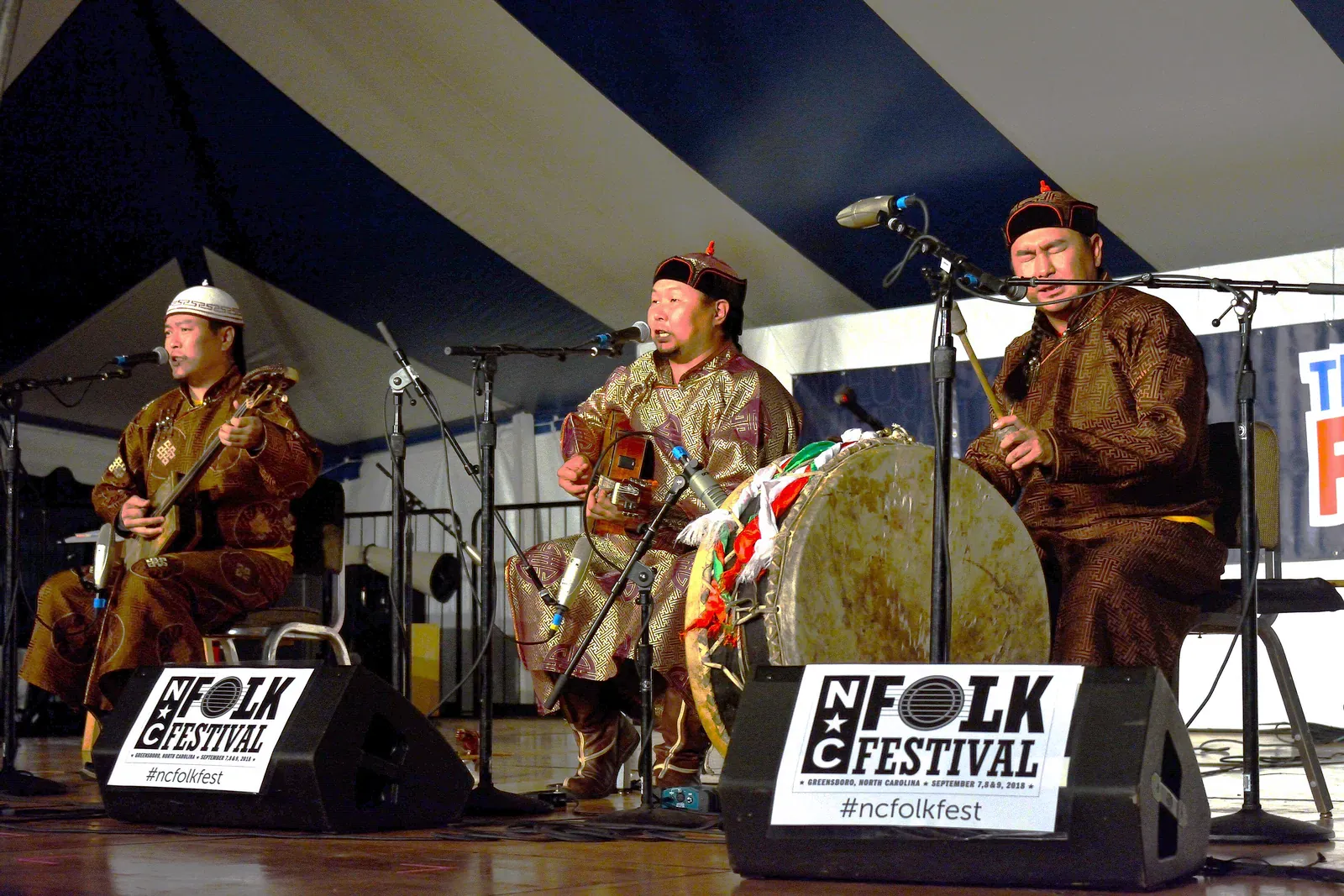
Alash, formed in 1999 at the Kyzyl Arts College, represents the generation trained in the capital rather than in the herding camp. It won first prize at the International Khoomei Symposium competition in 2004, toured the United States at the invitation of the Open World Leadership Center at the Library of Congress in 2006, and has returned yearly since, giving school workshops. In 2008 and 2009 the group toured with Béla Fleck and the Flecktones. Huun-Huur-Tu changed members over the years and kept recording, with albums such as Mother Earth! Father Sky! (2008) and Ancestors Call (2010) on the German label JARO Medien.
Characteristics
A throat singer hums a fundamental pitch and manipulates the overtones that belong to it. Melodies are usually made from the sixth to the thirteenth partials of the harmonic series, and the fundamental sits around E or G below middle C. Pitch changes come from movements of the lips, tongue, jaw and throat rather than from the vocal folds alone.
Three basic styles are usually named. Khoomei is the softer one, with two or three harmonics sounding one or two octaves above the drone. Sygyt, literally whistling, has a mid-range drone and piercing, flute-like harmonics produced with the tongue sealed behind the teeth. Kargyraa is deep and growling and uses the vestibular folds to produce an undertone an octave below the fundamental; it is closely related to the bass voice of Sardinian cantu a tenore. Effects are added to these: borbangnadyr is a trill like birds and brooks, ezengileer a pulse that imitates a horse’s gait, and chylandyk combines sygyt with kargyraa.
Instruments and production
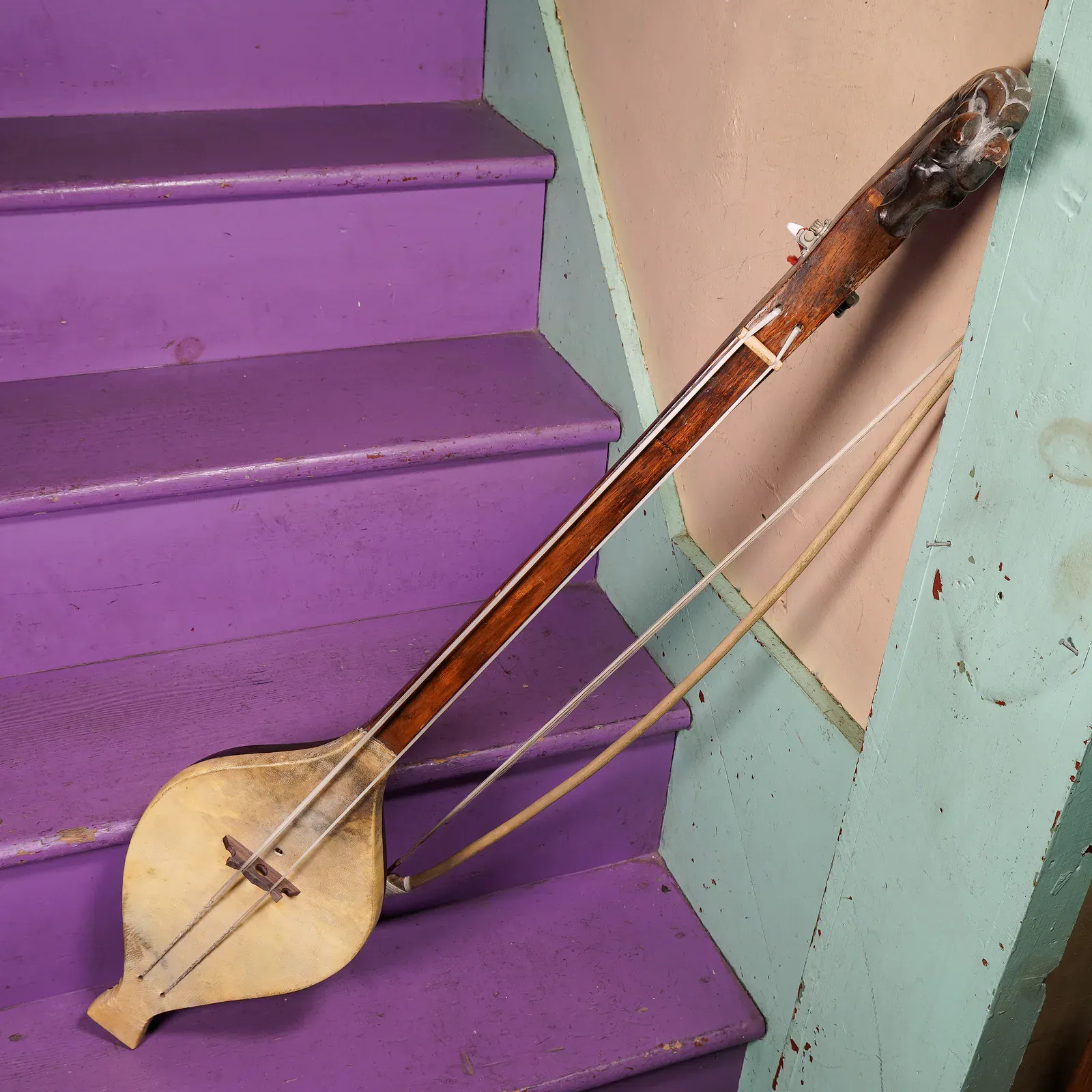
Throat singing is often unaccompanied, but ensembles pair it with a small set of Tuvan instruments. The igil is a two-string horsehead fiddle played upright, the doshpuluur a long-necked lute, the byzaanchy a four-string spike fiddle, and the khomus a jaw harp. A frame drum and, in modern groups, guitar and bass complete the sound. The rock projects of Yat-Kha add amplified guitar and drums to the traditional vocal styles.
Culture

The art carried restrictions. Women were long said to risk infertility if they sang khoomei, and few did so in public, although some sang while working at home. The International Symposium of Khoomei and groups such as Tyva Kyzy opened public performance to women, and Sainkho Namtchylak became one of the best-known female voices.
Competitions such as the International Khoomei Symposium keep the repertoire alive in Tuva, and teaching centres such as the one Ondar opened in Kyzyl pass the styles to new singers.
Legacy
Tuvan throat singing reached rock, jazz, film and classical settings. Yat-Kha built a career on the combination of kargyraa and rock, and Huun-Huur-Tu worked with Western ensembles. The Mongolian band The Hu, which pairs throat singing with heavy rock, belongs to a related Mongolian tradition. The UNESCO listing in 2009 gave the practice formal recognition, and Tuvan singers continue to teach and record, with Alash and Huun-Huur-Tu among the most active.
Misconceptions
Throat singing is not two singers. One person produces the fundamental and the overtone together, and the Tuvan styles include both overtone singing and undertone singing, depending on the technique.
It is not a men-only art by nature. The taboo was a belief about fertility, not a limit of the voice, and women now perform every style, as Tyva Kyzy shows.
It is also not unique to Tuva. Related singing exists in Mongolia, Inner Mongolia and the Altai, and the kargyraa mechanism matches the bass of Sardinian cantu a tenore, even though the cultures developed separately.
Frequently asked questions
What is Tuvan throat singing?
Tuvan throat singing is the overtone and undertone singing of Tuva, in which a performer holds a drone and shapes overtones into a melody. Its three basic styles are khoomei, sygyt and kargyraa.
Where does Tuvan throat singing come from?
It comes from Tuva, a Russian republic north of Mongolia, where herders practiced it as part of a pastoral animist way of life. The date of its beginning is not known.
Who are the best-known Tuvan throat singers?
Huun-Huur-Tu, Yat-Kha, Alash, Kongar-ool Ondar and Sainkho Namtchylak are among the best-known performers outside Tuva.
What is the difference between khoomei and kargyraa?
Khoomei is a softer style with two or three harmonics above a drone, while kargyraa is a deep growl that adds an undertone an octave below the fundamental.
Sound
Sound sheet
Anatomy of a track
| # | Part |
|---|---|
| 1 | Sustained drone on the fundamental |
| 2 | Overtone melody over the drone |
| 3 | Style change or added effect such as borbangnadyr |
| 4 | Song or instrumental section with igil or doshpuluur |
Signature sounds
- Melody drawn from the 6th to 13th partials of the harmonic series
- Low kargyraa undertone below the voice
- Horse-gait rhythms in ezengileer and igil pieces
- Lyrics about horses, the steppe and mountains
Techniques
- Khoomei
- Sygyt
- Kargyraa
- Borbangnadyr
- Ezengileer
Keys and modes
Harmonic series on a low drone. The fundamental sits around E or G below middle C and melodies pick overtones above it.
Tuning
Overtone melodies from the natural harmonic series, mostly the 6th to 13th partials, not equal temperament
Vocals
A male singer holds a drone and shapes overtones into melody, usually unaccompanied or with igil and doshpuluur; women now also perform all styles.
Scenes
Where it happened
Where and when the sound lived: one bar per city on a shared timeline.
Europe
Active scenes
Peak 3, 1999-2025
Capital of Tuva; Alash formed at its Arts College and Kongar-ool Ondar opened a centre for Tuvan traditional arts.
Albert Kuvezin founded Yat-Kha there, and Huun-Huur-Tu's second album was recorded in the city.
Home of Sainkho Namtchylak, who has lived in the city since 1991.
Culture
Culture markers
- Singing to the landscape
Ethnomusicologists tie khoomei to pastoral animism, and singers travel to a river or mountainside to find the right place for it.
Ritual - Taboo on women's throat singing
Women were long said to risk infertility if they sang khoomei; public performance by women grew with the International Symposium of Khoomei and groups such as Tyva Kyzy.
Ritual
Media
Key media
- 1988The Quest for Tannu Tuva
by BBC Horizon. Documentary on Richard Feynman's attempt to reach Tuva, repackaged for American television in 1989.
Film - 1990Tuva: Voices from the Center of Asia
by Smithsonian Folkways. An early anthology of Tuvan music for Western listeners.
Compilation - 1991Tuva or Bust!
by Ralph Leighton. Account of the Feynman quest, with a flexi disc of Tuvan throat singing.
Book - 1999Genghis Blues
by Roko Belic. Follows Paul Pena to Tuva and features Kongar-ool Ondar.
Film
Glossary
Terms on this page
A trill added to a style, imitating birds and brooks through quick tongue and lip movements.
Sygyt and kargyraa sung together, sometimes compared with chirping crickets.
A pulsing effect that imitates the rhythm of horseback riding, named for the stirrup.
A deep, growling style that uses the vestibular folds to produce an undertone.
The best-known Tuvan style, a soft sound with two or three harmonics above a drone; also the generic name for all Tuvan throat singing.
A whistling style with a mid-range drone and piercing, flute-like harmonics.
Central Asian and Caucasian family