Armenian traditional music
Armenian traditional music is the folk and minstrel music of Armenia, built on tetrachord modes, the apricot-wood duduk, ashugh songs and Kochari dances.
Armenia, around 450
Central Asian and Caucasian family
Born
around 450
Armenia
Links
3
Genres it drew on or shaped
Tempo
65-90 BPMLineage
Family tree
Timeline
Era by era
From the first sparks to today. Select a dot to read the story behind it.
- Gusans, ashughs and church song
450 to 1880
- Komitas and the written tradition
1881 to 1935
- Soviet stage and conservatory
1936 to 1988
- The duduk on the world stage
1989 to today
Eras
Moments
- 1 Gusans, ashughs and church song, 450 to 1880
- 2 Komitas and the written tradition, 1881 to 1935
- 3 Soviet stage and conservatory, 1936 to 1988
- 4 The duduk on the world stage, 1989 to today
around 450
Gusans, ashughs and church song
Professional gusan entertainers are named in texts of the 5th century. Semi-professional ashughs with kamancha and saz later took their place, and Sayat-Nova became the best-loved of them.
- 450Gusans named in early textsThe word gusan, for singers, instrumentalists, dancers and storytellers, first appears in Armenian texts of the 5th century.
- 700Khaz notation in useArmenian neumes called khazes have been used since the 8th century to write down mostly religious music.
1881
Komitas and the written tradition
Komitas, trained at Etchmiadzin and Berlin, collected and transcribed thousands of folk pieces and founded the Armenian national school of music before the events of 1915 broke him.
- 1881Komitas enters the Gevorgian SeminaryThe orphaned Soghomon Soghomonian is taken to Etchmiadzin, the church centre where he is educated for fourteen years.
- 1895Komitas ordained, then studies in BerlinAfter ordination as a vardapet he studies music in Berlin and returns to build a national tradition on Western training.
- 1910Komitas settles in ConstantinopleHe moves to bring Armenian folk music to wider audiences and is embraced by the city's Armenian communities.
- 1915Komitas arrested and deportedArrested in April with other Armenian intellectuals, he suffers a breakdown and spends his last years in hospitals, mostly in Paris.
around 1936
Soviet stage and conservatory
Folk music was taught in state conservatories and played by state ensembles. Duduk soloists such as Vache Hovsepyan and Djivan Gasparyan became professionals on Yerevan stages and radio.
- 1948Gasparyan joins Yerevan ensemblesDjivan Gasparyan becomes a soloist of the Armenian Song and Dance Popular Ensemble and the Yerevan Philharmonic Orchestra.
- 1978Folk music department at the Yerevan conservatoryKanon player and composer Khachatur Avetisyan founds the folk music department of the Komitas State Conservatory.
- 1983Duduk. Armenian folk songs on MelodiyaSoviet-era LP of Armenian folk songs on duduk, with Vachagan Avakian on the drone duduk.
1989
The duduk on the world stage
Gasparyan's international releases, film scores, a UNESCO listing for the duduk and groups such as the Shoghaken Ensemble carried the tradition abroad while Yerevan teachers kept it alive at home.
- 1989I Will Not Be Sad in This WorldGasparyan's album reaches Western listeners through All Saints Records and becomes his best-known record.
- 1996The Music of Armenia, Vol. 3: DudukGevorg Dabaghyan's duduk album appears on Celestial Harmonies, part of a series on Armenian music.
- 2000Gasparyan plays on the Gladiator scoreHans Zimmer wanted Gasparyan for the soundtrack, and his duduk in To Zucchabar became one of the score's best-remembered sounds.
- 2005UNESCO proclaims the dudukThe Armenian duduk and its music are proclaimed a Masterpiece of the Intangible Heritage of Humanity, and formally inscribed in 2008.
- 2010Gasparyan at EurovisionHe plays in the Armenian entry Apricot Stone in Oslo and becomes the oldest person to feature in a Eurovision performance.
- 2021Gasparyan diesThe master of the duduk dies on 6 July; UNESCO publishes a tribute.
Listening path
Start listening
A short path from an easy way in to the deep end. Thumbnails come from YouTube; the player loads only when you press play.
- 01
Gevorg Dabaghyan, 1996
A classic folk melody on solo duduk; listen for the breath-sustained line and the bent notes.
- 02
Gevorg Dabaghyan, 1996
Known as Brother Hunter, with words credited to the poet Avetik Isahakyan; Gasparyan recorded it too.
- 03
Hasmik Harutyunyan with the Shoghaken Ensemble, 2005
A lullaby sung over a folk ensemble, showing the vocal side of the tradition.
Facts
| Family | Central Asian and Caucasian |
| Origin | Armenia |
| Status | Active |
| Tempo | 65 to 90 BPM |
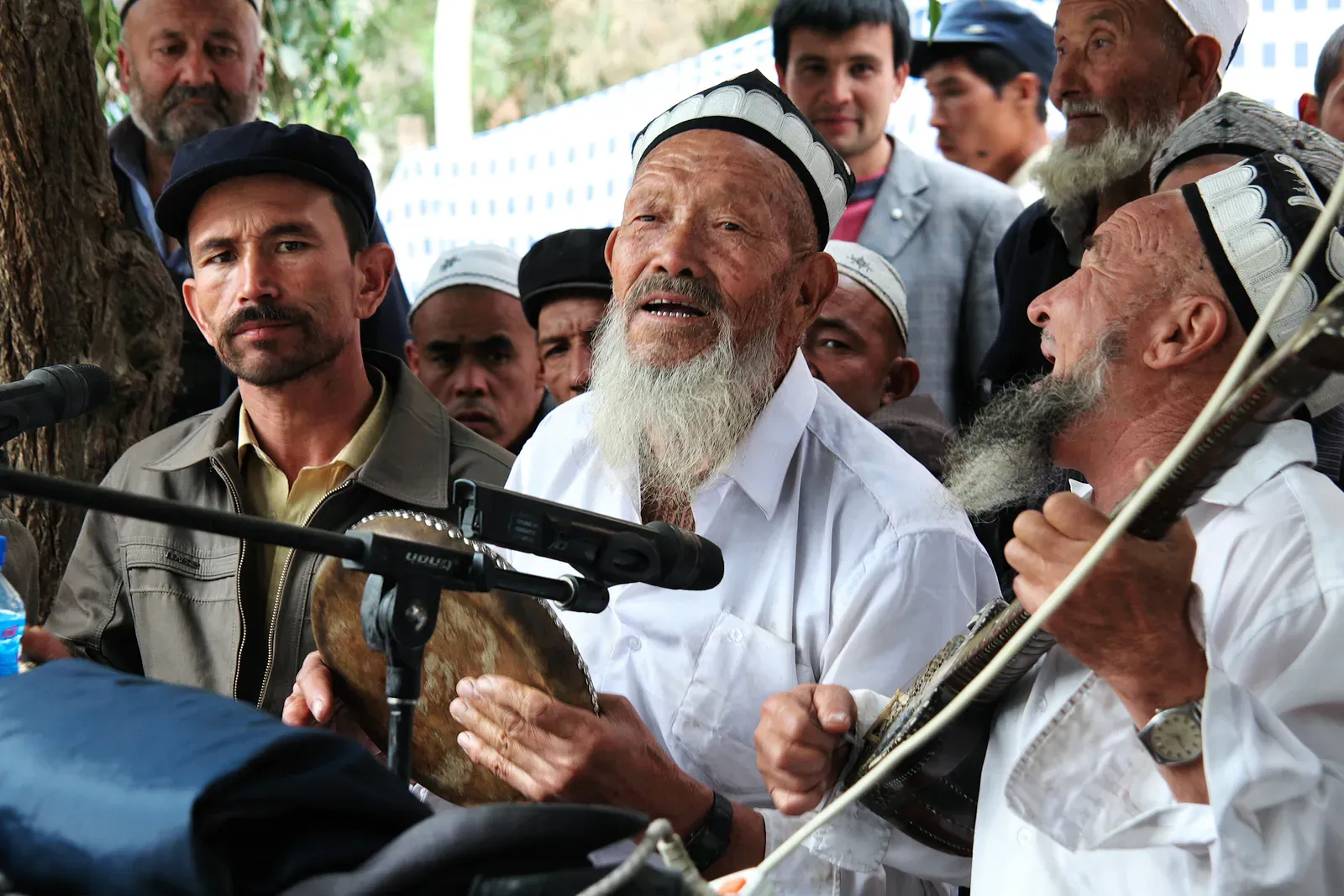
Armenian traditional music is the folk and minstrel music of Armenia and its diaspora, performed on instruments such as the duduk, kamancha, kanon and dhol.
Its melodies follow chained tetrachords rather than the European tonal system, its best-known voice is the apricot-wood duduk, and its repertoire runs from lullabies and troubadour songs to line dances such as Kochari. It belongs to the Central Asian and Caucasian family and shares a melodic basis with Armenian church chant, though the two repertoires are separate.
Origins
The music of Armenia grows out of the Armenian highlands, with roots traced to the third millennium BCE, and divides into secular and sacred strands. The folk strand rests on a system of tetrachords: the last note of one tetrachord also opens the next, so a melody can in theory continue along an endless scale. The sacred strand has its own notation, the khaz neumes, in use since the 8th century.
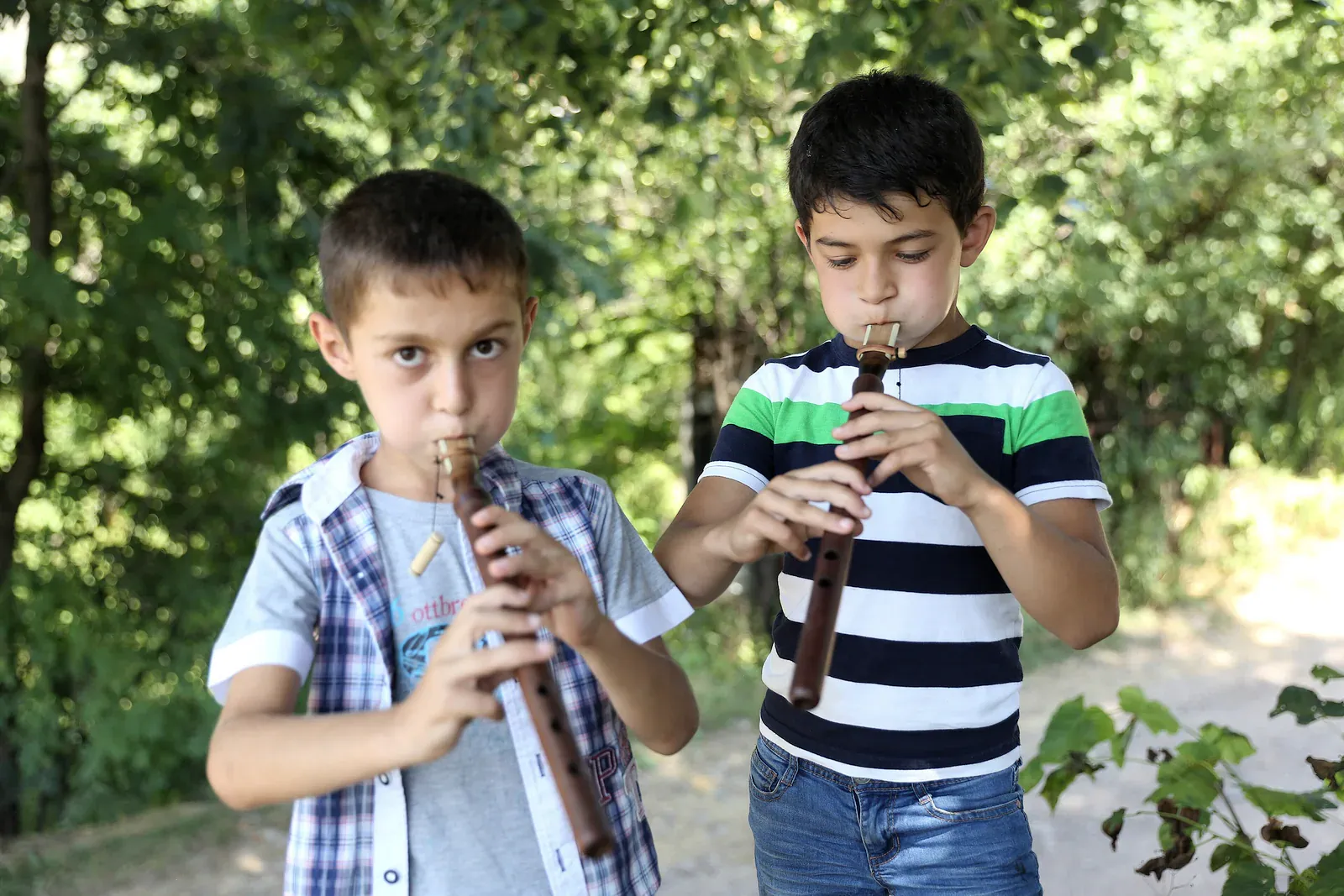
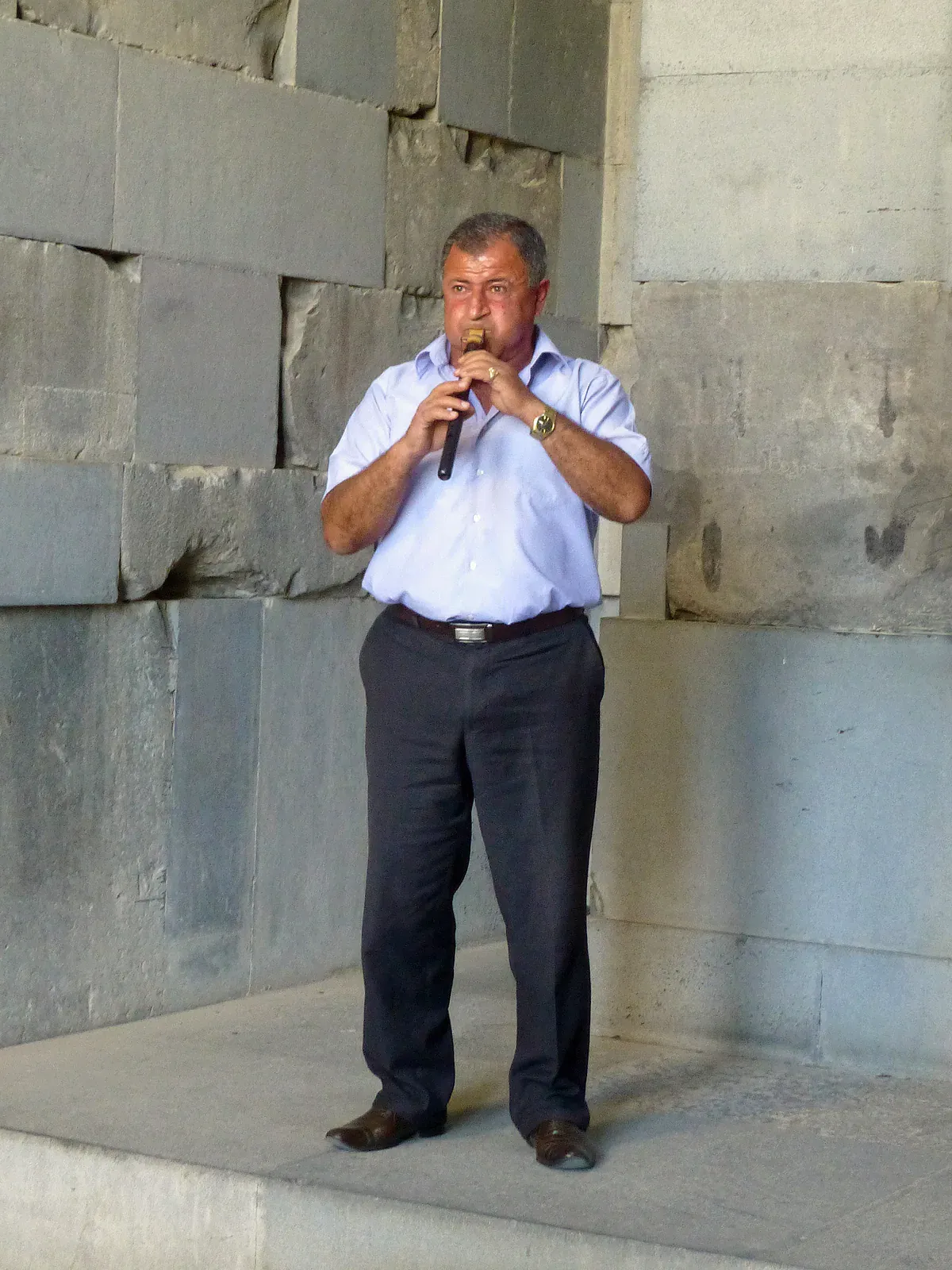
The duduk carries the tradition’s identity. Armenian musicologists cite evidence for it as early as 1200 BC, while Western scholars give an age of about 1,500 years, and it appears in medieval manuscripts. It is made of aged apricot wood, which gives it the Armenian name tsiranapogh, “apricot-made wind instrument”. Its unusually wide double reed produces a mournful tone closer to an English horn than to an oboe.
Gusans, ashughs and church song
The word gusan appears in Armenian texts of the 5th century for the singers, instrumentalists, dancers, storytellers and actors of public theatres. There were two groups: gusans from aristocratic families who performed as professionals, and popular, often illiterate ones. Their centre was the canton of Goghtn in the province of Vaspurakan. Christianity reshaped the ethics of their songs, and they were both condemned and praised.
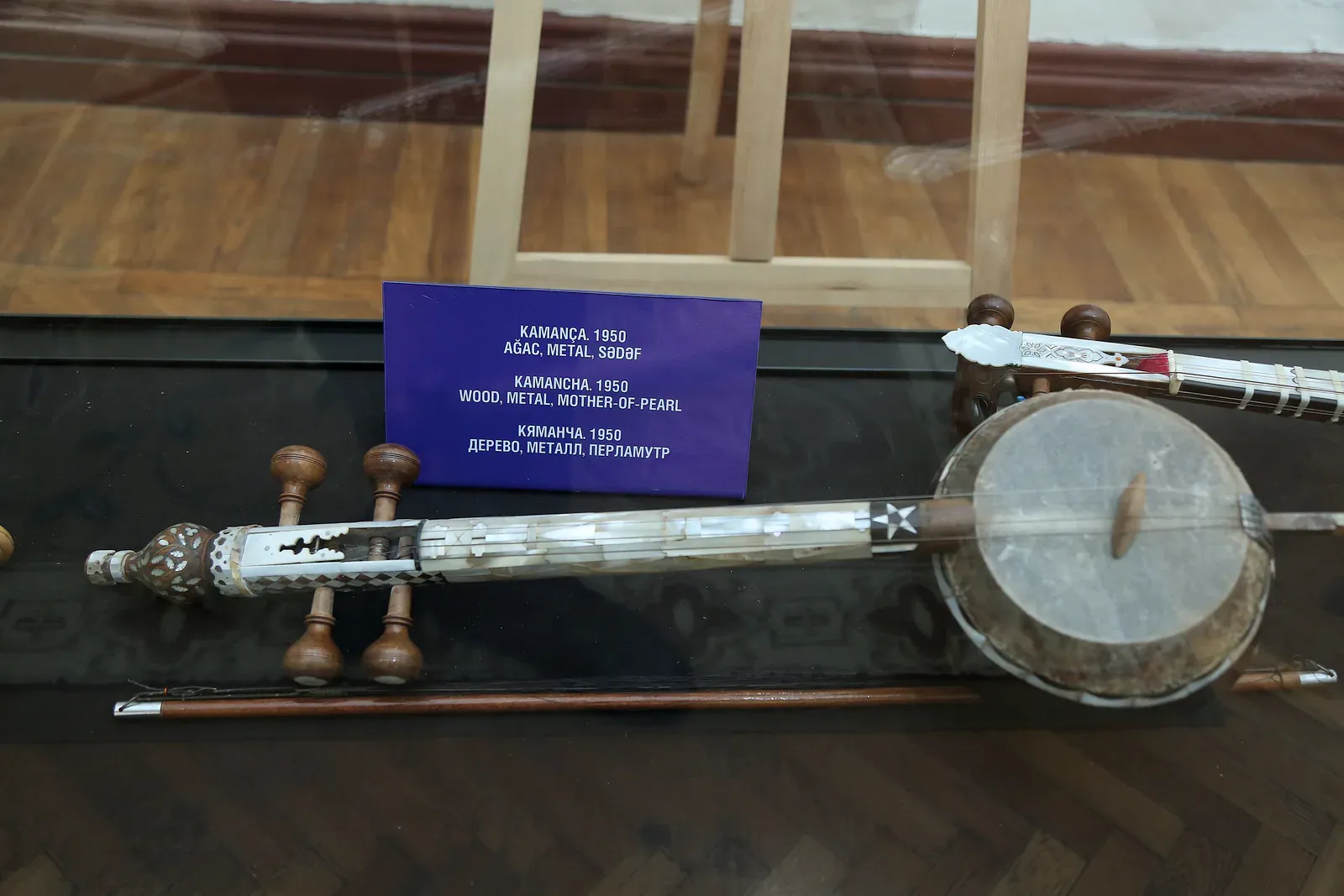
In the late Middle Ages semi-professional ashughs, who played the kamancha and the saz, succeeded them. Sayat-Nova, an ashugh and poet of the 18th century, is still revered in Armenia. The hayren, a medieval verse form of four lines of fifteen syllables each, split into seven and eight, belongs to the same song culture, and its subjects range from love and satire to moral lessons.
Komitas and the written tradition
Soghomon Soghomonian, orphaned young, was taken to Etchmiadzin in 1881 and educated at the Gevorgian Seminary. After his ordination as a vardapet in 1895 he studied music in Berlin, then used that Western training to build a national tradition. As the priest and musician Komitas he collected and transcribed more than 3,000 pieces of Armenian folk music; over half were later lost, and about 1,200 survive. His 1903 collection of Kurdish melodies was also the first of its kind (see Kurdish music). His choir presented Armenian music in many European cities and won praise from Claude Debussy.
Komitas settled in Constantinople in 1910 to reach wider audiences. In April 1915 he was arrested with hundreds of other Armenian intellectuals and deported. Released soon afterwards, he suffered a mental collapse and spent his last years in psychiatric hospitals in Paris. He is regarded as the founder of the Armenian national school of music and as a pioneer of ethnomusicology.
Soviet stage and conservatory
During the Soviet era Armenian folk music was taught in state-sponsored conservatories. In 1978 the kanon player and composer Khachatur Avetisyan founded the folk music department of the Komitas State Conservatory in Yerevan. Duduk playing became a profession: Vache Hovsepyan began performing folk and popular music on Yerevan radio in 1945 and graduated from the Romanos Melikyan State Music College in 1951.
The central figure was Djivan Gasparyan. Born in the village of Solak, he started on the duduk at six and in 1948 became a soloist of the Armenian Song and Dance Popular Ensemble and the Yerevan Philharmonic Orchestra. He won four medals at UNESCO competitions between 1959 and 1980 and later taught at the Yerevan State Musical Conservatory.
The duduk on the world stage
From the late 1980s Gasparyan’s records reached Western listeners. His album I Will Not Be Sad in This World came out on All Saints Records in 1989, Moon Shines at Night followed in 1993, and he recorded with Michael Brook, Brian Eno, Peter Gabriel and the Kronos Quartet. He died on 6 July 2021.
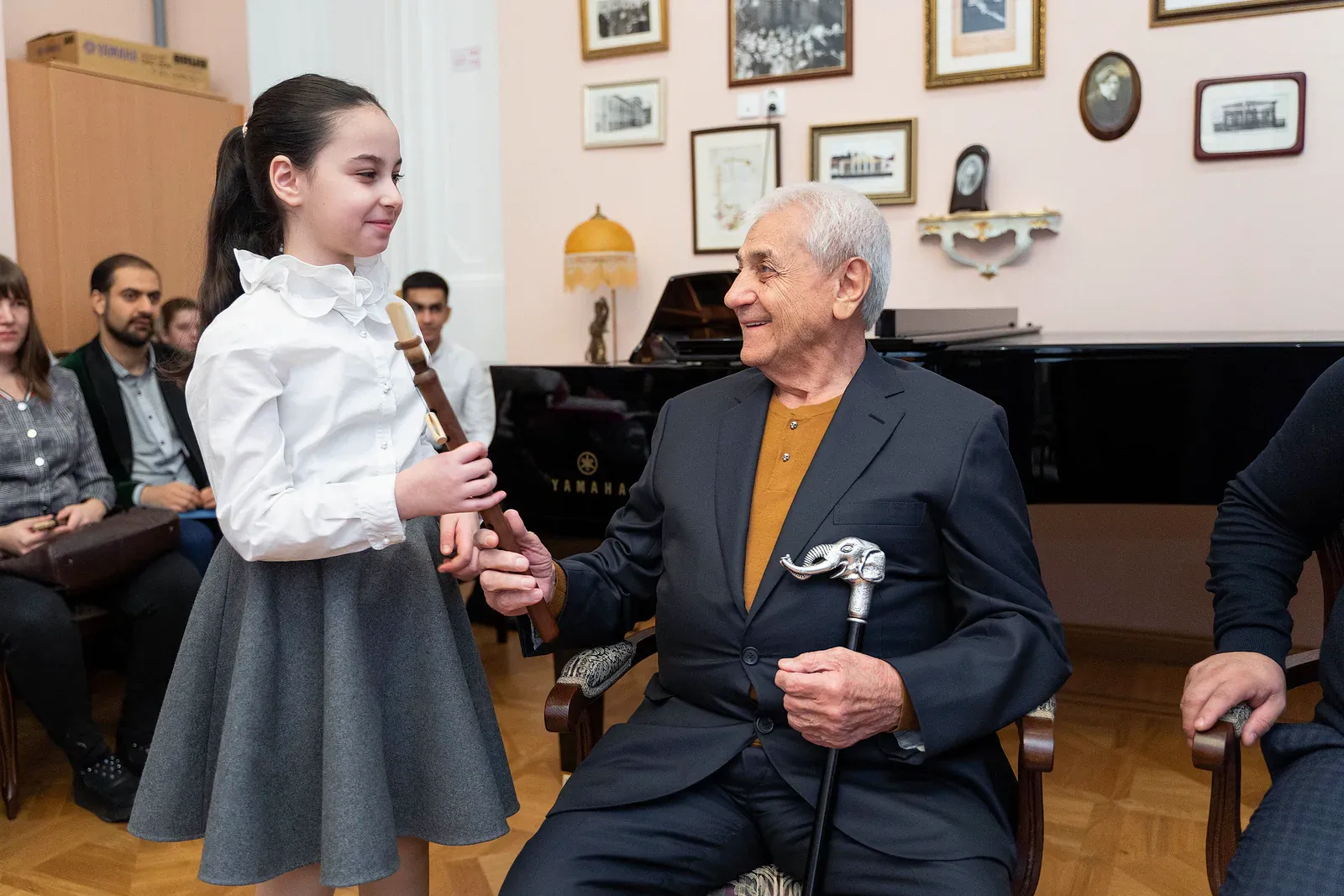
Gevorg Dabaghyan, born in Yerevan in 1965, became the next leading player, performing liturgical and folk music and taking part in Yo-Yo Ma’s Silk Road Project. With the singers Hasmik and Aleksan Harutyunyan he co-founded the Shoghaken Folk Ensemble in Yerevan. The ensemble toured the United States in 2004 and 2008 and appears on the soundtrack of the film Ararat.
Diaspora and kef
Descendants of survivors of the Armenian genocide settled in places such as the California Central Valley and kept western Armenian songs and dances alive. Their dance-oriented style, called kef music, mixed Armenian and Middle Eastern instruments, often amplified, with Western ones. The Vosbikian Band of Philadelphia developed a kef sound influenced by American big-band jazz in the 1940s and 1950s, and the oud players Richard Hagopian and John Berberian carried the style forward, Berberian by fusing it with rock and jazz in the 1960s.
Characteristics
Melodies are modal and heavily ornamented, with pitches bent between the notes of a diatonic scale and a vocal quality that duduk players try to match to the Armenian language itself. Duduk music is nearly always played in pairs: one player carries the melody while a second holds a steady drone called the dum, which also shifts the scale beneath the melody. Folk songs and dances are mostly of ancient or medieval origin and vary by region.
Instruments and production
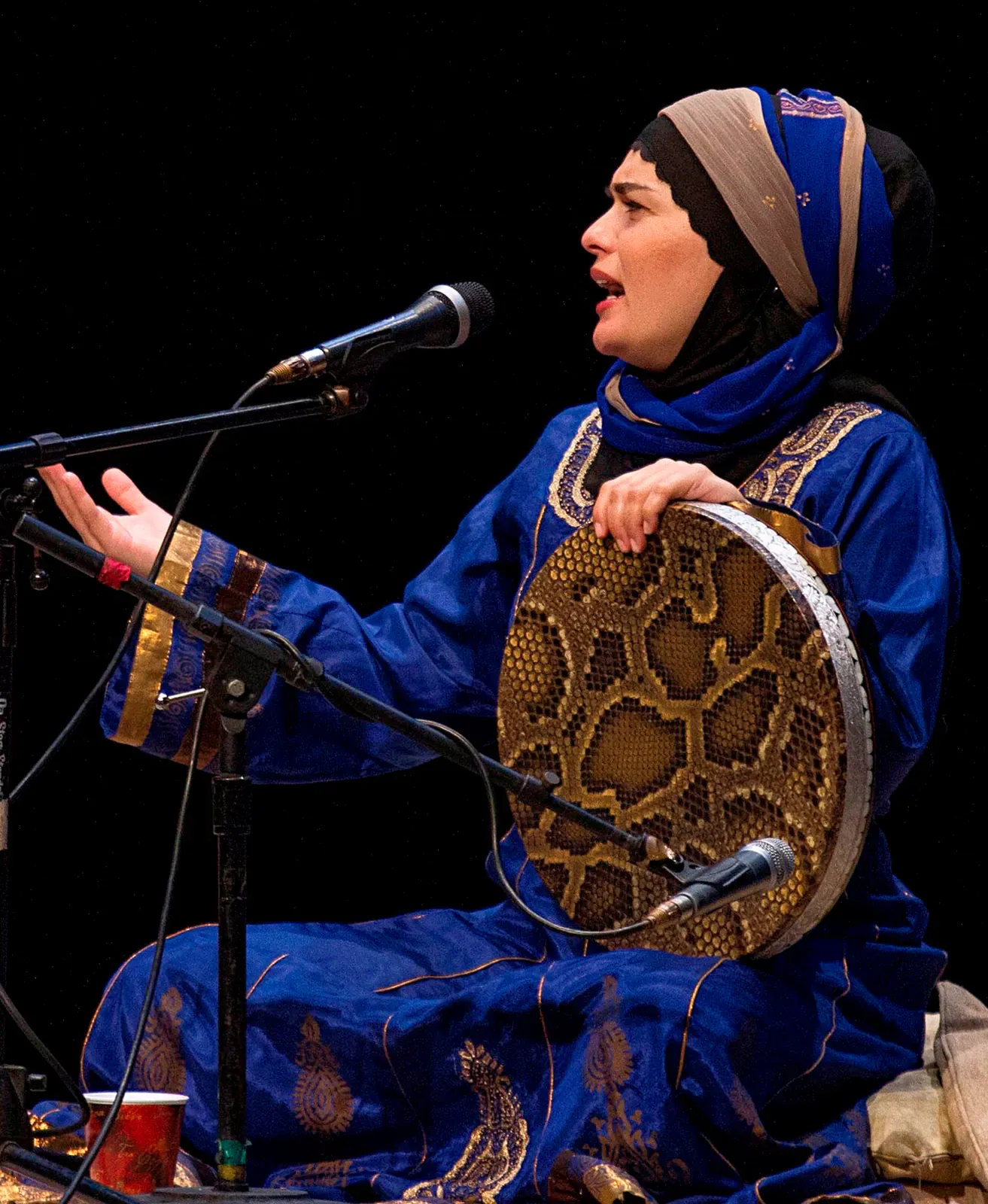
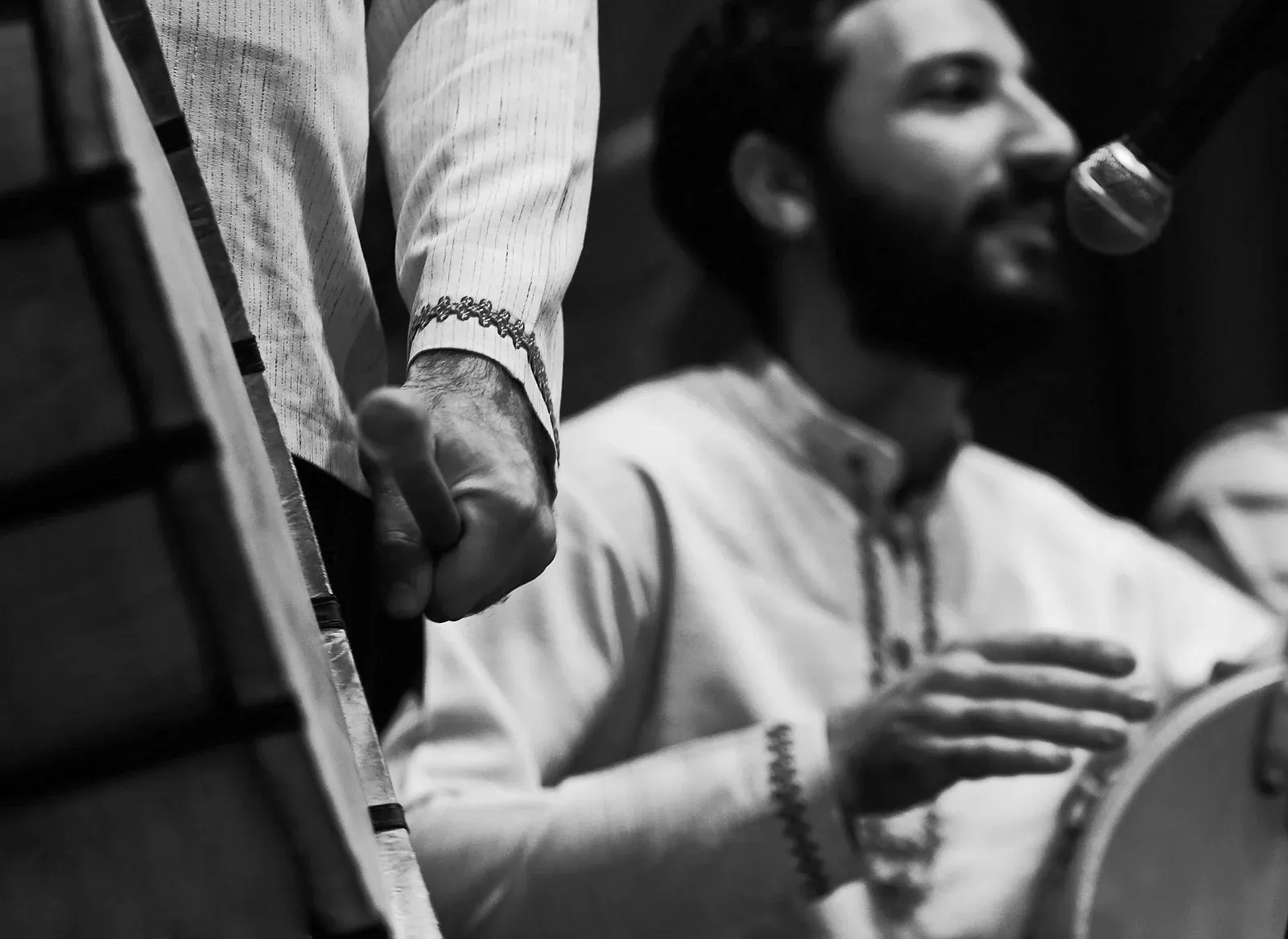
Armenian traditional music is acoustic. Beyond the duduk it uses the kamancha, the kanon (a box zither), the dhol (a double-headed hand drum that marks the pulse of dance songs) and the zurna, a loud double-reed instrument played outdoors. The oud, shvi, pku, tar and, to a lesser degree, the saz also appear, and violin and clarinet are often added.
Duduk players use circular breathing, storing air in the cheeks while inhaling through the nose, so that long lines never break.
Mainstream success
Armenian traditional music never had a chart era; it spread through film, festivals and world-music labels. Gasparyan’s duduk reached cinema audiences through the soundtracks of The Crow, The Siege, Ronin, Syriana and Blood Diamond. For Gladiator, the composer Hans Zimmer said Gasparyan was the only musician he wanted to play the “Armenian clarinet”, and his playing on To Zucchabar became one of the score’s most memorable sounds. He received the WOMEX Lifetime Achievement Award in 2002 and a Grammy nomination for Best Traditional World Music Album in 2006. UNESCO proclaimed the duduk and its music a Masterpiece of the Intangible Heritage of Humanity in 2005 and inscribed it in 2008.
Notable recordings
Vorskan akhper, known in English as Brother Hunter, shows how one piece travels between players. The title means hunter brother, and the words are credited to the poet Avetik Isahakyan. Dabaghyan recorded it on The Music of Armenia, Vol. 3: Duduk in 1996,, and Gasparyan recorded a version of Brother Hunter as well.
Endless Vision, made by Gasparyan with Hossein Alizadeh and recorded at the Niavaran Palace in Tehran in 2003, set Persian and Armenian songs side by side. Hasmik Harutyunyan’s Armenian Lullabies, with the Shoghaken Ensemble, shows the vocal side of the tradition.
Culture
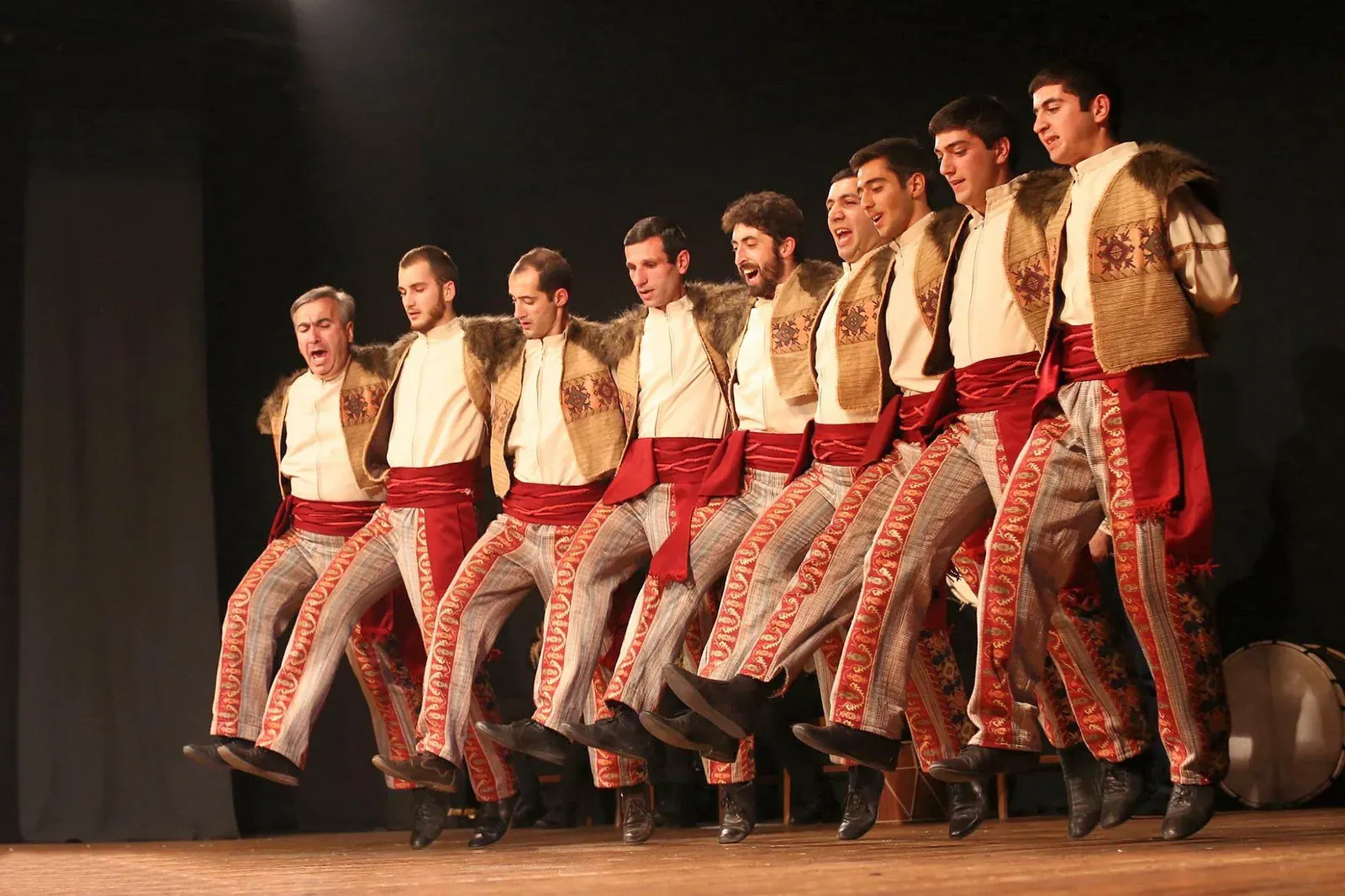
Folk music accompanies Armenian folk dances, which differ widely between regions. The best-known songs and dances are Kochari, Shalakho, Yarkhushta, Berd, Tamzara, Lorke, Sari Aghjik and Uzundara, and most have ancient or medieval origins. Dance groups perform them in costume, and Kochari has regional versions such as that of Alashkert.
Legacy
The duduk has become a symbol of Armenian national identity, and a player is judged largely on how well the instrument speaks the mood and phrasing of the Armenian language. Folk music is now taught at the Yerevan conservatory, and ensembles such as Shoghaken and the Arev Armenian Folk Ensemble keep it on stage. For a neighbouring Caucasian modal tradition, see mugham.
Misconceptions
The duduk is not the whole tradition. Ashugh songs, hayren poems, kamancha and kanon playing, dhol and zurna dance bands and a large body of vocal folk song all belong to it.
The duduk is not a flute. It is a double-reed instrument related to the orchestral oboe, with a tone nearer to the English horn.
Armenian folk music is not the same thing as church chant. The two share a non-European melodic system, but folk music has its own dance songs, lullabies and troubadour songs, while khaz notation records mostly sacred melodies.
Frequently asked questions
What instrument is Armenian traditional music best known for?
The duduk, a double-reed pipe of apricot wood, is Armenia’s national instrument and the best-known voice of Armenian traditional music. It is usually played in pairs, with a second player holding the dum drone.
What scale does Armenian folk music use?
Armenian folk music is not based on the European tonal system but on tetrachords, where the last note of one tetrachord starts the next. Players bend pitches with the lips and half-covered holes to reach the in-between notes.
Who is the most famous duduk player?
Djivan Gasparyan, called the master of the duduk, brought the instrument to international audiences through his own records, collaborations and film scores before his death in 2021.
Sound
Sound sheet
Signature sounds
- Duduk melody over a dum drone
- Circular breathing for unbroken lines
- Modal melody built on chained tetrachords
- Dhol-driven dance songs such as Kochari and Tamzara
- Four-line hayren poems set to song
Drums and percussion
- Dhol
Techniques
- Circular breathing
- Dum drone
- Lip bending and half-holing
- Hayren verse setting
Keys and modes
A duduk. A common duduk spans F sharp to the A more than an octave higher, with microtonal bends between.
Tuning
Not 12-tone equal temperament: melodies follow chained tetrachords, so the last note of one tetrachord opens the next.
Vocals
Solo and group folk song, lullabies and ashugh troubadour songs; church chant is a separate tradition.
Scenes
Where it happened
Where and when the sound lived: one bar per city on a shared timeline.
Asia
Active scenes
Peak 3, 1948-2025
Capital where state ensembles, the Komitas State Conservatory and radio turned folk musicians into professionals.
Seat of the Armenian church, where the young Komitas trained at the Gevorgian Seminary.
Constantinople, where Komitas presented Armenian folk music to the city's Armenian communities.
Culture
Culture markers
- Kochari
One of the best-known Armenian folk songs and dances, performed in regional versions such as that of Alashkert.
Dance - Yarkhushta
Folk dance listed among the best-known, performed by national dance groups at memorial sites.
Dance - Khaz notation
Armenian neumes that record mostly sacred melodies and underlie the written side of the tradition.
Artwork - Hayren poetry
Four-line songs of love, satire and moral lessons in the oldest Armenian folk verse form.
Artwork
Media
Key media
- 2000Gladiator: More Music from the Motion Picture
by Hans Zimmer. Soundtrack album featuring Gasparyan's duduk on To Zucchabar.
Film - 2005Silk Road Journeys: Beyond the Horizon
by Yo-Yo Ma and the Silk Road Ensemble. Album on which duduk player Gevorg Dabaghyan appears.
Compilation
Glossary
Terms on this page
Troubadour-poet who sang and played kamancha or saz, as Sayat-Nova did.
Armenian double-reed woodwind of apricot wood, also called tsiranapogh; its player is a dudukahar.
The steady drone held by the second duduk under the melody.
Medieval Armenian minstrel who sang, played, danced and told stories.
Traditional Armenian poem of four lines with fifteen syllables each, split into seven and eight.
Armenian neume, one sign of a notation system used since the 8th century.
Central Asian and Caucasian family