Kurdish music
Kurdish music is sung in the Kurdish languages, rooted in bardic storytelling and folk song and shaped by bans, exile and cassettes.
Türkiye, Iraq, Iran, Syria, around 1900
Middle Eastern and North African family
Born
around 1900
Türkiye, Iraq, Iran, Syria
Subgenres
5
Documented branches
Links
1
Genres it drew on or shaped
Tempo
75-140 BPMLineage
Family tree
Grew out of
Türkiye, Iraq, Iran, Syria
Kurdish music
Led to (5)
Timeline
Era by era
From the first sparks to today. Select a dot to read the story behind it.
- Bards and first collections
1900 to 1945
- Radio and the first stars
1946 to 1975
- Bans, exile and cassettes
1976 to 1990
- Legalisation and labels
1991 to 2009
- The global stage
2010 to today
Eras
Moments
- 1 Bards and first collections, 1900 to 1945
- 2 Radio and the first stars, 1946 to 1975
- 3 Bans, exile and cassettes, 1976 to 1990
- 4 Legalisation and labels, 1991 to 2009
- 5 The global stage, 2010 to today
around 1900
Bards and first collections
Dengbêj bards carried history in song while outsiders began to write it down: Komitas published twelve melodies in 1903 and Baghdad companies pressed the first Kurdish records in the late 1920s.
- 1903Komitas publishes Chansons kurdesThe Armenian priest and composer prints twelve Kurdish melodies he collected, the earliest documented study of Kurdish music.
- 1909Isya Joseph documents Yezidi musicYezidi Works records the musical practice of the Yazidis, including the qewal musician figures and the instruments they used.
- 1928Baghdad companies record Kurdish singersMusic companies in Baghdad begin recording songs by Kurdish artists, the first Kurdish music on phonograph.
1946
Radio and the first stars
Yerevan Radio's Kurdish service gave singers such as Karapetê Xaço and Aram Tigran a platform, while Ayşe Şan recorded in Istanbul and Hesen Zîrek sang across Iranian Kurdistan.
- 1946Karapetê Xaço settles in YerevanThe Armenian dengbêj singer moves to Soviet Armenia and later works for the Kurdish-language service of Yerevan Radio.
- 1960Ayşe Şan records in KurdishAfter moving from Gaziantep to Istanbul she records her first album in Kurdish, becoming one of the genre's best-loved voices.
- 1966Aram Tigran joins Radio YerevanThe Qamishli-born singer and oud player moves to Yerevan, where he works at the radio for eighteen years.
1976
Bans, exile and cassettes
Şivan Perwer and Ayşe Şan left for Germany in 1976. Kurdish performance was banned in Turkey from 1982 and restricted in Iraq, so songs travelled on clandestine cassettes.
- 1976Şivan Perwer leaves TurkeyFacing bans and arrest calls, he settles in Germany and records his first official album of traditional Kurdish songs.
- 1979Iraq restricts Kurdish cultureUnder Saddam Hussein's government, which ruled until 2003, restrictions on Kurdish culture and music tighten.
- 1982Turkey bans Kurdish songsPerforming and recording in Kurdish is banned until 1991; dengbêj recordings circulate on clandestine cassettes.
- 1983Gula Sor by Ciwan HacoThe Qamishli-born singer releases the album for which he is best known.
1991
Legalisation and labels
Turkey eased its language ban in 1991 and Kalan Müzik was founded the same year. Dengbêj houses opened in Van in 2003 and Diyarbakır in 2007, and Aynur's Keçê Kurdan appeared in 2004.
- 1991Turkey legalises spoken KurdishPresident Turgut Özal permits the language except in broadcasts, publications, education and politics, and dengbêjs perform more freely.
- 1991Kalan Müzik is foundedHasan Saltık founds the Istanbul label, which becomes a main outlet for Kurdish and regional folk recordings.
- 2003First Mala Dengbêjan opens in VanThe dengbêj house gives bards a permanent venue; Diyarbakır follows in 2007 and other cities later.
2010
The global stage
Aynur signed to Sony for Rewend in 2010 and toured with the Silk Road Ensemble, Şivan Perwer returned to Diyarbakır in 2013, and Kurdish folk song reached concert halls worldwide.
- 2010Aynur releases Rewend on SonyThe album appears on Sony Music, with a video shot in Hasankeyf by director Fatih Akın.
- 2013Şivan Perwer returns to DiyarbakırAfter 37 years in exile he returns to the city on 16 November, to a mixed reception among Kurds.
Listening path
Start listening
A short path from an easy way in to the deep end. Thumbnails come from YouTube; the player loads only when you press play.
- 01
Karapetê Xaço, 2000
A song by the dengbêj most often named among the greatest bards; listen for the narrative voice and the long ornamented phrases.
- 02
Şivan Perwer, 1986
A setting of a Cegerxwîn poem in a 1986 London live session; listen for how the voice leads the song.
- 03
Ciwan Haco, 1983
The title song of his best-known album; listen for how the arrangement frames the vocal.
- 04
Aynur, 2004
From the album Keçê Kurdan, a folk song for a contemporary voice; listen for the ornamented vocal line.
Facts
| Family | Middle Eastern and North African |
| Origin | Türkiye, Iraq, Iran, Syria |
| Status | Active |
| Tempo | 75 to 140 BPM |
| Meter | Varies by style: spontaneous bardic songs, metered dance songs |
| Subgenres | 5 |
Kurdish music is the music of the Kurds, performed in the Kurdish languages and in Zaza and Gorani, across Turkey, Iraq, Iran and Syria and in a large diaspora.
It is culturally distinct from Arabic, Armenian and Turkish music, was shaped for centuries by anonymous bards and is usually described as a northern (Turkish), central (Iraqi) and southern (Iranian) tradition. It belongs to the wider Middle Eastern and North African family, and the voice, not the instrument, is its core.
Origins
The earliest documented study dates from 1903, when the Armenian priest and composer Komitas published twelve Kurdish melodies he had collected. In 1909 Isya Joseph documented the musical practice of the Yazidis, including the qewal figures who serve as musicians and the instruments they used. Before that, the repertoire lived in memory. Songs were composed largely by anonymous bards and handed down from teacher to pupil.
Recorded sound arrived in the late 1920s, when music companies in Baghdad began pressing songs by Kurdish artists. Local styles still differ from region to region and often from one village to the next, because the tradition passed by ear.
The bardic tradition
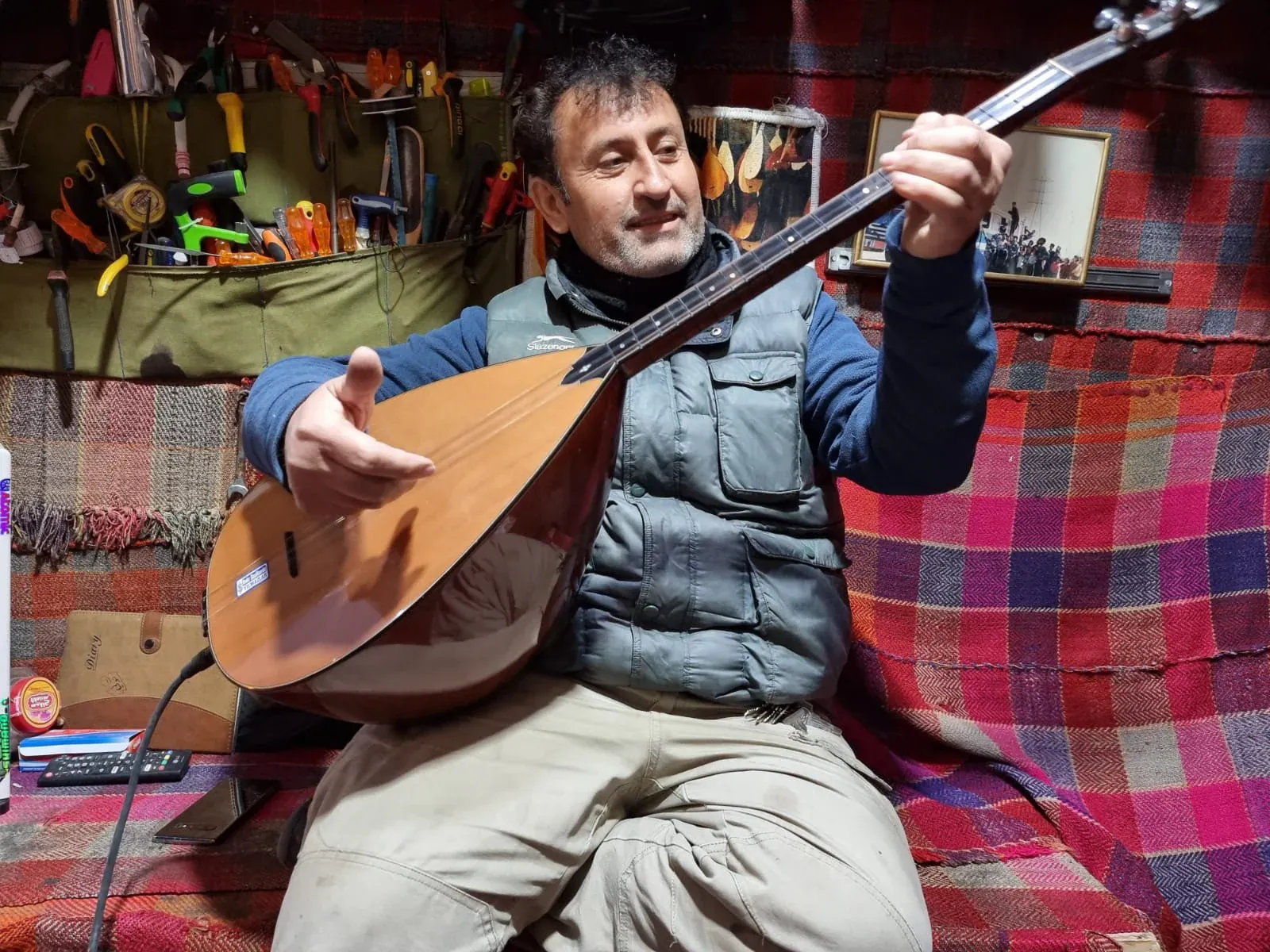
Three genres anchor Kurdish oral folklore: the dengbêj, the stranbêj and the çîrokbêj. A dengbêj is a singing storyteller who recounts geography, history and recent events, but also lullabies and love songs. Dengbêjs sing mostly without instruments, and a kilam, their spontaneous narrative song, runs without a pause at the end of a phrase. Traditionally a bard learns the ancient songs before composing his own. Stranbêjs are singers of popular songs, and çîrokbêjs tell tales.
Other forms sit beside them. The beyt is a classical folk song performed at night gatherings, and the heyran is a short lyrical love ballad that dwells on separation.
Yerevan and the first recorded stars, 1946-1975
Soviet Armenia became an unlikely home for Kurdish song. Karapetê Xaço, an Armenian born in a village near today’s Batman who sang in Kurmanji, settled in Yerevan in 1946 and worked for the Kurdish-language service of Yerevan Radio. He is remembered as one of the great dengbêjs, and songs such as “Adullê” and “Çume Cizîre” have been recorded again by many singers since. Aram Tigran, a Syrian-Armenian singer and oud player born in Qamishli, moved to Yerevan in 1966 and spent eighteen years at the radio, recording hundreds of songs in Kurdish.
Elsewhere, Hesen Zîrek of Iranian Kurdistan became known for folk and classical songs, said to number over a thousand. In Turkey Ayşe Şan, the daughter of a dengbêj, recorded her first Kurdish album in Istanbul in 1960 and became known as the queen without a crown.
Exile and cassettes, 1976-1990
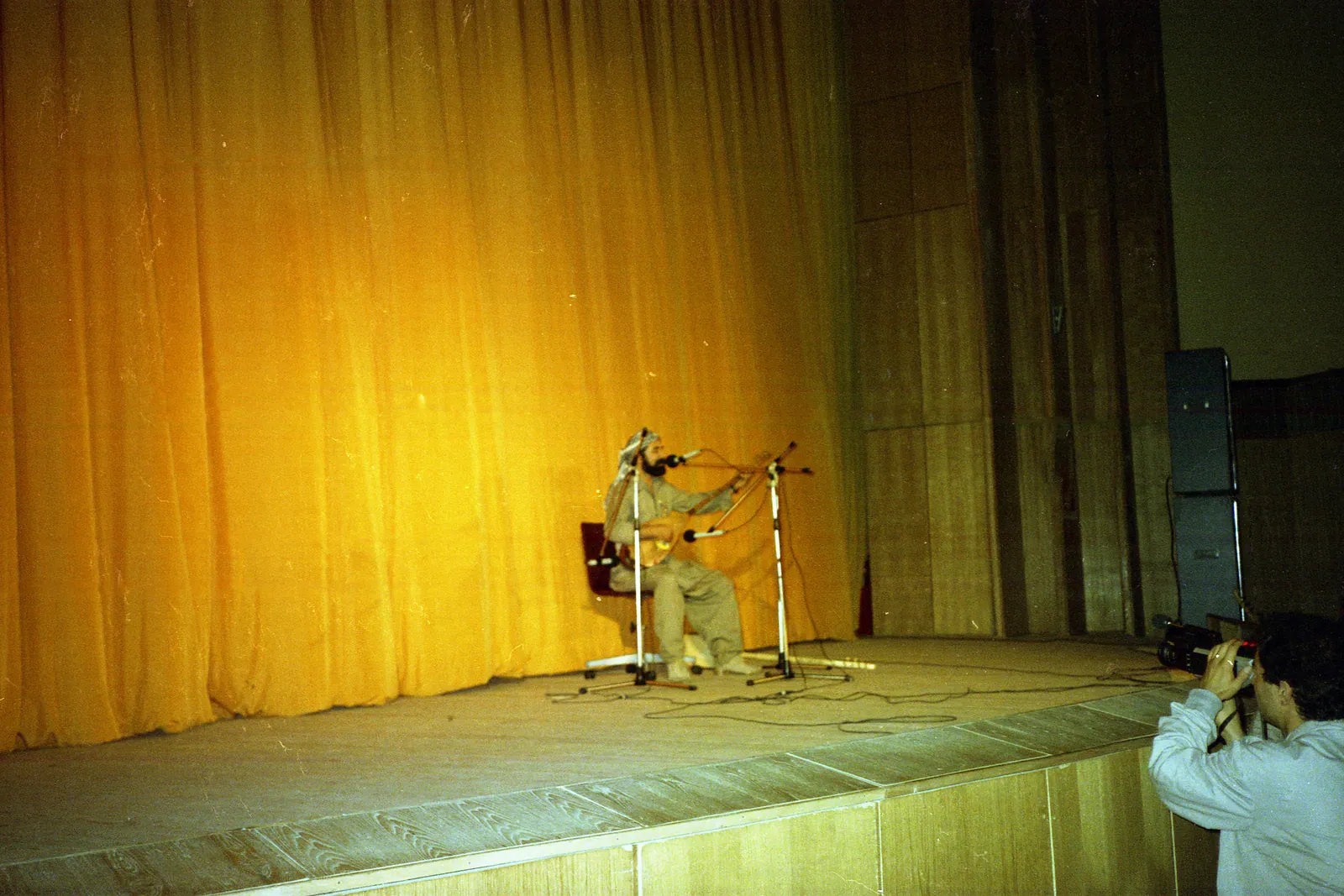
Politics shaped the next era. Şivan Perwer, whose songs were banned in Iraq, Syria and Turkey for 25 years, fled Turkey in 1976 and recorded his first official album in Germany. Ayşe Şan also left for Germany that year. Cassettes of his music passed from hand to hand despite the risk of prison. In Iraq the government of Saddam Hussein restricted Kurdish culture from 1979 until 2003. In Turkey, performing and recording songs in Kurdish was banned from 1982 to 1991, and dengbêjs were recorded in secret on cassette tapes and passed from hand to hand.
Singers abroad also took the music in new directions. Ciwan Haco, born in Qamishli and later based in Sweden, released Gula Sor in 1983, the album for which he is best known.
Legalisation and labels, 1991-2009
In 1991 President Turgut Özal made Kurdish legal in Turkey, apart from broadcasts, publications, education and politics, and dengbêjs could perform more freely. The same year Hasan Saltık founded Kalan Müzik in Istanbul, which became a main outlet for Kurdish and regional folk recordings. From 1994 dengbêjs were invited to festivals and television shows abroad, and from the 2000s inside Turkey as well. Politicians backed the revival, and the European Union supported it.
The first Mala Dengbêjan, a dengbêj house, opened in Van in 2003, followed by Diyarbakır in 2007 and other cities. In 2004 Aynur Doğan, born in Çemişgezek, released Keçê Kurdan on Kalan and became widely known. She followed it with Nûpel in 2005 and appeared in Fatih Akın’s film Crossing the Bridge: The Sound of Istanbul.
The global stage
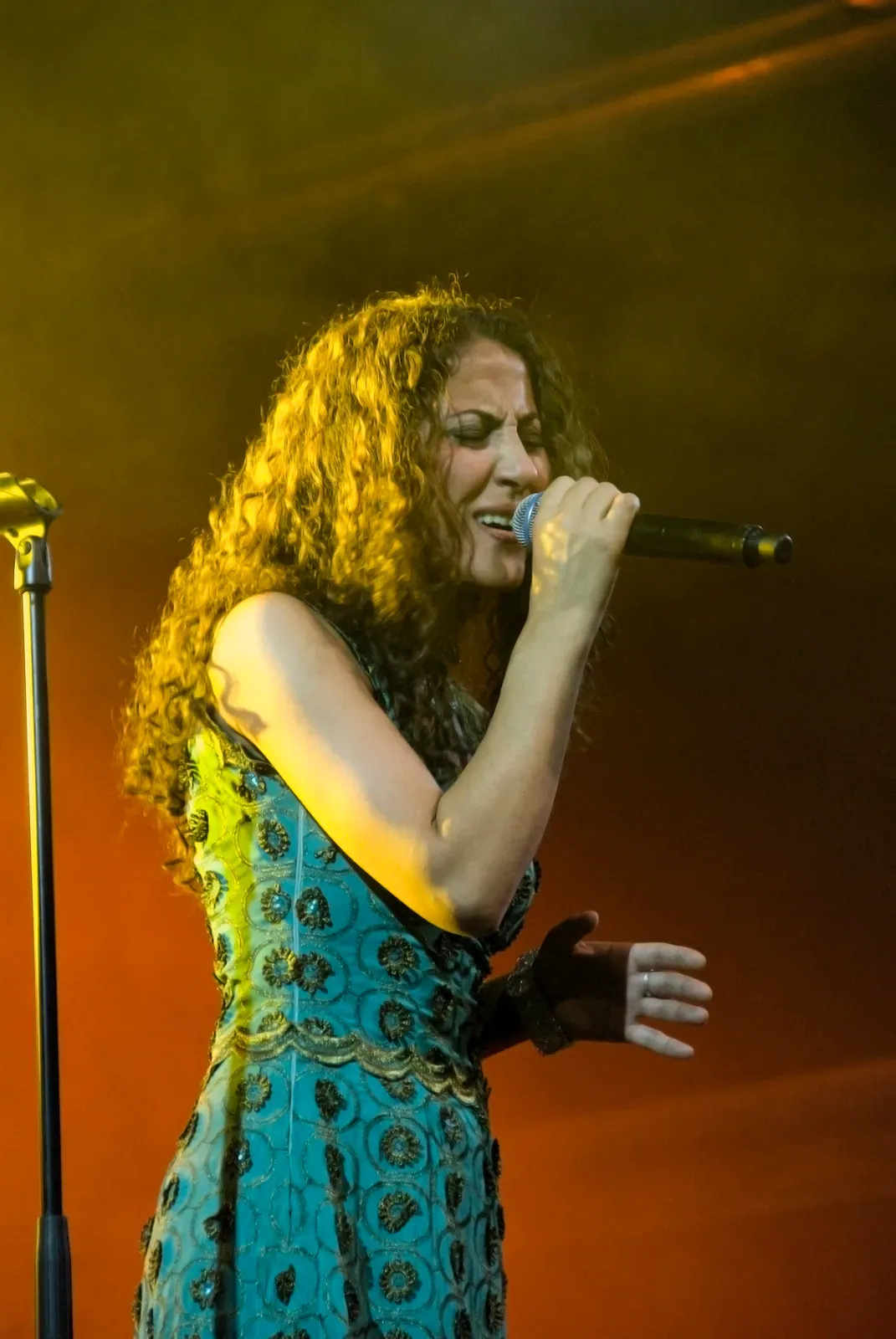
Aynur released Rewend on Sony Music in 2010, with a video shot in Hasankeyf by Akın. She performed with Yo-Yo Ma and the Silk Road Ensemble and moved to Amsterdam in 2012 after nationalist protests at an Istanbul festival in 2011. Berklee honoured her as Master of Kurdish Music in 2017. Şivan Perwer returned to Diyarbakır on 16 November 2013 after 37 years in exile, and in 2025 Ayşe Şan’s body was brought home to the city, as she had wished.
Characteristics
Kurdish music has no formal modal system of its own. It shares features with the Persian dastgah and Ottoman and Arabic maqam, with frequent partial flat microtones, and the intervals are not tied to equal temperament. Ornamentation is heavily melismatic: a main note wavers across several notes, in voices and instruments alike. When several instruments play the same melody with different ornaments the texture is heterophonic. Bardic songs are sung spontaneously, while dance songs are metered, and lyrics turn to love, history and resistance.
Instruments and production
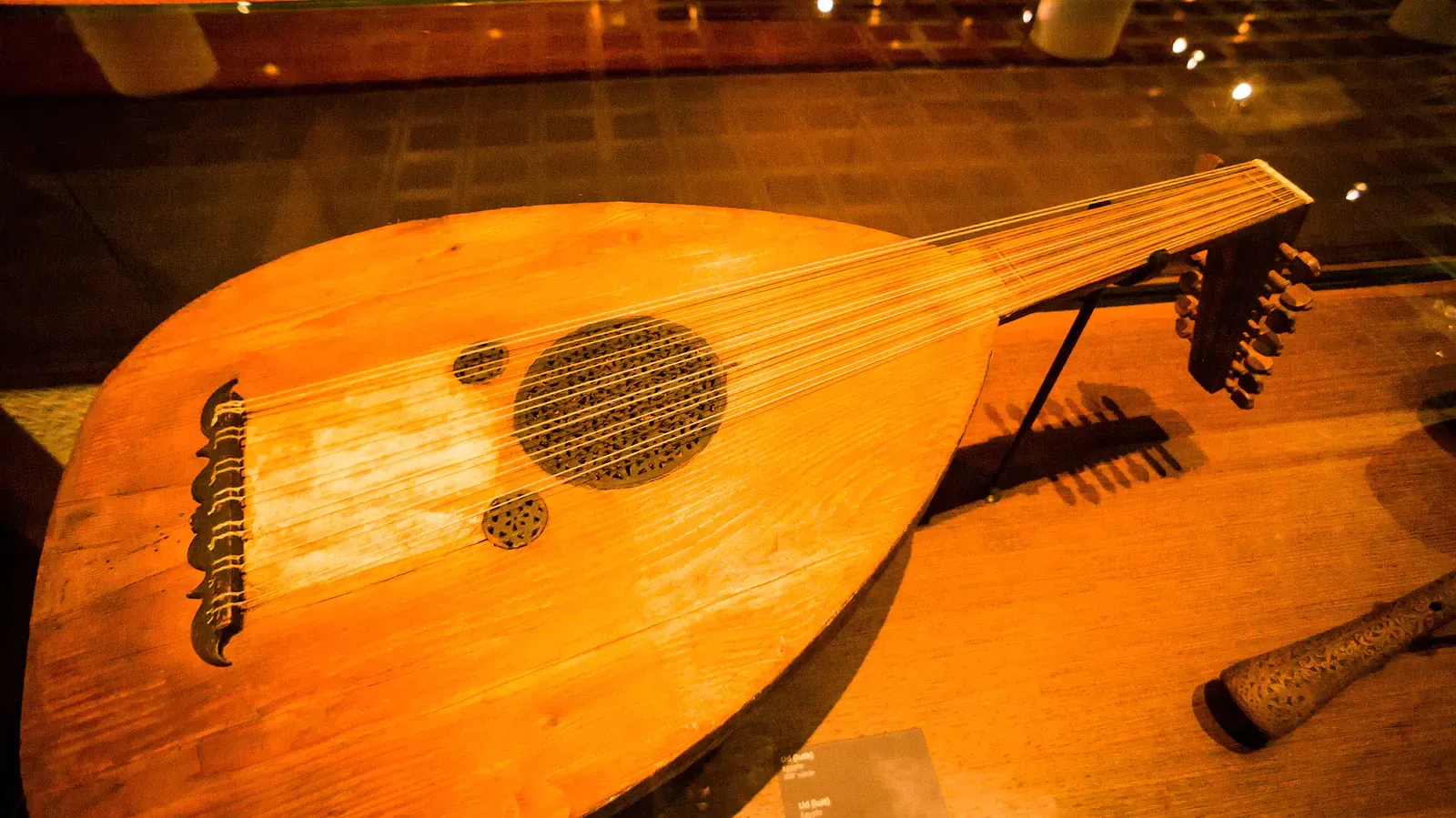
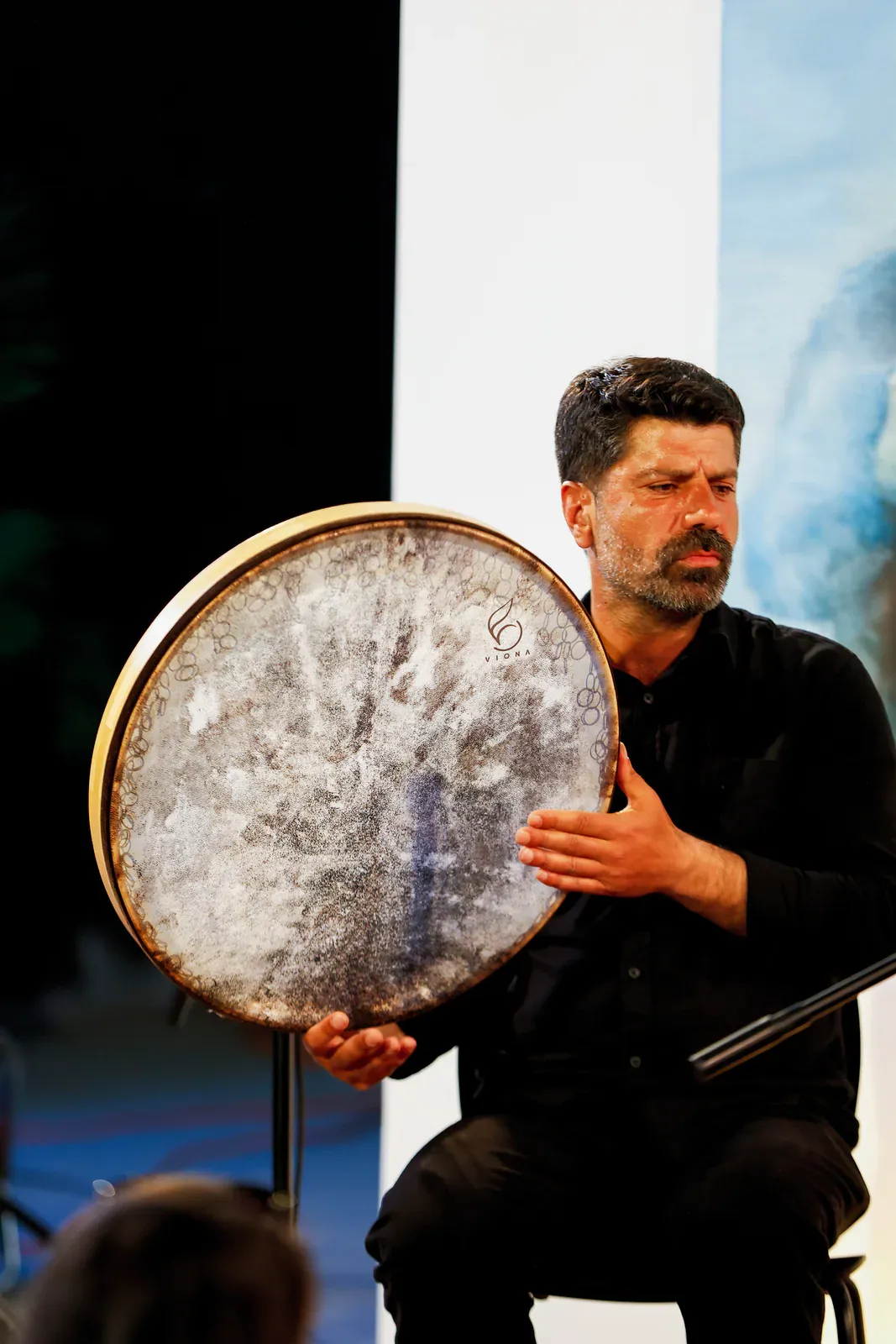
Voices come first and instruments are secondary, yet the toolkit is broad: the tembûr and the saz, bowed kamancheh and oud, flutes such as the şimşal and duduk, the zirne oboe, and daf and dehol drums. Dance ensembles use the zirne with the large double-headed dehol. In the 21st century singers such as Aynur perform with chamber ensembles and orchestras.
Culture
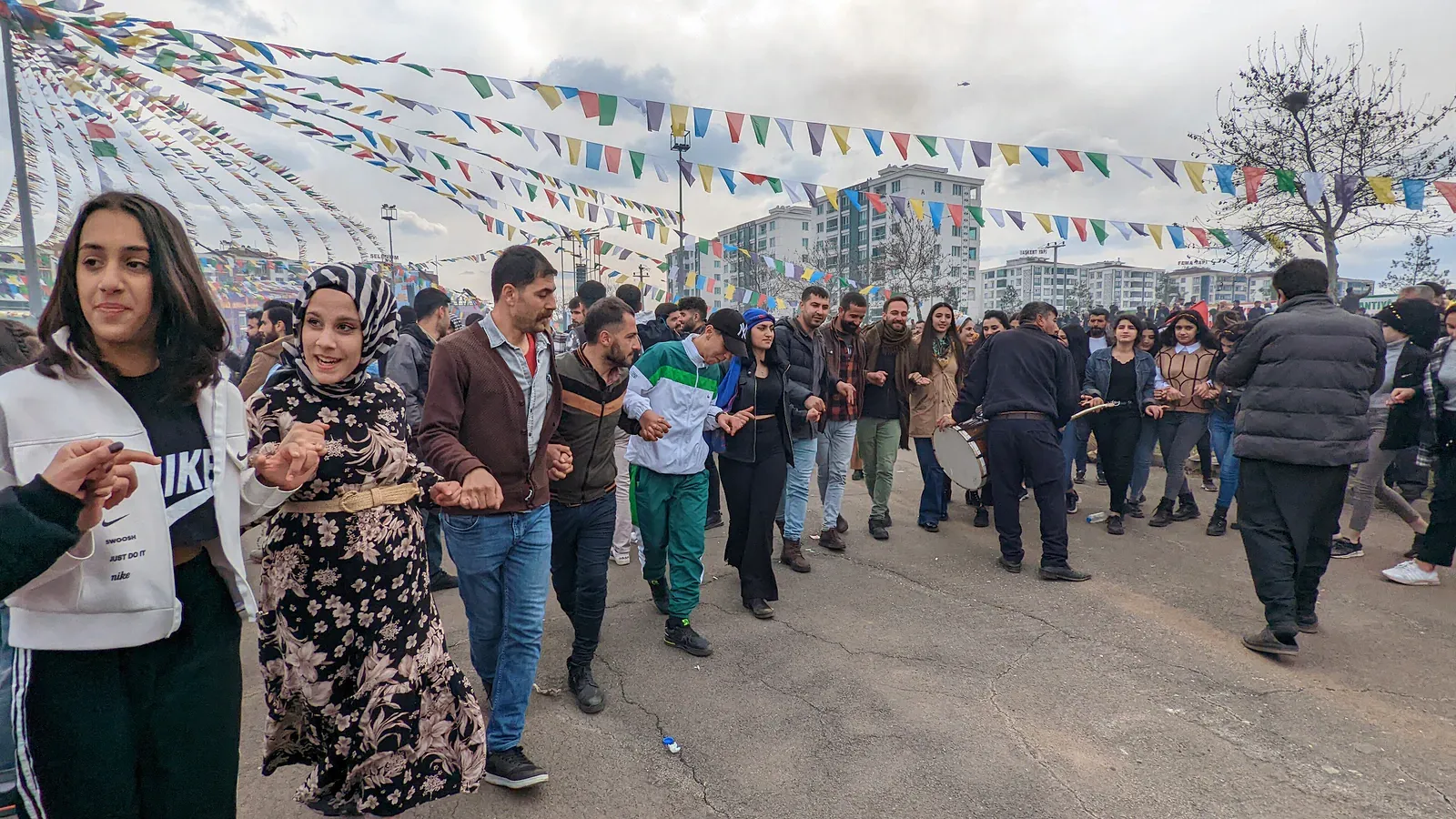
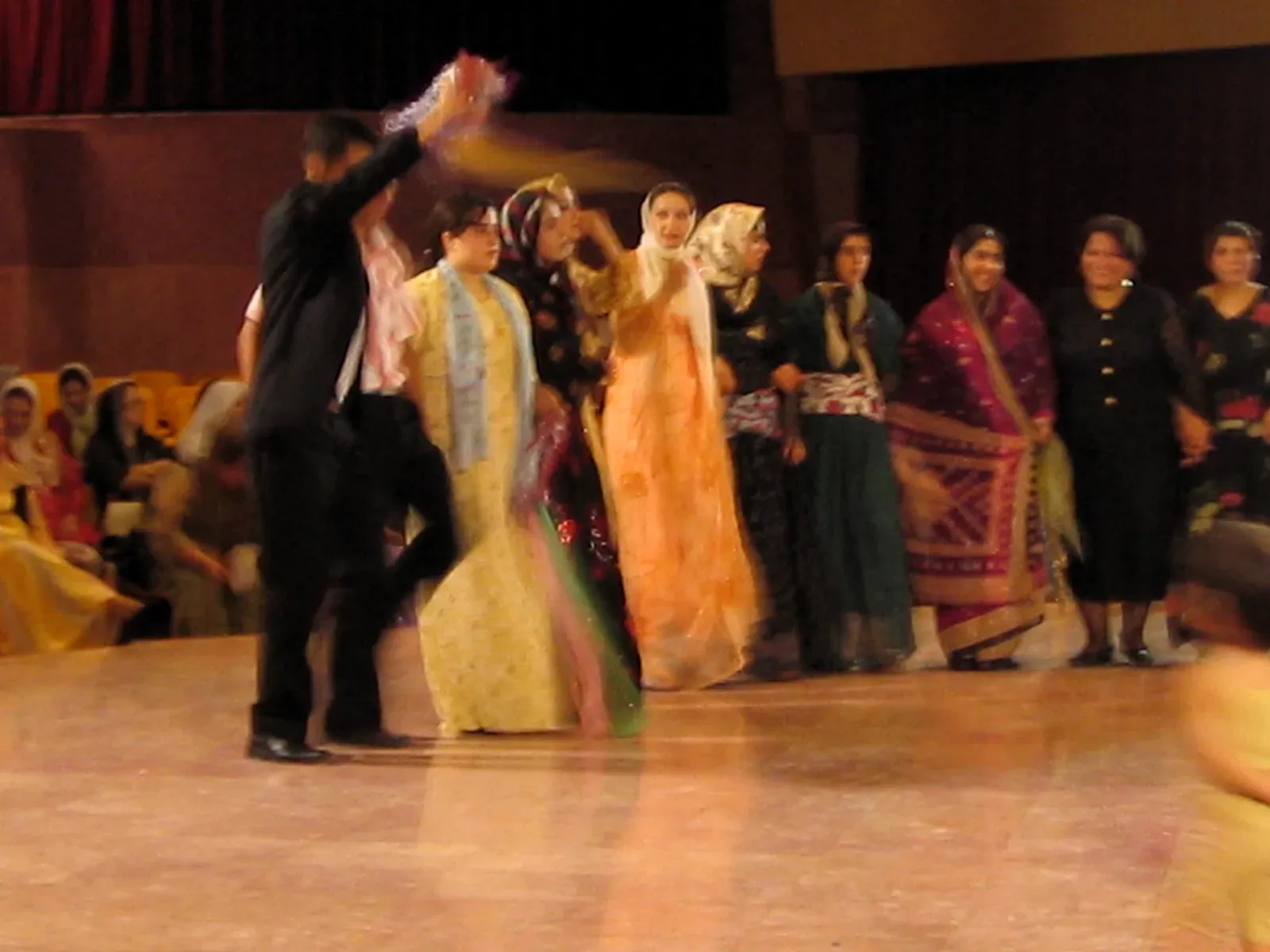
The govend is the central dance, a mixed circle or line led by a dancer with a handkerchief, performed at weddings, festivals and Newroz, the spring new year, in regional dress. Aram Tigran gave his first public concert at a Newroz celebration in 1953. Night gatherings, known as şevbihêrk, are where the classical folk songs were once sung.
Music also carried the argument about identity. Several Kurdish folk songs were absorbed into the Turkish folk canon during the 20th century, often with Turkish lyrics and no credit to their Kurdish origin.
Legacy
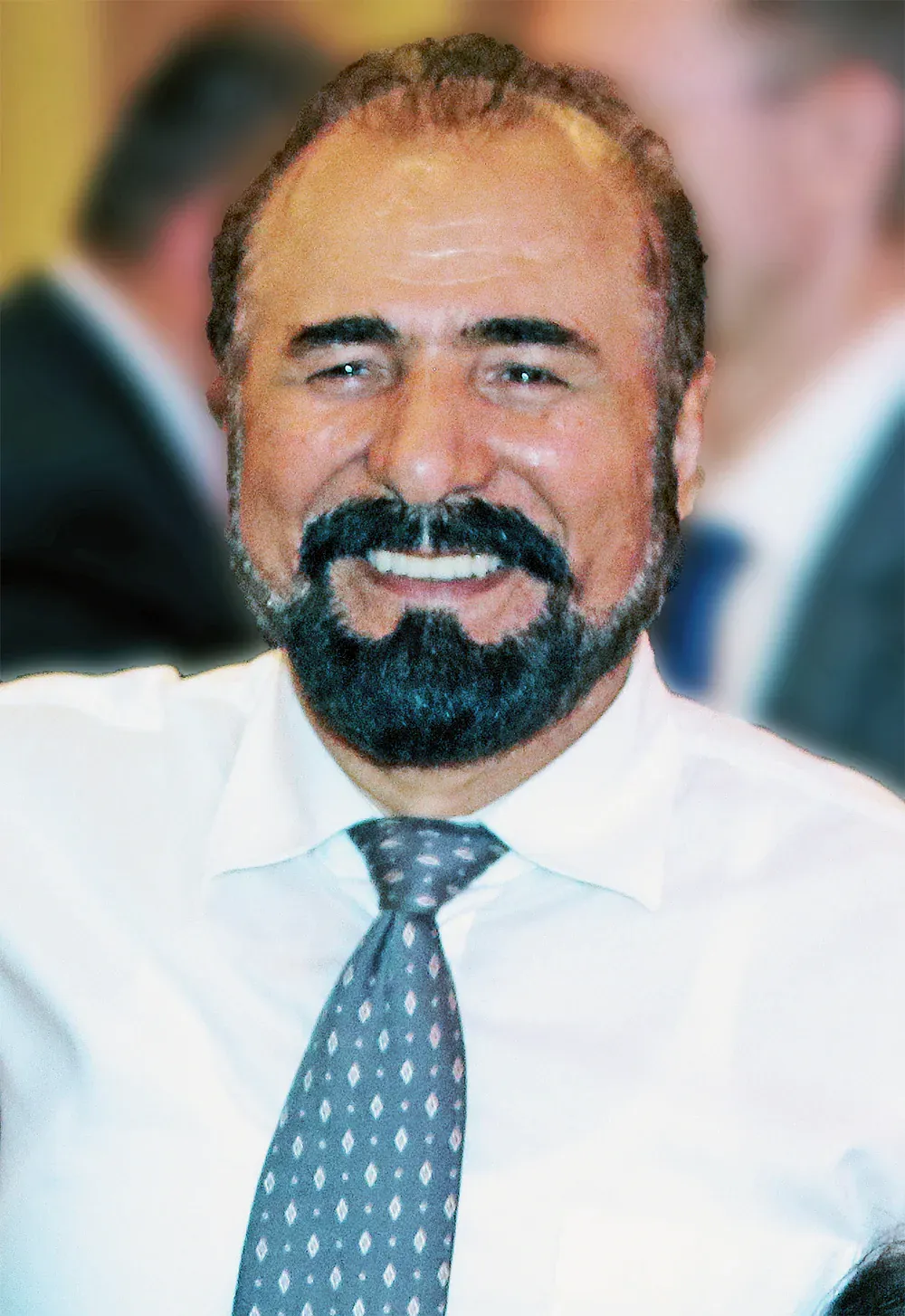
Kurdish song is now both an archive and a living scene. Dengbêj houses keep the bardic repertoire public, dance songs fill weddings and Newroz, and singers such as Aynur bring old material to concert halls. The traditions overlap with Persian folk music and Turkish folk music, though Kurdish music is a separate heritage in its own languages.
Misconceptions
One common claim is that Kurdish music is a branch of Turkish, Persian or Arabic music. It shares modal ideas with them, but it has its own languages, bardic forms and repertoire, and its songs were at times taken into other national canons without credit.
A second claim is that only ethnic Kurds sing it. Karapetê Xaço was an Armenian who sang Kurdish dengbêj songs, and Aram Tigran was a Syrian-Armenian who sang mainly in Kurdish.
A third is that the music is only unaccompanied bardic song. Dengbêjs often sing alone, but Kurdish music uses lutes, fiddles, flutes, oboes and drums, and modern singers perform with bands and orchestras.
Frequently asked questions
What is Kurdish music?
Kurdish music is music performed in the Kurdish languages and in Zaza and Gorani, from bardic storytelling and village folk songs to modern pop and fusion.
What is a dengbêj?
A dengbêj is a Kurdish singing storyteller who recounts history, events and love in song, usually without instruments. Dengbêj houses in Van and Diyarbakır now host them.
Was Kurdish music banned?
Yes. Performing and recording Kurdish songs was banned in Turkey from 1982 to 1991, and Iraq restricted Kurdish culture from 1979 until 2003.
Which instruments are used in Kurdish music?
Common instruments include the tembûr, saz, kamancheh, oud, şimşal flute, duduk, zirne oboe, daf and dehol, though much traditional singing has no accompaniment.
Sound
Sound sheet
Anatomy of a track
| # | Part |
|---|---|
| 1 | Opening that sets the scale |
| 2 | Modulating middle section |
| 3 | Closing section |
Signature sounds
- Melismatic ornamentation around a main note
- Partial flat microtonal intervals
- Unaccompanied or lightly accompanied narrative singing
- Several instruments playing one melody with different ornaments
Drums and percussion
- Daf
- Dehol
Techniques
- Melismatic ornamentation
- Heterophony
- Improvisation within a maqam
- Unaccompanied kilam
Keys and modes
Maqam-based modes. Shared with Persian dastgah and Ottoman and Arabic makam, with frequent partial flat microtones.
Tuning
Microtonal intervals that are not equal-tempered
Vocals
Narrative solo singing, often unaccompanied, with melismatic ornaments; later pop and folk singers add band and saz settings.
Scenes
Where it happened
Where and when the sound lived: one bar per city on a shared timeline.
Asia
Europe
Active scenes
Peak 4, 2007-2025
Radio Yerevan's Kurdish service employed Karapetê Xaço and Aram Tigran and preserved many dengbêj songs.
Home of Ayşe Şan's first Kurdish album, later of labels such as Kalan Müzik.
The Kurdish Institute, founded in 1983, became a hub for Kurdish language and culture in exile.
Its dengbêj house, opened in 2007, and the Newroz celebrations keep live bardic singing public.
Venues and places
Van, 2003 to today. The first dengbêj house, opened in 2003 as a permanent room for bardic singing.
Diyarbakır, 2007 to today. Opened with the support of the city municipality, one of several dengbêj houses founded after Van.
Culture
Culture markers
- Govend
Mixed-gender circle dance in traditional clothes, led by a dancer with a handkerchief and accompanied by drum and zirne.
Dance - Newroz celebrations
The spring new year is a main occasion for open-air dance and concerts; Aram Tigran gave his first public concert at one in 1953.
Ritual - Night gatherings
Evening gatherings known as sevbiherk are where classical folk songs such as beyt were sung.
Ritual - Traditional festive clothes
Dancers wear regional Kurdish dress at weddings and festivals, with colourful sashes and headscarves.
Fashion
Media
Key media
- 1903Chansons kurdes transcrites par le pere Komitas
by Komitas. Twelve melodies collected by the Armenian composer, the earliest documented study of Kurdish music.
Book - 1909Yezidi Works
by Isya Joseph. Documents Yezidi musical practice, including the qewal figures and their instruments.
Book - 2000Dengekî Zemanê Bere: Karapetê Xaço, Voice from the Past
by Mehmet Aktaş. Documentary on the dengbêj Karapetê Xaço, aired by Medya TV.
Film - 2005Crossing the Bridge: The Sound of Istanbul
by Fatih Akın. Documentary on Istanbul's music scenes in which Aynur drew international attention.
Film
Glossary
Terms on this page
A teller of folk tales, the third core genre of Kurdish oral folklore.
A singing storyteller who recounts history, genealogy and heroic events in song, mostly without instruments.
A circle or line dance performed at weddings, Newroz and festivals, often led by a dancer waving a handkerchief.
A dengbêj's spontaneous narrative song, sung without a pause after the end of a phrase.
A dengbêj house, a venue where bards meet and perform; the first opened in Van in 2003.
A singer of popular songs, one of the three core genres of Kurdish oral folklore with dengbêj and cirokbej.
Middle Eastern and North African family