Türkü
Türkü is Turkey's folk song tradition, from ashik bards and bozlak to zeybek and halay dances, collected and broadcast by the republic after 1924.
Türkiye, 1924
Middle Eastern and North African family
Born
1924
Türkiye
Subgenres
5
Documented branches
Links
7
Genres it drew on or shaped
Tempo
80-130 BPMLineage
Family tree
Grew out of
Türkiye
Türkü
Led to (6)
Timeline
Era by era
From the first sparks to today. Select a dot to read the story behind it.
- State collection and radio
1924 to 1953
- Ashik stars and protest song
1960 to 1979
- Arabesk and the coup
1980 to 1990
- Independent labels and archives
1991 to today
Eras
Moments
- 1 State collection and radio, 1924 to 1953
- 2 Ashik stars and protest song, 1960 to 1979
- 3 Arabesk and the coup, 1980 to 1990
- 4 Independent labels and archives, 1991 to today
1924
State collection and radio
The new republic sent teams across Anatolia to notate village songs, gathering more than ten thousand by 1953, and state radio turned regional singers into a national repertoire.
- 1924State folk-song collection beginsFrom 1924 to 1953 collectors gathered more than 10,000 songs from across Turkey, classifying and archiving them for the republic.
- 1931First Sivas Folk Poets FestivalOpened on 5 November 1931 with 15 minstrels; the blind bard Âşık Veysel performed and was noticed by urban intellectuals.
- 1937State radio begins broadcasting folk songA state radio founded in 1937 made spreading folk music a priority, recruiting regional performers through talent scouts such as Muzaffer Sarısözen.
- 1941Âşık Veysel becomes a village-institute teacherAppointed saz instructor at the Arifiye Village Institute, he taught at village institutes until 1946.
- 1957Neşet Ertaş's first record
1960
Ashik stars and protest song
Bağlama masters such as Âşık Veysel and Neşet Ertaş reached wide audiences, while Selda Bağcan and Ruhi Su gave folk song a leftist, protest edge.
- 1964TRT foundedThe Turkish Radio and Television Corporation became the sole national broadcaster and a main outlet for folk song until commercial radio arrived in 1990.
- 1971Selda Bağcan's first singlesSix singles of traditional songs sung over simple guitar or bağlama made her nationally famous in 1971.
- 1972Ruhi Su records Pir Sultan AbdalAn album of settings of the Alevi poet Pir Sultan Abdal, one of several poet-based albums he released in 1972.
- 1979Neşet Ertaş leaves for GermanyAfter his fingers were paralysed in 1978 he went to Germany, where he played at weddings and taught saz for years, largely forgotten at home.
1980
Arabesk and the coup
Arabesk and light Western pop took listeners from folk song, and after the 1980 coup political folk singers such as Selda Bağcan were jailed or silenced.
- 1981Selda Bağcan imprisoned after the coupBetween 1981 and 1984 she was jailed three times for her political songs, and her passport was held until 1987.
1991
Independent labels and archives
Kalan Müzik, founded in 1991, reissued field and studio recordings of regional masters, and Neşet Ertaş became a late national symbol of the Central Anatolian ashik tradition.
- 1991Kalan Müzik foundedHasan Saltık's Istanbul label specialises in recordings of classical and traditional folk music from Turkey and nearby regions.
- 1999Neşet Ertaş's Gönül DağıAn album on Kalan Müzik that returned the Central Anatolian ashik to a national audience.
Listening path
Start listening
A short path from an easy way in to the deep end. Thumbnails come from YouTube; the player loads only when you press play.
- 01
Âşık Veysel, 1969
The blind bard sings one of his best-known songs to his own saz in a television archive recording.
- 02
Neşet Ertaş, 1999
Listen to the bozlak-rooted voice and the plectrum-driven bağlama of Central Anatolia.
- 03
Selda Bağcan, 1975
A folk song reshaped as quiet social protest over bağlama and guitar.
- 04
Ruhi Su, 1977
Choir and saz in the political folk song of the 1970s left.
Facts
| Family | Middle Eastern and North African |
| Origin | Türkiye |
| Status | Active |
| Tempo | 80 to 130 BPM |
| Meter | Mixed: 2/4, 4/4, 5/8, 7/8, 9/8 |
| Subgenres | 5 |
Türkü is the folk song of Turkey: regional songs about everyday life, love, separation and protest, sung to the bağlama or to dance rhythms and shaped strongly by place, from Aegean zeybek to southeastern halay and Black Sea kemençe music.
As a national repertoire it was assembled in the 1920s to 1950s, when the republic collected village songs and put them on state radio. It belongs to the wider Middle Eastern and North African family.
Origins
Under the Ottomans, music was usually sorted into palace music, local rural music and the music of religious orders. The traveling bard, the ashik, accompanied himself on the saz and did the most to carry songs and tales from place to place.
The unified idea of Turkish folk music arrived with the republic. All Ottoman musical and religious institutions were closed at its start, and nationalist thinkers such as Ziya Gokalp argued that a modern national music should grow from folk melodies arranged with Western technique.
State collection and radio, 1924-1953
From 1924 to 1953 collectors archived more than 10,000 folk songs from across Turkey. The Ministry of Education’s Bureau of Culture, set up in 1920, published about one hundred of them as Yurdumuzun Nağmeleri in 1926. Composers such as Ahmet Adnan Saygun joined expeditions run by the Istanbul Municipal Conservatory (1926-1929) and the Ankara State Conservatory (1936-1952), and Béla Bartók was invited to help.
Muzaffer Sarısözen was the central figure. A folklorist from Sivas, he joined the conservatory trips and made roughly eighteen long collecting journeys between 1937 and 1957. He led the Ankara Radio programme Yurttan Sesler and, once state radio began in 1937, helped recruit regional performers for it. Songs he collected, such as İzmir’in Kavakları and Çayda Çıra, entered the national repertoire.
The same movement discovered Âşık Veysel. The first Sivas Folk Poets Festival opened on 5 November 1931 with fifteen minstrels, and the blind bard from Sivrialan performed there and impressed the town’s intellectuals. From 1941 he taught saz at village institutes, where he wrote Kara Toprak.
Ashik stars and protest song, 1960-1979
By the 1960s Veysel, Neşet Ertaş and Bedia Akartürk were popular folk artists, and the Turkish Radio and Television Corporation, founded in 1964, was the main outlet until commercial radio arrived in 1990. Neşet Ertaş, born in 1938 in a village near Kırşehir, played at weddings with his father Muharrem from childhood and sang on Yurttan Sesler as Neşet Ertaş of Kırşehir. His first record came in 1957.
The decade also brought a political voice. Selda Bağcan, a university student in 1971, made six singles of traditional songs over a simple guitar or bağlama that year and became nationally famous; many of her songs carried social criticism and were taken up by the left. Ruhi Su, a trained opera singer who had gathered folk songs across Anatolia, recorded settings of Pir Sultan Abdal, Yunus Emre, Köroğlu and Karacaoğlan. Bağlama songs meeting rock is covered on the Anatolian rock page.
Arabesk and the coup, 1980-1990
Arabesk and light Western pop pulled listeners away from folk song in the 1970s and 1980s. Singers such as Belkıs Akkale, İzzet Altınmeşe, Selda Bağcan, Güler Duman and Arif Sağ still made hits and became leading names. By the late 1980s supporters of the state’s folk-song project feared its planned fusion of folk and Western music had failed, since arabesk had filled the gap.
The 1980 coup hit political folk. Bağcan was imprisoned three times between 1981 and 1984, and her passport was held until 1987. Neşet Ertaş, whose fingers were paralysed in 1978, left for Germany in 1979, played at weddings and taught saz, and was largely forgotten at home.
Independent labels, 1991 to the present
Hasan Saltık founded Kalan Müzik in Istanbul in 1991 to record and reissue classical and traditional music of Turkey and nearby regions. Its release of Neşet Ertaş’s Gönül Dağı in 1999 helped return him to a national audience. After more than twenty years abroad he came back to a standing ovation at an Istanbul open-air concert and declined the title of State Artist. He died in 2012.
Characteristics
Songs fall into two broad groups by melody. Kırık havalar have a regular rhythm and include deyiş, koşma, semah, zeybek, horon and halay. Uzun havalar are free or irregular in rhythm and include bozlak, hoyrat, maya and gurbet havası. The word türkü itself now means a folk song from the music traditions within Turkey, in contrast to şarkı, which covers other songs.
Simple 2/4, 3/4 and 4/4 sit alongside 5/8, 7/8, 9/8 and longer combinations such as 10/8 and 12/8. Poetic forms include koşma, mani, semai, dastan epics and ağıt laments.
Bozlak is a Central Anatolian long-tune style tied to Yörük, Turkmen and Avşar communities, with songs about separation and love. The voice starts very high and ends low, and the word itself carries the sense of shouting or crying out. Its best-known players include Muharrem Ertaş, Neşet Ertaş and Hacı Taşan.
Instruments and production
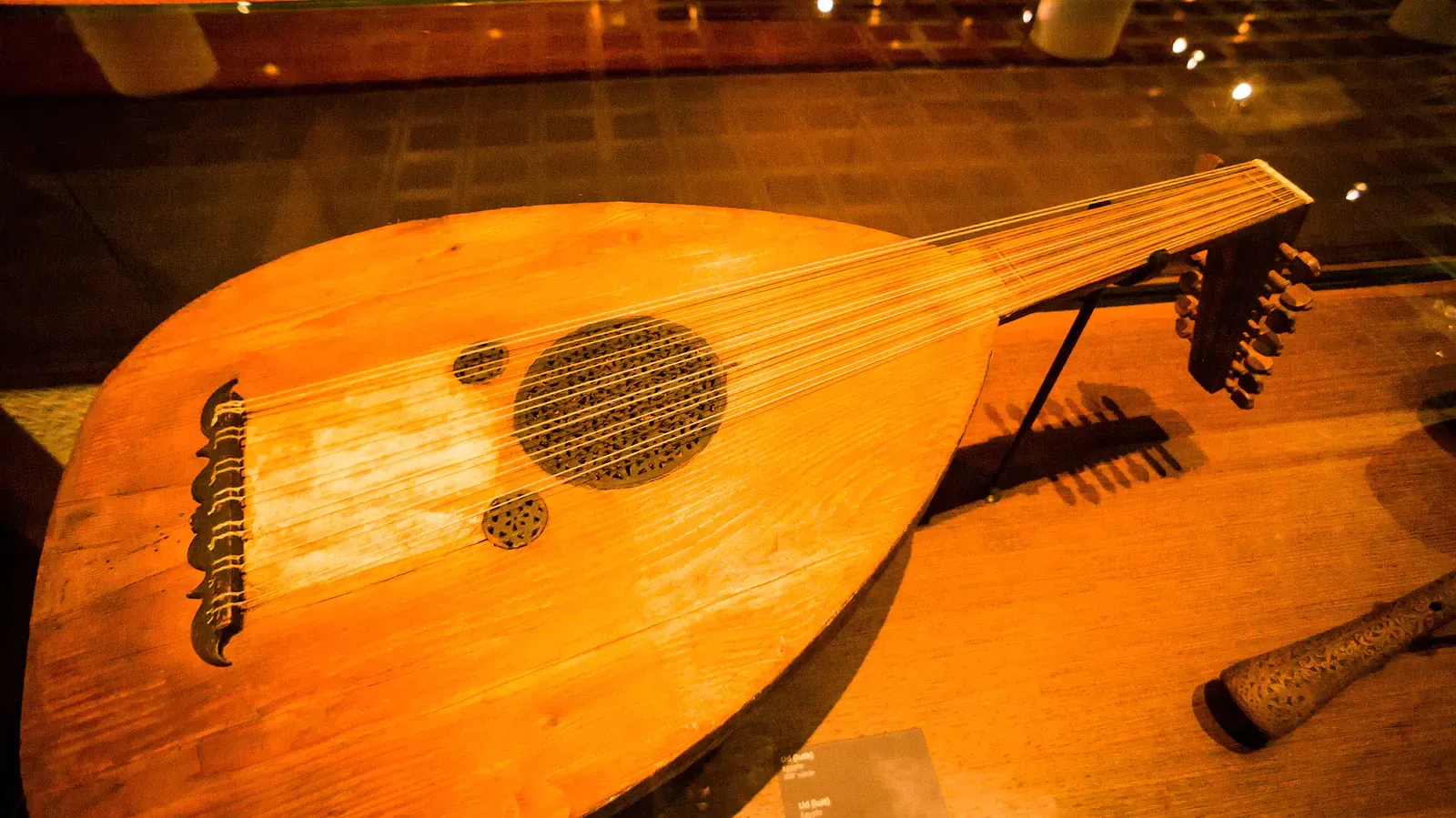
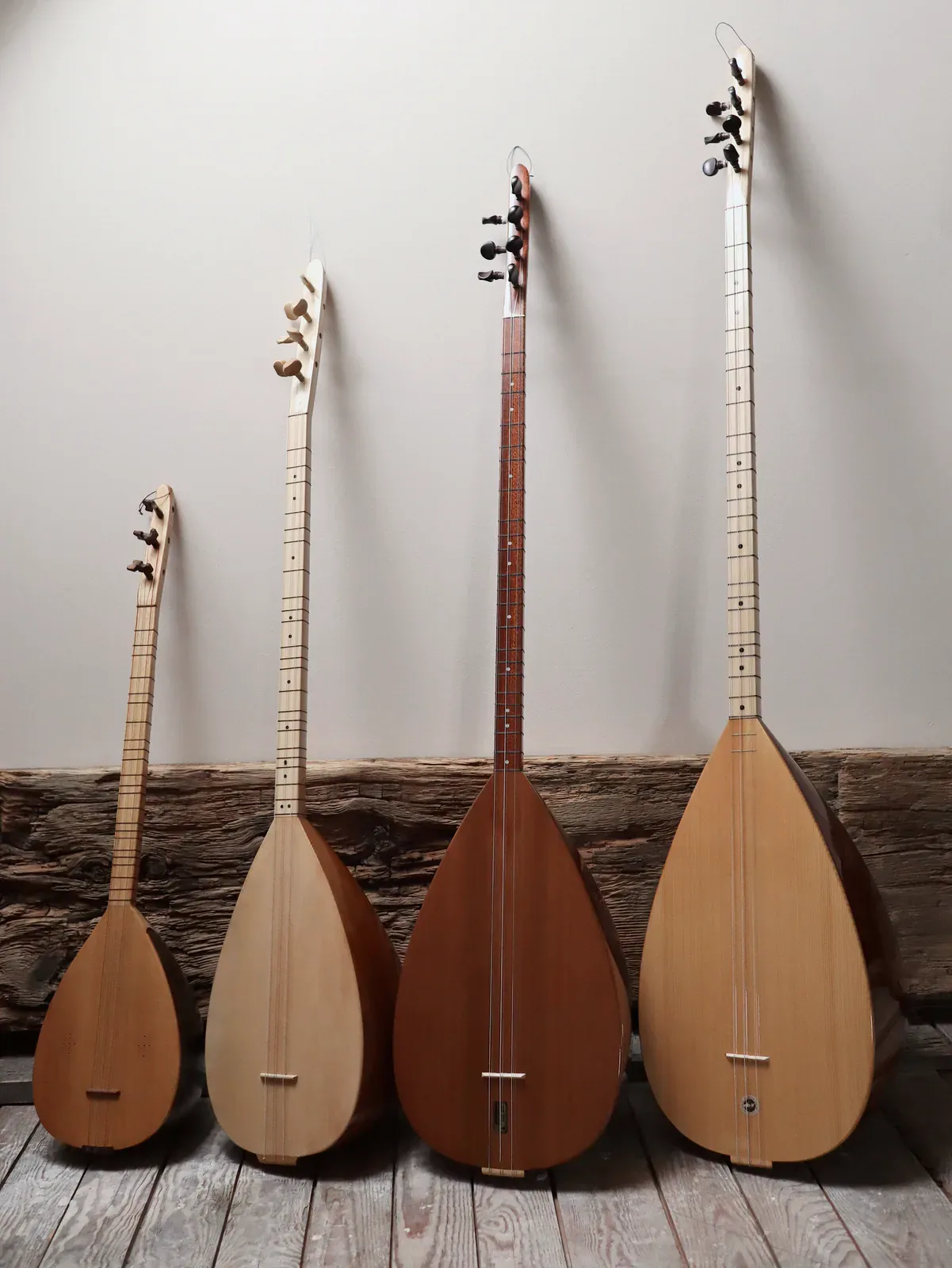
The bağlama, also called saz, is a long-necked fretted lute and the most common folk instrument, made in several sizes from the small cura to the long-necked divan saz. Its frets follow ratios close to quarter tones, though makers now often set them to 24-tone equal temperament, and regional tunings are called düzen. Players sound open middle and upper strings beside the melody to create a second voice.
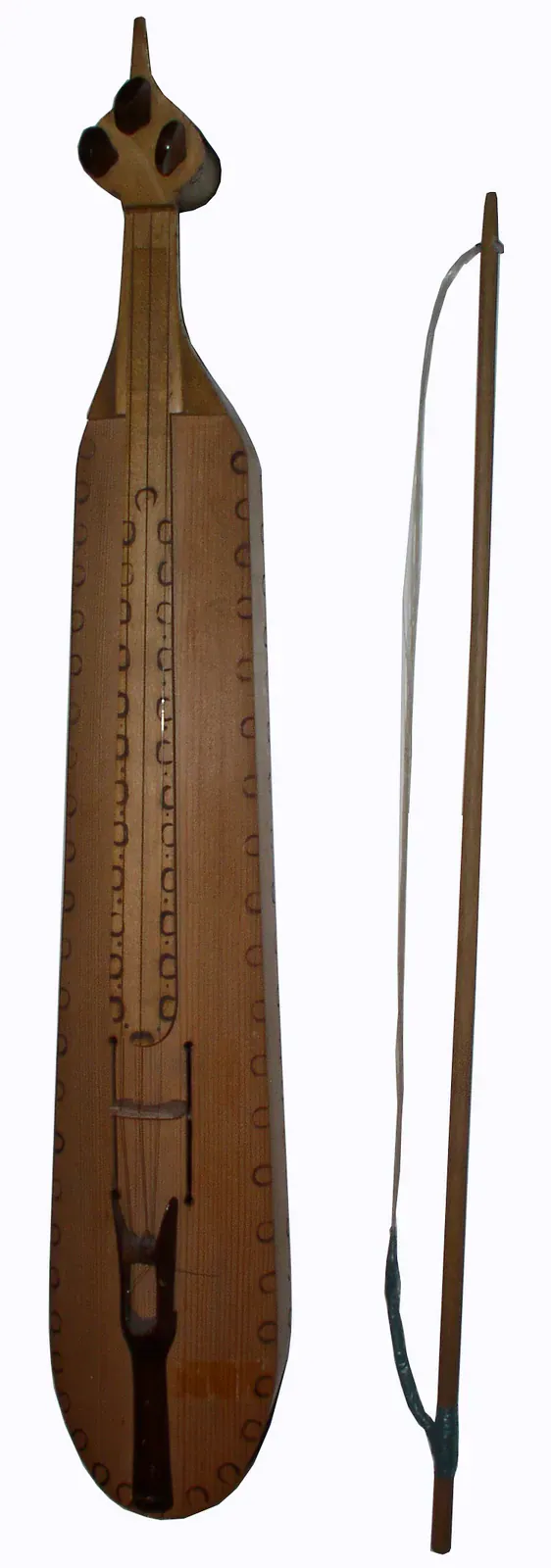
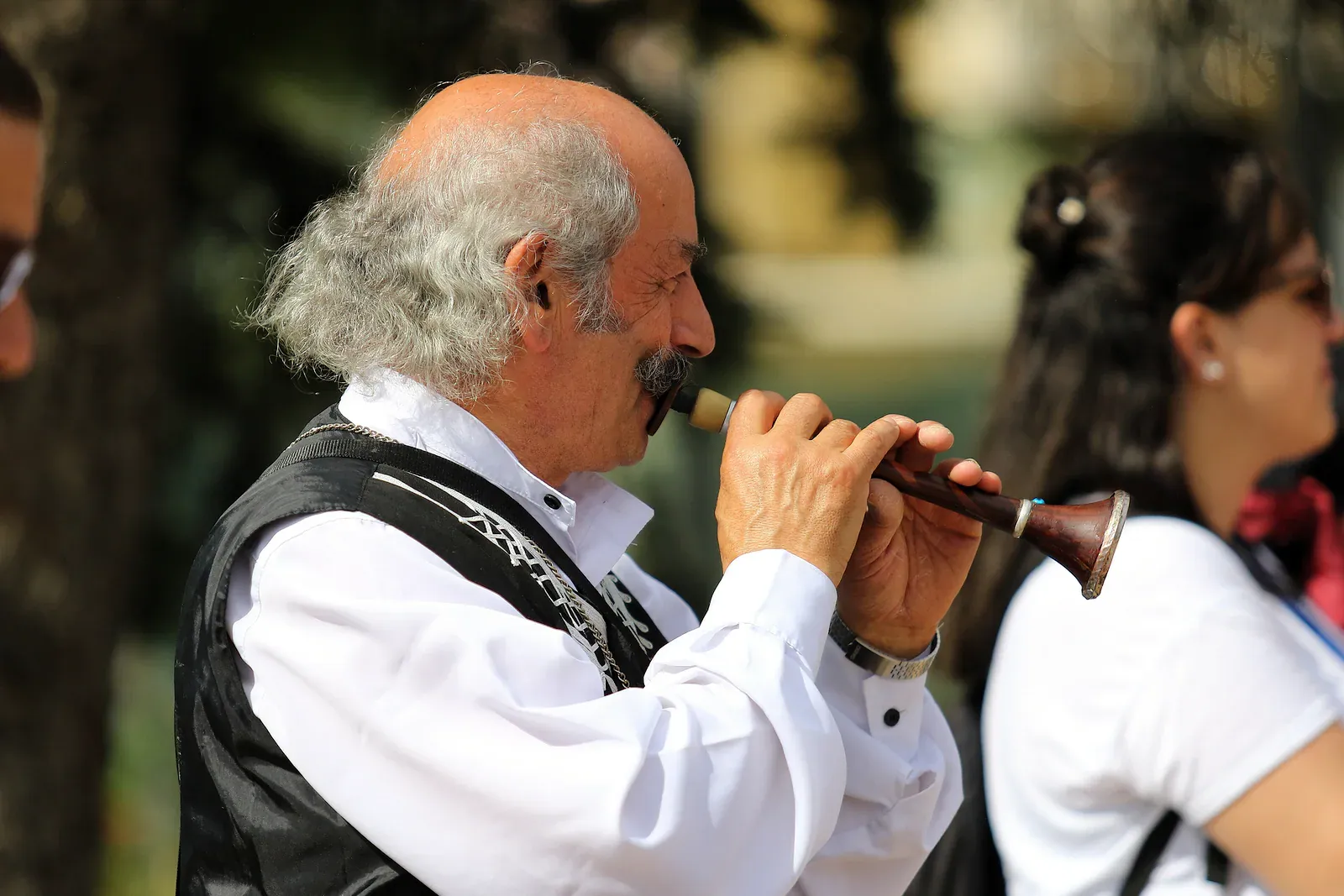
Other instruments are regional. The Black Sea kemençe, a small bowed fiddle, leads horon music, and the gourd fiddle kabak kemane appears in some traditions. Winds include the zurna, the kaval flute, the sipsi and the tulum bagpipe; percussion includes the davul, the tef and spoons.
Mainstream success
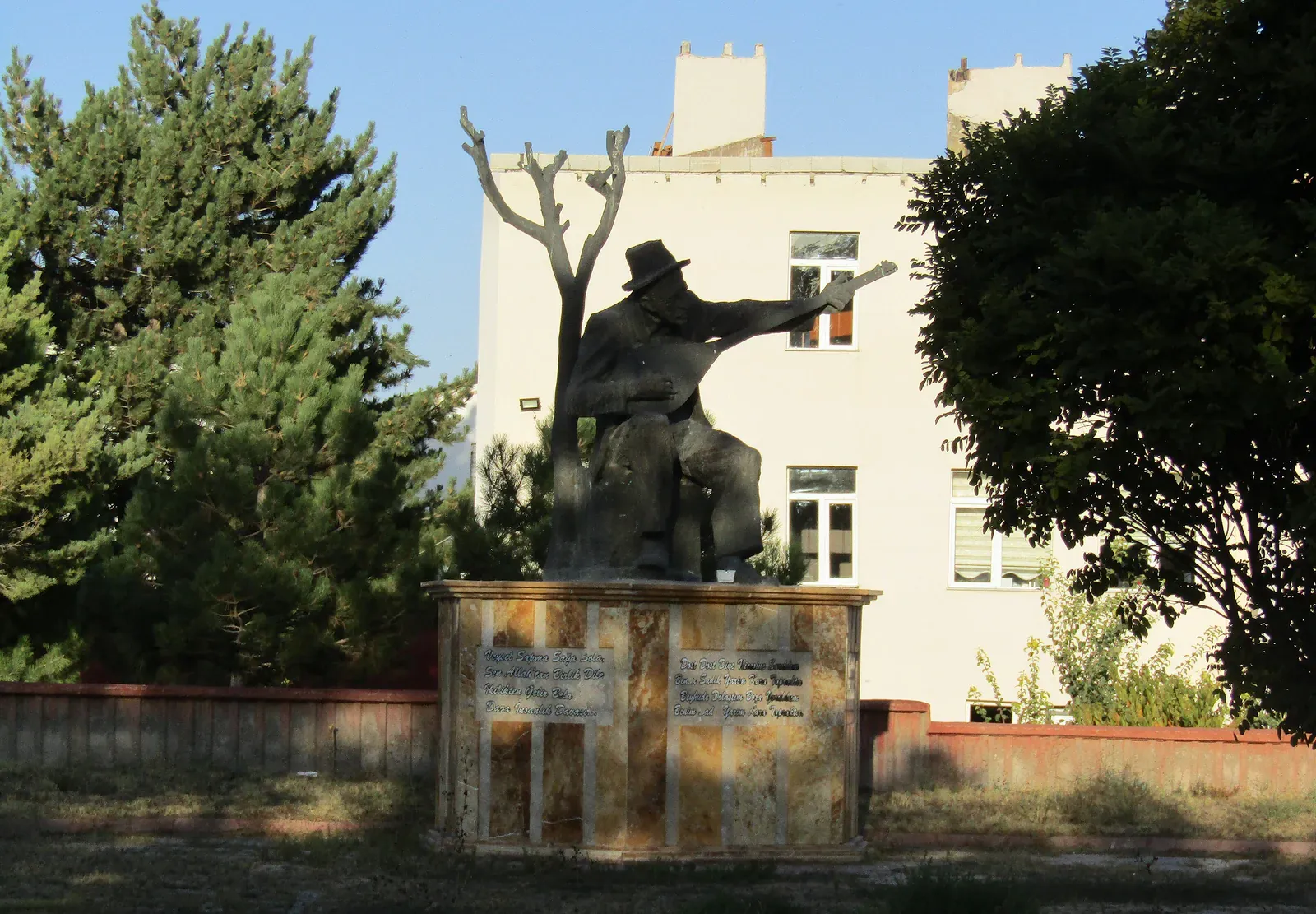
Veysel is considered one of the most prominent icons of Turkish folk music and literature, and was posthumously awarded a Presidential Culture and Arts Grand Award in 2022.
Abroad, the best-known channel was the protest singer. Selda Bağcan’s music has been sampled by musicians outside Turkey including 2manydjs, Mos Def, Oh No and Dr. Dre, and in 2014 she headlined the Le Guess Who? festival in Utrecht. Folk melodies also fed the neighbouring Turkish pop of the 1960s and later.
Notable recordings
Âşık Veysel’s Kara Toprak, sung to his own saz, ranks with Uzun İnce Bir Yoldayım and Dostlar Beni Hatırlasın among his best-known songs. Ruhi Su’s Pir Sultan Abdal of 1972 turned the verses of a sixteenth-century Alevi poet into a modern concert repertoire, and his 1977 Sabahın Sahibi Var with the Dostlar Korosu collected marches and protest songs including Ellerinde Pankartlar.
Neşet Ertaş’s Gönül Dağı of 1999 gathers his Central Anatolian songs, and Arif Sağ’s Sazım ve Ben of 1984 presented the bağlama as a solo concert instrument.
Culture
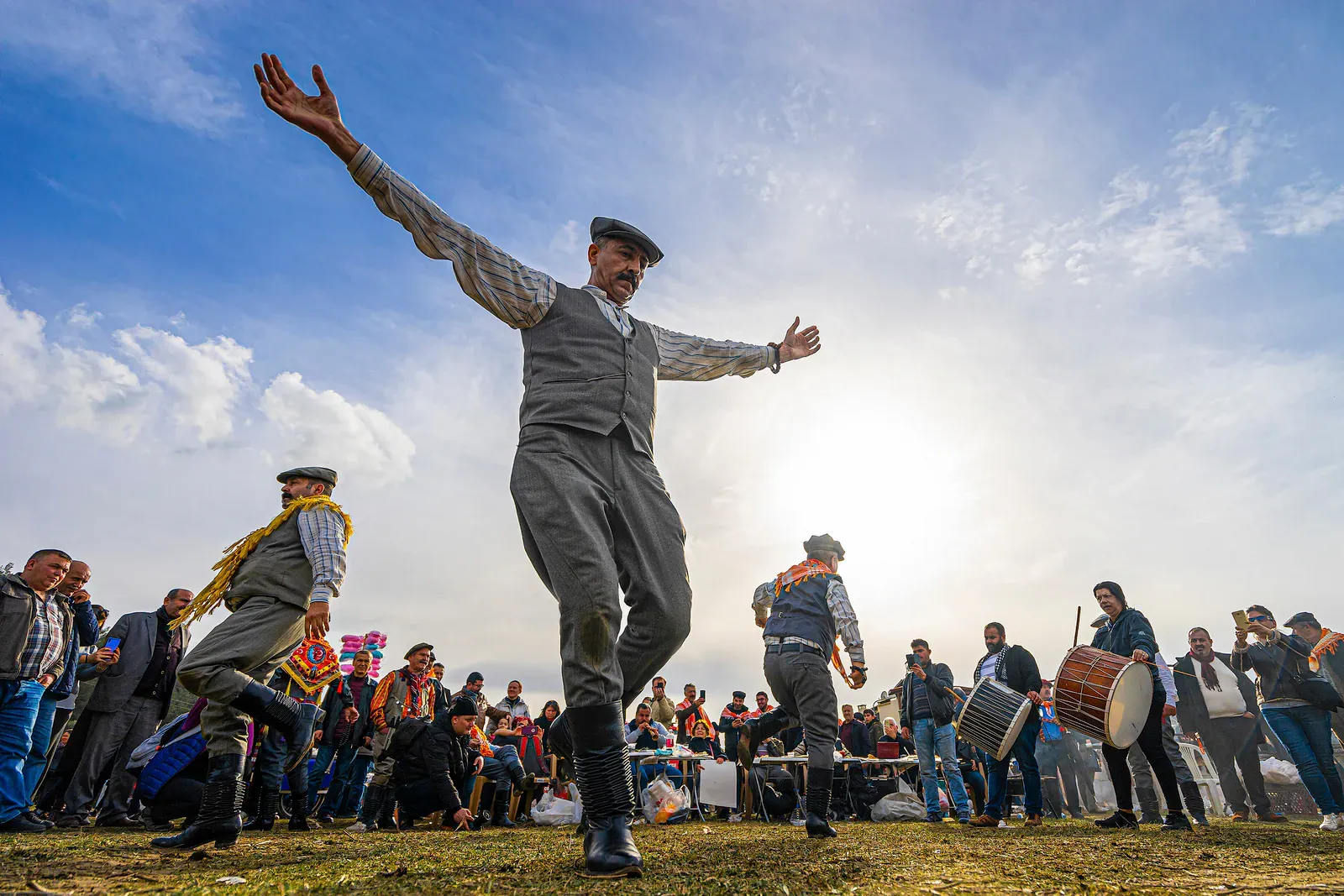
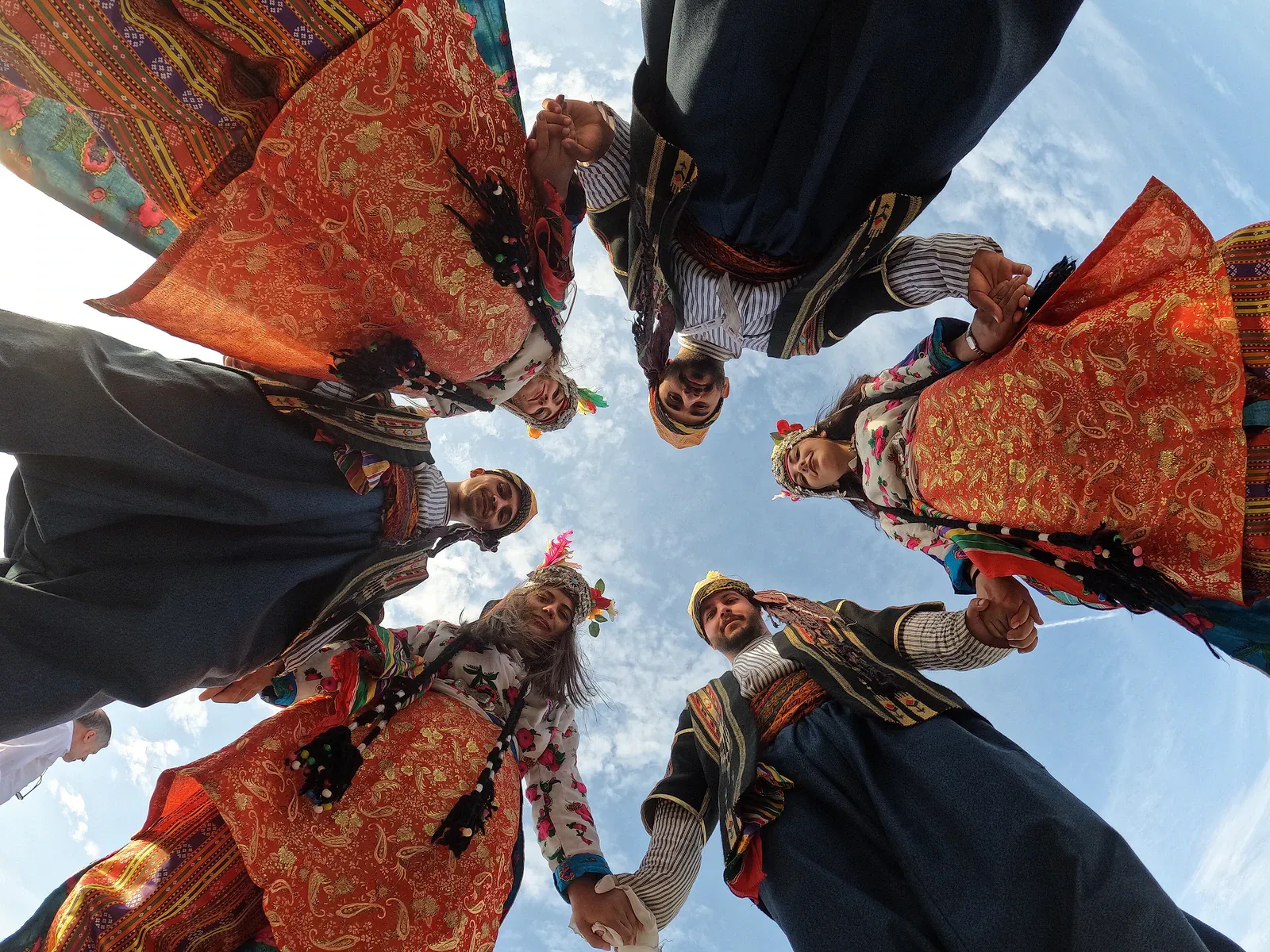
Each region has its own dances and costumes. Zeybek, from the Aegean, is a slow dance in irregular aksak rhythms whose dancers, called efe, symbolise courage and heroism. Horon is the Black Sea circle dance, with linked arms and a shivering step to the kemençe. Halay is a line or circle dance of southeastern Anatolia performed to davul and zurna at weddings and festivals. In the kaşık oyunu, dancers click wooden spoons in the rhythm.
Ashiks also kept a performance tradition of epic tales and sung verbal duels in which two poets answer each other in verse.
Legacy
The state’s project produced a large archive whose songs still form the base of the concert and radio repertoire. The living inheritance is the bağlama and the ashik’s role as poet and singer, carried on by players such as Arif Sağ and Musa Eroğlu. Folk melodies also feed pop and the art-music tradition known as Turkish classical music.
Misconceptions
Türkü is not a word for any Turkish song. In current usage it names folk songs from traditions within Turkey, while şarkı covers all other songs, including foreign music.
Turkish folk music is not simply an unbroken village inheritance. The idea of a single national folk music took shape only with the republic, through collecting, notation and state radio.
The saz is not tuned like a guitar. Its frets follow ratios close to quarter tones, although many modern instruments are set to 24-tone equal temperament.
Frequently asked questions
What is türkü?
Türkü is the Turkish folk song, a regional song about life, love, loss or protest sung to the bağlama or dance rhythms. The word separates folk songs from traditions within Turkey from şarkı, which covers all other songs.
What instrument is used in Turkish folk music?
The bağlama, or saz, a long-necked fretted lute, is the most common. Regional music adds the Black Sea kemençe, the zurna and davul, the kaval flute and the tef.
What is the difference between kırık hava and uzun hava?
Kırık havalar have regular rhythms and include dance forms such as zeybek and halay. Uzun havalar are free in rhythm and are improvised and ornamented, for example bozlak.
Who are the most important Turkish folk musicians?
Âşık Veysel, Neşet Ertaş, Ruhi Su, Selda Bağcan and Arif Sağ are among the best-known, along with the collector Muzaffer Sarısözen, who shaped the state’s folk-song repertoire.
Sound
Sound sheet
Anatomy of a track
| # | Part |
|---|---|
| 1 | Free-meter bağlama or voice opening |
| 2 | Verses in a quatrain form, one melody |
| 3 | Refrain or instrumental answer |
| 4 | Dance tune section (in rhythmic forms) |
Signature sounds
- Quarter-tone intonation on a fretted lute
- Open drone strings struck alongside the melody
- Irregular aksak rhythms such as 9/8 and 7/8
Techniques
- Plectrum and hand strumming
- Open drone strings
- Uzun hava improvisation
- Bozlak vocal descent
Keys and modes
Quarter-tone modal melodies. Modal melodies on a lute whose frets approximate quarter tones, now often set to 24-tone equal temperament.
Tuning
Bağlama düzen (regional tunings), frets near 24-tone equal temperament
Vocals
Strong, emotional solo voice, often the bard accompanying himself; long-tune songs are ornamented and free-metered.
Scenes
Where it happened
Where and when the sound lived: one bar per city on a shared timeline.
Asia
Active scenes
Peak 3, 1991-2025
Host of the first Folk Poets Festival, which brought village bards such as Âşık Veysel to urban audiences.
Seat of state radio and the State Conservatory, which archived and broadcast the collected repertoire.
Home of Kalan Müzik, which reissued and recorded regional masters.
Venues and places
Sivas, 1931 to today. The 1931 festival gathered 15 minstrels and made village ashiks visible to urban listeners.
Ankara, 1937 to today. Where regional singers were recruited for programmes such as Yurttan Sesler.
Culture
Culture markers
- Zeybek
An Aegean dance whose dancers, called efe, symbolise courage and heroism.
Dance - Horon
A Black Sea circle dance in which dancers link arms and shiver to the kemençe.
Dance - Spoon dance (kaşık oyunu)
A dance from Konya to Silifke in which dancers click wooden spoons to mark the rhythm.
Dance - Ashik storytelling and duels
Bards recite epic tales and answer each other in sung verbal duels.
Ritual
Media
Key media
- 1926Yurdumuzun Nağmeleri
by Ministry of Education Bureau of Culture. An early state publication of about one hundred notated folk songs.
Book
Glossary
Terms on this page
A traveling bard who sings his own poems and tales to bağlama accompaniment.
A Central Anatolian long-tune style, sung from a very high start down to a low end and tied to separation and love.
A regional string tuning of the bağlama.
A folk melody with a regular rhythm, including dance forms such as zeybek and halay.
A Turkish folk song, as opposed to the broader şarkı song category.
A long-tune folk song in free rhythm, improvised and richly ornamented.
Middle Eastern and North African family