Persian folk music
Persian folk music is the regional vernacular music of Iran: Kurdish tanbur, Khorasan dotar ballads, Gulf-coast Bandari and epic naqqali storytelling.
Iran, around 1600
Middle Eastern and North African family
Born
around 1600
Iran
Subgenres
9
Documented branches
Links
1
Genres it drew on or shaped
Tempo
80-160 BPMLineage
Family tree
Grew out of
Iran
Persian folk music
Led to (9)
Timeline
Era by era
From the first sparks to today. Select a dot to read the story behind it.
- Coffeehouses and wandering minstrels
1600 to 1920
- Folk songs in classical modes
1880 to 1964
- Kanoon and the concert folk song
1965 to 1979
- Fieldwork, regional masters and the world stage
1980 to 2009
- Heritage listings and new fusions
2010 to today
Eras
Moments
- 1 Coffeehouses and wandering minstrels, 1600 to 1920
- 2 Folk songs in classical modes, 1880 to 1964
- 3 Kanoon and the concert folk song, 1965 to 1979
- 4 Fieldwork, regional masters and the world stage, 1980 to 2009
- 5 Heritage listings and new fusions, 2010 to today
around 1600
Coffeehouses and wandering minstrels
Storytellers performed epic verse in coffeehouses and caravanserais from the early 17th century, while bakhshi minstrels, wedding musicians and lament singers carried regional repertoires by ear.
- 1600Coffeehouse naqqali flourishesFrom the early 17th century storytellers perform Shahnameh episodes and legends in coffeehouses, which become the main public venue for epic recitation.
around 1880
Folk songs in classical modes
Composers of the late 19th and early 20th centuries set folk tunes inside classical Iranian modes with Western harmony, and orchestral arrangements of folk songs became common.
- 1958Monir Vakili begins her careerThe soprano, later called the first Persian singer to popularise Persian folk songs at home and abroad, starts her active years.
1965
Kanoon and the concert folk song
Under Empress Farah Pahlavi's patronage the Institute for the Intellectual Development of Children and Young Adults, founded in 1965, produced folk song recordings by trained singers such as Pari Zangeneh and Monir Vakili.
- 1965Kanoon is foundedThe Institute for the Intellectual Development of Children and Young Adults is set up under the patronage of Empress Farah Pahlavi and later records folk songs.
- 1971Ali Akbar Moradi's first recitalThe future Kurdish tanbur master gives his first recital in Kermanshah.
- 1974Gonjeshkake Ashi Mashi in The DeerPari Zangeneh's version of the traditional song is heard in the 1974 Iranian film The Deer.
- 1976Folk songs for young adults on LPPari Zangeneh records a series of Iranian folk songs commissioned by Kanoon, later reissued on CD.
1980
Fieldwork, regional masters and the world stage
Regional masters such as the Kurdish tanbur player Ali Akbar Moradi and the Baluch singer Mulla Kamal Khan won wider audiences, and Iranian folk influences reached jazz and world music releases.
- 1981Moradi joins Shahram NazeriAli Akbar Moradi begins touring Europe and North America with the Kurdish singer Shahram Nazeri.
- 1987Mahoor Institute is foundedThe Tehran institute later issues the Regional Music of Iran series, which documents local repertoires such as Baluch guat and zekr.
- 1997Imaginary DayThe Pat Metheny Group album draws on Iranian folk music and wins the Grammy for Best Contemporary Jazz Album in 1999.
- 1999Fire of PassionAli Akbar Moradi's Kurdish tanbur album brings Kurdish maqam repertoire to international listeners.
- 2004In the Mirror of the SkyMoradi and Kayhan Kalhor record a duo album of Kurdish tanbur and kamancheh.
- 2006Endless VisionHossein Alizadeh and Djivan Gasparyan record Iranian and Armenian songs at Niavaran Palace; it is nominated for a Grammy in 2007.
- 2007Mulla Kamal Khan honouredThe Baluch folk singer is awarded at a ceremony led by Mohammad-Reza Shajarian for his contribution to the folk music of Baluchestan.
- 2007ToranjMohsen Namjoo's debut album mixes Iranian folk and classical vocal styles with blues and rock.
2010
Heritage listings and new fusions
UNESCO inscribed the music of the Bakhshis of Khorasan in 2010 and naqqali in 2011, while singer-songwriters and Bandari pop acts reworked regional sounds for new audiences.
- 2010Bakhshis of Khorasan on the UNESCO listUNESCO inscribes the music of the Bakhshis of Khorasan, dotar players who sing in Persian, Turkish, Kurdish and Turkmen.
- 2011Naqqali on the UNESCO listPersian epic storytelling is inscribed on the Representative List of the Intangible Cultural Heritage of Humanity on 27 November.
- 2017Kamancheh craft and playing inscribedThe art of making and playing the kamancheh enters UNESCO's lists for Iran and Azerbaijan.
Listening path
Start listening
A short path from an easy way in to the deep end. Thumbnails come from YouTube; the player loads only when you press play.
- 01
Pari Zangeneh, 1974
The children's folk song in a soprano's concert arrangement, an easy way into the Kanoon-era style.
- 02
Mohsen Namjoo, 2007
A singer-songwriter's blend of folk-style vocal ornament with rock instrumentation; listen for the shifting vocal modes.
Facts
| Family | Middle Eastern and North African |
| Origin | Iran |
| Status | Active |
| Tempo | 80 to 160 BPM |
| Meter | 6/8 |
| Subgenres | 9 |
Persian folk music, also called Iranian folk music, is the vernacular music of Iran outside the classical dastgah system. It is carried by Persian, Turkic, Kurdish, Lori, Baluchi, Gilaki and other communities, each with its own language, instruments and songs.
It is mostly transmitted inside families and learned by ear, and many tunes exist in numerous variants. Songs mark weddings, harvests and mourning, and they tell historical, religious and nostalgic stories.
Origins
Folk songs, riddles, tales and everyday narratives were gathered early in Iranian cultural history, and classical-era writers describe minstrels who performed at royal courts and in public theatres, praising national heroes. The modal ideas behind folk melody are linked to those of the classical repertoire, and singers of both traditions may improvise the words and the tune inside the proper mode. Many folk songs can be set in either major or minor tonality, which later made them easy to arrange for orchestra and piano.
Iran has no single folk style. Three instruments are common to every region: the sorna, the ney and the double-headed dohol drum. Beyond them, regional specialists hold the repertoire: professional wedding musicians (motreb), epic storytellers (naqqal), wandering minstrels (bakhshi) who play the dotar, and lament singers (rowzeh-khan) who recite verses for the martyrs of Shia tradition.
Coffeehouses and minstrels, 1600-1920
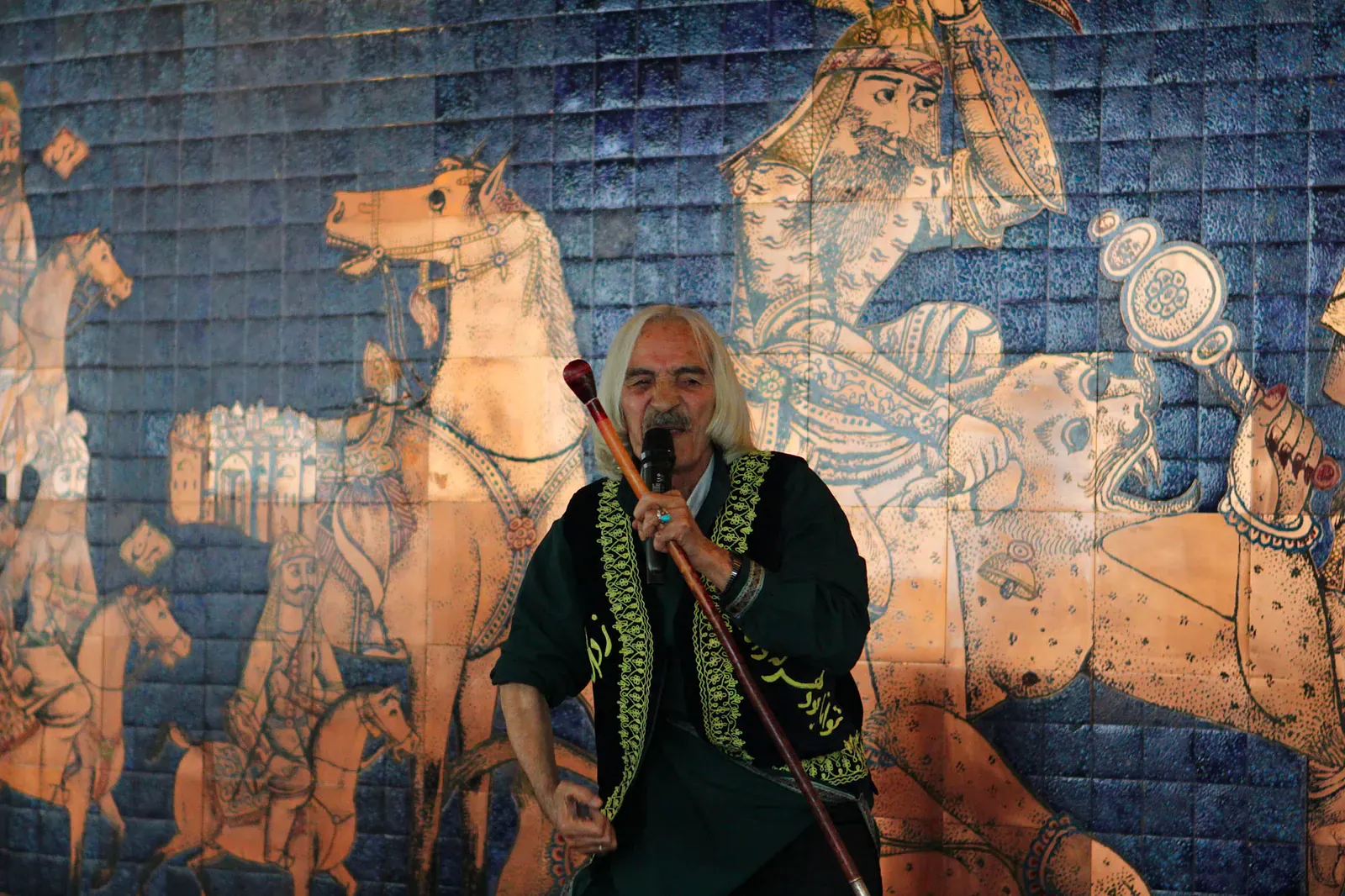
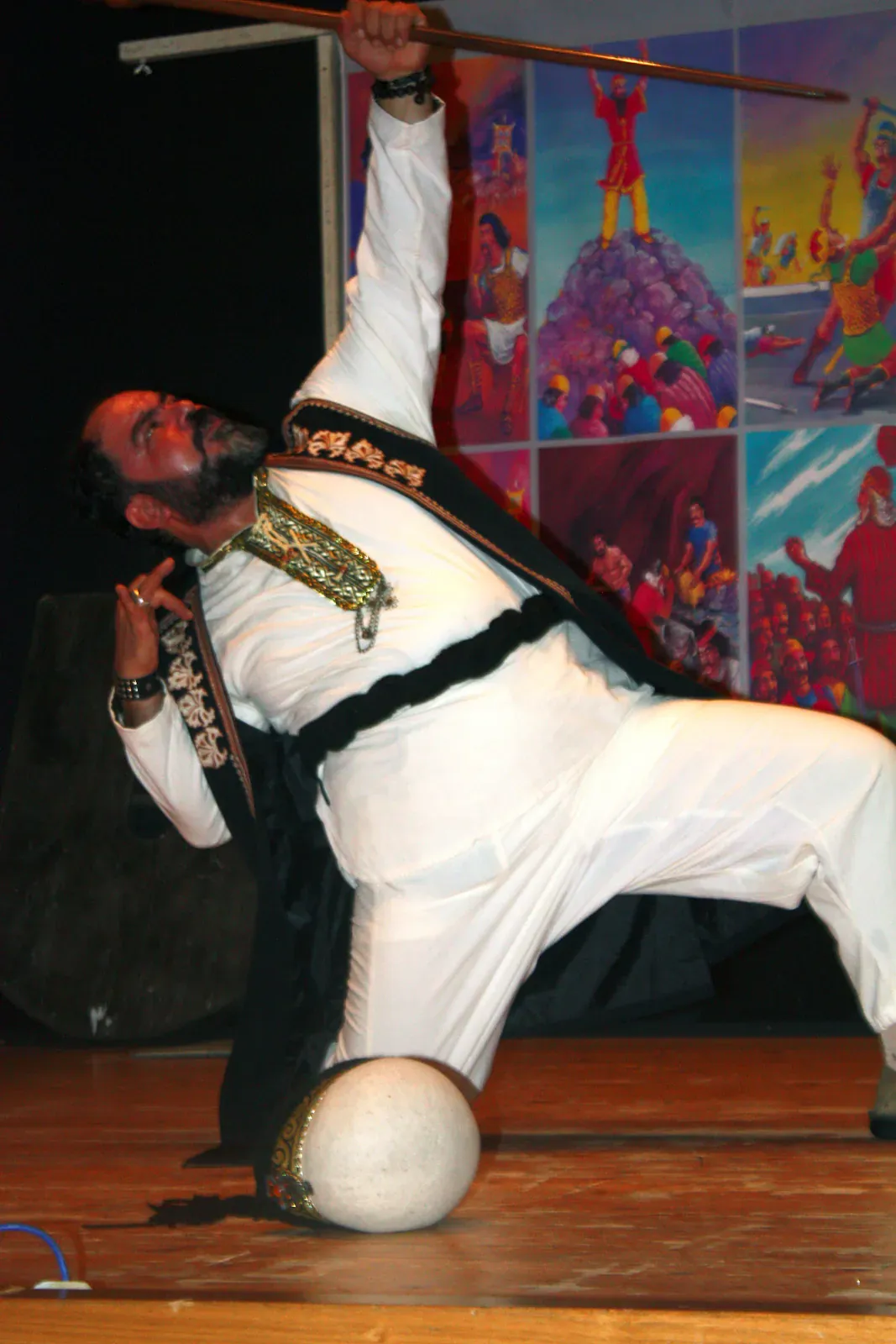
From the early 17th century to the early 20th, coffeehouses were the stage of naqqali, the oldest form of narrating tales in Iran. Naqqals recited the mythological kings and heroes of the Shahnameh in prose and sung verse, interspersing spoken commentary, and in doing so taught a largely unlettered audience its own literature. The decline of traditional coffeehouses and caravanserais in the 20th century thinned the audience, yet the art survived and was inscribed on UNESCO’s Representative List in 2011.
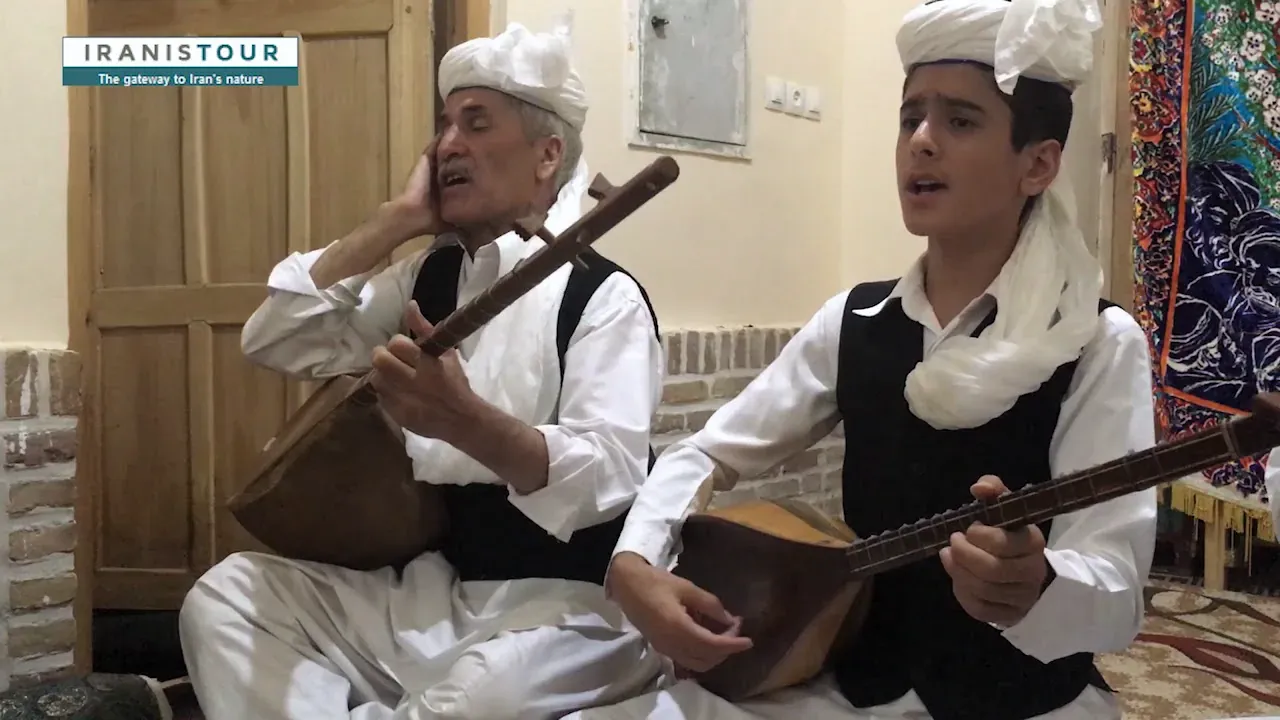
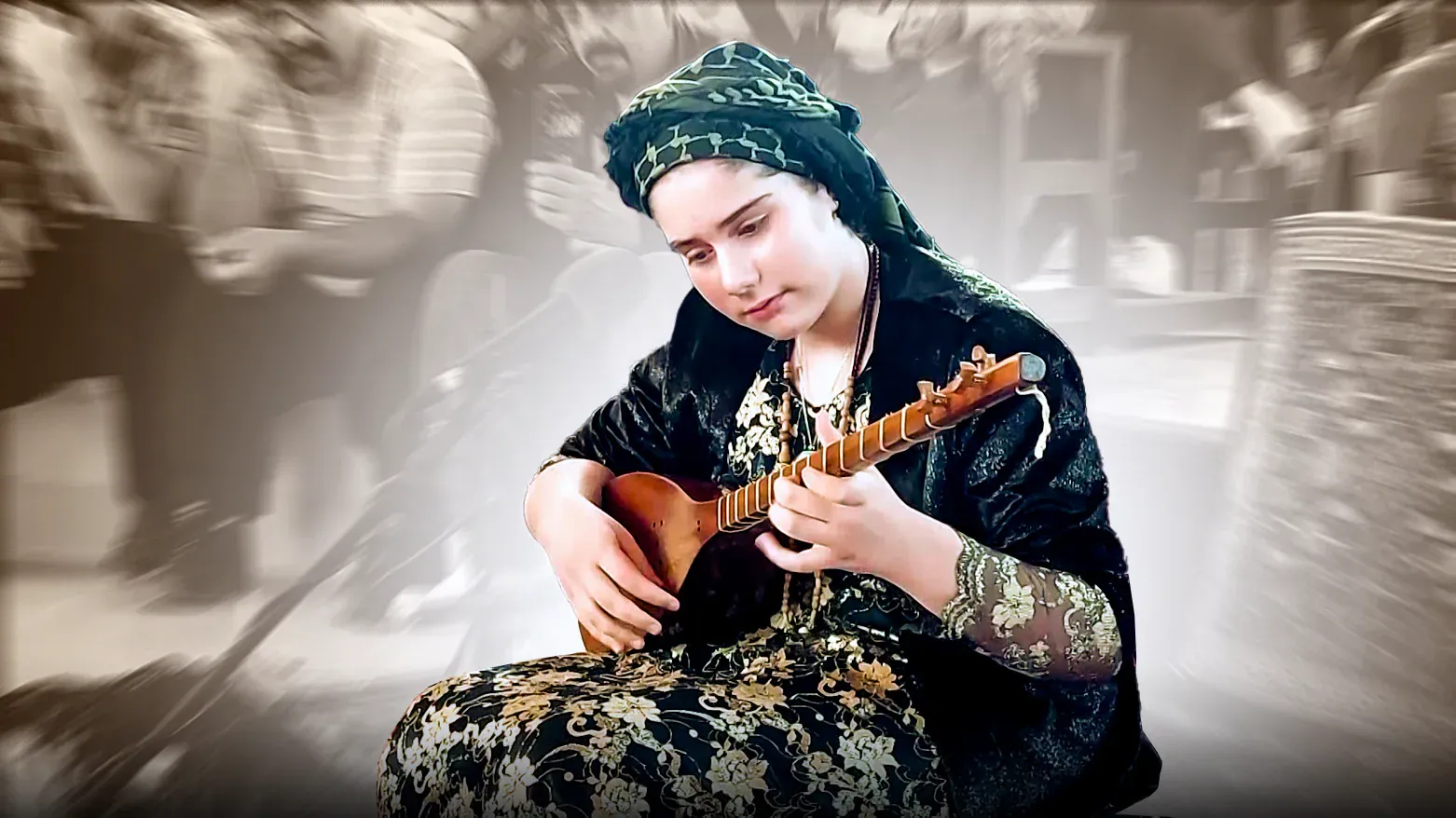
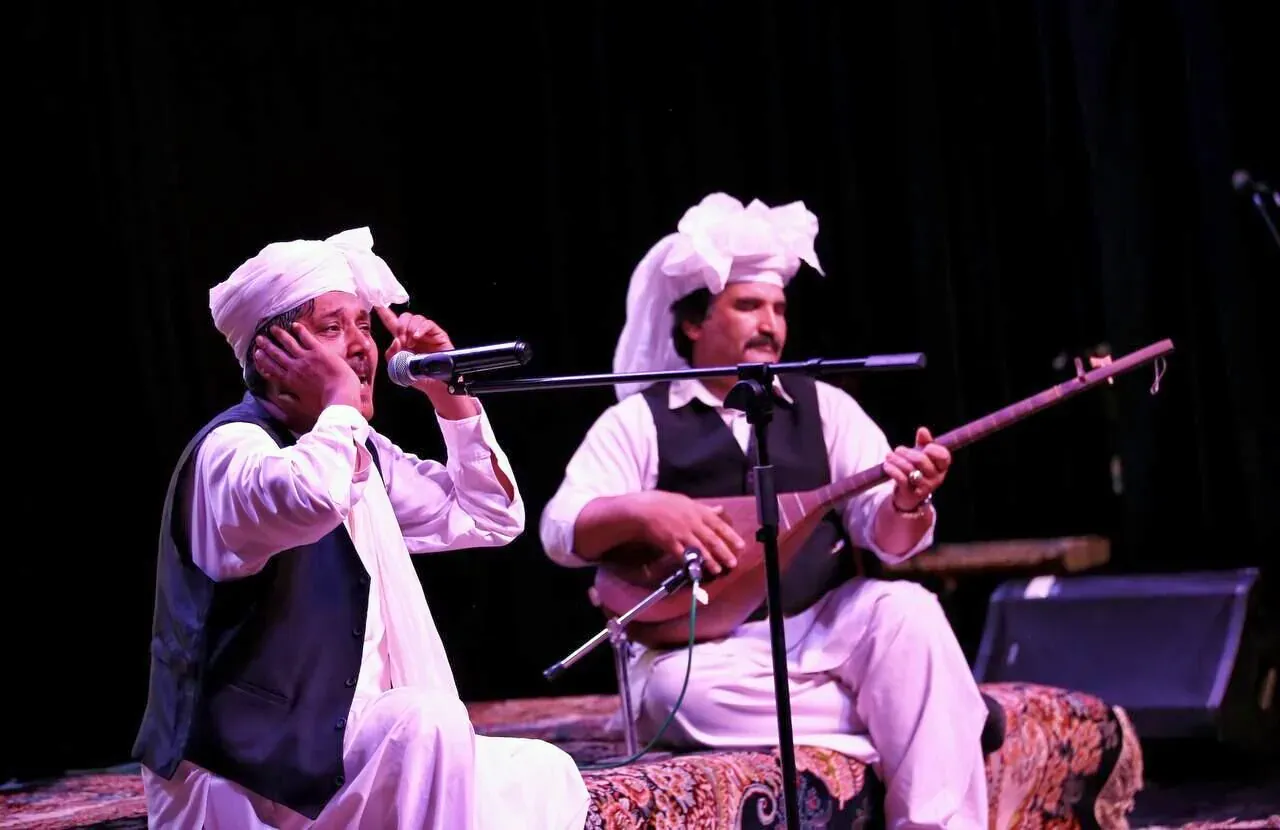
In Khorasan in the northeast, bakhshi minstrels sang romantic and heroic ballads to the dotar, a two-stringed long-necked lute, in Persian, Turkish, Kurdish and Turkmen. In the west, the Kurdish tanbur served both secular song and the ritual music of the Yarsani (Ahl-e Haqq) community, which treats the instrument as sacred.
Folk song in the concert hall, 1880-1979
Composers of the late 19th and early 20th centuries began using folk tunes as raw material, setting them inside classical modes with Western harmony. The decisive institutional step came in 1965, when the Institute for the Intellectual Development of Children and Young Adults (Kanoon) was founded under the patronage of Empress Farah Pahlavi. It commissioned polished recordings of old folk songs by trained singers, among them the sopranos Pari Zangeneh and Monir Vakili, and those recordings strongly influenced both folk and pop production afterwards.
Monir Vakili, active from 1958, is described as the first Persian singer to popularise folk songs at home and abroad. Pari Zangeneh, who had studied Iranian folk music and reconstructed traditional songs, sang Gonjeshkake Ashi Mashi in the 1974 film The Deer, and recorded a Kanoon series of Iranian folk songs in 1976. This concert style is polished and tuneful, far from the village or ceremonial settings the songs came from.
Regional masters and the world stage, 1980-2009
Alongside the studio folk song, regional masters reached wider audiences. The Kurdish tanbur player Ali Akbar Moradi gave his first recital in Kermanshah in 1971, began touring Europe and North America with the singer Shahram Nazeri in 1981, and released Fire of Passion in 1999 and, with the kamancheh player Kayhan Kalhor, In the Mirror of the Sky in 2004. The Mahoor Institute of Culture and Art, founded in 1987, issued a Regional Music of Iran series that documents local repertoires such as Baluch guat and zekr.
Iranian folk music also left a mark on jazz. The Pat Metheny Group’s Imaginary Day, drawing on it, won the Grammy for Best Contemporary Jazz Album in 1999, and in 2006 Hossein Alizadeh and Djivan Gasparyan recorded the Grammy-nominated Endless Vision of Iranian and Armenian songs. In 2007 the Baluch singer Mulla Kamal Khan, famed for heroic ballads, was honoured at a ceremony led by Mohammad-Reza Shajarian.
Characteristics
Folk melody is modal and vocal. A soloist often improvises words and tune within the mode, and the poetic meter of do-beyti (two couplets) is closely associated with folk tunes, frequently sung in the vocal mode avaz-e dashti. Lyrics are in the local language: Luri, Gilaki, Kurdish, Baluchi, Turkic dialects or the coastal dialects of the south. Rhythms differ by region, from the swinging 6/8 of Gulf-coast Bandari to the dance rhythms of the dohol and sorna.
Instruments and production
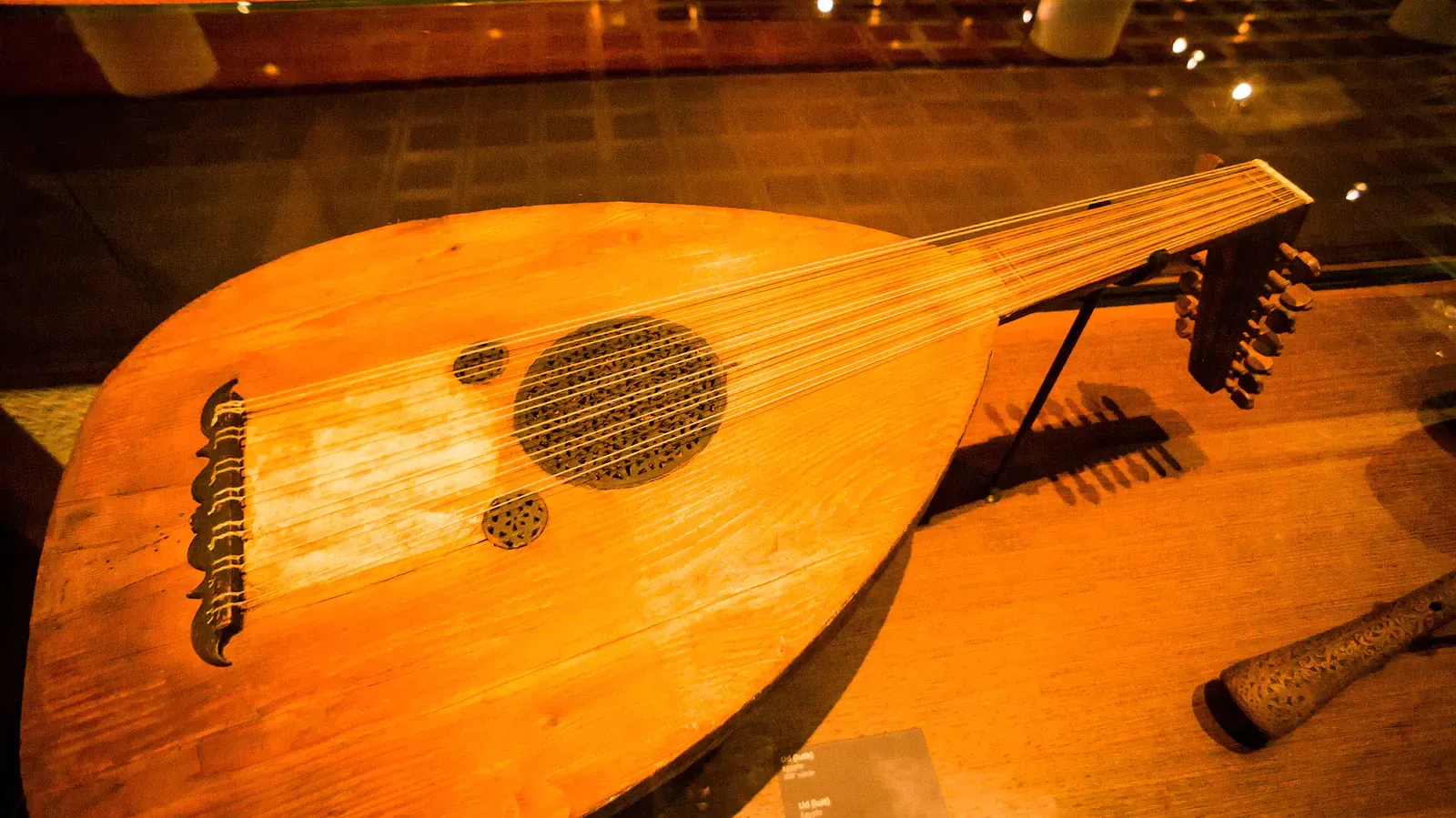
Long-necked lutes dominate: the dotar in Khorasan, the Kurdish tanbur in Kermanshah, Kurdistan and Lorestan, and the Baluch tanburak in the southeast. The kamancheh adds a bowed line, the ney-anban bagpipe leads in the Persian Gulf, and the sorna with dohol serves outdoor ceremonies. Drums such as the tombak, daf and darbuka keep time. Modern Bandari bands add djembe, conga and kit drums to the traditional frame drums.
Regional traditions
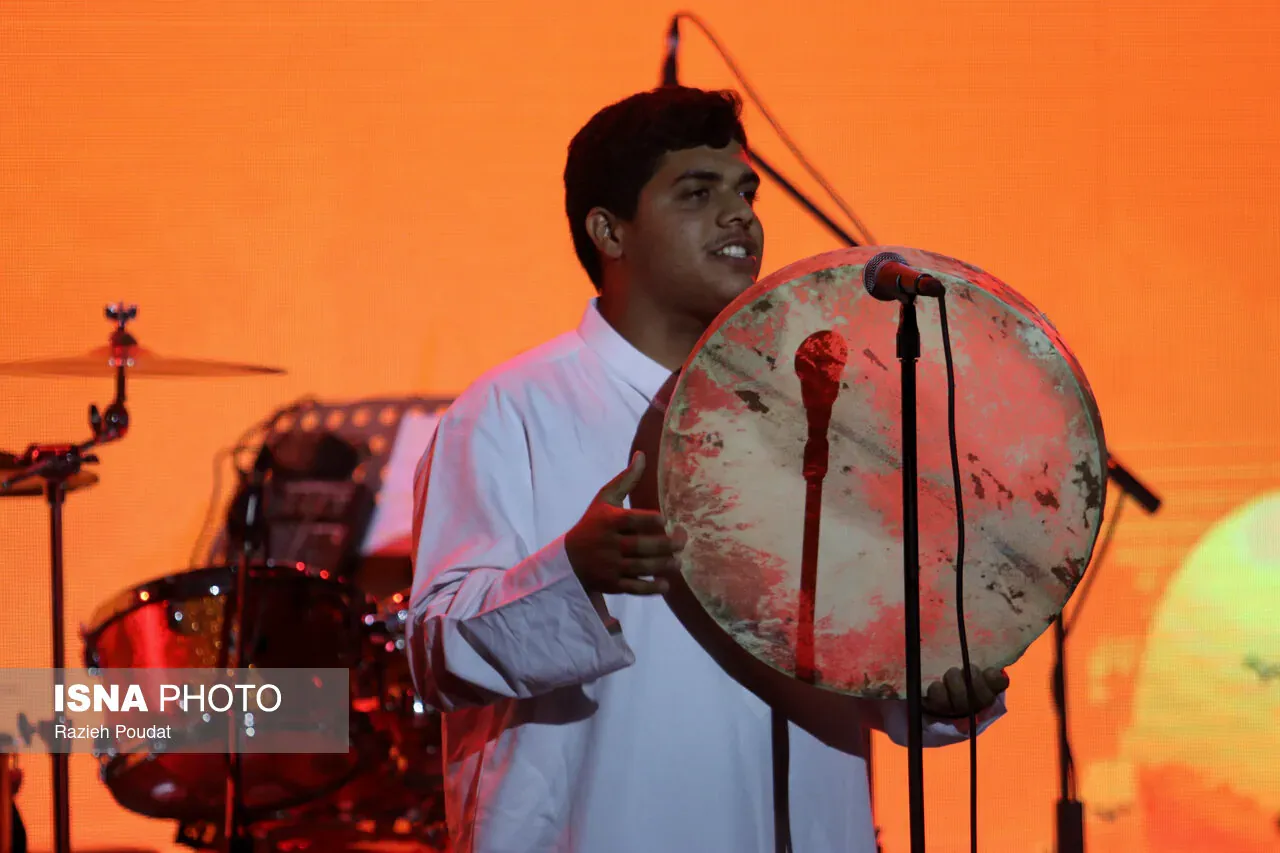
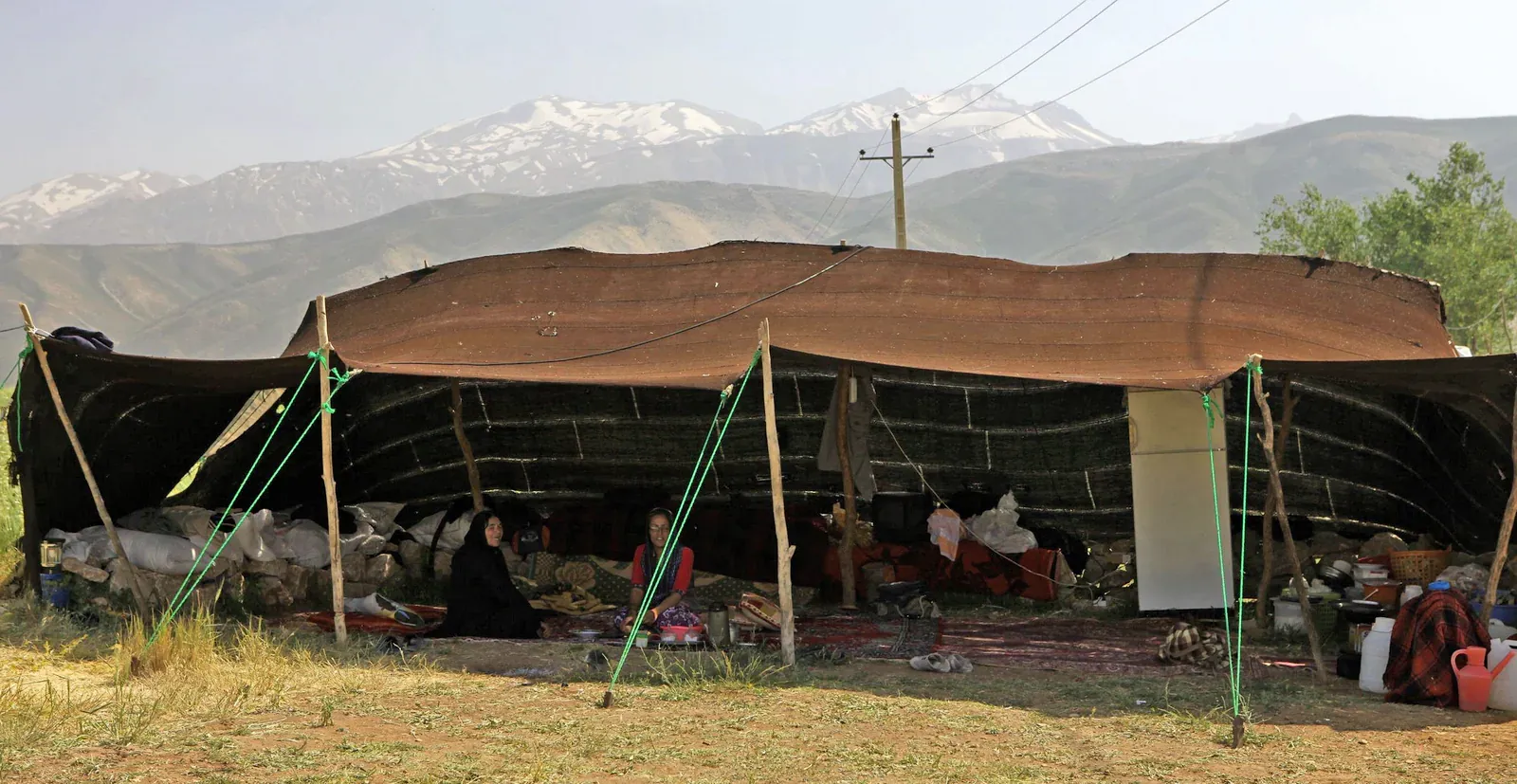
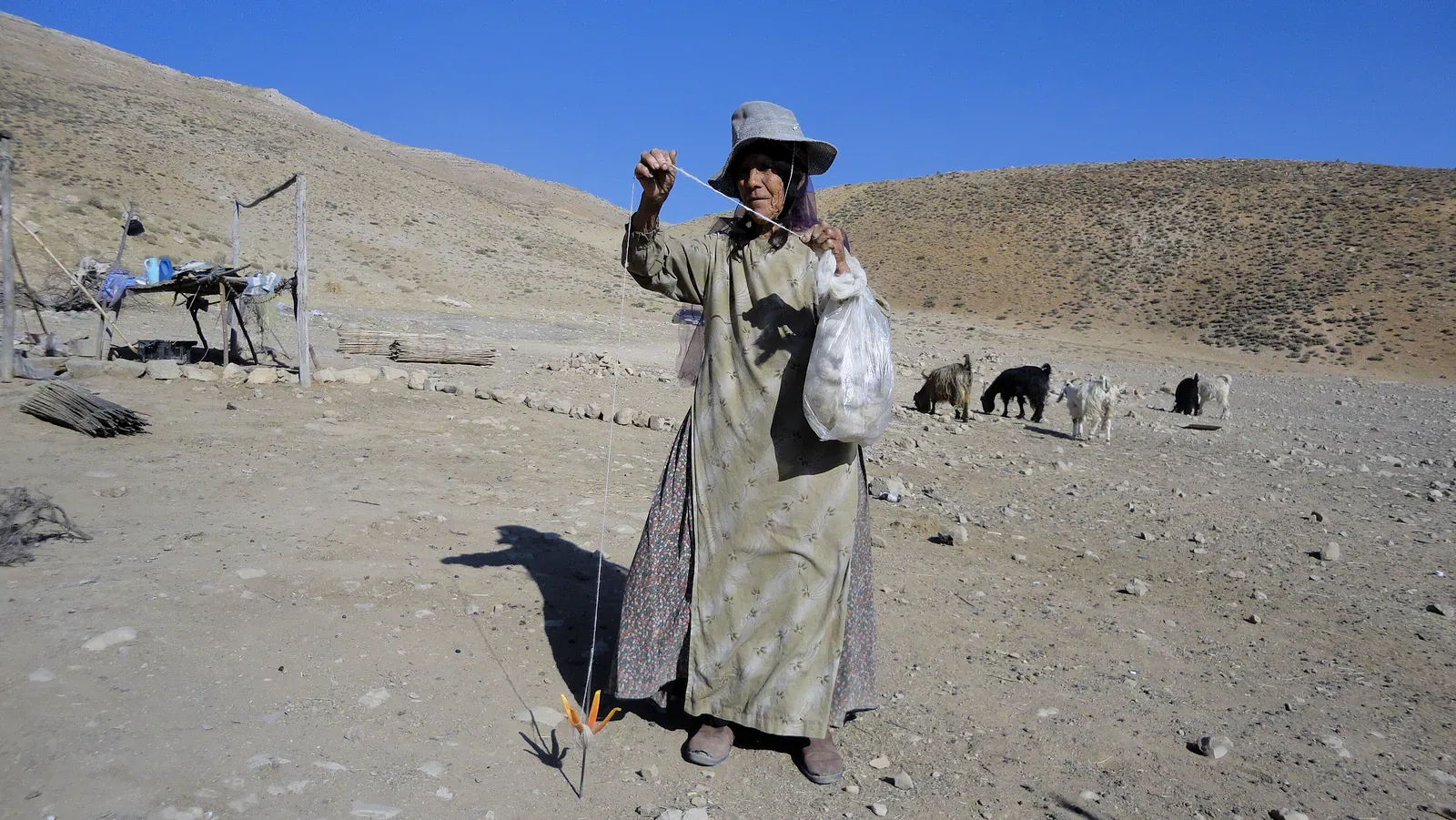
Bandari music comes from the Persian Gulf coast, around Bandar Abbas and Larestan, with songs in Luri, Achomi and coastal dialects. It is built around the ney-anban, tombak, daf and darbuka and supports a dance sometimes called Persian belly dance. The Bakhtiari are known for sorna and karnay, with kamancheh melody, and their songs often narrate a shepherd’s love story. The Qashqai are a Turkic people of southern Iran, and the Baluch of the southeast regard their own song genres as their classical repertoire.
Mainstream success
Regional folk music crossed over mostly through the concert style of the 1960s and 1970s, film and, later, pop arrangements. Bandari pop reached mass audiences online, and Leila Forouhar’s Jooni Joonom has passed 70 million views on YouTube. Folk tunes also fed Persian pop, which borrowed regional melodies and rhythms; see Persian pop. UNESCO’s inscription of the music of the Bakhshis of Khorasan in 2010 gave the dotar tradition international recognition, and the kamancheh craft followed in 2017.
Notable recordings
Pari Zangeneh’s Gonjeshkake Ashi Mashi, a children’s song about a little sparrow, reached a national audience through The Deer in 1974 and remains a standard. Ali Akbar Moradi’s Fire of Passion carried Kurdish maqam repertoire from the Yarsani ritual to international listeners. Mohsen Namjoo’s Toranj, released in 2007, reworked folk and classical vocal styles with blues and rock and made his name as a folk-informed singer-songwriter.
Culture
Folk music is tied to occasions. Professional musicians play at weddings, and storytellers recite in coffeehouse settings. Yarsani ceremonies centre on the tanbur. Seasonal migration and nomadic life shape the Bakhtiari and Qashqai repertoires, and in Baluchestan the sorna and dohol accompany circle dances.
Legacy
Folk music has supplied melody, rhythm and instrument sounds to Iranian classical, pop and rock, and to jazz and world music abroad. Researchers such as Mohammad-Reza Darvishi have documented instruments and regional repertoires, and the Harvard collection of Khorasan recordings from 1968 to 2006 preserves performances that might otherwise be lost. Heritage listings and festivals keep regional forms alive for younger players.
Misconceptions
Persian folk music is not one style. Iran’s folk traditions differ by region, language and community, and they should not be read as a single national folk sound. It is also not simply the same as classical music: although folk modes relate to the dastgah system, folk performers traditionally learn from their families and communities. And it is not only rural or old: Bandari pop, folk-rock singer-songwriters and concert-hall arrangements all draw on it today.
Frequently asked questions
What is Persian folk music?
Persian folk music is the vernacular music of Iran’s regional and ethnic communities, learned by ear and sung in local languages, outside the classical dastgah system.
What instruments are used in Persian folk music?
Typical instruments are the dotar, Kurdish tanbur, kamancheh, ney-anban bagpipe, sorna, dohol and frame drums such as the daf and tombak.
What is the difference between Persian folk and Persian classical music?
Folk music belongs to communities and is passed down in families, while classical music rests on the radif and dastgah repertoire. The two share modal ideas, and many singers work in both.
Which regions have their own folk traditions?
Khorasan has bakhshi dotar ballads, Kermanshah and Kurdistan have tanbur and Yarsani music, the Gulf coast has Bandari, and Baluchestan, Lorestan, Gilan and the Qashqai lands each have distinct repertoires.
Sound
Sound sheet
Anatomy of a track
| # | Part |
|---|---|
| 1 | Sung verse or do-beyti couplet in a regional dialect |
| 2 | Instrumental answer on dotar, tanbur or kamancheh |
| 3 | Repeat with variation or improvised ornament |
Signature sounds
- Solo voice improvising melody and lyric within a mode
- Plucked long-necked lute accompaniment
- Sorna and dohol for outdoor ceremonies
- Lyrics in Luri, Gilaki, Kurdish, Baluchi or Turkic dialects
- Gulf-coast 6/8 rhythm on daf and darbuka
Drums and percussion
- Dohol
- Daf
Techniques
- Modal improvisation of text and tune
- Sung and spoken narration
- Three-finger right-hand tanbur strumming
- Six-eight Gulf rhythm
Keys and modes
Modes linked to the classical dastgah system. Folk modal concepts relate to those of classical music and singers improvise within them.
Major or minor tonalities. Many folk songs can be arranged in either, which suited orchestral and piano settings.
Avaz-e Dashti. A vocal mode closely associated with do-beyti folk tunes.
Vocals
Solo or call-and-answer singing in regional languages, often ornamented and improvised, from heroic narration to lullabies and lament.
Scenes
Where it happened
Where and when the sound lived: one bar per city on a shared timeline.
Asia
Active scenes
Peak 2, 1971-2025
Home of the Kanoon institute, whose recordings of folk songs set the concert style of the 1960s and 1970s.
Centre of Kurdish tanbur playing and the home province of Ali Akbar Moradi, who gave his first recital here.
Culture
Culture markers
- Wedding musicians
Professional motreb perform instrumental and vocal repertoires at weddings and other formal ceremonies.
Ritual - Coffeehouse storytelling
Naqqals perform Shahnameh episodes with prose, sung verse and a staff, historically in coffeehouses and caravanserais.
Ritual - Yarsani tanbur ceremony
The Kurdish tanbur is the instrument of Ahl-e Haqq ritual, and practitioners treat tanburs as sacred objects.
Ritual - Bandari dance
A Gulf-coast dance in 6/8 time sometimes called Persian belly dance.
Dance
Media
Key media
- 1974The Deer (Gavaznha)
by Masoud Kimiai. Feature film that carried Pari Zangeneh's version of Gonjeshkake Ashi Mashi to a national audience.
Film
Glossary
Terms on this page
Wandering minstrel of Khorasan who plays the dotar and sings romantic and heroic ballads.
Two-couplet poetic meter closely associated with Iranian folk tunes.
Professional folk instrumentalist or vocalist hired for weddings and other formal events.
Storyteller who recites epic tales, mostly about Iranian mythological kings and heroes.
Lament singer who recites verses commemorating the martyrdom of religious figures.
Recitation of Ferdowsi's Shahnameh in a traditional melodic form with spoken commentary.
Middle Eastern and North African family