Shashmaqam
Shashmaqam is the six-maqam classical suite tradition of Bukhara, setting Sufi poetry to long-necked lutes and frame drum, kept by Uzbek and Tajik musicians.
Bukhara, around 1600
Central Asian and Caucasian family
Born
around 1600
Bukhara
Subgenres
9
Documented branches
Links
16
Genres it drew on or shaped
Tempo
80-150 BPMLineage
Family tree
Grew out of
Bukhara
Shashmaqam
Led to (9)
Timeline
Era by era
From the first sparks to today. Select a dot to read the story behind it.
- Emirate court
1600 to 1920
- Soviet notation and radio
1921 to 1990
- Diaspora and independence
1991 to 2002
- Heritage and revival
2003 to today
Eras
Moments
- 1 Emirate court, 1600 to 1920
- 2 Soviet notation and radio, 1921 to 1990
- 3 Diaspora and independence, 1991 to 2002
- 4 Heritage and revival, 2003 to today
around 1600
Emirate court
The six-maqam suite takes shape in Bukhara as court art, sung and played by professional masters, including Bukharan Jewish musicians, and handed from teacher to pupil.
- 1700The six-maqam suite takes shape in BukharaSources place its settled form between the 17th and mid-18th century, in palace conditions.
- 1920Bukhara emirate endsCourt patronage of the Mangit emirs, the setting of the shashmaqam repertory, comes to an end.
1921
Soviet notation and radio
Discouraged at first, shashmaqam is later backed by the state: Fitrat writes its history, Rajabi notates and records it, and Tashkent radio ensembles carry it, while the Uzbek and Tajik versions drift apart.
- 1927Fitrat publishes a history of Uzbek classical musicAbdurauf Fitrat presents shashmaqam as the grand classical tradition of the Uzbeks.
- 1930Soviet suppression, then state-backed revivalViewed first as feudal, shashmaqam is rehabilitated from the mid-1950s as national heritage.
- 1948Turgun Alimatov joins Tashkent radioHe plays in radio ensembles there until 1982.
- 1955Alimatov revives the bowed satoThe long-necked bowed lute, dormant in Transoxania, returns to shashmaqam in the 1950s.
- 1960Rajabi ensemble records the full ShashmaqamYunus Rajabi's Tashkent ensemble records the six maqoms; sessions run into the mid-1960s.
- 1976Yunus Rajabi diesHe collected and notated more than a thousand pieces and set shashmaqam down in written notation.
- 1983Ensemble Shashmaqam forms in New YorkBukharan Jewish emigres from Uzbekistan and Tajikistan begin to perform together in Queens.
- 1987Melodiya issues the 16-LP Shashmaqam of BukharaPublished for the Samarkand symposium on Eastern music, from the Rajabi ensemble recordings.
1991
Diaspora and independence
A New York ensemble records for Folkways, Munojot Yulchieva reaches Western labels, and Ari Babakhanov founds a Bukhara ensemble in the year Uzbekistan and Tajikistan become independent.
- 1991Ari Babakhanov founds the Bukhara Shashmaqam EnsembleThe group starts at the Bukhara Philharmonic Society with 10 players and grows to 19.
- 1991Folkways issues Music of the Bukharan Jewish Ensemble ShashmaqamThe first Western album of the New York ensemble.
- 1994Munojot Yulchieva records for OcoraThe Radio France label brings her singing of Uzbek classical music to a Western audience.
2003
Heritage and revival
UNESCO proclaims shashmaqom in 2003 and inscribes it in 2008; the Dushanbe Academy of Maqam trains students in a pre-Soviet style and tours with Aga Khan Music Programme support.
- 2003UNESCO proclaims shashmaqom a masterpiece of intangible heritageThe tradition is proclaimed in 2003 and inscribed on the Representative List in 2008.
- 2003Academy of Maqam opens in DushanbeAbduvali Abdurashidov founds it with Aga Khan Music Initiative support, with a four-year course.
- 2006Folkways issues Invisible Face of the BelovedThe Academy of Maqam album carries Tajik and Uzbek classical shashmaqam to world-music listeners.
- 2008UNESCO inscribes shashmaqom on the Representative List
Listening path
Anthems
The records that built the sound, grouped by the part they played. Thumbnails come from YouTube; the player loads only when you press play.
- 01
Munojot Yo'lchiyeva, 1994 · Ocora
Her Ocora album took Uzbek classical vocal art to Western listeners and made her the best-known singer of the tradition abroad.
Start hereBreakthrough - 02
Munojot Yo'lchiyeva, 1994 · Ocora
A maqom piece from the same Radio France album, showing her in the Chargah mode.
Anthem - 03
Turgun Alimatov, 2002 · Smithsonian Folkways
Tashkent master Turgun Alimatov plays Nava and shaped the Uzbek instrumental line.
Anthem - 04
Ensemble Shashmaqam, 1991 · Smithsonian Folkways
A Queens-based Bukharan Jewish ensemble plays a Chargah vocal set, an entry to the suite for listeners outside Central Asia.
Start hereCrossover - 05
Ensemble Shashmaqam, 1991 · Smithsonian Folkways
A piece from the same Folkways album, carrying the Samarkand and Bukhara repertory into the diaspora.
Crossover - 06
Ari Babakhanov, 2000
Bukhara master Ari Babakhanov and his ensemble play a Dugah piece in the old court style.
Start hereRevival - 07
Ari Babakhanov, 2000
The dance-like Ufar closing section of Chargah, with a text by the poet Zebunniso.
Revival - 08
Academy of Maqam, 2006 · Smithsonian Folkways
The Dushanbe academy opens the Rost suite with its first vocal section, in the reconstructed pre-Soviet style.
Revival - 09
Academy of Maqam, 2006 · Smithsonian Folkways
A Tarona, the metred song piece that follows the first sections of the suite, from the same recording.
Revival
Facts
| Family | Central Asian and Caucasian |
| Origin | Bukhara, Uzbekistan |
| Emerged | Developed in Bukhara, likely from the 16th century |
| Status | Active |
| Tempo | 80 to 150 BPM |
| Meter | Usul rhythm cycles on doira, free-metre vocal openings |
| Subgenres | 9 |
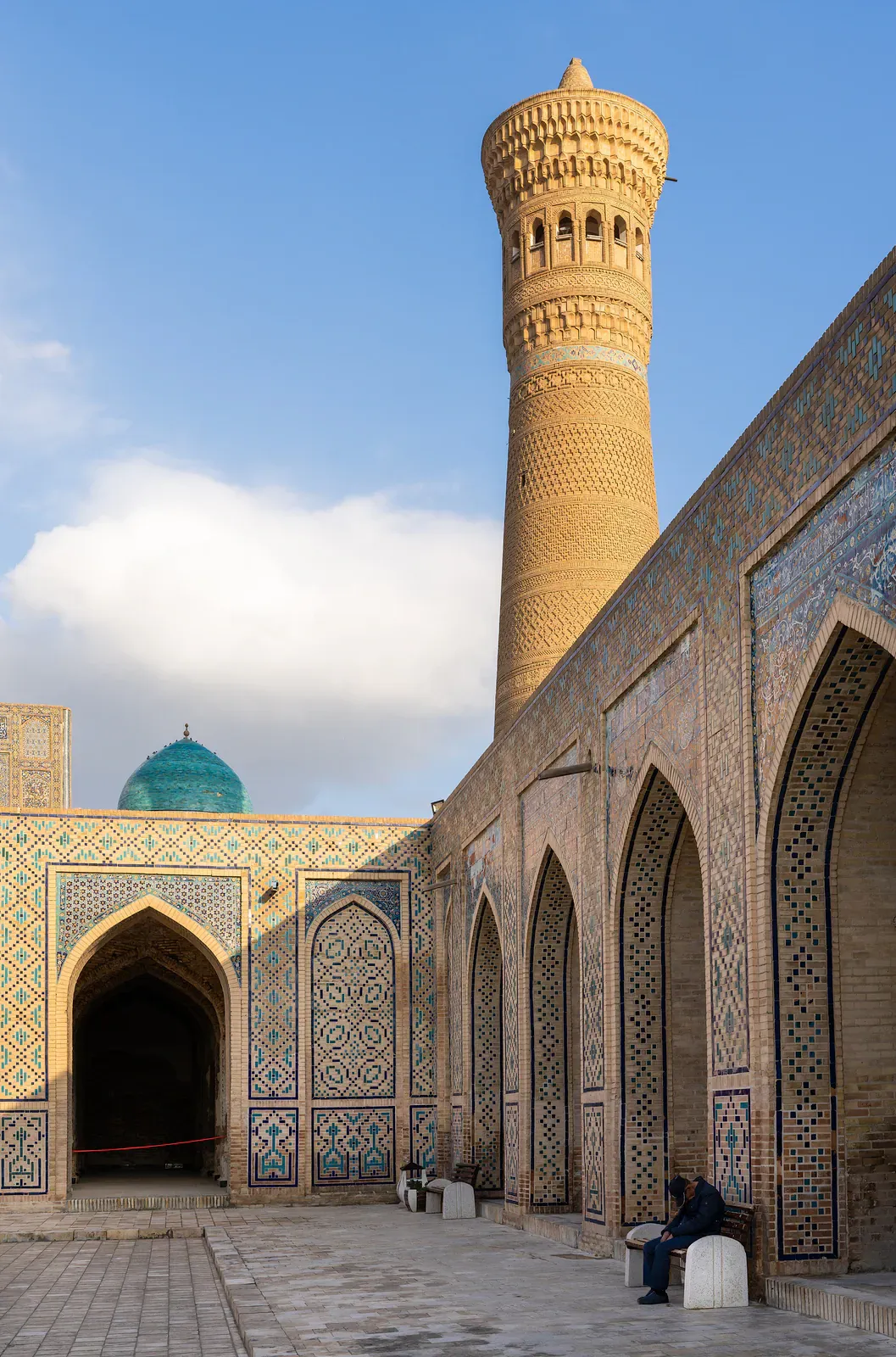
Shashmaqam, also spelled shashmaqom, is the classical music of Bukhara: a cycle of six maqam suites that settled in the emirate’s court from roughly the 17th century.
Each suite pairs instrumental pieces with sung settings of Sufi love poetry, played on long-necked lutes, a bowed lute and a frame drum. The tradition belongs to the Central Asian and Caucasian family and is related to mugham and Uyghur muqam.
Origins
The name means “six maqams” in Persian. The six suites are Buzruk, Rost, Navo, Dugoh, Segoh and Iroq, each named after its opening mode. Their settled form is placed between the 17th and the mid-18th century, in the palace conditions of Bukhara, where professional masters, Muslim and Bukharan Jewish alike, handed the repertory from teacher to pupil by ear.
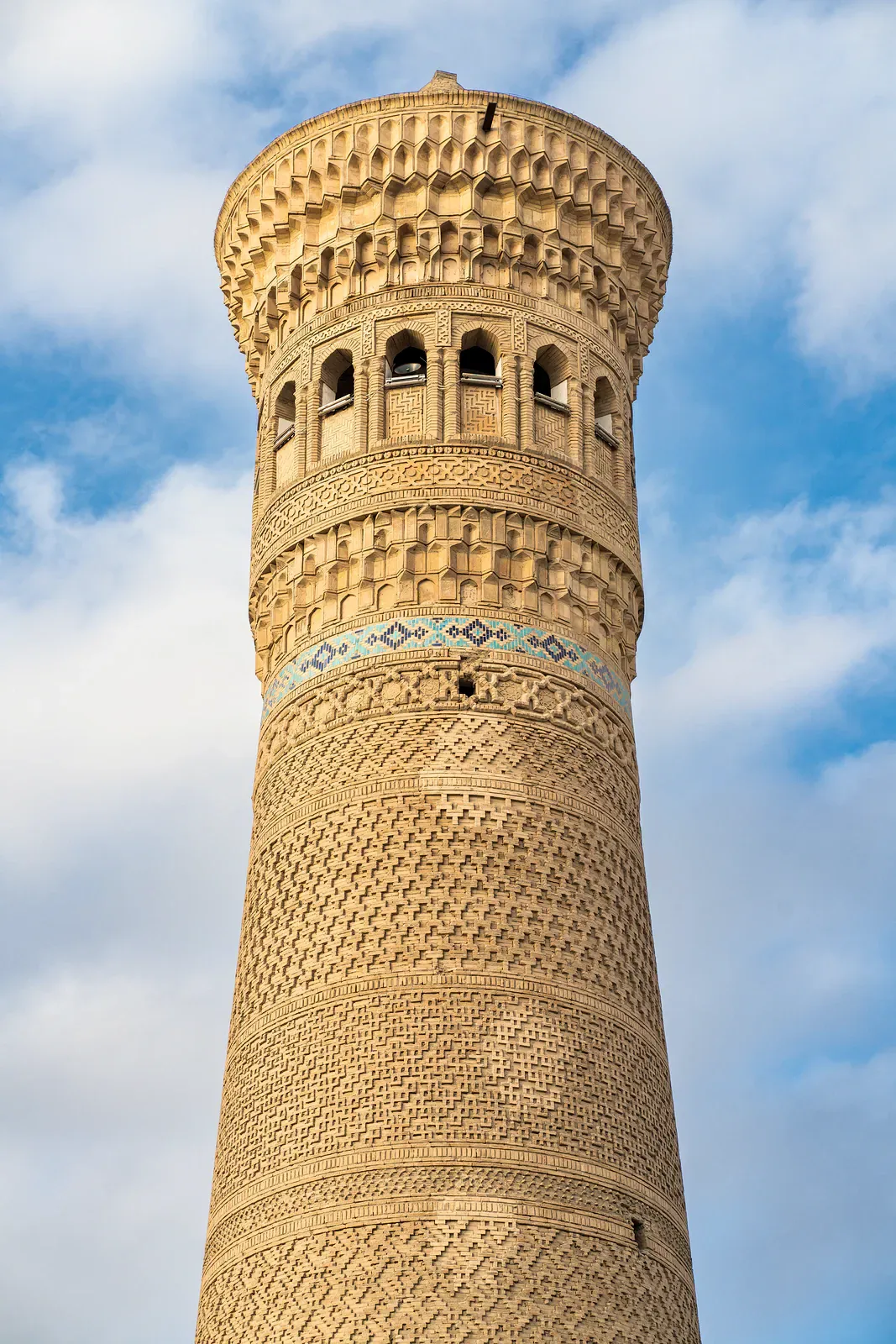
Emirate court, to 1920
For about three centuries shashmaqam was court art. The musicians of the Mangit emirs sang and played the suites and the sung texts came from the classical Persian and Turkic poets, among them Hafez, Jami and Navoi. The poems take the ghazal, mukhammas and rubai forms, and their prosody, the aruz metres, underlies the rhythmic setting of the songs.
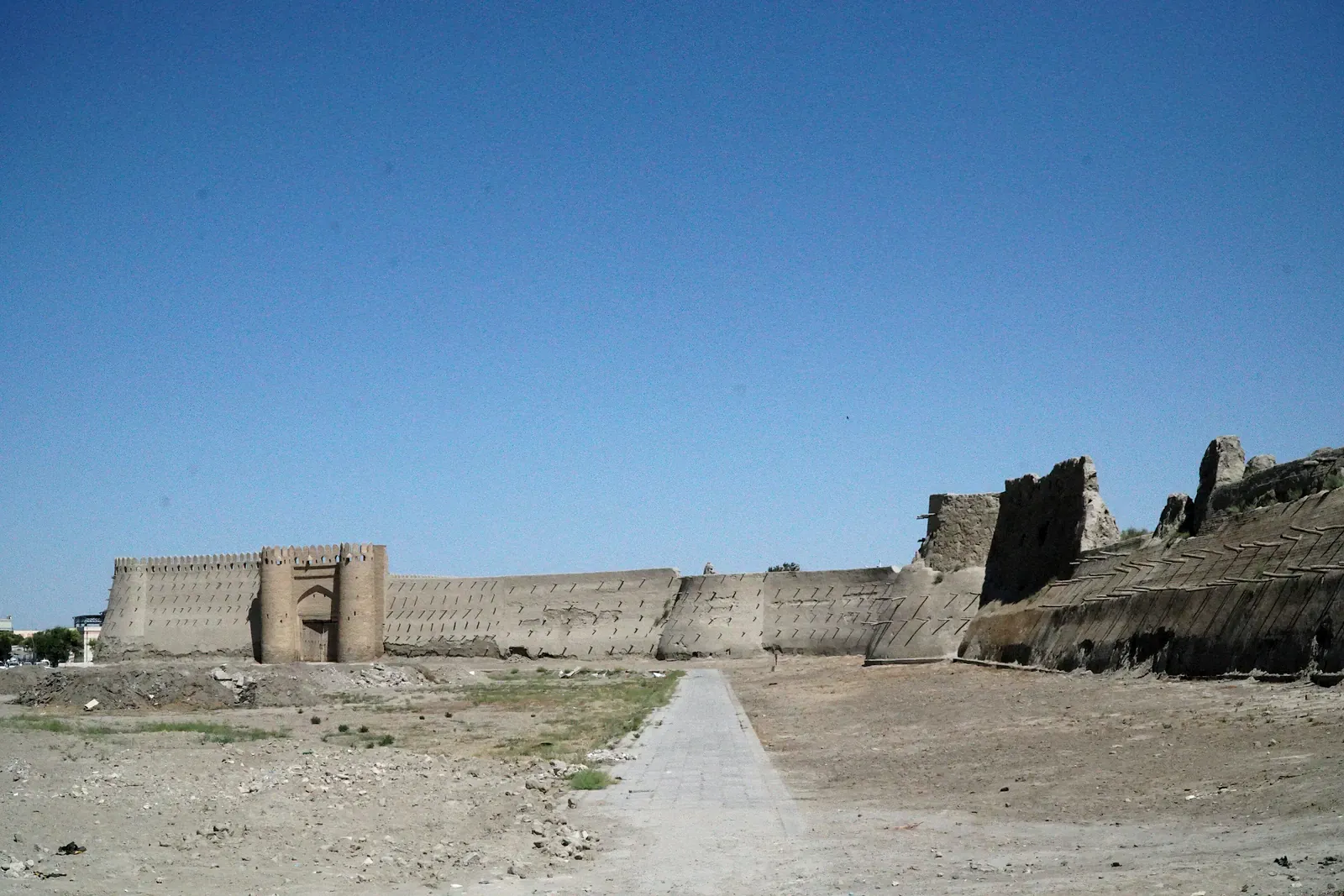
The emirate fell in 1920, and with it the patronage that had supported the court musicians. The repertory survived because it had always lived in people, not in books.
Soviet notation and radio, 1921-1990
Soviet cultural policy first treated the court tradition as feudal and discouraged it. In 1927 the scholar Abdurauf Fitrat published a history of Uzbek classical music that presented shashmaqam as the grand classical tradition of the Uzbeks. From the mid-1950s the state rehabilitated it as national heritage and put it on the radio.
In Tashkent, Yunus Rajabi collected and notated more than a thousand pieces and led the ensemble that recorded the full cycle of six maqoms in sessions from about 1960 into the mid-1960s. Melodiya issued the recordings in 1987 as a 16-LP box timed to a symposium on Eastern music in Samarkand. Turgun Alimatov joined Tashkent radio in 1948 and played in its ensembles until 1982; in the 1950s he brought the bowed sato back into the tradition.
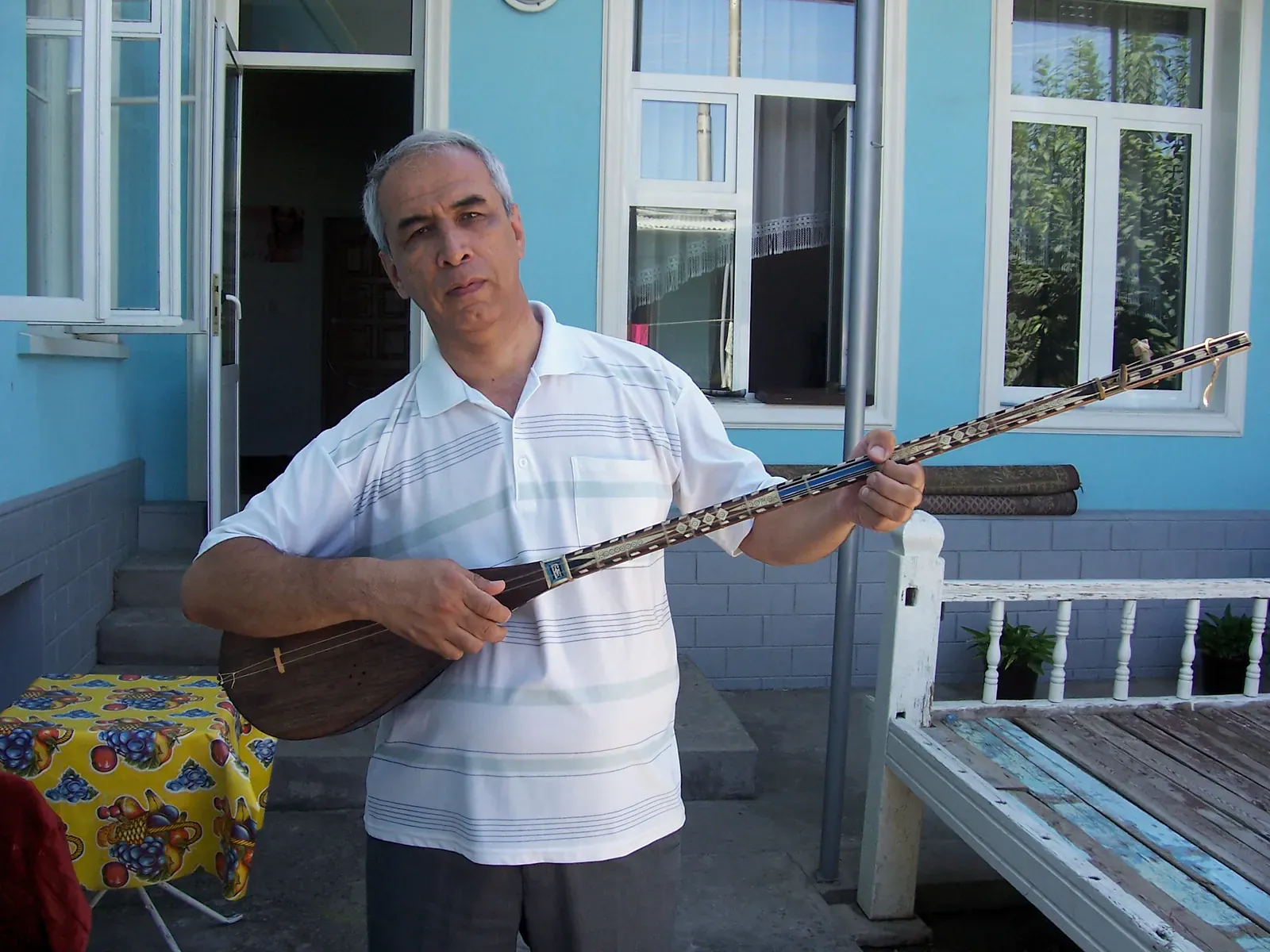
State sponsorship also divided the tradition. The Uzbek version, centred on Tashkent, and the Tajik version, centred on Dushanbe, drifted apart in repertory and style, which is why the two are treated as branches of one tradition.
Diaspora and independence, 1991-2002
The year 1991 produced two landmarks. Ari Babakhanov, a Bukhara-born lutenist from a family of Jewish court musicians, founded the Bukhara Shashmaqam Ensemble at the Bukhara Philharmonic Society, starting with ten players and growing to nineteen. In the same year Smithsonian Folkways issued the first Western album of Ensemble Shashmaqam, a group formed in 1983 by Bukharan Jewish emigres from Uzbekistan and Tajikistan who had settled in Queens, New York.
Bukharan Jewish musicians had sustained the tradition through the Soviet decades, and emigration carried it to Israel and the United States. The singer Munojot Yulchieva reached Western listeners in 1994 with an album for Ocora, the Radio France label.
Heritage and revival, from 2003
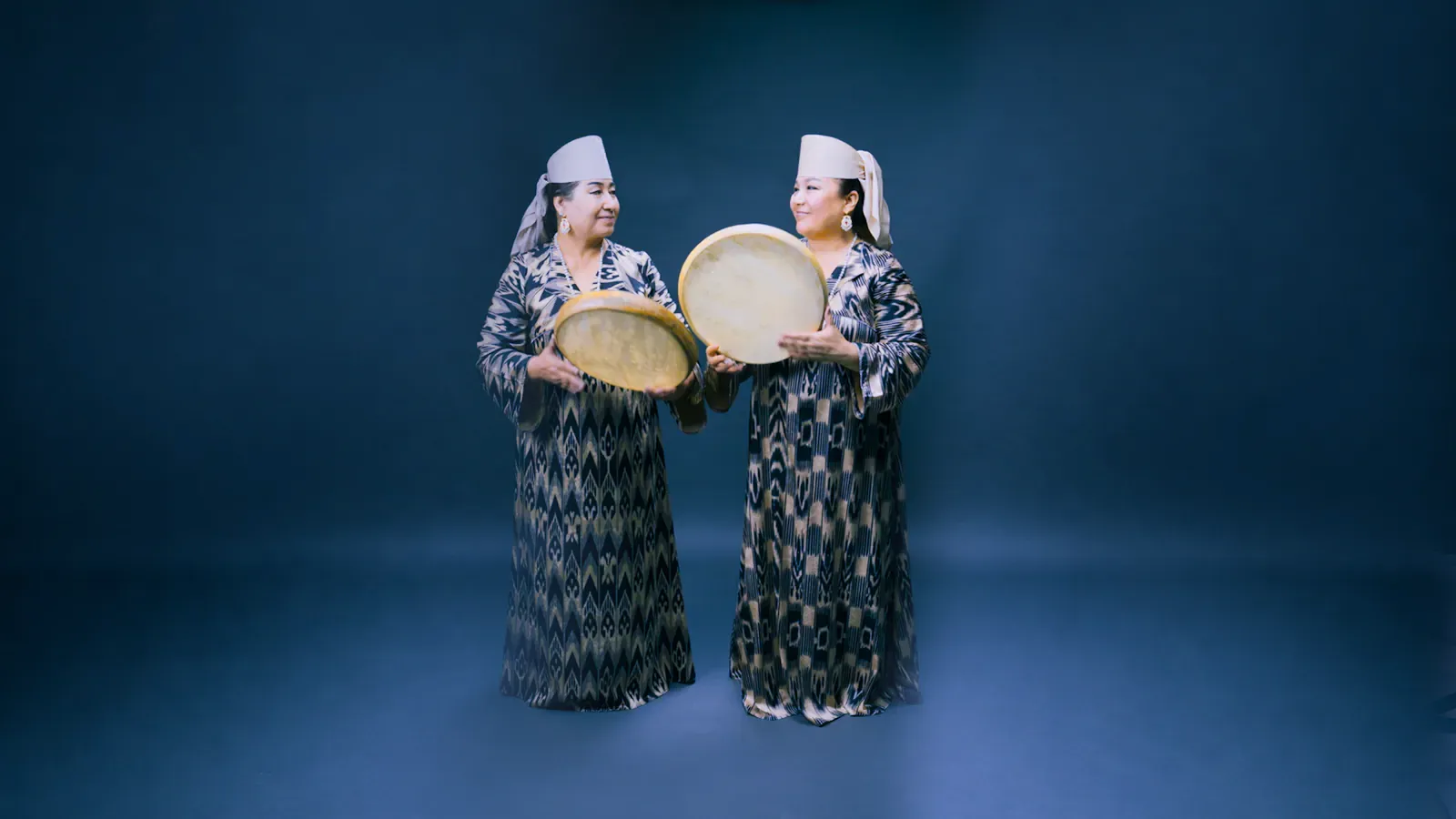
In 2003 UNESCO proclaimed shashmaqom a masterpiece of the intangible heritage and in 2008 inscribed it on the Representative List. The same year, 2003, the Academy of Maqam opened in Dushanbe under Abduvali Abdurashidov to recover the pre-Soviet performance style. Its 2006 Folkways recording, Invisible Face of the Beloved, presents the Rost suite in that reconstructed style.
Characteristics
A maqam in this tradition is a whole suite, not a single scale. A suite opens with an instrumental section, the mushkilot, then moves through sung sections, sarakhbor and talqin, to a nasr group, and closes with the dance-like ufar. Rhythm follows usul cycles struck on the doira, while the vocal openings have a freer metre. A second group of branches, the savt and mugulcha, completes the larger cycle.
Instruments and performance
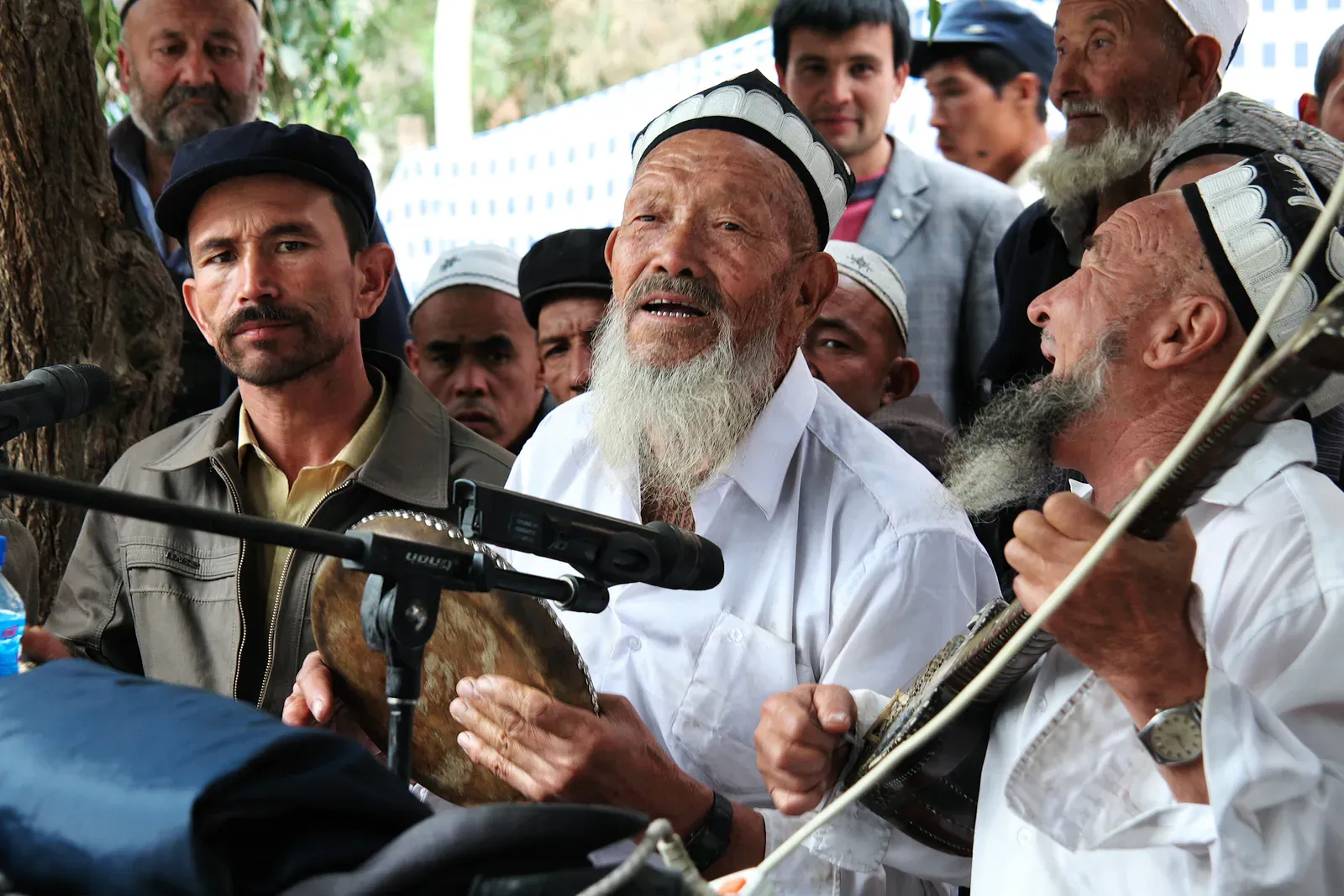
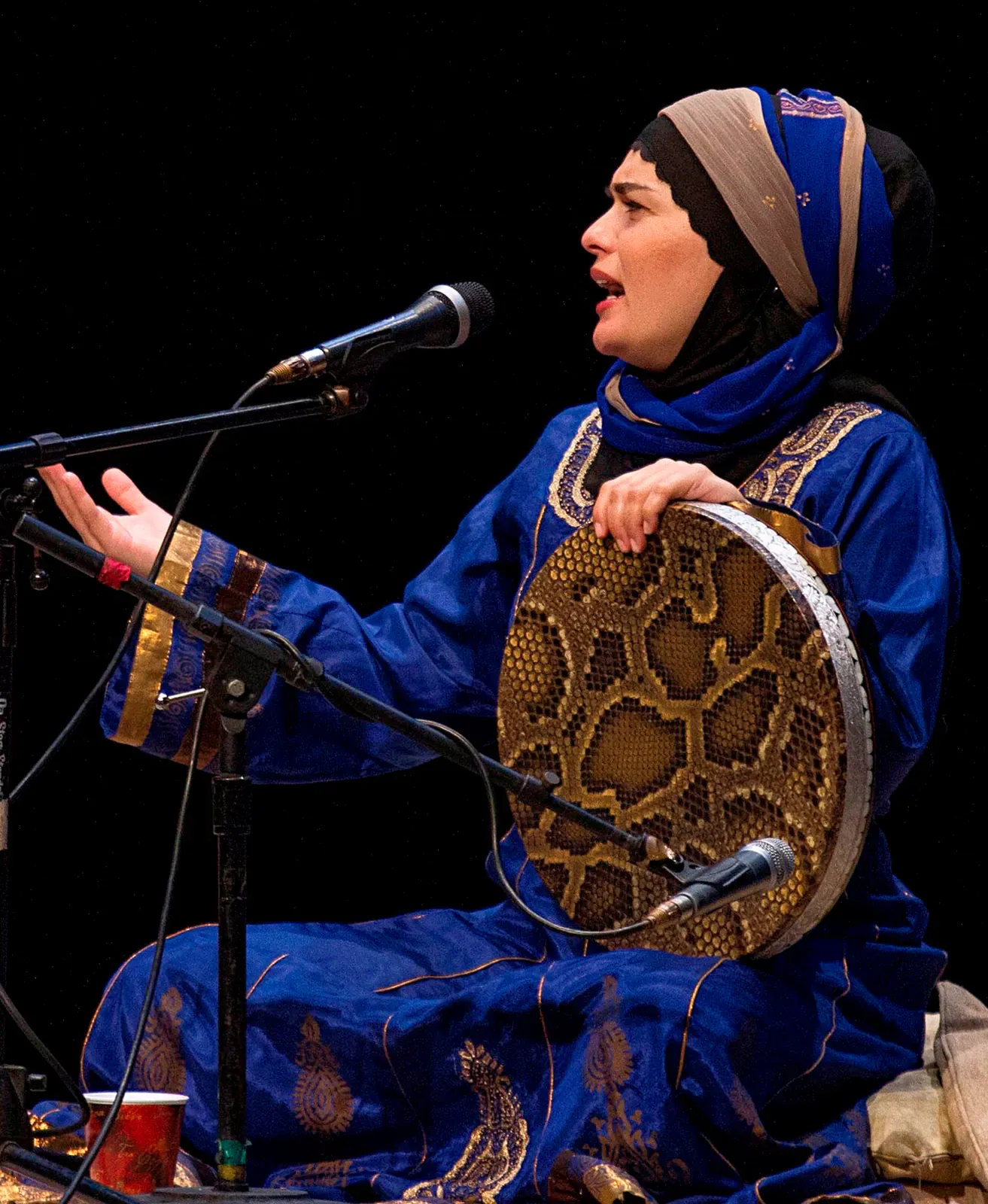
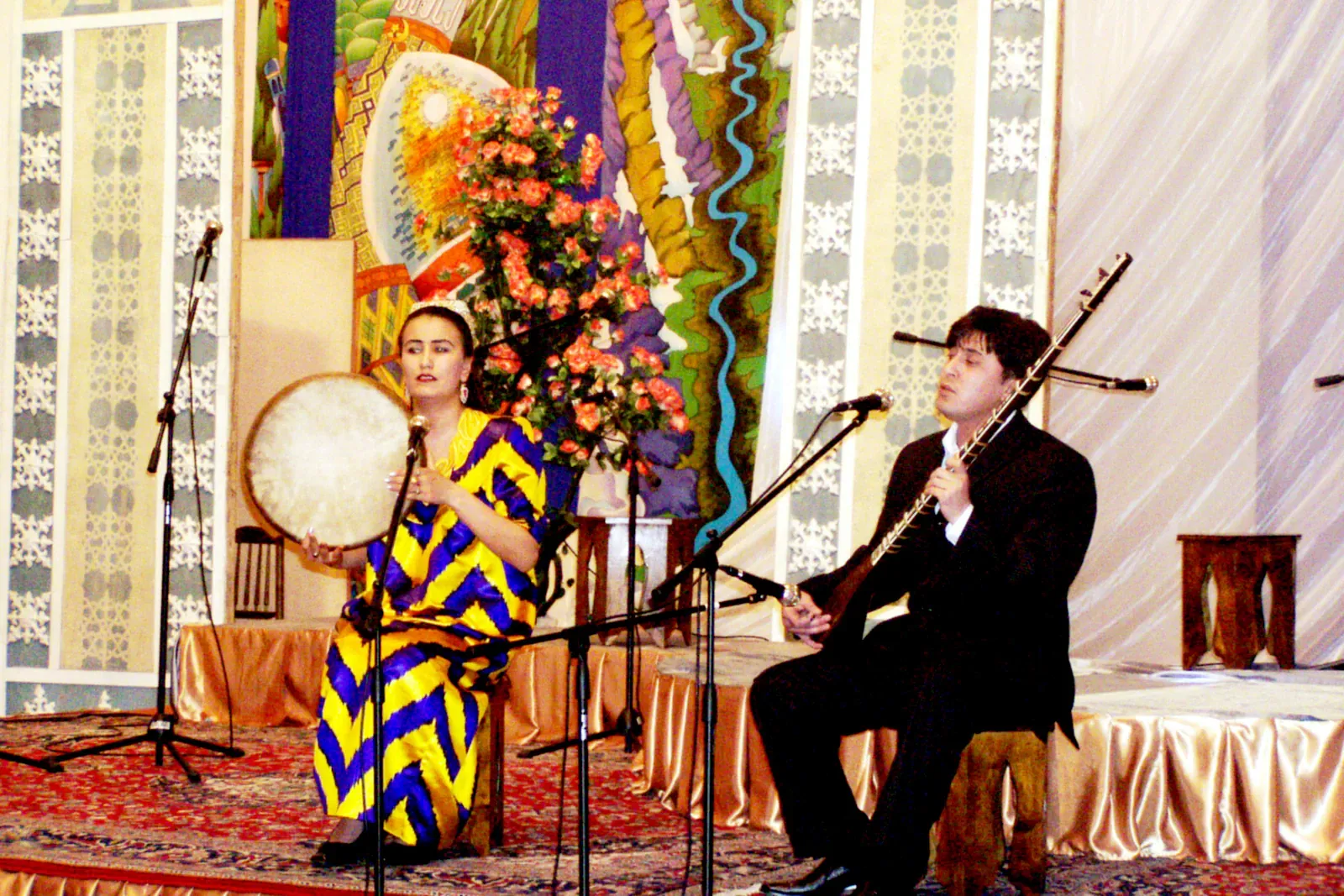
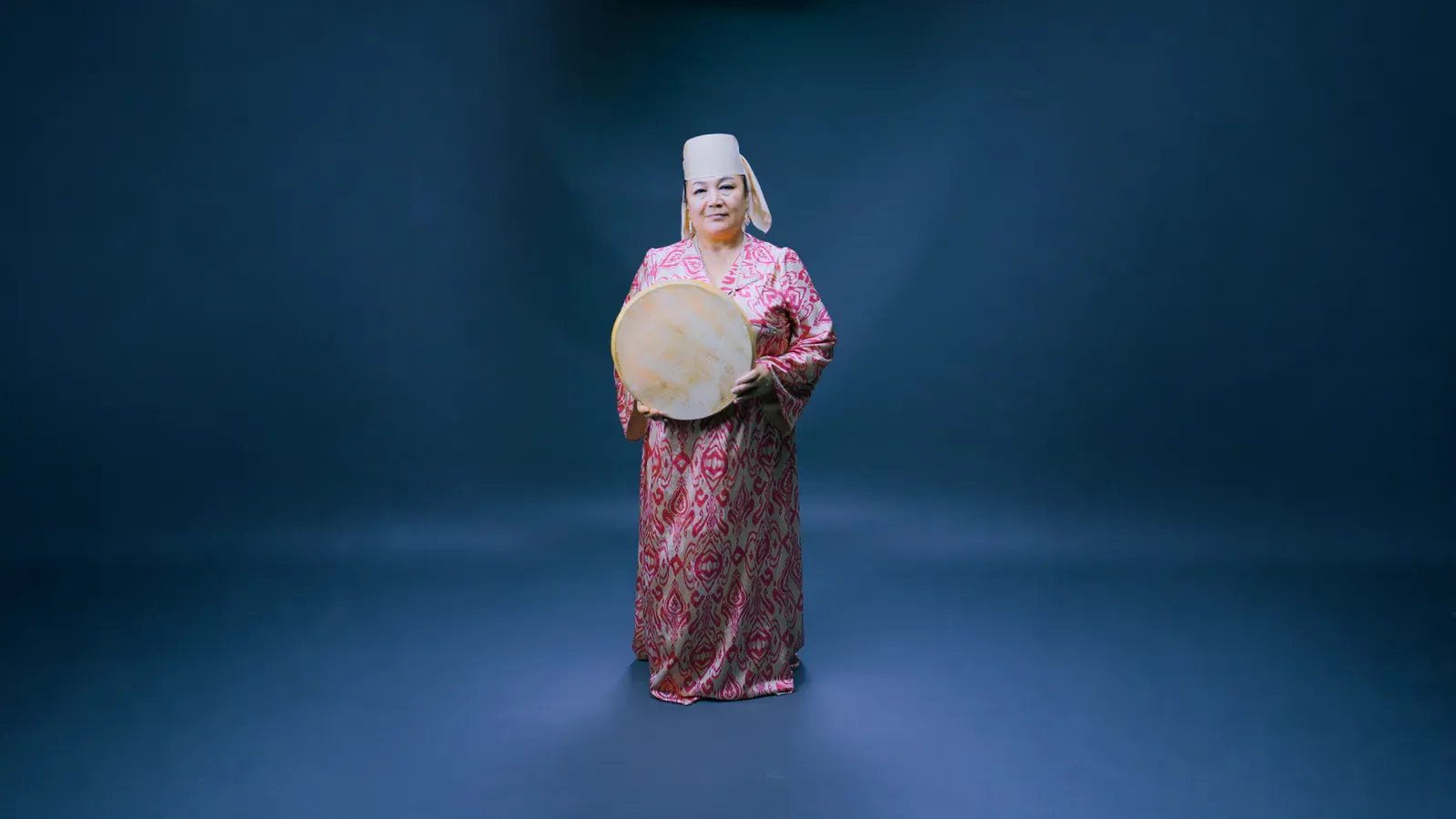
The ensemble centres on the tanbur and dutar, long-necked lutes, with the bowed sato, the ghijak, the rubab, the ney flute and the doira frame drum. Singing is a trained solo voice in a lyrical, Sufi register. Transmission is oral from master to student; notation records only the framework.
Legacy
Shashmaqam is the reference tradition for Uzbek and Tajik classical music, and it shapes how Bukharan Jewish communities remember Bukhara. Its branches are documented as Uzbek shashmaqam, Tajik shashmaqom and Bukharan Jewish shashmaqom, and each of the six suites is also treated as a tradition in its own right.
Misconceptions
Shashmaqam is not Iranian or Arab maqam under another name: the six suites form a distinct Central Asian cycle with its own repertory. It is also not a folk music of villages. It began as a professional court art, and the oral tradition is a teaching method, not a sign of amateurism. Finally, the written notation of the Soviet period did not replace the master-to-student line: it recorded one framework, and the living practice stayed oral.
Frequently asked questions
What does shashmaqam mean?
Shashmaqam means “six maqams”. The name refers to the six suites, Buzruk, Rost, Navo, Dugoh, Segoh and Iroq, that make up the classical repertory of Bukhara.
Where does shashmaqam come from?
Shashmaqam comes from Bukhara, in present-day Uzbekistan, where the six-maqam suite took shape in the emirate’s court between the 17th and the mid-18th century. Uzbek, Tajik and Bukharan Jewish musicians all keep it alive today.
Is shashmaqam Uzbek or Tajik?
Both. The Uzbek version developed around Tashkent and the Tajik version around Dushanbe during the Soviet period, and Bukharan Jewish musicians kept a third line. UNESCO inscribed shashmaqom on its heritage list in 2008.
Which instruments play shashmaqam?
The long-necked lutes tanbur and dutar, the bowed sato and ghijak, the rubab, the ney flute and the doira frame drum.
Sound
Sound sheet
Anatomy of a track
| # | Part |
|---|---|
| 1 | Instrumental introduction (mushkilot) |
| 2 | Sarakhbor |
| 3 | Talqin |
| 4 | Nasr |
| 5 | Ufar (dance-like close) |
| 6 | Savt and Mugulcha branches (second group) |
Signature sounds
- Six cyclic suites named after their opening modes
- Sufi love poetry in ghazal, mukhammas and rubai forms
- Long-necked lutes, bowed sato and doira frame drum
- Doira usul cycles shaping each section
- Master-to-student oral transmission
Drums and percussion
- Doira
Techniques
- Usul cycles
- Aruz-based poetry setting
- Mushkilot, nasr and ufar sequence
- Oral master to student teaching
Keys and modes
Buzruk. One of the six maqom suites, named after its opening mode.
Rost. One of the six maqom suites, named after its opening mode.
Navo. One of the six maqom suites, named after its opening mode.
Dugoh. One of the six maqom suites, named after its opening mode.
Segoh. One of the six maqom suites, named after its opening mode.
Iroq. One of the six maqom suites, named after its opening mode.
Vocals
Lyrical Sufi poetry in ghazal, mukhammas and rubai forms, by poets such as Hafez, Jami and Navoi, sung in a trained solo voice.
Scenes
Where it happened
Where and when the sound lived: one bar per city on a shared timeline.
Asia
North America
Active scenes
Peak 5, 2003-2025
The historical and spiritual centre of shashmaqom, home of the emirate court and its Jewish and Muslim musicians.
Radio ensembles, Rajabi's notation and Alimatov's playing built the Uzbek national line of the suite.
A shashmaqam root city and host of the 1987 Eastern music symposium that the Melodiya box marked.
Home of the Academy of Maqam, centre of the Tajik revival of the suite.
Bukharan Jewish emigres built a performing community and made the ensemble's Folkways album.
Venues and places
Bukhara, 1991 to today. Home of Ari Babakhanov's Shashmaqam Ensemble from its founding.
Tashkent, 1948 to today. Alimatov and other masters played in its ensembles for decades.
Dushanbe, 2003 to today. A four-year course in shashmaqom, aruz poetry and music theory.
Culture
Culture markers
- Master to student transmission
Oral teaching is the principal way the music and its spiritual values are kept; notation records only the framework.
Ritual - Bukharan Jewish wedding songs
Wedding repertory sits beside the suites in Bukharan Jewish community performance.
Ritual - Ufar
The dance-like closing section of a suite, and dance is part of staged programmes of shashmaqom.
Dance
Media
Key media
- 1927Ozbek klasik muzikasi va uning tarikhi
by Abdurauf Fitrat. Presented shashmaqam as the grand classical tradition of the Uzbeks.
Book - 1987Shashmaqam of Bukhara (16 LP box)
by Yunus Rajabi ensemble. The Melodiya edition for the 1987 Samarkand symposium reissued Rajabi-era recordings.
Compilation - 2002The Silk Road: A Musical Caravan
by Various. Folkways compilation with Turgun Alimatov's Nava.
Compilation - 2006Music of Central Asia Vol. 2: Invisible Face of the Beloved
by Academy of Maqam. Classical music of the Tajiks and Uzbeks in a reconstructed pre-Soviet style.
Compilation
Glossary
Terms on this page
Classical prosody whose metres underlie the cyclic setting of the poetry.
In Central Asia, a long cyclic suite rather than only a mode; each suite is named after its opening mode.
The instrumental part of a maqom.
The vocal part of a maqom, sung in sets of song sections.
The six suites Buzruk, Rost, Navo, Dugoh, Segoh and Iroq, with about 250 pieces in all.
The dance-like closing section of a suite.
A rhythmic cycle struck on the doira, which shapes each section.
Central Asian and Caucasian family