Avant-garde jazz
Avant-garde jazz joins jazz improvisation with experimental composition. It began in the 1950s in New York and Chicago; also called avant-jazz.
New York City, 1956
Jazz family
Born
1956
New York City
Subgenres
3
Documented branches
Links
9
Genres it drew on or shaped
Tempo
80-130 BPMLineage
Family tree
Grew out of
Influenced by
Pushed back against
New York City, 1956
Avant-garde jazz
Led to (3)
Timeline
Era by era
From the first sparks to today. Select a dot to read the story behind it.
- Experiments inside bebop
1949 to 1958
- First wave
1959 to 1963
- Second wave and collectives
1964 to 1970
- Museums, lofts and Europe
1971 to today
Eras
Moments
- 1 Experiments inside bebop, 1949 to 1958
- 2 First wave, 1959 to 1963
- 3 Second wave and collectives, 1964 to 1970
- 4 Museums, lofts and Europe, 1971 to today
1949
Experiments inside bebop
Collective free improvisation on Lennie Tristano's 1949 Intuition and Digression, and Sun Ra's early Chicago bands, tested what bebop and post-bop forms could leave out.
- 1949Tristano records Intuition and DigressionLennie Tristano's group improvises collectively without preset themes or chords, an early model for later free playing.
1959
First wave
Ornette Coleman's The Shape of Jazz to Come (1959) and Free Jazz (1960 session) opened the way, followed by Cecil Taylor; the terms free jazz and avant-garde jazz were still synonyms.
- 1959The Shape of Jazz to ComeOrnette Coleman's quartet album on Atlantic Records, recorded in Hollywood on May 22.
- 1960Free Jazz sessionColeman's double quartet records a 37-minute collective improvisation in one take on December 21.
- 1963ESP-Disk foundedBernard Stollman starts a New York label first meant for Esperanto records.
1964
Second wave and collectives
Coltrane, Dolphy, Mingus and Albert Ayler pushed further while ESP-Disk, the Jazz Composers Guild and Chicago's AACM (1965) gave the music its own institutions.
- 1964October Revolution in JazzA series of New York concerts organised by Bill Dixon leads to the Jazz Composers Guild.
- 1964Spiritual Unity recordedAlbert Ayler's trio with Gary Peacock and Sunny Murray records the first jazz album for ESP-Disk on July 10.
- 1964Eric Dolphy diesThe multi-instrumentalist dies on June 29; his only Blue Note leader album, Out to Lunch!, is issued after his death.
- 1965AACM founded in ChicagoMuhal Richard Abrams, Jodie Christian, Steve McCall and Phil Cohran start the association.
- 1965Jazz Composers Guild Orchestra first recordCarla Bley and Michael Mantler's big band makes its first recording in April.
- 1966Unit StructuresCecil Taylor's Blue Note album, built on written structures with open improvisation.
- 1970Les Stances a SophieThe Art Ensemble of Chicago records a film soundtrack in Paris with singer Fontella Bass.
1971
Museums, lofts and Europe
The music moved from jazz clubs to museums and community centers and some players relocated to Europe; AACM members still work in Chicago in the 2020s.
- 1973Space Is the PlaceSun Ra and the Arkestra issue the album that carries his cosmic philosophy.
- 1975Black Saint founded in ItalyAn Italian independent label that went on to record free jazz and creative music.
Listening path
Start listening
A short path from an easy way in to the deep end. Thumbnails come from YouTube; the player loads only when you press play.
- 01
Ornette Coleman, 1959
A slow, tolling theme with a double-time rhythm section, the doorway into the new music.
- 02
Albert Ayler, 1964
Ayler's tenor saxophone with bass and drums on the first recording for ESP-Disk.
- 03
Cecil Taylor, 1966
Dense piano clusters inside a written framework.
- 04
Sun Ra, 1973
The Arkestra's chanted, theatrical cosmic statement.
- 05
Art Ensemble of Chicago, 1970
Funk groove and vocals meet Chicago avant-garde saxophones and trumpet.
Facts
| Family | Jazz |
| Origin | New York City, United States |
| Emerged | 1950s-1960s |
| Status | Active |
| Tempo | 80 to 130 BPM |
| Meter | Free or shifting |
| Subgenres | 2 |
Avant-garde jazz, also called avant-jazz, experimental jazz or the new thing, combines jazz improvisation with the methods of avant-garde art music and composition. It began in the early 1950s and developed through the late 1960s, mainly in New York and Chicago.
Its players rejected the conventions of bebop and post-bop, and much of the music is fully or partly composed, which separates it from the thoroughly improvised ideal of free jazz.
Origins
The roots lie in jazz’s own tradition of experiment, which had already produced cool jazz, modal jazz and hard bop. Some ideas arrived in the late 1940s: Lennie Tristano’s 1949 recordings Intuition and Digression used collective free improvisation without preset themes. The new style is usually dated to the mid- to late 1950s, when a group of improvisers set out to blur the line between written and spontaneous music. They brought in modernist ideas such as atonality and serialism, and the parent tradition of jazz supplied the instruments, the rhythm sections and the habit of solos.
At first avant-garde jazz and free jazz were synonyms. The split came later, as critics used the first term for music that kept composed melodies, shifting but predetermined meters and tonalities, and a distinction between soloists and accompaniment.
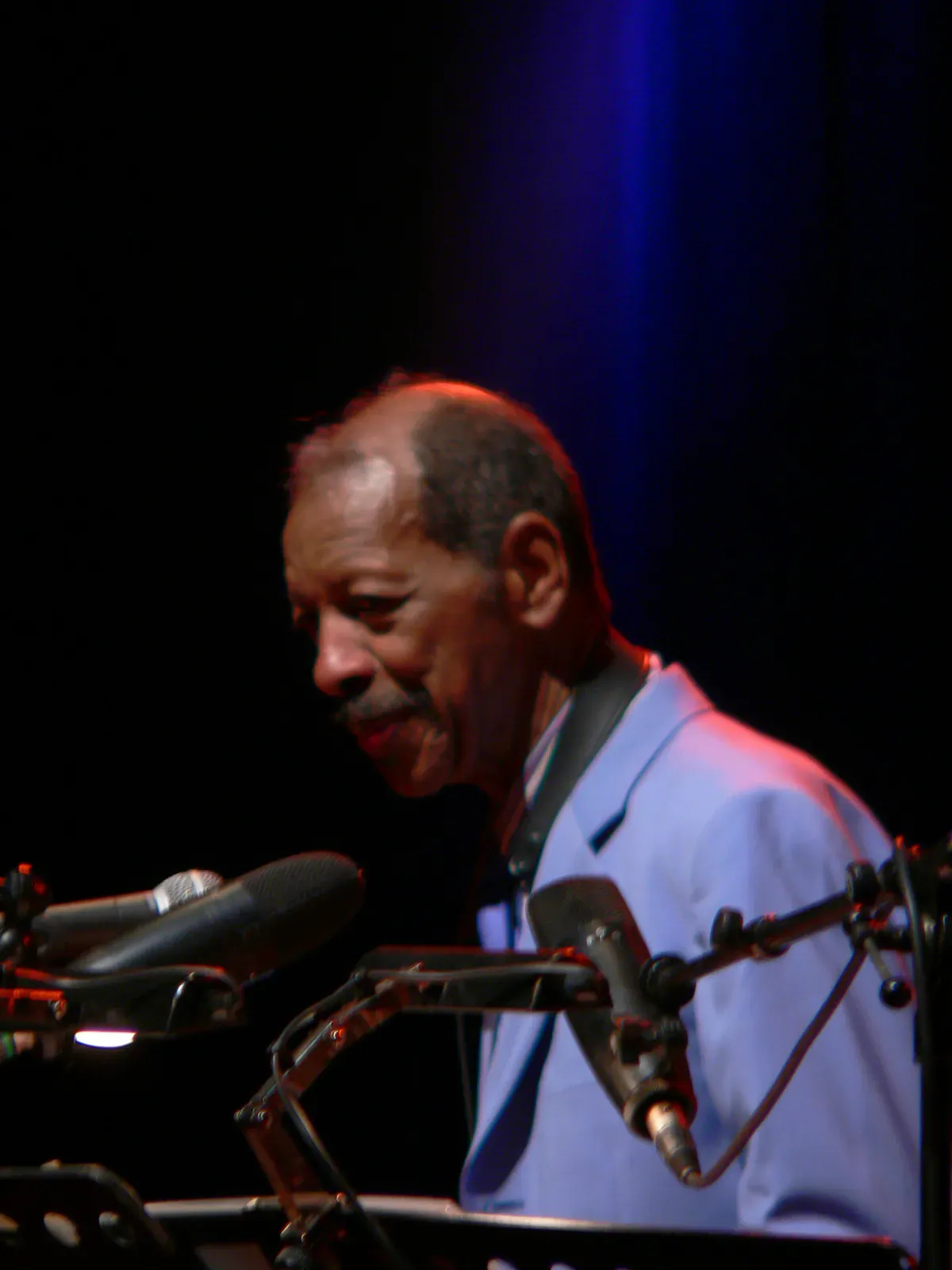
New York and the first wave, 1959-1963
The first wave is tied to saxophonist Ornette Coleman and pianist Cecil Taylor. Coleman’s The Shape of Jazz to Come, recorded in Hollywood in May 1959 and released by Atlantic Records that November, was his debut on the label and the first to feature his quartet with Don Cherry, Charlie Haden and Billy Higgins. In December 1960 he recorded Free Jazz: A Collective Improvisation, a 37-minute piece for a double quartet, each half with a reed, trumpet, bass and drums, heard in separate stereo channels. It was one take with no overdubbing, with short composed fanfares between solos, and it supplied the name of the free-jazz style.
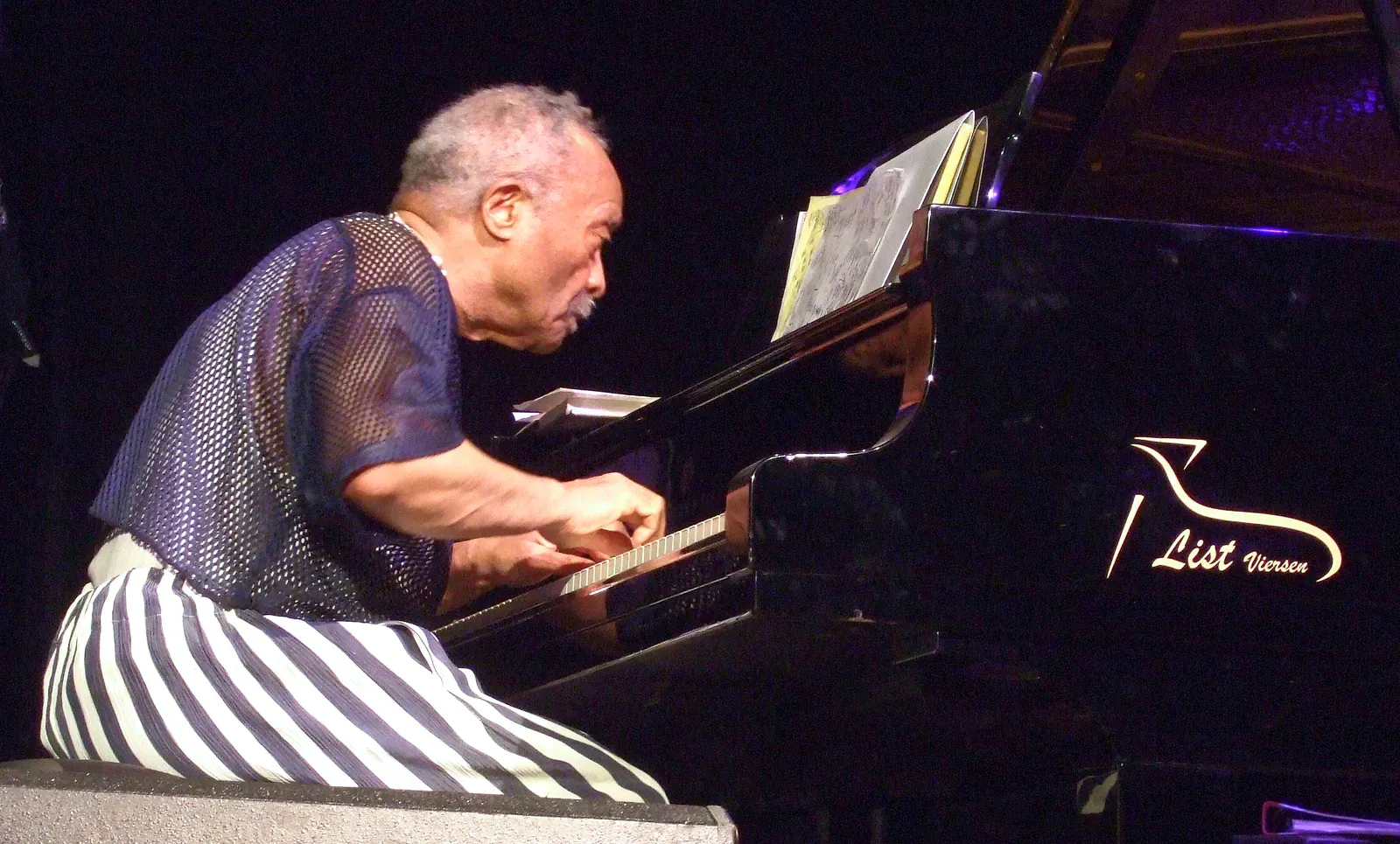
Taylor came from a classical training and played the piano with an energetic, almost percussive attack, building tone clusters and intricate polyrhythms. His records of the early 1960s, among them The World of Cecil Taylor (1960), were among the first of the style.
Second wave and collectives, 1964-1970
The second wave included John Coltrane, Eric Dolphy, Charles Mingus and Albert Ayler. Coltrane’s large-group Ascension appeared on Impulse! in 1966. Dolphy, a player of alto saxophone, flute and bass clarinet who helped establish the bass clarinet in jazz, died in June 1964; his album Out to Lunch!, his only leader record for Blue Note, came out after his death.
Institutions arrived with the music. ESP-Disk, founded in New York in 1963, made Ayler’s Spiritual Unity (recorded July 1964 with bassist Gary Peacock and drummer Sunny Murray) its first jazz release and became a main outlet for the style. The October Revolution in Jazz concerts of 1964, organised by trumpeter Bill Dixon, led to the Jazz Composers Guild and its orchestra, which Carla Bley and Michael Mantler turned into a big band that made its first record in April 1965.
In Chicago, Muhal Richard Abrams, Jodie Christian, Steve McCall and Phil Cohran founded the Association for the Advancement of Creative Musicians in 1965. Its members, among them Anthony Braxton, Roscoe Mitchell, Henry Threadgill and the Art Ensemble of Chicago, tended toward eclecticism and wrote scores that mixed music, geometry and painting. Poet Amiri Baraka recorded spoken-word tracks with the New York Art Quartet in 1964 and with Sunny Murray in 1965, tying the music to the Black Arts Movement.
Characteristics
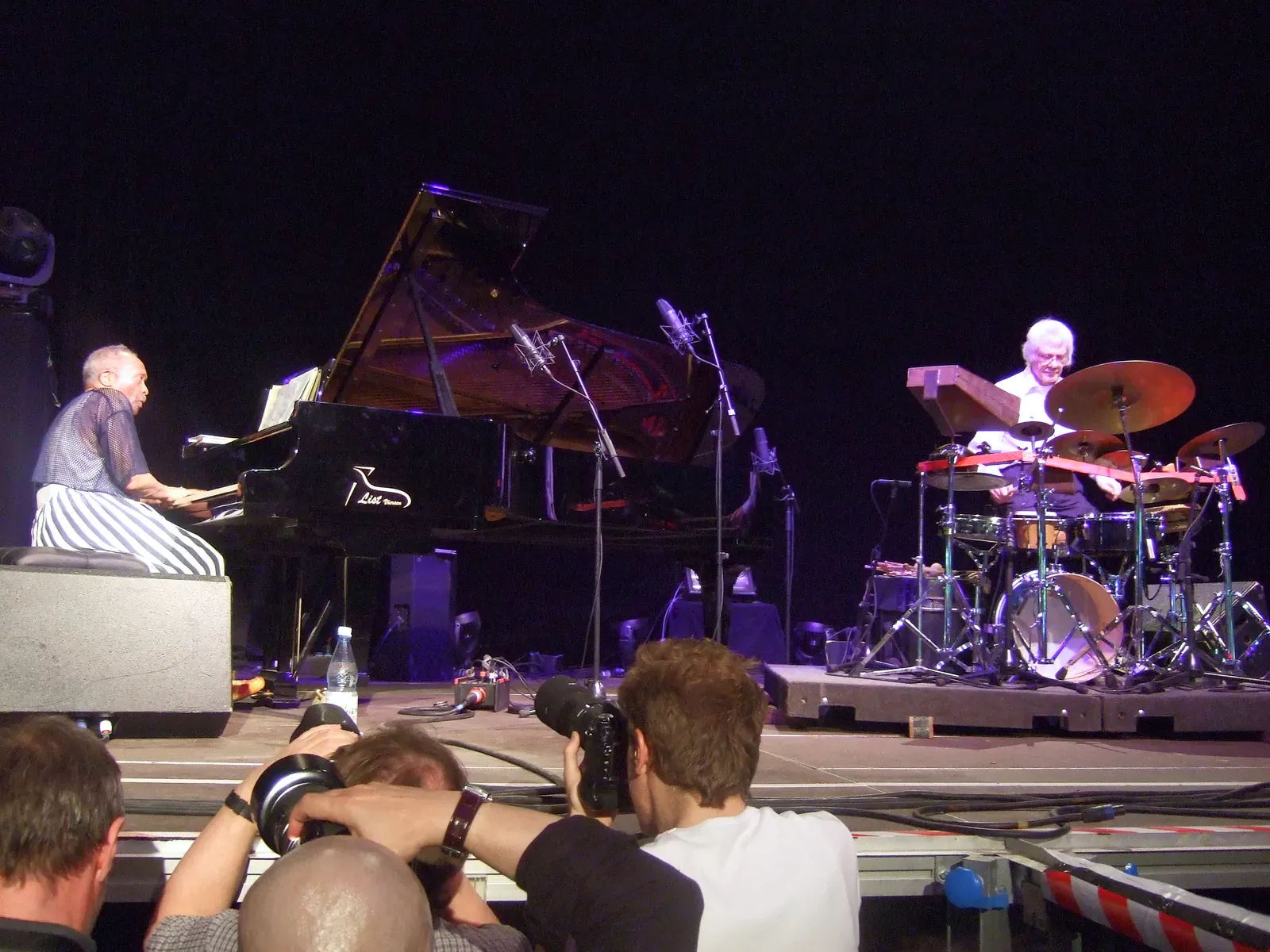
The music is defined less by a fixed sound than by what it opens up. Chord cycles and song forms such as the twelve-bar blues and 32-bar popular song are no longer the frame. Players use atonal material, shifting meters and long collective passages, and the rhythm section keeps a pulse that often speeds up and slows down instead of holding a swing pattern. Tradition is not abandoned: blues phrases and diatonic lines turn up inside the freest playing, and some listeners hear a return to the field hollers and street cries of earlier black music.
Timbre becomes a main subject. Coltrane and Pharoah Sanders used harsh overblowing, and Ayler’s saxophone style was original and unorthodox. Players also took up instruments from Africa and Asia, unusual instruments and ones they invented themselves, and borrowed from the ideas of John Cage and the Fluxus movement.
Instruments and production
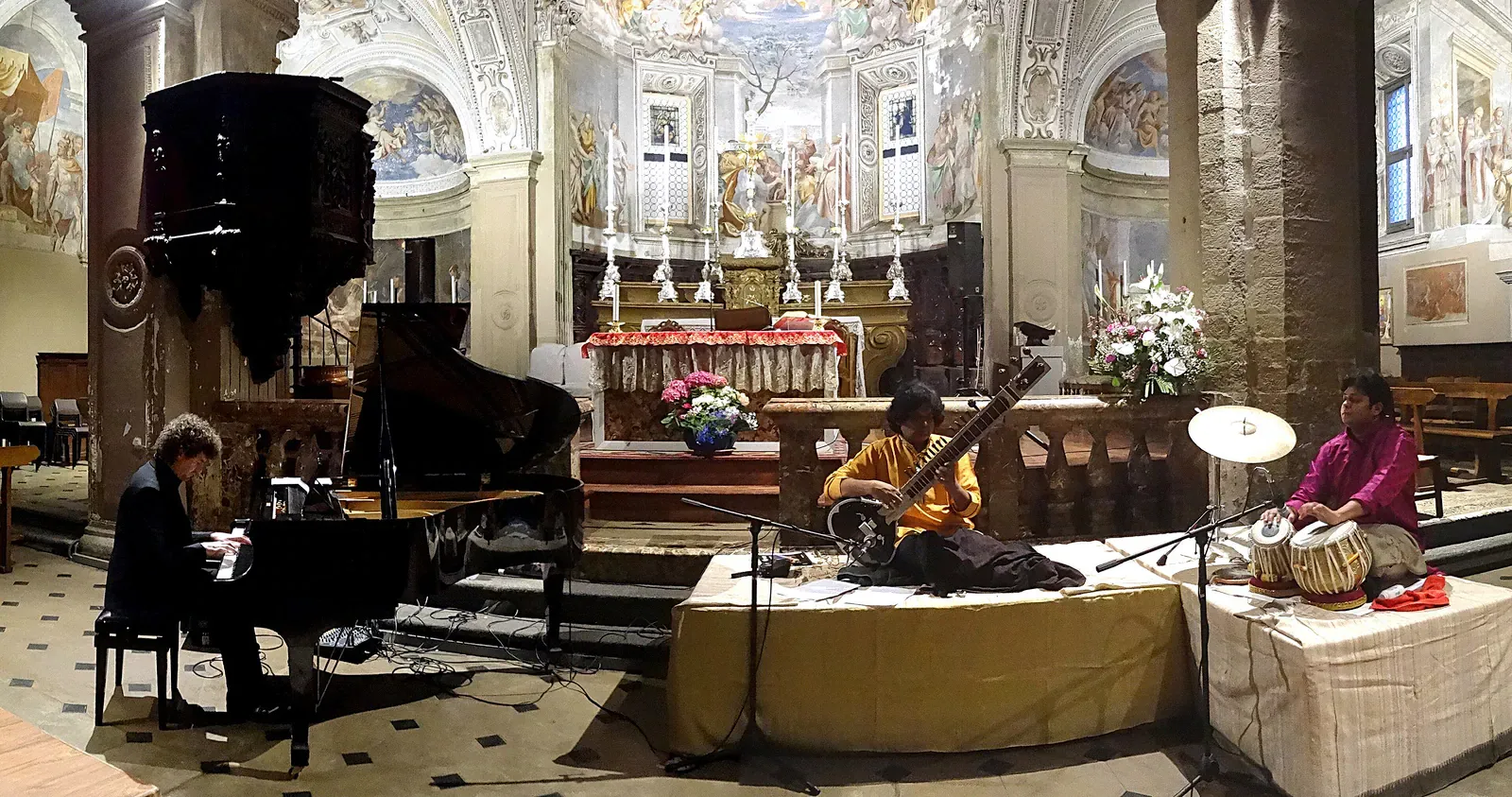
The core instruments are the saxophone family, trumpet, piano, double bass and drums, extended by bass clarinet, flute and large amounts of small percussion. The Art Ensemble of Chicago filled the stage with what it called little instruments, such as bells, bicycle horns, birthday noisemakers and wind chimes; during a 1969 tour of Europe the group used about five hundred instruments. Sun Ra played synthesizer as well as piano in his Arkestra, and Free Jazz was cut in a single take with no overdubbing or editing.
Culture
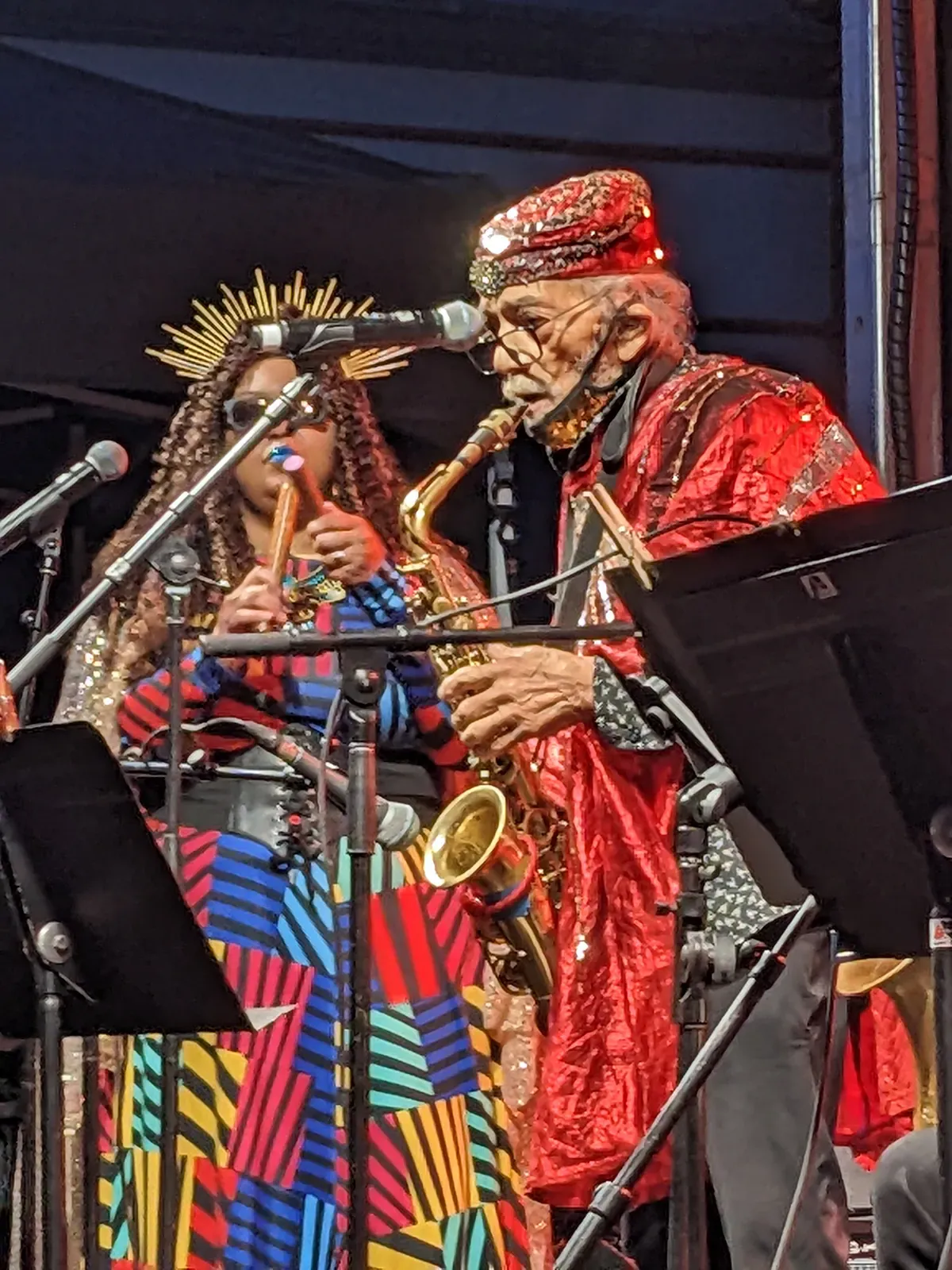
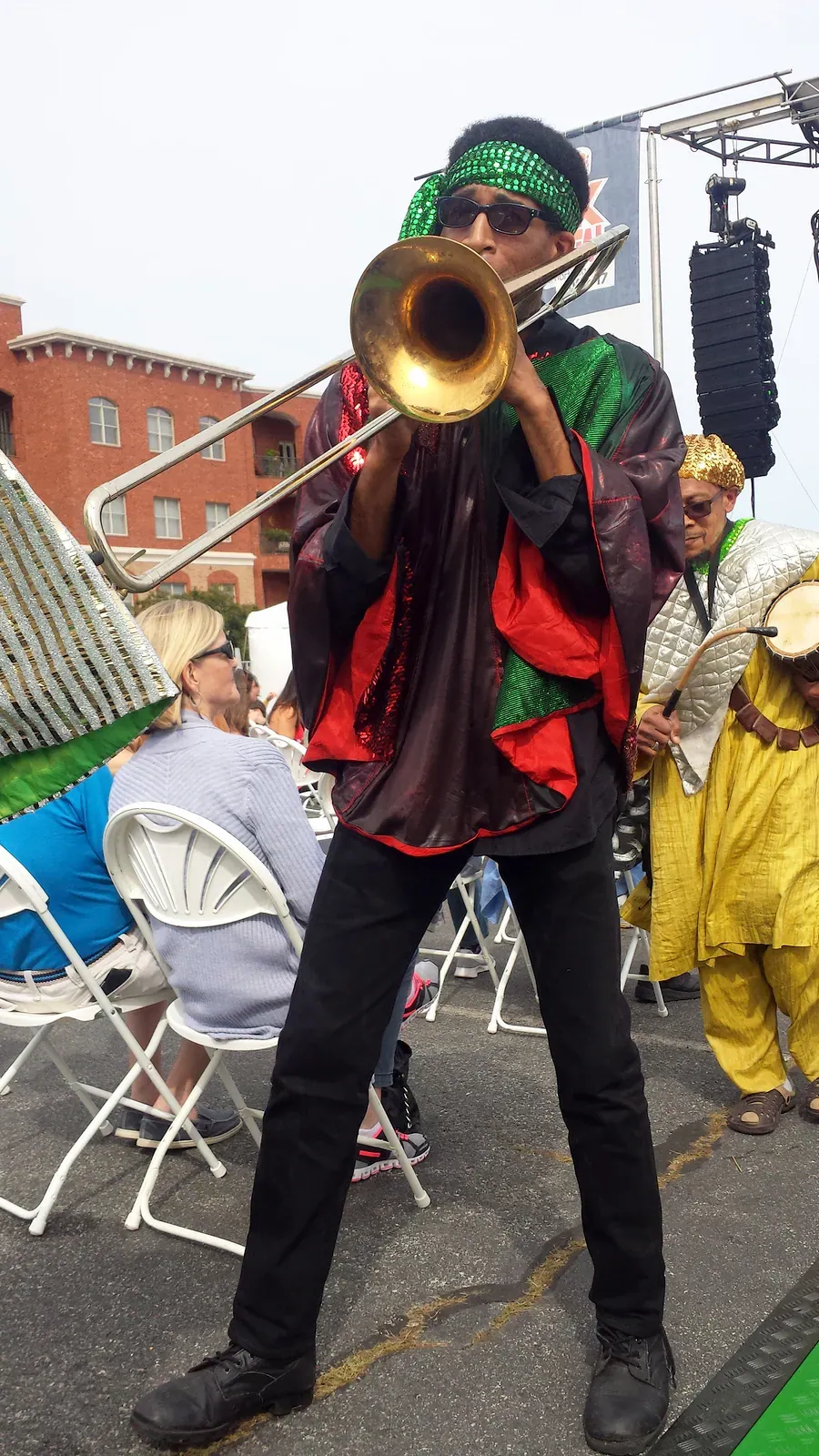
Avant-garde jazz was a visual as well as an aural art. The Free Jazz LP gatefold carried Jackson Pollock’s 1954 painting The White Light, Coleman was a fan of Pollock and a painter himself. The Art Ensemble of Chicago performed in costumes and face paint. Sun Ra, born Herman Poole Blount, led the Arkestra, a flexible ensemble that put on theatrical shows around his cosmic philosophy, and the film Space Is the Place, made in 1972 and released in 1974, is the best-known record of that world.
The politics were direct. Many writers connect the word free with the civil-rights movement of the late 1950s and 1960s, and some hear the music as a reaction to the oppression and experience of black Americans.
Mainstream success
Most avant-garde jazz musicians never enjoyed large audiences. Coltrane was the main exception, with whom the music gained the most traction. Over the 1960s the music shifted from jazz clubs to museums and community performance centers, and some artists relocated to Europe. Paris was one place that took it in: the Art Ensemble of Chicago recorded the soundtrack Les Stances a Sophie there in 1970, with singer Fontella Bass, mixing funk and vocals with its avant-garde horns.
Notable recordings
The Shape of Jazz to Come is the entry point most often named: a quartet album that dropped fixed chord changes as the basis for improvising while still using strong themes, such as Lonely Woman. Spiritual Unity set the tenor saxophone of Ayler against bass and drums in pieces such as Ghosts. Space Is the Place, issued in 1973, carried Sun Ra’s cosmic philosophy. Unit Structures (1966) set written structures for Taylor’s group against open improvisation on Blue Note.
Legacy
Italian label Black Saint, founded in 1975, recorded many of the musicians who had few other outlets. AACM members continued to produce music in Chicago into the 2020s, and ESP-Disk, Impulse! and others still release new records. The line between the avant-garde and free improvisation remains blurred; see free improvisation for the practice with no composed frame, and cool jazz for another branch of postwar jazz that treated form as open to change.
Misconceptions
One myth is that avant-garde jazz and free jazz are the same thing. They were synonyms at first, but avant-garde jazz is usually either fully or partly composed and keeps a split between soloists and accompaniment, where free jazz is fully improvised.
A second myth holds that the players lacked technique. Critics raised this when the music appeared, but by 1974 the view was marginal and a body of serious criticism existed. Taylor was classically trained, and the music demanded precise listening.
A third myth says it has no link to jazz tradition. The music retains blues and diatonic phrases and often drew on early styles such as collective improvisation and on African music.
Frequently asked questions
What is avant-garde jazz?
Avant-garde jazz is jazz that uses avant-garde composition and open improvisation, with unconventional forms, instruments and meters. It is also called avant-jazz, experimental jazz or the new thing.
Is avant-garde jazz the same as free jazz?
Not exactly. The two terms began as synonyms in the 1950s and 1960s, but avant-garde jazz usually keeps some composed material and structure, while free jazz leans on fully improvised playing.
Who are the key avant-garde jazz musicians?
Ornette Coleman, Cecil Taylor, Albert Ayler, Sun Ra, John Coltrane, Eric Dolphy and Charles Mingus, plus the Chicago group around the AACM, such as Anthony Braxton and the Art Ensemble of Chicago.
Where did avant-garde jazz start?
New York and Chicago. New York gave the first wave of Coleman and Taylor and the label ESP-Disk, and Chicago produced the AACM in 1965.
Sound
Sound sheet
Signature sounds
- Composed fanfare or theme between solos
- Two or more horns improvising collectively
- Shifting predetermined meters and tonalities
- Small percussion, bells and horns added to the group
Drums and percussion
- Drum kit
Techniques
- Collective improvisation
- Composed themes between solos
- Overblowing and extended technique
- Tone clusters
- Graphic and non-standard scores
- Spoken word
Keys and modes
Atonality. Atonal and serial ideas came in from modernist art music, though tonal centres often shift within a piece.
Blues and diatonic phrases. Diatonic, altered dominant and blues phrases remain common inside free playing.
Vocals
Mostly instrumental; occasional spoken-word poetry, and vocalist Fontella Bass on Les Stances a Sophie.
Scenes
Where it happened
Where and when the sound lived: one bar per city on a shared timeline.
North America
Europe
Active scenes
Peak 3, 1969-2025
Home of Cecil Taylor, Coleman's 1959 arrival, ESP-Disk and the Jazz Composers Guild.
The AACM, founded in 1965, built an eclectic avant-garde scene on the South Side.
American players such as the Art Ensemble of Chicago recorded and found audiences in France.
Culture
Culture markers
- Jackson Pollock cover
The Free Jazz LP sleeve used Pollock's 1954 painting The White Light.
Artwork - Costumes and face paint
The Art Ensemble of Chicago performed in costumes and face paint, so shows were visual as well as aural.
Fashion - Arkestra theatre
Sun Ra's Arkestra staged cosmic ceremonies with costumes, chants and a changing line-up.
Ritual
Media
Key media
- 1974Space Is the Place
by John Coney. Afrofuturist feature starring Sun Ra, made in 1972 and released in 1974.
Film - 1974Free Jazz
by Ekkehard Jost. Analytical study of free and avant-garde jazz, including a breakdown of Taylor's Unit Structure.
Book
Glossary
Terms on this page
Association for the Advancement of Creative Musicians, a Chicago collective founded in 1965.
Coleman's term for two quartets, each with a reed, trumpet, bass and drums, playing at once on Free Jazz.
Small percussion and toy-like sound makers added to a group's regular instruments.
Another name for avant-garde jazz, alongside avant-jazz and experimental jazz.
Forcing a wind instrument past its normal register for harsh, shrill tones.
A block of adjacent notes struck together, a signature of Cecil Taylor's piano.
Jazz family