Spiritual jazz
Spiritual jazz is modal and free-leaning jazz aimed at transcendence and devotion, founded on John Coltrane's A Love Supreme (1965) in the United States.
United States, 1965
Jazz family
Born
1965
United States
Subgenres
1
Documented branches
Links
14
Genres it drew on or shaped
Tempo
95-145 BPMLineage
Family tree
Grew out of
Derived from
Derived from
United States, 1965
Spiritual jazz
Led to (2)
Timeline
Era by era
From the first sparks to today. Select a dot to read the story behind it.
- Sacred jazz precursors
1943 to 1964
- A Love Supreme and the last Coltrane years
1965 to 1967
- Ashrams, ensembles and independent labels
1968 to 1979
- Dormant years and collector revival
1980 to 2009
- Global revival
2010 to today
Eras
Moments
- 1 Sacred jazz precursors, 1943 to 1964
- 2 A Love Supreme and the last Coltrane years, 1965 to 1967
- 3 Ashrams, ensembles and independent labels, 1968 to 1979
- 4 Dormant years and collector revival, 1980 to 2009
- 5 Global revival, 2010 to today
1943
Sacred jazz precursors
Ellington's sacred works, Mary Lou Williams's Zodiac Suite and church-based jazz masses prepared the ground, while Coltrane turned to modal playing and spoke of music as devotion.
- 1943Black, Brown and BeigeDuke Ellington premieres his long-form work on African American history and faith, an early model for sacred jazz.
- 1961Coltrane records SpiritualJohn Coltrane records the modal piece Spiritual at the Village Vanguard, four years before A Love Supreme.
- 1964A Love Supreme is recordedColtrane's quartet records the four-part suite in a single session at Van Gelder Studio in December.
1965
A Love Supreme and the last Coltrane years
Coltrane's 1965 suite set the template. Ascension (1966) and the Sanders-era quintet pushed toward collective ecstasy until his death in July 1967.
- 1965A Love Supreme is releasedThe album opens with a sung chant and becomes the genre's founding recording.
- 1966AscensionColtrane's large-ensemble collective improvisation, with Pharoah Sanders in the group, moves from modal playing toward ecstatic free playing.
- 1967Coltrane diesJohn Coltrane dies on 17 July, leaving Alice Coltrane and Pharoah Sanders to carry his spiritual direction forward.
1968
Ashrams, ensembles and independent labels
Pharoah Sanders and Alice Coltrane built long modal pieces with harp, Eastern instruments and chanting, while Sun Ra, Lonnie Liston Smith and Strata-East artists spread the approach.
- 1969KarmaPharoah Sanders releases the album built around The Creator Has a Master Plan, a long vamp with a vocal part.
- 1971Journey in SatchidanandaAlice Coltrane's album joins harp and Hindustani-derived drones to jazz after her turn to Swami Satchidananda.
- 1971Strata-East is foundedCharles Tolliver and Stanley Cowell start an artist-run label in New York that issues spiritual and afro-jazz records.
- 1973Space Is the PlaceSun Ra's album, soon followed by a 1974 film, links cosmic and Egyptological themes to the Arkestra.
- 1974Bridge into the New AgeSaxophonist Azar Lawrence, a Coltrane devotee, releases the album that later London musicians cite.
1980
Dormant years and collector revival
The style left the mainstream, yet Sanders kept recording, Franklin Kiermyer's Solomon's Daughter appeared in 1994, and reissue compilations after 2000 renewed interest.
2010
Global revival
Kamasi Washington's The Epic in 2015 and London bands such as Shabaka and the Ancestors brought the sound to a younger audience.
- 2015The EpicKamasi Washington's triple album brings spiritual jazz back to wide attention.
- 2022Pharoah Sanders diesPharoah Sanders dies on 24 September, aged 81.
Listening path
Start listening
A short path from an easy way in to the deep end. Thumbnails come from YouTube; the player loads only when you press play.
- 01
John Coltrane, 1965
The founding recording; listen for the bass figure and the sung chant.
- 02
Pharoah Sanders, 1969
A long vamp with vocals that grows from calm to ecstasy.
- 03
Alice Coltrane, 1971
Harp and tambura drone under a soprano saxophone line.
- 04
Sun Ra, 1973
The cosmic strand of the genre, with Arkestra chants.
- 05
Kamasi Washington, 2015
The 2010s revival with choir and strings.
Facts
| Family | Jazz |
| Origin | United States |
| Emerged | 1960s |
| Status | Active |
| Tempo | 95 to 145 BPM |
| Meter | 4/4 |
| Grew out of | Modal jazz, Free jazz |
| Subgenres | 1 |
Spiritual jazz is a branch of jazz that took shape in the United States in the 1960s and focuses on transcendence, devotion and spiritual search. It draws on modal playing, free jazz and avant-garde jazz, with influences from African and Asian music.
John Coltrane’s 1965 album A Love Supreme is the founding recording.
Origins
The idea of jazz as sacred music is older than the genre. Duke Ellington’s Black, Brown and Beige (1943), Mary Lou Williams’s Zodiac Suite and church-based jazz settings of the 1950s all treated faith as a subject for extended composition. In the 1960s the civil rights movement gave African American musicians more room to express their culture and religion openly, and some used that room to push jazz toward transcendence rather than virtuosity alone.
John Coltrane carried the idea furthest. His piece Spiritual, recorded at the Village Vanguard in 1961, already pointed in this direction. In December 1964 his quartet recorded A Love Supreme in a single session at Rudy Van Gelder’s studio in New Jersey, and the album appeared on Impulse in 1965. Its four parts, Acknowledgement, Resolution, Pursuance and Psalm, are built on a repeated bass figure and a sung chant, and the record is read as an act of thanks rather than a display piece.
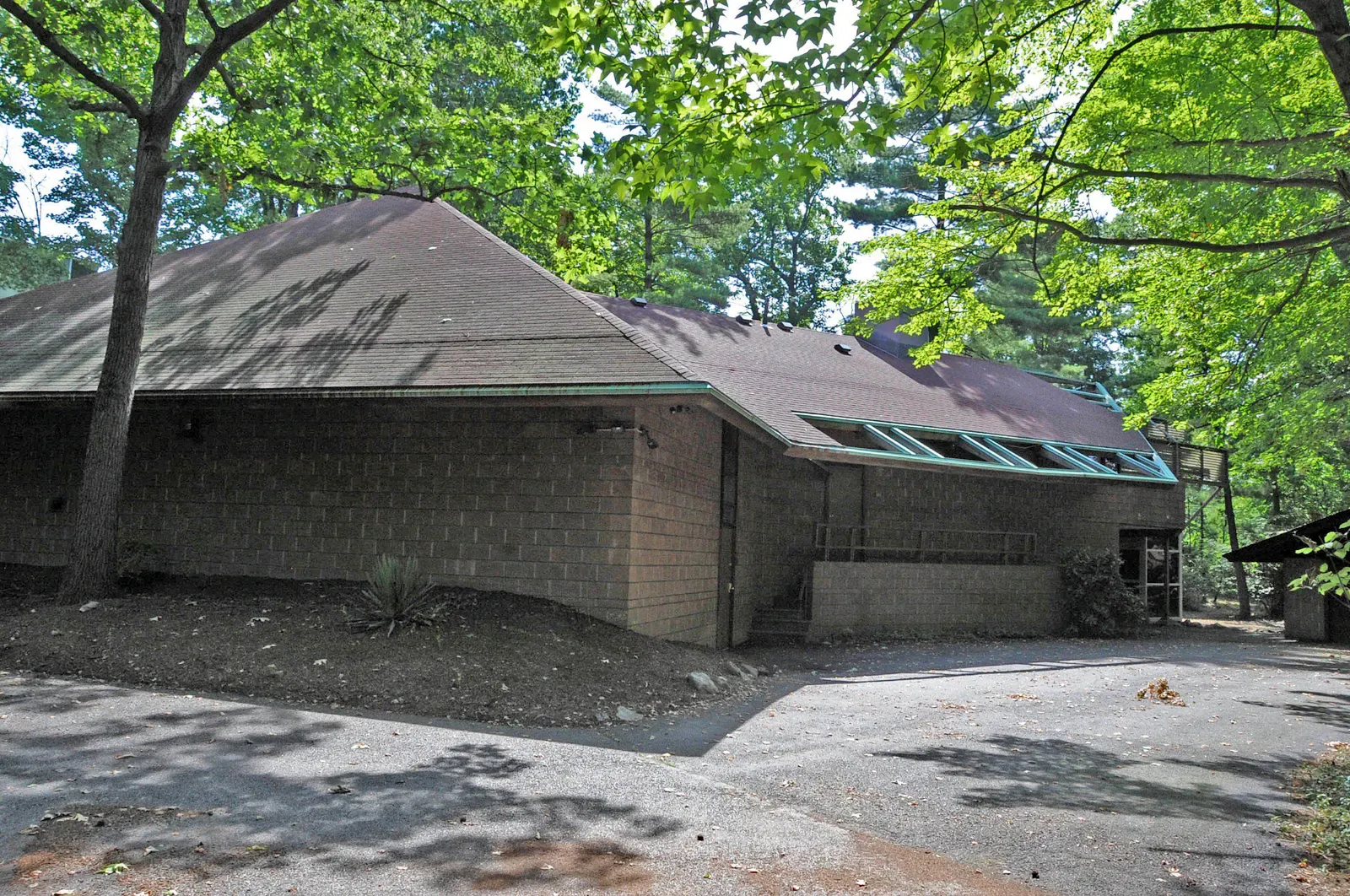
New York, 1965-1967
After A Love Supreme, Coltrane’s music grew denser and more collective. Ascension (1966) set a large ensemble improvising together, with tenor saxophonist Pharoah Sanders among the players, and Sanders became a second voice in the group. Impulse, the label founded in 1960 and later called the house that Trane built, issued most of this work and gave the new players a platform. The independent label ESP-Disk recorded the more radical side of the scene, including Albert Ayler, whose Spirits Rejoice (1965) and spiritual-song material fed the same current.
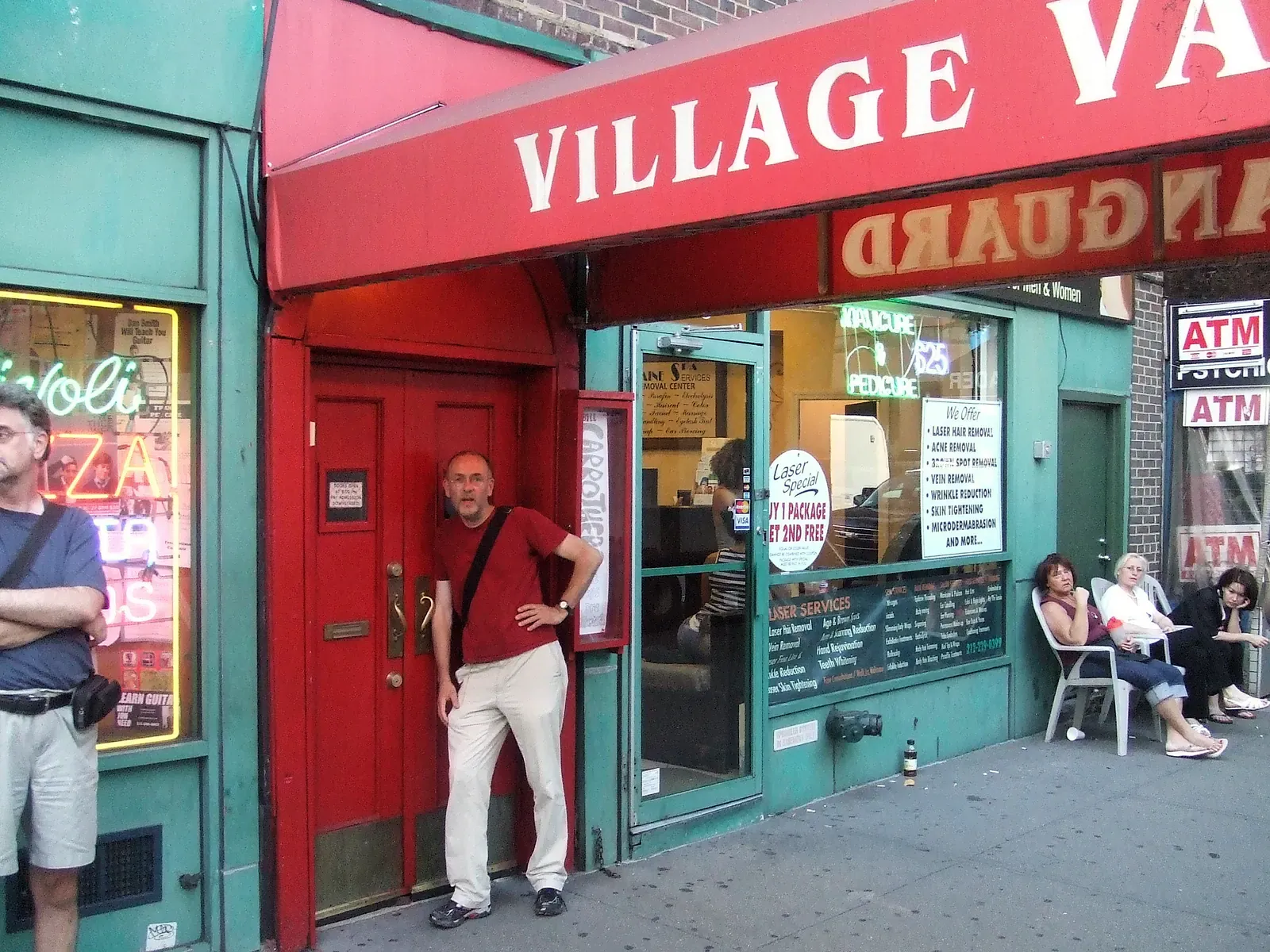
Coltrane died on 17 July 1967. The question for the musicians around him was whether the search could continue without him.
Continuations, 1968-1979
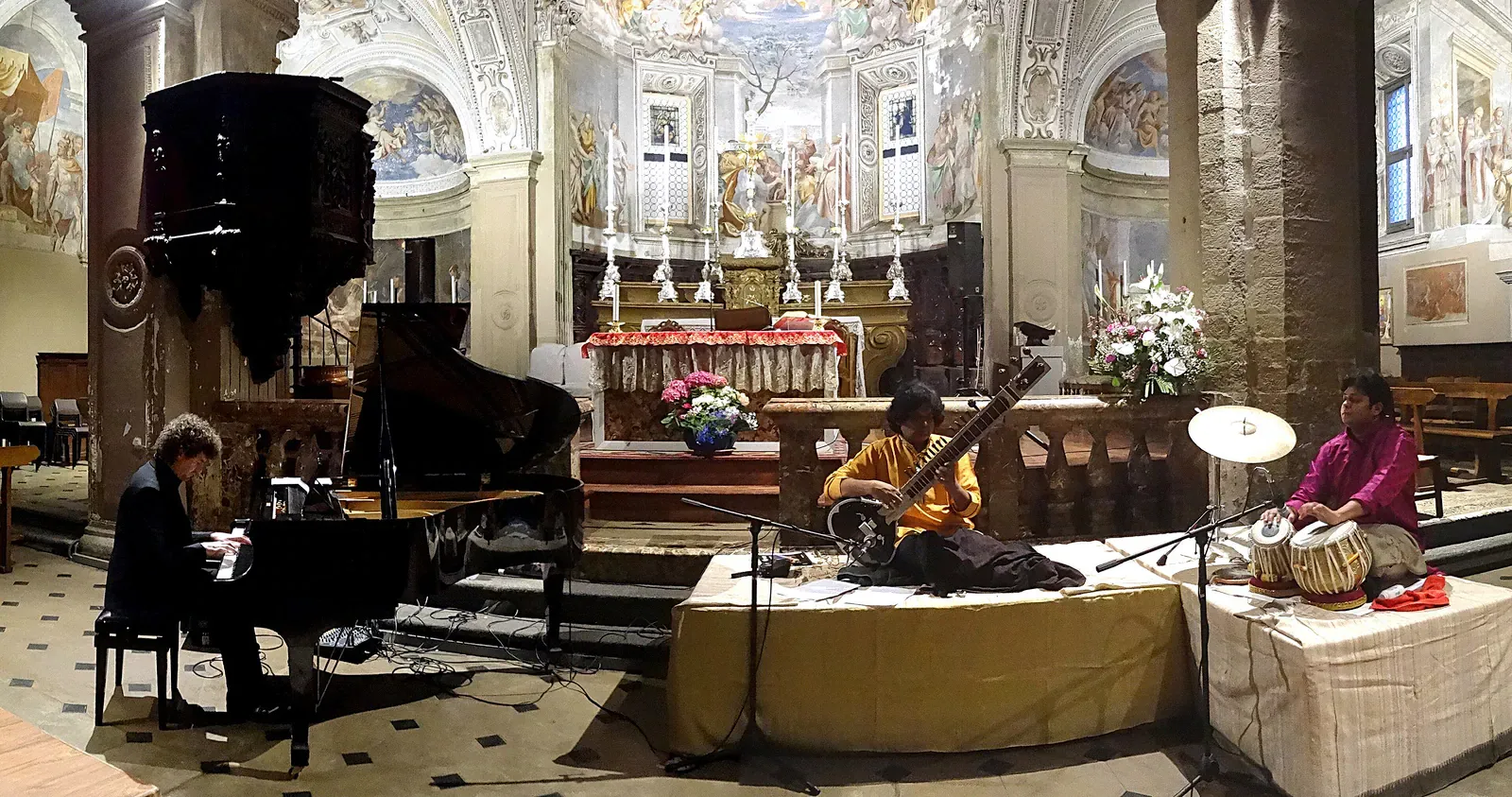
Two former members answered first. Pharoah Sanders took inspiration from Arabic, Indian and Afro-Cuban music for Tauhid (1967) and Karma (1969), whose side-long piece The Creator Has a Master Plan runs from quiet chant to saxophone shriek over a fixed bass vamp. Alice Coltrane, a pianist who also played harp, turned after her husband’s death toward Hindu devotion under Swami Satchidananda. Her 1971 album Journey in Satchidananda joined jazz to ragas, harp and drone, using harps, sitars and ouds, and it links the genre to Hindustani classical music.
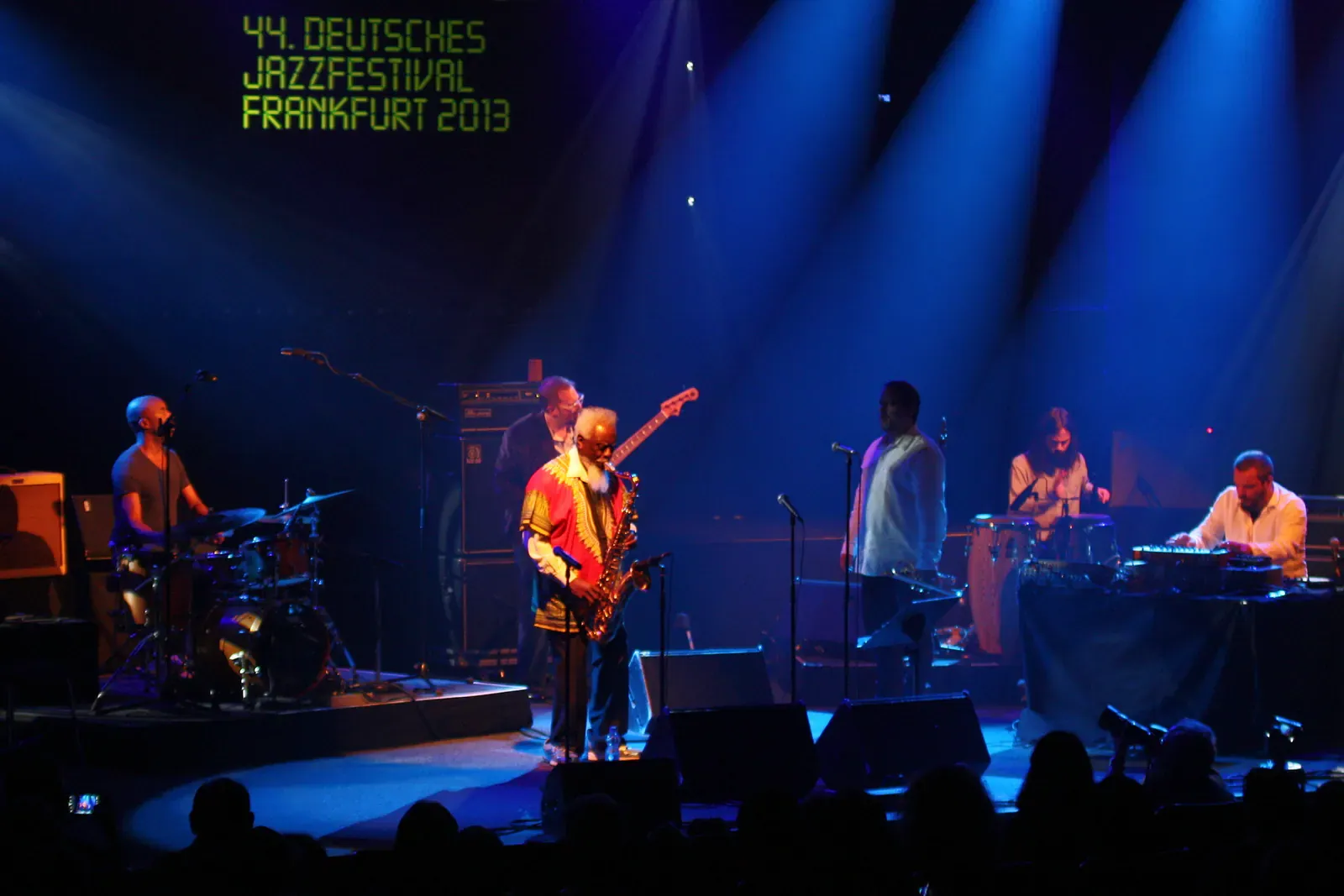
Sun Ra had been running his Arkestra since the 1950s and framed his music through Egyptology and space travel. Space Is the Place (1973) and the film of the same name (1974) tied that imagery to the spiritual current and later fed Afrofuturism. Don Cherry brought world-music instruments and chant-like themes into his own records. The keyboardist Lonnie Liston Smith, who had played with Sanders, released Astral Traveling in 1973 with a lighter, funk-leaning pulse, and Azar Lawrence, described as a Coltrane devotee, followed with Bridge into the New Age in 1974.
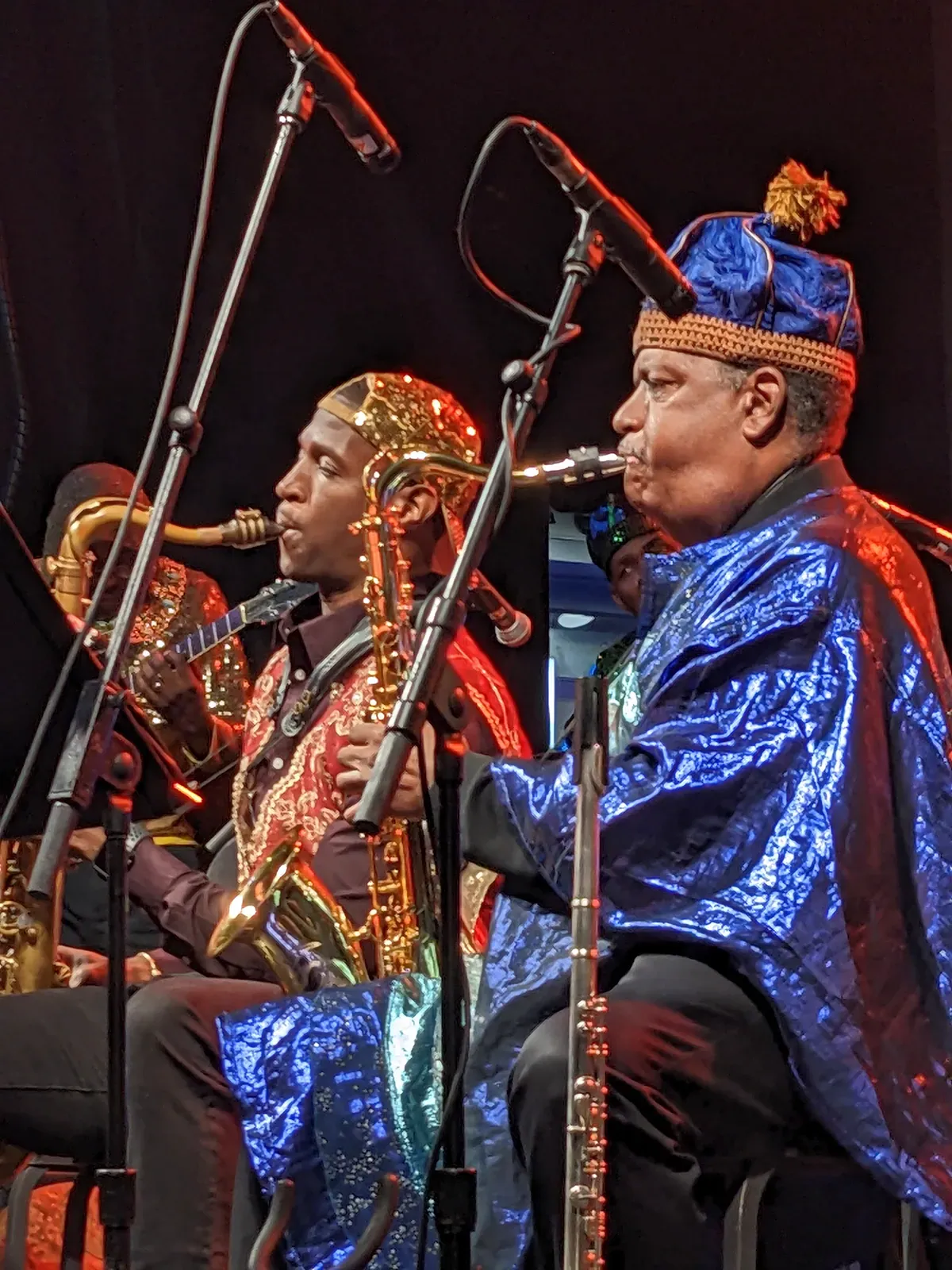
Artist-run labels widened the circulation. Strata-East, founded in New York in 1971 by Charles Tolliver and Stanley Cowell, put out more than fifty albums in the decade, many now counted as spiritual and afro-jazz. Pharoah Sanders’s Izipho Zam, recorded in 1969, reached CD on that label in 1993; its page is at Strata-East.
Characteristics
The genre has no strict style, but several traits recur. Harmony leans on stacked fourths (quartal voicings) and on the Dorian mode, and pieces often rest on a pedal point or ostinato that holds one harmony for many minutes. Dynamics move between meditation and ecstasy within a single piece. Players use instruments not usually heard in jazz, among them harp, bells and kalimba, and electric keyboards appear from the 1970s. The studio itself is used as an instrument through echo and layering. Themes are Afrocentric and pan-religious: Christian, Islamic, Hindu and Egyptian references sit side by side.
Instruments and production
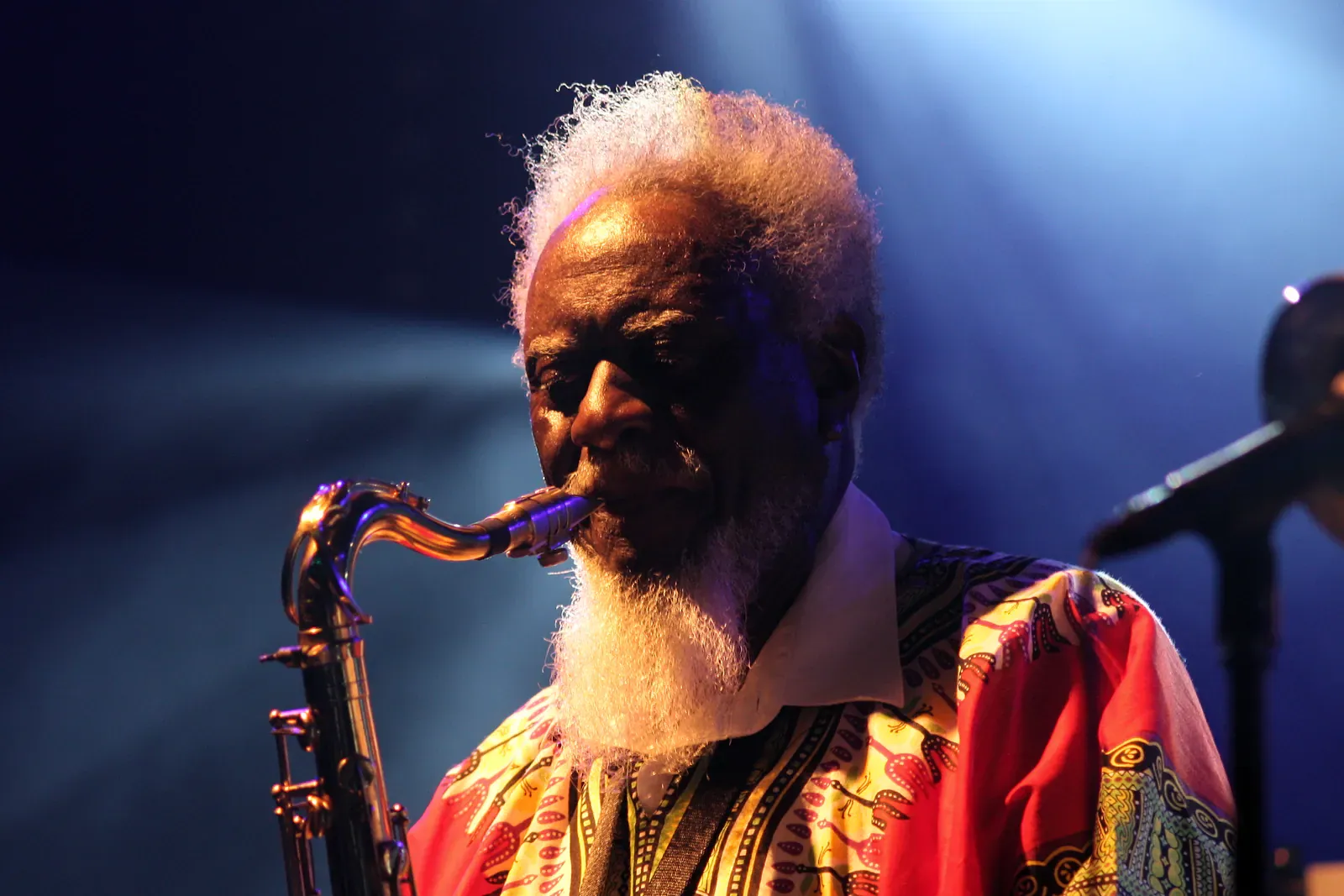
The tenor saxophone stays at the centre, played with overblowing and multiphonics to produce cries and chords from a single horn. Piano supplies quartal chords, and in the 1970s the electric piano gives a softer colour. Hand percussion and bells replace the standard ride-cymbal swing with a floating, ceremonial pulse.
Mainstream success
Spiritual jazz never held a place on pop charts. A Love Supreme is the exception, a catalogue standard that Impulse kept in print and that critics repeatedly place among the major jazz albums. For most of the rest, circulation came through specialist labels, college radio and, from the 2000s, reissue compilations that introduced the 1970s records to collectors and DJs. The 2008 compilation Spiritual Jazz: Esoteric, Modal and Deep Jazz from the Underground began a long series of such releases.
Notable recordings
A Love Supreme remains the reference point for the form: its chant is sung by the quartet over the bass line, and the final part, Psalm, was conceived as a musical recitation of a prayer printed in the liner notes. The Creator Has a Master Plan shows the second model, a slow-building vamp that releases into a collective cry. Journey in Satchidananda shows the third, a quiet drone-based devotional piece that points to the East rather than to free jazz.
Revival, 2010s onward
The genre went through quiet decades, though Sanders kept recording and Franklin Kiermyer’s Solomon’s Daughter (1994), featuring Sanders, was among the most praised continuations. After the collector reissues of the 2000s, the style returned to wider notice with Kamasi Washington’s The Epic (2015), a triple album from the Los Angeles circle around the West Coast Get Down.
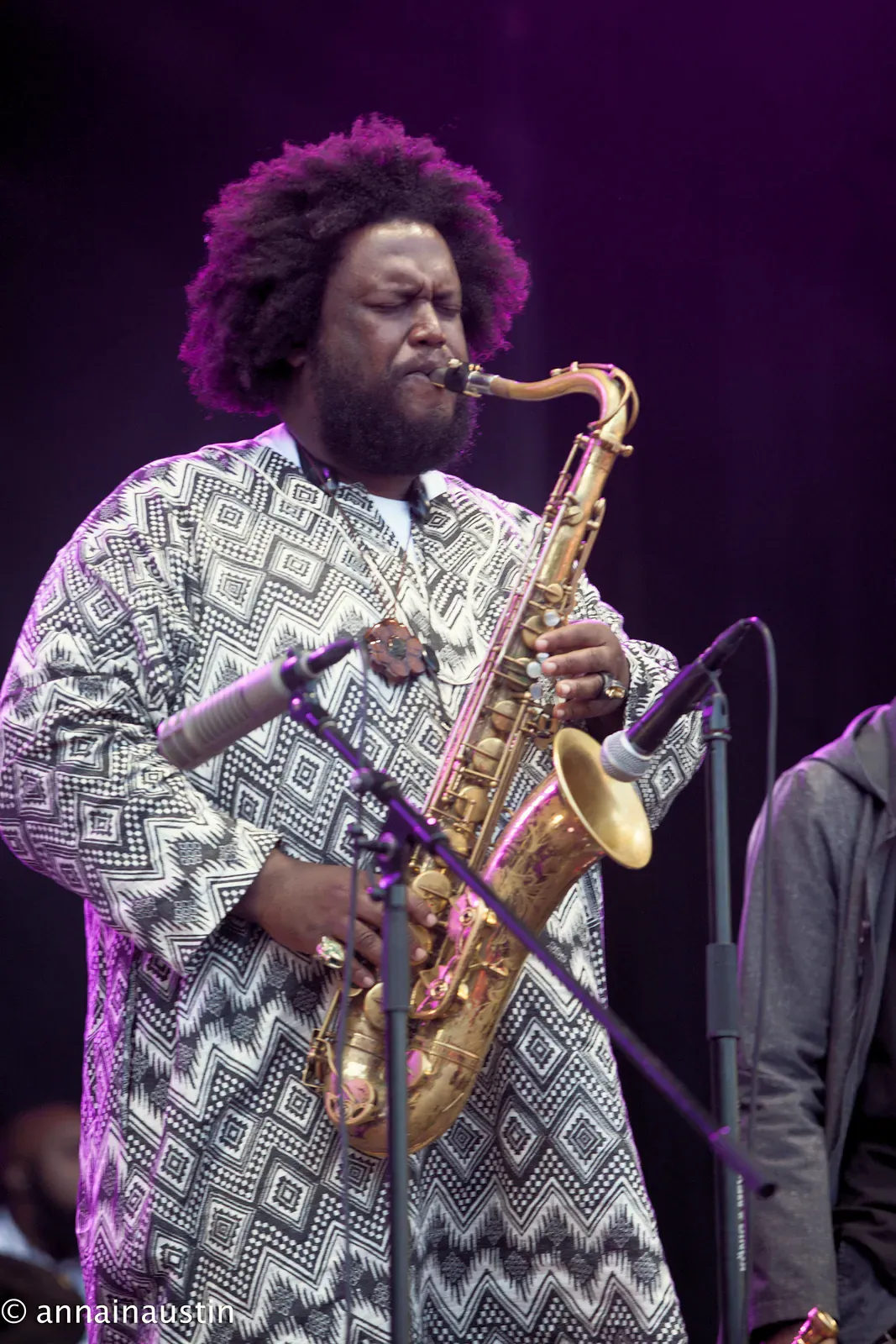
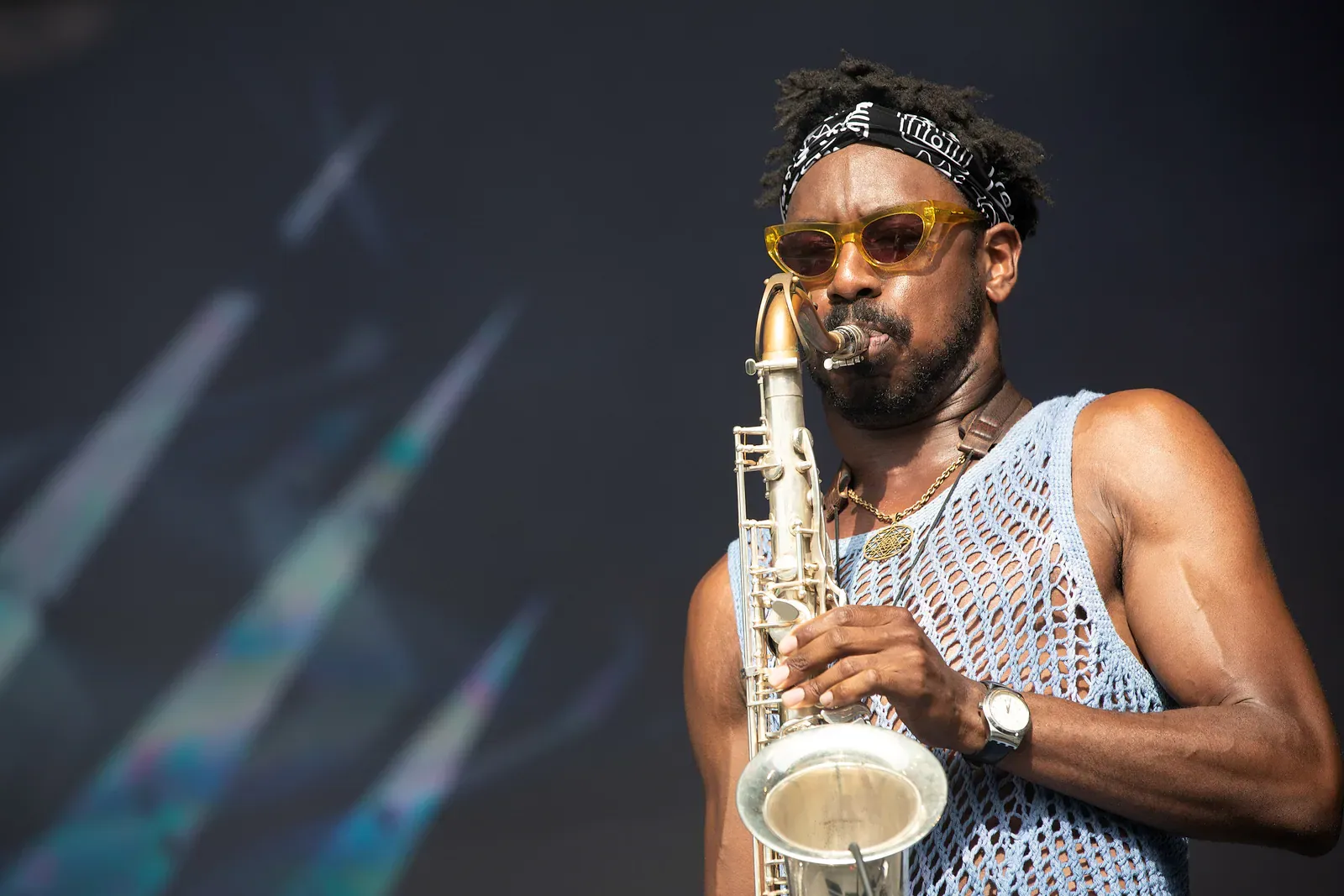
In London, Shabaka Hutchings and others treated the 1970s records as a reference point, and Shabaka and the Ancestors released Wisdom of Elders in 2016. Maisha, Muriel Grossman and Isaiah Collier and the Chosen Few released further records between 2019 and 2021.
Legacy
The genre left a vocabulary: the long modal vamp, the chant, the harp and bells, the studio as a room for ritual. Its reissue culture also brought the records to DJs and collectors. Its larger effect has been to establish that jazz can serve devotion as well as entertainment.
Misconceptions
Spiritual jazz is not a single religion’s music. Records draw on Christian hymnody, Islamic and Hindu sources, African ritual and Egyptian imagery, often in the same album. Nor does it equal free jazz: many of its landmark pieces, including A Love Supreme, are tightly structured around a fixed theme and bass line, with free playing only for part of the time. And it did not end with Coltrane’s death; several of its best-known records came after 1967.
Frequently asked questions
What is spiritual jazz?
Spiritual jazz is jazz from the 1960s onward built around modal harmony, extended improvisation and religious or devotional themes. Coltrane’s A Love Supreme is its starting point.
Who are the main spiritual jazz artists?
John Coltrane, Pharoah Sanders, Alice Coltrane, Sun Ra and Don Cherry are the core names. Albert Ayler, Lonnie Liston Smith and Azar Lawrence belong to the same circle, and Kamasi Washington leads the recent revival.
What is the best spiritual jazz album to start with?
A Love Supreme is the usual entry point for the founding sound. Journey in Satchidananda suits listeners who prefer a quieter, drone-based record, and The Creator Has a Master Plan suits those who want a long, building piece.
Is spiritual jazz the same as sacred jazz?
No. Sacred jazz refers to jazz written for religious services, such as masses and hymn settings. Spiritual jazz covers a wider range of music that seeks transcendence without being tied to a service.
Sound
Sound sheet
Anatomy of a track
| # | Part | Bars |
|---|---|---|
| 1 | Chant or bass-and-percussion intro | 8 |
| 2 | Modal theme over a vamp | 16 |
| 3 | Extended solos building in intensity | 64 |
| 4 | Return to theme or chant | 8 |
Signature sounds
- Pedal-point bass vamp
- Quartal piano voicings
- Sung or chanted invocation
- Harp, bells and drone textures
Techniques
- Sheets of sound
- Overblowing and multiphonics
- Modal vamp and ostinato
- Studio as instrument
Keys and modes
Dorian mode. Common modal centre for vamps and themes.
Vocals
Chanted invocations and wordless or sung devotional lines, used sparingly.
Scenes
Where it happened
Where and when the sound lived: one bar per city on a shared timeline.
North America
Europe
Active scenes
Peak 3, 2013-2025
Coltrane's quartet, Sanders, Alice Coltrane and Strata-East worked here.
Sun Ra built the Arkestra here before moving east.
Home of the West Coast Get Down collective around Kamasi Washington.
A 2010s scene treats the 1970s records as a reference point.
Venues and places
Englewood Cliffs, 1959 to today. Recording home of Impulse, where A Love Supreme was cut.
New York, 1935 to today. Basement club where Coltrane recorded Spiritual in 1961.
Culture
Culture markers
- Chant and invocation
A Love Supreme opens with a sung chant, and later records use spoken prayer and devotional song.
Ritual - Afrocentric and cosmic imagery
Sun Ra's Egyptological costumes and sleeves fed into Afrofuturism.
Artwork - Ashram practice
Alice Coltrane's turn to Hindu devotion shaped her records and later her community work.
Ritual
Media
Key media
- 1974Space Is the Place
by John Coney. Sun Ra's science-fiction film starring the Arkestra.
Film - 2002A Love Supreme: The Story of John Coltrane's Signature Album
by Ashley Kahn. Book-length account of the album's making and reception.
Book - 2008Spiritual Jazz: Esoteric, Modal and Deep Jazz from the Underground
by Various. First volume of the reissue series that revived collector interest.
Compilation
Glossary
Terms on this page
Sun Ra's shifting-membership big ensemble.
Improvisation over a scale or mode instead of fast chord changes.
Several pitches sounded at once on a wind instrument.
Chords built from stacked fourths, giving an open, unresolved sound.
A repeated figure that holds a groove while soloists build intensity.
Jazz family