African traditional music
African traditional music is the polyrhythmic, participatory community music of sub-Saharan Africa, tied to ceremony, work and dance.
around 1800
African family
Born
around 1800
Subgenres
3
Documented branches
Links
5
Genres it drew on or shaped
Tempo
80-155 BPMLineage
Family tree
Grew out of
African traditional music
Led to (4)
Timeline
Era by era
From the first sparks to today. Select a dot to read the story behind it.
- Oral and ceremonial traditions
1800 to 1928
- Field recordists
1929 to 1959
- Independence and national ensembles
1960 to 1984
- World music audiences
1985 to today
Eras
Moments
- 1 Oral and ceremonial traditions, 1800 to 1928
- 2 Field recordists, 1929 to 1959
- 3 Independence and national ensembles, 1960 to 1984
- 4 World music audiences, 1985 to today
around 1800
Oral and ceremonial traditions
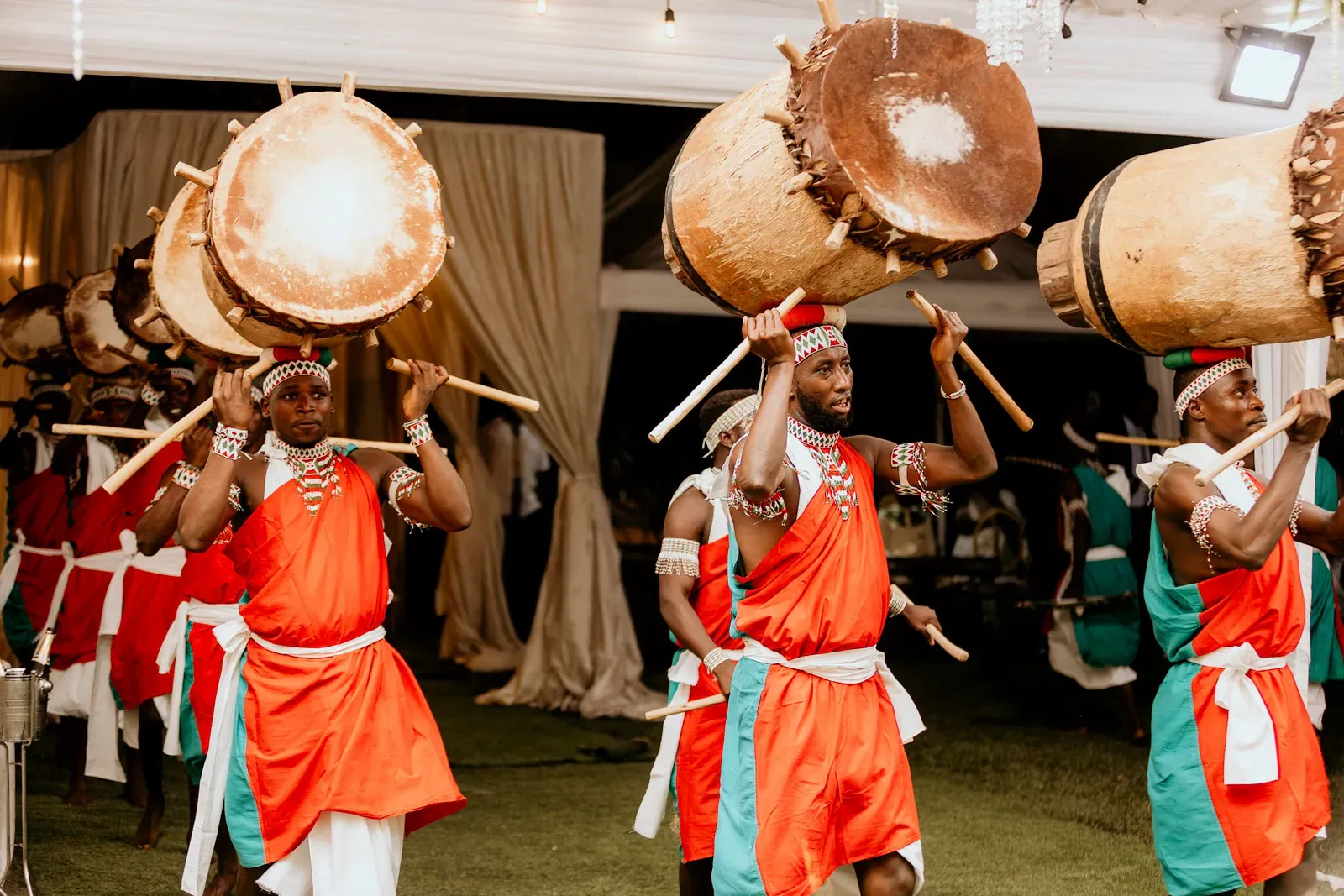
Music is learned by ear inside communities and tied to work, rites of passage, funerals and spirit ceremonies, performed by drummers, xylophonists, lamellophone players and singers.
- 1926Gallo opens in South AfricaGallo Record Company begins recording African artists and later issues isicathamiya and mbube groups.
1929
Field recordists
Hugh Tracey begins recording across the continent in 1929, ILAM follows in 1954 and Ocora opens in 1957, creating the first large archives of village music.
- 1929Hugh Tracey starts recordingThe ethnomusicologist begins field recordings that later form the core of the International Library of African Music.
- 1954ILAM is foundedHugh Tracey founds the International Library of African Music, a repository of recordings going back to 1929.
- 1957Ocora is foundedCharles Duvelle and Pierre Schaeffer found the French field-recording label Ocora, which records widely in Africa.
1960
Independence and national ensembles
Newly independent states back national dance companies and radio. Ocora records across francophone Africa, and Benin recordings travel on the 1977 Voyager discs.
- 1960Ladysmith Black Mambazo formsJoseph Shabalala leads a choir in Ladysmith, South Africa, singing isicathamiya and mbube.
- 1961Duvelle's African field trips beginOver 1961 to 1967 Charles Duvelle records in Chad, Senegal, Niger, Mauritania, Madagascar, Congo, Benin and elsewhere for Ocora.
- 1974Stella Chiweshe releases KasahwaThe Zimbabwean mbira player begins her recording career with a single for Teal Records.
- 1977Benin recordings fly on VoyagerField recordings from Benin by Charles Duvelle are selected for the Voyager Golden Records.
- 1981Chiweshe joins the National Dance CompanyShe plays mbira with the National Dance Company of Zimbabwe and tours internationally.
1985
World music audiences
Graceland in 1986, Real World Records in 1989 and kora and blues pairings in the 1990s bring traditional players such as Ladysmith Black Mambazo, Ali Farka Touré and Hukwe Zawose to Western stages.
- 1986Homeless on GracelandPaul Simon and Ladysmith Black Mambazo record Homeless, launching the group's international career.
- 1988Toumani Diabaté releases KairaA solo kora album that spreads the Malian jeli harp tradition beyond West Africa.
- 1994Talking TimbuktuAli Farka Touré and Ry Cooder record an album that brings Malian blues to a global audience.
- 1996Hukwe Zawose releases ChibiteThe Gogo ilimba master issues his first album on Real World Records.
Listening path
Start listening
A short path from an easy way in to the deep end. Thumbnails come from YouTube; the player loads only when you press play.
- 01
Ladysmith Black Mambazo, 1986
Zulu male choir harmony, the easiest way into isicathamiya.
- 02
Toumani Diabaté, 1988
Solo kora: listen for the bass ostinato under the fast treble lines.
- 03
Ali Farka Touré, 1994
Malian song and blues guitar locked in a hypnotic groove.
Facts
| Family | African |
| Emerged | Ancient |
| Status | Active |
| Tempo | 80 to 155 BPM |
| Meter | 12/8 |
| Subgenres | 3 |
African traditional music is the group of community music traditions of sub-Saharan Africa, shared by hundreds of language communities and tied to work, ritual and dance rather than to the concert stage.
Its common traits are polyrhythm and cross-beat, call and response, layered vocal parts and the full participation of the audience, played on drums, xylophones, lamellophones, harps and lutes. It sits in the African family alongside regional styles such as Southern African folk music and Yoruba music, which have their own pages.
Origins
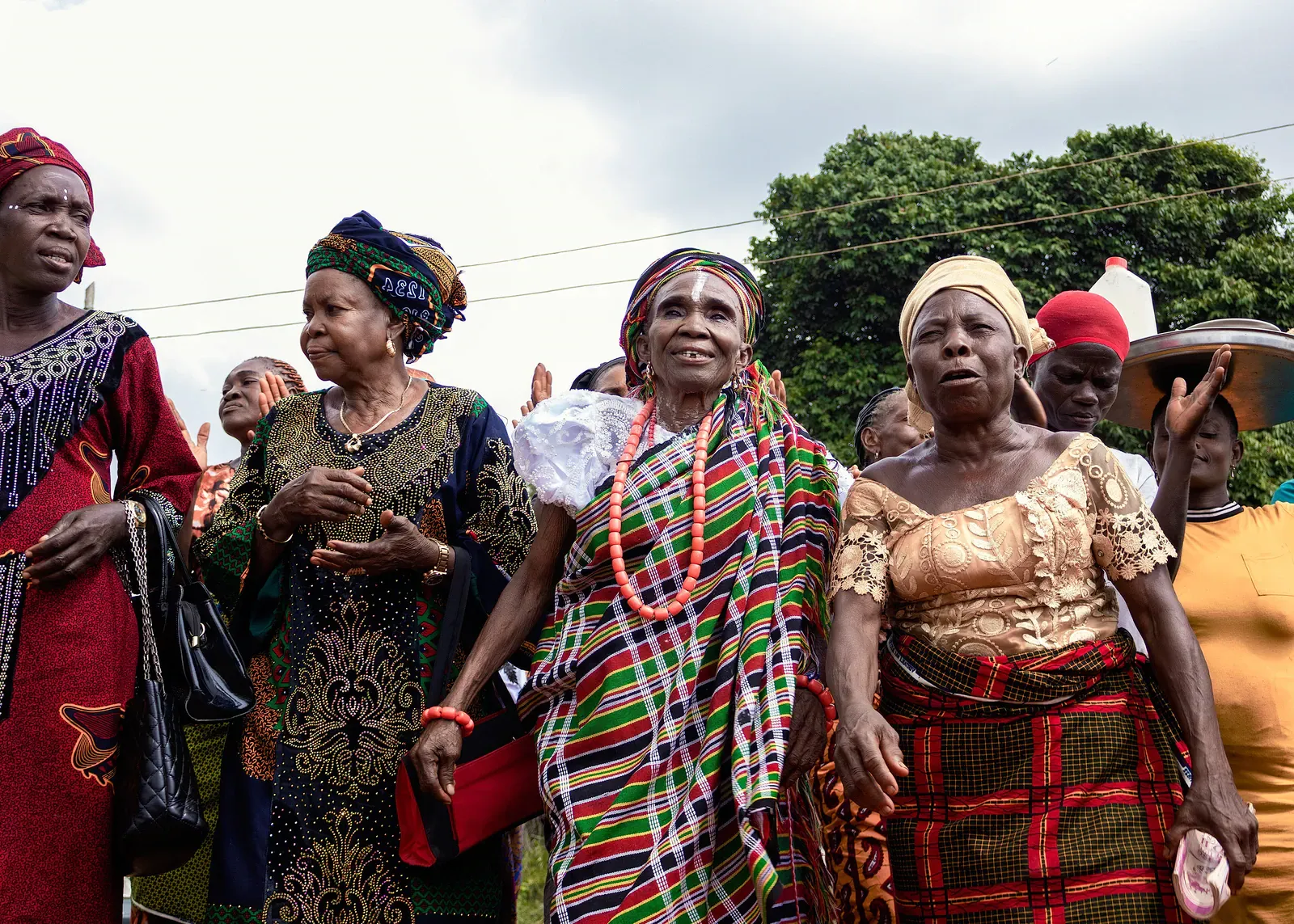
The music is older than any record of it. In many communities it was never separate from daily life: songs and dances accompany birth, naming, initiation, marriage and funerals, help people work together, and carry praise, criticism, history and proverbs. Drums are used both for expression and for communication, and among the Yoruba the drumming follows an underlying spoken text that guides the dancers. Among the Luo, funeral songs praise the dead and console the bereaved, and beer-party dances such as ohangla serve the living.
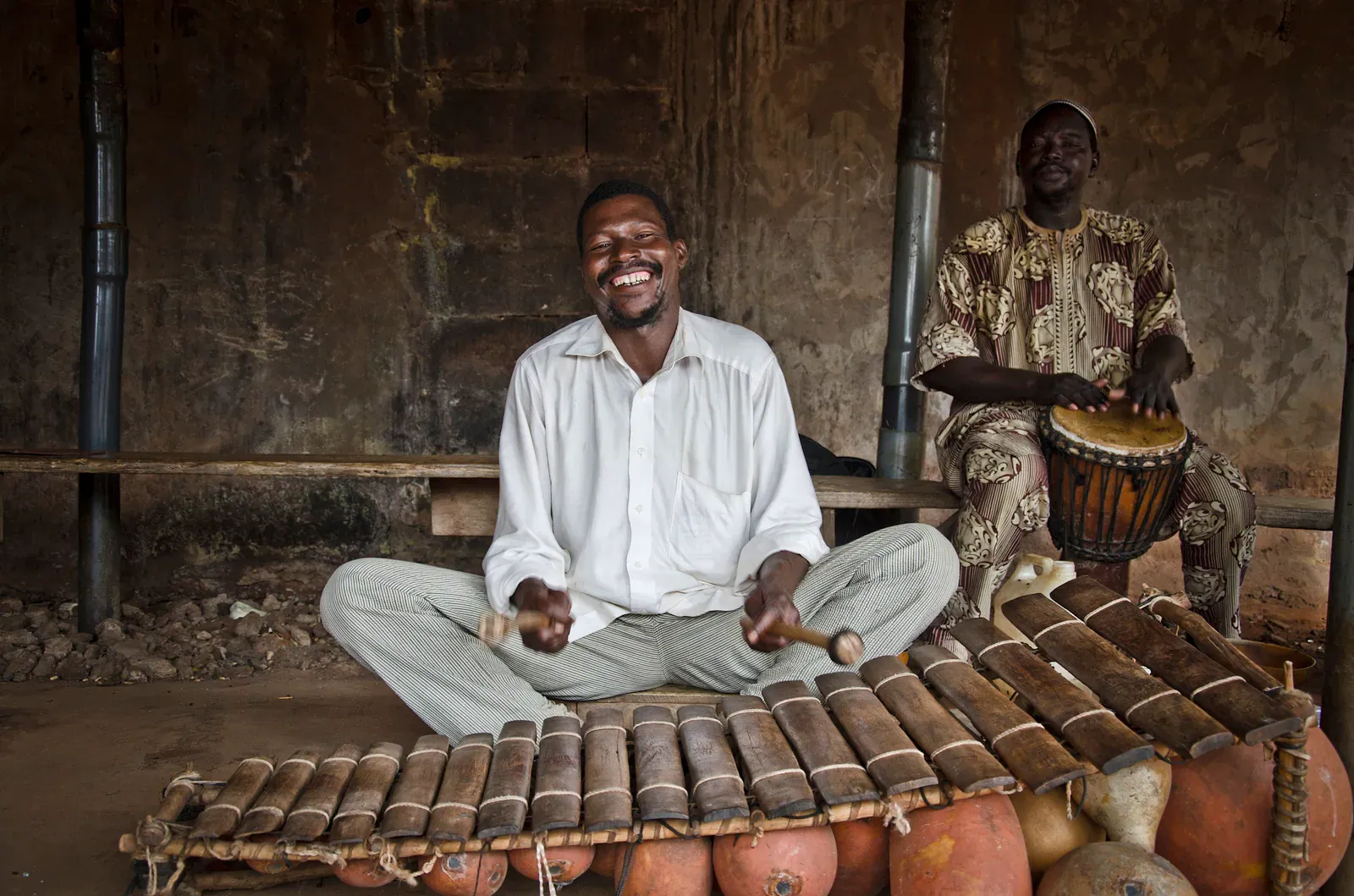
Because the tradition was passed on by ear, learning was strict. A dancer or drummer learned a piece exactly as taught, and variation came only after mastery, performance and the approval of the community. The aim of the drummer is to serve the group and preserve its memory, not to display individual ego. Ethnomusicologists later divided the continent into regions for study, with West, Central, Eastern and Southern Africa as the main sub-Saharan groupings.
Field recordings, 1929-1959
The first large archives came from field recordists. Hugh Tracey began recording across the continent in 1929 and founded the International Library of African Music in 1954, which preserves thousands of recordings going back to 1929. Gallo, founded in South Africa in 1926, recorded local artists and later issued choral groups. In France, the label Ocora was founded in 1957 by the composer Charles Duvelle with Pierre Schaeffer, growing out of radio broadcasting for French territories. From 1961 to 1967 Duvelle recorded in Chad, Senegal, Niger, Mauritania, Madagascar, Congo, Benin and other countries, and in 1977 his Benin recordings were chosen for the Voyager Golden Records sent into space. Smithsonian Folkways later made the Tracey library available and issued many African albums of its own.
Independence and national ensembles, 1960-1984
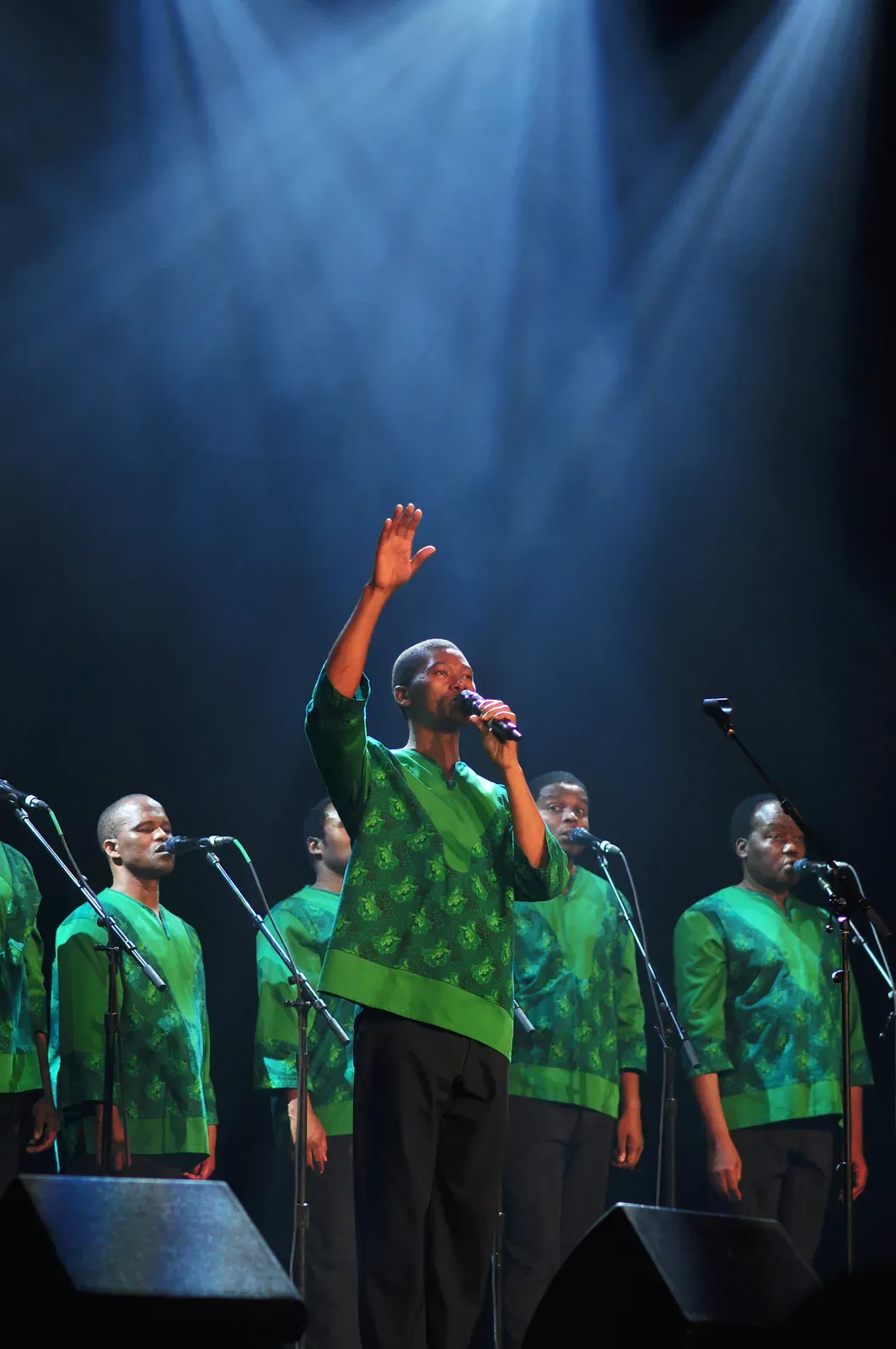
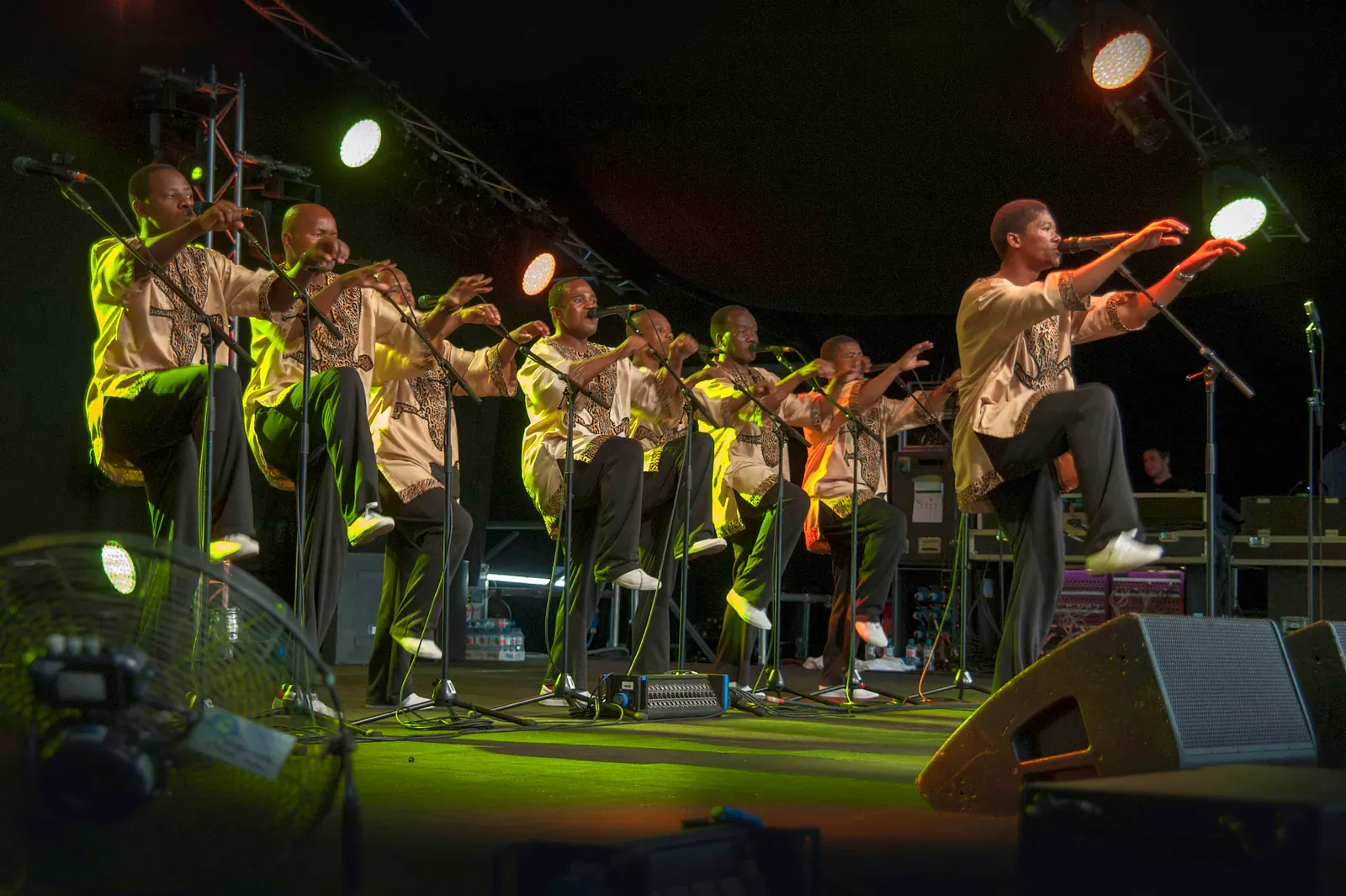
After independence, new states supported national dance companies and radio programming for local music. The Zimbabwean mbira player Stella Chiweshe began her recording career in 1974 with the single Kasahwa, and in 1981 joined the National Dance Company of Zimbabwe, which toured internationally. She had learned the instrument between 1966 and 1969 from her great-uncle, at a time when social taboos kept women from playing it and colonial authorities prohibited many cultural activities. In South Africa, Ladysmith Black Mambazo formed in 1960, singing the Zulu styles isicathamiya and mbube.
World music audiences, 1985 to the present
The mid-1980s opened the tradition to listeners outside Africa. Hukwe Zawose’s Tanzania Yetu appeared in 1985, and Paul Simon’s Graceland sessions in 1986 produced Homeless, the first recording Simon made with Ladysmith Black Mambazo, which launched the group’s international career. The label Real World Records was founded in 1989, and issued Zawose’s Chibite in 1996. World Circuit brought Malian musicians to wide audiences: the Malian kora master Toumani Diabaté released Kaira in 1988, and Ali Farka Touré and Ry Cooder recorded Talking Timbuktu in 1994. In 2005 Touré and Diabaté joined as a guitar and kora duo on In the Heart of the Moon. Diabaté died on 19 July 2024; Touré had died in 2006.
Characteristics
Rhythm is built from several patterns of different lengths played together, so beats cross rather than line up. The result is a dense texture in which each player holds a part and the whole group shares a single cycle. Melodic instruments follow the same logic: on mbira, xylophone and harp, two or more players or two hands interlock, splitting one melody into parts. Scales are commonly pentatonic or heptatonic and tuned by ear to the instrument, not to a fixed concert pitch. Measured on recordings by Diabaté, Touré and Ladysmith Black Mambazo, tempo falls between about 80 and 150 beats per minute.
Voices are the other core element. Call and response lets a lead singer state a phrase and the group answer, drawing the listeners in. Choirs build layered parts, as in isicathamiya, and praise singers perform solo. Song texts are often the main carrier of history, which is why the jeli, the hereditary West African praise singer and instrumentalist, holds a social role as well as a musical one.
Instruments and production
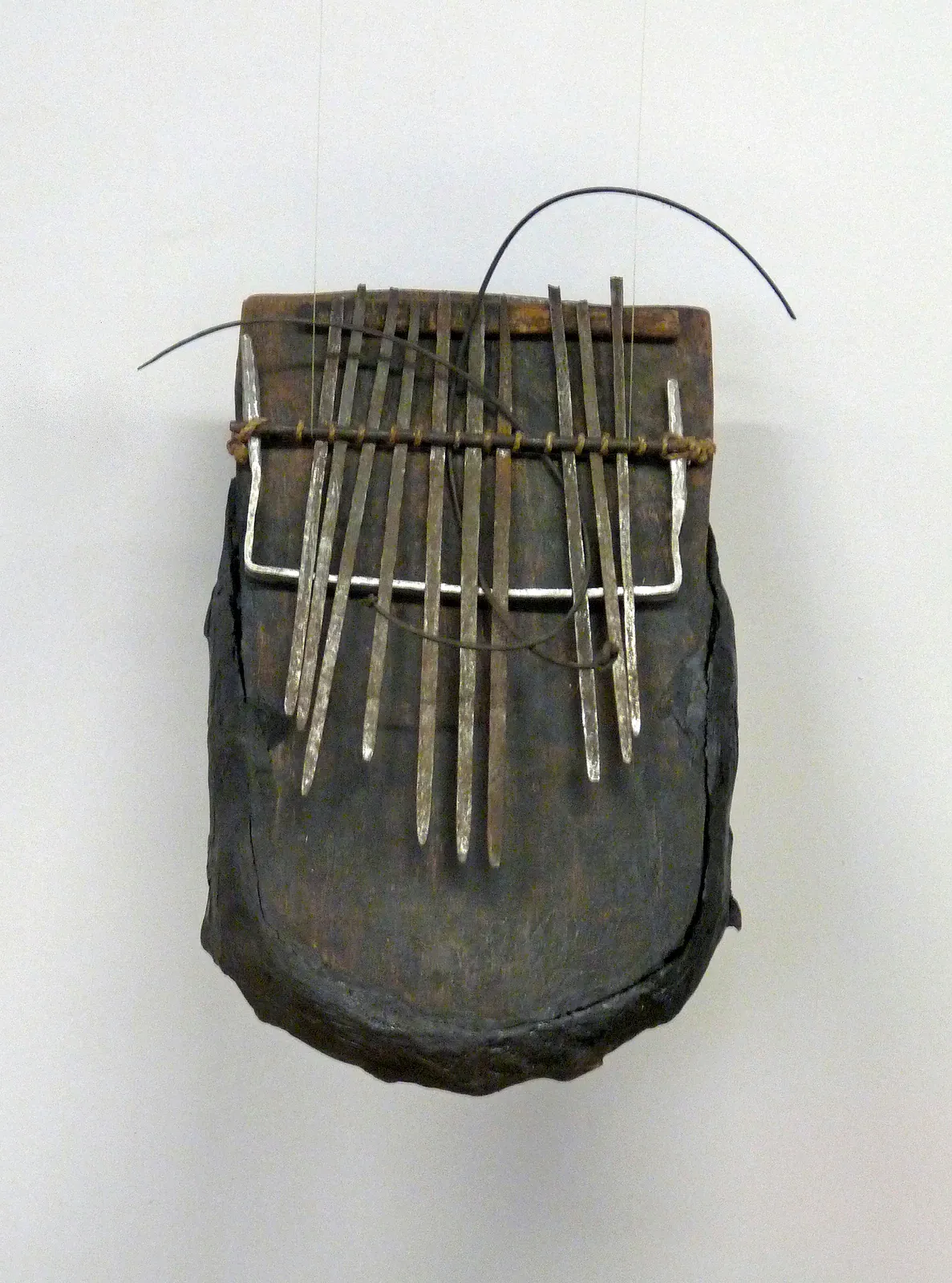
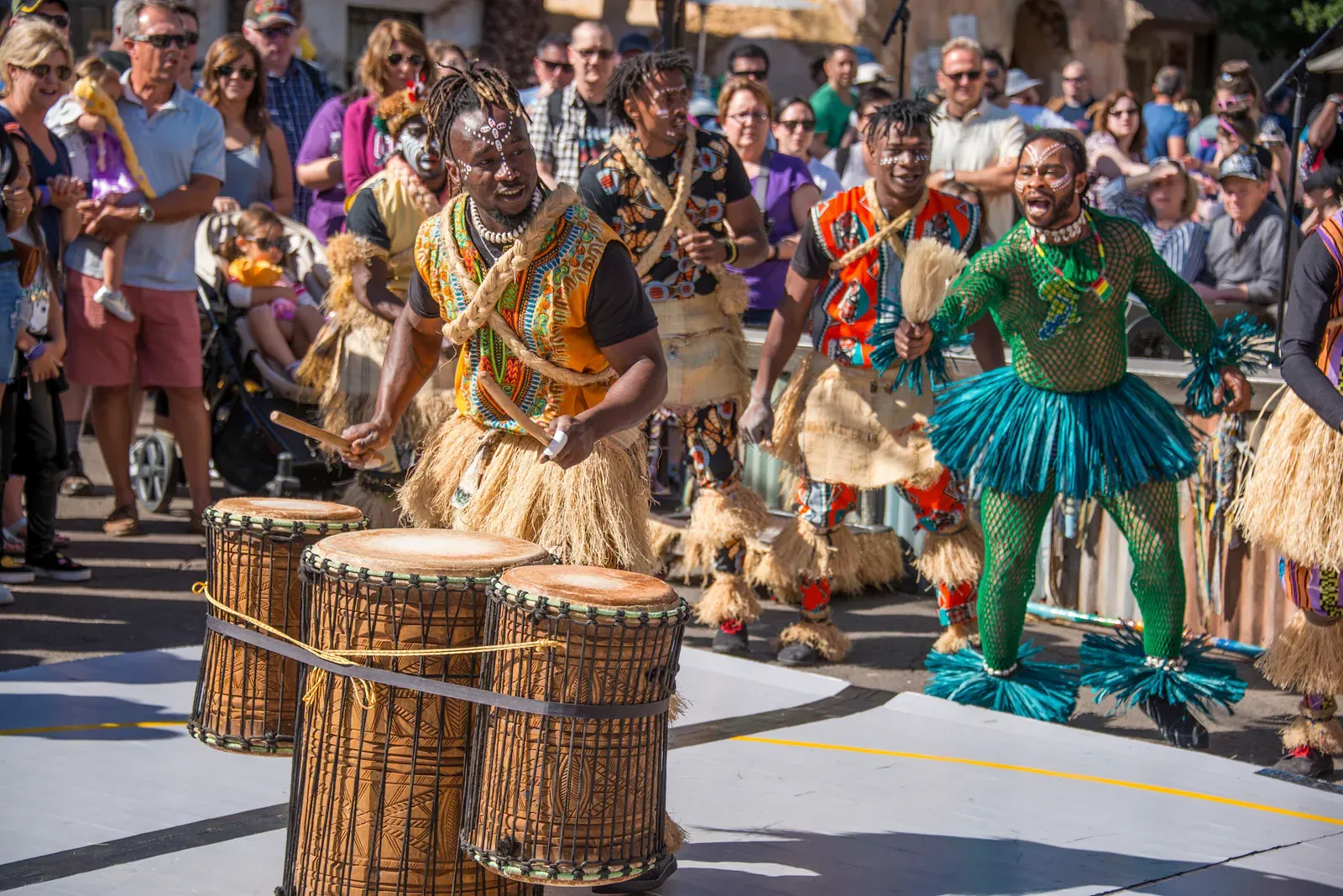
The kora, a 21-string double harp-lute, is played by jeli families in West Africa. The gyil of northern Ghana and the balafon of the savanna are xylophones with resonators. Talking drums, hourglass-shaped, bend their pitch to follow the tones of speech, and are found from the Sahel to the coast. Lamellophones appear from West to Southern Africa under local names: mbira among the Shona, ilimba among the Gogo of Tanzania. Calabashes, rattles, whistles, horns, fiddles such as the goje and musical bows complete the picture. Production on traditional recordings is usually minimal, a handful of microphones or a single field recorder, which is why field recordings still carry the room and the crowd.
Notable recordings
Homeless, a slow, close-harmony piece, introduced many listeners to Zulu choral singing. Jarabi, from Toumani Diabaté’s Kaira, shows the kora’s dual role: a repeating bass pattern under fast treble lines, played by one musician. Diaraby, from Ali Farka Touré’s Talking Timbuktu, rests a sung Malian melody on a repeating guitar groove that echoes the blues. These three recordings sit at opposite ends of the style: a choir, a harp-lute soloist and a voice-and-guitar tradition that overlaps with the blues.
Culture
Many performances are social events. Wedding songs, initiation songs and funeral laments all have their places, and in some cases dances are separated by gender, reinforcing roles in the community. Shared rhythm is understood as a way to build group consciousness. The mbira has a specific religious role: Shona players use it in spirit ceremonies, and Chiweshe performed forbidden spiritual ceremonies while learning it under colonial rule. Later she combined sacred and commercial music, which some critics objected to, and she amplified her mbira and introduced electric instruments in the 1980s.
Mainstream success
Traditional African music has rarely entered the charts in its own right. Its wider reach has come through international collaboration and world-music labels: Graceland in 1986, the Real World catalogue from 1989, and the World Circuit releases of the 1980s and 1990s. Voyager’s 1977 inclusion of Benin recordings reached an unusual audience. African traditions also fed popular styles, including Afrobeat, whose rhythm section draws on West African polyrhythm.
Misconceptions
The first myth is that African music is only drumming. Drums are central, but harps, xylophones, lamellophones, fiddles, lutes and voices carry much of the melody and harmony. The second is that it is one style: the continent has hundreds of language communities, and the music of the Sahel, the Gulf of Guinea, the Congo basin and the south differ in instruments, scales and function. The third is that it is unplanned and improvised throughout. Many pieces are learned precisely as taught, and improvisation comes only after the piece is mastered and the community accepts the player.
Legacy
African traditional music is the root of many later styles, and its structural ideas, cross-rhythm, interlocking parts and call and response, remain in use well beyond the continent. Archives of field recordings, from ILAM to Ocora, preserve pieces that might otherwise have been lost, while contemporary players such as Diabaté and Chiweshe have taken the instruments into concert halls and studios. The tradition remains active in villages, towns and diaspora communities, where young players learn on the same kora, mbira and drums.
Frequently asked questions
What is African traditional music?
African traditional music is the community music of sub-Saharan Africa, built on polyrhythm, call and response, layered vocal parts and participation, and tied to ceremonies, work and dance. It is played on drums, xylophones, lamellophones, harps, lutes and voices.
What instruments are used in African traditional music?
Common instruments include the kora, the gyil and balafon, the mbira and ilimba, talking drums, dunun bass drums, calabashes, rattles, fiddles and musical bows. Voices are as important as any instrument.
How fast is African traditional music?
Tempo varies by tradition, but typical recordings of kora, guitar, mbira and choral music sit between about 80 and 150 beats per minute, often with a steady cycle on which several rhythms overlap.
Who are the best-known African traditional musicians?
Toumani Diabaté and Ali Farka Touré of Mali, Stella Chiweshe of Zimbabwe, Hukwe Zawose of Tanzania and the South African choir Ladysmith Black Mambazo are among the best known beyond Africa.
Sound
Sound sheet
Anatomy of a track
| # | Part |
|---|---|
| 1 | Ostinato or drum pattern sets the cycle |
| 2 | Lead voice or solo instrument enters |
| 3 | Chorus answers in call and response |
| 4 | Variation builds with added parts and dancers |
Signature sounds
- Interlocking polyrhythm
- Call-and-response vocals
- Repeating ostinato cycle
- Instrument parts shared between players
Drums and percussion
- Talking drum
- Dunun
Techniques
- Call and response
- Polyrhythm and cross-beat
- Interlocking parts
- Vocal polyphony
Keys and modes
Pentatonic. The mbira is described as a small pentatonic thumb piano.
Tuning
Pentatonic and heptatonic scales, tuned by ear per instrument, not to A=440
Vocals
Communal and call-and-response singing, solo praise song and choral harmony
Scenes
Where it happened
Where and when the sound lived: one bar per city on a shared timeline.
Africa
Active scenes
Peak 4, 1988-2025
Home base of kora master Toumani Diabaté, born in the city.
Town where Joseph Shabalala formed the choir named after it.
City where Hukwe Zawose lived and worked after Julius Nyerere invited him.
Birthplace of Ali Farka Touré, whose music blends Malian tradition with the blues.
Culture
Culture markers
- Rites of passage music
Songs and dances mark birth, naming, initiation, marriage and funerals.
Ritual - Participatory dance
There is little barrier between dancers and onlookers outside initiation and spiritual dances.
Dance - Mbira spirit ceremonies
Shona players such as Stella Chiweshe performed forbidden spiritual ceremonies under colonial rule.
Ritual
Media
Key media
- 1977Voyager Golden Record
by Various. Disc carried into space that includes field recordings of Benin by Charles Duvelle.
Compilation
Glossary
Terms on this page
A lead singer or player states a phrase and a group answers, a core participatory form.
Zulu a cappella choral style sung by male groups such as Ladysmith Black Mambazo.
Hereditary West African praise singer and instrumentalist, also called griot; kora players come from these families.
An instrument with plucked tines, such as the mbira and ilimba.
Several rhythmic patterns of different lengths played together, so beats cross rather than align.
African family