Drone Music
Drone music is a minimalist genre of sustained tones with slight harmonic change, born in 1958 New York with La Monte Young and spread to rock and metal.
United States, 1958
Experimental family
Born
1958
United States
Subgenres
1
Documented branches
Links
22
Genres it drew on or shaped
Tempo
75-145 BPMLineage
Family tree
Grew out of
- Minimalism
Derived from
Influenced by
United States, 1958
Drone Music
Led to (2)
Timeline
Era by era
From the first sparks to today. Select a dot to read the story behind it.
- Sustained tones in New York
1957 to 1969
- Rock, krautrock and ambient
1970 to 1988
- Drone metal and label scenes
1989 to 1999
- Archives, tape loops and amplified drone
2000 to today
Eras
Moments
- 1 Sustained tones in New York, 1957 to 1969
- 2 Rock, krautrock and ambient, 1970 to 1988
- 3 Drone metal and label scenes, 1989 to 1999
- 4 Archives, tape loops and amplified drone, 2000 to today
1957
Sustained tones in New York
La Monte Young writes the first pieces built from long tones, founds the Theatre of Eternal Music in 1962 and, with Marian Zazeela, builds a continuous sound environment in his loft in 1966.
- 1949Yves Klein's Monotone SymphonyThe painter writes a symphony of one sustained chord lasting 20 minutes, followed by 20 minutes of silence.
- 1958Trio for StringsLa Monte Young completes a work made only of long sustained tones and silences, which he calls the first of its kind.
- 1962Theatre of Eternal Music formsYoung, Marian Zazeela, Angus MacLise and Billy Name begin playing sustained tones inside strict rules set by Young.
- 1964Cale and Conrad join the ensembleViolist John Cale and violinist Tony Conrad join Young and Zazeela, with Terry Riley sometimes singing, in the lineup of 1964 to 1966.
- 1964Terry Riley writes In CRiley, like Young a disciple of Hindustani singer Pandit Pran Nath, composes the repetitive score that links drone and minimalism.
- 1966First Dream HouseYoung and Zazeela create a continuous sine wave and light environment in their Church Street loft.
- 1967The Velvet Underground & NicoJohn Cale's drone technique on the band's debut album lays the ground for drones in rock music.
- 1969Dream House opens to the public in MunichA version of Young and Zazeela's installation premieres in a Munich gallery.
1970
Rock, krautrock and ambient
John Cale carries drones into rock, Tony Conrad records with Faust, Tangerine Dream and Klaus Schulze release drone albums on Ohr, and Eliane Radigue works with the ARP 2500.
- 1972Zeit and Irrlicht on OhrTangerine Dream and Klaus Schulze each release a drone album on the German label Ohr in August.
- 1973Outside the Dream SyndicateTony Conrad and Faust release an LP of two violin drones over a single bass note.
- 1975Lou Reed's Metal Machine MusicThe double LP of guitar feedback cites Young's Dream Music among its specifications.
- 1985Niblock heads Experimental IntermediaPhill Niblock becomes director of the New York foundation for avant-garde music.
1989
Drone metal and label scenes
Earth turns drone into heavy rock, Stars of the Lid form in Austin, and labels such as Kranky and Touch give the sound a home on record.
- 1993Earth 2Earth's debut album on Sub Pop is highly influential in the development of drone music and its metal branch.
- 1993Kranky founded in ChicagoThe label becomes a main home for drone and ambient records, including Stars of the Lid.
2000
Archives, tape loops and amplified drone
Day of Niagara surfaces in 2000, William Basinski's Disintegration Loops follow in 2002, and Sunn O))) take amplified drone to large audiences with Monoliths & Dimensions in 2009.
- 2000Day of Niagara releasedA 1965 recording of the Theatre of Eternal Music appears on Table of the Elements, released over Young's objection.
- 2002The Disintegration LoopsWilliam Basinski releases decaying tape loops recorded in summer 2001 and dedicated to the victims of the 11 September attacks.
- 2009Monoliths & DimensionsSunn O))) release their album with orchestral and choral parts, a high point of amplified drone.
Listening path
Start listening
A short path from an easy way in to the deep end. Thumbnails come from YouTube; the player loads only when you press play.
- 01
The Velvet Underground, 1967
A viola drone and a speeding pulse show how drone entered rock after the Theatre of Eternal Music.
- 02
Eliane Radigue, 1990
Slowly shifting layers across an hour, the pure form of the sustained tone.
- 03
William Basinski, 2002
A tape loop that wears away as it plays, an entry point for tape-based drone.
- 04
Stars of the Lid, 2007
Strings, horns and effects-treated guitars in long chords, with no drums or vocals.
- 05
Sunn O))), 2009
Amplified guitar drone joined by brass in a 16-minute piece.
Facts
| Family | Experimental |
| Origin | United States |
| Emerged | 1960s |
| Status | Active |
| Tempo | 75 to 145 BPM |
| Meter | Free time |
| Grew out of | Minimalism |
| Subgenres | 1 |
Drone music is a minimalist genre built on sustained sounds, notes or tone clusters, called drones, that change only slightly over long durations.
It began in New York in the late 1950s and early 1960s with the composer La Monte Young, who described it in 2000 as “the sustained tone branch of minimalism”. Pieces run from tens of minutes to a whole night, with little melody and, for the most part, no steady beat. The genre belongs to the experimental family and overlaps with ambient and noise.
Origins
Long sounds have a long history in many regional traditions, but the genre label is generally kept for music that grew out of Western classical and experimental practice. An early marker is Yves Klein’s Monotone Symphony, conceived in 1947 and 1948 and written in 1949: a single chord held for 20 minutes, followed by 20 minutes of silence.
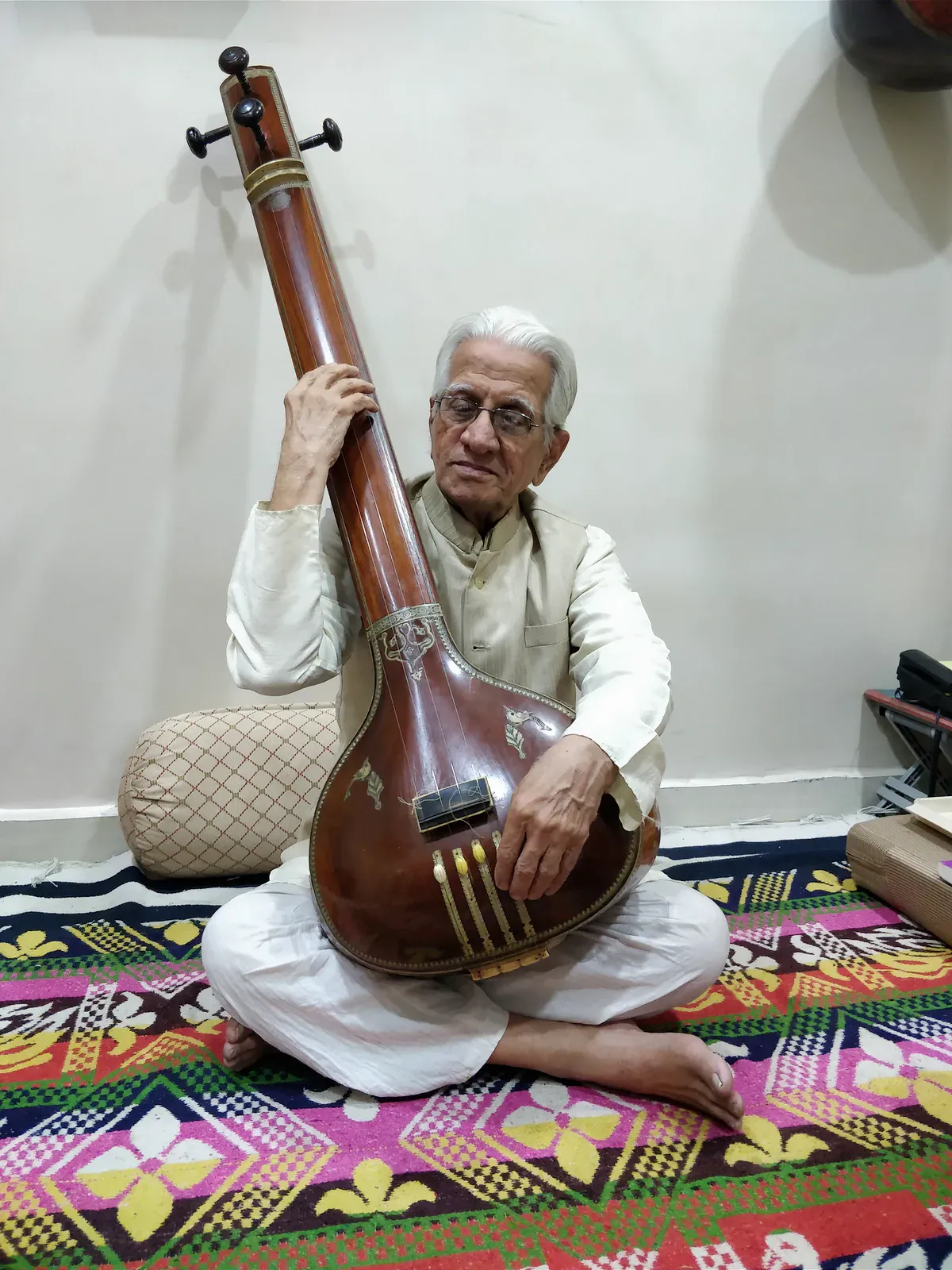
Young started from sound itself. He named as childhood fascinations the wind, the hum of step-down transformers on telephone poles, the tanpura drone, the alap of Indian classical music, the slow movement of Webern’s Symphony op. 21 and the sustained tones of Japanese gagaku. He used held tones in the middle section of For Brass in 1957. In 1958 he finished Trio for Strings, which he calls the first work made completely of long sustained tones and silences.
New York, 1957-1969
In 1962 Young founded the Theatre of Eternal Music, first a quartet of Young, Marian Zazeela, Angus MacLise and Billy Name. From 1964 to 1966 the core was Young and Zazeela with John Cale on viola and Tony Conrad on violin, and Terry Riley sometimes sang. The group played amplified, all-night sets of pure harmonic intervals, moving from one combination to the next under rules Young laid down about which sequences were allowed. The ensemble issued nothing in its lifetime, and a later dispute over compositional credit between Young and the pair of Conrad and Cale kept the archive closed.
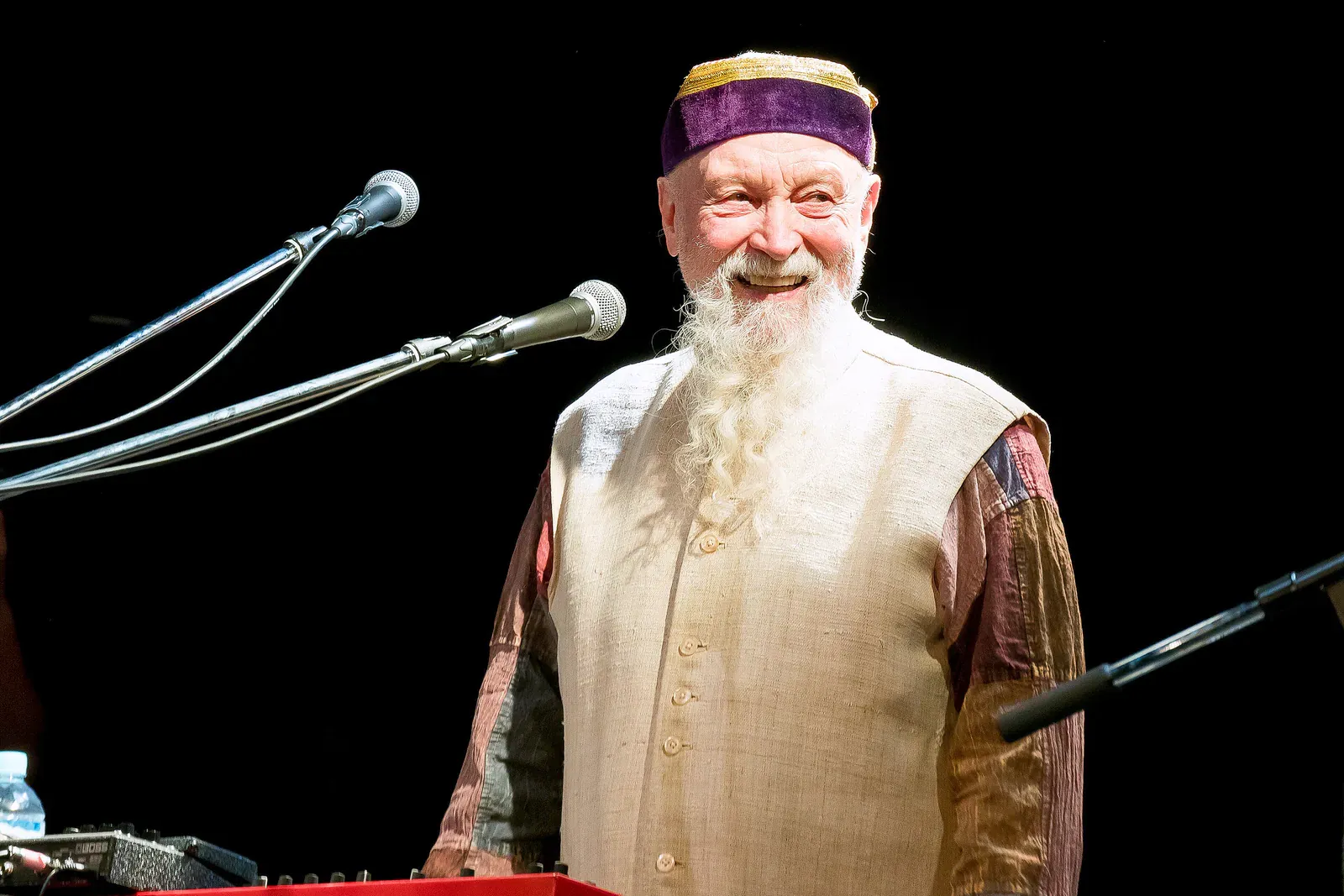
Young and Zazeela also turned the idea into an environment. In 1966 they built a continuous sound and light installation of sine waves and Zazeela’s colour designs in their Church Street loft, called Dream House. It premiered publicly in a Munich gallery in 1969 and a version was shown at the Metropolitan Museum of Art in 1971. Young, Zazeela and Riley all became disciples of the Hindustani singer Pandit Pran Nath, and the raga tradition’s fixed drone shaped how they heard a held pitch.
Rock, krautrock and ambient, 1970-1988
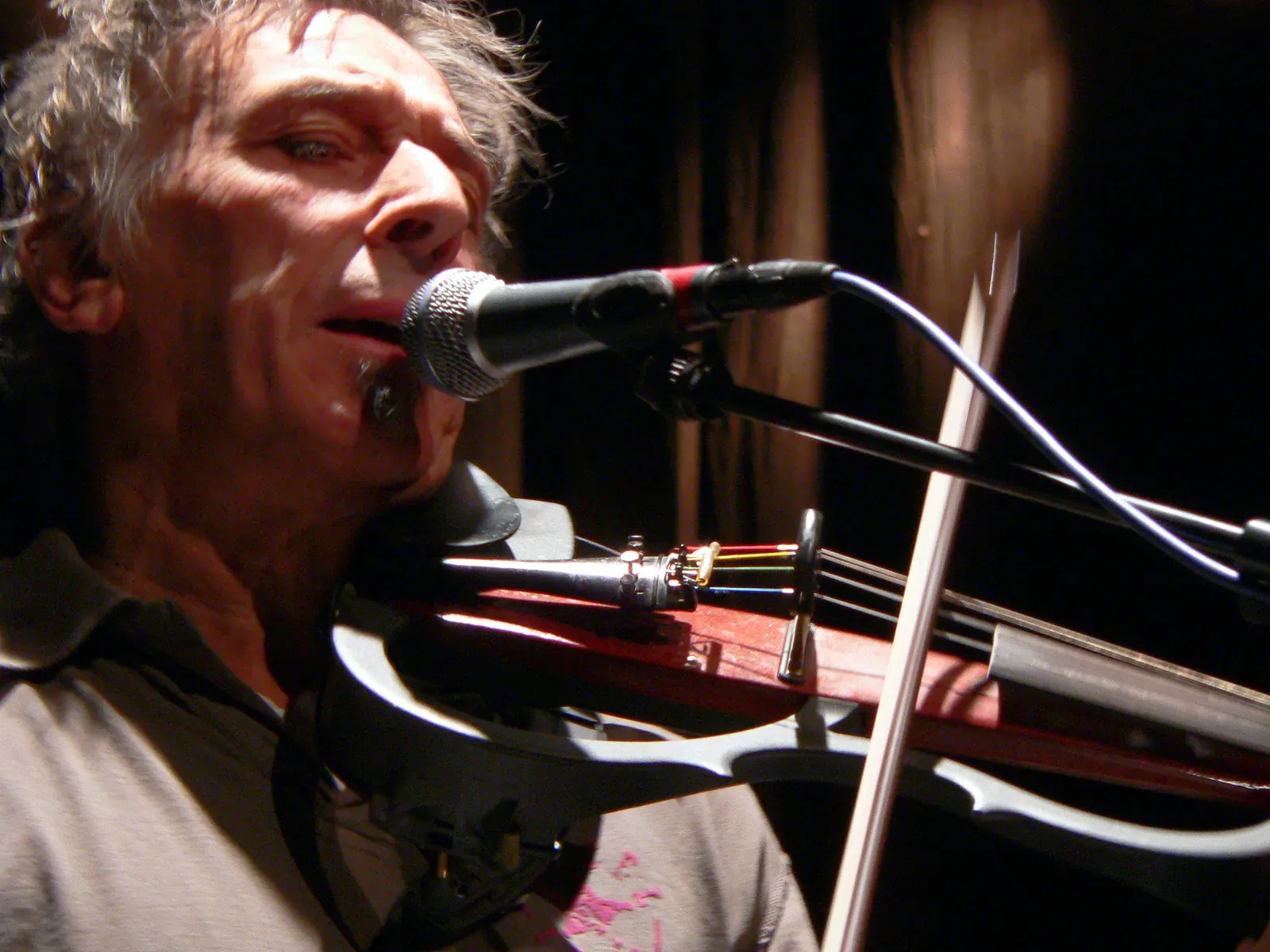
Drone entered rock through Cale. After the Theatre of Eternal Music he carried the technique into the Velvet Underground, whose 1966 flexi record Loop was a drone piece by Cale and whose 1967 debut album laid the foundation for drones in rock. Lou Reed’s 1975 double LP of guitar feedback, Metal Machine Music, listed Young’s Dream Music in its specifications.
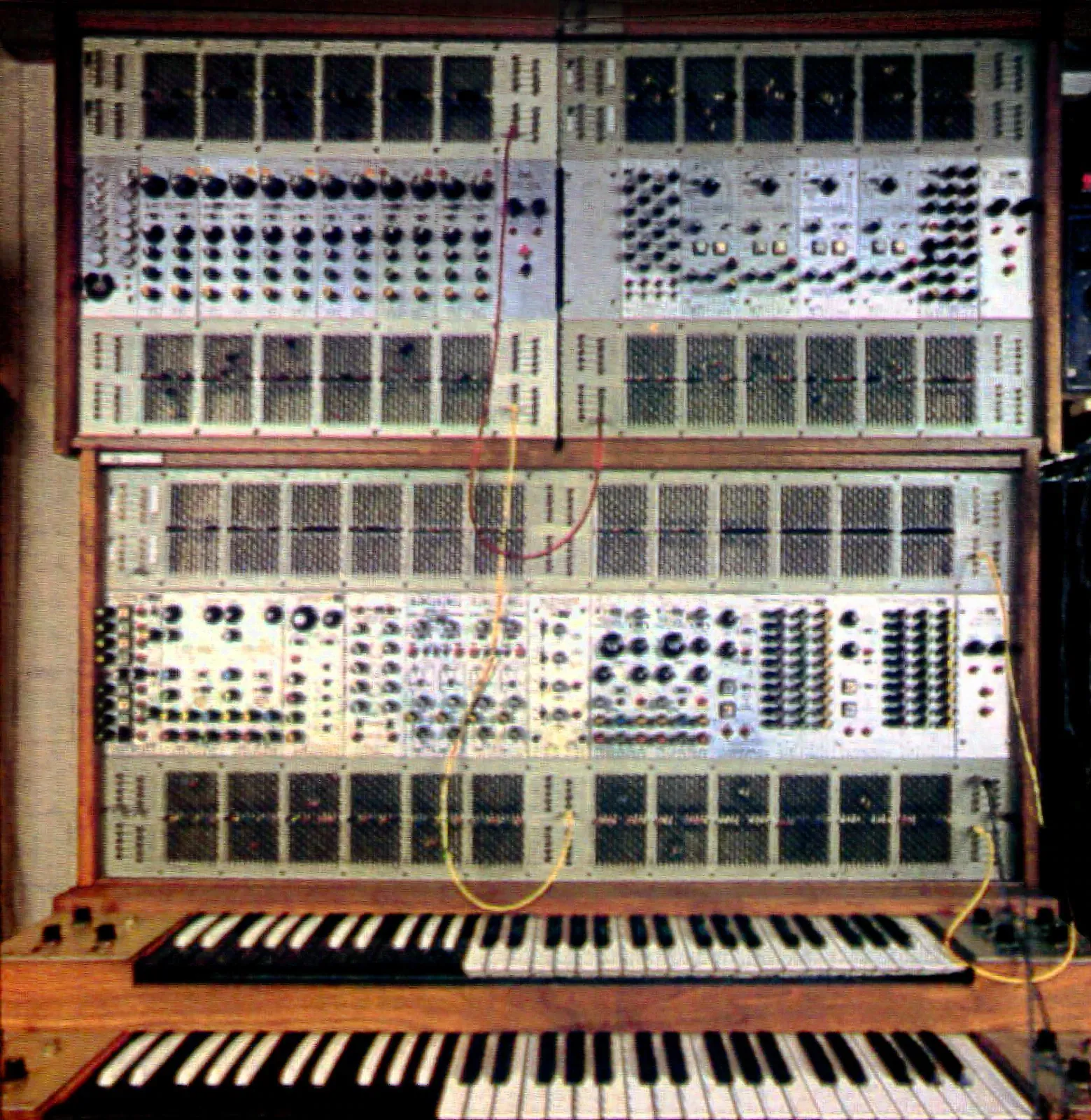
In Germany, Can, Neu!, Cluster and Faust drew on the Velvet Underground and on Young. Conrad recorded Outside the Dream Syndicate with Faust in 1973, two sides of violin drones over a single bass note, and Tangerine Dream and Klaus Schulze each released a drone-leaning album on the Ohr label in August 1972, Zeit and Irrlicht. Henry Wolff and Nancy Hennings’ Tibetan Bells, in 1971, brought singing bowls to Western ears, and Irv Teibel’s Environments series of the 1970s sold long, uninterrupted synthesized and field soundscapes. Brian Eno’s ambient tape work of the late 1970s is not drone music in itself, but he called Young “the daddy of us all”. In Paris, Éliane Radigue, whose first compositions were presented in the late 1960s, worked with tape and the ARP 2500 synthesizer.
Drone metal and the label scene, 1989-1999
Earth, formed in Olympia, Washington, in 1989 by Dylan Carlson, drew on the sludge of the Melvins and on Young, Riley and Conrad. Its 1993 debut Earth 2 is considered highly influential in the development of drone music and its metal branch. Sunn O))) began as a tribute to Earth and became the group most responsible for the style’s present prominence, while Boris in Tokyo and Corrupted in Osaka developed their own versions. Spacemen 3 released a live 45-minute drone album in 1990, Dreamweapon, with liner notes by Young.
A parallel line grew in the studio. Stars of the Lid formed in Austin and recorded for Kranky, a Chicago label founded in 1993 that became a home for the sound. Phill Niblock, who composed from 1968, became director of Experimental Intermedia in New York in 1985.
Tape loops and amplified drone, 2000 to present
In 2000, a 1965 recording of the Theatre of Eternal Music reached the public as Day of Niagara, released by Table of the Elements. In 2002 William Basinski began issuing The Disintegration Loops, tape loops recorded in July and August 2001 that decay a little on every pass, and dedicated to the victims of the September 11 attacks. A remastered edition followed in 2012 for the memorial museum in New York. Sunn O))) released Monoliths & Dimensions in 2009, with horn and choral arrangements around the guitar drones.
Characteristics
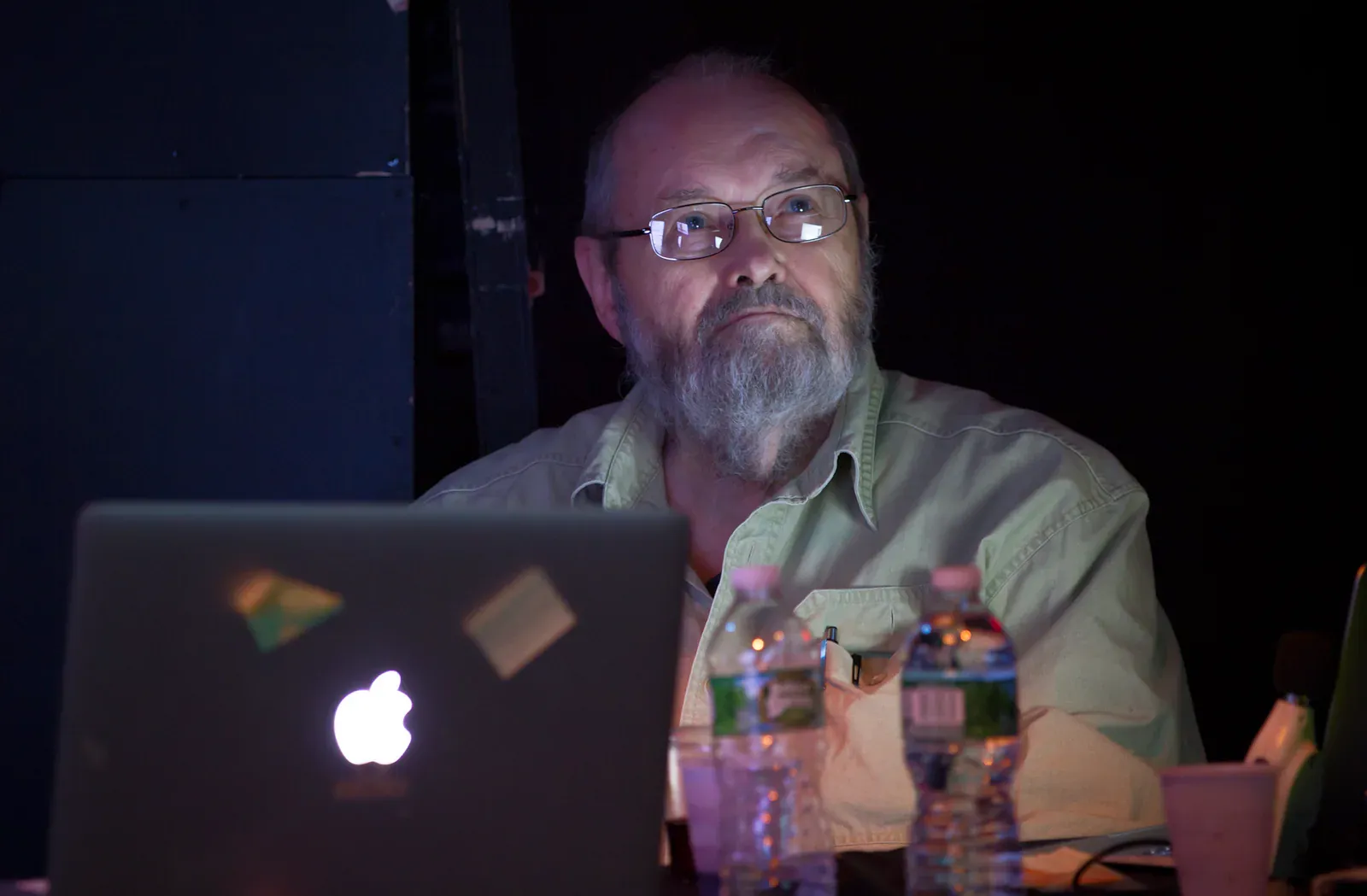
The defining trait is duration with minimal change. A piece fixes one pitch or a few, and the music happens in the small differences: a second tone slightly detuned from the first, which produces beating, an overtone that appears as the volume rises, a chord that moves once in several minutes. Niblock layered precisely tuned long tones in four, eight or sixteen tape tracks, later with a computer in as many as forty, so that slightly different pitches rubbed against each other. Young’s circle preferred just intonation, with pure ratios between pitches. Rock and metal drone often use ordinary equal temperament and rely on volume and feedback.
Instruments and production
The sources of a drone range from the oldest instrument families to the newest. Bowed strings, voices, singing bowls and the tanpura sustain tones without electronics. Sine wave oscillators gave Dream House its constant pitch, and Radigue used the ARP 2500 modular synthesizer and tape until 2000, after which she wrote mainly for acoustic instruments. Basinski’s decaying loops show tape itself as an instrument, and guitar amplifiers pushed to feedback do the same for Earth and Sunn O))).
Notable recordings
Outside the Dream Syndicate (1973) shows what the Theatre of Eternal Music sounded like in spirit, since the group’s own tapes stayed unreleased. Radigue’s Kyema, Intermediate States (1990) lasts about an hour and builds from slowly changing layers. Earth 2 gives the genre its heaviest pole, with riffs slowed until they become sustained tones. The Disintegration Loops turn the medium into the subject: each loop of old tape sheds more of its sound with every pass.
Culture
Drone is a music of attendance rather than dance. Visitors to Dream House sit or lie for hours in the sine waves and coloured light, in a space open for immersive listening and meditation. In Niblock’s concerts, musicians could wander through the audience, changing the sound by reinforcing or interfering with the existing tunings, while his films of manual work played on screens. The early scene lived in lofts and galleries rather than clubs.
Legacy
The sustained tone spread outward. Drone elements appear in rock, ambient and electronic music, and Godspeed You! Black Emperor, Tim Hecker, Kyle Bobby Dunn, Celer, Oren Ambarchi, William Basinski, Keith Fullerton Whitman, Nurse with Wound and Grouper all work with it, most of them almost exclusively. Several founders have died in recent years: Niblock in 2024, Brian McBride of Stars of the Lid in 2023 and Radigue in 2026.
Misconceptions
Drone is not simply ambient music. Ambient aims to be ignorable as well as interesting, while Young’s circle played long, amplified sets of sustained tones, and Eno’s late 1970s ambient recordings are not drone music in the strict sense.
Drone is not a metal genre. Drone metal came in the 1990s, more than three decades after Young’s Trio for Strings, and the minimalists Earth cited, Young, Riley and Conrad, came first.
A drone does not mean nothing happens. Layered long tones detuned by a hair produce beating and shifting overtones, which is why Niblock’s dense works feel active while the surface looks static.
Frequently asked questions
What is drone music?
Drone music is a minimalist genre of sustained tones or tone clusters with little harmonic change over long durations, begun by La Monte Young in New York in the late 1950s.
Who invented drone music?
La Monte Young is the most cited originator. He wrote Trio for Strings in 1958 and founded the Theatre of Eternal Music in 1962, though Klein’s 1949 Monotone Symphony and the drone traditions of Asia, Australia and Europe came earlier.
What is the difference between drone and ambient music?
Ambient is background-friendly and textural, while drone centres on one sustained tone held for a long time. Many works combine the two, as Stars of the Lid do. See also space music and krautrock for neighbouring territory.
Is drone metal the same as drone music?
No. Drone metal fuses drone with the slow tempos and heaviness of doom, and sludge metal fed into its start, but it is one branch of a wider practice that began in minimalism.
Sound
Sound sheet
Signature sounds
- One or a few sustained tones held for minutes
- Slow harmonic change with very little melody
- Long durations, from tens of minutes to all night
- Slightly detuned layers that produce beating overtones
Synths and software
- ARP 2500
Techniques
- Sustained tone
- Layered long tones
- Tape loop decay
- Amplified feedback
Keys and modes
Just intonation. Pure intervals tuned to whole-number ratios, central to Young's circle.
Fixed tonic drone. One pitch held as a pedal, as in the Hindustani tanpura.
Tuning
Just intonation or microtonal detuning in the sustained-tone tradition; equal temperament in rock and metal drone.
Vocals
Mostly instrumental; where voices appear they hold long tones, as in the Theatre of Eternal Music.
Scenes
Where it happened
Where and when the sound lived: one bar per city on a shared timeline.
North America
Europe
Oceania
Active scenes
Peak 6, 2000-2025
Lofts and galleries of Manhattan hosted the Theatre of Eternal Music, Dream House and Phill Niblock's concerts.
Eliane Radigue's first compositions were presented here in the late 1960s.
Dylan Carlson formed Earth here, the group that founded drone metal.
Brian McBride and Adam Wiltzie formed Stars of the Lid here.
Kranky, based here, issued much of the label-era drone and ambient catalogue.
Lawrence English's Room40 label has issued drone and experimental work since 2000.
Venues and places
New York, 1966 to today. Young and Zazeela's installation of sine waves and coloured light; the long-running version above their Church Street loft has been open since 1993.
New York, 1971 to today. A version of Dream House was shown here in 1971.
New York, 1985 to today. Foundation for avant-garde music that Phill Niblock directed from 1985.
Culture
Culture markers
- Raga discipleship
Young, Zazeela and Riley studied with Hindustani singer Pandit Pran Nath, bringing the tanpura drone into Western experimental music.
Ritual - Lounging in the sound
Visitors to Dream House sit or lie for hours in the sine wave and light environment, open for immersive listening and meditation.
Ritual - Zazeela's light and design
Marian Zazeela's coloured light installations form the visual half of Dream House.
Artwork
Glossary
Terms on this page
A continuous sound and light installation by La Monte Young and Marian Zazeela.
A sustained sound, note or tone cluster that changes only slightly over a long duration.
Tuning built on whole-number frequency ratios, which gives steady intervals without beating.
A long-necked plucked instrument that sounds a continuous drone under Hindustani music.
A group of adjacent pitches sounded together.
Experimental family