Sludge metal
Sludge metal fuses doom metal with hardcore punk: slow, down-tuned riffs, screamed vocals and bleak lyrics, formed in 1980s California, Seattle and New Orleans.
California, 1986
Metal family
Born
1986
California
Subgenres
9
Documented branches
Links
22
Genres it drew on or shaped
Tempo
90-150 BPMLineage
Family tree
Grew out of
- Doom metal
Also shaped by
Influenced by
Pushed back against
California, 1986
Sludge metal
Led to (10)
Timeline
Era by era
From the first sparks to today. Select a dot to read the story behind it.
- Hardcore slows down
1982 to 1987
- Melvins and the Louisiana bands
1988 to 1993
- Post-metal and crust sludge
1994 to 2003
- Savannah and progressive sludge
2004 to today
Eras
Moments
- 1 Hardcore slows down, 1982 to 1987
- 2 Melvins and the Louisiana bands, 1988 to 1993
- 3 Post-metal and crust sludge, 1994 to 2003
- 4 Savannah and progressive sludge, 2004 to today
1982
Hardcore slows down
Californian punk bands Flipper, Fang and Black Flag slowed their tempos and took in Black Sabbath, while Saint Vitus merged doom with punk.
- 1982Flipper's Generic AlbumIts dirgey, slow songs are credited by one author as the genesis of sludge metal.
- 1984Saint Vitus on SSTThe self-titled debut merges doom metal with punk on a mid-tempo track described as the first sludge song on record.
- 1984Black Flag's My WarThe slow, Sabbath-influenced B-side is generally credited as the start of the genre.
- 1984Melvins turn slowAfter seeing Black Flag in Seattle, the band shifts from hardcore to slow, heavy riffs.
- 1987Gluey Porch TreatmentsMelvins' debut LP breaks the mold for underground bands then playing only fast, and is cited as a spark for New Orleans.
1988
Melvins and the Louisiana bands
Melvins spread the slow riff through Seattle grunge, while Eyehategod and Crowbar in New Orleans slowed on purpose against their fast local peers.
- 1988Eyehategod form in New OrleansThe band rebels against the fast local scene by embracing Black Sabbath and Black Flag.
- 1991Obedience Thru SufferingCrowbar's debut album adds a second New Orleans sludge band to the record shelves.
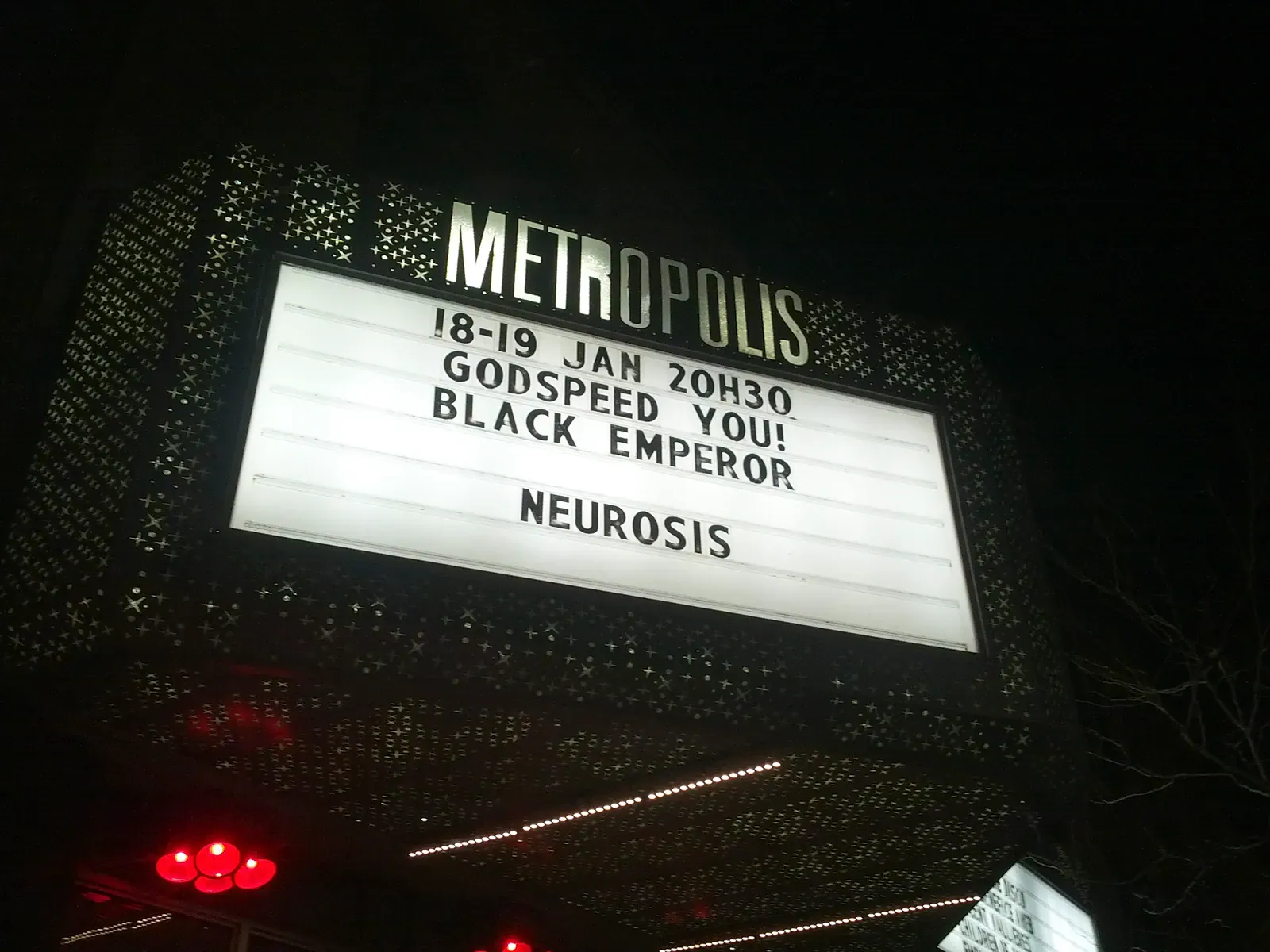
- 1992Souls at ZeroNeurosis begin to replace their hardcore sound with doom and industrial influences.
- 1993Take as Needed for PainEyehategod's second album inspires many bands to form or change sound.
- 1993HoudiniMelvins' major-label album, with Kurt Cobain producing some tracks, features Hooch.
1994
Post-metal and crust sludge
Neurosis, Isis and Cult of Luna built post-metal; Dystopia and Grief tied sludge to crust and anarcho-punk; British bands took up the sound.
- 1994DeliveranceCorrosion of Conformity's album carries Albatross to a wide audience.
- 1996Through Silver in BloodNeurosis' album is a landmark of the droning, progressive direction behind post-metal.
2004
Savannah and progressive sludge
Savannah bands such as Baroness, Black Tusk and Kylesa and Atlanta's Mastodon added progressive and rock elements; Baroness reached a wide audience in the 2010s.
- 2004LeviathanMastodon's second album, with Remission, is cited as among the most important sludge albums.
- 2013Joey LaCaze diesThe Eyehategod drummer's death ends the band's long-standing core lineup.
Listening path
Start listening
A short path from an easy way in to the deep end. Thumbnails come from YouTube; the player loads only when you press play.
- 01
Melvins, 1993
Official video of the Melvins' slow, thick riffing in its most accessible form.
- 02
Crowbar, 1993
A slow New Orleans riff with hardcore-style shouted vocals.
- 03
Corrosion of Conformity, 1994
Southern-flavoured sludge that reached a large audience.
- 04
Eyehategod, 1996
Grinding, feedback-heavy New Orleans sludgecore.
- 05
Neurosis, 1996
The heavier, ambient direction that led to post-metal.
Facts
| Family | Metal |
| Origin | California, United States |
| Emerged | Mid-to-late 1980s |
| Status | Active |
| Tempo | 90 to 150 BPM |
| Meter | 4/4 |
| Subgenres | 9 |
Sludge metal is an extreme subgenre of heavy metal that combines doom metal with hardcore punk. It runs at slow tempos on down-tuned, heavily distorted guitars, carries screamed vocals, and writes about poverty, addiction and pollution.
It took shape in the mid to late 1980s in California, Washington State and Louisiana.
Origins
Hardcore punk was defined by speed, but by the early 1980s a few Californian bands slowed down on purpose, partly to antagonise their own scene. Flipper, Fang and Black Flag were the leading examples. Flipper’s 1982 Generic Album, with its dirgey tempos and long songs, has been called the genesis of sludge by one author. In 1984 Los Angeles doom band Saint Vitus released a self-titled debut on SST Records, whose title track blends doom with a mid-tempo punk beat. The same year Black Flag’s My War put Black Sabbath-style slow riffs on its B-side, and that record is generally treated as the starting point of the sound.
My War landed hard in Washington State. In 1984 the Melvins, formed the year before in Montesano, saw Black Flag in Seattle and shifted from hardcore to slow, heavy riffs. Their 1987 debut Gluey Porch Treatments became a template, and the band is described by some critics as the one that invented sludge.
Seattle and New Orleans, 1988-1993
The Melvins’ influence spread two ways. In Seattle it fed the early grunge scene, and Soundgarden and Nirvana later carried similar ideas to a mass audience in the early 1990s. This was sludge’s most commercially successful moment, although those bands sat closer to alternative rock.
In Louisiana the effect was different. Local bands played fast, and Eyehategod, formed in New Orleans in 1988, slowed down in open rebellion against that rule, drawing on Black Sabbath and Black Flag. Crowbar, led by Kirk Windstein, and Acid Bath followed. Down vocalist Phil Anselmo has said the Melvins’ first record broke the mold in New Orleans by showing that slow was acceptable. Eyehategod’s second album, Take as Needed for Pain (1993), prompted many bands to form or change their sound, and its members also played in Soilent Green, Crowbar and Down. The branch that leans toward hardcore is called sludgecore, and New Orleans is regarded as its birthplace.
Diversification, 1994-2003
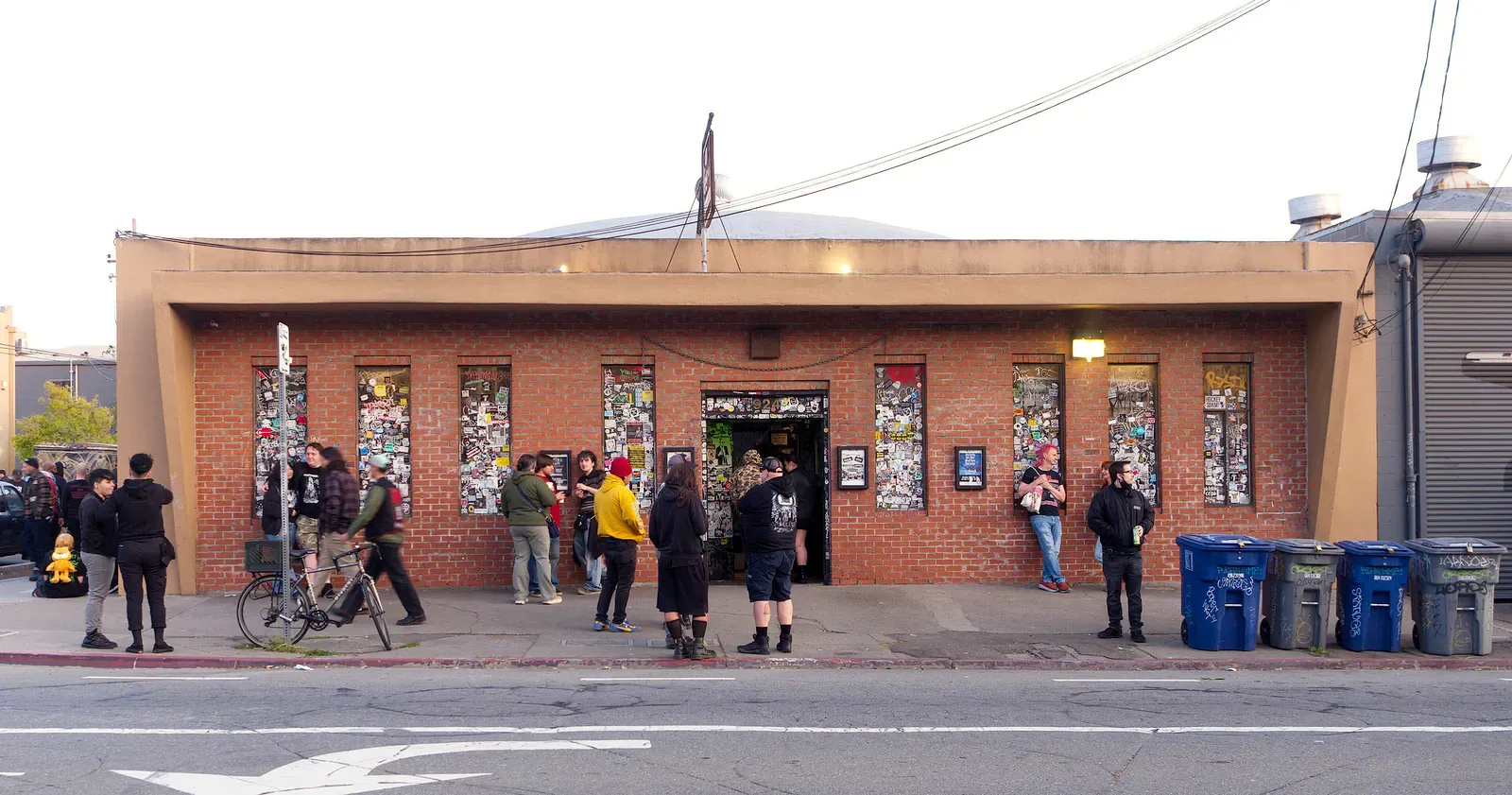
Berkeley’s 924 Gilman Street scene produced Neurosis and Noothgrush. Neurosis moved from hardcore to a droning, ambient and progressive style, beginning with Souls at Zero (1992), and helped pioneer post-metal; Isis from Boston and Cult of Luna from Umeå followed. In the same years Dystopia combined sludge with crust punk and grindcore on Human = Garbage, and Boston’s Grief did the same with anarcho-punk. In Britain, Fudge Tunnel and Iron Monkey took up the sound. Corrosion of Conformity, a North Carolina band that began in hardcore in 1982, reached a wide audience with Deliverance in 1994.
Savannah and progressive sludge, 2004 onward
Damad, formed in Savannah, Georgia in 1991, helped build a Georgia scene that in the 2000s included Baroness, Black Tusk and Kylesa. Their mix of punk, metal and rock produced what critics call a Savannah sound. Mastodon from Atlanta joined sludge to progressive metal; its first two albums, Remission (2002) and Leviathan (2004), are cited among the most important sludge albums, though later records moved toward progressive metal. Baroness brought a progressive, rock-inflected take on the style to a larger audience in the 2010s.
Characteristics
The defining trait is slow tempo combined with down-tuned, heavily distorted guitars. What separates sludge from other doom-derived styles is its hardcore punk influence: high aggression and screamed vocals, though some bands sing. Bands may also drop from slow riffs into faster sections. Many add industrial music, southern rock and blues. Lyrics deal with real-world themes such as drug addiction, poverty and pollution, often with dark humour. Measured on canonical recordings, typical tempos run from about 90 to 150 beats per minute at the felt pulse, well below hardcore punk but with the fast bursts the style allows.
Instruments and production
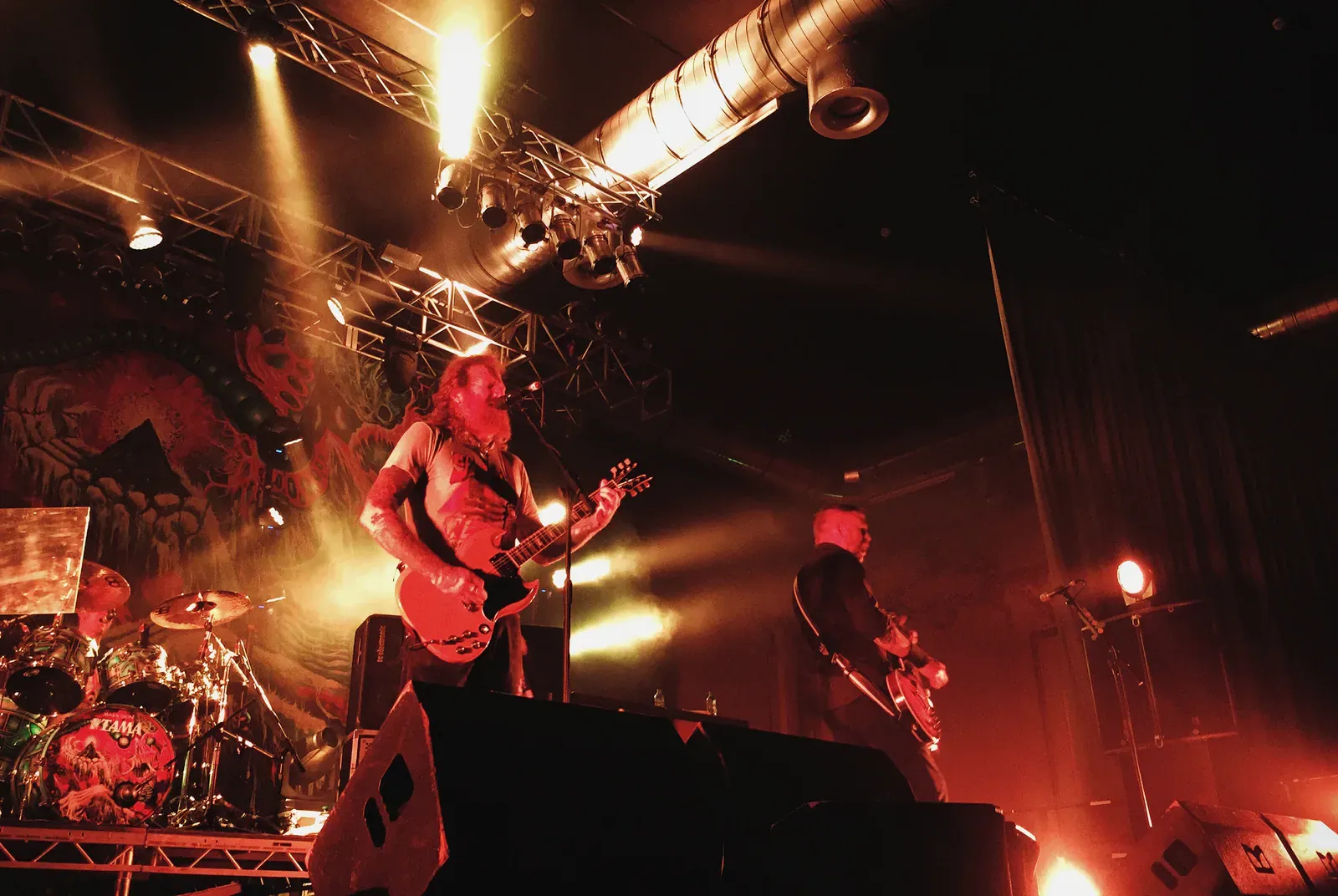
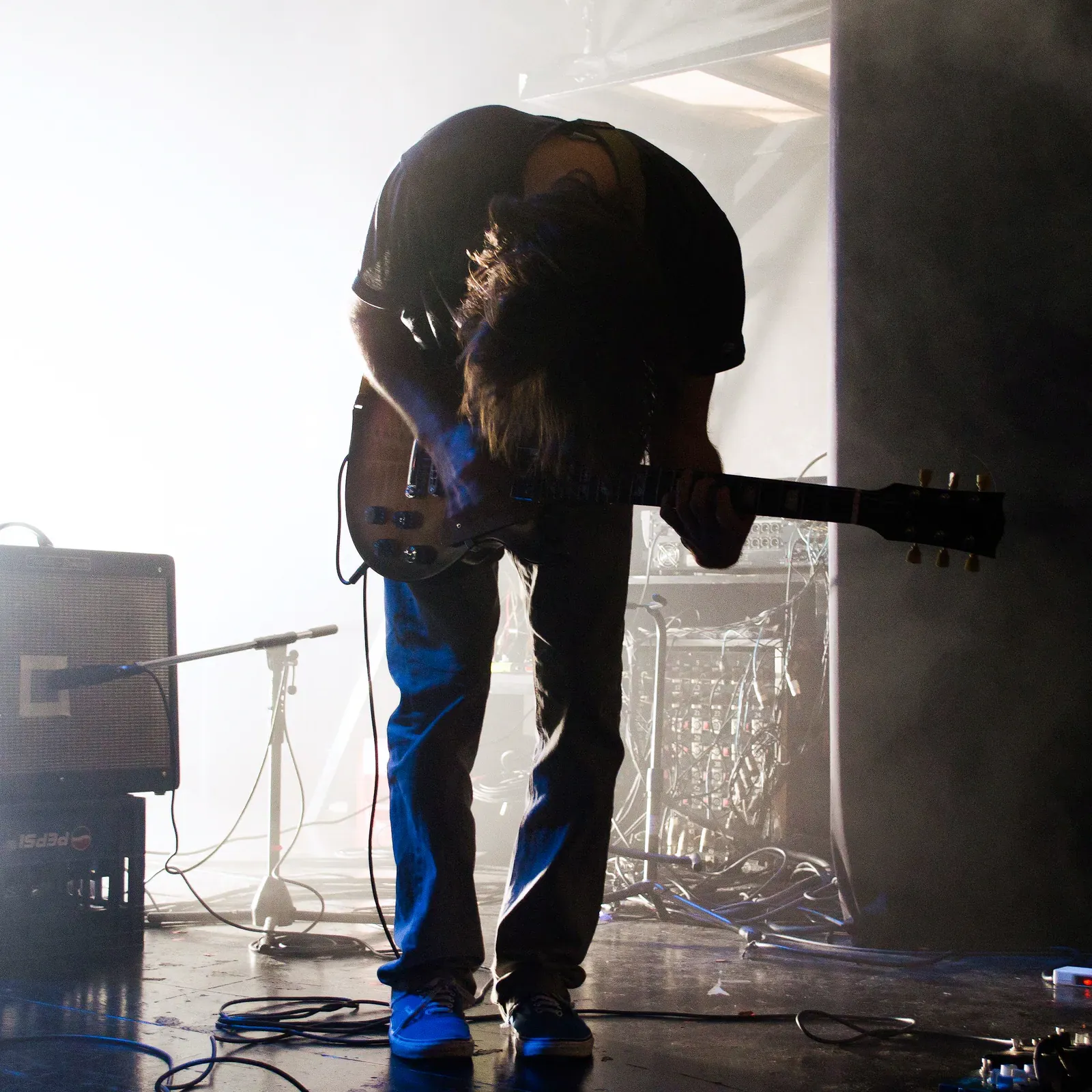
The standard line-up is guitar, bass, drums and a vocalist, built around a thick wall of amplifier distortion. Guitars are tuned well below standard pitch, and feedback is held and used as a texture rather than avoided. The hardcore-influenced shout is mixed against the riffs rather than set above them. Records often favour a raw, unpolished studio sound that keeps the amplified roar intact.
Mainstream success
Sludge itself stayed underground, but its relatives crossed over. The Seattle scene brought the Melvins’ influence to grunge’s mass audience, and Corrosion of Conformity’s Deliverance carried a Southern-tinged sound to a wide audience in the mid 1990s. The Melvins signed to a major label and released Houdini in 1993, with Kurt Cobain producing part of it. Baroness reached larger audiences in the 2010s, and Mastodon moved from sludge to progressive metal. Independent labels such as Relapse Records, which lists sludge among its core styles, and Alternative Tentacles, home to Melvins releases, carried much of the genre’s output.
Notable recordings
Black Flag’s My War (1984) set the template of slowing punk to a Sabbath crawl. The Melvins’ Hooch, opening Houdini (1993), shows how thick, slow riffing could be turned into something nearly catchy. Crowbar’s All I Had (I Gave), from their 1993 self-titled album, is among the heaviest New Orleans riffs, built on a slow march with shouted vocals. Neurosis’ Locust Star (1996) shows the other direction, where slow riffs open into long ambient passages that fed post-metal.
Culture
Sludge grew out of punk’s DIY scenes and kept their aesthetic: small venues, independent labels and self-made tours. Its sense of place is strong, since New Orleans, Seattle, Berkeley and Savannah each gave the music a different accent. Neurosis added a visual artist to its line-up in 1990, which made projections and imagery part of the band’s live identity. A 2021 book on slow, heavy music, Monolithic Undertow, helped bring wider critical attention to the genre.
Legacy
Sludge supplied the weight behind grunge, helped form post-metal and gave stoner and progressive metal bands a punk edge. It also left scenes: Louisiana’s remains one of the most distinct regional metal traditions. The deaths of members such as Eyehategod drummer Joey LaCaze in 2013 have marked turning points for older bands, but new sludgecore groups such as The Abominable Iron Sloth, Admiral Angry and Black Sheep Wall keep the style current. Related styles include noise rock, stoner rock and grindcore, and the hardcore side of the family tree runs through hardcore punk.
Misconceptions
Sludge is not simply doom metal with a harsher singer. What separates it is hardcore punk’s aggression and screamed vocals, and many bands also use tempo changes into fast sections. Nor is it a purely Southern genre: the Melvins came from Washington State and Neurosis from California, and the Louisiana scene grew partly in reaction to the Melvins. Finally, the name does not describe one fixed sound, since sludgecore, post-metal and progressive sludge all trace to the same roots.
Frequently asked questions
What is sludge metal?
Sludge metal is a style of heavy metal that mixes doom metal’s slow tempos and heaviness with hardcore punk’s aggression and screamed vocals, played on down-tuned, heavily distorted guitars.
Which bands defined sludge metal?
The Melvins, Eyehategod, Crowbar, Corrosion of Conformity and Neurosis are central, with Acid Bath, Down and Soilent Green important in Louisiana.
How is sludge metal different from doom metal?
Doom metal is slow and heavy in the Black Sabbath manner. Sludge adds hardcore punk influence, shown in higher aggression, screamed vocals and occasional faster sections.
What is sludgecore?
Sludgecore is the name for sludge bands that lean toward hardcore punk, centred on New Orleans with Eyehategod as its frontrunner.
Sound
Sound sheet
Signature sounds
- Slow, heavily distorted down-tuned riffs
- Screamed hardcore-style vocals
- Sustained amplifier feedback
- Sudden jumps to hardcore-speed sections
Drums and percussion
- Drum kit
Techniques
- Down-tuned distorted riffing
- Feedback
- Tempo shifts
- Industrial and noise elements
Keys and modes
Minor pentatonic and blues scale. Black Sabbath, blues and southern rock influence shape the riffs.
Tuning
Guitars tuned well below standard
Vocals
Screamed, hardcore-style vocals; some bands use sung vocals
Scenes
Where it happened
Where and when the sound lived: one bar per city on a shared timeline.
North America
Active scenes
Peak 5, 2000-2025
Home town of the Melvins, who formed here in 1983.
Grunge scene that absorbed My War and the Melvins' slow riffs.
Birthplace of sludgecore: Eyehategod, Crowbar and their Louisiana peers.
The 924 Gilman Street punk scene produced Neurosis and Noothgrush.
Scene of Baroness, Black Tusk and Kylesa, built after Damad.
Venues and places
Berkeley, 1986 to today. Volunteer-run punk club at the centre of the Berkeley sludge scene.
Culture
Culture markers
- Sludgecore
Label for sludge bands leaning toward hardcore, tied to New Orleans and Eyehategod.
Slang - Neurosis visual artist
From 1990 the Neurosis lineup included a visual artist alongside the musicians.
Artwork
Media
Key media
- 2021Monolithic Undertow: In Search of Sonic Oblivion
by Harry Sword. A book that credits Flipper's Generic Album as the genesis of sludge metal.
Book
Glossary
Terms on this page
A slow, heavy, funeral-like pace used for sludge riffs.
Slow Black Sabbath-descended metal that supplies sludge's tempo and heaviness.
Droning, ambient and progressive offshoot developed by Neurosis, Isis and Cult of Luna.
Mix of punk, metal and rock heard in Georgia bands such as Baroness and Kylesa.
Sludge leaning toward hardcore punk, centred on New Orleans.
Metal family